Backstrap Weaving – Adventures in the North West

I love traveling by train and I love traveling with a reserved seat. As I wasn’t in a real hurry to get anywhere, I took the opportunity of traveling the slow way on Amtrak’s Coast Starlight route from San Jose, California up north to Portland, Oregon.

I was disappointed that the train left at night and that I would miss what I imagined would be beautiful coastal and ocean scenes but couldn’t complain when I awoke the next morning to views like this!…

I was fortunate that the Portland and Seattle passengers were seated in the last car which meant that I could stand at the back door and watch the track roll away through these magical wintry scenes. The other passengers had very “been there, done that” attitudes but, for this gal who lives in tropical lowland Bolivia, it was an absolute treat! This meant that I could pretty much hog that back door view for the entire day. I was so tempted to press the door button to see if it would open especially when it started to snow and the glass got covered.

Slowly we rocked our way across mountains, passing through numerous tunnels, emerging to views of deep valleys sweeping away to the right…gorgeous!!

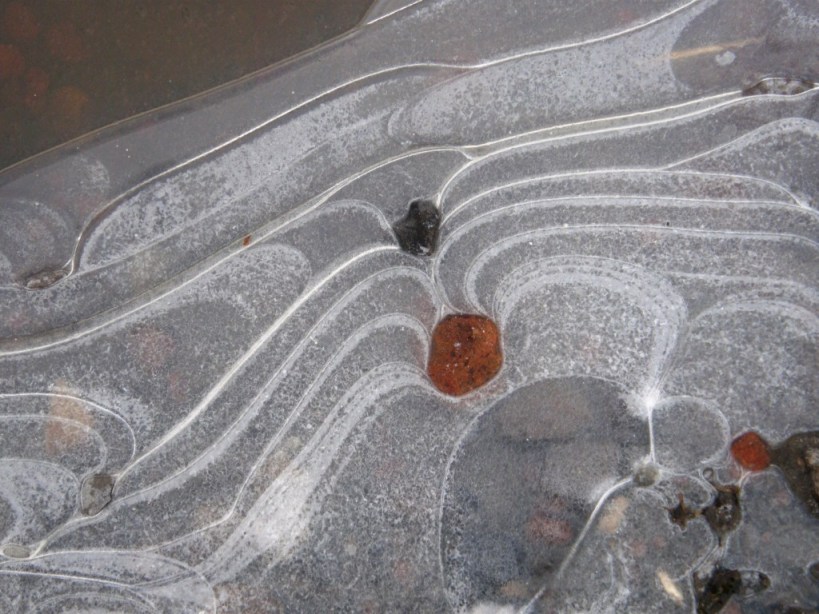
There were plenty of ‘fresh air” stops where we could get out and stretch and see “ice art” in the puddles. It’s probabaly all very “ho-hum” for north-west natives but it was all new and delightful to me.
After Eugene, the snow was over and soon we started to pass through ever increasing suburbia until finally rolling into Portland where I was met by Betty  who was having me as her guest for the next couple of weeks in her home just over the river in Washington state.

While I loved looking at the snow, I was glad to be out of it and into the cool, shady green with hints of spring of Betty’s tree farm.

And this is where my faithful camera friend of the last three years decided to die :-(.

“Internal sensor failure” was the problem I was told…too expensive to make a repair worthwhile. This problem was giving a pinkish hue to my pictures when the camera was in a good mood and weird color-streaked images when it was not. Luckily I have a wee Casio point-and-shoot as a back-up camera but I have to learn its particular quirks and get used to using it…darn!

Those of you who follow my blog may remember that I stayed with Betty on my spring trip last year and showed pictures of many of the fabulous weavings that she has collected in her travels over the years. I would have to be here for months to be able to see and photograph them all. In fact, last time I looked at too many and was quite overwhelmed. You get to the point where you stop seeing the beauty of each individual piece and so it has been great to have this chance to go over the collection again.

Actually there are enough beautiful things hanging on her walls to keep me occupied without even thinking about going through the pieces that have been carefully stored away.

Here are just a few bits and pieces….

I love the simplicity of the striped incredibly fine cotton warp-faced piece on the left with the card-woven strap, which Betty bought in a Tibetan refugee center in India. It’s an apron that forms part of a Tibetan traditional costume with a card-woven waist band. It contrasts with  the riot of color and intricate supplementary weft patterns on the Bhutanese bed cover  on the right.

This is a small selection of textiles from Peru, Bolivia and Ecuador. This group includes an ikat shawl from Ecuador, a double weave belt from Taquile Island, Peru and a small striped poncho from Tarabuco, Bolivia among other things.

I just LOVE the piece from Bhutan above left which has supplementary wefts woven into a twill base…that technique is still on my to-do list along with the discontinuous-warp technique you can see in the piece from Pitumarca Peru on the right (the figure in the center is an adornment that was added by Betty). I have made a few experiments in discontinuous warp after seeing the fabulous work of the Pitumarca weavers at the Tinkuy in 2010…multi-paneled pieces covered in pick-up patterns but I find this simple plain-weave piece in Bettys’ collection particularly inspiring and this following one even more so….

Betty thinks that this piece may be one of those that were made when the Pitumarca weavers were first attempting to recover this ancient technique. It is warp dominant rather than warp faced…you can see the weft and see through the fabric when it is held up to the light. It is nothing like the sturdy heavily-beaten warp-faced cloth that is typically produced. It has been edged with a simple single-color plain-weave tubular band. The over-twisted handspun yarn is still causing the corners to curl.

You can see above left what I am guessing would be called the discontinuous weft where the panels join vertically. The brown weft which is being used in the panel below right turns around the grey weft on the left when the two wefts meet at the join. This means that the color of each panel can be solid. You can also see how the warps dovetail at the horizontal joins between panels.

Betty is not sure how many years ago she bought this piece, but this is the progress that the Pitumarca weavers have made in this technique since then….

This piece has four panels of discontinuous warps with supplementary warp patterning in each.

More treasures on the walls of the rooms and halls of Betty’s home…

Belts and sashes from the Andes and Guatemala and a reverse-applique Mola from Panama.

And then some fun stuff…

I loved this little hanging which is in the guest bathroom. It turns out that this is one of the first weavings that Betty ever made. Knowing the legendary status that Betty has achieved in the world of weaving, this was quite wonderful to see. The other piece is a dear little purse that has been woven from recycled plastic bags in Guatemala.

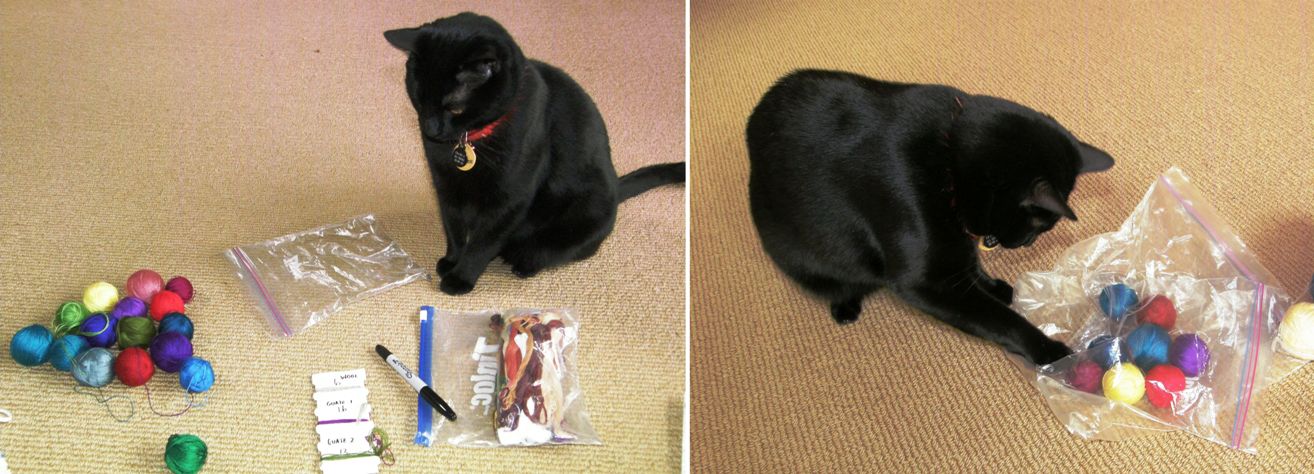
Between all the textile and fiber wanderings in Betty’s home and studio (I got to sleep in the studio again!), I had some organizing to do…not an easy thing among so much distraction! I was emptying bags and bags of yarn and warps on the floor much to the amusement (or perhaps indignation) of Trouble the cat who stood guard in case one of the balls decided to wander off.
Here are a couple of the ladies who came to weave…Sasha (who wants to learn backstrap weaving as it is part of her heritage…any guesses as to where her roots may lie?) and Emi who is interested in all aspects of primitive technologies.

It was great to meet Jenny on the left and Linda who are both members of the Ravelry Backstrap Weaving Group. That’s Judy next to them. All three are working on their second weft patterned bands.

Weaving away! Jenny pauses to figure her next move in her simple warp float pattern. Rona is checking the cross on her four-stake warp before removing it from the stakes. It is funny how people often unconsciously choose yarns that match their outfit.

On the way home from the weaving group, Mt Hood and Mt St Helens put on the most fabulous show for me. Both are heavily laden with snow and looked spectacular in the soft evening light. But there was no where to stop and photograph them!  My back-up point-and-shoot camera does not have the zoom capacity to have done a worthy job in any case. I got to climb a rather different looking Mt Hood in the summer of 1992 as well as fly around Mt St Helens in a friend’s private plane but I much prefer the way these two beautiful peaks look in their winter coats.

Most of the people in this weaving group also promised to come to another the following weekend. I had a busy and fun time in the five days between.

On Tuesday and Wednesday I had a visit from some other Ravelry pals. These are two Backstrap Weaving Group members who have been around since the early days.

Jennifer and Bobbie are strong and very active members, head cheerleaders, back-patters, welcoming committee and “commiserators” and I am so grateful for their continued support and participation. It really was a thrill to have them with me for those two days.

They brought a few of their backstrap woven pieces to show and we marveled at how far they have come since joining the group and that very first weave-along we did in January last year.

We wove patterned tubular bands on Tuesday and I know that they have been hard at it at home since then. Bobbie also brought along the beautiful wide Guatemalan piece with its super fine cotton yarn on which she has been working.

First, lets look at some of Jennifer and Bobbie’s woven work…

On the left is Bobbie’s Bedouin-style runner with al’ouerjan patterning. I think she may have warped this when we had an al’ouerjan warp-along weekend. Next to that is her plain-weave striped piece that I am guessing was part of the plain-weave weave-along we did in the fall of last year. She added some weft twining to that. Jennifer’s backstrap is a gorgeous combination of stripes and colors which was also influenced by Bedouin textiles that we have been looking at in the group. I am pretty sure that this also formed part of the plain-weave weave-along.

Trouble decided to nap on Bobbie’s pebble weave bag. This is the piece she made as part of the very first pebble weave weave-along in January last year. At left you can see her rolled up Guatemalan warp and here she is working on it….
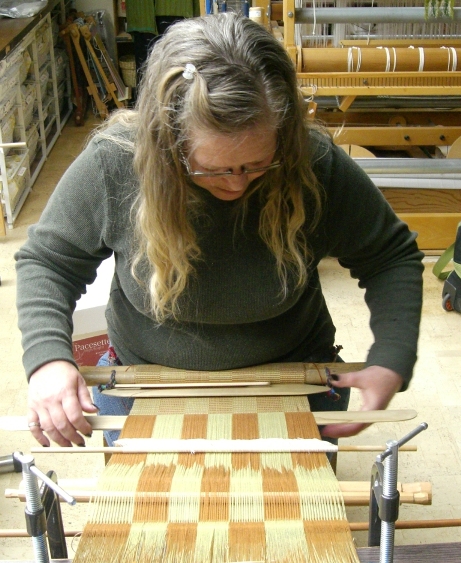
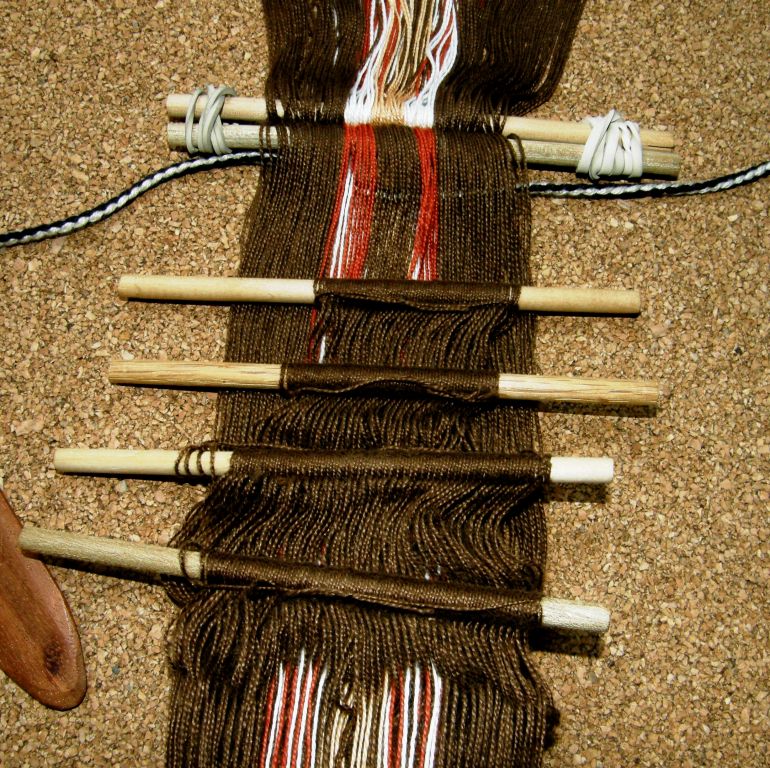
She has a long tale of mishaps to tell of when she was trying to put this warp together but you would never know by looking at it now! She is doing a simple warp pattern which Jennifer showed us in the Ravelry group. She had seen and admired it on the Education and More website. It caught Bobbie’s eye and she asked for suggestions for how to set it up. As the same warps are always floated, she has them permanently stored on a pattern stick. Looking at the sticks in the above picture from bottom to top you see the stick that holds the second cross, the pattern stick, the shed rod, the heddle rod and then the sword.

Certain warps from the shed-rod shed are floated with the warps from the heddle shed. You can see the warps sitting on top of the pattern stick below.
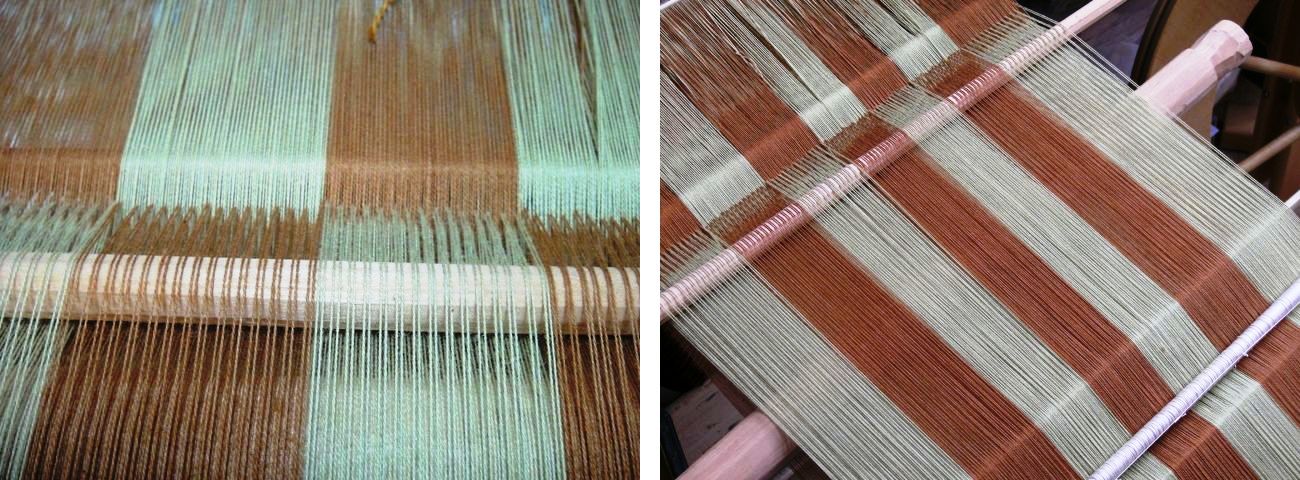
Isn’t that a great looking warp?! Bobbie bought this naturally dyed cotton warp yarn from the Education and More site. Beware! It is very fine stuff. Bobbie shared some with Jennifer who has started a plain-weave piece with it and I believe that some has also gone off to Popsicletote (another Ravelry group member) and maybe we will see a project from her soon.
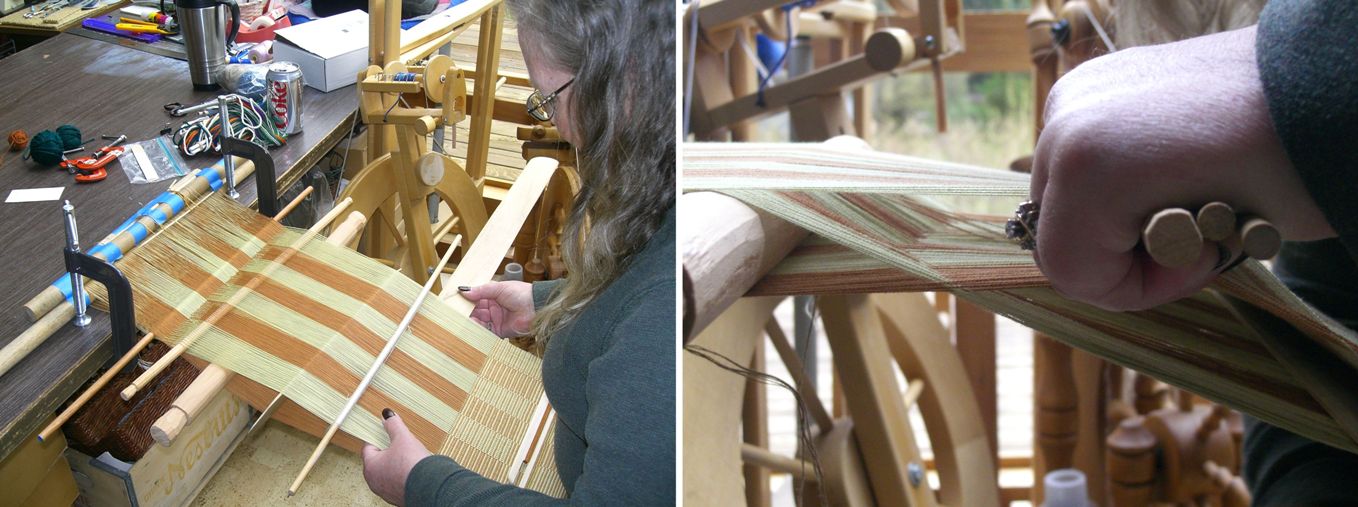
And just a few days after we all met up, Bobbie announced on Ravelry that she had finished her piece.

Woo hoo! Look at that! She posed a couple of her tubular band practice pieces on top of the finished piece.

Jennifer came alone the following day and we sorted out some questions she had on complementary-warp weaves. These guys have learned so much from just using my online tutorials and books but it is a real help to be able to see things being done in person and ask some more specific questions. It was good going over four-stake warping with them. And it was great just talking!!

On Friday I had a fun day with Emi. Emi joined in with all the weaving groups.

I will let Trouble the cat tell the story…

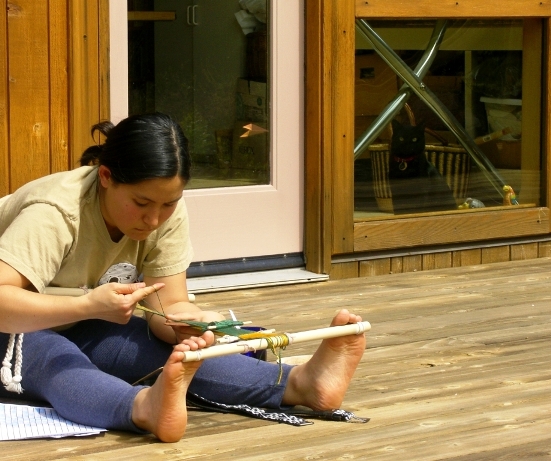
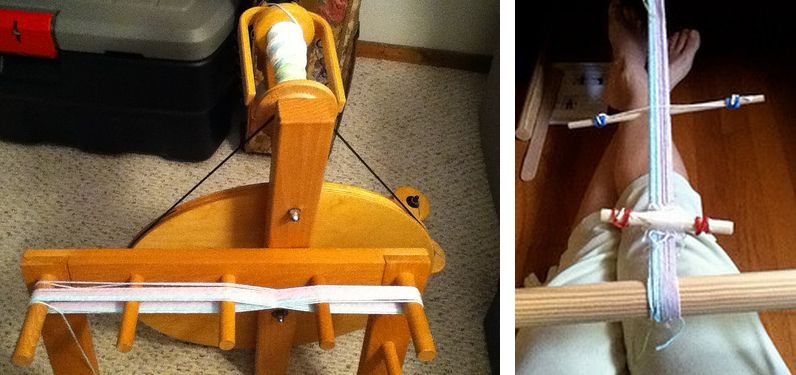
Well, this is strange….just when I was getting my wee cat head around all this stick-and-string business, this gal comes along and throws her toes into the mix up.” (Of course this way of tensioning the warp is used in many South-East Asian weaving cultures but most often when using a circular warp).

As nice as it is weaving here in Betty’s sun-drenched studio, you must realize that you are wasting a perfectly beautiful day out there. It ain’t raining and you know that that has been a kind of rare occurrence around here lately. Won’t you step outside?

Thank you but, ahem!…I was sort of hoping that I would get to go out too…

Ahhhh….now that’s more like it!

We wove two-color simple alternating floats weaving designs like those I have copied from Krygyz yurt bands. Emi worked on trying to read the pattern directly from my woven belt rather than from a chart and she did a good job! Later on we did some braiding.

And finally, she went home having gotten some practice with handling a wide warp with fine threads. She wove quite a bit on my sample warp learning to operate the sheds smoothly and handle the fine yarn. I think that the two major obstacles that backstrap weavers in my online groups have are fear of finer yarns and wider warps. I am hoping that Emi will be able to pass that obstacle having had this experience with the wider warp.

Here she is using a nice technique to gently and cleanly open the heddle shed.

Before going home she treated me with a lesson in something from her Japanese heritage. I got a demonstration of the tying of the traditional furoshiki cloth and an explanation of what this cloth, and its use in wrapping items, means in Japanese culture.

She showed me one of the wrapping styles and then demonstrated how a Japanese person would present the wrapped goods to another person…beautiful!

And then she showed me how the same piece of cloth with a few clever twists and folds can be transformed into a shoulder bag.

Isn’t this the coolest thing! And just when I was thinking of the best way to weave a special wrapping cloth for myself, Emi showed up to the next weaving group and gave me my very own furoshiki cloth!

The one on the left is the piece that Emi gave me and Betty showed me one that a friend of hers in Japan had given her. I think we all need to have a furoshiki! I am sure that if I Google this I will find a book on 101 ways to fold and tie a furoshiki!
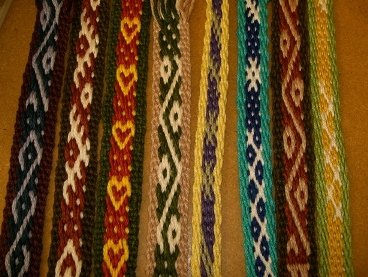
And then it was on to the pebble weave.

We had a beautiful sunny day once again with light streaming through the skylights and all of us wishing we were wearing shorts by mid afternoon.

Most of the first group returned and we also had Anita join us.

We dove right into two-heddle pebble weave and had two days of fun.
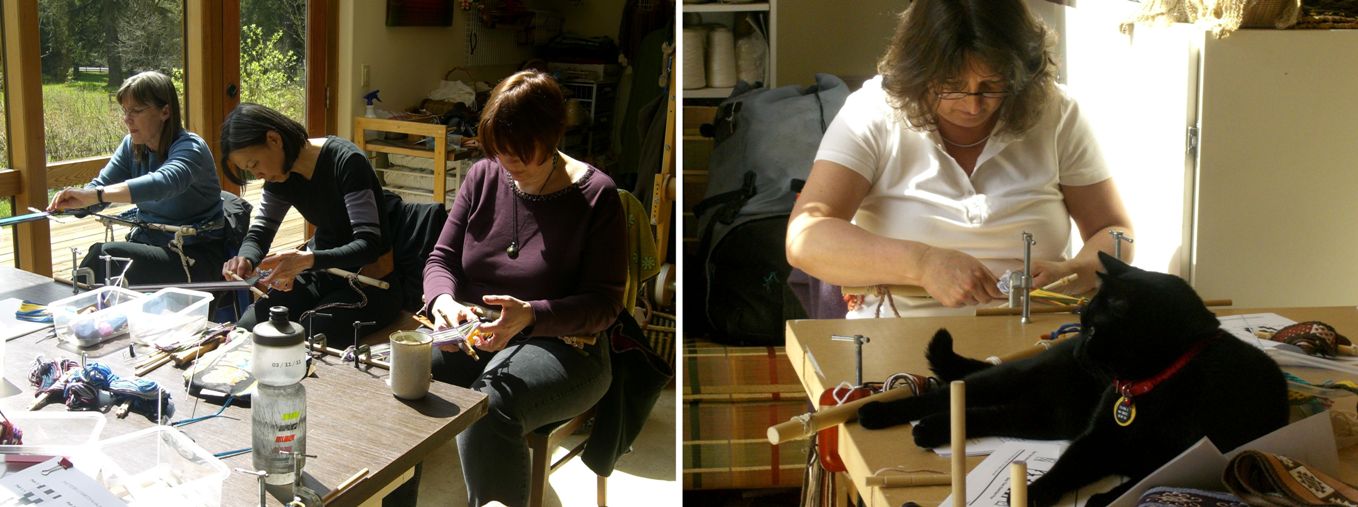
That’s Jenny, Sharon and Anita with Linda on the right. Linda took a break from weaving to try drawing designs onto charting paper directly from the sample textiles I had on hand. Emi settled into her warp on the floor and even Betty threw on a backstrap and wove.

Sasha, who wove super fast and found herself ahead of the rest of the group, decided to remake the heddles on her large warp. There is, of course, a story behind that warp which I will tell in a future blog post. She has promised me some pictures in the meantime to make the story more even more interesting.

And there were other gifts!

Sarah, pictured above, gave me an example of her weaving in a lovely lined pouch made with fabric that she wove with sixteen shafts. Anita brought me a fabulous sword/beater cut from South American marblewood…so smooth and glossy, it feels wonderful in my hands.

Last night Betty and I were invited for dinner at Carol and Jim’s home. We listened to their exciting travel stories and saw pieces created by Carol using her handspun yarn…all kinds of fiber from rabbit to camel. Carol and Jim have traveled the Silk Road from China through Uzbekistan and Kyrgyzstan…imagine how my ears pricked up at those names! I was even wearing the belt I wove based on the Kyrgyz yurt band. I got to see a fabulous felt piece that they bought there that has been edged with a band in the two-color simple warp float technique.

I try hard to keep up with happenings on the Ravelry group while I am on the road and there has been a bit of activity lately to report. Jentide has been weaving bands with Bedouin designs. She wove the shajarah motifs in double weave rather than in the traditional warp substitution technique.

Double weave creates a double faced band rather than one with long floats on the back which the latter method produces. She also wove a band with al’ouerjan patterning.

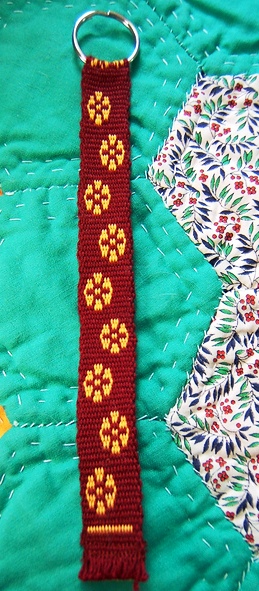
While snooping around her project page I found her double weave key fob woven on a backstrap loom using the sweet Bolivian flower motif that I have charted here in the tutorials.
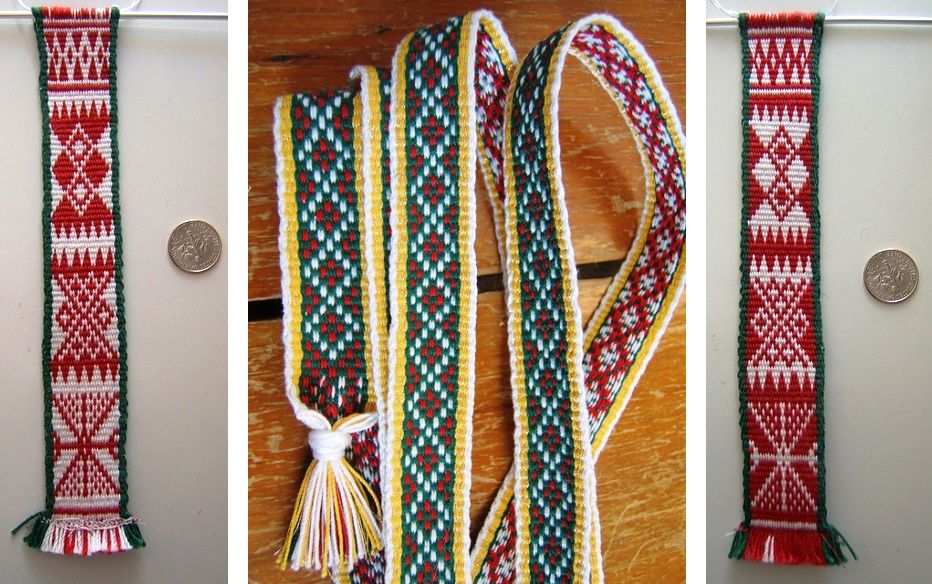
The small band was woven on her backstrap loom and the longer one on an inkle loom.

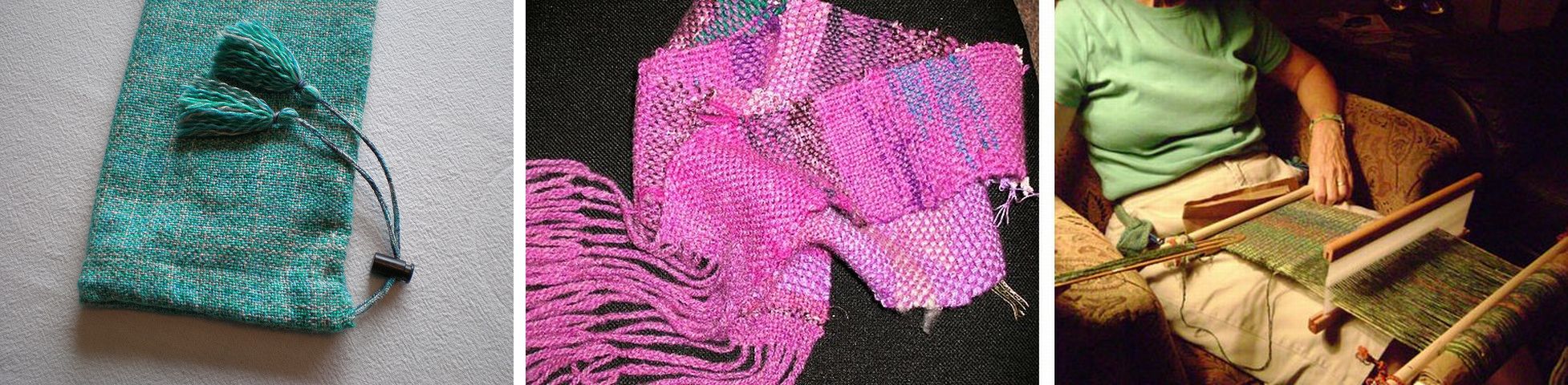
Heidai continues to weave pretty scarves on her Scandinavian-style backstrap loom with its rigid heddle.
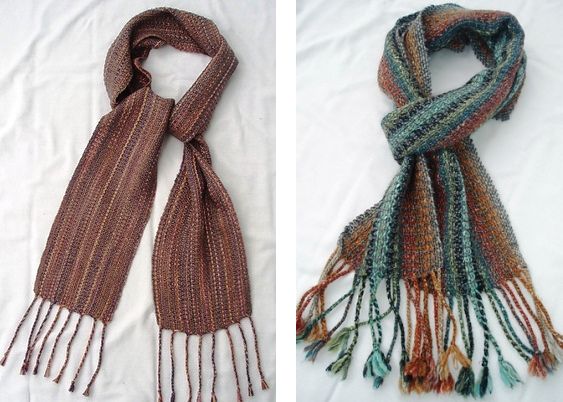
On the left is her scarf in alpaca and silk and on the right in noro silk garden.
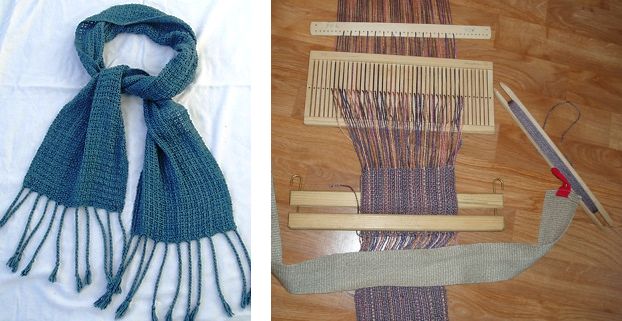
Here’s one more in silk along with the backstrap loom set-up that she has been using…so simple!
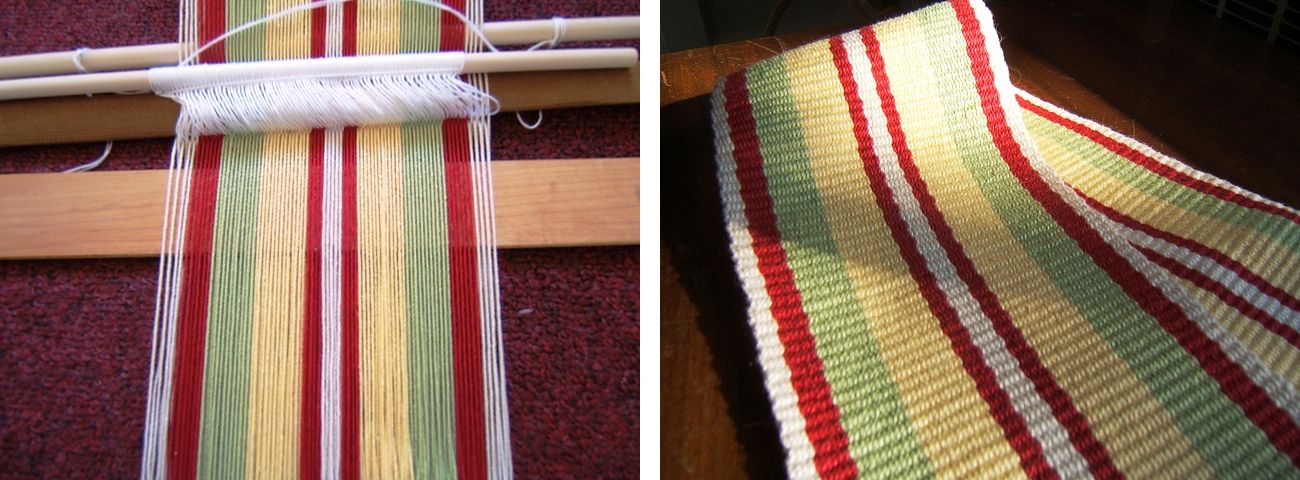
A backstrap by backstrap…also by jentide.

Tracy finished her backstrap woven ikat piece for our current weave-along and Alison has just started out using my book for pebble weave and has made her first band on a loom on which she feels more comfortable…the inkle. She followed the instructions for setting up the warp and is using her inkle loom  to tension it.

I think that wraps it up for this week. This is what happens when I miss a post….stuff really starts to accumulate but I am so pleased to see the Ravelry guys weaving away and what a treat it has been to be able to weave with four of them right here in Oregon and Washington! Hopefully, some of the people who wove with me here who are, in fact, already Ravelry members,  will join the Backstrap Group and become active participants…there’s always room for more cheers and encouragement. 🙂

I have had a couple of days free to blog, catch up on mail, and then I will be meeting with a basketry group on Thursday. I am looking forward to seeing their baskets. We have a small group of talented basket makers in the backstrap group too. I am not one of them!

I will see you soon with more backstrap weaving.
Backstrap Weaving – Pondering Plain Weave

What exactly is a backstrap weaving? I talked about this a bit in a previous post and looked at some of the different kinds of fabrics that can be produced. It doesn’t have to be all about pick-up patterns and it doesn’t have to be warp-faced.

For some people it may bring forth visions of narrow Scandinavian warp-faced bands decorated with pick-up patterns. Others may think of the fine ikat fabrics of Indonesia or the brightly colored supplementary weft patterned pieces of Guatemala, rich Asian silk inlay or the heavy woollen ponchos of Ecuador.

It is any kind if fabric that is produced on a body-tensioned loom and I have only just scratched the very surface in my exploration into what can be woven on these simple looms.

And if you are still thinking stiff-ish warp-faced cloth, take a look at this…

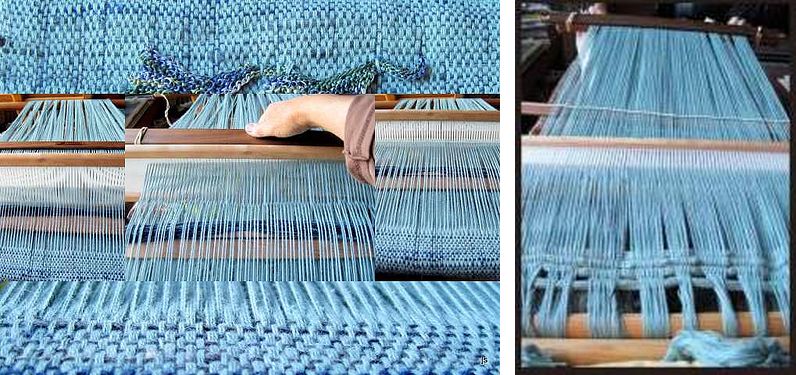
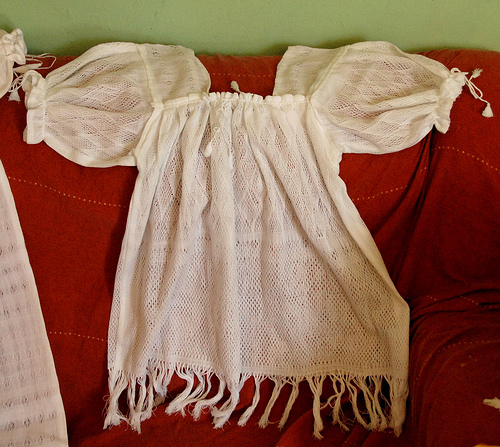
I just gasp every time I see this!! This picture is from Teyacapan’s fabulous Flickr page. The weave is known as tejido patakua and the blouse was made in Aranza Michoacan, Mexico.

Here is another picture of a similar piece of fabric on the loom….(again, courtesy of Teyacapan)

Spectacular!

In our backstrap weave-along on Ravelry we have been leaving behind the pick-up patterns for a while to play with plain weave in warp-faced and balanced weaves. It has been amusing for me to spend more time on warping and making continuous string heddles for a piece than actually weaving it. That never happens when I am doing pick-up! Plain weave is so very fast.

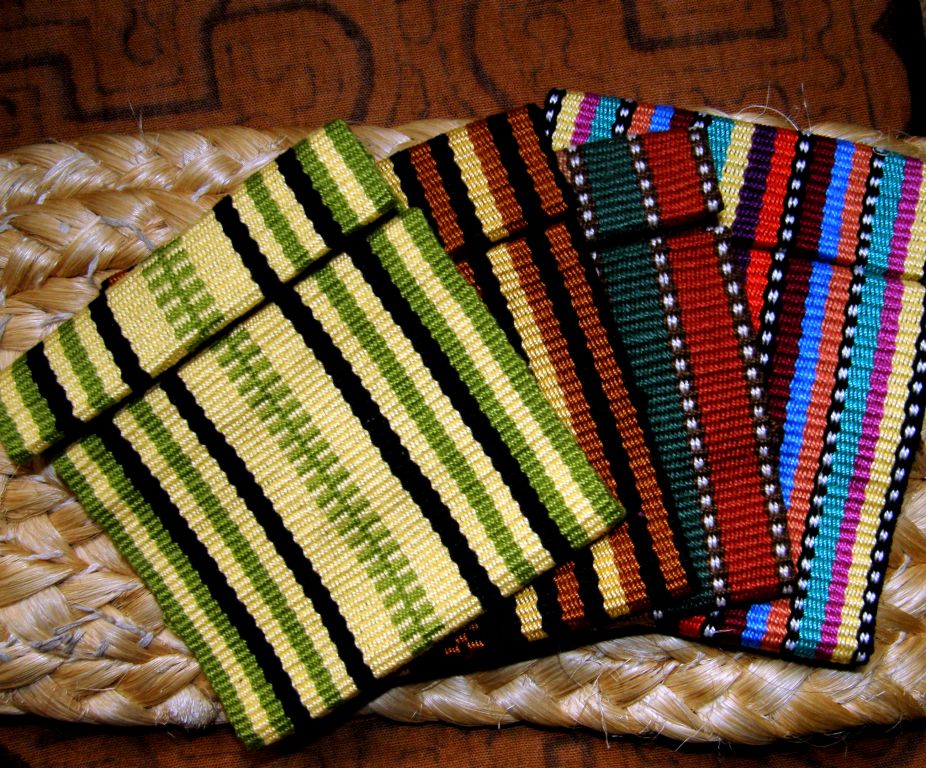
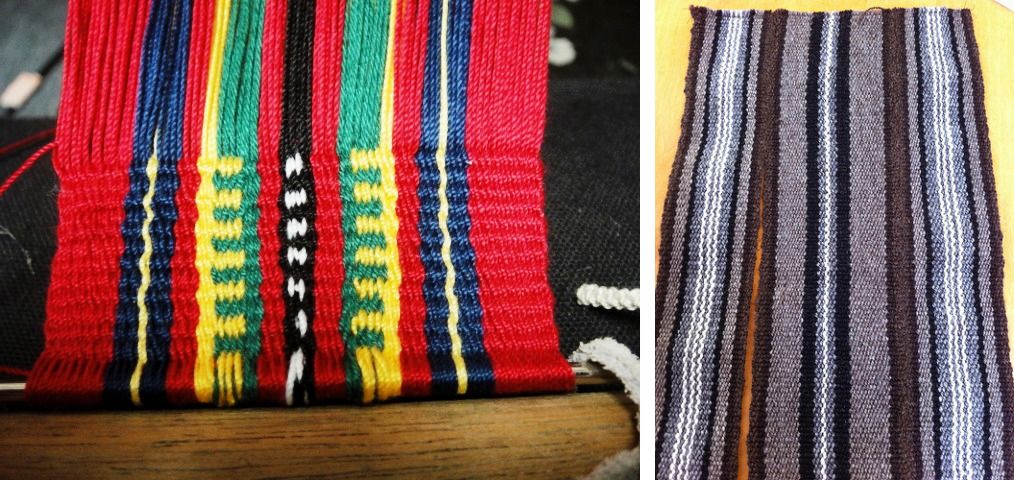
I decided to play with stripes…no rules…go mad, stash bust. It has been a fun way to get rid of all those annoying teeny tiny balls of colors that are always sitting in a tangle at the bottom of the basket that I have never been able to bring myself to throw away. Warp up stripes, stripes and more stripes.

I decided to do as one of my Guatemalan weaving teachers, Carmel, would do. She would sit at her loom and just plunge her hand into her basket of yarns and use whatever color she grabbed first for her supplementary weft patterns…a wild combination of colors!

I only did this on one piece. That is about as wild as I was going to get for this weave-along and then I put a bit of planning into the other pieces. Who knew that combining stripes would be that hard?

My Guatemalan multi-colored juggling balls were used to influence the color choices of the first two and then I chose some woody tones for the next. The yellow and green one was supposed to represent my home of Santa Cruz…yellow and green for pineapples and jungle and somehow black got into it too. The multiple stripes were tedious to warp but these pieces were fun to make. It was novel to be able to zoom along in plain weave.

I plan to fold them as shown below and make four small purses with the zips on the front. They will be big enough for credit and business cards. Thanks to Sharon and Betty I have two large bags of colored zips to choose from.

Now to get down to the sewing. There is still a lot of planning and warping and weaving going on in the weave-along so I may have time to do a balanced weave project as well using one of my rigid heddles or my bamboo reed. Figuring stripes in balanced weave is even more mind boggling for me!

For warp-faced stripes I found a couple of sites. On the Handweaving.net site there is a book by Ralph E. Griswold entitled Warp-Faced Stripes. Sounds perfect, right? I have to admit that I didn’t find it, at first glance, all that helpful and got a bit fed up after five pages. Apparently there are 687 drafts in the collection and one of these days I must sit down and go through it thoroughly. I am sure it is an invaluable resource.

Another page which I found more immediately inspiring was a set of textiles with woven stripes and bands in the collection of the Knoxville Museum of Arts on Flickr.

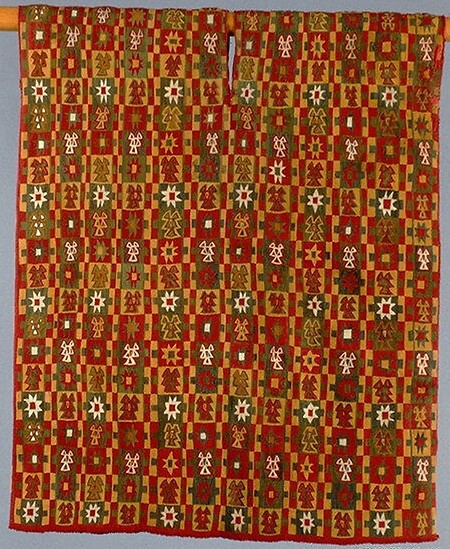
As for bold colors and bands of striking motifs take a look at the site of the Metropolitan Museum of Art which shows its current exhibit of Andean Tunics 400BCE-1800BCE (thank you Sally for the link).

How nice that they allow those of us who can’t get to the exhibit to see these images. The exhibit will close in mid October before I get to the US (darn).

Now I find that it was open when I was in the US last May (double darn).

After all the color, I am wallowing in safe black-and-white yet again as I sample for my finnweave bag project. This will be my first large-ish finnweave piece and, as I haven’t woven this structure for a while, I figured that I should do some width samples and try out some of the motifs that I might be using.

I have been practicing some of the more common border motifs that I have seen on Huichol and Otomi bags and belts.

The diamond motif on my sampler is a Scandinavian one which I just thought I would throw in there. I have a couple more border patterns to try and then I will plan the large project which will be one of the hanging storage bags that I talked about last week.

One lesson learned about that: storage bags must be hung high as my cat is already getting her claws into my Bedouin one.

My Bhutanese motif storage bag project is on hold until I can get more black thread but I did finish the hanging strap as well as the guitar strap that was so fast to weave with its four sets of string heddles and saver cord.

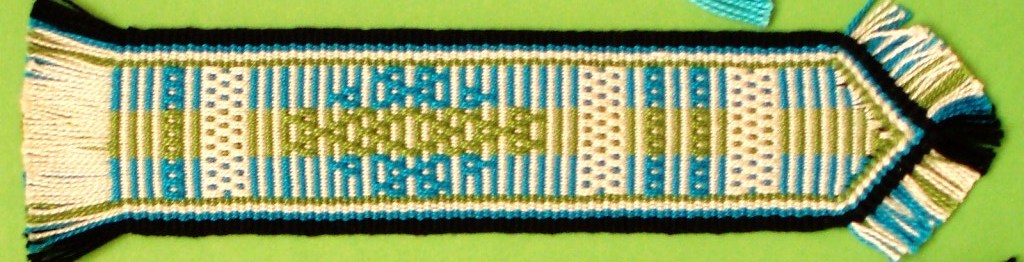
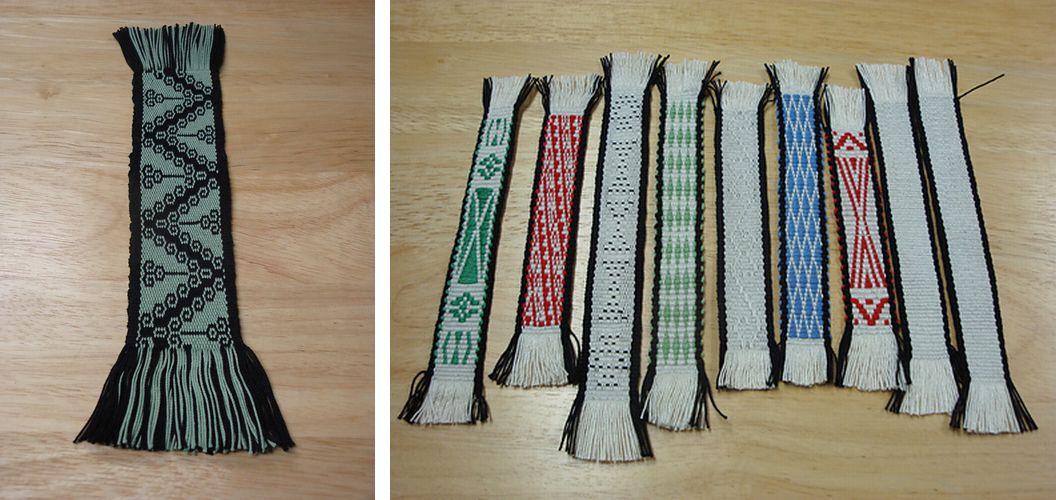
Now I am working on perfecting the beautiful finish that Andreas used on his woven bookmark. See how he has shaped the end?

It is straightforward enough as he explained. Just eliminate warp ends gradually to reduce the width of the band and then twine the warps ends down the sides. That I can do but it is getting all the twined ends neatly interlocked at the tip which has been defeating me. Perhaps I should take my own advice and try this first with thick yarn and not #10!

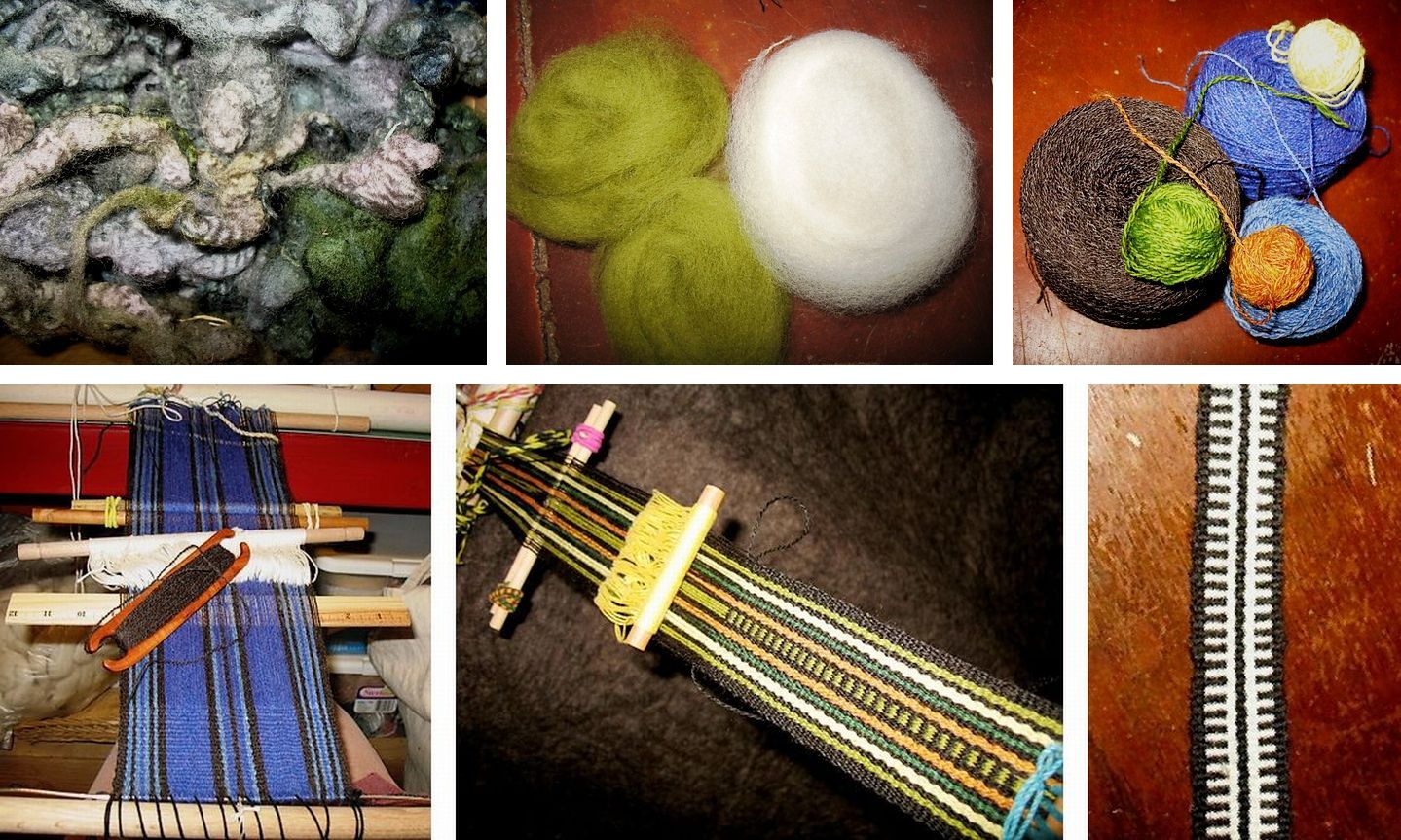
So, weaving-along on Ravelry we have Janet aka AuntJanet who gave us a photographic tour of the whole process behind her lovely handspun weave-along pieces…

She started off with the raw wool which she dyed and combed to produce that gorgeous fluffy top, spun the yarn and wove her three projects. The blue one will be a bag and she is currently weaving its strap.

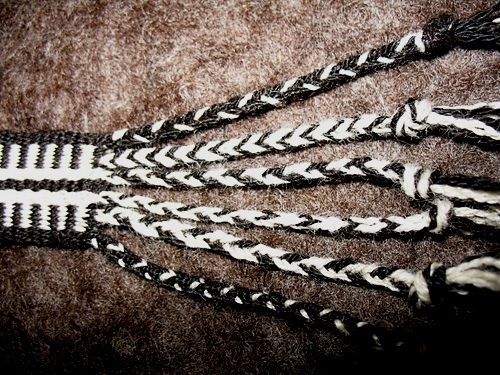
She has been looking around Ingrid Crickmore’s wonderful blog on loop braiding and has been braiding her warp ends using different techniques.

This gives me the perfect opportunity to tell you about the online loop braiding workshop that Ingrid is offering in the Yahoo braids-and-bands group this month. All you need to do is join the group to have access to the files and Ingrid will be around to answer questions.

I met Ingrid at CNCH in 2010. She was teaching braiding at the Education Booth where I was playing with my backstrap loom and I could see that she was a wonderful highly energetic teacher. She has also woven with me on a couple of occasions.

Our other Janet, aka popsicletote, made one of the photo collages that we all love so much…

I just love all the different tones of her indigo-dyed weft. The piece has leaf and flower details in it. I am not quite sure how they were constructed but here’s a close-up of one…

More weave-along projects and progress…

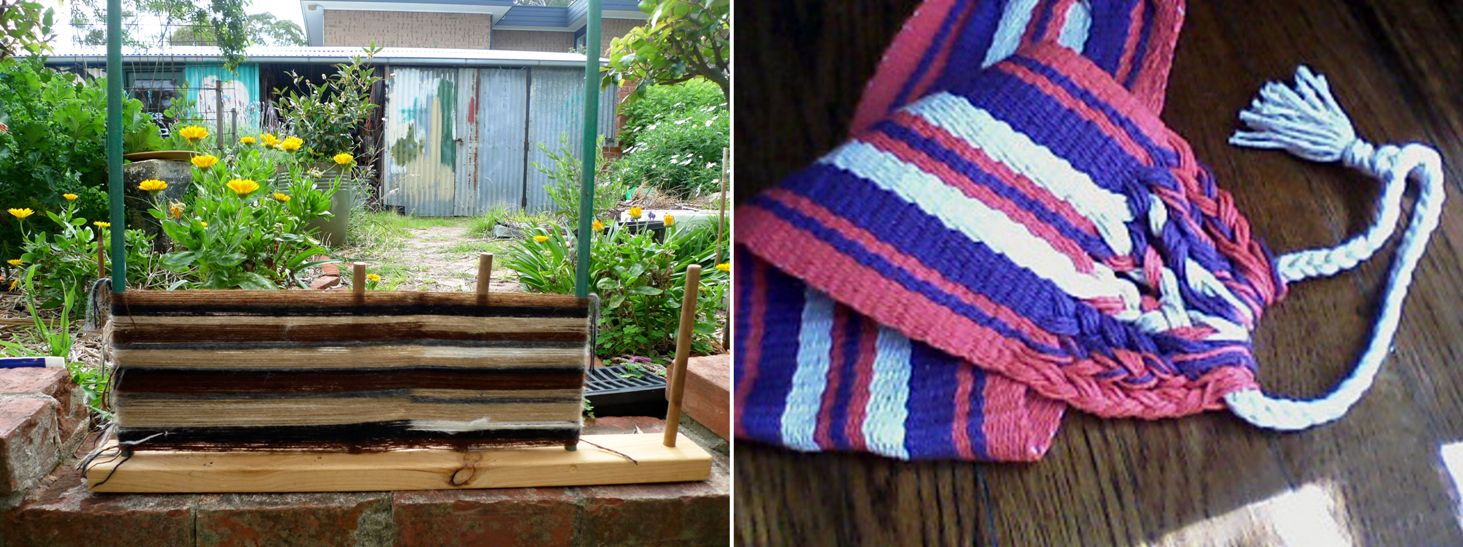
Anna has warped some beautiful natural handspun alpaca that she bought in Chile. Even though Karri  finished her plain-weave striped backstrap- her second backstrap woven project ever- just before she joined the weave-along, I am counting it in.

Here’s her latest warp which she says is inspired by “gorgeous southern sunsets”.

Cindy is weaving her first ever band with stripes and a little help from a friend and Dyggvi has a nice striped band going too.

Kareanni is a volunteer with Education and More and often manages to have a weaving lesson on her visits to Guatemala. She has incorporated strips of warp thread, prepared in the ikat technique that she bought in Guatemala, into her pink, black and green warp.

Blomster’s wall hanging, which she based on a textile she bought in Oman, is off the loom. That one she made on her rigid heddle loom and the little  piece to the right, which was made using a rigid heddle on her backstrap loom, is also done.

Kathi, whose project you can see above right, reports that her homemade rigid heddle works perfectly. There is actually a fair bit of woven fabric rolled up on the front loom bar which we can’t see. Her alpaca handspun weft had beads added to it while it was being spun, a technique she learned during the Tour de Fleece.

Here are the two participants so far who are weaving balanced weave pieces without the aid of any kind of reed. Marsha made a prototype for a back scrubber in worsted weight cotton. She incorporated the braid at the start of the weaving and will try to do a four-selvedge piece next time so both ends will be the same. Phil is weaving his painted handspun warp. He feels it may have looked better warp-faced but I think that the exposure of the weft gives the image the lovely softness of a water color painting.

And then jentide blew us all away with her stripes!

Outside the weave-along Yonat continues to make me smile with the bands she is turning out on her inkle loom.Her bands are patterned with, from top to bottom, Andean pebble weave, simple warp floats and supplementary weft. Her Judaic bookmarks on the right, patterned with simple warp floats and supplementary weft are her contribution to a winter art sale at her temple.

Anna, who bicycled her way through the Americas and stopped off to visit me for some weaving time, sent me a picture of the pebble weave and comb design belt that she has made since getting back to Australia.

Before I leave you for this week I would like to tell you that registration opens on September 15 for Braids 2012 – 2nd International Conference on Braiding which will be held in Manchester, UK August 19-25, 2012. I am very excited that I will be attending and that Ingrid Crickmore will also be there giving an introduction to making “double braids” along with many other international tutors/authors teaching a variety of  braid and band related topics….Jacqui Carey, Rodrick Owen, Carol James, Robyn Spady…I am not even going to attempt to name them all!

I would love to meet up with blog followers and backstrap weavers in the UK so do drop me a line if you think this will be possible.

Backstrap Weaving – Ready, Set…Weave Along!

I fear the truth in the adage ”out of sight, out of mind”. You wouldn’t believe my computer desktop! It is a cluttered mass of folders and icons. I just know if I put anything away into a file, I will forget about it and I have new ideas coming up all the time.

The same goes for my bedroom/work space. We have had to come up with some interesting solutions to the lack of space in this little home which means we have two single beds side by side, one of which folds away during the day so I can have some floor space on which to work.

Everything has to be rolled up, picked up and put away at the end of the day so the bed can come back out. You would think that that would keep things fairly orderly…

I still seem to end up with piles of stuff on the floor everywhere…weaving sketches, books, tools, baskets of yarns, things I don’t dare put in a cupboard or closet because they serve to remind me of the latest new weaving idea I have had. They have to be covered so the cat won’t get at them. It is a merry mess, it lives and grows and never stagnates. But, it’s time for a change!

The fact is that there simply isn’t anywhere to put things anymore as my books have completely taken over…no more floor, shelf or closet space left but aha! there is wall space!

So, I am going to have lovely woven storage bags hung on the wall to hold my project bits and pieces and, on the whiteboard, a nice orderly list of what’s waiting to be explored. The bedroom will start to look like some kind of crazy textile bazaar! Actually it kind of does already.

Storage bag ideas: I love the woven sacks that are used up in the highlands for storage, transport and display in the markets and fairs. I have been searching for ideas for interesting bag shapes but I have to admit in the end that a rectangular piece of cloth folded in half and sewn together at the sides is probably the most economical if not the most elegant way to create a practical bag from a piece of handwoven fabric.

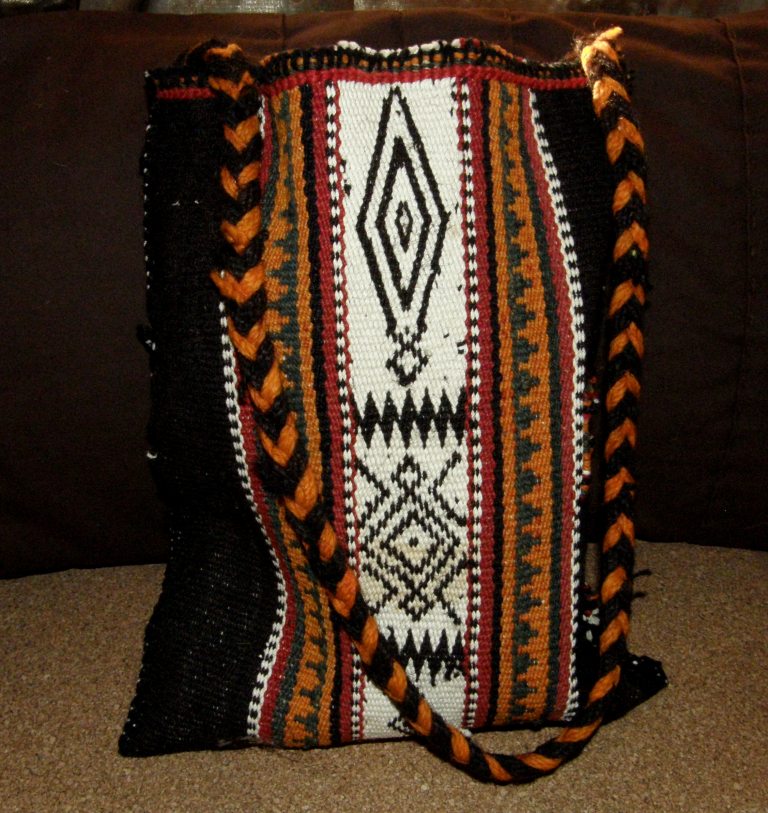
You can see one deep storage bag that I have at the top of this post that Tracy sent me from Qatar. The wool fabric is part of a Bedouin tent divider. That currently holds all my Tour de Fleece gear.

This wool bag that I made years ago with  Mapuche designs woven with supplementary warps hangs on a doorknob and holds all my camera stuff…battery recharger, cables, tripod attachments etc.

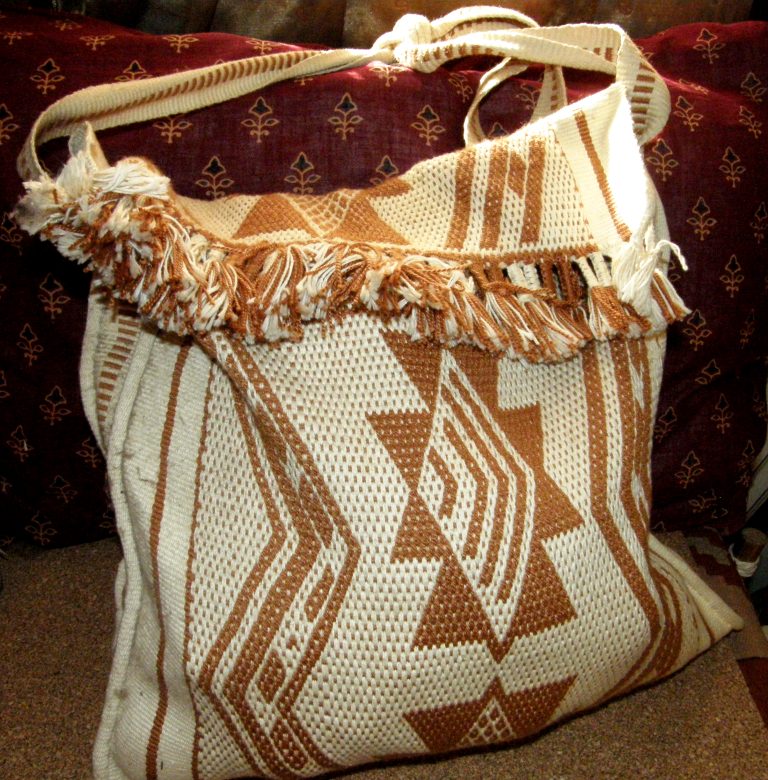
This gigantic cotton bag with Guarani pebble weave designs, which was bought here in Santa Cruz, hangs off one of the bed posts.

So there are more bags to be made so I can get everything off the floor and onto the walls! Well, you all know that I am just looking for an excuse to weave more things.

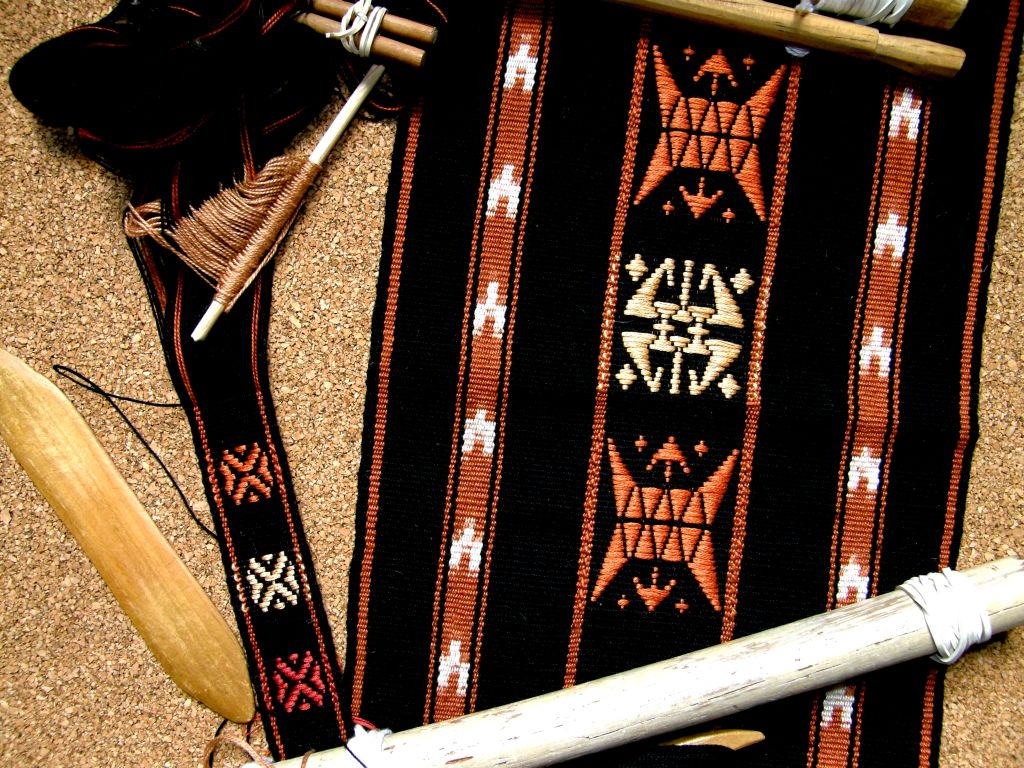
So, I am in the process of weaving a hanging strap, which I couldn’t resist decorating, for what will be a new storage bag made from a piece of fabric I wove some time ago as an ikat experiment. The strap has motifs from Bhutan as does the bag fabric.

It will also need a back and some sides in plain black…it will be very fast to weave those.

This will hang on the wall and hold what is currently being stored in a large basket on a shelf. The basket will go and yes! that way there will be more room for books or at least something that is currently on the floor. (I have a new book coming in the mail…thanks Anna!)

The motifs have been woven using supplementary wefts. I used one and a half strands of embroidery floss as the supplementary weft with my 35wpi cotton warp and weft. Veeeery slowly things may become a little better organized.

I have been admiring the designs made by the Huichol people of Mexico in balanced double weave for a long time ever since I first ran across their work in a museum in the US in 2007. They make bags on which they add large corner tassels and have an unusual way of braiding the warp ends.

These are a couple of samples I made in this technique some time ago.

 I prefer the patterns that they use in their belts and so I will probably try to make a storage bag in this double weave with motifs from their belts. I wonder if I can figure out how they work those warp ends.

The other project I worked on this week was the mug rug set.

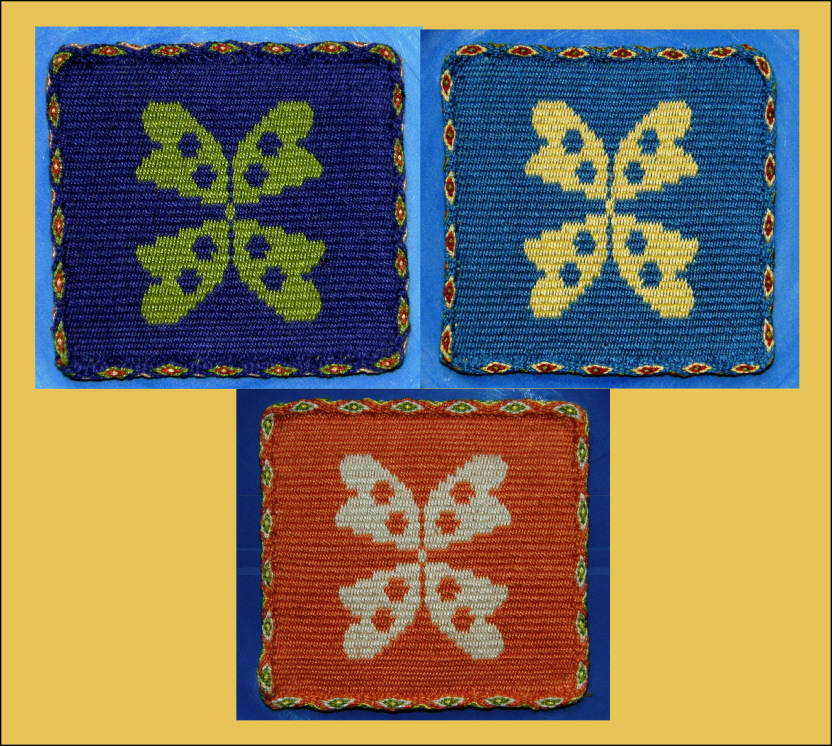
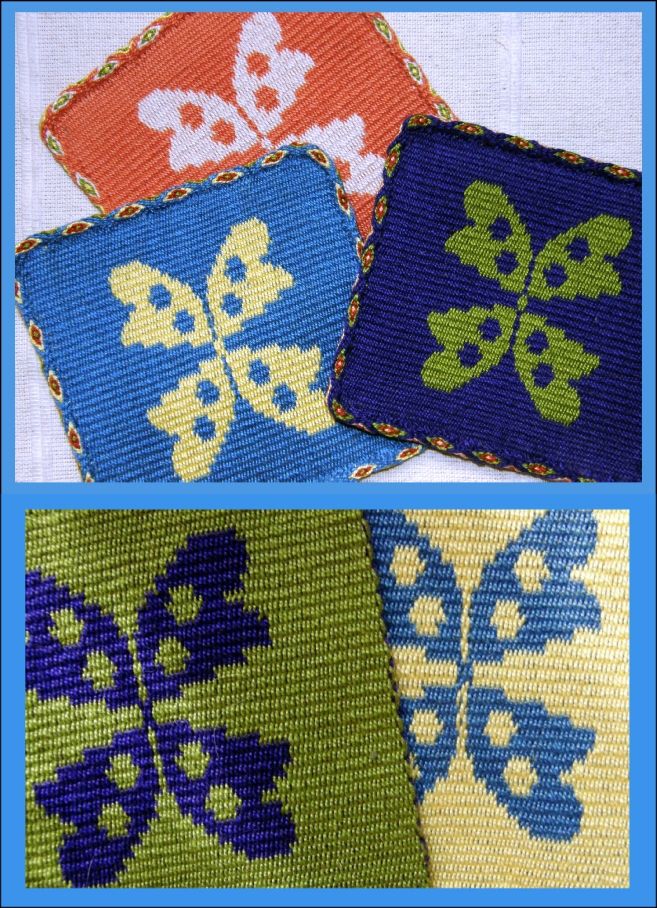
My friend, who has decorated her kitchen with flower and butterfly motifs, saw the prototype I had woven (at left) and asked for a set for her breakfast bar. Now she tells me that they are too pretty to use and that she will put them on her wall.

I have made three and will wait for her to choose the colors for the fourth. The motif is neither butterfly nor flower and is based on a Guaraní leaf design which I wove one way and then mirrored.

The red and black sample, which is larger than the other three, will stay here as my tea mug rug where I work on the floor and the other three will go to Evelyn with a fourth one yet to be made. They have all been edged with tubular bands.

Evelyn’s kitchen is yellow with bits of green and blue in the wall tiles so I think these will look nice there.

It’s hard to decide which face to make the “right” side.

There is another commissioned piece that I have been working on, which I can’t show here yet, but this piece has made me even more enthusiastic about the simple string heddle.

This is a particuarly long but narrow piece that I am weaving in Andean pebble weave and I have set up the warp with four sets of string heddles (two more than I would normally use for pebble weave), and what an incredible time saver this has been! This project is simply zooming along!

The black and white cord that you see in the warp is my “saver cord”. By using these two additional sets of heddles and the saver cord I actually get to do seven consecutive weft passes without having to do any pick-up for this particular design.

String heddles are so cool! I love how they allow you to put one warp thread into multiple sets.

No matter how they are made, whether they are single or continuous, I love them.

You can use one, two, three or four as I am currently using. I am not sure what limit I would put on the number that I would personally consider comfortable or practical for my own backstrap weaving. I have seen backstrap weavers in pictures with many more.
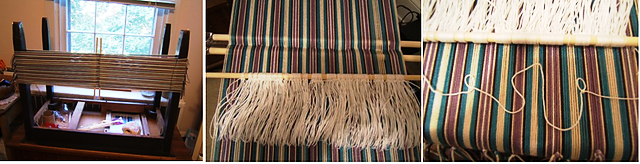
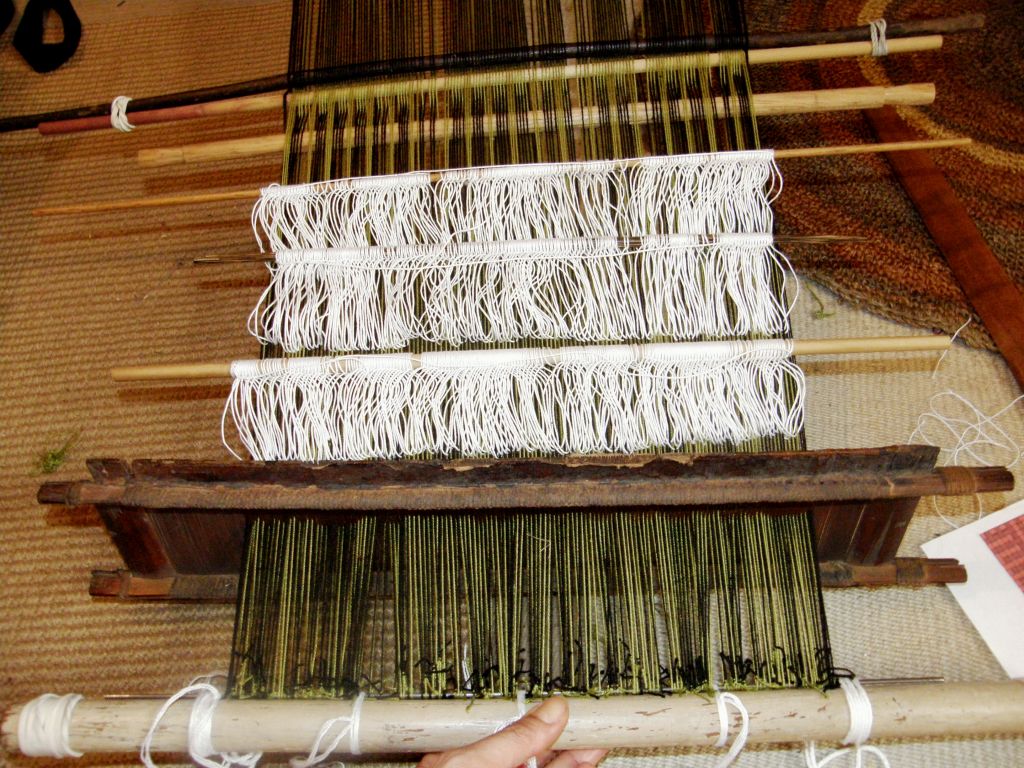
The warp on this vertical loom in Ecuador will have eleven sets of patterning heddles plus one that will control one of the two plain weave sheds.

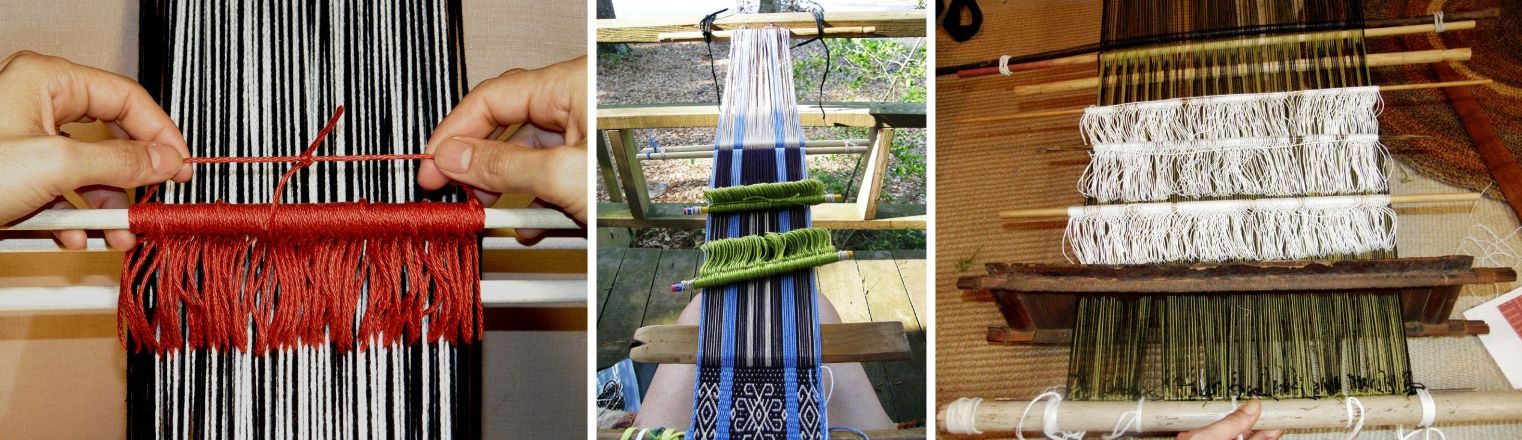
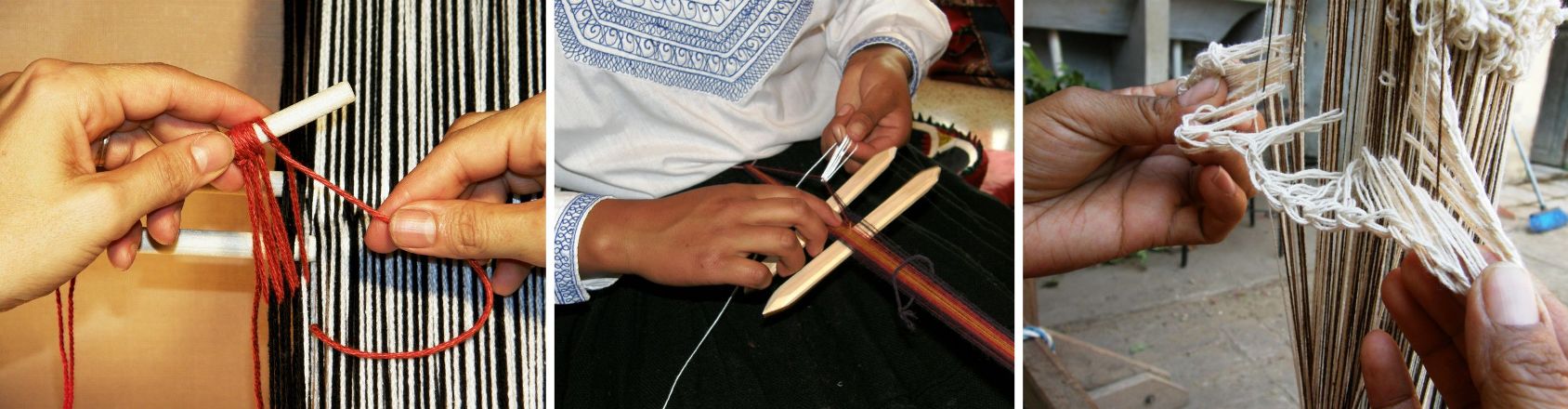
They can be made on a stick, made around the fingers and knotted into a bunch or chained together.

There are so many different ways to make them with no one particular way being the “right” way. I have chosen my favorite ways over the years but love seeing and learning new ones.

Education and More has just posted the following video on YouTube showing a Guatemalan weaver teaching her foreign student the way she makes her string heddles.

While on the subject of Guatemala, it is always fun for me to go to Facebook and see the latest video that Red Corn Tours has posted on Guatemala…weaving, costume, festivals and different aspects of simple daily life from the making of tortillas to the washing all those beautiful hand woven huipiles.

And now for our plain-weave backstrap loom weave-along progress….

We started this week with more people, so far, opting for the balanced weave project after a flurry of pre weave-along DIY reed and hole-and-slot heddle making activity.

Warp-faced projects for the color and stripes challenge from Bobbie in cotton and Jennifer in her homespun wool.

Those who have not joined the weave-along have been turning out projects on their backstrap looms as well.

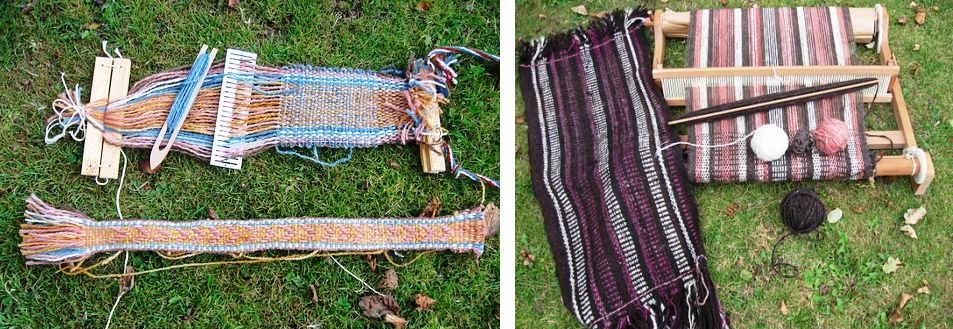
Jennifer is weaving a balanced piece using hemp yarn and a reed made for her by Janet. She has also finished three plain weave warp-faced panels with her homespun wool which will be joined into a bag.
Here's the beautiful reed that Janet made. Kathi has set up her loom with a rigid heddle with different kinds of yarn for her balanced weave project.
Cindy has joined in showing us her warp wound on its stakes and there she is with loom set up and ready to weave a warp-faced band.
Blomster is using wool in a piece she is weaving with a rigid heddle on her backstrap loom. It is pictured next to the warp-faced band she made with the same warp. She is making a bigger wall hanging using her rigid heddle loom and natural color and madder-dyed wool as, being new to backstrap weaving, she does not feel ready to attempt such a wide piece yet on a backstrap loom. Her wide piece is inspired by the hanging you see nearby which she bought in Oman. She thinks that it was probably made with goat hair.

Both Amber and catknitlatte have reported that they are on their way and we hope to see progress pictures soon.

Fiall and WannaGTD finished these backstraps before the weave-along started but these backstraps could easily be weave-along projects as they fit the plain weave criteria.

The instructions for weaving these backstraps are in my WeaveZine article.

Janet is making a shawl using her 24" rigid heddle and a bunch of different yarns. Her warp is cotton and her indigo-dyed weft will come from her homespun stash. This is really amazing! She will weave it in several panels.

Knitnfrenzy and ElizArtist have both checked in. Knitnfrenzy is going for a warp-faced project while spindleori showed us her homespun, at left, which she will weave up with a rigid heddle to make a bag.

Dygvvi is going to weave fabric which will go around a frame to make a yarn storage bucket.

We are waiting to see what Franco, AuntJanet and Phil have been up to. We know that Phil has a painted warp and can’t wait to see how that is going.

Marsha and Traudi have been working on their patterning techniques on projects outside the weave-along. Marsha's band has designs in both simple and two-color alternating floats ("warp floats galore") while Traudi has been playing with supplementary weft patterns.

And what about my weave-along project? Blush…I had better get going and go warp one up!


Backstrap Weaving – Sett and Match

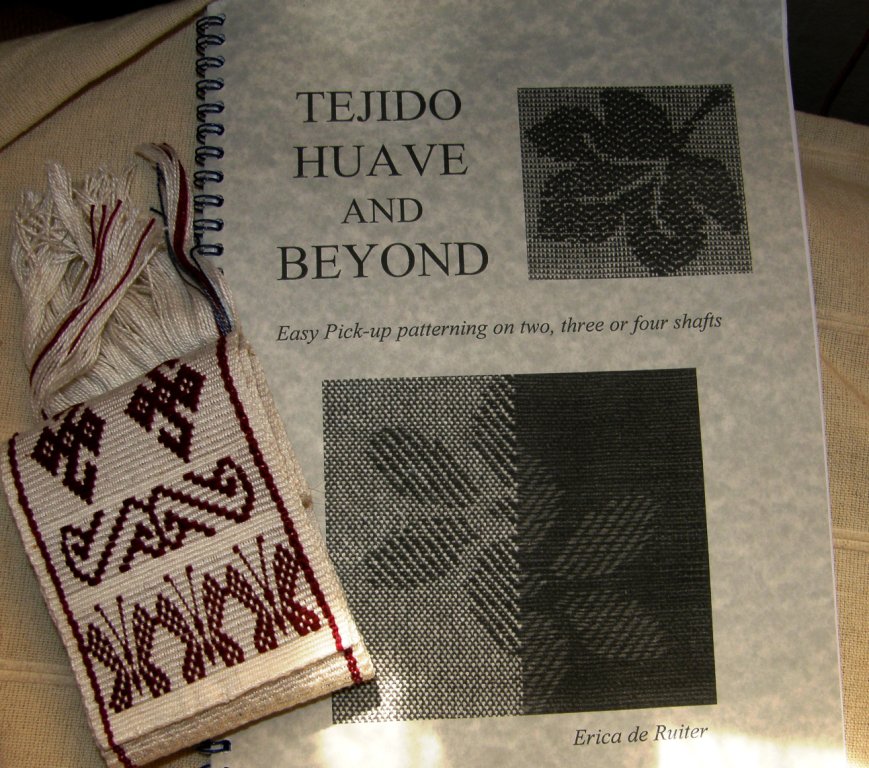
In the mail this week…a book on “Tejido Huave” by Erica de Ruiter which is described as “Easy pick-up patterning on two, three or four shafts”.

I had quite recently seen images online of Mexican Huave textiles decorated with supplementary wefts and used a butterfly motif from one of them on a warp-faced sampler of inlaid brocade patterns.

I am interested in seeing the variations that Erica de Ruiter has developed using the Huave textiles as her inspiration.

It will be fun to play with more than three sheds on my backstrap loom and, to get into the swing of things, I set up my loom for a four-shed weave this week using three sets of string heddles, a shed rod and my lovely bamboo reed.

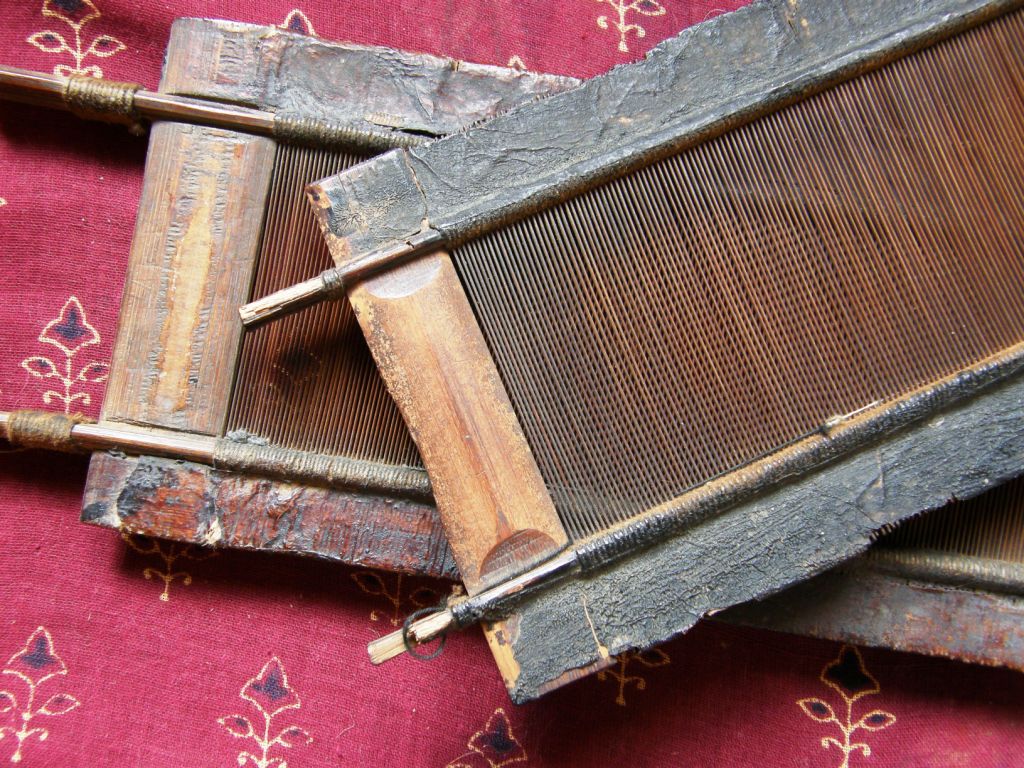
Finally this bamboo reed gets to do some real weaving with its new owner. I got two reeds like this at a stand selling textiles and weaving implements of Chinese minority groups at Convergence last year. My mind wanders off thinking about who may have been the previous owner/s of these reeds, what kinds of warp thread passed through their slots, what kind of weft they beat into place and the fabric they were used to produce.

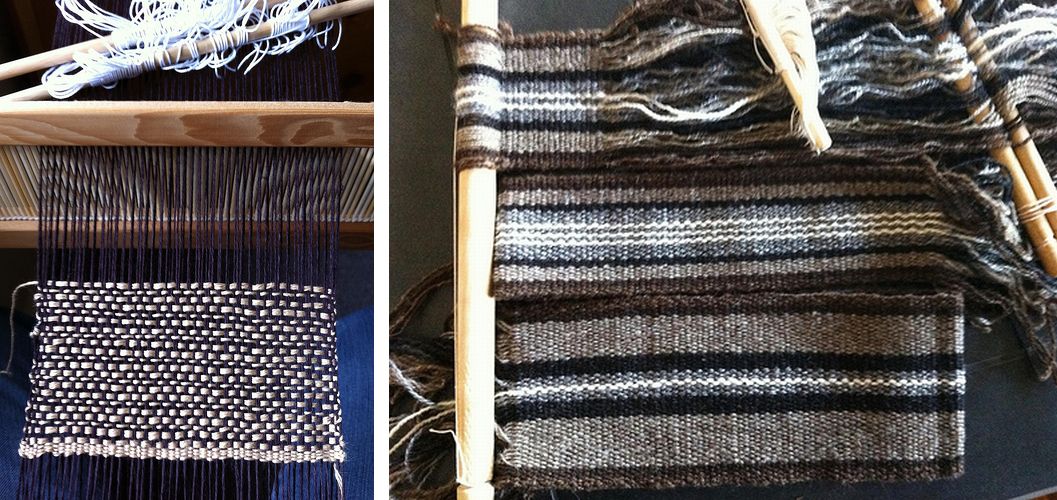
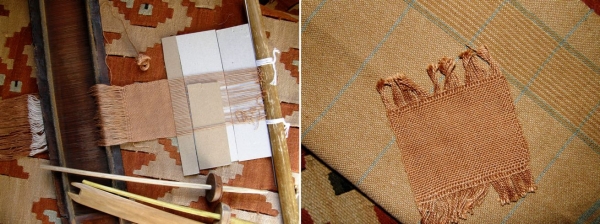
I made a tiny sample a few weeks ago to see how suitable my thread was for the spacing of the slots and since then have been dithering over what kind of weaving I want to do. This reed is 23 dpi and I am using my #10 crochet cotton. I guess I am working backwards as one usually chooses their yarn, figures the sett for the desired technique and then uses the appropriate reed. I, on the other hand, have the reed and am figuring the rest out with that as my starting point.

You can see my tiny sample above. I wove just enough to be satisfied that my #10 crochet cotton works well in this reed. I was thrilled with how it looked after weft finishing.

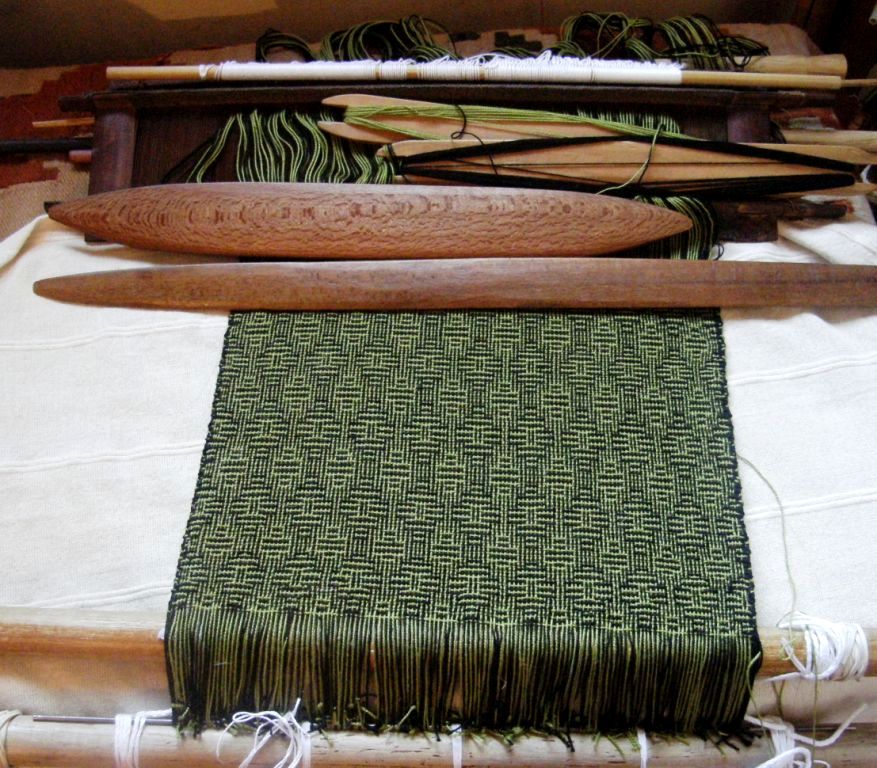
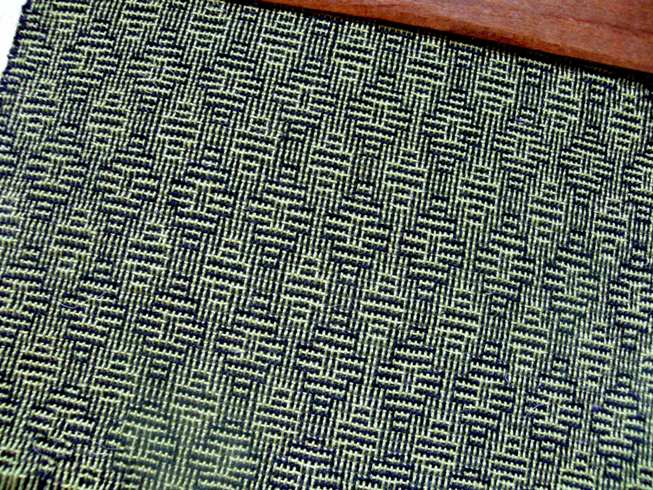
I went ahead with a four-shaft, four-treadle shadow weave using a draft I found online. I made string heddles for the threads on the shafts for each of the treadles…three sets of continuous string heddles with threads for the fourth treadle held on a shed rod. So the threads for shafts 2 and 4 (treadle 1) went all together in one heddle and so on.

Of course the whole business is a lot more stable with this width. When I wove the tiny sample it was very awkward handling the wide reed on the narrow warp. The reed sits up  nicely on this wider piece and it is really quite a comfortable set-up.

I mis-counted in the sequence at the start before things really got underway. Now I am really enjoying this!

I don’t care for the edges and have yet to find a good way to turn the two wefts. I warped two ends of double- stranded black thinking that that might make a good edge…well, not so much!

This has been all about the process so I had no thoughts at all in the planning stage about what this piece might end up being. I only wound a one-yard warp and now I am thinking that I might use it as lining for a bag.

It is odd for me having to wait to wet-finish this piece to see what it will really look like. In the kind of warp-faced weaving that I do, what you see on the loom is what you get. I am really impatient to get this off the loom, wash it and see the final product but, at the same time I am really enjoying weaving it…just raising heddles and passing wefts…such a change not doing any pick-up!

Two very different projects on the loom this week. One was all about matching designs and the other about yarn and sett for shadow weave…sett and match!

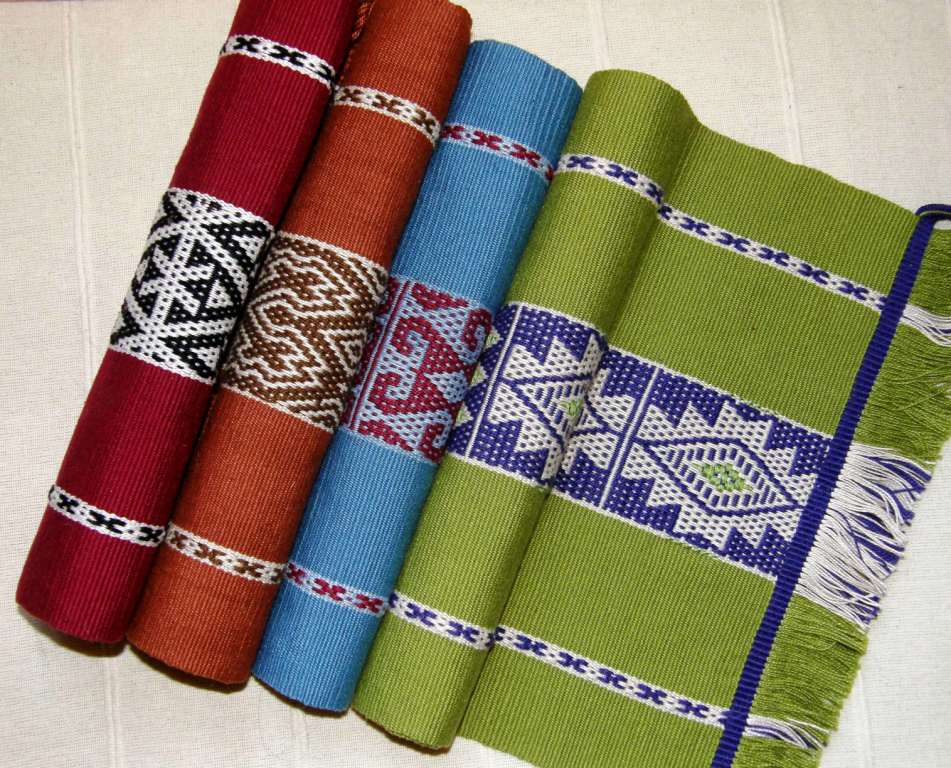
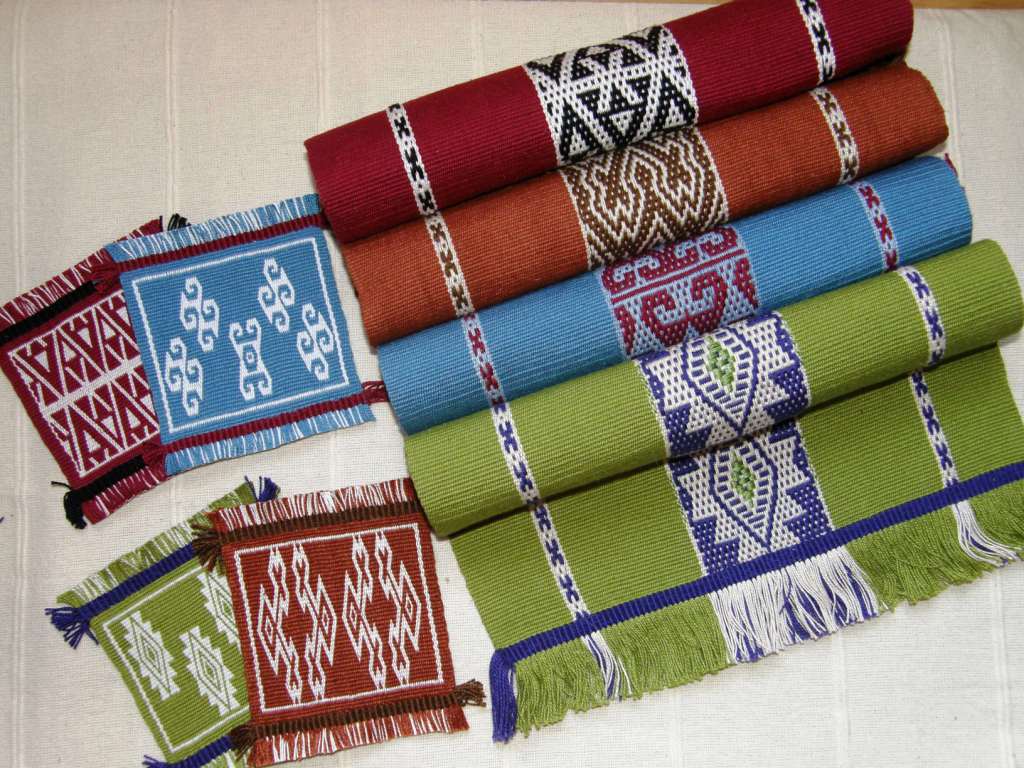
The other weaving I did this week did involve pick-up. I made a set of mug rugs in double weave to match the patterns on the four place mats I recently finished.

The patterns on the place mats were woven with simple warp floats and I tried to include elements of the various motifs in the matching double weave mug rugs.


I used weft twining on the edges of the mug rugs to match the finish of the place mats which also allowed me to incorporate the third color as each place mat had been woven in three colors.

The “Worldwide Weaving Web” has brought all these wonderful patterns into my home which I have seen mostly in images online.  A wonderful book on Tejido Huave has come my way as a result of internet wanderings and a box of goodies arrived just today from an online weaving friend.

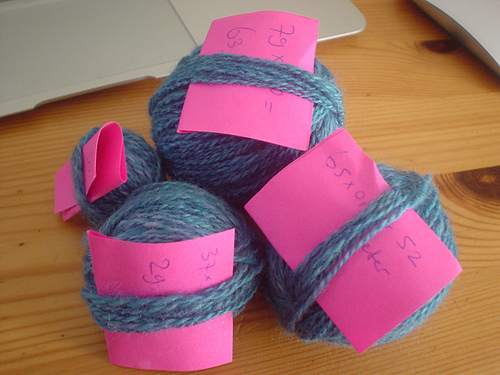
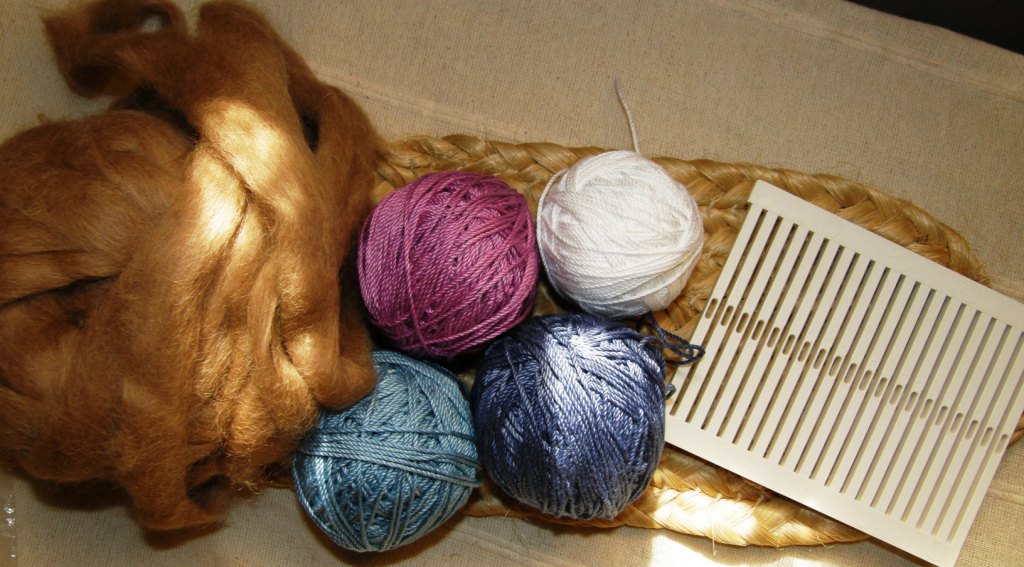
During the Tour de Fleece on Ravelry our Backstrap Weaving Group organized a fiber gift exchange and here is what I got from Bobbie…some suri alpaca fiber to spin…so soft!! and four balls of cotton for my backstrap weaving. The colors were dyed by Bobbie herself. After having met Bobbie online I actually did get to meet her in person when I was in Portland last May.

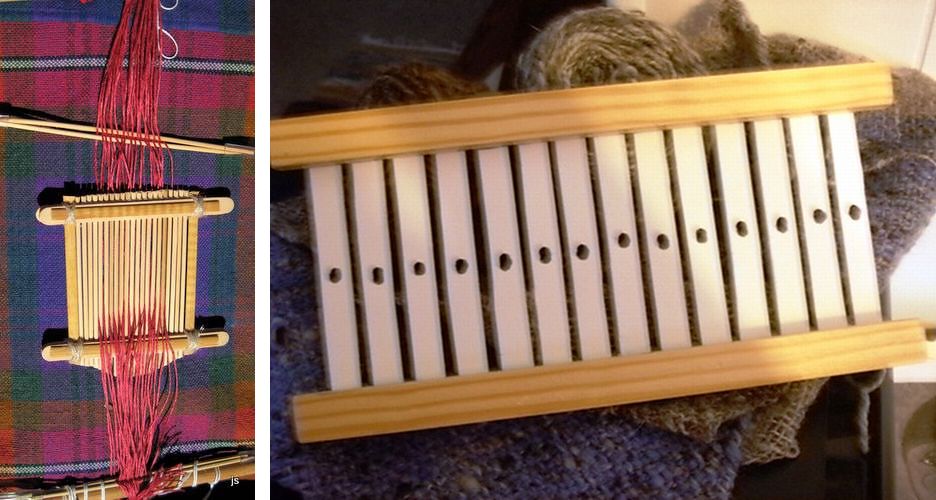
The rigid heddle segment was not in this box from Bobbie but came to me from another online friend who I haven’t had the chance to meet yet in person…Sharon in Florida.

I have taken this heddle out in preparation for the Weave-Along that we are planning for the Backstrap Group starting at the beginning of September. (Read more about this in last week’s post.) It is a plain-weave Weave-Along in warp-faced or balanced-weave and some participants are going to use these bought plastic rigid heddle segments while others are making their own from sushi mats, popsicle sticks and plastic folders. Others are planning ikat designs, colorful stripes and horizontal bars for their warp-faced pieces.

Home made reed and rigid heddle by Dyggvi and Janet.

We have found some good sources online for the heddle segments for those who would like to do narrow weavings. Some people are going to use the heddles that came with their rigid heddle looms. Janet is planning a 24″ wide shawl.

The segments can be found here and here (this link was provided by Traudi) and Joanne from Glimakra gave us information about all the heddles that they have available including some beautiful traditional-style wooden ones for band weaving with handles.

And if these gifts aren’t enough from the “Worldwide Weaving Web”, a real live person arrived from the other side of the world…all the way from Doha, Qatar! Fellow Ravelry member Berta aka mountainbird is traveling across South America on her vacation away from the temperatures in the high forties (Celcius) that are typical in her part of the world at this time of year. She is Canadian but has been living in Qatar teaching English for eleven years.

Berta is friends with Tracy who is a Backstrap Weaving Group member and who has been learning to weave Bedouin-style textiles in Qatar and sharing her findings with us in the group. She sent me this wonderful piece of Bedouin weaving with Berta…

This fabric is part of a tent divider which has been cut up to make a bag. The black and white pattern has been woven using warp substitution technique as has the grey and orange “molar” design. You can also see small segments of weft twining which is what brought me to study these textiles in the first place.

I had learned weft twining with the Montagnard (Vietnamese hilltribe) weavers in North Carolina and google searches on the subject led me to fantastic images of Bedouin weaving which I was able to reproduce being already familiar with the warp substitution and twining techniques.

And now many months down the track I am holding a genuine piece of this weaving, a beautiful gift from Tracy all the way from Qatar…what a thrill. I was aware that the yarn used in the traditional pieces is quite heavy but didn’t appreciate how thick it actually is until now. I can now imagine just how terribly heavy a full tent divider must be in this yarn.

There is something so very wonderful about the coarseness and chunkiness of this piece not to mention the gorgeous wool aroma…definitely constructed to withstand some harsh elements

My reproduction piece below in the #10 cotton just doesn’t seem right at all!!


I had a fun couple of days with Berta who, in true Ravelry style, arrived with yarn and knitting in hand with a couple of pairs of socks already finished.

She is overlanding from Lima to Buenos Aires…many many bus hours in which to knit!

We spent August 6th together and invited an Australian girl from Berta’s hostel (home of Simon the toucan) to join us so we had an Argentinean, two Australians and a Canadian celebrating Bolivian Independence Day in a Brazilian restaurant!

Now she is on her way to Iguazu Falls on the border of Brazil and Argentina.

#########################################

To finish this week, I have put together some pictures and video for what will be the start of a new page on intermediate-level techniques and I wanted to start with a short explanation of what is meant by “complementary warp pick-up”. You will probably run into this term when you read about warp-faced backstrap weaving. Andean pebble weave is just one of the techniques that falls into this category.
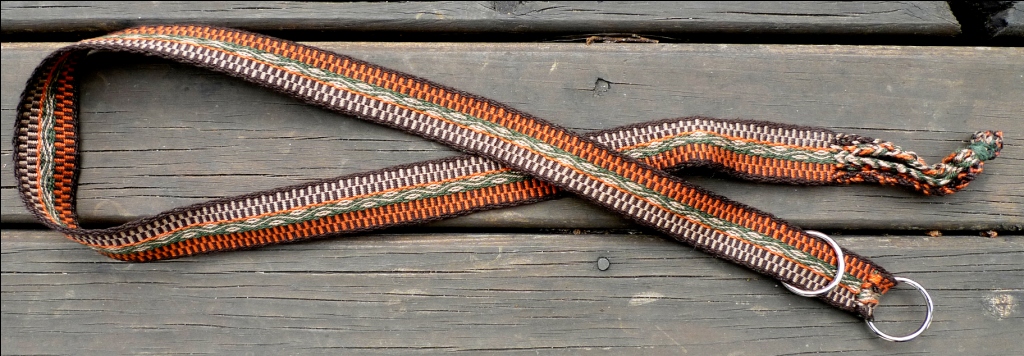
The idea here is not to teach you a specific weaving technique but simply to show you how the weavers pick up the warps to form their patterns when weaving a complementary warp method. Irene Emery defines complementary weaves as those where “two sets of elements play equivalent and reciprocal parts on opposite faces of the fabric,”….

This creates a double-faced fabric. The design on one face of the fabric is mirrored on the other face with its colors reversed as in the pebble weave example below.

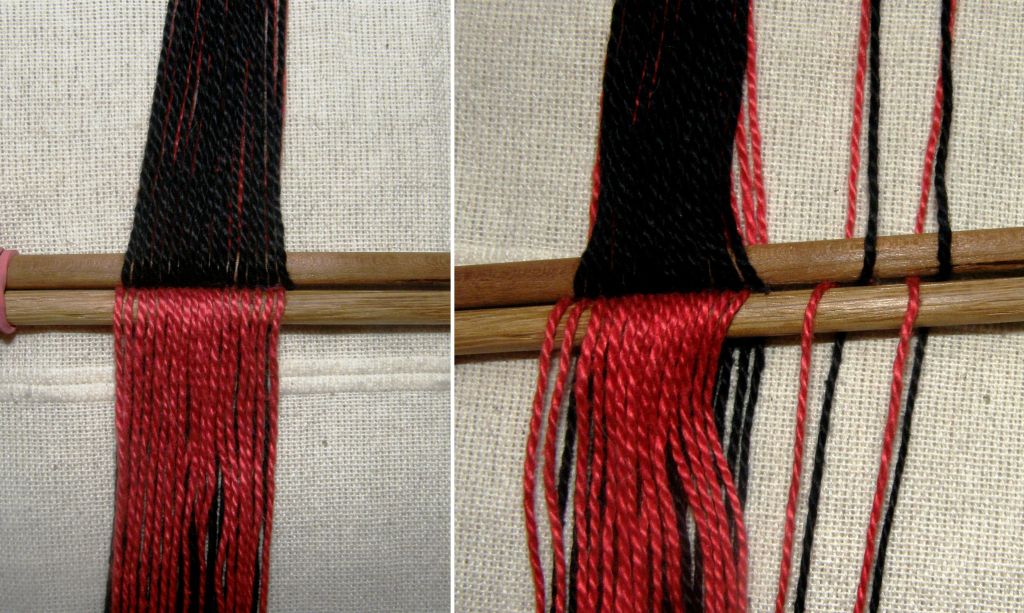
When weaving a complementary warp technique, the warps are generally arranged in two sheds with the colors separated as seen above. The warps in one color will go into string heddles and the other color will be controlled by a shed rod. In the example above, each black warp has a red partner. One black warp together with its red partner is called a complementary pair. In the example, the black warp sits on the right of its red partner. I have separated two complementary pairs from the rest of the warps so you can see how they lie.

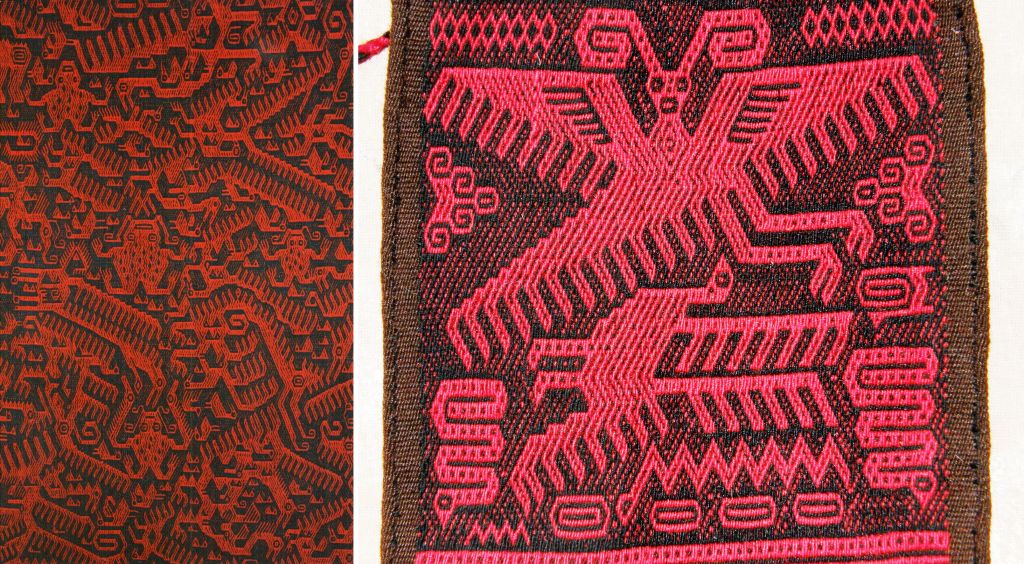
Weavings like these Jalq’a textiles above from Potolo, Bolivia have been woven in a complementary warp technique using red and black threads on a warp that would have looked like my examples above. You can see that the faces of the textiles show red figures on a black background. The back of the textile will show the same figures except that they will be black on a red background.

The pick-up is done with the aid of the cross. The cross keeps the warps in strict order so that the weaver knows which warps are complementary pairs. If the weaver wants black to show on the upper face of her weaving she will pick up the black and drop its red partner. The dropped red will show on the back of the textile.

The way weavers choose to form the cross and carry out the pick-up varies greatly from region to region. There is no one correct way to do it.

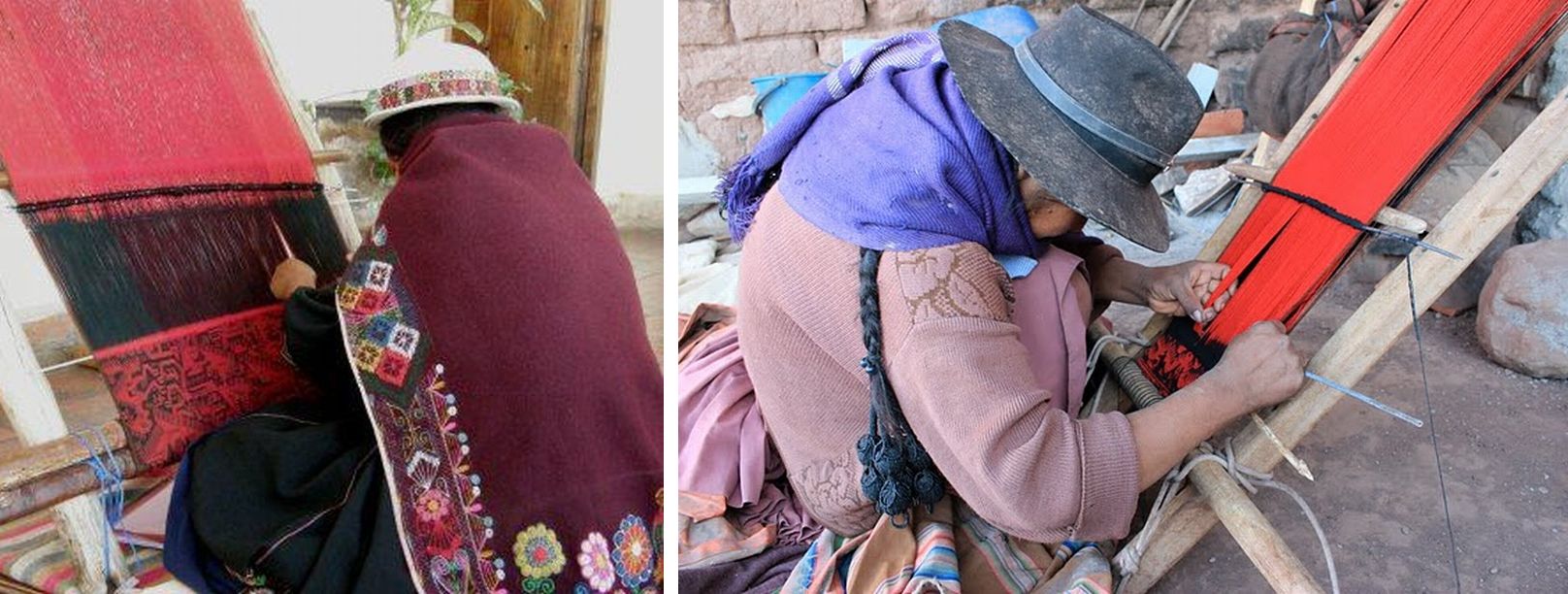
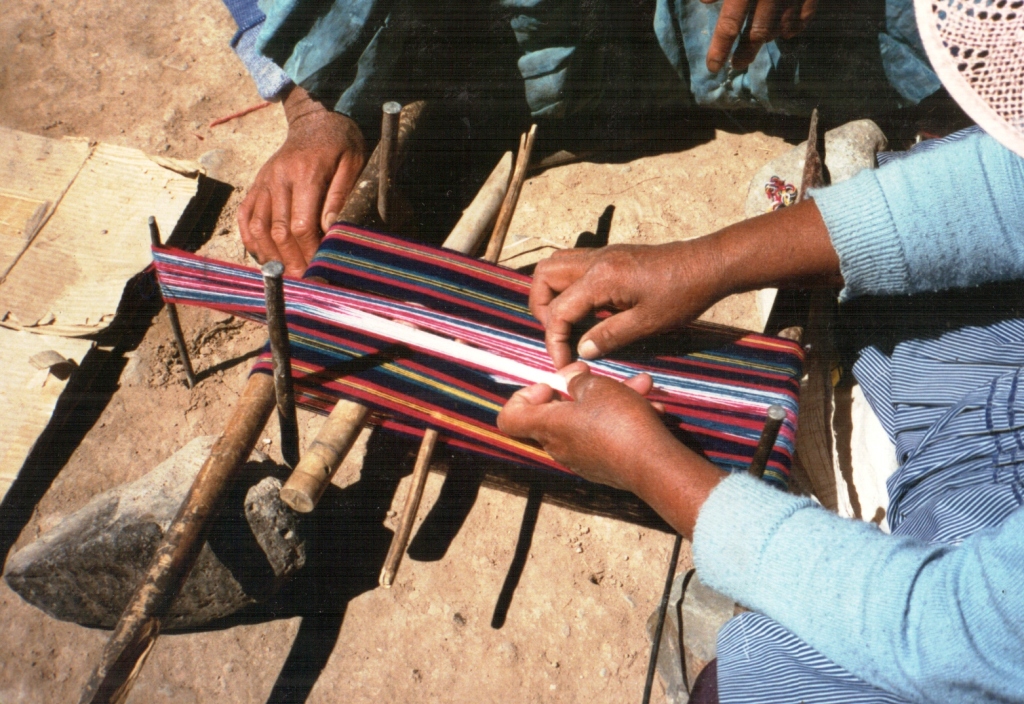
Above you can see two weavers from Potolo with their red and black weavings. The first weaver has created a ”picking cross” down at the weaving line. She has a stick under all the red warps and has opened up the shed with all the black warps. From this cross she will select the warps she needs for her pattern. When she picks a red she will drop its black partner and vice versa. Like this, she will create a shed of red and black warps through which she will pass the weft.

The weaver on the right is doing likewise except that she has inserted a stick under the black warps and has opened the shed with the reds. From this “picking cross” she will select the warps for her design.

Both weavers are using sticks to pick up the warps.

This weaver from Tinkipaya, Bolivia uses her hands to pick and drop the warps for her design. Her weaving has bands of many colors. She has a permanent cross in her warp. You can probably just make it out in the picture. Two cords are holding her cross rather than sticks. She is working her way across the warp picking the color from one side of the cross which she wants to have showing on the front of the weaving and dropping the complementary partner in the other color which will show on the back of the weaving.
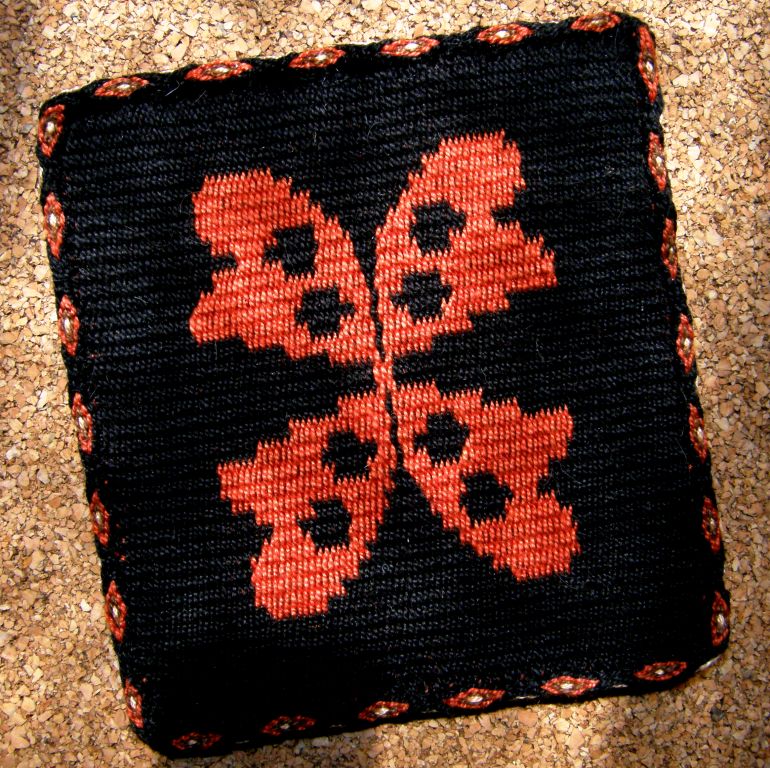
This is the way I was taught to do pebble weave in one region of Peru….picking from a permanent cross with my hands. The pick-up method varies from region to region.

Here is a video that I made showing the theory of complementary warp pick-up. This is how I pick one pattern shed of red and black warps through which I will pass the weft to form my design.

Here are several video clips of Bolivian weavers from Potolo,  Isoso, Tarabuco and Tinkipaya doing complementary warp pick-up. See the hundreds of threads they are working with and see how fast they go! The first weaver you will recognize from Potolo, followed by a Guaraní weaver from Isoso, a lady from Tarabuco and one from Tinkipaya.

The second weaver in this video is my Guaraní weaving teacher here in Santa Cruz. The Guaraní weavers have their own very special way of doing the pick-up and are the only ones I have seen who don’t pick from a cross when doing complementary warp pick-up. Angela has her two colors, brown and white, separated into two sets of string heddles and simply pulls on the appropriate heddle when she needs a color. Somehow she manages to keep her complementary pairs in order and doesn’t mix up or cross the threads!

Well, I hope that these videos and explanations have been interesting for you. Those who have my Andean Pebble Weave book may like to see the theory of the pick-up I am describing therein with step-by-step pictures, in action here in my video. Note that none of the weavers in these videos are doing pebble weave. Pebble weave is just one of several techniques that fall into this complementary warp category.

I am off to the highlands tomorrow for some weaving lessons and will be meeting up with my Tinkuy roomies Dorinda and Maxima and seeing a bit of the Virgen de Urkupiña festival. I’ll be back next week with some new weaving knowledge and hopefully lots of pictures to share.

Backstrap Weaving – Preparing to Weave Along

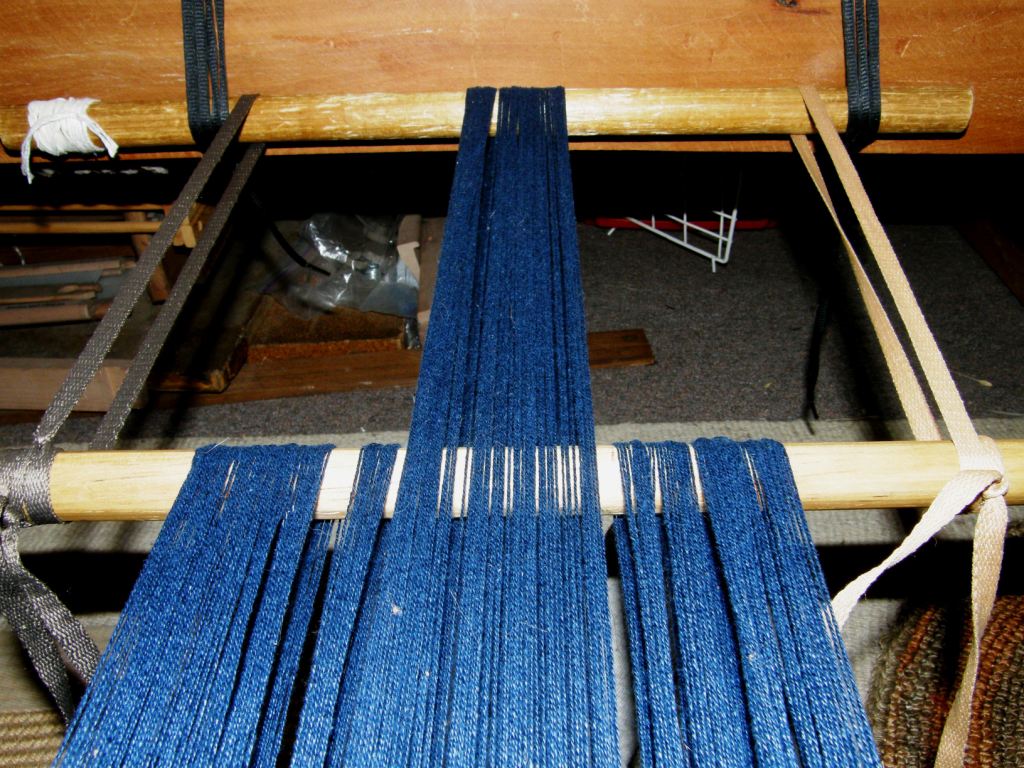
Preparations are underway for a new weave-along in the Backstrap Weaving Group on Ravelry.

The rules are simple: no pick-up, only plain-weave.

We are proposing two options.

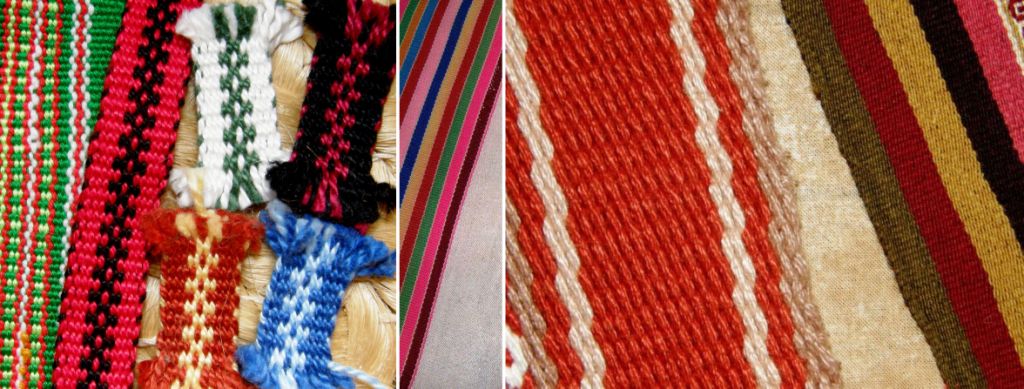
The first is for a warp-faced project playing with COLOR and stripes or maybe even ikat and we have been looking at the bright cheerful colors of Guatemalan and Mexican textiles, the washed-out tones of Central Asia and the gorgeous reds of Bedouin cloth…colors obtained from cochineal and indigo and other natural sources and those bright synthetic neons favored by many weavers in the Bolivian highlands.

Simple spots and chevrons can be programmed into a warp by tying and dyeing. Checkerboard designs, horizontal bars, comb patterns and stripes can be set into the warp on the warping board and weaving can then proceed without having to count, float or pick up a single thread or look at a pattern chart.

The second option is also about plain-weave but this time we are talking about a balanced plain-weave something like the loom bag that Jen put together, the scarf that Kathi made recently and the scarf that Nancy is pictured weaving all using a rigid heddle on their backstrap looms…


The Backstrap Group members have homespun yarn on hand after having completed the Tour de Fleece and so plans are afoot for making wool shawls and scarves with purchased or homemade heddles and reeds.

Janet has already made herself a reed to try out before we start the weave-along in September as has Kathi who made a hole-and-slot heddle. Phil is taking up the challenge to create a balanced-weave piece with his homespun without the aid of reed or rigid heddle.

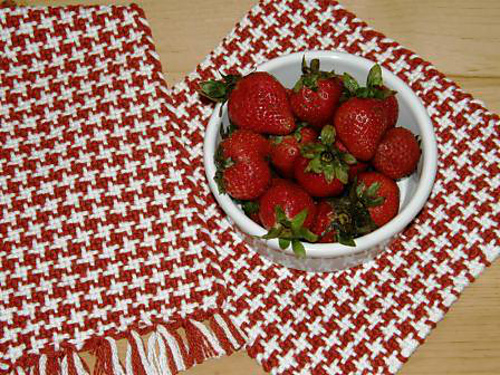
With cotton, towels and place mats can be made very easily using one of the standard rigid heddles that come with a rigid heddle loom. I have three 12-inch heddles that work beautifully. Some of the color-and-weave type projects would be good for this weave-along too…log cabin or simple houndstooth patterns can be woven in plain weave using two weft colors. I wove the one at left with 13 wpi mercerized cotton.

Right now we are filling up the thread in the Backstrap Group with ideas and hope to start weaving on September 1st.

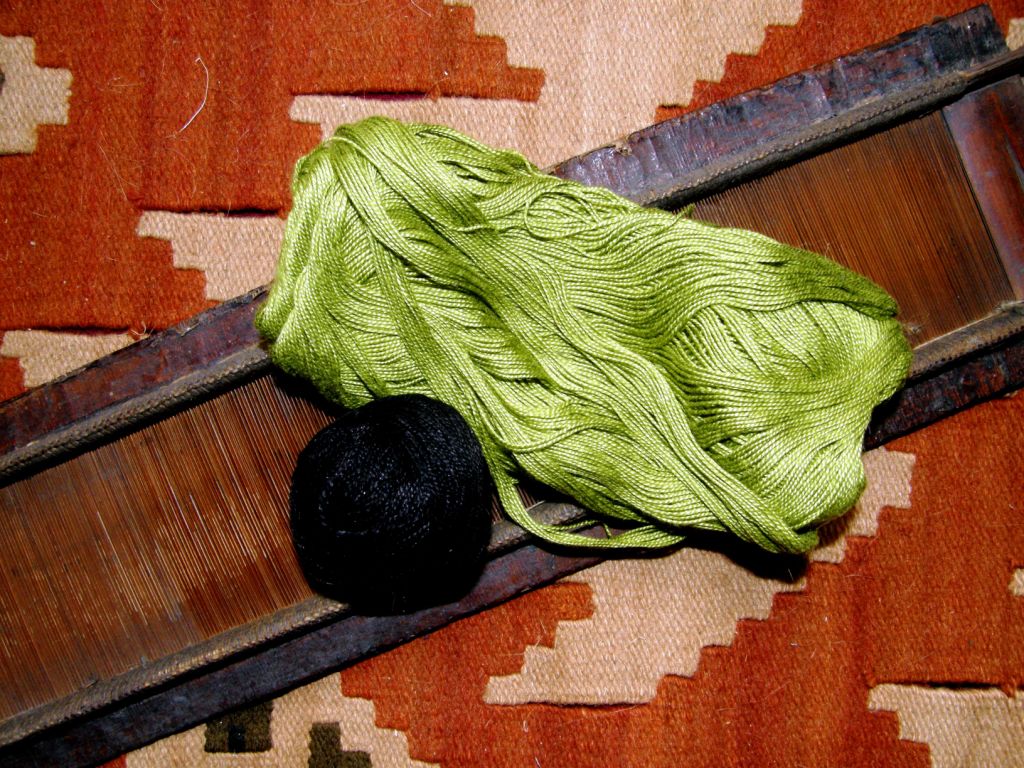
In the meantime, I am itching to get at my shadow weave project using my bamboo reed. I recently saw some fabulous shadow weave pieces made by Dawn McCarthy on Weavolution. They are 8-shaft patterns and not the kind of thing I am willing to take on just yet! but her color combinations are what most attracted me particularly a black and light leafy green piece and those are the two colors that I have decided to go with on my four-shaft sample piece.

I would never have thought to put these two colors together in my project so, thank you Dawn for the inspiration. Dawn is offering online classes on shadow weave soon through Weavolution’s Cyberfiber. “Click, click” with the mouse and I got some inspiration from Dawn and a free shadow weave draft from Handweaving.net.

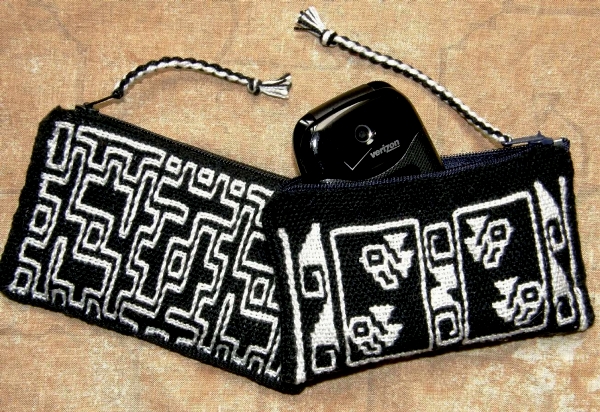
So these are all the future plans. As for what I have been up to this week, following my experiment with double weave edges and the motifs from Bhutan, I now have yet another cellphone pouch to add to my growing supply of gifts.

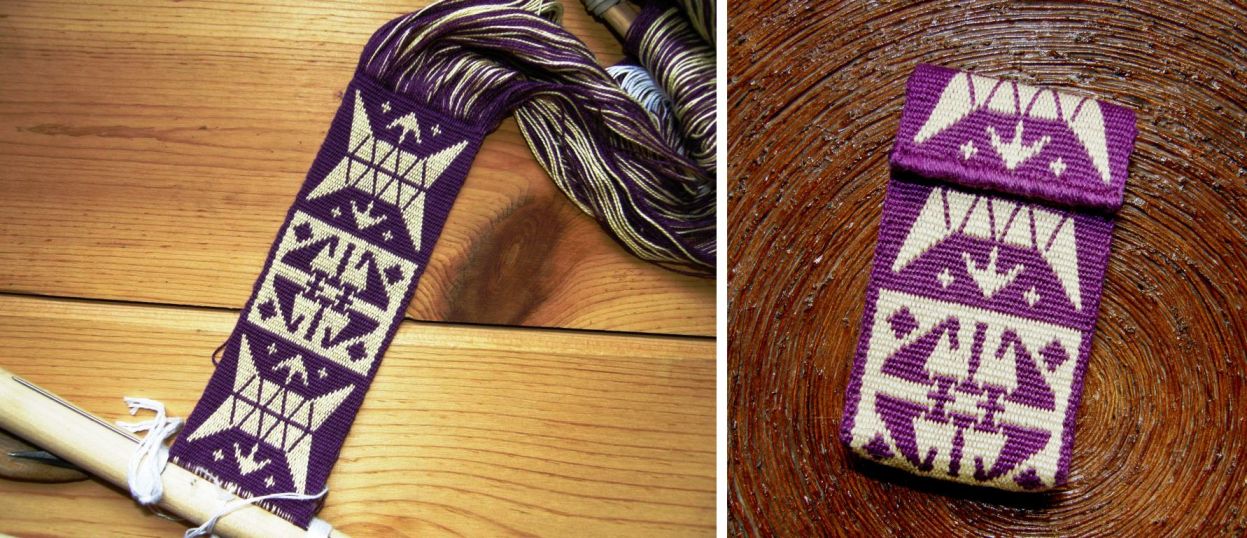
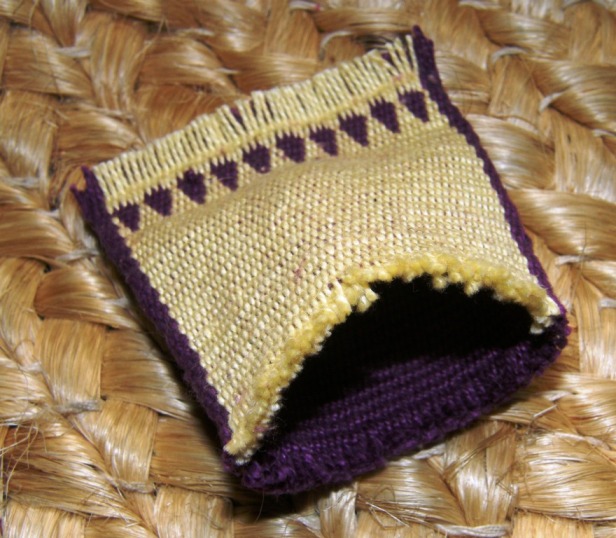
I sewed a band to make rather broad sides as this double weave sample band was only just wide enough for the cell phone. I cut and “stop frayed” the edge of the flap and then just simply sewed over and over it with matching thread and used a simple snap closure. It is quite a sturdy little pouch in double weave.

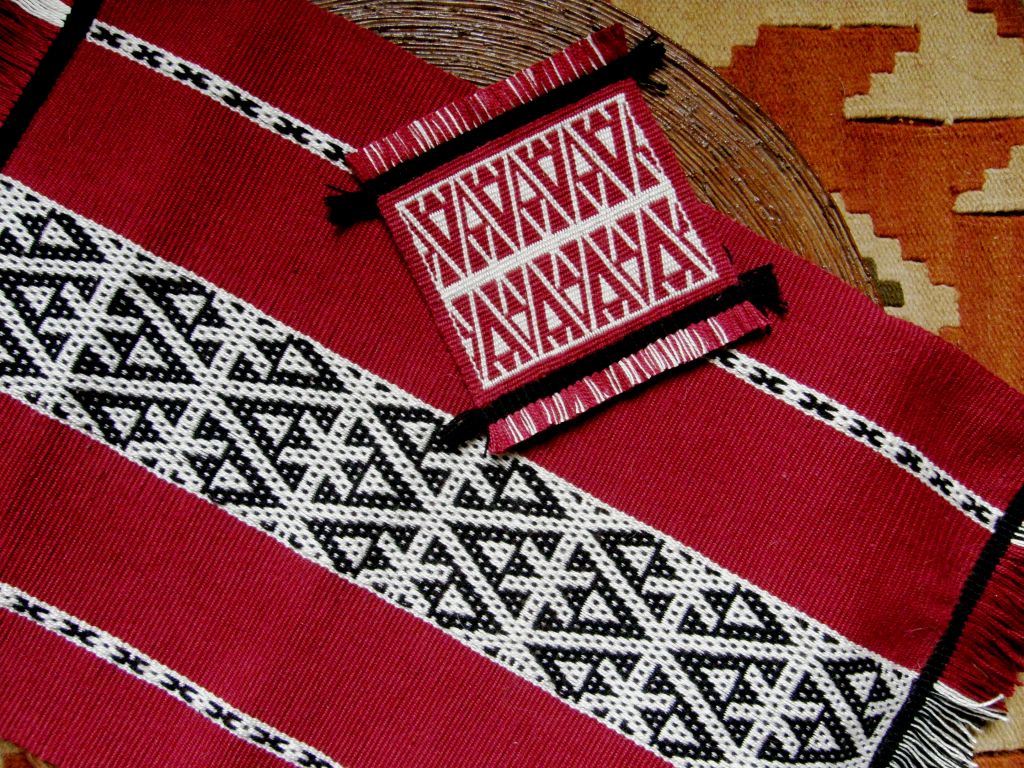
Sticking with double weave and my experiments with warping to create straighter edges, I made the first of a set of mug rugs to match my placemat set. This first one was actually supposed to be a sampler to see if I could make a good square and to test how well I had adapted the float design on the placemat to double weave. The lines of the design could be improved but the size and shape of the finished mug rug is just as I had wanted it to be so this one may be a keeper.

I wove this mug rug using #10 crochet cotton and it is thick enough in double weave to make an effective mug rug. I enjoy doing the twined finish which enables me to use the third color and I quite like the little tasseled ends that the twining produces.

So, each place mat will have its mug rug and I have just warped for the Mexican design one. I am also trying to figure the shortest warp length I can get away with using for these tiny projects.

I have also been warping, measuring, fiddling about and learning some lessons about tension for my chuspa project which I talked about last week. The sample has been made and I will probably get the real project going next week.

Above is the body of the bag warped up with the extension for the pocket.

Warping was easy. The main thing I learned was how even the very slightest variation in tension between the outer sections and the center will be immediately apparent in the weaving. This crochet cotton is particularly unforgiving for this. I will have to call in an extra pair of hands to help tie up the loom bar extensions and get this right next time.

Ha! Now I know that there was a real reason why my two teachers in Potosi set this up together!

There are a few more experiments I have been doing which I will talk about in a future post.

What I spent the rest of my time doing was setting up my tutorial on two-weft double weave here on this blog.

I actually prefer to give this my own name…“embedded double-weave” as there are bands of double-weave embedded in a plain-weave piece.

I consider this an intermediate level technique. 

Sometimes it is nice to have bands of warp-faced double-weave patterns embedded in vast fields of plain-woven solid color or stripes. This means that one can have a large textile that is not entirely double-weave and, therefore, not thick and heavy and still be able to enjoy the crisp motifs on their smooth solid color backgrounds which are characteristic of double weave.

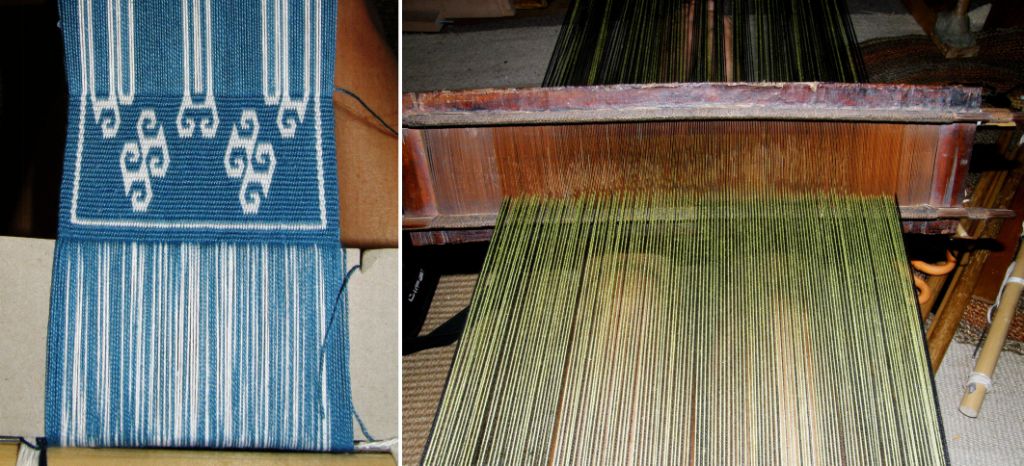
If the large expanses of solid color were woven as double weave, the two layers of cloth would not bond and the weaver would produce two distinct layers joined at the edges, in fact, a tube, as can be seen above.

Here are a couple of my “embedded double weave” examples…

The long black and white piece above left is a table runner in this embedded double-weave technique. Only the center band with the Abba Yohanni motif is woven in double weave. It is bordered by large areas of plain-weave. On the right, the Mapuche design is being woven in double-weave with plain-weave beige borders.

And one more…

Sometimes I choose to use this embedded method for narrow bands simply because I like the way it looks.

The plain-weave borders on these bookmarks nicely frame the double-weave patterned area both in color and relief. The llama motif pattern charts are in this post and lettering charts can be found here.

Weavers in Charazani often use this technique on their large carrying cloths while those on Taquile Island use it on their broad waist bands. They use extremely fine thread and are able to weave intricate detail in their double-weave motifs.

Well, I hope that you enjoy the tutorial. It has some video segments which I had posted to my Flickr page a long time ago.  I am also going to set up an index page of intermediate level techniques and hope to add to that a video showing the basics of complementary warp pick-up soon.

To finish, this is what Amber in the Ravelry group has been working on…a beautiful double weave band and some supplementary weft patterned bands. She also made a white on white warp float band (on the left of the blue supplementary weft band) which looks great.

Now she is preparing her project for the weave-along. Come and join us!

Ooops! My subscribers will have received a message about a Pattern Chart post. Sorry, the charts are there but I didn’t mean to publish them as a post. They are on a page here.