Backstrap Weaving – What Money Can’t Buy

1513230_648143985229230_814686202_nOh, how true, how true! And this message could be a bit melancholic if not for the fact that I can happily say that those “priceless” items that can’t be bought, and which make me very happy, come into my life on a daily basis…not just on Christmas day. 

The priceless items are the opportunities to learn more and more from this hobby of mine about which I am passionate. The opportunities come from near and far…from my own experiments at the loom from which I constantly learn….from weavers here in Bolivia as well as from those on the other side of the world. Sometimes they seek me out and sometimes I just stumble across them via the internet.

While in Australia, I could hardly contain my excitement over a photo of  a backstrap weaver that I ran across online. I patiently waited for a reply from the photographer for permission to show her shot here while boring all the non-weavers around me with news of my find.
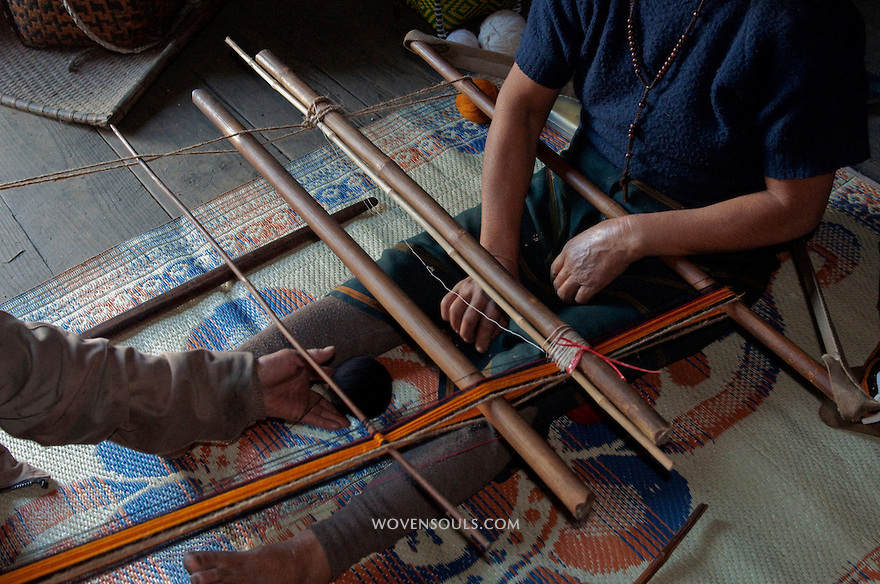
Courtesy Jaina Mishra/Wovensouls

Here is the image which photographer Jaina Mishra has allowed me to show. It shows a backstrap weaver from Arunachal Pradesh in northeast India warping with a partner directly onto her backstrap loom…something that I have never seen before (except for the simple narrow  toe-and-finger method of warping that I have been taught to do by my teachers here in Bolivia and which Maxima is executing below).
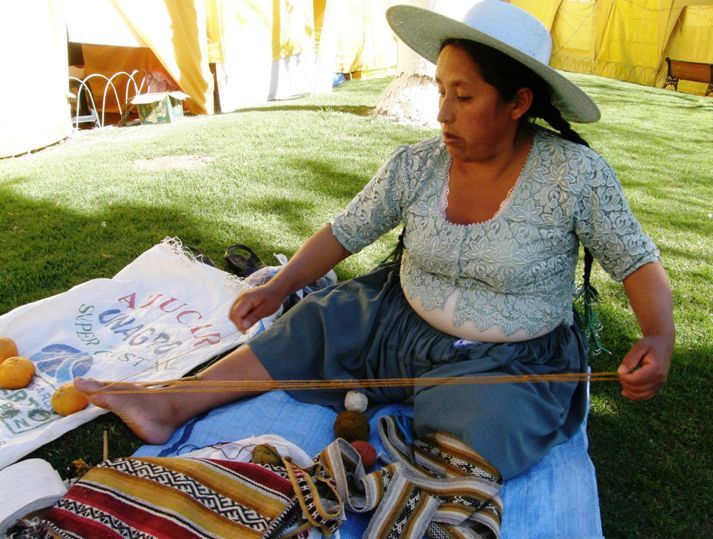
cochabamba-designs

ju-warpingIn the picture from Arunachal Pradesh, the heddles are being installed as the two ladies warp. The thicker of the two sticks at the heddles is being used, as far as I can tell, to ensure that each heddle is the same length.

Creating the heddles while warping is not unusual in Asia. You can see my Montagnard weaving teacher at left with the warp she created on vertical stakes with heddles in place. (Watch a video of my Montagnard weaving teacher doing it on vertical stakes in my blog post here and a video of my explanation here.)

However, I have never seen it being done directly onto the loom with the weaver seated in her backstrap as the ladies in Arunachal Pradesh are doing.

I showed you last week (and here it is again below) a picture of a textile from Arunachal Pradesh that a Facebook friend in India had sent me. I wonder if these ladies are going to be creating something similar.

adi tribe arunachal pradesh nth east indiaThe weaver’s partner is not attached to the warp but is simply sitting within the frame (created by the warp itself on one side and cord on the other to hold everthing square). You can see the position of the weaver’s partner in another picture from Jaina Mishra’s website here. (The website is fascinating and has galleries and galleries of her fabulous pictures.)

The two ladies sit and pass the ball of yarn back and forth and around the beams and shed rod, while creating the heddles. And they wrap the yarn aound a coil rod! (the farthest stick in the picture from the seated weaver). If you are wondering what in the world a coil rod is, I have written quite a bit about this piece of equipment in other blog posts starting here.

I am particularly excited about the presence of the coil rod as the warp that these ladies are creating is on a single plane. So far, I have only come across a coil rod being used by indigenous backstrap weavers in a circular warp. I used to say that those of us in the Ravelry group who have grown to love the good ol’ coil rod and use one in our single plane warps are being unconventional….maybe  we are not so unconventional after all!

???????????????????????????????Here is a coil rod installed on Montagnard weaver Ju Nie’s circular warp.

???????????????????????????????This is the first circular warp on which I used a coil rod. The lesson I learned from this exercise was that, when using lots of fine warp ends, the coil rod is tough to move once installed…use a thicker stick. It took two disastrous stick breaks for that to sink in! Since that first experience, I have been using a coil rod on most of my plain weave projects whether the warp be single plane or circular.
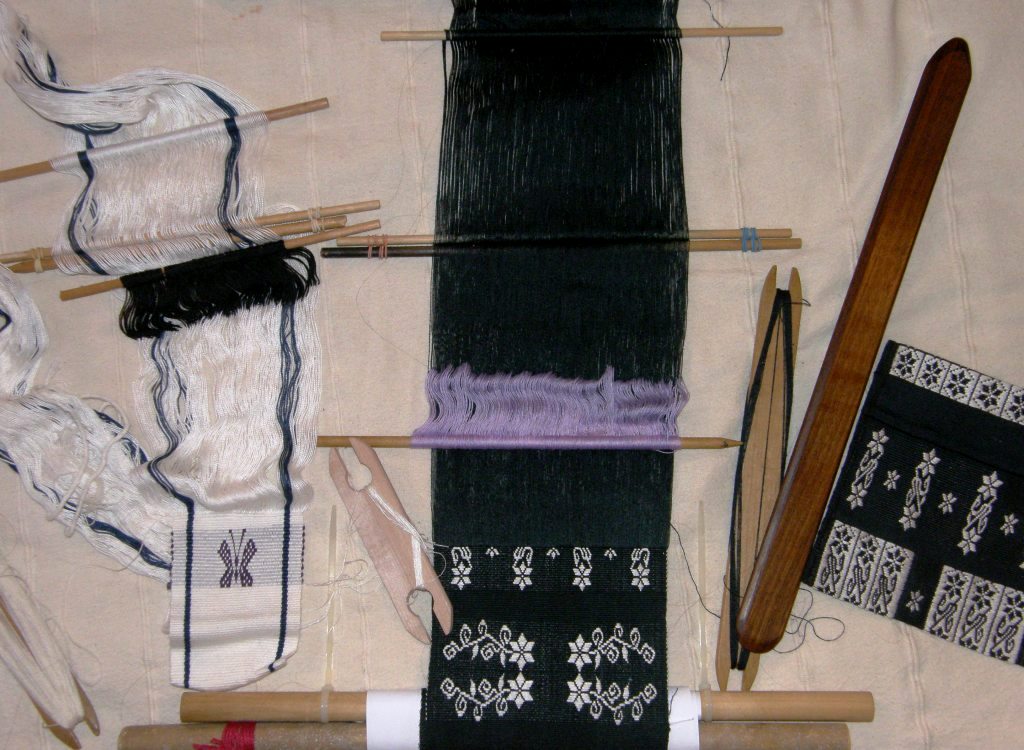
???????????????????????????????Here are two projects on which I am working. The black one is a single plane warp and the white piece is circular. The coil rod on each can be seen at the top of the warp.

I use the coil rod in single plane warps to help create even tension across the warps at the weaving line and therefore prevent “ridging” or “corrugation” of the woven fabric. Weaving an inch or so at the “wrong” end of the loom before beginning  project also prevents ridging but my current preferred method is to use the coil rod. In a circular warp, in my experience, the coil rod has the added benefit of helping to maintain a consistent width.

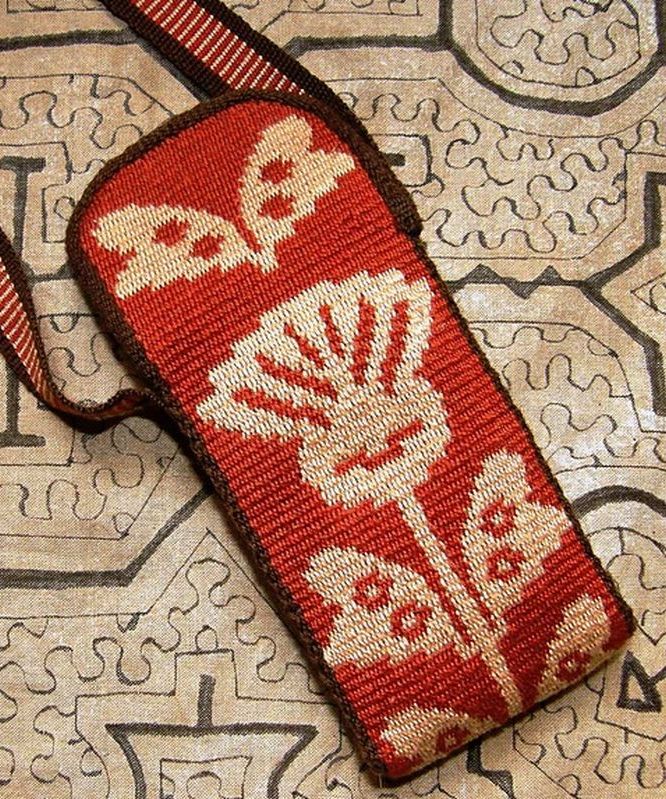
The black piece, by the way, is part of the latest in my red, black and white wall hanging series. The white piece is going to be a little remembrance banner for my mum who loved butterflies and African Violets. So far it has a violet butterfly and I hope to be able to chart and create supplemental weft motifs resembling African Violets.

One more thing I love about Jaina Mishra’s picture is the weaver’s backstrap. I like the little pockets at the ends of the straps into which the beam so neatly fits. So much to be enjoyed in one image!

Yes, these opportunities to learn are priceless and it is wonderful to see so many “encuentros” being organized in South America where weavers can gather and learn from each other. Major ones have been arranged in Peru, and there have been minor ones in Bolivia and Argentina.

Aymara and Guarani weavers learn from each otherAt this gathering in Santa Cruz, Bolivia, my Guaraní weaving teacher got to watch for the first time an Aymara backstrap weaver from Chile and learn the three-color version of the two-color intermesh technique that she weaves on her vertical loom.
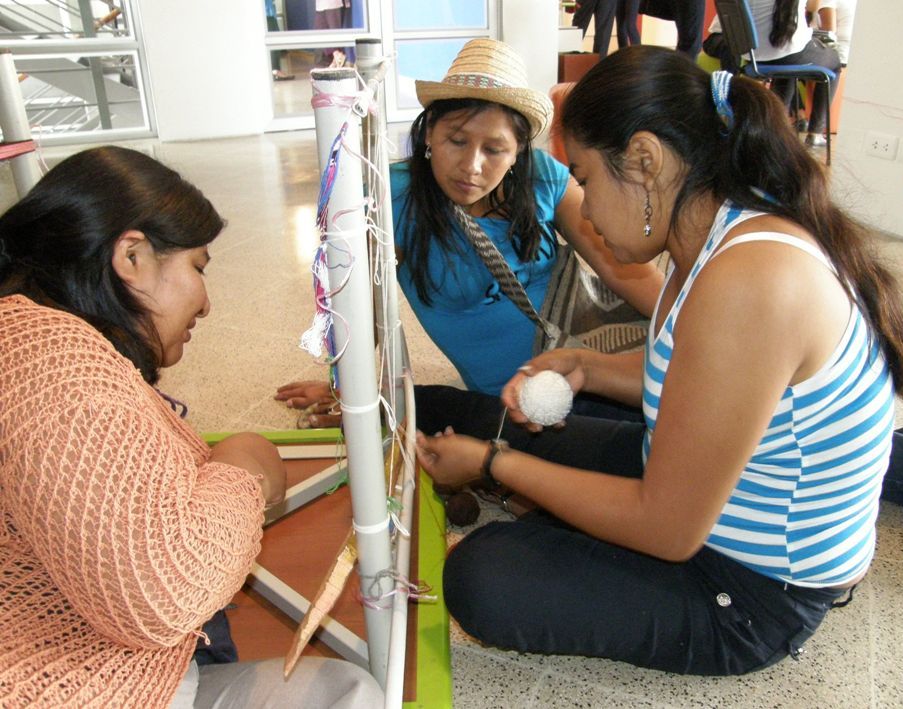
learning dovetail warpingAnd then a Guaraní weaver shows dovetail warping on a vertical frame to weavers from Chile and Colombia.

???????????????????????????????Excited Peruvian backstrap weavers watch and photograph a lady from Tinkipaya, Bolivia weaving on her leaning vertical loom at a gathering of weavers in Peru.

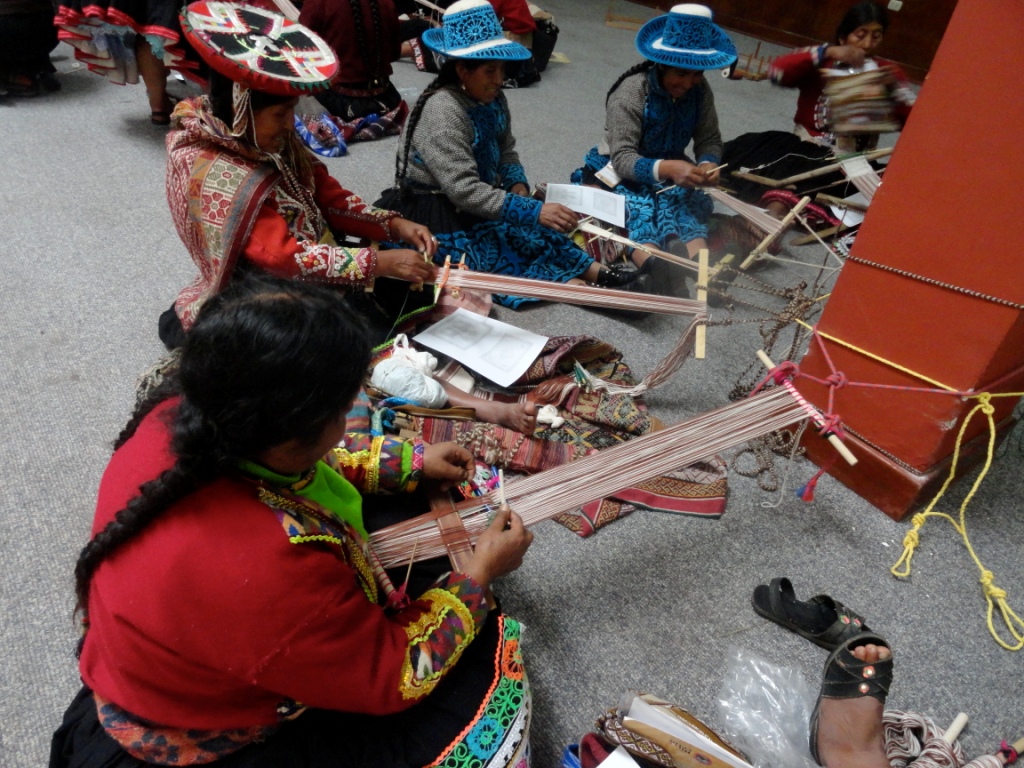
1468797_573365889378997_122630664_nDouble weave expert Jennifer Moore, from the USA, no doubt learned a lot from the Peruvian weavers with whom she worked at the most recent Tinkuy in Cusco. However, the main purpose of her visit was to teach them balanced double weave pick-up. Here is the class in progress. The picture is from the CTTC’s Facebook page. Below is one of Jennifer’s pictures of her students at work. It was an experience that Jennifer described as the highlight of her weaving career. Try putting something like that on your Christmas wish list!
???????????????????????????????

learning single plane warping salasacaThese ladies from Salasaca, Ecuador were eager to learn pebble weave from me. Here we are creating a single plane warp. It was only eighteen months later, when their male cousin taught me the Salasaca style of weaving, that I realised how foreign my way of warping must have been to them. They are used to working with circular warps. Teaching them was an experience that I had never expected when I first went to Salasaca and something that money can’t buy.

Sometimes the learning is very hands-on. And sometimes just looking in wonder and quietly absorbing is enough….which is why I am so grateful for the images I find and am sent. There is still always so much one can learn and enjoy from a distance.

???????????????????????????????A weaver from Tinkipaya, Bolivia who uses a leaning vertical loom, ponders the 24 sets of string heddles on a Peruvian backstrap loom.
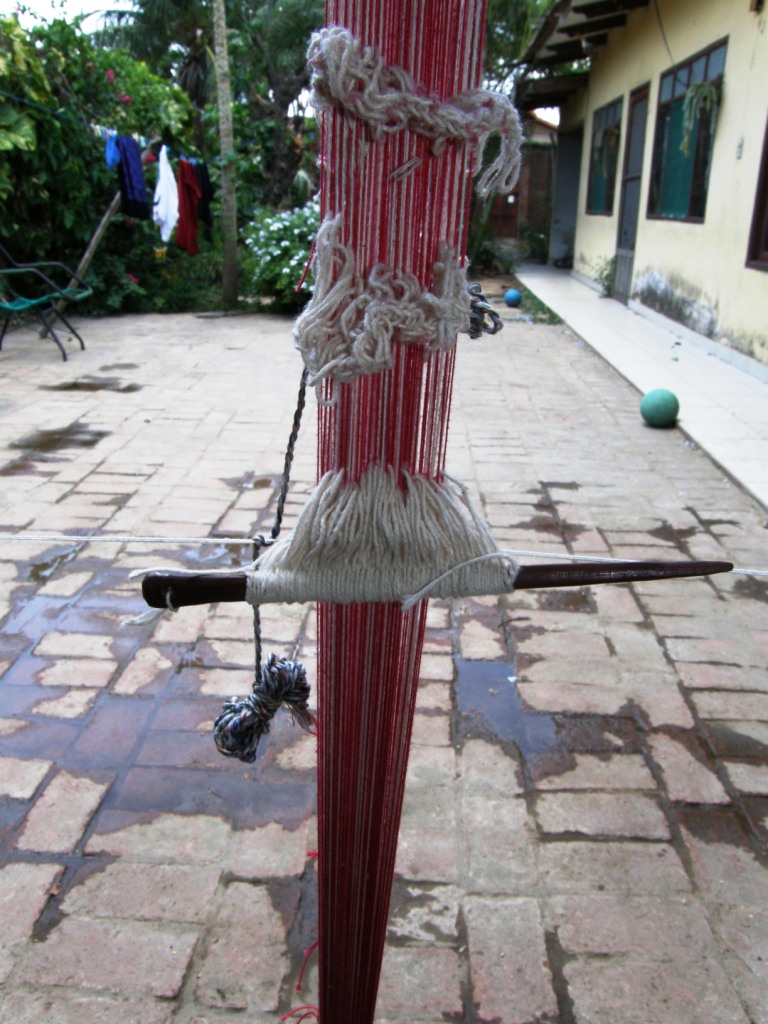
???????????????????????????????Sometimes the thrill can be about learning something as simple as a new way to make heddles. My Guaraní teacher asked me to show her how to make them on a stick. You can see the loose chained heddles higher up in the warp that are traditional in Guaraní weaving.

So, now I am home in Bolivia and have unfinished projects to pick up and new ones to contemplate, books to read and maybe even one to start writing.

I have brought home that yarn that I dyed with eucalyptus leaves and bark in Australia with Dace and have been thinking about a project for that…

??????????????????????The colors of the Australian landscape as depicted in Austrailan artist Pro Hart’s work give me some ideas on how to perhaps combine the rather pale tones that I have in the dyed yarn (and, yes, the thread still smells like eucalyptus!). 

??????????????????????I have a book of Pro Hart paintings that were created to accompany the poetry of Harry “Breaker” Morant, the “horse poet” . The wee bit of homesickness that I am currently experiencing makes me see the “you” in this poem as my home in Australia. You can read the words of the poem here if you are curious about this poet and his work.

More things that money can’t buy….the happiness at seeing what my students go on to create…

The brilliant rust red in Julia’s latest finished piece has my mouth watering…

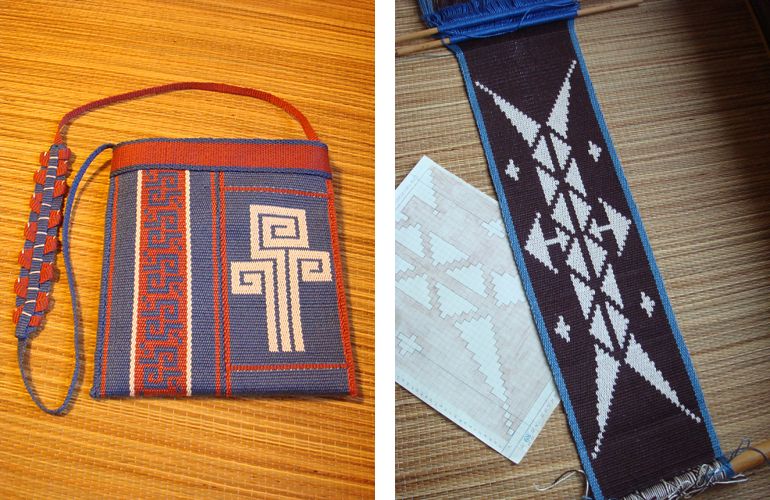
Julias bagI showed the central pebble weave band on this blog before when Julia first wove it and now she has sewn it onto a piece of twill fabric that she wove on her floor loom in the fabulous rust red. The twill design is the perfect match for the pebble weave band, don’t you think? She has lined the bag and finished it with a tubular band. Teach me to sew like this!!!
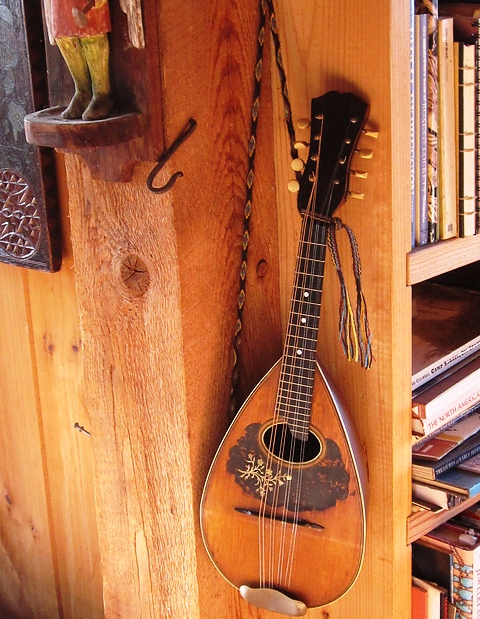
LLausanne's mandolin strapI taught Lausanne the ñawi awapa when I stayed with her in the fall and look how she has used it! It has made a wonderful strap for her mandolin. I am sure that your eyes are wandering to other intriguing treasures in that picture. Lausanne’s home is full of such things.

jennifers pouchesJennifer shows us that both threaded-in patterns and pick-up designs make for  beautiful pieces of fabric. She has made three lovely pouches with braided zipper pulls. The pick-up pattern she is used is one that I charted from textiles of Tinkipaya, Bolivia which appears in my second book.

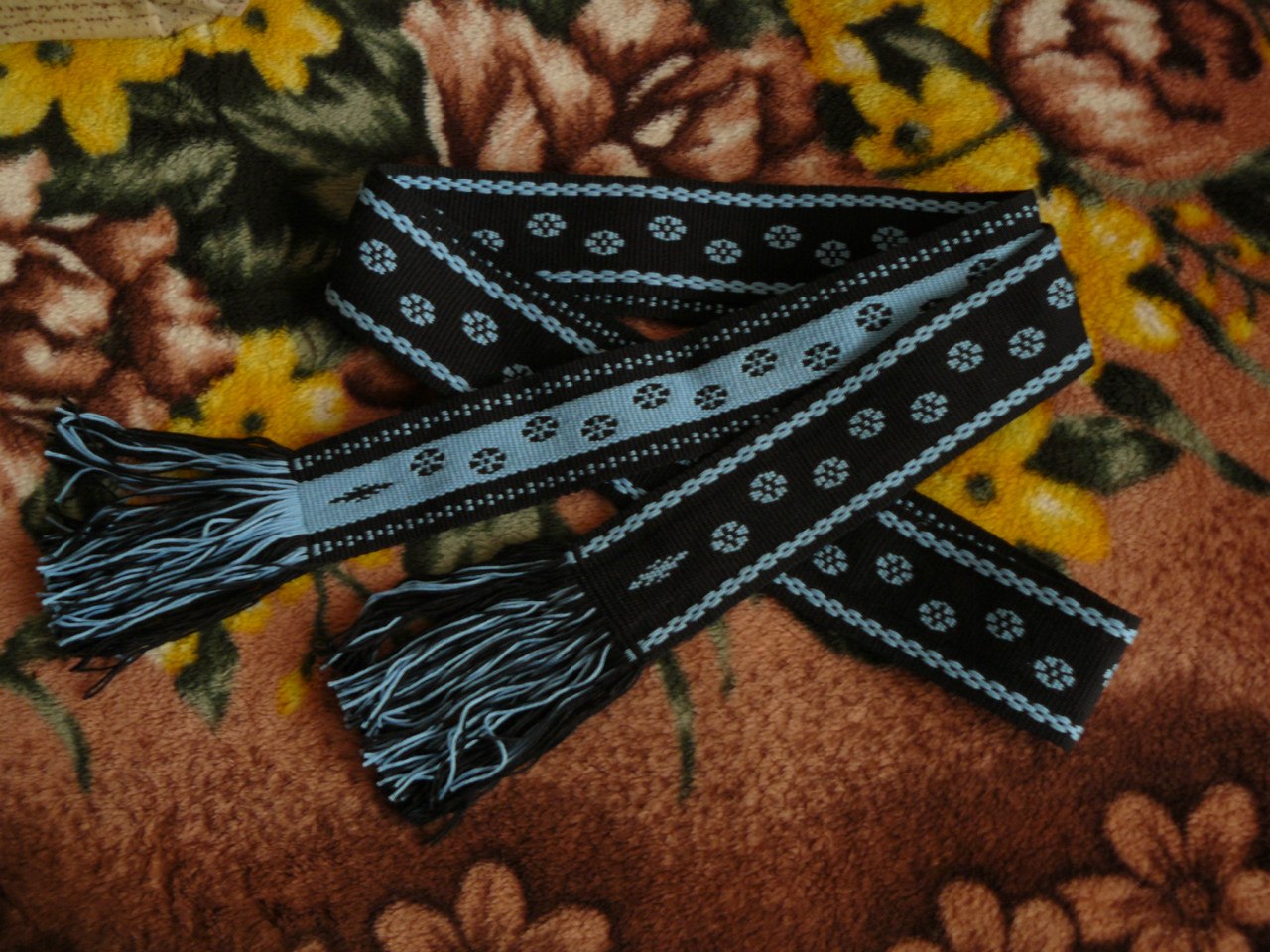
Natalia and I have never met but she is a student of my blog all the way over in Russia. She followed my tutorial on double weave and has added her own touches to one of the small Bolivian motifs that I have used in examples…
natalia

k8black clasped weftAnd to remind us that backstrap weaving doesn’t have to only be about warp-faced fabric, k8black in the Ravelry group showed us her clasped weft scarf. I love the feathered effect in the pink weft.

Judy Kavanagh has also been creating balanced weave pieces on her backstrap loom with the aid of a rigid heddle…a few bits of wood and a rigid heddle is all she needs to create this gorgeous scarf.
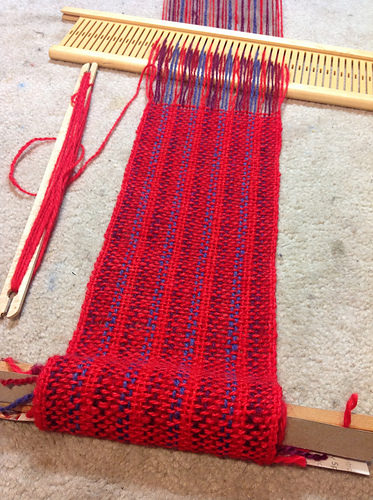
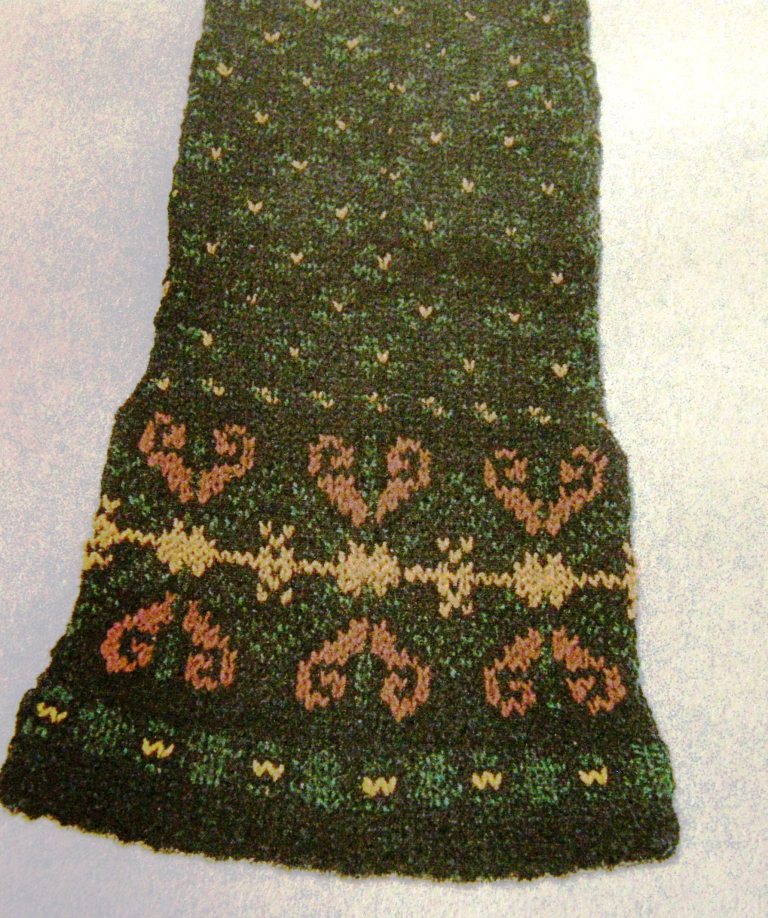
Judy KavanaghThe next piece of work is not backstrap weaving but I want to show it to you as I have shown this project in progress before on this blog. This is what Yonat was working on during two of my visits to Santa Cruz California and is the result of a class in Ravenstail twining that she took with expert Cheryl Samuel. Here are the finished leggings!

1512483_10202898120120664_1879491657_nI would say that Yonat is the person who has woven more with me than anyone so far. Now I need to come up with something to challenge this talented lady on my next visit. 

Well, the jet lag is slowly subsiding after my 50-hour trip back to Bolivia (with about 10 hours of broken sleep along the way) and it is time to get back to the large backstrap projects that I had been missing…holiday over…back to work putting that niggling homesickness for Australia away!

See you next week at the usual time. I couldn’t blog yesterday as I was falling asleep at the computer! And a Happy New Year to you all.

Backstrap Weaving – Summer Weaving in Australia

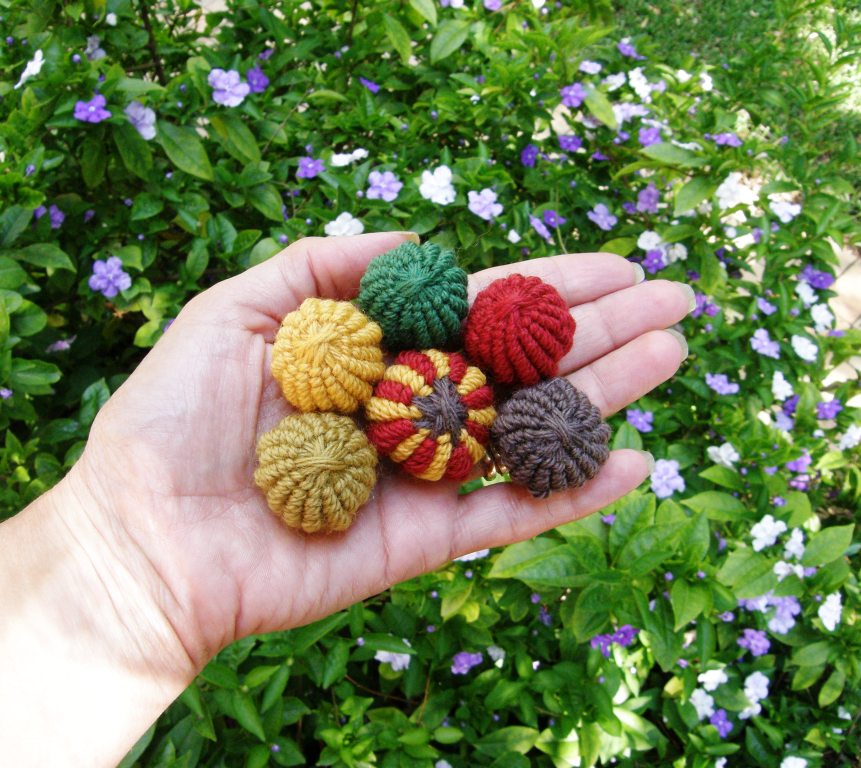
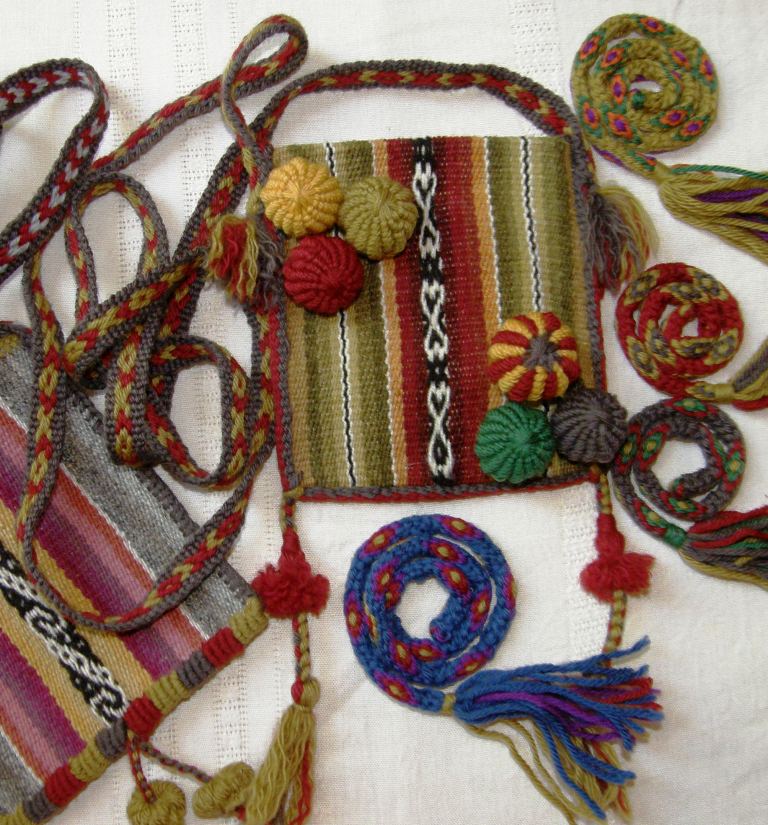
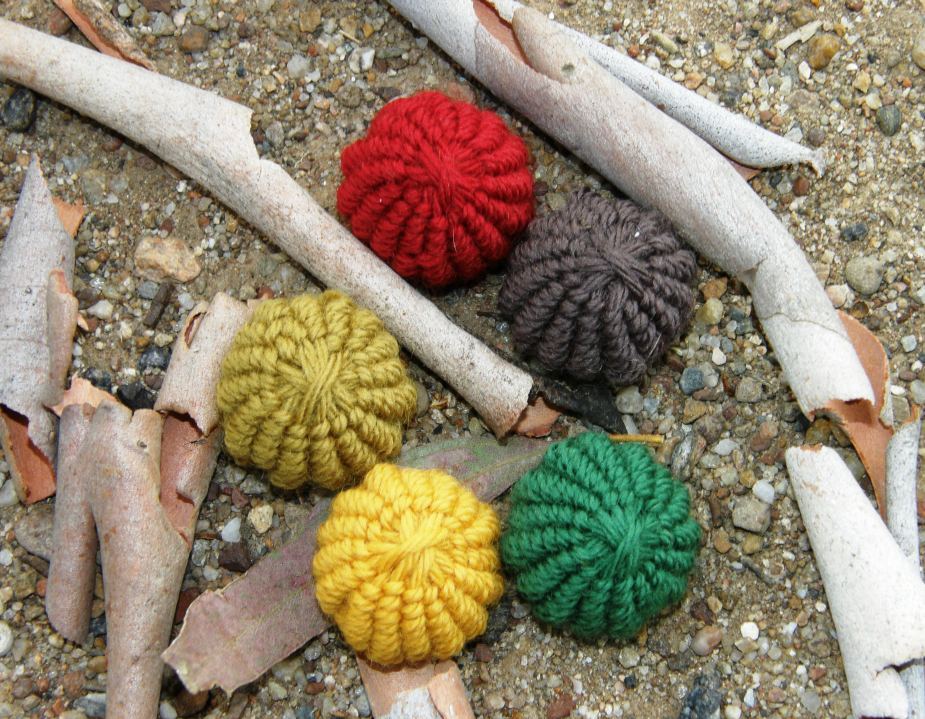
Ah, the Australian summer….while my weaving friends in North America and Europe post pictures of snow drifts and talk about extremely low temperatures…swathed in sweaters and blankets with snow falling outside in the -25 degree cold….the Australian cricketers are out in the field in their whites under the summer sun winning back the Ashes and I get to enjoy a little lakeside barefoot weaving…. ???????????????????????????????I stole a little time to warp and weave a band down on the shores of Lake Burley Griffin in Australia’s capital city, Canberra. Behind me, athletes were competing in a half-Ironman event in which my nephew won the amateur section and placed 6th overall. Having finished in just over four hours, he took a cooling dip in the lake while I wove and the other 1600 or so competitors continued to strain and sweat in the summer sun running along the lakeshore. They must have hated seeing me there as they ran on by. I was weaving a wool tubular band on which to hang the little button baubles I recently learned to make . I think I will turn them into a Christmas tree decoration and leave them behind on my brother’s tree as a memento of my visit.

Here they are nestled amongst some gum tree bark.???????????????????????????????In keeping with the Australian theme, I decided to try a two-color version inspired by the native Australian flower, the scarlet banksia. The banksia has the same ridged appearance as my wee baubles. I had red wool but no white so, yellow would have to do. bauble inspirationUse your imagination and you might see a resemblance in the two-color bauble in the center 😉 ???????????????????????????????I will add these little guys to my repertoire of finishing techniques for woven pouches. Smaller versions of these will make cute dangling pom poms.

???????????????????????????????After the race and back at our Canberra trailer park, we stepped out for a walk and found these guys happily grazing just meters from our door….there’s a mumma with her joey crammed into her pouch…white cockatoos screeched by in the soft evening light and kookaburras “laughed” unseen in the distance.

???????????????????????????????Of course, it was only at the end of our three-day stay that I discovered two amazing exhibits that were on in Canberra…darn! Well, you can’t have everything. exhibits in CanberraNow I am back in Sydney and I need to get to work and weave a cell phone pouch for my sister-in-law. I hope she doesn’t read my blog as it is supposed to be a surprise. I can just scrape together enough wool left over from my travel stash to make this work.

???????????????????????????????I have used this wool before for very narrow band projects and loved how well it worked straight off the skein without having to respin it. I wasn’t sure, however, how it would stand up to a wider warp so, here is my chance to test it. Would it be too sticky for warp-faced weaving? Would it be too weak and break with the abrasion from the heddles and the scraping of the beater?

debs cell hne pouch backstrap weavingHere’s the simple pebble weave pattern taking shape. So far, so good! There is no sign of weakness and the sheds open quite easily. This is enough for today…Deb will be home from work soon and I am doing this in secret.

Back in 2008, I wove a pebble weave bag for her and was surprised to return to see it still going strong. It is her favorite travel bag and has been to Dubai, Egypt, Turkey, Spain, India and Switzerland with her. Next year it will go to China where my nephew will represent Australia in the World Long Distance Triathlon Championship. Look out for him! I wish I could go too. I would love to take the train from Beijing to Lhasa.???????????????????????????????I also got to see some hangings that I had made for family members some years ago on previous visits… ??????????????????????The one on the left is an embedded double weave piece with typical bird motifs of Potosi, Bolivia  and the other one has pebble weave Guaraní patterns of lowland Bolivia in the center and a highland design on the edges. I had made that for my mum. It has inspired me to start planning a double weave piece for my red, black and white wall hanging series but first I want to weave a triathlon banner for my nephew’s bedroom wall.

And now for some more inspiration….

A new Facebook friend of mine from India sent me a picture of this piece of textile which he tells me was woven on a backstrap loom.

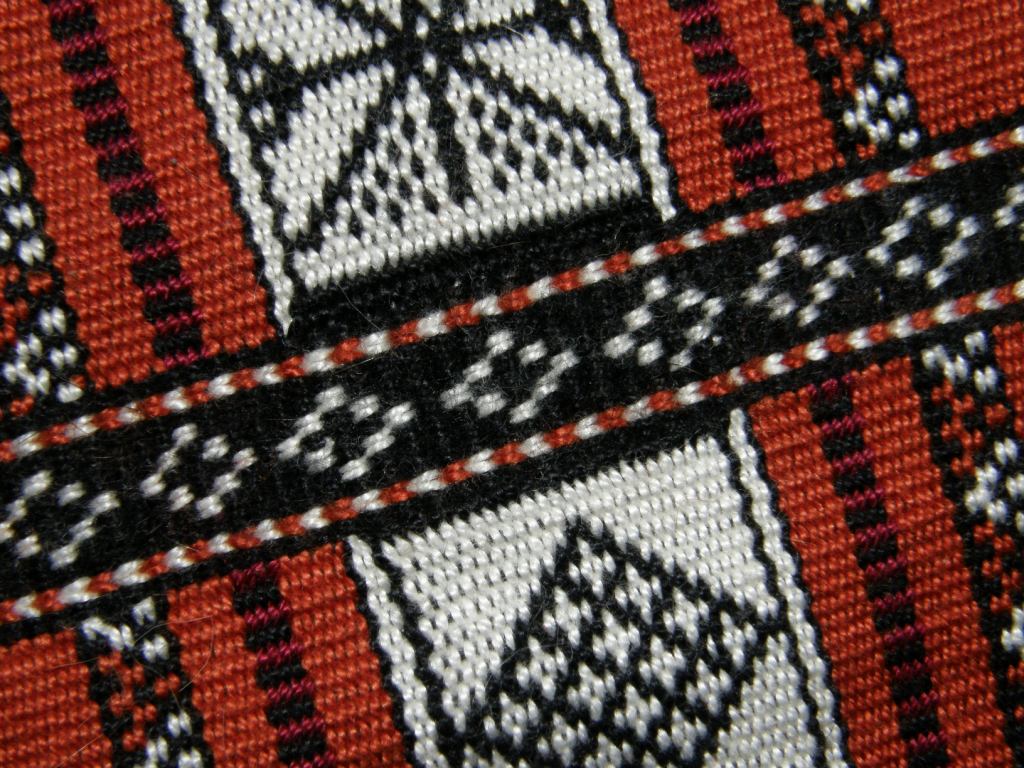
adi tribe arunachal pradesh nth east indiaIt looks like twining or soumak in the middle of a piece of warp-faced weaving.It is part of women’s costume from the ADI tribe of Arunachal Pradesh in northeast India. And this makes me keen to get into the soumak book that I recently bought and experiment with embedded designs like these. I have tried embedded twining in Bedouin design work that I have done, as in the example below.

???????????????????????????????Julia has been “intermesh-ing’ and inspiring the Ravelry group members with her beautiful projects. As always her pieces are beautifully finished.

Julias intermeshThe piece on the left has both Mexican and Japanese influenced patterns which work so beautifully together. The piece on the right has a motif that I recognize from Bhutanese weaving. Julia has adapted it to the intermesh technique. It is a very elongated and slightly different version of one that I chose to weave with supplementary weft some time ago.

cell 1I learned the intermesh  structure from the weavers in Peru who taught me Andean Pebble Weave. They used it to weave single-color borders for their pebble weave patterns.

It was only when I had spent time with my Guaraní teacher much later, that I discovered that the two-color patterning technique that she called moisy was actually the same intermesh structure woven with two colors.

I teach this structure in my second book, More Advemtures with Warp-Faced Pick-up Patterns.

At left you can see the first piece I wove after this discovery with Angela, my Guarani weaving teacher. It is a fun technique and realtively fast as it uses two sets of string heddles…every second weft pass is a free ride!, that is, no pick-up is required.

Now, I have an exquisite piece of wood working, precision, balance and engineering to show you. My friend Barbara was given the gift of a new spinning wheel and stool to celebrate the completion of her Master Weaver certificate. This was created by Tom Golding…anyone who is into spindles must know this name and must have drooled over his fine pieces of work at some point! Tom’s wife and sons all had their hands in the finished product.

Barbaras Golding wheel and stoolI will leave you with one of my friend, Annie MacHale’s latest creations. I never get tired of looking at the straps that Annie produces on her inkle loom. She never weaves two the same and has the knack of creating just the right custom pieces for her clients.

This one one is stunning!

558685_700776486599821_1305194224_nLet’s see if I can make it back to Bolivia before the next blog post. As much as I hate to leave, all good things must come to end and there are wall hangings to be woven, a long list of things to research, patterns to be charted and books to be read. Keep your fingers crossed for me that I make it back home without too many interruptions. Goodness knows where I will be spending Christmas Day!

MERRY CHRISTMAS!!!

????????

.

Backstrap Weaving – Show and Tell

Show and Tell and tell and tell…get the word out, spread the obsession. It is exciting to be all the way over here in Australia and run across this…

??????????????????????The Center for Traditonal Textiles in Cusco (CTTC) reaches across the world, showing and telling, promoting and sustaining the work of  weavers on simple looms in remote communities of highland Peru. This piece was bought from founder Nilda Callañaupa herself when she visited Bothwell, Tasmania in 2007. One of the people who came to weave with me a few weeks ago here in Sydney had been to Peru and came with  bags and pieces still on the loom with those distinctive Chinchero patterns woven with handspun naturally dyed yarn. One of the other ladies immediately picked up her smartphone and started searching for the site from which she could buy these items. Show and Tell…spread the word!

From the CTTC's Facebook page
From the CTTC’s Facebook page

One of the greatest Show and Tell events in my world of weaving was held last month in Cusco. The CTTC hosted its second Tinkuy de Tejedores, a gathering of weavers from across the Americas and even from as far away as Asia.

I couldn’t go this time but have heard a few reports from friends.

Dorinda, who works with weavers in Cochabamba, Bolivia went with one of my weaving teachers, Maxima. Maxima took workshops and learned three new figures in a backstrap weaving class as well as the ñawi awapa edging. It was something she had been wanting to learn for years. Her sister knew how to do it but I guess she hasn’t been nearby to teach it to Maxima. Finally, the curiosity has been satisfied and I look forward to seeing Maxima put it to use.

Maxima and a group of Bolivian weavers at Tinkuy 2010

Dorinda’s PAZA website is currently down but she tells me that she has four blog posts prepared with details of the trip ready to go up once the problem is fixed.

???????????????????????????????Who doesn’t like Show and Tell? In the guild meetings that I have attended so far in the US and Australia, this has always been my favorite part. I am a member of several online weaving groups and we do our share of show and tell on a daily basis. Some of the larger groups, like Warped Weavers on Ravelry, can have dozens of projects presented in a single day. There is always something to learn. But, of course there is nothing like being able to actually handle the fabrics and yarns and listen to the weavers and spinners’ enthusiastic descriptions and explanations.

I spent a nice Saturday  in the lower Blue Mountains last Saturday at the home of weaver Helen (author of the electronic newsletter, Weavers Forum). Helen has a nice group of about fifteen mountain weavers and spinners who regularly meet at her home for fiber talk, lots of laughter, occasional workshops and, of course, show and tell. That’s yet another reason for me to consider settling in the mountains should I ever come back to Australia to live permanently….the aromas and colors of the bush, the bird song, the cicadas, the coolness,….and a lovely community of weavers!

Lorette with knotted pile on backstrap loomLorette brought along a backstrap loom that she and a few friends had put together some years ago with its unfinished project. Just when I am taking home tools for knotted pile weaving and wondering if I am mad to be thinking about doing it on a backstrap loom, along comes Lorette with her Show and Tell. She showed me that yes, it is do-able and that she was able to produce nice firm and well beaten rows of cut pile. I wonder if she has found the inspiration to finish this project now.

I was happy to receive the most beautiful gift from Helen as I left after a fun day spent with her weaving friends…

??????????????????????My camera has somewhat softened the pretty tones of green in this scarf but I hope that it gives you an idea of its wonderful flowing liquid silkiness. This was made by Helen in an advancing twill structure. This was Show and Tell and  I got to keep it! It is just the kind of light weight scarf that I can really use. Beautiful!

??????????????????????Yesterday I went out to Dace’s home. Dace had invited me to her home for a morning of dyeing.

The Mission: take home cotton yarn that had been dyed with native Australian plants.

I would like to weave something that represents my trip and this seemed like a good way to start. Fortunately, I had taught myself from an experience many years ago that cotton and wool take color very differently. I had been wooed by the sight of the most amazing shade of orange that Dace had achieved when dyeing wool with leaves from a certain kind of eucalyptus (see left). I knew not to expect anything like this kind of intensity from cotton.

Two of the ladies at the gathering at Helen’s house advised me to mordant my thread with diluted soy milk which I did. Dace’s home filled with the gorgeous aroma of eucalyptus as the pots boiled on the stove. It drove her husband and cat away for the day! You can see the tree from which Dace took leaves and bark below right. She told me that it is one of the “box” varieties of eucalypt.

eucalyptus for dyeingAs the pots, one with bark and the other with  leaves boiled away, we did a lot of Show and Tell. Dace showed me some yarn that she dyed with the same variety of eucalypt…

spun yarn by daceAgain, that gorgeous orange! And again I reminded myself that I was not expect anything like that result. Still, I couldn’t help hoping…

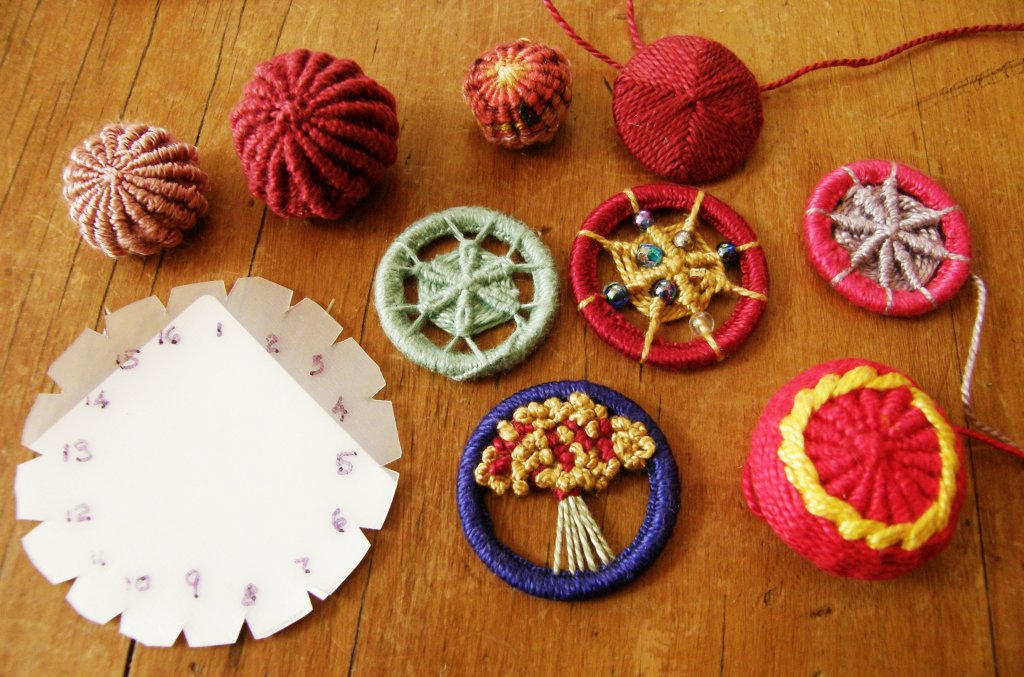
??????????????????????This was another fascinating piece of Show and Tell. Dace had taken the NSW guild’s summer school class lat January on buttons and produced all these over the course of four days. I was especially interested in the ball-like buttons upper left which so resembled the little coil stitch pom-poms that Bolivian weavers sometimes have dangling form their ch’uspas, coca leaf bags. Dace gave me enough information to be able to come home and make one…fun! The Bolivian pom poms can be made in multiple colors whereas these ball-like buttons cannot.

???????????????????????????????There you can see my button (made with wool) nestled between my dyed skeins. The skens on the left came from the leaf pot and the other from the bark. Okay, so they are not the most brilliant tones in the world but…mission accomplished. I have cotton dyed with native Australian plant material. And I will take home the happy smells of the Austraian bush which have not faded after rinsing. Dace told me to use vinegar with the rinse but I didn’t, not wanting to lose the eucalyptus smell.

Those buttons! I am on a road trip to Canberra tomorrow to watch my nephew compete in a triathlon. Guess what I’ll be doing in the car and probably during the race!

Dace is Latvian and, while talking about both our backgrounds, she came out with some Latvian bands that she had bought on a trip to her homeland in 2011. These are all woven with supplemental warps (and now I realize that we are probably not looking at the “good” face of the one on the left).

??????????????????????I love the simple border on the third band from the left…so simple and so very effective.

Latvian mitten patternDace showed me pictures of Latvian mittens and I loved this one with its hook design…a hook and its reflection…so like a classic Andean weaving motif which I am sure that many of you will recognize.

Speaking of Latvian bands, I  made contact online with Sanita who very recently started a blog on Latvian band weaving. She is slowly constructing it and it promises to be very informative. So far, she has included pictures of bands with pick-up patterns using supplemental warps as well as (and this make me very excited) those which have used what I call the Andean Pebble Weave structure.

Sanita confirmed the stucture by sending me charts of some of the patterns. I think I am edging a little closer to finding an answer to my questions about the use of this structure in the belts of the Russian Old Believers.

Keep an eye on Sanita’s site.

Well, I am off to make some more button/pom poms and can’t wait to have some dangling from my next woven pouch. I miss my loom and my big weaving…this is the next best thing until I get back to Bolivia.

knitted hat with south american birdSpeaking of pom poms, I will leave you with one last picture. I uncovered a relic from my past while going through boxes of “stuff” here in Australia. This is possibly the only surviving piece from the little knitting machine endeavor I had in my early 20s. I used to make hats and headbands by the dozens for skiers. It seems like I might have been trying to use up odds and ends of left over colors in this one! The thing that I like is the little South American-like bird motif that I chose to include. I have no idea about the origin of that motif but I think it is fun to see that many many years before South America and weaving became a part of my life, I had a definite interest in these kinds of patterns.

See you next week! (possibly from Bolivia)

Backstrap Weaving – News and Novelties from Down Under.

A report from Down Under with some news and novelties….

tools ofr knotted pile weavingMy brother has been keeping this piece of knotted pile weaving for me for many years. How it came into his hands is a long story which I have told on this blog before. All we need to know is that there is a weaver out there somewhere in Sydney who created this piece of amazingly dense cut pile weaving and I wish I knew who it was. On top of the piece you can see the  tools which are used for this weaving technique.  I got them some time ago from a gentleman in South Australia who was studying the cut pile technique with an Afghani weaver. Through him I was able to buy the tools from his teacher.  They have been on quite a journey….from Afghanistan to Australia and now on to Bolivia.

???????????????????????????????Some other “stuff”that backstrap weavers may find interesting…I discovered that Japanese chopsticks make pretty good pick-up sticks for lifting warps when doing weft inlay as well as for hooking the supplementary weft and pulling it through the shed as my teacher, Lydia, is doing below.

using pick up stick in Guatemala

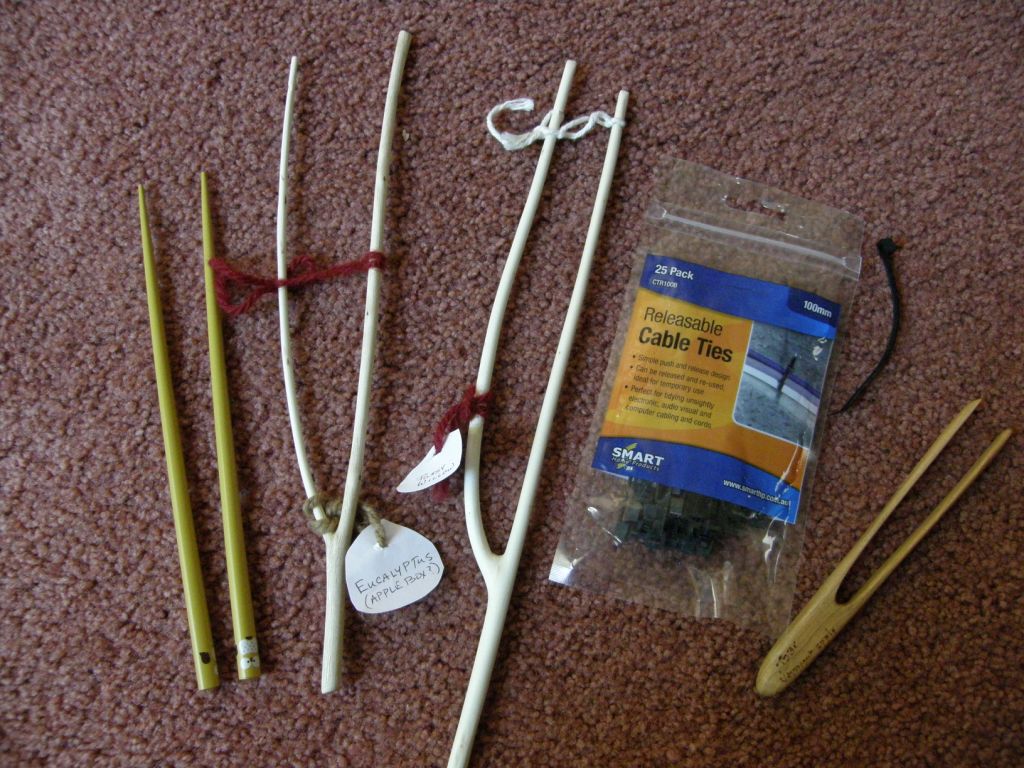
opening the heddle shedFr Kyriakos, who lives here in Australia, cut and beautifully finished some forked sticks for me so I can take back some pieces of Australia to use in my backstrap weaving. Forked sticks are sometimes used by weavers in Peru, as seen at left, as an aid to opening the hedddle shed. The weaver is twisting the forked stick (which acts to tighten the upper layer of threads), leaning forward to relax tension on the lower layer of threads and lifting the heddles.

I have been hunting for just the right forked stick! The implement on the right in the picture above is actually a  pair of wooden tongs that I found in a knick knack shop in Vermont. Lausanne gave it to me as a gift. It seemed like a good useful souvenir and will serve well as my tanka (Quechua for fork) when I weave the ñawi awapa tubular band.

It seems that a good forked stick is not that easy to come by even for the Andean weavers….

tanka for nawi awapaThis weaver told me that she had broken her tanka while weaving her ñawi awapa and, rather than hunt for another, had simply bandaged it up.

The other little novelty seen above is releasable cable ties. I have recenly taken to using cable ties to lash my warp to the loom bar and the fact that the ties can now be easy to release and, therefore, reuse is great news.

As usual, when I am traveling, textiles from near and far just seem to fall into my lap. Kind folks bring these things along to guild meetings and other gatherings and thus give me the opportunity to examine and enjoy them.

Guatemalan supplementary weft open weaveThis is the second time in recent months that a piece like this has come my way…gorgeous light cotton open weave with motifs created with supplementary weft ….from Guatemala. This is just like the little sample piece that I bought on its loom at the Santa Fe market. It was even more impressive in this larger version.Panels of this cloth are sewn together to make huipiles (blouses). Weavers in the community from which this fabric came, embroider the edges of the neckline and sleeves.

Guatemalan huipil embroidered and with supp weft motifs

???????????????????????????????The thread on the loom was sized and was quite stiff. It was lovely to be able to feel the softness of the cloth in the finished huipil and see how much the open airy weave had closed after washing.

So, here I am in Australia looking at Guatemalan weaving. But, I also got to look at backstrap woven fabric from one of Australia’s near neighbors….Timor Leste, East Timor. Kelcie came to weave with me at home and brought along just a few of the textiles that she bought on a tour she recently took on  the island of East Timor.

???????????????????????????????

Picture from the Wikipedia page on "tais"
Picture from the Wikipedia page on “Tais”

The pieces were all warp-faced and were either ikat or patterned with warp floats on one face.

The Alola Foundation, in the capital city of Dili, was estabished to help improve the lives of women and childern in Timor Leste and marketing products made from handwoven cloth is just one of their activities.

Traditional cloth that is used for men and women’s clothing is known as tais. Take a look at the Wikipedia page on Tais to read more about the use and significance of this cloth in Timorese culture.

???????????????????????????????This piece depicts a crocodile in ikat, the creature on which the creation legend of the island is based.

Kelcie’s collection included several long narrow pieces, like the one below with yellow warp float  patterns, known as selandang which are worn around the neck.

???????????????????????????????The ETWA Foundation website has pages that cover the weaving processes starting with the preparation and spinning of the cotton, the futus (ikat process), warping and weaving.

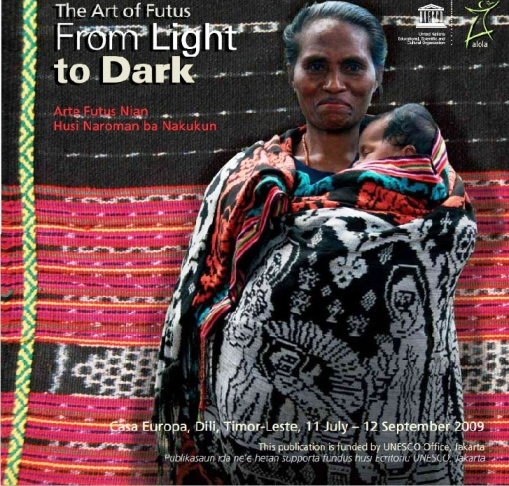
futusThis book, which was produced by Alola and UNESCO to accompany an exhibit of textiles woven with the futus technique, is available as a free download here. 

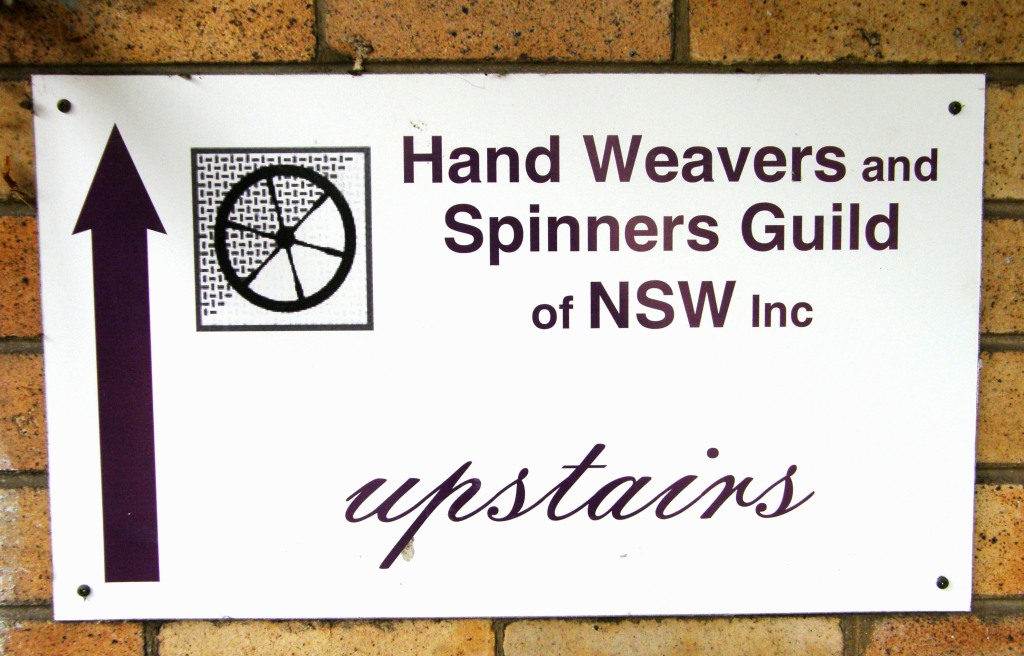
??????????????????????????????????????????????????????????????The folks at the Handweavers and Spinners Guild of NSW have been wonderful.

This has been my first visit to Australia since trying to become a full-time weaver  and my first contact with the guild.

I was invited to a gathering of spinners the day after I arrived in Sydney and I took myself along before jet lag could set in. It was a dreary rainy day in Sydney and I thought that no one was going to show up as I sat alone in the church hall. What I hadn’t found was the clear sign that indicated that all the fibery folk were atually upstairs happily carding, spinning, chatting, drinking mimosas! showing-and-telling and celebrating the last meeting of the year.

jenThere I met Dace and I had the sudden idea of weaving something to commemorate my Australian visit. I asked her if there was any fabric or material or weave structure that would be considered classically Australian. It was hard to come up with something. And then Dace had the  idea of dyeing some of my yarn with native Australian trees, instead. Brilliant idea! And so I will be off to Dace’s place for a dyeing session next week.

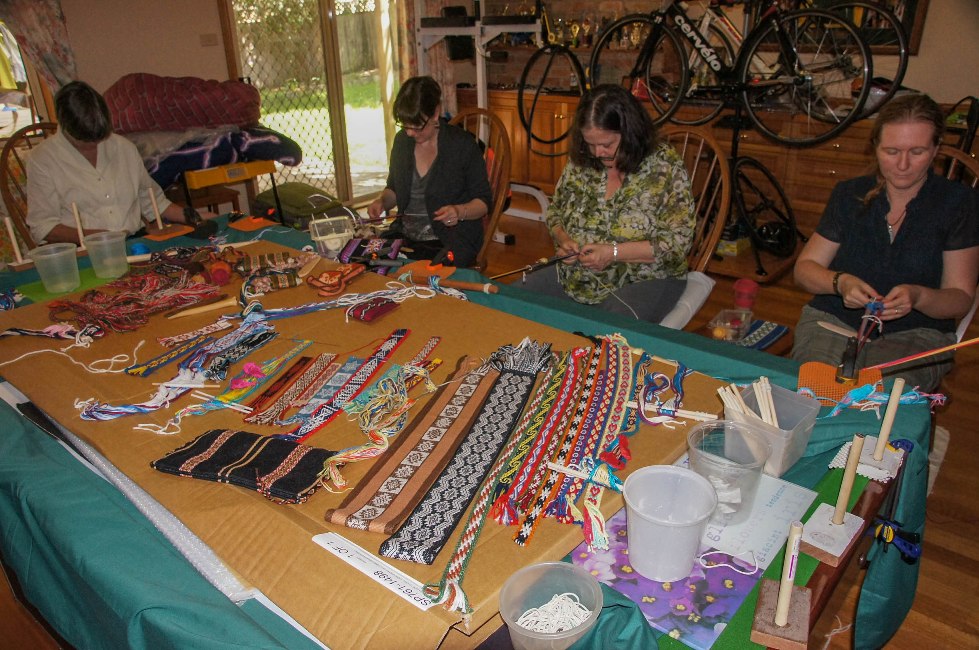
Next came a small gathering of weavers at home. Space would only allow four.. We spent two days playing with the ways that weavers in Peru and Bolivia set up their looms to weave complementary-warp pick-up patterns. You can see Jen at left using the two-finger method.

The pool table was a great piece of furniture for anchoring the warps. You need very large  clamps. That table was not going anywhere!

????????Taking a break to chart some patterns and look at books and Kelcie’s Timorese textiles…..

backstrap weaving class in sydneyOur get-together was followed by the monthly (and end-of-year) guild meeting at which I showed some slides. It was a wonderful, warm and jovial audience full of Christmas cheer for the coming holidays. I was delighted to meet so many people who  had never encountered South American weaving and who then expressed so much enthusiasm for it. 

In the mail box….

Fr Kyriakos (who just happened to have joined Kelcie as a student in one of Kay Faulkner’s classes…it’s a small world in this big country,of Australia!) sent me pictures of the Andean Pebble Weave band that he is weaving using a pattern inspired by a piece I showed here some time ago woven by Julia.

fr kyriakos pebble weaveLausanne in Vermont showed me what she is working on. She’s having a little trouble with sticky sheds as she is using respun tapestry wool. Working the two sets of heddles used in the Andean Pebble Weave  takes practice. I sawed my way through my warps while trying to perfect the moves in my lessons back in 1996. My teachers performed them so quickly and without any explanation. It was difficult to identify the individual movements that needed to be combined into one smooth operation.

lausannes celticpattern andean pebble weaveLausanne is weaving a Celtic knotwork pattern that I adapted to Andean Pebble Weave from tablet-woven bands. It is charted in my second book, More Adventures with Warp-faced Pick-up Patterns.

After the guild meeting last Saturday, I couldn’t help noticing with a smile the contrast in my Saturday and  Sunday activities.

On Saturday it was all about Girls and Their Toys: 

???????????????????????????????An interested group gathers around the table after Show and Tell time to get a closer look at the novelty yarn that had been presented. (Of course there are several male members of the guild…they are just not visible in this particular shot).

And on Sunday it was a day with Boys and Their Toys: (of course, there was also a female present, namely, ME.

??????????????????????For those who are familar with Sydney, my brother took me on a ride with his vintage motorcycle club up to the mountains…Mt Victoria and the Bell’s Line of Road. It is such a beauiful area and could well be where I would choose to live should I ever come back to Australia for good.

??????????????????????Yes, we are on the correct side of the road. It’s Australia, remember?

And this is where we were heading…

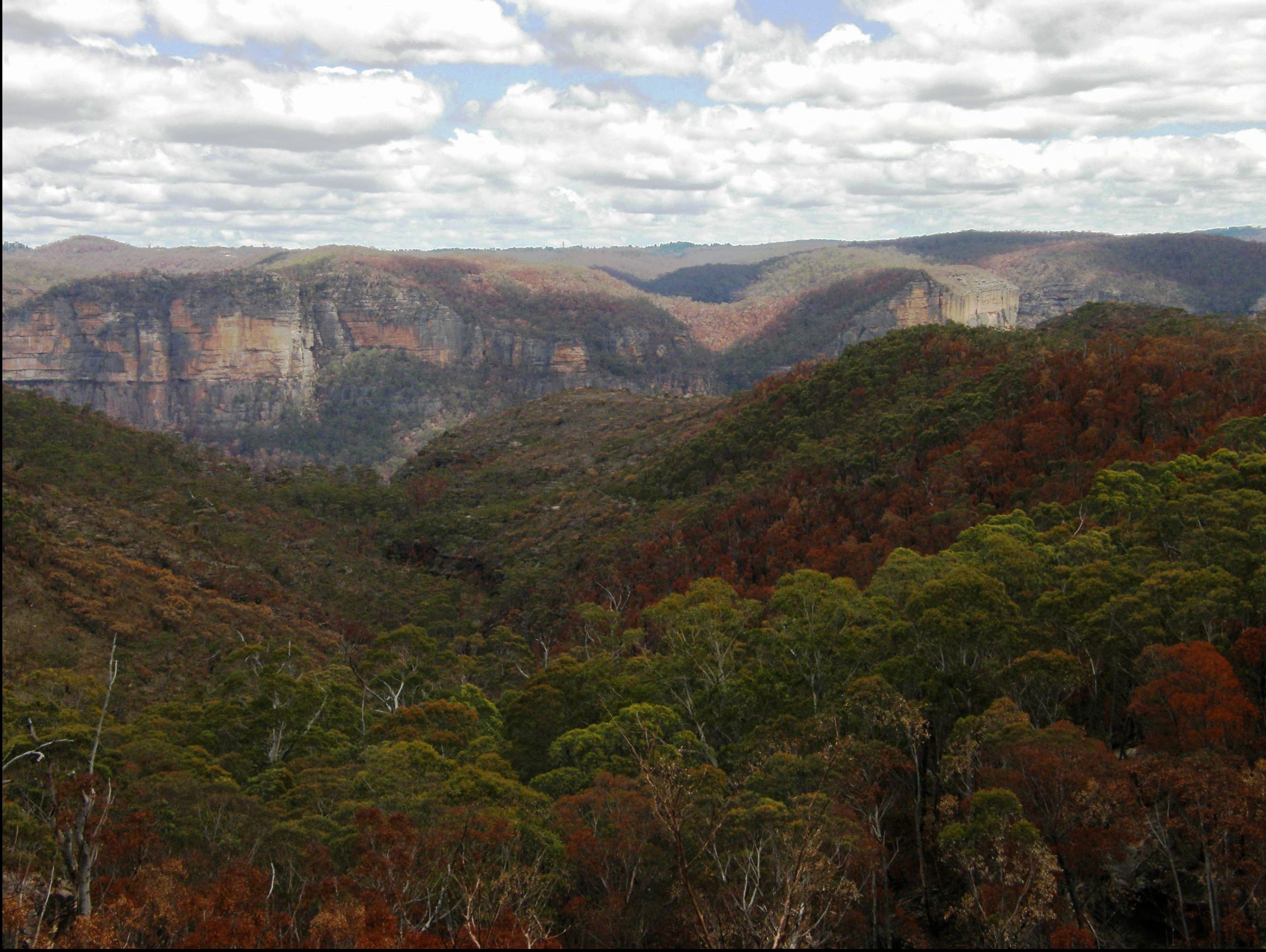
bush with borderThe colors in this bush scene look almost like the early fall  in the US that I saw recently but, sadly, all those orangey-red tones that you see there are burnt bush from the recent fires that ravaged the area. Those cliff faces and bushland are some of my favorite parts of Sydney. Who needs the beach?!

This Saturday I will be heading back to the mountains for a small weavers’ gathering in the home of Helen Halpin, this time by train. I have been receiving Helen’s monthly news letter of weaving and other fiber events in Australia, Weavers Forum, for some years now and was pleased to have been able to finally meet her at the guild meeting last Saturday. I certainly won’t let four years slip by before I am back in Sydney again.

See you next week.