Backstrap Weaving – Yards of Deserts and Dreamlands

Great width and great length are two things that I cannot hope to comfortably achieve on my backstrap loom and so it was nice to be able to spend time with my friend Claudia and be there just in time to see her pull yards and yards of  soft Hawaiian sunrise fabric off her floor loom. Claudia and Janet, who together form Lotsaknots Studio, have been weaving baby wraps….yards and yards of custom baby wraps. It seems that many new moms out there in the Western world like to “wear” their babies these days and put a lot of thought into the color of their custom-made baby-carrying fabric. Claudia cut the fabric off the loom and then pulled and pulled out over 8 yards of fabric for two wraps. It tumbled onto the floor in a pile of  luscious soft sunrise tones.

Of course, mothers in Asia, Africa, Central and South America  and many other regions around the world have always carried their babies either in front or back wrapped in fabric so that baby can accompany them in every aspect of their daily lives…on a trip to market, working bent over in the fields or at the stove, carting water from the well…

One of my weaving teachers in Guatemala shows me her nephew which she carries in a woven sling. His little cap is a woven piece which has been decorated with a double faced supplementary-weft technique. Therectabgle of fabric has a draw string through the top which is pulled to the form the cap.
One of my weaving teachers in Guatemala shows me her nephew which she carries in a woven sling. His little hat is a woven piece which has been decorated with a double faced supplementary-weft technique. The rectangle of fabric has a draw string along the top which is pulled to close the top of the hat
A lady in Bolivia carries her randchild on her back leaving her hands free to spin yarn on a drop spindle. The carrrying cloth is traditionally hand woven although this lady is using a synthetic factory-made piece. These cloths are used tocarry any kind of load...goods being taken to and from market or "luggage" on a trip.
A lady in Bolivia carries her grandchild on her back leaving her hands free to spin yarn on a drop spindle. The carrying cloth is traditionally hand woven although this lady is using a synthetic factory-made piece. These cloths are used to carry any kind of load…goods being taken to and from market or “luggage” on a trip.

When I went to the Tinkuy in Cusco in 2010, I accompanied a group of weavers from Cochabamaba. We had quite a trek to make from the bus stop to our lodgings and I was very envious of the ladies as they wrapped their duffel bags in their carrying cloths, tossed them on their back and headed off down the dusty road. I lugged mine, handles over my forearm and with bag clumsily bumping along against my hip. Guess who made better progress.

My Vietnamese weaving tecaher Ju Nie showed us how she wraps a baby sling. The Montagnard baby slings are woven on backstrap looms and often decorated with motifs in supplementary weft. made
My Vietnamese weaving teacher Ju Nie showed us how she wraps a baby sling. The Montagnard baby slings are woven on backstrap looms and often decorated with motifs in supplementary weft. Using a circular warp on a backstrap loom make these kinds of lengths more manageable. They are usually woven as two separate panels which are then sewn together.

I enjoyed learning about the whole process involved in the creation of one of the Lotsaknots custom wraps. First, the mother will describe her needs and  usually provides a picture which contains the kinds of colors that she would like to have in her wrap.

dreamland inspirationThis is the picture that was used for the latest wrap on Claudia’s loom which has been entitled Dreamland. The yarn is ordered and Janet wraps colors around card to help determine the final layout. She has amazing talent for this and I think that she has captured the tones and mood of the picture beautifully. As I stick to red, black and white for my entire series of wall hangings, this talent for combining colors is one that I envy.
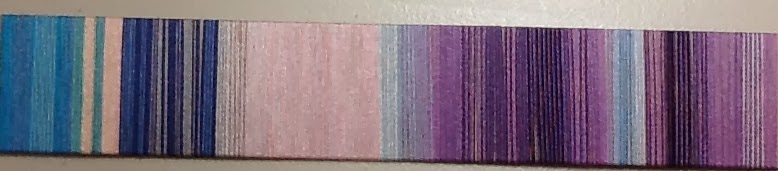
IMG_0460


Then comes the job of winding all those yards of warp. One half will be the custom wrap made to the mother’s specified length. The second wrap will have a different weft color which will give it quite a different look and this “sister wrap” can be sold online.

I loved seeing these chained sections of warp sitting on the floor ready to go on the loom. They reminded me of snakes of berry-flavored soft serve icecream oozing out of a machine.

??????????????????????I am often mystified by the way people gasp at all that is involved in setting up for backtrap weaving. People roll their eyes when they look at all the string heddles I have to make. I don’t get it.  I have to say that that is nothing compared to the process of getting this kind of warp onto a floor loom! Now I know what rough sleying is and understand the need for a trapeze when warping. Then there are all those heddles to thread and then the reed. Some of it seems really hard for one person to do all alone.

??????????????????????Here are all the threads on the apron rod after having been rough-sleyed. Doesn’t that look gorgeous! I learned a lot watching Claudia do all this and I was even able to lend a hand now and then. I was sorry not to have been around long enough to witness the entire process.

We could have finished it but Clauda wanted to take advantage of my being there to get in a little backstrap weaving so we spent some time on that. She has been wanting to do rep weave and, as she has never done it before, I was happy to be able to get a sample project set up and started on her loom.
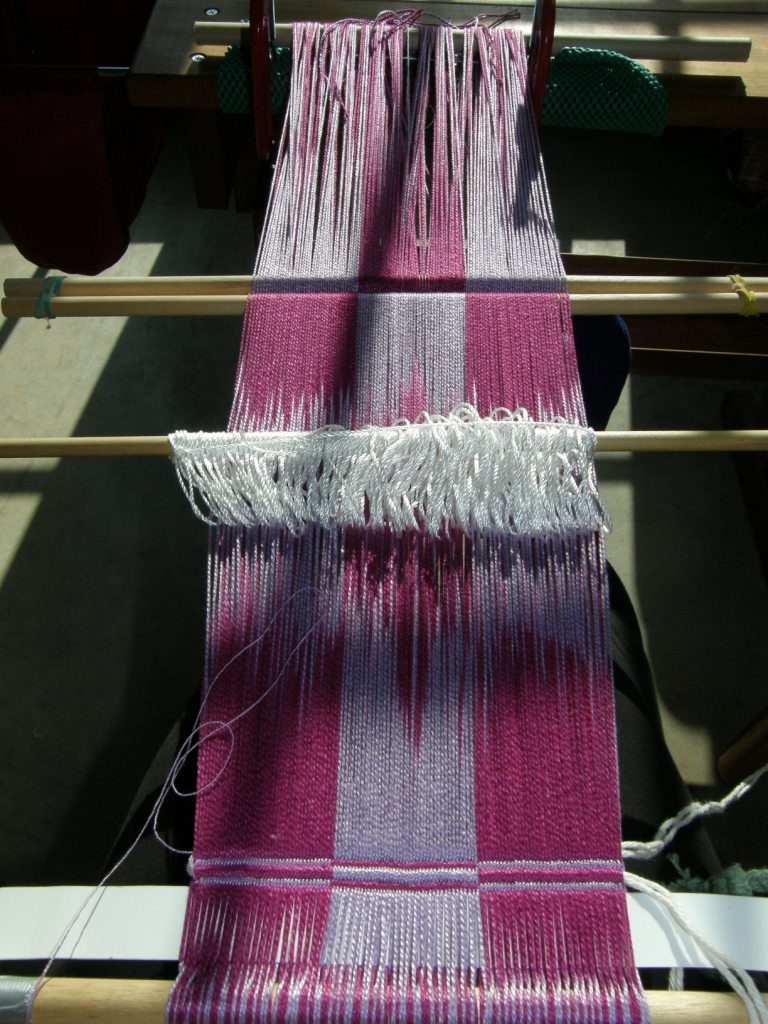
???????????????????????????????Here’s the start of a pink and lavender rep weave. I love the kind of ikat effect that appears in the warp threads as you are in the process of changing sheds. Rep weave is a piece of cake for me as I am used to doing warp-faced weaves and rep weave simply involves alternating a thick and thin weft.  The effect is lovely and it weaves up so very fast with that thick weft. Claudia would like to make a set of four placemats in repweave on her backstrap loom and will use a circular warp to get the desired length for all four pieces. The width is one that is easily manageable on a backstrap loom.
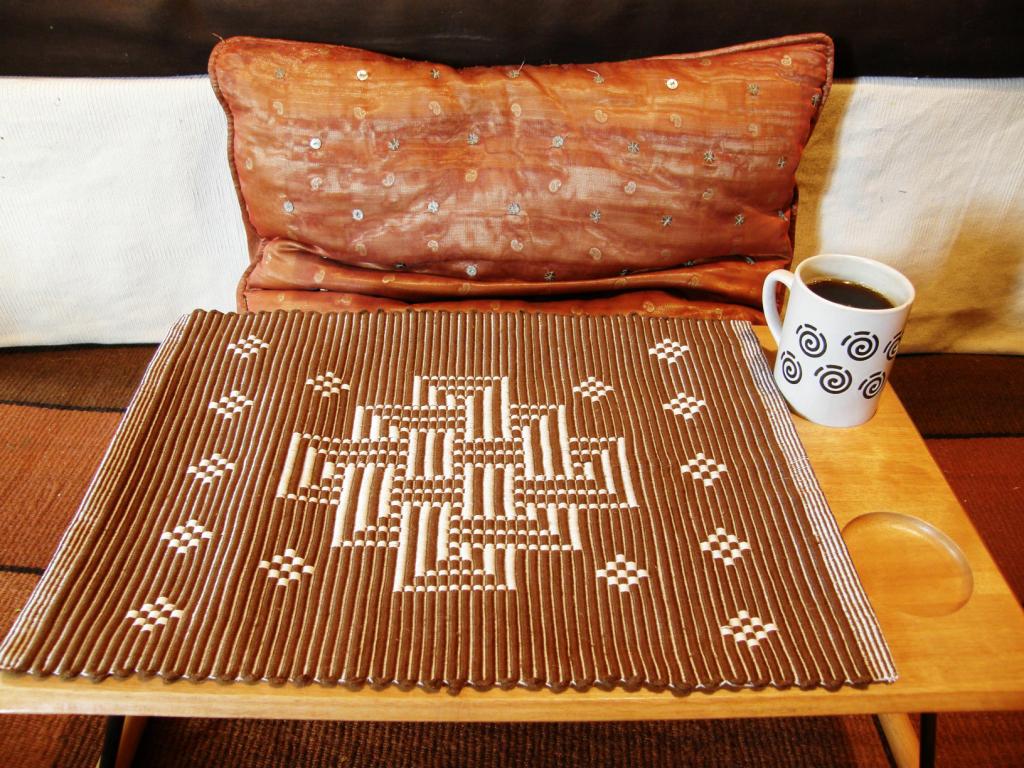
rep runner on tray tableHere’s the rep weave piece that I made some time ago for my tray table. It is decorated with complementary-warp pick up pattern.
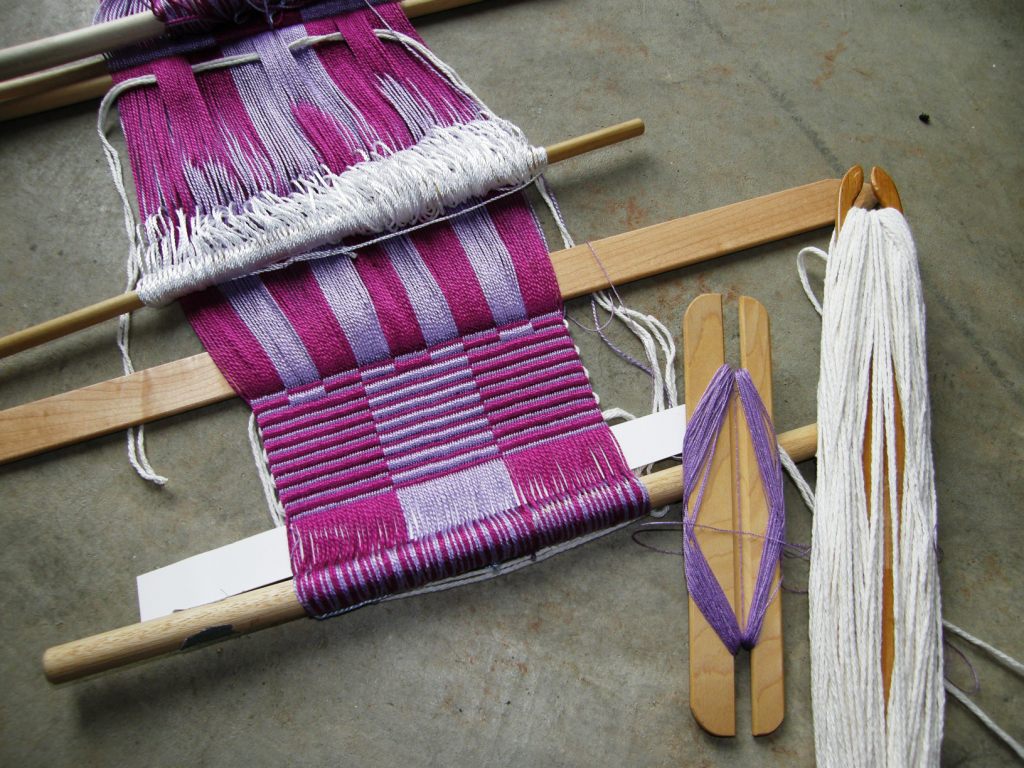
??????????????????????Here’s Claudia’s piece underway. I was having fun with it and had to try not to go too far before letting Claudia take over. She was busy hemming her just completed pair of wraps while I worked on this. Above you can see where I have just started making a change of dominant color by swapping the sheds into which I place the thick and thin wefts.

??????????????????????Claudia does some backstrap weaving every time I visit and goes back to her floor loom when she finishes her project. Therefore, it takes her a little time to get back into the swing of things after having had a long break. Above, you can see that she is well underway. We used a pick-up stick to make that small block of color change and now she is back into the original sequence.  It is just a short warp for sampling. Now she has a nice width sample which will help her calculate how much warp she needs to wind for her placemat project. She is using 3/2 perle cotton.

This was a nice break for Claudia between baby wraps. The baby wrap business is never ending with 47 people on the custom order waitlist!

Here’s one of the earlier wraps which was called Sedona. I love this one!

The color arrangement was inpired by this painting…

sedona inspiration

And here is the fabric….it is a wonderful representation of the painting, don’t you think?

??????????????????????

This next one was entered in a Facebook wrap challenge which had a theme of Wizard of Oz…

wizard of oz swirlThe metallic red threads, which I think are such a nice touch, represent Dorothy’s ruby red slippers.

Unfortunately, I didn’t photograph the Hawaiian sunrise beauties when they came off the loom but, no doubt, they will be on the Lotsaknots blog page soon. Doing custom-made pieces is quite a challenge, I think. With only phone calls, email correspondece and maybe a photo, a major piece like this has to be designed and constructed to match what the mom envisions as being perfect for her baby.  I really believe that Janet and Claudia are a good team for this. Janet doesn’t weave but is so good at putting the colors together while Claudia has years of experience at the loom and sewing machine. I can’t wait to see Dreamland when it comes off the loom.
snow2Last Saturday I wove at Terri’s place. Some of you may know Terri as Magical Moons on Etsy. Terri makes beautiful swords for backstrap weaving as well as spindles, pick-up sticks and other tools for fiber artists.

She weaves with me whenever I am in the Maryland area. Laritza joined us. Stephanie, who has never woven fabric before, (she studies basket weaving with Terri) came to have her first-ever try at backstrap weaving.

It was a spring day…a REAL spring day… and we all felt guilty for being indoors in Terri’s workskop while the sun poured down and warmed the air outside. For everyone who had endured the long long winter it was a truly unique day.

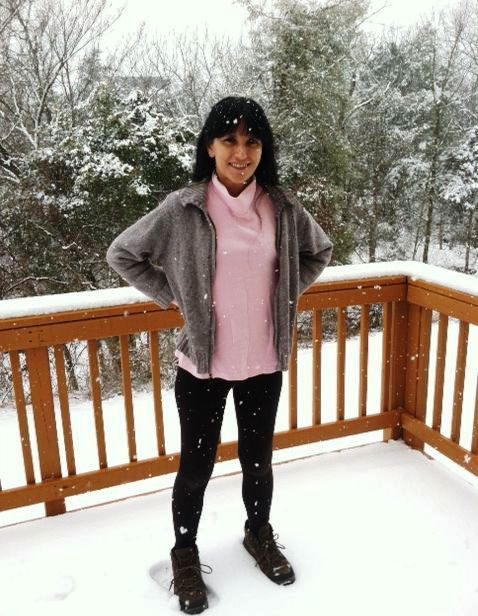
It didn’t last long as you can see at left. That was the following Tuesday. I felt guilty about being so pleased with it when everyone just rolled their eyes and said “not AGAIN!”. I didn’t want so much snow that my travel plans would be disrupted…just enough to make things pretty.

We didn’t have to be out in it. We were weaving away warm and snuggly in the studio looking out and watching it accumulate.
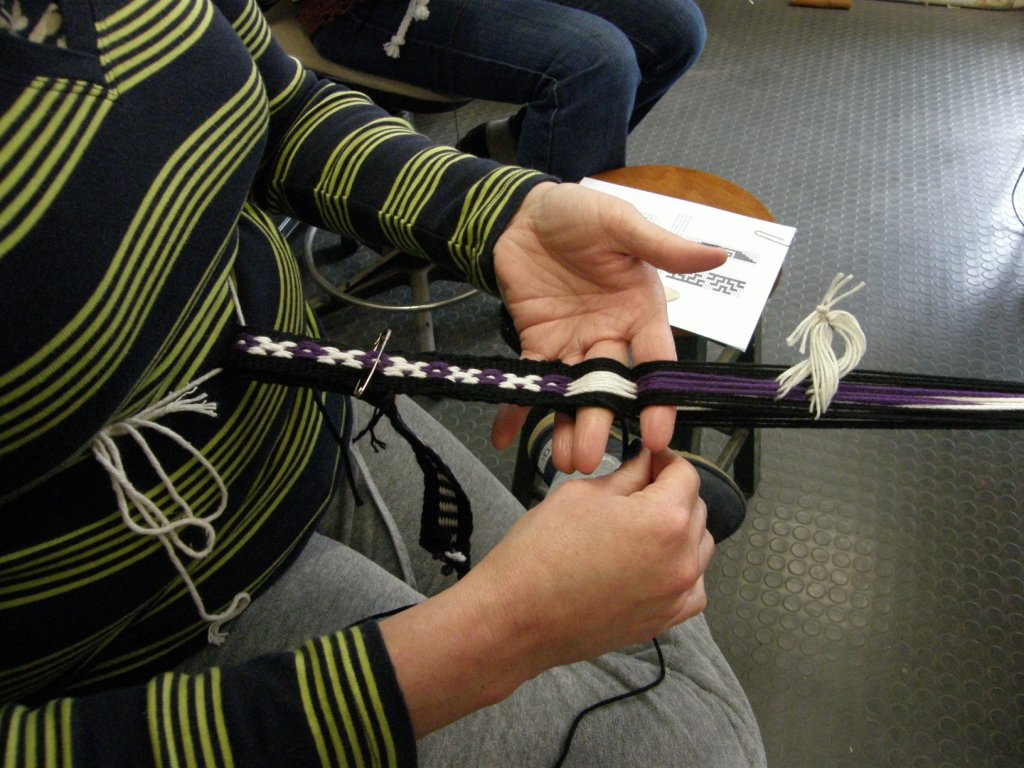
Stephanie backstrap weavingHere’s Stephanie making her first patterned band using what I like to call the “barefoot method”…no sticks… just string and fingers.

Laritza and Terri wove intermesh. This technique was taught to me  in Peru with two sets of string heddles. This gave the ladies some good heddle making practice as a warm-up before they could get into the weaving. This is one of the patterning techniques that I teach in my second book.
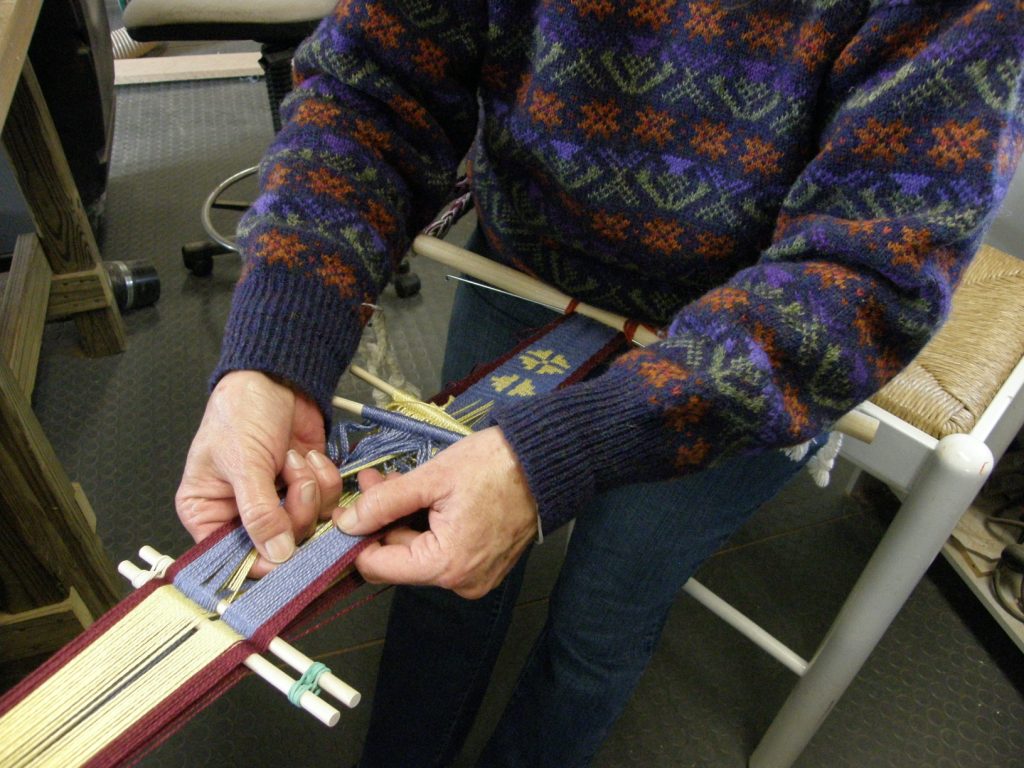
Laritza backstrap weavingLaritza’s warp goes well with her sweater. Inside it was sweater weather…outside, it was almost warm enough to shed them.
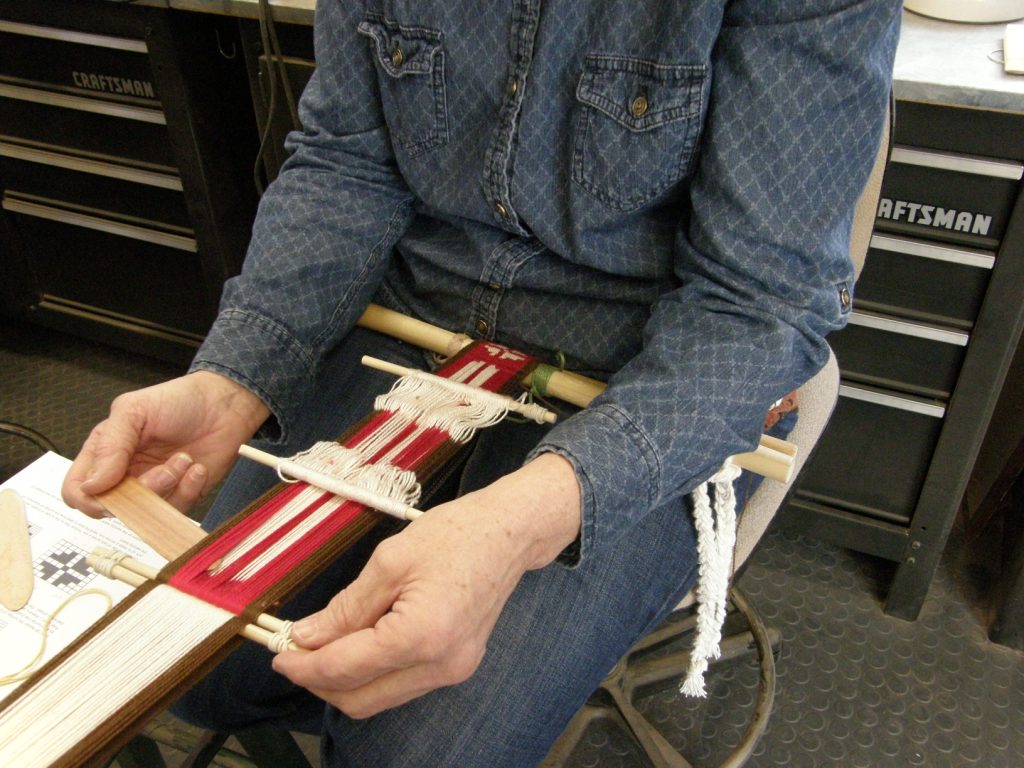
Terri backstrap weavingThat’s Terri working on her intermesh warp.You may remember from previous posts that Terri spends a good part of the year living on Nantucket Island where she has studied basket making with the master weavers there. Below you can see an example of one of her friendship baskets. The little dog figure was contributed by another artisan but the basket is Terri’s. Everything she does including her woodwork is impeccable. I love using her swords.

Sam on friendship basket N Chase T SackettHere is a gorgeous keyfob that she gave me after our time together. It has a piece of whale tooth which Terri shaped and polished. It is a “worry” piece, Terri tells me, as the piece of tooth is just the pefect shape for holding in your hand and rubbing with your thumb when you are feeling agitated. The smooth polished surface really does have a soothing feel.

whale tooth keyfob Terri Sacketttrisha and april at the mannings spinning seminarSo, now I am in South Jersey ready to weave with a group tomorrow..

I met Trisha and April from this group at the annual Spinning Seminar at the Mannings last summer and the idea for this gathering was born. How time flies! I had known Trisha for a long time as part of the Backstrap Weaving Group on Weavolution from way back in 2009. Now we finally get to weave together.

I just received one of my new books from the printer. It looks very handsome with its new red coil binding in place of the black comb that I have been using. I love it.

See you next week from Massachusetts.


Backstrap Weaving – Poncho Envy

I am posting a bit early this week as I will be on the road for the next couple of days making my way to the cold north-east of the US and hoping that the latest dump of snow that DC just had will be the last. It seems like the kind of weather where a poncho would be of good use. What wonderful things are ponchos. I could use one as a blanket, roll it up to make a nice pillow, lay it out and sit on it or just wear it as it was meant to be.

I don’t have any desire to own one here in steamy Santa Cruz but, if my dreams come true and I can one day live in the Blue Mountains just outside Sydney, I think that I could make good use of one there. It even snows there sometimes. The question is, should I weave my own or buy one here in South America?

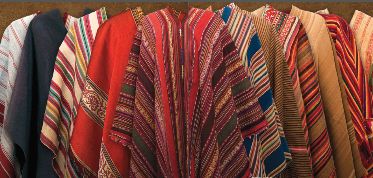
ponchis1-214x275I am excited about a new book that has recently been published on ponchos of Bolivia. One day before I am due to leave I find out about this treasure. I will have to wait until my return to hunt it down.

This article tells how Oscar Barriga spent 40 years collecting and studying over 250 ponchos in Bolivia.

He sold his collection to a museum in La Paz and has written a book which includes information he has gathered on their symbols, messages and their religious, civil and military roles. Barriga says that the poncho does not have any one country of origin.

I have certainly seen varieties of this item of clothing in the highland, lowland and low valley areas in the South American countries in which I have traveled. My friend Kathie, who works with weavers in the tropical lowland coastal areas of Ecuador, took the most wonderful picture of one of the gentleman there on horseback wearing a handwoven cotton poncho.

ponchos 1I was lucky to have been able to attend a talk on ponchos and rebozos given by Anne Rowe at the Textile Museum in DC some years ago. I am looking at my scribbled notes from the lecture in which I have written that poncho-type clothing  existed in the pre-hispanic times but the poncho, as we know it, was popularized by the Mapuche of central Chile and Argentina. The earliest known image of one dates back to 1648. The Mapuche people wove ponchos for themselves but also to sell. During the Conquest they adopted Spanish customs including riding horses. Ponchos proved to be very useful for this activity.

An image from the 1730s that we were shown during the lecture shows a Spaniard wearing a poncho while watercolors from Peru in the 1780s depict both Spanish and indigenous horsemen and musicians wearing them. During the War of Independence in the early 1800s ponchos were worn by Generals to indicate that they were South American and not Spanish. Some of the designs were Spanish-like while others were more Mapuche-like.

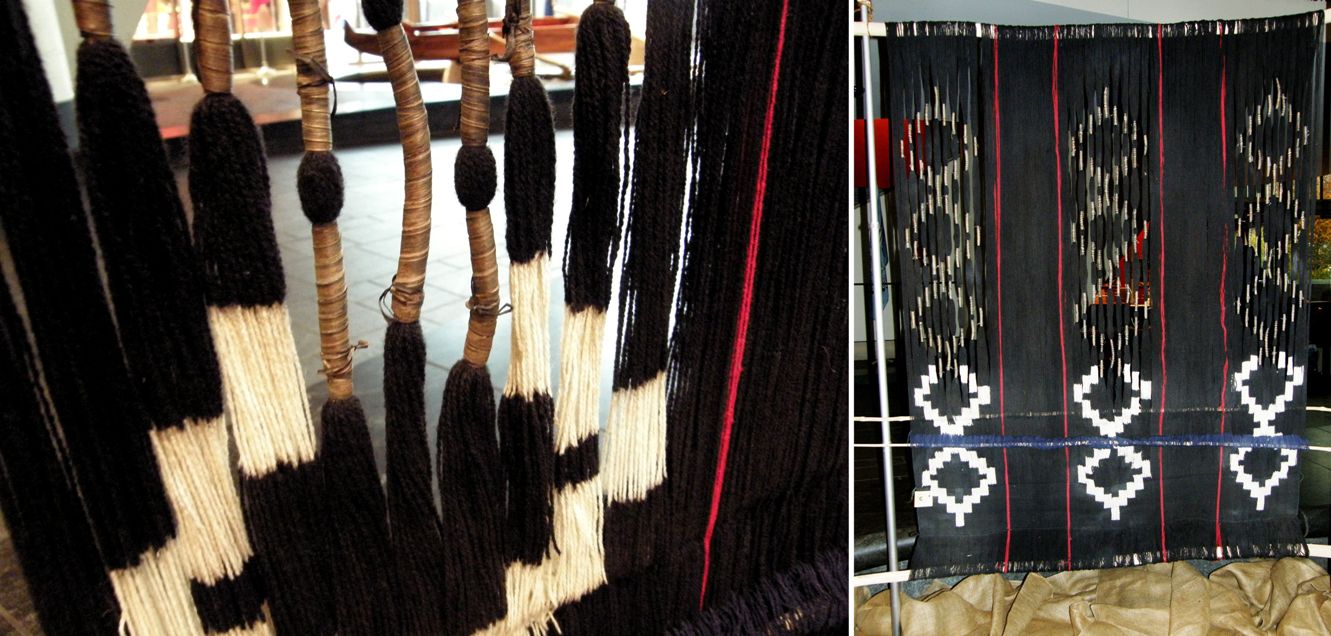
mapuche-ikat-2The black and white ikat ponchos woven by the Mapuche people are worn by those who hold positions of great power and prestige. I imagine that they are quite a weight to carry around as I was able to feel the rather thick and coarsely spun wool in the example in progress above.

It was wonderful to see and touch the incredibly fine vicuña ponchos that were brought from Belen, Catamarca in Argentina to the Encuentro de Tejedores in Cusco in 2012.

poncho-of-catamarca-argentinaThe handspun vicuña fiber has to be carefully selected to find tones of equal value for each piece. The ponchos are woven on floor looms and the fabric measures 2 meters by 1.30 meters and weighs only 320gms.Two people swing the beater and they need to make sure that they beat with exactly the same amount of pressure on this fine, light fabric.

An image on Facebook from this page shows a stunning poncho being made in Londres, Catamarca on a floor loom. This Facebook page shows other beautiful examples of Graciela Salvatierra’s work.

1463897_479549392162132_910966833_nThe Salasaca family with whom I stayed in Ecuador had their son dress up in the typical poncho that he would use for special occasions for a photo. I like this simple black wool poncho. Juan would otherwise be dressed in jeans and tshirt. The Salasaca ladies, on the other hand, wear their traditional outfits every day although they have other “everyday” hats that they use rather than the rock hard ones that you see in the picture.

salasacan-ponchoI managed to sneak a snap of a Cañari gentleman in Ecuador out in his Sunday best ikat-patterned poncho in the town plaza.

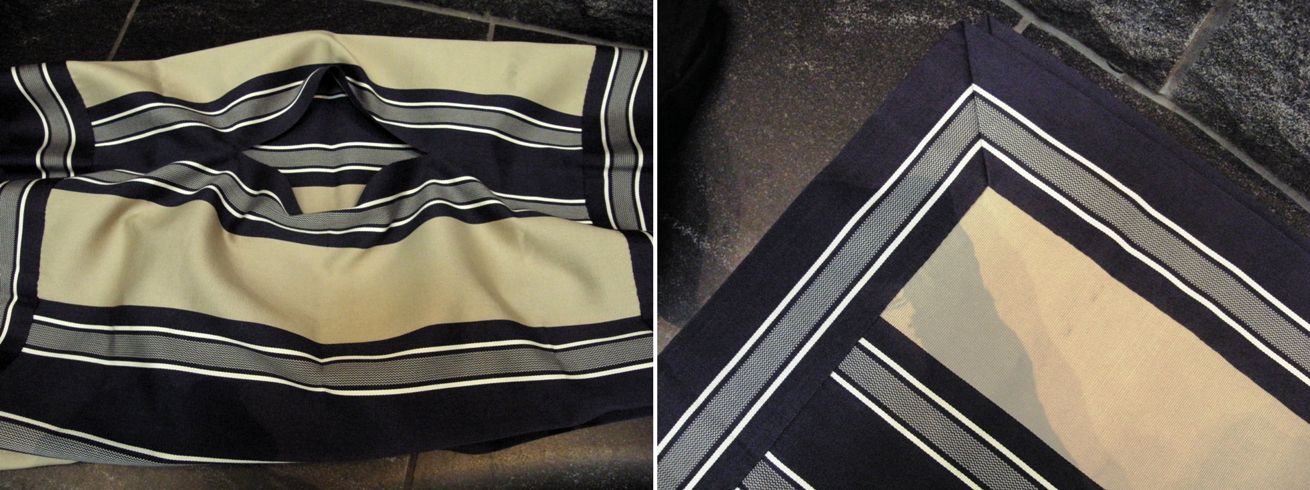
canar-poncho-and-beltsMantas and chamantos are made by weavers in the town of Doñihue, Chile and worn by the Chilean horsemen known as huasos. They are silky smooth and tightly woven. It is easy to believe that they could be virtually water proof.

mantaI imagine that the striped mantas provide an more economical alternative to the pick-up patterned chamantos, like the one below, which I am told sell for up to $3000 each.

chamanto

I love simple striped ponchos….so elegant. You will see that many of the examples in the picture from Barriga’s book above are patterned with stripes in  wonderful arrangements of widths and colors. The weavers of Tarabuco in Bolivia create cloth covered with tiny intricate figures which the women use for overskirts and bags in which to carry their coca leaves. However, the cloth that they weave for the men’s ponchos is beautifully simple…(you can see the pick-up patterned cloth in the background.)

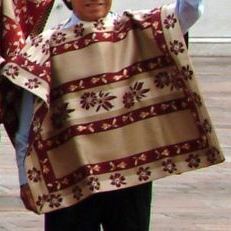
Trabuco ponchoAnd of course, there is nothing wrong with a poncho that has been covered with pick-up patterning. Men in the Peruvian community of Chahuaytire in the Cusco region of Peru weave their own cloth for ponchos decorating them with motifs using supplementary warps.

chahuaytire ponchisThe more I read about Oscar Barriga’s book the more I want it but at the same time, the more I am convinced that its price tag will be very high. In fact, it is not clear to me whether the book will even be made available to the public. A more affordable option, if you would like to know more about ponchos in South America, is this book which was published in Argentina  and is available in English…..

??????????????????????In the meantime, I will think about my poncho and how I would lke to weave it. Yes, while writing this post I have decided that I should weave my own…one of these days. I have many hours of airport waits and bus rides coming up in the next few months in which I can sketch some ideas. 


Backstrap Weaving – Songs from the Lowlands

While scrambling to prepare for my up and coming travels, I have a little time to show you the latest progress on my Shipibo-inspired piece. I have spent some time looking about online for more information about the Shipibo designs and my head is reeling with the variety of information that is out there on the meaning of the patterns.

I have heard several version from my weaving teachers about the name and meaning of this Bolivian motif. explaations of the
I have heard several versions from my weaving teachers about the meaning of this Bolivian motif.

It doesn’t surprise me. I have written here before that I can ask five weavers here in Bolivia the meaning of a certain motif and receive three different answers. I have heard different stories about designs from people even within the one small community. The real question is, do the weavers even want to share this special information with me?

My warping activity is fairly mindless. I wind warps, make heddles, and sometimes weave a few rows to get the piece started. I don’t need to concentrate except to count revolutions on my warping board and so, it is an activity that allows me to put on some music and sing. And, after having read one of the web pages that has information about Shipibo patterns, it is fun to imagine the woven designs in the cloth in my latest piece singing back at me. I will explain that a bit later…

Unfortunately, I can’t sing while I weave this piece. It involves a lot of concentration… jumping back and forth from chaotic curvy lines to orderly straight ones. One miscount, that may seem insignificant at first, can add up to a big blooper further down the track. I’ve learned that the hard way!

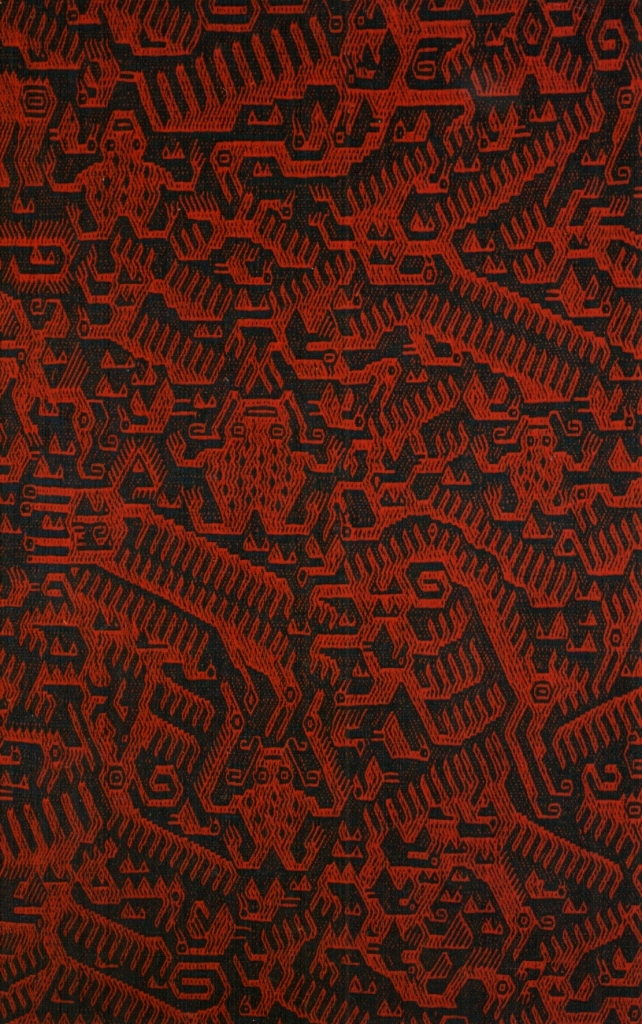
shipibo inspired wall hangingNow…about the songs and the singing. The Center for Shamanic Education is one of the sites from which I learned a little about the Shipibo patterns and their relationship to music. According to this site, the Shipibo people, who live in the Amazon Basin region of Peru, believe that everything is a song and that everything can be sung.

Image from the web site thestorybehindthefaces.com

“In the Beginning a giant anaconda swam through the darkness. She sang the patterns on her back and the patterns fell from her mouth in her song. The patterns took form and created the universe and the people – The Shipibo.”

The patterns are called Icaro (another site calls them Kene) and they are woven into or embroidered on cloth and painted on ceramics, houses and skin.

At the Encuentro de Tejedores that I attended in Cusco in 2012 anthropologist Dr Luisa Elvira Belaúnde, who also called the designs Kene, talked about the patterns that are tatooed on the skin saying that the Shipibo-Konibo people believe that patterns already exist within the person and are simply made to emerge on the skin. A woman’s body is wrapped in design either in the form of tatoos or by wearing patterned cloth.

The Center for Shamanic Education also writes that the Icaro carry healing energy and are a form of musical notation.It says that the Shipibo do not differentiate between seeing and hearing which means that the Icaro patterns in the cloth are constantly singing. What a lovely concept! In rituals, Shamans can hear and sing the tunes of songs from the labyrinth of lines in the patterns.

The labyrinth of lines…what I have been calling a “curvy chaos” in my own piece…is musical notation to the Shipibo people.

One Youtube video which shows a number of pieces of patterned cloth created by the Shipibo people is accompanied by song and the wonderful sounds of the forest.

I have a couple of very small pieces of Shipibo cloth that I bought in a store in Ecuador. I have never been to the Amazon Basin region of Peru.

???????????????????????????????My friend, Yonat, has a gorgeous piece of Shipibo embroidery in her textile collection…

shipibo-embroidery 1

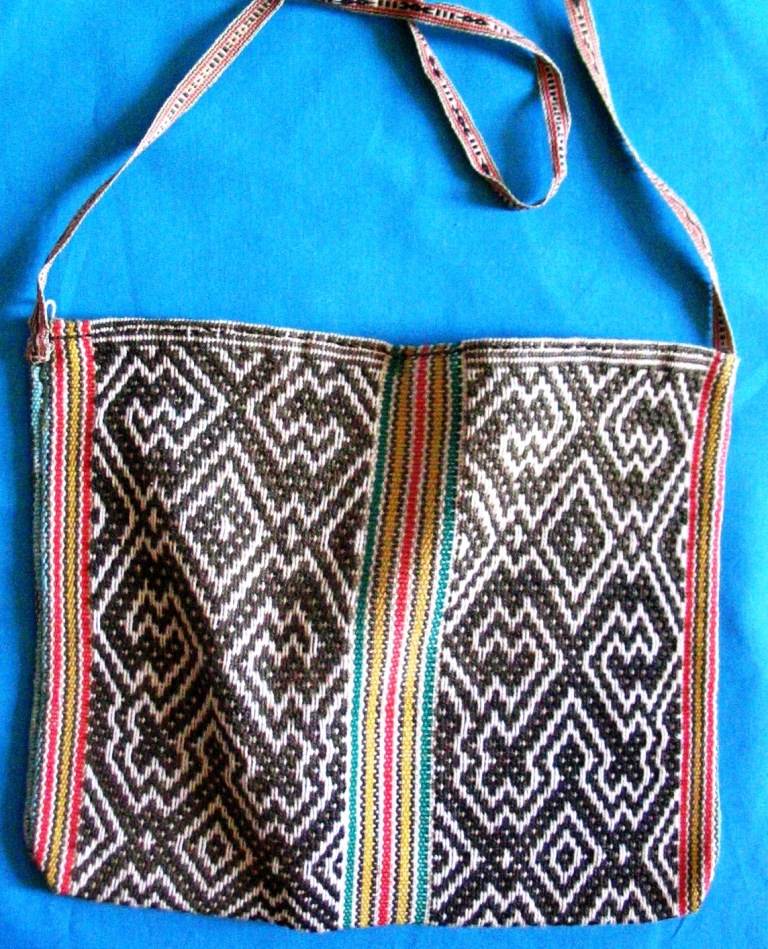
shipibo-embroidery 2The painting and embroidery are now done on  industrially-produced fabric. I wondered if there was anyone still weaving among the Shipibo people. Teyacapan posted a picture of a woven bag from the Peruvian Amazon Basin on her Filckr page. As I had done with my pieces of painted cloth, she had bought the bag in a gallery in Quito, Ecuador. The designs on this bag appear on some of the painted cloth pieces that I have seen.

Z (11)I am guessing that this is the single-faced warp-float technique only because all the lowland weavers that I have encountered so far in Peru and Ecuador who use this structure  weave the single rather than double-faced version.

I used this design on a placemat that I wove along time ago….

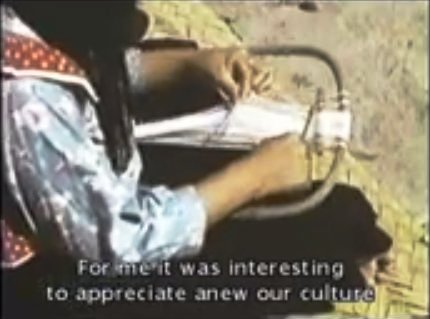
???????????????????????????????I wasn’t able to find other images of Shipbo woven pieces or weavers until I came across a video, made in 2011, which is the trailer for  a documentary on footage that was shot by anthropologist Harry Tschopilc Jr in 1953. The footage has been uncovered in the archives of the Field Museum of Chicago and the documentary covers a project which involved taking the footage and showing it to the Shipibo people. The documentary captures the reaction of the Shipibo people, both young and old, to seeing aspects of their culture and lifestyle that have been lost in the last 60 years. The 60-year old footage shows a Shipibo woman weaving using a backstrap loom as well as one weaving on a small frame that could have been made from a bent tree branch. There is also recent footage of a woman using a backstrap loom to weave a very long and colorful narrow band.

Here are a couple of screen shots from the old film…

video trailer 1

video trailer 2And here is the complete trailer…

I try to imagine the sounds of the forest that you can hear on the first Youtube video in this post as I sit at my loom. The weavers most likely have the songs of the Icaro in their heads as they work. Right now, I hear planes droning overhead, the sounds of car alarms and the rumble of the big plastic trash bins as they are wheeled out to the street…life in the city!

There are two quite long Youtube videos, parts 1 and 2, that show the process of creating the painted patterns on the cloth here and here. Again, there is song and forest sound in the background…lovely.

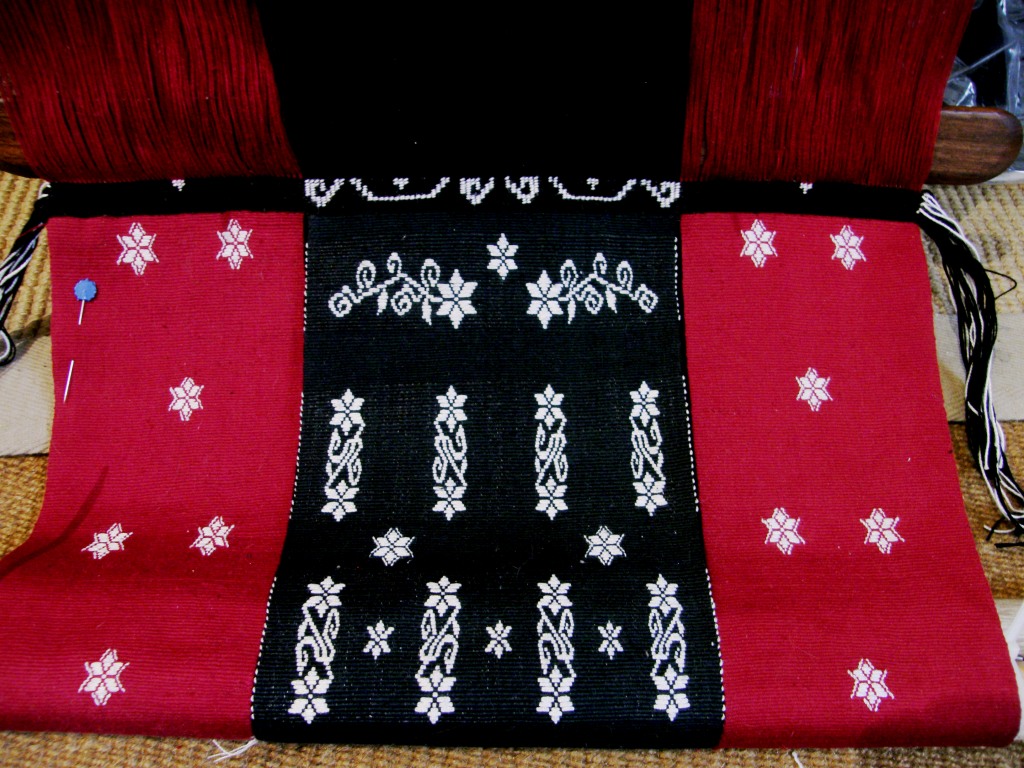
So, I will continue with my wall hanging panel. It will be flanked by panels of deep red and I will join the three panels at the top with weft twining. I hope to twine a pattern that has been inspired by the work of the Shipibo people.

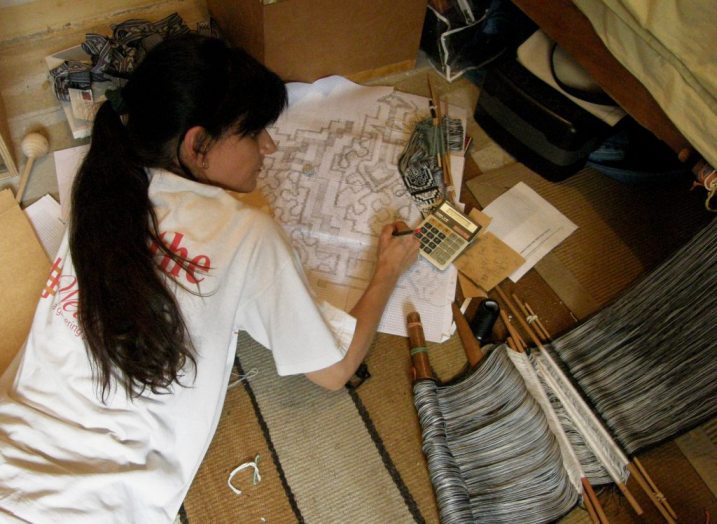
Maybe now you can understand better what I was doing when I was on the floor a few weeks ago drawing squiggles. I had seen wavy lines amongst the hairy wool warp threads on which I had been working a few months ago and  from that was born the idea for this Shipibo-inspired work.

???????????????????????????????See you next week! 

Backstrap Weaving – A Change of Seasons

The change of seasons is barely noticeable here in Santa Cruz. There is a drop of perhaps a few degrees of temperature between summer and fall but nothing else here tells me that fall is on the way. That isn’t happening today as we rapidly make our way up to 30 degrees centigrade. I remember when I was teaching English here, the text books would use the classic pictures to represent the four seasons….snow, sun and beach, falling leaves and spring flowers….somewhat like the motifs I used on my Four Seasons ticlla piece. They meant nothing to my students. They found it especially hard to grasp that fall would be the “opposite” season to spring in the northern hemisphere. I couldn’t blame them.
discontinuous warp ticlla closing the gapAs my departure date for my US trip draws nearer, I am wondering if anything in the northeast is telling people that spring is on the way. Please, say “yes”! My friend in Massachusetts told me to bring boots presumably for stomping about in snow. I don’t own a pair! So, I am just about ready to do some kind of dance in order to try and will that northern winter away and bring on the spring.

Maybe I should fill this post with lots of spring imagery and put a springy vibe out into the universe instead. A change of season and cooler temperatures would be apprecited down here. Okay, so here goes…

Leaves could represent the new growth of spring or the dying leaves of fall…either way, a change of season.

I suppose that blue leaves could be either!

circular warp backstrap

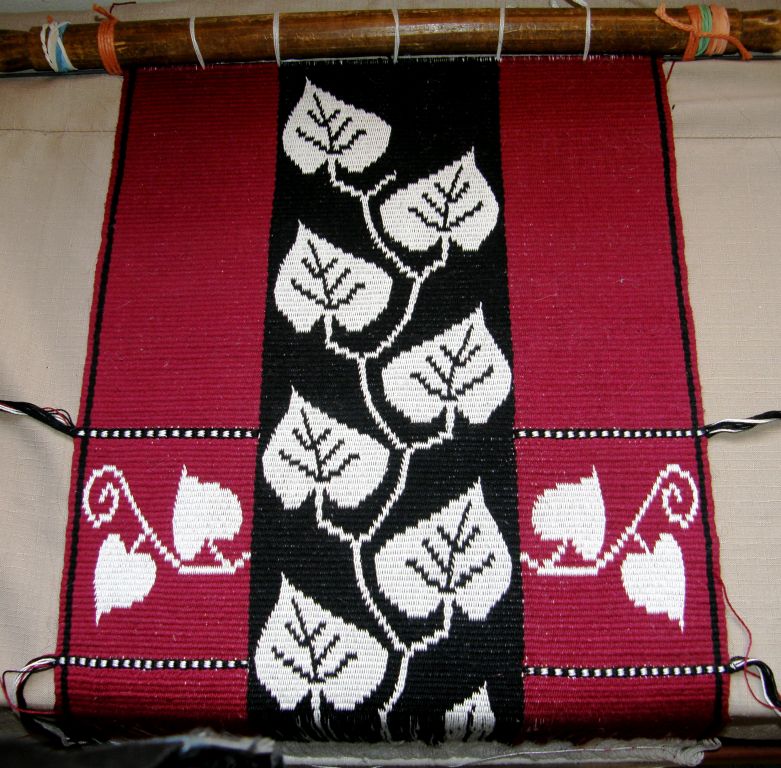
chamanto piece on progressThe leaves on my wall hanging, which were inspired by the chamantos woven in central Chile, are rather spring-like or even summery, I think. The motifs woven into the chamantos represent the agriculture and horse culture of that Chilean region. They are covered in patterns such as wheat stalks, flowers, horse hooves, grapes and vine leaves.

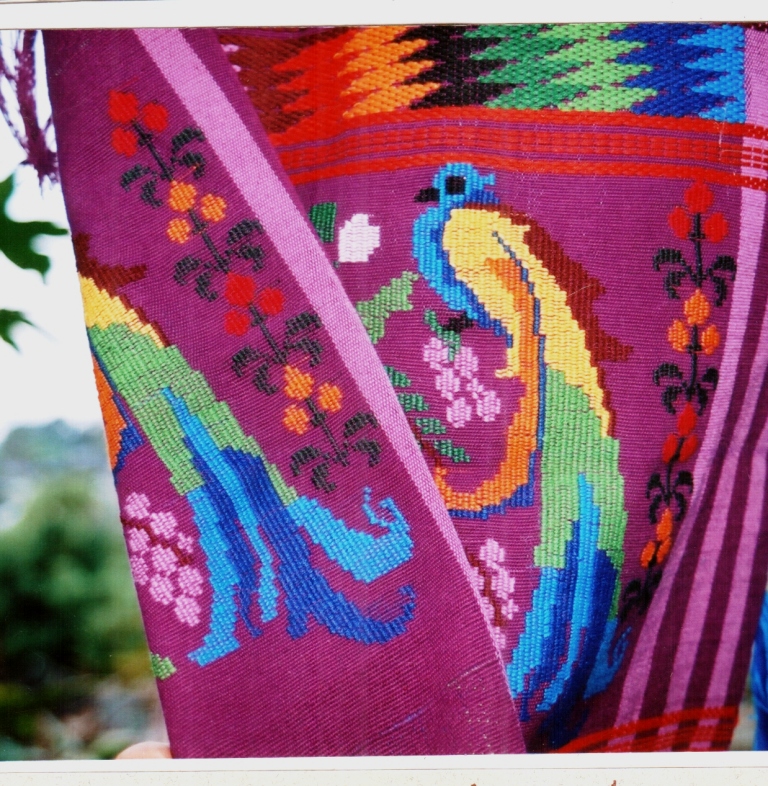
There is nothing cold or wintery about Guatemalan textiles with their flower and bird motifs in bright colors…                                                            double-faced

My Guatemalan teacher with whom I worked on the piece pictured below, taught me to just dip my hand into the basket of threads, pull out a color and go with it. You can see the rows of plants with their happy multi-colored leaves…

Guatemalan supplementary weft patterning

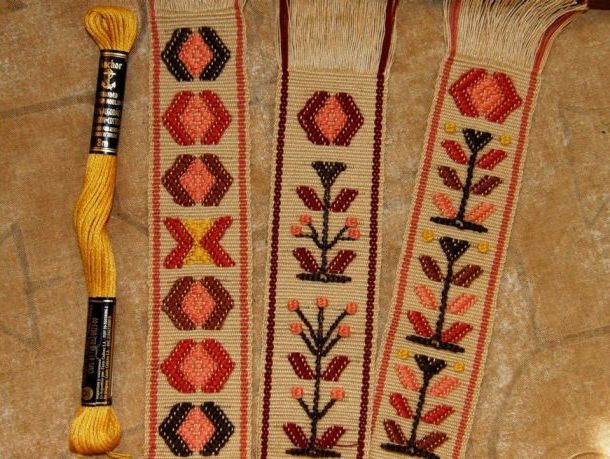
Those little plants and flowers are always fun to weave with supplementary weft even if my color choices once I was back home on my own were a lot more planned and conservative…

suppweft-tree-bookmarks

Crocheted hats and hat bands produced in the highlands, an area which can be quite colorless and bleak at times, provide a splash of colorful flowers and birds….

chullo-and-hatband

OLYMPUS DIGITAL CAMERAThe flowers on the hatband from Calcha, Bolivia inspired the design on the fourth of my red, black and white wall hangings…

???????????????????????????????

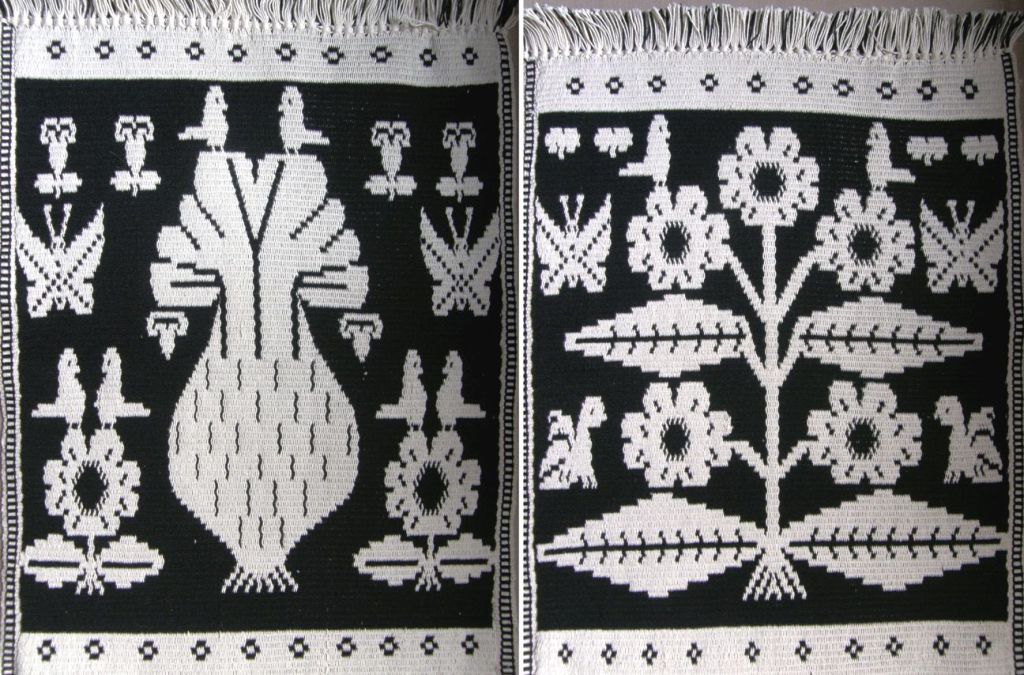
The Guaraní weavers who live in the eastern lowlands of Bolivia may not always use bright colors but their work certainly shows the rich plant and bird life of this region….nothing wintery about this…

Guarani Moisy technique

The above pieces were woven using what the Guaraní weaves call the moisy structure. They also use the kara pepo structure which we know as pebble weave.

Julia, from the Ravelry group has been weaving a piece for her guild’s color challenge. She is weaving Guaraní star motifs in pebble weave. It is always exciting or me to see people using the charts in my books. These star patterns are charted in my second book and the outline is a traditional Guarani pattern.. The basic star outline has its center filled with different shapes and it is an interesting exercise in designing to explore how many different kinds of “fillers” you can come up with for the space in the center of the stars. The Guaraní repertoire of star patterns is fairly small. While the patterns they weave using the moisy structure seem unlimited, the star is one of only very few motifs that they weave using the kara pepo structure. I came up with quite a few filler patterns for  the star for my book and Julia, of course, has been very creative in  inventing some of her own.

DSC04397_medium

Santa Cruz crochet cottonMy Guaraní teacher, Angela, buys the same Brazilian Clea brand thread as I do for her weaving. It was shocking seeing how suddenly and how quickly the price of this cotton went up as it did all over the world and sad knowing how it would effect the weavers and their ability to buy thread.

I am sure that they must be as happy as I am to find that cotton crochet thread is now being produced by TextiCruz here in Santa Cruz. While Santa Cruz used to be a major cotton producing region, cotton hasn’t been grown here for a long long time. I have no idea from where the raw material is coming. But, whatever the source, they are able to sell the finished product much more cheaply than the Brazilian thread!

“Camba” is the nickname for people from Santa Cruz and the label shows the sombrero de sao, straw hat, which is part of the typical festival costume for this area. I bought one ball to try out. You can see it here among a chaos of sample bands that I am gathering for my trip. I am  little suspicious about the color fastness. It sounds terrible but I have  to say that things produced here tend to be of inferior quality. They are well presented but you only have to scratch the surface and…..It is wise to be suspicious of something that seems too good to be true. That goes for everywhere, right? I notice that the label has the typical words of advice on buying from one dye lot to complete a project, yet there is no dye lot number to be seen anywhere.

Let me briefly slip back into the somber tones of winter as I would like to show you my progress on the squiggly Shipibo- inspired wall hanging panel. I would like to thank those who commented last week with words of encouragement. This week’s work on this included four hours of unweaving and re-weaving. I had forgotten to start one of the squiggles and I mistakenly thought that it wouldn’t matter so much. I was wrong. There was a large gaping hole of black space that I simply couldn’t live with. Four hours later I was back to where I had left off but much happier for it!

shipibo wall hanging panelWhen I was at the Encuentro de Tejedores in Cusco in 2012, a presentation was given on Shipibo art. We were told that parts of the patterns the Shipibo people paint and embroider represent their borders and rivers. One of the few times that I flew over Brazil in daylight on my way to Miami and could enjoy the view over the Amazon jungle from a cloudless sky, the 

jalq'a weavingrivers below looked very much like the squiggles I am weaving. I tried to guess which one of the squiggles might be the Amazon itself until I was completely blown away by the massive body of brown water that appeared and curved its way off to the horizon.

I have always been in complete awe of the weaving of the Jalq’a people of Potolo, Bolivia (at left). A complex mass of figures fills just about every space on the cloth. There is no break….no plain weave with which to relax between the concentration of pick-up patterning….a few rows to sit back and just open sheds, beat and pass weft…no, none of that.  While halfway through one motif, the weaver is finishing another nearby and starting the next.  Small motifs are even woven within larger ones. Plus there are warp floats to consider. The weaver must ensure that she ties down each and every one of the threads at just the right moment before the floats become too long. And  pattern charts, of course are not used. It’s mind boggling.

Although I am not weaving a warp-float structure and my patterning, therefore, is much easier, my current weaving with its squiggles starting and stopping and turning this way and that has given me an even greater appreciation of the work of the Jalq’a people. I have to remember to start the next squiggle while in the midst of one and finishing another.

Let me return to something bright and spring-like to finish this post and blow away the winter blues…

PAZA bands Cochabamba BoliviaHere are some of the beautiful bands woven with naturally-dyed handspun yarn from PAZA in Cochabamba. Cochabamba city is one of many I have come across in my travels in South America that is named a city of “primavera eterna”…eternal spring.

See you next week!