At last I’ve made a decision about what I’m going to do about selling my publications. At first, I was planning to set up a shop on my blog. That involved updating the blog template that I’ve been using for the last sixteen years to a new one that works smoothly with all the WordPress e-commerce tools. (My old template had been retired by WordPress and although it allowed me to continue blogging, it was no longer compatible with current e-commerce tools). I updated the template and you may have noticed a slightly different look. It’s not a huge change on the surface but behind the scenes it created a bit of havoc! Not fun! One bit of the havoc was that I actually wrote and published this post a whole week ago only to discover that many of my subscribers (possibly none) were never notified. So here we go again.
If you happen to notice any old posts in which the images have disappeared, do let me know. It’s actually an easy fix but it’s been impossible for me to go back and check every single post from the last sixteen years!!
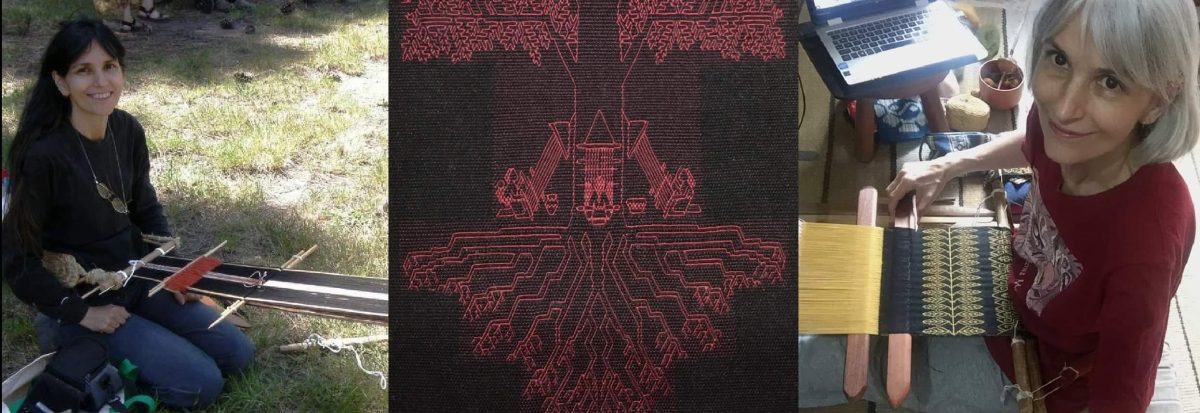
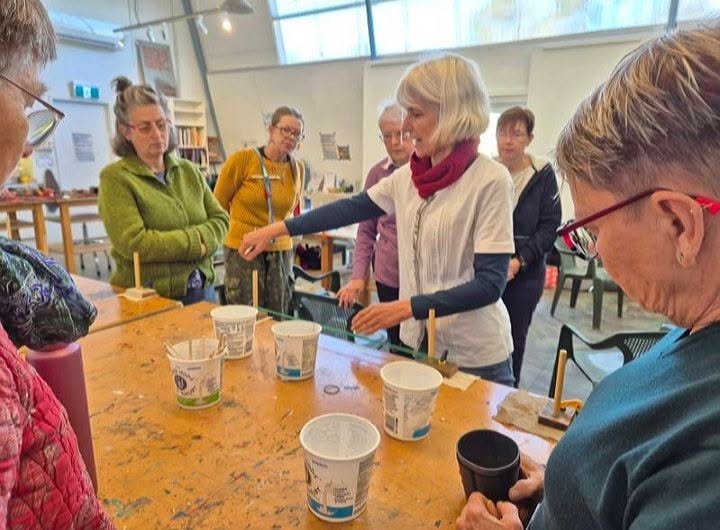
There’s a lot of text coming so let me toss in a photo or two along the way of some of the things I’ve been up to when not on my laptop trying to get my blog back to normal:

SO, HERE’S THE UPDATE….
My books (in PDF form) on South American pick-up weaving techniques and patterns can be purchased directly from me by leaving a comment on this post. Your comment will not be published. Only I will see it and I will then contact you to explain how it works to purchase my PDFs. Basically, I will send you a Paypal invoice and use Dropbox to deliver the file/s. If you prefer, you can contact me via Facebook Messenger (my account name is Laverne Waddington) or by DM on Instagram where my account is lavernewaddington.

You don’t need a Paypal account in order to be able to pay the Paypal invoice that I send you. You don’t need to already have a Dropbox account when you place your order. You will, however, be prompted to open a Dropbox account, if you don’t already have one, when you click on the link in the Dropbox invitation that gives you access to the PDFs. The Dropbox account is free of charge.
I’ve been selling my PDFs in this way via Facebook Messenger for about four weeks now and the process has been smooth and efficient. The bonus for me is that I get to have a little chat (only if you like) with each and every one of you! Just be aware that I’m in Australia and due to time zone differences there may sometimes be a delay in my response due to my being asleep while you’re awake. I was thrilled just last weekend to meet by chance one of my newest customers at a weaving event in Sydney after having chatted with her while arranging her purchases. You just don’t get to do that when selling on a third party website.
Fortunately, the current pace of sales is something I can easily handle. When the time comes for me to launch a new publication (I have three in mind), I’ll sell them via a shop on this blog as the sales volume (hopefully?) will be more than I can handle on a person-to-person basis.

I have written descriptions below with prices to help you decide which book would be most suitable for your kind of loom, weaving style and experience level. I have not listed them here in the order in which they should be purchased. Read the descriptions and if in doubt about the best place for you to start, leave me a comment and we can chat about it. And, before you ask, I’ll tell you that no, there aren’t printed copies available any more. These are all PDFs.


Andean Pebble Weave (US$19), published in 2010, is the first book I published in the growing collection on South American weaving techniques and patterns for weavers. It isn’t necessarily the first one you should buy. It is aimed at experienced weavers and particularly those who prefer a more grass-roots approach. It shows how to wind the warp, create the warp-cross and prepare it for weaving leaving it up to the reader to then decide which kind of loom or what method they will use to hold the warp under tension. The two beams of the ”loom” could be as simple as the weaver’s waist and big toe!
The simplest method has the weaver picking up threads to form patterns by hand. The book then goes on to show how the addition of additional sets of string heddles can make the process partly loom-controlled.
The draft and instructions are also given for four-shaft looms.
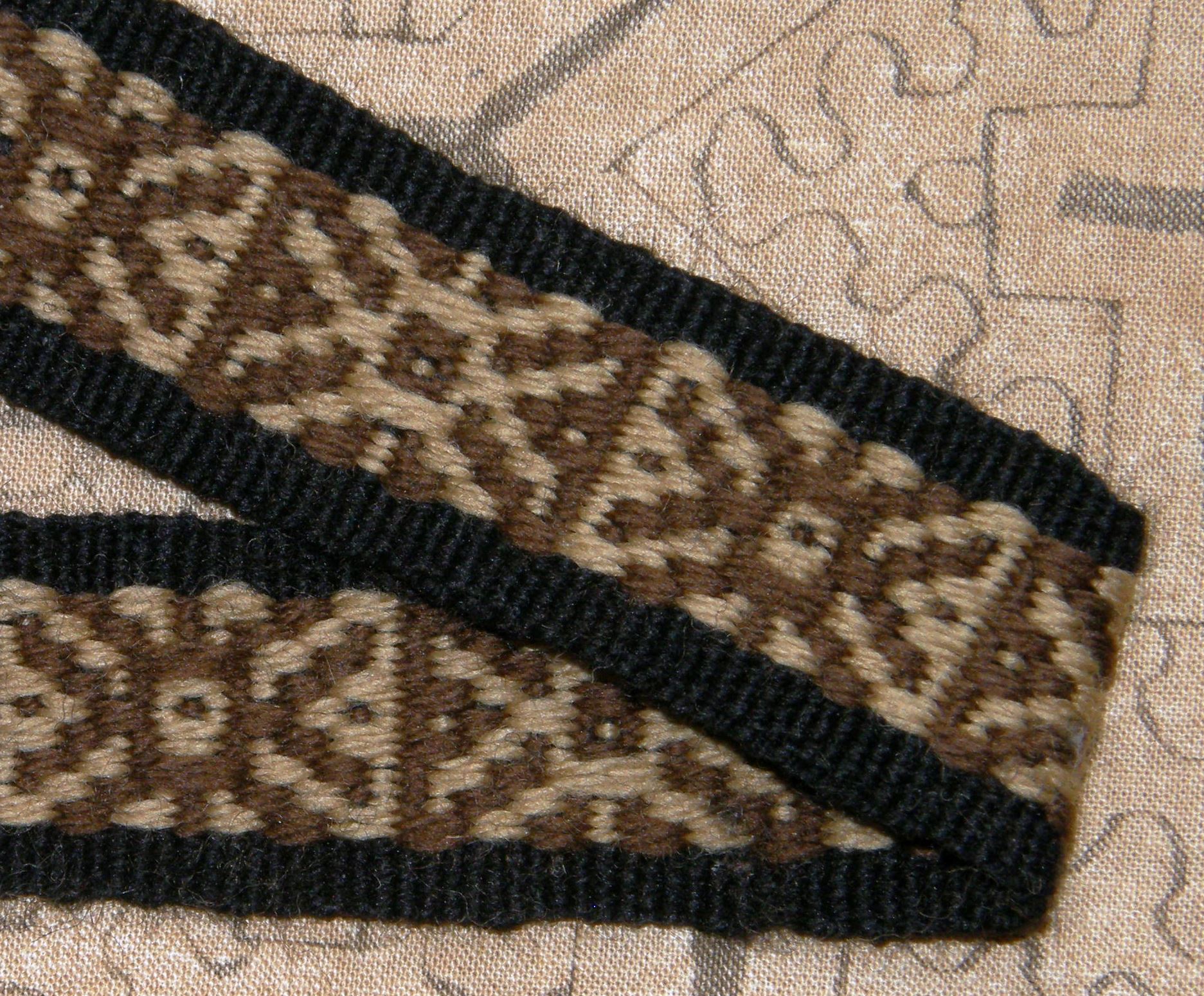
Not sure what this structure that I call Andean Pebble Weave is? Here are some bands that have been woven using this technique.

(More suitable starter books for those who use inkle or other band looms are Complementary-warp Pick-up for all kinds of looms that allow you to weave bands or Andean Pebble Weave on Inkle Looms specifically for inkle looms. See their descriptions below).

The follow-up book, More Adventures with Warp-faced Pick-up Patterns (US$25) was published in 2012 and takes weavers who have used the aforementioned Andean Pebble Weave book further into the world of techniques used in the South American highlands and lowlands to produce intricately patterned cloth. A new structure commonly known as ”intermesh” is also covered in detail.
There are one hundred and fifty new Andean Pebble Weave patterns in this book which draw on inspiration from both South American highlands and lowlands as well as adaptations to the pebble weave structure of patterns from textiles around the world. A new charting system of spots and lines is introduced with accompanying tutorials which will help weavers go beyond charted patterns to create their own designs.

Complementary-warp Pick-up (US$19)was published in 2017 and is recommended as an introduction to these techniques for weavers who can already warp and set-up their looms and confidently weave warp-faced plain-weave bands. That’s all I mean when I say that the book is for “experienced band weavers”.
With a focus on narrow pieces and the very simplest of looms and tools, this book provides step-by-step instruction and forty-two pattern charts for band weavers to use on their inkle looms and other band looms, with rigid heddles, or simple backstrap set-ups. The structure that I call Andean Pebble Weave falls into the category of structures known as Complementary-warp. Many of the patterns in this book are in fact Andean Pebble Weave ones.
Any loom that can produce warp-faced cloth and two basic sheds can be used. The patterns are drawn on the conventional block-style chart.
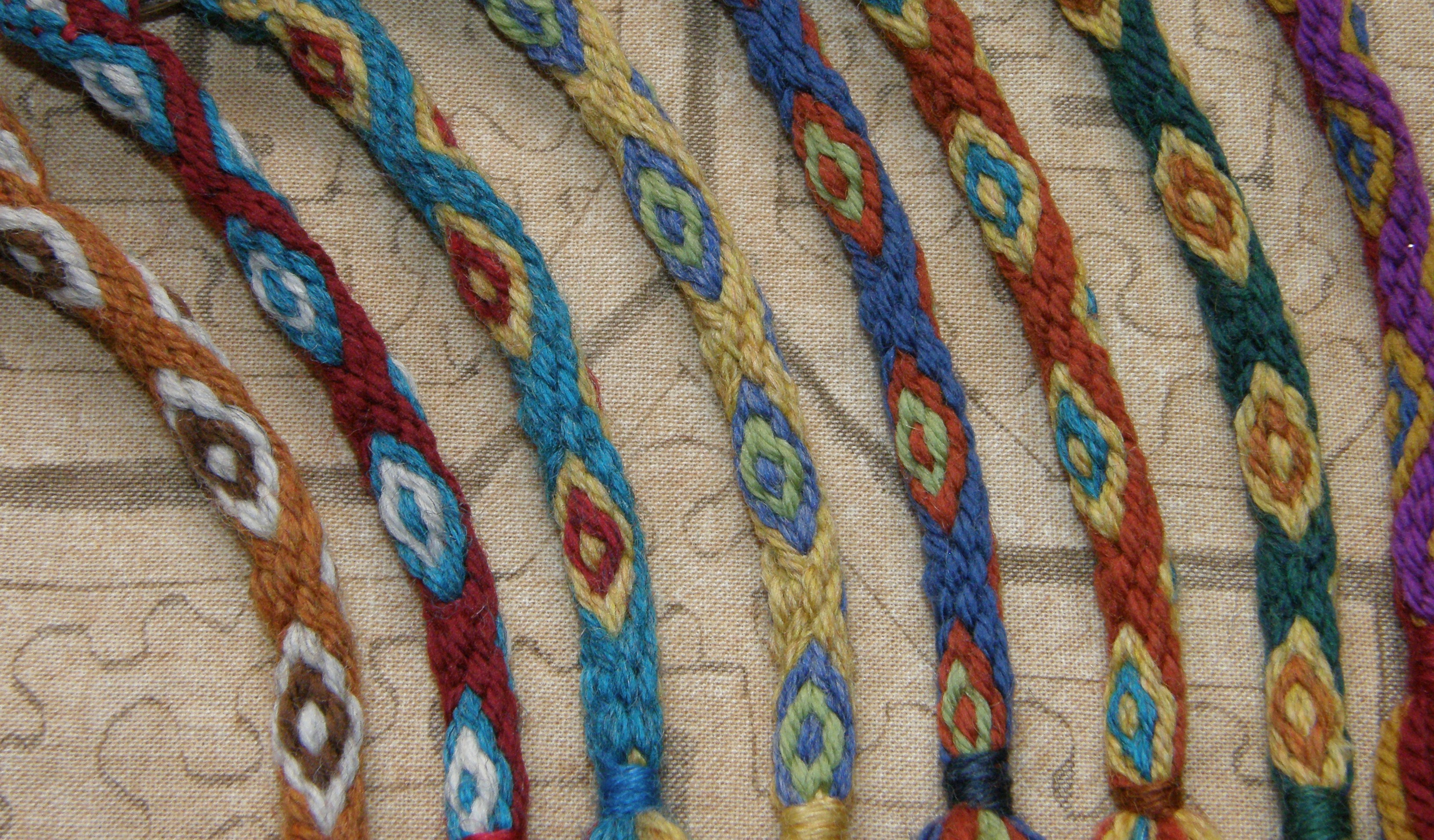
Here are examples of some of the patterns:


The Complementary-warp Pattern Book (US$25) was published in 2018 and is a beautiful collection of one hundred patterns for those who have learned the techniques from any one of the preceding publications. Several readers of the other publications contributed their own original patterns to this collection. Those who have learned the techniques from the 2019 publication Andean Pebble Weave on Inkle Looms will also be able to enjoy this book.
The patterns are charted on the conventional block-style charts. In the Appendix the same patterns are also charted on the spotted charts that were introduced in the More Adventures…. book. Both styles of charting have their fans and so I have provided both.
Note that while most of the patterns in this book are of a width that can be managed on inkle looms, some will be too wide and will be more suitable for those who use larger looms like the Gilmore Wave series of looms or other two-sided inkle looms that allow greater widths.
A second book of 132 patterns was published in 2019…More Andean Pebble Weave Patterns. See the description further down.


The year 2019 brought two more books to the collection. The Eye-pattern Tubular Band and Other Decorative Finishing Techniques (US$22) shows how taking a piece of fabric off the loom signals the start of a whole new process in which the piece can be strengthened and decorated using tubular edgings and other woven and sewn embellishments.
The tubular band with its distinctive eye pattern can also be woven independently and used in jewelry and accessories. A loom is not required. One end of the warp is attached to the weaver’s waist with the other end tied to a fixed point. Weaving the bands is not dependent on the use of heddles and all the sheds are created by hand. Detailed instructions on how to set up the warp and weave the tubular band on an inkle loom are also provided.
Two versions of the book were published. One includes the sewing techniques as well as instructions for weaving the patterned tubular band. The other only teaches the tubular band. (US$16)
Both include instruction via supplemental video clips as well as instructions on how to set up and weave the tubular bands on inkle looms. These books are aimed at weavers but can be used by those who don’t have any previous band-weaving experience.

2019 also brought Andean Pebble Weave on Inkle Looms (US$22). It is aimed at weavers who like to use the standard inkle loom and who, after being able to competently weave plain-weave bands, are ready to take their first steps in one of the many possible patterning techniques.
Two beginner methods are taught with the use of dozens of step-by-step photos, detailed text and video clips. Weavers can decide which method best suits their particular loom and weaving style. A third intermediate-level method shows an optional faster way of achieving the same results by using additional sets of heddles on the inkle loom. This is probably my favourite book so far!

In late 2019 I decided to re-publish all the Andean Pebble Weave patterns from the 2012 publication More Adventures with Warp-faced Pick-up Patterns. All 126 patterns plus 6 brand new ones appear in this publication on the more conventional block-style chart. They were previously drawn using charts of spots and lines in 2012. Many weavers enjoy the spotted charts and have used them to design their very own patterns. Others, who haven’t had time to study the tutorial which explains how the spotted charts are read, have often asked me if the patterns could be re-published on the more commonly used block-style chart.
More Andean Pebble Weave Patterns (US$22) is for them but it will also be welcomed by those who don’t own the 2012 book and who have learned the techniques from my more recent publications Complementary-warp Pick-up and Andean Pebble Weave on Inkle Looms. This pattern book provides 132 charts with patterns that have been adapted from textiles produced in various regions around the world….Kuba cloth of Central Africa, Komi knitwear, belts with patterns of Russian origin, yurt bands and satchels from Central Asia, historic and contemporary tablet-woven motifs, as well as patterns from textiles woven in the highlands and lowlands of Peru and Bolivia.
Some of the patterns are too wide for the average inkle loom and will be better suited to wider band looms like the Gilmore Wave series of looms or two-sided inkle looms that allow greater widths.

Published in April 2020…Warp-faced Double Weave on Inkle Looms (US$22)
This is an advanced-level technique aimed at weavers who use a standard inkle loom. By that, I mean the kind of inkle loom that uses individual string heddles and which requires the weaver to lift and lower one layer of threads with the hands to create the two basic sheds. I use an Ashford Inklette in this book to teach and demonstrate the technique using its two basic sheds. There is a bit more work involved in setting up the loom and weaving requires extra care and attention (hence the advanced-level rating). It would be helpful to know before you attempt this technique that you enjoy doing pick-up as it is one of the slower techniques that I have learned in South America. However, it is one of the easiest structures for designing and I liken it to doodling on plain weave.
The structure does not use warp-floats and so the surface of the band is perfectly smooth. The motifs are identical on the two faces with colors reversed. Angular, curve-like, solid and delicately outlined figures can be produced. The book has 45 pattern charts. Chapters on designing take you through the steps for sketching, charting and planning the layout of patterns. You are also shown how easy it is to chart a motif from an image of a woven textile.
Video clips supplement the instructions and are accessed via links throughout the text.
A section is dedicated to Finishing and includes tutorials on a braiding technique and weft twining.
##################################
I look forward to hearing from you if you would like to purchase any of these publications. I apologise for the long wait but I hope it will be worth it. Just leave a comment here or contact me via the Facebook or Instagram options that I mentioned at the start of this post.
And yes, I have been weaving and doing other fiber related things in these recent months here in Australia where I’m still in the process of settling in. I’ve been more active talking about all that in my Facebook posts lately while I try to sort out the change-of-template issues on this blog but I am planning a catch-up post here on this blog very soon. Promise! It will also take me a long long long time to change every single link I ever posted to Taproot Video on this blog! Thank you for your patience and continued support.


I noticed the new format on the blog right away. It looks good and you have done a fine job updating it. I am not one for change, especially technical change so I am impressed!
Oh, I’m with you there. It probably would have taken others hours to sort it all out. It took me months!
Congratulations, Laverne! So many happy and positive events in your life back in Oz! The fall colours, the dancing, book news, everything… well worth the wait to hear from you again. Long live the King of the World. And Happy Birthday!
Very best regards,
Jim and Raoul
Such an uplifting comment. Thank you so much, Jim ad Raoul!
What a clever subtle way of hinting your age… how can anyone not admire your quality wiring… I know I always have. 🥰
A friend of mine turned this same age a couple of years ago and I told him that he’d now be able to sing the Beatles song. He didn’t get it and said he’d have to look it up on Spotify!
I was happy to see this latest post. It’s been a while! I enjoy reading about your adventures. I already have all your books and I will look forward to seeing what comes in the future!
Thank you, Lezlie. I feel like I have things pretty much sorted now and can back into posting more regularly.Thre’s a lot to catch up on!
Yay! Glad to get this post and hear where to purchase your books. A small Band & Braids group has been started in the Olympia Washington State area. A couple of us have recommended your books, and now we can tell them where to buy them. I’ll take my copies to the next meeting to entice them ;-).
And I think I just saw a couple that I don’t have! I’ll have to fix that, if it’s true.
Hi Cindy,
I’m so happy to know that you’re still band weaving and that you have a group up there that shares your passion. Thanks for the book promo! I’m glad too that you managed to snap up copies in print before they sold out.
Very exciting Laverne. Many people wanting your books will be so happy. I’m really enjoying my copies and look forward to any new books you release in the future!!! Hoping for 3 or 4 colour pebble weave tutorial 🤞💖🙂
Thank you so much! I’ve become involved in so many things here in my new home as a way to meet people because I came here not knowing anyone. Now I find myself almost too busy to weave let alone get going on the any one of the three publications that I have in mind! I’m sure the novelty will wear off soon and I’ll find myself getting up and heading straight to my loom as in the “old” days!