Backstrap Weaving – Key Notes


Key fobs in earthy colors

I have been wondering if the number of keys a person needs to carry about is some kind of indication of the complexity of their life. After making lots of key fobs in the Ravelry Backstrap Weaving Group’s Weave-Along, I realised that I only have one key! That’s the key to my front door and I have a spare hanging in the kitchen. I don’t have a car, so there’s no key for that.

And yes, life does become a bit more complex when I am on the road teaching. Then I carry eight little TSA padlock keys for my two big pieces of luggage and it is a nightmare keeping them in order. Plus there’s a spare set, so I have sixteen keys in all.

calcha flower design key fob

leaf pattern in double weave and 9 strand braidSo, why make all these key fobs?….well, it’s just plain fun. On top of that, as I mentioned last week, it gives me a chance to sample a new motif, new-to-me yarn and color combinations. And for people who are new to backstrap weaving, it is a chance to learn new techniques. Some of these key fobs will be gifts and some will remain with me as samples for weavers. One or two might actually be used for my keys. But, I think that they will mostly serve as guides when I come to use these motifs and yarn in bigger projects.

This week I made some new samples and also worked on finishing some of the bands from last week. I tried my leaf pattern in warp-faced double weave and enjoyed the very robust look of the motif in that structure.

I also received a nice message on my blog on how to extend the instructions for the five-strand flat braid to a nine-strand version and I used that on the beige band above left. It makes a tighter, more practical barid for this kind of thing and I love it.

woo fob and finishesI made the dark brown wool fob you see above and used the five-strand flat braid for that one. I was surprised to find how slippery the wool was with the silk supplemental weft and there are definitely things I would do differently next time when using that combination of fibers. I didn’t like the thin and spindly look of the four-strand round braids on the green fob and so I gathered and bound them together. The snowflake fob has a finish that was taught to me by my weaving friend, Chris. It is the first time I have tried it and I think it needs a bit more practice.

positive and negative space inlay in supplementary weft inlayRight now I am working with 60/2 silk. This is something that I have been wanting to do for a long long time…ever since I bought the little tubes of left-over silk when I was with Sue in England in 2012.

I have been happily using it as gorgeous supplemental weft in a lot of different projects, like the pouch at left, but what I really want to do is weave using it as warp.

I made a tiny sample with this silk a long time ago in Andean Pebble Weave…

pebble weave with silk….and found it very hard to handle the fine strands of silk that wanted to stick to and snag on any imperfections in the skin of my fingers.

I did manage to use it in a warp-faced double weave piece I was made for my nephew….

silk bookmark for ryan backstrap weavingBut I really want to use it for Andean Pebble Weave.

Ever since I wove this Guaraní design in a guitar strap many years ago, I have been wanting to use the motif again…(it’s charted in my second book)

Guarani star pebble weave guitar strapAnd so I decided I use the key fob WAL to create a two-fer….the Guaraní pattern in the 60/2 silk…

guarnai designin cotton and silkBut now that I am actually weaving it, I don’t think I will stop at key fob size. I will weave off the entire warp as I really want to get confident with this and use the silk for larger projects. You will notice I chose black…the hardest color to see. I figure if I can manage it in black, I will be able to manage it in any other color! I am just getting a handle on width and tension, for now. The silk feels so good!

???????????????????????????????The silk project and the big bird project have been keeping me busy. Plus, February 1st was the date I set to start my workshop prep. I have three distinct work stations set-up in the wee apartment now. The kitchen counter is Key Fob Land, the bedroom floor is Birdsville and the living room floor with warp hooked to the tv cabinet is Warping and set-up Mayhem Zone.

I did slow down a bit yesterday and today as I am suddenly one tooth less wise and will be probably be without another wisdom tooth after a visit to the dentist later today. That has made me feel a bit wonky.

Let me show you what other folks have been up to.

In Australia,  Susan has been making key fobs although she doesn’t do the online group thing that much. She sent me a picture of her progress so far and it is a nice sampling of different techniques….

SusanFrom left to right….Bedouin warp-subtitution technique, a threaded-in pattern, simple warp floats and Andean Pebble Weave.

Helen wove with me when I was in Australia last year. She went on to weave a piece in Andean Pebble Weave on her floor loom and created this lovely bag…

helen halpin pebble weave Wendy, over in Perth, Australia has joined us and showed us her warp and set-up. She has also been visiting the local yarn and craft stores and giving me good information about the different kinds of backstrap-friendly yarn she has been discovering in Australia.

wendy

Another Aussie, Julia T, designed two pieces using supplemental weft and made a great collage of pictures to show us the completed pieces along with their sources of inspiration…

julia t collageAfter completing her first-ever sample using a supplemental weft, she was able to make some necessary adjustments and then turn out these lovely pieces. She was also inspired to use beads along the edge of the paw-print piece by Joyful’s use of them in this band…

clippers-band-front_mediumOur ”other” Julia has been working up several of the small motifs in my second book in Andean Pebble Weave and other complementary-warp structures and has a lovely collection of key fobs in 5/2 perle cotton each with its neat weft-twined finish….

julia collageIt’s nice to see people trying patterning with supplementary-weft (below) and I hope we see more of it. Julia T made a key fob with her own design, Marsha is weaving a cuff on a vertical loom and Valtricot created her own design for a cellphone pouch. Each weaver shows a different way of handling the turns of the supplemental weft and I think that is really cool.

supp weft startersIt is normal for the patterning to come out a bit disjointed the first time around. Samples need to be woven to be able to figure out just how many strands of supplemental weft material will suit a certain weight of ground warp thread. It’s all a bit of guess-work at first. On top of that, you are counting threads and learning to create the pattern spaces and handle the extra weft etc. Quite often the need to adjust the way you are beating is not immediately apparent. The designs always look nicer if there is connection between the rows of weft. The motifs will look more like solid shapes that way. Knowing how your charted pattern will look when woven is another thing to consider. Sometimes the dimensions of the cells on the chart will not perfectly match your picks per inch/ends per inch ratio. And that’s the idea of this WAL…the opportunity to make tiny samples and figure all this out.

Betsy, who is away from home right now, is still determined to join us in our WAL and has come up with a clever way to wind her warp in her temporary home. She is using her own handspun as well as crochet cotton for her projects. She has come up with some nice patterns using only four ends of each color.

betsy warping handspun and cotton

week 2 variousEska made three fobs using the simple warp-float technique experimenting with floating just one and then two colors. JoAnne designed her own clever Andean Pebble Weave cats. Linda floated both colors in the simple warp-float technique to create this yurt band border pattern and knitnfrenzy reminded me just how striking ‘plain’ Andean Pebble Weave, that is, the basic structure without a motif,  can look.

We had some talk about cuffs. Janet mentioned her intention to weave some and I remembered having seen some in a Peruvian Connections catalog when I was in the US last fall. It seems that quite a few of us are not into jewelry but would consider wearing a hand woven cuff. Janet got to work with her naturally dyed handspun and showed us her work, complete with button holes….

janets cuffsThis pattern is charted in my second book.

I have been scratching around in the closet jumble and getting out some of the sample bands that I have woven all of which would be suitable for key fobs. And there are many many more. I know that I have a bunch of Bedouin-design bands somewhere and then there is a myriad of bands that I wove as samples for the second book.  

backstrap weaving key fobsAlthough I like the look of this colorful jumble of bands, and could make plenty of fobs, that’s not the point of the WAL…the idea is to try something NEW. So, for now, I will continue with my silk band and dream about the day when I can weave a large, fine, silk wall hanging on my backstrap loom with lots of pick-up patterning.

I will leave you with this Challenge Family Triathlon motivational poster which was put together after last Sunday’s Challenge race in Melbourne, Australia in which my nephew took part along with over 1200 other athletes. It was a nasty day with big seas, wild winds and cold. I followed it on Saturday afternoon in Bolivia all the while horrified by the poor weather conditions. That’s my nephew, Ryan, in the poster!

1947805_776160752419452_1849480686219816020_n


Backstrap Weaving – Colors from Camelids and Cotton

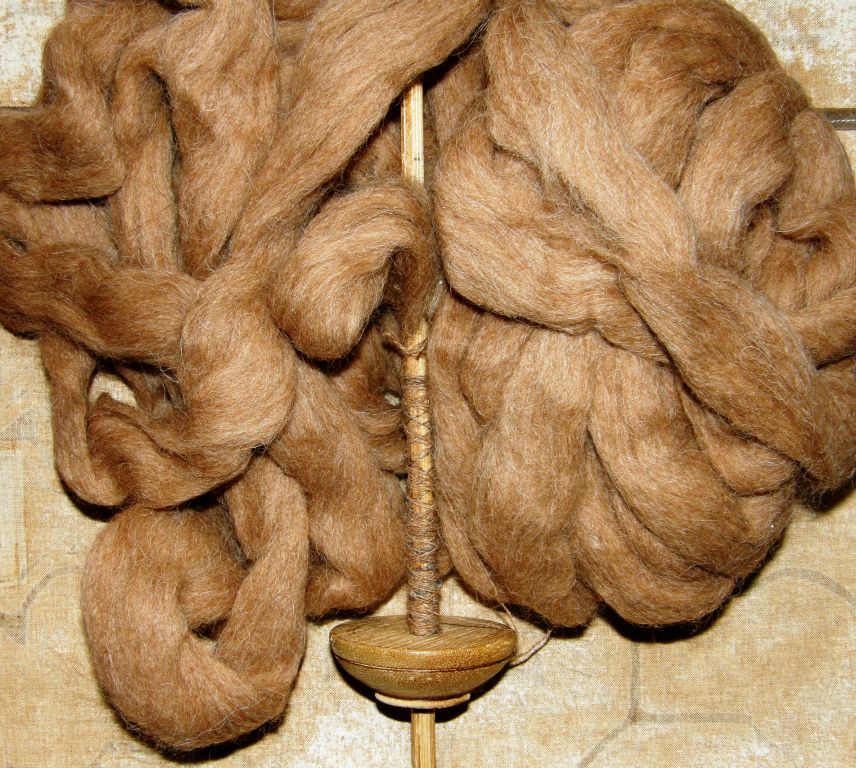
This week’s blog post is brought to you by these fine fellows…

and their beautiful fiber but also by…

my friend Janet in northern California who gave me a ton of alpaca fiber last year, Celinda, an Aymara weaver who swapped some of her handspun alpaca yarn with me for one of my woven keyfobs and the weavers of Peru who got me started in spinning on drop spindles back on my first visit to Peru in 1996. I also have to thank Gladys Miller in Colorado who encouraged me to spin while she taught me about Navajo weaving in 1995.

Now I am thoroughly spoiled with this gorgeous alpaca fiber that Janet gave me. A lot of it was already beautifully prepared by Janet herself in her mill. For the stuff that hadn’t been prepared, all I had to do was tease the tips open using my hand carders.

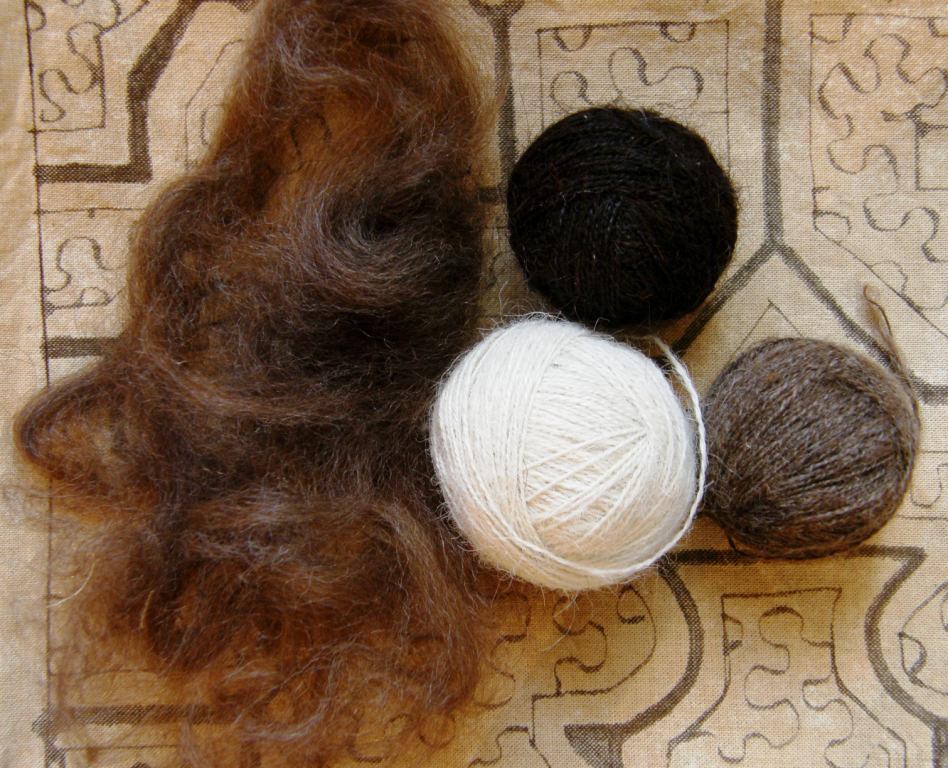
Until now, all I had spun was wool that was readily available from the farms where I lived in Patagonia and llama fiber that I bought from  little villages outside of Uyuni, Bolivia many years ago…bags and bags of it which I have cleaned and carded, spun and even dyed to weave with as the years have gone by. I thought it was pretty good but now that I have had the experience with the alpaca fiber I look at the poor old llama stuff with a very critical eye…dry, coarse and filthy!

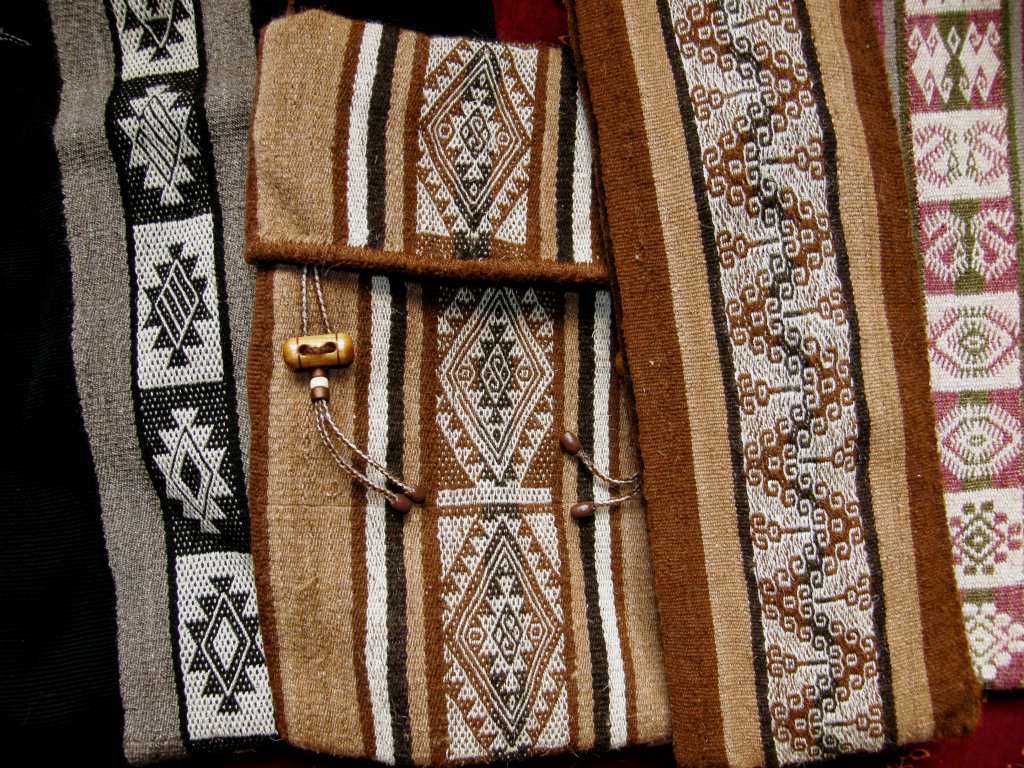
Nevertheless I did manage to weave some nice things with it…

And I also like to weave llamas although these guys were woven in cotton…

I still have tons of llama fiber left so I don’t want to get too spoiled!

So, I have spent some time lately spinning the alpaca mostly because we have been having a Spin-Along in the Backstrap Weaving Group on Ravelry with a lot of discussion about just how much over twist one needs to put into the yarn to make it suitable for warp-faced weaving on the backstrap loom. And this is where Celinda, the Aymara weaver from northern Chile came in. The yarn that she gave me was quite hairy and not heavily overspun. I wove with it and it was soft and luscious. That is how I wanted my yarn to be, not like the hard severely twisted llama thread I had been making.

And then it was down to the all-important sampling. Would it be too hairy to work with? Would it be a lot of really hard work clearing the sheds? Would it shred and would I have broken warps because the yarn couldn’t stand up to the abrasion of warp-faced weaving?

Thankfully, I didn’t get a “yes” response to any of the above questions. Of course, the sheds were more difficult to clear than those in a mercerized cotton warp but they were manageable. You can see the warp at rest above and the yarn is not curling up on itself. One thing I regret is my decision to use white weft as it did show through the brown a bit. I didn’t mind it showing at the edges as I knew that I was going to cover those with a tubular band. I used an alpaca weft that was balanced.

None of the warps broke but, then again, my warp was only 24″ long. The only problem I had was with some of the knots at the color changes which slipped undone as the yarn was so silky.

This is the alpaca warp for the tubular band and there it is being woven and sewn to the edge of the piece.

Now my passport gets to travel in first-class luxury even if I don’t. I made this sample piece into a passport pouch which is a vast improvement on the plastic wallet I have been using until now. It feels lovely!

Cutting the piece off the loom was the hardest part! There was still enough warp there to weave a little something. This was my precious handspun and I didn’t want to waste a bit but then I got the idea of using the leftover bits as supplementary wefts in another project and, with that in mind, I cut away.

Now with the Tour de Fleece approaching do I keep spinning the alpaca, go back to the nasty llama or take up the cotton?  Decisions…

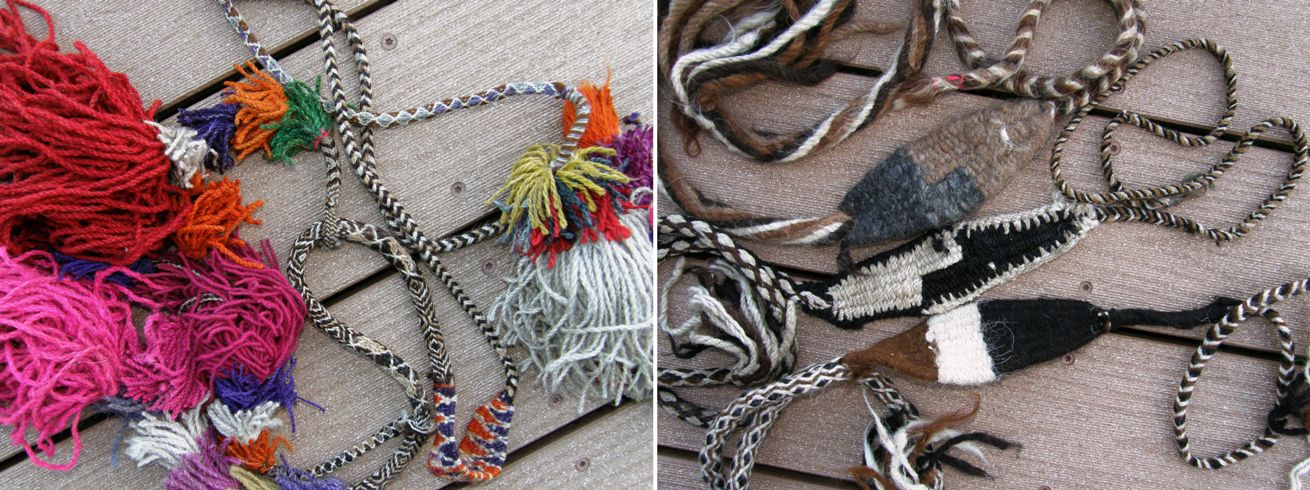
Actually, I am thinking of spinning some heavier yarn from the llama fiber to use, as it often is up in the mountains, to make slings. Well, I probably won’t make a whole sling, although I have made one before with a teacher in Yanque, Peru using llama fiber. It would be nice to have yarn suitable for making the braids rather than the whole sling. This will be challenging as I have been aiming for fine thread all along and now I am not sure if I can spin thick.

When I was in southern California, Martha shared her collection of South American textiles with me which included a number of beautiful Andean slings…

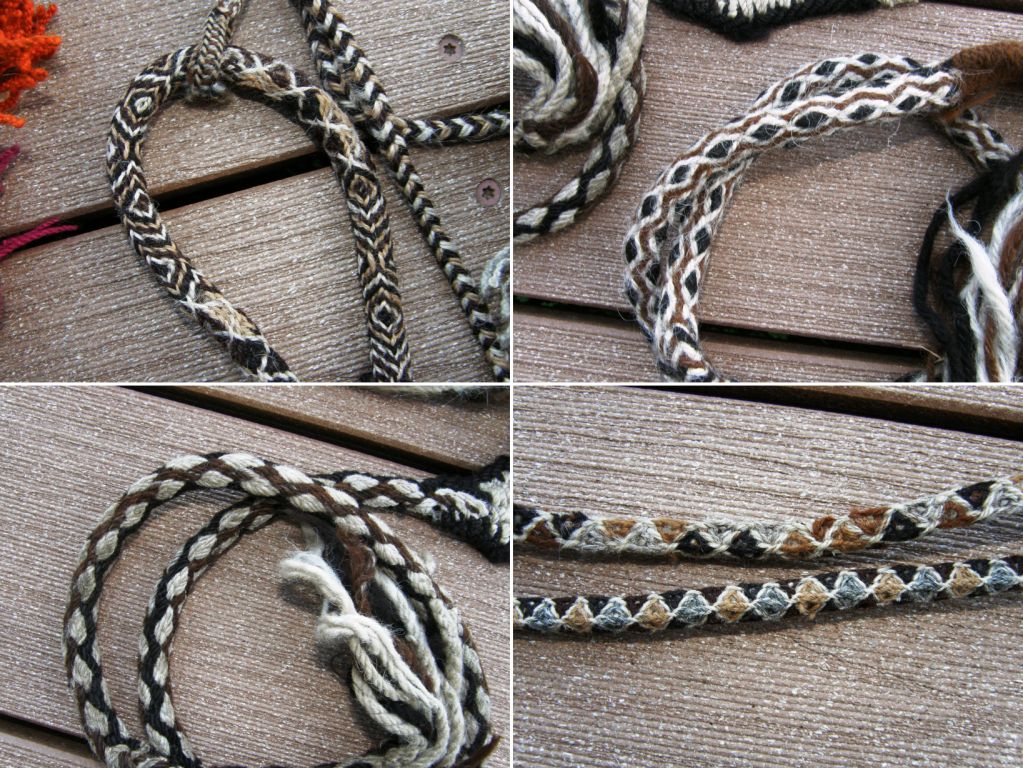
They have been made with such a variety of gorgeous braids and with the beautiful natural colors of the llama…

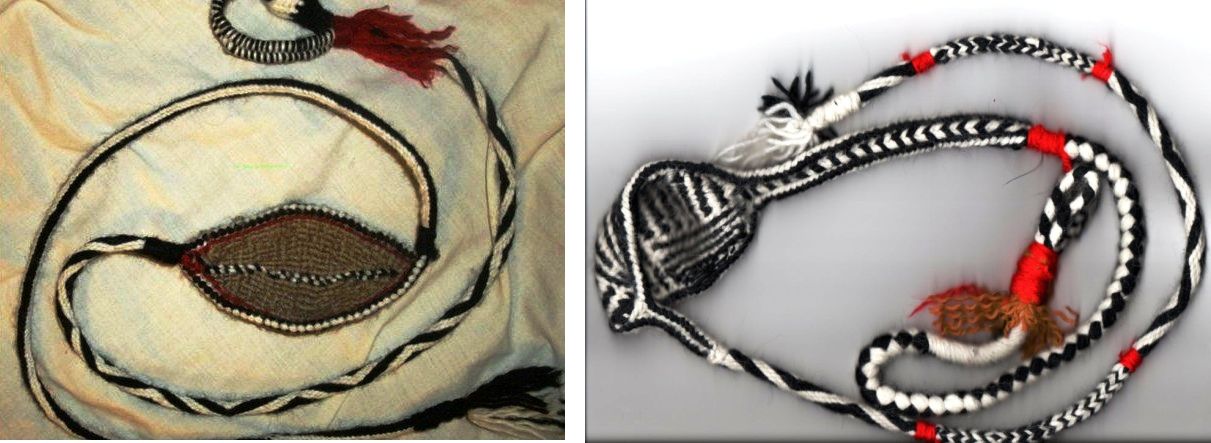
Ben Turner in Australia showed me two Tibetan style slings that he has constructed. While the cradles of the Andean slings that I have seen have been woven weft-faced, Ben tells me that Tibetan slings usually have twined, braided or felted cradles. The cradles of his two examples here have been twined.

I must ask him what yarn he uses for these.

And now on to cotton, the material most available to us “lowlanders” in Bolivia…

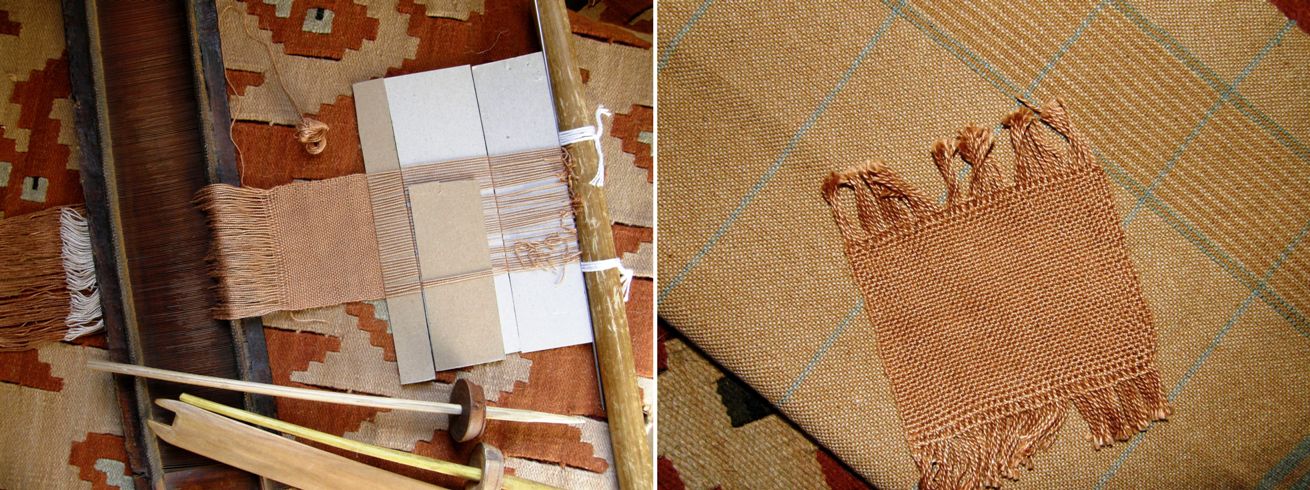
Another piece of sampling I did this week was using the bamboo reed on my backstrap loom. This was extremely clumsy especially with such a narrow piece but I will eventually come up with some kind of system for this. I am tenacious with these kinds of things and I am determined to make this work. I so rarely weave plain balanced cloth and I get ridiculously excited about it! I have a cotton shadow weave project in mind and later I would like to use some 10/2 tencel that I received in a swap to weave something.

This is all I have used the tencel for so far…a supplementary warp band, but I am hoping that there is enough contrast in the green and grey for shadow weave (I don’t have all that much of the ivory).

This experiment is with the cotton that I usually weave my warped-faced pieces with, more or less equivalent in size to the #10 crochet cotton that is available in the US. Above right you can see it wet finished and lying on top of a beautiful cotton dish towel that Betty Davenport wove. That towel is my inspiration and I can tell you right now that it won’t be going anywhere near a dish!

Betty wove this towel using cotton from Sally Fox Vreseis Ltd line of 10/2 in camel, coyote and green…all natural cotton colors! I had not heard of Sally Fox until Betty told me about her and her experiments with developing colored cottons (which reminds me that I did a spindle swap with a lady in the US who sent me natural green and caramel cotton sliver…must get down to spinning that).

Betty has a collection of small skeins of cotton in an incredible range of natural colors…all kinds of browns, greens and even a mauve from Peru. Some of the skeins come from Sally Fox’s experimental supply when she first started developing her standard colors. There are reddish-browns from Guatemala and dark browns from Peru as well as colors from some of the US southern states.

So, a four-shaft shadow weave with my nifty reed in place will be an up-and-coming project.

Well, until someone comes up with a natural terracotta-colored cotton, I have no choice but to dye some. So, this week I dyed some of my crochet cotton with the Dylon Terracotta Brown dye. The color is perfect! It is exactly what I was wanting for my Shipibo piece so that will be on the loom this weekend too.

That is the color below on the string heddles…yummy!

The Ravelry gang continues to weave and spin…

Naomi has tacked three plain warp-faced pieces together for cutting and sewing into a zippered bag. She is also weaving a pebble weave strap for another bag project.

Amber finished her pencil pouch. She wove the fabric for this using the simple warp float technique. Jennifer is piecing together a bag patterned with pebble weave motifs.

Tracy wove a sample band for the traditional Bedouin al’ouerjan technique which is simple and stunning. I have added some information about this to the warp substitution tutorial page which will be more meaningful to those of you who have already followed the initial instructions on that page. Helena in Brazil kindly provided a link to a pdf by Joy Totah Hilden, author of the book on Bedouin weaving pictured in Tracy’s picture, in which the draft for the al’ouerjan structure is provided on the last page.

After Jennifer and Tracy’s beautiful weavings I have no more fear of putting red and blue together! They have given me the courage to get that red and blue Central Asian piece I have been planning underway soon.

####################################################

And finally, I have a wee favor to ask of you all…I just started a page on Facebook for my Andean Pebble Weave book and would love it if you would take a moment to go there and hit the “like” button. Things like this could really help me in my future publishing endeavors.

I have a few exciting things on the drawing board. 😉

#####################################################