Backstrap Weaving – Safe from Sandy in Pennsylvania

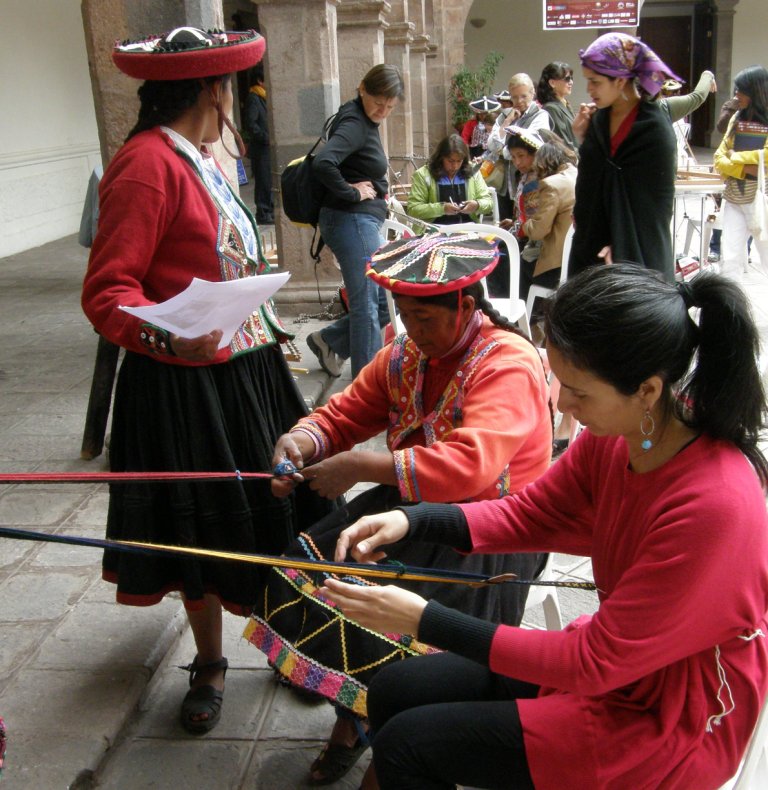
I am taking a little detour from my series of posts on the Encuentro de Tejedores de las Americas in Cusco to write about the first week of my fall travels in the US. Part Three in the series will be entitled ‘Weavers in Action” and will have several video clips and pictures of both spinning and weaving. Here are links to Parts One and Two.

Just as I hit the very first key to write this post, the lights went out…sigh…it was bound to happen at some point. You see, I am not in Bolivia  right now. I am in “Hurricane Sandy Zone” in Pennsylvania. But, as it turned out, Sandy was just teasing that time. Seconds later the lights were back on and all continues to be well. Coastal areas, on the other hand, are devastated.
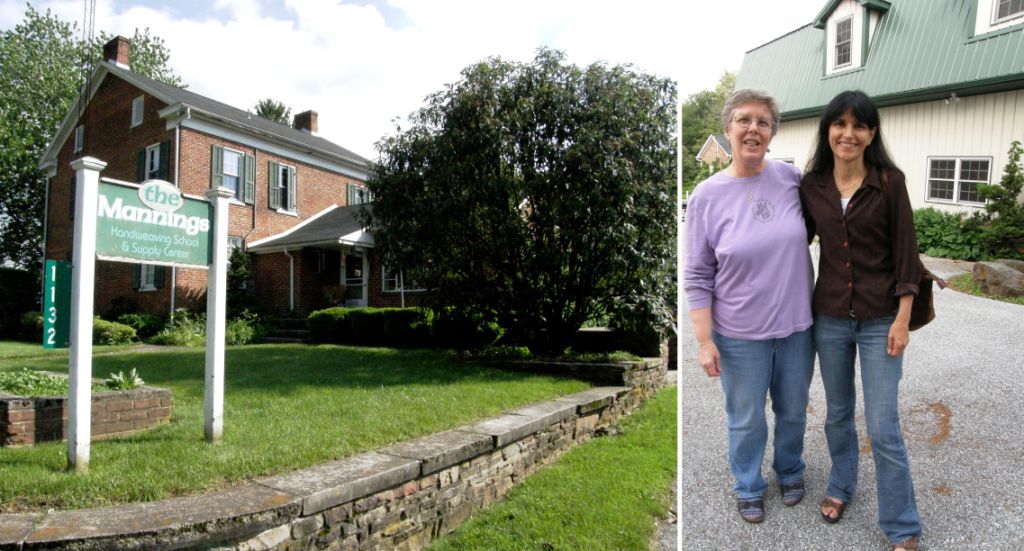
This is my fourth  visit to the Mannings staying with Ron, Carol and Helen and the second time that we have been in crisis mode due to extraordinary weather events.

It was windy and rainy all night but nothing too terrible.. One of the lovely things about the Mannings (apart from obviously being yarn, weaving, spinning and knitting heaven as well as the base of weaving teacher Tom Knisely) is the beautiful creek that lies at the bottom of the front lawn.
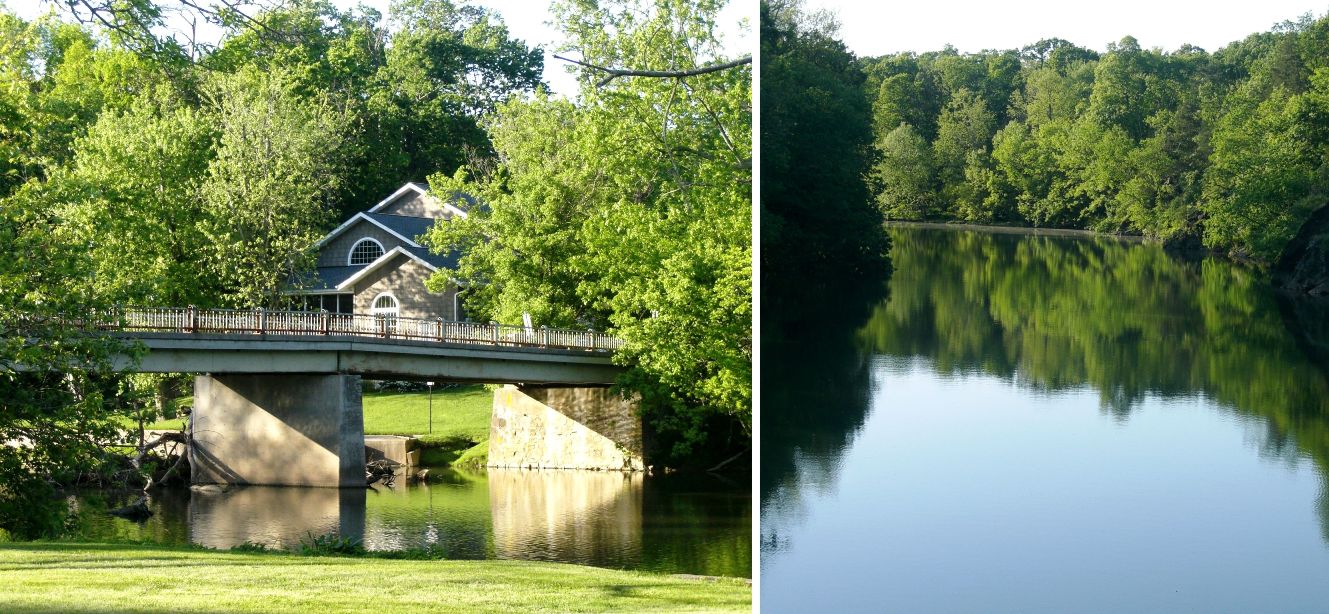
I spent some lovely evenings last spring on that lawn close to the creek backstrap weaving.

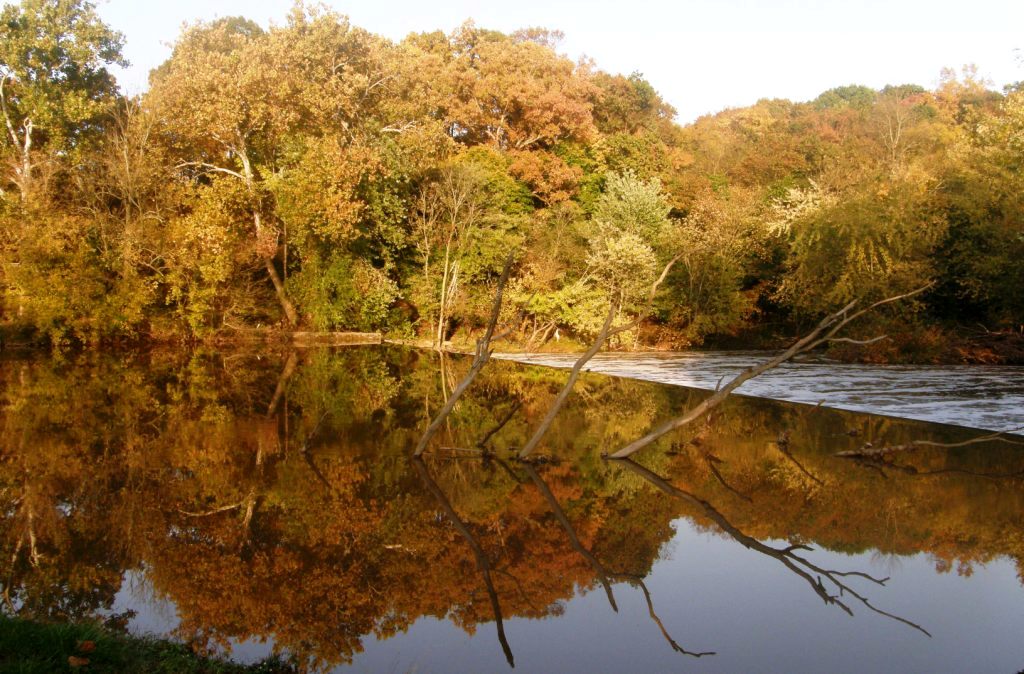
On this fall trip I arrived to a gorgeous display of golden leaves mirrored in the waters. It seems that the leaves were turning later than usual this year and I got to see them for the first time in all their glory.
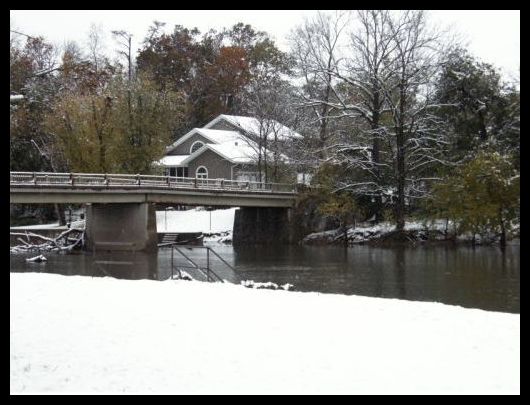
This early wet snow event is the one that hit in October last year. I sat out the three-day power outage in Ron and Carol’s beautiful motor home.

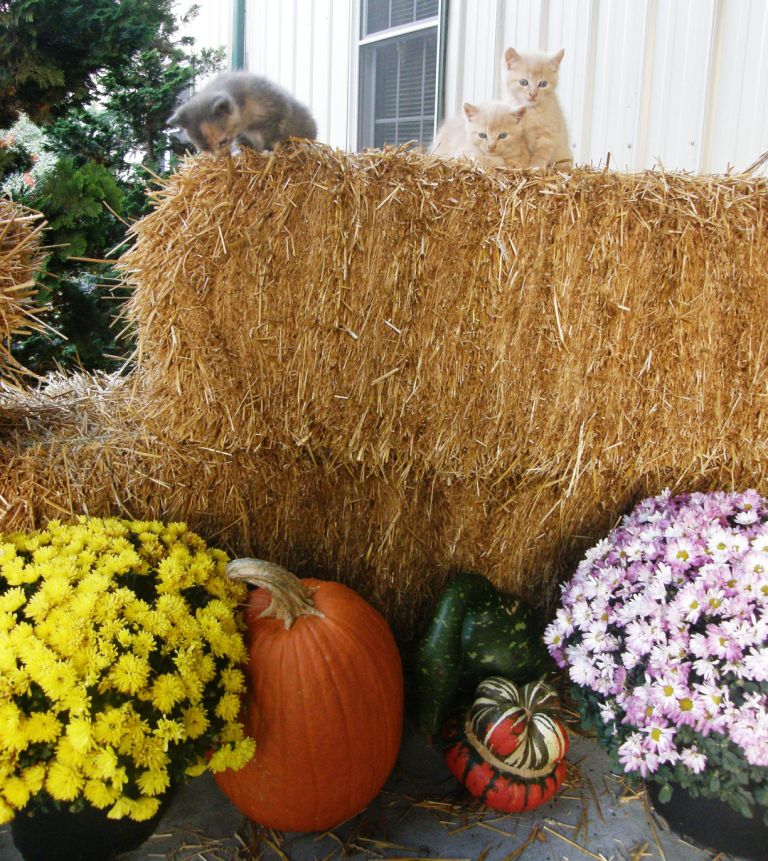
Halloween was in the air and a new batch of kittens took care of my pet withdrawals. There were four. One had gotten whisked off quickly to a new home.
There was plenty of time for play which, in a big yarn and equipment store and school like the Mannings, meant getting to watch how Tom Knisely’s beginner weaving students were getting on, discovering new yarns that could be suitable for backstrap weaving, hanging out with the spinning group that came to visit, unearthing some really cool hand made weaving swords that will be brilliant for my loom and even getting to do some dyeing.

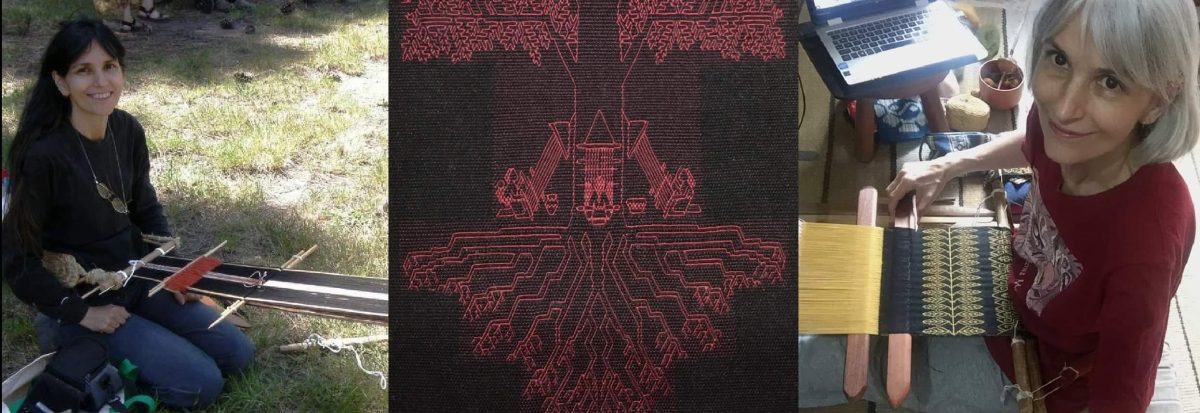
I am looking for wool so that I can continue my experiments with the discontinuous-warp technique that I studied in a workshop in Cusco a few weeks ago. Well, you are probably thinking that I could probably just spin my own but I would really like to get the technique down before I plan a big project with my own  handspun.
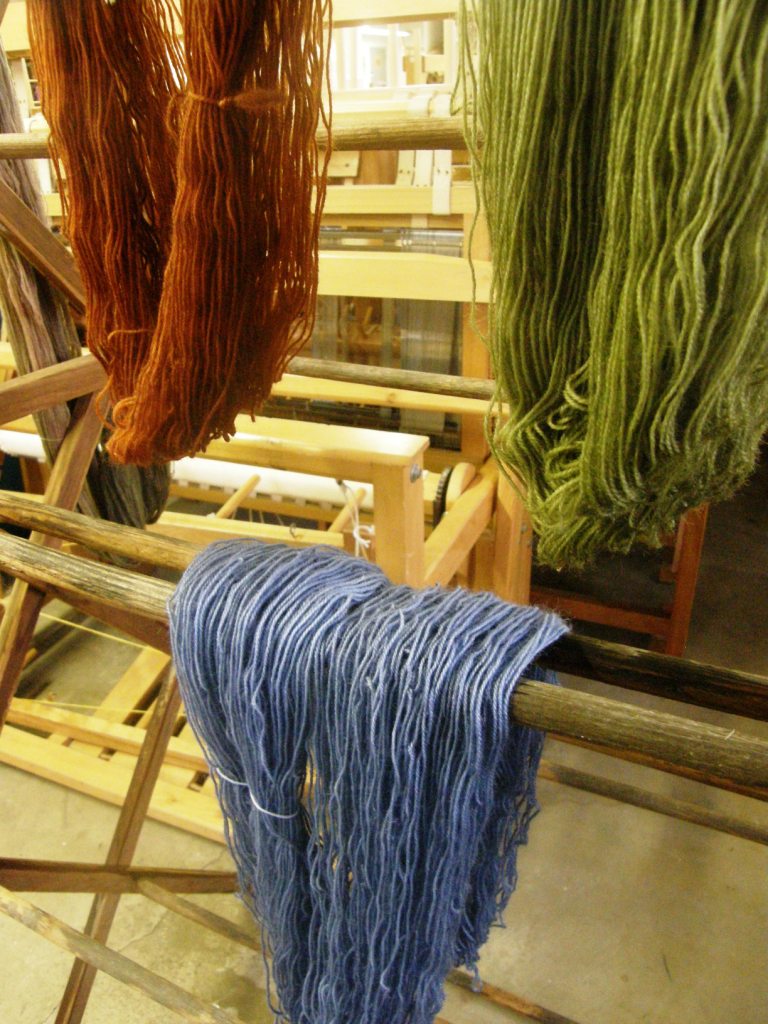
Here’s some Navajo warp I found in the store that Sara dyed for me. Of course it only comes in natural. I kept some natural and then chose these three colors for dyeing as I thought that they looked like the kinds of colors that one could get from natural sources. I have had success using Navajo warp for warp-faced weaving on my backstrap loom before.
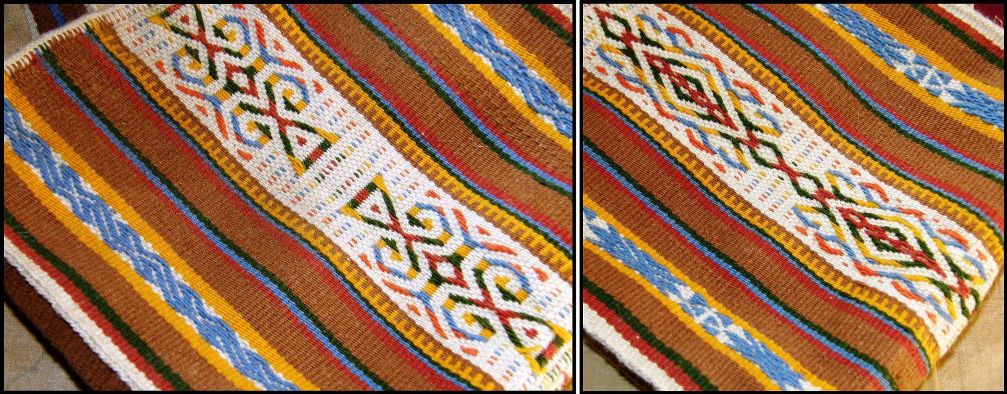
I wove this bag with its supplementary-warp patterns many years ago using Navajo warp that I dyed and it worked beautifully. Another yarn that I bought at the Mannings, which I am not yet sure will work as well, is this Malabrigo merino from Uruguay. It is lace-weight single which I will re-spin and ply. I got four colors to make a discontinuous-warp square much the same as the one I made in Cusco.
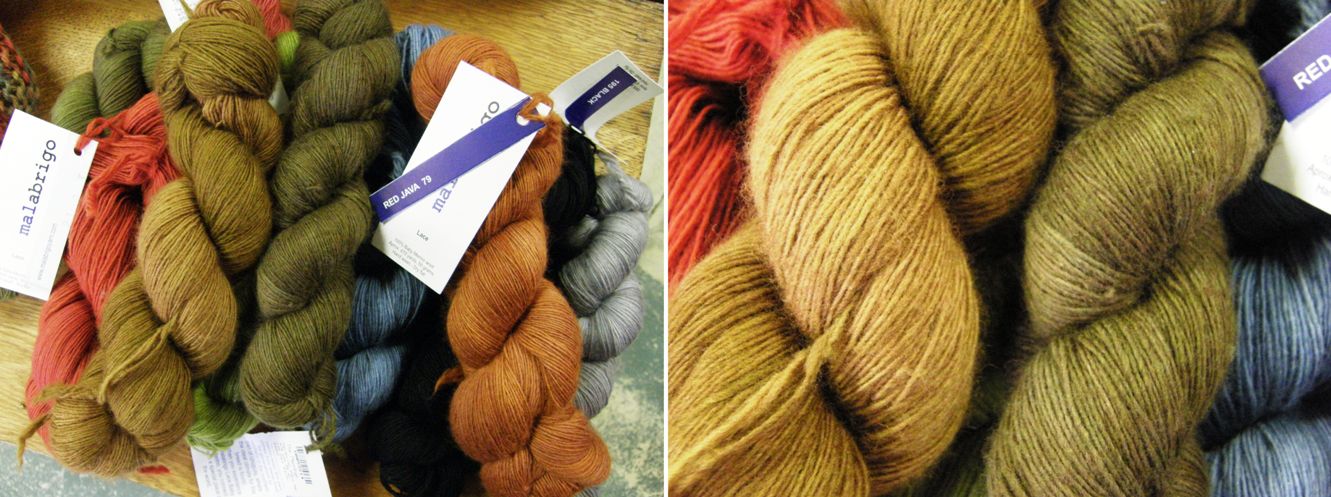
It remains to be seen if this will actually work but I have brought my Cusco spindle with me and can get started right away with the re-spinning.

I wove with some terrific people. Here are two of them, Lauren and Karen…
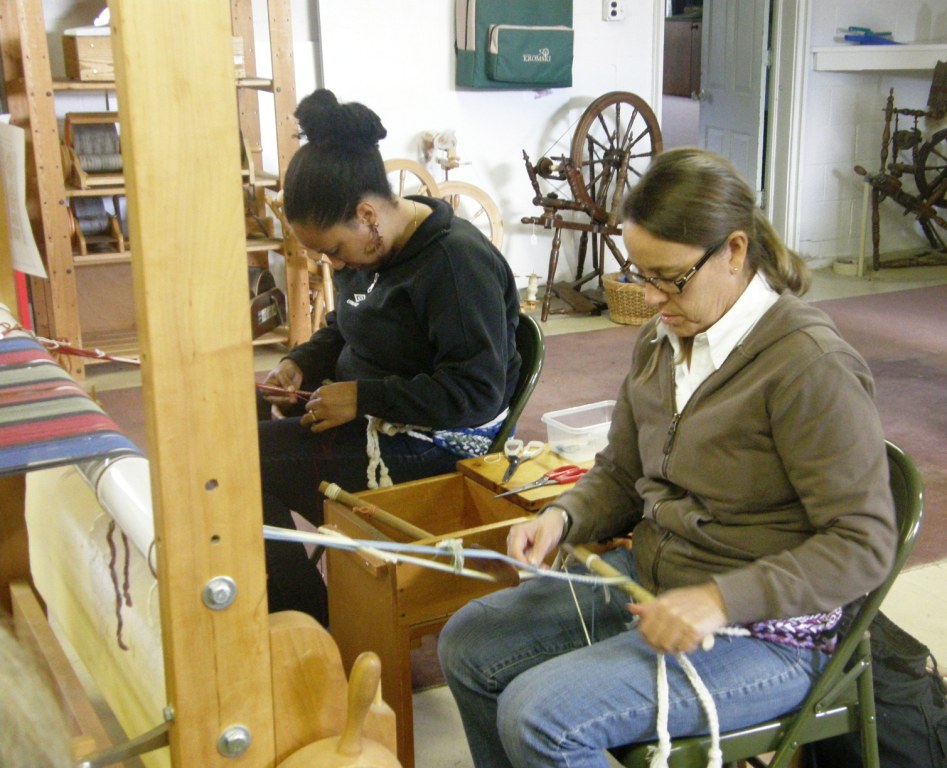
Karen went to Guatemala, bought a backstrap loom, and took it to a weaver who warped it and wove a little way using supplementary-weft patterns to decorate her plain-weave cloth. It was nice that we got to weave Bolivian as well as one of the many styles of Guatemalan supplementary-weft patterning techniques. Karen brought the loom to show me so that I could show her how to continue weaving the patterns. I played on this loom and I knew exactly how to weave this cloth with its patterns as I had studied in Guatemala in the very village where it had been created.

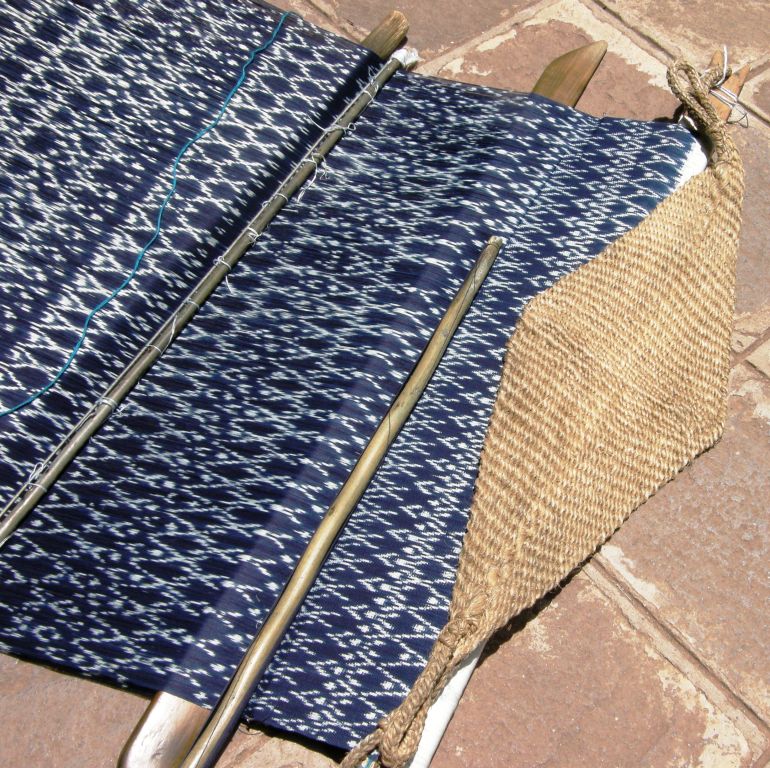
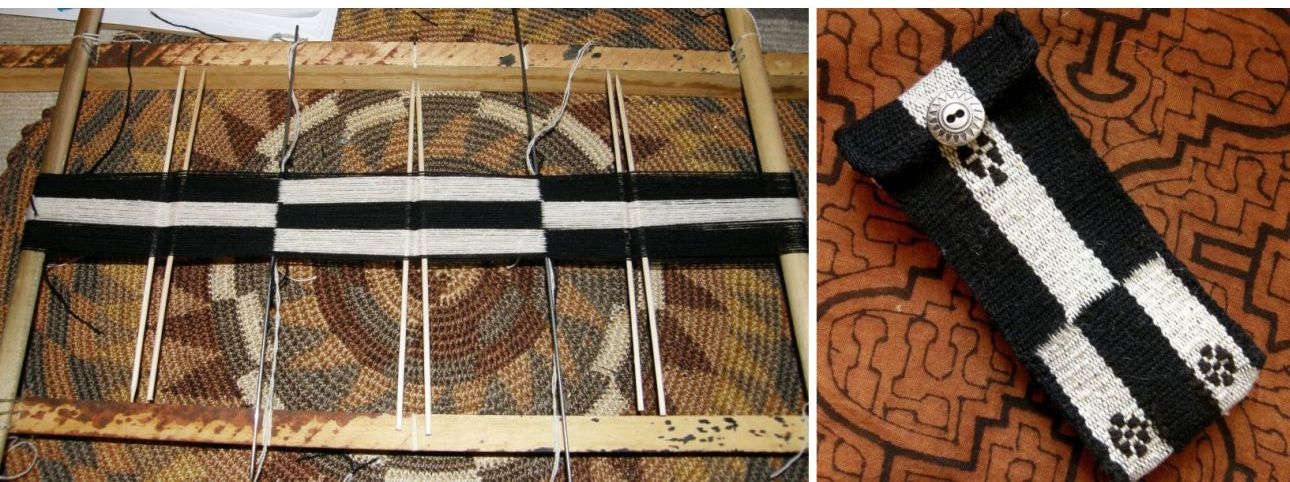
You can see below the two patterning sticks (the thinner slightly darker ones) one on the upper surface of the weaving and one below, which are used to raise the warps under which the supplementary wefts pass. The thickest stick is the shed rod. Another stick at the back holds a second cross.
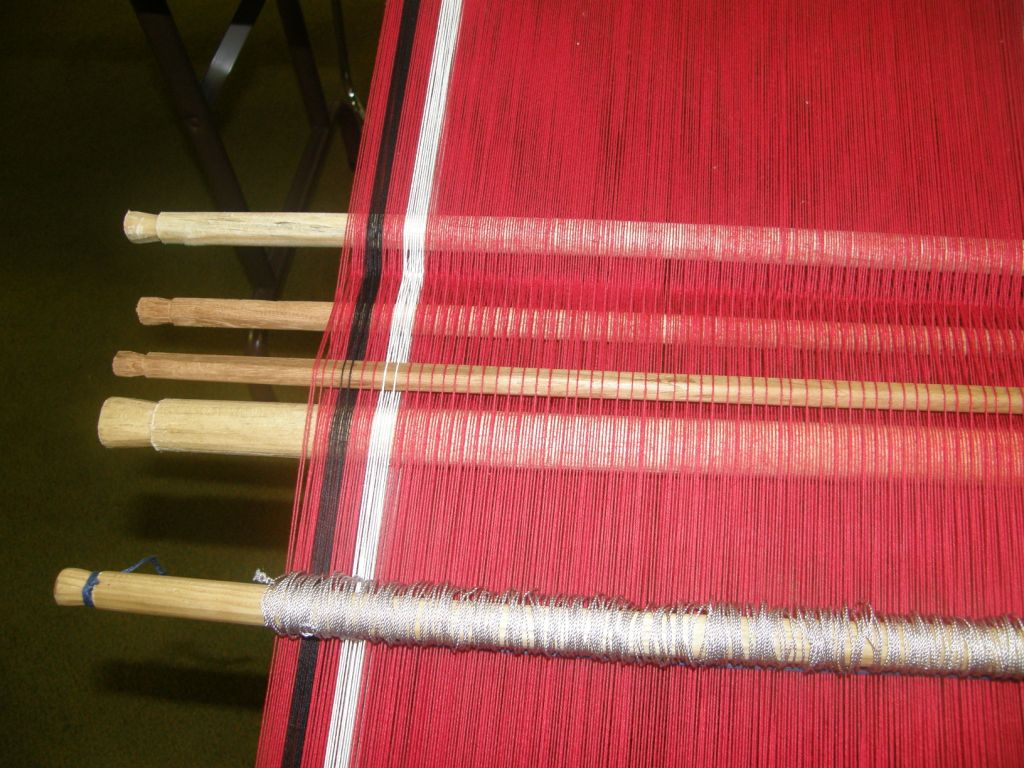
I have a tutorial here on how to set up a warp like this and insert and use the patterning sticks to create small supplementary- weft motifs.

Janet visited the next day to weave complementary-warp pick-up. A friend of hers had bought a woven band still on its loom in Peru and given it to her as a gift. Janet was keen to weave the patterns, some of which were not pebble weave.
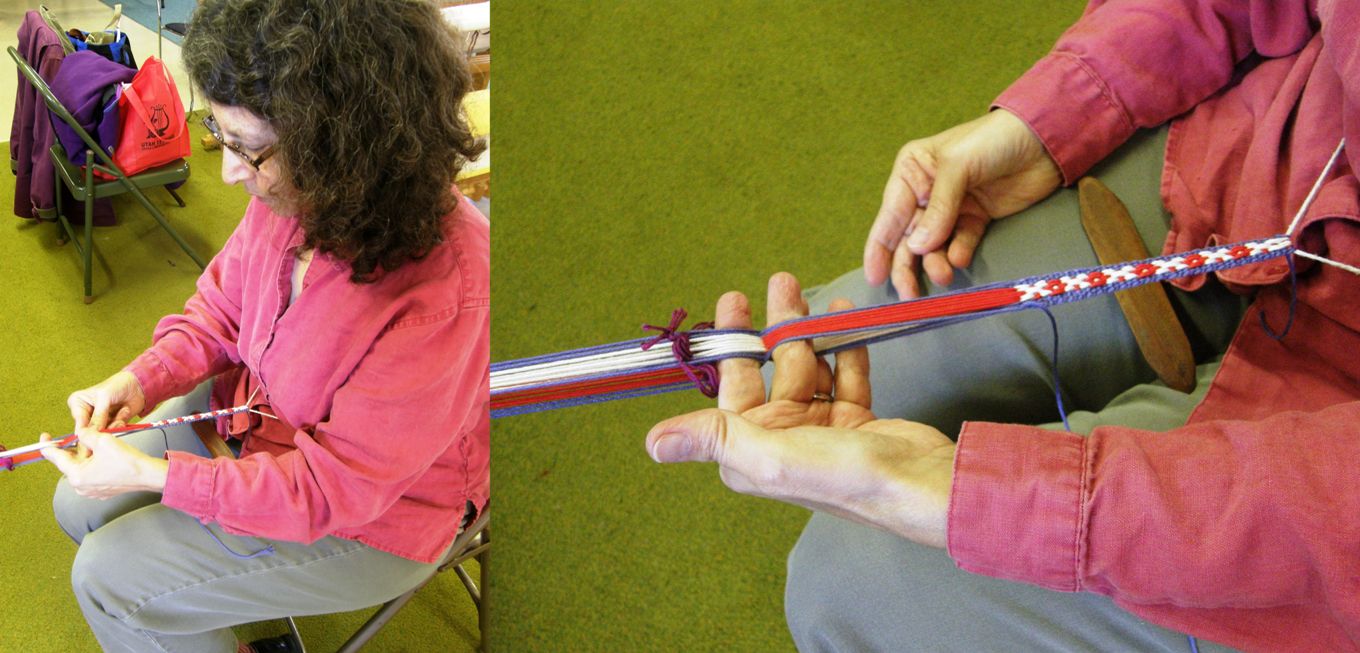
Here she is forming the picking cross from which to pick  the threads for the tanka choro pattern.

On the following Friday I started weaving with people I had met on previous visits.
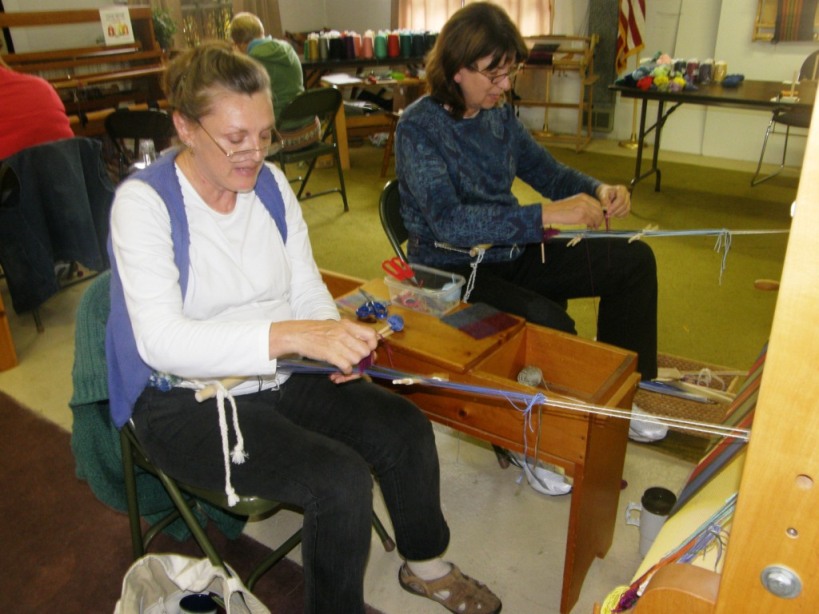
Patti, on the left, had first woven with me in spring last year and Marge first joined me in spring this year. She says that she has been hooked ever since and joined the Ravelry group.
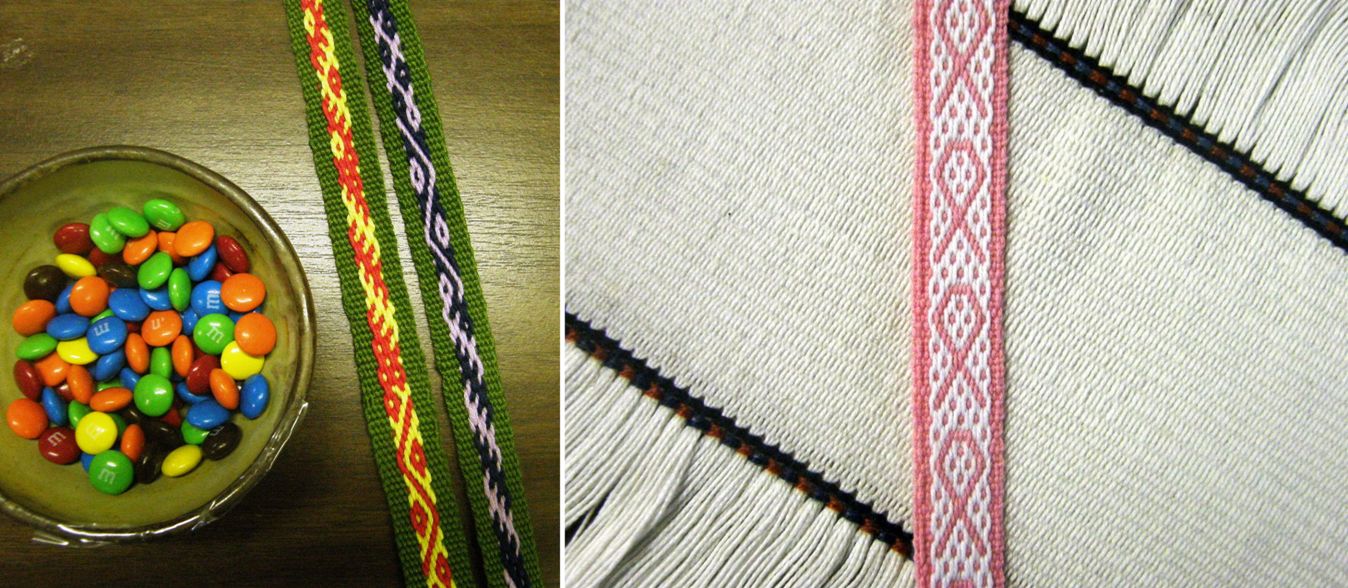
Here are a couple of pattern samplers that were made by the weavers before moving on to finer yarns and more advanced techniques and patterns. On the right is a band made by Dianne with her version of the Breast Cancer Awareness symbol. I love it when people use the structure to create patterns that are personally meaningful. In my new book I show other unique creations contributed by readers who have woven images from the context of their own lives and experiences.

And, speaking of the new book, it was very exciting to get here and see it in print for the first time 🙂

Dianne is also a very talented tapestry crocheter and brought along her notebooks and phone in her own tapestry-crocheted bags and pouches. I am seriously tempted to take this up if I ever find the time. I already have Carol Ventura’s wonderful books on the topic.

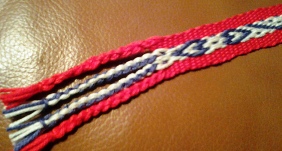
Here are two of Dianne’s pieces finished with a card-woven strap and a band made on her inkle loom…gorgeous! I also had some talented braiders come to weave with me. Marjorie has taught braiding at Convergence and it was nice to meet Tracy who was also at the Tinkuy in Peru in 2010. Marjorie gave me a couple of quick braiding lessons on cool things to do with just three and four strands while taking a breather from the backstrap loom.

Marge was happy to try the four-strand round braid (above) which I show in a tutorial here as she wasn’t happy with the way her multi-colored three-strand ones were turning out. I have recently added a new video to that tutorial page which you might want to check out. Finishing techniques are always fun and make such a difference to even the simplest projects.

Before weaving with this group, the creek was still showing its pretty face…
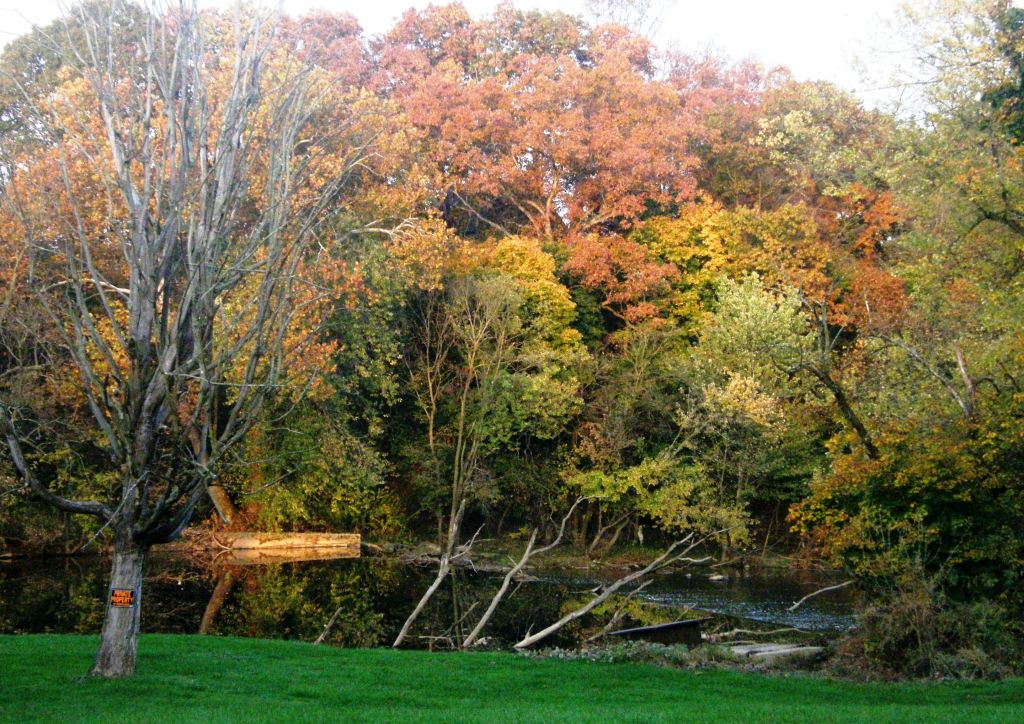
And then there were two…I spent part of one morning looking for the third boy kitten only to find that a Mannings’ customer had taken him to his new home.

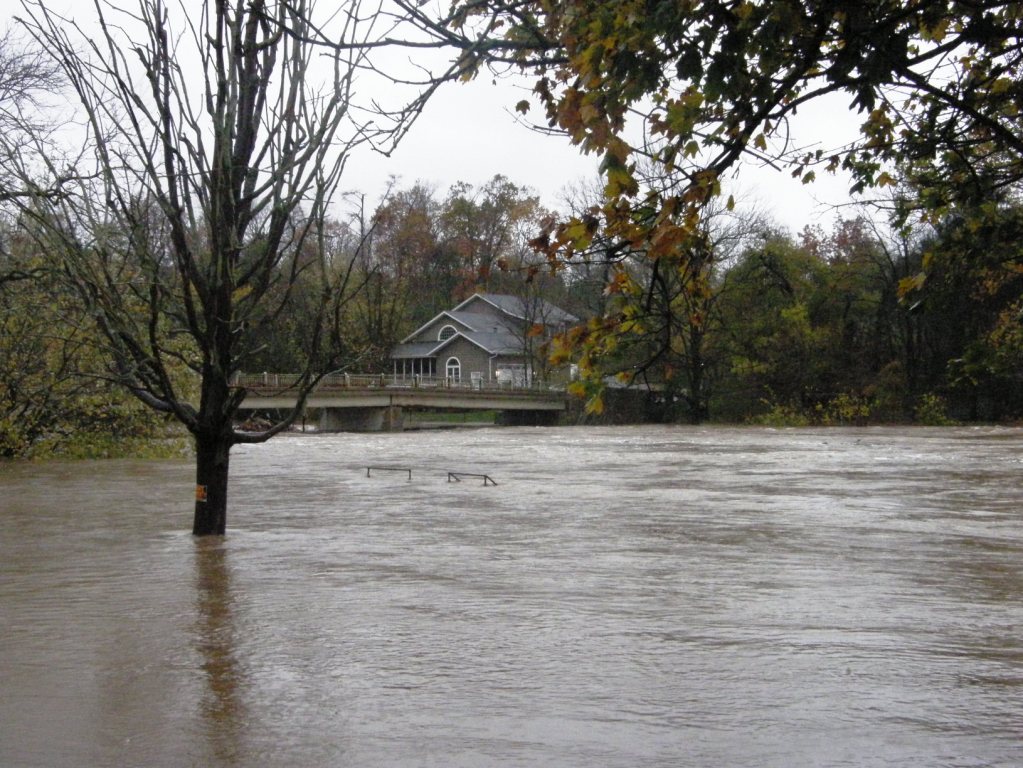
That tree with the orange sign is my weaving tree. Then we started hearing the first snippets of news about what was dubbed Franken-Storm, aka Hurricane Sandy. Everyone got home safely on Sunday night. My plans to get to Massachusetts on Monday were thwarted when Amtrak sensibly cancelled all services.

And then came the rain and the wind and the creek turned into a cranky swirling and swelling brown mass.

Impressive flood pictures on Carol and Ron’s freezer door serve as a reminder of just how cranky that creek can get and I decided to pack anyway in case a fast get away was in order.

We didn’t lose light or wifi…how lucky can you get… and this despite the fact that the storm passed right over the top of us.

Those of you who have been lucky enough to visit the Mannings and stay in the family home will know the view of the creek from the dining room window. This is where I am sitting while writing this blog post. Yesterday a swimming pool with deck still attached floated on by! Below you can see my weaving tree surrounded by creek.
In the Ravelry group, where things have been rather quiet lately, Rob showed us his latest projects…
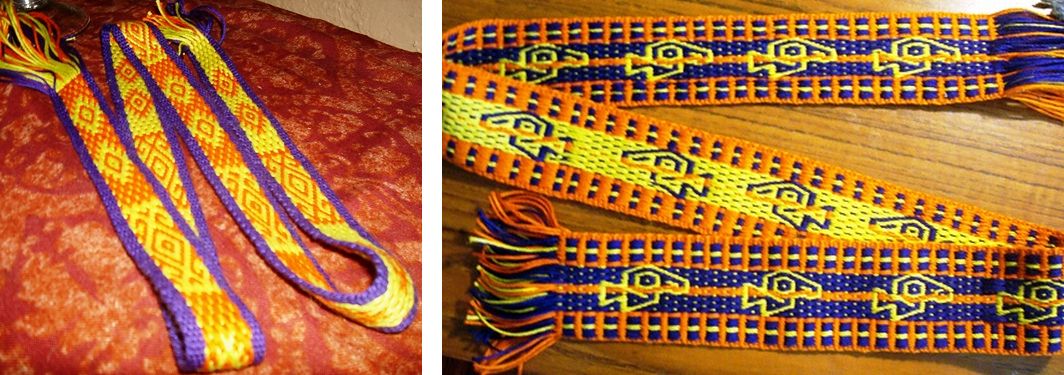
 Here are two Andean pebble weave projects using motifs that are charted in my first book. He says that he is working his way through the book so that he will be ready for the weave-along we run based on my second book.

Here’s another lovely band he made in which the design was created simply by the way he made the warp…
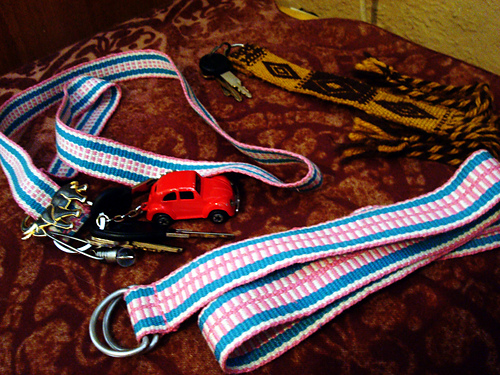
In the background I can see a yellow and black double weave key fob.

As you know, when I am on the road, my posting days and frequency get all out of whack. Some weeks there might two posts and some weeks none at all! The next post will be Part Three of the Cusco trip and I do hope to have that up very soon. Hoping to move on to Massachusetts tomorrow or the next day (where there is no power, by the way…but all are safe and sound).

Backstrap Weaving – Encuentro de Tejedores de las Americas – Part Two – the cloth and the looms.

Read Part One of this story here.

ARE YOU GOING TO WEAVE TODAY?

I probably make a thorough nuisance of myself at weaving events like the Encuentro de Tejedores in Cusco Peru earlier this month. I have so many questions and want to be into everything and not miss a thing.

Calm and serene despite being in the very heart of the city of Cusco, the venue for the conference was beautiful both by day and night. There were plenty of pillars to which looms could be attached for weaving displays and shaded areas under the arches where weavers could show their textiles.

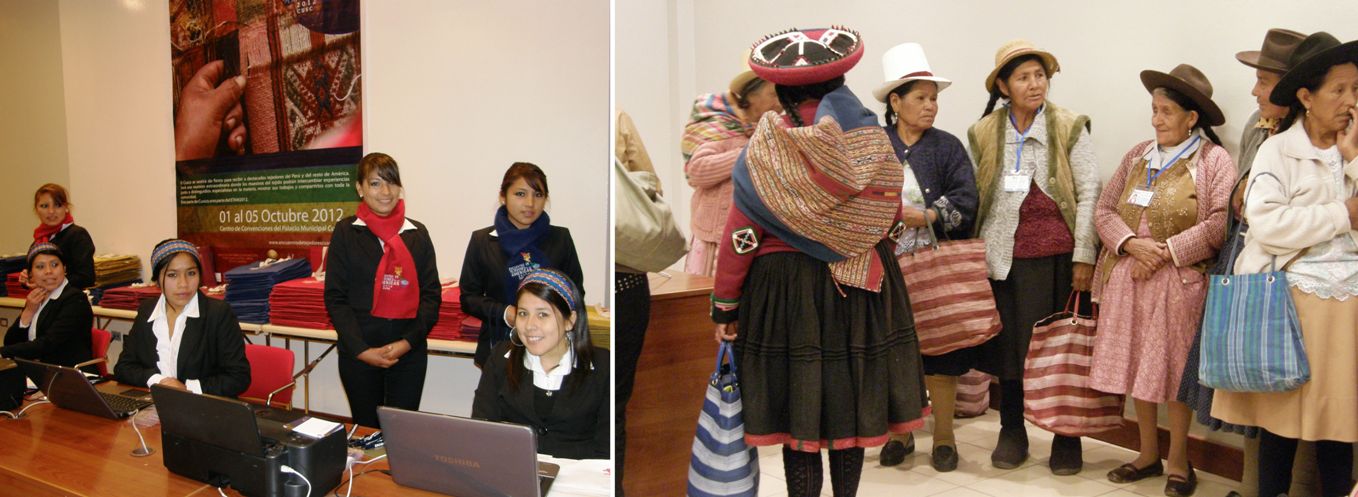
 Bright and early on day one, I registered along with other participants. The receptionists, looking smart in their uniforms with colored conference scarves and headbands, were efficient and clearly trained to be able to handle anything. The whole process was very slick and it was interesting to hear all the different Spanish accents and Quechua being spoken in the line-up of participants from all over Peru and South America. I recognized fondly the accent from Chile where I lived for five years as well as the song of the Argentinean-style of speaking used by my ex-boyfriend and the special way that Bolivian highlanders pronounce “rr”.

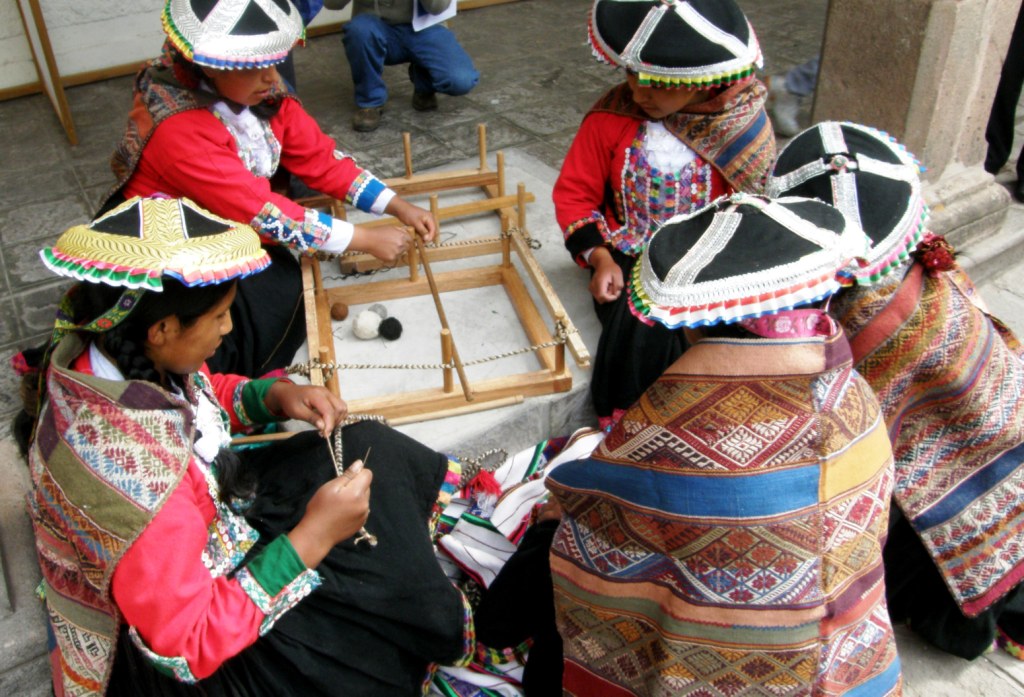
I then stepped outside to the courtyard to another world…a buzz of colorful activity… where I watched all the stands being assembled by weavers from all over Peru, Bolivia and Latin America, saw all the marvelous textiles emerging from travel sacks and being arranged and labeled, touched the fiber, tools and implements which were used to create the colorful cloth and spoke with the creators themselves. Some of them seemed somewhat overwhelmed by the high level of interest in and admiration for activities that are quite normal and commonplace, almost passing without remark, in the communities, villages and towns where they live.

Weavers and knitters from Taquile Island wearing and displaying their textiles and the creators of the wonderful ikat pañones of Tacabamba, Peru

The question that I really wanted to ask everyone right there and then is “Are you going to weave today?” Is today the day when we will get to sit by you and see how you created all these exquisite textiles? And all the while the  excitement is building as I see more and more gorgeous textiles and looms being extracted and arranged. I had already seen at least ten things that I wanted to explore further after having passed just once quickly by each of the twenty-two half-erected stands.

Weavers and spinners from the Navajo Nation, my friend from the Tinkuy, DY, and TahNibaa and Albina from San Ignacio de Loyola showing the crocheted “chullos” and the belt loom full of sticks which is typical of her community. 
The Chol Chol Foundation of Chile was present bringing with them textiles made by the Mapuche weavers that they support including a spectacular ikat- patterned “manta cacique”. Lowland areas of Peru were also well represented with a group of Matsigenka cotton spinners and weavers from Echarate, Bajo Urubamba.

The looms!……

A horizontal loom with a broad belt patterned with double weave and complementary-warp pick-up patterns of Taquile Island and a backstrap loom with a cotton warp-float piece in progress from Echarate.
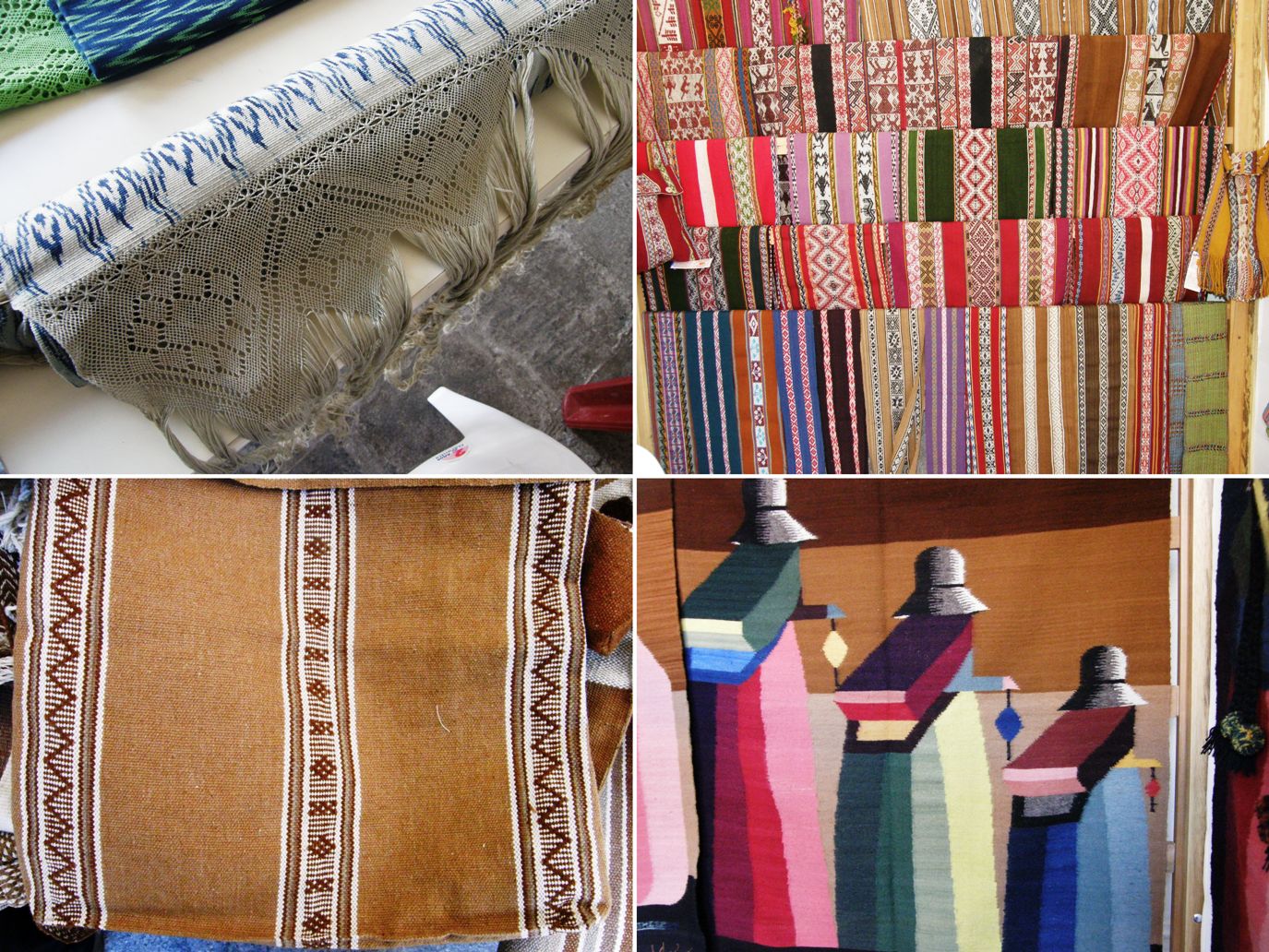
The simple backstrap loom of Tacabamba, Peru on which the indigo ikat-patterned “pañones” are woven.  The process of creating a pañon is anything but simple. They are up to one-meter wide, covered with tiny motifs and have patterns knotted into their fringes.
A floor loom from Ayacucho, Peru with a tapestry in progress and the leaning vertical loom of Tarabuco, Bolivia.
The cotton weavers of Chiclayo managed to preserve their native cotton despite the fact that its cultivation was banned for many years in Peru. The backstrap loom is used to weave their natural brown and white cotton into saddle bags, belts and table ware for their own use. The Guatemalan loom from Santiago Atitlan holds brocaded cotton cloth destined for the typical woman’s blouse or “huipil”. Panels are sewn together and the neckline embroidered with birds.

Wide warps, narrow warps and everything in between… A Tinkipaya weaver’s leaning vertical loom, holding fabric covered n complementary-warp pick-up patterns, rests on the ground. A weaver from Pitumarca speedily edges her finished woven lliclla with a tubular woven band using three sets of string heddles and a shed loop.

A backstrap weaver from Ayacucho, Peru, creates a belt patterned with supplementary warps. She uses a forked stick to hold a secondary cross, the manipulation of which helps her to open the heddle shed quickly and efficiently. The wide backstrap loom parked against the pillar is from Tanta, Peru where handspun alpaca yarn is often combined with bright synthetic threads to make shawls, ponchos and blankets.

And then there was that tantalizing backstrap loom with its twenty-four heddle sticks…Señora Araceli, are you going to weave today?

First Araceli has to make the twenty-four sets of heddles on this fresh warp. The pattern has already been picked up and saved on sticks.

Just before lunchtime one day when we were indoors listening to speakers, I got the uneasy feeling that I really needed to be somewhere. I got up and tip-toed out at the start of the morning’s final presentation by Manos del Uruguay to find Araceli seated and preparing her warp for an afternoon session of weaving.

Well, you know that I am fascinated by the entire process and so I was happy to be able to sit alone with her and watch her make her heddles. I was tickled to see that she makes her heddles with the extra security hitch just as I have chosen to do. I have seen and learned so many ways to make string heddles for backstrap and other kinds of weaving and this method is by far my current favorite. I always say “current” as who knows what cool new method I will find tomorrow.

Here is a short video clip of Araceli making her heddles. She certainly has a smooth and elegant way of doing so. I know some people don’t like making heddles and dread that part of the process…I like it!

And what about the woven cloth produced by these looms and the pieces produced by talented hands using knotting, braiding and crochet?

Head gear…Crocheted “chullo” from Peru and a woven hatband from Bolivia.

There are four countries represented here….cloth from Mapuche weavers in Chile,  Salasaca, Ecuador,  Taquile Island, Peru and Tinkipaya, Bolivia.

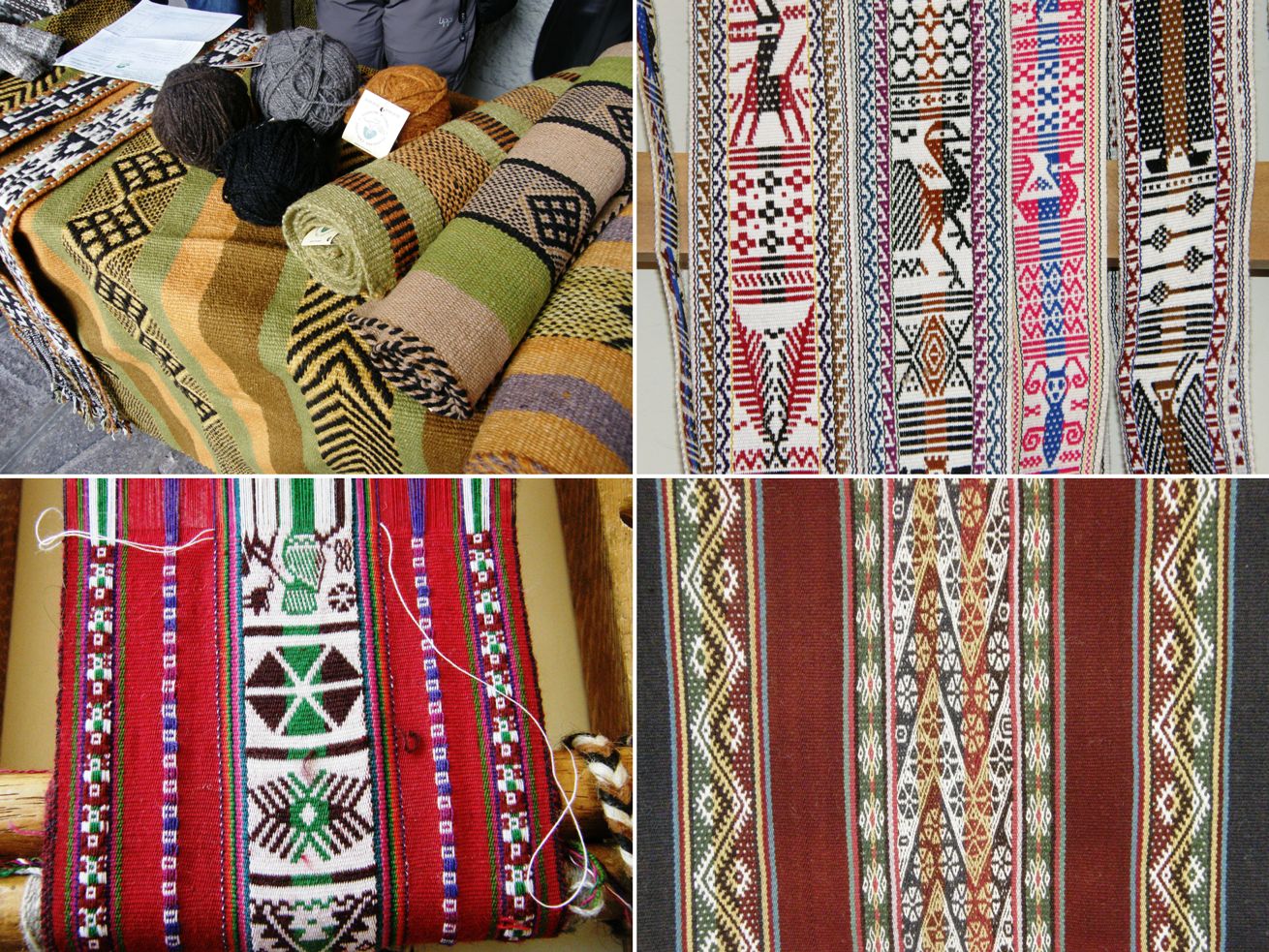
Cloth from different corners of Peru. The variety!

Of course, each piece has its story and it was those stories that we were told in the weavers’ own words in the seminar sessions that were held in the mornings and afternoons. The stories were very inspiring and educational, often with very personal touches which brought life and meaning to the fabric that simply could not be transmitted from the market stall or loom alone. All told of hope, perseverance, strengthening of ethnic identity and a revival of pride in oneself and culture and were often very moving.

The faja sara ( the one created with the twenty-four string heddles) has its own fascinating story. It is part of an unbroken weaving tradition that dates back at least 500 years to Incan times. The belt is described in the chronicles of Mercedarian Friar Martín de Murúa in 1590 A.D. and the knowledge of how to create one has been passed on ancestrally over all these years.

Lynn Meisch has written an article about her research on these belts here. We were told by the weavers that the name “sara’ comes from the verb ”sarear”, although I have never come across this verb before, which means to choose, or in a weaving context,  to pick-up.

Interesting to me from a structural point of view is the rolled edge of the belts which is surprisingly easy to create. I am guessing that it serves the same purpose as the woven bands I have seen added to other textiles in that it strengthens the edge. When I was in Holland, Marijke van Epen and I followed Mirja Wark’s explanation of the rolled edge used by the Wayuu people of the Guajira Peninsula in Colombia and Venezuela and the way the weavers of the sara belts create theirs is equally as interesting and practical.

Here is Araceli in action with a band of spectators. When doubt was expressed by the onlookers about the quality of the cloth since Araceli does not use a ruki, the llama bone tool, to beat in her weft, Araceli immediately invited them all to feel the belt. They were all surprised and impressed by the firmness of the weave. It is a very dense piece of weaving.

The poncho shown above is from Catamarca Argentina and represents the recovery of the exquisitely fine work done with handspun vicuña fiber on floor looms which has the made the poncho Catamarqueño famous for centuries.

Two people weave the pieces side by side and have to coordinate the strength of their beat perfectly to maintain a consistent weave. With the fine vicuña thread a piece that measures 2 meters by 1.30 meters weighs only 320 grams and takes up to eight months to complete.

Fine vicuña shawls are also woven and embroidered using designs copied from old colonial textiles.

We had a chance one afternoon to handle and clean pieces of vicuna fiber and everyone was invited to try their hand at spinning it on the  25cm spindles.

More cloth…..

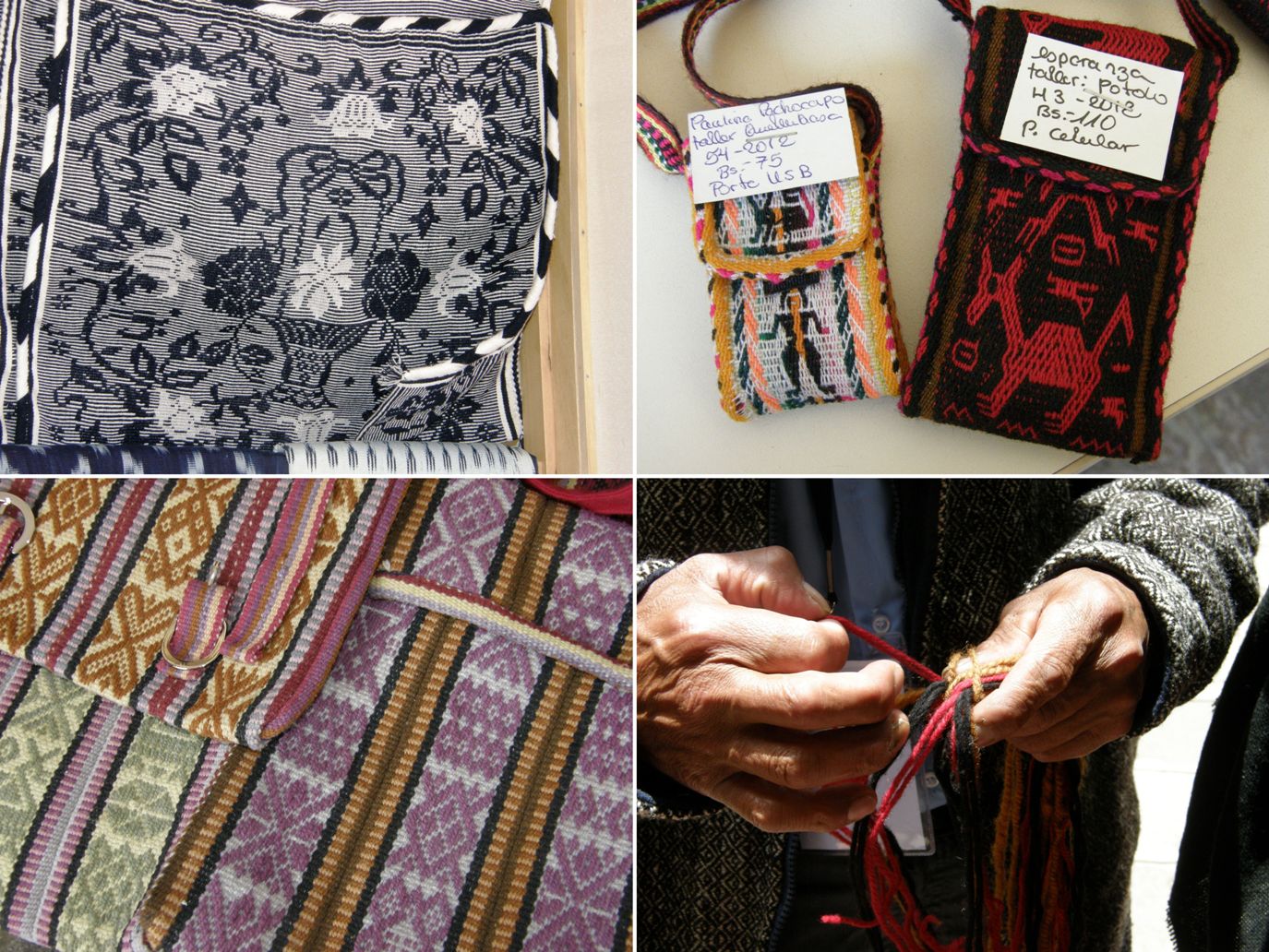
…. a bulsico , or cotton double-pocket saddle bag from San Ignacio de Loyola with beautiful patterns in simple warp floats worked in two colors. The weavers from Tarabuco and Potolo in Bolivia of course brought large fine examples of their textiles. I decided to show you here some very small and practical pieces that they also brought to sell. The tiny USB pouch is from Tarabuco and the cell phone pouch with its woven khuru figures is from Potolo.

The supplementary-warp patterned pieces in lovely pastel colors are from Ayacucho, Peru and the last shot is of an impromptu sling-braiding demonstration from one of the Peruvian presenters in the coffee break.

More lessons along the way…

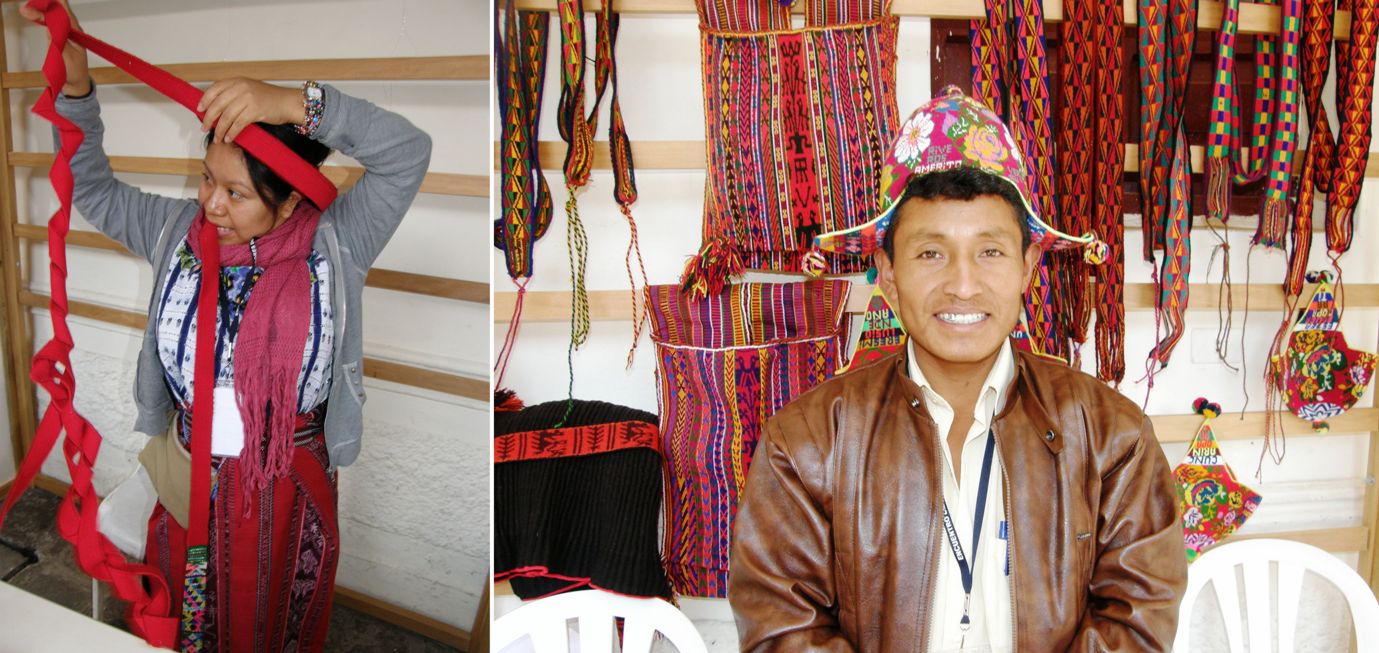
Diana from Santiago Atitlan in Guatemala showed me how to wrap her hair and head with a woven hair sash. You can see that most of the band is plain red with just the last part, which will be seen on the outside, decorated with pattern. Albina’s husband showed me how married men wear the typical chullo of his home…with the flaps standing out sideways. A single man will wear his with the flaps pointing out front and back.

So, now you have seen a selection of the stands, looms and textiles and heard a few backgroud tidbits about some of the weavings and the people who produce them. You are probably dying now to see the weavers in action, right?

ARE YOU GOING TO WEAVE TODAY?

Sorry, but I am saving that segment for the next blog post as uploading the video will be so much easier for me when I am in the US.

In the meantime I am packed and ready to leave tomorrow and I did manage to finish the discontinuous warp piece that I started in the workshop on the last day of the Encuentro. Handling alpaca fiber is not a nice business in this heat with sweaty hands, I can tell you!

Here is my ticlla piece off the loom and all curled up…

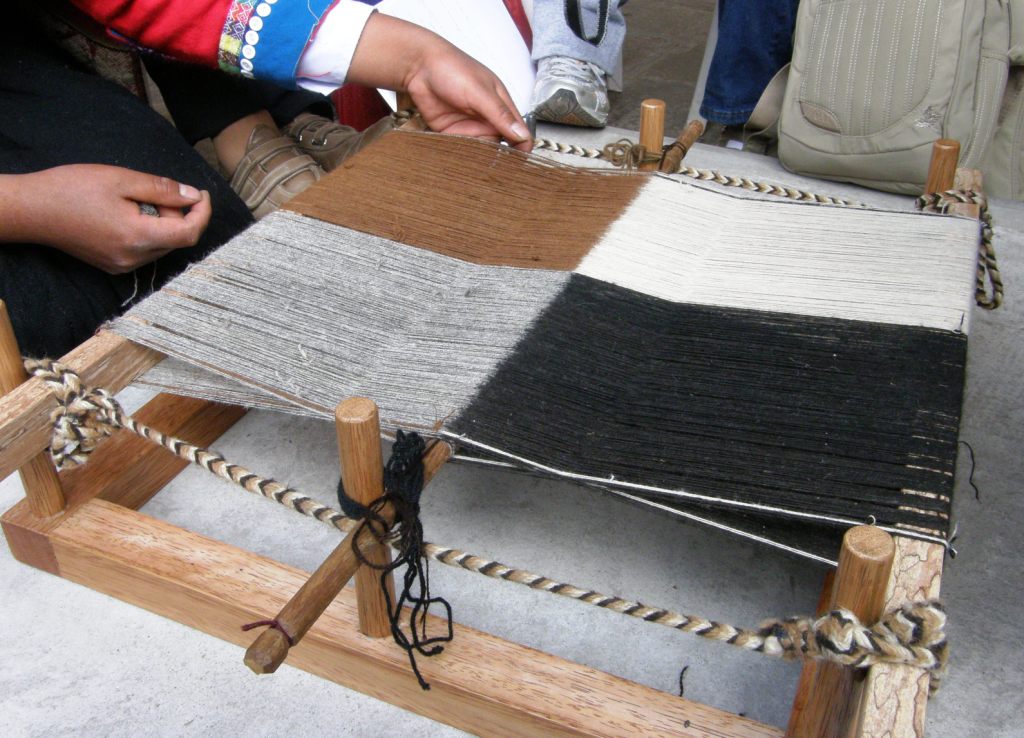
The overspun alpaca yarn made the grey and black panels curl in and the other two panels curl under. You can see my finish line on the white panel. I ended up removing one weft as I had packed too many in. I really need to remove two as now I have two wefts in the same shed. The finish line isn’t as noticeable on the other panels. I am really pleased with this!

I wove and sewed on a tubular band to the edges….… in the same way as the Pitumarca weaver that I showed earlier in this post, using three sets of string heddles and a shed loop. See how nicely the piece lies flat now? I hemmed the sides before applying the tubular band because I didn’t like the way the warp stripe at the edge was interfering with the color of the tubular band.

Here’s a better look at the tubular band and that lovely dovetail join of colors…

Done! I am keen to try this all again!

See you next time from the US 🙂

Backstrap Weaving – Encuentro de Tejedores de Las Americas – Part One – The Workshop

Back from Cusco!

Bleary-eyed from the long road trip and slightly spinning out from the altitude, I had a little time to wander the streets of Cusco on the Sunday of my arrival before the start of the weavers’conference on October 1. The trip from my home to my hostel had involved fourteen changes of transport including an overnight bus ride, the highlight of which was watching the big ol’ yellow harvest moon rising over Lake Titicaca. Stunning! I don’t think I have ever seen such an intensely bright moon before.

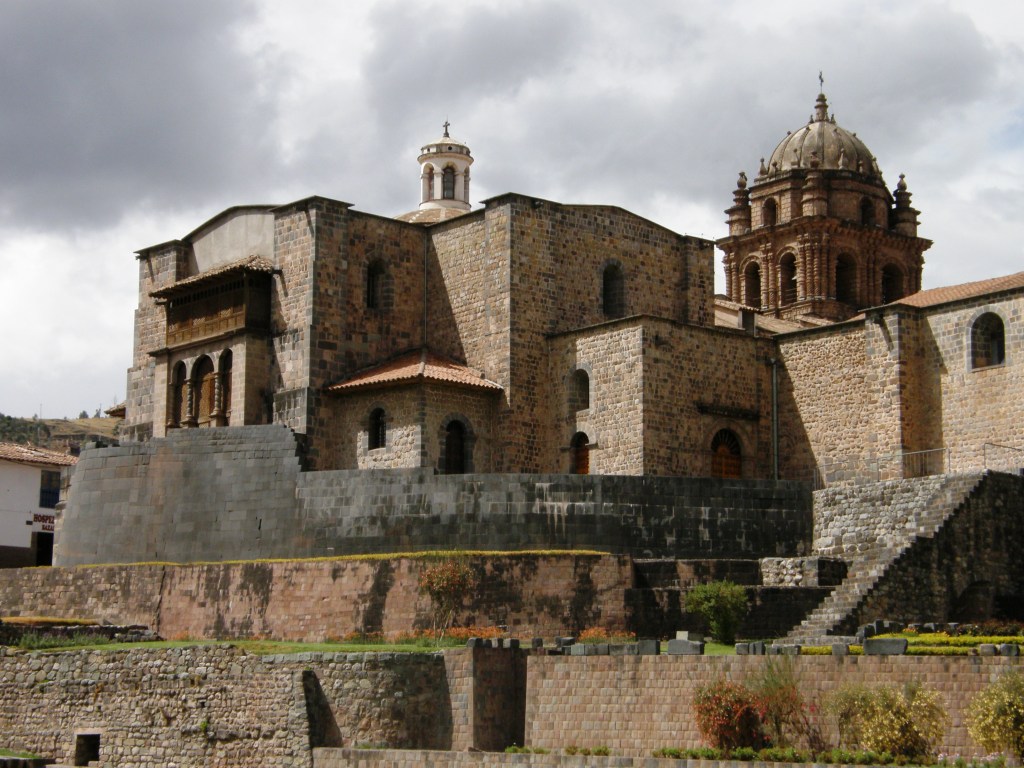
Needless to say, there is plenty to tell about that journey and my first hours in town but it will all have to wait.  Of course a trip to the CTTC (Centro de Textiles Tradicionales de Cusco) was a must. The walk down to the CTTC is impressive in itself. It sits right next to this…

This is the church of Santo Domingo built by the Spanish colonists on top of the stonework foundations of the demolished Inca temple Qorikancha. The inca stonework has apparently survived earthquakes which the Spanish construction was not able to withstand.

The CTTC is one of those strange and wonderful black holes where you lose all sense of time! I sat with the weavers all afternoon and learned so much. A weaver from Chahuaytire let me sit by and watch while she wove and sewed a tubular band to the edge of a finished weaving. You can see how a thread toward the end of the cloth extends to her toe which helps the weaver hold the cloth taut as she sews.

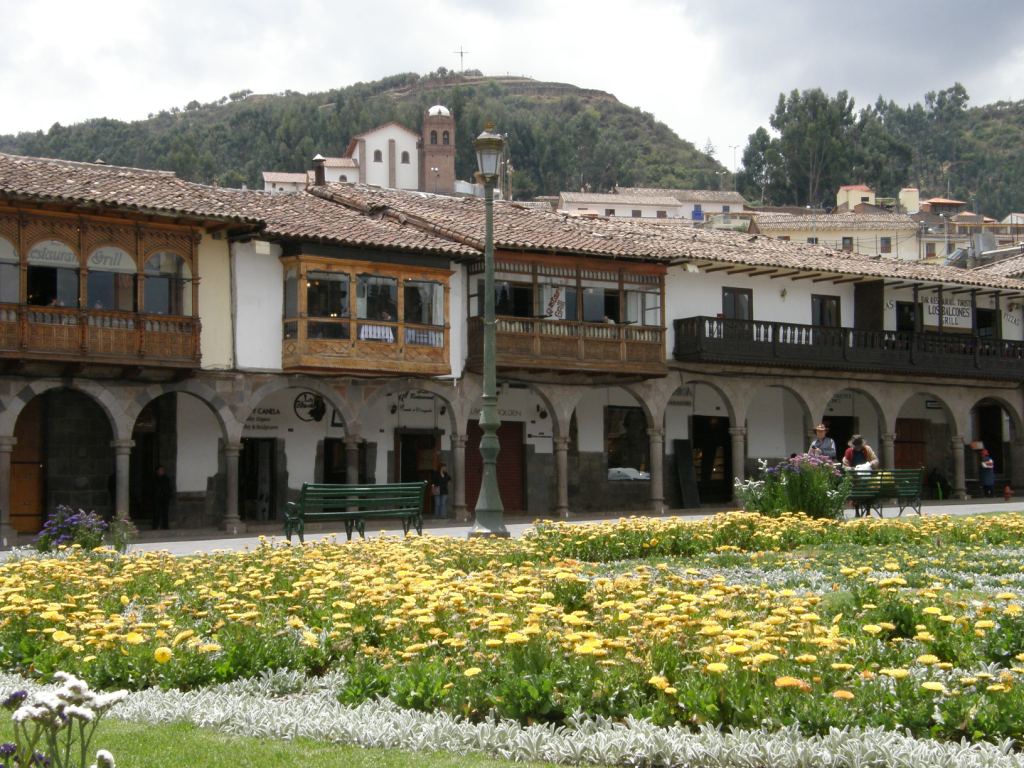
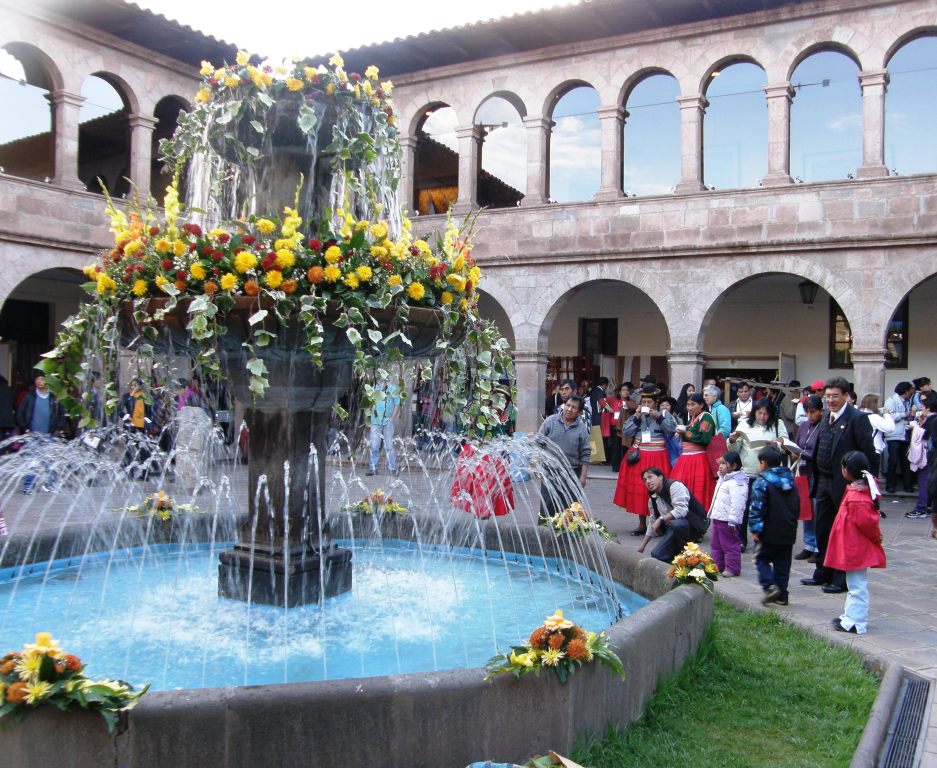
Eventually, fatigue started to set in and I spent a little while in the evening trying not to nod off in the pleasant flower-laden main square of Cusco before admitting defeat and crawling into bed. I had no trouble sleeping in my cheapo “party hostel” in a room with seven strangers!

But back to the present for a moment….I had fully expected to slip back into the old routine when I got back home late last Sunday. I thought that I would have no problem spending a couple of days going through and editing my pictures from The Encuentro de Tejedores de las Americas and that I would get my blog post out on Thursday night as usual. You would think that I would be bouncing around with energy with all those rich red blood cells that I must have grown during my week up at high altitude. Unfortunately it doesn’t work that way!  I was tired after the week of intense activity and the long road trip back and very much wilted by the Santa Cruz heat.

However, the thing that was most to blame for my failure to get back on track quickly was this…

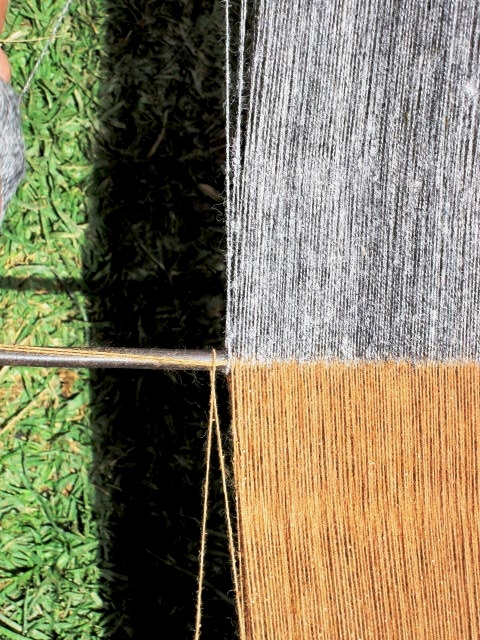
This is one my favorite souvenirs of the trip… the piece on which I worked on the last day of the conference which was Workshop Day. The weaving technique is called ticlla, or, discontinuous warp, and it allows changes of color along the length of the warp.  As you can see above, the piece is divided into panels of color along its length. The white panel changes to black and the grey to brown. Both halves of the piece, that is, the grey and white and the black and brown, will be woven with four selvedges.

It was very exciting arriving on Friday morning and seeing these sitting on the table…..and yes, I was the first one to get there!

And there were our teachers from Pitumarca sitting in conference, possibly reviewing some teaching strategies, each wearing a stunning lliclla decorated with pick-up patterns on panels of discontinuous warps. If you think that they look very young, you are right! Our two instructors, Janet and Petra are twenty-two and eighteen years old. Janet has been weaving for fourteen years and started weaving ticlla when she was twelve.

We were split into groups and Janet and Petra showed my group the warping process. This process of warping is something that I had only ever seen in pictures some of which, like the one below, had been taken and sent to me by my friend DY when she visited Pitumarca in 2010.

The pictures were enough for me to be able to make some small experiments of my own with this technique at home but there is, of course, nothing like seeing the whole thing unfold before your eyes. How much nicer and simpler it is when there are two pairs of hands at work! I warped three panels on my own at home and had to call several toes into use to hold tension on warps of one color while my two hands worked with warps in another color.

Janet, the more talkative of our two instructors, explained that the natural alpaca colors that we were using are called yoro (white), ch’umpi (brown), o’que (grey) and yana (black) in Quechua. How deftly the two ladies passed the balls of yarn back and forth falling naturally into a rhythm which they were able to maintain even as we plied them with questions.

Black and grey warp threads are being wound simultaneously with each color following its own figure-eight path. They are passed in turn around a central rod in dovetail fashion. This allows the creation of panels of different colors. Each half of the piece will have its own shed rod and set of heddles and will be woven with four selvedges.

While we watched the creation of this warp, other ladies from Pitumarca were busy setting up the prepared warps on which each of us would weave. We stood up from the demonstration to find twelve warps stretched out and ready to go.

The pretty courtyard of the convention center was conveniently surrounded by pillars to which we could attach our looms.

And now you will find that there is a sudden lack of photographs on my part…I was far too absorbed in my weaving to stop and take pictures! Here’s one I took on a short break…nearby, weavers from Chinchero were giving a workshop on making jakimas with pick-up patterns.

Above you can see a couple of jakima students with their instructor. Beyond them you can see my “pillar partner”, Marcela with the head scarf and cloak of her Mapuche people in Chile. There is something special about sitting all day and weaving next to someone who shares your passion. The preceding four days of conference had been hectic…so much to see and do. This last day allowed us all to slow down and take some time to talk and get to know each other while working at our looms. Janet had to come and pry us out of our chairs to take a lunch break.

The discontinuous warp piece had been started with a few rows of weaving at each loom bar as well as at the center cord that held the dovetailed warps.  Therefore, the four selvedges on each half of the piece had been set. Our task, therefore, was to weave to fill in the gap between the loom bar and the center.  As the gap got smaller and smaller, naturally it became increasingly difficult to open the sheds and pass the weft. The later part of the afternoon session of the workshop was spent watching a demonstration of how to go about creating sheds and passing the weft as the space in which to work decreased.

I have to tell you that there are no secrets or magic solutions to this…it’s simply a matter of plain old determination, tenacity and patience. When the shed rod is too big for the small space in which you are working, replace it with a thinner one. When the shuttle is too thick for the shed you are creating, pass the weft on a needle. When it is impossible to open the shed by pulling on the heddle rod, remove the heddles and rod and create the shed thread by thread with the blunt end of the needle. Save the shed on a stick and then pass two wefts…one on the each side of the gap.

Plod along like this and you will slowly but surely get there!

By the way, I was not happy at first about having to use brown weft to weave the grey and white panels as the brown could be seen slightly between the white warps. However, once I got to the needle-weaving stage I was very grateful to have that contrasting color weft as it clearly showed me under which warps I needed to pass the needle. It is much harder to see the warps for needle-picking in the grey section than in the white. I am guessing that doing the other half (the black and brown one) is going to be REALLY tough as the black will be hard to see and I won’t have the benefit of contrasting color weft in the brown section…oh boy.

Here I was at home on Monday inching my way to closing the gap. The metal rod is a long Navajo weaving tool that I have that came in very handy with its flattened shovel-like nose. It held the shed open while I passed the two wefts on the needles.When that rod became too thick for the shed, I changed to an umbrella rib. It was all guess work and experiments at this stage as Janet did not get to this point in our class. We ran out of time.

The final weft went in alone on a needle…over, under, over, under. It’s funny that I had expected the finish area to be noticeable because the wefts would not be as tightly packed as they are in the rest of the piece. As it turns out, it is exactly the opposite! I packed in too many wefts in the gap and that part is more tightly woven than the rest! Do I dare undo all that hard work and remove two wefts? I don’t think so!!

Now to attack the other side. I have high hopes of finishing this before I leave for the US next Wednesday. I want to attach a patterned tubular band around the piece.

Here is a video of Janet showing her skill with the needle as she teaches us how to go picking up the warps to create a shed…

So that was the Workshop Day. What about the rest of the conference? Oh my gosh…I have SO much to show and tell but this is enough for this first installment…my loom is calling as well as prep for my US trip. I plan to write more before I leave about….

one meter-wide backstrap woven pieces, backstrap looms with 24 heddles, gorgeous ponchos made from handspun vicuña fiber, cotton ikat-patterned shawls with intricate knotted fringes, double weave on horizontal looms, Tinkipaya weavings, cotton weavers from the lowlands dyeing their yarn with strange and amazing substances, all kinds of ways to set up and operate backstrap looms and make string heddles, tapestries from Ayacucho, new books…. and lots of weavers, wonderful weavers interacting and learning from each other! I met some of my blog followers from Chile and Argentina…what fun!

A couple of pictures to finish…I can’t resist!…a weaver and spinner from Puno, Peru shows Navajo weaver and spinner DY Begay how to spin yarn “Puno style” using DY’s Navajo spindle. This created a lot of laughter and fun…hand movements and sound effects overcame all language barriers.

After another long day, a weaver from Tinkipaya, Bolivia who uses a leaning vertical loom, contemplates the backstrap loom with its twenty-four string heddles used to weave the traditional belt of San Ignacio de Loyola, Peru. More about that next time! I wonder what she was thinking.