Another birthday comes and goes. I was given some lovely mini cheesecakes by a friend and we went out for a stroll around the street market that starts a block and half from my place before having a birthday lunch. Every now and then I go to this market looking for cochineal. The ladies that sell the home remedies are the ones that have it but it seemed that the source had dried up as I hadn’t been able to find any this year.
The market is big and, being in good company, we chatted and ventured further into the market than I normally find it necessary to do on my own. It paid off. I actually found the cochineal mother lode. I just bought a little and then snapped photos all around to make sure that I’ll be able to find this particular vendor again.

I often forget how different these markets must seem to my weaving friends who live outside South America. I generally don’t feel secure taking my phone out when I am at the market. This comes from experience! In fact, I don’t usually take it with me at all. But, because I had an extra pair of eyes with me on this day, I brought it along and took a few photos along the way.


And then I came across another surprise. It seemed that they were stacking up for my birthday. I have never seen anyone selling hand-spun wool down here in the tropical lowlands in all the years that I have been here. In fact, there isn’t any industrially-spun wool to be found either. On this day there were three balls of handspun wool hanging in amongst the home remedies in this little store owned by a lady from Potosi.

We talked spinning and weaving and she searched about to find her spindle to show me. It wasn’t particularly fine yarn but it was such a novelty to find it here and so nice to chat with this lady that I simply had to buy a ball of it. I’ll dye it with the cochineal that I just bought.
And with this I broke my vow to only work from stash but what the heck, it was my birthday.

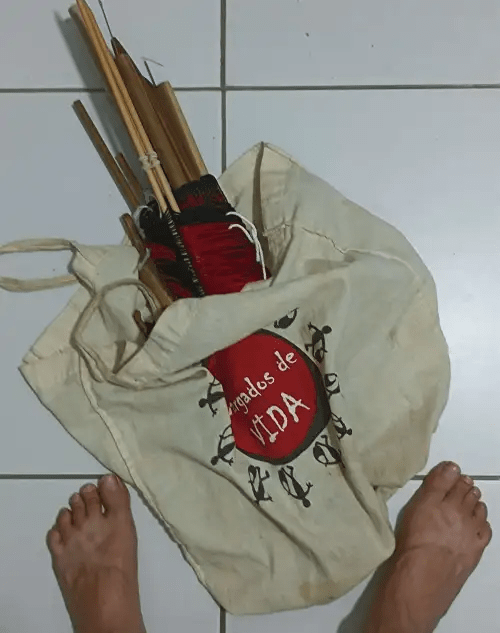
One more stop was made at the many aisles of the indoor part of the market where the sewing supplies are sold. I needed a long zip in a certain color for the loom carry bag that I was making.

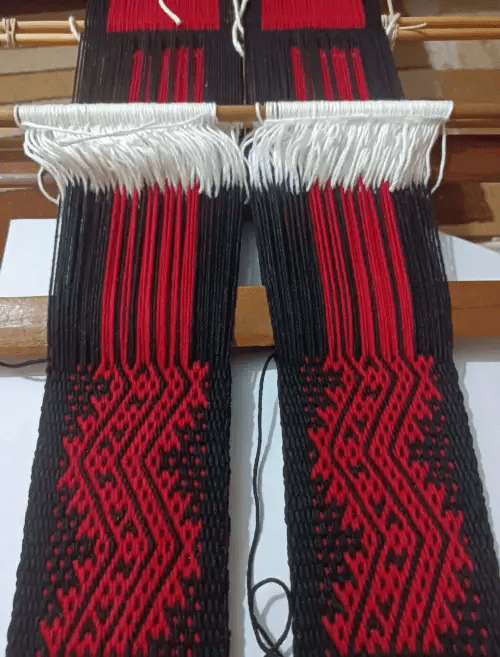
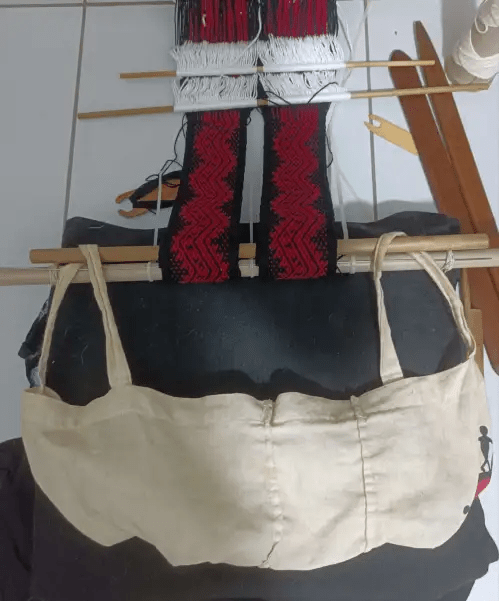
So, this is what has been on my loom. I showed you the warp of Mayan Hands cotton from Guatemala in my last post. I dyed the black and there are two shades of cochineal red that were dyed in Guatemala.
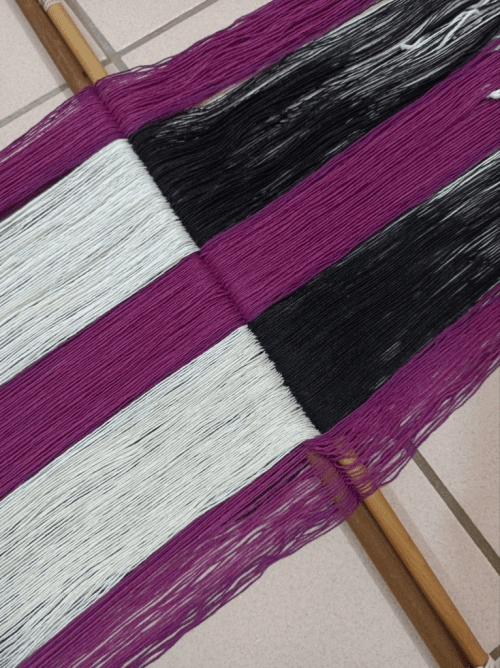
The black and white section would enable me to weave several kinds of patterning styles and I decided to weave this in rep weave….alternating thick and thin weft. That would make a sturdy bag and a cushy backstrap. You might remember my plan to make a carry bag for my loom that could double as a backstrap.
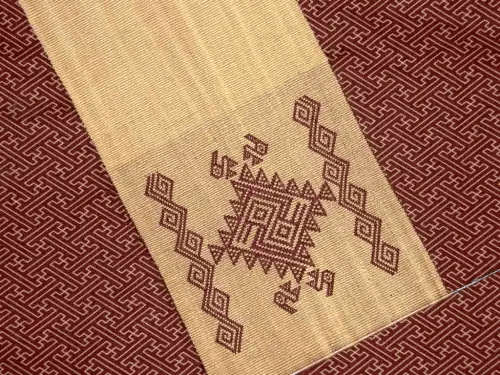
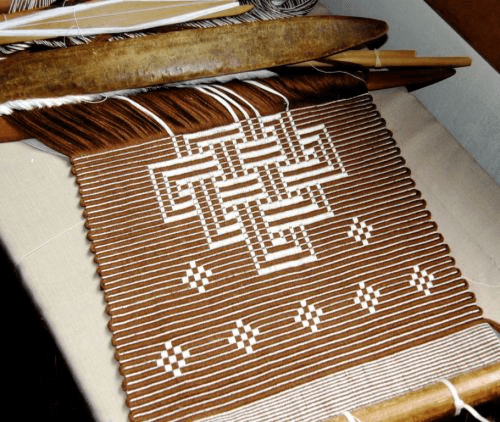
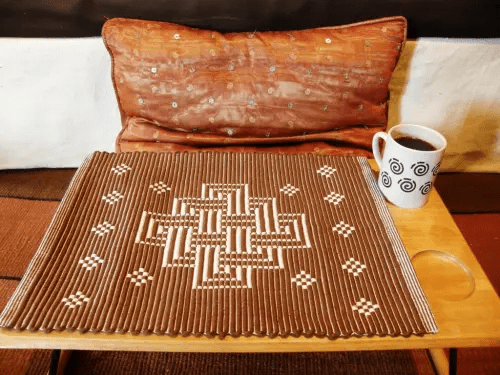
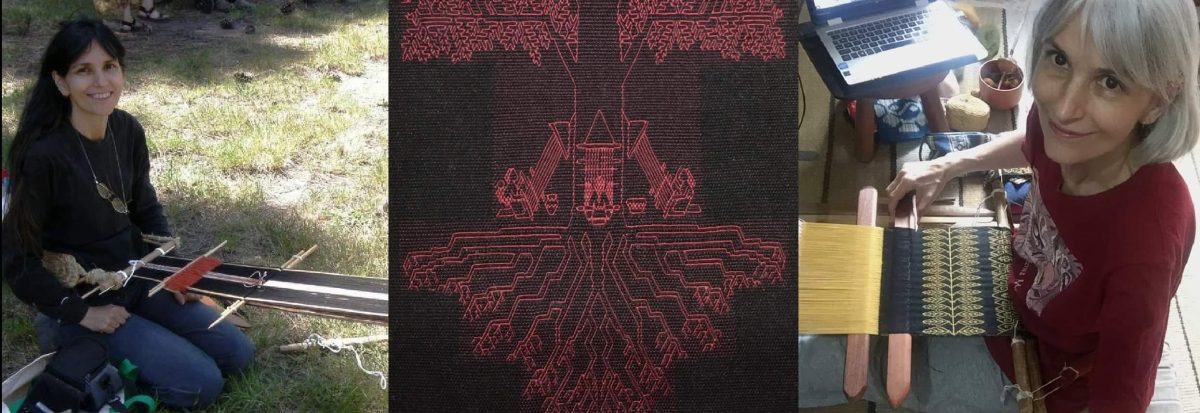
I chose a pattern that I had used on a silk wrist cuff some years ago. I had woven it using the complementary-warp intermesh structure with a pattern from Joanne Hall’s book on Mexican Tapestry weaving.

I first had to weave a sample to see how many strands I needed to make up the thick weft. Then I could get underway. Because I hadn’t used this Mayan Hands cotton in a large plain-weave project before and had only woven a tiny sample with it, I was a bit unsure about being able to set the width of the large project correctly right from the start. It’s quite common to start off too narrow. Threads that are sitting side by side along two cross sticks sit one above the other along the cloth beam and this can trick you into misjudging the width of the cloth. So, I did what I do if I am weaving with new-to-me yarn and placed four narrow strips of cardboard within the first four sheds so that I could see how the threads sit side by side.
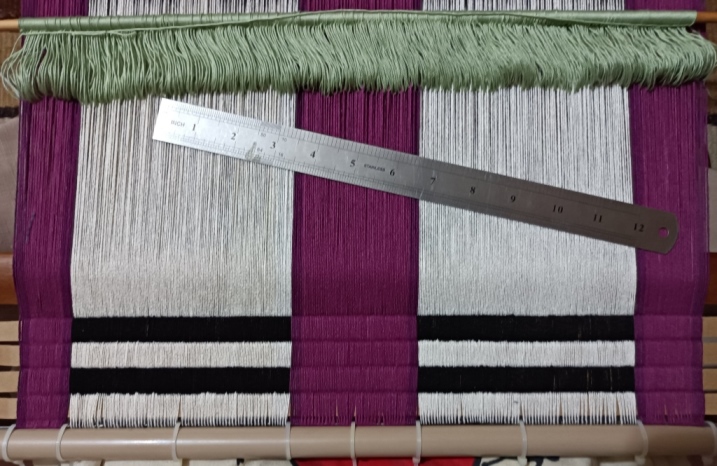

The motif is a complementary-warp pick-up pattern made up of two-span floats and very occasionally a three-span. Any section of white in a row that doesn’t have any white directly above or below it in the preceding or following row will be made up of three-span floats. Being complementary-warp, the piece is double-faced. It’s very straightforward. You just have to remember that vertical lines of white need to be broken up by picking up black threads in the thin-weft rows.
And here it is off the loom. I wove the start and finish only with thin weft so that they would be easier to hem. I also split them into two halves because they would become sleeves into which I would thread the cords for the backstrap. This will be clearer later when you see images of the cords in place.


I still have to test the ideal length of the white cords so that I can cut and bind them off. I also need to decide on the best way to affix a carry strap. I’m going to let it sit for a bit while I think about that.

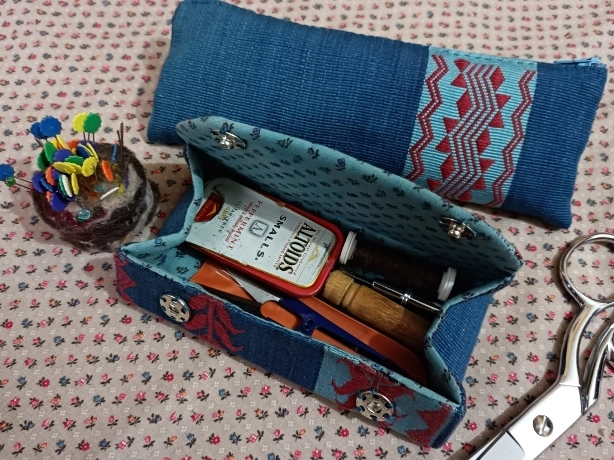
What’s next? Maybe some dyeing with cochineal and perhaps a longer version of the little box-like purse that I recently made. I have a lot of fine Guatemalan cotton for that in a color the vendor called champagne. I need to come up with a pattern for it in supplementary weft.
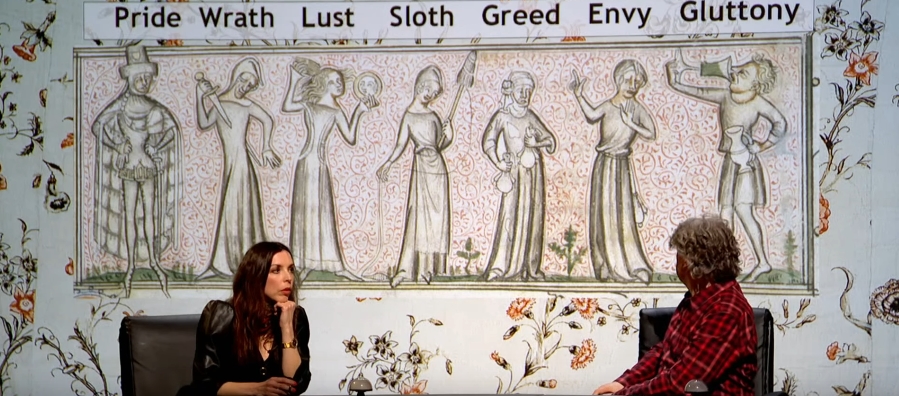
Keep busy lest you be accused of sloth! I was amused to see this depiction of the seven deadly/mortal sins in an episode of QI. A spinner was used to represent Sloth. How dare they! I couldn’t get a close enough view of the spinner during the program to be able to understand what that was all about. But I did find an image online and was able to see that her spindle, laden with yarn, was lying idle on the ground….the horror.
See you next time!