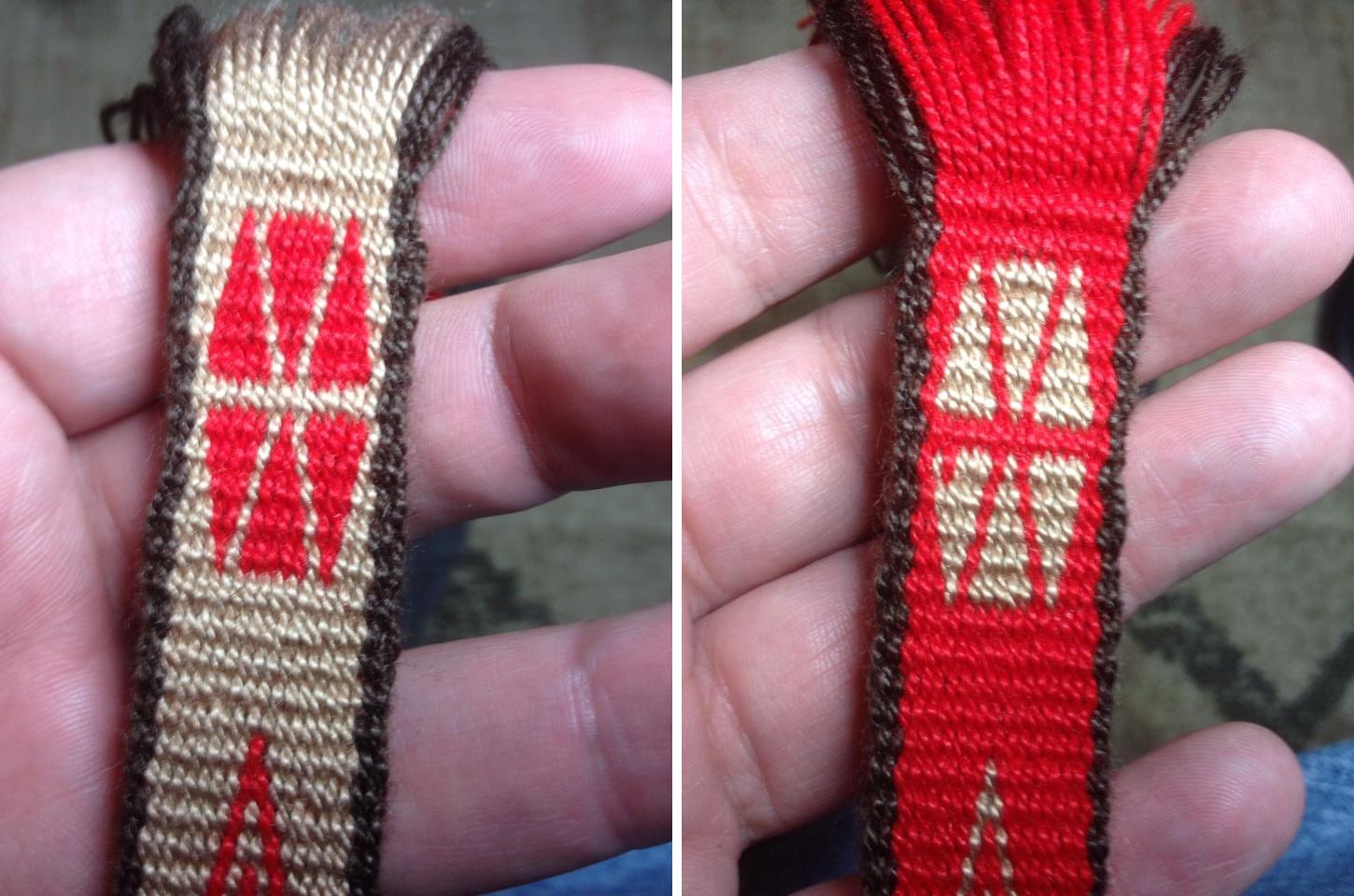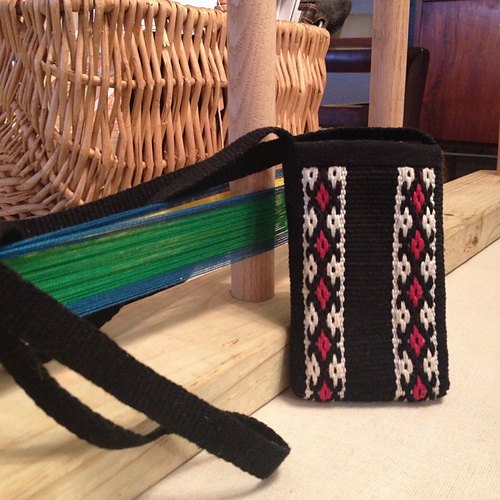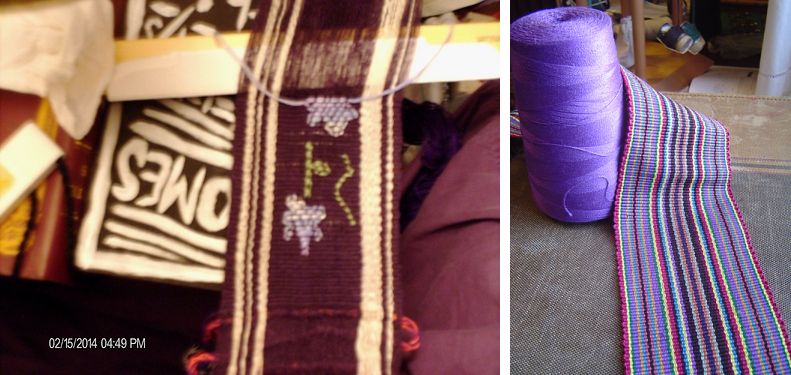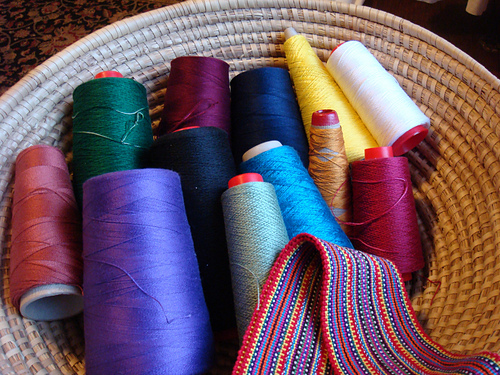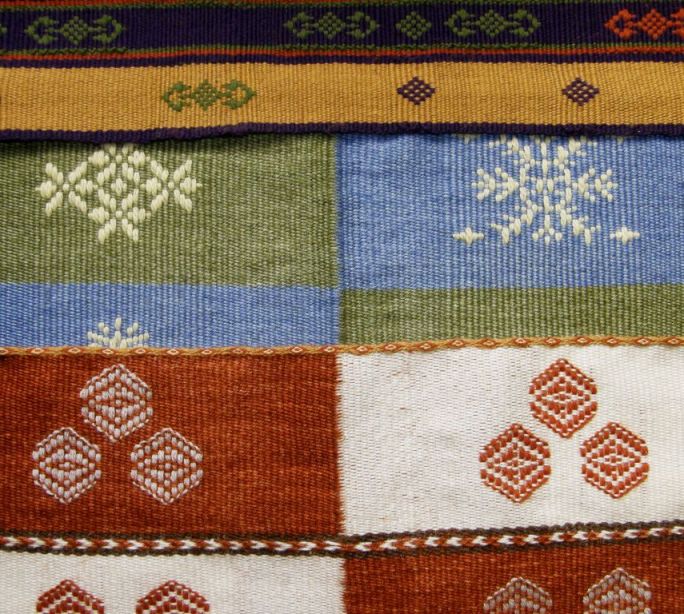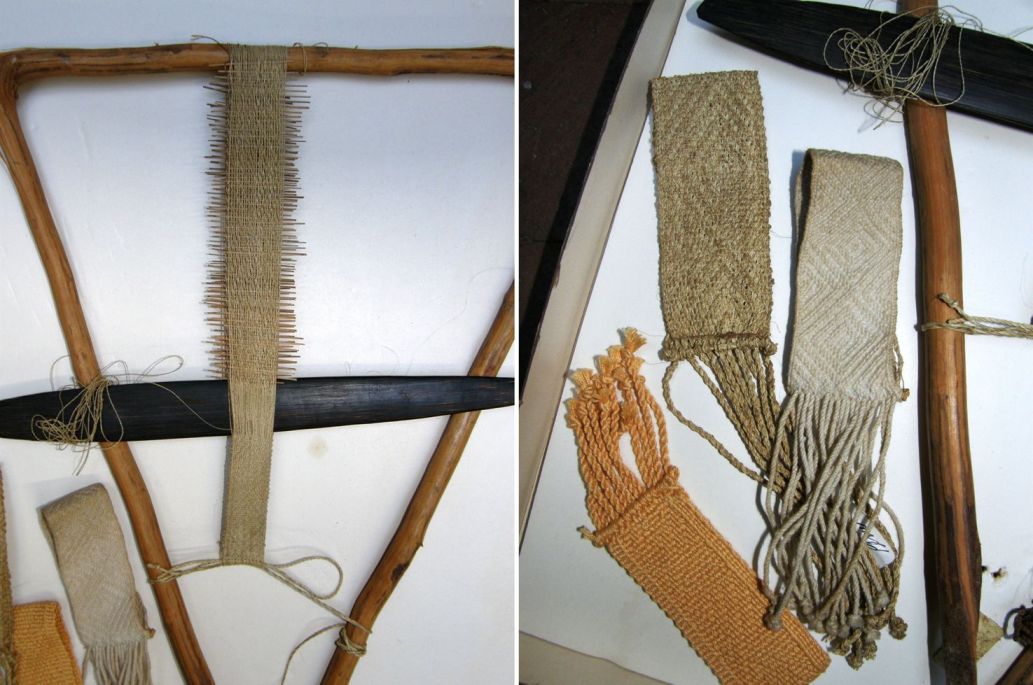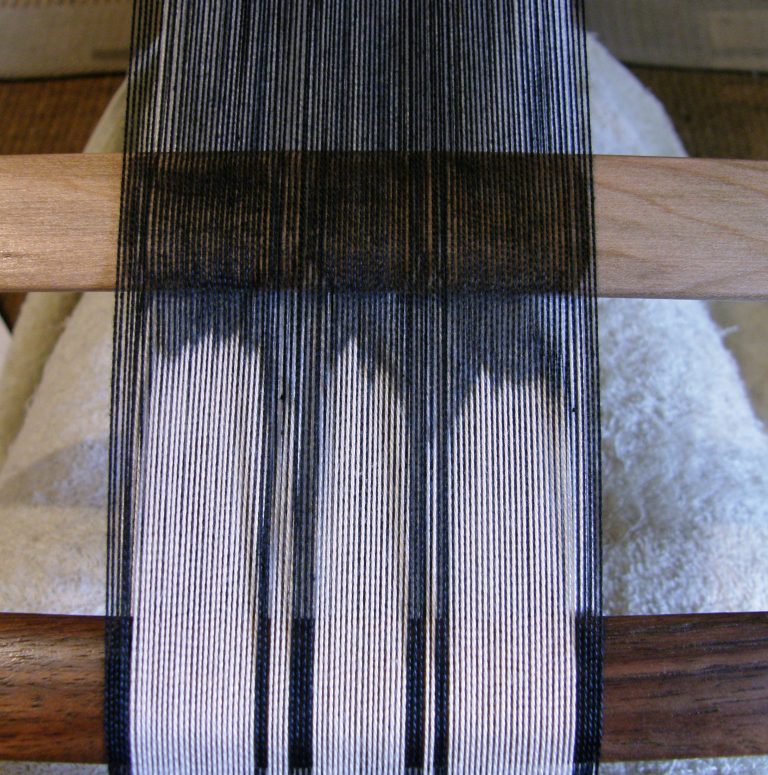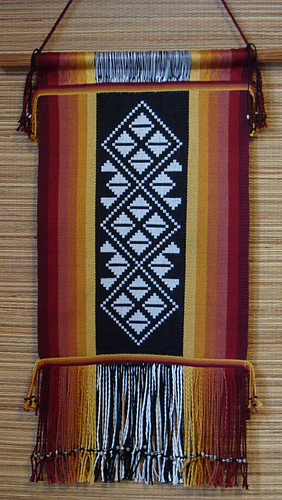
Backstrap Weaving – Worth the Wait

I had wanted to call this post simply “Waiting” but then had a funny feeling that I had used this title before. It didn’t surprise me. We tend to do a lot of waiting here in Bolivia. It’s a part of life and, after 15 years here (plus 5 more in Chile), I can hardly be annoyed or too put out by it. I Googled to check my use of this title and, yep, there it was in August 2012. I went back to see what all the waiting had been about back then. It was nothing to do with Bolivia at all…I had been waiting for some technical help with my second book and impatiently awaiting some exciting weaving events…all good stuff, as you can see below, and worth waiting for.

Some events from 2012

This week has been about a different kind of waiting. It involved getting up every day at 4am and trekking out to the SEGIP office to stand in line and…..wait. SEGIP issues visas and ID cards for foreigners. My ID card had expired and I have been trying since the end of December to move the paper work along. The office opens at 7am. You have to be there in a queue at 4.30am to get one of the 80 daily appointments. You wait in the street in the pouring rain or sun…we had both… and there’s no shelter.  I only wish I could entertain you with some nice shots of the sunrise or my fellow “waiters”. The sunrise was happening behind buildings and it was too dark most of the time for people shots. Today I succeeded! I was #46. I got to speak to someone.
OLYMPUS DIGITAL CAMERAAfter the Monday morning failure to gain admission, it was kind of fun greeting and seeing my fellow “rejects” the following days.

….the Brazilian medical students…always in large groups, always jolly, fun loving, even in the rain, and very, very loud.

…the Argentinians…recognizable by the thermoses that they carried and the little pots of yerba mate which they passed around and sipped and, of course, their gorgeous accent.

…the Mennonite gentlemen with their denim overalls and baseball caps, the ladies with their head scarves, print aprons and straw hats.

…the Russian Old Believer gentlemen with their long beards, piercing blue eyes and long, loose belted shirts. You have no idea how much I wanted to look more closely at those belts! They leaned on a fence with the Mennonites and talked about the recent rains on their land. There were some Mormon missionaries from the US looking so terribly young to be so far away from home.

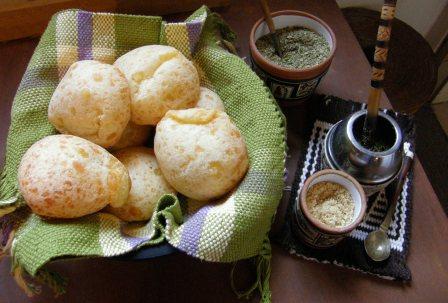
It was strange having so many foreigners gathered in one small place like that. Bolivian life is influenced in many ways by the cultures of its neighboring countries. Above, you can see the baked Brazilian snack called cuñape that is very much enjoyed here, and a pot of Argentinian yerba mate sitting on some of my backstrap woven pieces….a nice piece of Mennonite cheese or a pot of Mennonite honey would make it the perfect tea time picture.

The good thing is that, despite the wait and rejection on three days in a row, I managed to get home every day by 8.30am ready to face and enjoy a whole morning at the loom. That way, the pre-dawn expedition didn’t feel so much like wasted time.
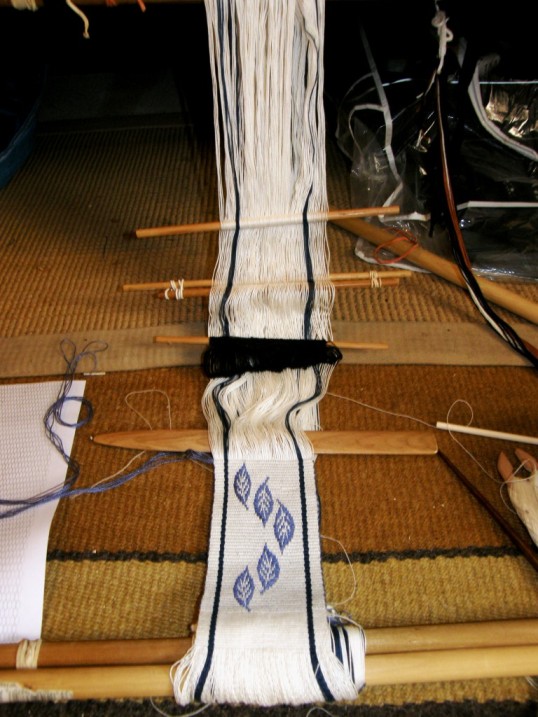
circular warp backstrapThis is one of the things on which I have been working this week. It’s the circular  warp that I took on my last US trip. I use it to show friends the different parts of a backstrap loom including the coil rod.  It’s been sitting here as just a white plain weave piece of cloth. I decided that it needed to have some pattern.

That is one of the things I love about patterning with supplementary weft . You can just add pattern to your plain white “canvas” at any time without a whole lot of planning. This warp had previously held a butterfly motif which I pulled out and replaced with this leafy design.

It’s interesting how different the same motif can look when woven with different materials. I created the leaf motif very recently for my discontinuous-warp experiment in heavy-ish wool. On that piece I had used wool as the supplementary weft.

My circular warp is fine cotton and I used tencel for the patterning weft. I also used a closer sett than I usually do so that the fine white cotton would cover the dark patterning weft well. The leaves that had looked so robust in wool  were thin and sickly looking in tencel on cotton so, I had to make adjustments to the original chart. The good thing about the finer warp thread is that you can use longer floats in the pattern and that allows more flexibility and options in the designing. I could use longer floats than the five-span maximum I used in the wool project. On the other hand, the single-span floats I used on the wool piece would  barely show up in the fine cotton. So, several adjustments had to be made to “fatten” the leaves and make the finer details more visible.

???????????????????????????????I don’t know exactly where this pattern is going from here,  but that is enough weaving for this warp for now. I placed the turns of the supplementary weft on the edge of the cloth rather than trying to conceal or camouflage the turns within the blue stripe as I usually do. I wanted to challenge myself to make consistently neat and attractive turns on the edge that would resemble little beads. I also turned the weft on the edge of the wool cloth. Those rather chunky turns are now hidden within the tubular edging.

circular warp backstrapAbove, you can get more of an idea of the circular nature of this warp and see the coil rod in position. The biggest difference I notice between weaving on a circular warp like this one and one in a single plane, is the ability to apply tension. There is a certain “springiness” to this circular warp which makes me feel like I can’t tension or beat as hard. This has me pushing with my feet (something I rarely do these days) in an attempt to apply more tension. Maybe that is why the majority of indigenous weavers I have seen using circular warps brace their feet against something as they weave. It is interesting to be able to compare the feel of the two kinds of warp set-ups this way.
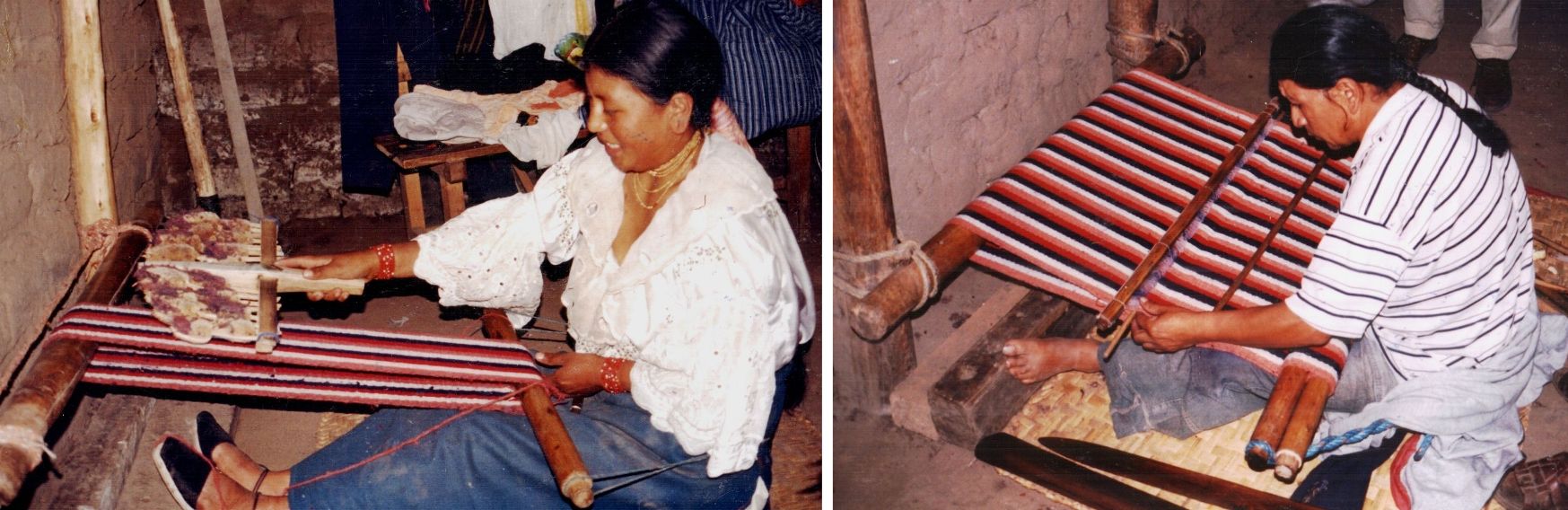
Weavers in Ecuador using circular warps brace their feet against piece of wood to help apply tension to the warp.
Weavers in Ecuador using circular warps brace their feet against blocks of wood to help apply tension to the warp.

At first, I decided that it would be an interesting challenge to just chart and weave one leaf and then see if, by reading from the one motif woven into the cloth, I could flip the design both horizontally and vertically. The challenge wasn’t met as it gave me a big headache! and so I decided to chart the four versions and go from there. I wrote a page some time ago which I added to my list of FAQs on my thoughts about the use or non-use of charts.
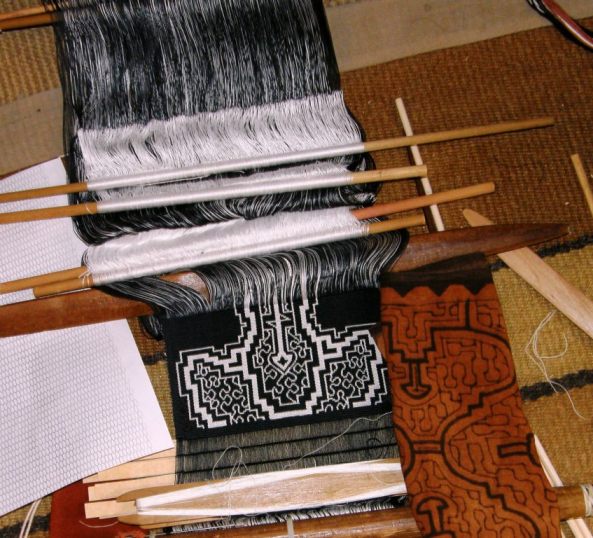
shipibo inspired wall hagnging panelMy latest wall hanging project uses a design I created and charted myself which is, for the most part, not symmetrical. It is a row- by-row slog working with an enormous pattern chart and was inspired by designs painted on cloth  by the Shipibo people of tropical lowland Peru.

Fortunately, for me, warp-faced double weave is one of the easier structures for reading the pattern  on the cloth because there are no warp-float lengths to be considered. Once a base line of pattern has been woven, it is easy and straightforward placing subsequent rows by referring to the preceding one without having to do a great deal of counting.  However, there are no small design elements within the large one that get repeated and which can, therefore, be eventually memorized.

The pattern is not one with which I am all together comfortable yet. What I mean to say, is that I am not sure that I like it yet! My eyes long for symmetry! I keep telling myself that I just need to WAIT (I have had plenty of practice with that this week!), weave a bit more, walk away, stand back, weave some more and allow it to develop. It is a design that has a lot of wiggly chaos within a rigid symmetrical outline. That’s the best I can do to decribe it for now. I just need to put a bit more of that heavy symmetrical outline into place to help me deal with the chaos!

I will wait. I won’t unweave. I feel confident that it will be just what I wanted in the end.

I was Googling some images this past week and came across some of my own things such as this…
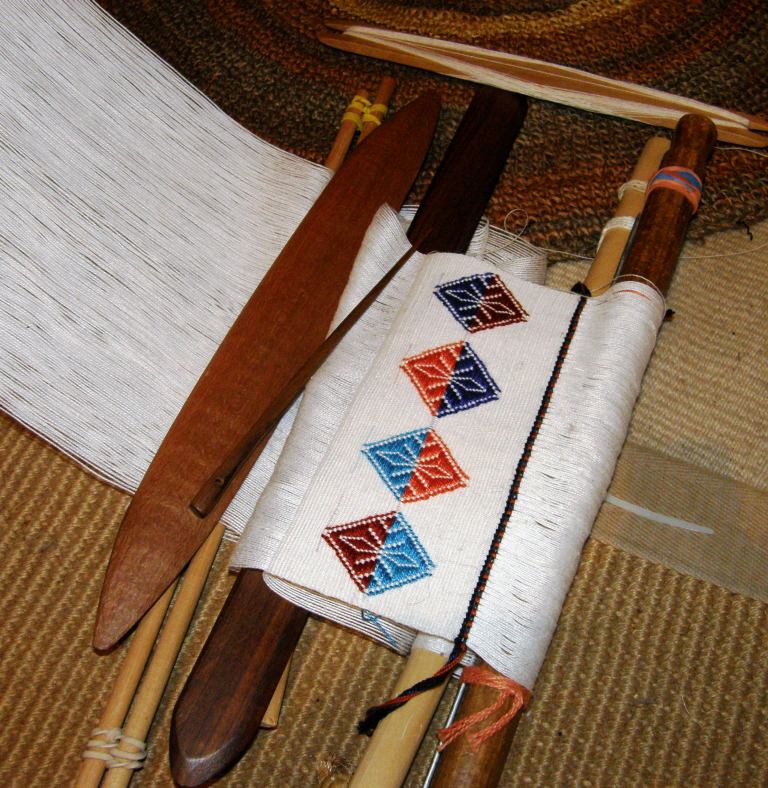
Bhutanese motf supplementary weftI thought….wow, I remember that. I wove it at the start of my studies of Bhutanese patterns. Now, what in the world did I do with that? A quick search in the closet turned up nothing. And then I remembered…oh yeah, I unwove it because I didn’t much care for it at the time…too colorful or something like that. Maybe I should have WAITED. At least I took a picture of it before unweaving.
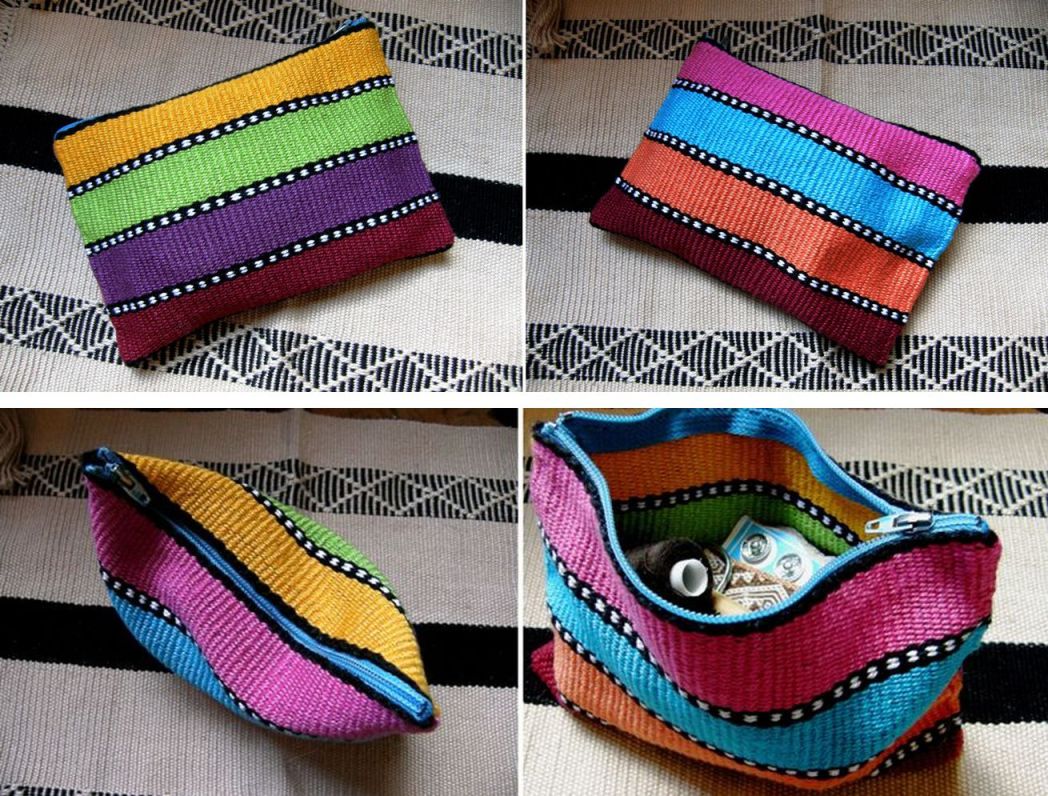
striped-pouch-x-4This had been a very hastily put together demo warp . I disliked the color combination so much that I didn’t even want to put it out to be seen. Nevertheless, I wove it off and sewed it into a pouch. Time has passed and now I just love my happy colorful sewing bag.

I am still waiting for this one to grow on me…
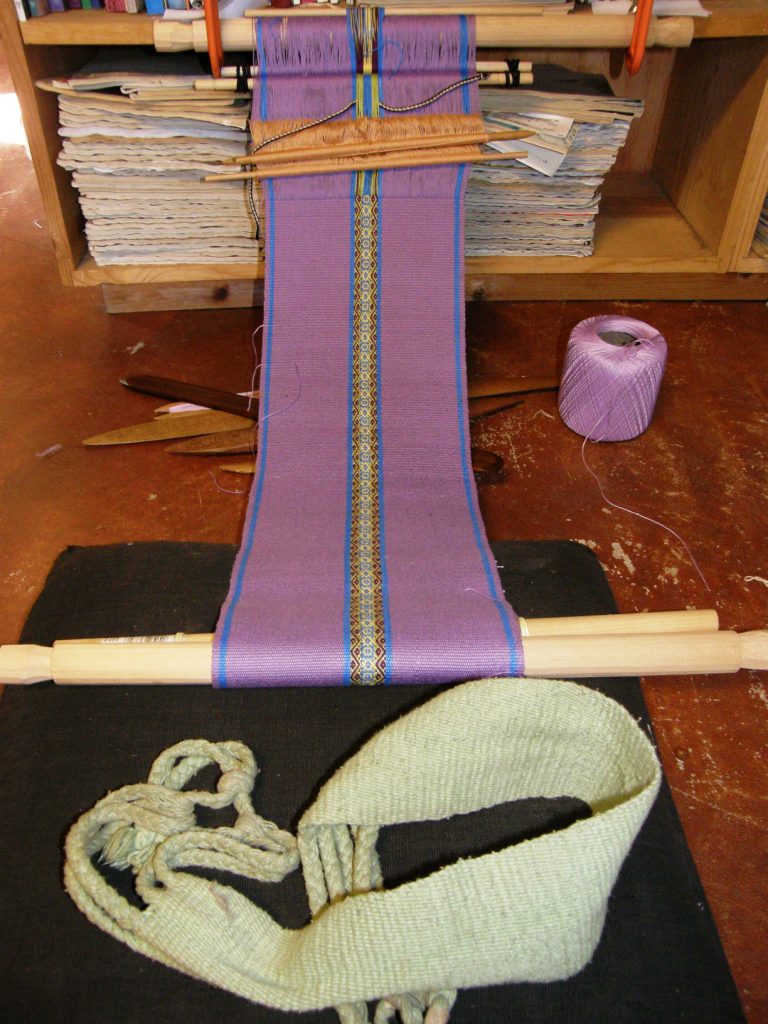
??????????????????????It was another travel warp into which I hadn’t put much thought. I was pleased to at least be able to use the finished fabric from the above warp for a tutorial on edgings.

Let’s see what online weaving friends have been up to…

Scott is really getting into double weave and is now charting his own motifs. After working through my tutorial, he used the llama patterns to make keyfobs. I like those grippy keyfob ends…no sewing needed at that end. They are especially suitable for double weave which can be too bulky when folded and passed through a key ring.
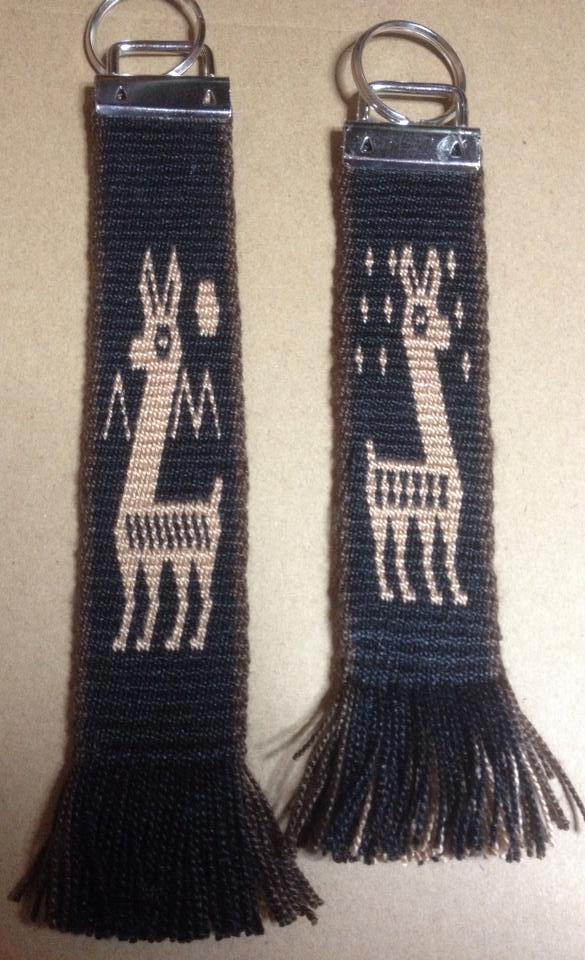
scott (1) llamasNext he charted and wove the Norse Valknut motif…love it!

Scott's norse valknut motifI can’t wait to see what he comes up with next.

Jennifer finished her bag from our Ravelry Games weave-along…
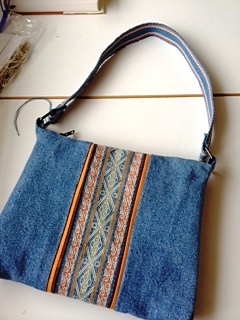
Jennifer bag with chinchero patternsWhat a superb piece of work. She used denim which so perfectly matched the washed-out blue of her indigo-dyed hemp. Other pieces of colored fabric were used to frame the woven section. She finished it with a zip. 
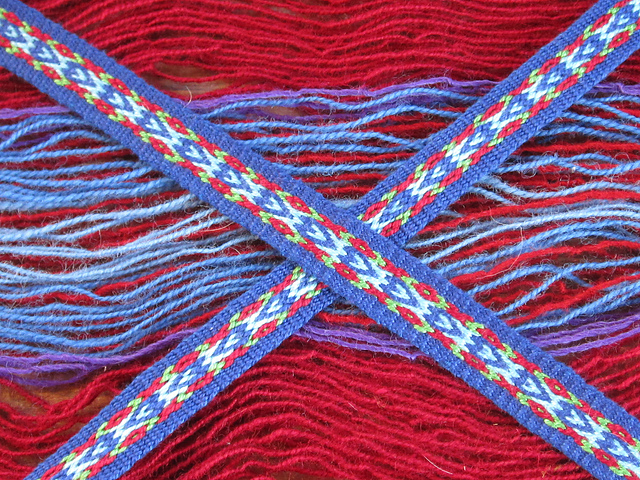
lausanne pebble weave bandLausanne’s band is a lovely example of how simple 2 and 4-revolution Andean Pebble Weave motifs can be placed together to make new designs…something that I discuss and encourage in my second book. I love the way she has photographed it. It is so nice seeing lots and lots of band length like that.

Teresa in Chile sent me pictures of her first backstrap loom pieces using the tutorials on my blog for creating plain-weave bands with solid colors, comb patterns, and stripes. In this way she wisely develops and practices her skills in managing the backstrap loom with simple, fun, plain-weave projects. Now she is taking her first steps in creating patterns with warp floats.
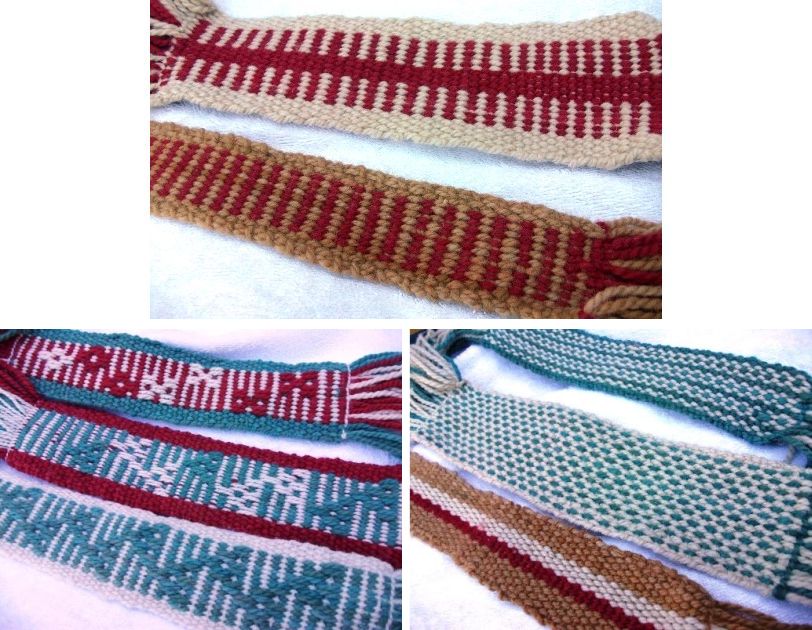
teresa

I am glad that I didn’t have to keep you waiting for this blog post. Blog day is usually a strictly “at home” day for me consumed with taking photographs, editing and writing. I am just happy that I don’t have to get up at 4am again tomorrow!

See you next week.
Backstrap Weaving – Color fom the Cochabamba “campo”

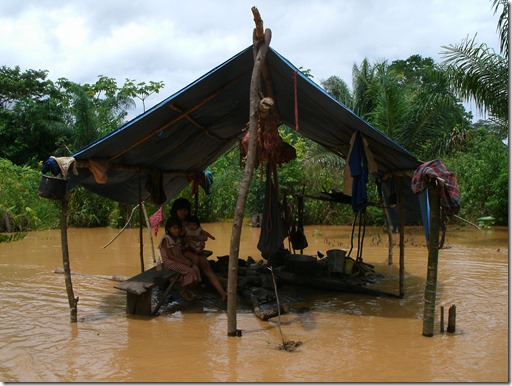
The big rains have more or less stopped here in Santa Cruz. We get a shower about twice a day. Each one has has me holding my breath. The outer wall of my bedroom has been hacked out so that it can dry out  and then be filled and repaired and made watertight, we hope. The huge wooden wall unit in my bedroom had one side on the point of collapse when the water soaked through. Now it is being supported by my large weaving sticks. Whine , whine, whine… a picture like this from this blog soon makes you stop. Such is the situation in the province of Beni in Bolivia. No walls at all and  sticks support the roof.

AguaYaku

I heard from my friend Dorinda up in the highlands in the province of Cochabamba, another of the effected areas, but she did not mention the rains and I am guessing that they are okay. Dorinda had written to let me know that she had mailed the box of woven bands that I had ordered from the weaving cooperative that my teacher Maxima heads. Dorinda blogs about her work with Maxima and the weavers of Huancarani at PAZA Bolivia.

Exciting! As the post office box I use is in someone else’s name, I had to be patient and wait for my treasure to be picked up.

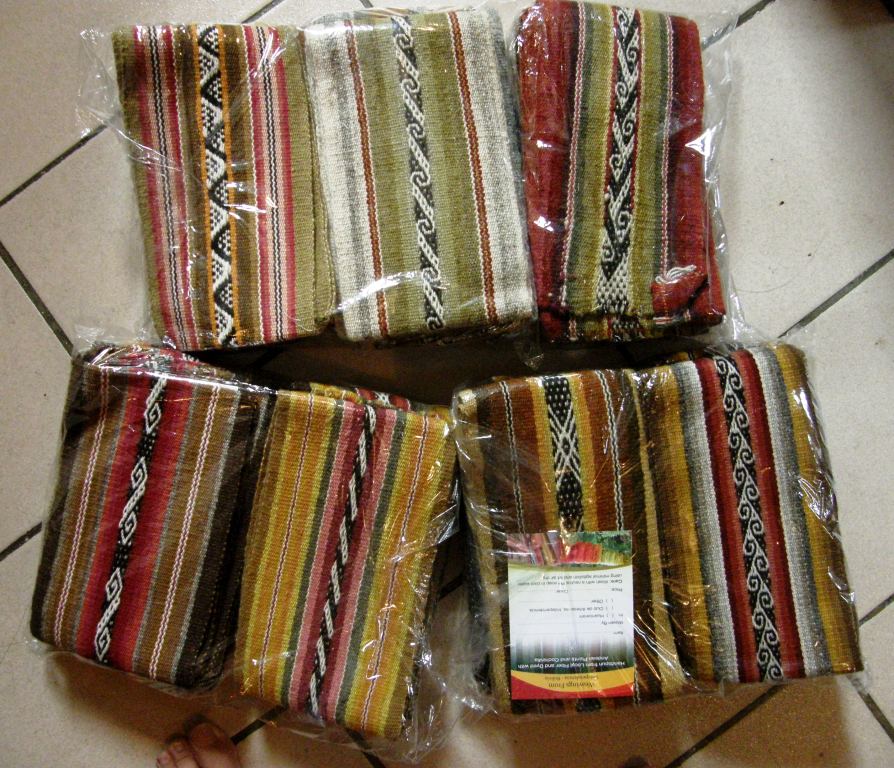
packagedbands from CochabambaMy home is a disaster of warps, yarn and sticks right now. I really had to resist opening the packages straight away, unfolding the luscious bands, and laying them out to view on every available space. Dorinda included a list of the weavers and each band is tagged with the weaver’s name. She also sent me a document with a short story on each of the ladies. It so nice to handle one of the bands, look at the picture of the weaver and read her story.

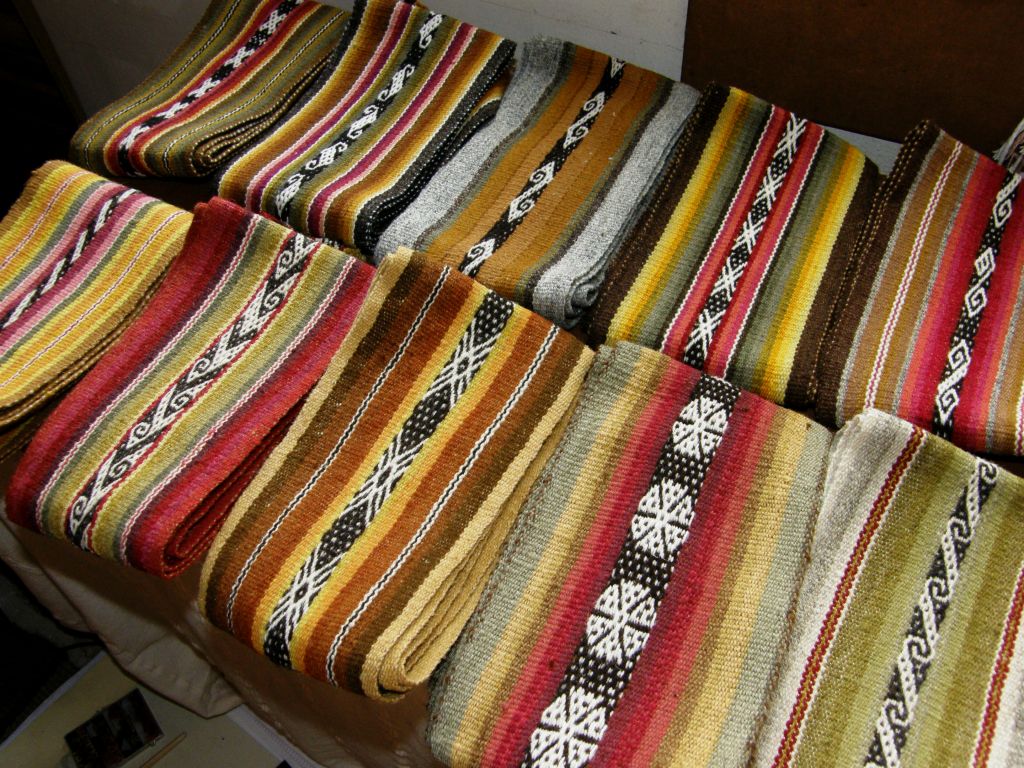
Cochabamba bands in boxOnce I had put things in order, two days later, I opened the packages and  released all those lovely aromas of wool, dyestuffs, and “campo”.

I like to feel the cloth. The yarn is the weavers’ own handspun, most often made with fleece from their own flocks. The colors are all natural and were created from cochineal and local plants.

Which weaver would be considered the best amongst her peers, I wonder. Whose cloth is the stiffest? This seems to be one of the things that the weavers themselves appreciate. I wonder which pattern they would consider the most complex. What different effects did they achieve in their use of warp and weft colors? Who matched the weft color to the edge color and who used a contrast color to create attractive little dots along the edge? Whose color combination was vastly different to everyone else’s?

Did they all get together and decide not to duplicate the patterns or was that just a happy coincidence? Were any made by the teenagers who are still in training?

Without unfolding them, I picked out two which I considered my favorites. I was happy to see that one of the two had been woven my Maxima. I wondered if I had simply recognized her style.

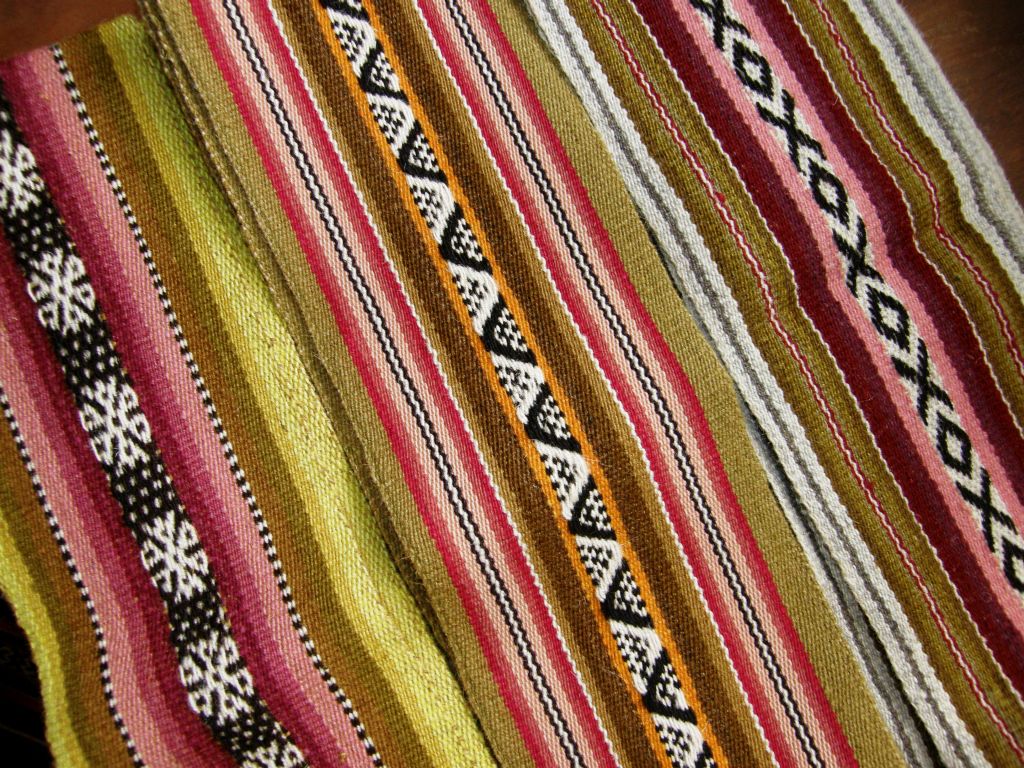
Fifteen different weavers had made the bands with no repetition of color arrangement and just two patterns duplicated. The width of the stripes of color ,and the narrow strips of threaded-in pattern that sometimes separate them, was in a form that was often repeated and could be characteristic of certain communities or even families.

???????????????????????????????Seventeen bands were patterned with complementary-warp designs and three used a supplementary-warp structure.

The weavers used a complementary-warp structure to create the patterns on these bands.
One of the bands with pattern created with supplementary warps is on the right.
The band on the right is one of those which was patterned with supplementary warps.

The second of the two bands that I had picked out as favorites was made by Narciza, Maxima’s older sister. I just love Narciza’s color combinations. Below you can see her adding a tubular border to one of her woven pieces. As is done in Peru, she uses a forked stick to hold the cross for this particular type of patterned tubular band. Strangely, younger sister Maxima never learned to weave this kind of tubular band with its distinctive eye pattern and only recently learned it at the Tinkuy in Cusco last year.

Narciza Cortez

DioniciaDionicia Crespo is the oldest weaver in Hauncarani still weaving to sell at 82 years old!

Of course, her fading eyesight plays a role in the straightness of her edges, Dorinda tells me.

She doesn’t have glasses. Somebody told me the women are embarrassed to try out reading glasses because glasses are associated with education and the Huancarani weavers are illiterate (Dorinda)

Her edges look good to me!

You can see her at left preparing her frame for warping.

???????????????????????????????

advianaBands that represent three stages of life….you can see 82-year old  Dionicia’s band above on the left. A piece by Vilma, Maxima’s eldest daughter, is in the middle and the band created by the youngest weaver of this collection of bands, 18-year old Adviana, is on the right.

Dorinda tells me that Adviana is one of the few of the younger generation who has learned how to weave. 

When she began weaving to sell through PAZA she relied on her grandmother´s assistance, but now weaves on her own. (Dorinda)

???????????????????????????????Family traits? The band on the left is Maxima’s, daughter Vilma’s is in the middle and older sister Narciza’s is on the right.

Mxima demonstrating at Tinkuy 2013 and daughter Vilma collecting flowers for the dyepot.
Maxima demonstrating at Tinkuy 2013 and daughter Vilma collecting flowers for the dyepot.

A couple more pictures to finish before I put the bands back in their box….

Cochabamba bands 1

Cochabamba bands 2Enough color? Let me calm things down a bit now with some black and white.

A question was asked in one of the forums this week about what kind of weaving software people use. There are still quite a lot of good old fashioned paper-and-pencil people around amongst those who were excitedly discussing all the ins and outs of the various available programs.

charting for backstrap weaving

black panel for all hanging backstrap weavingMe? I am a paper-and-pencil gal. That’s the new panel for the wall hanging over which I have been dithering. I love charting this way. It makes me feel like a kid again and it is very relaxing. While a young fellow dangled from a cage outside my window and hacked away at my wall, I calmy colored in cells on my graph paper. Prior to that, I had just as calmly sat and  made four sets of string heddles of 353 ends each on that black and white cotton warp.

If you are thinking that that is a weird-looking pattern, you are right! I really have no idea what this will end up looking like even after sampling! I just need to dive in and do it. I fussed over it more than usual….measuring, shifting things about, uncrossing warps, measuring again and finally got the first weft shot in. That always feels good. I am weaving this in double weave. It is embedded double weave as there is a very narrow plain-weave border on either side.

???????????????????????????????I finished the silk bookmark that was part of the Ravelry event but I am calling it a sample for now. There are several things about it with which I am not pleased and, as I have plenty of warp left, I will start it again with improvements.

The silk is lovely to work with! Using the four sets of string heddles and a pick-up stick I never have to actually touch the threads. I worked with this same silk as supplementary weft last summer and it was horrid to handle with sweaty hands.

The bookmark is light and supple…just the right thickness to slip between pages. I am pleased with all that. Now to fix that other stuff that I don’t like as much.

While on the subject of double weave, Scott has allowed me to show pictures that he posted of his double-weave sample band. He is studying the one-weft version from my tutorial here and has done a really good job.

scott double weaveRavelry projects have been coming in as we approach the end of the Sochi Games…

kim's bagKim finished her piece and sewed int a small bag for which she also wove a strap. Now she is on the lookout for a button to close it.

joyful and juliaJoyful has been converting her flowere doodles into patterns using embroidery floss as supplementary weft on her plain-weave band. Julia will use purple cloth with her finished piece along with her sewing talents to create something useful.

Another week comes to a close.  I try and mix it up…a little warping, a little charting, a little weaving for myself. I hope to make some good progress on the wall hanging this coming week.

Bye for now.

Backstrap Weaving – Let the Games Begin

I think that there will be many people around the world right now in need of a splash of color…for example, those in the US watching the snow pile up outside or the ice slowly encasing everything, those in Europe battling mud and flood waters. Here in Bolivia we have our own weather-related problems. In the highlands, floods and mudslides have caused deaths. Here in Santa Cruz it just rains and rains….hasn’t stopped for any significant period of time since January 19. It was welcome. It kept the temperature down. But now I have a small stream running down my bedroom wall…..

DSC04308_mediumSo, here is some color courtesy of Julia from the Ravelry Backstrap Weaving Group. The Games have begun, we are in the midst of our Ravellenic Games weave-along, and Julia chose her colors from her stash of 10/2 cotton. You can see the Guatemalan band which will inspire her project. And amidst all the white outside in her northeastern US home, she photographed her warp and the start of her weaving.

juliaThe large project that I warped this week isn’t exactly cheery. It will be the center panel of my next wall hanging which will have a design inspired by textiles of the tropical lowlands…

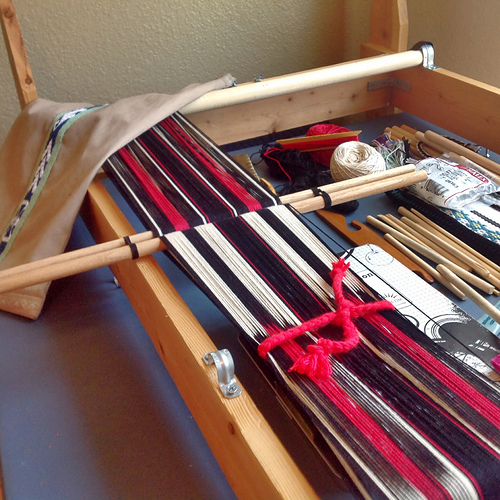
???????????????????????????????I have wound black and white strands together as one to create a warp for warp-faced double weave. There are just over 500 doubled ends. The woven piece won’t be as wide as the warp you see here as all the threads that are now lying in one plane will be used to create two layers…a double weave. I was taught this structure in a very simple way in Potosi, Bolivia using just two sheds…one held by a set of string heddles and the other by a shed rod. However, many Bolivian weavers use four sheds…three sets of string heddles and a shed rod… and that is what I shall do with this piece as the thread is fine and there are lots of them. Having the threads divided amongst four sets of heddles will make the pick-up a lot easier.

Weaving on the staked-out ground loom in Potosi
My lessons in weaving warp-faced double weave with two sheds on a staked-out ground loom in Potosi.
Belts made in one-weft double weave technique in Potosi
Double weave belts from Potosi
A double-weave chuspa made for the Carnival celebrations by Beatris Flores of Independecia, Bolivia
A double-weave chuspa (with some strips of complementary-warp pick-up) made for the Carnival celebrations by Beatris Flores of Independencia, Bolivia. Photo by Dorinda Dutcher.

four heddle double weaveI am doing the same with my double-weave Ravellenic Games piece. I opted for four sets of string heddles. I am using 60/2 silk and 200 ends and it is easier for me to do the pick-up with this set-up. The disadvantage is that the warp is cluttered with heddles and they take up a lot of space which means that I may not be able to weave as close to the end of this warp as I usually would. However, I always have the option of easily reverting to the two-shed method if I so choose.

I wanted to choose a project with a sports theme as the Ravellenic Games are being run in conjunction with the Sochi Winter Olympic Games. This Ravelry event is a nice way to do something together online and create some community spirit.

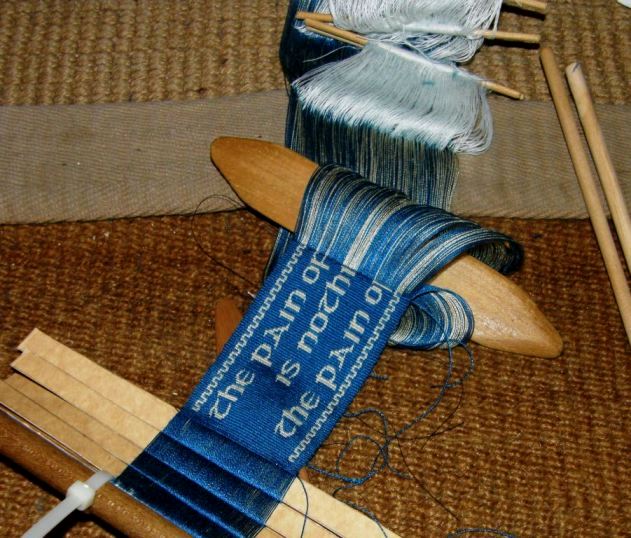
This project is a silk bookmark with an inspirational quote for my nephew who is a triathlete. He has many such quotes on his bedroom wall which I am sure help him through his rigorous training program. The one we chose says “The pain of discipline is nothing like the pain of failure”. I am sure that he must recite that when he has to get up pre-dawn on winter days to swim laps.

first lettering sample in clea cottonFirst, the sampling.

I had to figure out what kind of letters to use. I used Linda Hendrickson’s book Please Weave a Message for inspiration. The book has charts for many different beautiful fonts to be woven with tablets. I tried a letter “T” in the intermesh structure (at left)  and it took a few attempts to get it right. However, I decided that double weave would give the letters a smoother look.

Charts for tablet weaving differ to those used for the double weave I do in that the cells are stacked one on top of the other. I had to adapt them to the double weave charts which have staggered cells. I chose a font from Linda’s book and used it as a guide.  I completely changed some letters as I simply didn’t like their form in that particular font so, the letters I am using in the end are a bit of this and a bit of that.

??????????????????????

Then came more sampling on the purple warp, this time in double weave, to check proportions and then another sample in the silk. My project was shrinking fast!

I warped the silk to weave the quote in three lines rather than in one long line. Linda’s tablet-woven phrases are woven in one long ribbon and look beautiful that way as banners on the wall. I wanted my project to be a bookmark. It will be a rather wide one at just under two inches, but should be the right length for a book.

silk bookmark backstrap weavingI have to admit that weaving the word “pain” not once, but twice was not the jolliest thing. Then for a while I was left reading  “The pain is not the pain” which sounded like something over which I needed to go meditate! Thank goodness new words are now appearing. I have “discipline” and “failure” to look forward to!

Now I am thinking that fancy lettering like this might look better in one long strip. It wouldn’t make a very practical bookmark, though.

Here are some projects from other participants in the Ravelry event….

kim's warp for backstrap weavingWe all come up with different ways to wind our warps depending on the space in which we can work . This is Kim’s system.

joyful's warp for backstrap weavingJoyful warps on a vertical frame and weaves with a backstrap set-up. She is planning on decorating a plain weave band with patterns in supplementary weft.

kimyurt bandKim has been practicing the yurt band border that I have in a tutorial here. I showed you some of her samples last week which were woven in lighter colors. She is going for a stronger contrast in this project and it looks spectacular.

Jennifer is weaving the side panels for a bag for which she wove the fabric recently. Then she will weave a strap….

jennifers strap backstrap weavingShe wove from one end and created a third selvedge for one of the two panels and has now turned the loom around to weave from the other end.

Paul is weaving a plain-weave sample with wool. It is his first backstrap weaving experience ever and says that it is going along well.  His goal for the Games is to wind a warp, set up continuous string heddles, and weave cloth on a backstrap loom. He is well on his way. He was the one who suggested we form this group for the Games and we look forward to seeing what he has been creating.

A weaving of the Jalq'a people of Potolo, Bolivia.
A weaving of the Jalq’a people of Potolo, Bolivia.

I have been doing some fiddling about behind the scenes on the blog.

First, I created a new page called “Structures and Terminology” on which I hope, with pictures and videos, to explain some of the terms that I frequently use when describing the pieces that are woven by indigenous weavers here in South America.

The first part is on the Complementary-Warp structure, a very complex  example of which can be seen at left.

The second thing I did was create a whole new web page which I would like to use as a GALLERY. The new page is subtitled “Textiles with muli-cultural influences woven on a backstrap loom.”

It is mostly visual with very brief descriptions of some of the ethnic textiles and motifs that have influenced my projects. There are only two items on it so far. It has been sitting unpublished for over a year while I wait to take better pictures. Well, I never did re-do the pictures but I may replace some of them as time goes by. What better motivation to do so than to just go ahead and publish! Now it is out there and I need to get to work. I hope you will take a look.

I am expecting a box from Cochabamba any day now from Dorinda and Maxima from which will pour forth COLOR!…lots of bands made by the weavers of  Independencia. I hope that I can show them to you next week.

Backstrap Weaving – Lucky Finishes

Sometimes it is just all about luck.

closing gap discontinuous warp four selvedgeYou may remember from last week’s post that I was happy about having been able to weave my pick-up pattern uninterrupted all the way from one selvedge to the other on this discontinuous-warp four-selvedge piece. Whether I would be able to pull it off on the other half of the warp remained to be seen.

I measured and estimated. The were four weft shots in the sequence for this tiny motif and I wanted to see if I would be in just the right shed to be able to close the gap between the two woven ends without interrupting the pattern. My estimates told me that it wasn’t going to work. What to do? Well, just weave on and see what I can come up with at the very end. There was nothing at that point that I could have done about it and I might have been able to find some kind of creative solution.

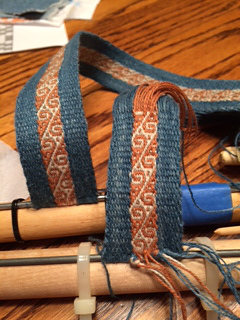
discontinuous warp finishedAs it turns out, it worked! My estimates had told me that it wouldn’t, which only goes to show you how little control I really had over it and how much depended in the end on pure luck. The terracotta wool is rather streaky. The ties were too tight on the skein when it was dyed. I am okay with the resulting rustic look. It goes with other defects such as the change in tone when I ran out of white weft and had to use terracotta. It has been a fun experiment.

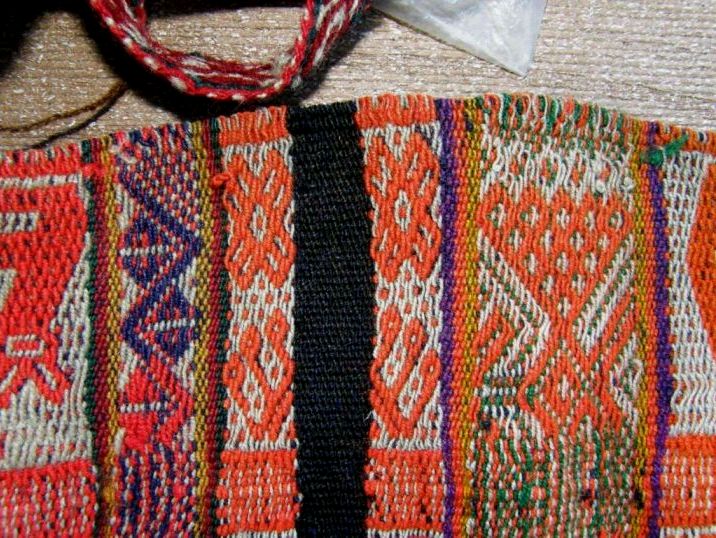
??????????????????????Bolivian and Peruvian weavers, as far as I have seen, never bother to try and match up their patterns in this way on four-selvedge pieces. My tiny motif is nothing compared to the complex patterns that they generally weave into their pieces. A typical finish on a complementary-warp piece looks like this….(this piece is from Calcha, Bolivia)

??????????????????????The weaver  abandons the pick-up pattern and uses the two basic sheds, in this case, one in each color, to close the gap. The last few weft passes create horizontal bars. That small piece of plain weave  comes out wider than the warp-float patterned areas.

Supplementary-warp patterning requires less space in which to maneuver as the weaver does not need to create a picking cross. He or she simply reaches down with fingers or stick to the lower layer of threads and picks up the warps that are needed for the pattern while dropping others from the top layer. As I showed you last week, some weavers who use this structure weave the design uninterrupted right to the very end of the piece and abandon it to the basic sheds only for the last three or four weft passes (the example below is from Pitumarca, Peru).

finishing-backstrap-weavings

terminal-areasThis piece from the Cusco region of Peru has both supplementary and complementary-warp patterns and the weaver has chosen to end all in the same way and place.

Double weave is something else again! My teacher in Potosi showed me when to abandon the pick-up and start using the two basic sheds, each with double the amount of threads for the two layers of cloth now being squeezed into a single layer. The needle-weaving part was horrendous! Here you can see my dear teacher Hilda, poor eyesight and all, showing me the final steps….

hilda finsihing a pieceSo, my terracotta piece was taken off the loom and I was ready to weave and attach the tubular band . I had created a warp for a tubular band for another piece that I had woven a few weeks ago and had decided not to use it. Although I think that a band with a dark brown base would have suited this piece a lot better, I simply didn’t have any suitable dark brown wool. This was the next best thing.

??????????????????????First, a wee sample…I had lots of this warp which had been originally planned for a much larger piece so I was able to weave an independent band and lay it along the edge to see if the colors really did suit. As you know, a tubular band is generally woven and sewn to the cloth at the same time using the weft as the sewing thread. I have a tutorial on that here.

tubular band on ticlla pieceIt’s done, and that heralds the end of the summer wool adventure. I learned a lot and have three study pieces to remind me of that.

woolstudy pieces four selvedge and ticllaNow it is time to get on with other things.

I have ideas swirling in my head about my next piece in the wall hanging series. When I finally have something to show you, you will see that the word “swirl” is very appropriate for describing the design on which I am working.

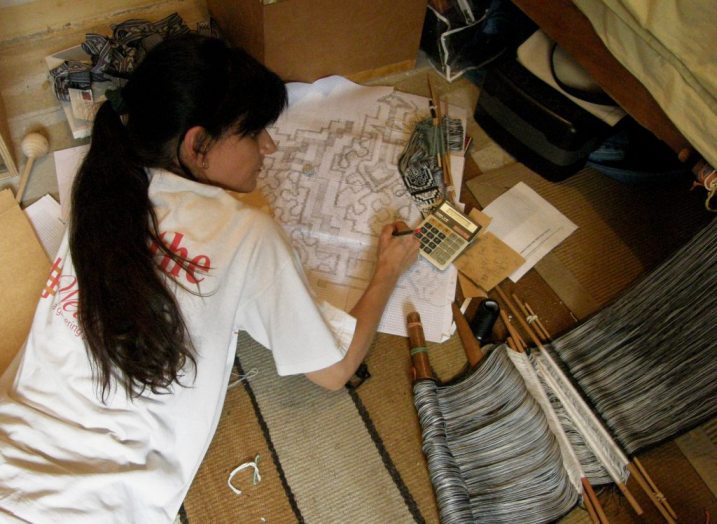
As is my custom, I am belly down on the floor with charting paper and pencil and a small mountain of accumulated eraser dust. They say that the third time is the charm. Not so. I go to bed thinking that I have everything in place but then wake up next day to see that something very obvious needs changing. I am weaving samples as I go which is a good thing as many of the needed changes that were not so obvious on paper scream at me from the woven fabric!

I plan to weave this fifth wall hanging in three panels and join them with weft twining just as I did for hanging number four. With this piece I hope to represent techniques and design influences from  tropical lowland regions of Peru.

Nora Rogers experimentThis study piece of a wristlet woven by the Mayoruna people of Amazonian Peru,  made by the late Nora Rogers, will help me design the red side panels.

shipibo wristletsI won’t be using the traditional type of loom, though! All those tiny sticks hold the pattern sheds. The weaver picks up the threads for a pattern shed, passes the weft, inserts a stick and stores it at the end of the warp. He/she continues doing this for every shed. I tried to count the sticks on the above piece and got at least sixty. When the weaver reaches the mid-way point of the pattern he/she can then satrt drawing the sticks forward to open the shed, pass the weft and then discard the stick. The next stick in sequence is then drawn forward and so on until all sticks have been removed. Then the process of inserting the sticks starts again. 

I can’t wait to get started but I want to finish charting the pattern for the center black and white panel first.

Here is my sampling warp in black and white….

???????????????????????????????I told you a few weeks ago that I was seeing swirly patterns in my wool warp as I stared down at the lines of warp threads. Those swirly lines are what have led me to this latest project idea and, funnily, also led a friend of mine to write and ask me if I was suffering from some kind of medical condition! Now I stare down at the warp lines in this new sample and, as I open the shed and clear it down to the weaving line, I see ikat-like patterns. I am wondering if this is trying to offer up clues to me as to why warps shift in different ways while weaving (despite your best efforts to stop them!) causing ikat patterns to develop their characteristic feathered effect.  

Team Backstrap is starting its weave-along in the Ravelry Group tomorrow as the Sochi Winter Games commence. I have something in mind to make with a sports theme but we will have to see if I can get out to buy the yarn tomorrow. So far, I know that Jennifer is planning to weave a strap for a bag and Julia has something planned with a colorful Guatemalan theme. She was given some 10/2 thread in many colors which she used in this wall hanging…

julia bhutan intermeshThe motif was inspired by designs from Bhutan which you can find in David K Barker’s free downloadable pattern books. Check my RESOURCES page for the links. I love everything about this….the gradation of colors which border the pattern which she also cleverly used in the weft twining. She used the intermesh structure for both the solid and patterned areas. Those of you who have my Andean Pebble Weave book will know the intermesh structure described there in the section on thick borders. I teach intermesh as a patterning technique in my second book. I like the neat braided ends of Julia’s weft twining. I usually leave mine in a state of wildness.

And to finish, as I have been talking about luck in this post, here are two people who have had extraordinary luck rummaging about at thrift stores and garage sales in California….

1157544_10203147433553344_313383261_nMy friend Yonat posted this to one of the finger-weaving groups on Facebook in order to be able to identify it for the friend who had picked it up at a garage sale in the seventies. It caused high excitment in that group, I can tell you! One of the experts thinks that it was probably made during the period of Standardization from 1830-1850 and, because of the pink thread that has been used, was most likely made in the region of Lanaudière. What a treasure!

I am so thankful to Lausanne and Brian who took me to Quebec last fall to meet two sash weavers in L’Assomption.

And then, a Facebook acquaintance showed me a lucky find in a flea market in Pasadena in 2001….

huichol otomi bandIsn’t that gorgeous?! The Huichol, Cora and Otomi people of Mexico weave these kinds of pieces using a balanced double-weave pick-up structure. From internet sources alone, it is not yet clear to me which motifs in particular belong to which group or if the same motifs are woven by all. After only being able to look at examples online, I would love to touch and handle this belt! I used examples of Huichol and Otomi work that I had found online as well as a surprsingly similar motif from Scandinavia to weave the piece below. It is exciting to be able to see what looks like an old piece in such fine condition. 

huichol otomoi inspired backstrap weavingThat’s all for this week. Here’s wishing you all lashings of good luck in your projects this week!