Backstrap Weaving – Highland Holiday

From the town of Quillacollo just outside Cochabamba city we head straight for the mountains and in under an hour we had zig-zagged our way up to around 3700m leaving the city of Cochabamba a mere blur in the distance on the valley floor.
How such a wickedly steep street can look so mild in this photo is beyond me!
These rocky streets in town become slippery with mud after rain but dry up miraculously quickly.
Charqui (jerky) on the washing line in the patio in front of a nice view across the valley.
I mashed overripe bananas with Maxima and little Mayra for the indigo dye bath.
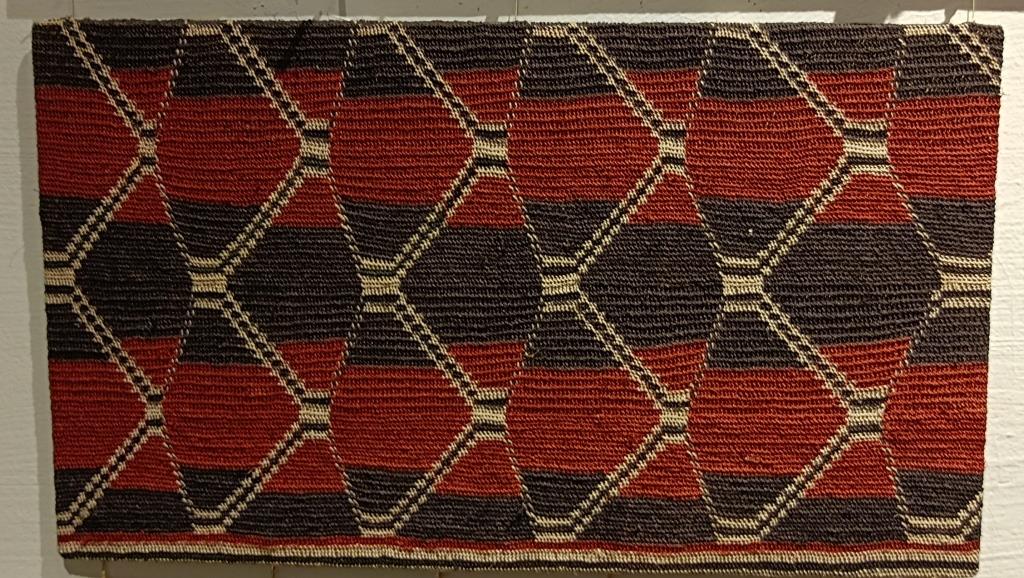
Maxima and daughter, Vilma, showing off the aguayo (carrying cloth) Maxima wove for a custom order from the USA. Indigo-dyed yarn from the first attempt can be seen in the stripes. This cloth is gorgeous! The colors are so rich and Maxima has included a stunning variety of figures. It’s all Maxima’s work except for the tubular edging.
A close-up view of a small section of the center of the aguayo where you can see some of the indigo-dyed yarn in the decorative joining stitch.
We made skeins. I’d never made skeins just on my hands before and was happy not to have mine end up in a tangled mess. The singles yarn immediately kinks back on itself when not under tension and can make things difficult to control.
Immersing skeins in the indigo dye pot with Dorinda, granddaughter Emily and little Mayra always there in the mix. We wore gloves but still managed to get the dye on places where it didn’t belong.
First results once again against that lovely backdrop. One of those skeins became mine 🙂
On the following days, Maxima continued experimenting on her own and tried over-dyeing some naturally-dyed yellow to produce that pretty green.
And yet more on another day. This time over-dyeing a cochineal-dyed skein.
Plying all this yarn will keep me busy for a while. As if I need even more stuff to lug back to Australia but who in their right mind could resist?
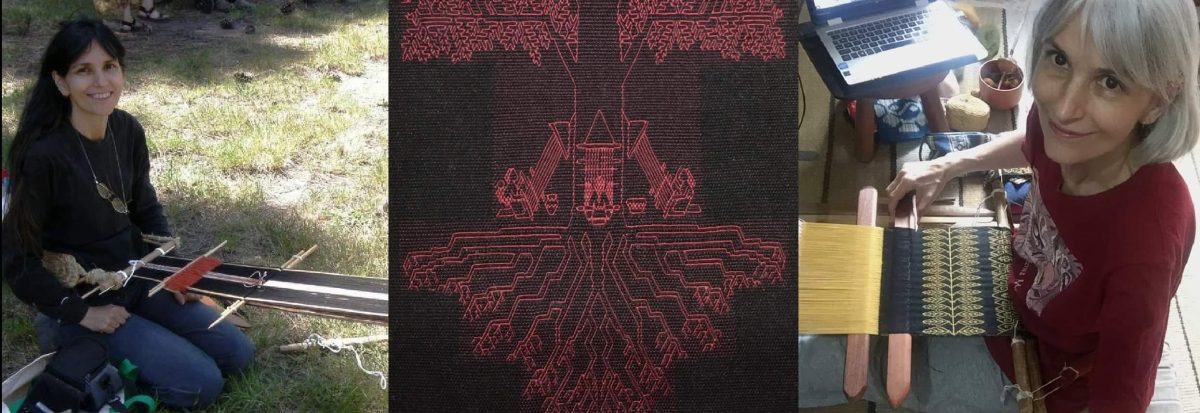
Back in 2017 I went to Huancarani and can be seen here with that long dark hair guiding Maxima’s sister Narciza through the steps to weaving a pattern from my More Adventures with warp-faced Pick-up Patterns book. It’s a motif from a Central Asian textile that I had adapted to the structure that I call Andean Pebble Weave. It had caught Narciza’s eye and she was keen to learn it and not let me go until she had conquered one repeat.
We just managed to get through one repeat before it was time to leave and I left wondering if she would ever use the pattern. I did leave behind a woven sample just in case.
Maxima and a group of weavers are seen here studying and discussing images in the book shortly after my visit.
It’s a belt that she wove for daughter, Vilma, to wear on festival days. It’s woven in the bright tightly twisted acrylic yarn that the weavers here love to use.
The ladies love to be able to show off “new” patterns in items they use for special occasions.
Maxima preparing a cotton warp for our first session together. The end of the warp is temporarily tucked into the waistband of her skirt while she uses two hands to make heddles, Later the end will be suspended on her index finger. Anything that happens to be lying close by such as this comb can be called into use to hold the cross.
Starting with a little plain pebble weave.
Meanwhile Mayra and Ana who seem to see all forms of household chores as play, were happily washing their toys. At one point I saw them playing chop-the-head-off-the-chicken-for-the-pot with the cat!
Starting with a fresh warp of respun acrylic thread for wider, more complicated patterns.
The young ladies on this morning were on chicken duty…..that is, keeping the chickens from wandering from the yard into the kitchen.
One of the four running-horse patterns that creator Deanna Johnson calls Elmy’s Mustangs, is almost complete.
She also selected the viscacha pattern from my book. I’d charted that pattern from a fragment of pre-columbian cloth that I’d seen online. I’d been able to track down the owner of the fragment and get him to send me close-ups so that I could decipher it.
This is what I was doing in the evenings to entertain myself. I was using Alison Irwin’s idea for weaving letters in the structure that I call Andean Pebble Weave to make a key fob for the lady who ran the hotel in which I was staying. Inti means sun in the Quechua language and Wasi means house.
I think she liked it!
Squeezed onto the balcony of the hotel, I showed the ladies any woven thing that I happened to have. Here they’re examining my double weave belt with its Bedouin patterns which are completely foreign to them.
I brought out my cotton spinning bag and everyone fell in love with the tiny takli spindle and wanted to take it home. Only Justina was “brave” enough to try spinning cotton with it and she did a great job.
Gathered the next day in Vilma’s sewing workshop with Justina deciding that she had enough time to teach me if I could bring some yarn. So, out came the crochet cotton again to the rescue…not ideal, but good enough for learning.
Creating a fresh ñawi awapa warp while Maxima went out to look for a forked twig to use. It holds the cross….more about that later. On the floor you can see another stick that is used to save one of the picked-up sheds for later use. The weavers here call this stick “el muchacho“.
Justina guiding me. Yes, I learned it! Maxima and Vilma looked on. I wonder if Maxima absorbed enough by watching to be able to do it on her own. Wouldn’t surprise me. I offered to let her sit in my place and try but she declined.
When I got home of course I had to weave one straight away. I still have lengths of fabric that I bought from the ladies back in 2019 and I used some of Verna’s cloth to make a little pouch that I could edge using the Huancarani set-up and color-changing method.
A closer look. You can see that the color arrangement in the tube along the base of the pouch is different from that along the side. This is a much nicer photo of the beautiful natural dye colors used by the ladies in these textiles. I used commercial wool from my workshop stash for the edging.
Got my nose burned on day one in the high altitude sun and so did not go out hatless ever again after that.
We all got filthy. The quiet sleepy group of passengers up to this point turned into a happy chatty group after successfully getting the van out of the mud and back on its way. How was I going to get on a plane with my feet in this filthy state? Never mind, there were flooded streets to walk through further along once we hit the outskirts of town and had to get out and walk due to the roadblocks. Feet were squeaky clean by the time I got to the airport.
The top left bunch of thread was dyed in the indigo pot. At bottom right you can see a tiny pouch I made using the Dosapey pattern. That tiny bag holds a tiny booklet and mini pencil. Now to decide how to combine colors in a new project. Roció, my Ayoreo teacher, contacted me for a class while I was away. I’ll have to let her know that I’m back.
This is the start of a larger Dosapey pattern that I finished just before traveling to Independencia. I dyed the black for this project.
I just had enough garabatá thread to create one face of a pouch. I wove the other face in cotton and sewed the two together. This pouch held my passport, tickets and money purse and went with me on the trip. I used the edging stitch used by the Weenhayek artisans along the top.
Using the Moisy technique which is one of the two pick-up patterning structures that the Guaraní weavers use. I set this up all ready to go before I left on the highland holiday.

Backstrap Weaving – Mind Blown

An example of the Bromelia Hieronymil plant from which the fibers with the local name garabatá are extracted.
Chatting with one of the ladies representing the Ayoreo people and their work at the International Folk Art Market in Santa Fe, New Mexico many years ago. The group has been invited many times to attend the Market.
An example of one of the bags on display at the Arte Campo Museum here in Santa Cruz where I live.
The three pieces that I had owned.
First I explored the museum and took notes and photos, dreaming of the wonderful patterns I was going to be able to create.
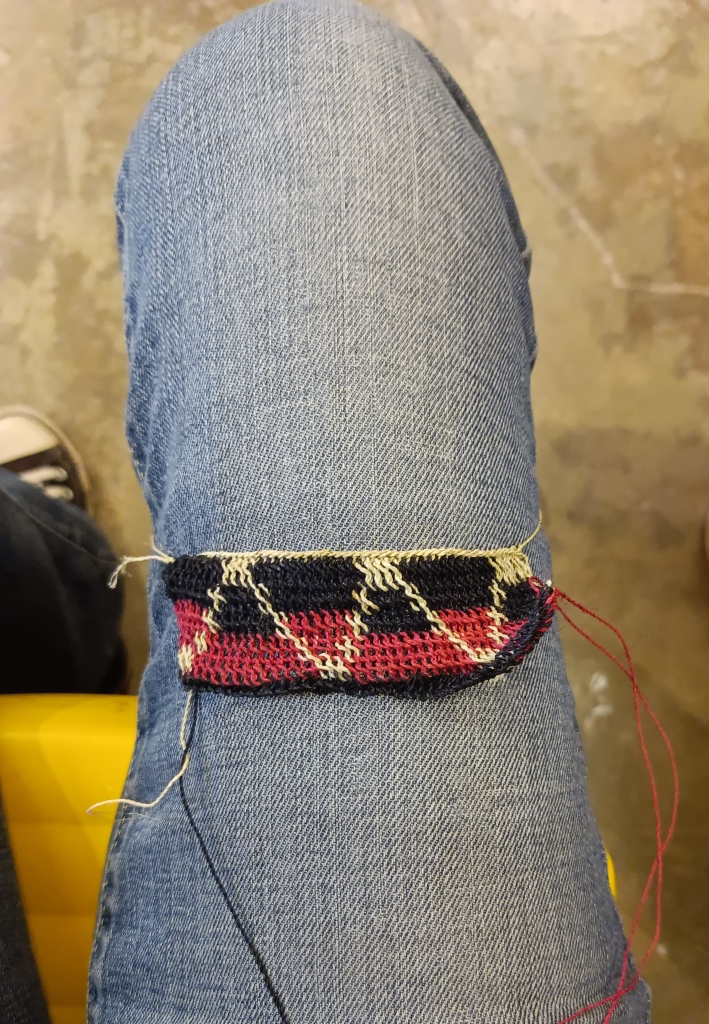
The pieces are worked while tied to the leg. Luckily I had chosen not to wear a skirt that day which is my usual attire in the tropical heat.
The younger ones reviewing footage on phones and iPads.
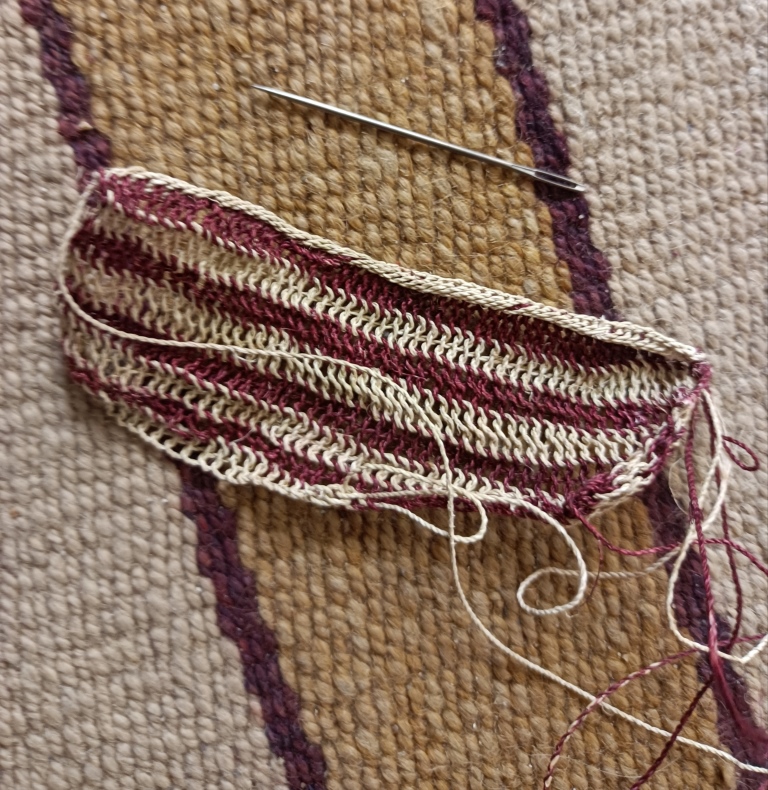
You can see my squashed and uneven brown row and then my much nicer white one in progress.
And now you can all get a closer look at it. Perhaps you’ll find that you already know how to do it.

Was I equally enthralled when I bought those three pieces twenty-four years ago? I wasn’t. I certainly admired them but then eventually gave them away. The difference has been having just that tiny introduction to the technique and that tiny amount of interaction with Teresa, our teacher.

Here again is the young lady I met in Santa Fe showing how she twists and plies the fiber. Of course, looking back at this photo now, my eye is captured by her wrist cuff.

Backstrap Weaving – Star Gazing

Every night when no one is around I go up onto the terrace of my condo block and walk about star gazing for half an hour or so. It’s a peaceful, quite extensive space that covers the top of eight apartments. I don’t need to wear a mask up there and in spite of the light pollution from the inner city area in which I live, I can enjoy looking at some of the stars and planets while getting in some stretches and exercise. The air is fresh after a steamy summer’s day and I often wish that I could string up a hammock and sleep up there.

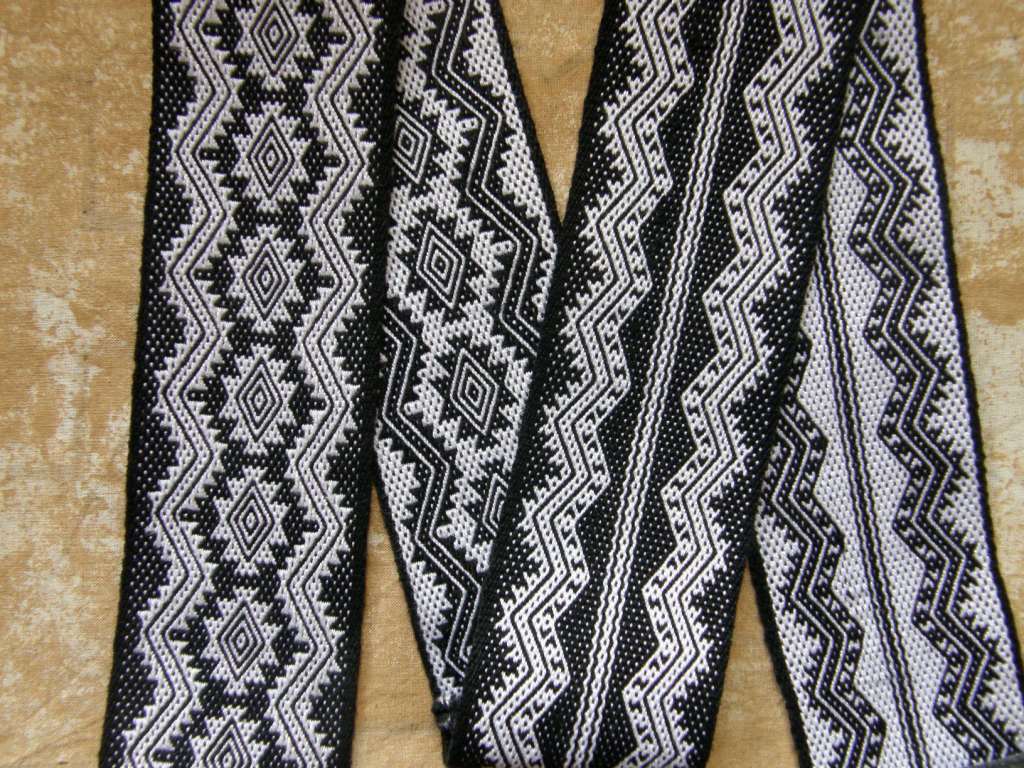
I remember one of the few times I was able to enjoy a night sky that was completely devoid of man-made light. It inspired me to weave stars into what I call my ‘Starry Night” wall hanging. I remember stepping outside my little room on Taquile Island on Lake Titicaca in Peru to go to the bathroom on a clear and bitterly cold night and being stunned and almost knocked over by the brilliance and abundance of the stars in the black, black sky over that dark, silent island. Kurt Laitenberger wove this motif with tablets and and I asked his permission to transpose it into the Andean Pebble Weave structure.

It’s interesting that it was this very same motif that caught my teacher Maxima’s eye the last time I was with her up in the highlands. I had taken many woven samples to show the ladies in the weaving cooperative and Maxima had chosen this one. Her first attempt to copy it on her own was not successful. Actually, she had started out very well but suddenly got stumped and stopped. She asked if she could watch me weave it so that she could learn. 

This image has an empty alt attribute; its file name is with-max-at-leaning-loom.jpg

I wove one motif and that was enough. Maxima was then able to continue just by following my woven example.

This image has an empty alt attribute; its file name is maxima-star-band-central-boloivian-highlands.jpg

Up on the terrace In these early months of 2022, it’s been nice greeting Orion on its return to the 8pm night sky on my side of the world and I am currently waiting on the Southern Cross to complete its circle low in the south and once more climb high enough to reveal itself above the light pollution and buildings.

An invitation in one of the online weaving groups to show-and-share star patterns prompted me to write this post. I actually wrote about this same topic about ten years ago but there has been quite a lot to add to it since then. Back then, I was able to share the Andean Pebble Weave strap on which I combined motifs woven by the Guaraní people here in the lowland part of Bolivia in which I live…

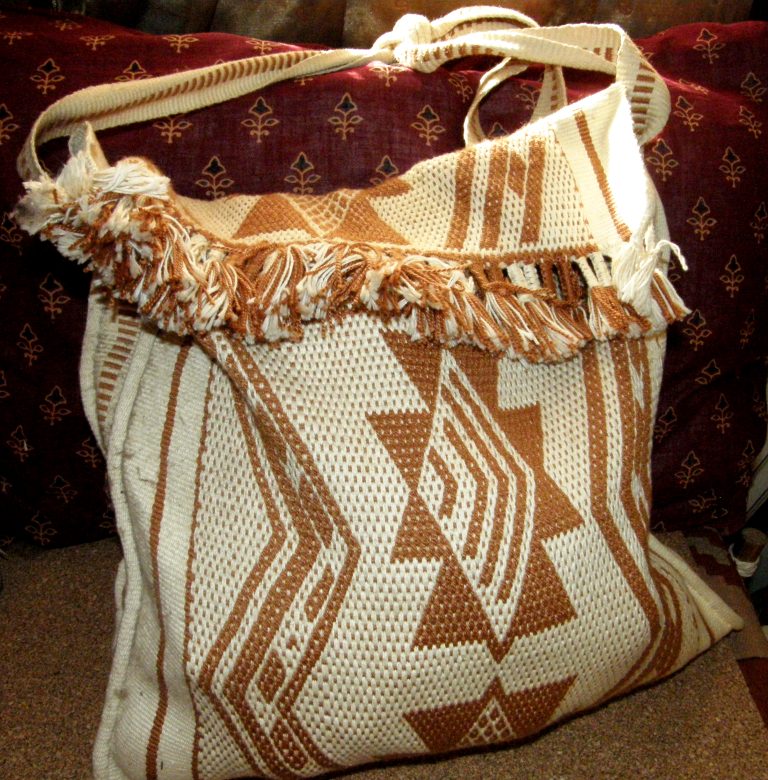
The Guaraní weavers use two types of complementary-warp structures in their cotton cloth. In the structure that they call Moisy, they represent all the natural beauty of their surroundings in large, bold renditions of trees, butterflies, birds, plants and flowers. However, in the pebble structure that I used above, they only ever weave two motifs – a snake and stars –  and there are an endless number of versions of these two items. You can see one such version on the woven bag.

My teacher told me that it was a snake that came to the first weaver in her dreams to teach her the patterns. The Guaraní people who live along the Parapetí River here in Santa Cruz also use the snake motif to represent that life-giving water. The stars are important guides in their agricultural cycle.

I found a story translated from Guaraní to Spanish in a book published by Artecampo, which is a craft cooperative store here in Santa Cruz, about a legend behind the use of the star motifs in Guaraní weaving…..it says that…

One day the children were taken and placed  like stars in the heavens and this is why women cry out about stars in their weaving. The stars not only speak of the sky but also about the richness of nature because one woman, in an attempt to stop her child from being taken, grabbed hold of a finger (or toe, it is not clear in the Spanish translation which). As she pulled on the finger, unfortunately, a piece broke off and this piece was buried. From the burial of this piece a corn plant sprouted. In this way, weaving symbolizes abundance which comes from the piece of the child. And this is why food crops are not only considered elements that feed and sustain men, they are part of Man himself just as the stars are part of Man and Society. Songs name those who are living in the sky and those that sing wear woven cloth to show that they are still with them even though they are distant.

Dionicia added these stars to her pattern repertoire after my visit. She wove them into a bench cover that she sells locally. Being able to include a “novel” pattern gives her a little advantage over other weavers who might also be selling their woven bench covers. 

This image has an empty alt attribute; its file name is dioniciac-1.jpg

The star patterns above are charted in my book More Andean Pebble Weave Patterns. And, speaking of the ladies up in the highlands, Dorinda has just written a new blog post on her most recent visit now that she is back home in the States. Dorinda had been away in the USA for going on two years and I can only imagine the happy reunion when she visited in November. 

In the Bolivian highlands, stars are woven into cloth by the weavers of the community of Tinkipaya. According to Veronica Cereceda in her book which catalogs the designs on these textiles, these ch’askas, stars, are a representation of the world above known as janaq pacha.

The small band in cotton that I wove to test the pattern is pictured above with a couple of wooden tools I got in a market in Potosi, the province in which Tinkipaya is located. I was told that the tool on the left is used to push down the warps behind the heddle rod when the weaver is opening the heddle shed. I have never seen a weaver actually use one of these and I have never seen another one like it. The one I have has a red stain on it and I like to think that it might be cochineal from one day when its owner was preparing to dye. The other tool, of which you can only see the tip, is used for beating and strumming and I have seen tools like this in use in several places in Bolivia and Peru although they are more typically made from a llama leg bone.

The structure used in this piece is yet another style of complementary-warp. The warp floats that surround and fill the star motif are aligned and arranged in a certain way that distinguishes this style from others. Below you can see the same star motifs woven with my hand spun llama fiber into a band that I wear as a wrist cuff. 

This image has an empty alt attribute; its file name is wrist-cuff-in-handspun-llama.jpg

And here it appears yet again in wool on a little bag I made when one of the online groups held an “orange challenge” several years ago.

This image has an empty alt attribute; its file name is 194951393_6181681991845586_2057187051893150363_n_medium.jpg

I published the chart for this pattern in my More Adventures with Warped Faced Pick-up Patterns book and Susan Torntore, one of my new Zoom weaving friends who refreshed her Andean Pebble Weave skills via a Zoom class with me, transposed it into the Andean Pebble Weave structure and then went on to create something like fifteen beautiful variations. Here are a couple of them. She plans to use this band as a bell pull.

This image has an empty alt attribute; its file name is susan-torntore-stars-crop.jpg

The Andean Pebble Weave structure has the advantage of having two regularly repeating rows which can be produced automatically by enclosing those arrangements of threads in heddles. Some weavers choose to do that because motifs can be woven much faster this way. Others prefer not to fuss with heddles and weave the patterns using pick-up for every row. In the structure used for the traditional Tinkipaya pattern, there’s no choice. Each “row” is unique and the threads for each must be picked up manually.

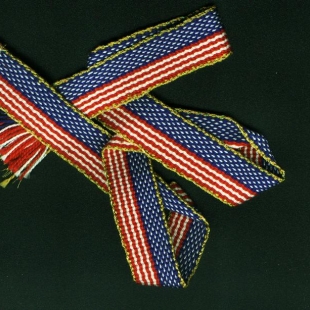
Wikipedia tells me that the stars on the flag of the United States represent the fifty States in the Union. Well, I knew that. I was hoping to find out why exactly stars had been chosen as opposed to some other figure but I guess there doesn’t have to be a reason. I am sure that we could all come up with some kind of symbolic meaning for a star. I swear that some of the indigenous weavers with whom I have studied have made up things about the motifs they are using just to please or else have a bit of fun with me…I have seen the twinkle in their eyes and the way they look sideways at each other!

Gail wove this very patriotic collar for her dog on her inkle loom many years ago and I have seen this pattern and variations of it show up in the various online Inkle Loom groups many times over the years around the fourth of July. Gail was forever coming up with clever collar designs for what must have been the best-dressed dog in New York.

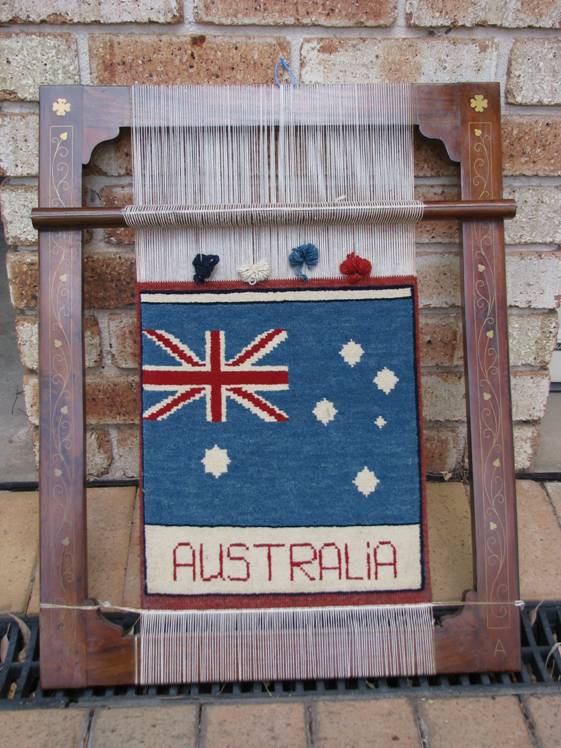
Speaking of flags and patriotic weaving, I assume that the next starry piece was made by someone who is proud to be Australian. I have this very cool cut-pile weaving of a representation of the design on the Australian flag…

The group of stars is the Southern Cross constellation which really is a sight to behold there in the southern sky. I am so happy to be able to see it low on the Bolivian horizon and it makes me feel somehow connected to Australia and  the people I know and love so far away. It is little wonder we so love stars and choose to use them in our cloth.

The large single star, which should only have seven points, represents the Nation’s seven states and territories. This cut pile piece on its beautiful frame is gorgeously dense and I would love to meet its creator.

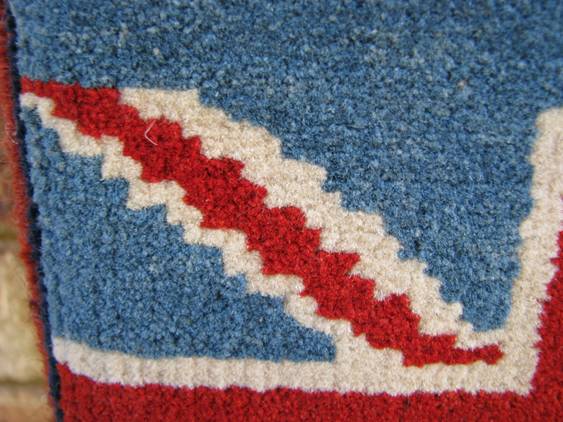
It was given to my brother as compensation from the Indian owner of a furniture store who went out of business before he could supply all the chairs for my brother’s dining room setting. My brother then gave it to me. One day I will track down this furniture maker and see if I can talk to him about this weaving technique.

I don’t know if the weaver intended to continue with the design. There is so little space at this point and the tension on the warp is so high I can hardly imagine being able to do so.

There are a lot of representations of stars in Andean weaving. I took one small motif  and combined it with others to make the guitar strap below in colors reminiscent of the desert and canyons of the US southwest… a winding river, moon and stars. It took me back to clear, warm nights camping in the depths of Utah canyons with nothing between me and the stars. Moonlight bounced of red canyon walls and dozens of frogs singing away at the water’s edge. These were other precious occasions on which I could star gaze without man-made light pollution.

Combining several small motifs in this way is a nice stepping stone toward designing your own unique patterns. I teach the Andean Pebble Weave technique for those who use a standard inkle loom in my book Andean Pebble Weave on Inkle Looms which you can buy as a PDF or as a spiral-bound book from Taproot Video.

And then there are many motifs that look like stars to our eyes but which and perhaps represent something else all together. Maybe one day I will find out what exactly they mean to the weaver. There’s what I believe to be an Andean ch’aska  in Andean Pebble Weave on the left. In the center are the star-like motifs that I replicated from Central Asian yurt bands. A motif on a belt from Ecuador is on the right. Its star-like motif is woven using supplementary warp threads.

I chose a star motif for my first ever attempt at using 60/2 silk as warp on my backstrap loom. The motif did not have any symbolic significance to me. I simply needed to use something that was smooth-sided and symmetric. This was because I wanted to use a supplementary-weft technique in which the additional weft is not carried from selvedge to selvedge. I didn’t want the supplemental weft to thicken the cloth and so I used a technique in which the weft just travels back and forth from edge to edge of the motif itself. This only looks nice, in my opinion, when regular rather than irregular shapes are used. So, who knows why certain motifs ae chosen by weavers? It could be for what they symbolize or the choice could also just as easily be for purely practical reasons, as was the case in my silk piece.

There aren’t any stars on my current three-color Andean Pebble Weave piece. It’s all about flowers and hummingbirds. If you have been following me on Instagram (I go by my name: lavernewaddington there) you will have seen some of my progress. At some point I unconsciously stopped being concerned about my hand-spun wool being up to the challenge and have been simply enjoying how lovely it feels instead. But for now, I will stick with the Starry topic and wait to show you more of my three-color pebble in my next post here on this blog.

Let me finish by showing you some beautiful creations that were shared with me by another new Zoom weaving friend, Laurice Johnson. She has converted her pretty inkle-loom-woven bands into these gorgeous star ornaments by following online tutorials. There are several tutorials on Youtube for fabric stars that can be used for inkle bands. They are really stunning. My friend Jennifer Williams also has a tutorial on her blog for a different kind of star made from narrow bands.

I’ll be heading upstairs soon for another night of star gazing. See you next time.

Backstrap Weaving – A New Year and a New E-Book!

Happy New Year to all of you! I usually let December 31st slip on by but this time it was a little different because it marked the finish of my latest e-book on the eye-pattern tubular band and other decorative finishing techniques. It really did feel like a big finish and, as the fireworks boomed outside (we tend to only have the noisy ones here and not so many of the pretties), I almost felt as if they were cheering for me. I guess the end-of-year means something different for each and every one of us. This is what it meant to me at that very moment, and on and off until 2am! There are no official public displays of fireworks. People buy them in the market and let them off in their back yards. It can go on all night!

So….about the e-book. You may know this pretty eye-pattern tubular band by its Quechua name, ñawi awapa. I have seen it woven in various places across the highlands of Peru and Bolivia. Because I know of at least one other local name that is used for it, I decided to simply call it the eye-pattern band in my book.

Weaving the eye-pattern tubular band in the central Bolivian highlands.

I have been happily applying it to my small woven pieces ever since I learned it. The novelty of seeing those little eyes appearing along the band never wears off! Used as an edging, it is the perfect finish to my woven pieces. In the highlands it is used for both decorative and practical reasons as it protects the edges of the fabric which are often the first parts to wear out.

Here’s my latest finished project using a simple two-color eye-pattern band as the edging on my Andean Pebble Weave wrist-cuff .

The tubular  band is woven and sewn simultaneously to the perimeter of the cuff using the weft as the sewing thread.

When I was learning to weave a coca-leaf bag with my teachers in Bolivia in 1997, I realized that removing the cloth from the loom did not mean the end of the project. It actually signaled the beginning of a whole new process that involved embellishing the piece with various decorative finishes. I saw that the eye pattern has different levels of complexity in different regions and that the methods used to create it can also vary. These kinds of similarities and differences have always fascinated me.

And, I have since learned that the eye-pattern tubular band is fun to weave on its own rather than purely as an edging. It makes lovely necklaces on which to hang pendants, sweet bracelets and bangles, and can be used in a variety of ways in accessories….fobs for keys and tools, lanyards, eye-glass holders, shoe laces, straps and drawstrings…. From my own experiments, I show you how to create straight, curved and spiraled versions of the tubular bands. They all have their particular charm!

One of the many fun things about this pattern is that you can make it as subdued or as lively as you like. I am generally limited to using only two colors at once in a pattern when I do most of my basic pick-up weaving techniques. The eye-pattern band allows you to use up to five or even more colors in the pattern. My favorite combination is usually with only three but you can make them as colorful as you like!


The traditional way to weave these tubular bands is by having the narrow warp attached to the weaver’s waist or belt with a piece of string. String heddles are not used at all and so the weaver’s body is simply suspending the warp. The weaver is not required to move the body back and forth to add or relax tension on the warp to help operate the heddles.

You should at least be familiar with weaving terminology…warp, weft, beat, shed etc…before you approach this.

Because heddles are not used at all to create the sheds, the warp can be easily set up and woven using an inkle loom or any other loom or frame that allows you to adjust tension for take-up. Full instructions on how to set up and weave the independent band on an inkle loom are included in both versions of the e-book.

Here I am weaving one on my tiny Ashford Inklette.

My e-book is available in two versions. One contains the instructions for weaving the eye-pattern band as an independent tube and then goes on to show how to weave and sew it simultaneously as an edging along the two sides of a project, or around corners, covering all edges.

I used a two-color eye-pattern tubular band to dress up a simple pouch that I made with commercial cotton fabric. The cross-knit-loop stitch decorates the mouth of the pouch.

Other decorative sewn finishing techniques such as the coil stitch, pictured below, are included with dozens of step-by-step photos as well as drawings.

The other version of the e-book is for those who only want to weave the band as an independent tube, perhaps for using it in jewelry and accessories, and aren’t interested in the sewing techniques. Both books provide ideas, instructions and suggestions for finishing the bands and for using them in such projects.

There are links to both versions in each one’s product description on the Taproot Video page.

And, let me tell you about something new for my e-books……

Both e-books include access to supplemental video clips. These are not stand-alone tutorials. They were designed to allow you to see “in action’’ some of the processes. The techniques are thoroughly explained in the books using over 140 photos, drawings and diagrams and so the videos really are optional supplemental material. With these additional materials I hope to be able to cater to a greater variety of learning styles. I had a lot of fun making those video clips and I am thrilled with them! Links to the videos are provided in the ebooks where they can be viewed and/or downloaded, if you like. They are better viewed after you have read each tutorial. Little video camera symbols in the book will let you know when there is a related video clip to be viewed.

For my left-handed weaving friends, I have included instructions in the Appendix on how to adapt the weaving technique to suit. You will notice that I said for my left-handed weaving friends. I am sorry, but for the sewing techniques in the book, I have left it up to you to adapt.  My left-handed students have always been so awesomely good at doing that in my classes!

I will leave you with this picture of me with one of my teachers, Maxima, spending a tranquil afternoon together. I weave as Maxima sews a decorative edging to a small pouch. The pouch on which she taught me to weave and sew a tubular band, lies on the ground between us. This was on my birthday back in 2011….a lovely way to spend it.

So, I hope that you will enjoy the e-book and I look forward to seeing what you create using it!

I wish you all the best for 2019!

(Hair update, for those who are interested…. I now have a blunt-edged chin-length hair cut with a good five months of grey growth!).


Backstrap Weaving – Inspired by Nature

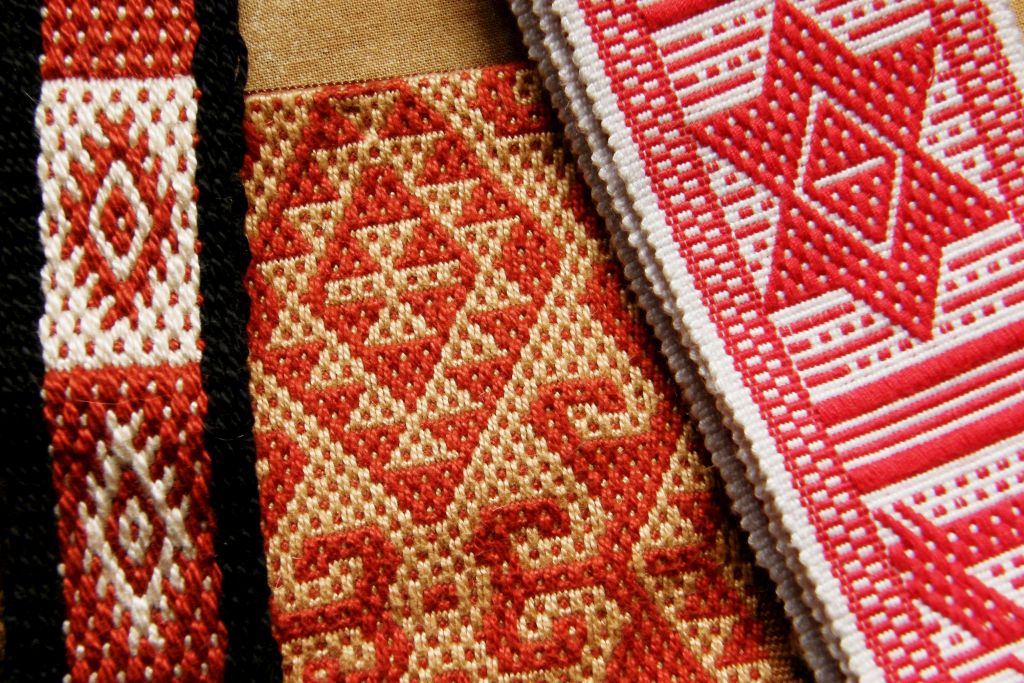
It’s that time of year again. The beautiful bands that I order every year from a group of spinners, dyers and weavers of Cochabamba in the central highlands of Bolivia have arrived….a box of color and rich aromas from the countryside.

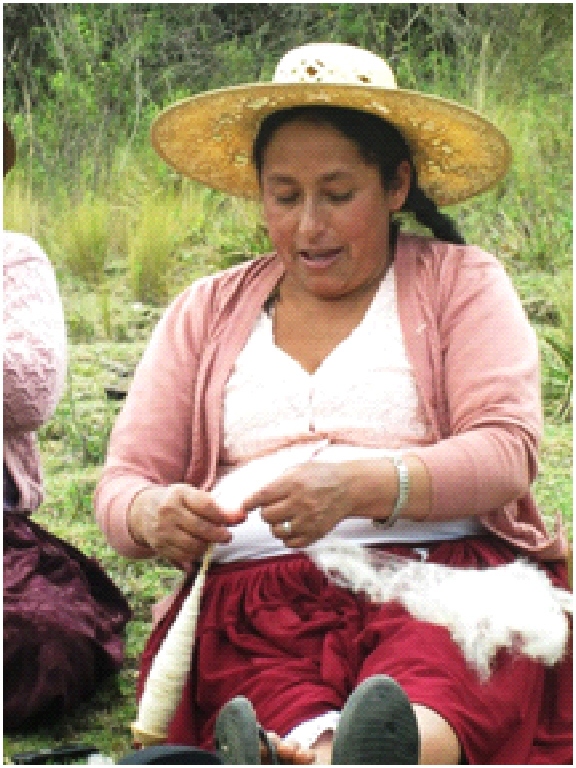
Here are some of the ladies who spend months spinning, plying and dyeing their yarn with plants and cochineal before winding warps and weaving beautiful cloth on their simple leaning vertical looms…

faja weavers

These are also the ladies who are part of the team that took part in the 2014 global spinning event –Spinzilla.

I wonder if some of that Spinzilla thread was used for these bands. Dorinda Dutcher of PAZA Bolivia, lives in Independencia and devotes herself to promoting the recovery and revival of  these fiber and textile skills. She told me that the ladies were overjoyed to have the time of the Spinzilla event to spin, chat and laugh.

maxima It was exactly what they used to do as young teens. They would head out with the family flocks and meet up at a rendezvous point. 

The hottest topic of conversation would be the weaving advances they had made for the creation of their aguayos, the large pieces of cloth worn over the shoulders, that would be shown for the first time at Carnaval.

Because the ladies challenged and competed with each other, it was the time of their finest work. Now their daughters go to school and that particular tradition is no more.

Doña Máxima, at left,  is one of the few weavers whose daughters weave, most of the weavers’ daughters having migrated to the cities.

Here are the bands with all the stunning sun-soaked colors of the Bolivian hghlands…

weaving highland BoliviaI can’t help showing you picture after picture of individual pieces so that you can better see and enjoy the color arrangements. I love seeing how the varying amount of twist in the handspun yarn creates different textures  in the cloth and how each weaver has decided to arrange the colors that she has available from the latest days at the dye pot.

PAZA colors 1


??????????????????????

??????????????????????

??????????????????????

??????????????????????

??????????????????????

???????????????????????????????

??????????????????????All the patterns are Andean Pebble Weave.

And, we have our own talented spinners, dyers and weavers in the Backstrap Weaving Group on Ravelry as well as members who are brilliant at combining colors.

Here’s a cuff that Janet wove made from her own handspun Perendale wool which she dyed with indigo, cochineal and walnut…

janet cuff 2She made a series of wool cuffs and Wendy also showed one that she completed made from variegated cotton thread and finished so neatly with weft  twining…

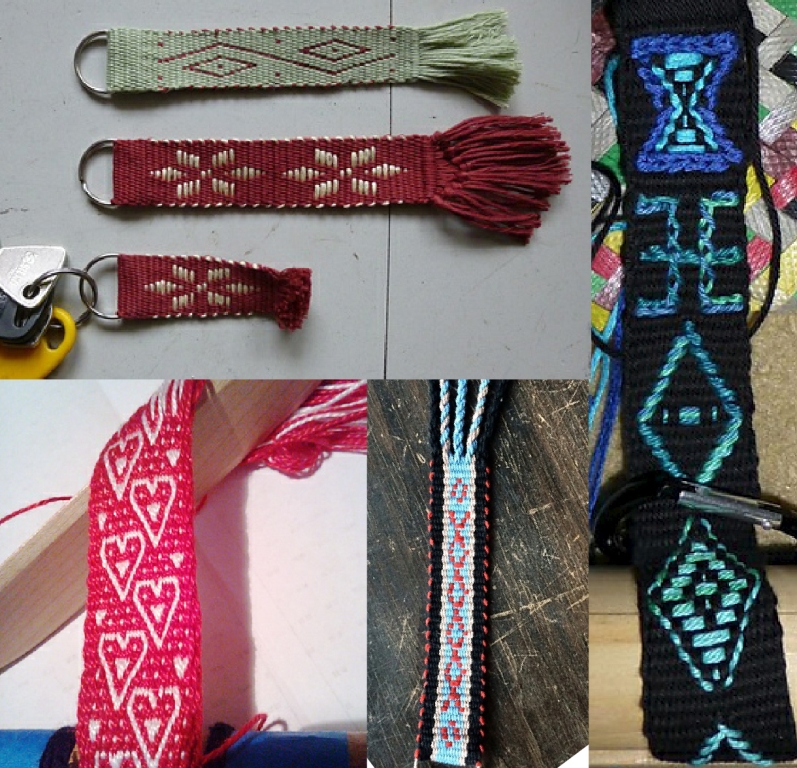
cuffsJulia T in her home in tropical far north Queensland in Australia was inspired by the colors of nature and used fruit to inspire a set of bands for key fobs. She captured the essence of the fruit so well!

???????????????????????????????I contributed something cheery as well….a field of flowery “O” s amongst a lattice of ”X”s…

flowers both sidesCatharina joined our group to share with us her explorations in traditional Estonian patterns in the supplementary-warp structure and our minds have been blown.

llunallamaBut, back to the ky fob WAL which has been chugging along to its one-month anniversary…

pebble fobsJulia T, Arlene and Betsy worked on Andean Pebble Weave bands. After her first sample, Betsy added more twist to her handspun wool and is happier with this latest result. Arlene’s band, with its rope pattern, has an unusual and attractive tapered finish and Julia T used JoAnne’s original cat design along with her own heart composition and a knot work motif from my second book.

plain weaveI love that plain weave continues to be popular inspiring more and more creativity in combs and stripes. What I have dubbed ”Wendy’s Watermelon Warp” (center bottom left) inspired the idea for Julia T’s tropical fruit collection as well as Gwen’s comb combo, above right. WannaGTD wrapped the warp-ends for a neat finish on a her classic band of horizontal bars. The yellow stripes really give it a zing.

mixedSupplemental weft made another appearance in the work of Valtricot, above left, Linda, center bottom, and Wendy, bottom right. Wendy also put to use her considerable skills in Bhutanese supplemental weft technique. Susan celebrated Valentine’s Day with her own composition of hearts in Andean Pebble Weave. I like how she added the small heart spots betwen the large motifs…they really set it off.

sheep combo

??????????????????????I had been reading comments online about confusion in the English-speaking world about what exactly the animal is for this Chinese new year…a sheep, a goat, or…???? At the same time, I spotted Louise Ström’s sweet tablet-woven pouches (above left) with their animal motifs and decided that I would try something similar in Andean Pebble Weave (above center and right). The level of success of my attempt to create sheep will be left for you to decide!

I also played with beads, at left, in a plain-weave comb design band. I lined the edges with beads and popped couple up in the center just to see how they would hold there. I think I would like to use beads in the center of a band to form part of the pattern itself.

My large three-color Andean Pebble Weave/ikat bird  project is moving along at a snail’s pace with the workshop prep and key fob WAL having occupied my attention for the last few weeks.

And now I am going to warp to make covers for some small journals that I would like to take away and give as gifts. One of the key fobs I wove during the WAL will serve as my width sample for the Guatemalan thread that I want to use. I will use patterns inspired by nature…my little leaf motifs that I like so much.

supplementary weft leaf pattern journal cover backstrap weaving