Backstrap Weaving – What Money Can’t Buy

1513230_648143985229230_814686202_nOh, how true, how true! And this message could be a bit melancholic if not for the fact that I can happily say that those “priceless” items that can’t be bought, and which make me very happy, come into my life on a daily basis…not just on Christmas day. 

The priceless items are the opportunities to learn more and more from this hobby of mine about which I am passionate. The opportunities come from near and far…from my own experiments at the loom from which I constantly learn….from weavers here in Bolivia as well as from those on the other side of the world. Sometimes they seek me out and sometimes I just stumble across them via the internet.

While in Australia, I could hardly contain my excitement over a photo of  a backstrap weaver that I ran across online. I patiently waited for a reply from the photographer for permission to show her shot here while boring all the non-weavers around me with news of my find.
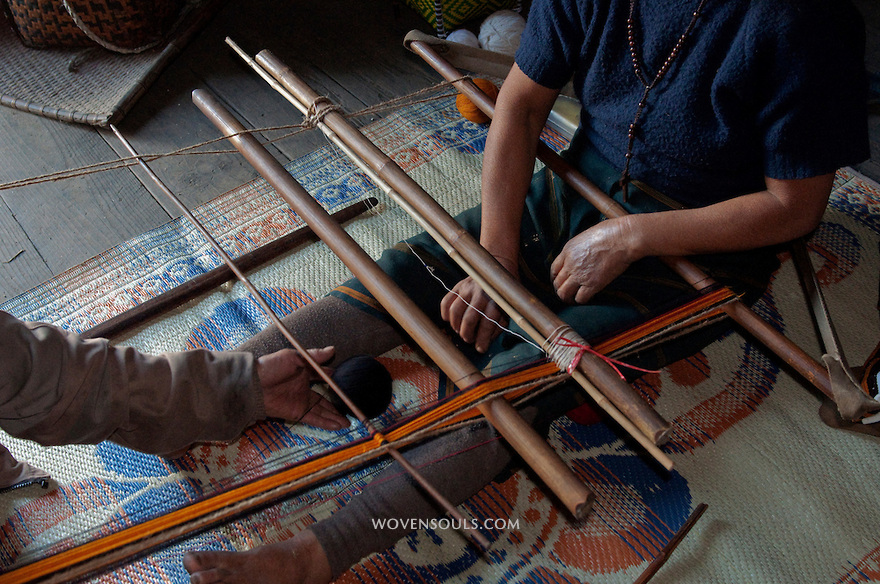
Courtesy Jaina Mishra/Wovensouls

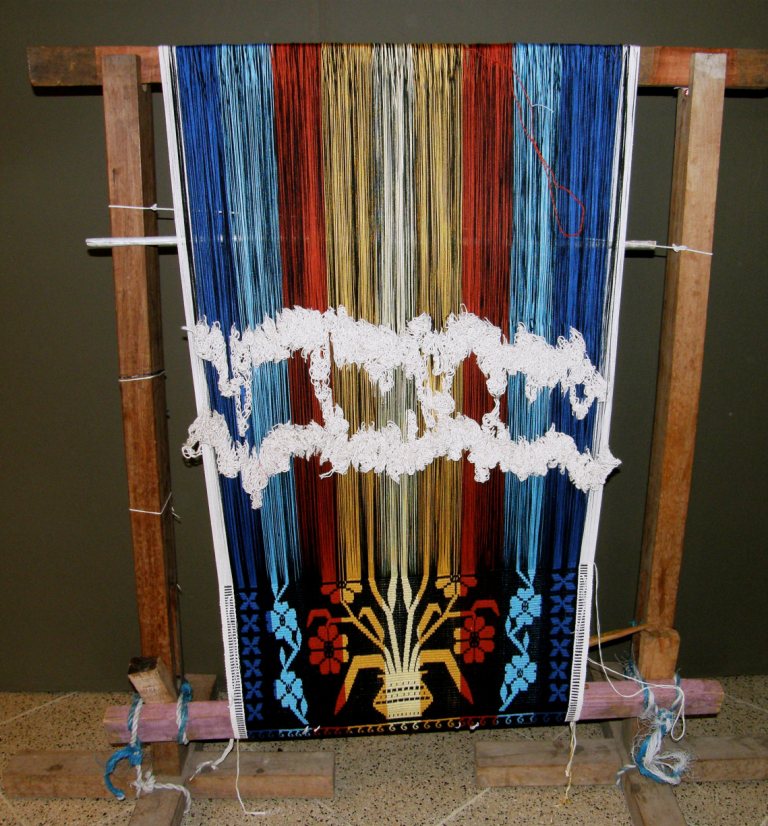
Here is the image which photographer Jaina Mishra has allowed me to show. It shows a backstrap weaver from Arunachal Pradesh in northeast India warping with a partner directly onto her backstrap loom…something that I have never seen before (except for the simple narrow  toe-and-finger method of warping that I have been taught to do by my teachers here in Bolivia and which Maxima is executing below).
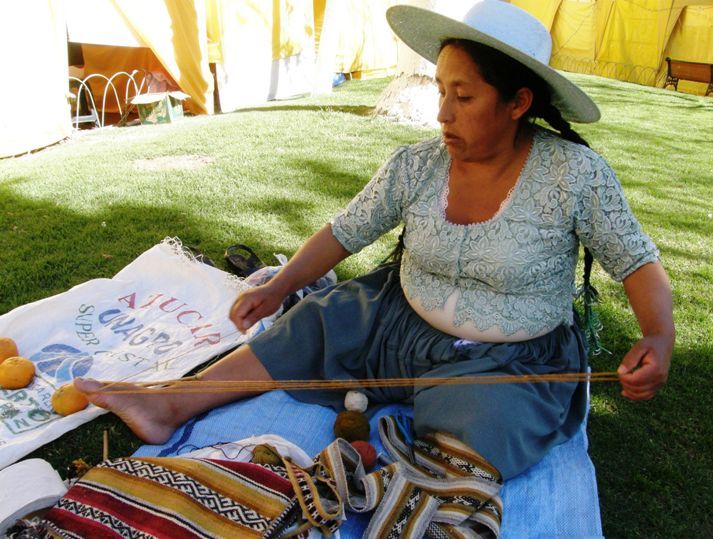
cochabamba-designs

ju-warpingIn the picture from Arunachal Pradesh, the heddles are being installed as the two ladies warp. The thicker of the two sticks at the heddles is being used, as far as I can tell, to ensure that each heddle is the same length.

Creating the heddles while warping is not unusual in Asia. You can see my Montagnard weaving teacher at left with the warp she created on vertical stakes with heddles in place. (Watch a video of my Montagnard weaving teacher doing it on vertical stakes in my blog post here and a video of my explanation here.)

However, I have never seen it being done directly onto the loom with the weaver seated in her backstrap as the ladies in Arunachal Pradesh are doing.

I showed you last week (and here it is again below) a picture of a textile from Arunachal Pradesh that a Facebook friend in India had sent me. I wonder if these ladies are going to be creating something similar.

adi tribe arunachal pradesh nth east indiaThe weaver’s partner is not attached to the warp but is simply sitting within the frame (created by the warp itself on one side and cord on the other to hold everthing square). You can see the position of the weaver’s partner in another picture from Jaina Mishra’s website here. (The website is fascinating and has galleries and galleries of her fabulous pictures.)

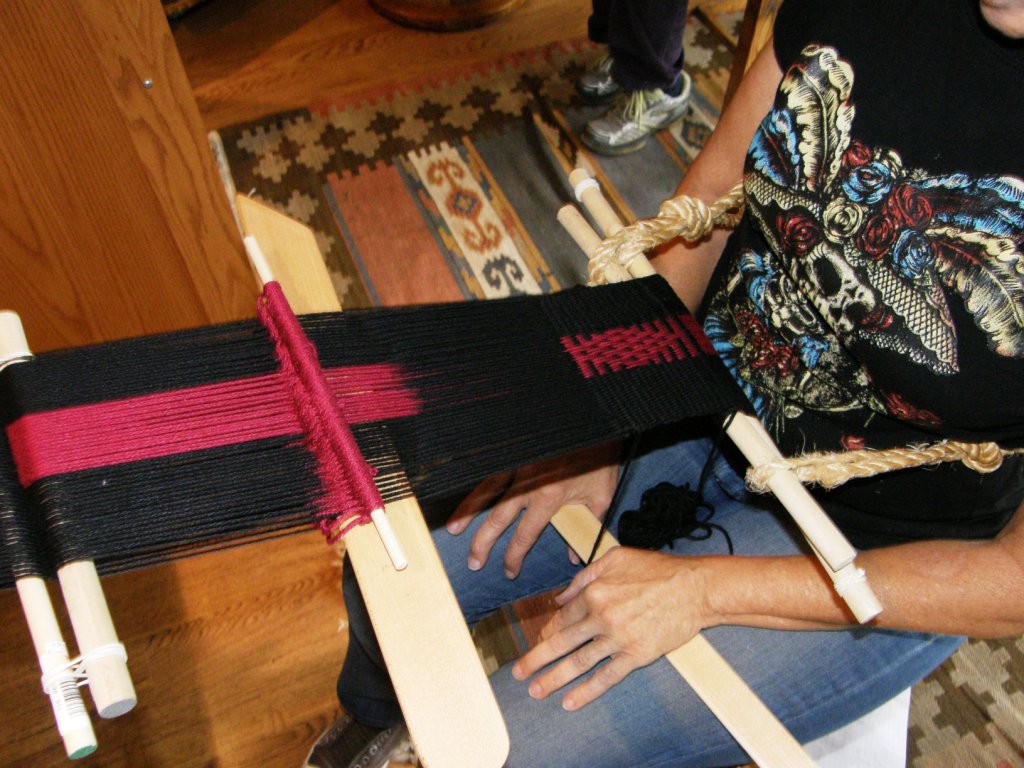
The two ladies sit and pass the ball of yarn back and forth and around the beams and shed rod, while creating the heddles. And they wrap the yarn aound a coil rod! (the farthest stick in the picture from the seated weaver). If you are wondering what in the world a coil rod is, I have written quite a bit about this piece of equipment in other blog posts starting here.

I am particularly excited about the presence of the coil rod as the warp that these ladies are creating is on a single plane. So far, I have only come across a coil rod being used by indigenous backstrap weavers in a circular warp. I used to say that those of us in the Ravelry group who have grown to love the good ol’ coil rod and use one in our single plane warps are being unconventional….maybe  we are not so unconventional after all!

???????????????????????????????Here is a coil rod installed on Montagnard weaver Ju Nie’s circular warp.

???????????????????????????????This is the first circular warp on which I used a coil rod. The lesson I learned from this exercise was that, when using lots of fine warp ends, the coil rod is tough to move once installed…use a thicker stick. It took two disastrous stick breaks for that to sink in! Since that first experience, I have been using a coil rod on most of my plain weave projects whether the warp be single plane or circular.
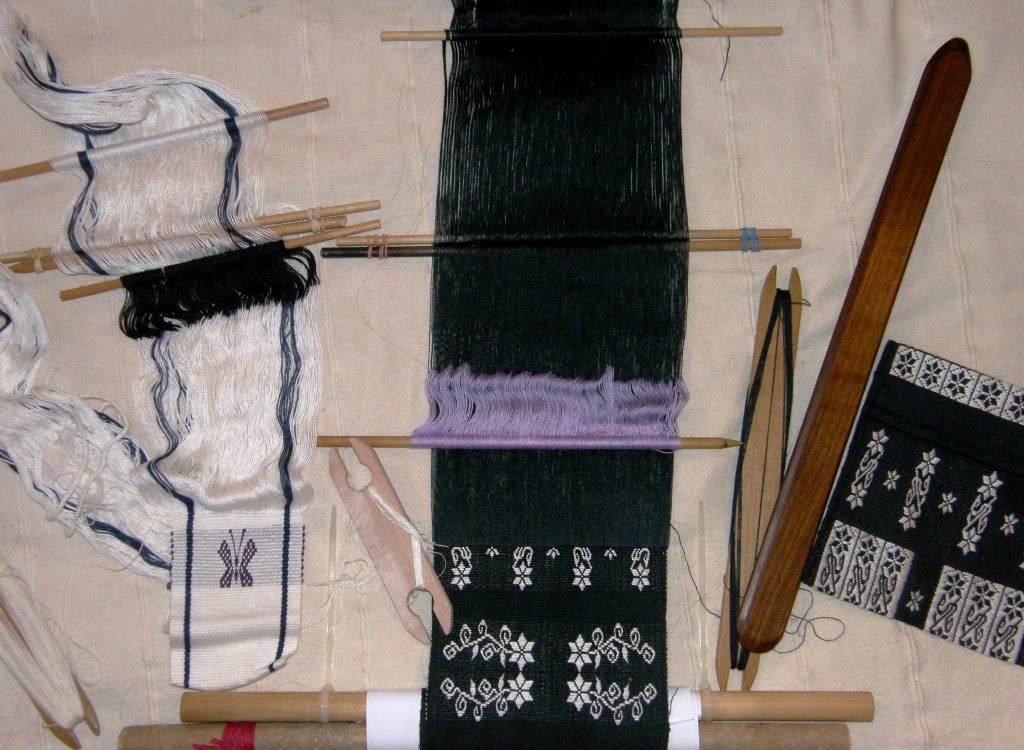
???????????????????????????????Here are two projects on which I am working. The black one is a single plane warp and the white piece is circular. The coil rod on each can be seen at the top of the warp.

I use the coil rod in single plane warps to help create even tension across the warps at the weaving line and therefore prevent “ridging” or “corrugation” of the woven fabric. Weaving an inch or so at the “wrong” end of the loom before beginning  project also prevents ridging but my current preferred method is to use the coil rod. In a circular warp, in my experience, the coil rod has the added benefit of helping to maintain a consistent width.

The black piece, by the way, is part of the latest in my red, black and white wall hanging series. The white piece is going to be a little remembrance banner for my mum who loved butterflies and African Violets. So far it has a violet butterfly and I hope to be able to chart and create supplemental weft motifs resembling African Violets.

One more thing I love about Jaina Mishra’s picture is the weaver’s backstrap. I like the little pockets at the ends of the straps into which the beam so neatly fits. So much to be enjoyed in one image!

Yes, these opportunities to learn are priceless and it is wonderful to see so many “encuentros” being organized in South America where weavers can gather and learn from each other. Major ones have been arranged in Peru, and there have been minor ones in Bolivia and Argentina.

Aymara and Guarani weavers learn from each otherAt this gathering in Santa Cruz, Bolivia, my Guaraní weaving teacher got to watch for the first time an Aymara backstrap weaver from Chile and learn the three-color version of the two-color intermesh technique that she weaves on her vertical loom.
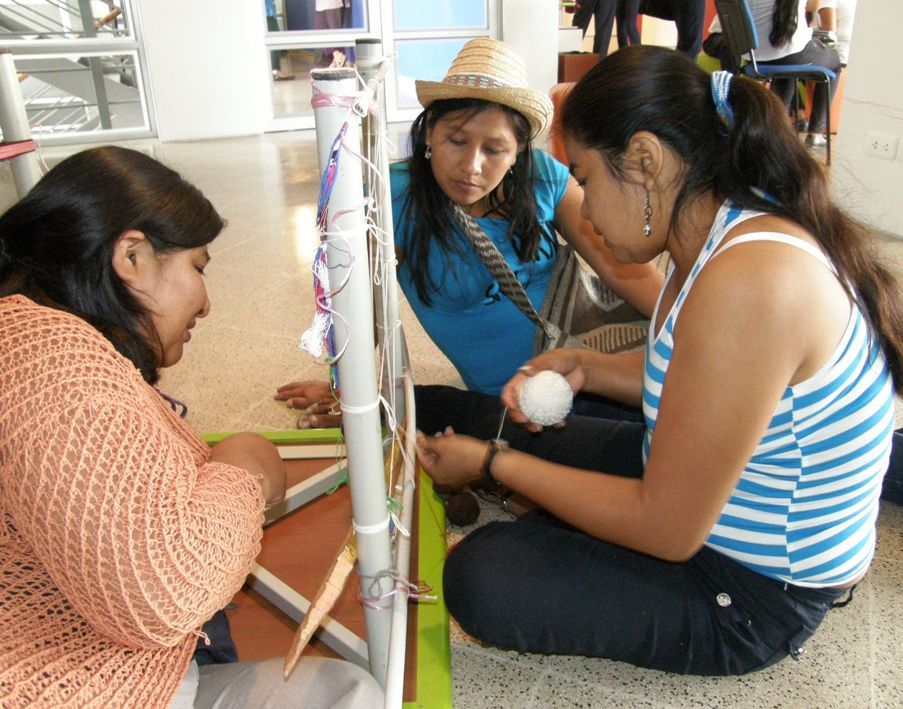
learning dovetail warpingAnd then a Guaraní weaver shows dovetail warping on a vertical frame to weavers from Chile and Colombia.

???????????????????????????????Excited Peruvian backstrap weavers watch and photograph a lady from Tinkipaya, Bolivia weaving on her leaning vertical loom at a gathering of weavers in Peru.

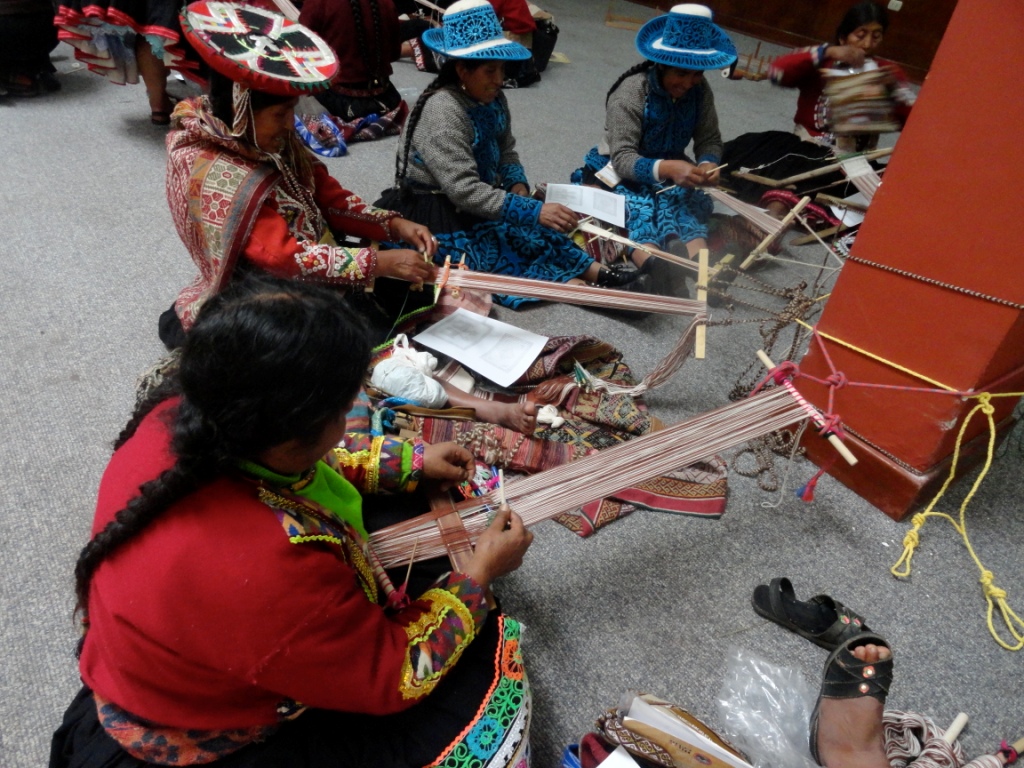
1468797_573365889378997_122630664_nDouble weave expert Jennifer Moore, from the USA, no doubt learned a lot from the Peruvian weavers with whom she worked at the most recent Tinkuy in Cusco. However, the main purpose of her visit was to teach them balanced double weave pick-up. Here is the class in progress. The picture is from the CTTC’s Facebook page. Below is one of Jennifer’s pictures of her students at work. It was an experience that Jennifer described as the highlight of her weaving career. Try putting something like that on your Christmas wish list!
???????????????????????????????

learning single plane warping salasacaThese ladies from Salasaca, Ecuador were eager to learn pebble weave from me. Here we are creating a single plane warp. It was only eighteen months later, when their male cousin taught me the Salasaca style of weaving, that I realised how foreign my way of warping must have been to them. They are used to working with circular warps. Teaching them was an experience that I had never expected when I first went to Salasaca and something that money can’t buy.

Sometimes the learning is very hands-on. And sometimes just looking in wonder and quietly absorbing is enough….which is why I am so grateful for the images I find and am sent. There is still always so much one can learn and enjoy from a distance.

???????????????????????????????A weaver from Tinkipaya, Bolivia who uses a leaning vertical loom, ponders the 24 sets of string heddles on a Peruvian backstrap loom.
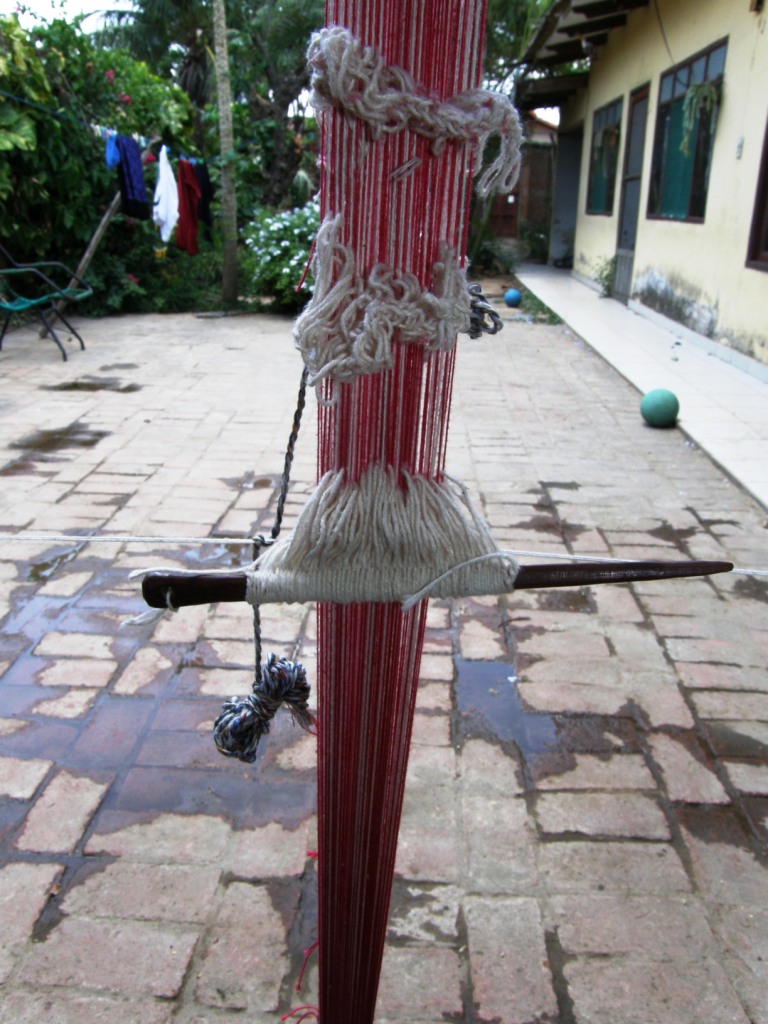
???????????????????????????????Sometimes the thrill can be about learning something as simple as a new way to make heddles. My Guaraní teacher asked me to show her how to make them on a stick. You can see the loose chained heddles higher up in the warp that are traditional in Guaraní weaving.

So, now I am home in Bolivia and have unfinished projects to pick up and new ones to contemplate, books to read and maybe even one to start writing.

I have brought home that yarn that I dyed with eucalyptus leaves and bark in Australia with Dace and have been thinking about a project for that…

??????????????????????The colors of the Australian landscape as depicted in Austrailan artist Pro Hart’s work give me some ideas on how to perhaps combine the rather pale tones that I have in the dyed yarn (and, yes, the thread still smells like eucalyptus!). 

??????????????????????I have a book of Pro Hart paintings that were created to accompany the poetry of Harry “Breaker” Morant, the “horse poet” . The wee bit of homesickness that I am currently experiencing makes me see the “you” in this poem as my home in Australia. You can read the words of the poem here if you are curious about this poet and his work.

More things that money can’t buy….the happiness at seeing what my students go on to create…

The brilliant rust red in Julia’s latest finished piece has my mouth watering…

Julias bagI showed the central pebble weave band on this blog before when Julia first wove it and now she has sewn it onto a piece of twill fabric that she wove on her floor loom in the fabulous rust red. The twill design is the perfect match for the pebble weave band, don’t you think? She has lined the bag and finished it with a tubular band. Teach me to sew like this!!!
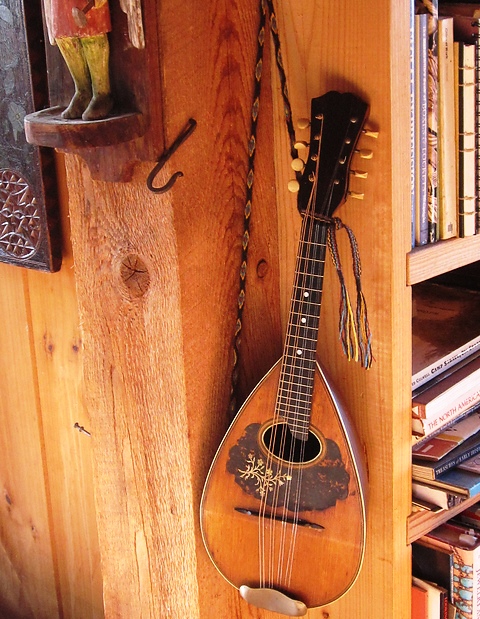
LLausanne's mandolin strapI taught Lausanne the ñawi awapa when I stayed with her in the fall and look how she has used it! It has made a wonderful strap for her mandolin. I am sure that your eyes are wandering to other intriguing treasures in that picture. Lausanne’s home is full of such things.

jennifers pouchesJennifer shows us that both threaded-in patterns and pick-up designs make for  beautiful pieces of fabric. She has made three lovely pouches with braided zipper pulls. The pick-up pattern she is used is one that I charted from textiles of Tinkipaya, Bolivia which appears in my second book.

Natalia and I have never met but she is a student of my blog all the way over in Russia. She followed my tutorial on double weave and has added her own touches to one of the small Bolivian motifs that I have used in examples…
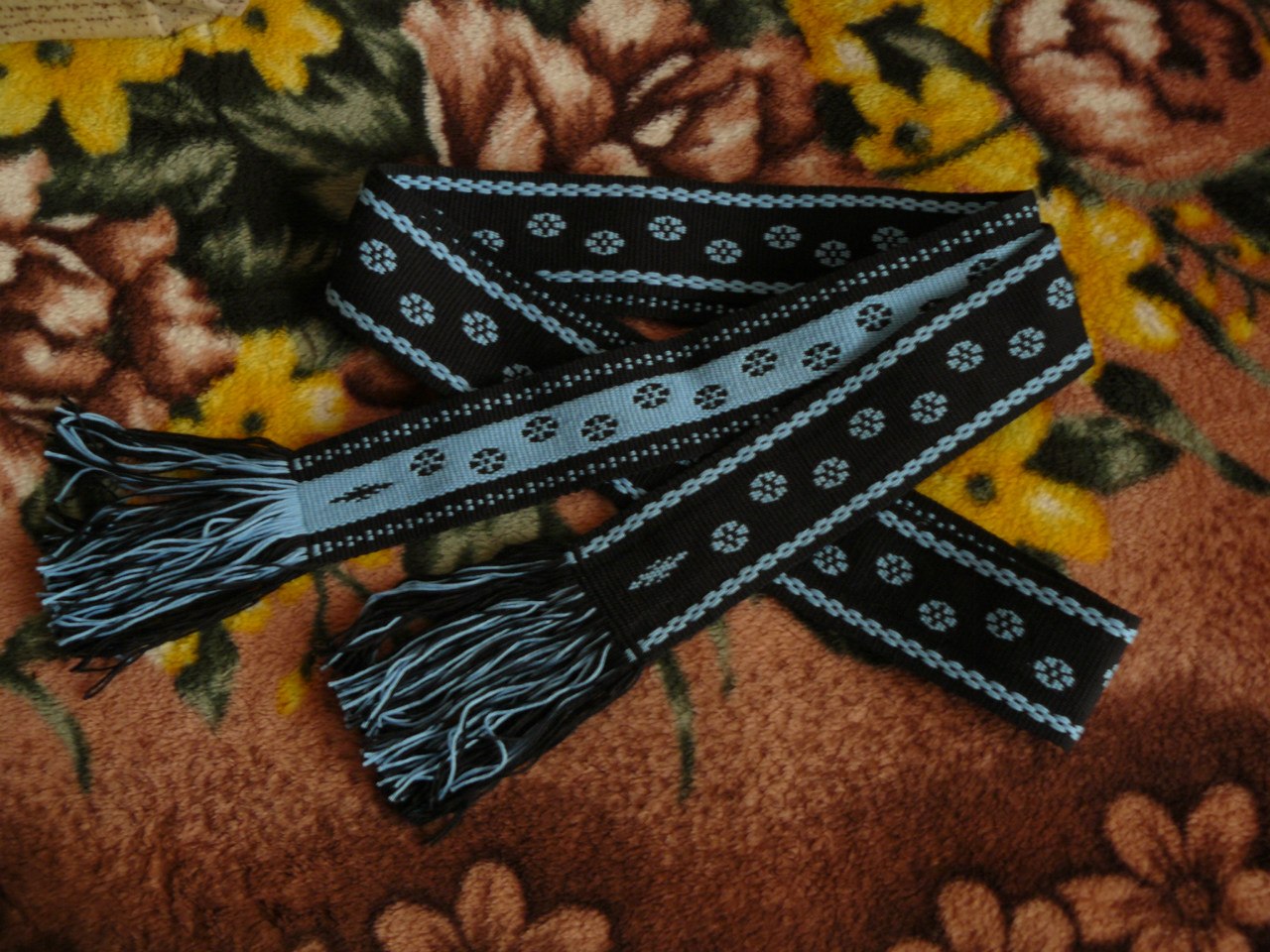
natalia

k8black clasped weftAnd to remind us that backstrap weaving doesn’t have to only be about warp-faced fabric, k8black in the Ravelry group showed us her clasped weft scarf. I love the feathered effect in the pink weft.

Judy Kavanagh has also been creating balanced weave pieces on her backstrap loom with the aid of a rigid heddle…a few bits of wood and a rigid heddle is all she needs to create this gorgeous scarf.
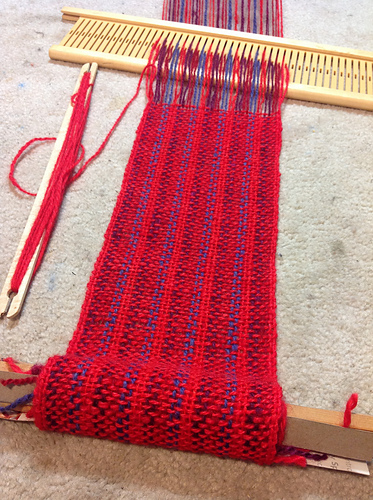
Judy KavanaghThe next piece of work is not backstrap weaving but I want to show it to you as I have shown this project in progress before on this blog. This is what Yonat was working on during two of my visits to Santa Cruz California and is the result of a class in Ravenstail twining that she took with expert Cheryl Samuel. Here are the finished leggings!

1512483_10202898120120664_1879491657_nI would say that Yonat is the person who has woven more with me than anyone so far. Now I need to come up with something to challenge this talented lady on my next visit. 

Well, the jet lag is slowly subsiding after my 50-hour trip back to Bolivia (with about 10 hours of broken sleep along the way) and it is time to get back to the large backstrap projects that I had been missing…holiday over…back to work putting that niggling homesickness for Australia away!

See you next week at the usual time. I couldn’t blog yesterday as I was falling asleep at the computer! And a Happy New Year to you all.

Backstrap Weaving – News and Novelties from Down Under.

A report from Down Under with some news and novelties….

tools ofr knotted pile weavingMy brother has been keeping this piece of knotted pile weaving for me for many years. How it came into his hands is a long story which I have told on this blog before. All we need to know is that there is a weaver out there somewhere in Sydney who created this piece of amazingly dense cut pile weaving and I wish I knew who it was. On top of the piece you can see the  tools which are used for this weaving technique.  I got them some time ago from a gentleman in South Australia who was studying the cut pile technique with an Afghani weaver. Through him I was able to buy the tools from his teacher.  They have been on quite a journey….from Afghanistan to Australia and now on to Bolivia.

???????????????????????????????Some other “stuff”that backstrap weavers may find interesting…I discovered that Japanese chopsticks make pretty good pick-up sticks for lifting warps when doing weft inlay as well as for hooking the supplementary weft and pulling it through the shed as my teacher, Lydia, is doing below.

using pick up stick in Guatemala

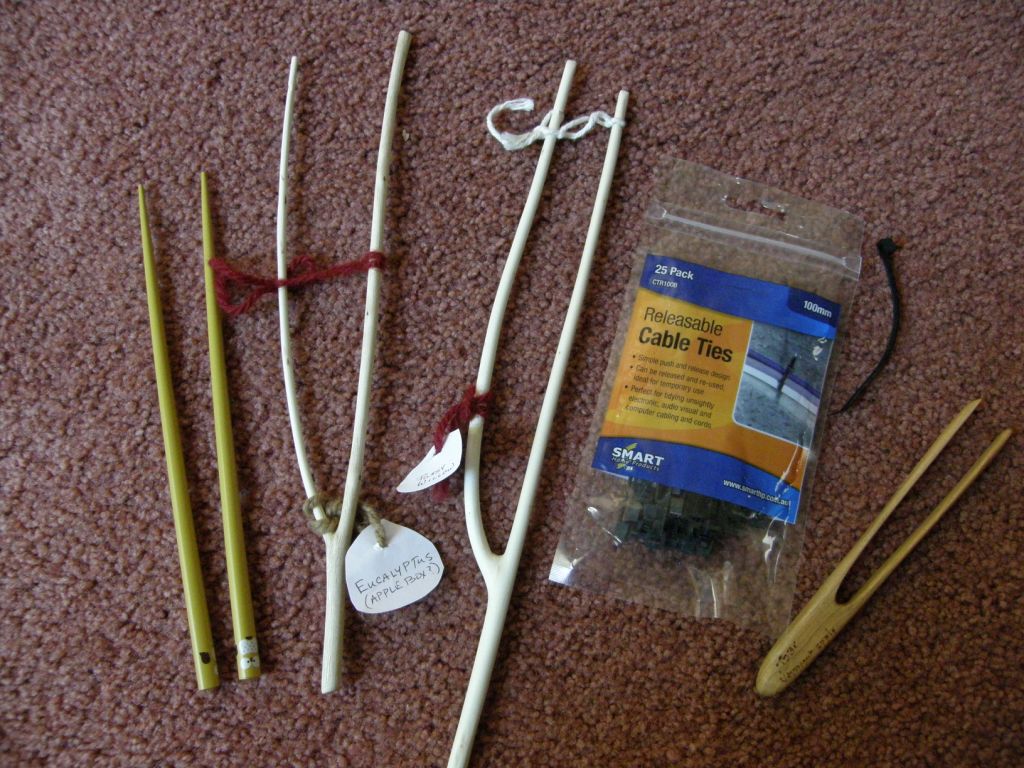
opening the heddle shedFr Kyriakos, who lives here in Australia, cut and beautifully finished some forked sticks for me so I can take back some pieces of Australia to use in my backstrap weaving. Forked sticks are sometimes used by weavers in Peru, as seen at left, as an aid to opening the hedddle shed. The weaver is twisting the forked stick (which acts to tighten the upper layer of threads), leaning forward to relax tension on the lower layer of threads and lifting the heddles.

I have been hunting for just the right forked stick! The implement on the right in the picture above is actually a  pair of wooden tongs that I found in a knick knack shop in Vermont. Lausanne gave it to me as a gift. It seemed like a good useful souvenir and will serve well as my tanka (Quechua for fork) when I weave the ñawi awapa tubular band.

It seems that a good forked stick is not that easy to come by even for the Andean weavers….

tanka for nawi awapaThis weaver told me that she had broken her tanka while weaving her ñawi awapa and, rather than hunt for another, had simply bandaged it up.

The other little novelty seen above is releasable cable ties. I have recenly taken to using cable ties to lash my warp to the loom bar and the fact that the ties can now be easy to release and, therefore, reuse is great news.

As usual, when I am traveling, textiles from near and far just seem to fall into my lap. Kind folks bring these things along to guild meetings and other gatherings and thus give me the opportunity to examine and enjoy them.

Guatemalan supplementary weft open weaveThis is the second time in recent months that a piece like this has come my way…gorgeous light cotton open weave with motifs created with supplementary weft ….from Guatemala. This is just like the little sample piece that I bought on its loom at the Santa Fe market. It was even more impressive in this larger version.Panels of this cloth are sewn together to make huipiles (blouses). Weavers in the community from which this fabric came, embroider the edges of the neckline and sleeves.

Guatemalan huipil embroidered and with supp weft motifs

???????????????????????????????The thread on the loom was sized and was quite stiff. It was lovely to be able to feel the softness of the cloth in the finished huipil and see how much the open airy weave had closed after washing.

So, here I am in Australia looking at Guatemalan weaving. But, I also got to look at backstrap woven fabric from one of Australia’s near neighbors….Timor Leste, East Timor. Kelcie came to weave with me at home and brought along just a few of the textiles that she bought on a tour she recently took on  the island of East Timor.

???????????????????????????????

Picture from the Wikipedia page on "tais"
Picture from the Wikipedia page on “Tais”

The pieces were all warp-faced and were either ikat or patterned with warp floats on one face.

The Alola Foundation, in the capital city of Dili, was estabished to help improve the lives of women and childern in Timor Leste and marketing products made from handwoven cloth is just one of their activities.

Traditional cloth that is used for men and women’s clothing is known as tais. Take a look at the Wikipedia page on Tais to read more about the use and significance of this cloth in Timorese culture.

???????????????????????????????This piece depicts a crocodile in ikat, the creature on which the creation legend of the island is based.

Kelcie’s collection included several long narrow pieces, like the one below with yellow warp float  patterns, known as selandang which are worn around the neck.

???????????????????????????????The ETWA Foundation website has pages that cover the weaving processes starting with the preparation and spinning of the cotton, the futus (ikat process), warping and weaving.

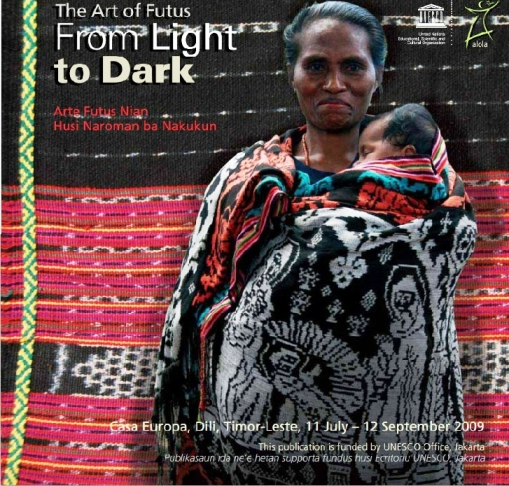
futusThis book, which was produced by Alola and UNESCO to accompany an exhibit of textiles woven with the futus technique, is available as a free download here. 

??????????????????????????????????????????????????????????????The folks at the Handweavers and Spinners Guild of NSW have been wonderful.

This has been my first visit to Australia since trying to become a full-time weaver  and my first contact with the guild.

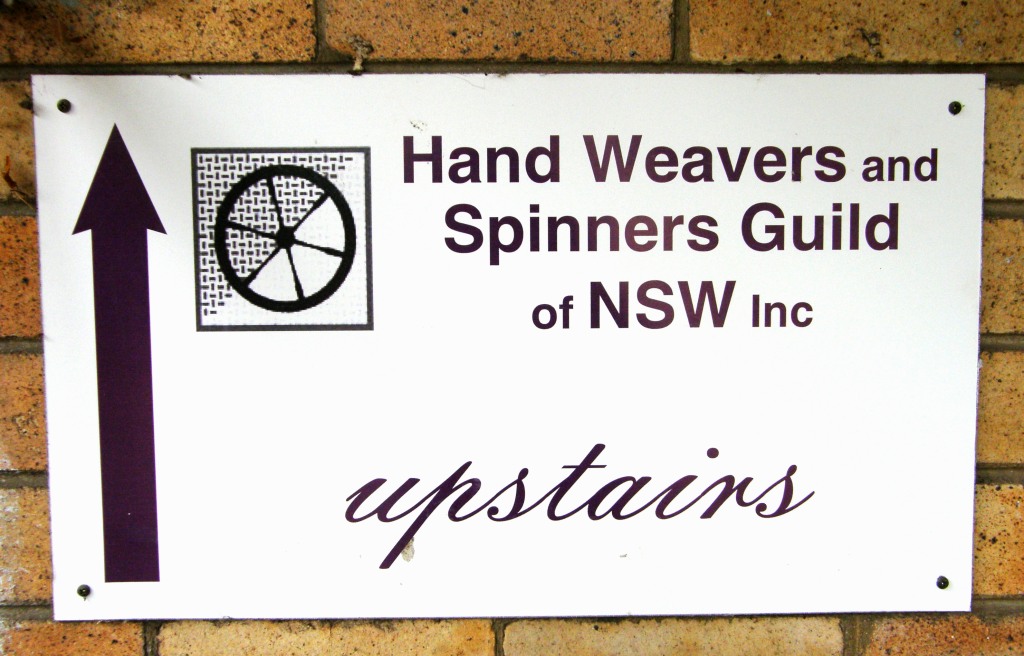
I was invited to a gathering of spinners the day after I arrived in Sydney and I took myself along before jet lag could set in. It was a dreary rainy day in Sydney and I thought that no one was going to show up as I sat alone in the church hall. What I hadn’t found was the clear sign that indicated that all the fibery folk were atually upstairs happily carding, spinning, chatting, drinking mimosas! showing-and-telling and celebrating the last meeting of the year.
jenThere I met Dace and I had the sudden idea of weaving something to commemorate my Australian visit. I asked her if there was any fabric or material or weave structure that would be considered classically Australian. It was hard to come up with something. And then Dace had the  idea of dyeing some of my yarn with native Australian trees, instead. Brilliant idea! And so I will be off to Dace’s place for a dyeing session next week.

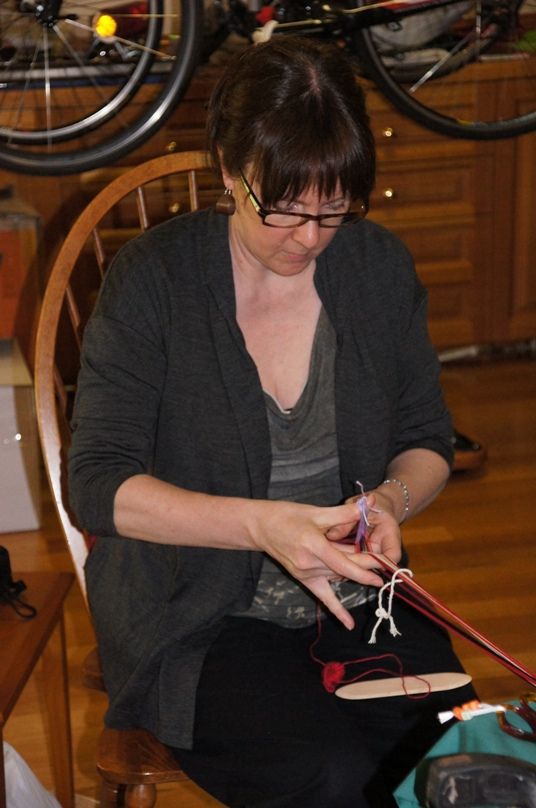
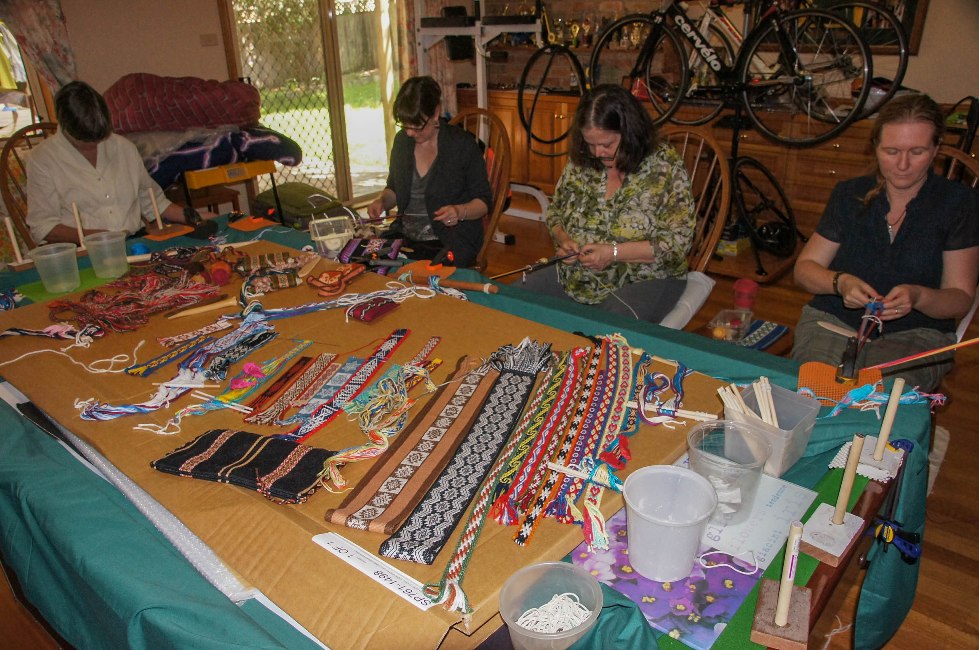
Next came a small gathering of weavers at home. Space would only allow four.. We spent two days playing with the ways that weavers in Peru and Bolivia set up their looms to weave complementary-warp pick-up patterns. You can see Jen at left using the two-finger method.

The pool table was a great piece of furniture for anchoring the warps. You need very large  clamps. That table was not going anywhere!

????????Taking a break to chart some patterns and look at books and Kelcie’s Timorese textiles…..

backstrap weaving class in sydneyOur get-together was followed by the monthly (and end-of-year) guild meeting at which I showed some slides. It was a wonderful, warm and jovial audience full of Christmas cheer for the coming holidays. I was delighted to meet so many people who  had never encountered South American weaving and who then expressed so much enthusiasm for it. 

In the mail box….

Fr Kyriakos (who just happened to have joined Kelcie as a student in one of Kay Faulkner’s classes…it’s a small world in this big country,of Australia!) sent me pictures of the Andean Pebble Weave band that he is weaving using a pattern inspired by a piece I showed here some time ago woven by Julia.

fr kyriakos pebble weaveLausanne in Vermont showed me what she is working on. She’s having a little trouble with sticky sheds as she is using respun tapestry wool. Working the two sets of heddles used in the Andean Pebble Weave  takes practice. I sawed my way through my warps while trying to perfect the moves in my lessons back in 1996. My teachers performed them so quickly and without any explanation. It was difficult to identify the individual movements that needed to be combined into one smooth operation.

lausannes celticpattern andean pebble weaveLausanne is weaving a Celtic knotwork pattern that I adapted to Andean Pebble Weave from tablet-woven bands. It is charted in my second book, More Adventures with Warp-faced Pick-up Patterns.

After the guild meeting last Saturday, I couldn’t help noticing with a smile the contrast in my Saturday and  Sunday activities.

On Saturday it was all about Girls and Their Toys: 

???????????????????????????????An interested group gathers around the table after Show and Tell time to get a closer look at the novelty yarn that had been presented. (Of course there are several male members of the guild…they are just not visible in this particular shot).

And on Sunday it was a day with Boys and Their Toys: (of course, there was also a female present, namely, ME.

??????????????????????For those who are familar with Sydney, my brother took me on a ride with his vintage motorcycle club up to the mountains…Mt Victoria and the Bell’s Line of Road. It is such a beauiful area and could well be where I would choose to live should I ever come back to Australia for good.

??????????????????????Yes, we are on the correct side of the road. It’s Australia, remember?

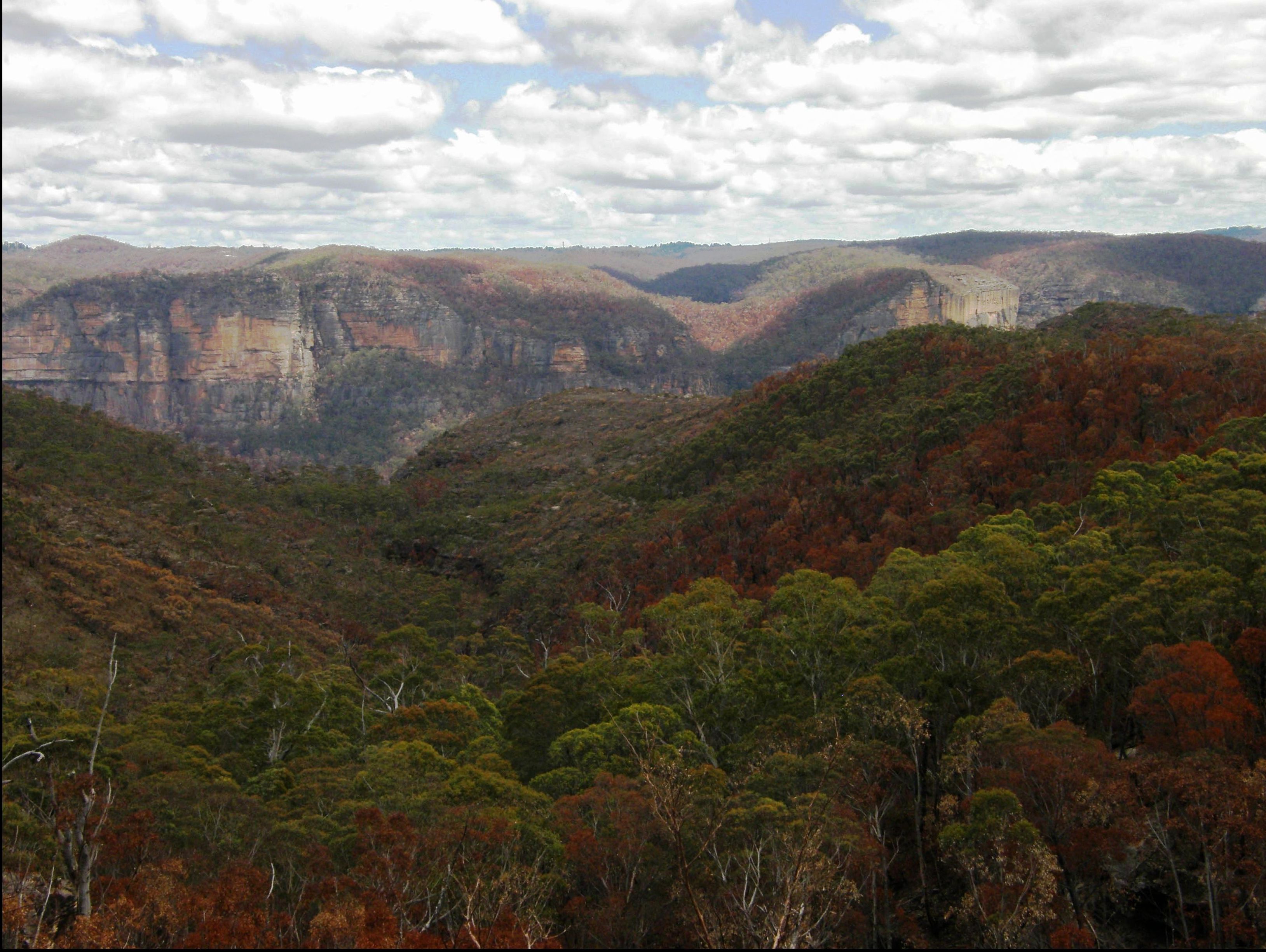
And this is where we were heading…

bush with borderThe colors in this bush scene look almost like the early fall  in the US that I saw recently but, sadly, all those orangey-red tones that you see there are burnt bush from the recent fires that ravaged the area. Those cliff faces and bushland are some of my favorite parts of Sydney. Who needs the beach?!

This Saturday I will be heading back to the mountains for a small weavers’ gathering in the home of Helen Halpin, this time by train. I have been receiving Helen’s monthly news letter of weaving and other fiber events in Australia, Weavers Forum, for some years now and was pleased to have been able to finally meet her at the guild meeting last Saturday. I certainly won’t let four years slip by before I am back in Sydney again.

See you next week.

Backstrap Weaving – Think like a Bird

I love that “big picture” feeling you get from the airplane window. It’s been a long time since I have been able to get a window seat on a coast to coast USA flight in daylight to enjoy the view. The picture below was taken somewhere between Dallas and San Francisco last week.

The view reminded me of the months in the early 90s when I would be sometimes rambling about on top of  the Sangre de Cristo Mountains on a peak bagging trip or dropping by rope into the depths of the Utah canyons. From the air you feel so carefree floating over the ever changing landscape like a bird while trying to imagine the thousands of specks of people  down there below like ants and what they might be up to.

??????????????????????

??????????????????????In a similar way, I made myself step back and admire the big picture before zooming in on the details when Ute brought in a piece of Uzbek silk ikat cloth for me to examine and admire during a visit with her in Northampton.

I got to see the exhibit of Uzbek ikat robes at the Textile Museum in DC a few years ago. Of course, that was a strictly “hands off” affair. And even though I had the opportunity to touch similar fabric from Uzbekistan at the International Folk Art Market in Santa Fe this year, the market simply had far too many interesting things to be able to stop and focus on any one item for any meaningful length of time.

Thanks to Ute, I had time alone with the cloth at left and could examine it to my heart’s content although I found it difficult to capture its true colors on camera.

Ikat fabric at the Santa Fe International Folk Art Market
Ikat fabric I saw at the Santa Fe International Folk Art Market

When I then zoomed in to get an ant’s persepective, I saw what I had named many times, in despair and frustration,  during my own ikat experiments on my backstrap loom, the ” dreaded railroad tracks”…

??????????????????????

I took extreme measures to keep my warp threads aligned on this piece...that was my goal at the time.
I took extreme measures to keep my warp threads aligned on this piece…that was my goal at the time.

I am talking about those horizontal bars that show that the warp threads have shifted from the original positions into which they had been locked during the tying and dyeing process.

It was always so disheartening for me to be weaving and approaching with excitement the first wrapped area on my ikat warp, eagerly waiting to see how my carefully tied and dyed pattern would appear only to see first, the little specs and then the growing rows of lines of un-dyed thread appearing….those dreaded railway tracks. They told me that the threads had been displaced too much and that my design had been ruined.

But, walk away to the other side of the room and look again at the Uzbek cloth. What do you see? A beautiful pattern with the soft blurry outlines that give ikat its charm and character. Look at the big picture!

I will be trying ikat again when I get back to Bolivia and reminding myself to think like a bird and not an ant!

The same goes for one of my current favorite structures as woven by the Guarani weavers of the lowlands of Bolivia…intermesh.

angelas moisy???????????????????????????????Stand back and admire the crispness and clarity of the design woven by my teacher Angela.

Closer inspection of motifs on another piece show the feathering that characteristically appears along the edges of diagonal lines.

This has me adjusting and readjusting my pattern charts in an effort to reduce the feathering as much as possible which can sometimes distort the original shape I was striving to create.

Stop fussing and thinking like an ant! The GuaranÍ weavers, as far as I have seen, make no such (unnecessary) effort…they think like birds.

Speaking of intermesh, let me show you Julia’s latest creation in progress in this structure….

julias intermeshJulia tells us that the design comes from a book entitled Japanese Design Motifs. Designs like these with horizontal and vertical lines are ideal for learning this structure and are the kinds of motifs that I have provided with the tutorial in my second book. I used Bhutanese and Mexican patterns for inspiration. The horizontal lines have “saw-tooth” edges and the verticals are crisp and smooth plus the cloth is double-faced!

This trip is drawing to its close. I can look back over the last weeks of weaving with friends, new and old, from a bird’s eye and ant’s eye view and benefit greatly from both perspectives. The ant asks what details can be improved. The bird hovers above to see patterns appearing on bands and cloth, the weavers’ reactions –  their smiles and frowns and “aha” moments, changes in their energy levels and receptiveness which their body positions often reveal….and listens to the fluctuating levels of concentrated silence and relaxed chatter.

Here’s a quick whiz through some of the days I spent weaving both east and west on this trip….

Backstrap weaving with students at Yale University.... They have a wonderful weaving room full of floor, table and rigid heddle looms which meant standing room only for this impromptu lesson in basic backstrap loom management which followed my talk.
Backstrap weaving with ladies at Yale University…. They have a wonderful weaving room for free time weaving. It is full of floor, table and rigid heddle looms which meant standing room only. Many thanks to Barbara who took me to visit with these ladies. Here they are finding the cross in their warps  so that they can make simple heddles.
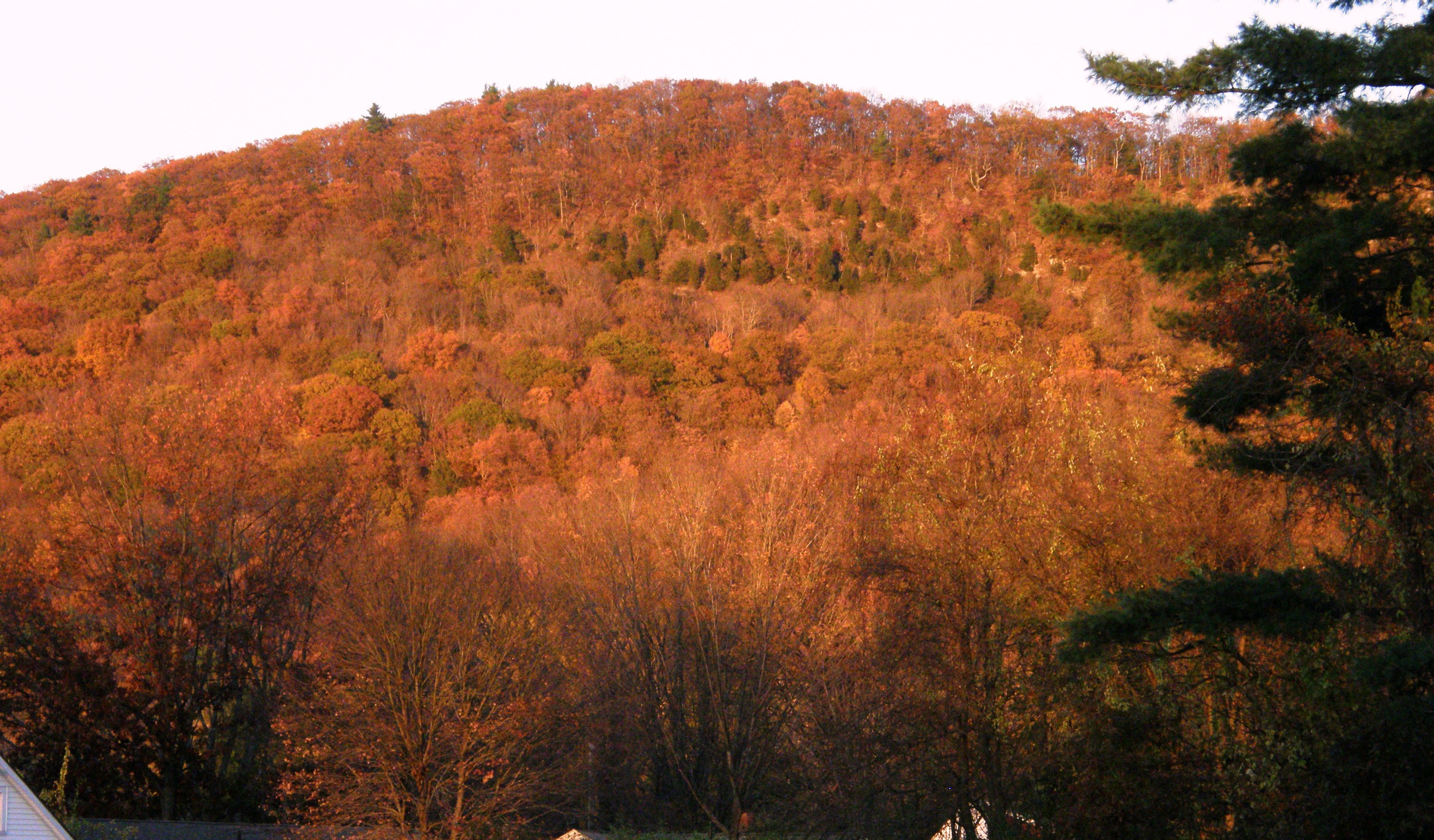
Massachusetts turned on its fall colors for me as we drove each evening ater calss in the glow of the setting sun.
Massachusetts turned on its fall colors for me as we drove home each evening after some weaving in the glow of the setting sun. Here is a shot of what Lausanne in Vermont has dubbed “cinnamon hills”.

And winter was definitely in the air with frosty mornings. Only the brave sat outside for lunch! I was one of them for about 5 minutes.

south deerfield group

dt.common.streams.StreamServerThe round table  was a perfect set-up among Liz’s natural yarns and fibers, locally made scarves and shawls and crafts.  It was a sweet space in which to weave.

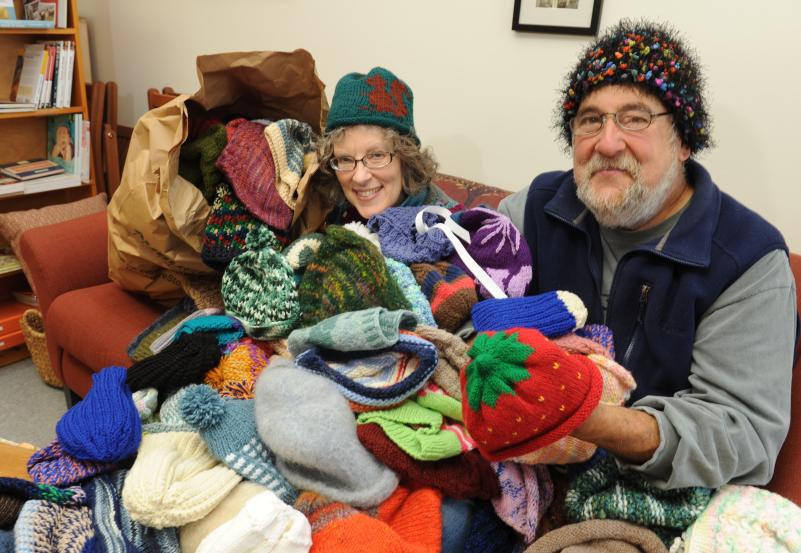
RIght now Liz and her partner John are involved in the 500 Hats event which John came up with to celebrate the 75th anniversary of the Dr Seuss book. You can read more about the project here…there are over 1600 hats so far in their living room.

Moving over to nearby Northampton….here are a couple of things that Chris worked on..

chris northampton backstrap projectsHere you can see her pick-up band finished and decorated with a triangular braid (which I now know how to do….yay!, thanks Chris) as well as her ñawi awapa piece on which she has just about finished twisting and binding the warp ends.

It was a second time weaving with these friends and we did some more pebble weave, made tubular bands and sewed them to pouches which we later dressed up with decorative stitching.

Lisa decorates the mouth of the Bolivian woven pouch, which she edged with a tubular band, with cross knit looping..a sewn technique.
The mouth of a Bolivian woven pouch is decorated, after having been edged with a tubular band, with cross knit looping which is a sewn technique.
The hands above belong to Lisa, on the left seen here learning a new complementary-warp technique aong with Mary-Lou. Lisa is wearing one of her gorgeous deflected double weave scarves.
The hands above belong to Lisa, on the left, seen here weaving a complementary-warp band alongside Mary-Lou. Lisa is wearing one of her own gorgeous deflected double weave scarves.

Barbara invited friends to her home in Connecticut and her fabulous weaving studio for another gathering where we all wove together….

Claudia and Susan learn how to decorate a warp-faced band with both single and double faced patterning techniques.
Claudia and Susan  decorate a warp-faced band with both single and double-faced patterning techniques.

And here in California yesterday, we gathered to practice setting up for wider projects. Some people in this group were weaving with me for their their third and fifth times while others were on their second time.

Picture by Ruth Temple
Cookie's finished piece will be folded into a long narrow bag for a backstrap loom that she was recently given.
Cookie’s finished piece will be folded into a long narrow bag for a small backstrap loom that she was recently given.

So, we had a group with a variety of experience levels. I think that “experience level” is often most evident in the kind of warp a weaver can create in terms of evenness of tension. Here is where the “short and narrow” mantra comes into play.

Perfect your warping techniques winding short and narrow warps over and over again!  SHORT, because you will weave off your project quickly and get another valuable chance to warp again soon. NARROW, because there are different tips and tricks yet to be learned for creating successful wide warps once winding narrow ones with consistent tension has become natural.

The idea was to go wider without necessarily going longer. You can see Ruth’s pretty warp above made from Tahki Cotton Classic onto which she is putting her first set of string heddles. The strip of orange and purple down the middle will be used to create a pattern in the  Andean Pebble Weave structure.

She is going to weave the other plain parts using the “thick border” technique described in my first book. This will cause the plain parts to narrow and thicken to match the thickness of her pebble section. Therefore, her finished band will be a lot narrower than the warp appears in this picture. This might become her backstrap.

We needed to refresh some things that are necessary for creating wider pieces, such as putting the string heddles on a stick instead of tying them in a little bunch.

Picture by Ruth Temple. Kathy gets a refresher in heddle making for wder warps
Picture by Ruth Temple. Kathy gets a refresher in heddle making for wider warps
Kathy chose to make abackstrap using Plymouth Yarn Fantasy Naturale and a double- faced warp float pattern
Kathy chose to make a backstrap using Plymouth Yarn Fantasy Naturale and a double- faced warp float pattern.
Kathleen chose to use overtwisted wool that she got in a class with Jaquetta Nisbet many years ago. She has already made a beautiful backsrap with this wool and knows how it behaves. She wants to make a small pouch with a pebble weave motif and wrote to me about how this warp feesl "slive" after having used cotton for some time.
Kathleen chose to use overtwisted wool that she got in a class with Jacquetta Nisbet many years ago. She has already made a beautiful backsrap with this wool and knows how it behaves. She wants to make a small pouch with a pebble weave motif and wrote to me about how this warp feels “alive” after having used cotton for some time. As you can see we were in a soothing environment in Betsey’s home surrounded by textiles that she has collected in her travels.
Dorothy's project in Tahki cotton classic is so beautifully arranged. It will have three strips of pebble weave pattern and the color combination is so gorgeous! I am wondering when she will have tie for ti as she is off to the Tinkuy in Peu this Friday!! we are all so excited for her. Goodness knows what kinds of inspiration she will bring back with her.
Dorothy’s project in Tahki cotton classic is so beautifully arranged. It will have three strips of pebble weave pattern and the color combination is so gorgeous! I am wondering when she will have time for it as she is off to the Tinkuy in Peru this Friday!! We are all so excited for her. Goodness knows what kinds of inspiration she will bring back with her. By the way, Dorothy’s loom is made by Terri at Magical Moons. I hadn’t seen one of these before made by Terri. The loom bars are silky smooth….beautiful work!!

Betsey’s project was the narrowest but with by far the finest thread and I neglected to photograph it, unfortunately. She warped for a pebble weave pattern using the thick borders and her piece will do nicely as a cellphone pouch.

Somewhere in-between all that, Barbara took me to Shelburne Falls Ma to visit Vavstuga Weaving School. That’s a name that constantly comes up in the weaving groups on Ravelry and I was excited to finally be able to see it and meet the staff. I was surprised to find Cindy, one of my backstrap weaving friends, apprenticing there.

What a beautiful location right next to the Bridge of Flowers which even at this late time of year is full of color against its backdrop of cinnamon hills.

bridge of flowers next to vavstugaColor inspiration anyone? This was in the bridge garden…never seen anything like it!

??????????????????????

Becky, her apprentice ad Vavstuga staff showed me around. As we chatted at the table Becky pulled out one gorgeous texyile afte another to spread on the table.
Becky Ashenden along with her newest apprentice and other Vavstuga staff showed me around. As we chatted at the table, Becky pulled out one gorgeous textile after another to spread on the table.

??????????????????????Not that I know much about Scandinavian weaving, but the textiles were everything I expected and more…rep weave, white on white, linen, crisp and clean, simple, classic, impeccable!

Becky opened a door to a closet which housed hundreds of samples. More samples were draped over loom beams for further inspiration, instruction and guidance but, most importantly, gorgeous handwoven textiles were everywhere to be seen and touched and used in in the house and studio….not just sterile samples to be taken out and studied and then put away. They added warmth and comfort and a lovely sense of home and familiarity. This must be a lovely place in which to learn to weave!

??????????????????????This hanging adorned the wall of Vavstuga student dining room which overlooks the river. I had heard it all before in the online groups…everything at Vavstuga is handwoven. It was wonderful to see it all…. from curtains to hand towels and floor coverings and hangings.

And then there was the band weaving with the typical Scandinavian backstrap set-up…(look at the piece of fabric under the backstrap…that was one of my favorite pieces)

??????????????????????Becky wove that backstrap. Isn’t it gorgeous? She wove one end of the waist band as a tubular band in order to more easily hook on the clever wooden device that holds  the warp . Look at that sweet rigid heddle and there is also a lovely wooden smooth shaped sword that completes the set-up. I guess that I just couldn’t hide the smile and delight I felt at seeing all this as, when Barbara and I were about to leave, I was given this mystery package….

??????????????????????No prizes for guessing what was inside!!

Some of the other textiles I met along the way….

??????????????????????Many thanks to Ruth who brought this along to share with me. It is warp-faced double weave cloth, although in many places the warps are quite spread and reveal the weft. A band has been cut into strips and sewn to make this bag. We don’t know its origin but I really appreciated the opportunity to look at it.

Ute always keeps me supplied with textile goodies to photograph and examine. Here is a beautiful presentation of some of her own tablet-woven bands…

??????????????????????

And here is a bag from Tibet, owned by Ute, that was made by sewing pieces of a tablet-woven belt together….fabulous motifs for intermesh.

???????????????????????????????And here I am today in the home of inkle weaver, guitar strap and sash maker Annie. While she is at work I get to rummage through baskets of her colorful bands and sashes and samples….no two alike, so every visit brings forth something new!

??????????????????????Thank you to Kathleen who took me down to ground level to be an ant last weekend. Kathleen is a marine biologist and took me to the beach to go tide pooling…super fun!…While swathes of slumbering and interesting seaweed waited out lowtide above water, we peered into pools and found whole worlds of life and variety and movement and color and cleverness within.

And when we got home, Kathleen’s husband had made this…

??????????????????????I had remarked to Kathleen earlier that day that the vertical pieces of rebar sticking out of the top of the wall would make great warping stakes. It was too bad that they were soon to disappear within another row of blocks. I then told her about the woman in Peru who had warping stakes embedded in the wall of the hall of her house. She would stroll up and down the length of her hall creating her warps. And so, an idea was born.

Those metal pieces of pipe will be locked into place when concrete is poured into the blocks. Then, dowel rods will be placed within the pipes…..a wall warping board. I am jealous! Next will come hooks in the wall to which Kathleen can attach her backstrap. Warm, sunny days outdoors weaving….lovely!

Jennifer Moore, DY Begay and I in Santa Fe in July

Tinkuy is next week!!! I am not going… what will keep me from pining is the fact that I will be over the ocean thinking like a bird on my way to Australia on the14th.

My weaving friends Dorothy and Karen are going. A few of my Argentinian Facebook friends will be there and Jennifer Moore, with whom I backstrap wove in Santa Fe this year, will be going to teach the Peruvian weavers balanced double-weave pick-up.  Jennifer wrote to me this morning to tell me that we will be roomies at CNCH next year. There will be some stories to tell!!

I hope that if you go, you will send me stories, reports and pictures that I could share on this blog or links to your own sites that I can include here. Have a wonderful time all of you!!!

Dorinda from PAZA Bolivia (no link as the website is temporarily unavailable.) and my weaving teacher, Maxima, will be going again. Last I heard, Dorinda was also going to take one of the teenagers. Dorinda met her funding needs with many generous donations from a variety of sources. Look out for Dorinda and Maxima there. I wonder if Maxima will outspin the Peruvian ladies in the speed spinning competitions again this time!

Dorinda and Maxima were my roomies at Tinkuy 2010

Jasmin Pitt of Sustainable Bolivia was recently in Independencia with Dorinda and her weaver friends and made a documentary about the weavers. Here is Dorinda’s description from her PAZA newsletter:

Making a documentary with the weavers of Huancarani became reality last April after over a year of talking about the possibility. Thanks to Sustainable Bolivia’s artist in residence Jasmine Pitt, most of the footage was shot in Huancarani in a day. Jasmine directed, filmed, and edited the documentary. The women were ready with their thoughts, comments, and stories about the past, present, and future of their millennium long weaving tradition. More interviews were held in Independencia and Jasmine and Dorinda walked miles so Jasmine could capture the breathtaking landscape on film. The musical group Sacambaya generously granted permission for use of their  music. It was a collective volunteer effort. Through Jasmine’s lens you will gain insight into the personalities and lives of the weavers and their concerns for the future of their weaving tradition.  

ENJOY THE VIDEO! and see you next time!

Backstrap Weaving – Getting in Sync

I have never been so happy to get something off the loom. I am talking about THIS:

weft inlay black panelThis is what I was weaving to be the black center panel of my red, black and white wall hanging. It was to sit sandwiched between the two red panels I wove some time ago.

2 of 3 anels supplementary weft inlayWhile I suppose that the black panel looks nice enough on its own, as do the red ones, the three simply weren’t working together for me as a whole. They just weren’t ‘in sync”.  Apart from that, I was learning lots of “what not to do” while weaving the black panel and I wanted to start anew using all the lessons I had learned.

And so,I wove on and on so that I could squeeze in as many lessons and discoveries as possible on that one piece of cloth before abandoning the project. But my heart wasn’t in it and I just wanted to get it OFF the loom!

So, finally it is off and folded and taking shape on its way to being ”something”. I have to admit that now I like it on its own despite some of the wobbly lessons learned along the way. As long as it is nowhere near the two red panels I can be pleased with it.

??????????????????????In the meantime I dyed a skein of green Guatemalan cotton black in preparation for the second attempt at the black panel. Then I took a break and wove a backstrap for Terri. I really needed to warp and weave something that I was pleased with and get my head together before diving into the black panel thing again.

backstrap weaving at ANWGFor those who don’t know, Terri is Magical Moons. She makes beautiful swords for backstrap weaving as well as other cool wooden tools and implements. I asked her to make wooden hangers for my three wall hangings so that they could be shown in an Exhibit at ANWG last June.

After exchanging several emails with measurements and ideas, Terri knew exactly what I had in mind and her finished work far exceeded my expectations.

Then Terri suggested I make her a backstrap in exchange for the hangers which I thought was a cool idea…two craftspeople exchanging our handwork. All I knew was that she liked “earthy colors”. So, out came the terracotta dye.

I like a backstrap to be wide and thick…wide enough to spread the job it does comfortably across the back and hips, and thick enough so that it does not fold in on itself on the sides.

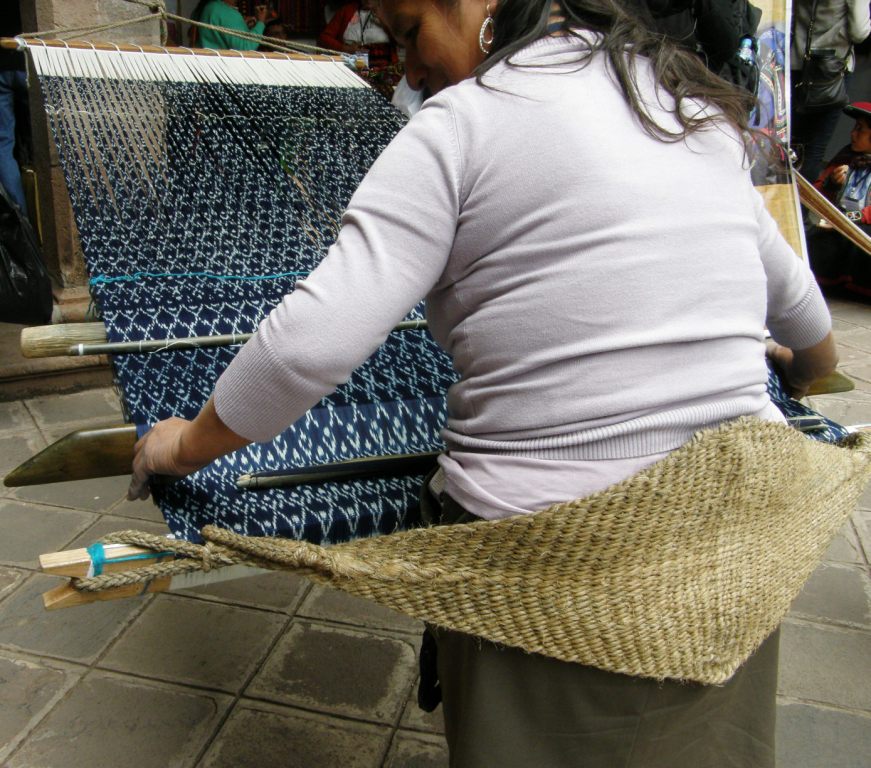
This is a backstrap that I would like to have….sturdy and butt-cradling….

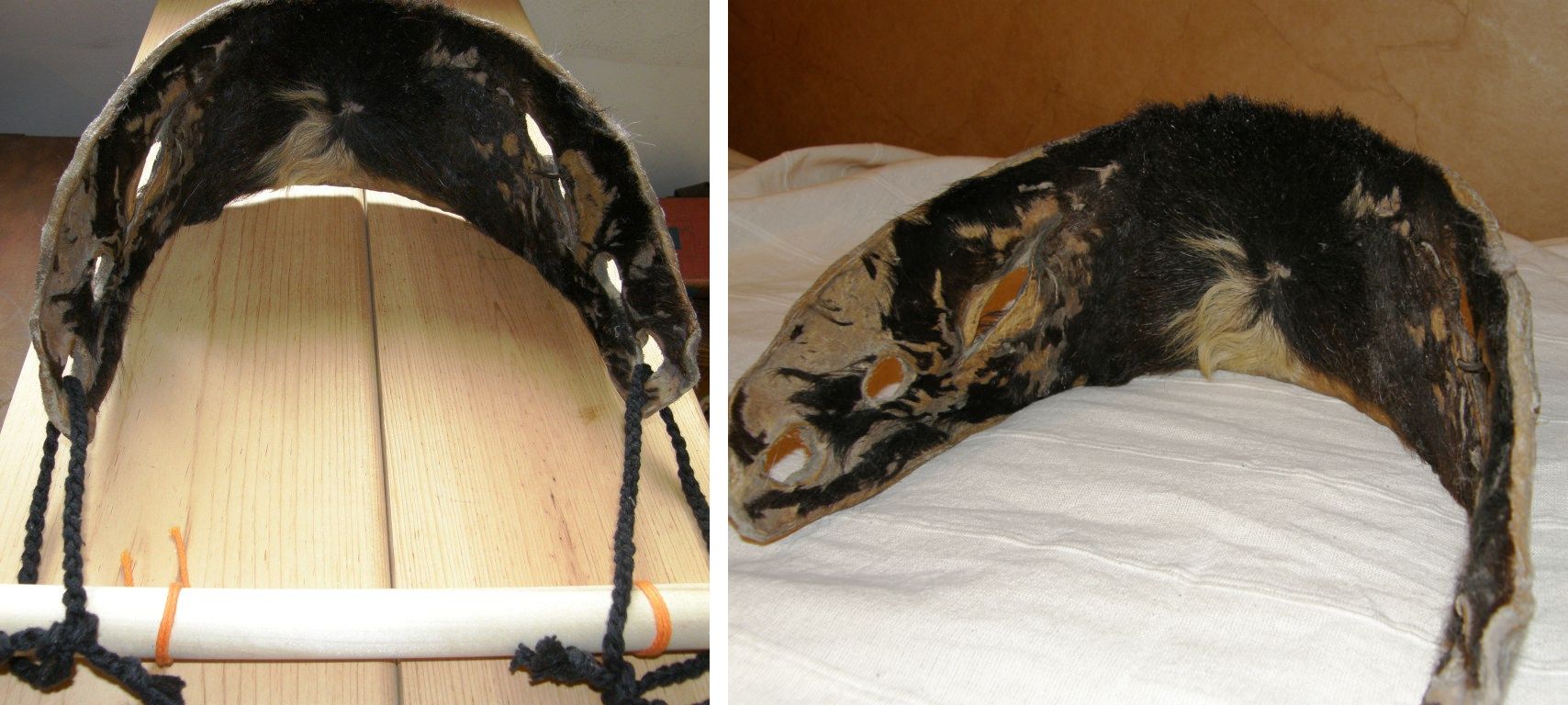
Tacabamba backstrap

A nice sturdy hide backstrap from Otavalo, Ecuador. The hairs tend to tickle while you are weaving.
A really sturdy hide backstrap from Otavalo, Ecuador. I own this one but don’t use it very much as the hairs tend to tickle while I am weaving.

But, we can’t all have backstraps like those.

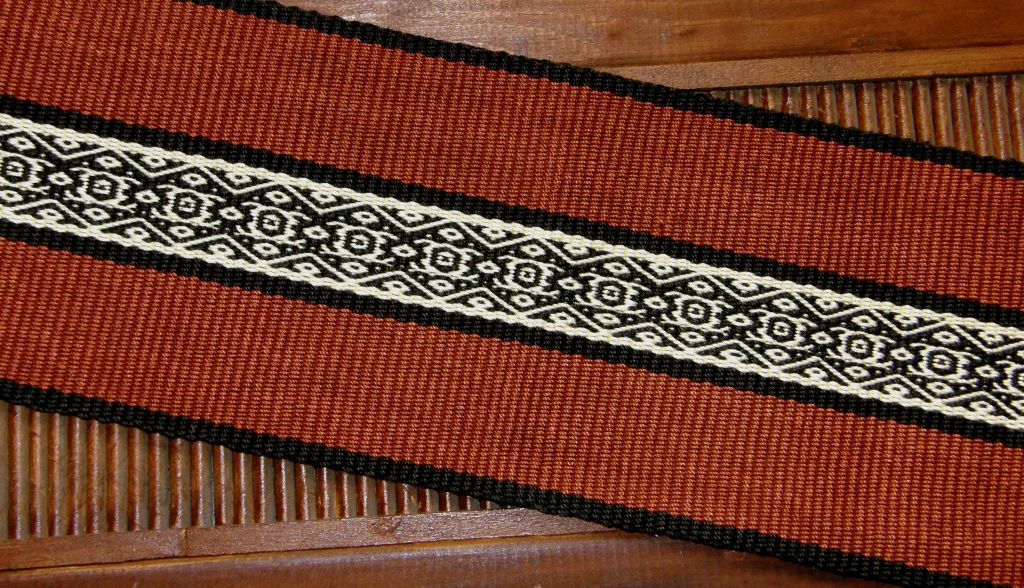
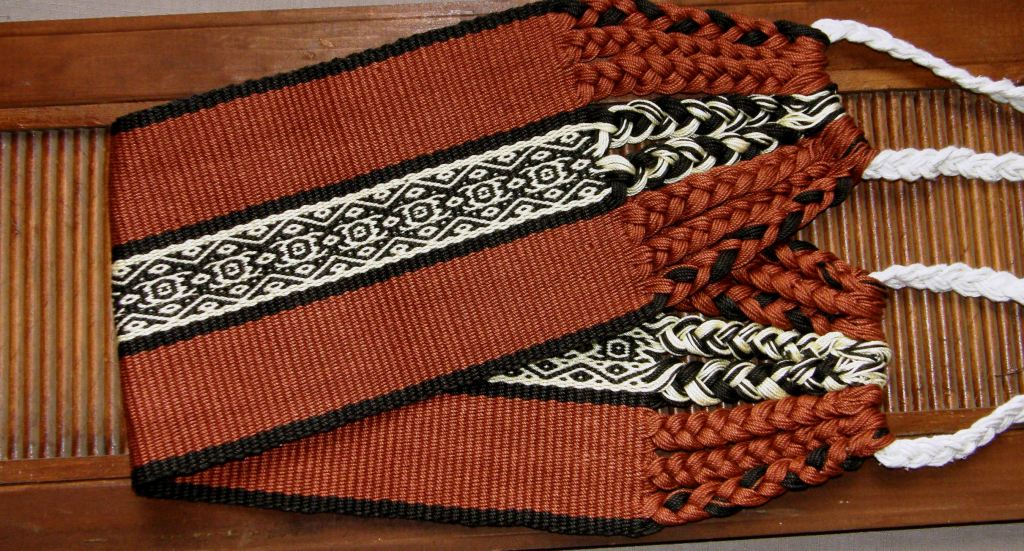
I used Aunt Lydia crochet cotton size #3 for Terri’s backstrap. I wouldn’t consider #3 heavy enough for a good backstrap in just warp-faced plain weave. I wove a center strip of pick-up pattern which was thick and made the plain borders match that thickness by weaving them in the intermesh structure (this “thick border” structure is taught in my first book).

This made for a nice thick and sturdy strap.

terri's backstrap

Terri's backstrap 2I hope she likes it!

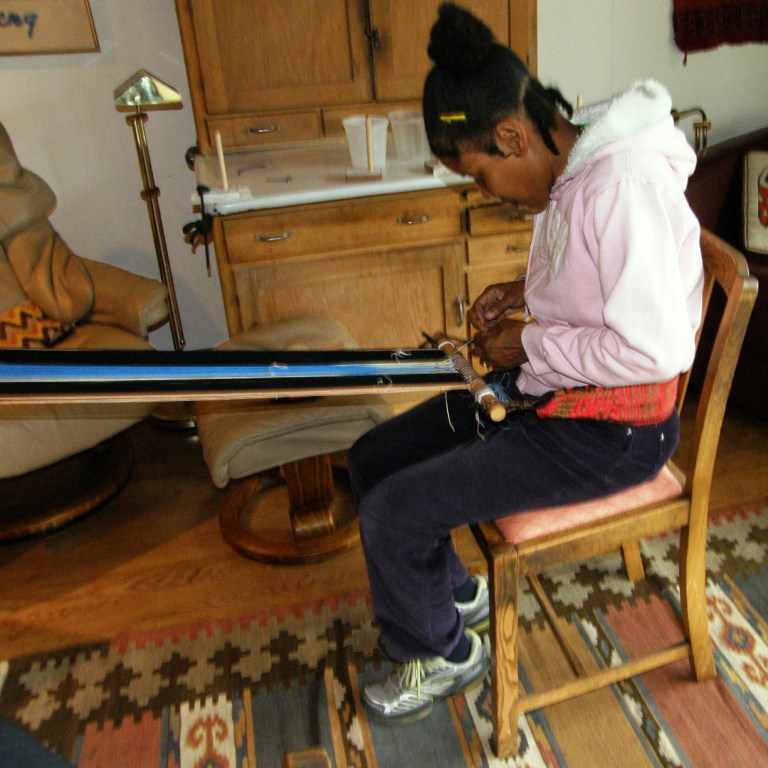
I have bunches of backstraps! My “favorite” regularly changes. Right now, I am using a simple piece of fairly thin leather with shoelace ties that a friend in the US found and gave me. It does the trick. It is actually pretty rare to find a backstrap weaver here in Bolivia who has gone to any particular trouble over her backstrap.

Peruvian woven backstrapHere’s one from Peru where someone has taken the trouble to make their backstrap decorative (or maybe it was just some left over piece of band being re-purposed).

But then again, just how badly do you want to weave? Sometimes you will put up with anything to get your hands into a warp!…like just a piece  of string around the back as you can see below.

discontinuous warpOkay, so I wove Terri’s backstrap, got my thoughts and ideas in line, and then felt ready to get back into the black panel project. I just love winding that black warp and sitting in my loom looking at all those threads stretched before me.

??????????????????????This time around I am making a conscious effort to ensure that the black panel sits happily between its red partners. I had made the mistake before of thinking that the design on the red panels was quiet enough not to interfere with what was happening on the black one…not so.

???????????????????????????????Here, I have just finished the first half of the center motif. I am hoping to use this motif, or something similar, in the weft twining which I will use to join the three panels across the top.

Finally,I am feeling much happier about it  and darn, now I have to leave it to travel! In sync and then out again…oh well.
What to take as an on-the-road weaving project?  I have to take clothes for two seasons….the cool to cold US fall and then the warm to hot beginnings of the Australian summer. I will need to think carefully about a small project to squeeze into the bulging bags.

Here are some projects from Icha in Chile who has both my books and is getting along just beautifully with the Andean Pebble Weave structure.

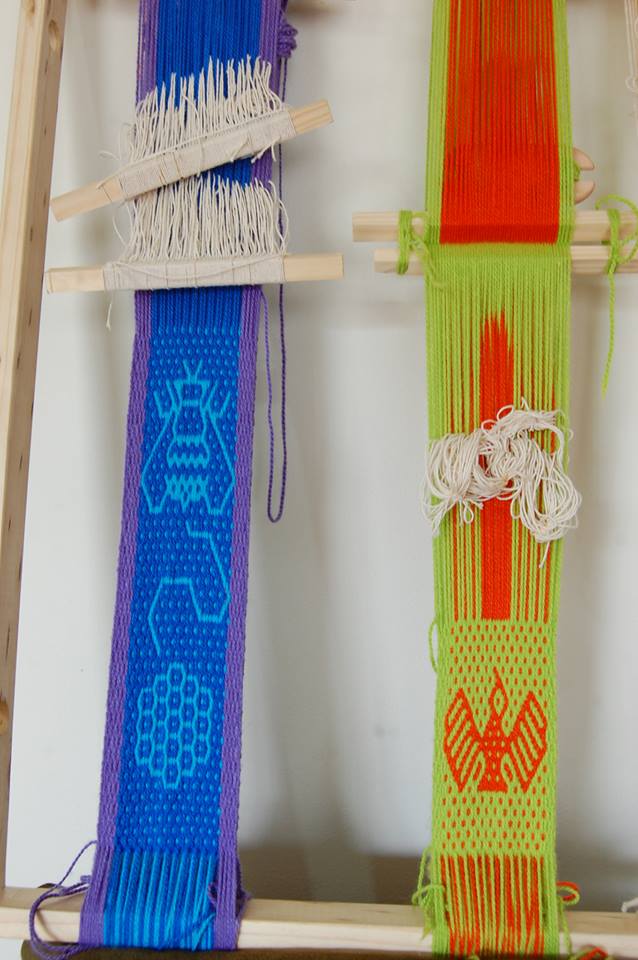
IchaShe has two projects going at once on her frame. Carolyn, an aspiring bee keeper, contributed her original bee pattern on the left to my second book. The hummingbird motif on the right is from my first book and comes from Taquile Island in Peru.

Now, here’s something just for fun….

A friendly gentleman from Cochabamba that I met the other day noted that I am more or less bi-lingual. (I say “more or less” because, despite being here for so many years, I find myself always apologizing for what I perceive as my imperfect Spanish. I think that being a language teacher makes me very hard on myself.) He then went on to tell me that he, too is bi-lingual. He of course, speaks both Spanish and Quechua. I then had the idea that it would be fun to record some phrases in Quechua so that you can hear how it sounds.

I have recorded the phrases along with a slide of the phrase in English that would perform the same function.

Delfin’s Quechua is that of Cochabamba and I gather that it varies from region to region. When I was at the Tinkuy in 2010 in Cusco, Peru with a group of weavers from Cochabamba, they talked about how the Quechua spoken in Cusco differed from the Quechua they know from Cochabamba. They said that the Cusco variety was more pure than theirs as speakers in Cochabamba have adopted many Spanish words which they mix with Quechua. There were quite a few Quechua words being used in Cusco that they simply didn’t know.

I have not written the phrases in Quechua to go with the recordings. When I was traveling and learning to weave, I would have someone repeat a phrase several times and invent my own way of noting the sounds on paper in order to memorize them. Sometimes one of my weaving teachers would ask me to teach her a greeting or a question in English for fun. It is interesting to hear how beautifully someone repeats exactly what you say without seeing it written down and then how distorted it gets once they have seen the written words and then start to reproduce their interpretation of them rather than just the sounds.

The word that Delfin uses for “beautiful” is the same one I learned in Potosi. I didn’t hear it being used in Cusco.

The word for ”delicious” is always useful as, when I have visited people in the highlands, I have always been offered food. Even if you can’t say anything else, that one word and a smile will go a long way to show your appreciation.

I once spent an entire day on a mini bus in Peru getting to Ayacucho. Everyone on the bus was highly entertained when the gentleman sitting next to me decided to teach me  numbers in Quechua. No matter how convinced I was that I was pronouncing the Quechua word for “one” correctly, everyone on the bus would crack up when I said it….and the numbers get progressively more difficult from there! The only one I could manage without sending everyone into fits of laughter was chunka…the number ten. It was a long road from one to ten! That was a fun trip.

Of course, nothing was written down. It was always a very good exercise for me, as a language teacher back then, to be put in the learner’s position.  I realised how quickly I arrived at the point where my head was about to explode trying to memorize and reproduce all the strange sounds. I would go back to the classroom as a teacher with a different approach after that little reminder.

Here’s a Youtube video with the numbers:

To finsh I will show you what Kristin from Ravelry wove on a backstrap loom using a beautiful reed that she made herself…

kristin (2)

kristin (1)Please visit Kristin’s blog for details of this spectacular project and more about that gorgeous reed. I am in love with this neat little set-up!

See you soon again from the  US with some beautiful fall colors, I hope.

Backstrap Weaving – East and West 2…The West Side Story

EAST AND WEST 2 – THE WEST SIDE STORY….

THE HIGHLIGHTS.

This is what happens when you don’t blog for a while! You have to drop the details and limit yourself to the highlights. Since the conclusion of the “West Side Story’ on this trip, I have finished yet another chapter entitled: “Hooray Santa Fe!”. So, as I sit in Miami airport waiting for my flight back to Santa Cruz, Bolivia, I will attempt to capture some of the flavor of just my west coast adventures in this post.

ANWG 2013 logo tapestryThe West Side Story started at the ANWG  Conference in Bellingham, Washington.

It was followed by a stay at my friend Betty’s (author, weaver, traveler, trekking and textiles tour leader, mountain climber, tree farmer, blueberry farmer……!!)  home in Washington state. There I got to meet up with one of Betty’s friends, Judith, whom I had met at the Tinkuy in Peru in 2010, as well as with Bobbie who is in the Ravelry group.

This chapter finished in San Francisco after having spent about ten days at my backstrap weaving friend Janet’s farm in Humboldt County California. Janet arranged two get-togethers with weavers I had met last spring.

This trip has been about many things, one of which was meeting new people and putting faces to online acquaintances…

Here are some of the members of the ANWG Organizing Committee and ANWG instructors at a pre conference get-together. The group includes Marilyn and Linda who took my classes, Sheri, my Bellingham host and my wonderfu roommate, Marie. I am sure that you will recognize some familiar faces amongst the teachers. Here is where I got to meet the ladies with whom I had been corresponding all those months while the conference was being prepared. It was great to meet Holly, Jane, Patrice, Paula ad Marilyn at last.
Here are some of the members of the ANWG Organizing Committee at a pre-conference get-together. The group includes Marilyn and Linda, Sheri, with whom I stayed in Bellingham, and my wonderful roommate, Marie. I am sure that you will recognize some familiar faces amongst the teachers.  It was great to meet Holly, Jane, Patrice, Paula and Marilyn at last.

This was a wonderful conference. Apart from being in one place with over five hundred enthusiastic weavers, I loved the venue, the dorms, the food, our fourth floor weaving room with the view of Bellingham Bay, and all the fun details that the committee had gone to so much trouble to include. I can’t imagine that these events can get any better than this one!

Il oved the handwoven conference logo on the crocheted background which were hung on wondows to mark the rooms which were desgnated classrooms. I kept mine...not sure if I was supposed to...ssshhh! My roommate, Marie was part of teh team responsible for the handwoven pouch and name tag combo. That little piuch was such a cool idea. It held keys and meal card. My backstrap weaving students found it handy for parking their sword/beater. The fabric was so very pretty. Imagine having to make over 500 of these for all the participants!
I loved the handwoven conference logos on the crocheted backgrounds which were hung on windows to mark the rooms which were designated classrooms. My roommate, Marie, was part of the team responsible for the handwoven pouch and name tag combo. That little pouch was such a cool idea. It conveniently held keys and meal card. Backstrap weavers found it handy for parking their sword/beater. The fabric was so very pretty. Imagine having to make over 500 of these for all the participants.

photo (1) mini cropAnd of course, there are one or two special people amongst all those that you get to meet and chat with at such events with whom you have a particularly strong connection.

Marilyn was one of them.

She wove with me on several days, was a committee member, taught four classes and was a whirl of energy. She seems to have an endless collection of beautiful ethnic textiles to wear and I looked forward to seeing what she would be wearing  each day.

At the final banquet, we were asked to wear something handwoven. So, there you see Marilyn in a gorgeous Guatemalan huipil. I simply draped the  Bhutan-inspired scarf that I wove around my shoulders.

(And guess who I bumped into in the plaza in downtown Santa Fe last week as I stopped to buy a fajita?)

The West Side Story is also about meeting some of my online friends from the various backstrap weaving groups as well as reconnecting with weavers from past visits.

Ravelry member Cindy weaving a nawi awapa band in my class.
Ravelry member Cindy weaving a nawi awapa band..

Cindy was also responsible for my spending in the ANWG Vendor Hall. She unearthed some Guatemalan natural dyed cotton at the Mayan Hands booth (on sale) and refrained from buying all of it! She and I bought bags of two colors and swapped. I wonder what she is planning to do with hers.
My backstrap weaving friends from Humboldt County got together in a couple of sessions...Janet, Gina, Autumn, Aceand Linda. We tensioned our warps on poles, floor looms, toes and inkle looms.
My backstrap weaving friends from Humboldt County got together too…Janet, Gina, Autumn, Ace, Pam, Buffy and Linda. We tensioned our warps on poles, the beams of floor looms, toes and inkle looms.

It was about playing with WOOL, something that is not so accessible in my home in the lowlands of Bolivia. And, of course, when I am with Janet and her friends, it is about lots of spinning and plying.

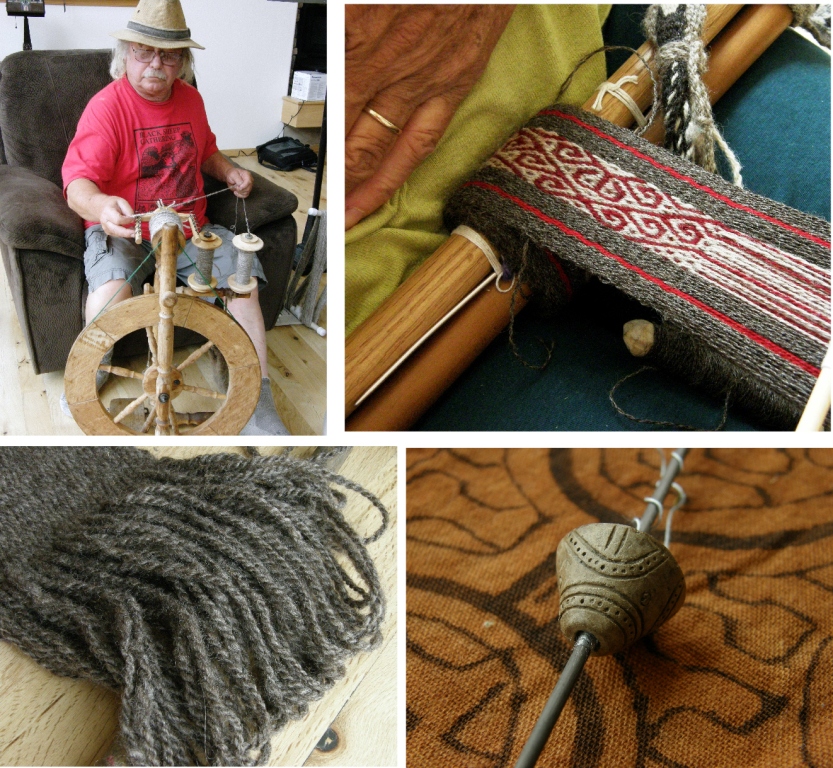
That's Ace at the wheel and below you can see the heavy grey yarn that he spun semi-worsted for his luxury backstrap...a lovely thick, cushy strap. You can see Janet working on a pebble weave band using her own handpsun and a pattern from my second book. And, on the right, there's the wee spindle whorl from coastal Ecuador that I gave Janet last spring. She has mounted it on a knitting needle and has been sponning with it.
That’s Ace at the wheel and below you can see the heavy grey yarn that he spun semi-worsted for his luxury backstrap…it made a lovely thick, cushy strap. You can see Janet working on a pebble weave band using her own handspsun worsted and a pattern from my second book. And, on the right, there’s the wee spindle whorl from coastal Ecuador that I gave Janet last spring. She has mounted it on a knitting needle and has been spinning with it.

Ace is new to backstrap weaving but not to spinning and I gave him a hand with that grey wool project. I have to admit it looked hairy and scary at first! but, it was a breeze to weave with. Who knew that it would weave up so well on a backstrap loom and in a warp-faced fabric? It all comes from the expert hands of the spinner and his/her preparation of the material.

???????????????????????????????I got so carried away with weaving and the enjoyment of working with that lovely thick and even handspun that I wove almost to the end forgetting that Ace would want several inches of unwoven warp ends from which to make braids for his backstrap. Once off the loom he braided the ends and braided a separate cord, from his handspun of course, for the straps.

Aces handspun yarn for backstrap

Some of Janet's beautiful naturally dyed handspun yarn which was destined for warp-faced weaving.
Some of Janet’s beautiful naturally dyed handspun yarn which was destined for warp-faced weaving….no overspin, no kinking!

It was about SUMMER, glorious summer…ripening grapes and berries, fireworks in the night sky, outdoor music, beaches and sunsets.

The view from my bed in Betty's studio looking out on her tree farm and ripening blueberries
The view while lying in bed in Betty’s studio looking out on her tree farm and bushes with ripening blueberries.
Sunset over the mountains in faraway Canada on the final evening of ANWG in Bellingham. The cool and enticing raspberry jungle at Janet's place. My poor, but kind- of -interesting, attempt at photographing the fireworks during my first 4th of July in the US. Beautiful patterns in light and dark sands on the beach at Shelter Cove near Janet's place....Humboldt County...sigh!
Sunset over the mountains in faraway Canada on the final evening of ANWG in Bellingham. The cool and enticing raspberry jungle at Janet’s place. My poor, but kind- of -interesting, attempt at photographing the fireworks during my first 4th of July in the US. Beautiful patterns in light and dark sands on the beach at Shelter Cove near Janet’s place….Humboldt County…sigh!

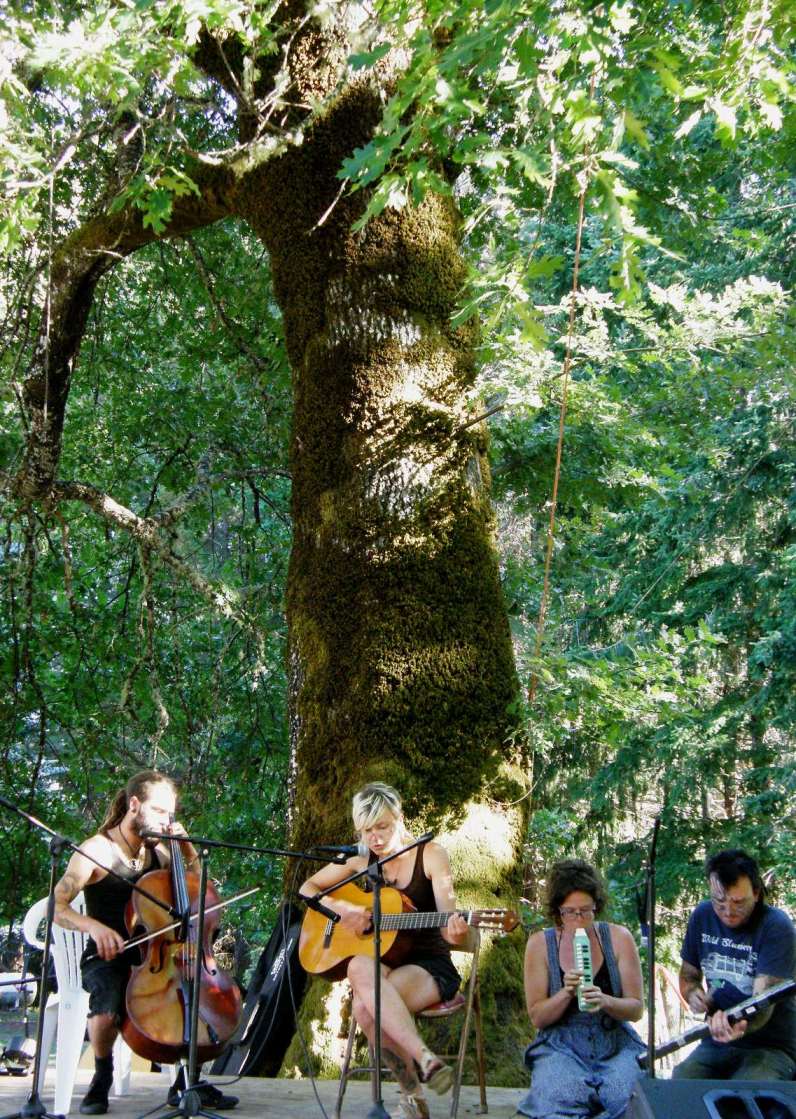
Music under the big ol' white oak...the annual"Strawberry Jam" at Janet's place. I hooked up a warp to my toe, wove and enjoyed the music.

Music under the big ol’ white oak…the annual”Strawberry Jam” at Janet’s place. I hooked up a warp to my toe, wove and enjoyed the music.

And there were textiles!! I was lucky that my visit with Betty coincided with a visit from Betty’s good friend Judith.She had come down from Canada to take a spinning class from Judith MacKenzie McCuin and stopped for a day to visit. She had brought with her the most exquisite textiles from a trip she had taken to Indonesia.

Judith lays out the textiles under the supervision of Trouble the cat.
Woven on a backstrap loom, this piece has both the warp and weft patterned ij the ikat technique. On top of that, the cotton thread was handspun. Judith tels me that this is known as "Magic Cloth" and comes the Tenganan Bali Agai Community in Bali, Indonesia.
Woven on a backstrap loom, this piece has both the warp and weft threads patterned using the ikat technique. The cotton thread is handspun. Judith tells me that this is known as “Magic Cloth” and comes from the Tenganan Bali Aga Community in Bali, Indonesia.

And, speaking of warp and weft ikat, I have to show you the jacket that Linda LaMay enetered in the juried show at ANWG. Linda wove with me over several days. She happened to be in the Gallery on my visit and allowed me to photograph her with her piece that was given the Complex Weavers Award. Her piece also won 1st prize for being the best representation of the conference theme: Crossing Threads, Crossing Borders.

Linda had bought a pre-tied and dyed ikat or, jaspe, warp in Guatemala...one which had been designed for warp faced fabric. Linda, however, wove it as a balanced weave, a twill and, in order to do this, had to dye the weft herself and then carefully place it to match the dyed pattern in the warp....she painstakingly transformed it into warp and weft ikat...amazing.
Linda had bought a pre-tied and dyed ikat or, jaspe, warp in Guatemala…one which had been designed for warp faced fabric. Linda, however, wove it as a twill exposing both warp and weft and, in order to do this, had to dye the weft herself and then carefully place it to match the dyed pattern in the warp….she painstakingly transformed it into warp and weft ikat…amazing.
Another textile in Judith's collection, this one from Sumba, Indonesia...all the stuff I love!...weft twining along the bottom, simple warp floats to create creatures that are mirrored in the central ikat section.
Another textile in Judith’s collection, this one from Sumba, Indonesia…all the elements that I love!…weft twining along the bottom and simple warp floats to create creatures that are mirrored in the central ikat section.

And, speaking of twining, let me show you the ravenstail work that John Beard showed in the Instructors’ Exhibit at ANWG. He kindly gave me permission to show it here….spectacular.

John Beard ravenstail

And, speaking of the warp floats in the Sumba textile, let me show you a textile that ANWG instructor and fellow Australian Kay Faulkner collected in her SE Asian travels. She brought this to ANWG to inform and inspire her students in her workshop entitled “East Meets West”.

We had fun comparing and contrasting spotty pebble-like structures and she came over to my classroom on the last day with Bhakti Ziek so that we could have even more "pebbly" conversation. If you look very carefully at the piece Kay brought you will see that there are weft floats amongst the warp floats.
Both faces of this textile have warp float patterns . Kay and I had fun comparing and contrasting spotty pebble-like structures and she came over on the last day with Bhakti Ziek so that we could have even more “pebbly” conversation.

I just gaze and gaze at this Selendang shoulder scarf of Batuisi, W Sulawesi from Judith’s collection. The colors all come from natural sources. The yarn used was heavier than that used in other Indonesian ikat pieces that I have seen. I really liked the feel of this piece.

selendang shoulder scarf

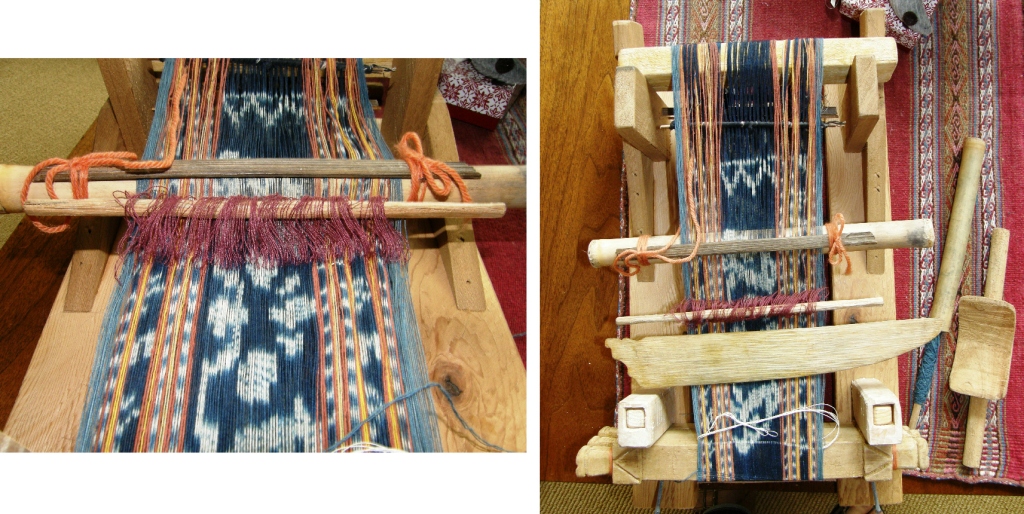
There are more of Judith’s textiles to show but I think I will save them for another post. Let’s look at the miniature backstrap loom that she got in Indonesia instead. I am always intrigued by new-to-me pieces of equipment that the various backstrap weavers aroud the world use and this loom included such a piece which may hold one of the many secrets of how backstrap weavers go about keeping the ikat-patterned warp threads reasonably aligned.

What a sweet little loom with its circular ikat warp in place. It was a great opportunity for me to take a close look at one of the Indonesain backstrap set-ups.
What a sweet little loom with its circular ikat warp in place. It was a great opportunity for me to take a close look at one of the Indonesian backstrap set-ups. The miniature wooden backstrap is so cute!
I love the carved pieces that serve to clamp the circular warp. Beyond the heddles and shed rod, the warps that had been tied and dyed were clamped between two sticks and wrapped. The wrappings seemed to separate the warps nto the sections that had been wrapped. I am wondering if the wraps also serve to squeeze the warp threads into groups and therefore help stop the from moving excessivley.and blurring the design too much.
I love the carved pieces that serve to clamp the circular warp. Beyond the heddles and shed rod, the warps that had been tied and dyed were separated along a stick which was wrapped. The wrappings seemed to separate the warps into the sections that had been tied for dyeing. I am wondering if the wraps also serve to squeeze the warp threads into groups and therefore help stop the from moving excessively and blurring the design too much.

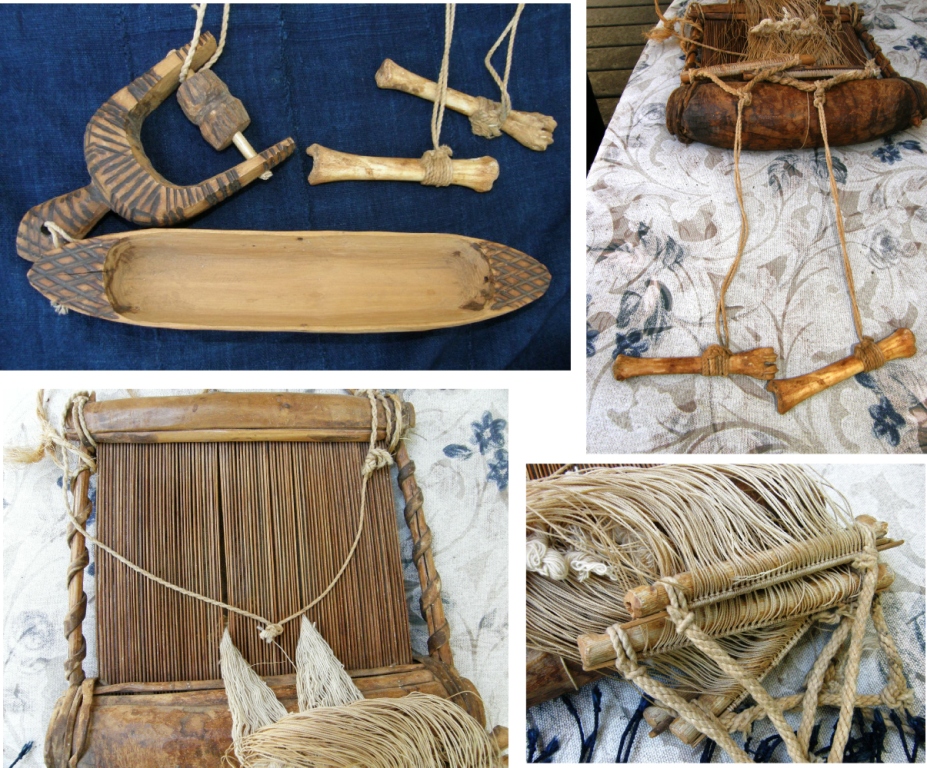
51eM0hePRnL._SX500_And, while on the subject of simple looms from far away places, let me show you a loom that a lady in Arcata, CA  showed us when our weaving get-together group went to the Farmers Market.  A friend had brought it back from Africa for her with accompanying postcards that showed how it was set up. The postcards said Upper Volta and were written in French. This, according to Wiki is today’s Burkina Faso and it seems that the people who use these looms are called the Mossi. The loom pictured at left is from this page.

It has some beautiful parts which include bone foot toggles for operating the shafts and a fine reed framed with what could be wood and horn. The carved wooden pulley system and shuttle were lovely as was the indigo-dyed cloth strips that had been sewn together. I used this as background for one of the pictures. It’s for sale…tempting!

mossi loom

??????????????????????Back at Janet’s I enjoyed a chance to do some weaving of my own.

I got to work on the two warps that I had brought with me.

I have to say  that I was happy to get this one off the loom as I do not care for it at all! I am going to use it to practice and learn some new sewing skills. Maybe I can shape it into some kind of interesting bag.

This is the warp that I wove while visiting at the Mannings’s annual Spinning Seminar last month. The pattern is one that I have woven many a time and observers’ reactions while I was weaving it inspired an addition to my FAQ pages…this new one being about following and ceasing to follow pattern charts.

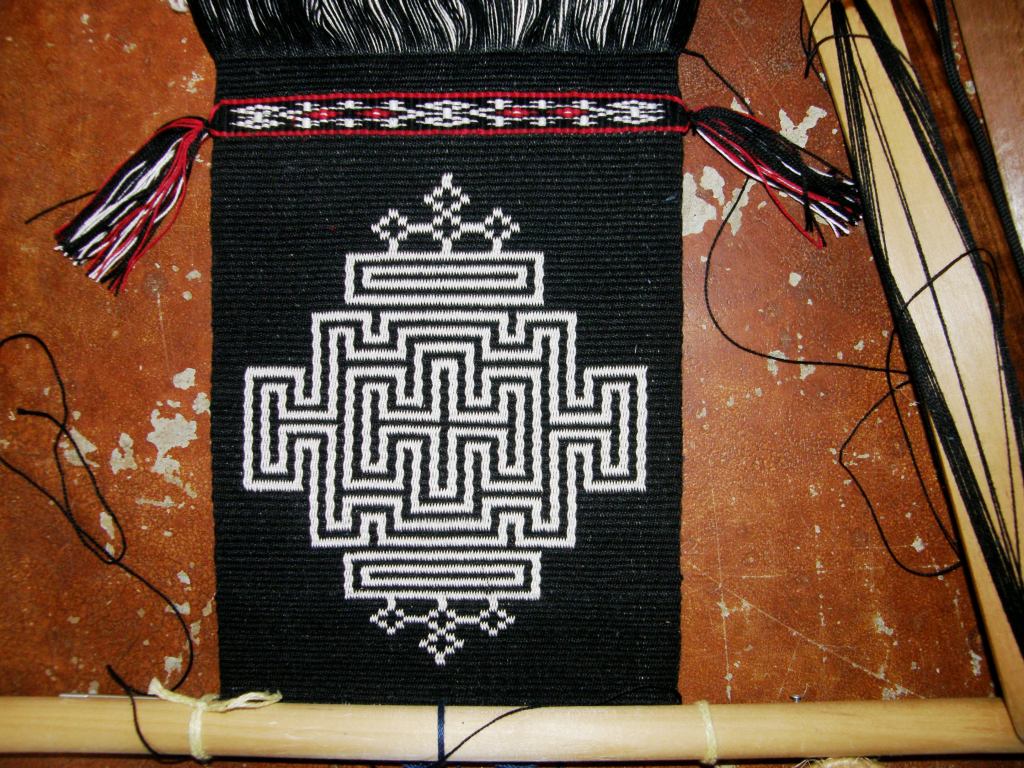
Next up was the piece on which I am weaving a Bhutanese design called “labyrinth”. I am weaving it using the two-heddle intermesh technique that I teach in my second book.

labyrinth design backstrap weavingThe pattern is from David K Barker’s first book of Bhutanese designs. Look at my RESOURCES page to see how you can download this free book. I never plan these ”traveling” warps to actually be anything knowing that my weaving on them is generally so interrupted and disjointed. However, I got to sit and weave on this quite a lot at Janet’s and had it set up in a very similar way to the way I usually like to weave. I lodged the far loom bar behind clamps on a low book shelf and moved the books and magazines around so I could extend my legs within. The angle was just right for me. With a pillow added on the floor, I was right at home.

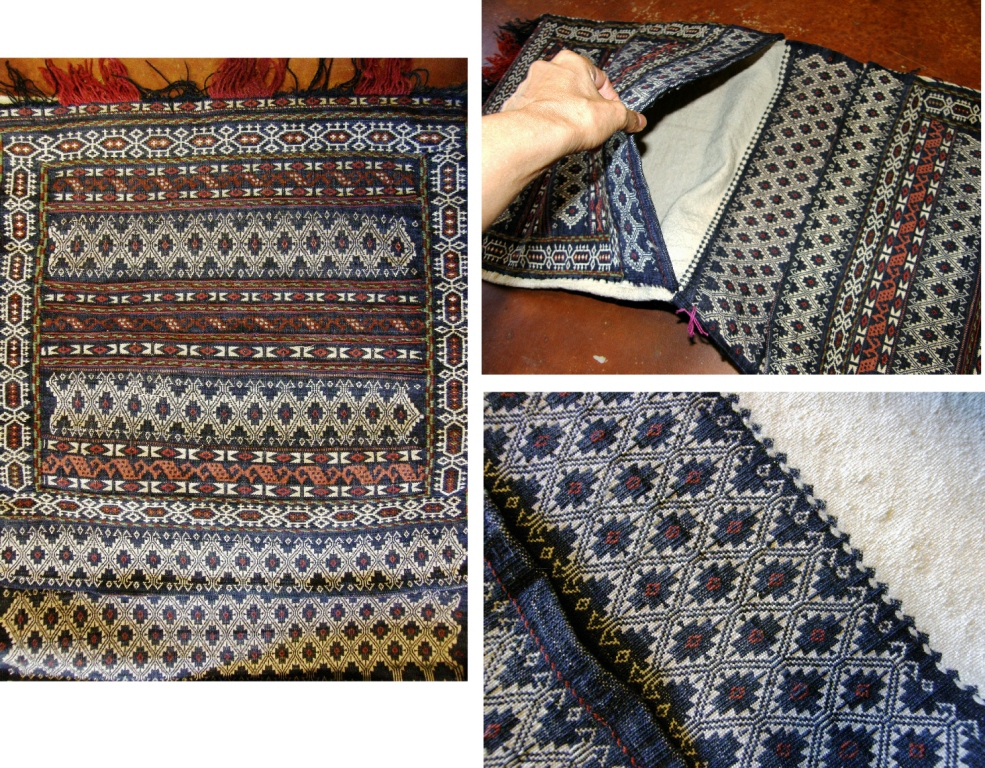
Once the first large motif was complete and I could see that this could actually become something, I had to decide what would come next. Inspiration came in the form of a double-pocket saddle bag quite likely from Afghanistan. Janet bought it in a local shop of ethnic artefacts and it is gorgeous! It is woven with wool and largely patterned using weft substitution technique which results in floats on the back. However, the kinds of  patterns used in this piece do not create overly long or unruly ones. There are all kinds of soumak and warp-wrapped patterns as well. The fabric is incredibly stiff and tight…made to last a long, long time, no doubt.
inspiration for new backstrap weavingThose reds and blues…love them! The back of the bag, which would be against the animal’s back, was not patterned. Janet and I were both astounded when we realized that the plain cloth was not a separate backing but, rather, a continuation of the weaving in an extremely tight and very well balanced plain weave. I would bet that this bag is waterproof.

saddle bagSo, this is pretty much where I am at so far with this latest piece of weaving. I just started some vertical warp-wrapping for the back side which I haven’t photographed yet and I have chosen a motif for the center of the back…it’s going to be a bag (of course!)…black, white and red (of course!) and it is going to get seriously dressed up with tassels and trims. This will be something nice to dive right into when I get back home (that will be soon, I hope. I am writing this in Miami airport).

??????????????????????

Next up on my blog…Santa Fe and the International Folk Art Market…it has been one of my dreams to see this. Visiting Santa Fe also gave me a chance to hang out with several weaving buddies that you will have already met here on my blog. I can’t imagine a better place to have gotten together with them and we are wondering how we can possibly top this!

Of course it inspired all of us but the funny thing is… one of my best ideas came  from something I saw in the American Airlines inflight magazine on the way to Miami…funny how these things work! See you next time.