The time to pack up and hit the road is approaching and so I decided to pack away the five months of creative chaos that has accumulated on my bedroom floor…pattern charts, sticks of various sizes and lengths, swords, shuttles, cable ties, metal rods, pick-up tools, heddle string, sewing thread, yarn, cardboard strips, needles, string. Everything went back in its proper place and I could see the rug again and I didn’t need to play hop-scotch on the way from my bed to the door.
But then I decided that there was still time to weave some tiny projects and I started planning a lanyard that a friend has been asking me to weave for her for some time. I also want to weave a strap for a pouch that I have been thinking about for years as well as a bookmark that I promised another friend. And, with just that, wouldn’t you know it, I am back to Square One and can’t see my rug any more! The books, and charts and yarn and worksheets are all over the place along with the shoulder-bag project that I continue to sew.
This is where I was with the bag project when I last posted. The zipper is in place and sides have been installed. On my weekly visit to the supermarket I was happy to find a long table runner that I could use as the lining material. It looked like it was just the right width and I loved the color and subdued pattern. This seemed to be a safe bet for me who knows nothing about fabric and I was happy to pay a bit more than it would have cost me to just buy fabric in the street market. I doubt that I would have found anything that I liked as much in the market stalls.
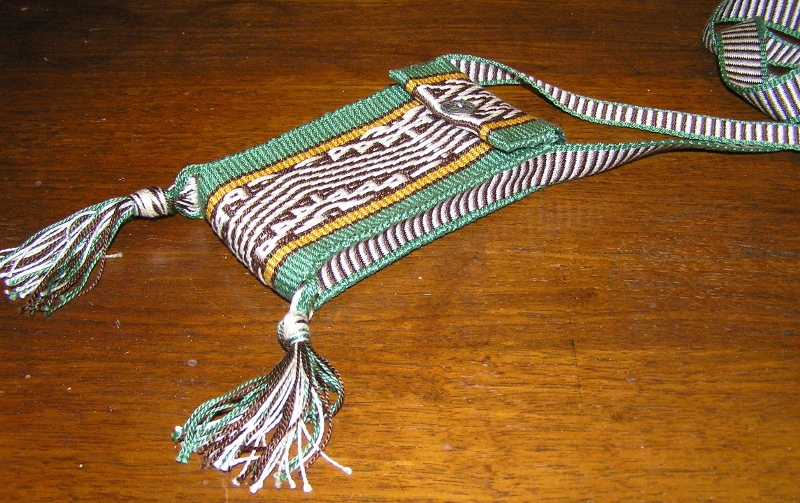
That un-ripping tool got a workout as I sewed and re-positioned over and over. Now it’s done. This is the opening for the quirky pocket…the one that sits on the outside but is accessed from the inside. I got to use a beautiful button that one of my students made by hand as a closure for the pocket. The loop around the button is an eye-pattern tubular band that I wove.
I edged the pocket and the sides with plain-weave tubular bands in blue. Tubular bands are such wonderful finishes. The pocket and sides are so sturdy with those nice firm bands in place. And that is where this project sits until I can get more blue yarn for the straps. I was hoping to use this bag on this trip but that won’t be happening. I’ll come back home with the yarn and weave some nice sturdy straps in the intermesh structure.. The bag is the perfect size for my books!
As for the tiny tape projects, a friend asked me to weave a lanyard for her name tag using the cat motifs that I designed for my book of 100 Patterns.My online weaving friend Andrea had designed cats with intertwined tails which she allowed me to adapt to more closely match my own three cat motifs. All four motifs are charted in the book. The lanyard needs to be 3/4”- 1” wide.
Here’s the first little guy on my width-sample warp which confirmed that I had enough ends to get 3/4”. I am going to continue weaving this sample and make it into a wrist band for myself while I plan the layout of the lanyard. I’ll probably mix the cat motifs with some paw prints, the charts for which are also in the book of 100 patterns.
At the same time, I am getting a start on another band that has been on my mind for several years. I have been collecting the word “weave” in various languages which I would like to weave into a strap for a pouch. Many years ago I wove and constructed a carry bag for my backstrap bits and pieces and I used weft twining to decorate the strap with just a few words in different fonts.
I am using the intermesh structure this time and using just the one font to weave my words.
I have about twenty-four words collected now from online friends ranging from Cherokee to the Yoruba language of Nigeria.
Here are the cats in guitar-strap size woven by Julie Beers for her husband’s guitar…
Kathy King combined patterns from the book of 100 patterns (Complementary-warp Pattern Book) and my very first book, Andean Pebble Weave. She calls her band The Birds and the Bees. I love the blue and brown together.
Margo wove this wrist-cuff combining various patterns that are charted in my books, as well as designing some of her own and giving it all an original twist to create a cycling-inspired theme for a friend. I love this!Colleen Turner added a strap that she wove on an inkle loom to a shoulder-bag. The pattern is charted in the Complementary-warp Pick-up book which also gives step-by-step instructions for those who use any kind of loom to weave warp-faced bands.
Marsha’s band in 20/2 silk is spectacular. The red and blue are her own hand-spun threads. She has combined patterns from two of my books and the result is gorgeous!
And here is Kristin’s latest piece of awesome-ness in her own hand-spun wool. She has named this “Celestial”. The star pattern is one that was created by Kurt Laitenburger for tablet weaving and which he allowed me to adapt to the Andean Pebble Weave structure for my More Adventures book. I like to call the smaller pattern that Kristin used on the sides “Sunrise, Sunset” and this piece makes me think of a sunset with the evening star rising. The red, orange, blue and yellow all come from natural dyes. Kristin is going to sew this into a long zippered bag for for her backstrap loom.
One of my weaving teachers, Maxima, took a liking to this same star pattern when I was up in the highlands. Of all the samples that I took to show her, this was the one that she wanted to learn. We wound a warp and Maxima took over after she watched me weave a few rows. I was able to show Mr Laitenburger how his pattern was being enjoyed on the traditional leaning loom in the central Bolivian highlands. He was very pleased.
Kurt Laitenberger does beautiful work with tablets and I really appreciate his allowing me to adapt some of his patterns to the Andean Pebble Weave structure for my books.
Speaking of tablet weaving, I was looking through some of my old folders on my desktop about which I had almost completely forgotten and I re-discovered some awesome pictures that Taylor had sent me of tablet weavers in Bhutan. Taylor and I had been corresponding by email while she was living in Bhutan and we were able to meet up once in the USA when I was on a visit. She gave me an incredibly fine and stiff tablet-woven band and told me about how some of the tablet weavers use x-ray film to make the tablets for the extremely fine thread that they use. After our get-together, she sent me these photos that she had taken f a family of tablet-weavers.
It’s fascinating to see a classic backstrap loom set-up being used with the tablets. I am guessing that the structure that is used for the bands that are woven using this set-up is one in which the weaver does not have to deal with built-up twist in the warp threads.
Taylor had been working on a project teaching women to construct tote bags from strips of plastic cut from soda bottles. I think that you can just make out the green handle of one of the bags in the foreground of this photo in which the weaver is preparing her warp with the thin film tablets.
I love the rocks and the weights that she is using to hold her stakes in place. I managed to scavenge an old paint can filled with cement that I sometimes need to use when I warp using certain set-ups.
Until next time, let me leave you with this message: A limited number of hard copies of all my books in Englishwill be available while I am traveling. Please leave a comment on this post, if you are interested, and I will get back to you.
HOME! While I am settling into my visit to my “other home” here in Australia, I would like to share with you three cool websites I found while on my US trip.
1. PROJECT GUTENBERG: Perhaps I am one of only a few people who knew nothing about the Project Gutenberg site and its thousands of free e-books. It seems that everyone I excitedly tell about it discovered it a long time ago. I ran across it while looking for a used copy of Silas Marner to buy. There it was free to enjoy as part of the Gutenberg Project.
As is The Wind in the Willows andthat was meaningful to me because…
On my final night in the US I spent time with a weaver friend who had a copy of The Wind in the Willows from which she has been reading aloud each evening. I was reminded of the part about HOME that had touched me deeply even as an eight-year old child reading the book for the first time. It seemed so appropriate to re-read that part as my US trip ended and my thoughts turned to the home in Australia that I hadn’t seen for four years (a collection of people, memories and experiences rather than a structure) and the one I had left twenty years ago to venture to South America. I faced the trip with very mixed emotions as my mother, my “anchor”, had died in September.
I wanted a copy of the book so I could sit quietly on my own and read the passages about home. And then Ruth wrote to me later to tell me that The Wind in the Willows too could be enjoyed for free via the Gutenberg Project site.
I’ll quote the part about home here. All you travelers out there will surely have felt like this at some point.
From “The Wind in the Willows” by Kenneth Grahame:
Home! That was what they meant, those caressing appeals, those soft touches wafted through the air, those invisible little hands pulling and tugging, all one way! Why, it must be quite close by him at that moment, his old home that he had hurriedly forsaken and never sought again, that day when he first found the river! And now it was sending out its scouts and its messengers to capture him and bring him in. Since his escape on that bright morning he had hardly given it a thought, so absorbed had he been in his new life, in all its pleasures, its surprises, its fresh and captivating experiences. Now, with a rush of old memories, how clearly it stood up before him, in the darkness! Shabby indeed, and small and poorly furnished, and yet his, the home he had made for himself, the home he had been so happy to get back to after his day’s work. And the home had been happy with him, too, evidently, and was missing him, and wanted him back, and was telling him so, through his nose, sorrowfully, reproachfully, but with no bitterness or anger; only with plaintive reminder that it was there, and wanted him.
The call was clear, the summons was plain. He must obey it instantly, and go.
……………………………………………………………………………………………………..
The weary Mole………soon had his head on his pillow, in great joy and contentment. But ere he closed his eyes he let them wander round his old room, mellow in the glow of the firelight that played or rested on familiar and friendly things which had long been unconsciously a part of him, and now smilingly received him back, without rancour…..
…….He saw clearly how plain and simple— how narrow, even— it all was; but clearly, too, how much it all meant to him, and the special value of some such anchorage in one’s existence. He did not at all want to abandon the new life and its splendid spaces, to turn his back on sun and air and all they offered him and creep home and stay there; the upper world was all too strong, it called to him still, even down there, and he knew he must return to the larger stage. But it was good to think he had this to come back to; this place which was all his own, these things which were so glad to see him again and could always be counted upon for the same simple welcome.
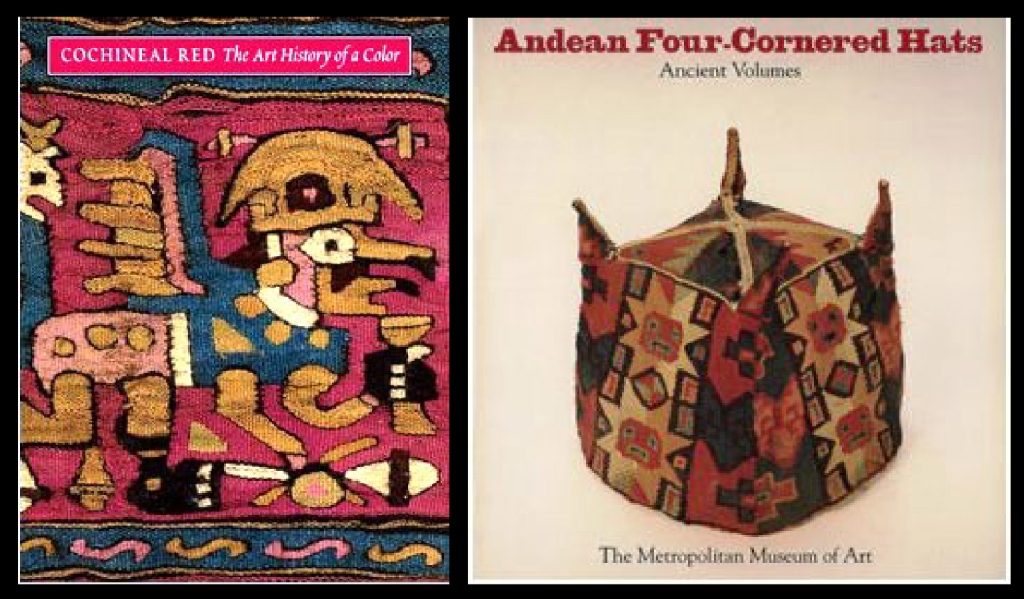
On to the next cool website….2.THE METROPOLITAN MUSEUM of ART’S PUBLICATIONS PAGE…..Many thanks to Kathleen for telling me about this site which has five decades of Met publications on art history, available to read, download, and/or search for free!!! Kathleen had downloaded and was enjoying a book on African textiles. There are hundreds of titles.
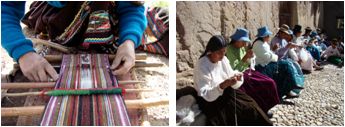
Images byInstituto de Lengua y Cultura Aymara, ILCA, La Paz Bolivia
The Weaving Communities of Practice website is the result of a project funded by the Arts and Humanities Research Council . The project focuses on textiles, culture and identity in the Andes.
I was happy to see that Elvira Espejo, pictured at left, worked on this project as the ILCA’s Textile Expert. I got to meet Elvira at the Encuentro de Tejedores de las Americas in Cusco last year where she was presenting the books she wrote with British anthropologist Denise Arnold: Ciencia de Tejer en los Andes:estructuras y tecnicas de faz de urdimbreand Ciencia de las Mujeres: Experiencias en la cadena textile desde los ayllus de Challapata.
Amongst other things, the site contains video segments of various aspects of backstrap weaving which accompany information about the stages of learning for young weavers-in-training in the Quechua and Aymara cultures. I have only just begun exploring the site and have barely scratched the surface. It is an amazing resource and there we have it at our finger tips,
Image by ILCA La Paz, Bolivia
From the site’s front page…..
The project is based at the Centre for Iberian and Latin American Visual Studies (CILAVS) and the Department of Computer Science and Information Systems at Birkbeck, University of London, with the Instituto de Lengua y Cultura Aymara (ILCA), in La Paz, Bolivia, in partnership with museums in the UK, Bolivia, Peru and Chile.
The principal feature of this website is a database of Andean textiles. There is also a detailed guide to processes of textile manufacture, including images and video clips of techniques, instruments and structures; a glossary of textile-related terms in English, Spanish and Andean languages; an introduction to textile heritage; and bibliography.
And so the sun sank on my final days in Santa Cruz, California. It was time to follow those birds west across the Pacific Ocean to Australia. Time to think back on the six weeks that had passed and “all its pleasures, its surprises, its fresh and captivating experiences” many of which I have already reported here on this blog.
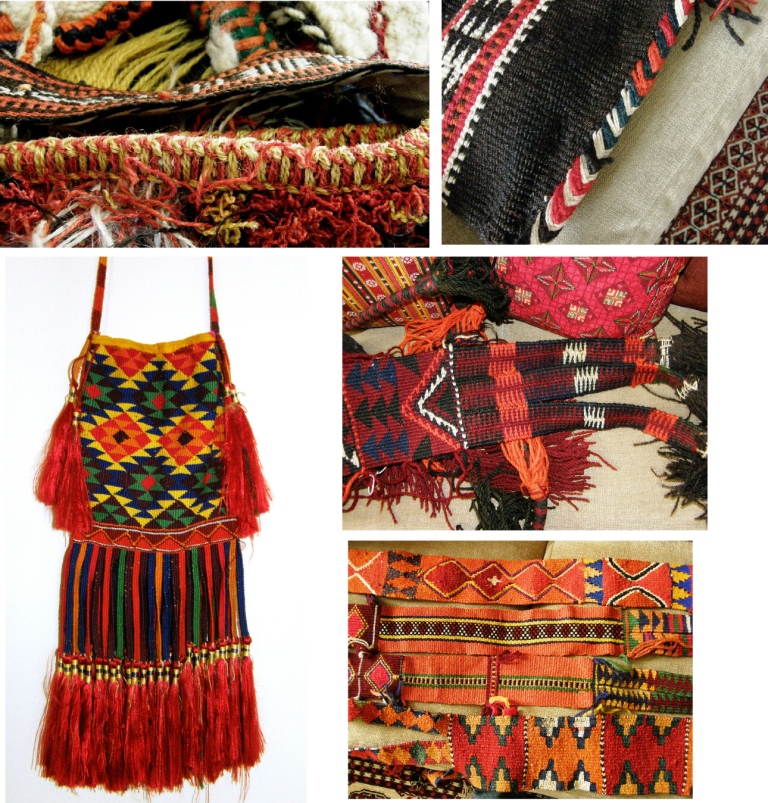
One such captivating experience…Annie and I got to visit with Joy Totah Hilden, author of Bedouin Weaving of Saudi Arabia and its Neighbours, in her home in California.
It was a thrill to be able to meet Joy and sit on the sofa amongst the richly patterned pillows and beneath that enormous woven tent divider listening to her stories.
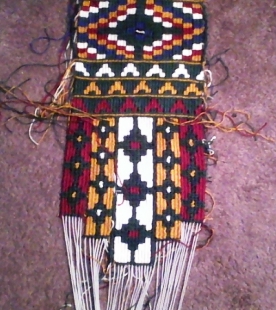
Then we got to touch and examine the textiles that I had been admiring online on her website and in her book…textiles that had inspired me on several occasions to weave pieces of my own (at left) using the traditional Bedouin colors and patterning techniques.
Camel adornments and all kinds of bags decorated the walls of her home. Many more treasures were carefully stored away and Joy was happy to unpack and bring many of them out one by one to show us.
Twining, weaving, braiding, wrapping, stitching…all sorts of bands and tassels and ineresting edgings….colors!!!….heaven! It was particularly interesting for me to be able to examine the pieces from Oman where the weavers cleverly use a second weft to tie down the long floats that are typically created by the warp substitution technique on the back side of the fabric. Having experimented with this with the guidance of images of Omani textiles that Tracy Hudson had provided, it was a wonderful opportunity to at last be able to examine the textiles themselves.
Happy with Annie MacHale and Joy Hilden surrounded by gorgeous textiles.
Moving on….Here are some of the books and publications that I picked up on this trip…
I had my issues of the Complex Weavers Journal all delivered at once so that I could take them back to Bolivia with me.
Bue Eye/Prayer Flags by Miryam-Chavah
After searching online many times over the last years for a reasonably-priced copy of the out-of-print Soumak Workbook, I finally found one and snapped it up. I have been admiring the creations of Julia Miryam-Chavah online, many of which have been done using the soumak technique. She has often named the Soumak Workbook as a resource and so, I am excited to have been able to get a copy.
I got the One Needle, One Thread book from Pam Nadjowski at Textile Treasures in Santa Fe NM when I was there in July but left it behind at my friend DY’s house by mistake. Now that I finally have it in my hands, I will be able to read about some of the wealth of braiding and embroidery techniques used in Chinese textiles that this book covers and maybe incorporate some in my work.
And, finally and surprisingly , I managed to get a copy of Faces of Tradition: Weaving Elders of the Andes by Nilda Callañaupa and Christine Franquemont. The book details interviews conducted with elders from various communities in the Cusco region of Peru. The importance and urgency of this project is underlined by the fact that some of the elders that were interviewed died before the book could be published. And before I could even open the book’s cover I was shocked and saddened to learn of the very recent death of Christine Franquemont in Cusco.
My last days in the US were spent in Santa Cruz, California with some weaving friends. Here are some of the ladies working on decorating their plain-weave bands with supplementary wefts….
This is my fifth visit to Martha’s studio and, as usual, we were dazzled by the interesting pieces in Martha’s collection that she would bring out to share with us….
This double-pocket saddle bag, made from what I am guessing is agave fiber, was collected somewhere in Latin America and given to Martha many years ago. It has an interesting combination of weaving, braiding and sprang work. The sprang and braid work has created a springy, stretchy and open area that would lie over the back of the pack animal. It contrasts with the stiff and rigid nature of the woven pockets. I have not seen anything like this in my travels in South America and I would love to know its place of origin.
I loved the simplicity of the discontinuous-warp piece that Janette brought to show with its combination of natural and dyed colors. The join where the two colors dovetail, seen on the right, was so incredibly smooth.
My final night in the US had me dozing in San Francisco airport beneath stunning woven tapestries which were designed by local artist Mark Adams. These had apparently been stored away for a couple of decades shortly after their creation in the early 80’s and are now on display behind glass. It was a peaceful place to spend the night before my early morning flight to Los Angeles and so unlike many other airports where I have spent the night slumped outside Dunkin’ Donuts!.
Meanwhile, news of backstrap woven projects arrived in my inbox…
Fr Kyriakos and Lausanne sent me pictures of their backstrap weaving pursuits. Fr Kyriakos has a pebble weave pattern in progress and he started his band with a nice bit of weft twining. Lausanne shows how she has set up a comfortable way to weave in her home while still giving attention to her furry companion.
Here is a silk ribbon with pebble weave patterns that Lausanne made for her husband.
Noreen Horak sent me a picture of bands she wove on her inkle loom using a variety of patterning techniques. The darkest one is a sampler of pebble weave patterns that are charted in my first book.
Rosemary Thomas shows that backstrap weaving isn’t only about warp-faced structures.
Joanne’s band is also a nice sampler of the various 4-rev designs that are charted in the Andean Pebble Weave book and shows her experiments with using two and three colors in her designs.
And to finish, I would like to tell you about my friend Wendy Garrity, a fellow Australian weaver. Here I am in Australia and so is she, but it isn’t really a chance to meet up as she is oh, so far far away over on the other side of the country, in Perth!
Wendy has put together a wonderful blog in which she writes about textiles she has encountered on her travels through Asia and particularly about her experience learning to weave in Bhutan.
That is how I found her. I was trying to reproduce Bhutanese patterns based on textiles that I had had the opportunity to examen. Wendy’s site provided some vital information that was missing and preventing me from getting started. Once I had found Wendy’s site, I just had to write and thank her and, with that, we started corresponding across the miles. She was in Bhutan and, later India and I was in Bolivia.
We got to meet in person at last when she came to South America and I taught her some Andean pick-up techniques in my home.
It was during that visit that we discovered that we both had plans to go to the International Folk Art Market in Santa Fe NM….another chance for a fun meet-up and, even better, my friend Annie was there too.
From there, Wendy headed home to Perth. I wonder if she had those same feelings I experienced when she returned home after several years away.
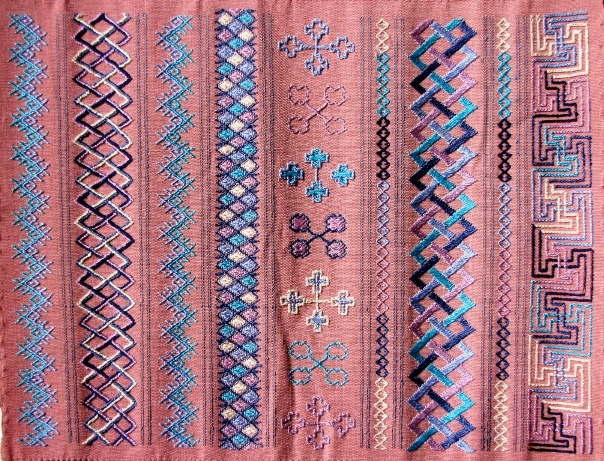
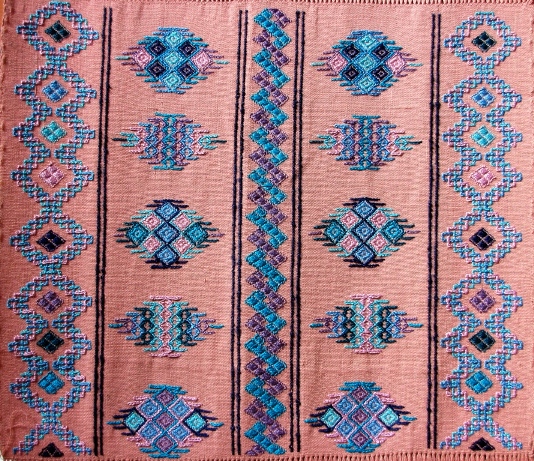
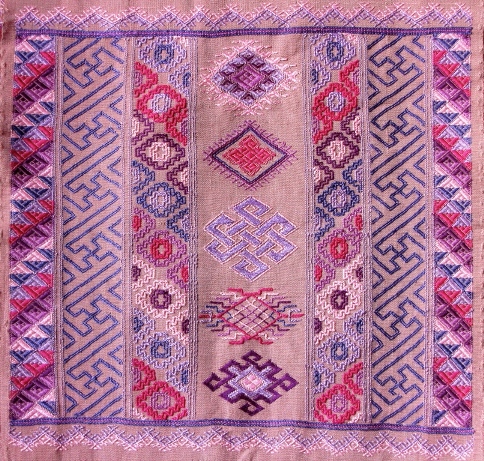
Wendy is planning a trip to the US in the fall of 2015 and would like to share what she learned during her stay in Bhutan. She will be available for workshops and presentations at guilds and I asked her to write a little about what she has to offer for inclusion in this post. All the pictures that accompany the text are Wendy’s own work. These are the samplers that she wove with her weaving teachers in Bhutan.
Hi everyone, I am planning to visit north America in the fall of 2015, and would like to hear from guilds or groups interested in hosting a workshop in Bhutanese kushutara techniques, used to weave gorgeous brocaded festival dresses.
Kushutara means brocaded dress, and refers to cloth decorated with the intricate kushu techniques, involving discontinuous supplementary wefts.
Bhutanese refer to two types of kushu techniques: Thrima and Sapma. Both are woven by lifting selected threads with a pickup stick before inserting the supplementary weft threads in such a way that the stitches only show on the front of the fabric.
Thrima means “to coil” and involves twining the pattern threads around the warp threads. This produces a beautiful textured effect, with the pattern threads creating a raised surface. In fact, when the first Bhutanese textiles were examined by experts in the west, there was much debate over whether their designs had been produced by embroidery or were woven into the fabric!
I learnt to weave kushutara when I was living in Thimphu, Bhutan for a year teaching music. I was given a loom next to a master weaver in the local weaving centre, and for 8 months I went before and after school and on weekends to weave. Word spread, as it does in Bhutan, and I often used to find I had local weavers stopping in to see for themselves the spectacle of the foreigner who had learned to weave as well (if not as fast) as the Bhutanese.
In addition to weaving on a Bhutanese backstrap loom, I have adapted these techniques to western looms, so classes can include weavers more comfortable on rigid heddle or shaft looms. Participants would need to be familiar with their looms and comfortable with plainweave, but the work would also extend experienced weavers who may have experience with weft twining from other cultures such as Guatemala (Bhutanese twining is a related structure, but the techniques of execution differ).
Wendy can be contacted through her blog or through me on this blog. Who knows? I just might get myself over to Perth on this trip to see her.
I don’t have any Aussie pictures to post yet! Imagine…after weeks and weeks of fabulous weather in the US, the weather has not been kind so far here in Sydney. I will hopefully have plenty to show in the next post. See you soon.
Amongst other things, I have decided to do a little tutorial this week on cutting backstrap woven fabric and covering the raw cut edge with a protective band.
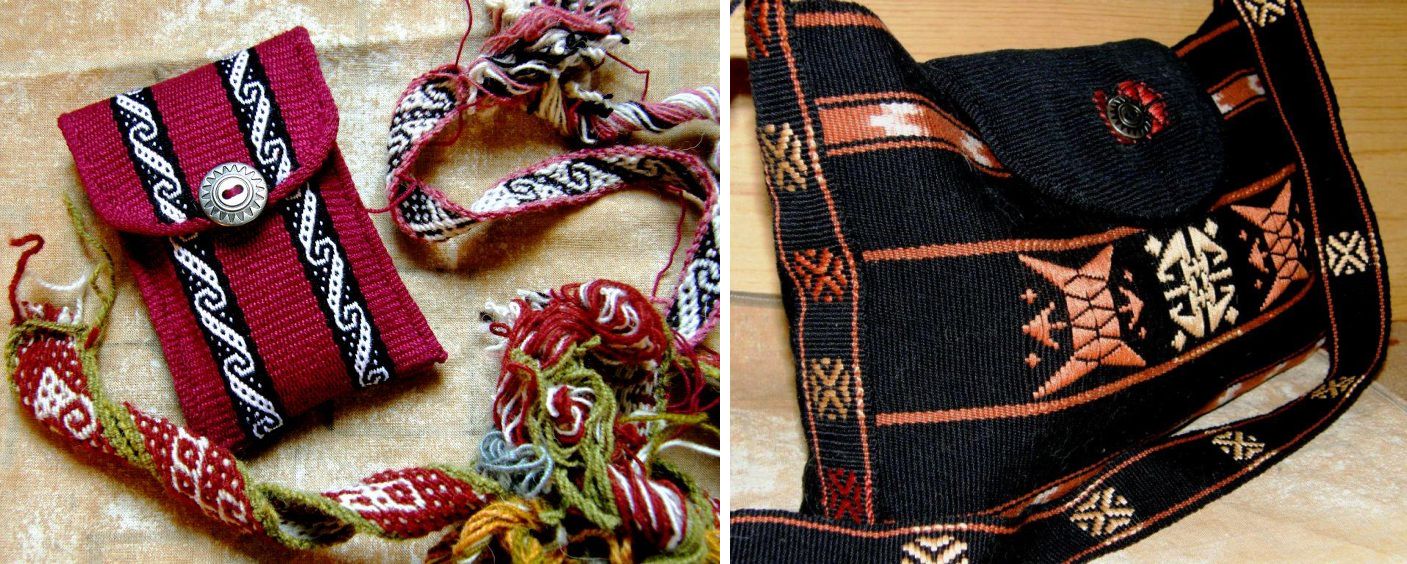
This is my latest favorite way to create the flap on a bag and I was given the courage to try this when I saw some of the work of my GuaranÍ weaving teacher here in Santa Cruz. She makes cell phone pouches with rounded flaps. I don’t know the steps that Angela takes to create these and so, have come up with my own. Possibly I am a bit over-cautious in my ways, but my system works for me and I am pleased with the results.
Making cell phone pouches is one of my favorite ways to use a piece on which I have been sampling structures or patterns. You can see the different ways in which I have formed the flaps. This often depends on just how much fabric I have to use. The alpaca sample bottom left, for example, is closed with a drawsting as there was not enough cloth to make a flap. The example at top left has a flap that was cut to shape and then covered with a tubular band.
Here are a couple more examples. The flap on the black bag was woven with quite a lightweight fabric compared to that used for the cell phone pouches. The tubular band, therefore was a bit heavy for it and caused the edges of the black flap to curl inward giving a convex shape. As it turned out that actually had its advantages! When the bag is filled with things and takes on a rounded shape, the flap curves nicely around it.
My latest bag project also has a rounded flap which is edged with a tubular band…
I had been calling this latest project “Tales from the Subcontinent” as it comprises designs from Bhutan and Afghanistan.
However, now it carries an element which has been influenced by Central Asia. Its closure tab was inspired by tablet- woven trim on Uzbek ikat-patterned robes.
I showed you pictures last week of the Uzbek garments that I saw at the International Folk Art Market in Santa Fe NM with their tablet-woven edging bands.
I give many thanks to Ute for writing to me and sharing what she knows about the Uzbek bands as I was about to launch myself onto the wrong path trying to weave one using threads in 4 holes of the tablets. Ute told me that they are created using only two holes. With my limited tablet-weaving experience, I would have been lost without that valuable tip.
The little wristband that I bought at the market is in the center. I changed things a little in my experiments eliminating the dark outer color and altering the way the red stripe was set up. I made a sample in a medium weight cotton to start and then made the final piece for the closure tab on the left. Originally I had wanted to make the entire strap for the bag in this technique but decided that it was a bit too “busy” to play such a major role in this piece which was already highly decorated.
In this picture I just placed a silver button on the closure tab but I was not all together happy with the way that looked.
And then I remembered that I had coins from my trips to Nepal back in the 80s and 90s.
The smaller one would do perfectly and would be in keeping with the “subcontinent” theme.
I just had to polish it up and then get creative in finding a way to attach it.
You can see the more subdued strap pattern, above, that I used in the end. I used the same pattern as that on the edging band for the flap.
So, “Tales from the Subcontinent” is in search of a new name. I won’t say that it is finished yet as I am now thinking….Wouldn’t it be cool to have some black and white ikat patterned cloth with which to line it?….a sort of “inner bag” with a drawstring top…
So, now we get to “cutting corners” and transforming a straight-edged flap into a rounded one…
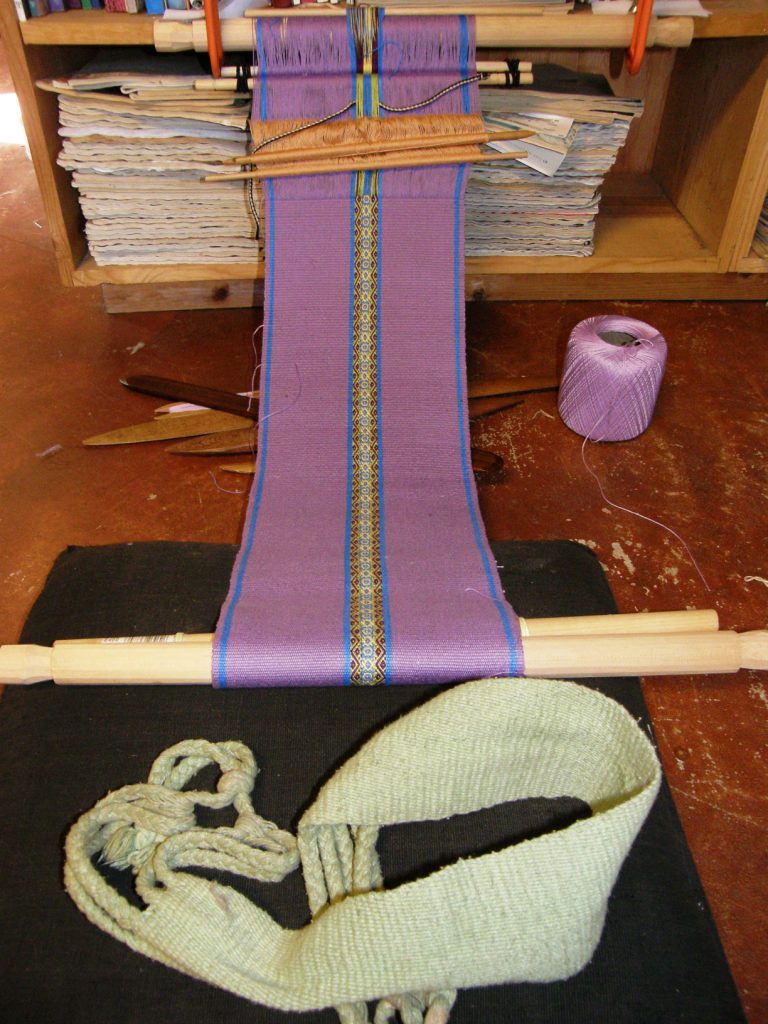
I am using the lavender Andean Pebble Weave fabric that I was on my demo loom during my last trip. I really don’t like it much and decided that I could at least use it for a tutorial…
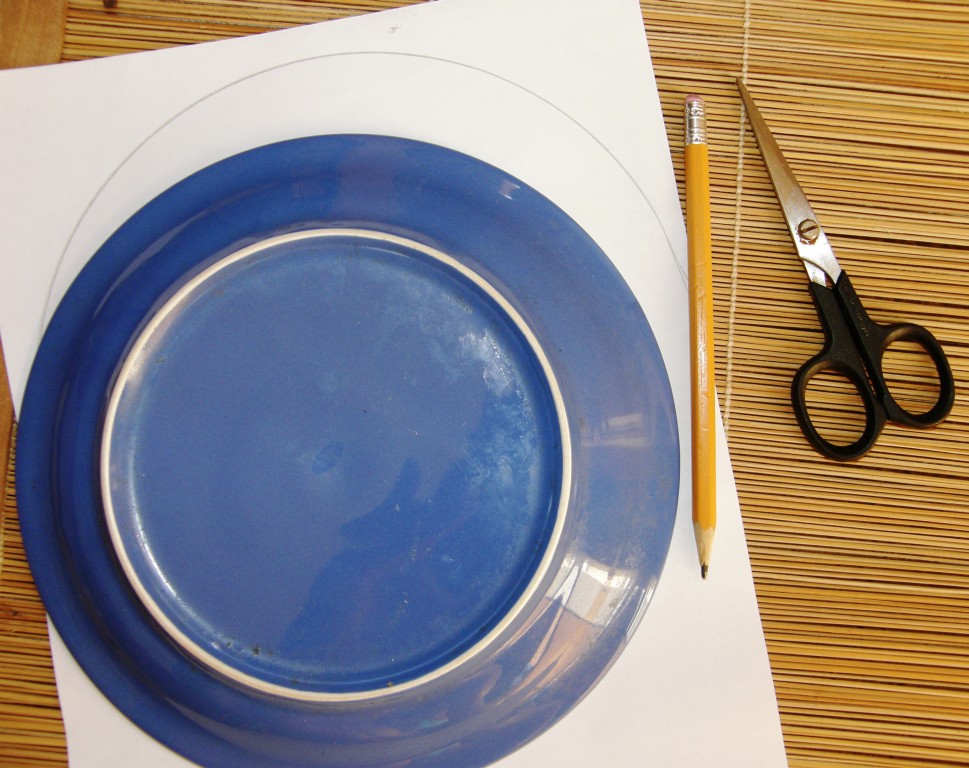
STEP ONE: Choose the curve…
I have a small plate that has the right curve for the width of fabric that I am using. I used it for the black bag and saw that it would also work just fine for the lavender piece.
STEP TWO: Make a template.
I traced the curve on paper and cut it out.
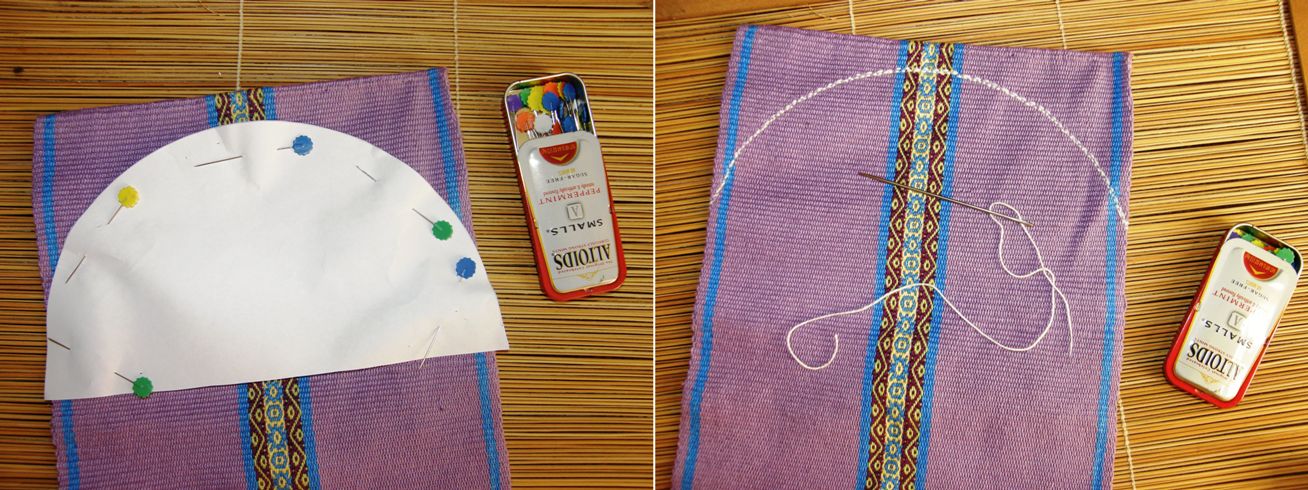
STEP THREE: Pin the template to the fabric and sew along the edge.
I sewed by hand and used crochet cotton for the thread. It’s a good thing that beauty does not count! I backstitched from one end to the other and then returned using a running stitch for extra security.
STEP FOUR: Paint diluted white glue onto the stitches.
I used white glue, or carpenters’ glue, carpi cola , as it is known here. I diluted it with water, painted it onto the stitches on both sides of the cloth and waited until it dried before proceeding.
STEP FIVE: Cut the cloth and glue again.
I cut close to the stitches and then applied more diluted glue along the edge of the fabric. The glue goes on white but dries clear. The fabric I am using is dense and I needed to make sure that the glue got right into the weave. As the glue was drying I pinched the threads along the edge together to seal the edge. Once it was almost completely dry, I gave the edge a final trim (this is easier to do when the edge is still damp and supple). You may need to trim some loose weft ends or tidy up the edge a bit. Once it is dry and stiff, it will be harder to make fine cuts.
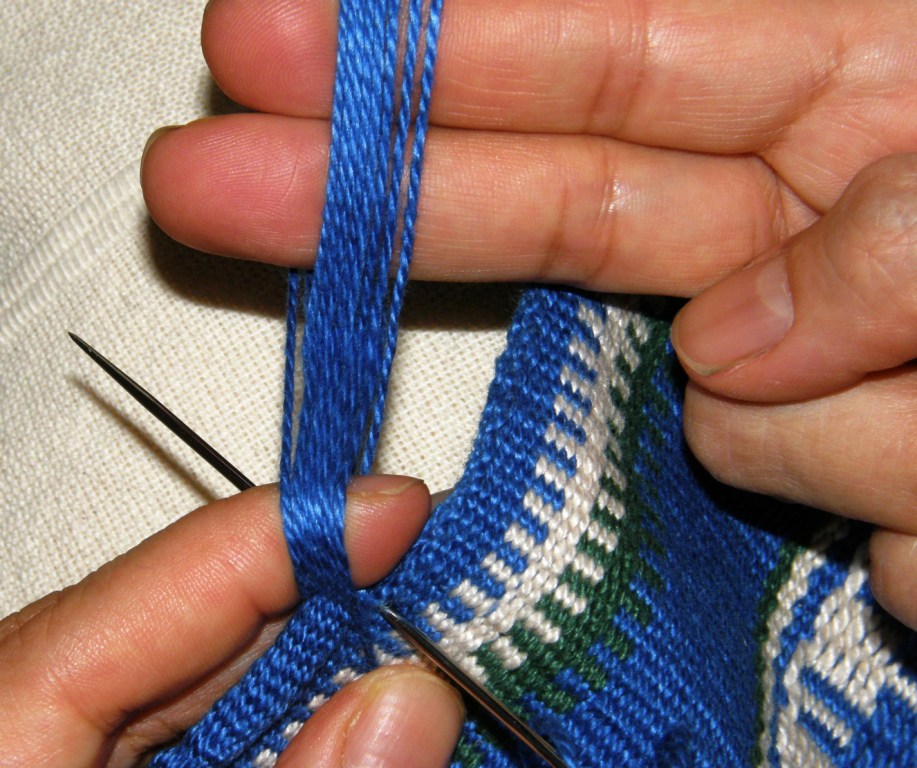
STEP SIX: Weave and sew your band to the edge.
Now you have a nice stiff secure edge to which you can attach a band. See this tutorialfor instructions on weaving and attaching tubular bands.
Judge the width of band needed to bend around the edge and cover the stitches and create a warp accordingly. Note that it is easier and often neater to weave these bands using a heavier yarn and few warp ends than fine yarn with many ends. I used a finer yarn here as I did not have a matching color in my heavier yarns. I used a heavier yarn on my recent black bag project and feel that that band is more attractive.
Make sure that your needle clears the glued stitches on both sides when it pierces the cloth. This way, the stitches will be completely covered by the band. Practice weaving and sewing bands many times on scrap fabric. It takes a while to have them turning out neatly and you don’t want to spoil your good fabric until you feel confident with the technique.
As for what to do with the warp ends when the band is done, I have suggestions for that on the tutorial page.
So, with the black bag finished to the point of being able to use it, I am now supposed to be getting on with the next in the wall hanging series. I had gotten as far as winding the yarn off skeins into balls for warping. And then came a distraction.
I don’t know what it is about arriving home after a trip. I have this urge to get rid of stuff that goes on for about a week. It’s great! It feels so liberating. So, stuff has been given away and ejected. The above piece was the cover of a photo album that I was given.
I removed the album to toss and kept the cloth. It reminded me that it has been a long long time since I last played with three colors in complementary-warp pick-up.
I have done three and four-color pieces (see the header of this blog) which are not double faced.
Here you can see what I mean by “not double faced”. I made this years ago and decided to hang it unfinished on the wall. It also reminds me that I used to get this beautiful fine wool/alpaca yarn when I lived in Chile. I used some leftovers of that yarn when I first came to Bolivia to weave this. How I wish I could get that yarn again.
The piece on the cover of the photo album is double faced. Only two colors show togther on each of the two faces at any one time…color A and B on the upper face and color B and C on the lower one. It is a bright and jolly piece and I love how the weaver flipped colors for just that one small section along the way…you can see how the yellow eyes on the green suddenly change to a red eye in just that one small part. Whether that is the center of the piece, I will never know as it was cut up to make the album cover.
Side ASide B
So, this is what I am playing with and what kept me up past midnight last night. These are the two faces. I wish I could make a smoother transition from the red background to the beige but this defeated me at 12.30am. I suppose it would be easier if my design weren’t continuous. This is a sampler to get my head back around the technique.
#########################################
Some news… Deb McClintock has started setting up her blog again after losing most of her web page content some years ago in some sort of internet glitch…..heartbreaking. It’s all about simple looms in SE Asia and promises to be wonderful. Deb was invited to lecture last month at the Textile Museum in Washington DC about Laos textiles, looms and techniques. Her new blog is entitled Looms of South East Asia.
And, of course, don’t forget my Australian mate Wendy Garrity’s blog about Asian textiles and looms…Textile Trails. Wendy provided a link in last week’s comments to a picture she took of a notched stick on a loom in Nepal that looks very much like the one I was admiring on the backstrap loom from Myanmar at the Santa Fe Folk Art Market. She was also able to extract more information about the tablet woven bands from the Uzbek representatives at the Folk Art Market than I was!
##########################################
More news…..AUSTRALIA!
I will most likely be going back to Sydney for a visit in late November and would very much like to meet other weavers!
The decision to make this trip has been a very recent one which makes getting people together for this a little difficult as it is so close to Christmas.
I haven’t been back in 4 years and am very excited. I’m looking forward to hitching my loom to a eucalyptus tree and weaving while listening to the magpies and kookaburras.
The kookaburra picture at left was taken by my brother.
This is what happens when you don’t blog for a while! You have to drop the details and limit yourself to the highlights. Since the conclusion of the “West Side Story’ on this trip, I have finished yet another chapter entitled: “Hooray Santa Fe!”. So, as I sit in Miami airport waiting for my flight back to Santa Cruz, Bolivia, I will attempt to capture some of the flavor of just my west coast adventures in this post.
The West Side Story started at the ANWG Conference in Bellingham, Washington.
It was followed by a stay at my friend Betty’s (author, weaver, traveler, trekking and textiles tour leader, mountain climber, tree farmer, blueberry farmer……!!) home in Washington state. There I got to meet up with one of Betty’s friends, Judith, whom I had met at the Tinkuy in Peru in 2010, as well as with Bobbie who is in the Ravelry group.
This chapter finished in San Francisco after having spent about ten days at my backstrap weaving friend Janet’s farm in Humboldt County California. Janet arranged two get-togethers with weavers I had met last spring.
This trip has been about many things, one of which was meeting new people and putting faces to online acquaintances…
Here are some of the members of the ANWG Organizing Committee at a pre-conference get-together. The group includes Marilyn and Linda, Sheri, with whom I stayed in Bellingham, and my wonderful roommate, Marie. I am sure that you will recognize some familiar faces amongst the teachers. It was great to meet Holly, Jane, Patrice, Paula and Marilyn at last.
This was a wonderful conference. Apart from being in one place with over five hundred enthusiastic weavers, I loved the venue, the dorms, the food, our fourth floor weaving room with the view of Bellingham Bay, and all the fun details that the committee had gone to so much trouble to include. I can’t imagine that these events can get any better than this one!
I loved the handwoven conference logos on the crocheted backgrounds which were hung on windows to mark the rooms which were designated classrooms. My roommate, Marie, was part of the team responsible for the handwoven pouch and name tag combo. That little pouch was such a cool idea. It conveniently held keys and meal card. Backstrap weavers found it handy for parking their sword/beater. The fabric was so very pretty. Imagine having to make over 500 of these for all the participants.
And of course, there are one or two special people amongst all those that you get to meet and chat with at such events with whom you have a particularly strong connection.
Marilyn was one of them.
She wove with me on several days, was a committee member, taught four classes and was a whirl of energy. She seems to have an endless collection of beautiful ethnic textiles to wear and I looked forward to seeing what she would be wearing each day.
At the final banquet, we were asked to wear something handwoven. So, there you see Marilyn in a gorgeous Guatemalan huipil. I simply draped the Bhutan-inspired scarf that I wove around my shoulders.
(And guess who I bumped into in the plaza in downtown Santa Fe last week as I stopped to buy a fajita?)
The West Side Story is also about meeting some of my online friends from the various backstrap weaving groups as well as reconnecting with weavers from past visits.
Ravelry member Cindy weaving a nawi awapa band..
Cindy was also responsible for my spending in the ANWG Vendor Hall. She unearthed some Guatemalan natural dyed cotton at the Mayan Hands booth (on sale) and refrained from buying all of it! She and I bought bags of two colors and swapped. I wonder what she is planning to do with hers.
My backstrap weaving friends from Humboldt County got together too…Janet, Gina, Autumn, Ace, Pam, Buffy and Linda. We tensioned our warps on poles, the beams of floor looms, toes and inkle looms.
It was about playing with WOOL, something that is not so accessible in my home in the lowlands of Bolivia. And, of course, when I am with Janet and her friends, it is about lots of spinning and plying.
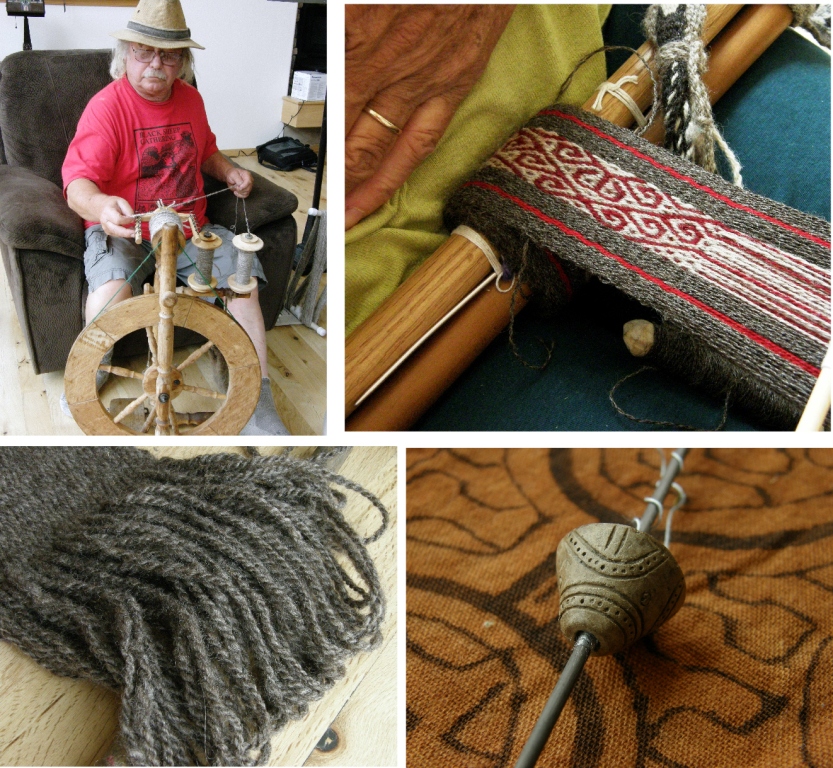
That’s Ace at the wheel and below you can see the heavy grey yarn that he spun semi-worsted for his luxury backstrap…it made a lovely thick, cushy strap. You can see Janet working on a pebble weave band using her own handspsun worsted and a pattern from my second book. And, on the right, there’s the wee spindle whorl from coastal Ecuador that I gave Janet last spring. She has mounted it on a knitting needle and has been spinning with it.
Ace is new to backstrap weaving but not to spinning and I gave him a hand with that grey wool project. I have to admit it looked hairy and scary at first! but, it was a breeze to weave with. Who knew that it would weave up so well on a backstrap loom and in a warp-faced fabric? It all comes from the expert hands of the spinner and his/her preparation of the material.
I got so carried away with weaving and the enjoyment of working with that lovely thick and even handspun that I wove almost to the end forgetting that Ace would want several inches of unwoven warp ends from which to make braids for his backstrap. Once off the loom he braided the ends and braided a separate cord, from his handspun of course, for the straps.
Some of Janet’s beautiful naturally dyed handspun yarn which was destined for warp-faced weaving….no overspin, no kinking!
It was about SUMMER, glorious summer…ripening grapes and berries, fireworks in the night sky, outdoor music, beaches and sunsets.
The view while lying in bed in Betty’s studio looking out on her tree farm and bushes with ripening blueberries.Sunset over the mountains in faraway Canada on the final evening of ANWG in Bellingham. The cool and enticing raspberry jungle at Janet’s place. My poor, but kind- of -interesting, attempt at photographing the fireworks during my first 4th of July in the US. Beautiful patterns in light and dark sands on the beach at Shelter Cove near Janet’s place….Humboldt County…sigh!
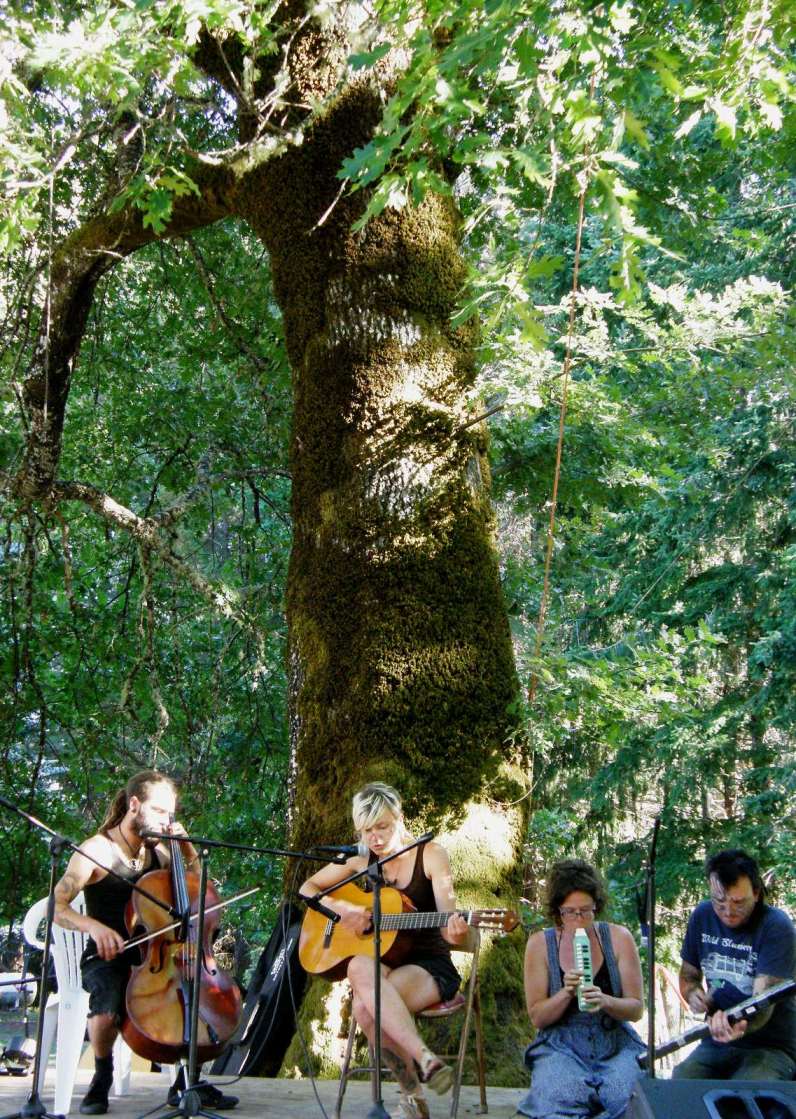
Music under the big ol’ white oak…the annual”Strawberry Jam” at Janet’s place. I hooked up a warp to my toe, wove and enjoyed the music.
And there were textiles!! I was lucky that my visit with Betty coincided with a visit from Betty’s good friend Judith.She had come down from Canada to take a spinning class from Judith MacKenzie McCuin and stopped for a day to visit. She had brought with her the most exquisite textiles from a trip she had taken to Indonesia.
Judith lays out the textiles under the supervision of Trouble the cat.Woven on a backstrap loom, this piece has both the warp and weft threads patterned using the ikat technique. The cotton thread is handspun. Judith tells me that this is known as “Magic Cloth” and comes from the Tenganan Bali Aga Community in Bali, Indonesia.
And, speaking of warp and weft ikat, I have to show you the jacket that Linda LaMay enetered in the juried show at ANWG. Linda wove with me over several days. She happened to be in the Gallery on my visit and allowed me to photograph her with her piece that was given the Complex Weavers Award. Her piece also won 1st prize for being the best representation of the conference theme: Crossing Threads, Crossing Borders.
Linda had bought a pre-tied and dyed ikat or, jaspe, warp in Guatemala…one which had been designed for warp faced fabric. Linda, however, wove it as a twill exposing both warp and weft and, in order to do this, had to dye the weft herself and then carefully place it to match the dyed pattern in the warp….she painstakingly transformed it into warp and weft ikat…amazing.Another textile in Judith’s collection, this one from Sumba, Indonesia…all the elements that I love!…weft twining along the bottom and simple warp floats to create creatures that are mirrored in the central ikat section.
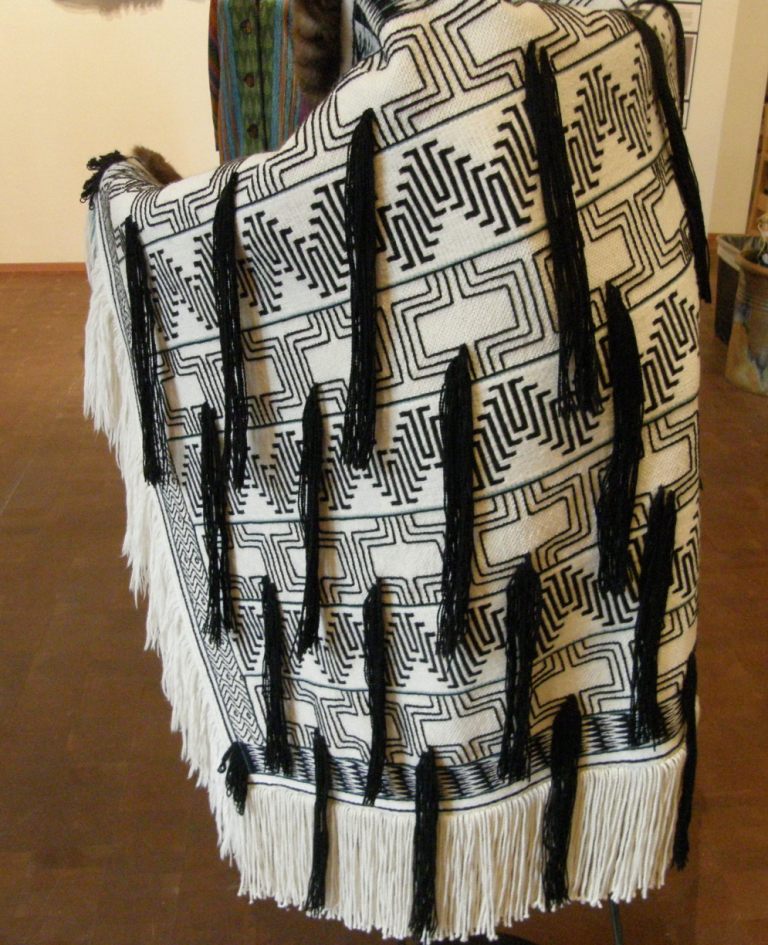
And, speaking of twining, let me show you the ravenstail work that John Beard showed in the Instructors’ Exhibit at ANWG. He kindly gave me permission to show it here….spectacular.
And, speaking of the warp floats in the Sumba textile, let me show you a textile that ANWG instructor and fellow Australian Kay Faulkner collected in her SE Asian travels. She brought this to ANWG to inform and inspire her students in her workshop entitled “East Meets West”.
Both faces of this textile have warp float patterns . Kay and I had fun comparing and contrasting spotty pebble-like structures and she came over on the last day with Bhakti Ziek so that we could have even more “pebbly” conversation.
I just gaze and gaze at this Selendang shoulder scarf of Batuisi, W Sulawesi from Judith’s collection. The colors all come from natural sources. The yarn used was heavier than that used in other Indonesian ikat pieces that I have seen. I really liked the feel of this piece.
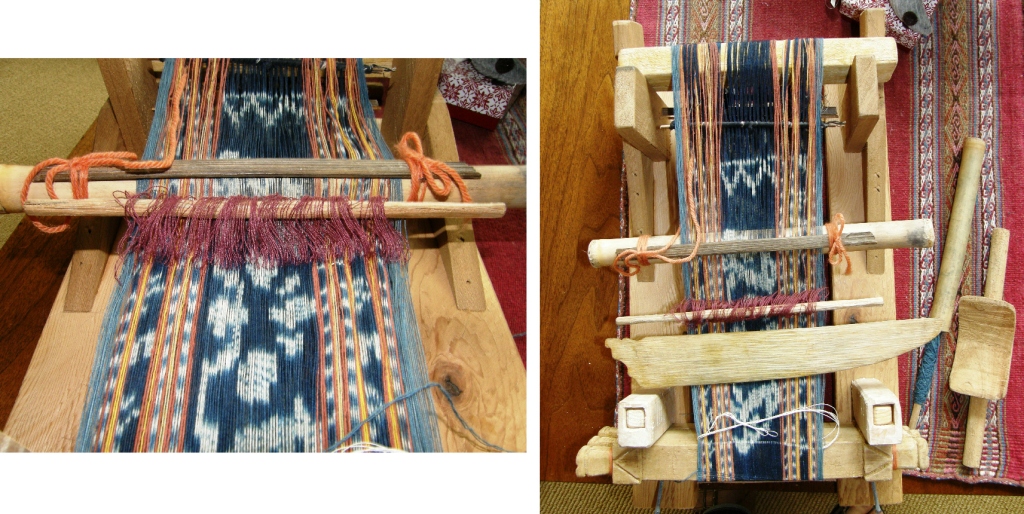
There are more of Judith’s textiles to show but I think I will save them for another post. Let’s look at the miniature backstrap loom that she got in Indonesia instead. I am always intrigued by new-to-me pieces of equipment that the various backstrap weavers aroud the world use and this loom included such a piece which may hold one of the many secrets of how backstrap weavers go about keeping the ikat-patterned warp threads reasonably aligned.
What a sweet little loom with its circular ikat warp in place. It was a great opportunity for me to take a close look at one of the Indonesian backstrap set-ups. The miniature wooden backstrap is so cute!I love the carved pieces that serve to clamp the circular warp. Beyond the heddles and shed rod, the warps that had been tied and dyed were separated along a stick which was wrapped. The wrappings seemed to separate the warps into the sections that had been tied for dyeing. I am wondering if the wraps also serve to squeeze the warp threads into groups and therefore help stop the from moving excessively and blurring the design too much.
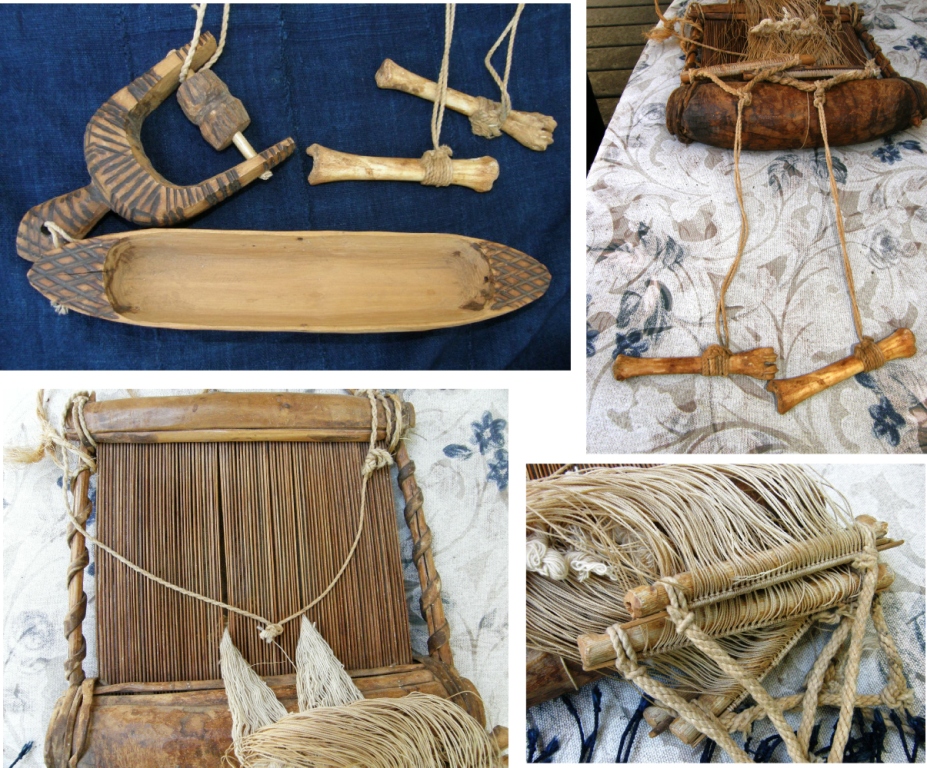
And, while on the subject of simple looms from far away places, let me show you a loom that a lady in Arcata, CA showed us when our weaving get-together group went to the Farmers Market. A friend had brought it back from Africa for her with accompanying postcards that showed how it was set up. The postcards said Upper Volta and were written in French. This, according to Wiki is today’s Burkina Faso and it seems that the people who use these looms are called the Mossi. The loom pictured at left is from this page.
It has some beautiful parts which include bone foot toggles for operating the shafts and a fine reed framed with what could be wood and horn. The carved wooden pulley system and shuttle were lovely as was the indigo-dyed cloth strips that had been sewn together. I used this as background for one of the pictures. It’s for sale…tempting!
Back at Janet’s I enjoyed a chance to do some weaving of my own.
I got to work on the two warps that I had brought with me.
I have to say that I was happy to get this one off the loom as I do not care for it at all! I am going to use it to practice and learn some new sewing skills. Maybe I can shape it into some kind of interesting bag.
This is the warp that I wove while visiting at the Mannings’s annual Spinning Seminar last month. The pattern is one that I have woven many a time and observers’ reactions while I was weaving it inspired an addition to my FAQ pages…this new one beingabout following and ceasing to follow pattern charts.
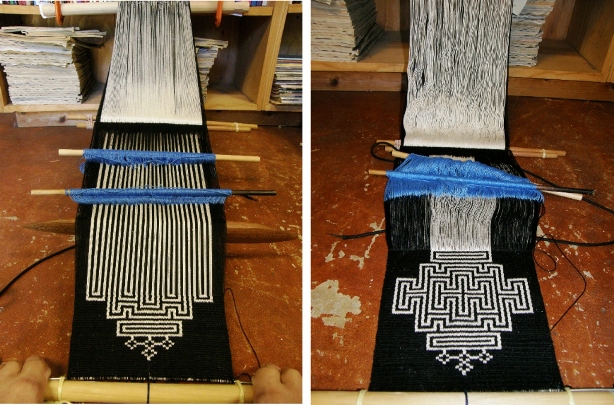
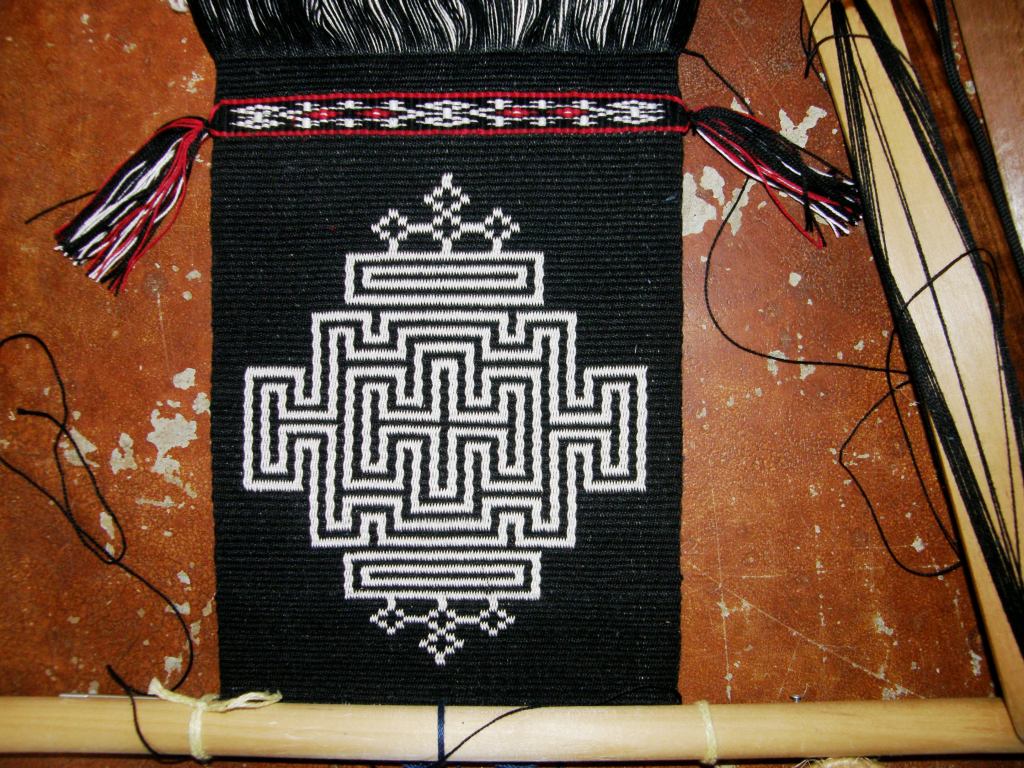
Next up was the piece on which I am weaving a Bhutanese design called “labyrinth”. I am weaving it using the two-heddle intermesh technique that I teach in my second book.
The pattern is from David K Barker’s first book of Bhutanese designs. Look at my RESOURCES page to see how you can download this free book. I never plan these ”traveling” warps to actually be anything knowing that my weaving on them is generally so interrupted and disjointed. However, I got to sit and weave on this quite a lot at Janet’s and had it set up in a very similar way to the way I usually like to weave. I lodged the far loom bar behind clamps on a low book shelf and moved the books and magazines around so I could extend my legs within. The angle was just right for me. With a pillow added on the floor, I was right at home.
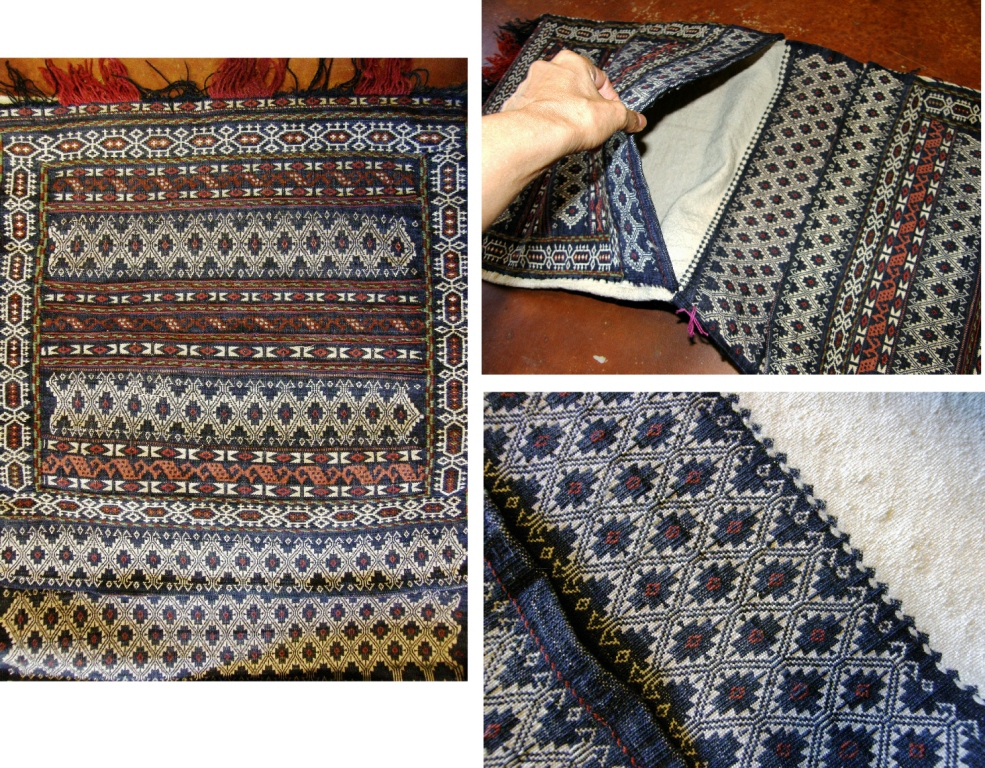
Once the first large motif was complete and I could see that this could actually become something, I had to decide what would come next. Inspiration came in the form of a double-pocket saddle bag quite likely from Afghanistan. Janet bought it in a local shop of ethnic artefacts and it is gorgeous! It is woven with wool and largely patterned using weft substitution technique which results in floats on the back. However, the kinds of patterns used in this piece do not create overly long or unruly ones. There are all kinds of soumak and warp-wrapped patterns as well. The fabric is incredibly stiff and tight…made to last a long, long time, no doubt.
Those reds and blues…love them! The back of the bag, which would be against the animal’s back, was not patterned. Janet and I were both astounded when we realized that the plain cloth was not a separate backing but, rather, a continuation of the weaving in an extremely tight and very well balanced plain weave. I would bet that this bag is waterproof.
So, this is pretty much where I am at so far with this latest piece of weaving. I just started some vertical warp-wrapping for the back side which I haven’t photographed yet and I have chosen a motif for the center of the back…it’s going to be a bag (of course!)…black, white and red (of course!) and it is going to get seriously dressed up with tassels and trims. This will be something nice to dive right into when I get back home (that will be soon, I hope. I am writing this in Miami airport).
Next up on my blog…Santa Fe and the International Folk Art Market…it has been one of my dreams to see this. Visiting Santa Fe also gave me a chance to hang out with several weaving buddies that you will have already met here on my blog. I can’t imagine a better place to have gotten together with them and we are wondering how we can possibly top this!
Of course it inspired all of us but the funny thing is… one of my best ideas came from something I saw in the American Airlines inflight magazine on the way to Miami…funny how these things work! See you next time.
A Few Unconventional Moves…..If I am to talk about some unconventional things that I did at my backstrap loom this week, I think that I would have to first define what is meant by “conventional” in the world of backstrap weaving….an impossible task!
What is normal, or traditional, or conventional in one backstrap weaving community may not be so on the other side of the world or even within the same region or country.
Adding string heddles as one winds the warp, as Montagnard weaver Ju Nie does, would certainly be looked upon with wonder as something strange and unusual by backstrap weavers here in Bolivia.
The way that many backstrap weavers in Ecuador spread the threads in the shed rod shed over two shed rods is something that I have not seen outside of Ecuador. This makes opening the shed rod shed, with its heavy load of wool warps, easier. You can see the two shed rods in Miguel Andrango’s warp above. Unconventional, you might say, but to weavers like Miguel Andrango, this is perfectly normal. And Mr Andrango is up for a bit “unconventionality” in his weaving too by using motifs that are not traditional in Otavalan weaving.
The use of a tiny sweet wooden temple on even the narrowest of warps by the Montagnard backstrap weavers is something else that would seem less than normal to many backstrap weavers on this side of the world.
I have yet to see a circular warp being used by backstrap weavers in Bolivia but it is commonplace in Ecuador as is the use of a foot brace.
Burmese weaver Dar Ku weaves her patterns with supplementary weft while facing the wrong side of the cloth. She kept smiling and telling me how easy it is. I wonder what the Guatemalan weavers with whom I have worked, who also work with supplementary wefts, would think of that!
In Ecuador I never saw women weaving wide heavy wool pieces on backstrap looms. This was a task for men. The work is considered too heavy for women, I was told.
In Peru, men do weave at backstrap looms and there are communities where most of the backstrap weaving is in their hands. However, this is the exception rather than the rule.
I wonder what the male Ecuadorian weavers would think coming to Peru and seeing the wide and heavy warps being managed by the female weavers.
I wonder what the belt weavers in Salasaca, who use an enormous meat cleaver type of wooden implement to beat weft into place on their narrow belts with a couple of quick, heavy and powerful slams, would think seeing the way a Bolivian weaver pushes weft firmly into place bit by bit across the wdith of the warp with the tip of a llama bone tool.
All the implements were strange and unusual in my hands the first time. I can’t tell you how many times I forgot to let go of the weft before slamming that meat cleaver tool down….ouch. The llama bone was a bit more subtle but I still ended up with blisters from tightly clenching it and pushing that weft into place with all my strength. My weaving teachers considered tightness of weave to be a very important feature of well made cloth and I was determined to achieve their approval.
On the other hand, it was interesting to watch the gentle tappy-tapping of the beater in Dar Ku’s hands in contrast to the yell of “wham-wham” as Ju Nie showed us how firmly weft should be beaten! Clearly there is no general rule about how firm warp-faced cloth woven on a backstrap loom should feel.
I would love to see my teacher Maxima’s reaction to the set-up and way that weavers in coastal Ecuador add bands to the edges of their fabrics with their wooden rigid heddle that slides from side to sde along the floor to change sheds.
So…conventional? What is conventional in the world of backstrap weaving?
As for my aforementioned “unconventional” moves…let’s just say that I did some things that I haven’t seen backstrap weavers do. Of course, the day will probably come when I see this done somewhere. I have, after all, just scratched the surface of the backstrap weaving world here in Latin America and have had but the slightest glimpse into Montagnard, Burmese and Bhutanese weaving.
I have been finishing off the little supplementary-weft sampler that I have been working on these last couple of weeks. I wanted to get a piece off the loom and make it into a bag to take along on my next trip. I had experimented with positive and negative space. However, there was still a fair amount of warp left and the Guatemalan cotton is precious to me as I am not sure when or if I will be able to get more. I really didn’t want to waste any of it.
So here is what I did…I wove a dowel into the warp so that I could cut off my little bag piece and continue weaving the left over warp.
I will probably fold that little flap of cloth over the dowel and tack it down and then lash the dowel to a bigger one. I think that should be sturdy enough to allow me to keep weaving. I have to admit that this wasn’t my idea. There was a discussion in one of the online groups where a floor loom weaver wanted to cut off her first towel on a long warp and then continue weaving. Someone said “weave in a dowel”. I am not sure if what I did is in fact what she meant when she said that but it was enough to have me wanting to try to “weave in a dowel”. I think it will work!
I still have this Bedouin patterned embedded double weave piece that I cut and then clamped so that I could continue working on it. It is still there….I feel that that the woven-in dowel is a more secure system. We will see. Now I can compare!
Here is the wee pouch that I made with the first part of that warp.
So, the piece of supplementary-weft patterned fabric was cut off the loom. Now to see how best to fold it.
There are the back and front views. I decided to leave the flap on the front unpatterned as I wanted to edge the whole thing with a tubular band and I thought that things might look a bit too busy with pattern on the flap as well.
However, I thought that it would be cute to have a design on the inside when the flap is open.
And that is another place where I got kind of unconventional.
The design on the inside of the flap had to be on the “wrong” face of the fabric to be in the right position once everything was folded. So, I turned the warp over and wove on the other side leaving the heddles on the back side of the fabric.
I wove the flower head pattern that I had been creating in the negative space at the beginning of the piece. I think it gives a nice touch to this little pouch…a nice little surprise when you open it up.
Folding and then sewing done…it was time to start embellishing.
This is all I have done so far… a ñawi awapa tubular band around the outside. The eyes of the tubular band are red on the back side which matches the predominantly red patterning on that side. I will decide what to do with the tassels at the bottom and whether I should add some kind of finish to the bottom edge. Then there is a strap to be made and a button to be found for the front for some sort of closure.
So, after that experience with flipping the warp upside down and weaving on the other side so easily, I have a clear idea about what to do with the rest of the warp. I am excited to get started on that. I would like to continue with the supplementary-weft patterning but use both sides of the cloth, flipping back and forth, so that the finished piece has completely different patterns on both faces…or perhaps the same motifs but in completely different color schemes. It would need to become a finished product that would allow both faces to be visible. This, of course, will be the sampler for a “real” project later.
In between sewing and embellishing, I got something else started on a loom. I am preparing some warps so I can weave at the Spin-In Day at the Mannings in June. Are you coming? I will be weaving away with my warp tied up to a tree. Come and say hello!
Here is one of the warps I have prepared so far. This one is two-heddle intermesh which will have a large Bhutanese labyrinth design taken from David Barker’s first book (see the RESOURCES page for information on this free download).
And if you are tired of seeing red and black today, here is a bit of relief.
I have been recycling some of the many sample warps that I use which end up being a chaotic mix of odds and ends of sample motifs.
I unwove some of them and have several more to go. I am re-weaving them using the same Andean pebble weave motifs along the length of each.
I can also finish this week’s post with some nice pieces in other color combinations too that were sent to me from online friends.
Larisa patterned her piece that is destined to become her backstrap with pebble weave patterns from my first book.
Gmpicket also sent me a picture of a great pouch that she made using a design influenced by a belt of the Tarahumara people of Mexico that she saw on my blog. I have two Tarahumara patterns charted in my second book but this is not one of them. I love that brown, yellow and green combination.
So, I will be on the road again as from Wednesday next week. .hoping for nice weather and lots of people to chat to about backstrap weaving. If you have backstrap weavings to show me, please bring them along! I probably won’t blog next Thursday but will as soon as I can. I hope to meet lots of online friends at ANWG too and reunite with backstrap weaving friends in Humboldt County California. And then there’s a New Mexico adventure in mind… See you soon!
 This is where I was with the bag project when I last posted. The zipper is in place and sides have been installed. On my weekly visit to the supermarket I was happy to find a long table runner that I could use as the lining material. It looked like it was just the right width and I loved the color and subdued pattern. This seemed to be a safe bet for me who knows nothing about fabric and I was happy to pay a bit more than it would have cost me to just buy fabric in the street market. I doubt that I would have found anything that I liked as much in the market stalls.
 That un-ripping tool got a workout as I sewed and re-positioned over and over. Now it’s done. This is the opening for the quirky pocket…the one that sits on the outside but is accessed from the inside. I got to use a beautiful button that one of my students made by hand as a closure for the pocket. The loop around the button is an eye-pattern tubular band that I wove.
 I edged the pocket and the sides with plain-weave tubular bands in blue. Tubular bands are such wonderful finishes. The pocket and sides are so sturdy with those nice firm bands in place. And that is where this project sits until I can get more blue yarn for the straps. I was hoping to use this bag on this trip but that won’t be happening. I’ll come back home with the yarn and weave some nice sturdy straps in the intermesh structure.. The bag is the perfect size for my books!
 Here’s the first little guy on my width-sample warp which confirmed that I had enough ends to get 3/4”. I am going to continue weaving this sample and make it into a wrist band for myself while I plan the layout of the lanyard. I’ll probably mix the cat motifs with some paw prints, the charts for which are also in the book of 100 patterns.
 At the same time, I am getting a start on another band that has been on my mind for several years. I have been collecting the word “weave” in various languages which I would like to weave into a strap for a pouch. Many years ago I wove and constructed a carry bag for my backstrap bits and pieces and I used weft twining to decorate the strap with just a few words in different fonts.
 I am using the intermesh structure this time and using just the one font to weave my words.
 I have about twenty-four words collected now from online friends ranging from Cherokee to the Yoruba language of Nigeria.
 Kathy King combined patterns from the book of 100 patterns (Complementary-warp Pattern Book) and my very first book, Andean Pebble Weave. She calls her band The Birds and the Bees. I love the blue and brown together.
 Colleen Turner added a strap that she wove on an inkle loom to a shoulder-bag. The pattern is charted in the Complementary-warp Pick-up book which also gives step-by-step instructions for those who use any kind of loom to weave warp-faced bands.
 Marsha’s band in 20/2 silk is spectacular. The red and blue are her own hand-spun threads. She has combined patterns from two of my books and the result is gorgeous!
 One of my weaving teachers, Maxima, took a liking to this same star pattern when I was up in the highlands. Of all the samples that I took to show her, this was the one that she wanted to learn. We wound a warp and Maxima took over after she watched me weave a few rows. I was able to show Mr Laitenburger how his pattern was being enjoyed on the traditional leaning loom in the central Bolivian highlands. He was very pleased.
 Kurt Laitenberger does beautiful work with tablets and I really appreciate his allowing me to adapt some of his patterns to the Andean Pebble Weave structure for my books.
 It’s fascinating to see a classic backstrap loom set-up being used with the tablets. I am guessing that the structure that is used for the bands that are woven using this set-up is one in which the weaver does not have to deal with built-up twist in the warp threads.
 I love the rocks and the weights that she is using to hold her stakes in place. I managed to scavenge an old paint can filled with cement that I sometimes need to use when I warp using certain set-ups.