Backstrap Weaving – Hooray Santa Fe!

??????????????????????????????????????????????????????????????The last part of my US summer trip was spent in Santa Fe, New Mexico.

It had been a dream of mine for some time to visit the city’s annual International Folk Art Market and this year everything just fell beautifully into place.

My friend Annie and I had talked about the vague possibility of this visit months and months ago. Neither of us knew back then whether it really would happen. I couldn’t think of a better person with whom to visit the market.

Even when weaver friend Wendy visited me in Bolivia back in May and I found out that, by coincidence,  she was also planning on going, it was still pretty iffy.

And then, when Marilyn, whom I met at ANWG in June, said that she too was going, I knew that it just HAD to happen.

I had met textile artist DY Begay at the Tinkuy in Cusco in 2010 and again last year at the weaving Encuentro. She now lives in Santa Fe and extended an invitation to come visit. And that is how it all came to be.

santa fe downtown collageI arrived a few days before the market and had a chance to stroll around the downtown area. When I arrived at Santa Fe airport I was surprised to see the adobe airport building…hmmm, a little over the top, I thought at the time.

However, after taking a look around and seeing the downtown area, where even the parking stations are adobe and getting a feel for the place,  it all just felt so very right. I love the smooth curviness of the structures and how the colors change from pink to gold as the sun moves across the sky. And that sky! …the deep blue of dry desert air that would suddenly be covered by enormous black thunderheads that brought refreshing afternoon deluges.
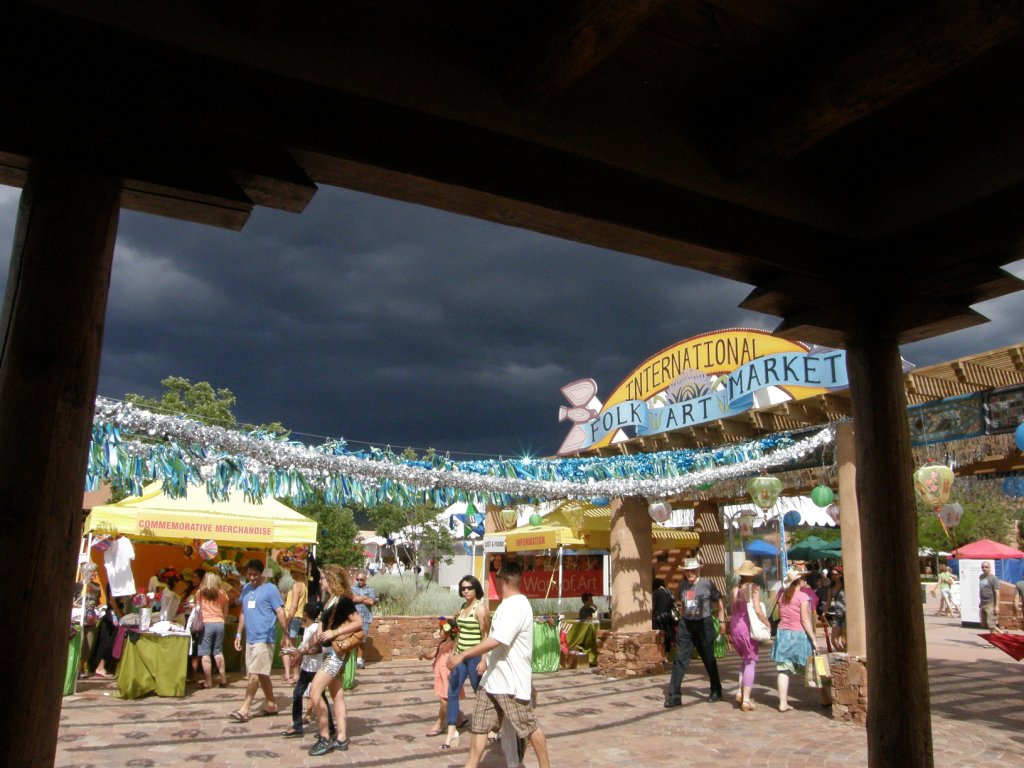
???????????????????????????????And it was hot… but not Santa Cruz hot…the low humidity made the high temperatures quite tolerable. Yet, after a full day of strolling the market, it was a relief to sit down in a shady spot and wait for the rain to start. Below you can see Annie and Wendy at the end of day one.

There were thousands of people at the market yet I just knew that I would run into Wendy and Marilyn there. I had already bumped into Wendy by chance at the Travelers’ Market and Marilyn in the plaza downtown and at the pre market procession. It was like we were all magnets drawn to each other.

???????????????????????????????Another person I met by chance was double weave expert Jennifer Moore who was helping out Nilda Callañaupa at the CTTC booth. She and I then arranged to spend a day together while I showed her how to set up a backstrap loom for double weave pick-up. I got to see all her amazing double weave samples, the ingenious things she has made and the limits to which she has pushed this structure. It was impossible to pick favorites from the array of samples she showed me but here are just two of the many things that caught my eye…(these are Jennifer’s pictures).

I loved the completely seamless bag Jennifer created for the Checkers pieces.Even the bnarrw sleeve for the drawstring was created on the loom. The twill double weave pick-up is gorgeous.
I loved the completely seamless bag Jennifer created for the Checkers pieces. I believe that the checkerboard was woven as a double width piece….woven folded and then opened to its full width once off the loom. Even the narrow sleeve on the bag for the drawstring was created on the loom. The twill double weave pick-up is gorgeous.

??????????????????????Jennifer and I then went on to spend a magical final evening going to the opera, La Traviata, with DY and DY’s neighbor Alana, who had offered us the tickets.

I had no idea what to expect and it was amazing!

Santa Fe has an outdoor theater. It’s covered but has open sides. The sets are minimal and the backdrop is the beautiful Santa Fe sky which changes colors as evening fades into night. Desert nights get rather cold! The theater ushers certainly knew about that as they were all dressed in long handwoven ponchos.

And, speaking of cold, here I am back in Santa Cruz in the one cold wave that hits here per year. I just happened to arrive back the day before it hit…48 degrees…this is not normal. I managed to get in one day at the loom in shorts before the long pants and socks had to come out. Well, it IS winter after all.

back at my backstrap loomThis is where I was at with my weaving when I left Janet’s place in northern California. You can see that I had just started some warp wrapping having been inspired by the saddle bag, from Afghanistan, (we think) that Janet had bought. However, after going on with that for half the afternoon, (bags still unpacked in the living room!) I decided that I didn’t like it. I think that I need to practice the wrapping using wool, which fluffs out and fills space, before trying it with the unforgiving cotton.

So, the other half of the afternoon was spent unweaving and unwrapping (not so much fun) and then….unpacking  (even less fun).

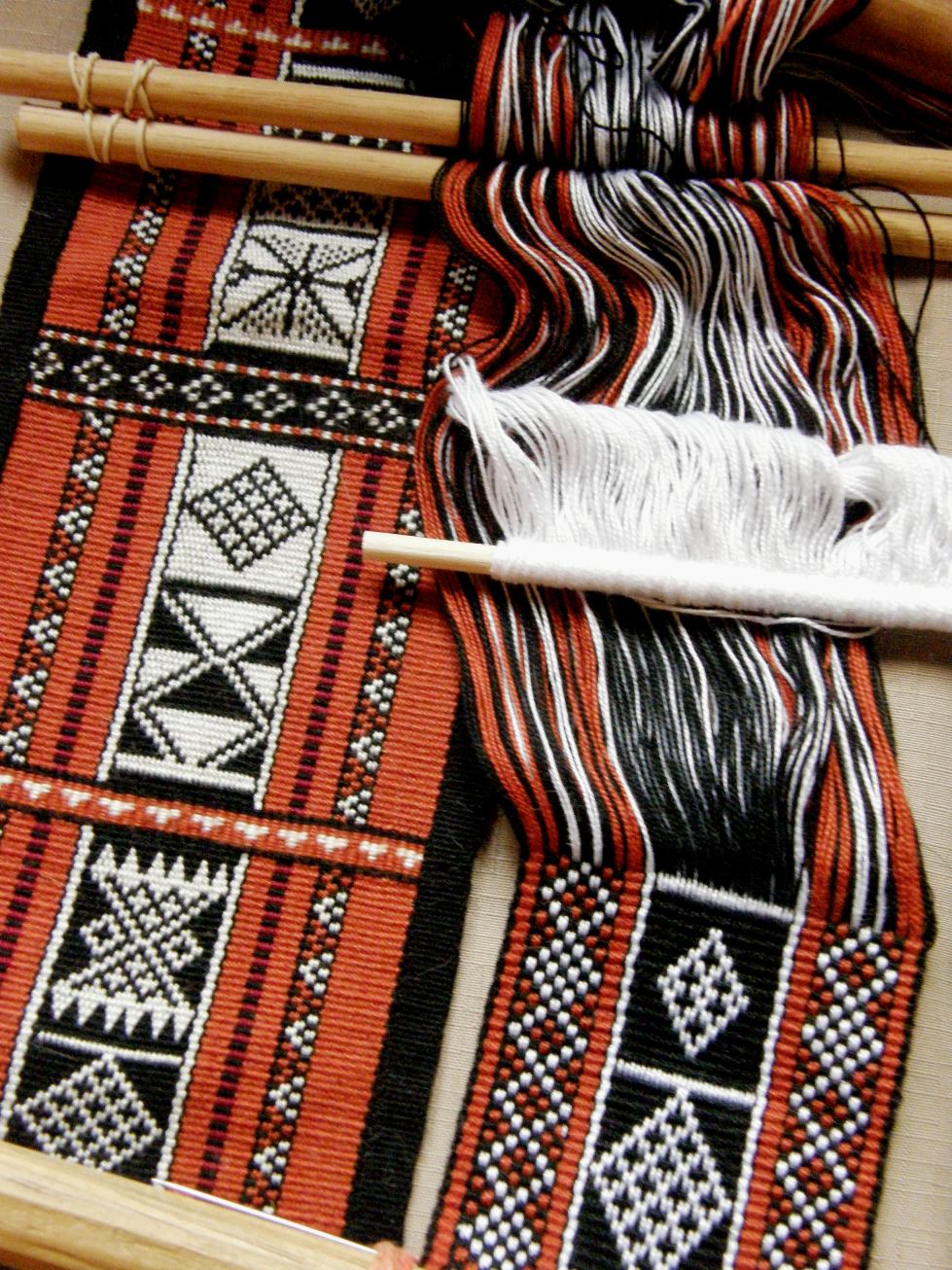
Then I got back on track. Janet’s saddle bag inspired the wrapped design above the main motif. Bhutanese motifs form the basis of the rest. This had me calling the project “Tales from the Sub-continent”.
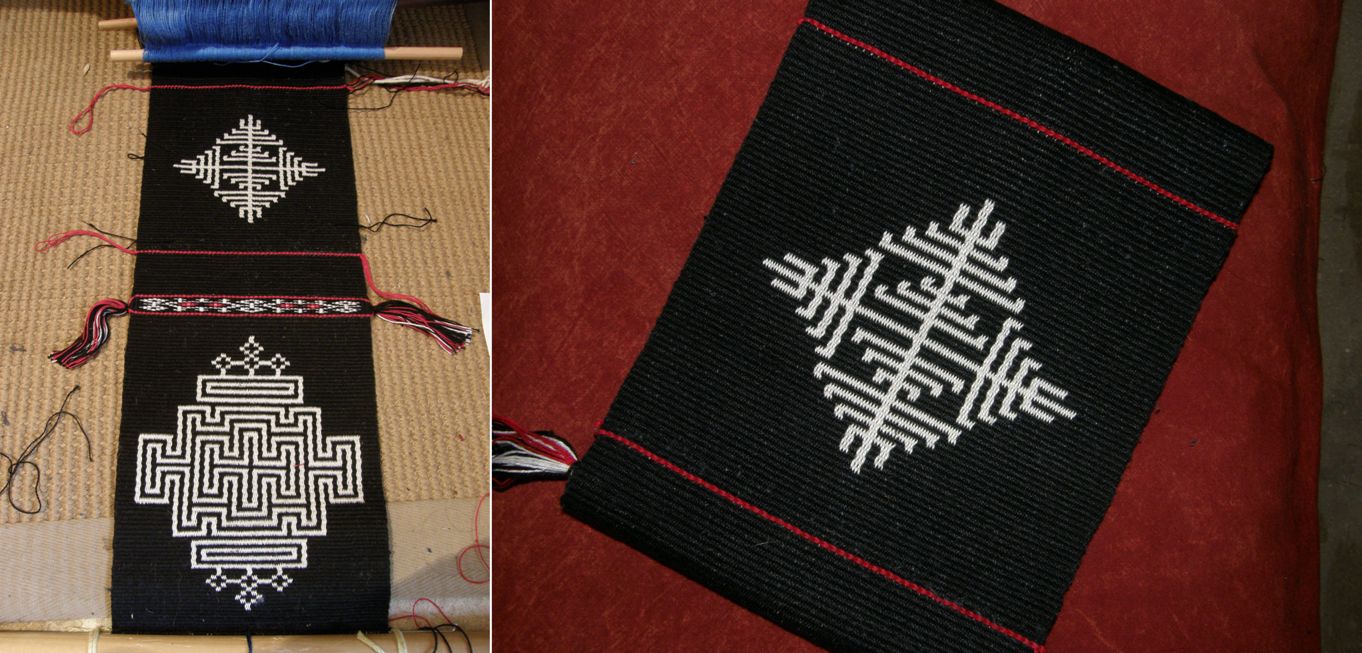
sub continent bag projectHowever, now something from Central Asia is about to creep into the mix because of bands that I saw at the Folk Art Market. I am so happy to be able to add something from that event as that means that this project will comprise a few pieces of inspiration from my summer trip. That’s one of the best souvenirs I could have.

It’s off the loom and is going to be a bag. You can see how it will be folded on the right…that’s the back.

As for the Central Asian influence, you might remember that I went to the Central Asian ikat exhibit, Colors of the Oasis, at the Textile Museum in Washington DC in 2010. The ikat pieces were stunning. In fact, I had to go twice beacuse it was too much to take in.

I was interested at that time in the bands that edged some of the coats. As the exhibit was focused on the ikat patterning and process, no one at the museum could tell me anything about those bands. They looked like they had been card woven but someone also suggested that they had been braided using finger loops. You simply could not get close enough to see anything helpful.

uzbek ikat folk art market santa feHowever, at the Folk Art Market we got to touch all the gorgeous ikat patterned coats from Uzbekistan and look as closely as we pleased at the edging bands. Yes, there were wefts, they were woven, and one of the representatives did confirm that they were tablet woven.

So, here is where I am at….
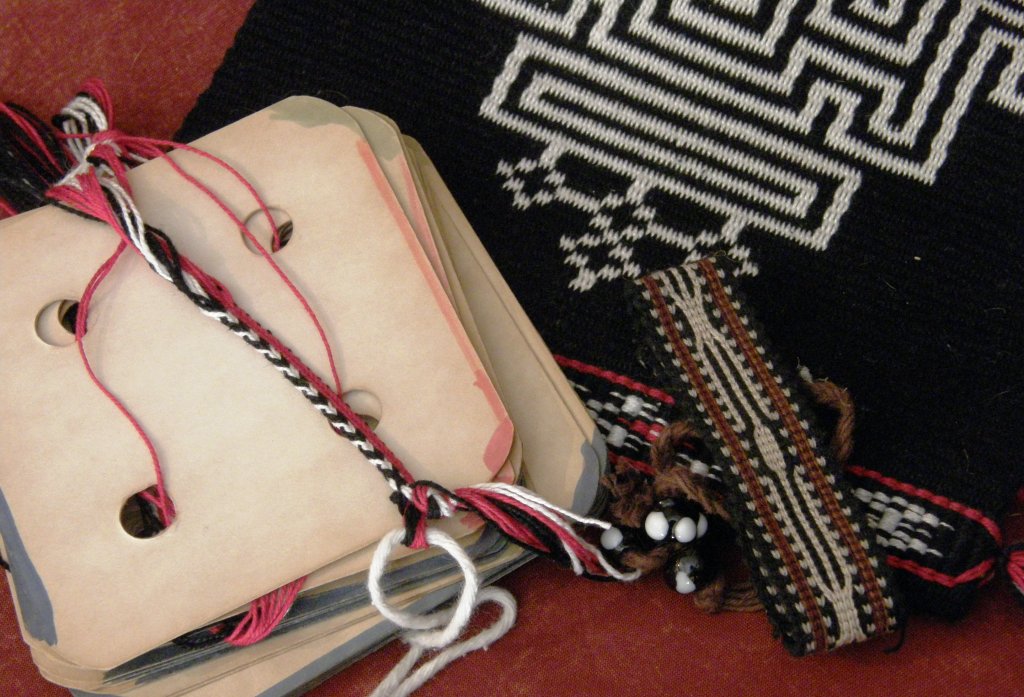
tablet weaving a strap

red and green card weaveI dug out my tablets. These are the ones that my dear friend Gladys Miller gave me way back in 1995.

They pre-date my Navajo-style weaving activity and my first backstrap learning trip to Peru.

Gladys sent me back to Chile with these tablets and Rachel Brown’s book. Later I got more books and made the piece at left. After that, I had my Navajo loom built and immersed myself in tapestry weaving.

Then came the first trip up north to Peru….and the rest is history!

So, I made a wee sample to see if I could remember the basics of threading. I want the strap of my bag to be the same design as the bands that edge the Central Asian ikat robes. Most of the bands are very similar in design and very simple.

It is interesting that on page 71 of  the Snows’ Step by Step Tablet Weaving, there is a picture of a Russian apron band that looks almost exactly the same. I was lucky to be able to buy a wristlet at the market (you can see it sitting on my weaving above) as an inexpensive example of the weave.

ikat robe at folk art marketI know that you will all be looking at the price tag on the above piece and sighing. Let’s all go to the market together next year! I only bought one other thing. It was another sample type thing to study…Guatemalan gauze, white on white on a miniature loom.

It was fun to see how the tablet woven bands are also being used as tubes for bag straps. I would say that they were sewn into tubes after being woven and stuffed with something. Mine, however, will be flat.

???????????????????????????????I did include a tubular band on my current bag project as an edging. I so enjoy weaving and sewing those tubular bands and they make such nice finishes. Using a tubular band to edge enabled me to cover and stabilize the cut raw edge that was created when I cut the flap into a rounded shape to make it more attractive.

???????????????????????????????Speaking of tubular bands, DY and I had some weaving time together at her place. DY had learned to make the ñawi awapa with me at the Tinkuy but had not put it into practice since then. Of course, all she needed was a little refresher and soon she was  on her way. It would be great to see her incorporate something like this in one of her tapestries.
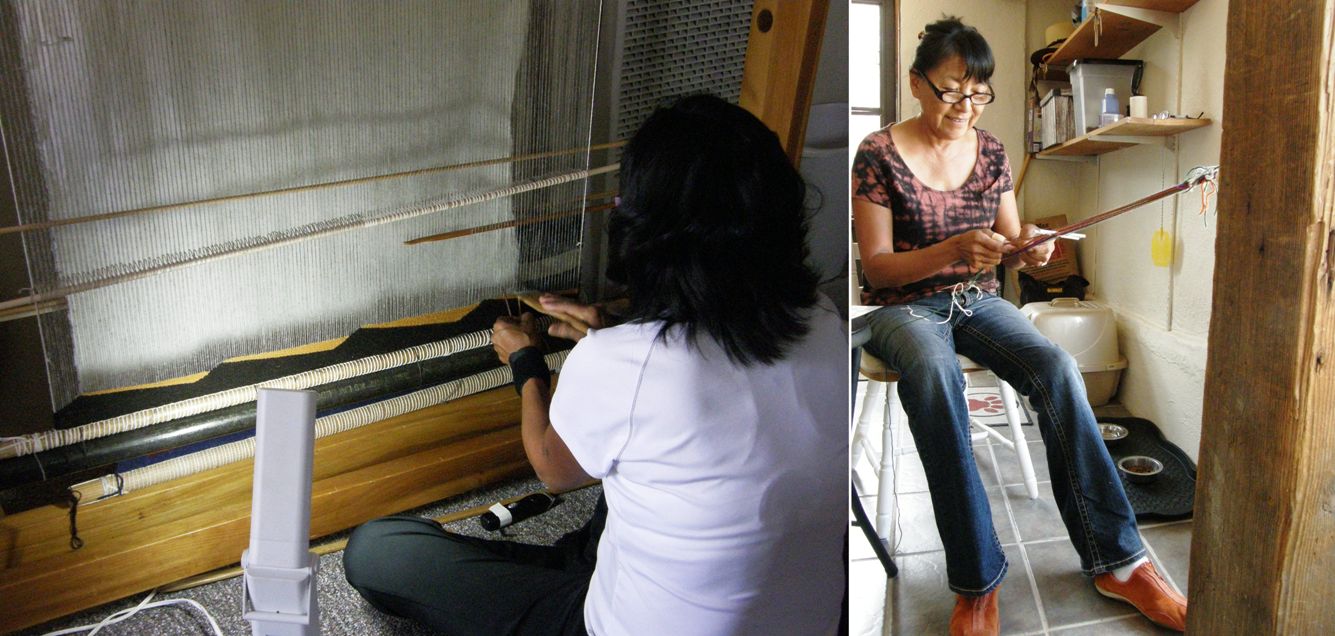
DY weavingIt was nice waking up in the morning hearing DY’s fork beating the wefts into place as she creates her latest tapestry using her own handspun and natural dyed wool. Her home has lovely solid wooden posts which are convenient for backstrap weaving.

Now I shall proceed to bombard you with images from the International Folk Art Market to give you a wee taste of all that Annie and I got to see over those two days of market…

ayoreo bags and clans??????????????????????It was great to see the Ayoreo people of the lowland region in which I live in Bolivia represented. This the fifth time that they have been invited to attend the Market and sell their looped bags.

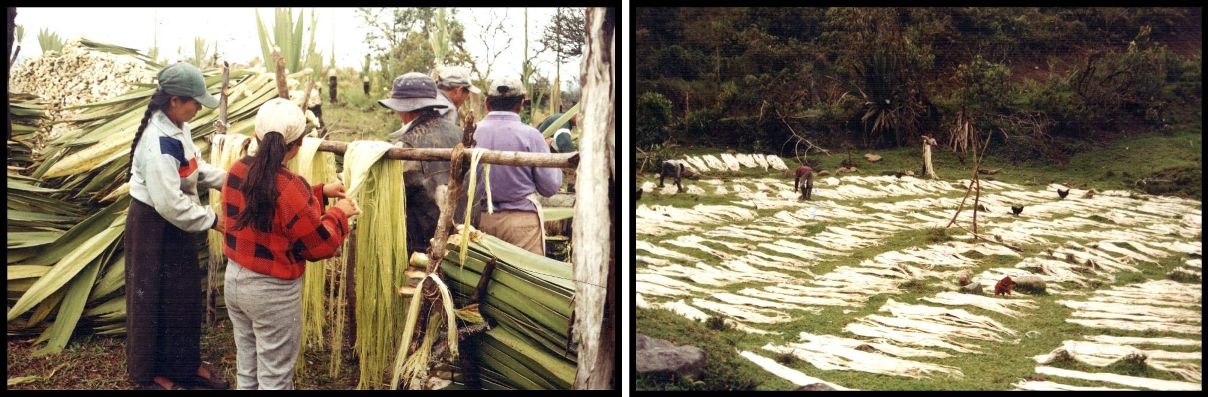
The fiber that is used for the bags is extracted from a wild bromeliad which in the Ayoreo language is called dajudie (elsewhere known as garabatá). The thread spun from this fiber is called dajua.

New Mexico Summer 2013 006One of the craftswomen was twisting three strands of thread into one on her thigh but, unfortunately, I was never present when they were making the actual bags.

I have quite often seen the women making these in the streets of Santa Cruz but they are very reserved and not comfortable with people examining what they are doing or asking questions.

I was, therefore, happy to be able to take the opportunity at the market to talk to the ladies (picture at left by Annie).

The traditional patterns belong to the seven clans of the Ayoreo society but some women have created their own new patterns inspired by their surroundings. Mostly natural dye substances are used but some artificial colors are being used in response to the demand for brighter colors by customers.

From Uzbekistan, which probably had more representatives than any other country…

uzbekistan crafts

selection of art and craft santa fe folk art market

Bright colors and simple black and white: pictures made from colored sequins from Haiti, beadwork from the Ukraine, paintings from Cuba and baskets from Panama.
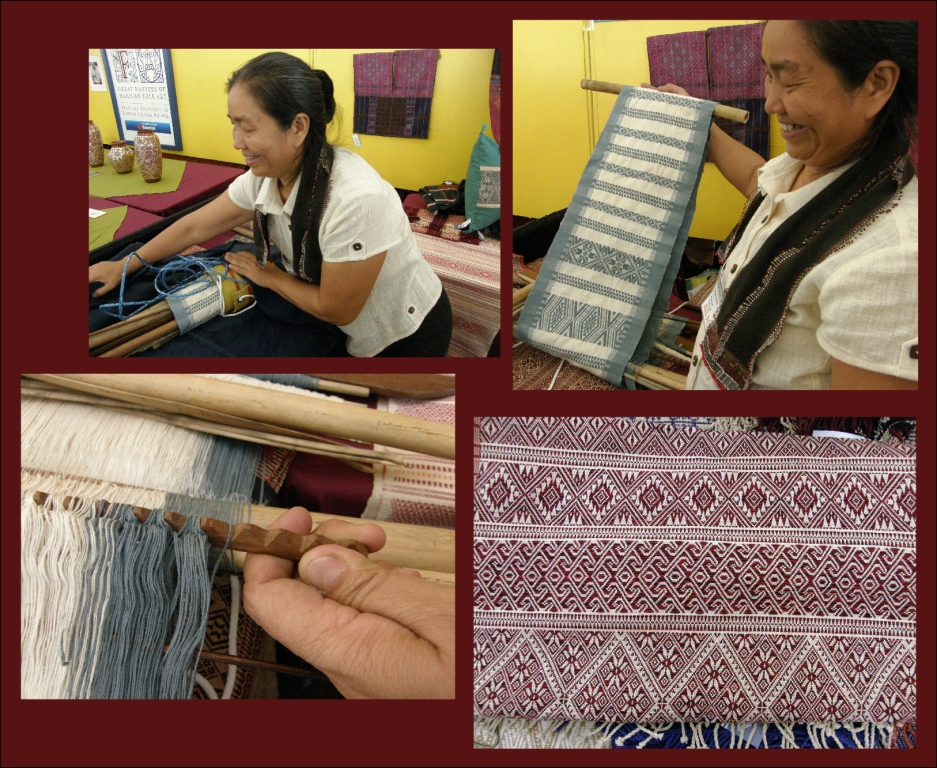
myanmar backstrap weavingKhun Shwe, a backstrap weaver from Myanmar, was happy to open up her rolled up backstrap loom and show me her work in progress. Her circular warp held a piece of equipment that I had not seen before. She told me that the notched stick was used to help spread the warps. Her work with supplementary wefts was fine and beautiful. She was so friendly and happy to meet someone so interested in her loom. I would love to study with her! I think she was doing well at the market. Quite a few people were trying on garments at her booth including Annie.

The variety…

variety of crafts santa fe folk art market...from Peru, Laos, India and Mongolia.

There was this on the Hungarian stand…

???????????????????????????????It was only $25 and no, I didn’t buy it. A lady was walking around with one and I decided to ask her about her band weaving interests. It turns out that she doesn’t weave and had no idea what the piece was. She simply found it interesting and bought it.

And the people came and came and looked and spent… When we were arriving at around 10am on Saturday, there were already early birds leaving with their purchases! I spent some time on Sunday afternoon with a very happy vendor from East Timor who had sold everything.

???????????????????????????????

???????????????????????????????Nilda was opening out this very large piece for an admiring couple when I was walking by and yes, they bought it! She couldn’t hide her pleasure at the sale. Of course, the ladies from Chinchero were seated at their looms and Nilda had a corner booth so they would have room to sit away from the crowded aisles in the shade and weave. That attracted a lot of people to the booth I am sure.

artisans at work santa fe folk art marketAn artisan from Pakistan creates a piece using applique and reverse applique techniques while another from Nepal works on a painting.

Everything about the Huichol artists from Mexico creating their yarn paintings was fascinatiing….all those woven bands and belts and straps to look at.

???????????????????????????????

huichol artsists at santa feThere is more….much more. Remember that there were over 150 artisans there! This is just a taste of the color, and excitement. I am saving the vast majority of pictures of textiles decorated with supplementary wefts for another post. When I have finished my bag project, I will start the next in the red, black and white wall hanging series and this piece will be all about supplementary weft patterning. I will show more market pieces as I progress on that as well as pieces from Nagaland that were on display at the Travelers’ Market in Santa Fe. They have all kinds of interesting ways to decorate using supplementary wefts.

Here are some finished projects from Ravelry group members and friends…

julia's supp weft projectJulia and I got to weave together and she has been captivated by supplementary- weft techniques.  She sewed a band onto fabric and made a bag and then cleverly made a square braid for a strap, fanned out the ends and wove a balanced weave shoulder pad and then finished the braid for the other half of the strap (much the same as one would do when making an Andean sling).

Cindy wove tubular band with me and is now making several slim bands to wear as a necklace, She is experimenting with making the bands in cotton. I find that it is harder to get an even finish with cotton than it is with wool. Her band looks great.
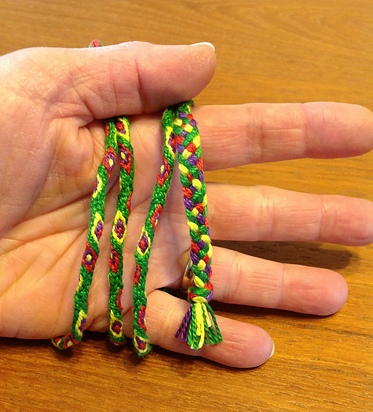
cindy

Gmp set me a picture of her latest band.. She simply added rings to the end so that it can be used as a belt. The pattern is charted in my second book.
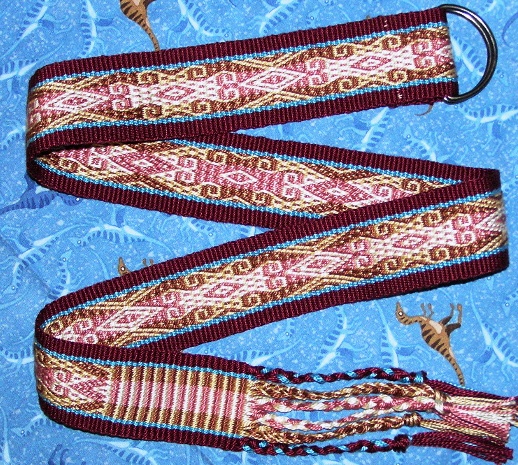
???????????????????????????????I saw the handmade book made by Betty at ANWG. It was her contribution to the Portland Handweavers Guild study of  Japanese textile techniques. The paper is handmade and from Nepal. Betty used a traditional binding for the book and wove the cover. She wove a warp-faced double-weave band on a backstrap loom with Japanese characters to decorate the cover.

bettys book with warp faced double weave bandThat’s all for this week.

From hooray Santa Fe to hooray Santa Cruz….the weather is supposed to warm up any day now to a pleasant coolness…perfect weaving weather. I have come home with lots of ideas from this trip and am happy to be back at the loom for a few months.

My cat has gone to a new home. I spend too much time away and it is not good for her. It’s sad after ten years together but I know she is happy in her new place…she even caught her first mouse!

Here are DY and I and Drey, DY’s cat, one of my many kitty companions on this trip…

dy and drey

Backstrap Weaving – Everywhere an Eye-Eye

Here an eye, there an eye….

I have been casting my eyes over Veronica Cereceda’s beautiful book on the weaving of the people of Tinkipaya, Bolivia marveling at the complexity of the patterns and the use of certain combinations of color to create light and shadow. According to Cereceda, the colors most used, and this is immediately evident from the many stunning photos in the book, are white, yellow, orange, black, light green, dark green, bright blue, bright pink, dark red and purple. I have yet to find any reference to the type of yarn used and whether it is bought in these colors or dyed by the weavers themselves, but as I said, I have only had the time to simply leaf through the book at this point.

I have to say that it is refreshing to find these bright, obviously synthetic colors in use in these gorgeous textiles.

The bright pinks, lime greens and strong yellows so often favored by the women of the highlands can quite often be jarring to our “Western” eyes.

When one sees the dry, bleak landscape of  the high plains, it is easy to appreciate the desire to create brightly colored cloth.

However, I think that it is the certain placement of these colors on the cloth of Tinkipaya to create the bands of light and shade that make these textiles so attractive.

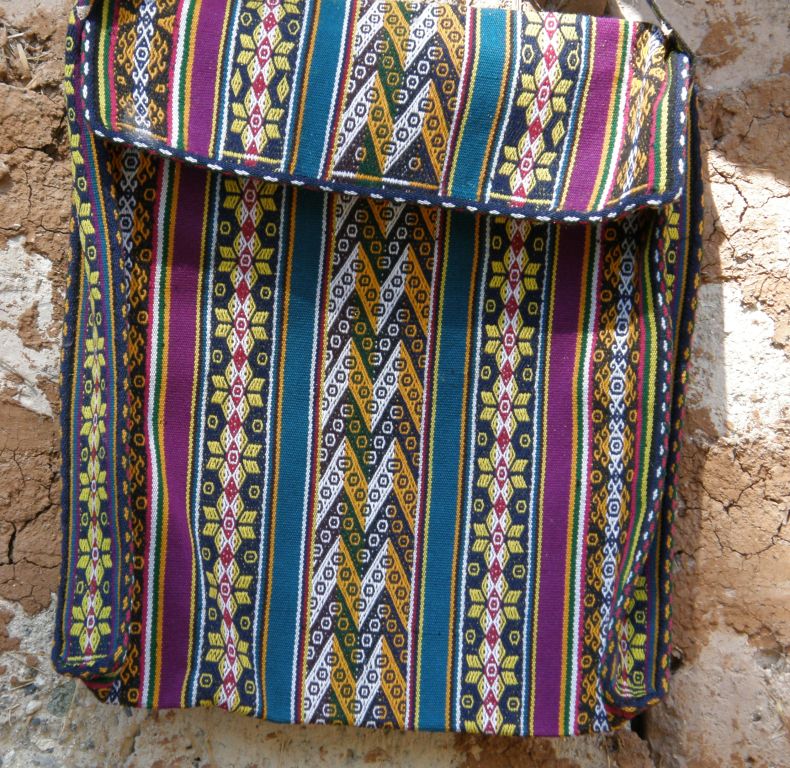
The piece above from Tinkpaya was most likely made for sale to tourists and may have been adapted slightly color-wise for this purpose. I don’t see anything with that particular shade of blue among the many pictures in Cereceda’s book and the colors generally are a little bit toned down compared to the pieces I see on the pages.

I can actually get a little tired of muted natural dye colors in the same way that I get tired of  wandering from booth to booth of hand painted skeins at fiber festivals. I have always said that I am not a “yarny’ person. Don’t get me wrong, I do love the natural dye colors, but it is very nice now and then, just for a change, to see the brighter and more “acid’ colors used so nicely.

When I learned to weave in Potosi, the same province of Bolivia in which Tinkpaya is located, I had my teacher choose the colors for my second learning piece as I wanted to weave something that was to her taste. My teachers were not from Tinkipaya and the placement of the colors in the pieces I wove with them has nothing to do with the style of textile from Tinkipaya. Yet it is interesting to see the kinds of colors, pictured above, that they favor when we in the west are so drawn to the softer earthy tones achieved when using natural dyes.

The design that I wove with my teachers on the ch’uspa, the smaller of the two bags pictured above, is woven in Tinkipaya where it is known as ch’uritos,  spirals. I have been told by other weavers that the pattern represents the swirling waters of a fast running river. It is normal in my experience to hear different interpretations of the same designs from different weavers.

The small “circles” on the Tinkipaya textile are very typical and are called ñawis, eyes, according to Cereceda. Weavers that I have met have generally told me the name in Spanish…ojitos. The zig zags on which the ñawis sit, known as kutinaku, are also very typical and are one of the principal identifying elements of textiles of Macha and Tinkipaya.

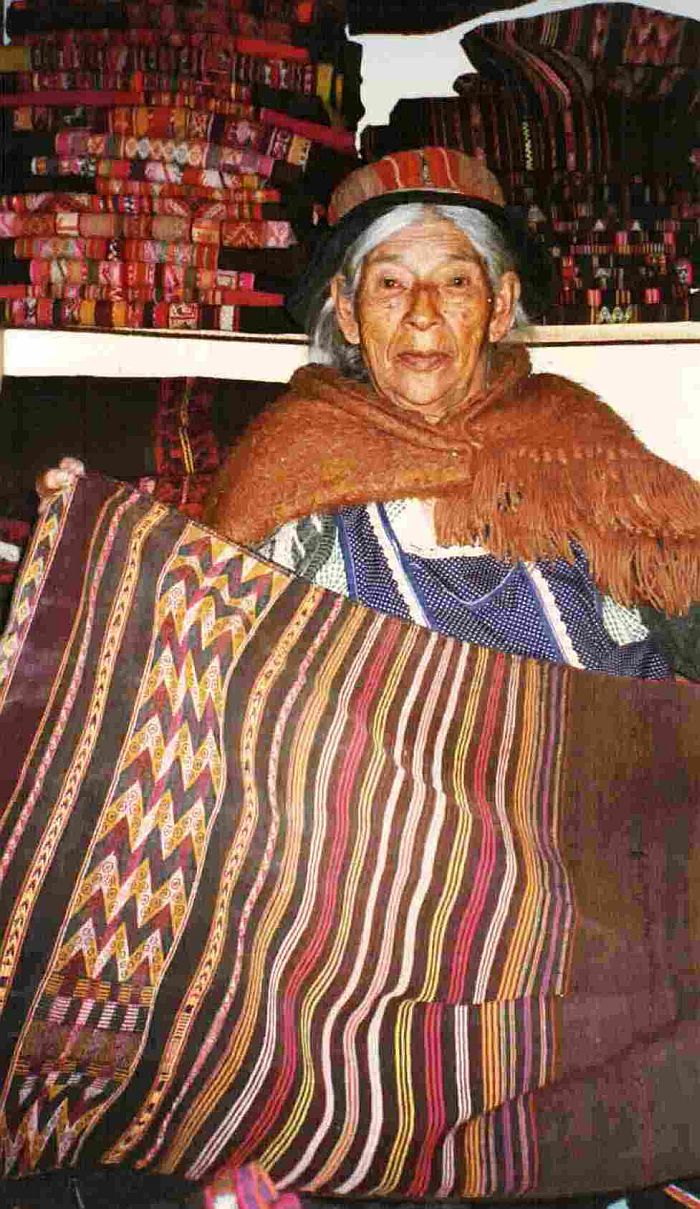
Here is Dona Maxima in her tiny store in Sucre in 1997 showing my friend Ulla and I a weaving from Macha with its kutinaku and ñawis.

I wanted to try weaving  just a small slice of the eye design from one of the Tinkipaya textiles so that was one of my projects this week.

There it is on the purple pouch which has a nice lilac zip from the bag of assorted zips that were given to me by Sharon and Betty. I am always bound to find just the right color in that bag. And I added some more eyes in the form of a ñawi awapa to the perimeter of the bag and braided a zip pull.

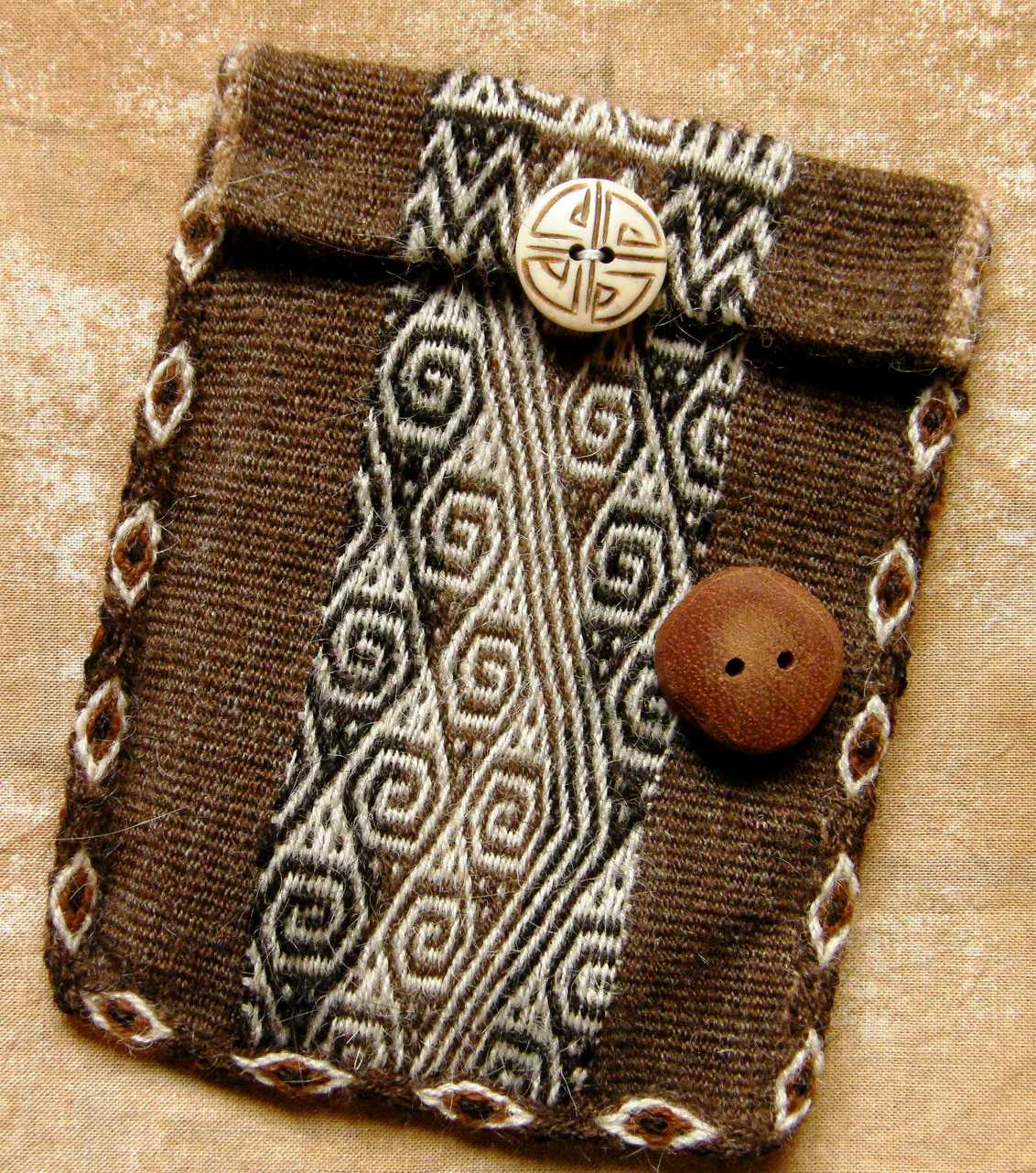
And, as the Tour de Fleece is in full swing over on Ravelry (this is a spinning event run in conjunction with the Tour de France cycle race), I pulled out my handspun alpaca pouch with its spiraly eye-like Tarahumara design (now everything looks like eyes to me!) to remind myself that yes, I can and do spin and weave with my yarn and yes, I should contribute something to the Backstrap Weaving group’s Tour de Fleece team.

So far only Janet and Jennifer are doing their bit.

But I mainly got that alpaca pouch out as I found a nice button for it while I was away….bone with a cool etched design and so I wanted to sew that on and fasten some snap closures to the inside (I had been using velcro on the inside of the flap…urrrgh!)

It was a toss-up between the bone button and the sweet wooden one which was made by a gentleman in the town where my weaving teacher Maxima lives. The wooden one is a bit on the bulky side for such a small pouch but boy, does it smell good!
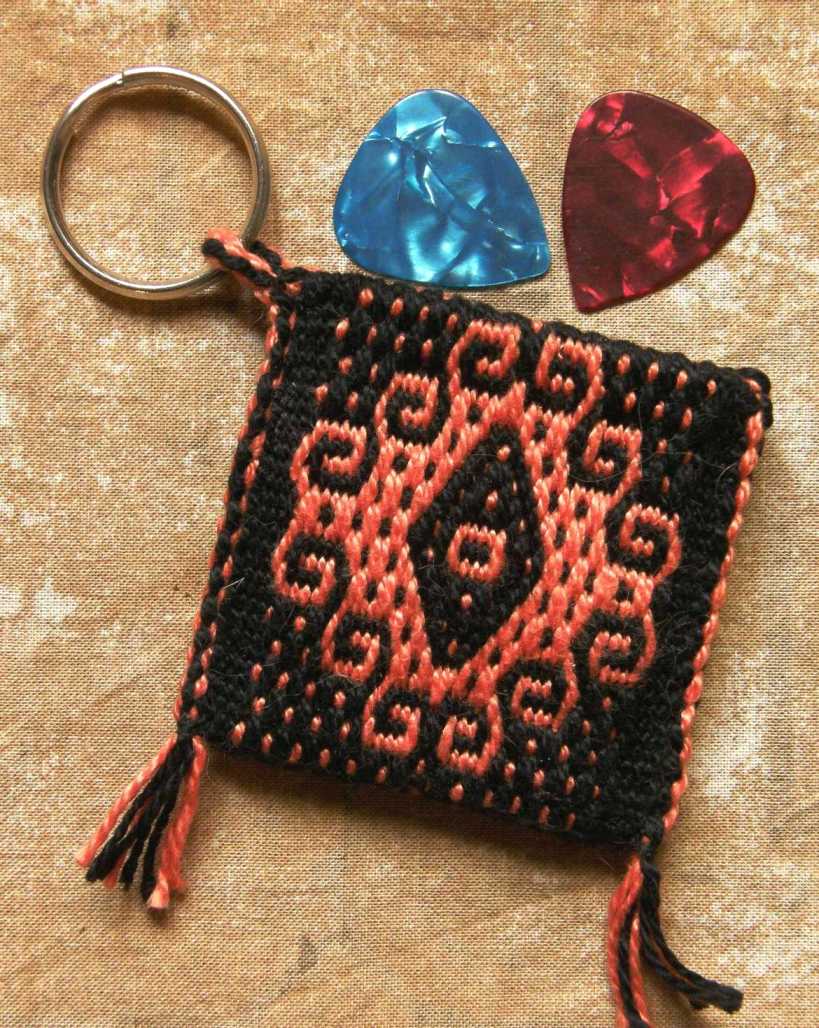
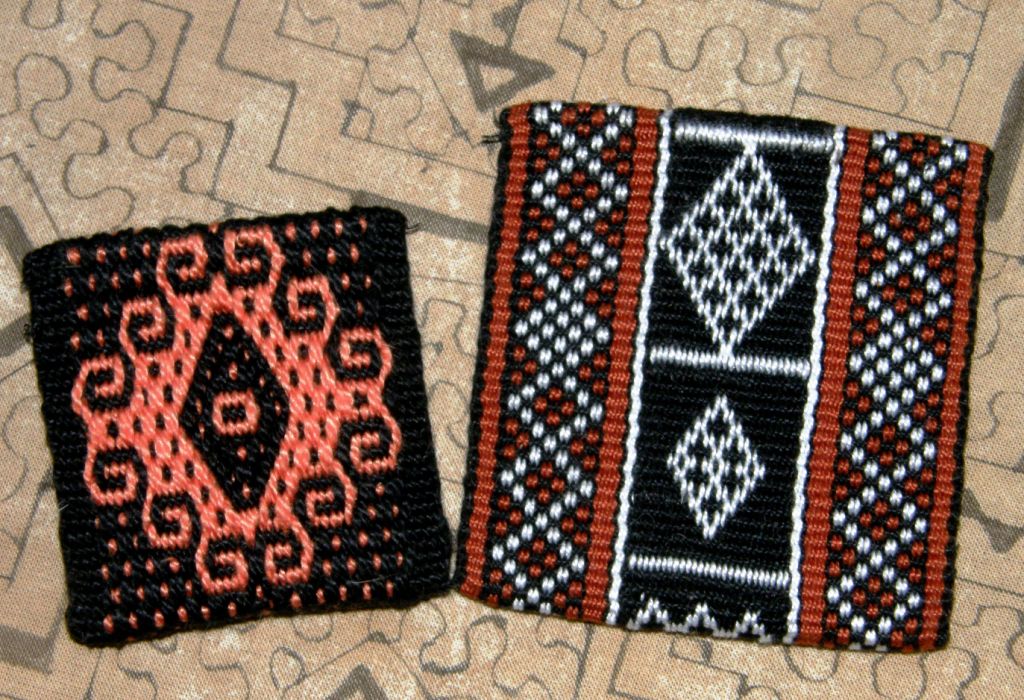
Then there is the wee black and orange bag-let also pictured above…another sample band that got turned into a pouch for guitar picks. My guitar-playing friend spotted it and came up with that idea.

So, a snap closure, braid, tassels and ring was added and off that goes to its new owner.

If you are wondering about the raw edge (I made three selvedges), I had enough band to turn to the inside and all the way to the bottom of the bag.

When I showed the Bedouin bag on Facebook last week, someone said that I should use the brand name CLT (Cute Little Things). Yes, I do like things in miniature and while I still have the eyes for such work I like to go tiny sometimes…
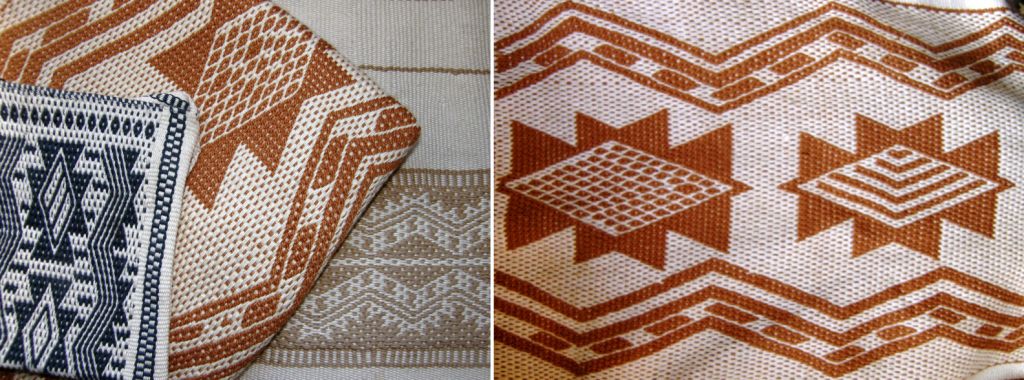
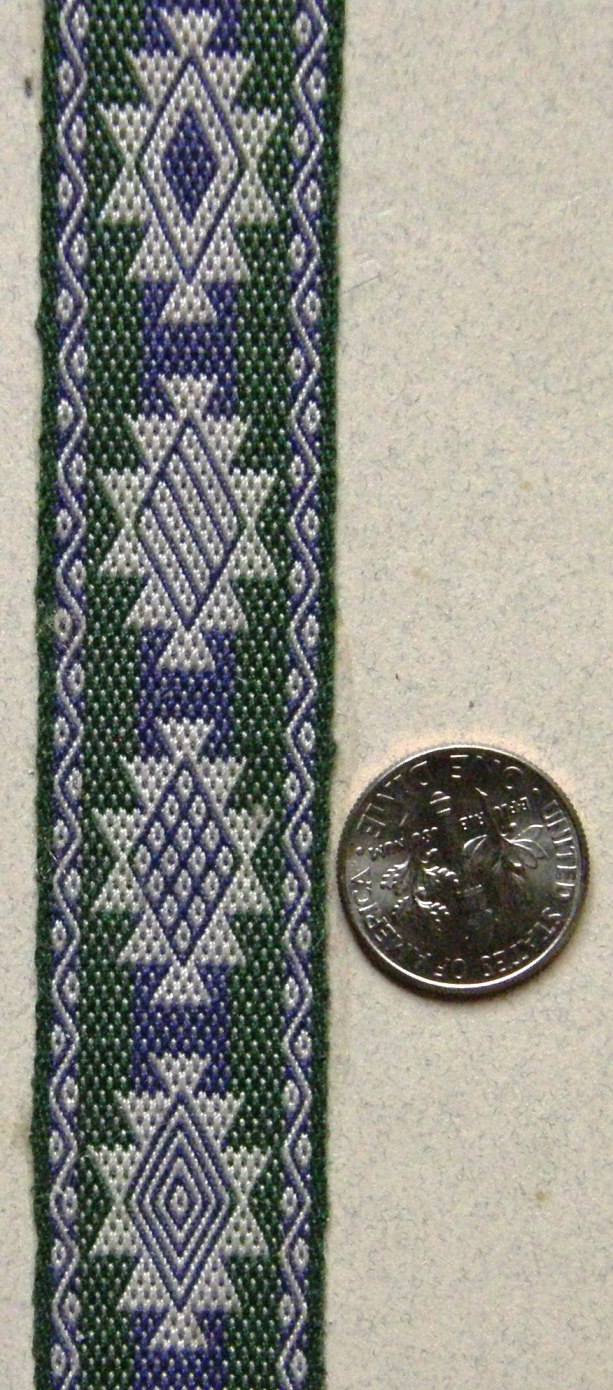
The pebble weave band at left, pictured next to a dime, is made from sewing thread and features stars that were inspired by Bolivian lowland weavings placed within a  highland design.

Poking around among my books is what unearthed the one on the textiles of Tinkipaya which has become a distraction from the other projects on which I have been working…a delightful distraction, I might add. I also came across some other forgotten gems squeezed in between the larger volumes.

I like trying to find locally published books when I am traveling and have a few of those from my collection that I would like to show you…

This is a book on natural dyes that I bought in Huancayo, Peru back in 1996. It is very simply made with very much a hand- made look about it and is full of plant and mordant samples in little plastic packages and dyed wool. The processes are explained with charming drawings making  almost unnecessary the ability understand Spanish or even read for that matter. It’s a treasure. The style of drawings reminds me very much of the style of designs that you find etched on the gourds which are also sold in towns around Huancayo….

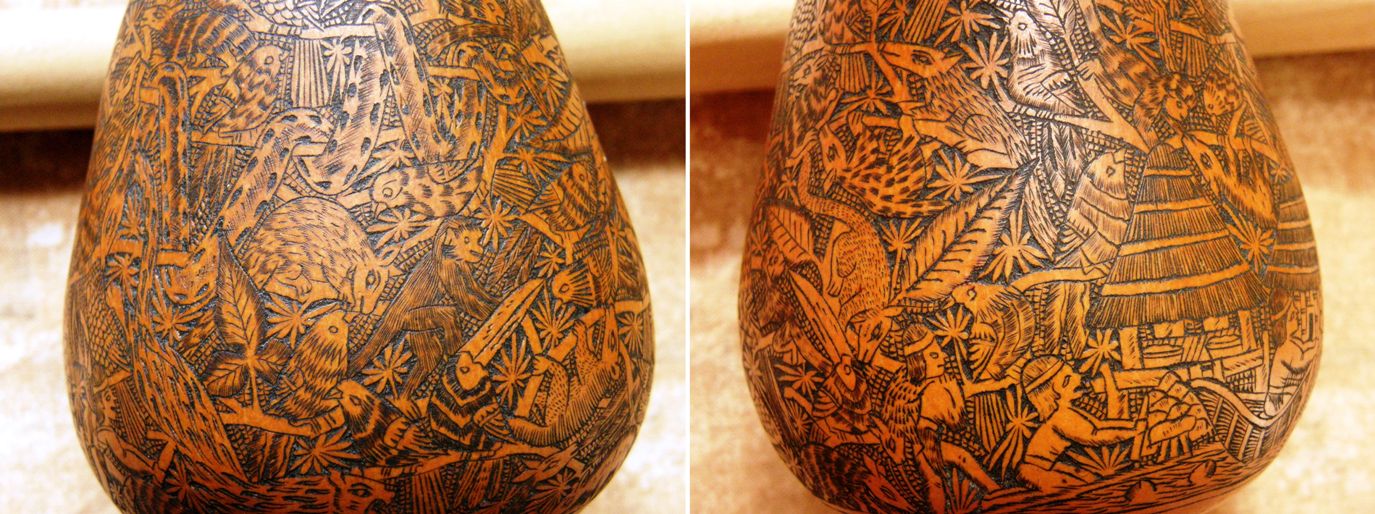
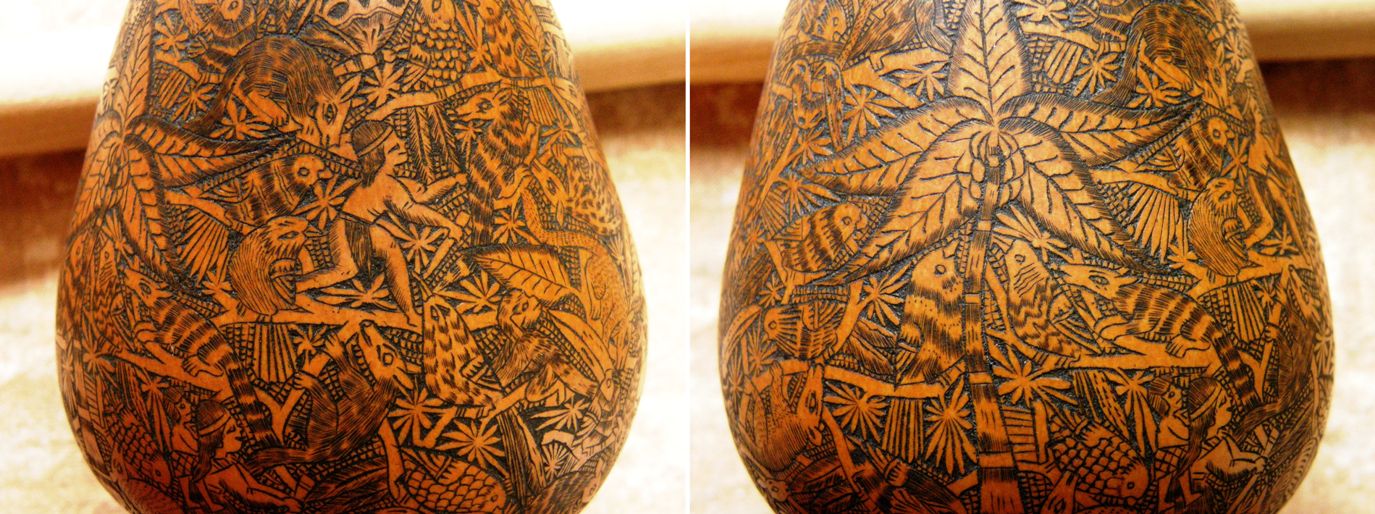
I bought the gourd, pictured below with its scenes of tropical lowland Peru, in a store in Quito, Ecuador and although I know it is from Peru, I can’t be sure that it is from the towns of Cochas Grande and Cochas Chico near Huancayo which are famous for this particular handcraft. But, in any case, I would like to show you the amazing complexity of the designs etched into its surface.

I think every time I pick this up I see something new in it. Today I noticed the thick snake winding its way among the tree limbs for the first time.

But, back to the book…Here is part of one page with plant samples, dyed wool samples, the local names for the plants and a glimpse of the instructional drawings.

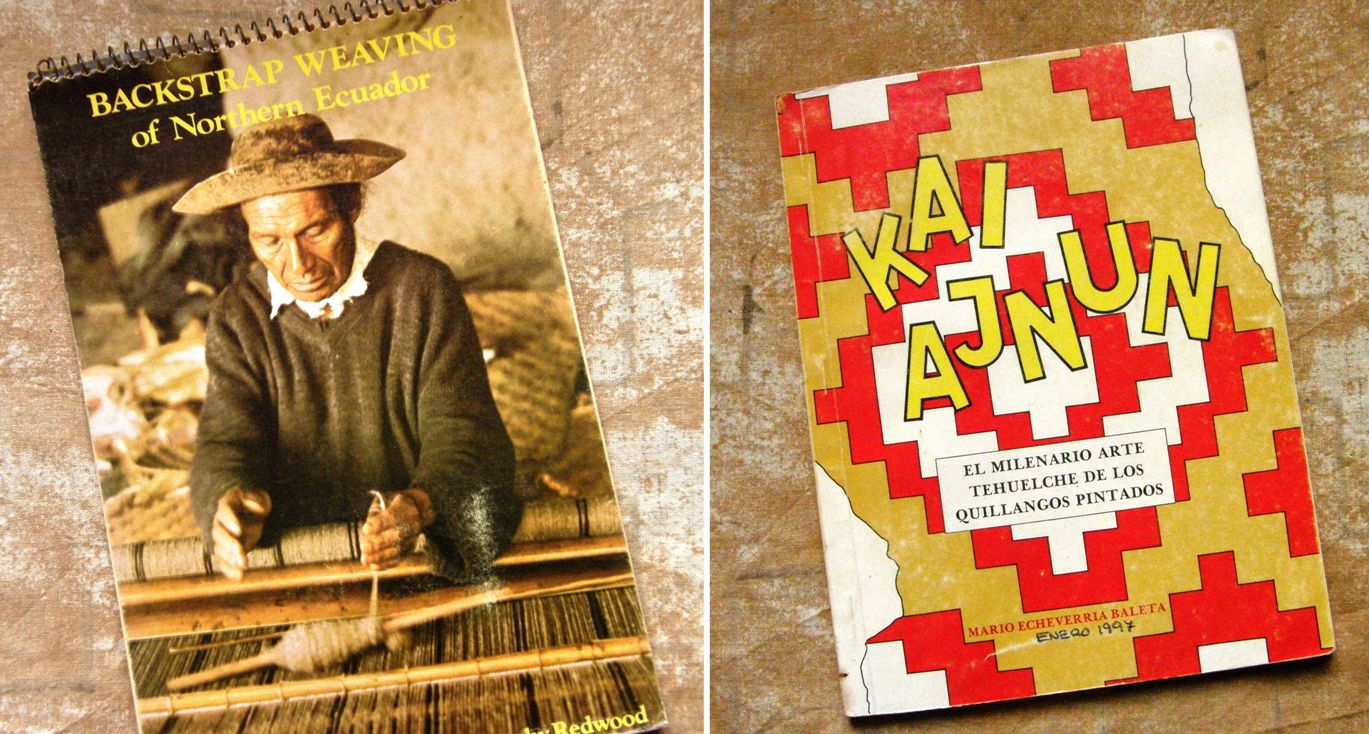
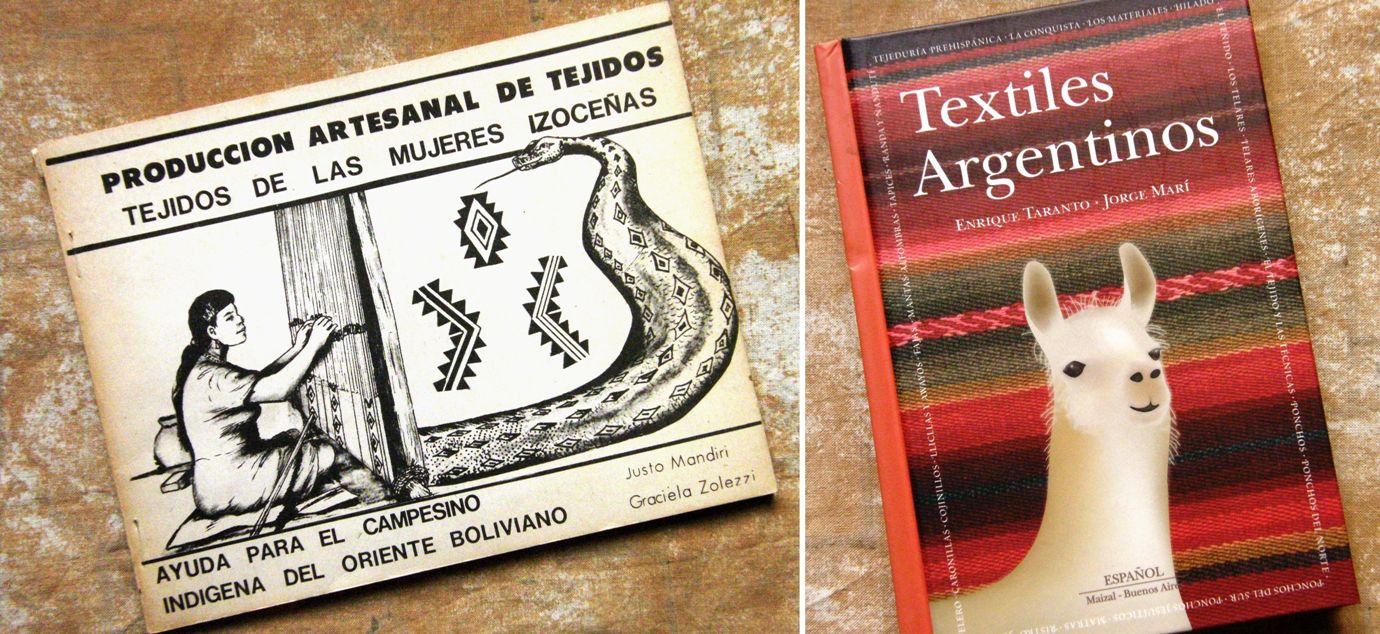
The first book on the left is what I consider a gem of self publishing and was one of the books that most encouraged me to “just do it!”, that is, go ahead and self-publish my own book on the pebble weave structure that I learned in Huancayo. It describes the process of constructing and setting up the kind of backstrap loom used in northern Ecuador and it, too, is filled with hand drawings and even yarn samples.

The differences in the way that warps are wound and looms are set up throughout the South American highlands can be very different…the way heddles are made, the number of crosses that are used, the number of stakes used in warping. These differences are what makes this whole thing so intriguing and interesting to me. It would be ridiculous to think that there is only one proper way to do things.

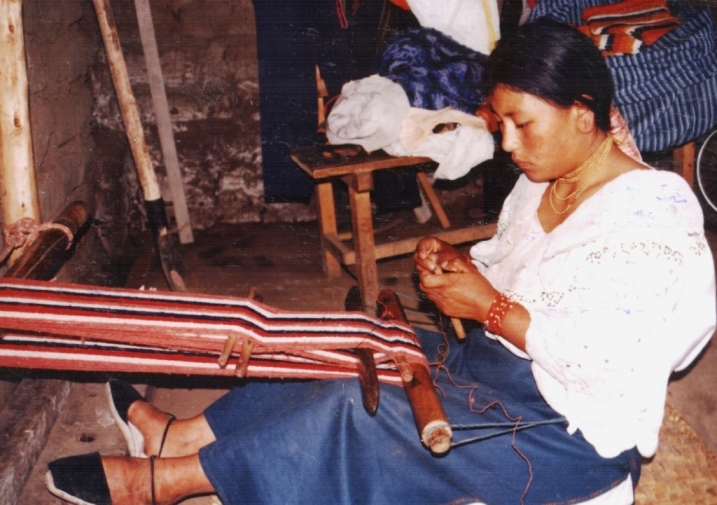
I was fortunate to be able to spend some time with a poncho weaver and his daughter in San Roque, near Otavalo, Ecuador and see the process described so beautifully in Redwood’s booklet, in action. In the picture above the weaver is preparing to make string heddles. Ms. Redwood, wherever you are, I would love to meet you!

The book on the right is not about weaving but catalogs the designs on painted animal skins made by the Tehuelche people of southern Patagonia. This was given to me by a lady from one of the old British families who own many of the large sheep stations on the pampa of southern Argentina. She owned one of the skins described in the book and has donated it to a local museum. One thing is the thrill of looking at the books, another is remembering how I acquired them. There is a a whole rush of memories associated with the visit to that farm on the pampa.

Another wonderfully simple self-published book was given to me by an elderly gentleman in Huancayo who was simply thrilled by my interest in the textiles of his home. The pictures and diagrams are all hand-drawn, it has been written on a typewriter and the paper is grainy and rustic. It includes meticulous step-by-step instructions on the construction of a floor loom and spinning wheel as well as an overview of the weaving tradition in San Pedro de Cajas.

I remember effortlessly finding the book on the left in a store a couple of days after I arrived in Santa Cruz back in 1998. I thought that I must have arrived in a fiber and weaving paradise until I went to the market and had a hard time making people understand that I wanted to buy a spindle…no one knew what that was!  That is the one and only book I have found on the topic and it was only after a few years had passed that I met my first Guaraní weaver from Isoso here in the city.

The other small book above, published in Argentina, is also available in English and can be bought online. It is a lovely miniature book with lots of great pictures of Mapuche textiles and woven items used by the Argentinian gaucho, belts and ponchos from the north and south…many of which I have not seen in other publications. It also includes lithographs and paintings from the colonial period and I love those.

And last of all, at least for this blog post, I want to show you some story books about children that I have collected that describe their daily lives in communities of weavers in South and Central America. One is from Bolivia, one from Ecuador and the other, Guatemala.

Dragging myself away from the book shelves, I will finish by showing you some work by Ravelry and other online weaving friends.

Karren was inspired by a Mexican rebozo to make her own black and white rebozo on her four-shaft floor loom in 8/2 tencel with a  pattern in simple warp floats. The rebozo that inspired her had varying widths of pink and white stripes along with fine horizontal bars that accompany the simple warp float technique. The fringe, like those on many of these rebozos, is a mass of intricately knotted figures.

If you feel inspired to try something similar, the pattern chart for this particular design is here…and I am sure you know where to find the tutorial on my blog.

It is hard to believe it’s warp-faced with that beautiful drape. Karren’s project has inspired and encouraged me to use my tencel for warp-faced weaving. I have not been very brave and have only made a small supplementary-warp band with a celtic knot design using my tencel so far.

Jane, who has recently returned from a trip to Peru where she studied weaving at the CTTC in Cusco, showed us the band that she is weaving at home. It was warped for her by her weaving teacher using the wonderful handspun and naturally dyed wool yarn of Chinchero while she watched the process and she made the string heddles herself when she got home. She is using the two swords to create a temporary picking cross which will enable her to pick up the threads for the complementary-warp patterns.

On the right, Isabel sent me a picture of her warp set up to make a backstrap following the instructions in my article on WeaveZine. On the table you might be able to make out her first small pebble weave sample which she made using my book.

So, I am off  now to get my favorite spindle and make a plan for spinning this weekend and put the books that I photographed back on the shelf while trying not to get sucked back into to book browsing land….I have way too many other things that need doing!

Backstrap Weaving – Tools, Trinkets,Tinkipaya and Treasures from the Lowlands.

It’s been one of those computer weeks…chained to the keyboard…. that has left me with little time at the loom. Still, I discovered a new weaving tool, fell in love with yet another weaving style, made a couple of things from tiny samples and rediscovered some bits and pieces of Bolivian lowland handcrafts that I have had stashed here and there around the house.

First the new tool about which I am very happy…

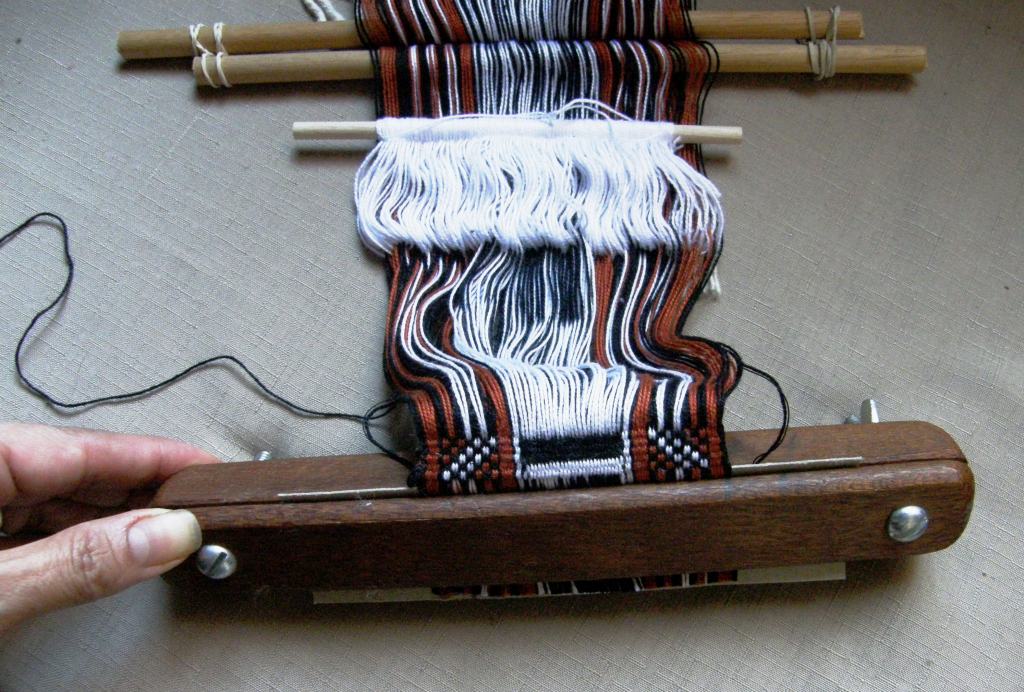
I inherited this from the Santa Cruz Handweavers Guild and it used to belong to Nora Rogers. It was holding the end of a Hopi wedding sash in sprang technique that she was creating. I don’t know if it was bought or home made but it is heavy and solid and does one heck of a job clamping. The beauty of this for me is that I can weave a piece and then clamp this thing onto the warp, cut off the finished piece and continue to weave!

It isn’t just two flat pieces of wood clamped together. The two pieces are shaped so that one piece fits neatly into the other. It holds really well and there is no need to have knots on the end of the warp to stop it from slipping through. I love it!

So, I was able to cut the little Bedouin sample on which I was working last week and carry on weaving on the same warp.

I wanted to make the little Bedouin sample into a small amulet-type bag as a gift for someone and didn’t feel like waiting until the whole warp had been woven, nor did I want to cut off and just abandon the warp and waste the yarn.

I need more of these clamps in different lengths!

So, you may remember that I was experimenting with using double weave for the Bedouin shajarah patterns and that I was trying to handle the two wefts in a way that didn’t make the transition from double to plain weave too abrupt.

I finished the first sample, added a piece of cardboard to separate the start of the second one, wove a bit, applied the clamp and then cut off the first finished sample.

I was so pleased with it all…the finished piece, the double weave and the nifty new tool… that I had half sewn up the little bag when I realized that I hadn’t yet taken pictures of the inside to show the double weave and the lack of long floats So here is one not-wonderful photo of my trying to hold the thing open while taking a shot… but I think you get the idea.

I love these little amulet bags. What are they good for? I don’t know…they are just so cute! I have decided to call them “doorknob danglers”.

This one is for a friend but others will be dangled from doorknobs and will be used to stash those odd things that one finds on the floor and doesn’t know quite what to do with…like that strange button that doesn’t seem to belong to anything. I guess they could also be used to hold jewelry especially now that my pieces with Bedouin designs no longer have any floats on the inside and, therefore, nothing on which jewelry can get caught…yay!

And they give me an excuse to do the dressing up thing…you know, add braids and tubular bands, cross knit looped edgings etc..

I made a  four-strand braid for this one and then sewed it to the edges. I added extra strands to make the tassels.

Here’s one I made along time ago and gave away. This was fun to decorate with a ñawi awapa, Bolivian pom poms and a crossed-warp strap.

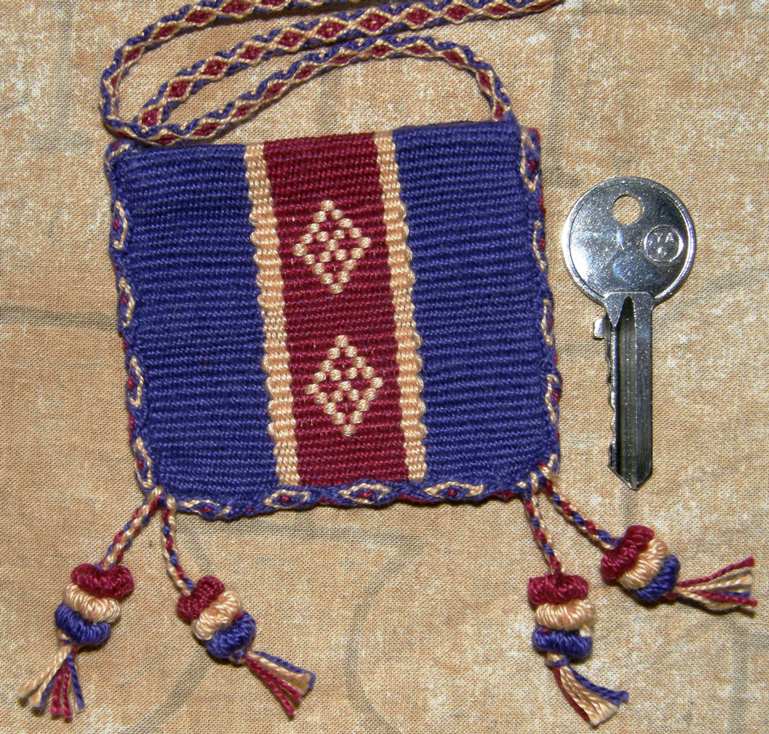
Here is another band experiment that I decided to turn into a ridiculously tiny bag. I  think that this one will hold my house key in my purse. I haven’t had time to dress it up yet and I will probably sew a snap closure to the inside and add a wrist strap.

I have already had a friend ask me to make her a tiny one like this for her guitar picks.

Now, what about this weaving style that I have fallen in love with….it’s Bolivian, it’s from Tinkipaya… and it’s “wow”.

I saw a weaver from Tinkipaya at work at the Tinkuy de Tejedores in Urubamba, Peru in 2010, have seen and admired lots of their work for years especially when I was in Potosi learning to weave, have a fabulous book on their designs by Veronica Cereceda and now, after all this time…suddenly it really grabs me.

What I think I loved most about seeing the lady from Tinkipaya weaving when I was in Peru was the reaction and intense interest displayed by the Peruvian weavers. I delighted in watching their stance and expressions while observing the Bolivian weaver at work. And some of the Peruvian weavers were just as intent on capturing the moment, whipping out their digital cameras.

But most times there wasn’t a chance to see as the weaver had a solid wall of admirers around and above her so I had to settle for enjoying watching the watchers and there was much to be enjoyed in that activity.

I enjoyed looking at the hats, the skirts, the footwear, the woven cloth as well as listening to the sound of the conversations in Quechua.

While the Tinkipaya weaver does her pick-up (amazing how she could even do it with all that attention focused on her!), one of the Peruvian ladies appears to be pointing out the picking cross that she is using …held on two cords high above the weaving line and beyond the heddle rod.

Meanwhile, these ladies ponder from above…

There is a wonderful museum in the Bolivian city of Sucre which is currently devoted to the work of the weavers from Tarabuco and Potolo but  which I have heard is going to be expanded to include the weaving of two more Bolivian areas…those of Tinkipaya and Calcha.

I need to gather more pictures so I can show you to what I am referring and why I am so enthralled.

From Tinkipaya in the Bolivian highlands let’s drop down to the lowlands, where I live, so I can show you a few of the crafts of this area…bits and pieces that I have bought from a co-operative store called Artecampo just one block from my house…things which have gotten stashed away as my little home got filled with more and more books! When looking for something this week, I started discovering these things tucked away in corners and decided it would be nice to take a look at them here.

Artecampo sells crafts of the various groups of artisans in the Santa Cruz area which includes the  Ayoreos, Chiquitanos, Guarayos, Izoceños and Criollos.

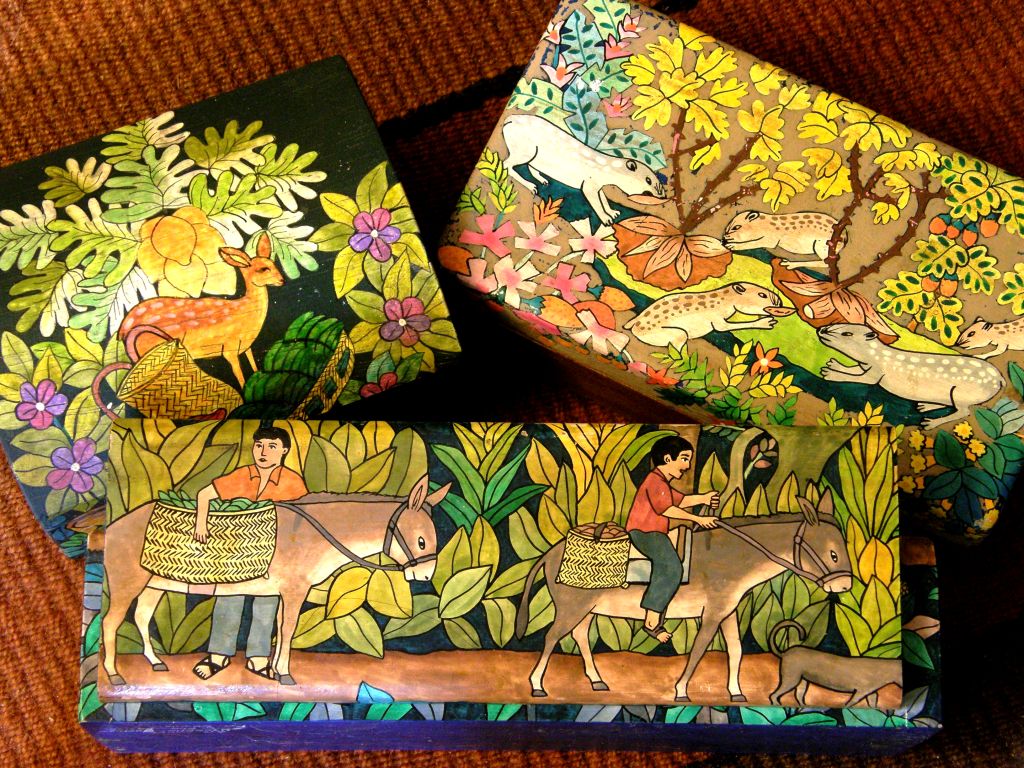
These sweet wooden boxes are painted by a group of boys and girls, the youngest of whom I am told is eleven, from the community of  Guarayos de Urubichá.  The idea for this craft was born when the Center for Research, Craft Design and Cooperative Marketing (CIDAC) made an experiment over twenty years ago in this community by giving the school children paper and colored pencils and asking them to  draw scenes of  life in their community. One youngster was selected to be trained in painting techniques in the city of Santa Cruz and then returned to his community to pass on his skills and knowledge to his young peers.

The boxes are posed on a woollen rug woven in Vallegrande in the foothills of the highlands. Maybe one day I will go there and get to buy some of this wool for my own weaving as there is certainly none to be found here in the city.

The people of Isoso are a unique mix of Guaraní and Chané cultures and produce woven cotton pieces on leaning vertical looms. Hammocks, table runners, placemats, bags and wall hanging are among the items sold at Artecampo.

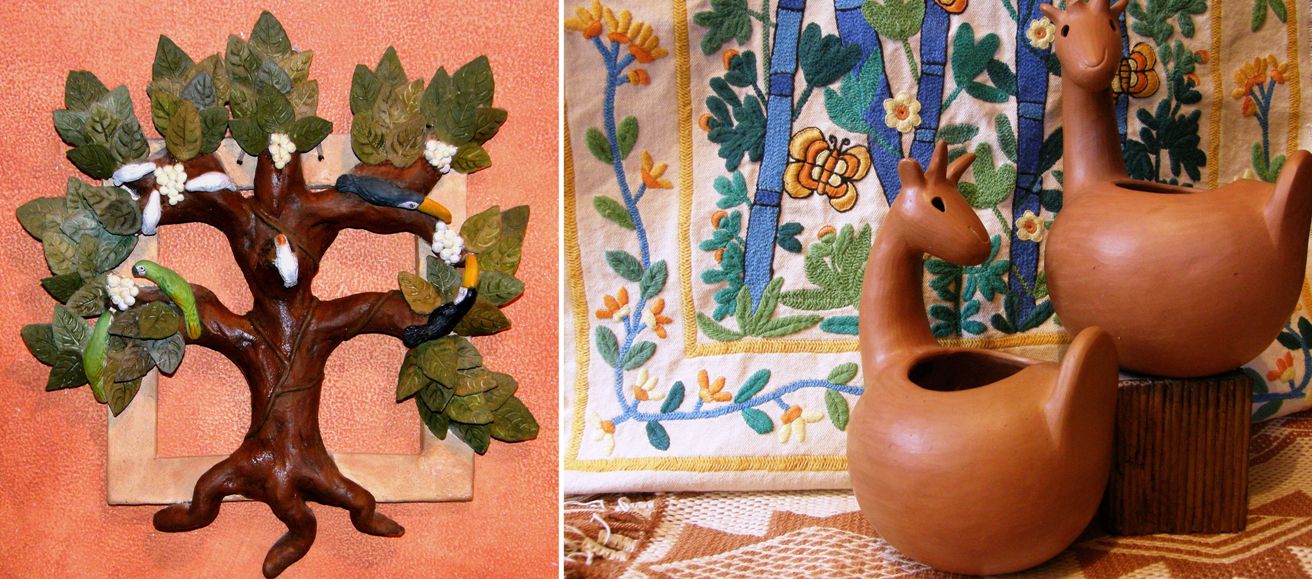
Clay pieces from Guarayos de Urubichá and Cotoca…. The embroidered scene on the cloth in the background is typical of the color, and depictions of  lush vegetation and animal and insect life present in many of the crafts.

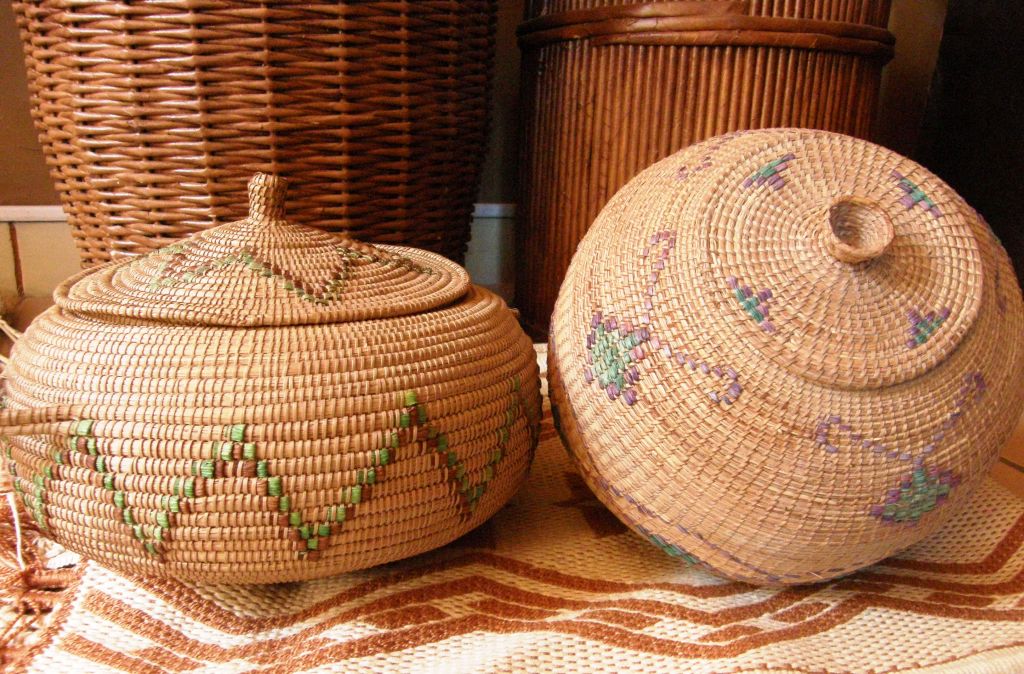
I love these simple solid coiled baskets and must ask the folks at Artecampo to remind me of their origin.

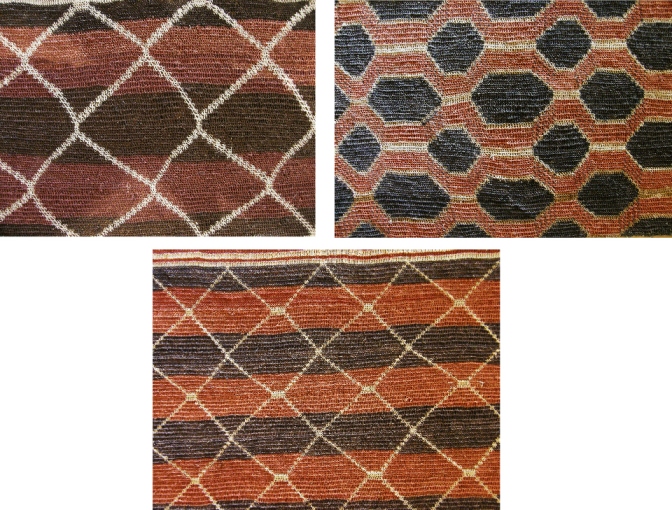
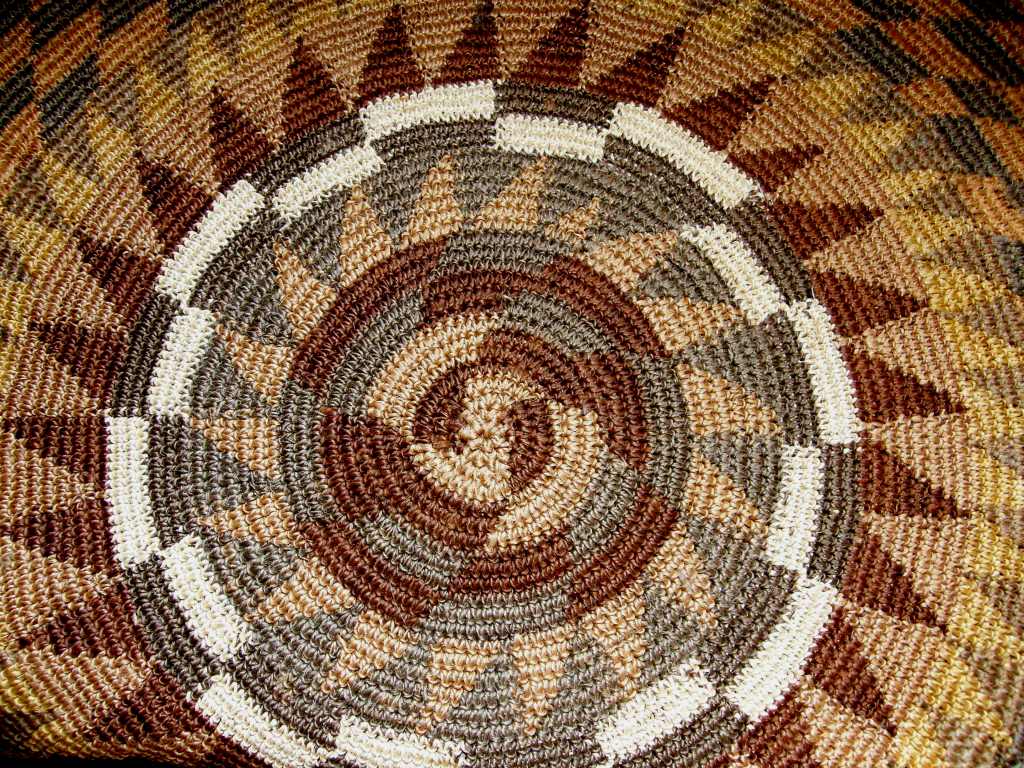
My favorite things of all are the looped bags made by the Ayoreo craftswomen using a fiber called garabatá which is extracted from the leaves of a plant in the pineapple family and twisted by rolling on the thigh. As far as I can tell these are the most “genuine” articles that Artecampo sells. The bags have always been used on a daily basis by the Ayoreo people and have not been altered in any way for the tourist market.

I have opened out the bags and use the pieces as wall hangings. I love the colors and the smell and feel of the fiber. They are on the wall of my bedroom and now, would you believe, it has just occurred to me that these colors must have crept into my mind when I planned  my most recent ikat experiment pictured above.

The other “genuine” piece that I treasure, especially since it is no longer being sold, is the wooden bowl/scoop below left, also made by the Ayoreo people. It is lovely to hold this piece in your hands and feel the cool smoothness of the wood.

Of course, this is just a fraction of the things that are sold at the co-operative store. The store does not allow pictures to be taken and from now on when I take visitors there I will have to make sure that I take pictures of the purchases as I won’t be buying any more things from there…no room! I wish I could show you more of the beautiful textiles they have, both woven and embroidered. I take a lot of pleasure from dropping in there from time to time and seeing what is new. They are quite used to having me come in an stroll around and not buy anything.

Well, time to put this blog post to bed and get back to the other keyboard stuff so that I can then do what I really want to be doing…weaving!

Backstrap Weaving – Juggling!

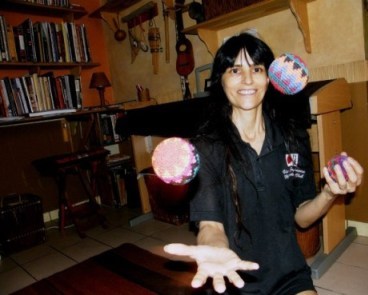
Juggling! Yes, here I am juggling…weaving my wall hanging project, warping, writing and taking pictures for my new book, putting together the translated versions of my first book, planning articles, answering online questions from new backstrap weavers. I have had to come up with some new routines to fit all this in.

Most people roll their eyes and sigh in dismay at the word “routine”…dull, boring repetitive. I, on the other hand, am all for it, that is, if it is a routine of my own making and not one that is imposed. Having a fixed routine is the most efficient way in which I can operate.

And I do take time out for a little mindless fun!

Juggling is both relaxing for the mind and a darn good work-out for the body…at least for an inexpert juggler as indeed I am….with lots of crawling around on the floor picking up dropped balls.

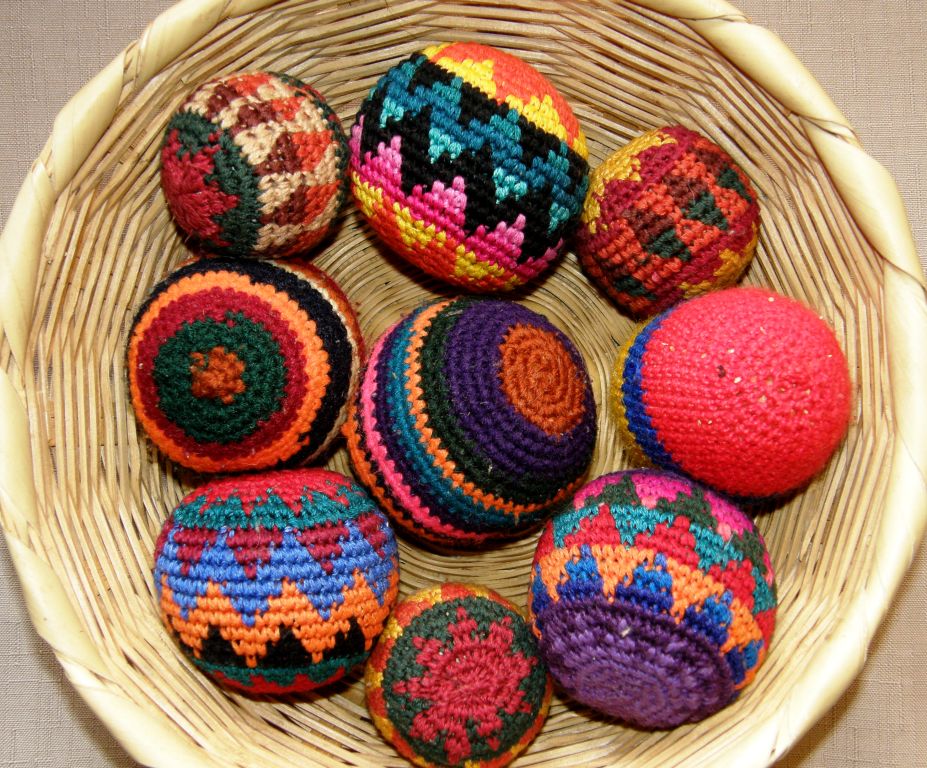
What prompted me to drag out the Guatemalan juggling balls from the depths of one of my woven storage bags?….They are crocheted and I wanted to take a look at how they had been made.

We talk about the simplicity of the backstrap loom and what can be achieved with a loom comprising just a few sticks, or sometimes no sticks at all.

What about the wonders that can be created with one small stick with a hook on the end?

And what led me to all this?… pictures in Mirja Wark’s book on the woven belts of the Wayuu people of northern Colombia and Venezuela. The designs on these belts are the inspiration for my latest wall hanging project. One picture shows a man wearing a belt with a small patterned bag at his side which Wark says is crocheted. She describes crocheted cotton bags that are used by both men and women. The women carry a medium-size bag called susu. Men have smaller crocheted money pouches called susuchon and other pouches which can hold tobacco, keys and amulets.

So it was off to Google and Youtube Land to learn more. I have decided to do without air conditioning and pay for a faster internet service instead so Youtube viewing does not make me want to tear out all my hair anymore! But, finding time to watch all those videos is yet another ball that must be added to the juggling mix.

These images of Wayuu susu, which are also sometimes referred to on these sites as mochilas, are from the online store of the Wayuu Taya Foundation.

I found that these traditional crocheted bags became very popular outside Colombia a couple of years ago and even prompted an article in the NY Times.

On many sites the bags are described as having been “woven”, “knitted” or “woven in crochet” but we have Mirja Wark who tells us that they are, in fact, crocheted. One article describes the straps as having been created on looms.

I love the big bold designs! The bag at left is from CordoBags.

The following is probably the nicest video I found in my alotted Youtube time showing the Wayuu people and their terribly harsh environment. A woman can be seen carrying her susu, there’s a little weaving showing those loose joined heddles that I talked about last week, some fast and efficient twining in progress (love that part!) and there are two brief segments showing the women crocheting bags.

So, here is my latest project which has been inspired by the work of the Wayuu people and the beautiful designs on their woven si’ira which I have been able to see in Mirja Wark’s book.

I have made a few adaptations of my own. The triangular “border” design is my own pattern as I wanted something bolder than those shown in the book. The larger design is one of many “block patterns” as Wark calls them and, as I charted this one myself, I cannot be absolutely sure that it is faithful to the traditional design. It falls into a group of patterns called schichirujuna paa which means “like the nose of a cow” in which there are eleven variations.

I like how the herringbone design on the edges is similar to the weft-twined design I plan to do along the bottom edge.

This is slow work, I can tell you….lots of threads to count and pick up!! I was very unsure about this piece last week and was on the point of putting it aside for a while and working on something else to clear my head. But, I persevered and am now happy with the result.

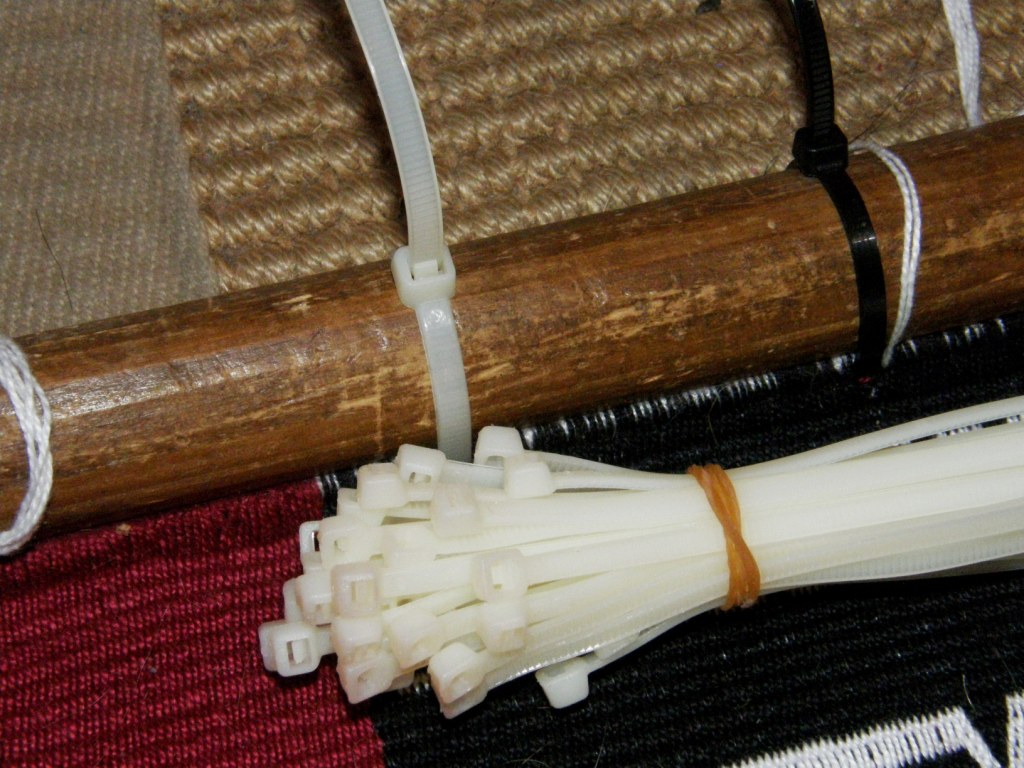
And you may have noticed my new favorite addition to the toolbox at left…cable ties.

These are absolutely brilliant for lashing the warp on its piano wire to the loom bar and creating a third selvedge. I was getting really fed up with my lashing cords on this project working their way loose.

They always do and I usually just wedge thin dowels between then and the loom bar to tighten them up. This time for some reason, nothing I did was solving the problem.

In my recent home de-clutter mission I found a bag full of these cable ties in the junk drawer in the kitchen. They are perfect for lashing but, unfortunately, can only be used for one project as they will have to be cut in order to remove the finished weaving. I wouldn’t use them to lash right from the start as they are wide and space the warps. I would only use them once the weaving has progressed an inch or so to replace the lashing string, which has probably already started to work its way loose.

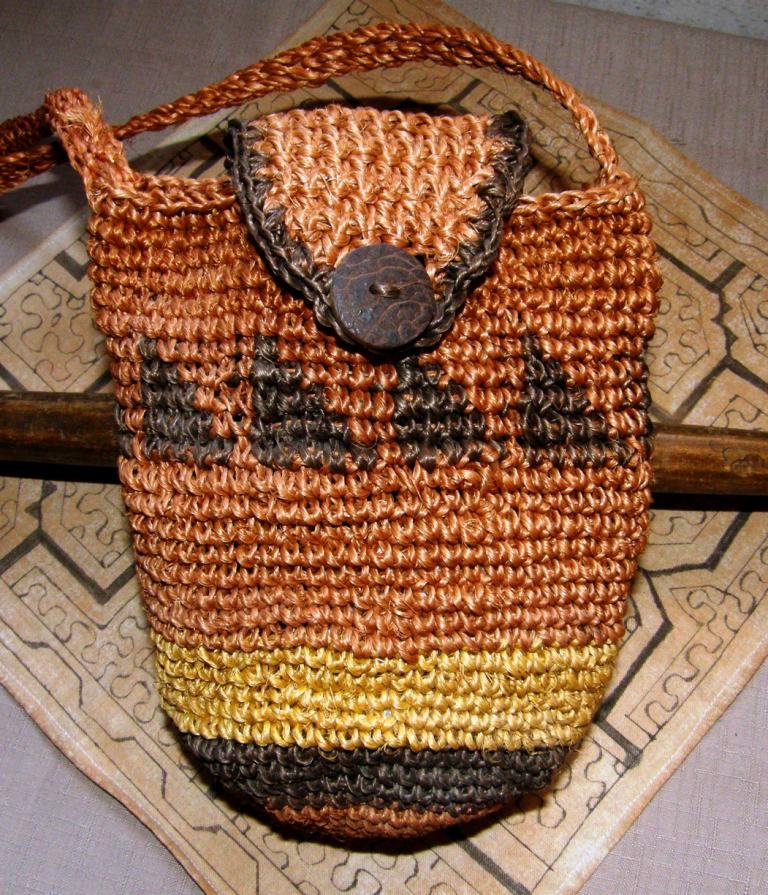
Now back to the crochet. No, I am not about to add this to the juggling act! But, who knows, the next time I am thinking about some on-the-road projects, maybe I will toss a hook in my bag. I know the very basics of crochet. When I went to Ecuador and visited the artisans who work with cabuya fiber, I stayed with a lady who taught me how to crochet this little pouch.

She was kind enough to say that it wasn’t too bad for a first attempt. The button is made from the tagua nut and the dye for the cabuya fiber comes from natural sources.

I was happy to learn how to do color changes and carry the thread. Whether this color change technique is what is known as tapestry crochet, I do not know. I noticed that there is a group for tapestry crochet on Ravelry and another for fair-isle crochet. I am guessing that indicates that there are differences in techniques.

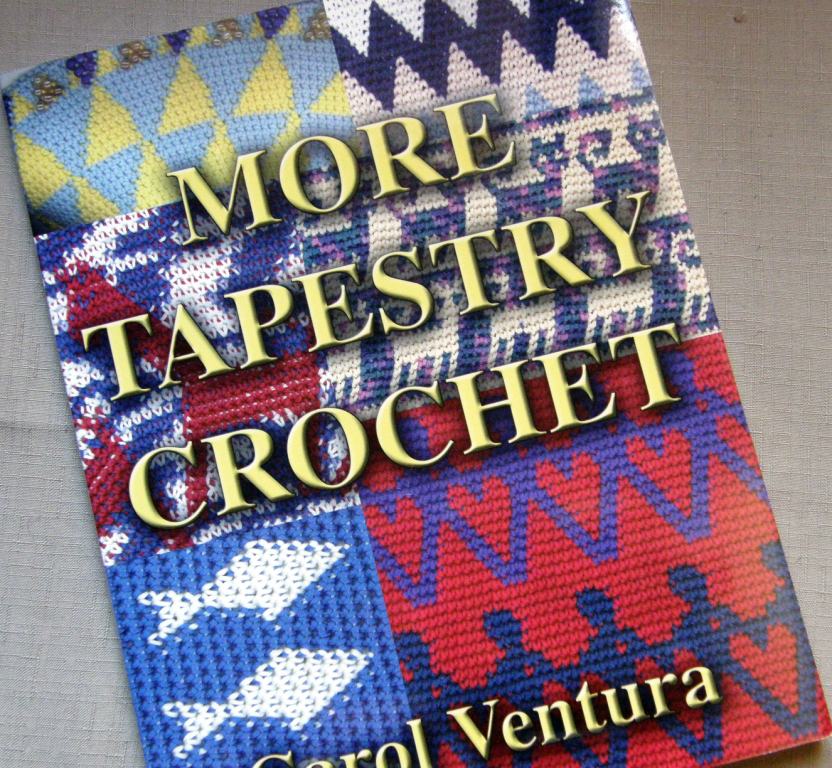
I was given Carol Ventura’s second book on the tapestry crochet technique many years ago and, although I have enjoyed looking through it, I haven’t used it yet. There are some beautiful projects in there for those of us who like imagery and bold geometrics in our handwork.

Here is some of the beautiful crochet work that the cabuya fiber artisans from the Intag valley of Ecuador do…a round mat on my bedroom floor…

I wrote a post some time ago about the cabuya fiber and how it is processed if you would like to know more.

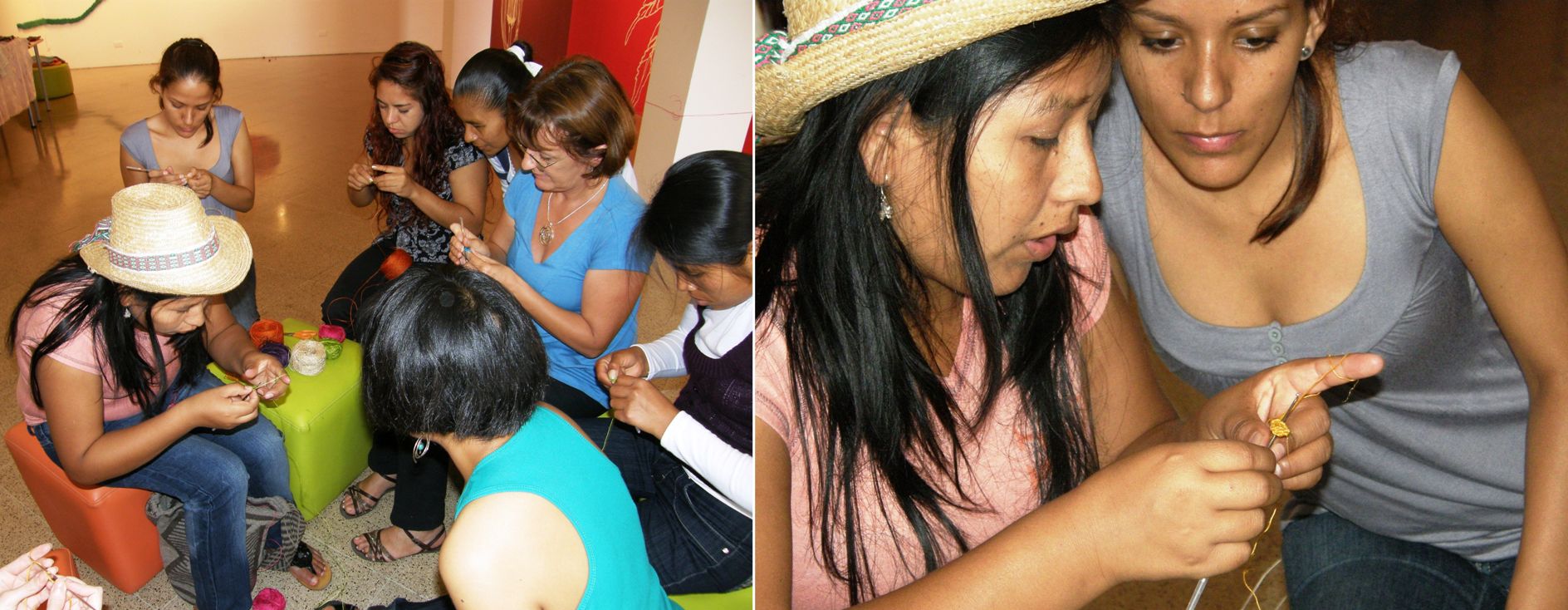
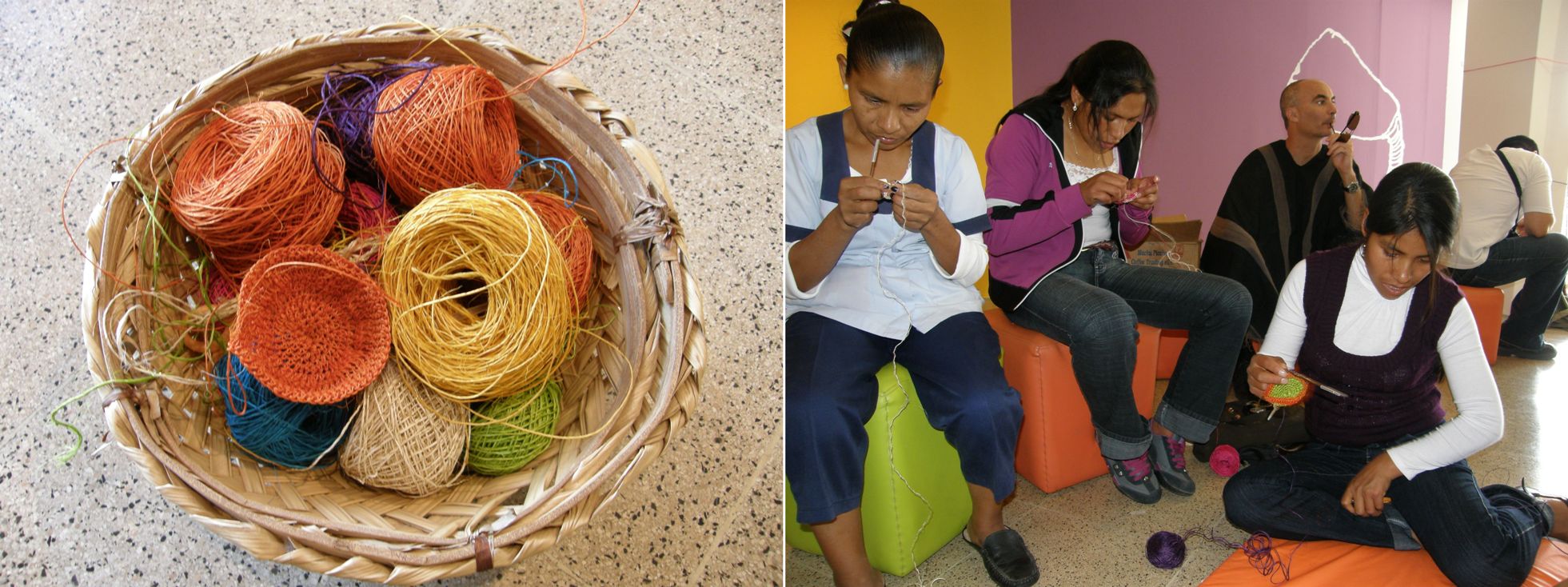
Last year we had a gathering of artisans here in Santa Cruz and Maritza came from Colombia to show us how to crochet with cabuya fiber. Weavers and craftspeople from Chinchero in the Peruvian highlands, coastal Ecuador, the highlands of northern Chile and lowland Bolivia as well as Santa Cruz locals joined in to learn.

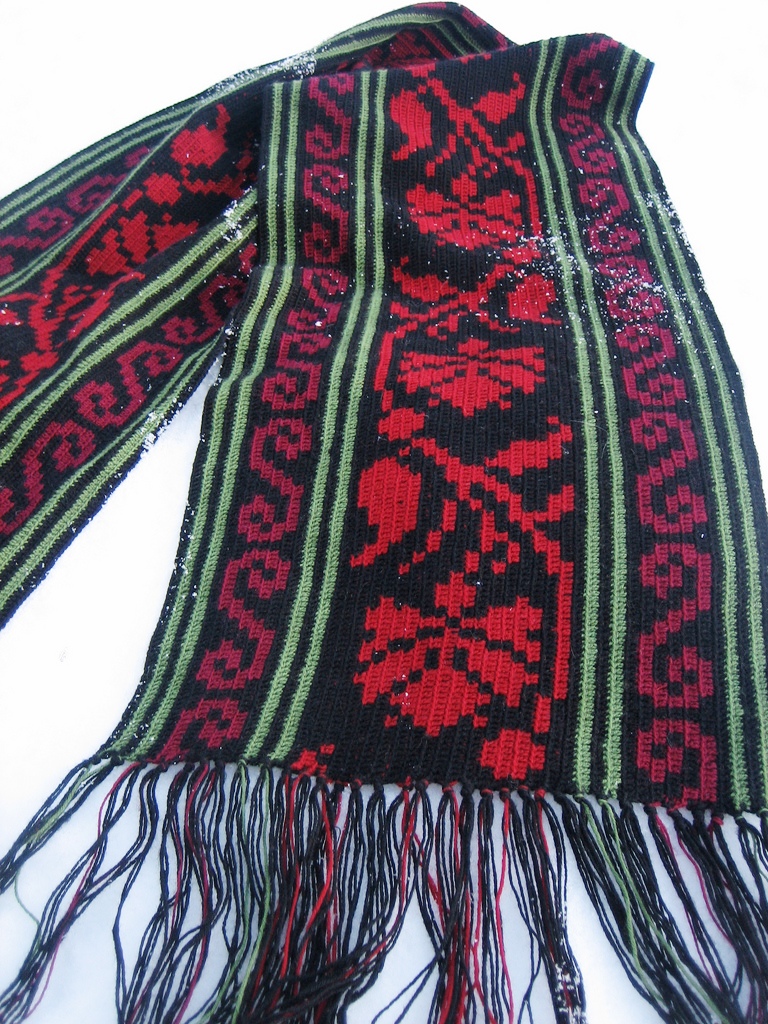
I think the thing that has most gotten me all charged up about crochet this week is the beautiful crocheted scarf that Marit from Norway, aka yarnjungle on Ravelry, recently finished and posted.

There’s that black and red again! Doesn’t this make you want to grab your hook?

In Marits’s own words…I saw a picture of a crocheted men’s scarf from Sweden in a magazine about nordic folk costumes. It had a flower pattern in tapestry crochet technique, worked lengthwise, but with double crochet stitches instead of single. Made my own version by throwing together some antique cross stitch patterns.

I have come across images online of belts in Mexico woven with flower designs that are quite similar to this. I notice them as, to my eye, they look “un Mexican”, if you know what I mean (funny how we form this idea of what “Mexican” should look like). Again, I wonder, as I was wondering last week, about how patterns may travel and turn up in unexpected places or how they may just develop independently on opposite sides of the globe. Some of the motifs in Huichol weavings are so similar to traditional Scandinavian finnweave ones.

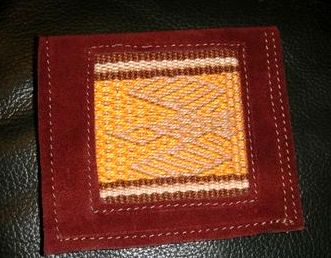
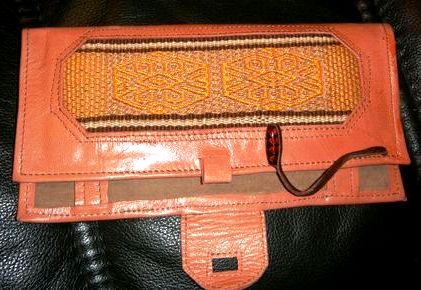
Well, I shall finish this week with some pictures of beautiful work that Sylvie in France has been doing combining her woven bands with leather to make a wallet and purse.

This bird motif in pebble weave is in  my book and comes from the island of Taquile on the Peruvian side of Lake Titicaca. What a lovely job Sylvie has done.

This motif is also in the book and is one that I invented for a wall hanging. These are great projects and Sylvie definitely has the hang of pebble weave! As this motif is one of the last ones in my book, I expect that Sylvie may be wanting more….hold on, a second book is coming!

It seems that this is a shorter post than usual as I have finished early and so have a gap in my schedule…what shall I do? I think I’ll go and look for my crochet hooks and sit down and have a good read of Carol Ventura’s book. 🙂

Backstrap Weaving – Time for even more Play!

The fall trip is almost over…time to gather and bag my loom bars, fold the backstrap, wind up all the little balls of yarn, stash the beaters and sticks, and stuff them all into the wheely bag ready to fly home….but there is still a little time to play some more!  Now I am home and looking back. I was too busy playing last week to even do a blog post 🙂

The last days were spent backstrap weaving with friends in Maryland.

It was nice but confusing seeing many familiar faces at the guild meeting. Now…. where did I meet these folks…was it at Sheep and Wool last year where Carla and Mary wove with me in the bunny barn or at the guild meeting I attended?

Weaving in the bunny barn at MD Sheep and Wool last year

There was one very familiar face…oh yes, that was Peggy who wove with me in Pennsylvania last spring. On top of that there were familiar names, if not faces, of people who have commented on my blog or Facebook page.

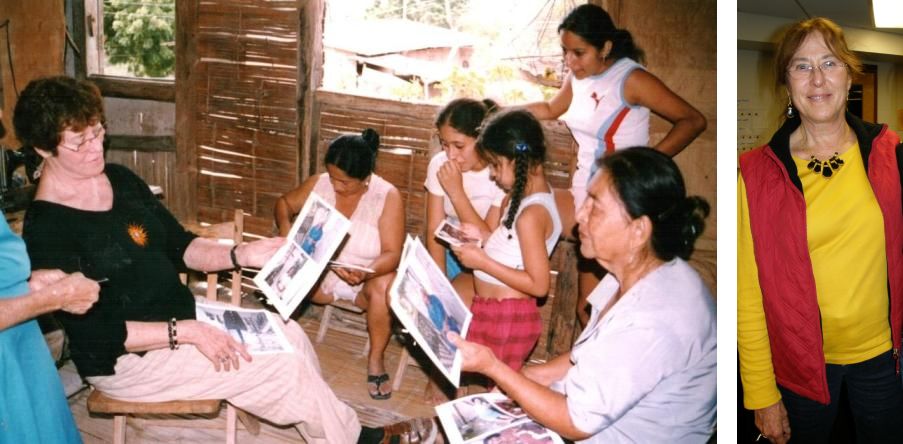
And then there was Kathie! I spent three weeks with Kathie in coastal Ecuador in 2007 with the family of cotton saddlebag weavers that I have told you about here before. Although we have kept up a regular email correspondence since then, we haven’t been able to get together in person until now. She came along to weave with us.

Above left, you can see Kathie on our visit to Ecuador in 2007 showing photos that she had taken when she first met this family back in 1976 and, above right, at our  backstrap weaving get-together.

I unwound with my friends  in their home in Maryland and made plans for my last week in DC. Claudia is a weaver and Janet is a knitter so there were still plenty of fibery things going on around me.

I learned about rag rug weaving from Claudia in her basement studio where she is in the process of making two 9-foot commissioned rugs. I was there to celebrate the finish of the first one. It’s quite a process!…cutting strips, sewing them together end to end, ironing them, winding them onto the long shuttles. I was glad to be able to help at least with the sewing and ironing and the sewing was novel for me…only my second time using a machine.

While the machine is definitely the way to go for sewing those hundreds of strips together, I still prefer hand sewing for my little backstrap woven projects. When I arrived home, I cut the wildly colorful striped demo warp, that I had been carting around the US, off the loom. It had served its purpose, I didn’t really like it and I couldn’t face weaving any more of it. However, it didn’t go to waste as I was able to sew the small piece that I had woven into a new sewing kit pouch.

I folded it in half lengthwise and sewed it together so you only see half the colors at any one time…a little less jarring than the way it looked with all the stripes together on the loom. It is the perfect size for storing tape measure, scissors, needles, buttons and thread. I still have to finish off the sewing on the zip and you can see that the pouch is without the usual baubles and embellishments that I like to add. I think I will leave it this way.

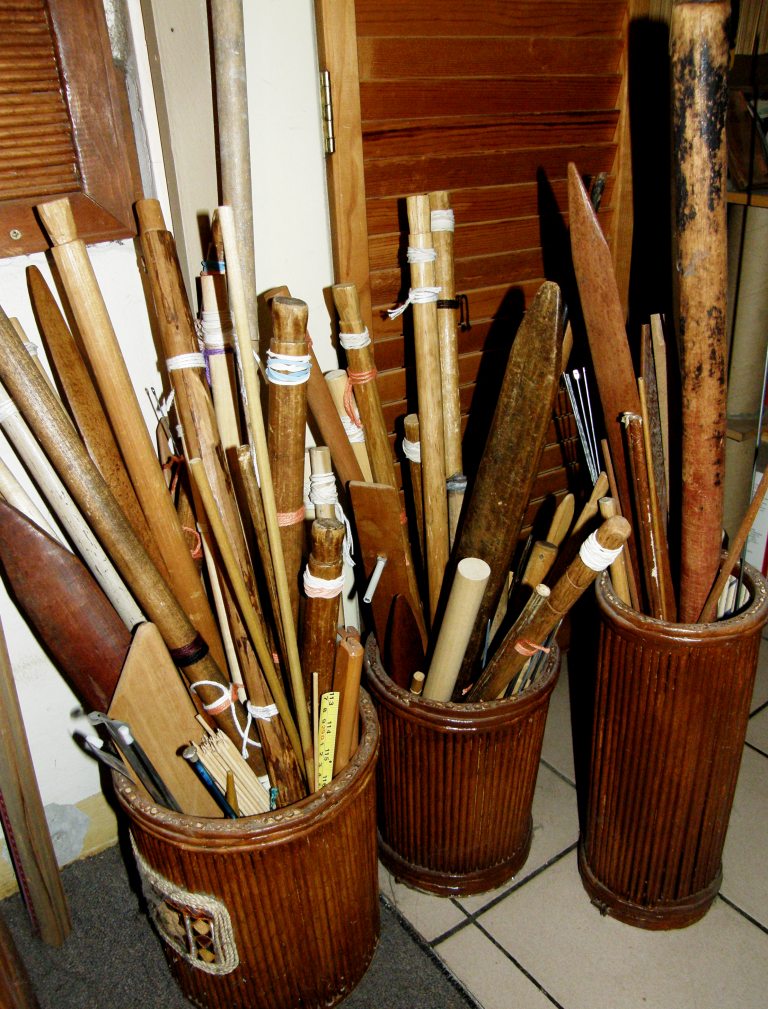
Now I have 26 loom bars standing up in their bins waiting for new warps and I have at least as many ideas floating around in my head for future projects!

But anyway… back to play time in DC.

A couple of emails arrived while I was at Claudia’s place. One from Mary told us about a Chilean handcraft exhibit at the National Museum of the American Indian which would include weaving demonstrations by a Mapuche weaver.

The other was from Peggy who has woven with me a couple of times and who is a docent at the Textile Museum.

She offered to guide me through the current Kuba textiles exhibit on Wednesday which also happens to be the day the museum library is open. I jumped at the opportunity.

Perfect!

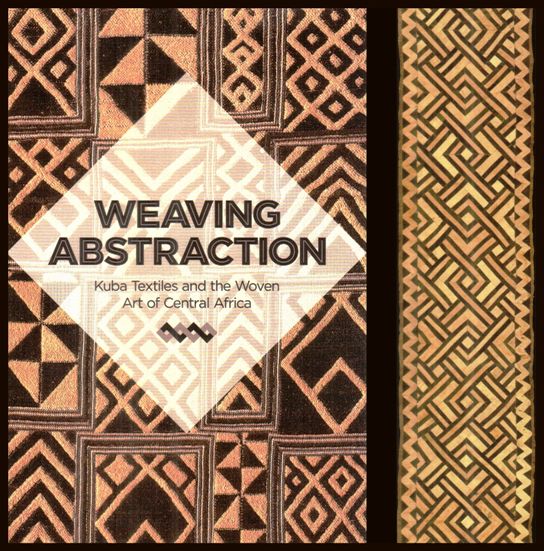
Of course taking photos of pieces in the exhibit is not permitted but you can see above some the publicity material that the museum has put out showing a piece of raffia cloth on the left and bark cloth.

The picture at left of a Kuba raffia cloth weaver in the Congo is on Marla Mallett’s website where you will also be able to see quite a few images of raffia pile and embroidered cloth pieces.

The Kuba Kingdom is a confederation of several groups of people in the area now known as the Democratic Republic of Congo. They were nomadic until the 1600’s and absorbed textile traditions from the Kongo people of the west coast as well as from the Tutsi and Hutu groups in the east.

Men weave the plain-weave panels using fiber from the raffia palm. The cloth is then wet and pounded to make it flexible. The insertion of the colored raffia in a pile technique is the work of the women. The raffia is not knotted. It is simply inserted under warps and/or weft and held in place by the tightness of the weave. The inserted raffia is then brushed with a knife which splits the fibers and creates a fuller more plush texture. I found myself surrounded by bold  labyrinth-like and swirling patterns.

The women also embroider along the edges of the pile sections. I was able to look at the back of the pieces that were on sale in the museum shop. Neither the inserted raffia nor the embroidery shows on the back of the cloth.

One of the uses of the cloth is for ceremonial skirts that comprise many panels sewn together and which are gathered around the body. Smaller panels are used as overskirts by high ranking women while other small pieces are status cloths, amassed as symbols of wealth and nobility.

There was bark cloth from the Bushong people, hats, caps and headdress of titleholders from the Kongo people that I can’t even begin to describe.

I saw a delicate cape thought to be from Angola that looked like it had been made in sprang, tie-dyed cloth using sticks tied to the cloth to create the straight lines in the patterns, patchwork, reverse applique, embroidery and ornate belts decorated with beads and cowrie shells.

I loved the boxes and baskets with shaped lids which immediately made me think of the basket maker from Burundi with whom my friend Joan is working in Massachusetts. (see her piece pictured at left).

Wouldn’t it be wonderful if she could be taken to such an exhibit?!

I bought the exhibit catalog and would love to use some of the motifs in double weave. That museum shop is a deadly place…I came away with the catalog as well as with Ann Rowe’s latest work on costume in highland Ecuador and a collection of papers on Andean weaving on sale for $5 while all the time wondering how in the world I would manage to squeeze this load into my luggage!

The next day was all about Mapuche weaving at the National Museum of the American Indian at an exhibit called Chilean Rakizuam.

Rakizuam is the Mapuche knowledge of being, whether it pertains to the environment or an understanding of life that has been passed from generation to generation.

It was quite  nostalgic for me listening once again to the very distinctive Chilean accents of the exhibitors and the accompanying folk music.

There was even a gentleman there from Punta Arenas, the country’s southernmost city, where I lived for five years.

He brought baskets made by the descendants of the Yagan people as well as his own jewelry which combines pieces of coiled basketry with silver.

When I lived in Punta Arenas there was one elderly pure Yagan woman still making the baskets who has since died. I still have one of the baskets that I bought back then.

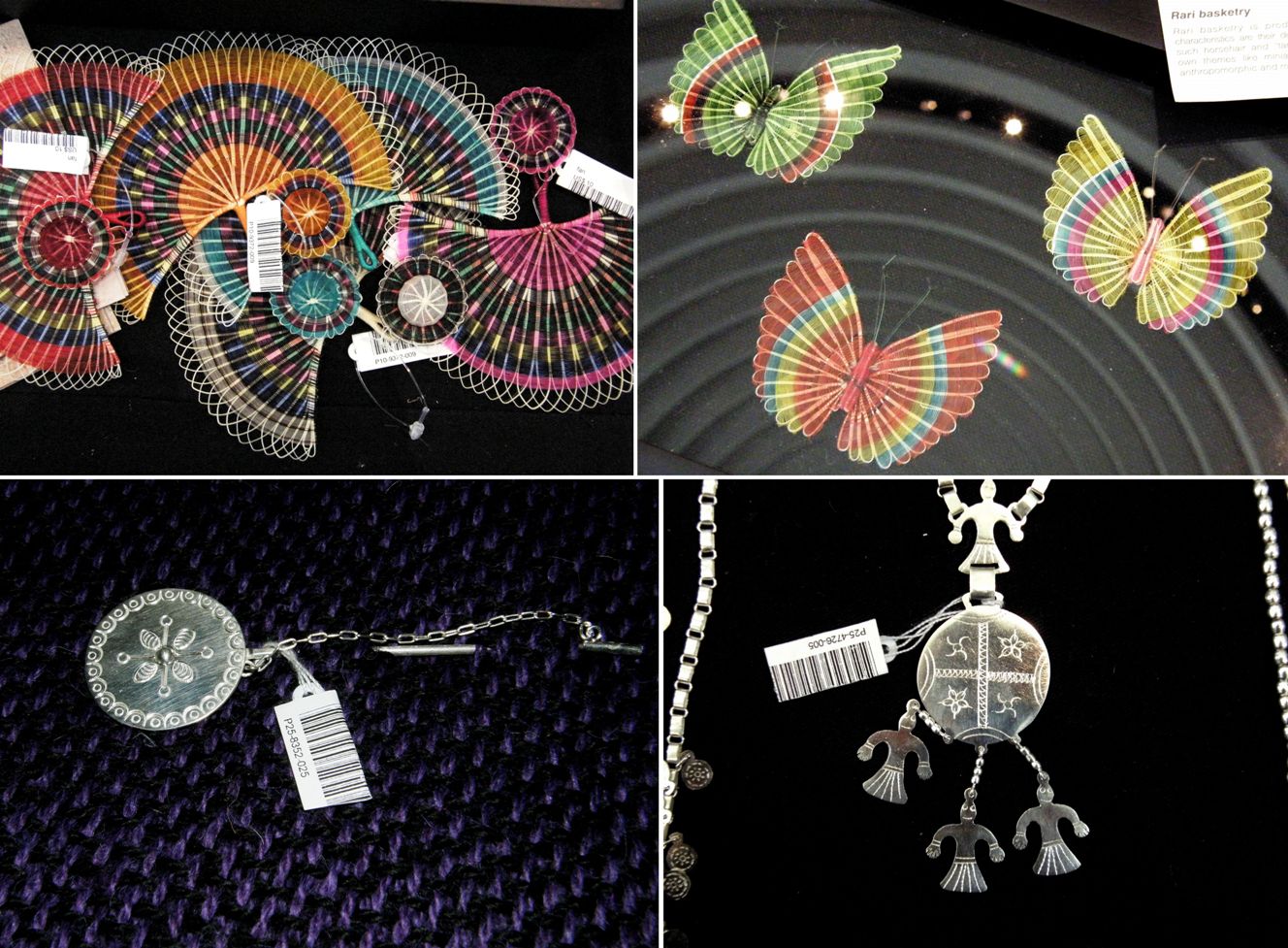
Other displays included pieces from the central zones of Chile south of Santiago…silver work with Mapuche motifs forming pendants and shawl pins as well as almost transparent figures woven from the hair of horses’ tails. The sturdy ribs in the figures are a plant fiber and the finer weft material is the crin, the hair of the horse or ox. And now I know that ”crinoline” according to Wikipedia was originally a stiff fabric with a weft of horse-hair and a warp of cotton or linen thread.

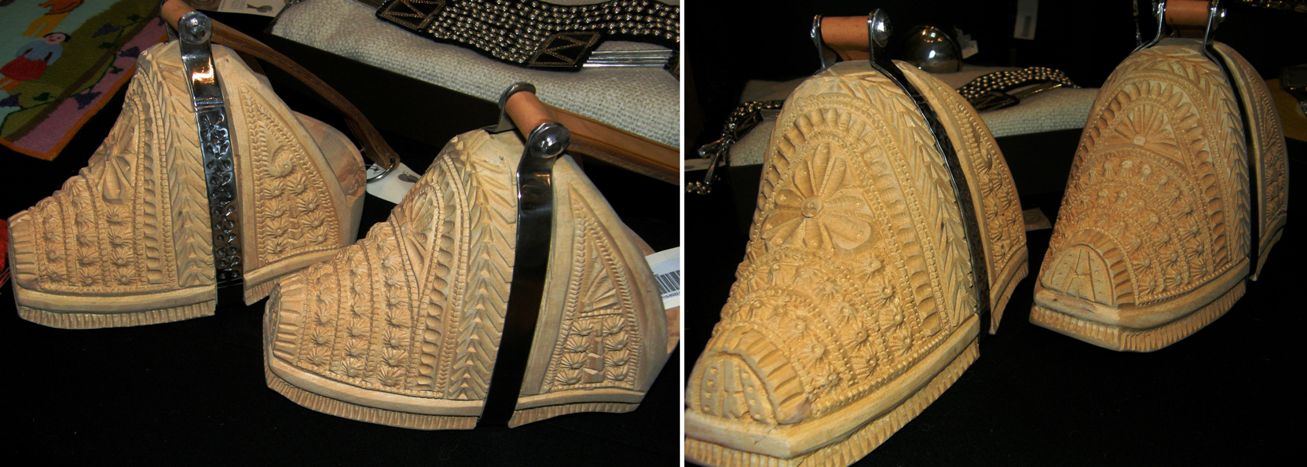
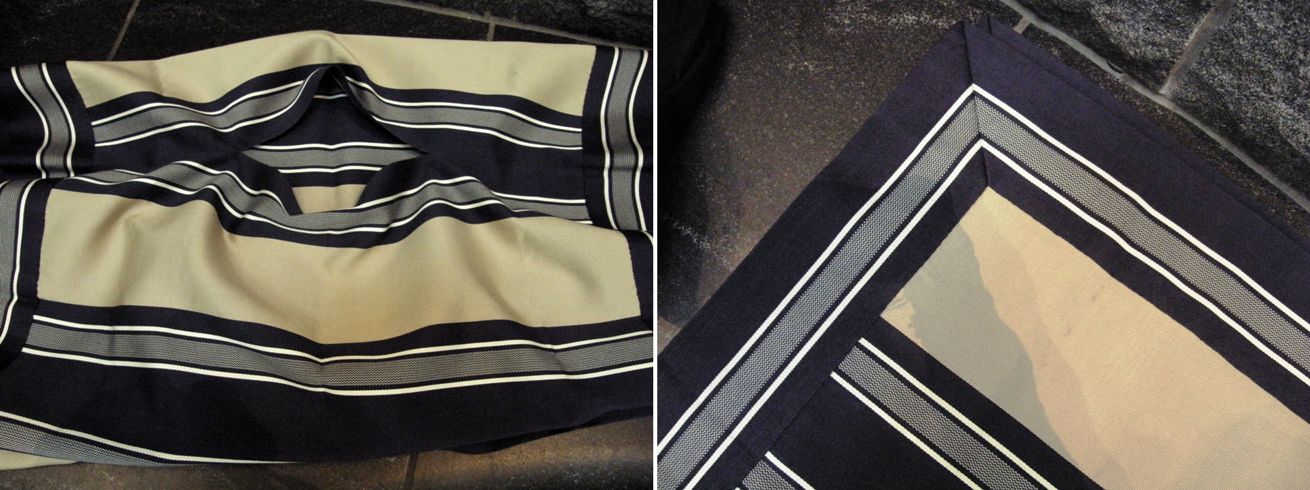
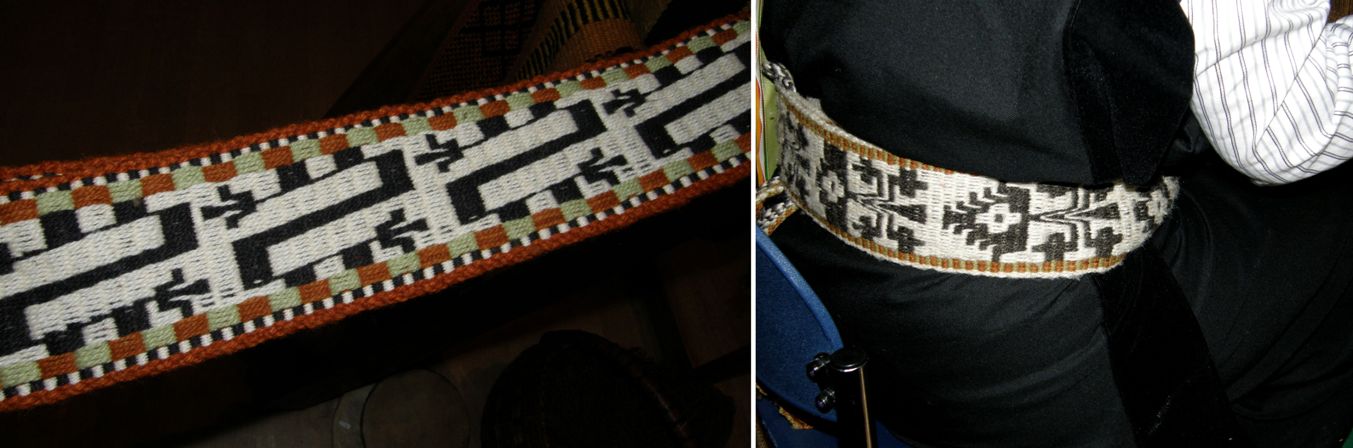
From the central zone of Chile come pieces, such as the carved wooden stirrups above, associated with the huasos, the Chilean horsemen who also use a finely woven silk poncho known as chamanto. The exhibitors brought one of the striped examples which I have been told is called manta with the name chamanto being reserved for the ones that have been decorated with pick-up patterns.

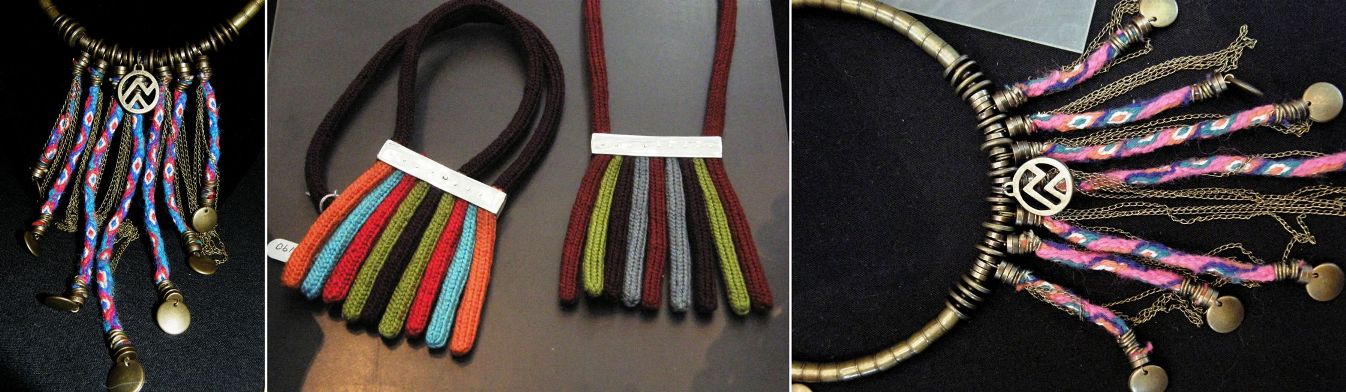
Representatives of the northernmost region of Chile brought jewelry which incorporated traditional weaving and looping techniques. Now there’s another use for the tubular bands!

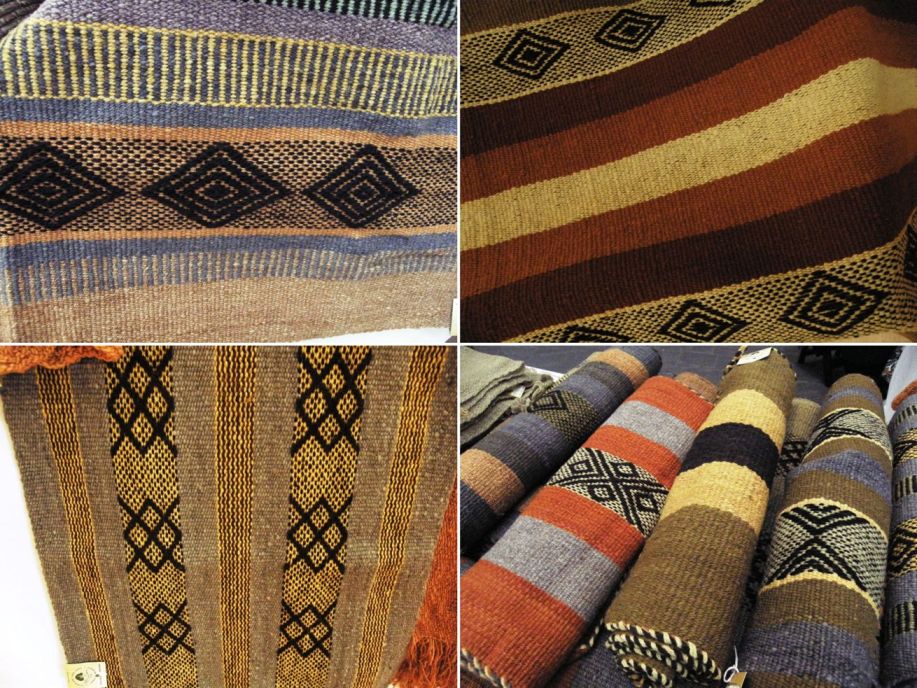
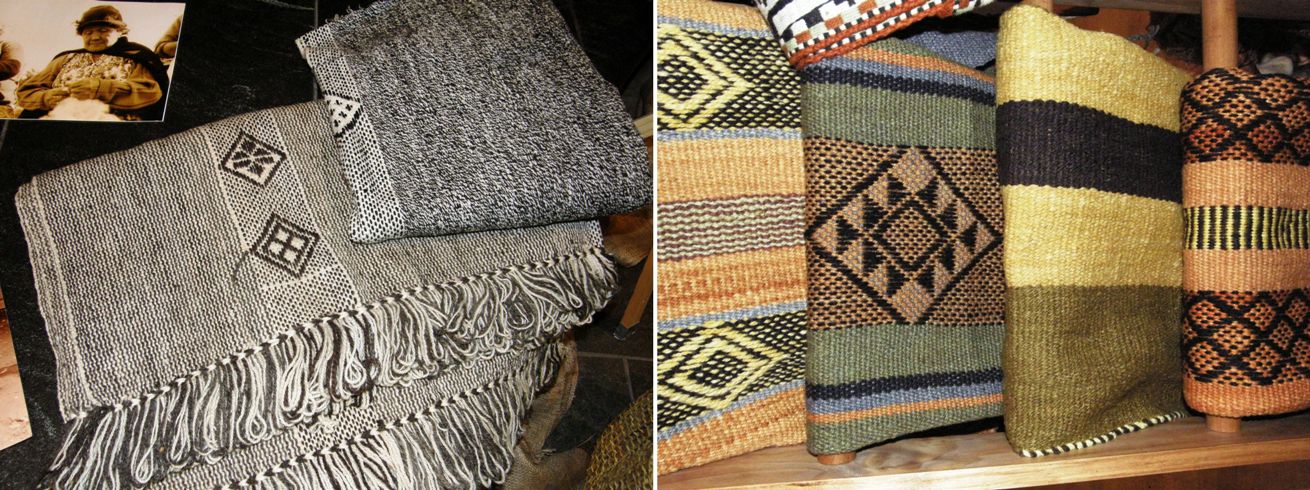
There was a variety of shawls, pillow covers and other woven household items as well as knitted apparel made with handspun and naturally dyed wool by Mapuche artisans.

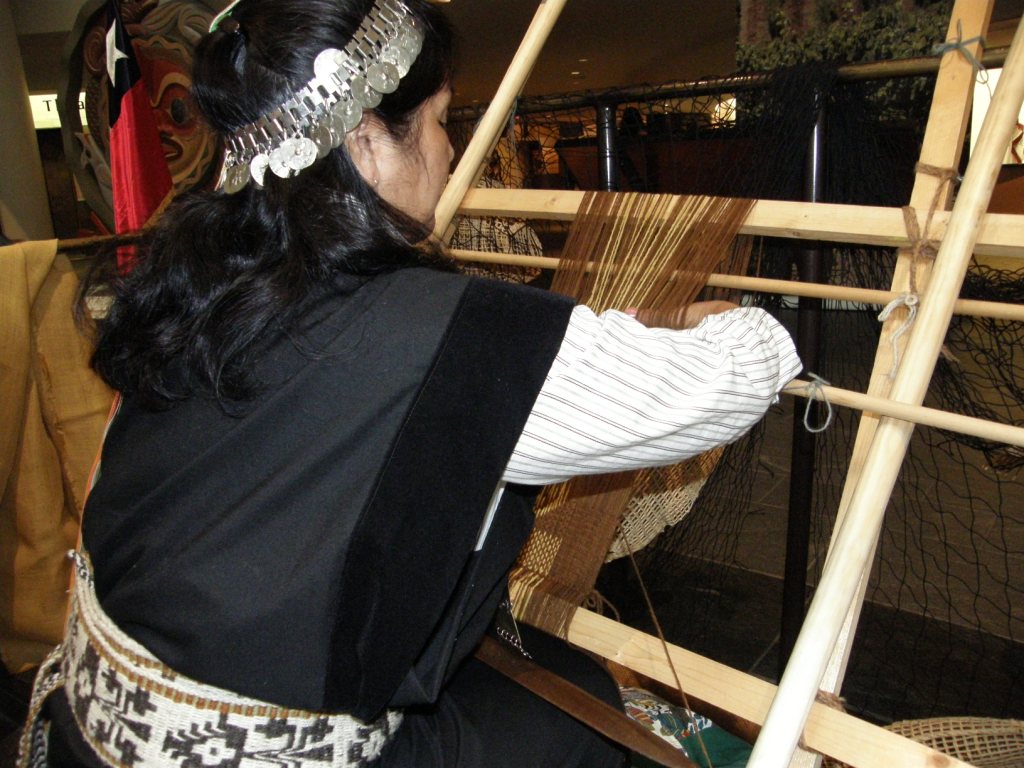
And the best part…a Mapuche weaver, Marta Isabel Huitraiñan Aillapán from Carahue, had been brought by the Chol Chol Foundation to demonstrate her weaving skills.

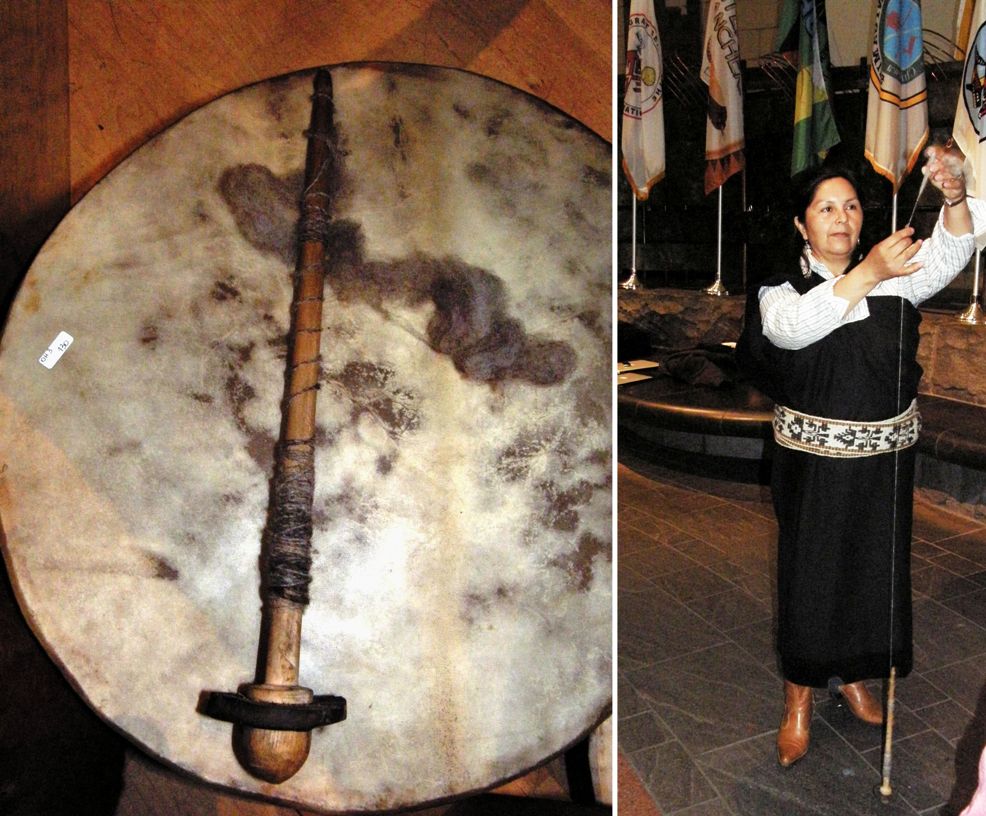
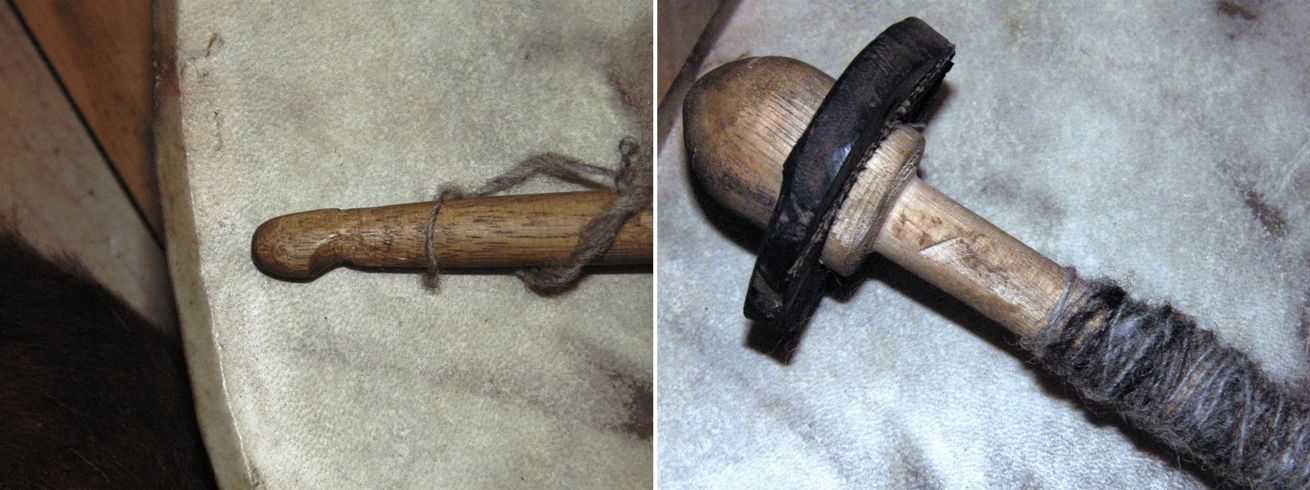
While looking at the displays of woven pieces I spotted a spindle in one of the baskets that had been made for Marta by her son. She was quite happy to give me a quick spinning demonstration.

And here is a video…soft lighting in the exhibit area has made the footage a little fuzzy.

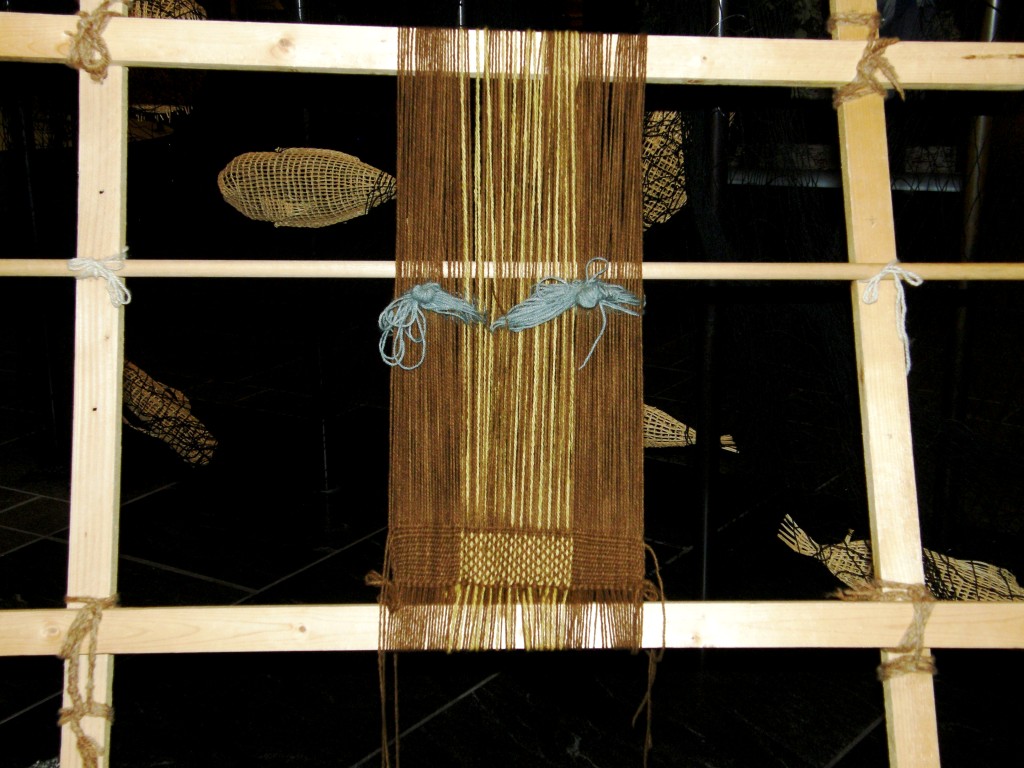
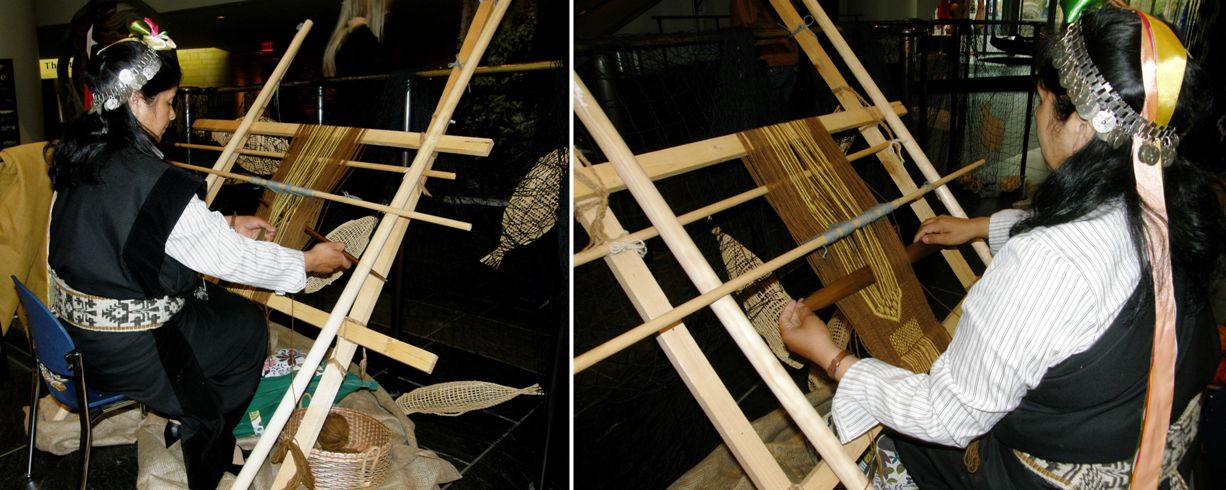
And there was the leaning vertical loom almost ready for Marta’s demonstration. You can see that the shed rod is fixed in place lashed to the posts of the vertical frame. The string heddles were made and tied in bunches to transport the piece to the US. They will later be put on a heddle stick.

In the picture above, Marta is lifting the warps on the shed rod with her hands and clearing them through the heddles.

You can see that the heddle stick is now in place and is protruding from under her right arm. The heddle stick rests against poles which are placed alongside the vertical posts of the loom frame which means that the warps in the heddles are in a permanently semi-raised position. This means that Marta does not have to pull on the heddle stick in order to raise the warps in the heddle shed. By pushing down on the warps held by the shed rod, just enough space is created to allow her to get her fingers under the warps in the heddles and pull and fully raise them.

You will see the process (executed very quickly!) in the following video:

You see that she holds the shed open with the sword in her right hand while picking up and dropping out the supplementary warps with her left. The tension on the warp and her beat are relaxed.

The next day, after warping and weaving the supplementary warp piece above, Marta allowed me to help her warp for the complementary warp technique that is used to weave their belts. With the warp we made, Marta planned to weave a band with lettering (RDO DE CHILE…recuerdo de Chile, souvenir of Chile). I wove the letter “R” with her guidance and then, sadly, it was time to go. And once again twining enters the picture. Marta starts and finishes her woven wall hangings with weft twining before braiding the warp ends or leaving them as fringe.

On this narrow complementary warp piece we did not use a heddle stick but tied the heddles together in bunches instead and pulled on them to raise the warps.

Marta was a great teacher for me – very patient –  and says that she loves to show the process to people who are really interested. I don’t know how many times she answered the question from onlookers “How long does it take you to weave something like that?” I know that question well!!

I was in very good company with Marta on the second day right up there at the loom! On the first day I was very much occupied with taking videos and photos when I suddenly realized that I should probably step back so as not be in the frame of other onlookers’ pictures. It was then that I noticed another particularly interested onlooker with camera in hand… Ann Rowe. So, spending time with Ann made day one even more special.

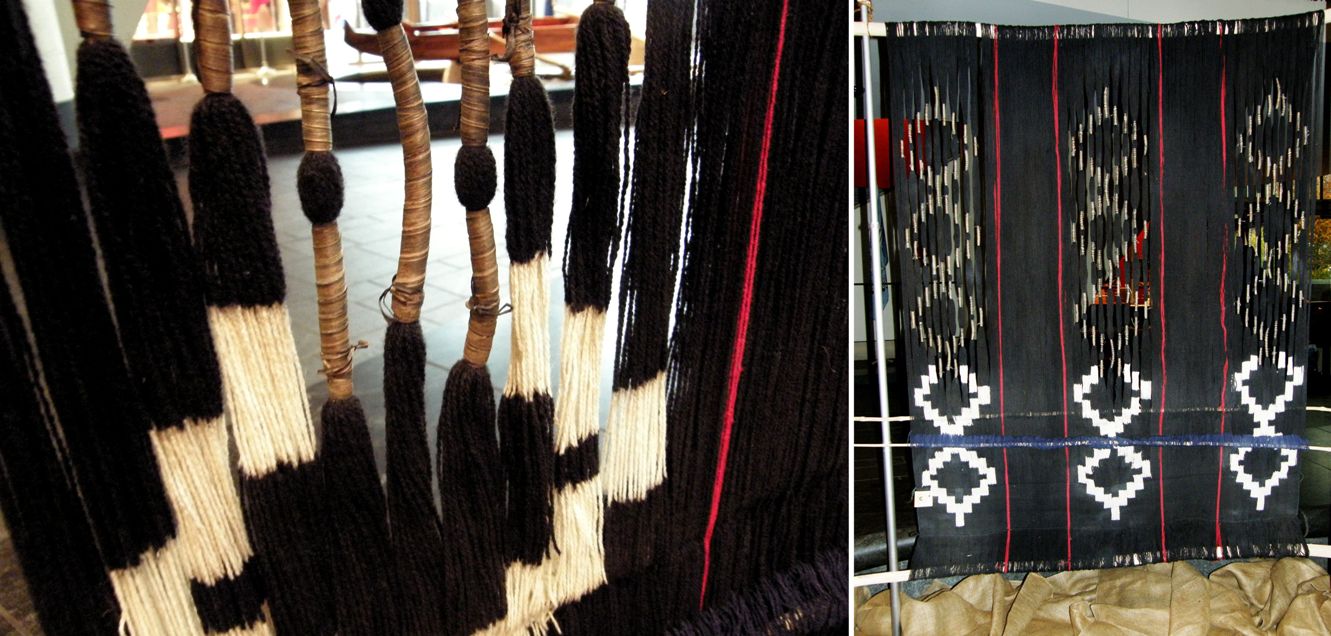
Another great opportunity at the exhibit was being able to see, for the first time, one of the ikat patterned poncho pieces on the loom.


I have always wondered just how the Mapuche weavers stop the warps from moving out of place while they weave ikat patterned pieces.

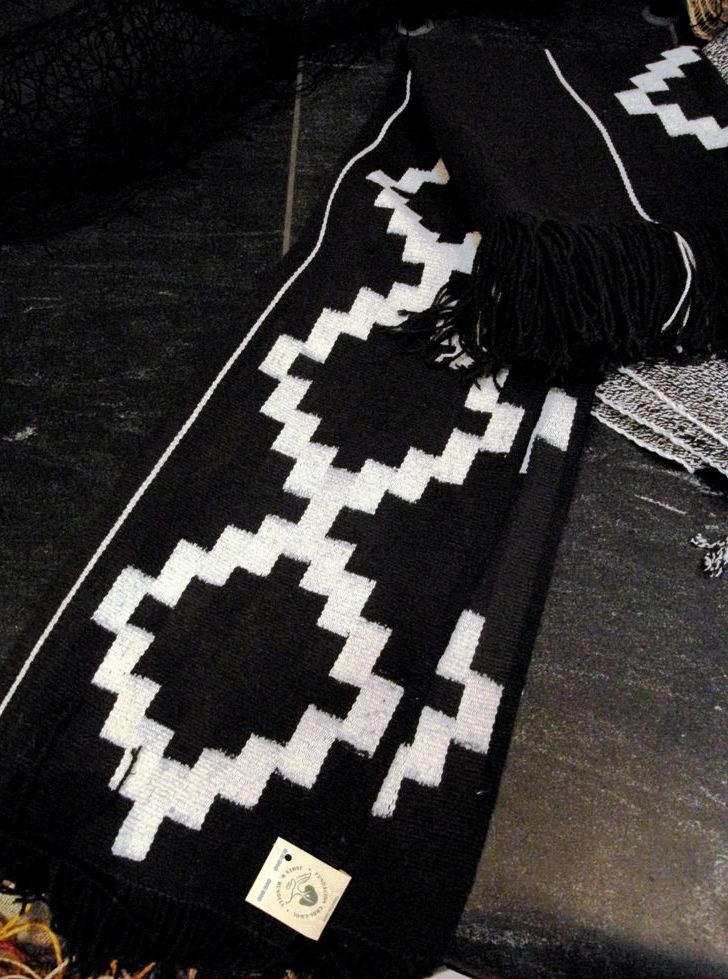
They manage to reduce the characteristic blurry feathered effect on the edges of the designs  to an absolute minimum. The result is beautifully sharp white figures on the dyed black background.

The set-up on the loom certainly didn’t give away any clues!

I was told that of the one hundred and fifty weavers that belong to the Chol Chol Foundation cooperative only one knows how to make the ikat-patterned ponchos.

One thing  that was missing was the double weave belts. I guess I shall just have to take myself off to Chile to see those. And happily now I have a contact in the Mapuche community. While I have been to Mapuche weaving exhibits before in Santiago, I have never been to one where I have been able to have so much interaction with the weaver.

It would also be nice to visit with Celinda and Isobel, the Aymara weavers, that I met at the weavers’ gathering here in Santa Cruz earlier this year. And, if I need any more reasons to justify the trip, I could also go to Doñihue to learn more about the chamantos.

So, here I am at home in Santa Cruz trying to get back into a routine, blogging one day earlier than usual to make up for the missed post last week. I send a big hello and hugs to all the people with whom I wove on this latest US trip and to all the people who so kindly took me into their homes.

Now to decide what to warp up and put on the first pair of those 26 loom bars!