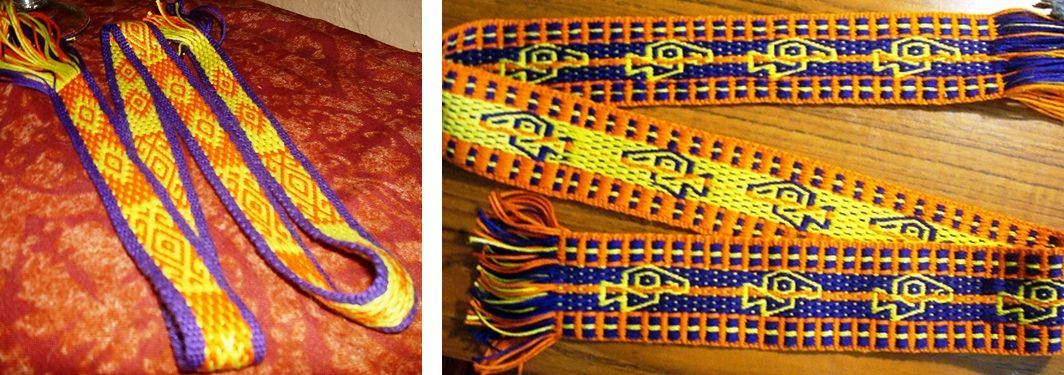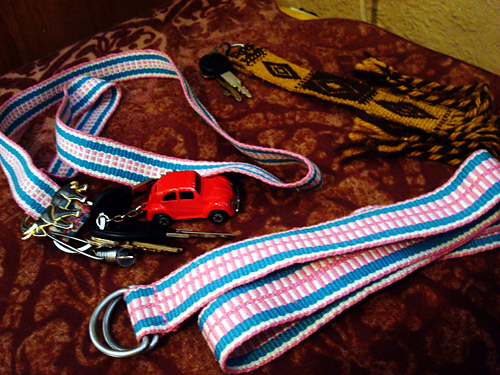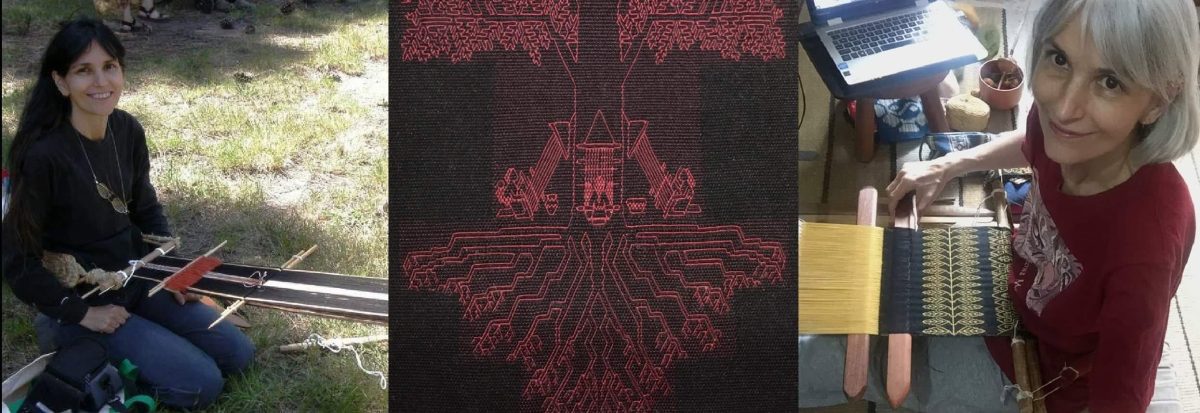
Backstrap Weaving – The Music of Weaving

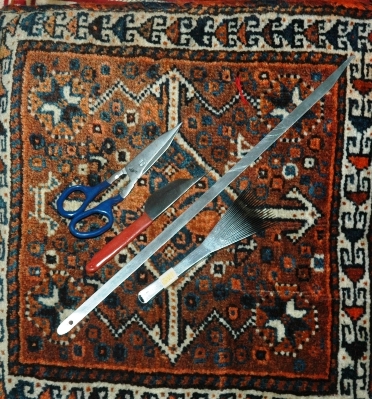
tools01A weaver posted something on Weavolution recently that stuck with me. An Australian gentleman, Hakim, is learning to make cut pile knotted rugs with an Iranian teacher in Australia. He said that when he is at home working on his practice piece, he can tell that the tension of the warps is correct if they make the same sound  when he handles them as they do when he is working on his learning piece with his teacher in class.

Priceless knowledge!

(At left you can see an example of a set of tools that I hope that Hakim can get for me for the day when I try this technique! It’s on that long, long to-do list).

Hakim’s comment made me think about the different sounds that are connected with weaving on simple looms and how much I enjoy them.

I am not one for placing things in my ears and listening to music while busy with something else. I can’t stand that. I like to be in touch with the sounds around me. They form a very important part of my memories of places and experiences.

In my skiing days, I would wonder at people who skied with headphones on. I would never give up the pleasure of hearing the wind and the swish of the skis on the snow, or the sudden change of sound as snow turned to ice giving me time to react and adjust position.

I learned to fly a glider when I was 19. There is nothing like the sound of an engine-less craft rushing through the air. There was so much with which to be occupied while learning (especially for someone like me who was so utterly un-coordinated at the time!) but I could always simply rely on my ears for certain information. For example, if the sound of the rushing air suddenly disappeared it was a sure sign that I had the nose up too high and that told me that I had better do something quickly before the glider stalled!

As for sounds while weaving, I love using multiple big swords. I so enjoy the musical tok tok sound they make as they knock together in the sheds. And I love the chuckling chatter of all the sticks on the loose as they fall together when I release tension and roll up the warp at the end of the day. You can see below the sticks used in the last wall hanging piece….many different kinds of wood making interesting sounds. It can become quite a collection!

O

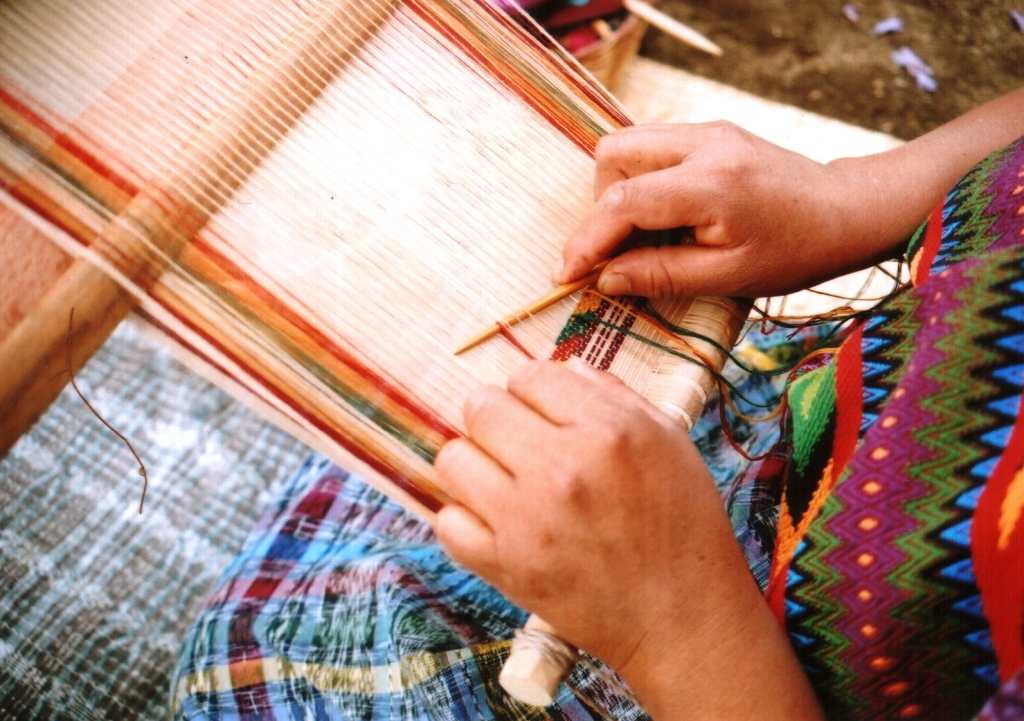
Then there’s the plink plink sound as the tip of a delicate Guatemalan pick-up stick slides from one taut warp to the next as the weaver counts out threads for supplementary-weft inlay.
weaving-tijera

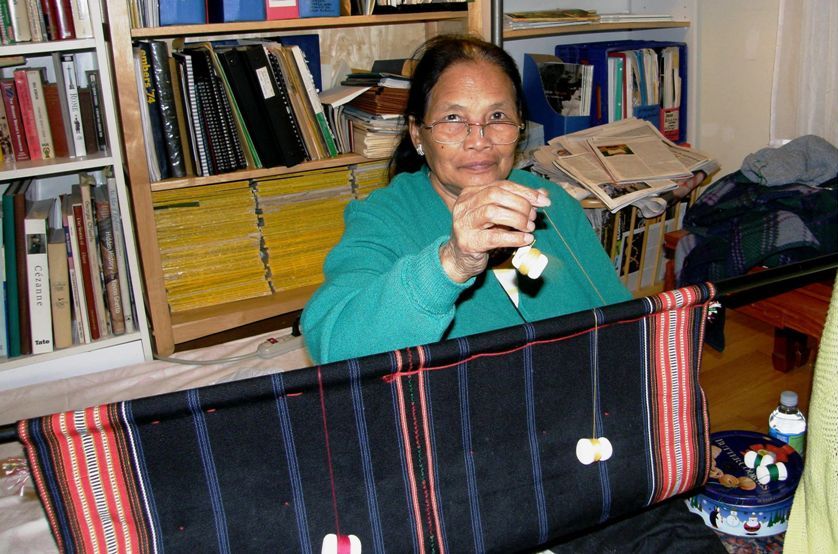
The dancing dangling bobbins used in weft twining go clackity clack as they twist and jiggle.
final-twining-sessionI love the opportunity to drag the llama bone tool across strong highly-twisted wool threads…scritch, scritch, as I strum to help separate the warps.

OListen to my teacher doing it…

If you stroll around a  village of weavers in the central highlands of Bolivia, you will know in which houses a weaver is at work by the LOUD THWACK!! THWACK!! of the llama bone hitting the sword as the wefts are slammed into place. That sound is one that  is not really pleasant, at least to my ear, when I am seated right next to my teacher. Here is one of my teachers in Candelaria at work at her loom:

When I stayed in the stilt-house home of my weaving teacher in Ecuador, I was often awoken by the muffled thump, thump and accompanying vibrations as Trini drew down her heavy beater while working at her vertical loom. This was combined with various house shaking and creaking sounds as the loom was connected to floor and ceiling beams…a part of the house itself. You can see that big sword/beater lying across Trini’s leg below and get an idea of the muscle that goes into operating this particular set-up!

trini-opening-shed1

The sound of threads in a warp-faced weaving rubbing past each other as a shed is opened can range from a soothing smooth swish to a painful tearing protest depending on the yarn being used and how it has been prepared.

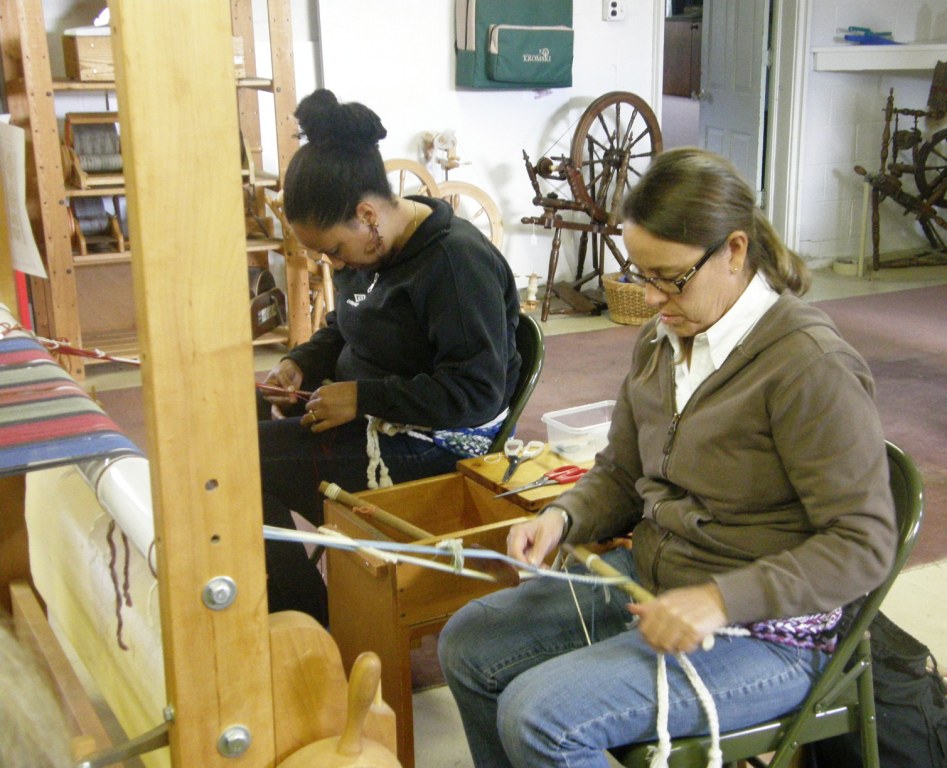
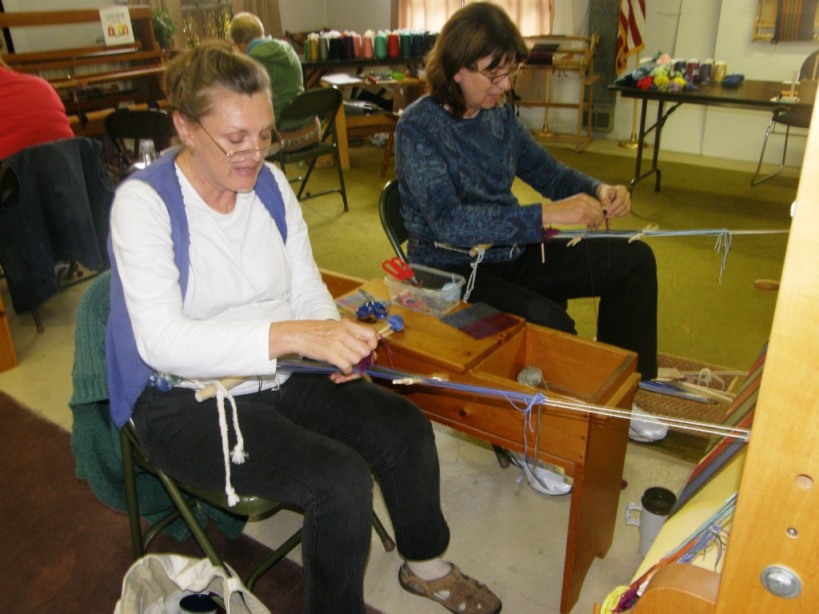
when weaving with new backstrap weavers, we even learn to be amused by the constant clatter of swords jumping out of their sheds and hitting the floor. Each sword has its own musical tone…nowhere near as much fun on a rug! A cement floor greatly enhances the melody!

Joan following a pattern chart at the Mannings.

By the way, I am in charge of picking up the fallen swords….gives me something to do. It is funny that as time goes by we have people weaving in silence. What happened to our musical accompaniment? Well, new weavers, without even realizing it, get a feel for the right amount of tension and the sweet spot in the warp where the sword will sit happily upright and not leap to the floor. Or…they just get rather good at catching the sword on its way down!

Maybe one of the nicest sounds for me is the fwip fwip fwip fwip in rapid succession as I pull my heddle string quickly but carefully (or else it will tangle miserably!) off its heddle stick. This means that the piece is finished!

Speaking of finishing…the wall hanging is off the loom and away in the closet until another time when I can face braiding all the warp ends. I will show it to you when that is done.

In the meantime I am circular-warped and coil-rodded in my purple scarf project! Thank you teachers Felipe and Ju Nie.


purple sacrf project backstrap loom

facebook postCheck out that coil rod! If you are wondering what all that fuss is about, read last week’s post. I am using my studies with Guatemalan teachers to weave the supplementary weft patterns.

The pattern you see above will appear at both ends. I am resisting the temptation to fill the middle with designs and hope to weave one long continuous pattern in the narrow area bordered by gold along both outside edges. I may place very widely-spaced small individual motifs in the center panel as I go.

I am inspired by the colors in the  above picture that appeared on my Facebook news feed. I do hope to be able to give you its source later. I can’t find it for the time being.

I like the circular warp. It took a while to clamp it well enough so that it wouldn’t just slip around the loom bars with every movement. I am not yet sure what role the coil rod is playing but it isn’t getting in the way of anything so there it shall stay.
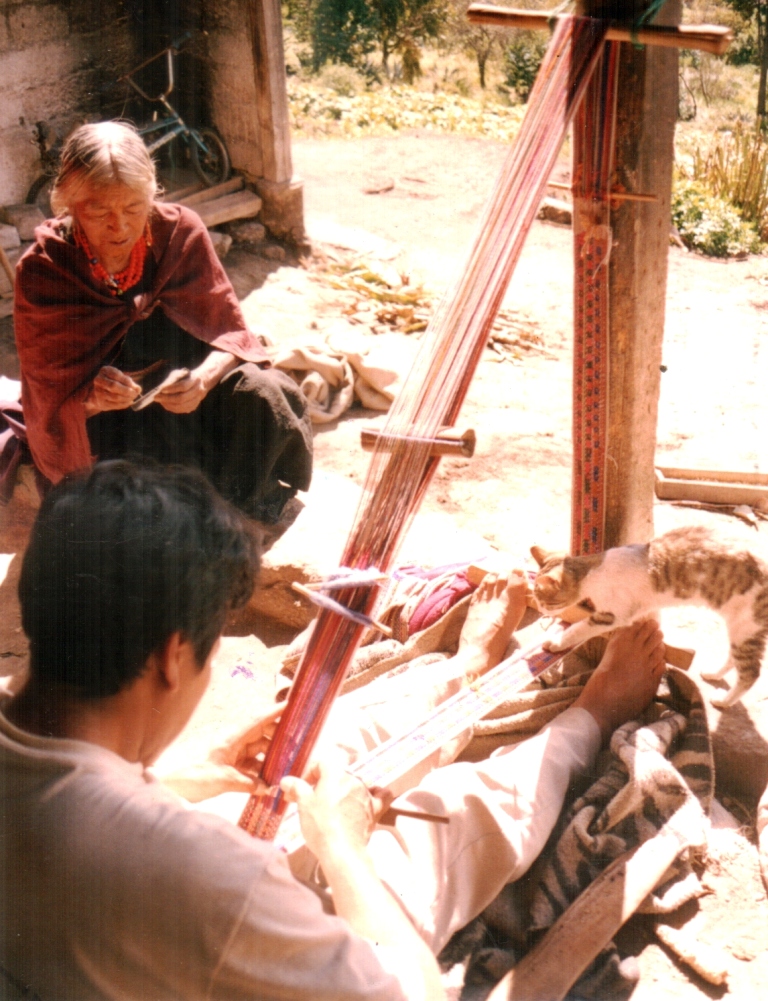
dovetail warp Salasaca EcuadorI can see the merit of the triangular set-up that my belt weaving teacher in Ecuador uses with his circular warp.

That set-up opens out the circular warp (into a triangular shape) separating the lower layer from the upper. I am not using the triangular set-up and I find it a little off-putting seeing the lower layer immediately below where I am weaving. The unwoven threads fan out a bit wider than the woven fabric and makes it a bit harder for me to clearly see and control what is happening at the edges of the upper layer. It is also more difficult to get to the back of the weaving, which is necessary when dealing with the tails of the supplementary wefts. I have to work my hand between the two layers to do so.

But, I have just started and will, no doubt, get used to this just as I am now used to the fineness of the thread with which I am working.

As I get used to this I am hoping to find out more about the coil rod and what it is doing. Until next week….


Backstrap Weaving – A Snaky Start to the New Year

A “snaky” start to the new year….”Snaky” isn’t one of those words I find myself writing very often and when I typed it into the title of this post, it was bugging the heck out of me…just didn’t look right. Spell-check wasn’t touching it, yet I wasn’t going to be happy until I had Googled it to make sure. It was then that I read that “snaky” in informal English in Australia and New Zealand  apparently means angry or bad-tempered.

So, I want to make it clear to the Aussies and Kiwis out there that I did not start this year angry or bad-tempered as the title of this post might imply. (This also reminds me that I am in my twentieth year here in South America…that’s a long time to have been away from Australia and any of the new expressions that may have been adopted into the local lingo.)

598638_479457965438891_897317545_n
supplementary weft samplerWhen I say “snaky” here, I am referring to the fact that the Chinese New Year, which will start on February 10, will herald the beginning of the Year of the Snake.

And why do I know this? Well, a Facebook friend shared the above image from a page called “The Journey to the Revelation of my Soul” and I saved it simply because….. I like the COLORS!

I am thinking that I must weave something with this color combination some time. Well, I kind of did in my sampler pictured above… but not quite. I want that rich burnt red background and that special shade of blue. Whoa…is this the structure and process person speaking?… now getting all excited about color?

OAnother reason the snake image appeals to me is that I happen to be starting the new year weaving a snake-like motif into my latest wall hanging project. I like to think of it as a boldly-patterned snake  winding its way back and forth across the cloth.

The pattern is based on one of the designs that Wayuu weavers work into their belts. Imagine my surprise when I got Mirja Wark’s book off the shelf, in which she describes and names the designs, to find that the particular pattern that I have been using as my inspiration is called pasatalo’ ouya which means “like the intestines of a cow”!

Okay…so, I am weaving a wall hanging with representations of cows’ noses and intestines. But, since I adapted the basic motif a lot so that it would be big and bold enough to fit the space in which I am working, I think I could allow myself to call it snaky instead. What do you think?

Sloooow going. I am not achieving the four finger widths which my teachers tell me is a good day’s work. Some days I am lucky if do three. It is, however, very exciting watching the pattern slither its way up the fabric.

It is giving me both a mental and physical workout, I can tell you! It is an extremely dense two-heddle complementary-warp structure and opening the heddles is hard work. While the tiny elements of pattern within the main shape are very repetitive and easy to read, there are just so many warps to handle! I feel that I deserve to get up and go eat mango after every pick!

O

I like to think of the figures on this sash that I wove a long time ago as snakes. I copied the design from a textile from pre- Colombian Peru. Who knows what the weavers of the original fabric were seeing when they created these motifs on their cloth.

books-2

The snake is an important figure in Guaraní weaving legends. My teacher tells me that it was a snake that appeared in the dreams of the first weaver and taught her the weaving designs. When Guaraní weavers of the Izoceña group weave the zig-zagging snake skin patterns in their cloth they are also representing the Isoso river along which they have settled. The snake and the river are one.

I wove Guarani inspired snake skin designs into this guitar strap.

The Mayan Goddess of Weaving, Ixchel, is most often depicted with a snake or snakes on her head or entwined in her hair…

ixchel 3 formsI was told that this is one of the reasons why many Guatemalan women weave richly colored sashes to wrap about their heads and around their hair. The sashes vary enormously, in width, length, color, design and weaving technique  from place to place. It is also interesting to see the different ways they are worn….

santiago atitlan hair sashby a lady from Santiago Atitlan above…

O

weaving a hair sash zunil guatemala…and by this sash weaver in Zunil.

##################################################

Wishing you all the very best for the new year surrounded by completely non-“snaky” (in the Australian sense of the word) folk!

##################################################


Backstrap Weaving – The Weft-Patterned “Neck Wrap”

I suppose that it is normal to want to look back a bit as the end of the year approaches. This time I decided to jump back to the end of my blog years in 2011, 2010 and 2009 and take a look at what was going on. It is interesting to see that supplementary-weft patterning was a part in some way of all those December posts.

This time last year I was in a downsizing phase and rummaging through my closet to see what could be tossed. That was when I came across this wildly colorful supplementary-weft sampler that I made after having studied some of the patterning techniques in a few different communities in Guatemala. I included it in my blog post…(no, I didn’t toss it!)

supplementary-weft-pattern-detailYou can see that all the patterning elements that I am using in my current supplementary-weft project are present in this piece and this is barely the tip of the iceberg when it comes to all the different ways to create patterns with supplementary wefts that are used by Guatemalan weavers.

In December 2010, I was posting about the practice piece I made after studying with the Montagnard (Vietnamese hilltribe) weavers in North Carolina.  While the piece is mostly about the warp float patterning technique that they use, it also includes twined ends and a couple of their traditional motifs woven with supplementary wefts.

O

And finally, back in December 2009, when I had been blogging only a few weeks, I wrote a post on weaving wider projects which included this…

OLYMPUS DIGITAL CAMERAI included a tiny bit of supplementary-weft patterning  in the center of this placemat and mug rug set. I gave the pattern a thin striped look instead of a richer satin-like finish so that it would mimic the stripes in the two outer bands. The simplicity of the outer bands were inspired by a Guaraní textile.

So, this wonderfully fun patterning technique, which allows quite a lot of spontaneity, (the patterns on both the Montagnard and placemat projects were not planned and could have been just as easily cut out and removed if I had decided that I didn’t like them) has been in my weaving skills kit for quite some time.

hatbands of PotoloI remember the first time I saw a Bolivian highland weaver sitting in the street of Santa Cruz making a hatband only days after I had arrived here in 1998. The base weave was off-white sewing thread-weight cotton and she was creating patterns with bright acrylic threads. I crouched and chatted with her, watched what she was doing, and noted the name of the street so that I could return the next day and watch some more. I never found her again nor have I ever seen another weaver making a hatband since! I have seen plenty of beautiful hatbands but never one being woven again.

The hatbands above adorn the hat of a weaver from Potolo in the Bolivian highlands….bright colors on a black ground, much the same as the color scheme I have chosen for my scarf project. I have decided to call it a “neck wrap” as it is not going to be all drapey and flowing as one would normally expect a scarf to be. As long as I don’t have to actually bend and fold it around my neck, I will be happy!

start of Bhutan design scarf

Here it is, a little bit further along from the little I showed you last week, after all the messing around and lesson-learning. I am trying to think if I learned any more lessons from this wicked warp this week….I think I probably just convinced myself even more that I love putting in a second cross stick behind the shed rod and using those two sticks to help open the heddle shed. (Of course, this is just one of many ways that backtrap weavers operate their looms).

Second cross stick backstrap loom

Above you can see the second cross stick and shed rod in place. The third shorter stick sitting between them is the pattern stick.

If you watched the video of the Tacabamaba weaver in last week’s post, you will have seen how she places her sword on top of the warp and rolls that together with her shed rod to help open the heddle shed. Below, you can see Montagnard backstrap weaver, Ju Nie, doing the same using a bamboo slat instead of her sword.

montagnard weaver opening heddle shedI have a video on my page about sticky sheds showing this system in action.

I prefer to have the second stick permanently in the warp. One of the weavers that I met at the recent conference in Cusco used this system, with the second stick permanently in the warp, to open her heddle shed.

Her set-up is so cool. I wish I had a forked stick like that…must go out and look for one. The prong of the fork nearer the weaver holds the stick shed open while the other prong sits within a second cross.

Usig a forked stick in the warpShe would simply grip the place on the fork where both prongs join and twist the fork away from her while relaxing tension and pulling up on the heddles.

In the picture above, she is about to slide her sword under the warps raised by the shed rod. She will then turn the sword and clear those threads through the heddles and down to the weaving line. I have wonderful video of this weaver operating her loom and doing very fast supplementary-warp pick-up and I had every intention of showing it to you. Too bad my internet would not behave and allow me to upload it.

So, my warp has been behaving like a dream…sticky threads have been defeated and no more have broken. The odd loose ones here and there have been dealt with smoothly and calmly.

The center of Bhutan scarf project bacckstrap loomI decided to make the long motif the center of the scarf and work from there on repeating the designs from the first half of the project. However, I am not repeating the  motifs in the side bands as there are still plenty of those that I want to try!  I have no discipline sometimes!…I should just keep it simple and symmetrical…

starting the other half of the Bhutan scarf projectHere starts the other half….

I managed to almost squeeze in one more green motif before it was time to stop and write this blog post. It’s addictive and I don’t want to stop! The motifs are new and I am anxious to see how they turn out. Plus, I can’t weave it at night so, I really try to make the most of daylight hours. All that black thread is just too much at night and I am on an economy drive so, no super high powered lamps allowed!

one more green motif bhutan scarf

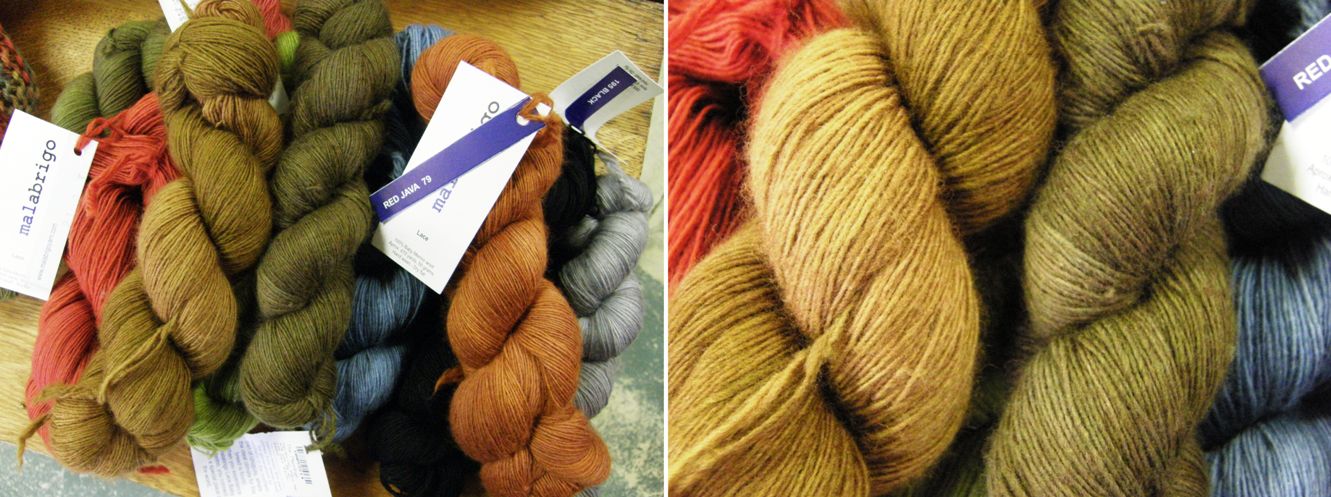
In the evenings, I have been spinning away tightening up the twist on the Malabrigo wool singles I bought while in the US. I am hoping to then ply them and weave a discontinuous-warp piece. As I am not confident about trying any warp float patterns on one of those yet, I will decorate the panels with some wool supplementary-weft designs.

respinning wool for discontinuous warp projectWhat has been happening in the Ravelry group?  ”It’s dead in here!” exclaimed Bobbie recently but she livened things up a little by posting her recently finished guitar strap made for her granddaughter…

bobbie guitar strap intermesh

This was made using the instructions for the two-heddle intermesh technique from my second book. Bobbie used Annie’s guitar strap kit to convert her beautifully woven band to a guitar strap.

Rob has been using my first book to weave some lovely bands with Andean patterns but we may have lost him to a four-shaft loom which recently appeared in his life. Now he is also turning out beautiful towels on that. Here are some of his latest backstrap, inkle and four-shaft loom projects….

rob's weaving projects

There have also been some mutterings in the group about using the 24 sets of string heddles to weave one of the fabulous fajas saras after I showed a picture of some of the belts of San Ignacio de Loyola Peru…

fajas saras san ignacio de loyola peruThat could be a fun weave-along but I don’t think I will join them on that one. While I do love making string heddles, I enjoy doing pick-up even more!

ikat textiles of the AndesOn another topic, a couple of interesting ikat resources came my way recently in my internet ramblings…

Quite by chance I discovered an e-book byMarguerite Gritli Pfyffer entilted “Ikat Textiles of the Andes”.

The book is the result of the author’s two years spent traveling in the Andes researching ikat patterned textiles. There is one section devoted to the pañones of Tacabamba that we saw last week.

From the other side of the world in China, Chris Buckley sent me the link to his recently finished paper entitled Investigating Cultural Evolution Using Phylogenetic Analysis: The Origins and Descent of the Southeast Asian Tradition of Warp Ikat Weaving.

The paper can be viewed online here.

Chris has always been very generous with his resources and, on several occasions, has allowed me to use images of textiles in his collections in these blog posts and for my charting.

Christmas will be done by the time I come to write my next blog post. I don’t do Christmas but I wish all of you the very best for whatever you get up to in the coming week. Now, back to that “neck wrap” thingy….

Backstrap Weaving – Supplementary-Weft Patterning from Two Continents

I have had so much fun playing with supplementary wefts this week on my white warp!

This is the start of my blank canvas…an off-white plain warp-faced piece of fabric into which I can weave patterns with tencel supplementary weft. My inspiration came from several textiles from Bhutan that I saw during my recent trip to the US and I was able to use patterning skills that I learned in Guatemala to set up the warp and lay in the wefts. It has been fun to be able to apply the skills learned on one continent to weave designs from another.

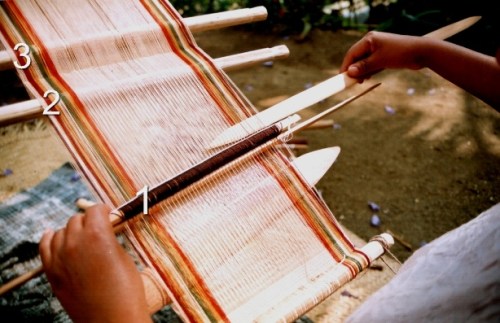
First came the insertion of the two patterning sticks. From what I have seen on Bhutanese backstrap looms that I have examined and from videos, the warps under which the supplementary wefts will be passed are selected from those in the stick shed and then from the heddle shed and stored on two patterning sticks.

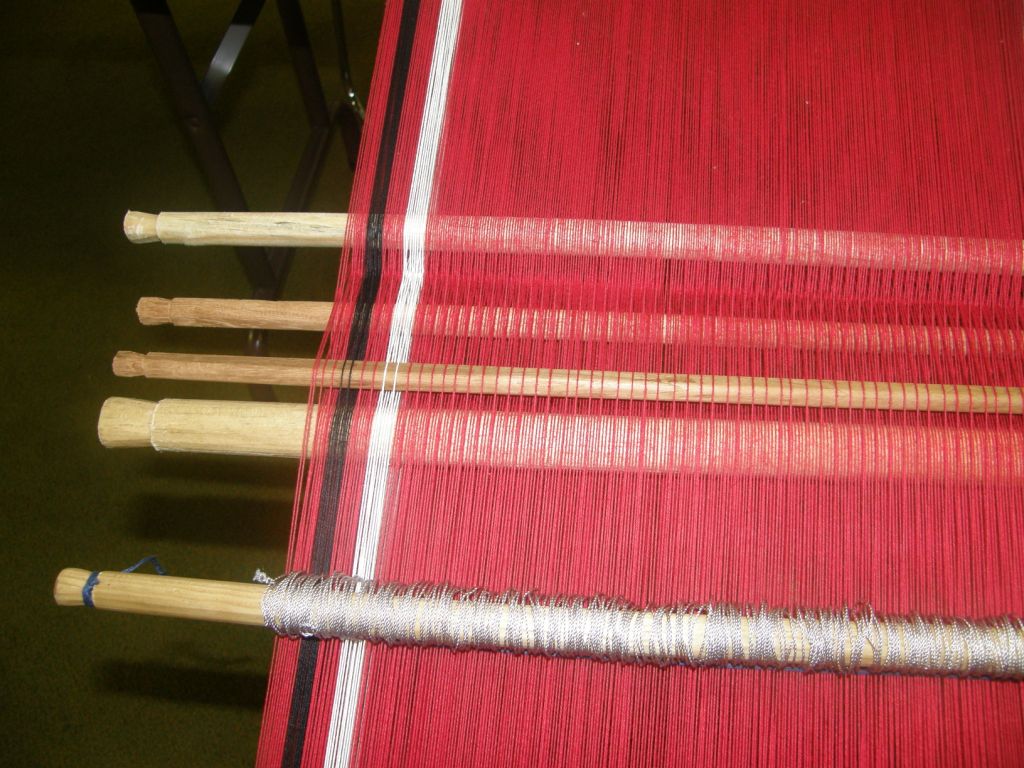
This is the warp that I used for the Bhutanese designs. The two sticks bound together with rubber bands are the stick shed stick and the stick which holds a second cross. The darker of the two sticks in front of those holds the patterning warps from the stick shed and the other holds the patterning warps from the heddle shed. You can see my video tutorial of how these sticks are placed in a warp destined for Guatemalan patterns here.

The spacing of the warp threads that are selected and stored depends on the kind of pattern being woven and, to a certain extent, the kind of yarn.  Within Guatemala, this can vary a lot from region to region. The warp pictured above from San Antonio Aguas Calientes in Guatemala shows the two patterning sticks in place (the two thinnest sticks). These will be used to raise the warps under which the supplementary wefts are passed saving the weaver the work of having to pick them up from every shed.

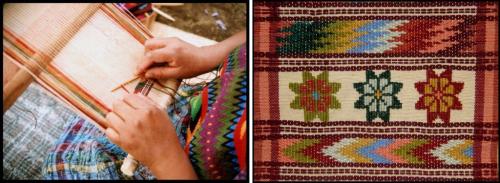
My weaving teacher in San Antonio Aguas Calientes has just selected the warps from the stick shed for her first patterning stick and is about the store them on a stick which will sit between sticks 2 and 3.

Lydia will draw the patterning sticks toward her to raise the selected warps to weave patterns like the ones she taught me to weave above right. The patterns in the upper and lower bands were woven using the warps stored on the two patterning sticks. The flower patterns in the center band, however, require the weaver to select different warps for every pick and so, patterning sticks cannot be used in this case. Naturally, weaving those flower patterns was a much slower process.

Here are some bookmarks that I wove using Guatemalan patterns. Most of these designs are based on those that I was taught in Santa Catarina Polopo. My teacher in that part of Guatemala also uses the two patterning sticks but the warps that are selected are spaced differently to those in San Antonio Aguas Calientes and you can immediately see how different the patterns are from these two weaving communities.

Above, you can see how the warps are spaced in one of the pattern sheds. I have just placed the supplementary weft which will allow me to weave the stem and base of the plant.

Here are some more patterns that I wove with my teacher in Santa Catarina Polopo. All the patterns except for the ‘X” design which separates some of the motifs were woven using the same two patterning sheds.

On the above piece which I wove in Guatemala alongside my teacher, you can see all the patterning techniques that I used in my latest Bhutan-influenced sampler…the horizontal and diagonal “chain stitch” lines  and the solid “stitches” that serve to fill in the outlined shapes.

The question was, how do the Bhutanese weavers space the warps that they select for their patterning sheds?

Frustrating!! I had a Bhutanese loom in my hands when I was in the US with unfinished weaving and sticks in place. I took lots of photos of it but did I think to look for that crucial piece of information? No!!

Thankfully, Wendy Garrity’s wonderful website came to the rescue.

Pictures and sketches that she has there gave me the answer. As I said, it is quite likely that the spacing varies from region to region within Bhutan as it does in Guatemala but, I used the spacing that I saw in the pictures, and it seems to have worked.

Here is the piece growing on the loom. I didn’t use the patterning sticks with their pre-selected warps for the designs in the foreground. The sheds for those patterns had to be created manually for every pick.

Things to work on…making the supplementary-weft turn “bumps” neater and of a more consistent size, making a smoother transition from horizontal to diagonal line…I messed that up…, calculating better the amount of weft needed for a particular design…I wasted too much yarn!

I think of how accurate the Guatemalan weavers are. They know exactly how much weft they need for each of their patterns and waste nothing!

Some of it has been trial and error…finding a neat way to start the chain stitch took quite a few attempts. My Guatemalan teachers work that stitch one thread at a time whereas the Bhutanese weavers have a very cool way of working it using both threads at once. The end result is the same but it is these little differences that are so fascinating.

I look at Leki Wangmo’s magnificent work (above) and sigh!

Here are more gorgeous Bhutanese textiles that Ute left for me to examine while I was in Massachusetts…bands of supplementary-weft patterns on a ground of extremely fine tablet-woven cloth. I was told that the tablets used to weave the ground fabric had to be cut from X-Ray film to achieve such fineness!

He he :-)…one more shot of the whole lot so far. Can you tell I have been having fun with this?

Now on to much finer yarn. I have some cotton that my friend Betty got in Guatemala about 30 years ago…much finer stuff and I am thinking about making a very light-weight scarf with it with supplementary-weft patterns using the techniques I have been practicing on the sampler this week. The motifs will be smaller using this finer thread and the whole thing will hopefully look a lot more delicate than the sampler with its large kind of clumsy motifs. I can use it on my spring and fall trips  in the US. I am thinking black with lots of small colorful motifs.

Another thing with which I have just begun to play this week…

This is my first sample using the 60/2 silk that I got at Handweavers Studio in London (it was a splurge and one of my souvenirs of the UK trip!). I saw this pebble weave design on a textile in a book and  found it quite unusual. The picture’s caption states that it was most likely woven during the colonial period. The silk weaves up beautifully and yes, it is hard to see! All the little nicks and chips in my finger nails become immediately apparent as the fine silk catches on them. Now I just have to wait for THE project for this silk to come to mind.

In the meantime I am getting the third post on the Encuentro de Tejedores de las Americas ready…yes, I know I keep promising it.! I look at those pictures now and can hardly believe I was there among all that magic!

In the meantime, I will leave you with some Cusco magic fit for the coming season from the CTTC (Centro de Textiles Tradicionales de Cusco)…

Look at these gorgeous ornaments made from narrow woven bands! If you “Like” the CTTC on Facebook you can see many more beautiful images and news updates that don’t appear on their website.

Off to dye that cotton and start planning my scarf!

Backstrap Weaving – Safe from Sandy in Pennsylvania

I am taking a little detour from my series of posts on the Encuentro de Tejedores de las Americas in Cusco to write about the first week of my fall travels in the US. Part Three in the series will be entitled ‘Weavers in Action” and will have several video clips and pictures of both spinning and weaving. Here are links to Parts One and Two.

Just as I hit the very first key to write this post, the lights went out…sigh…it was bound to happen at some point. You see, I am not in Bolivia  right now. I am in “Hurricane Sandy Zone” in Pennsylvania. But, as it turned out, Sandy was just teasing that time. Seconds later the lights were back on and all continues to be well. Coastal areas, on the other hand, are devastated.

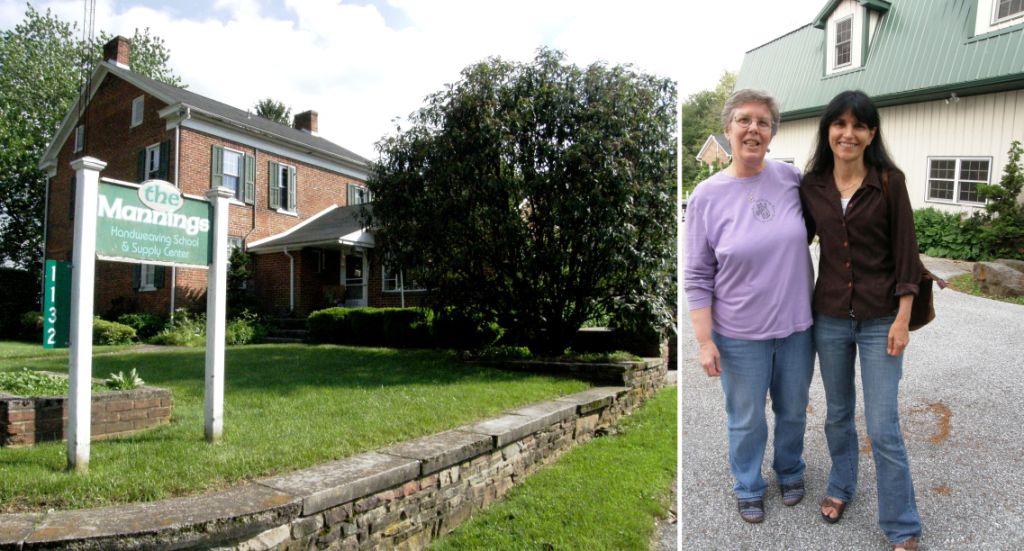
This is my fourth  visit to the Mannings staying with Ron, Carol and Helen and the second time that we have been in crisis mode due to extraordinary weather events.

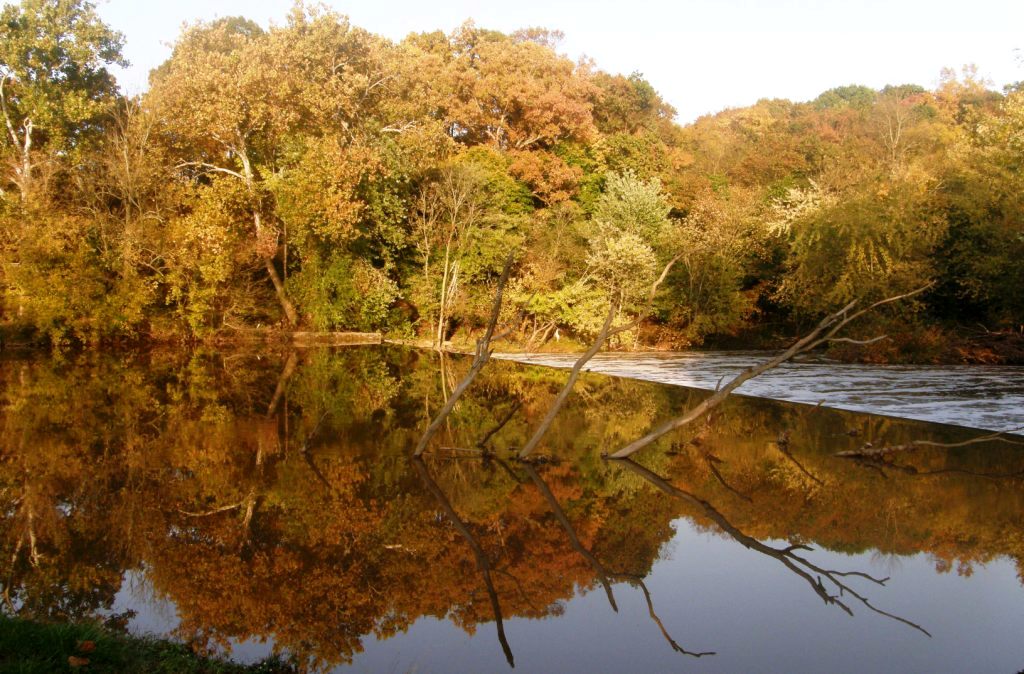
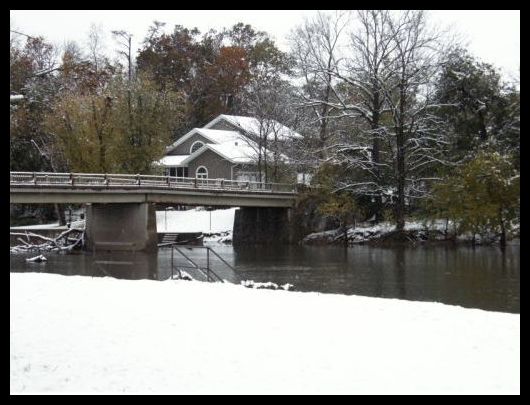
It was windy and rainy all night but nothing too terrible.. One of the lovely things about the Mannings (apart from obviously being yarn, weaving, spinning and knitting heaven as well as the base of weaving teacher Tom Knisely) is the beautiful creek that lies at the bottom of the front lawn.

I spent some lovely evenings last spring on that lawn close to the creek backstrap weaving.

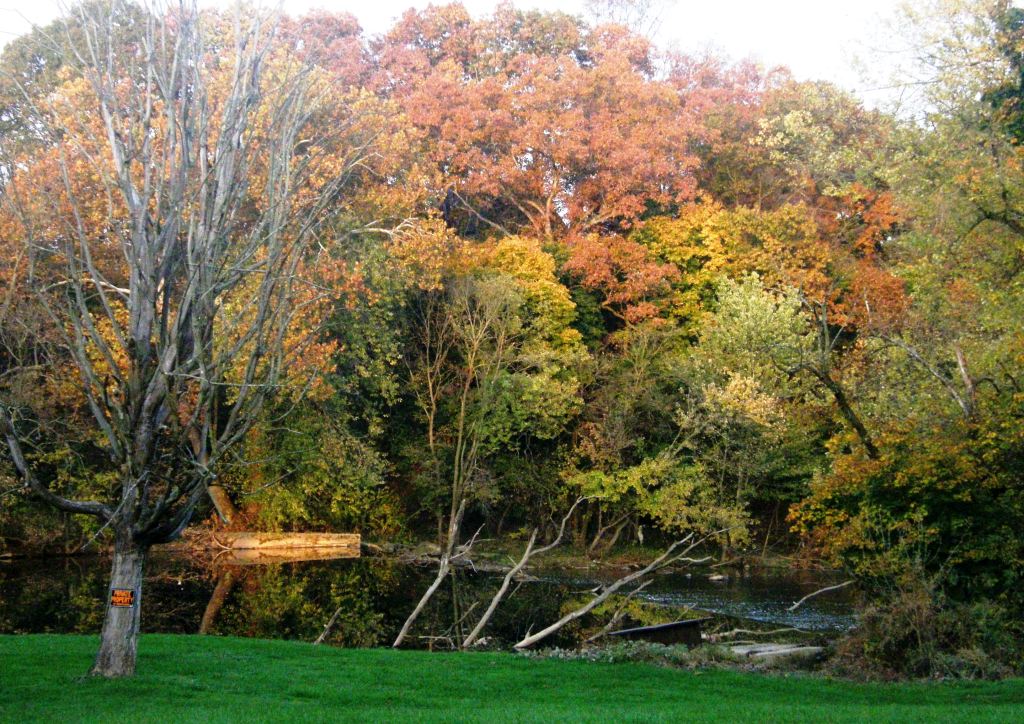
On this fall trip I arrived to a gorgeous display of golden leaves mirrored in the waters. It seems that the leaves were turning later than usual this year and I got to see them for the first time in all their glory.

This early wet snow event is the one that hit in October last year. I sat out the three-day power outage in Ron and Carol’s beautiful motor home.

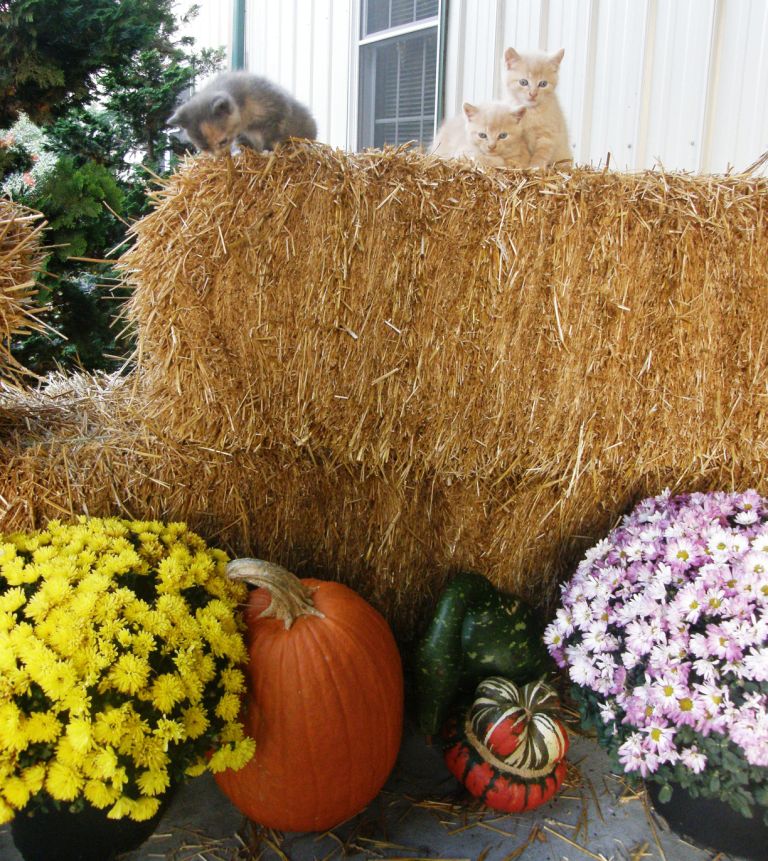
Halloween was in the air and a new batch of kittens took care of my pet withdrawals. There were four. One had gotten whisked off quickly to a new home.

There was plenty of time for play which, in a big yarn and equipment store and school like the Mannings, meant getting to watch how Tom Knisely’s beginner weaving students were getting on, discovering new yarns that could be suitable for backstrap weaving, hanging out with the spinning group that came to visit, unearthing some really cool hand made weaving swords that will be brilliant for my loom and even getting to do some dyeing.

I am looking for wool so that I can continue my experiments with the discontinuous-warp technique that I studied in a workshop in Cusco a few weeks ago. Well, you are probably thinking that I could probably just spin my own but I would really like to get the technique down before I plan a big project with my own  handspun.

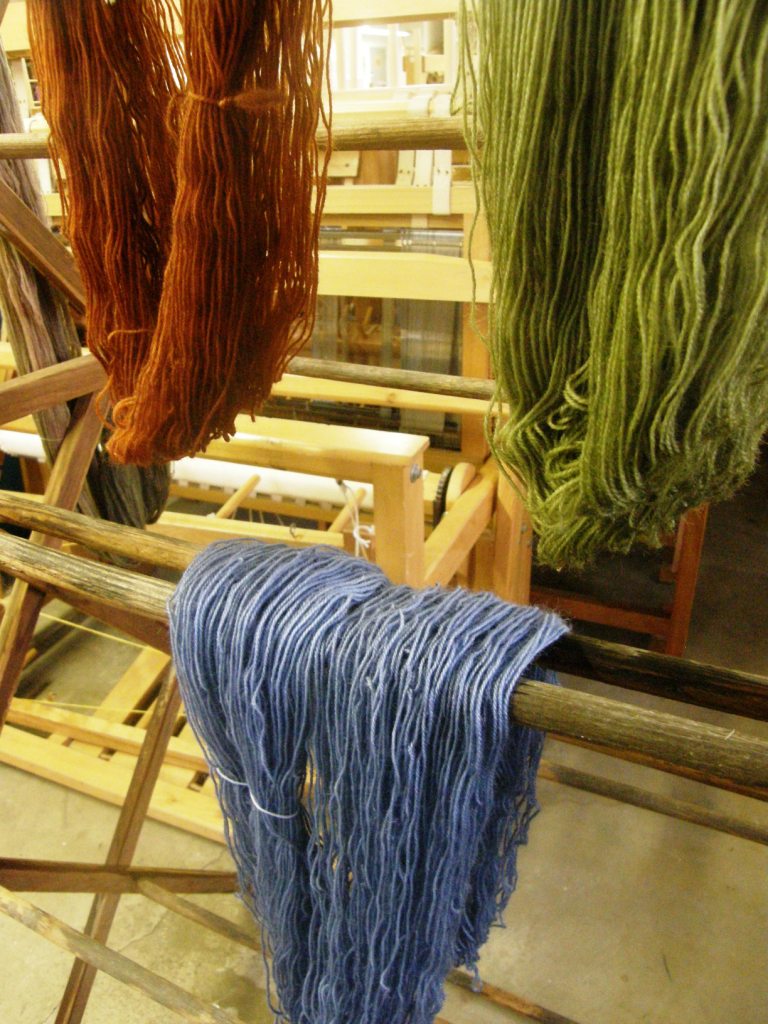
Here’s some Navajo warp I found in the store that Sara dyed for me. Of course it only comes in natural. I kept some natural and then chose these three colors for dyeing as I thought that they looked like the kinds of colors that one could get from natural sources. I have had success using Navajo warp for warp-faced weaving on my backstrap loom before.

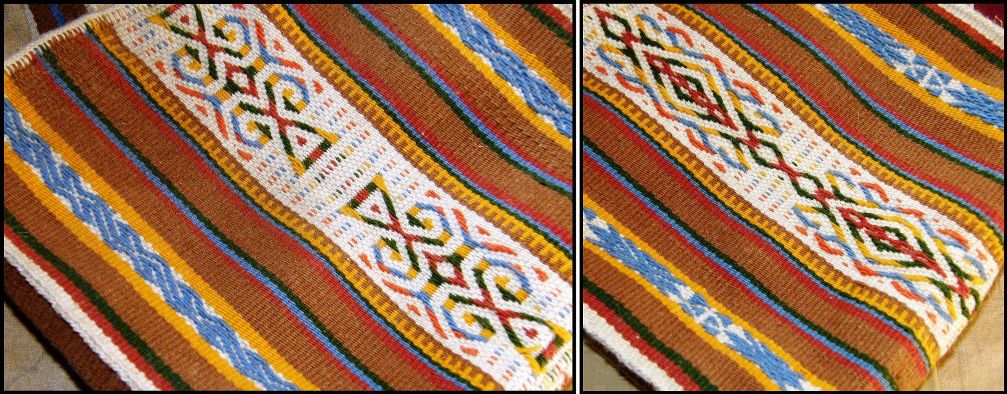
I wove this bag with its supplementary-warp patterns many years ago using Navajo warp that I dyed and it worked beautifully. Another yarn that I bought at the Mannings, which I am not yet sure will work as well, is this Malabrigo merino from Uruguay. It is lace-weight single which I will re-spin and ply. I got four colors to make a discontinuous-warp square much the same as the one I made in Cusco.

It remains to be seen if this will actually work but I have brought my Cusco spindle with me and can get started right away with the re-spinning.

I wove with some terrific people. Here are two of them, Lauren and Karen…

Karen went to Guatemala, bought a backstrap loom, and took it to a weaver who warped it and wove a little way using supplementary-weft patterns to decorate her plain-weave cloth. It was nice that we got to weave Bolivian as well as one of the many styles of Guatemalan supplementary-weft patterning techniques. Karen brought the loom to show me so that I could show her how to continue weaving the patterns. I played on this loom and I knew exactly how to weave this cloth with its patterns as I had studied in Guatemala in the very village where it had been created.

You can see below the two patterning sticks (the thinner slightly darker ones) one on the upper surface of the weaving and one below, which are used to raise the warps under which the supplementary wefts pass. The thickest stick is the shed rod. Another stick at the back holds a second cross.

I have a tutorial here on how to set up a warp like this and insert and use the patterning sticks to create small supplementary- weft motifs.

Janet visited the next day to weave complementary-warp pick-up. A friend of hers had bought a woven band still on its loom in Peru and given it to her as a gift. Janet was keen to weave the patterns, some of which were not pebble weave.

Here she is forming the picking cross from which to pick  the threads for the tanka choro pattern.

On the following Friday I started weaving with people I had met on previous visits.

Patti, on the left, had first woven with me in spring last year and Marge first joined me in spring this year. She says that she has been hooked ever since and joined the Ravelry group.

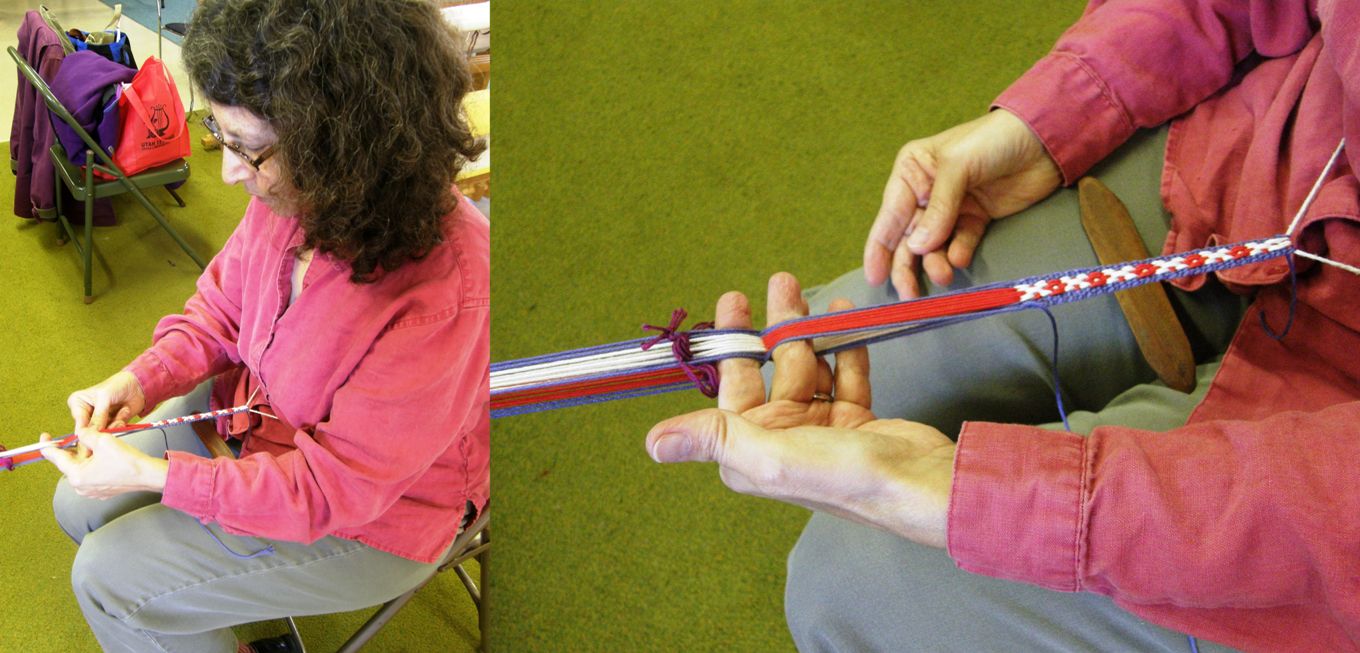
Here are a couple of pattern samplers that were made by the weavers before moving on to finer yarns and more advanced techniques and patterns. On the right is a band made by Dianne with her version of the Breast Cancer Awareness symbol. I love it when people use the structure to create patterns that are personally meaningful. In my new book I show other unique creations contributed by readers who have woven images from the context of their own lives and experiences.

And, speaking of the new book, it was very exciting to get here and see it in print for the first time 🙂

Dianne is also a very talented tapestry crocheter and brought along her notebooks and phone in her own tapestry-crocheted bags and pouches. I am seriously tempted to take this up if I ever find the time. I already have Carol Ventura’s wonderful books on the topic.

Here are two of Dianne’s pieces finished with a card-woven strap and a band made on her inkle loom…gorgeous! I also had some talented braiders come to weave with me. Marjorie has taught braiding at Convergence and it was nice to meet Tracy who was also at the Tinkuy in Peru in 2010. Marjorie gave me a couple of quick braiding lessons on cool things to do with just three and four strands while taking a breather from the backstrap loom.

Marge was happy to try the four-strand round braid (above) which I show in a tutorial here as she wasn’t happy with the way her multi-colored three-strand ones were turning out. I have recently added a new video to that tutorial page which you might want to check out. Finishing techniques are always fun and make such a difference to even the simplest projects.

Before weaving with this group, the creek was still showing its pretty face…

And then there were two…I spent part of one morning looking for the third boy kitten only to find that a Mannings’ customer had taken him to his new home.

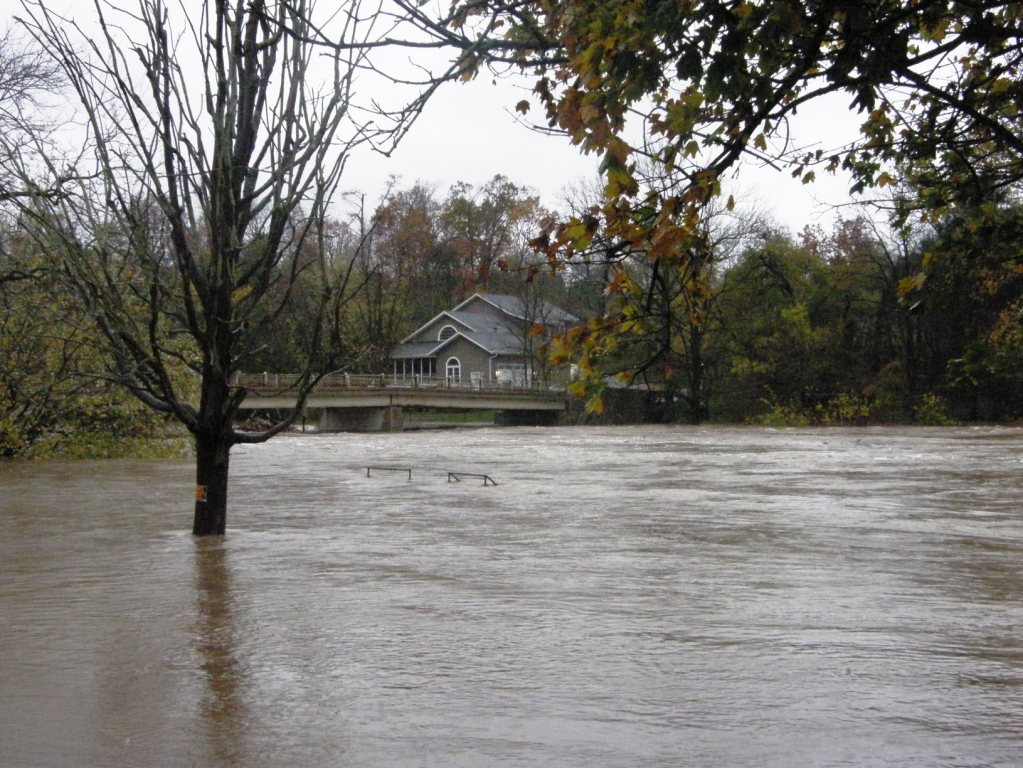
That tree with the orange sign is my weaving tree. Then we started hearing the first snippets of news about what was dubbed Franken-Storm, aka Hurricane Sandy. Everyone got home safely on Sunday night. My plans to get to Massachusetts on Monday were thwarted when Amtrak sensibly cancelled all services.

And then came the rain and the wind and the creek turned into a cranky swirling and swelling brown mass.

Impressive flood pictures on Carol and Ron’s freezer door serve as a reminder of just how cranky that creek can get and I decided to pack anyway in case a fast get away was in order.

We didn’t lose light or wifi…how lucky can you get… and this despite the fact that the storm passed right over the top of us.

Those of you who have been lucky enough to visit the Mannings and stay in the family home will know the view of the creek from the dining room window. This is where I am sitting while writing this blog post. Yesterday a swimming pool with deck still attached floated on by! Below you can see my weaving tree surrounded by creek.

In the Ravelry group, where things have been rather quiet lately, Rob showed us his latest projects…

 Here are two Andean pebble weave projects using motifs that are charted in my first book. He says that he is working his way through the book so that he will be ready for the weave-along we run based on my second book.

Here’s another lovely band he made in which the design was created simply by the way he made the warp…

In the background I can see a yellow and black double weave key fob.

As you know, when I am on the road, my posting days and frequency get all out of whack. Some weeks there might two posts and some weeks none at all! The next post will be Part Three of the Cusco trip and I do hope to have that up very soon. Hoping to move on to Massachusetts tomorrow or the next day (where there is no power, by the way…but all are safe and sound).