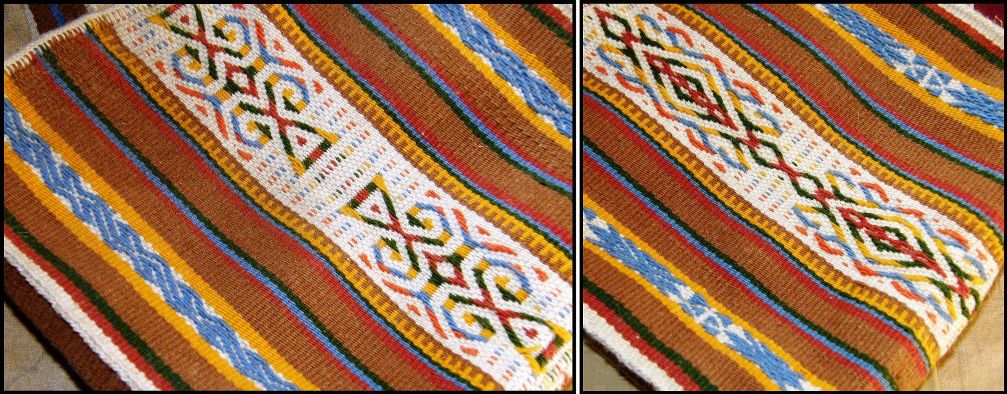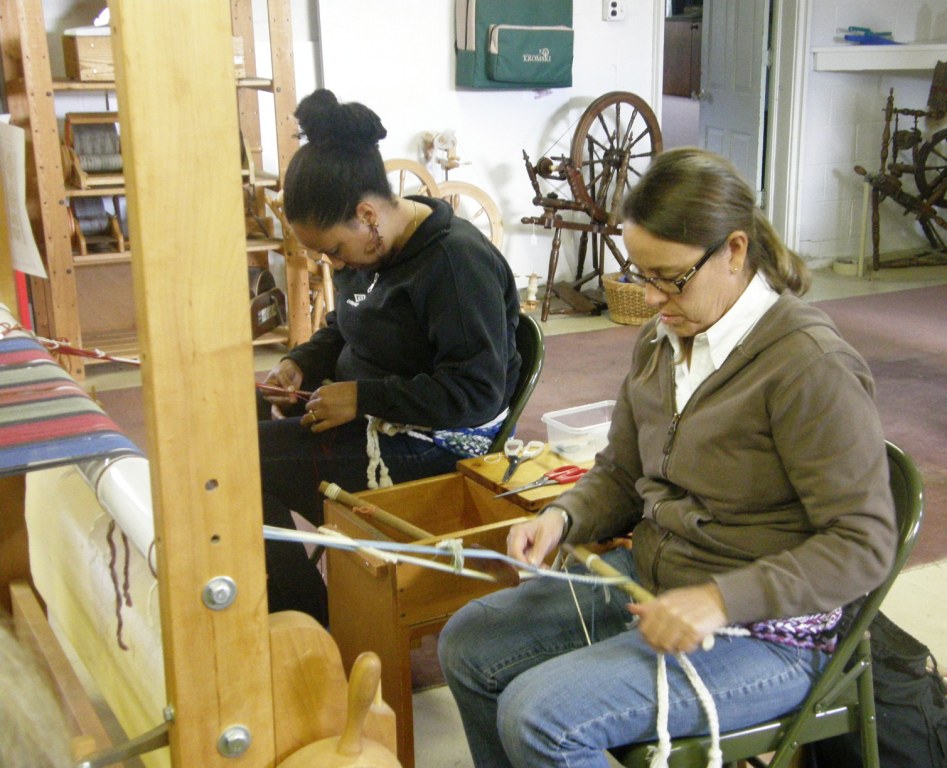
Backstrap Weaving – Where the Yarn Grows on Trees

Oh give me a home,

Where the sheep roam,

And the yarn grows on trees…

handspun yarn tree at Janets

yarn tree sculpture at lydiasThere have been two stops on my trip since I last wrote…one in  Texas and another in Humboldt County in California. Above you can see luscious skeins of Janet’s handspun at her home in Humboldt that I strung up in a tree after a day of dyeing. Janet used these natural substances…
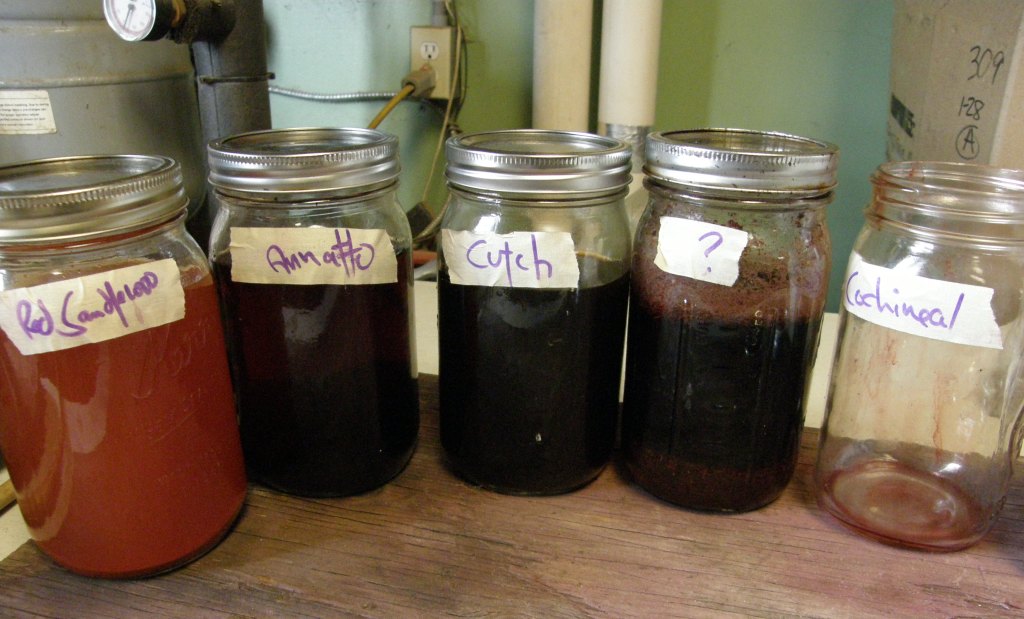
???????????????????????????????…as well as indigo in an old vat.

And then there is Lydia’s sculpture wich spans branches in her yarny yard in Texas. It is a patio and garden space that whispers serenity and begs for exploration with plenty of benches and seats tucked in shady spots around every corner on which to sit and simply ponder.

Here’s her garden loom dressed up to greet the spring…

gardenloom031813_mediumAnd she brings the colors of spring, the desert and the garden into her home covering her walls and banisters with her own woven art.

lydias trio

??????????????????????That’s Lydia in the center with Eileen. I stayed with Eileen last year too and we met again in Manchester UK at Braids 2012.

Driving up to Lydia’s home, you get a hint of what is to come within the home and beyond when you see the weaving that stretches between the front porch posts. Lydia would love to have a group backstrap weaving in her home and I think that weaving in her garden would be heavenly!

Speaking of heavenly spots, here is a group of weavers from last weekend in northern California…

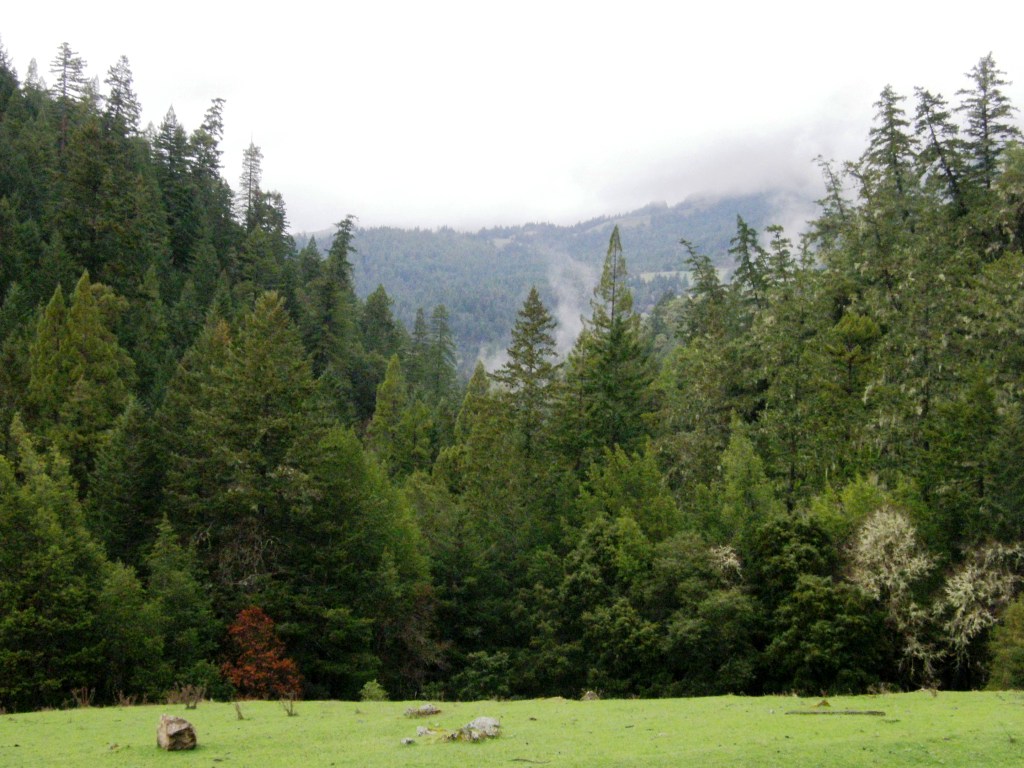
??????????????????????Ace and Pam of Ace ‘n the Hole Romneys offered their home for our group. You can see that neither the weavers nor the weaving are the feature of this particular shot…instead, it’s that amazing view through the glass of the redwood forests and mountains!!
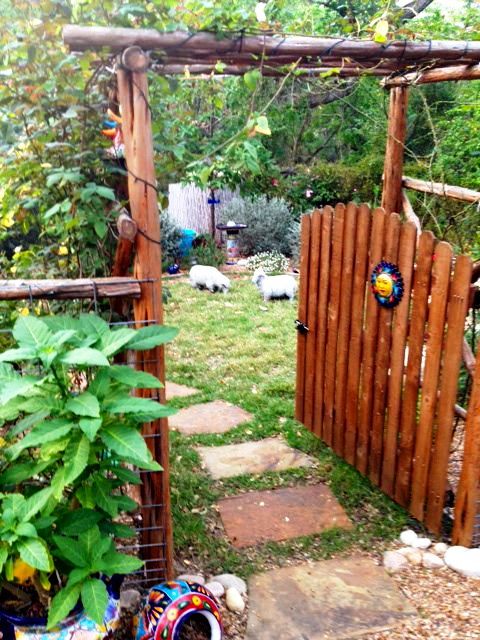
??????????????????????And, while wee resin sheep figures roam in Lydia’s Texan garden…
sheepAce’s romneys, whose fleeces have won many ribbons at fairs on both the east and west coasts, roamed the hillsides. Meanwhile,  indoors, we wove pebble weave on backstrap looms.
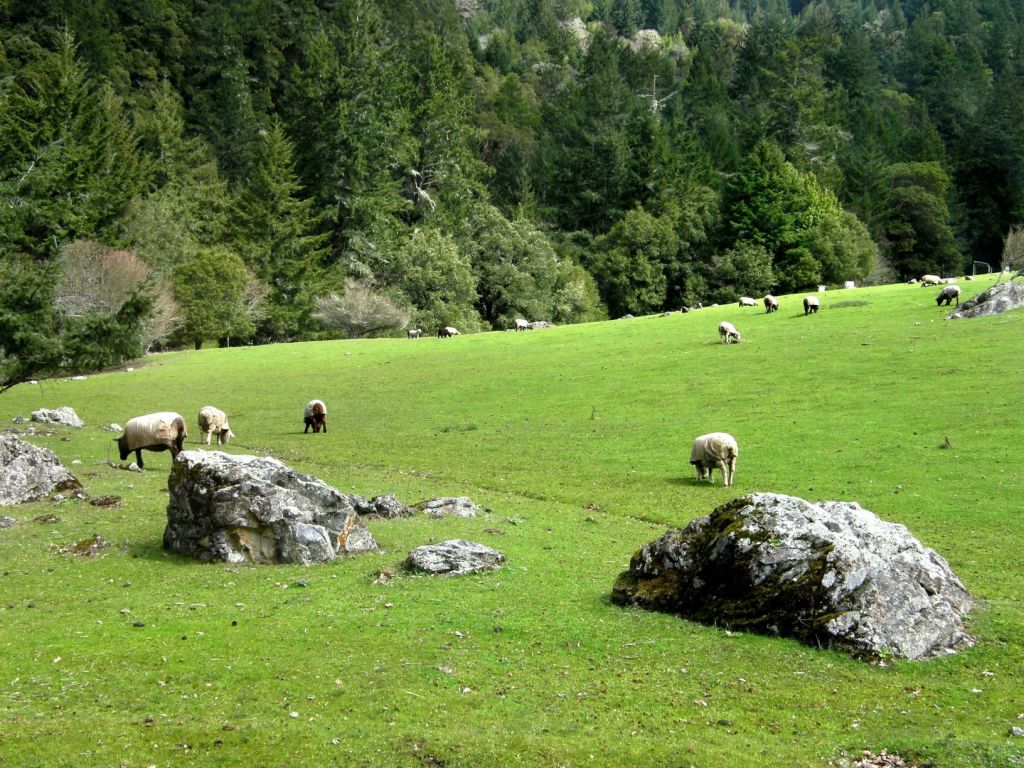
aces sheep

Janet in the GlimakraAce is a prolific spinner and is finally fulfilling his dream to weave with his handspun having just bought a pre-loved Glimakra counter-balance loom which we put together with Janet at the helm.

Ace and  Janet playfully tease and compete with each other at local fiber fair speed spinning contests. I won’t tell you who wins.

There’s Janet seen through a curtain of heddles on the floor tying up “stuff” (you can tell that I know next to nothing about these kinds of looms!) to get Ace’s loom up and running.

Looking at these things I am  amazed at how people sigh and roll their eyes at the masses of string heddles on my backstrap loom when floor loom weavers have to contend with all those heddles and shafts and treadles!

Nine weavers got together at Ace’s place. Two wooden pillars in the living room gave us the perfect places for attaching the looms. We had that beautiful view to enjoy while weaving and during breaks.

backtrap weaving from posts at aces placeIt was fun to see the  bevy of bands accumulating around the posts as the pick-up weaving skills developed and patterns started to take shape.

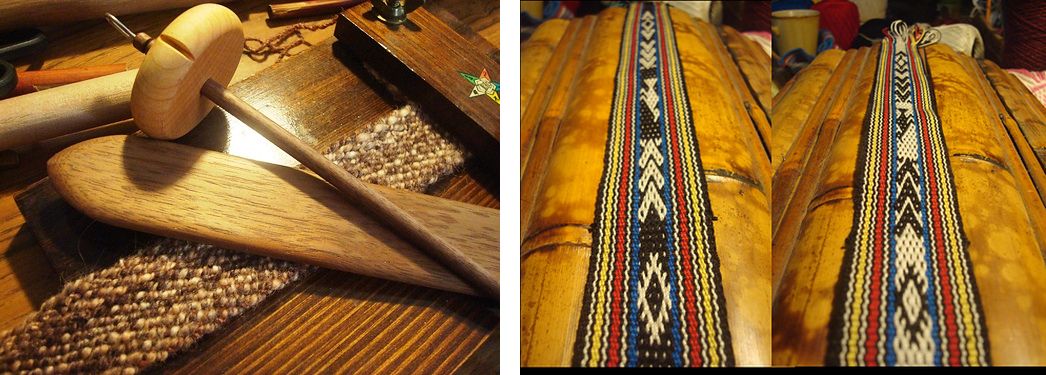
pebble weave bands backstrap looms

Betsy and Janet's pebble weave bands alongside some other pick-up work that we did during the week.
Betsy and Janet’s pebble weave bands alongside some other pick-up patterns that we had played with during the week.

As our bands filled with motifs, the mist would eerily rise and fall over the trees and hills. The sheep would run and scatter at a sudden roll of thunder and the wild turkeys would come out to strut their stuff.

wild turkeysThe previous weekend had been spent with another group in Janet’s mill.
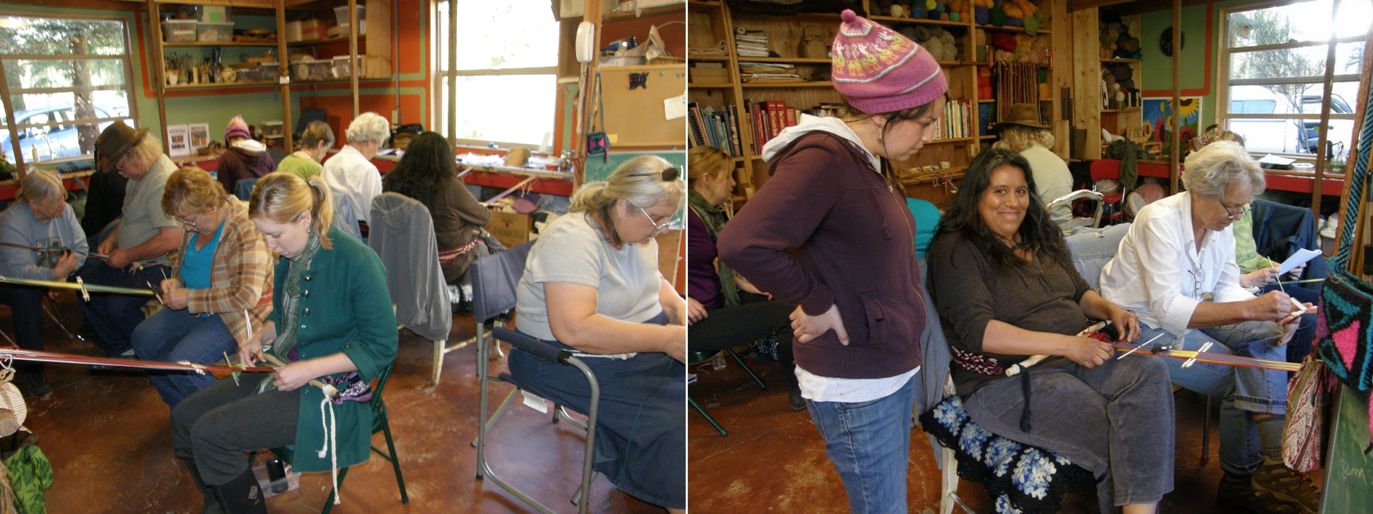
backstrap basics at janetsOn the right you can see Priscilla and Rose whose families are from Ecuador and Peru. Both were excited about experiencing something which has its roots in their South American heritage. Some of these weavers also joined us at Ace’s for pebble weave the following weekend.

That left a week between to have fun in Janet’s mill.
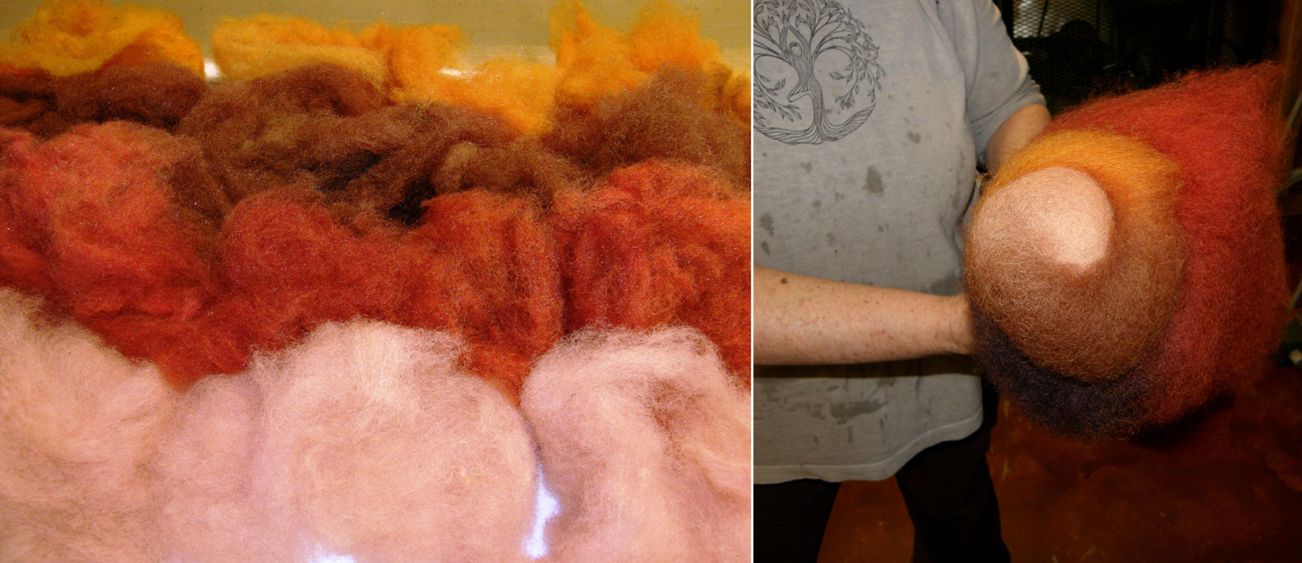
janets processingJanet showed me what she is currently processing in her mill. While the machinery does its stuff, Janet and Betsy can spin and weave. Betsy learned to spin and weave with Janet and you can see the band she is weaving on her backstrap loom using her handspun. This band will participate in our Year of the Snake Weave-Along.

janet and betsy weaving and spinningJanet is just as much at home spinning fine and smooth yarn for backstrap bands, a different weight and quality for blankets and then something completely different yet again for rugs.

janets yarn x 3 aWhile working in the mill she can jump from a backstrap loom to her huge Glimakra floor loom, from her wheels to  drop spindles from wool to silk as the mood takes her. Pretty much every weaving project no matter what size or what loom, involves her own handspun.

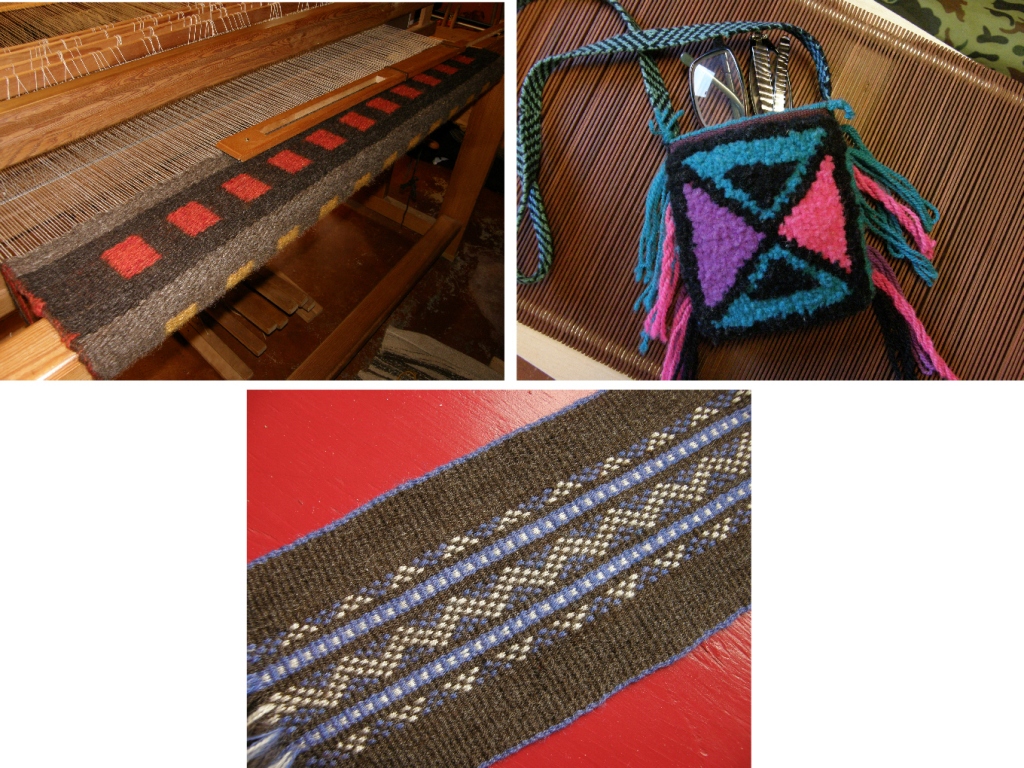
Janet at the Glimakra

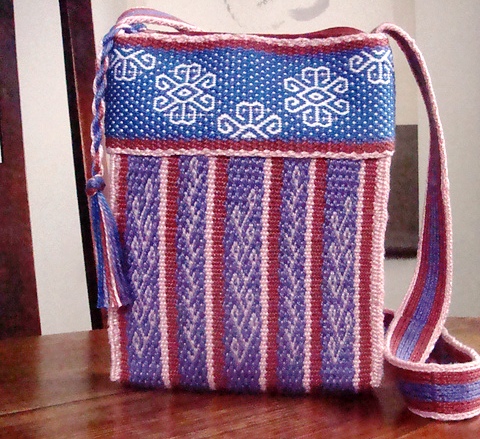
janets weavingBetsy also creates beautiful pieces of fabric with her handspun which she sews into lined shoulder bags. She weaves the straps on on backstrap loom.

betsys handspun weavingsI wove with Betsy and Janet doing an Andean pick-up pattern during the week and then Connie came over to weave intermesh with Janet.

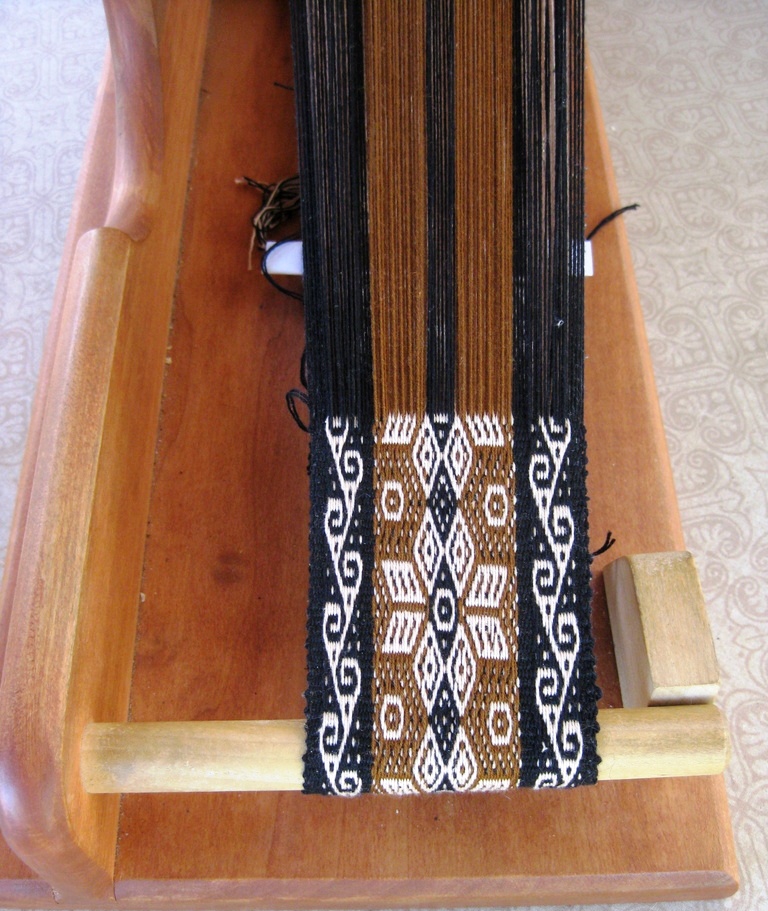
tanka choro and intermesh

???????????????????????????????

Connie weaving intermeshConnie weaves all kinds of bands and braids and brought her band box over to show her takadai work as well as her inkle loom-woven bands.

Connie's band box

Aunt Janet's Fiber MillThere’s always something good and fibery going on in Janet’s mill and, with its heated floors, it is definitely the place to hang out on chilly mornings and evenings. Fleeces, handspun yarns, rolags and batts spill from the shelves. Half-woven backstrap bands dangle from shelves loaded with books on all kinds of fiber arts and crafts.

Every second Saturday night, the looms are pushed aside and chairs are pulled up all around for Honky Tonk evening. I was lucky to be there for one of those when eleven local musicians, including Janet and her husband Larry, gathered for an evening of jamming….two upright bass, a flute and clarinet, mandolins and guitars, an Irish drum, and spoons!

I got to help rescue a large handspun and naturally dyed ikat project that Janet had started on her backstrap loom. It had been left to languish on the UFO (unfinished object) pile when Janet got a little frustrated with trying to open the sheds.

Janets wool ikat projectYou can see the gorgeous colors she obtained from madder, onion skins and onion skins overdyed with madder. She wrapped the yarn to create rectangular ikat patterns. The problem was that she had pulled the weaving in too much and that was making the sheds almost impossible to open as the warps were pushed together so tightly. I was itching to get into this project!

Standing to backstrap weave

standing to weave tacabamba peruOnce the width had been re-established and some broken warps repaired, I got out my wichuña, the llama bone tool which is used by weavers in Bolivia to strum the warps and separate them. This makes opening the shed-rod shed easier.

The wichuña is also used to push the weft into place. Janet will be able to use a deer antler that she has.

I found that standing to weave this piece made opening the sheds easier. I had seen weavers of wide warps in both wool and cotton standing to weave in Peru and thought that I would try it. I think that having the warp angled slightly upward as well as having one of the large butt-cradling backstraps that I saw the weavers using would have made things a little more comfortable. I am not saying the sheds now pop open magically. There is a technique to apply and you still have to work at getting the sheds cleared.

I was so happy to have had the opportunity to try this.

After all this wooliness, let’s go back to Texas with its vastly different climate. It isn’t one that begs for wool much the same as Santa Cruz, Bolivia where I live. I often look with envy at the lovely socks that people knit and thick wool scarves that they weave. But, who can complain when there is so much beautiful cotton to be played with!

???????????????????????????????

cascade ultra pima and eileen's backstrapHere we are in Eileen’s home shopping for yarn during a break in weaving. We had Sue Ellen of Old Oaks Ranch Fiber Arts Center with us as an added bonus and I asked her to bring her skeins of Cascade Ultra Pima.

This cotton yarn comes from Peru and we called Cascade Yarns to check if it is mercerized. It has such a lovely sheen that we thought that it must be even though the label does not indicate so. It turns out that it is.

Eileen had used it to make her backstrap (pictured above) and it came out beautifully.

I am going back to Bolivia with three skeins to try out for myself.

Karen mary and susan backstrap weavingOf course, it wasn’t all shopping. Here we are weavingg.

??????????????????????It was nice to see some familiar faces in the group. Karen, at left, had woven with me in Pennsylvania and just happened to have a business trip to San Antonio planned which happily coincided with this gathering. Susan, in the green top, had woven with me last year  here. Penny was also a returning.. Mary, pictured next to Susan, was new to this group and backstrap weaving and has been brought up to speed by Eileen.

I was lucky to be here during Austin’s famous SXSW Music and Film Festival. I was astounded afterwards to look online and see all the big names that had been performing at the festival. Eileen and Guy took me out on Saturday evening to stroll through the downtown parks and soak up some of the festival atmosphere.

After visiting Lydia’s home and magical garden, Eileen took me to Old Oaks Ranch. The yarn store was lovely but it was the sculpture garden that really caught my eye.

origami horse sculpture

An origami horse sculpture provides a spot of cool blue among the sandy ground and cactus.

sculpture at old oaks ranchI love this shade-dappled woman astride her giraffe drawing you to gaze up at the tree tops just as she is doing.

bear sculpture at old oaks ranchThe sculpture garden is a soothing place to stroll or sit and chat as these chaps are doing while on a break from weaving class or yarn shopping at Old Oaks Ranch.

It’s almost time to leave Janet’s and head back to the cities. Next stop will be the state capital, Sacramento, where I will get to weave with long-time online weaving buddy Franco. I will get to meet Laura, another Ravelry group member, there too.

Let’s look at some Ravelry group projects before I leave you….

hetty and jenniferThat’s Hetty’s backstrap on the left decorated with pebble weave motifs from my Andean Pebble Weave book. Hetty wove with me when I visited the Netherlands last year and it is wonderful to see that she now has her own woven backstrap and is continuing to weave using a backstrap loom. On the right is Jennifer’s band on which she is weaving a pattern of Tinkipaya, Bolivia. This one is charted in my second book, More Adventures with Warp-faced Pick-up Patterns.

cindyq and juliaCindyQ wove a stunning band also using pebble weave patterns charted in my first book while Julia is clearly having a wonderful time adapting traditional Japanese textile patterns to the pebble weave structure. This piece was woven on a floor loom. The instructions for weaving pebble weave on a four-shaft loom are included in the first book. (Edit: Julia has since told me that this piece was, in fact, woven on a backstrap loom) My second book guides and encourages weavers to draw their own pebble weave patterns and Julia has certainly taken up the challenge! She has even include some weft twining. (See the tutorial for this here)

So, it’s back to the mill for one last day with Janet and Betsy. We will weave tubular bands this afternoon. I can see Janet making pretty edgings for her handspun handwoven pieces with those.

janet and betsy on the last dayThat’s Janet on the left weaving a ñawi awapa while Betsy on the right tries to squeeze as much as she can out of one of her pebble weave bands.

I was telling Janet about how weavers in Peru use a tanka, or forked stick, when they weave the ñawi awapa so, we decided to go out stick hunting in the late afternoon sun on this most gorgeous spring day.

stick huntingWho knew how difficult it can be to find the perfect forked stick?! I wanted a large, strong one to use in my warp  for weaving bands like this weaver from Peru…

???????????????????????????????

???????????????????????????????Janet was the best spotter.

The one below, that Mikey has his eye on, turned out to the best one for me. What a nice weaving souvenir to take home from my visit up here. 🙂

forked stick for backstrap weavingHopefully I will squeeze in more posts before heading home. See you then!


Backstrap Weaving – Coincidences and Connections

It’s funny how some dangling threads in my weaving life can be unexpectedly connected by a wonderful coincidence.

I had just finished weaving  a structure that I call “two-heddle intermesh” with a group of backstrap weaving friends in California. If you have been following my blog for some time, you may even recognize some familiar faces from this group who weave with me every year. Certainly you will remember some of the names from projects I have shown here over the years.

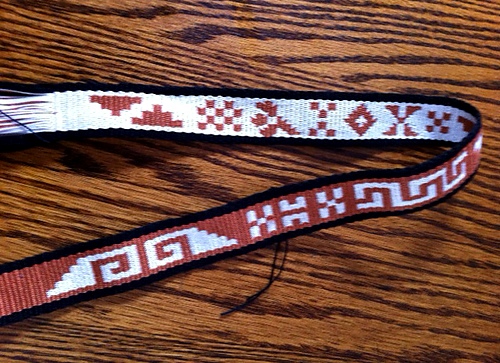
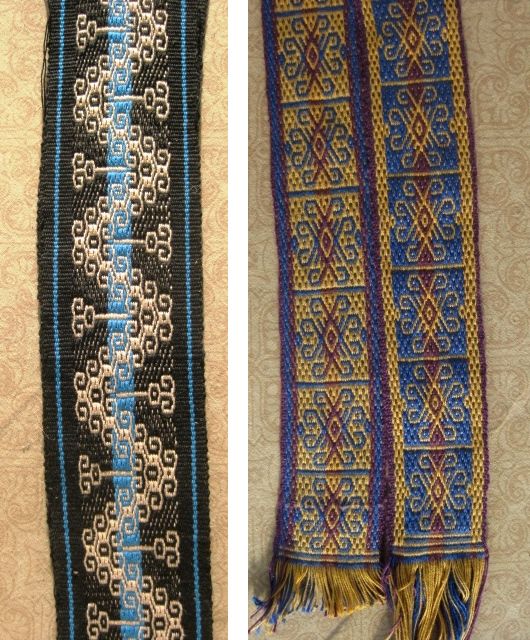
??????????????????????I have included this complementary-warp structure in my second book and chose to use designs that comprise only horizontal and vertical lines as a simple way to introduce the patterning technique. While looking through Joanne Hall’s book on Mexican Tapestry Weaving I saw that Mexican tablero and greca patterns were perfectly suited for this as were many of the motifs used by Bhutanese weavers on their tablet woven belts.

Joanne Hall writes that the tablero patterns represent  indigenous designs as well as those introduced by the Spanish. Many of the greca patterns appear in the structures and tombs at Mitla, Oaxaca and are used by tapestry weavers of that region.

yonat and ingridAbove left, you can see Yonat weaving one of the greca patterns while Ingrid, on the right, completes a second Bhutanese influenced motif. The patterns with their simple heavy lines are bold and beautiful in this structure. As we were using a complementary-warp structure, the bands are double faced with striking red designs on a light background on the other side.

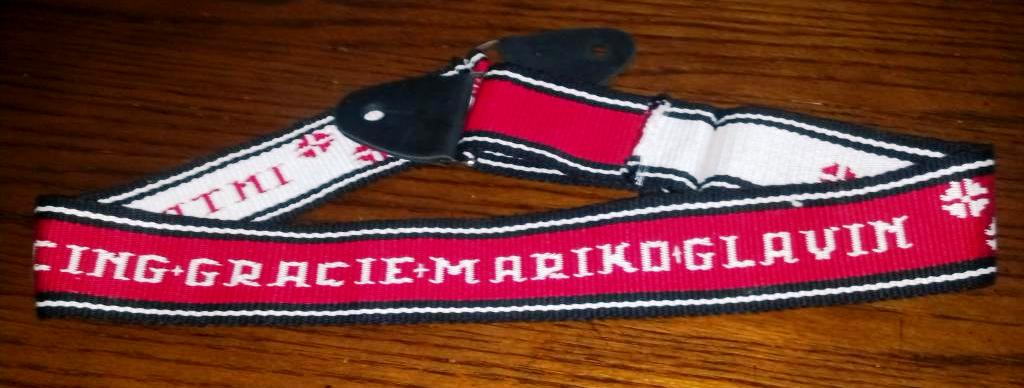
Annie's intermesh bandAnnie seemed to sense, knowing my love of red, black and white, that at least some of these colors would come into play, and dressed to match! She is weaving one of the tablero influenced patterns and made a beautiful band by repeating the one motif along the entire length rather than creating a sampler of a  variety of patterns. Maybe we will see something like this appear on one of the famed and fabulous woven guitar straps which Annie creates on her inkle looms. Yonat, too, is a fond of making bands on inkle looms and I expect to see her intermesh creations soon.

annies guitar strapAnnie has been so busy lately setting up her new sub-brand for hand woven guitar straps, I was lucky that she still had some energy left to have me stay at her place and weave!

In the evenings, she would sit at her inkle loom and turn out yet another original piece. I saw her start a new one using hemp. It was lovely to touch.

Even if you don’t own a guitar, check out Annie’s weaverguitarstraps.com for lots of colorful inspiration for your next band project.

And if you would rather weave your own band, Annie makes the hardware that will enable you to turn your woven creation into a guitar strap.

Jennifer from Oregon, had woven with me last spring when I visited her state and she showed on Ravelry, a couple of weeks ago, what she had made with an intermesh sampler.

jennifer 's intermesh band

You can see her finished greca pattern and other shapes she played with while learning about the characteristics of this structure. It is what I call a “partly loom-controlled structure”, that is, the weaver does not need to do pick-up for every weft pass. The loom does part of the work needed to create the motifs. This, along with some other little tips and tricks that I talk about in my book which help reduce the amount of time spent doing pick-up, allows the weaver to create patterns relatively quickly.

bobbie guitar strap intermeshYou may remember Bobbie’s guitar strap with names and a Mexican tablero motif made using the intermesh structure.

Now, what about that coincidence I mentioned? I am getting there. I have a couple of other things to tell.

??????????????????????Anne, who also wove with me  in Santa Cruz invited me to come and stay with her and her husband in their hilltop home near Saratoga, Califormia.

I now have a much better idea of the layout of the land with the spectacular views from Anne’s house and can understand why Santa Cruz people talk about distances from one place to another by mentioning the number of hills one must go over to get there.

Anne took me to one of the meetings of her weaving group where I got to tell people about weaving on simple looms in South America. I met the Bolivian owners from La Paz of her local Mexican restaurant who are planning to move back to Santa Cruz, Bolivia where I live and are excited about perhaps doing some weaving with me. That was one fun coincidence.

I enjoyed touring Anne’s cabin studio in the garden. This is one of many projects that caught my eye…

anne's inkle band bagThis is made up of two bands, woven on the inkle loom with patterns in supplementary warps, sewn together. You can’t tell that there are two bands, can you?! …the join is perfect. Another narrow band forms the sides and strap….so pretty.

The following day Anne took me to meet an eighth generation Zapotec weaver, Jaime and his  equally talented and skilled partner, Joey. Jaime’s father Zenon Hipolito, who taught him to weave, was not present but we got to see some of his work in progress on his hand-built looms. There was evidence of his craftsmanship to be seen everywhere…works created with his own hands but also pieces that have resulted from his having patiently and expertly passed his knowledge and skills to the next generation.

joey with zenon's latest piece

The looms themselves are absolutely beautiful…three in the living room on which Joey and Jaime work to fill custom orders, and another downstairs for Zenon. Zenon even made the bamboo reeds, combs and shuttles as well as the spinning wheel.

bamboo hand made reed

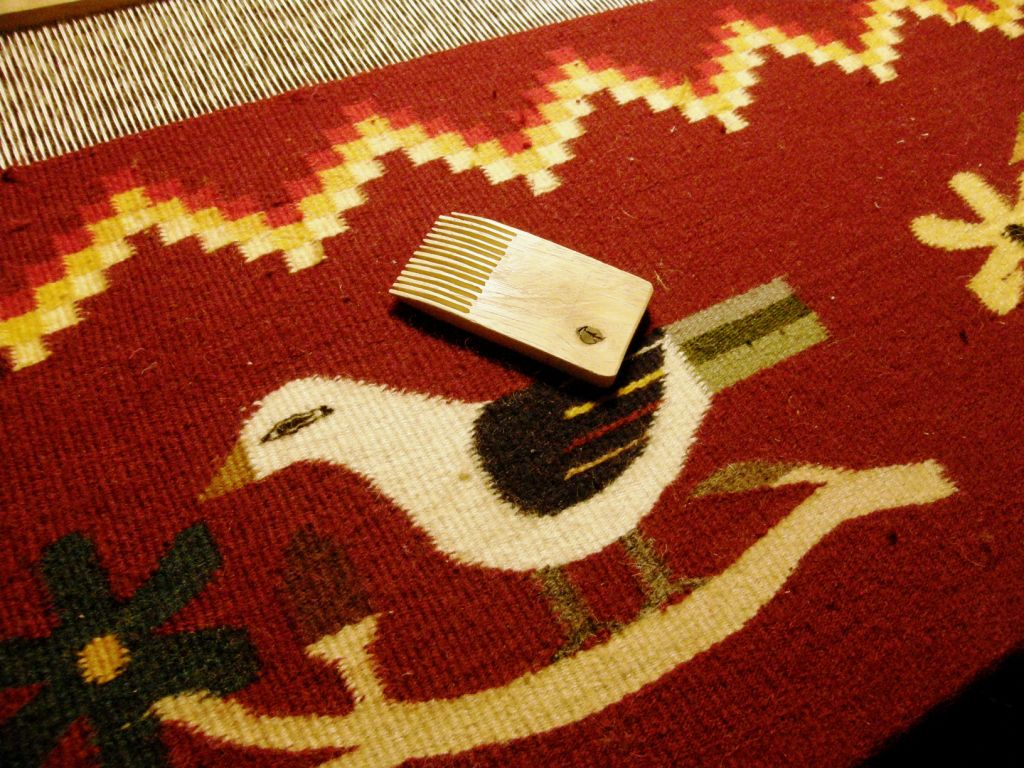
tapestry comb beater

spinnig wheel made by zenon

??????????????????????

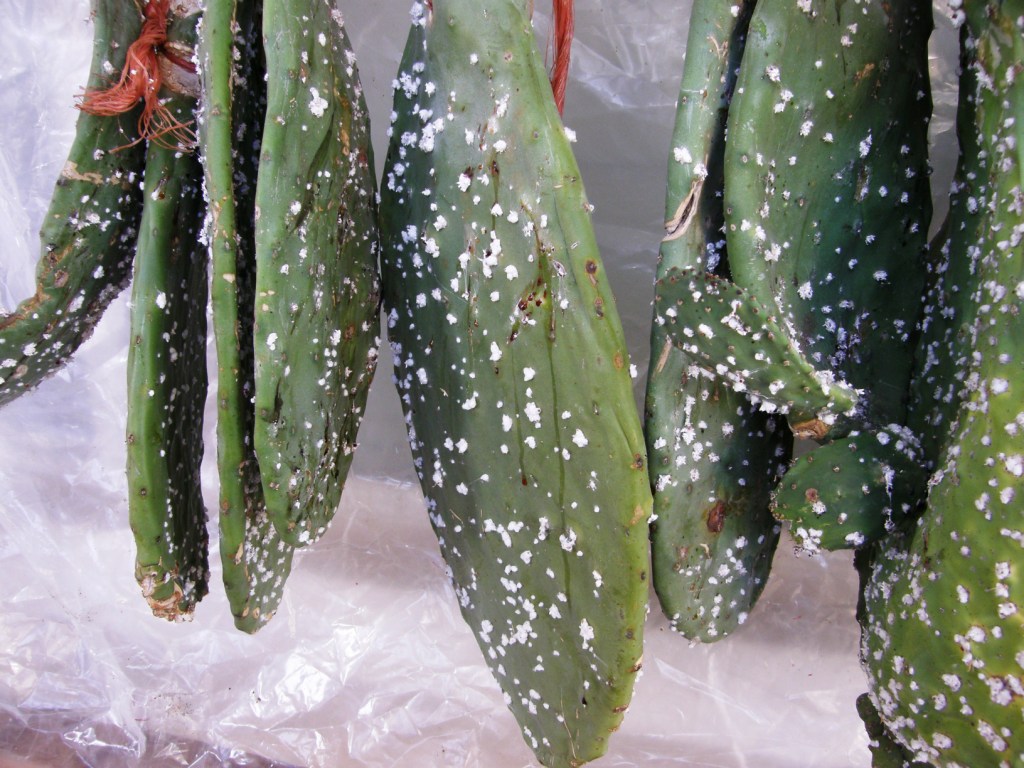
cochineal bugsJoey seems to be the one who finds most time to spin and many of his pieces include some of his handspun yarn. He experiments with different fibers.

A lot of the yarn they use has been dyed by them with natural substances. They even raise their own cochineal bugs on the front porch.

They experiment with different kinds of warp, some are more successful than others. Joey described his struggles to finish a piece where he had used an unsuitable yarn for warp. It was a custom order and once he had cut his first full attempt off the loom he had to start all over. Of course, to Anne and myself, the piece looked faultless but, it wasn’t up to Joey’s standards of perfection.

Both Joey and Jaime’s love for weaving and the motifs and fibers was apparent in the way they  touched and talked about the rugs as they lay them out one by one on the floor for us to see. They have recently returned from a trip to Oaxaca (Joey’s first) where they had been invited to take part in an exhibit which included several other master tapestry weavers from the US as well as weavers from the Oaxaca valley, the home of the Zapotec people. Jaime spoke about the thrill of getting to visit the Mitla ruins which hold in their stonework many of the motifs which he was taught to weave by his father. Joey mentioned walking around the villages and recognizing the familiar sound of the beater hitting the edge of the fabric emanating from almost every house they passed.

While they talked about the fatigue that comes from weaving standing up all day, they also mentioned the difficulty to resist weaving at least a little almost every single day in their home/studio where they stand surrounded by rows and rows of colorful skeins and their own woven pieces covering the walls and floors.

Here are the pieces that were in progress on their looms during our visit…

joey and jaimes workAnd here is just a handful of the pieces that they lay out for us to see…

zapotec jaguar weaving

zapotec weaving by jaime and joey

zapotec weavings by jaime joey and zenon

bird tapestry zapotec Zenon Hipolito

Older pieces that have been in the family for a few generations, and show evidence of the passage of time, adorn the walls and floors of their home…

older zapotec weavings

When I was admiring the rich red and black piece, Joey mentioned his love of  red, grey, black and white combinations and so I had to share my own love for that and showed him online images of my wall hanging pieces in which I have used some of those colors. While they are aware of the use of the backstrap loom by many weavers in the Oaxaca Valley, they have not had any personal experience with one. I regretted not having taken one of mine to show and have them use. I then showed Jaime what we had woven in the workshop just two days earlier and he was happy to point out the designs from his culture which are woven by Zapotec weavers in their rugs.

You will recognize below a version of the greca pattern that we were using in my class in very similar colors! I found many wonderful motifs in the rugs that we were shown that will work beautifully in the intermesh technique. I only wish I had met Jaime and Joey before I finished my book so I could have included pictures of their work. The unexpected meeting with them was a wonderful way to tie everything together for me. From the pages of Joanne’s book to my own book to a workshop and, from there, on to an eighth generation weaver who continues to incorporate these traditional patterns in his work….I am grateful for all I learned from the book by Joanne Hall and her kind permission to use some of the designs she had charted in my own book and give many thanks to Anne,  Joey and Jaime who made this get-together possible.

greca design on a pillow cover

From the home of the Zapotec weavers, Anne and I headed to Gilmore Looms. I was keen to see some of the looms that weavers in the Backstrap Weaving Group on Ravelry have been using to create warp-faced bands so successfully. Not everyone, after all, is going to love being strapped to their warp! It was fun meeting the lovely people at Gilmore who told us about having busier months so far this year than they have had for a long time. Lots of looms are finding homes…that’s good news for the weaving world.

Here are the Gilmore Wave looms in two sizes….

Gilmore wave loomsIt was Marsha Knox who first brought these looms to my attention as she used one to make a lot of wonderful projects using the patterning techniques that I teach in my tutorials here.

Here is a beautiful lined bag that Marsha made by joining several bands together.

Marsha Knox bag

I am not sure which of the two looms she used. I like the larger as I prefer the larger amount of space it has between the front beam and the heddles. This would allow the placement of extra string heddles that are used for pebble weave and intermesh. The more space you have for those, the easier they are to use.

Mullarkey loom at Janet'sNow, that I am with my friend Janet, I have seen the loom that she used in her tablet weaving class with John Mullarkey and I think that this is a little beauty too.

John has these made to his specifications. They are basically a frame with adjustable tension on which to support a long band for warp-faced weaving. John, of course, has designed it specifically for tablet-woven bands. I think this little loom, perhaps clamped to a table, would work nicely for the kinds of narrow projects that I often do on my backstrap loom. The loom does not have any shedding devices of its own so, you would be using a shed rod and set of string heddles just as you would on a backstrap loom. However,I haven’t used it myself for this purpose yet and am just guessing at this stage that it would work well used in this way.

Of course, I much prefer my backstrap loom as, among its many advanatges, it is good to be able to freely and rapidly adjust tension at will with simple body movements. However, I do like to look for possible alternatives for those who simply aren’t able to use a backstrap loom.

The loom is pictured above next to what I call Janet’s “grab-and-go’ basket…a bunch of prepared warps for backstrap weaving that she can pick up and  take along with her to weave any time.

synergo arts ergonomic benchNow, let me tell you some great news about the ergonomic weaving bench that Synergo Arts has been introducing to backstrap weavers in Guatemala. I have posted about these before.

My friend Anne, with whom I stayed in Saratoga, has been involved in this project. Many backstrap weavers in the Ravelry group expressed interest in having one of these benches themselves but they were not available in the US.

Now, Anne tells me that Synergo Arts has decided to make all the plans and instructions for these benches available to the public. So, if you are handy with wood and tools or know someone who is, there is nothing stopping you from making one of these benches yourself.

The Synergo Arts page that I linked above will only be available until the end of summer 2013. After that, you will still be able to access the files here. These pages contain the plans for making the bench, instructions for using it and video of the bench in use. I never got to see one in use when I was in Guatemala or use one myself. It certainly looks very good. I particularly like the opportunity it gives for the weaver to brace her feet.

If you build one, please let me know and send pictures!

To finish, let’s see what the Ravelry guys have been up to….

julia pebble weave bag

This is Julia’s Lavender Field pebble weave bag. Her weaving group challenged themselves to weave something inspired by a gorgeous painting of fields of lavender. I am not sure if I would have permission to show the painting itself, unfortunately. Julia used both her backstrap and Seidel band looms to weave the various parts of the bag project. It’s stunning!!

carol

Carol took a liking to the Tinkipaya star design from the central highlands of Bolivia, which is charted in my second book, and added an Andean motif to the sides to create this piece.

Jennifer, who is a backstrapper all the way, also chose the star motif for her latest project…

jennifer's tinkipaya starDawn is a relative new-comer to our group and wove a band with horizontal bars while getting acquainted with the loom and fine tuning her skills…look at those beautiful edges!

dawn

If you have any interest at all in finger-loop braiding you most likely know of Ingrid Crickmore and her loopbraider blog. Ingrid is always part of my weaving groups when I visit California. Ingrid brought some of her braids to show, some of which were particularly snakey, and she has written a great blog post about them.

I thought that I would show them here as we are doing snakey things in our Ravelry Year of the Snake weave-along.

ingrid's snake braid 1

ingrid's snake barid 2

You will be forgiven for taking a detour from backstrap weaving and wandering off and getting lost in Ingrid’s site! Those finger-looped braids make nice finishes for backstrap woven projects and are so much fun to make.

I made some progress on my own Year of the Snake project. This pattern comes from one of several bands that was sent to me by weavers in Cochabamba (see my last post for stories about these ladies). I was immediately struck by its snakiness and had to try it.

My on-the-road projects tend to have a hard life. They get hooked up and woven all over the place, anchored on toes, under heavy luggage, started and stopped and started again. This one is doing okay so far and is not showing signs of the ravages of the road yet!  There it is weaving its way through the grass alongside the Bolivian band with the original pattern.

snake patterns Bolivan band backstrap weaving

I just got an email from Dorothy who just went to a lecture entitled Weavers’ Stories from Island Southeast Asia. She sent me a link to a webpage about the exhibit that has video interviews with various weavers and batik arists who talk about their creative process in times of changing social and economic situations. I have not even had time to see the videos myself so we can all watch them together here.

That’s all for this post. See you next time with tales from Texas and the Humboldt redwoods.

Backstrap Weaving – Encuentro de Tejedores de las Americas – Part Three…and more….

Before I get into Part 3 of my report on the Encuentro de Tejedores de las Americas (see Part 1 and Part 2 here and here), let me show you how I have been getting on with my latest experiment with supplementary-weft patterns.

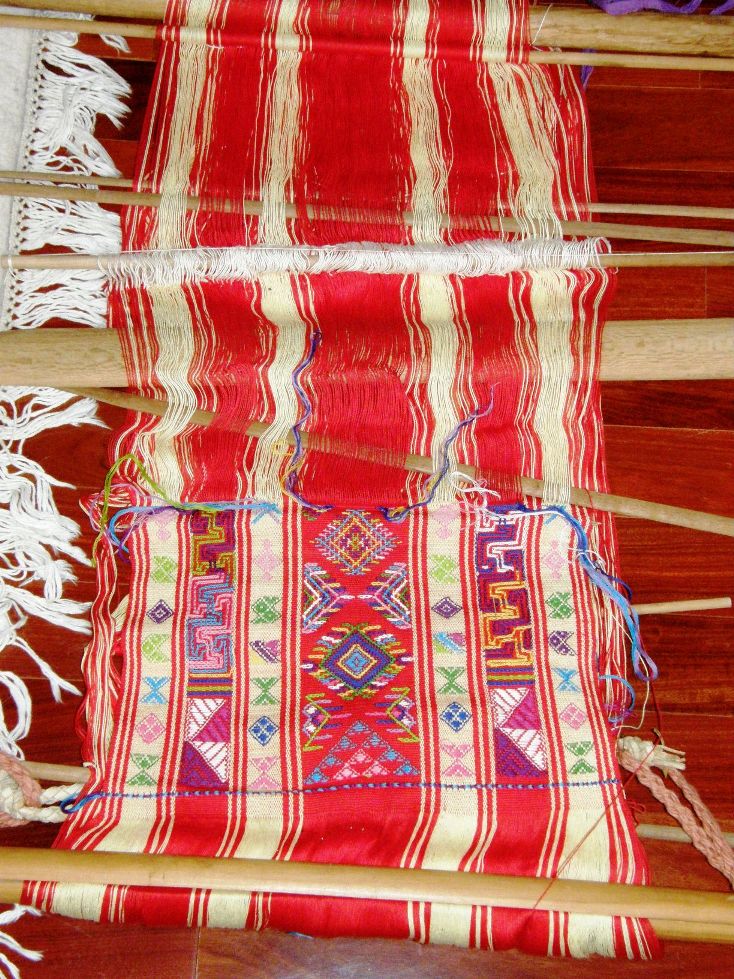
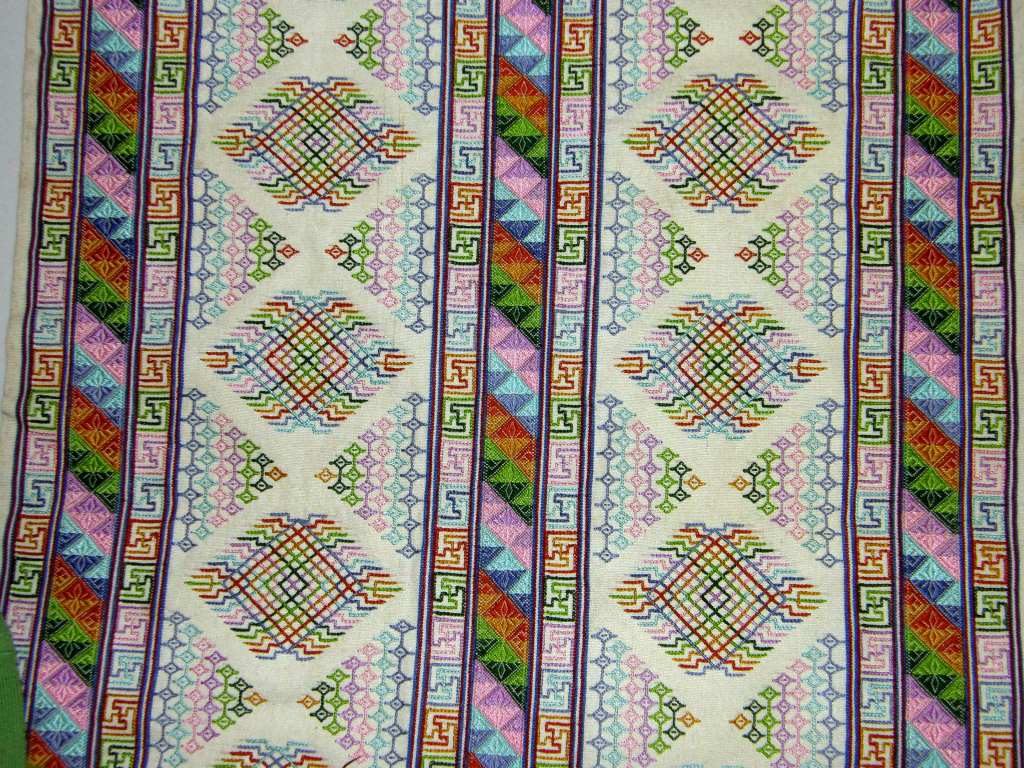
Bhutanese supplementary weft pattern samplerYou may remember from last week’s post that I was inspired by seeing textiles from Bhutan with their  gorgeous motifs created by using supplementary wefts.

I was happy to see that I could decorate my own woven cloth with similar patterns using techniques that I had learned in Guatemala.

At left is the sampler I made to practice the techniques and experiment with the spacing of the pattern warps. I had some fine cotton from Guatemala that my friend Betty had bought about 30 years ago. How nice that this cotton could finally find its purpose.

The black cotton disintegrated as soon as I pulled it out of the closet. I guess that there is something in the black dye that causes the yarn to rot quickly. The other colors…red, green and purple….were just fine and, fortunately, there was plenty of white to dye black. I had my heart set on a black scarf.

There were a lot of ends to wind to make 7 inches…672!!

OThe cotton is kind of sticky and I can see why Guatemalan weavers very often choose to size their yarn with a kind of corn starch wash.

I am using it as is and need to be very gentle. I broke one warp before even getting started and my heart sank but it turns out that it was due to my clumsy handling of the pick-up stick…phew! No more breaks so far but there is still a looooong way to go.

Of course I made a wee sample before diving in to see how many ends I would need to make an inch. I also needed to test the ideal number of strands of tencel to use for the weft patterns.

In the picture you can see my tiny warp with its string heddles and shed loop . The two sticks are the pattern sticks that I talked about in my last post. Of course, the yarn was already showing signs of stickiness even on this tiny project but I decided to go ahead undaunted 🙂

Sample done…width calculations made. Now, how long should a scarf be? Seems like a silly question, but I have never made a scarf before. Fortunately, I do own just ONE. After all those years spent skiing and then living in Patagonia you would think that I would be more scarf-wise.

OThere is the warp and I am ready to make the 336 string heddles. I like making heddles…time to put on a cd and sing! and I didn’t cross or double up any warps…phew!

O

I have lots of pictures that I have taken of Bhutanese textiles in friends’ collections for inspiration and David K Barker’s books are wonderful too. (See my RESOURCES page for information on how to download his books for free.) However, I decided to play it safe to start with and weave one of the patterns that I had already tested on my sampler.

So, I sat down to weave and that is when it hit me…wow, this yarn is really FINE….and….it’s black! All the clues that I usually use to make the pick-up easier for supplementary-weft patterning are dependent on actually being able to see the threads!!

Boy, had I made things hard for myself but, believe it or not, I got used to it and came up with other ways to eyeball the placement of the patterns without having to become a slave to pattern charts and endless counting. It became a very cool learning experience and, as with all things new and experimental, much un-weaving was done and all with my heart in my mouth as I don’t think that this yarn will take much “backing and forthing”!

Bhutan pattern backstrap loom scarf

Here is the first pattern under way. I placed several thin pieces of cardboard in alternate sheds in the warp beyond the cross sticks. This gave me a place to make quick adjustments to loose warps within arm’s reach and with the warp under tension rather than having to get out of my backstrap and crawl up to the end of the loom.

cat on backstrap loom BhutanSometimes you don’t get to choose when to weave. I would come back in from a break to find Her Highness reclining in what was, apparently, the most comfortable spot in the house. Would you dare disturb someone with a look like that on their face? You can see the next set of patterns in progress here.

second Bhutanese design finishedOAnd this is where it stands for now. I am just getting past the first warp break and have my fingers crossed that there won’t be more. I watched a gentleman from Chahuaytire weaving on his backstrap loom when I was in Cusco. A warp broke and I loved the calm and cool way he went about fixing it like he had done it hundreds of times before (well, of course, he probably had). He didn’t need to have anyone tensioning the warp while he leaned forward to fix the break. That is the part I find hardest.

Be prepared to see a lot more of this project in the weeks to come. Unless, of course, those warps start a- snapping, and then you will most likely see it finished really soon as a zippered pouch or journal cover!

#########################################

ENCUENTRO DE TEJEDORES DE LAS AMERICAS  – PART THREE – SPINNERS AND WEAVERS IN ACTION

The Encuentro…it was over two months ago now and I am finding it hard to sum up here but I will try!

It was about yarn being created with the simplest tools…

Handspun cotton by the Matsigenka weavers of the Amazonian region of Bajo Urubamba, Peru
Fine and incredibly even handspun cotton by the Matsigenka weavers of the Amazonian region of Bajo Urubamba, Peru
The "malacate", spindle used in Mexico to spin silk with its horn whorl.
The spindle known as “malacate” used in Oaxaca, Mexico to spin silk. Its whorl is made of horn.
The traditional "sig sig" spindle of Salasaca, Ecuador made from pampas grass.
The traditional “sig sig” spindle of Salasaca, Ecuador made from pampas grass stems. A small piece of thin solid stem is inserted into the soft interior of the large stem section to suspend the wool yarn as it is spun.

OA spinner from Chiclayo, Peru showed me how she spins the natural brown cotton that is cultivated in the region. She told me that a heavy stone is usually placed on top of the cotton as she draws out the fiber to be spun. Not having one handy, she used the bottle of water that you see in the video. The spindle whorl is a piece of avocado seed.

It was about sticks…lots of sticks!

Sticks used by the weavers of Bajo Urubamba to create their warp-float patterns.
Twenty-four heddle sticks are used to weave the traditional pattern on the "faja sara" of San Ignacio de Loyola.
Multiple heddle sticks are used to weave the traditional pattern on the “faja sara” of San Ignacio de Loyola.

It was about threads being strung together in a stunning display of color and texture…

An ikat warp ready to be woven into the traditional shawl of Tacabamba, Peru
An ikat warp ready to be woven into the traditional shawl of Tacabamba, Peru. The ties on the sections of threads were the only means I could see to keep the threads aligned for the ikat patterns.
Threads are stretched on the typical leaning vertical loom of Tarabuco, Bolivia
Threads are stretched on the typical leaning vertical loom of Tarabuco, Bolivia. Multi-colored figures depicting ceremonies and scenes of daily life in the community will sit on a white mesh-like background. The colored threads are generally thicker than the white ones which gives the figures relief.
The backstrap loom with its cotton warp from Chiclayo, Peru.
The backstrap loom with its cotton warp from Chiclayo, Peru. A single-faced cloth decorated with warp-float patterns is created.
Bunches of string heddles control the colored layers of warps on the horizontal loom of Taquile Island, Peru
Small bunches of string heddles control the colored layers of warps on the horizontal loom of Taquile Island, Peru.
A floor loom holds the warp on which a weaver from Ayacucho, Peru will create a beautiful tapestry.
A floor loom holds the warp on which a weaver from Ayacucho, Peru is creating a beautiful tapestry.

And it was about the wonderful hands and spirits of the talented craftspeople and artists who use sticks and fiber to create beautiful cloth….such an amazing variety of people from across the Americas!

Weaver Natividad Machaca Quispe of Taquile Island, Peru creates a sash with bands of warp-faced double weave motifs and complementary-warp patterns.
Weaver, Natividad, of Taquile Island, Peru creates a sash with bands of warp-faced double weave motifs and complementary-warp patterns. This piece had six bands of pick-up patterns.
A weaver of panones of Tacabamba, Peru, puts the finshing touch on hher woven ikat shawl by knotting an intricate pattern into the the fringe.
A weaver of Tacabamba, Peru, puts the finshing touch on her woven ikat shawl by knotting an intricate pattern into the fringe.

knotwork on Tacabamba shawlHere is a short video of  Nila at work knotting the fringe of her woven ikat pañon…

And what about that belt loom with its twenty-four sets of string heddles? Araceli shows us how it is done…

A Matsigenka weaver from tropical lowland Peru creates warp-float patterns in cotton on her backstrap loom.
A woven tubular band in progress...putting the finishing touch on a woven piece from Pitumarca, Peru.
A woven tubular band in progress…putting the finishing touch on a woven piece from Pitumarca, Peru. The tubular band had been set up with three sets of string heddles and a shed loop and, therefore, did not require any pick-up.

And cloth comes off the loom and comes to life when draped around shoulders…

cloth comes to life

wearing the Tacabamba shawl

and wrapped around waists and heads…

taquile island peru and santiago atitlan guatemala

Diana from Guatemala, pictured above, wore this spectacular fine, ikat-patterned corte, or skirt…
O

There was time to watch and chat and share….

watching, chatting, sharing at ETAM 2012

Time to look and learn from Navajo weavers and spinners and an alpaca fiber weaver from Tanta, Peru…

looking and learning ETAM 2012

Time to sit or stand and ponder…

pondering ETAM 2012

Time to listen to weavers talk about their communities and textile traditions and meet new leaders in the field of textile research…

Bolivian Elvira Espejo shows the two most recent books she has written with British/ Bolivian Denise Arnold on weaving in the Andes. Representatives of the textile community on Taquile Island, Peru spoke about weaving and knitting traditions and the 547 families that are part of their textile co-operative which had begun in 1971 with only 7 families. Taquile Island has become an enormously popular tourist spot over the years. One point which created a bit of fun was their comment that "Taquile fashion" was being worn and loved around the world despite the fact that it was not appreciated in their own country of Peru. "Taquile fashion" then became one of the catch phrases of the conference and made us all smile.
Bolivian Elvira Espejo shows the two most recent books she has written with British/ Bolivian Denise Arnold on weaving in the Andes. Representatives of the textile community on Taquile Island, Peru spoke about weaving and knitting traditions and the 547 families that are part of their textile co-operative which had begun in 1971 with only 7 families. Taquile Island has become an enormously popular tourist spot over the years. One point which created a bit of fun was their response to a question about how they felt when a hat that was created to be worn by a high-ranking official was bought and worn by a tourist completely out of context. They said laughingly that they were proud that “Taquile fashion” was being worn and loved around the world despite the fact that it was not appreciated in their own country of Peru. “Taquile fashion” then became one of the catch phrases of the conference and made us all smile.

And time to just stand in complete awe…time and time again!

A weaving of the Jalq'a people of Potolo, Bolivia.
A weaving of the Jalq’a people of Potolo, Bolivia depicting Ukhu Pacha, the underworld, with its khuru figures.

Organizers ETAM 2012

Well, I hope that this gives you just a taste of what the week of ETAM was like. Thank you Maria Elena del Solar, Paula Trevisan and Luis Masa for organizing this event. And thank you Mara Elena for pushing me to go when I was dithering over the cost of getting there. It was the best birthday gift to myself ever!

Thank you Centro de Textiles Tradicionales de Cusco for the fabulous exhibit of textiles from your nine member communities that you organized in the Convention Center to coincide with this event and for providing outstanding teachers for the workshops.

As for Elvira Espejo and Denise Arnold’s books about which I know you will be curious, I have to find out if they are available in English and from where…stay tuned.

OOf course, you do know that the CTTC is having its second Tinkuy this coming year, don’t you?! 🙂 Are you coming?

Backstrap Weaving – A Swag of Yarn, Techniques, Patterns and Color

Sometimes I wonder who gets more out of my weaving get-togethers and online groups…my friends or me! I had a great trip away in the US and am now back in the loom in Bolivia. No official Thanksgiving Day celebration here but plenty to be thankful for all the same.

There was just enough room in my backpack at the end of this US trip to bring back all the stuff I had stashed with one of my weaving friends after my trip earlier this year. Time has passed and now I can’t even remember what some of it is but all I know is that I already have projects in mind for each and every bit of it.

Not all of it appears here in the picture! There are several large skeins of some kind of wool in natural colors for an experiment in weft substitution inspired by this  Moroccan cloak which belongs to my friend Yonat….

And there are skeins of Navajo warp that Sara dyed for me (the green and terracotta stuff) which are destined for my next adventure with discontinuous warps. It will be something along the lines of the piece I recently made in Cusco from alpaca yarn hand spun in Pitumarca…

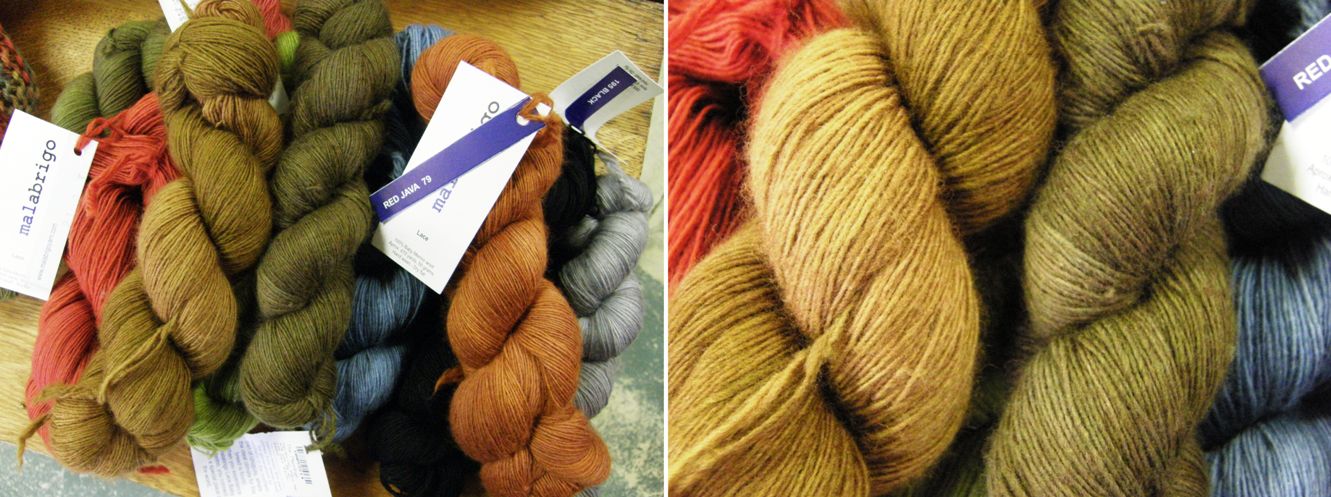
The yarn I am re-spinning in the stash picture is Malabrigo lace-weight single which I plan to ply and also use for a ticlla (discontinuous warp) piece. The balls in the middle are hemp that Jennifer gave me when we got together last spring. I think that will be used for a pouch with an intermesh design. The cones were given to me by Susan and I have to confess that I have completely forgotten what kind of yarn it is. I hope to use it in an ikat project and will need to identify it in order to use the correct dye!

Intermesh and ikat projects.

Here in Bolivia the yummy silk I brought back from the UK awaits me. So, there is plenty of  new yarn to play with.

So, while my backpack was just big enough to stuff with yarn and some new tools, there was also just enough room left in my head to squeeze in all the inspiration, ideas and new skills. And the best part….months now stretch ahead during which I can play with all of this!

Those who spent time weaving with me during my spring and fall trips will recognize this warp that I cart around…

It never seems to grow, does it? Most of the time it sits there just to show the various parts of the basic loom and I never actually pick it up and weave on it. I bring it home and unroll it waiting for it to tell me what it wants to be.

During my trip I had more fun  demonstrating on the Guatemalan looms that people brought to show me.

Two people in two different groups brought in  looms from Guatemala all set up and ready to go. As it happens both were from San Antonio Aguas Calientes and both had been warped in red.

The backstrap weavers in that town decorate cloth with supplemental wefts using both single and double-faced techniques.. I had the chance to study there in 2008 and it was great to be able to sit in front of those warps and tinker with the familiar patterns and sticks.

Not only did we have looms to play with. People showed me gorgeous Guatemalan huipiles too and we got to examine just a few of the many ways that supplemental wefts are used to decorate cloth in Guatemala.

Red again! Are the weaving gods trying to tell me something? 
I left Massachusetts with Guatemalan patterns swirling in my head and, if those colors weren’t bright enough, the next stop on my trip in Massachusetts (yes, of course, I made my first visit to WEBS while there!)  had me sleeping in a guest bedroom with this on the wall….

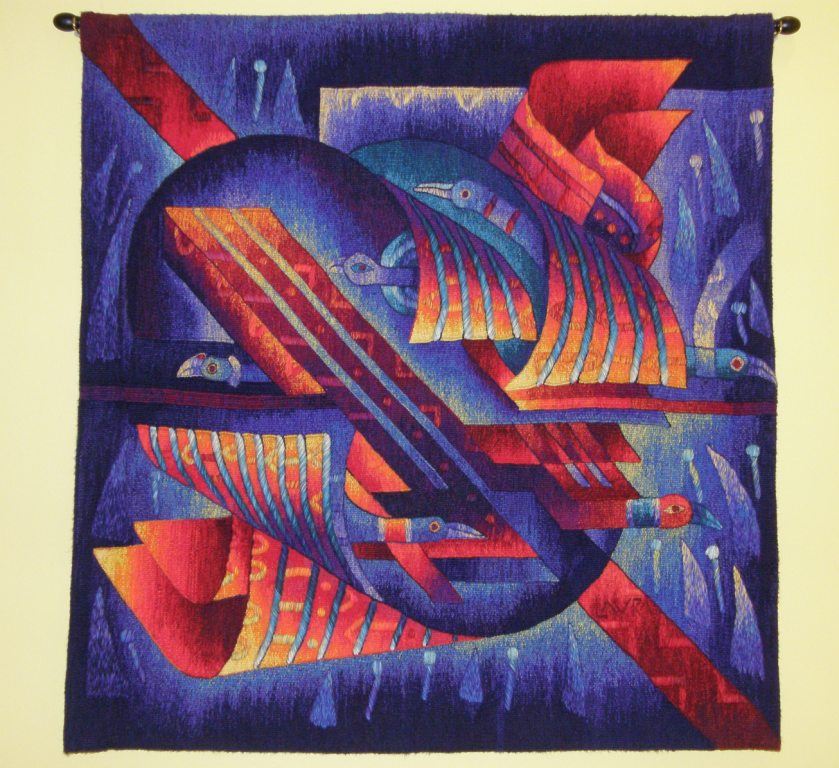
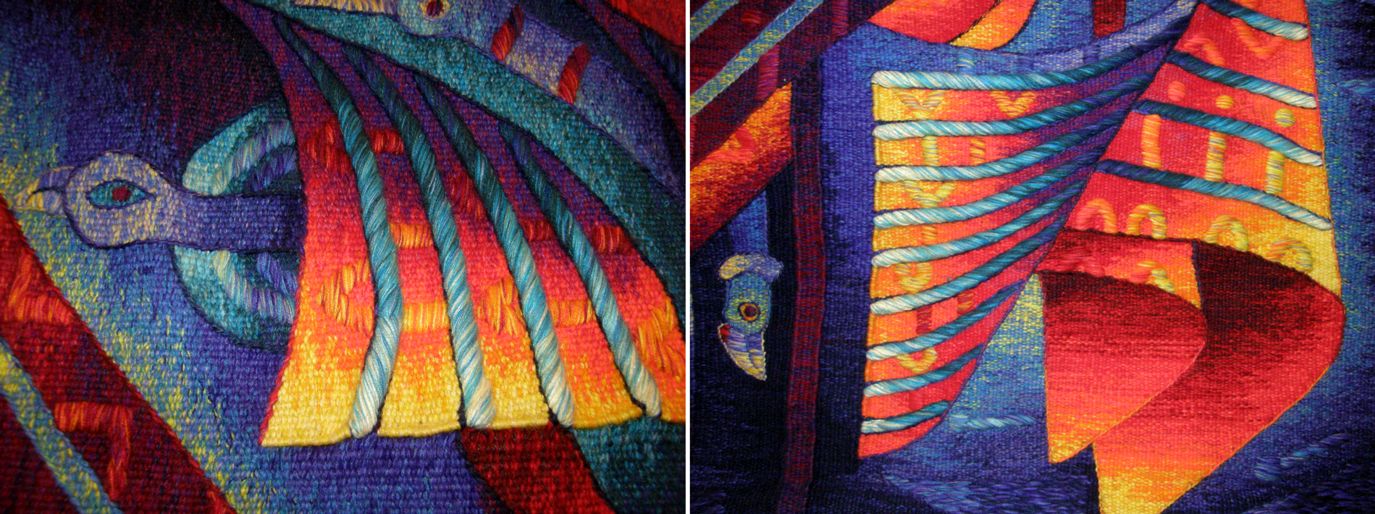
This piece by Peruvian master tapestry weaver  Maximo Laura, accompanied my dreams every night! The translation of its title is “Condors Wrapped in Sacred Cloaks”. I have admired Laura’s work in exhibits from afar…online, at the National Museum of the American Indian in DC and at Convergence 2010. This time I got to touch the piece and marvel at how textured it was. I hope these photos will give you a sense of  its three-dimensional quality. The raised blue and gold lines, curves and spots on the condors’ cloaks give a lovely rippling effect and a sense of movement when the piece is viewed at certain angles.

Yes, I would love to dare to put all these gorgeously rich colors together in one backstrap-woven piece one day!

The reason for the trip to Northampton was an invitation to weave with a group of seven ladies. It was a lively, fun and chatty group. Most of the ladies already knew each other well. We did, however, manage a few moments of total silence as everyone concentrated on the business of pick-up weaving. We were, of course, all very envious of Kyla and her ability to sit cross-legged on her chair for hours. Kyla was the only novice weaver in the group. She is beginning her studies of floor loom weaving with Elisabeth Hill, the genius of deflected double weave, seated next to her in the picture. There was so much amazing weaving and dyeing  talent in this group, I can’t even begin to tell you!!!

Colorful inspiration in one form or another was brought each day….

Ute brought along a piece still on the backstrap loom which was created by visiting  Bhutanese weaver, Leki Wangmo. After appearing at the Santa Fe Folk Art Festival, she was brought to Massachusetts to demonstrate the way she warps, sets up the backstrap loom and weaves and decorates cloth with supplementary wefts. Warp and weft yarn and material for the supplementary weft patterns had to be found locally and warping stakes, loom parts and loom frame constructed to her specifications so that she could demonstrate the process from scratch. The above piece (yes, yet another piece in red!) is the result of the demonstration and, while this piece is breathtaking enough, you really need to see what she produces using the extremely fine thread and materials from her home in Bhutan…

Ute left these pieces with me over several nights to ponder and photograph. Maximo Laura and Leki Wangmo competed for space in my dreams!

So, now that I have been back home a couple of days, I am using a combination of patterning techniques I learned in Guatemala, a new skill I picked up from a video of Leki Wangmo at work and the colors and motifs on the Bhutanese textiles to start to decorate that blank canvas of weaving  on my demo warp.

Now you see it, now you don’t! Yes, I have unwoven it all. The weaving above was my sample and now I will weave with a different color scheme, ( see below), and modified layout.

And as I write, I am getting ideas of how to use the fine silk I bought in the UK….and I think I bought a spool of red! But much practice is needed first. By the way, this white piece was giving me trouble with that pesky ridging. I know that a lot of you will know what I am talking about….that ugly corrugated look that often appears when using cotton for warp-faced textiles. I turned the loom around, wove an inch at the other end, turned the loom back around and started weaving again….ridging gone…yay!

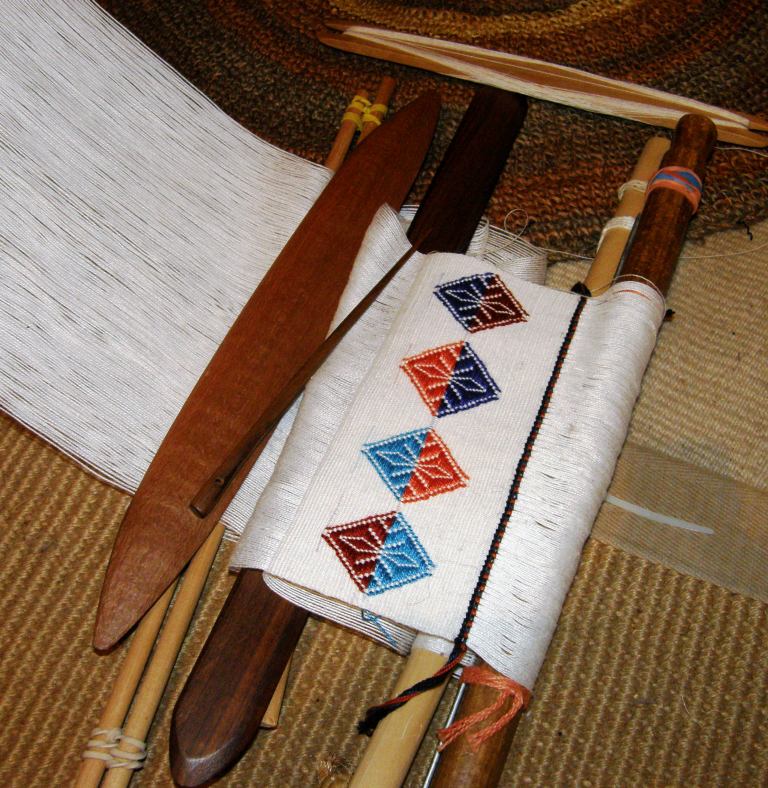
Something else that grabbed me and demanded to be woven while still on the road, was this band of pebble weave fish.

Rob in the Ravelry group had asked me if I knew of any fish motifs for pebble weave. I did, but only the most basic kind…nothing more than a diamond with a triangle for a tail… which is on a weaving that I have from Taquile Island, Peru.

Then, I met Marsha who came to weave with me at Pam’s place. Marsha makes amazing tablet-woven bands. One of the many beautiful pieces she showed was a band of tablet-woven fish motifs which had been designed by Ursel Studemann.

Once I was with my friends in Maryland, I got to work on my fish band. It was very easy to convert the tablet-woven figures to pebble weave. Gosh, it is so hot and humid here now in Bolivia, I can barely stand to look at this picture…sweater and socks in front of a fire with my warp anchored by my foot.

One of the many things I love about the backstrap loom…so little loom waste. The band was started with a third selvedge and I wove to within inches of the end. Those are the warp end loops you see there and I was able to finish the fourth fish even with two sets of string heddles and the picking cross sticks between the weaving line and the end of the warp. So, Rob has a pattern for his fish project now.

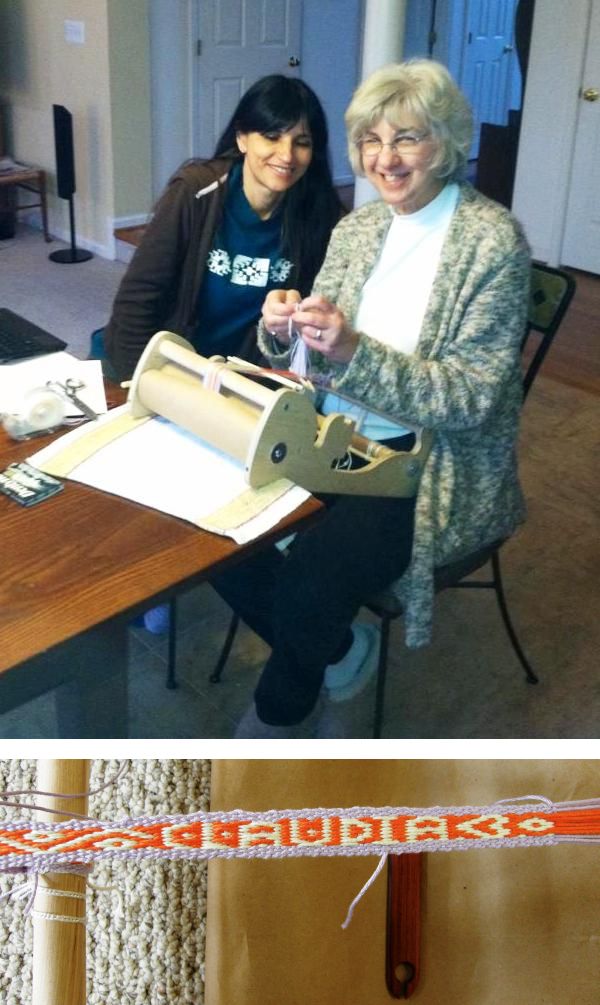
While in Maryland, Claudia and I got to play with pebble weave using the frame of her Cricket rigid heddle loom to hold the band rather than using a backstrap set-up. What a nifty little loom! It was very comfortable weaving this way. When Claudia wasn’t at the loom I couldn’t resist messing around on it myself just for fun. I have never tried weaving letters in pebble weave but, with the few threads we were using, I was able to weave “Claudia”. I think I would need more threads to weave a  decent “R” to weave my own name. Just a bit of fun. I know other structures that are better suited to lettering.

Terri of Magical Moons (maker of very nice swords for backstrap weavers) spent some time weaving with me too. We played with complementary-warp pick-up on narrow bands.

I have to tell you that Terri opened my eyes to the world of Nantucket basket makers. Did I mention that sometimes I think I get more from my weaving friends than they do from me?! Terri and her superb basket-making and wood-working skills and stories about Nantucket basket making are deserving of more space than this blog post will allow and so, I will tell you about all that in a future post. A wee teaser for now…

Some more backstrap weavers…On a day on our own, Laura is learning to make heddles for pebble weave. Diane and Kathie play with supplementary-weft patterning.

In another group, Leslie and Holly, who have woven with me before, set up the warp and weave pick-up  patterns using the intermesh structure.

To finish, here are some pictures of projects from Ravelry group members and other online weaving friends…

Carol, in Nicaragua, sent me these pictures of bands she has woven using charts and instructions from my two books. The first band shows the “Rolling River” pattern which is charted in my second book. It is a complementary-warp structure. The second band, also a complementary-warp pick-up structure, which goes by the name of Andean pebble weave in my first book, has a pattern of my own creation.

Rob, who is in our Ravelry Backstrap Weaving Group, has moved on to weaving with his own hand spun. The band on the left is the first using his newly acquired spinning skills. And that’s one of Terri’s (Magical Moons) swords. On the right is one of Rob’s pebble weave bands using  motifs from Andean Pebble Weave.

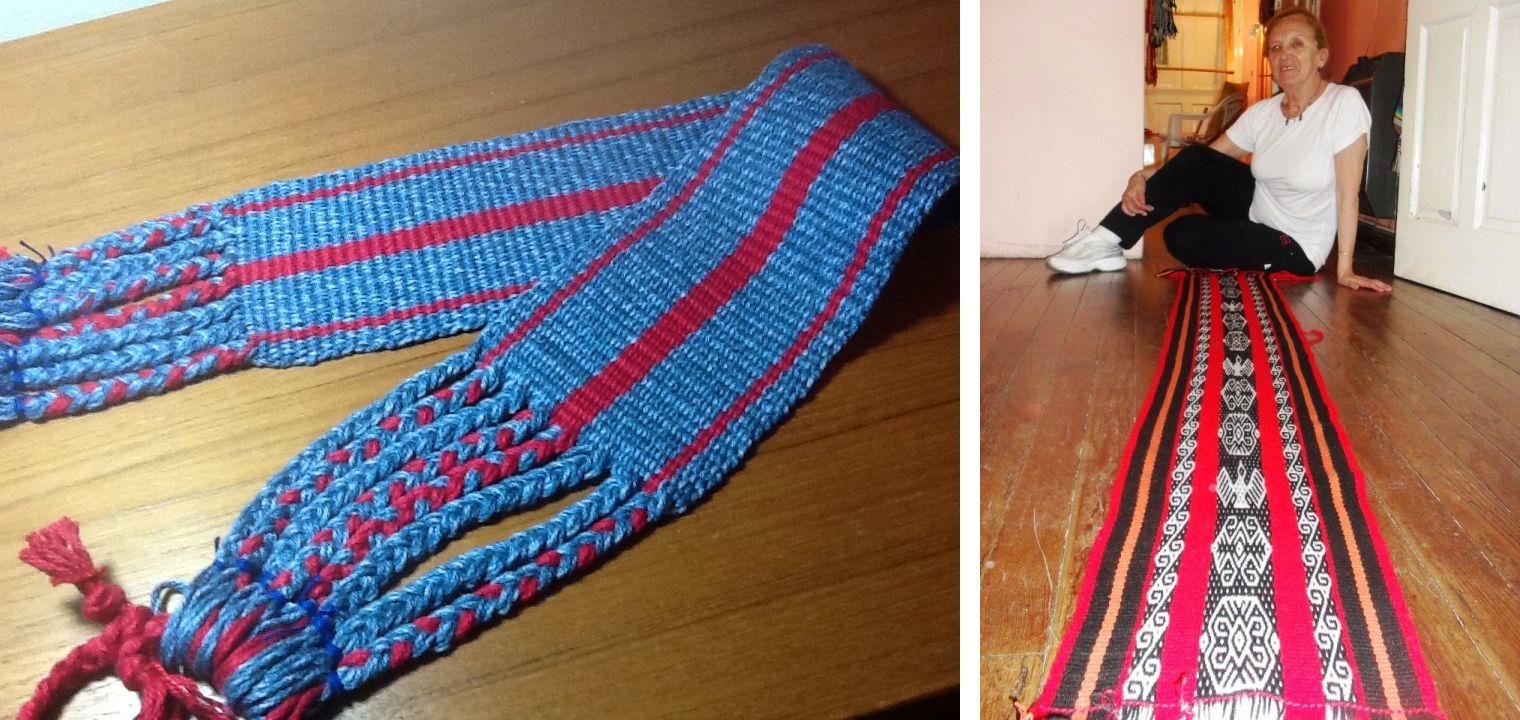
Isabel wove a very lovely cushy-looking backstrap using the instructions in my WeaveZine article. Marta in Argentina used motifs charted in Andean Pebble Weave to make this stunning runner (another fan of red, white an black!)

Well, it’s time to go and finish unpacking the swag, get all the ideas swimming in my head down on paper and attempt to get things back to ”normal”. It’s been quite an amazing year! Thank you everyone for making it so. My blogs should also be appearing more regularly now!


Backstrap Weaving – Safe from Sandy in Pennsylvania

I am taking a little detour from my series of posts on the Encuentro de Tejedores de las Americas in Cusco to write about the first week of my fall travels in the US. Part Three in the series will be entitled ‘Weavers in Action” and will have several video clips and pictures of both spinning and weaving. Here are links to Parts One and Two.

Just as I hit the very first key to write this post, the lights went out…sigh…it was bound to happen at some point. You see, I am not in Bolivia  right now. I am in “Hurricane Sandy Zone” in Pennsylvania. But, as it turned out, Sandy was just teasing that time. Seconds later the lights were back on and all continues to be well. Coastal areas, on the other hand, are devastated.

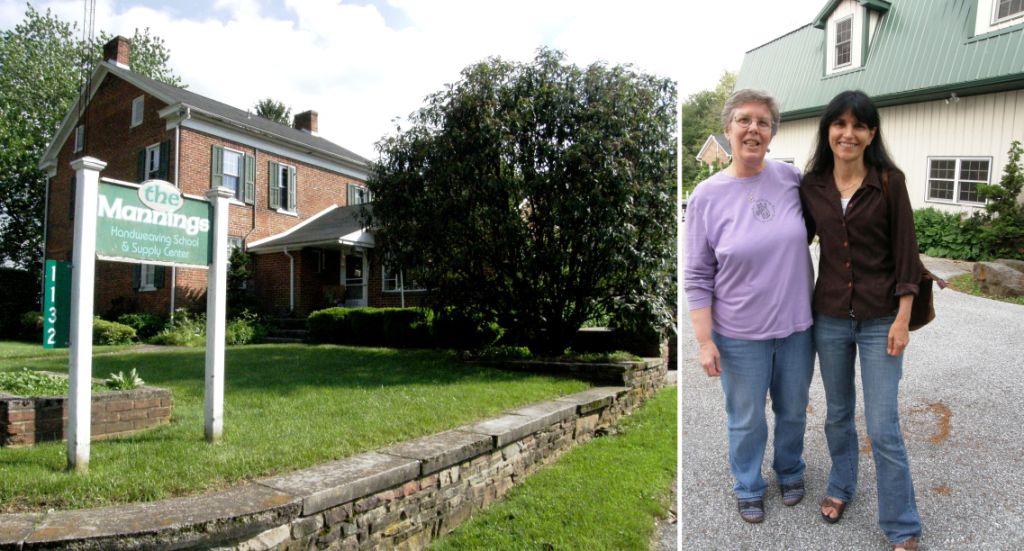
This is my fourth  visit to the Mannings staying with Ron, Carol and Helen and the second time that we have been in crisis mode due to extraordinary weather events.

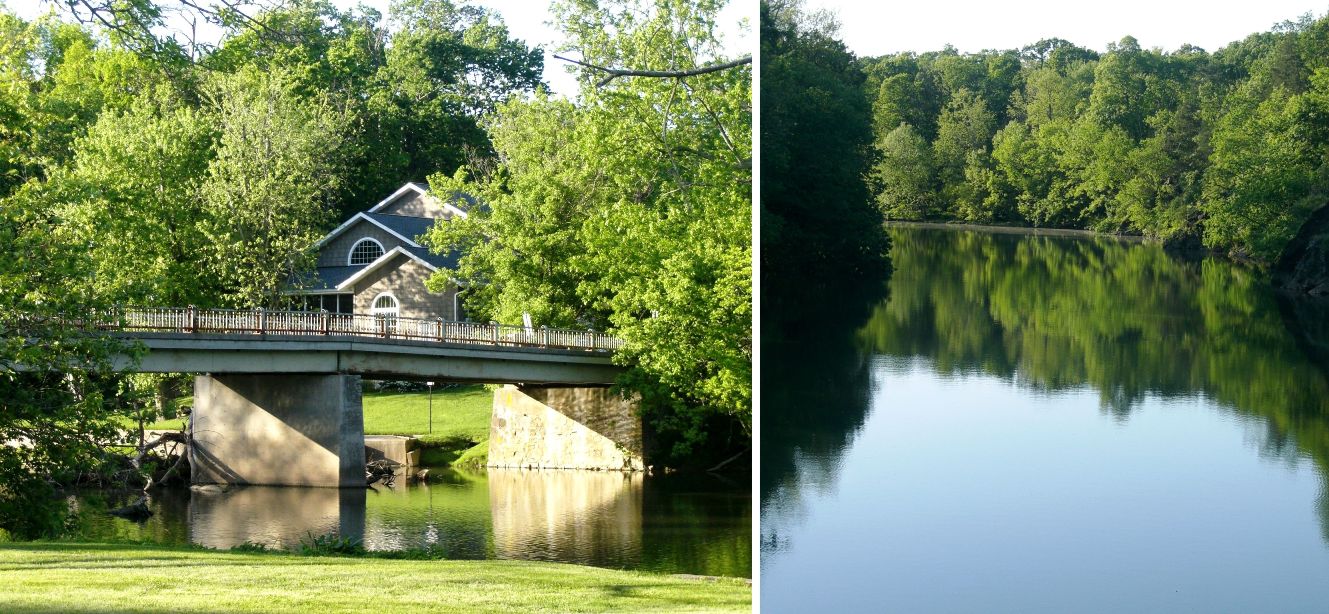
It was windy and rainy all night but nothing too terrible.. One of the lovely things about the Mannings (apart from obviously being yarn, weaving, spinning and knitting heaven as well as the base of weaving teacher Tom Knisely) is the beautiful creek that lies at the bottom of the front lawn.

I spent some lovely evenings last spring on that lawn close to the creek backstrap weaving.

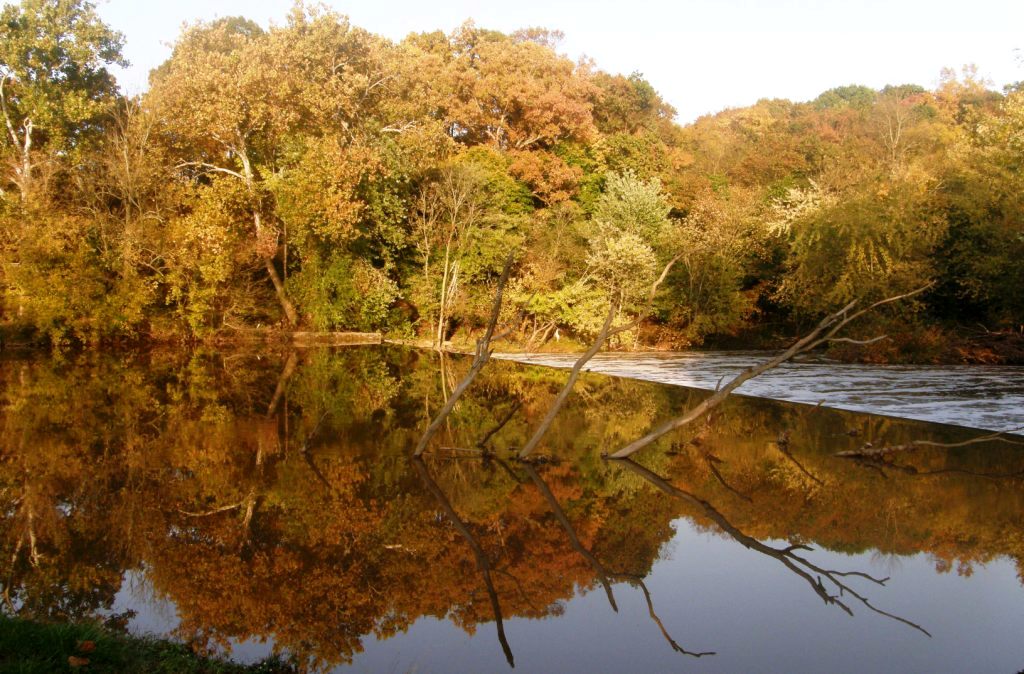
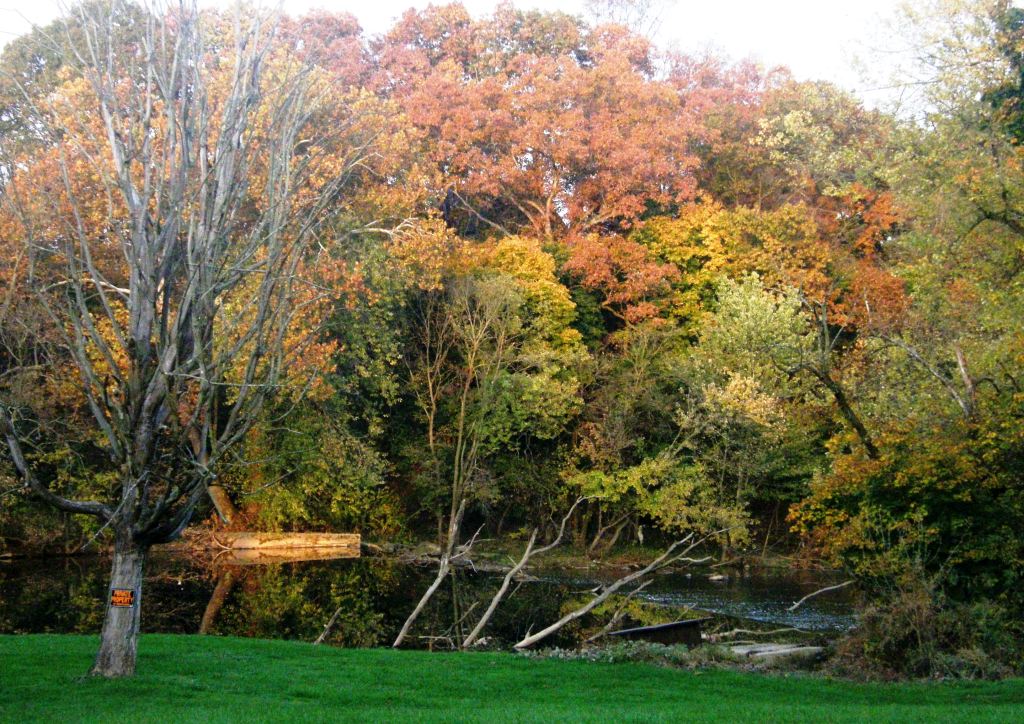
On this fall trip I arrived to a gorgeous display of golden leaves mirrored in the waters. It seems that the leaves were turning later than usual this year and I got to see them for the first time in all their glory.

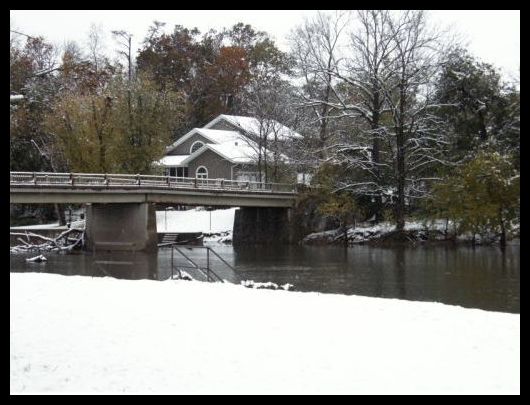
This early wet snow event is the one that hit in October last year. I sat out the three-day power outage in Ron and Carol’s beautiful motor home.

Halloween was in the air and a new batch of kittens took care of my pet withdrawals. There were four. One had gotten whisked off quickly to a new home.

There was plenty of time for play which, in a big yarn and equipment store and school like the Mannings, meant getting to watch how Tom Knisely’s beginner weaving students were getting on, discovering new yarns that could be suitable for backstrap weaving, hanging out with the spinning group that came to visit, unearthing some really cool hand made weaving swords that will be brilliant for my loom and even getting to do some dyeing.

I am looking for wool so that I can continue my experiments with the discontinuous-warp technique that I studied in a workshop in Cusco a few weeks ago. Well, you are probably thinking that I could probably just spin my own but I would really like to get the technique down before I plan a big project with my own  handspun.

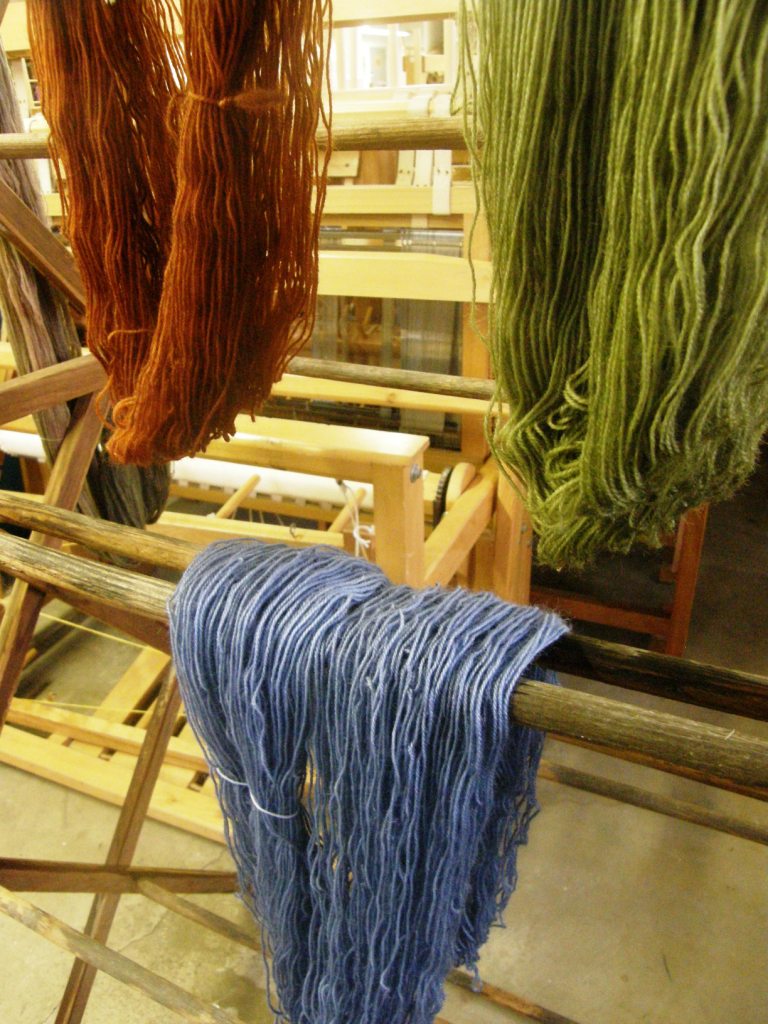
Here’s some Navajo warp I found in the store that Sara dyed for me. Of course it only comes in natural. I kept some natural and then chose these three colors for dyeing as I thought that they looked like the kinds of colors that one could get from natural sources. I have had success using Navajo warp for warp-faced weaving on my backstrap loom before.

I wove this bag with its supplementary-warp patterns many years ago using Navajo warp that I dyed and it worked beautifully. Another yarn that I bought at the Mannings, which I am not yet sure will work as well, is this Malabrigo merino from Uruguay. It is lace-weight single which I will re-spin and ply. I got four colors to make a discontinuous-warp square much the same as the one I made in Cusco.

It remains to be seen if this will actually work but I have brought my Cusco spindle with me and can get started right away with the re-spinning.

I wove with some terrific people. Here are two of them, Lauren and Karen…

Karen went to Guatemala, bought a backstrap loom, and took it to a weaver who warped it and wove a little way using supplementary-weft patterns to decorate her plain-weave cloth. It was nice that we got to weave Bolivian as well as one of the many styles of Guatemalan supplementary-weft patterning techniques. Karen brought the loom to show me so that I could show her how to continue weaving the patterns. I played on this loom and I knew exactly how to weave this cloth with its patterns as I had studied in Guatemala in the very village where it had been created.

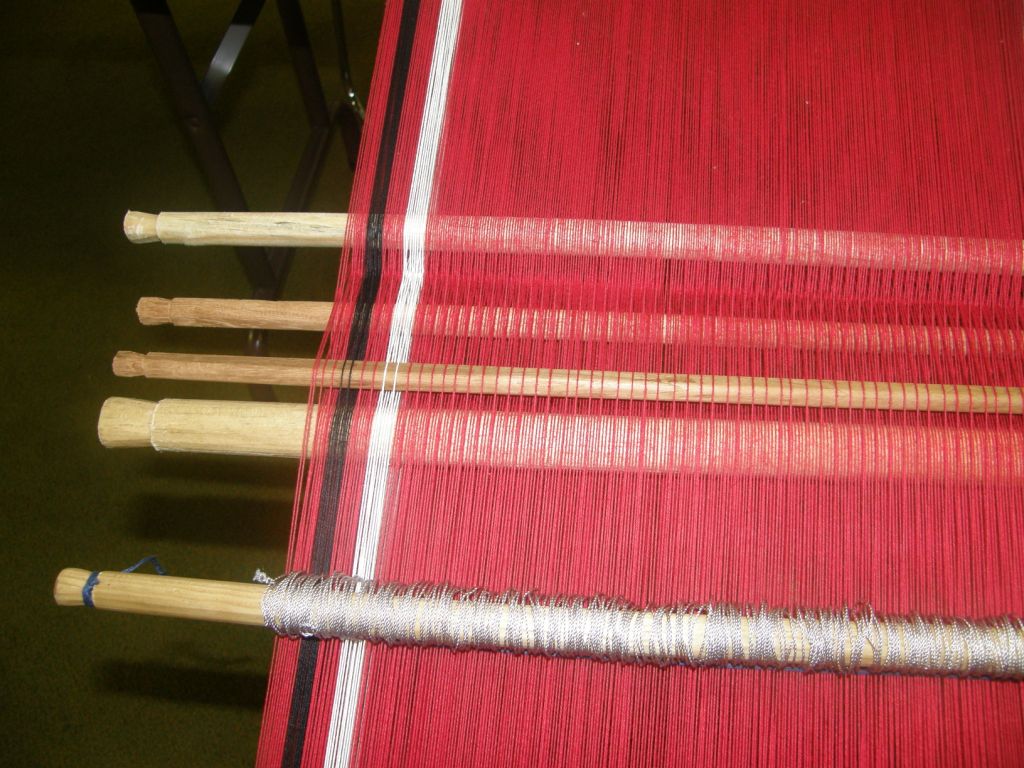
You can see below the two patterning sticks (the thinner slightly darker ones) one on the upper surface of the weaving and one below, which are used to raise the warps under which the supplementary wefts pass. The thickest stick is the shed rod. Another stick at the back holds a second cross.

I have a tutorial here on how to set up a warp like this and insert and use the patterning sticks to create small supplementary- weft motifs.

Janet visited the next day to weave complementary-warp pick-up. A friend of hers had bought a woven band still on its loom in Peru and given it to her as a gift. Janet was keen to weave the patterns, some of which were not pebble weave.

Here she is forming the picking cross from which to pick  the threads for the tanka choro pattern.

On the following Friday I started weaving with people I had met on previous visits.

Patti, on the left, had first woven with me in spring last year and Marge first joined me in spring this year. She says that she has been hooked ever since and joined the Ravelry group.

Here are a couple of pattern samplers that were made by the weavers before moving on to finer yarns and more advanced techniques and patterns. On the right is a band made by Dianne with her version of the Breast Cancer Awareness symbol. I love it when people use the structure to create patterns that are personally meaningful. In my new book I show other unique creations contributed by readers who have woven images from the context of their own lives and experiences.

And, speaking of the new book, it was very exciting to get here and see it in print for the first time 🙂

Dianne is also a very talented tapestry crocheter and brought along her notebooks and phone in her own tapestry-crocheted bags and pouches. I am seriously tempted to take this up if I ever find the time. I already have Carol Ventura’s wonderful books on the topic.

Here are two of Dianne’s pieces finished with a card-woven strap and a band made on her inkle loom…gorgeous! I also had some talented braiders come to weave with me. Marjorie has taught braiding at Convergence and it was nice to meet Tracy who was also at the Tinkuy in Peru in 2010. Marjorie gave me a couple of quick braiding lessons on cool things to do with just three and four strands while taking a breather from the backstrap loom.

Marge was happy to try the four-strand round braid (above) which I show in a tutorial here as she wasn’t happy with the way her multi-colored three-strand ones were turning out. I have recently added a new video to that tutorial page which you might want to check out. Finishing techniques are always fun and make such a difference to even the simplest projects.

Before weaving with this group, the creek was still showing its pretty face…

And then there were two…I spent part of one morning looking for the third boy kitten only to find that a Mannings’ customer had taken him to his new home.

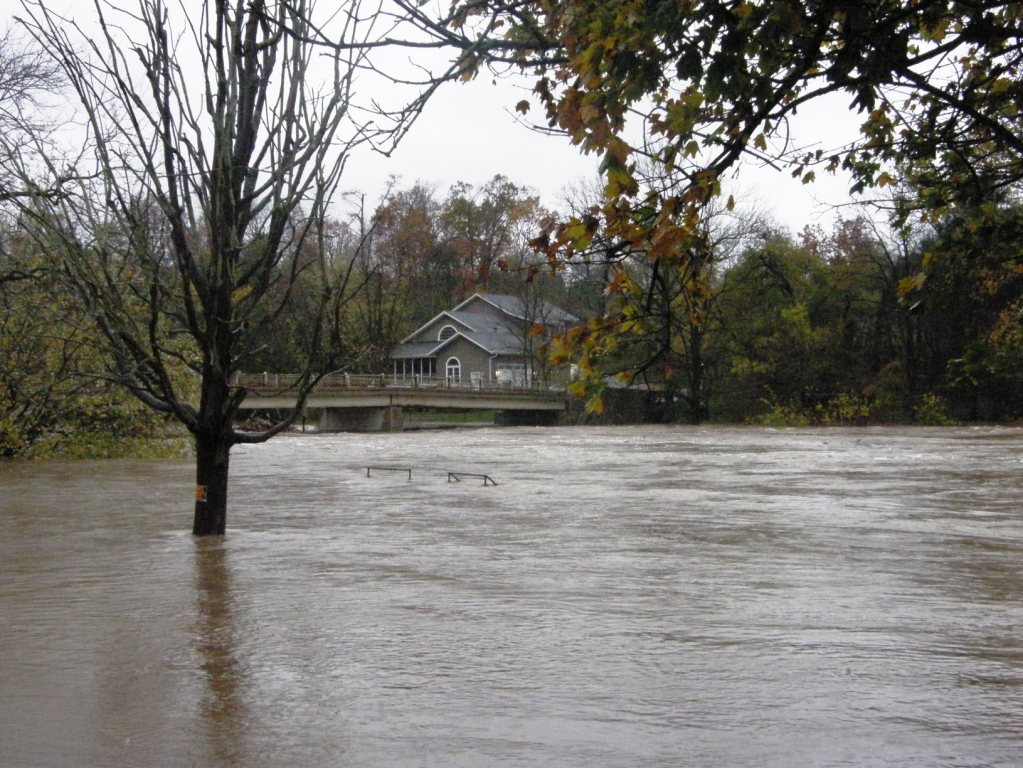
That tree with the orange sign is my weaving tree. Then we started hearing the first snippets of news about what was dubbed Franken-Storm, aka Hurricane Sandy. Everyone got home safely on Sunday night. My plans to get to Massachusetts on Monday were thwarted when Amtrak sensibly cancelled all services.

And then came the rain and the wind and the creek turned into a cranky swirling and swelling brown mass.

Impressive flood pictures on Carol and Ron’s freezer door serve as a reminder of just how cranky that creek can get and I decided to pack anyway in case a fast get away was in order.

We didn’t lose light or wifi…how lucky can you get… and this despite the fact that the storm passed right over the top of us.

Those of you who have been lucky enough to visit the Mannings and stay in the family home will know the view of the creek from the dining room window. This is where I am sitting while writing this blog post. Yesterday a swimming pool with deck still attached floated on by! Below you can see my weaving tree surrounded by creek.

In the Ravelry group, where things have been rather quiet lately, Rob showed us his latest projects…

 Here are two Andean pebble weave projects using motifs that are charted in my first book. He says that he is working his way through the book so that he will be ready for the weave-along we run based on my second book.

Here’s another lovely band he made in which the design was created simply by the way he made the warp…

In the background I can see a yellow and black double weave key fob.

As you know, when I am on the road, my posting days and frequency get all out of whack. Some weeks there might two posts and some weeks none at all! The next post will be Part Three of the Cusco trip and I do hope to have that up very soon. Hoping to move on to Massachusetts tomorrow or the next day (where there is no power, by the way…but all are safe and sound).