Backstrap Weaving – Books and Blessings

I don’t do Christmas. I don’t have any family here and so it seems kind of pointless but it seems that Christmas does me! And all my Christmases came at once, as they say, this month when four packages were waiting for me at the post office this week on top of a couple that I had received the week before. Two were purchases that I had made some time around Christmas and the rest were gifts.

One was from Argentina, another from Morocco via Australia, one from Bangladesh, one from Sweden, one from the UK, one from India and yet another from Australia. Luckily, I now have space for all this new stuff!

I can’t decide which one produced the biggest smile.
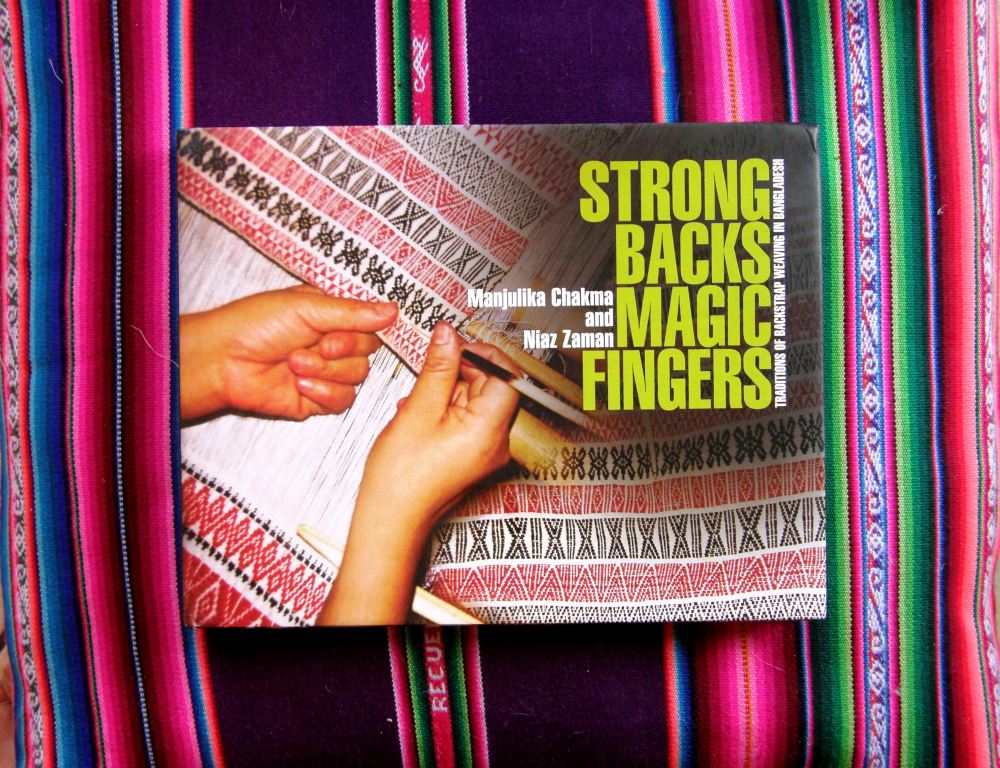
Let’s start with the book from Bangladesh on backstrap weaving. I suppose this is the one about which I feel most triumphant.

I have been trying to get this book since the middle of 2010 when I ran across a newspaper article about it online. Letters to the publisher didn’t produce any response. I tracked down an Australian journalist who had written a review on it but she couldn’t help. I asked my Godmother in India to try through some friends of hers in Bangladesh…no luck there either. I met a teacher from Spain on Ravelry who is working in Bangladesh who offered to try and get it…she couldn’t manage it… and finally, a Facebook acquaintance, Ananda, who works as a fashion designer in Bangladesh, came through.

He had heard of one of the authors, Manjulika Chakma and seen the book at a book fair. He managed to find the author, go to her house, where he said he enjoyed seeing her collection of tribal textiles, buy the book from her, tease me by posting a picture of it on Facebook and then send it to me! We were both very nervous about the mail as we both live in countries in the developing world where things often don’t work quite the way they should.

Well, I have been blessed because here I have it in my hands and it is really lovely.

I have only read the first few pages of Chapter Two which is about the Chakma weavers and it starts with a lovely story of how, in order to encourage the tribal backstrap weavers to start weaving again the traditional sampler known as alam as well as to see just how many of the 210 designs could be recovered, a competition was organized among twenty weavers to see who could produce the best example. And the story goes on from there telling about the preparation for the weaving, the loom, the process. I can’t wait to read more.

One thing I would like to share with you are some lines from The Song of the Loom by Chiranjib Chakma translated by Niaz Zaman which appears at the very start of the book. This is just a part of the song:
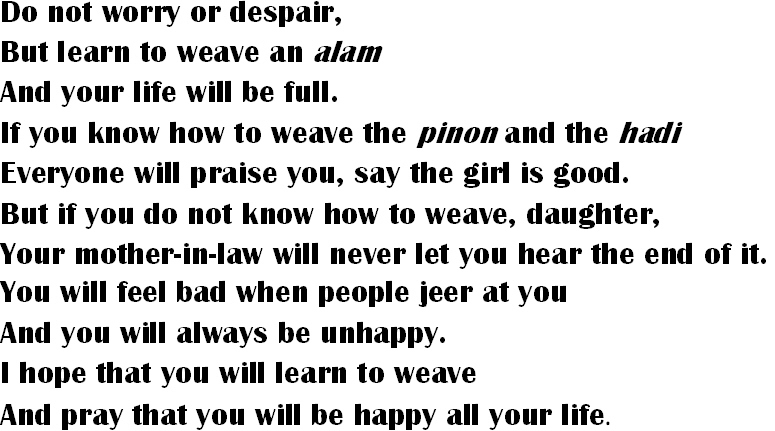
How I wish I could hear this sung in its original language!

Twelve chapters in the book deal with twelve different tribes and their work. One disappointment is that the index promises a bibliography on page 164 but my book ends at page 160! Too bad…I love bibliographies. 

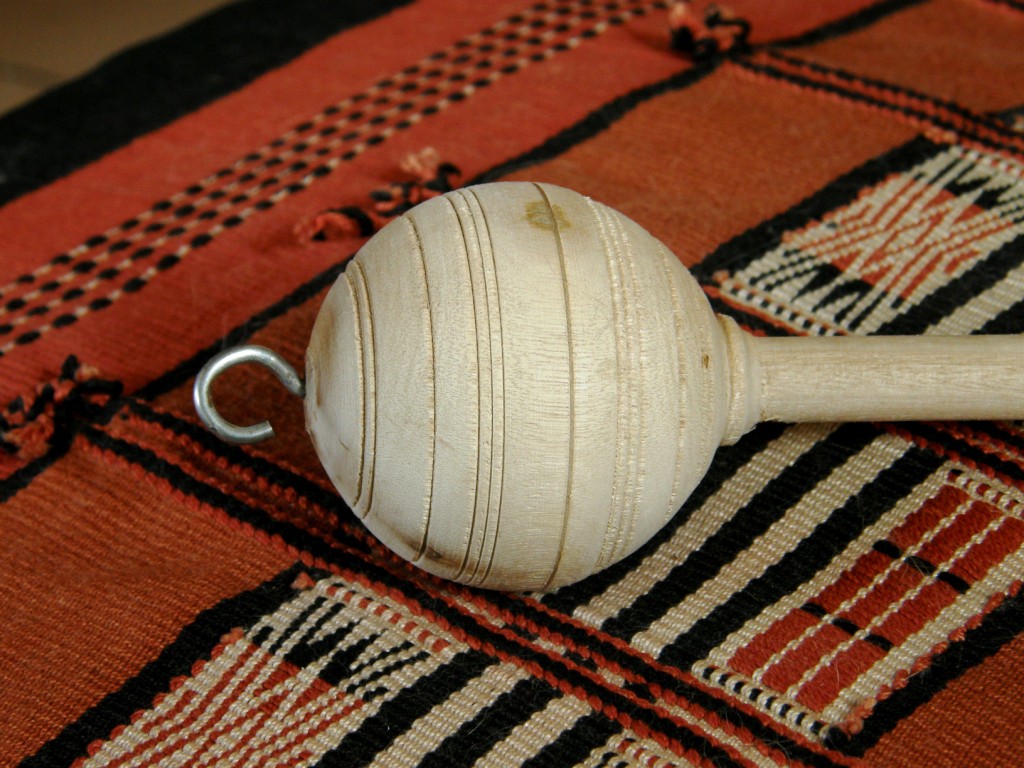
From Morocco via Australia came this spindle…
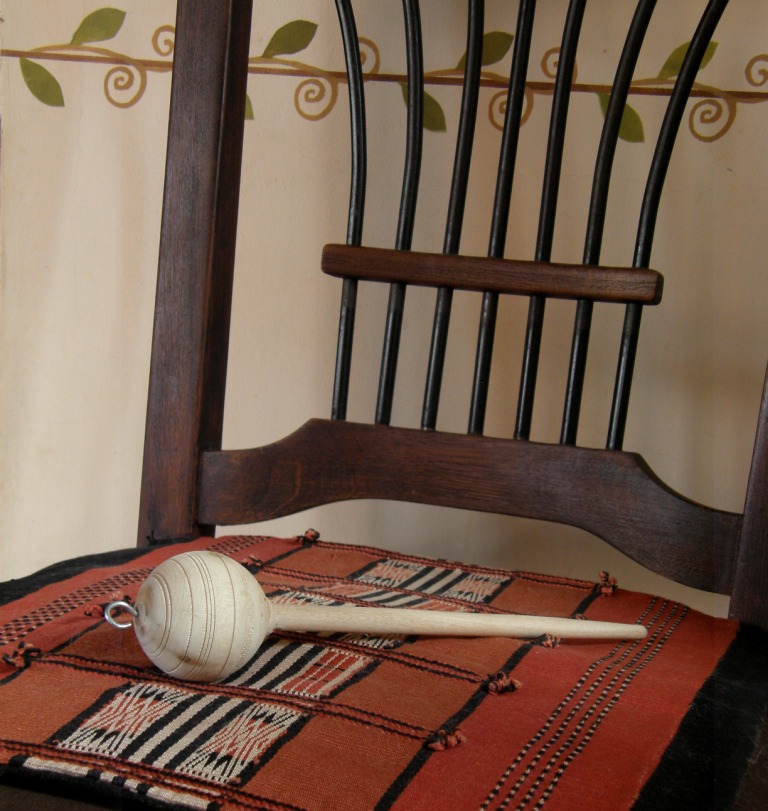
A friend of mine in Australia, Linda, went to Morocco last December and I asked her to get me a typical spindle. I have since decided to make this a gift for my friend Lisa in North Carolina. It isn’t for me anymore after my recent de-clutter campaign…books will always be welcome but I have enough spindles!

I actually had no idea what a typical Moroccan spindle looked like and Linda is not a spinner and told me that she had quite a difficult time finding one in the markets. Eventually an elderly gentleman told her that, if she came back the next day,  he would have one for her. Linda thinks that he had this specially made for her.
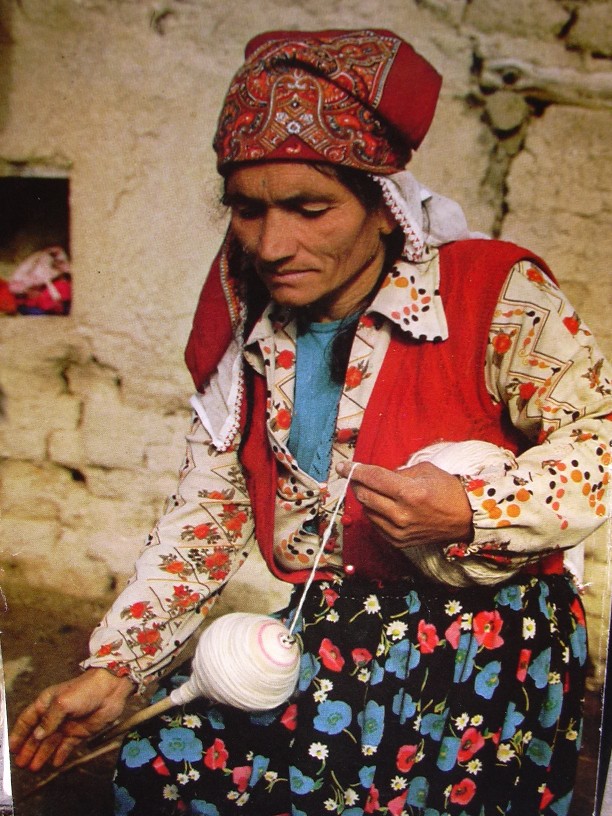
I asked the ladies in the Spindle Lore group about this particular kind of spindle and got many helpful responses.

Tracy sent me a link to this site about Turkish tribal textiles which has this image of a woman using a very similar spindle.

I know that Lisa will use and enjoy this spindle. If it stays here with me, it will be left hanging on the wall. I am happy to see it, handle it and take pictures of it and learn a bit about it in the process.

To Think With a Good Heart…Wixárika Women, Weavers and Shamans by Stacy B Schaefer came to me as a used copy from the UK (copies for under $3 are out there!) after having been recommended to me by Hopi weaver Luis Garcia. Luis and I met online through a mutual interest in Huichol, or Wixárika double weaving.  Here is one of Luis’s pieces in progress. He is weaving almost exactly the same motif as I chose for my bag above.

The book is described as being …”a fascinating journey into a realm of ancient beliefs and traditions woven into the story of a way of life constantly threatened by the outside world…..(It) addresses both the technology of weaving as well as the dramas and personalities in a community.”

In the words of Stacy B Schaefer herself…

A woman’s weavings reflect the changes and transformations she undergoes as she follows her life’s path, and her rites of passage from childhood to adolescence and marriage are marked by her abilities as a weaver. As a wife and mother, she is the provider of woven items for her family until she is physically no longer able to weave. But, never idle for long, she takes up spinning to help the younger women in the family carry on the weaving tradition. A woman’s life is so integrally tied to her identity as a weaver that she carries her loom to the grave, where it is buried with her.

In this book, I hope to bring Wixarika women into visibility by focusing on the medium of loom weaving. I present a descriptive ethnography of Wixárika women’s lives in chapters organized in interconnected sections that discuss gender roles, the life cycle, economics, religion and cosmology.

The book is the result of Schaefer’s having apprenticed with master weavers in two Wixárika families but it is not a how-to book.

From India I received a book that was recommended by a weaving friend in Canada who just returned from a trip to the northern states of India.
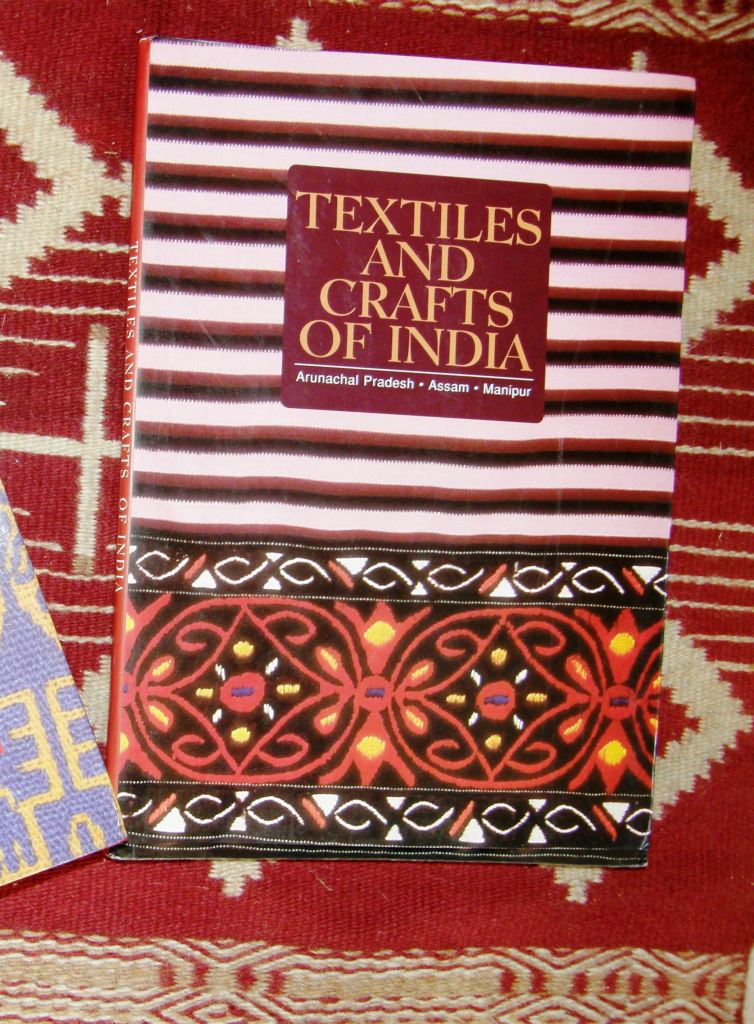
Beautiful pictures and plenty of luscious inspiration! One particular textile jogged my memory from back in 2007 of a bag that one of my Youth Hostel roomies in the Washington DC Youth Hostel had. She said that a friend in Sri Lanka had given it to her.

What a great color scheme! I think I need to try something like this.

From Argentina…
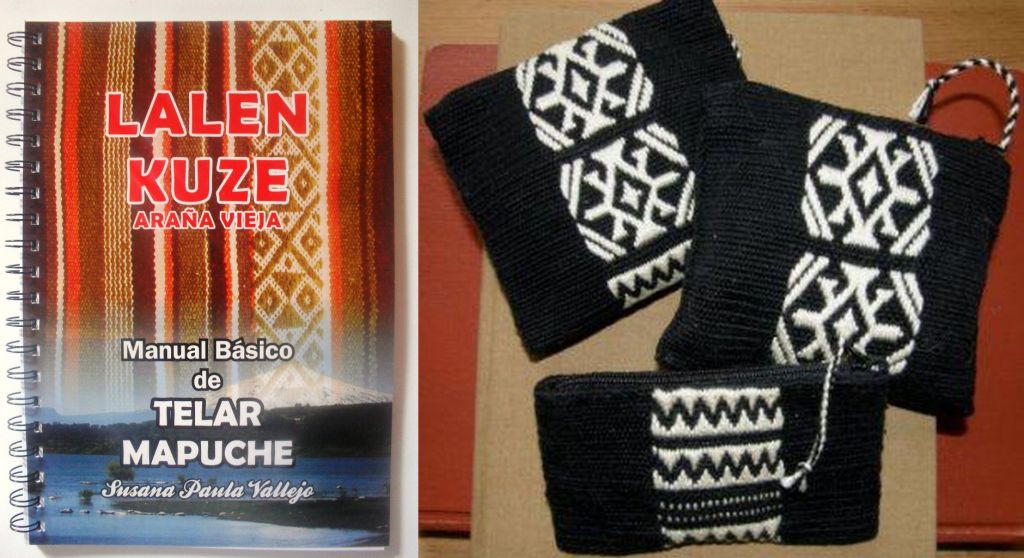
This is Susana Vallejo’s updated edition of her Manual Básico de Telar Mapuche. This revised edition has many more beautifully taken step-by-step photos than the original. Susana and I are online weaving buddies and we swap our books and ideas. I first swapped my Andean Pebble Weave book for a copy of her first edition. I will send her a copy of my next book in exchange for this copy of hers. She lives in Mar del Plata, Argentina where she runs a very active weaving school and I find her always buzzing with energy and so wonderfully charming!

Here is a picture that Susana herself put online to show what her new edition looks like…

Two gifts from Sweden via my online weaving friend Olle-Petter…
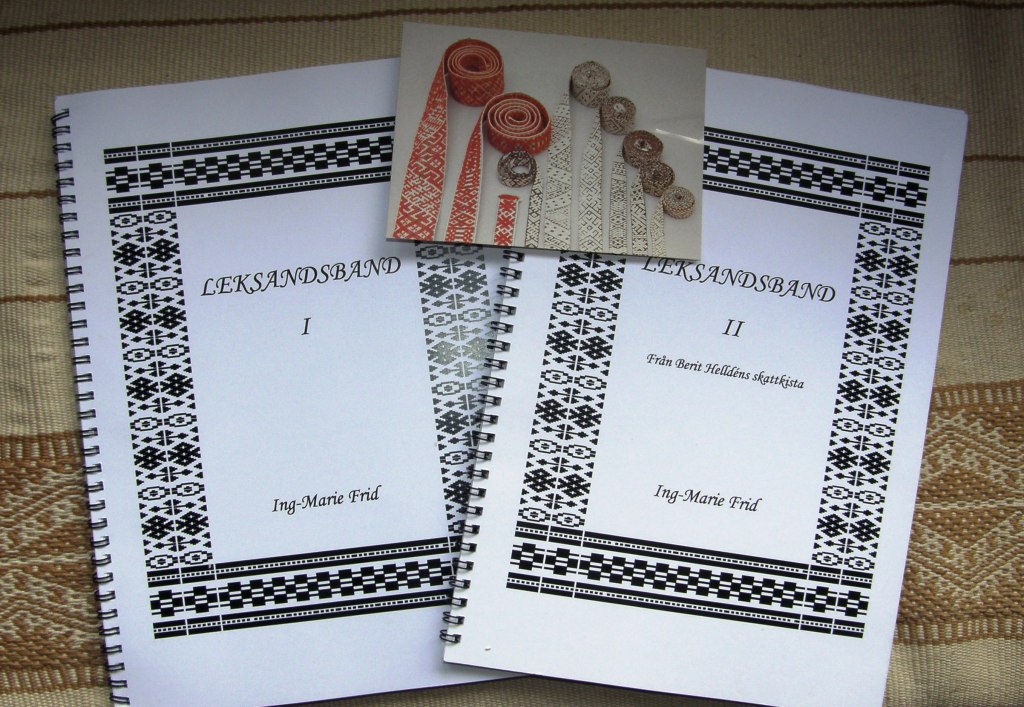
What a beautiful piece of work author Ing-Marie Frid has made with page after page of meticulously charted designs from these wonderful traditional bands. Photos of the original bands accompany every chart and they are simply stunning.

It wasn’t all about opening packages and playing with all my gifts and purchases this week. I did some preparation for future weaving projects too.

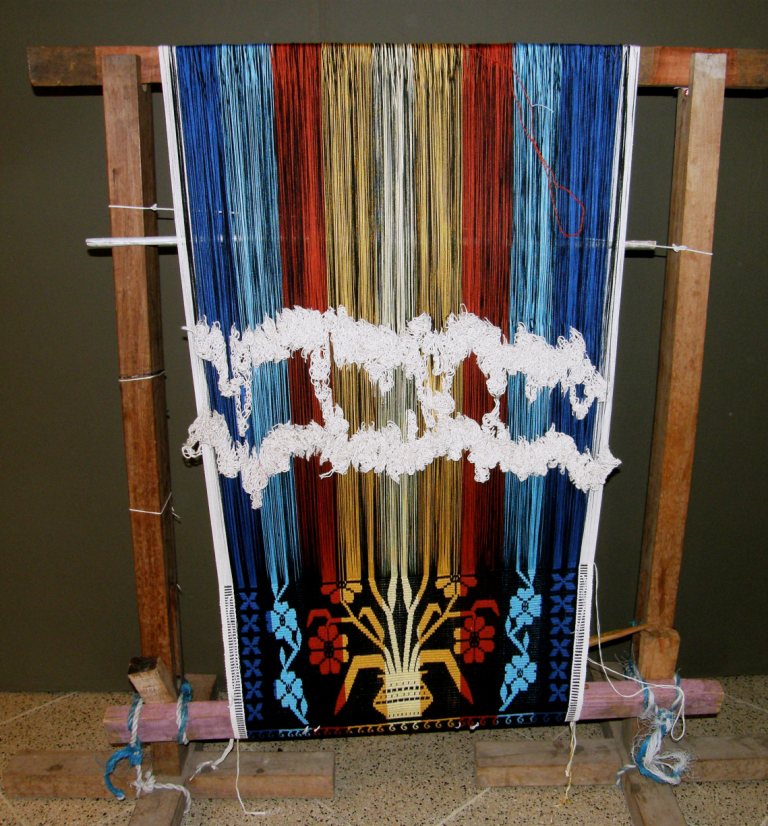
I am preparing a sample ikat warp putting into practice some thoughts and theories that I have on how to keep the threads better aligned. I am still not being terribly brave or adventurous about this and am using a simple diamond motif and keeping things small. I wrap the warps for one diamond a day, slowly and methodically while I think about different strategies for successfully weaving it.

I have the warp set up on a frame for now as I wrap and here it is sitting in front of a silk piece, with a similar simple ikat pattern, from Cambodia. I am using cassette tape to wrap.
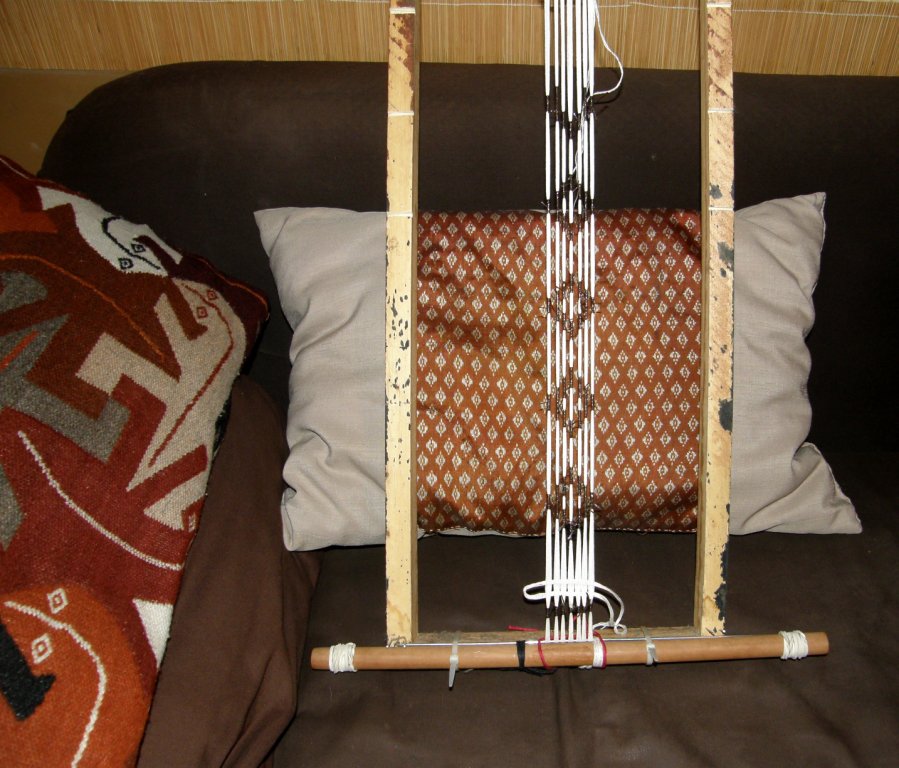
I was pretty happy about my last attempt at ikat, which was just narrow strips within a larger textile, but I would  like to make some improvements…

The ikat is part of our new weave-along and we have Janet and Tracy so far wrapping away as well.

The other preparation project which was really taking a long time to get off the ground was the charting for the continuation of my Wayuu inspired wall hanging. Well, dither no more, it is going and appears to be successful! (although the proof will be in the weaving).
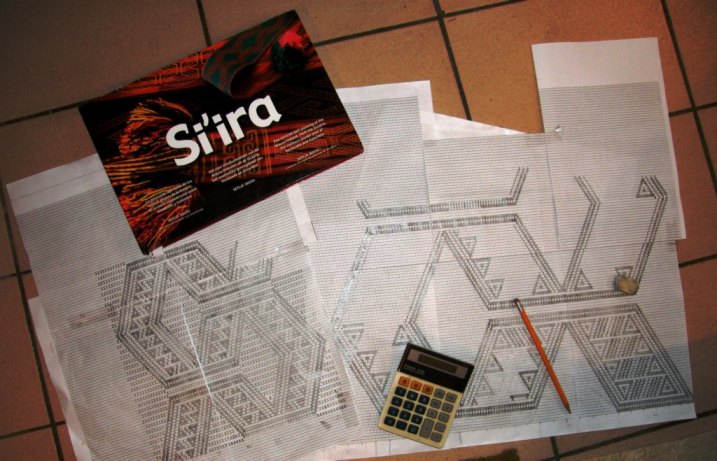
Mirja Wark has charted the traditional design in her book but it is not entirely symmetrical as that is the way the Wayuu weavers choose to weave it. I, however, have this need for symmetry and so I adapted and recharted it only to weave it and find it too small and delicate for my wall hanging and the thread I am using. Now I am changing it yet again to be big and bold enough for my piece. I kind of like the fact that I am changing it so much as there are now several  pieces of “me” in the design!

The rep weave sample came off the loom and got hemmed. I had some width issues so this definitely goes in the “sample” category. It fits my tray table perfectly though and will certainly be put to use to stop my bowls from sliding about.
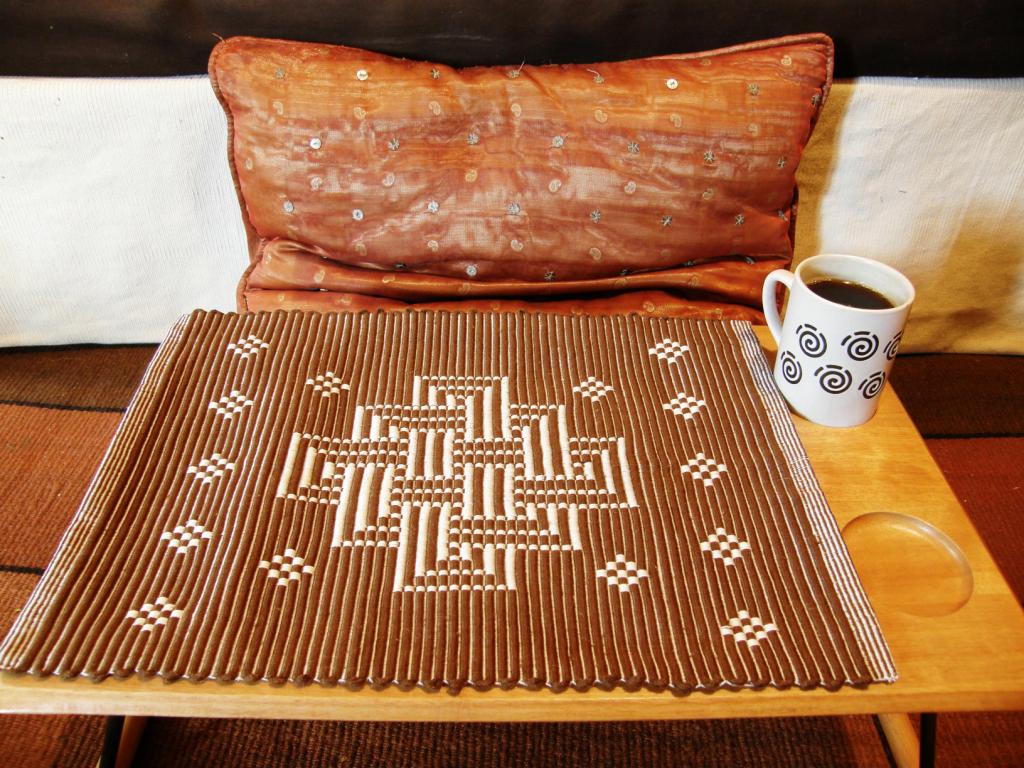
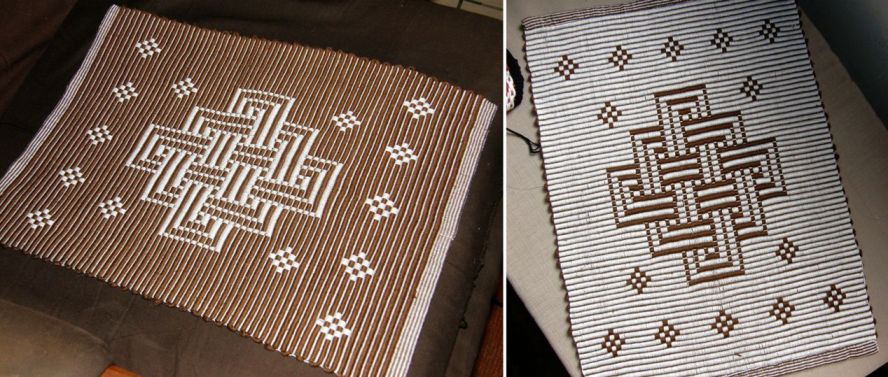
And then Jorge came and said that he preferred the other side…not terribly practical white side up… but now I can’t decide which side I prefer! Thank you Marijke for your card woven  knot pattern!
Some Bedouin activity from online weaving friends…

Bobbie, from the Ravelry group is weaving this lovely piece using that yummy Dylon Cold Water terrcaotta dye on her cotton. She is weaving one of the al’ouerjan variations. Yonat wove Bedouin Warp Substitution  with me last fall and is weaving this band with many variations of the al’ouerjan pattern on her inkle loom. It is a sample band of the different patterns and she is practicing her weft twining along the way. She says that she is not crazy about the colors she chose but I love them!

We have exciting news from Tracy Hudson in the backstrap group who lives in Doha Qatar. She has written an article on Bedouin spinning which will be in the spring issue of Spin Off.

And that brings to me to wrapping this up with the unwrapping of the last “Christmas-comes-late” gift.

My dear sister-in-law made me an amazing calendar with pictures of some of my weavings mixed in with Navajo and other bits and pieces that she saw on her recent trip to south-west USA.  She didn’t have many pictures of my stuff to work with…just a handful of pictures I had sent to my brother for editing about two years ago but she did a tremendous job putting it all together.
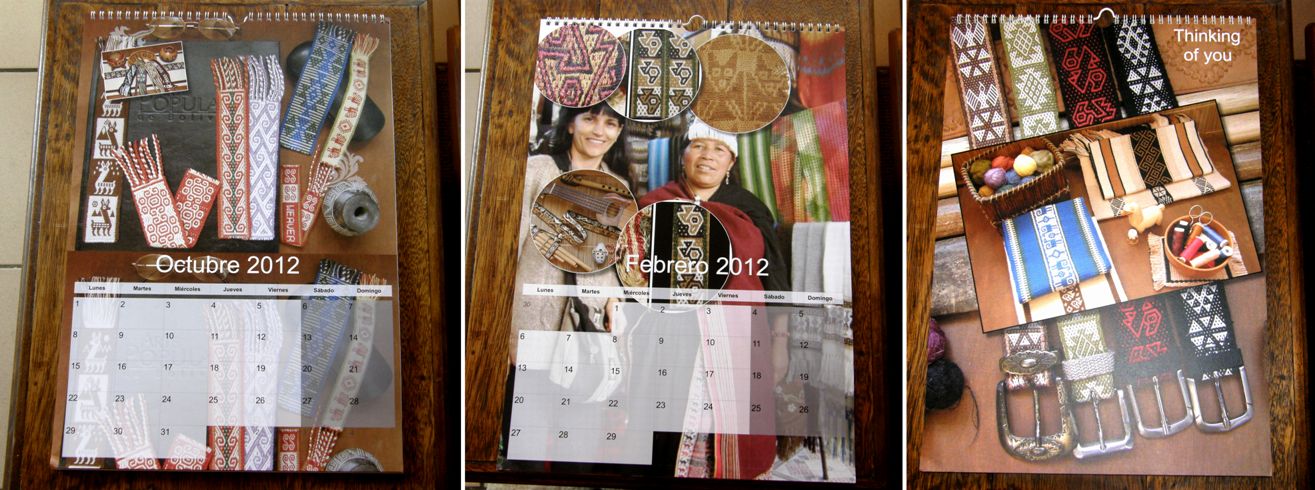
And, wise and clever woman that she is, she left January 2012 off the calendar and replaced it with January 2013 at the end knowing that I probably wouldn’t get this until February. I don’t get to see Deb and the family very often and am way overdue on a visit to Australia. She blew me away with this!

And finally, I have to tell you that my book Andean Pebble Weave will soon be speaking French! I am very close to getting this e-edition up on the Patternfish website. And don’t worry, I didn’t translate it! It has been translated by a weaver in France about whom I shall tell you more once the e-book is ready for sale. Here’s a sneak peek at the cover…

                                                                                                          

Backstrap Weaving – Picking, Dropping, Counting,Twisting….Pattern!

Did I mention last week that this latest piece I am working on is SLOW going? It’s a complementary warp pick-up technique, not one of those friendlier partly-loom controlled ones, and I have almost 600 ends in the pattern section. So, if I show you a picture of where I am at this week you can be excused for thinking that I have done nothing, or at least very little!

I had, in fact, progressed further but I un-wove a fair bit after discovering that the next pattern I had chosen wasn’t coming out anywhere near as big and bold as I had envisioned. I will need to re-chart it at twice its size. It is heartbreaking un-weaving after having picked all those threads but it is bound to be worth it in the end.

And as if the pick-up isn’t slow enough, I have decided to add some weft twining. What is slower than picking and dropping?…twisting and enclosing.

So far I have only added that one thin strip of twining which is one of the elements which will link all the hangings I am making in this series. I am thinking of adding yet another broad strip of patterned twining that will go from edge to edge. I shall think carefully about this as undoing twining is probably the worst kind of ripping out there is!

The Wayuu twine along the bottom of their si’ira belts but I am undecided about whether to use their technique or the one with which I am more familiar.

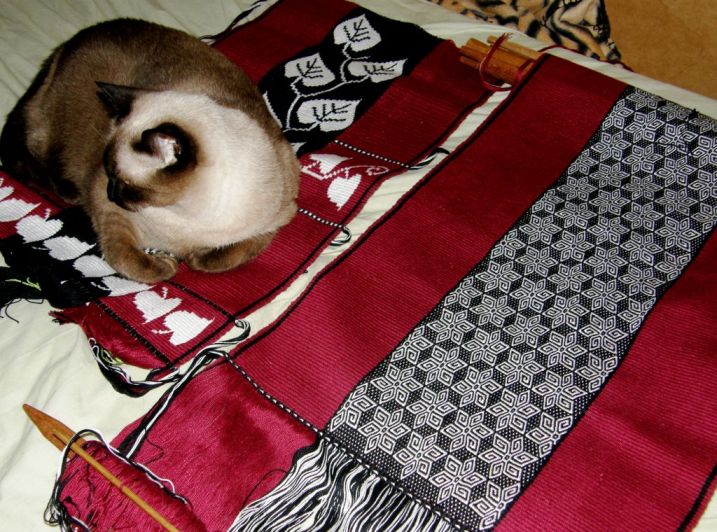
In the meantime my cat is determined to get as much of her hair as possible over the other two almost finished pieces.

This all had me thinking about this process of  picking, dropping, twisting and enclosing to make patterns and why I love it so much.  It occurred to me as I was writing the first few paragraphs here that I was making the process sound somewhat painful and frustrating when in actual fact it is both relaxing and stimulating.

I have been emphasizing the slowness of it all which may give some an impression of tedium…quite the opposite in fact.

What has made the work on this piece slower than it should be is the lack of planning on my part…it’s all my fault…thus the weaving and un-weaving and yes, that part can definitely be described as frustrating and tedious.

Take a look at this video of weavers in Bhutan (link provided by Toby from the Ravelry group) doing weft inlay patterning. Their tiny picking movements are graceful and delicate and rather than think “oh my gosh, how painfully slow and tedious that must be!” I think “how incredibly beautiful, skillful and relaxing. I want to do that too!” I wonder if I look quite so calm and peaceful as I work!

I do find that I need to stand up from this piece more frequently and take a walk around. I definitely don’t progress the four fingers width that weavers here in Bolivia have told me is the measure of a good day’s work. Sometimes I spend an entire day charting what I think will be the next part of the design only to abandon it! Lets see how far I get with it this coming week.

Fortunately not all the patterning techniques involve picking and dropping every single warp thread across the width of the loom. Many techniques can use pre-programmed patterning sheds and be partly loom-controlled.

Pebble weave is one such technique in which many of the designs can be woven with the aid of two sets of string heddles meaning that you only need to do pick-up in every other shed….pick-up warps by hand in one shed and then enjoy a free ride in the next by simply raising a string heddle and passing the weft.

The Moisy technique which my Guarani weaving teacher Angela uses is another one that rewards the hard work of a row of pick-up with a “free ride”, that is, a weft pass every other row through a heddle controlled shed.

And then there are those techniques which I have nick named “drop-down” rather than “pick-up” methods. Warp substitution is one of them. The weaver simply drops a warp thread out of the open shed in order to create the pattern rather than having to select and pick one up.

Basic supplementary weft inlay is also a technique that I would nick name “drop down”. The weaver drops certain warps out of a shed which creates gaps through which the colored inlaid weft can be exposed to form a pattern.

The simple warp float technique, in the way I was taught to do it, also falls into my invented “drop down” category. Warps are dropped out of the open shed. Those that are kept will float to form the design.

These are all nice ways to get used to counting and handling the warps, dropping, selecting, saving and picking them to form the patterns. Some people may find that one of my so-called “drop down” techniques is the one with which they feel most comfortable.

Others may find that they like the added challenge of selecting, picking and dropping the warps while also being able to enjoy that loom controlled “free ride”.

Yet others will become so enamored with the pick-up process and the patterns it enables them to create that they will be more than happy to sit for hours and be proud of their four fingers width progress each day. Check my tutorials page for links to the various instruction pages.

Here is some beautiful pick-up inspiration from weavers of Peru and Bolivia…

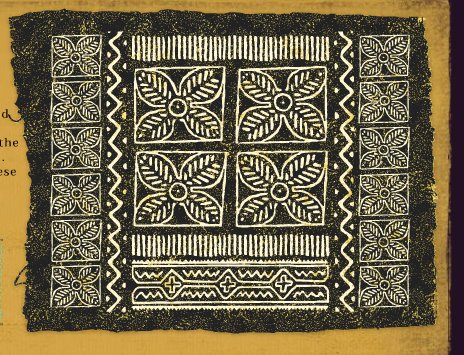
Last week’s mindless fun for my breaks from the loom was juggling. This week I played around online on a site which allows you to create your own mudcloth design. This link was provided by someone in one of the Yahoo groups and apart from a few minutes of fun, it also gave me some nice bold designs which, who knows, could form part of a future weaving.

Here is what I created…

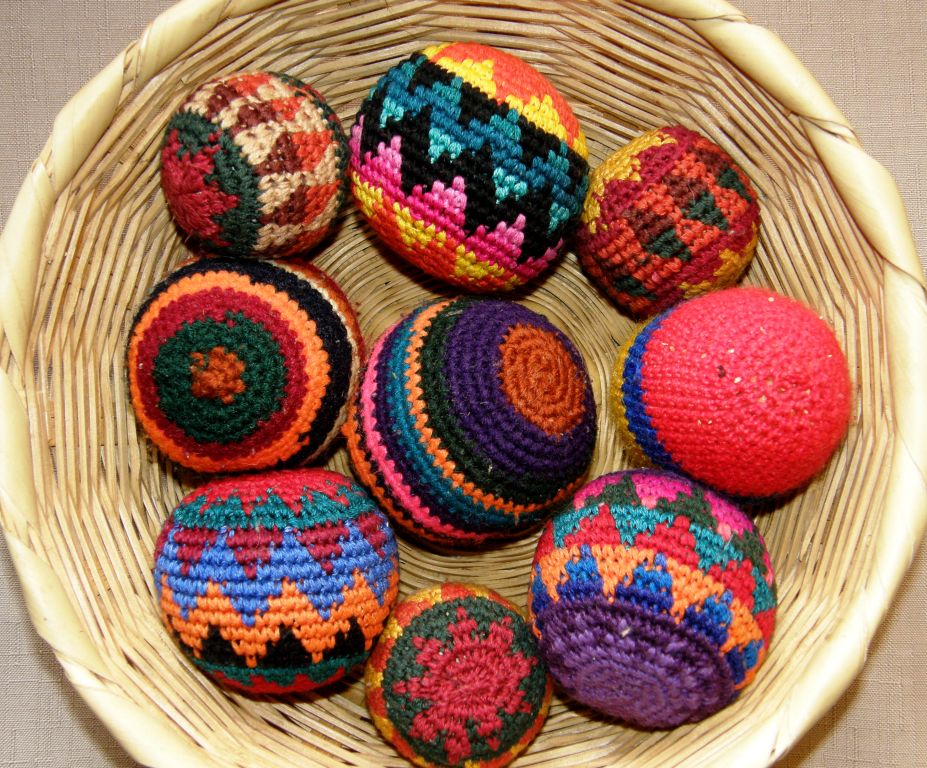
And, thinking back to last week’s post and the crochet work and juggling balls, I see that Education and More are offering some unique crocheted Guatemalan juggling balls on their site.

The crocheted designs on the Wayuu susu bags I showed last week are still enticing. If you are contemplating getting out your hook and trying to make something similar here is Carol Ventura’s (author of Tapestry Crochet) video on a technique that can be used to create such designs. I can’t say for sure if this is in fact the technique used by the Wayuu to make their bags but you could certainly use their designs and colors as inspiration for something in tapestry crochet.

So, what will you be into this coming week…hooking, picking, dropping, twisting, juggling, or clicking the mouse and gathering resources?

Gathering resources?…I have posted more goodies to my RESOURCES page. Take a look 🙂

Backstrap Weaving – Juggling!

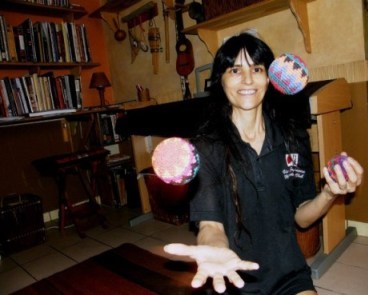
Juggling! Yes, here I am juggling…weaving my wall hanging project, warping, writing and taking pictures for my new book, putting together the translated versions of my first book, planning articles, answering online questions from new backstrap weavers. I have had to come up with some new routines to fit all this in.

Most people roll their eyes and sigh in dismay at the word “routine”…dull, boring repetitive. I, on the other hand, am all for it, that is, if it is a routine of my own making and not one that is imposed. Having a fixed routine is the most efficient way in which I can operate.

And I do take time out for a little mindless fun!

Juggling is both relaxing for the mind and a darn good work-out for the body…at least for an inexpert juggler as indeed I am….with lots of crawling around on the floor picking up dropped balls.

What prompted me to drag out the Guatemalan juggling balls from the depths of one of my woven storage bags?….They are crocheted and I wanted to take a look at how they had been made.

We talk about the simplicity of the backstrap loom and what can be achieved with a loom comprising just a few sticks, or sometimes no sticks at all.

What about the wonders that can be created with one small stick with a hook on the end?

And what led me to all this?… pictures in Mirja Wark’s book on the woven belts of the Wayuu people of northern Colombia and Venezuela. The designs on these belts are the inspiration for my latest wall hanging project. One picture shows a man wearing a belt with a small patterned bag at his side which Wark says is crocheted. She describes crocheted cotton bags that are used by both men and women. The women carry a medium-size bag called susu. Men have smaller crocheted money pouches called susuchon and other pouches which can hold tobacco, keys and amulets.

So it was off to Google and Youtube Land to learn more. I have decided to do without air conditioning and pay for a faster internet service instead so Youtube viewing does not make me want to tear out all my hair anymore! But, finding time to watch all those videos is yet another ball that must be added to the juggling mix.

These images of Wayuu susu, which are also sometimes referred to on these sites as mochilas, are from the online store of the Wayuu Taya Foundation.

I found that these traditional crocheted bags became very popular outside Colombia a couple of years ago and even prompted an article in the NY Times.

On many sites the bags are described as having been “woven”, “knitted” or “woven in crochet” but we have Mirja Wark who tells us that they are, in fact, crocheted. One article describes the straps as having been created on looms.

I love the big bold designs! The bag at left is from CordoBags.

The following is probably the nicest video I found in my alotted Youtube time showing the Wayuu people and their terribly harsh environment. A woman can be seen carrying her susu, there’s a little weaving showing those loose joined heddles that I talked about last week, some fast and efficient twining in progress (love that part!) and there are two brief segments showing the women crocheting bags.

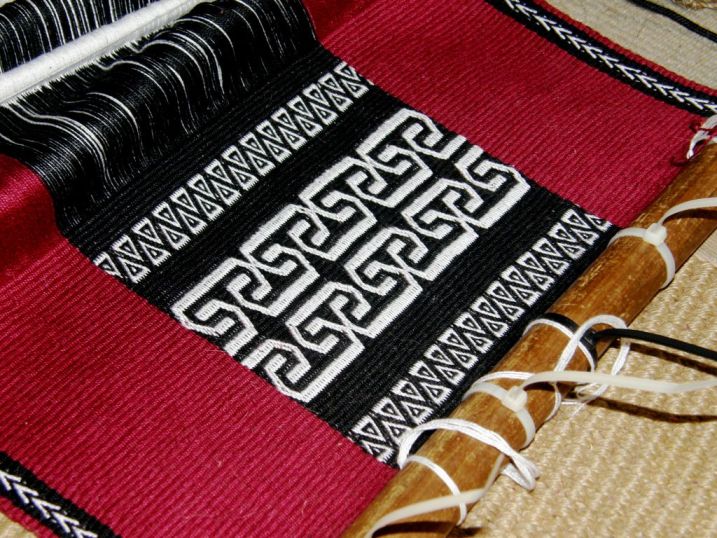
So, here is my latest project which has been inspired by the work of the Wayuu people and the beautiful designs on their woven si’ira which I have been able to see in Mirja Wark’s book.

I have made a few adaptations of my own. The triangular “border” design is my own pattern as I wanted something bolder than those shown in the book. The larger design is one of many “block patterns” as Wark calls them and, as I charted this one myself, I cannot be absolutely sure that it is faithful to the traditional design. It falls into a group of patterns called schichirujuna paa which means “like the nose of a cow” in which there are eleven variations.

I like how the herringbone design on the edges is similar to the weft-twined design I plan to do along the bottom edge.

This is slow work, I can tell you….lots of threads to count and pick up!! I was very unsure about this piece last week and was on the point of putting it aside for a while and working on something else to clear my head. But, I persevered and am now happy with the result.

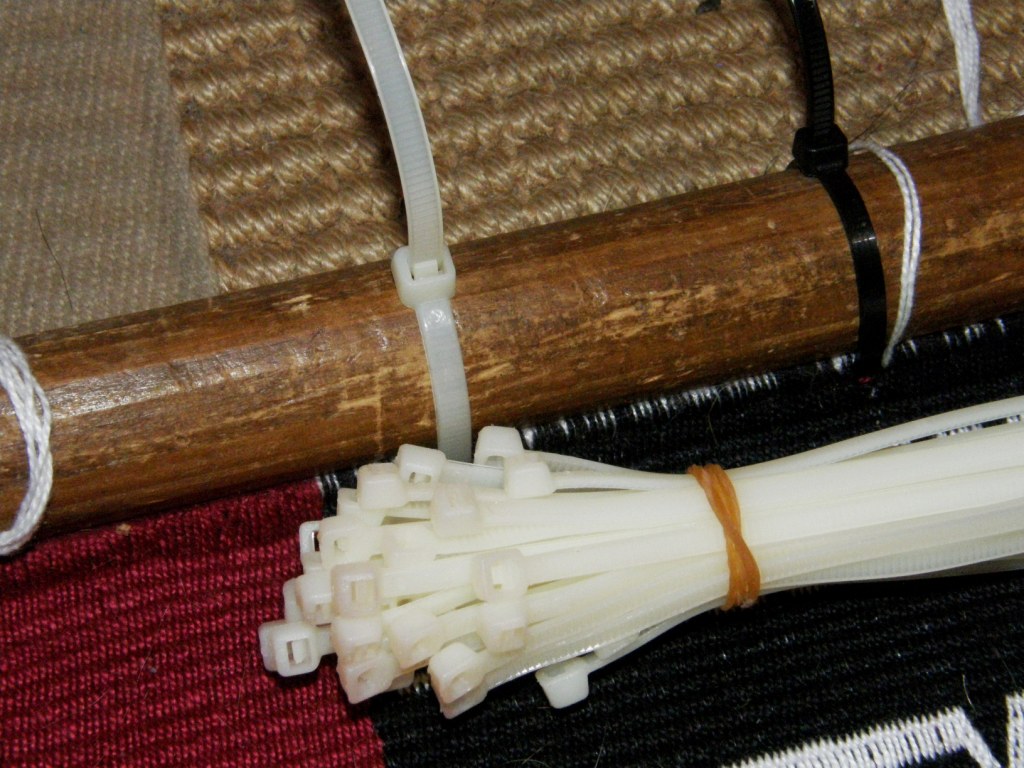
And you may have noticed my new favorite addition to the toolbox at left…cable ties.

These are absolutely brilliant for lashing the warp on its piano wire to the loom bar and creating a third selvedge. I was getting really fed up with my lashing cords on this project working their way loose.

They always do and I usually just wedge thin dowels between then and the loom bar to tighten them up. This time for some reason, nothing I did was solving the problem.

In my recent home de-clutter mission I found a bag full of these cable ties in the junk drawer in the kitchen. They are perfect for lashing but, unfortunately, can only be used for one project as they will have to be cut in order to remove the finished weaving. I wouldn’t use them to lash right from the start as they are wide and space the warps. I would only use them once the weaving has progressed an inch or so to replace the lashing string, which has probably already started to work its way loose.

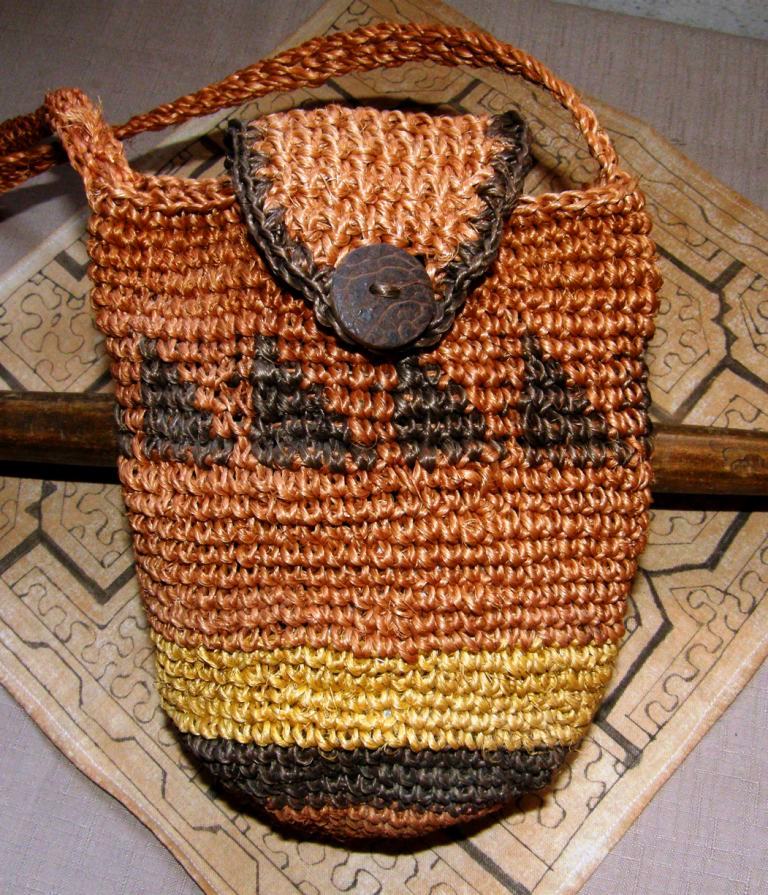
Now back to the crochet. No, I am not about to add this to the juggling act! But, who knows, the next time I am thinking about some on-the-road projects, maybe I will toss a hook in my bag. I know the very basics of crochet. When I went to Ecuador and visited the artisans who work with cabuya fiber, I stayed with a lady who taught me how to crochet this little pouch.

She was kind enough to say that it wasn’t too bad for a first attempt. The button is made from the tagua nut and the dye for the cabuya fiber comes from natural sources.

I was happy to learn how to do color changes and carry the thread. Whether this color change technique is what is known as tapestry crochet, I do not know. I noticed that there is a group for tapestry crochet on Ravelry and another for fair-isle crochet. I am guessing that indicates that there are differences in techniques.

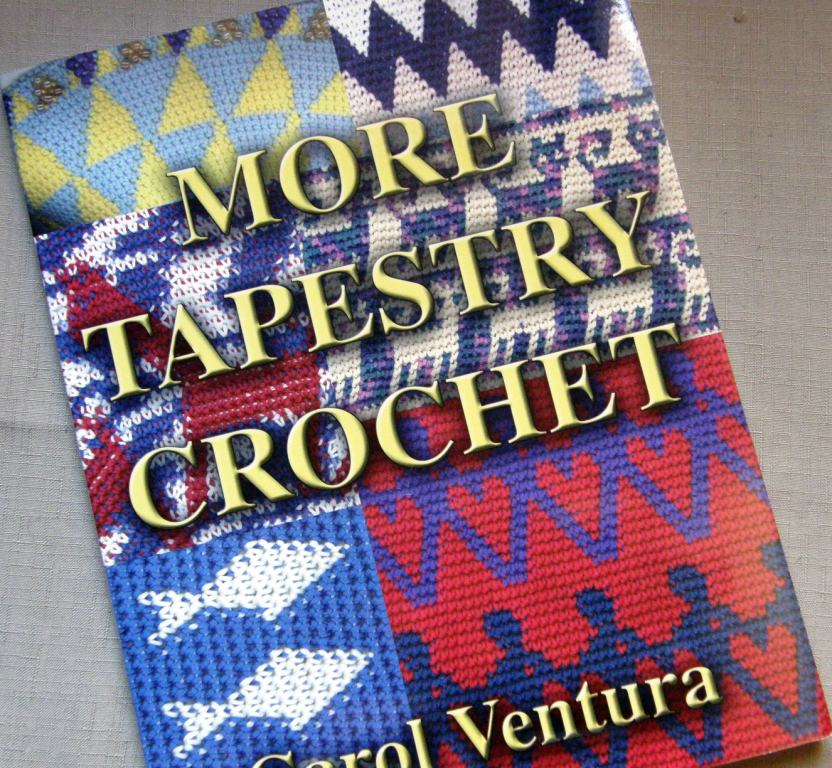
I was given Carol Ventura’s second book on the tapestry crochet technique many years ago and, although I have enjoyed looking through it, I haven’t used it yet. There are some beautiful projects in there for those of us who like imagery and bold geometrics in our handwork.

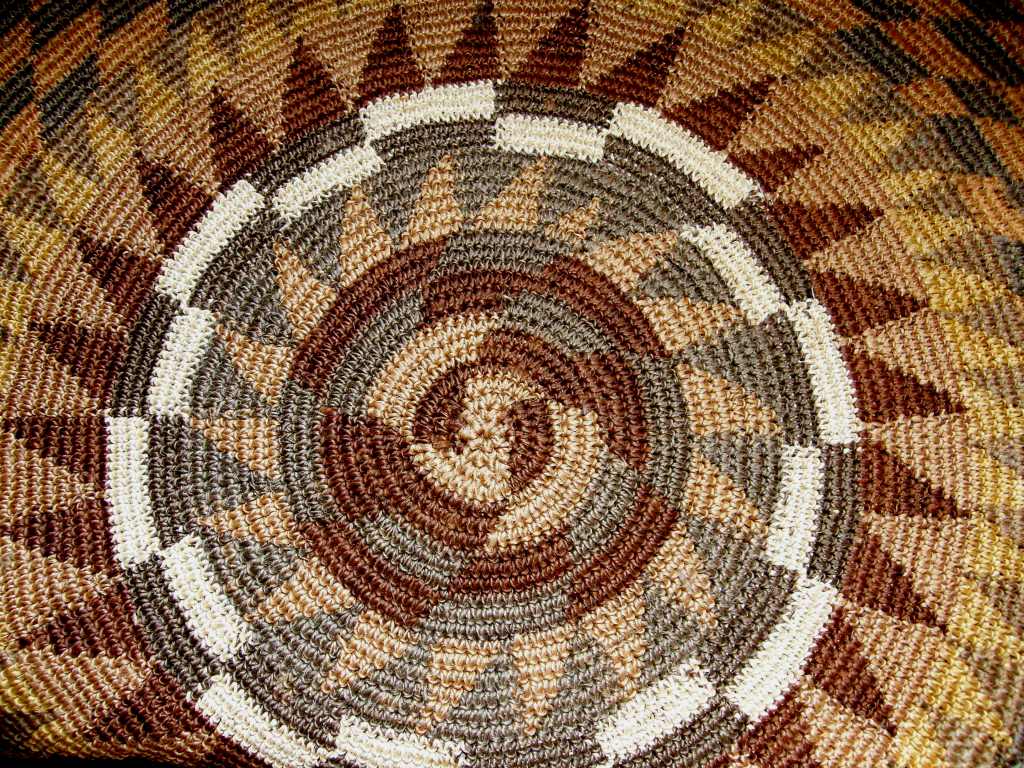
Here is some of the beautiful crochet work that the cabuya fiber artisans from the Intag valley of Ecuador do…a round mat on my bedroom floor…

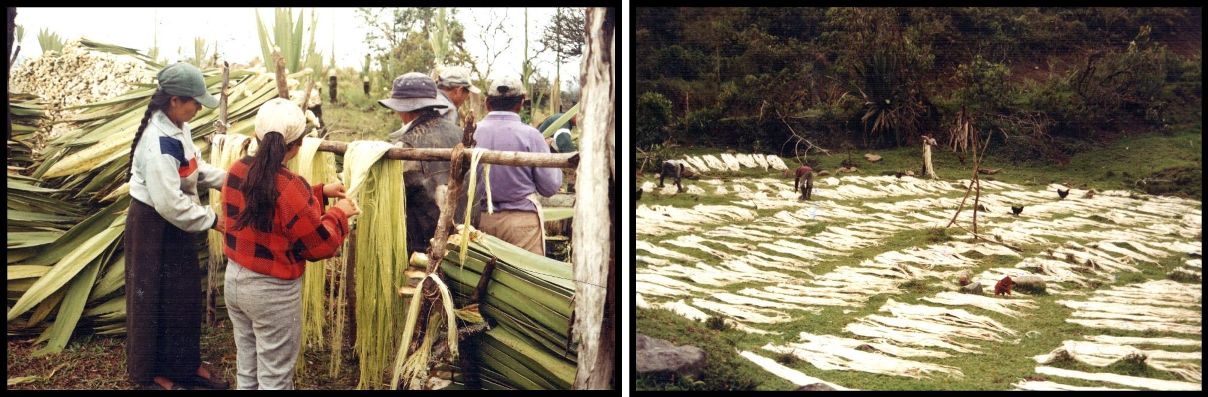
I wrote a post some time ago about the cabuya fiber and how it is processed if you would like to know more.

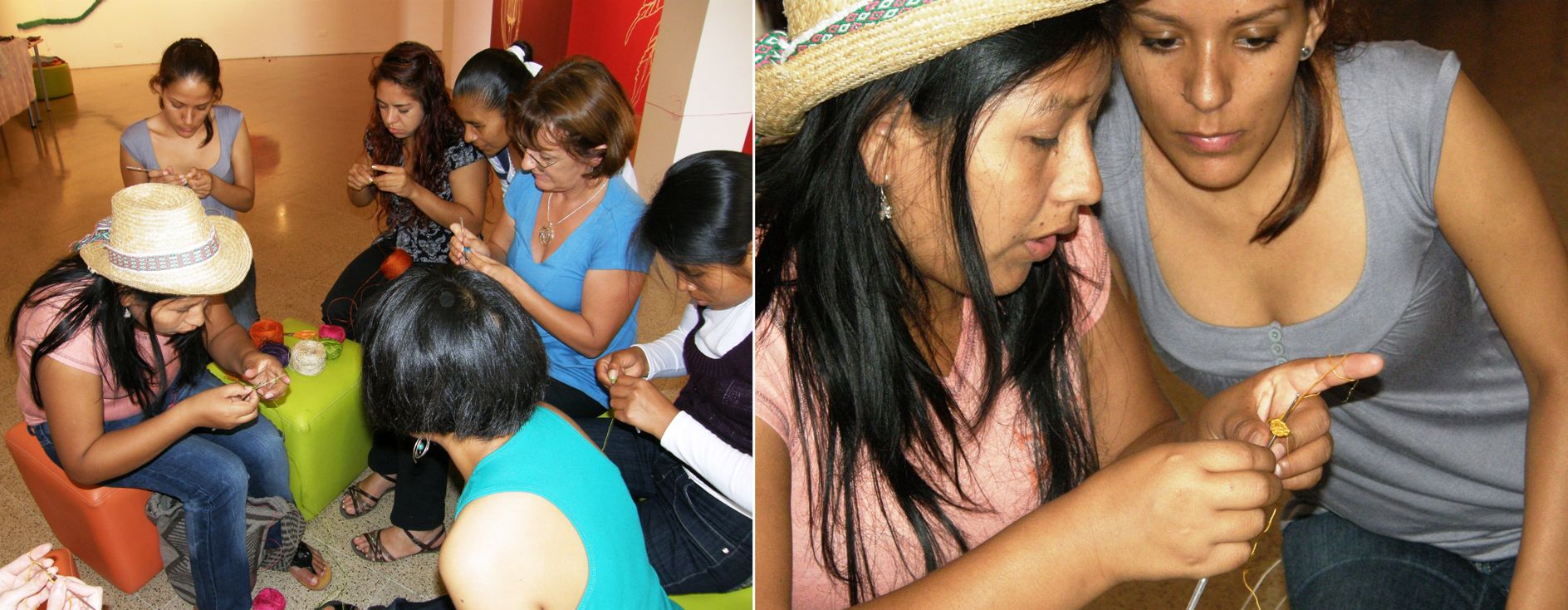
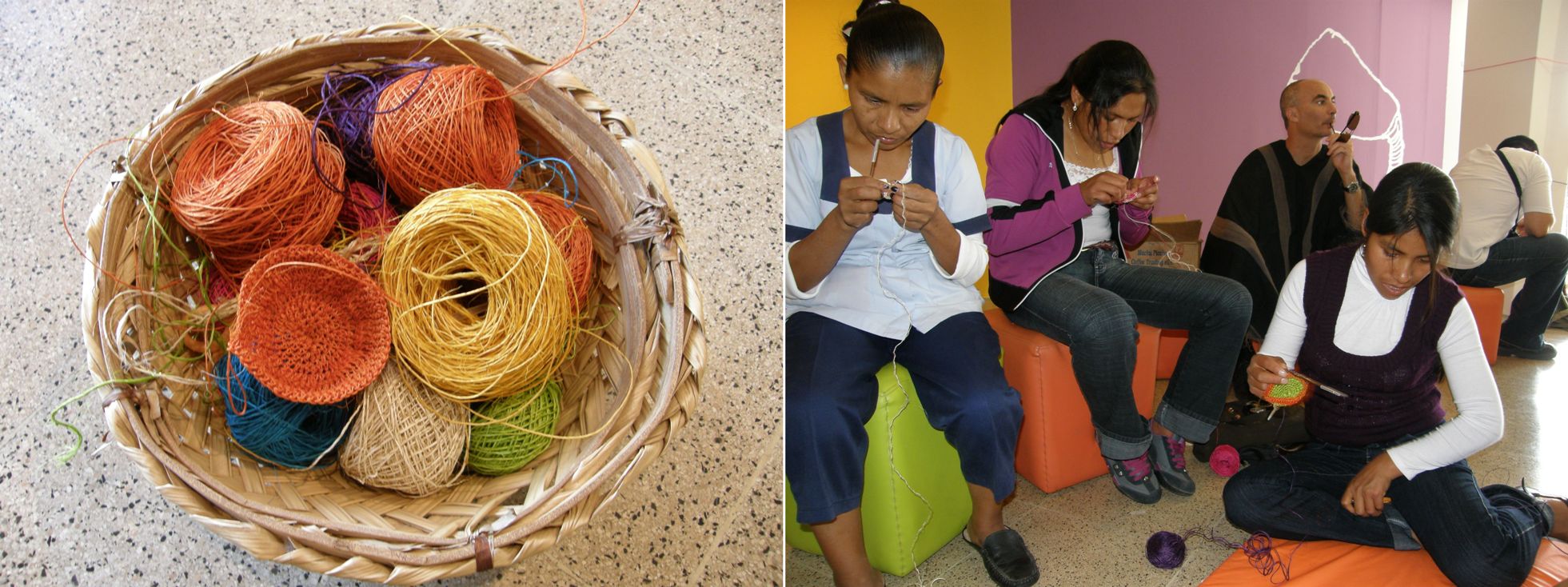
Last year we had a gathering of artisans here in Santa Cruz and Maritza came from Colombia to show us how to crochet with cabuya fiber. Weavers and craftspeople from Chinchero in the Peruvian highlands, coastal Ecuador, the highlands of northern Chile and lowland Bolivia as well as Santa Cruz locals joined in to learn.

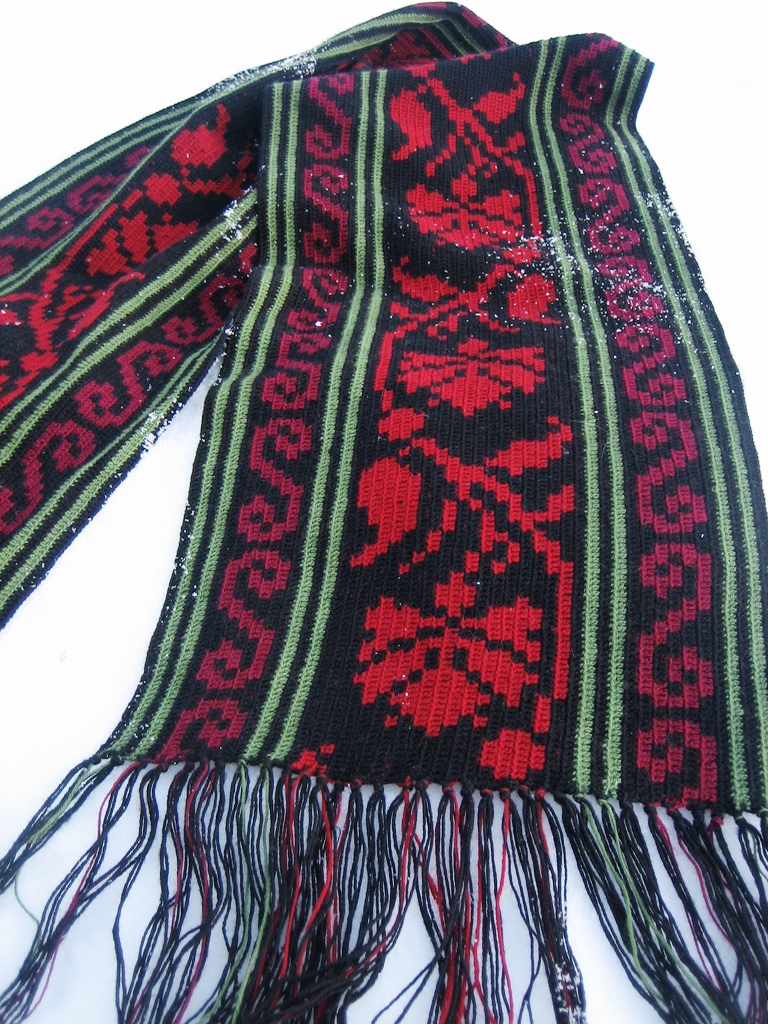
I think the thing that has most gotten me all charged up about crochet this week is the beautiful crocheted scarf that Marit from Norway, aka yarnjungle on Ravelry, recently finished and posted.

There’s that black and red again! Doesn’t this make you want to grab your hook?

In Marits’s own words…I saw a picture of a crocheted men’s scarf from Sweden in a magazine about nordic folk costumes. It had a flower pattern in tapestry crochet technique, worked lengthwise, but with double crochet stitches instead of single. Made my own version by throwing together some antique cross stitch patterns.

I have come across images online of belts in Mexico woven with flower designs that are quite similar to this. I notice them as, to my eye, they look “un Mexican”, if you know what I mean (funny how we form this idea of what “Mexican” should look like). Again, I wonder, as I was wondering last week, about how patterns may travel and turn up in unexpected places or how they may just develop independently on opposite sides of the globe. Some of the motifs in Huichol weavings are so similar to traditional Scandinavian finnweave ones.

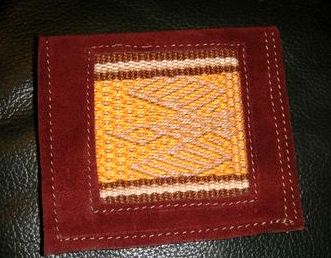
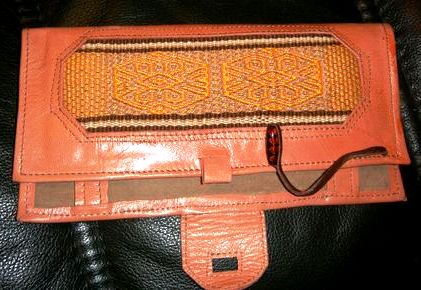
Well, I shall finish this week with some pictures of beautiful work that Sylvie in France has been doing combining her woven bands with leather to make a wallet and purse.

This bird motif in pebble weave is in  my book and comes from the island of Taquile on the Peruvian side of Lake Titicaca. What a lovely job Sylvie has done.

This motif is also in the book and is one that I invented for a wall hanging. These are great projects and Sylvie definitely has the hang of pebble weave! As this motif is one of the last ones in my book, I expect that Sylvie may be wanting more….hold on, a second book is coming!

It seems that this is a shorter post than usual as I have finished early and so have a gap in my schedule…what shall I do? I think I’ll go and look for my crochet hooks and sit down and have a good read of Carol Ventura’s book. 🙂

Backstrap Weaving – Weaving Wanderings and Wonderings

The Worldwide Weaving Web brought a new book into my home last year which has inspired my third wall hanging project.

If you can’t bear to look at yet another of my red, black and white warps on the loom ready to be woven, you had better look away now because here we go again!

There isn’t a whole lot to show for a week of work, is there? What you don’t see is the reading, sampling, un-weaving, re-warping, charting, erasing and Googling. In fact, as I sit in front of this warp, I have the uneasy feeling that I may be jumping the gun and launching into the big project too early. I have actually unwoven the first line of pattern twice and made adjustments. Clearly my sampling didn’t cover all I had in mind.

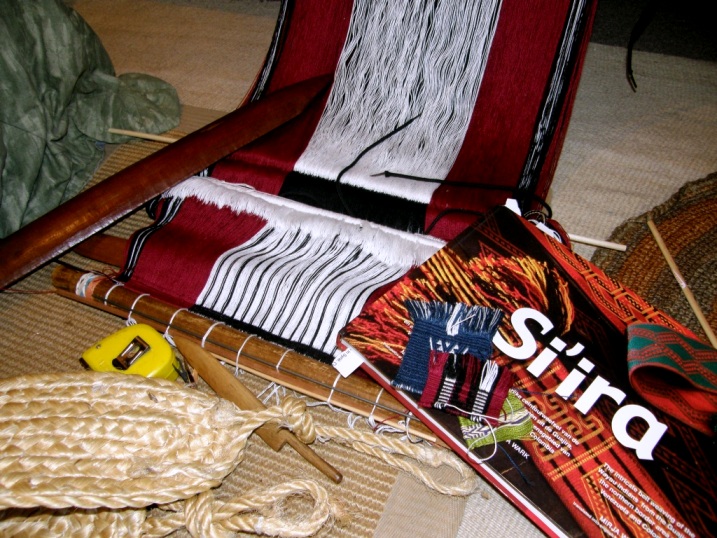
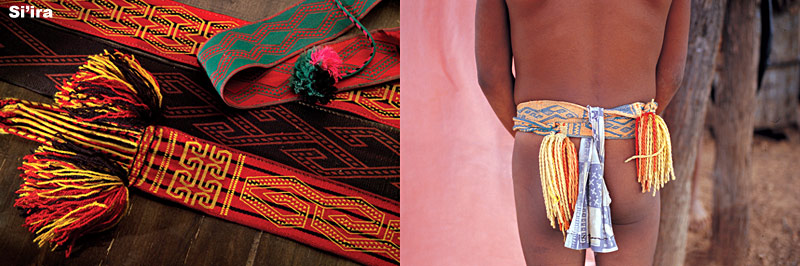
I am using the work of the Wayuu people of Venezuela and Colombia as my inspiration for this project through Dutch author Mirja Wark’s book Si’ira. A lady in one of the Ravelry weaving groups posted about the existence of this book in the middle of last year and I was on a mission to get hold of it. My friend Anna in Australia, who is from The Netherlands, took care of the local payment and then offered the book to me as a birthday gift. Thank you, Anna!

It is a beautiful hard cover book full of drawings and photos of the si’ira which are worn by men, their designs, the weavers and the vertical looms that are used to make them. The skills required to make a si’ira  include weaving, twining, braiding and tassel making.

This image is from Mirja Wark’s web page.

The Wayuu live on the Guajira peninsula which is the northernmost border between Colombia and Venezuela. Wark describes this area as a flat, dry semi-desert over which a continuous hot wind blows. It is always interesting to me to know more about the people, weaving and textiles of lowland regions of this continent.

Many different colors are used and I especially love the pictures of the si’ira in the book that comprise a red and black background on which yellow motifs have been woven. Other belts are black with red motifs…very striking…and so they are perfect for the color theme of my wall hanging project.

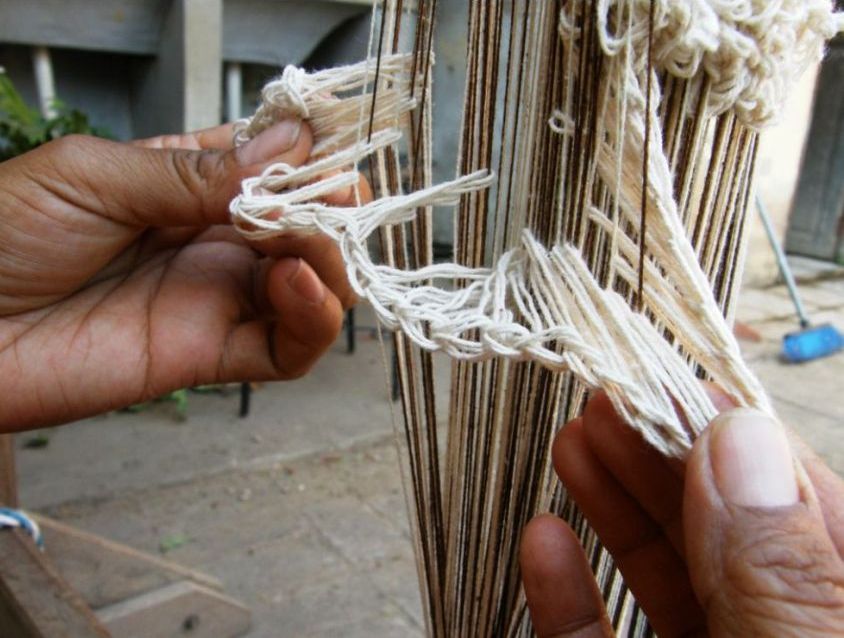
It is also interesting for me to see that the Wayuu weavers use the same style of joined loop heddles used by the Guaraní weavers, another group that inhabits lowland regions, here in Bolivia.

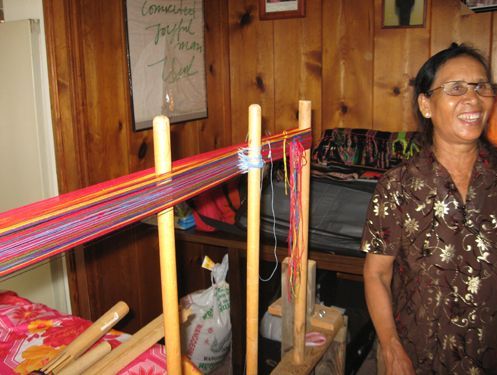
At left you can see my Guaraní teacher, Angela, showing me the unusual way her string heddles are chained together.

What I would like to see is how the Wayuu weavers manipulate the heddles and if it is the same method that Angela and other Guaraní weavers use.

Angela most often has three sets of string heddles on her loom which are required by the technique she employs for the kinds of structures that she weaves. Watching Angela do her pick-up work jumping between two sets of the string heddles is fascinating!

The Wayuu weavers use one set of these kinds of string heddles on their warps but I imagine that they would need to work them in a similar fashion to the way Angela does.

I can’t help but notice some small similarities in some of the motifs of the Wayuu and Guaraní people although the weaving structure employed is different.

So, this will be the basis for wall hanging number three in the red, white and black series.

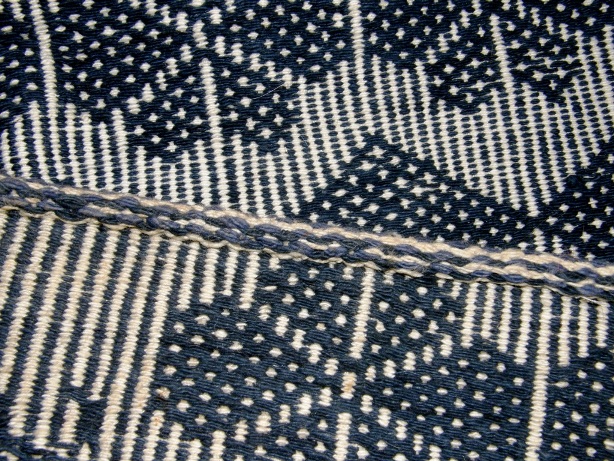
Another of the many interesting things about the si’ira is that they are woven with what Wark calls a “hollow selvedge” which serves to strengthen the edge of the belt. It is funny that on a visit with my friend Pam in Massachusetts we had talked about a rolled selvedge that Harriet Tidball describes in Shuttlecraft Monograph 26. Pam was trying it out on a band of her own.

Tidball writes that it was used by the ancient Peruvians and that available evidence shows that it was used on bands and belts.

The rolled selvedge creates a thick tubular edge.

Separate tubular bands like the one on the edge of the purse pictured at left are often applied to Bolivian and Peruvian weavings  for various reasons, one of them being to strengthen and reinforce the edges of the textiles.

You may be able to make out the thick edge which is the hollow selvedge on this image from the cover of the Si’ira book.

How clever to think of a way to form the tubular edging from the band itself so that it forms as weaving progresses and does not need to be added later. I wonder why this technique fell out of use in Peru.

I love seeing how these things turn up here and there, disappear here, remain there, evolve further there, are replaced by something even more ingenious somewhere else…The fact that these heddles are used by the Wayuu in their arid lowland home and also by the Guaranì here in steamy jungly lowland Bolivia, so far away, fascinates me.

The Worldwide Weaving Web, about which I often speak, means that I can have a new online weaving friend in rural Turkey asking me about backstrap weaving and telling me about the catalog of woven Turkish motifs that his mother has while a weaver and clothing designer in Bangladesh shares with me what he knows about backstrap weaving in his country. Techniques and information are shared instantly across the globe. I wonder how in ancient times designs and techniques were transported and shared and adapted among the weavers of this continent.

And then you have weavers who live along the relatively short length of Ecuadorian coastline who apply bands to strengthen the edges of their cotton saddle bags. Different techniques are used to both set up the loom to create the patterns and finish the woven pieces in different areas along the coast.. I am familiar with the way the members of one family of weavers in Manabi province finish their work by applying a woven band using a home made rigid heddle which I have shown many times here before. Yet it is worth looking at again..it is so cool!

This picture, taken by Kathleen Klumpp, shows my weaving teacher Trinidad weaving and sewing a band to the edge of a small bag.

This is how the edging looks on the fabric.

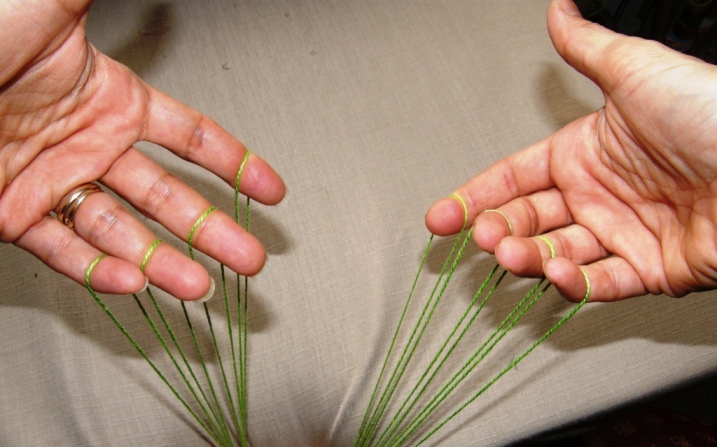
And then I see from an article in the Textile Museum Journal that further north on the Ecuadorian coast, on the Santa Elena peninsula, weavers also apply bands to the edges of their saddle bags but use a very different method which requires an extra pair of hands.

While one person sews the band to the fabric, another person manipulates the warp threads  passing the warps which are looped on the fingers of their two hands from one hand to the other. The extra pair of hands would look like mine above (modeled on a drawing in the Journal article).

These are two very different ways to add a reinforcement band to the edge of a woven textile and both are being used within a relatively small area.

Do similar techniques develop independently or do they travel and get shared and eventually adopted and adapted? Why do some methods remain so different within relatively small areas? I know there are people who devote themselves to studying just this kind of thing. Me? I sit here and ponder!

Something that seems common in certain areas of Asia is the addition of string heddles to the warp while the actual warping is in progress on the stakes. Was it developed simultaneously in various areas or did it travel and get adopted? It seems like such an ingenious and time-saving thing to me. However, it is not something I have ever seen in use in my part of the world.

I know how to do it as I watched the Montagnard weavers warp when I visited them in North Carolina and, more importantly, filmed the process so I could study it over and over when I got back home….it was all happening so fast!

Even though I say it is clever and time-saving, I have not adopted this technique for my own weaving. I stubbornly cling to my favorite way of making heddles with the extra hitch which has the heddle loops  held snugly on the heddle rod.

In the same way, perhaps the weavers of Manabi province in Ecuador and those on the peninsula further north are aware of each other’s techniques yet stick with their own methods believing them superior…who knows? My anthropologist friend Kathleen Klumpp no doubt can tell us that.

Here is the video I made of Ju Nie warping with two colors and making her heddles around one of the two as she goes. That is followed by a video I made in which I do it slowly and explain the process.


Angela, my Guaraní weaving teacher, certainly didn’t hesitate to ask to be taught how to make the kind of string heddles I use when she saw them on my loom and she started using them on her warp to replace one of her sets of chained string heddles straight away. She had seen string heddles on a stick before, wondered about them, but didn’t have anyone to show her how to make them.

And she was keen to learn how to do the three-color version of the technique she employs when an Aymara weaver visited from highland Chile.

And so, techniques and methods travel and get shared and then I guess one day no one will remember anymore how that particular technique managed to cross the Andean high plains and descend to the Bolivian jungle.

Well, enough pondering. Let’s see what has been happening in the Ravelry group where some weavers are still having fun with the Bedouin techniques.

Here’s Jennifer’s wall hanging which uses the al’ouerjan pattern and shajarah techniques. Many of the motifs in the central section were created and charted by Jennifer herself.

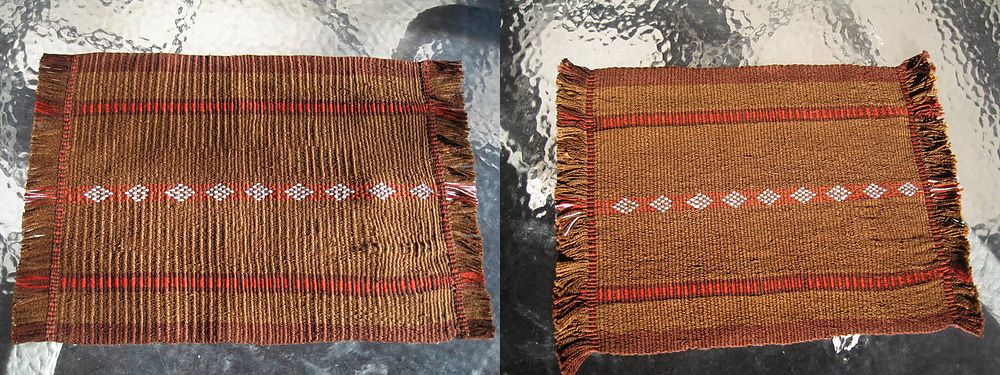
Traudi provided us with helpful pictures of her piece before and after washing. She made a placemat and had some tension issues and a bit of puckering, which didn’t all come out in the wash but, what is nice to see, is that the severe ridging that had formed in her cotton cloth disappeared with washing and pressing.

She used weft twining on both ends before leaving the fringe and her center pattern is the traditional Bedouin al’ouerjan design.

And to finish, I ‘ll just let you know that I put one more tidbit on my RESOURCES page this week. I am slowly but surely gathering up all those links.