Backstrap Weaving – What’s on the Drawing Board?

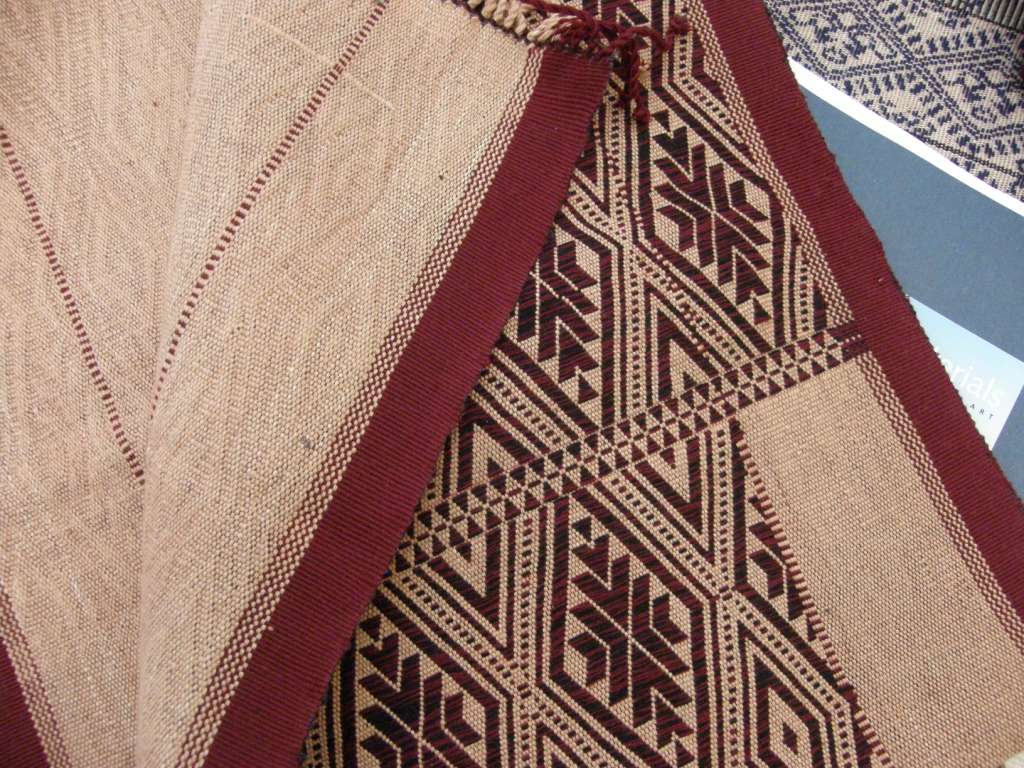
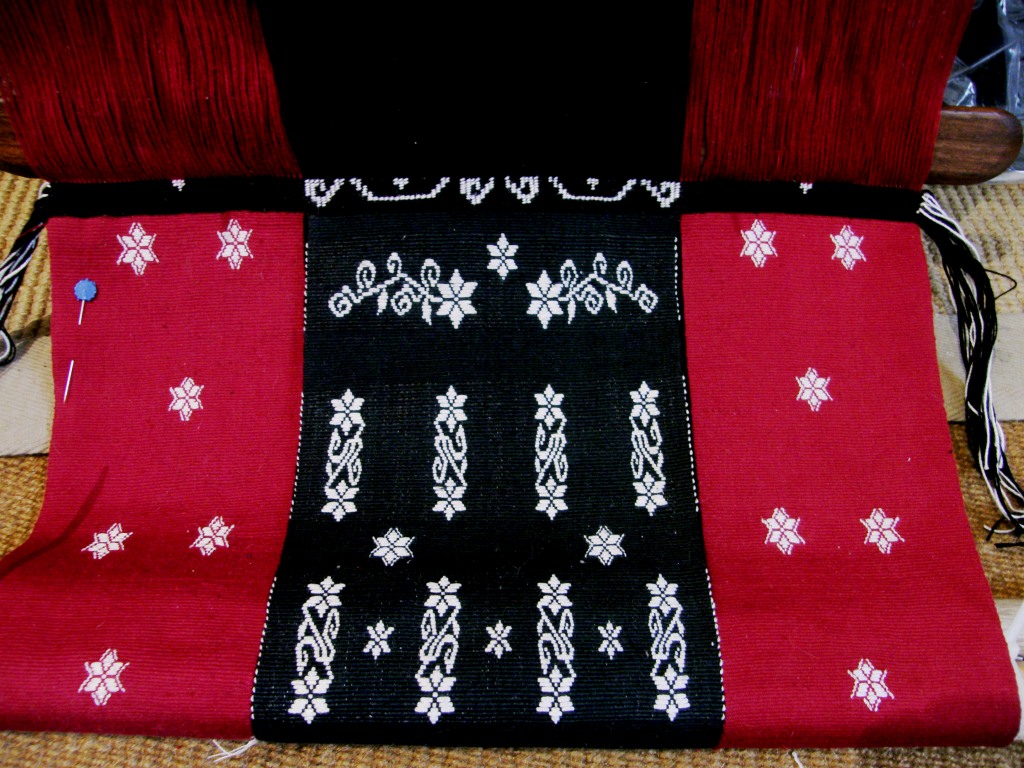
4th wal hanging weft inlayAs I pressed the last creamy silk supplemental weft into place with my Guatemalan pointed stick I was thinking “Okay, that’s enough brocade work for the time being!” I was just finishing the inlay part of the third of my three-panel wall hanging. The black central panel was the last one to be tackled and, in fact, this was my second attempt, the first having been set aside as a “valuable learning experience”.

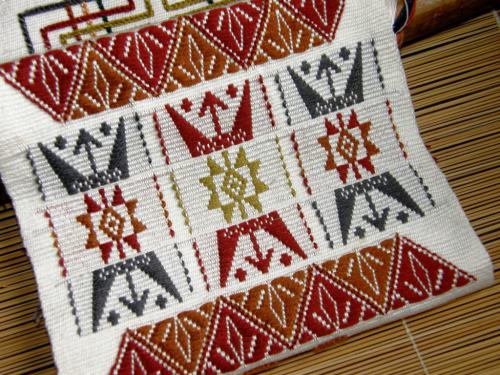
As is my custom as a new year rolls around, I looked back at my blog posts from the end of 2012 and early 2013 to see what I had been weaving a year ago. I saw that I was up to my eyeballs in supplemental wefts. All in all it was a very “supplemental wefty” year. Here are some of the results…
supplementary-weft-pattern-sampler (1)

8319396336_aca5cdd068_o

??????????????????????And, messing about with supplemental wefts brought with it lots of  plain weave of the warp-faced variety. With that came the great coil rod adventure and the conquest of the dreaded corrugation, the circular warp experiments and the enjoyment of using fine thread. One of my students during the year told me about a weaving instructor who had urged her students to embrace the challenge of perfecting plain weave. I guess I unconsciously took on that challenge last year…not that I am saying that I have perfected it!! But, I have to admit that I just love the feel of the fine red plain-weave panels in the three-panel wall hanging, the lack of ridging and the evenness of the edges…no fancy floats…just lovely plain cloth. 

I am pleased that I chose to weave the panels separately. I want to have those red panels hanging freely to float and sway as they please.

So, as one part of my mind is saying “enough with the weft inlay”, something else  inside is sayng “Okay, but what if….”

bedroom floor of a backstrap weaverthree color andean pebble weaveMy bedroom floor says it all! There are certainly advantages to living alone. It allows me to make my bedroom floor my permanent project, ideas and drawing board. I just need to step between stuff anf fall into bed. And, who cares if you wake up at 3am and have the urge to sit amongst the stuff feeling suddenly creative? So, what’s on the drawing board?

There are five projects there, three of which involve supplementary-weft patterning. Clearly I am not done with this and I am not done with seeking the perfect plain weave either. You can see the first “failed” brocade black panel in the lower right corner waiting to be made into something. Buttons and balls of thread stand by.

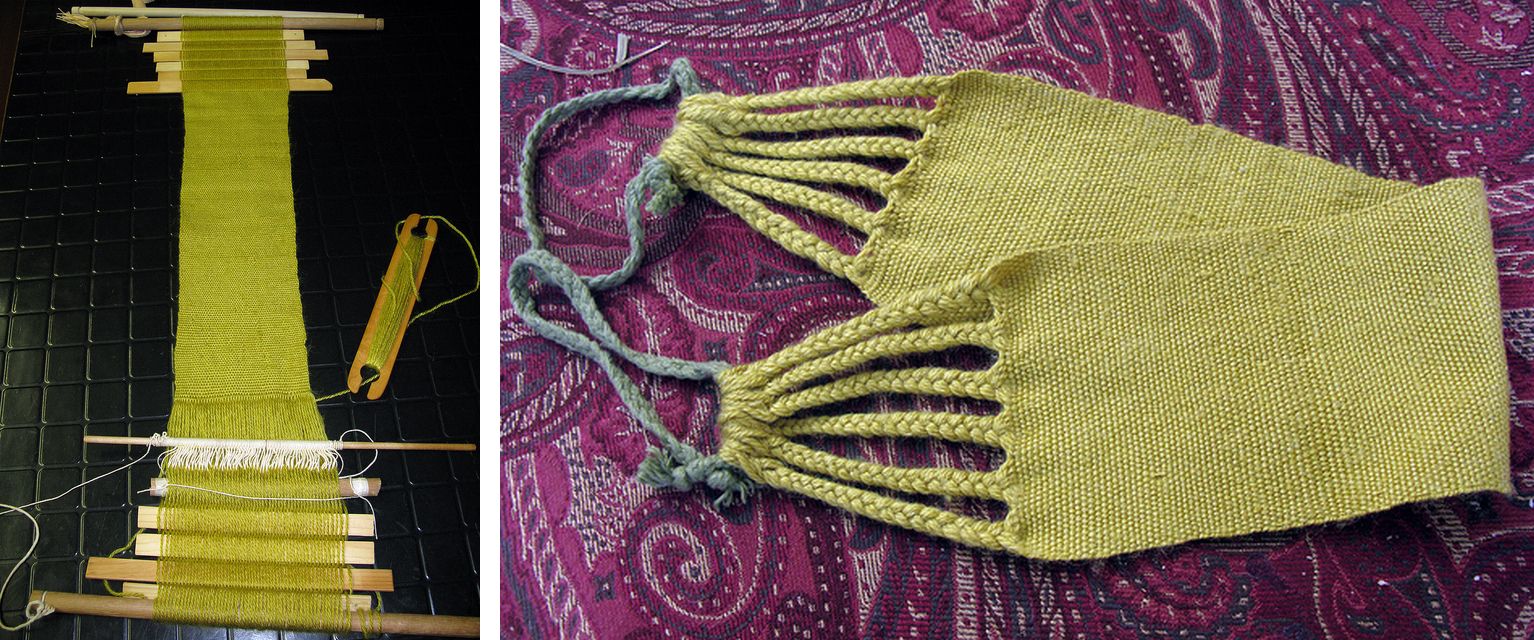
Then there’s the three-color pebble weave band stetched out that I wove last year (pictured above) which needs to adorn a bag. Meanwhile, two little piles of yarn have formed and are sitting there as the vague beginnings of two new projects. I want to make a scarf with my pale blue indigo-dyed Japanese silk. While I have used silk as a supplemental weft, I have not used it as warp (except for a tiny pebble weave experiment). I am hoping to start a silk-on-silk weft inlay project with that.

wool cell phone pouch backstrap weavingThe other project involves wool. I was really happy to find how easily I could weave my sister-in-law’s cell phone pouch using wool straight off the skein.

Re-spinning wool is generally recommended  for warp-faced weaving so that the “tighter” fiber can better withstand the abrasion of the string heddles and the rubbing of the warps against each other. I didn’t re-spin, yet the wool I used behaved so beautifully.

You do, however, need to have your shed opening technique down…smooth and gentle, no scraping or wrestling… to make his work.

There’s the wee wool drawstring pouch at left (picture kindly taken by my brother after my departure from Australia. He photographed it with some of the pretty colored plastic money that we use in Australia). We really need to find a nice wooden toggle for the bag.

alpaca_cell_phone_pouchThe wool I am planning to use for the next project is finer and more loosely plied. I think it will be more difficult to work with …a challenge.

Why don’t I just respin it? I don’t like the “hardness” of the resulting yarn or the curl that it gives to the finished pieces.

And guess what kind of patterning I want to do on this piece….weft inlay of course! Wool-on-wool.

I made a small pouch a long time ago with left over odds and ends of alpaca that I had spun and decorated it with supplemental weft of the same alpaca. I love the way the alpaca supplementary weft billows out of the sheds to lie fluffy and full on the surface of the cloth. I know that wool will behave the same way.

It seems there are endless possibilities for types of fiber to use for these inlay experiments. One thing I have not yet thought of using is hemp. Jennifer gave me some on one of my visits to Oregon and there it sits in the closet as yet untouched. Meanwhile Jennifer has been weaving with it and showed all of us in the Ravelry group her latest project….
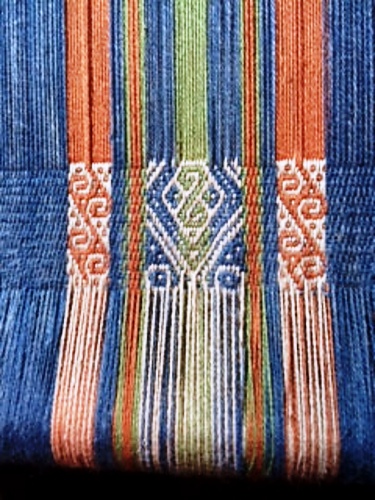
photo_mediumThe colors, which Jennifer dyed herself, are gorgeous. They have that sun bleached look that I so love. The complementary-warp patterns are ones from Chinchero which I charted in my second book. Given the very hardy nature of hemp, I am thinking, as I sit here writing this, that I might use mine for the strap of a computer bag that I have been planning. Excuse me while I go fish the hemp out of the closet and toss it onto the bedroom floor! I won’t be using it for a weft inlay project, though.

The eucalyptus-dyed cotton thread awaits its purpose too…

???????????????????????????????And fr. Kyriakos wrote to me today and gave me a brilliant idea for it which has a suitably Australian theme….thank you!

Meanwhile, before I get too carried away with projects yet to come (well, it’s only natural with the coming of the new year, isn’t it?) there is still something on the loom which needs to be finished. I said that I had finished the weft inlay part of the wall hanging project. You could see in the first image at the top of this post that I have now set up the three finished panels on the one backstrap loom. Now I need to join the panels by twining across the top of all three at once.

twining on backstrap wall hangingSo, here you can see the twining underway. Oh my gosh, I had forgotten how SLOW weft twining can be! Thank goodness that muscle memory kicked in and I didn’t have to really refresh my skills. It’s been a while since I have done any major twining. The good thing about it is that this pattern doesn’t need any significant amount of concentration. As I said, muscle memory took over and, after the first row of pattern was in place, the counting was pretty much over and I could put on some music and sing and twine away.  

Tanka ch'oro and Andean hook patterns.
Tanka ch’oro and Andean hook patterns.

Muscle memory… such a handy thing. I never really believed that muscle memory would play a big part in pattern picking until I wove twenty-five tanka ch’oro bands in succession before the ANWG conference last June.

There would be times when my mind was reading the pattern and telling my fingers what to do yet I knew that something was wrong because it just didn’t feel right. I was actually picking the right colored threads in the right order but, because a distraction had caused me to form my picking cross backwards, my fingers were not picking in the way in which they had become accustomed after so much repetition.

I was amazed at how my fingers had memorized the moves and could immediately sense that something was wrong.

1521366_10152057744651530_1544583453_nAs I sit writing this post, a quick sidetrip to Facebook tells me that Radiant Orchid has been announced as the color of 2014. Who decides this and what does it all mean? Shock and horror…none of my planned projects included this color nor do I have any yarn  this color in my closet. Oh well, I guess I get to pass another year hopelessly out of fashion 🙂 It is a gorgeous color, though.

I will leave you here with an image of a textile from the website of the  Metropolitan Museum of Art in its current exhibit entitled Interwoven Globe- The World Textile Trade – 1500-1800. (Thanks to Jaina at Wovensouls for making me aware of this exhibit and the fact that it can be enjoyed online).
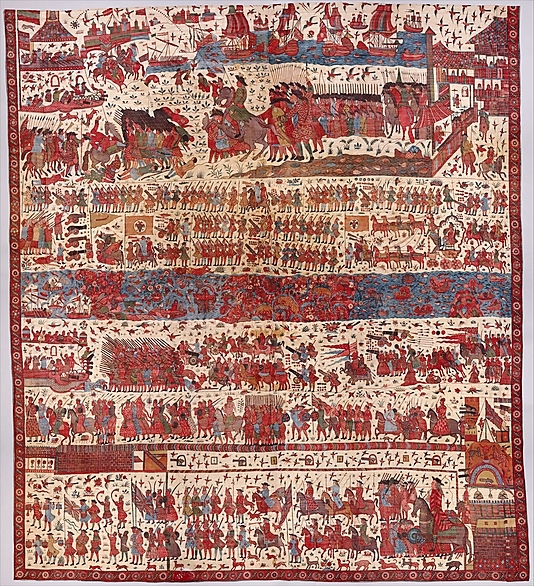
DP291194This cotton piece is labeled Hanging Depicting a European Conflict in South India and is dated before 1763. It is fascinating to me to see a textile depicting something of India in this time period. Some distant family members of mine in England have been tracing our family tree and have gone back as far as my great (x6) grandfather, Pierre Gallyot de la Vilette, who traveled from France to Pondicherry in south India to take up a post as a public notary around 1766. 

Another piece that I love from the exhibit is this tapestry mixture of Incan motifs (the tocapu design around the edges) and Spanish motifs in a wedding shawl made in Peru in the late 16th/early 17th centuries…
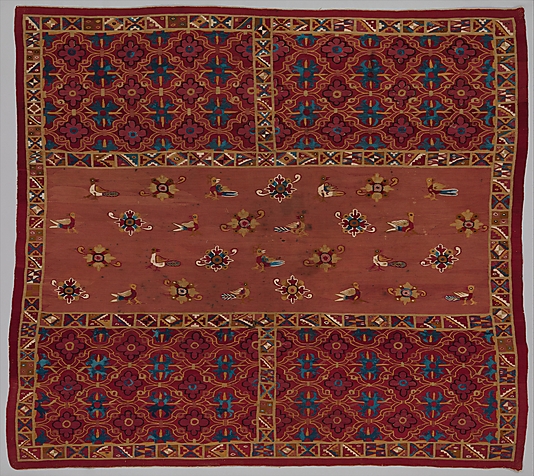
DP265667Take a look at the site and enjoy the exhibit!

Backstrap Weaving – Getting in Sync

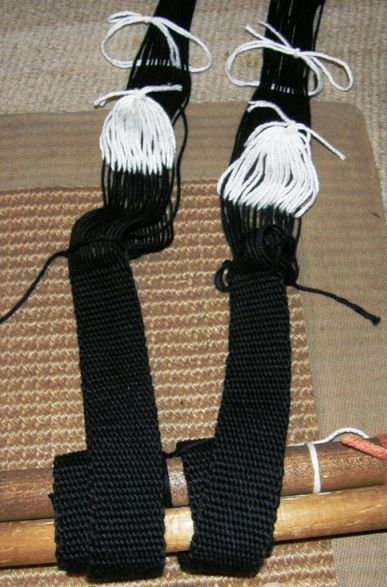
I have never been so happy to get something off the loom. I am talking about THIS:

weft inlay black panelThis is what I was weaving to be the black center panel of my red, black and white wall hanging. It was to sit sandwiched between the two red panels I wove some time ago.

2 of 3 anels supplementary weft inlayWhile I suppose that the black panel looks nice enough on its own, as do the red ones, the three simply weren’t working together for me as a whole. They just weren’t ‘in sync”.  Apart from that, I was learning lots of “what not to do” while weaving the black panel and I wanted to start anew using all the lessons I had learned.

And so,I wove on and on so that I could squeeze in as many lessons and discoveries as possible on that one piece of cloth before abandoning the project. But my heart wasn’t in it and I just wanted to get it OFF the loom!

So, finally it is off and folded and taking shape on its way to being ”something”. I have to admit that now I like it on its own despite some of the wobbly lessons learned along the way. As long as it is nowhere near the two red panels I can be pleased with it.

??????????????????????In the meantime I dyed a skein of green Guatemalan cotton black in preparation for the second attempt at the black panel. Then I took a break and wove a backstrap for Terri. I really needed to warp and weave something that I was pleased with and get my head together before diving into the black panel thing again.

backstrap weaving at ANWGFor those who don’t know, Terri is Magical Moons. She makes beautiful swords for backstrap weaving as well as other cool wooden tools and implements. I asked her to make wooden hangers for my three wall hangings so that they could be shown in an Exhibit at ANWG last June.

After exchanging several emails with measurements and ideas, Terri knew exactly what I had in mind and her finished work far exceeded my expectations.

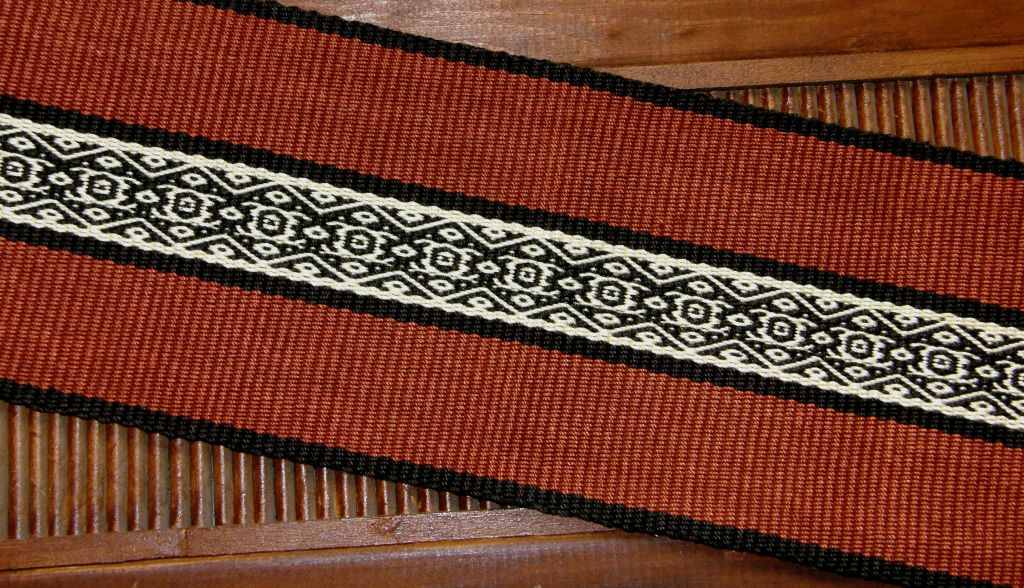
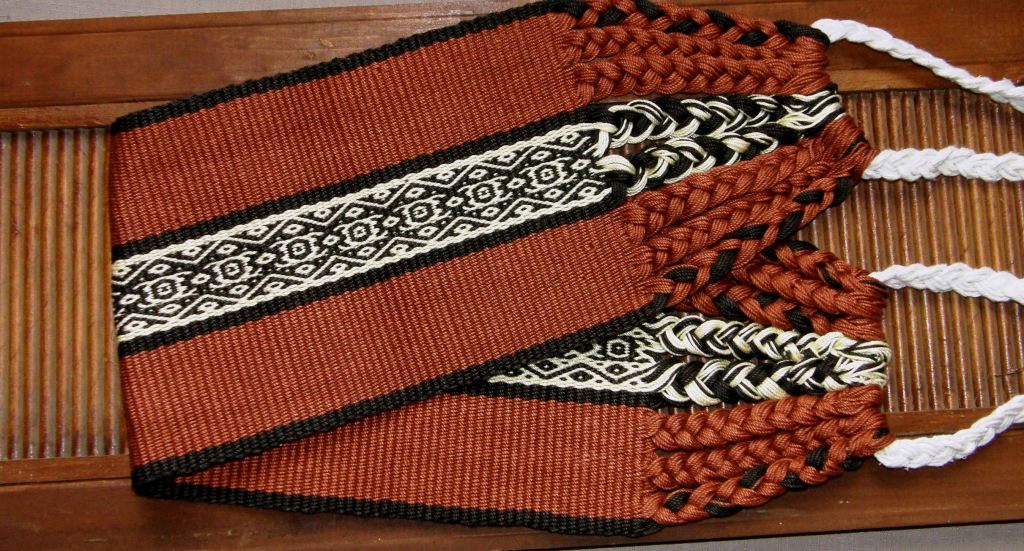
Then Terri suggested I make her a backstrap in exchange for the hangers which I thought was a cool idea…two craftspeople exchanging our handwork. All I knew was that she liked “earthy colors”. So, out came the terracotta dye.

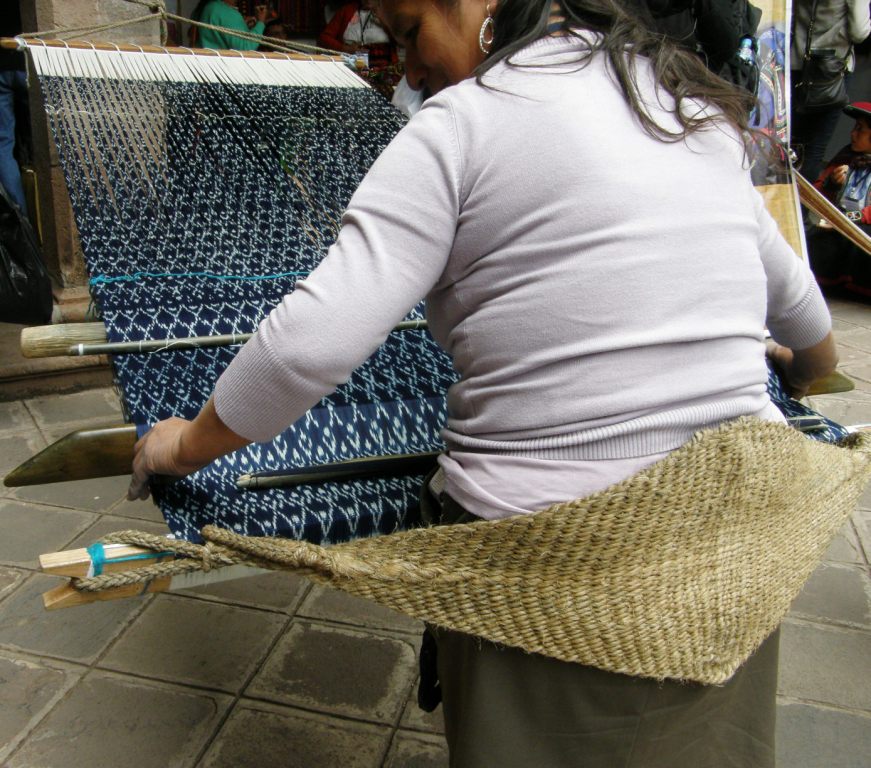
I like a backstrap to be wide and thick…wide enough to spread the job it does comfortably across the back and hips, and thick enough so that it does not fold in on itself on the sides.

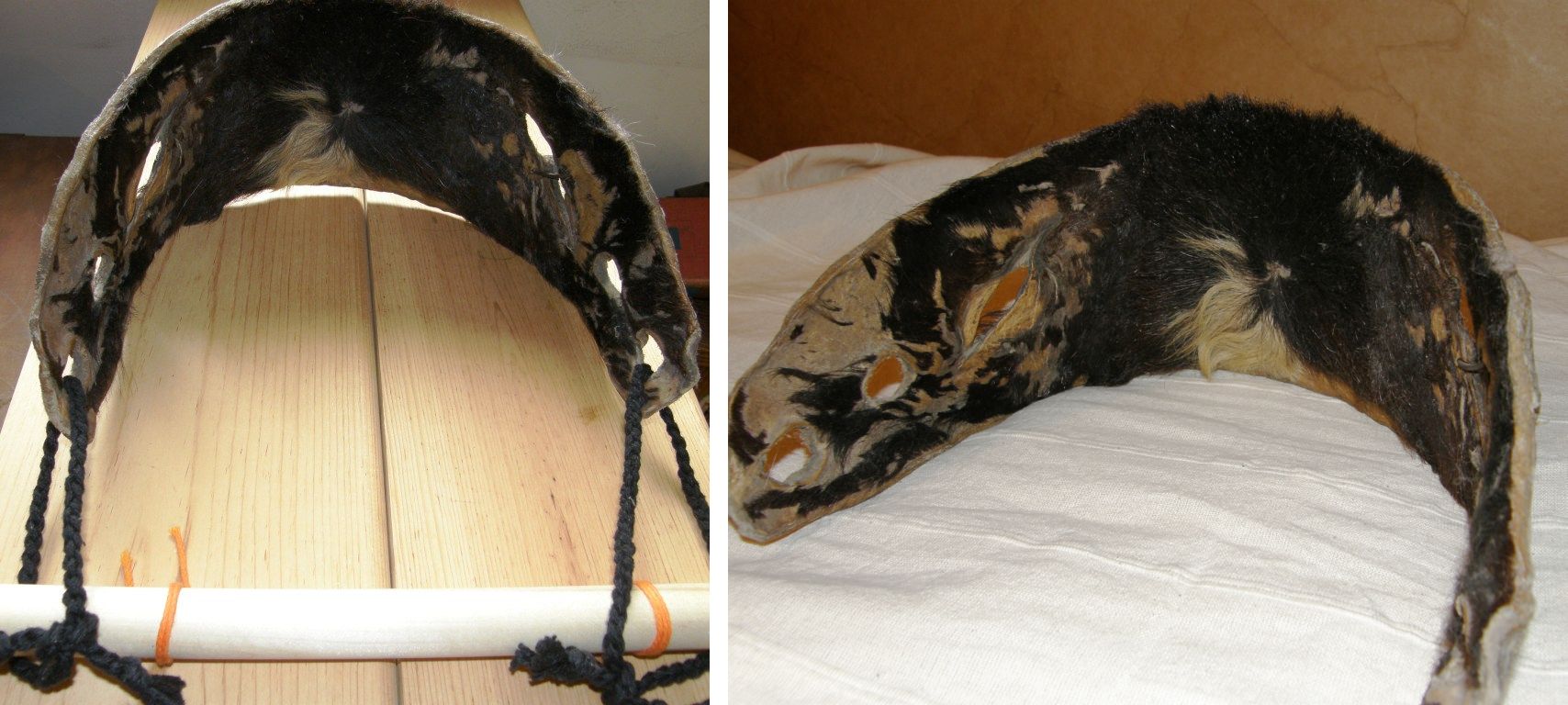
This is a backstrap that I would like to have….sturdy and butt-cradling….

Tacabamba backstrap

A nice sturdy hide backstrap from Otavalo, Ecuador. The hairs tend to tickle while you are weaving.
A really sturdy hide backstrap from Otavalo, Ecuador. I own this one but don’t use it very much as the hairs tend to tickle while I am weaving.

But, we can’t all have backstraps like those.

I used Aunt Lydia crochet cotton size #3 for Terri’s backstrap. I wouldn’t consider #3 heavy enough for a good backstrap in just warp-faced plain weave. I wove a center strip of pick-up pattern which was thick and made the plain borders match that thickness by weaving them in the intermesh structure (this “thick border” structure is taught in my first book).

This made for a nice thick and sturdy strap.

terri's backstrap

Terri's backstrap 2I hope she likes it!
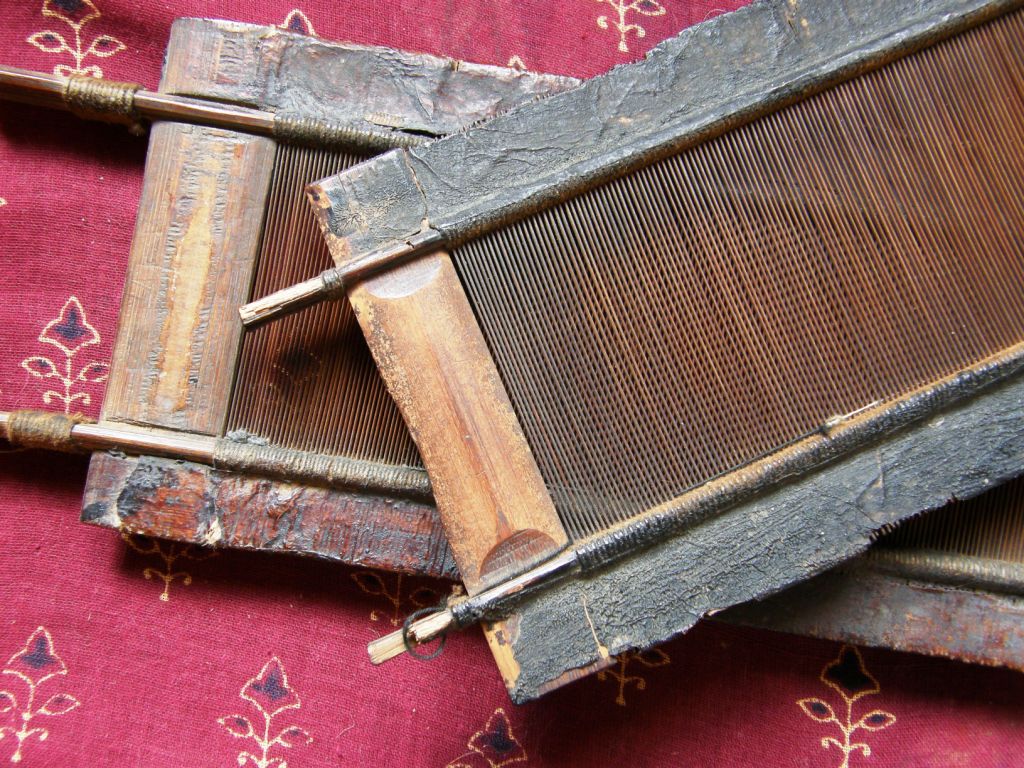
I have bunches of backstraps! My “favorite” regularly changes. Right now, I am using a simple piece of fairly thin leather with shoelace ties that a friend in the US found and gave me. It does the trick. It is actually pretty rare to find a backstrap weaver here in Bolivia who has gone to any particular trouble over her backstrap.

Peruvian woven backstrapHere’s one from Peru where someone has taken the trouble to make their backstrap decorative (or maybe it was just some left over piece of band being re-purposed).

But then again, just how badly do you want to weave? Sometimes you will put up with anything to get your hands into a warp!…like just a piece  of string around the back as you can see below.

discontinuous warpOkay, so I wove Terri’s backstrap, got my thoughts and ideas in line, and then felt ready to get back into the black panel project. I just love winding that black warp and sitting in my loom looking at all those threads stretched before me.

??????????????????????This time around I am making a conscious effort to ensure that the black panel sits happily between its red partners. I had made the mistake before of thinking that the design on the red panels was quiet enough not to interfere with what was happening on the black one…not so.

???????????????????????????????Here, I have just finished the first half of the center motif. I am hoping to use this motif, or something similar, in the weft twining which I will use to join the three panels across the top.

Finally,I am feeling much happier about it  and darn, now I have to leave it to travel! In sync and then out again…oh well.

What to take as an on-the-road weaving project?  I have to take clothes for two seasons….the cool to cold US fall and then the warm to hot beginnings of the Australian summer. I will need to think carefully about a small project to squeeze into the bulging bags.

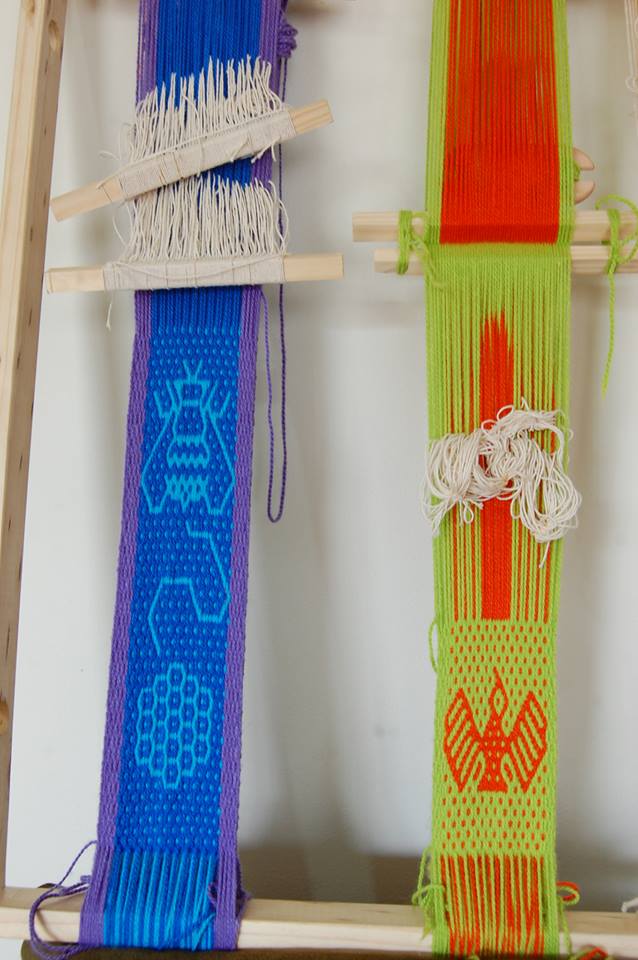
Here are some projects from Icha in Chile who has both my books and is getting along just beautifully with the Andean Pebble Weave structure.

IchaShe has two projects going at once on her frame. Carolyn, an aspiring bee keeper, contributed her original bee pattern on the left to my second book. The hummingbird motif on the right is from my first book and comes from Taquile Island in Peru.

Now, here’s something just for fun….

A friendly gentleman from Cochabamba that I met the other day noted that I am more or less bi-lingual. (I say “more or less” because, despite being here for so many years, I find myself always apologizing for what I perceive as my imperfect Spanish. I think that being a language teacher makes me very hard on myself.) He then went on to tell me that he, too is bi-lingual. He of course, speaks both Spanish and Quechua. I then had the idea that it would be fun to record some phrases in Quechua so that you can hear how it sounds.

I have recorded the phrases along with a slide of the phrase in English that would perform the same function.

Delfin’s Quechua is that of Cochabamba and I gather that it varies from region to region. When I was at the Tinkuy in 2010 in Cusco, Peru with a group of weavers from Cochabamba, they talked about how the Quechua spoken in Cusco differed from the Quechua they know from Cochabamba. They said that the Cusco variety was more pure than theirs as speakers in Cochabamba have adopted many Spanish words which they mix with Quechua. There were quite a few Quechua words being used in Cusco that they simply didn’t know.

I have not written the phrases in Quechua to go with the recordings. When I was traveling and learning to weave, I would have someone repeat a phrase several times and invent my own way of noting the sounds on paper in order to memorize them. Sometimes one of my weaving teachers would ask me to teach her a greeting or a question in English for fun. It is interesting to hear how beautifully someone repeats exactly what you say without seeing it written down and then how distorted it gets once they have seen the written words and then start to reproduce their interpretation of them rather than just the sounds.

The word that Delfin uses for “beautiful” is the same one I learned in Potosi. I didn’t hear it being used in Cusco.

The word for ”delicious” is always useful as, when I have visited people in the highlands, I have always been offered food. Even if you can’t say anything else, that one word and a smile will go a long way to show your appreciation.

I once spent an entire day on a mini bus in Peru getting to Ayacucho. Everyone on the bus was highly entertained when the gentleman sitting next to me decided to teach me  numbers in Quechua. No matter how convinced I was that I was pronouncing the Quechua word for “one” correctly, everyone on the bus would crack up when I said it….and the numbers get progressively more difficult from there! The only one I could manage without sending everyone into fits of laughter was chunka…the number ten. It was a long road from one to ten! That was a fun trip.

Of course, nothing was written down. It was always a very good exercise for me, as a language teacher back then, to be put in the learner’s position.  I realised how quickly I arrived at the point where my head was about to explode trying to memorize and reproduce all the strange sounds. I would go back to the classroom as a teacher with a different approach after that little reminder.

Here’s a Youtube video with the numbers:

To finsh I will show you what Kristin from Ravelry wove on a backstrap loom using a beautiful reed that she made herself…

kristin (2)

kristin (1)Please visit Kristin’s blog for details of this spectacular project and more about that gorgeous reed. I am in love with this neat little set-up!

See you soon again from the  US with some beautiful fall colors, I hope.

Backstrap Weaving – The Plain Parts

I live right in the heart of Santa Cruz city. It is a crazy jungle of tangled electrical wiring, crumbling adobe and sagging red rooftops. Even when I am alone in my little condo I can sense the beat of the city as people go about their daily lives…booming tropical rhythms, car horns constantly blaring, the scratching scraping sound as the washer woman in the building next door scrubs the heck out of the clothes. And then there are the smells. At any hour of day or night someone somewhere in the neighborhood is having a barbecue. I live within a stone’s throw of one of the city’s largest street markets. That brings its own collection of interesting aromas.  The football stadium is four blocks away….faint cheers, chants and whistles on weekends and, if the wind is blowing the right way, I get to hear all the concerts for free.  It is colorful and somewhat joyful…nothing “plain” about it, that’s for sure.

I have been going through old pictures. Here’s a reminder that there are some simple, “plain” places to which one can go to escape all the man-made mayhem. Right here in the city there is a very odd and very large and unexpected stretch of sand dunes. Go there mid-week and you can have it to yourself. On weekends it becomes yet another venue for salsa music and barbecues.

OLYMPUS DIGITAL CAMERA???????????????????????????????I am weaving the black panel of my wall hanging project. Nothing plain about this. In fact, I have to keep stopping and checking myself…how much pattern is too much…have I gone too far? Is it too much, overdone?

The thing is, I am still learning LOTS of lessons from weaving this piece and so I won’t be using it for the wall hanging. I will finish it and keep learning from it.

There are definitely some things I would do differently a second time around. Luckily I have a whole lot of green Guatemalan cotton that I can dye black for a second attempt and I think that my silk supply will hold out too.

I can probably make something nice from what has now become another “sample” and I will start again on the wall hanging panel.

I will tell you just one of the lessons I learned. If you are doing plain weave and using black warp and weft it really doesn’t matter if some parts of your piece are a little less warp-faced than others. You won’t be able to notice that fact.

However, when you are using a white continuous supplementary weft, it DOES matter. The smart thing to do is to put that white weft in as a tester right at the beginning. That way you will be able to tell if some of the black warps have a slightly different spacing to others as the white weft will show through. You can then go about shifting and settling the warps so that their spacing is consistent and completely hides the white weft.

At the same time I have been doing a little study of some of the different ways that indigenous weavers here treat the plain parts of their woven pieces. By plain parts I mean those that do not have any kind of pick-up patterning.

???????????????????????????????

Here are some examples…from left to right…

Sample 1: A rolled edge. There are actually 18 brown warp ends there on that border that have been woven and rolled to form a sort of tube edge. The edge is good and thick and would provide very good protection for the sides of a belt. The weavers from San Ignacio de Loyola use this kind of edging for the plain weave that borders their belts.

weaver san ignacio de loyolaSample 2: Two-weft-span borders. I learned this method from my teacher Maximia in the Bolivian highlands. Look at difference in the yellow edge on sample 2 and the green 1/1 plain weave border on Sample 3.

??????????????????????Maxima makes a cross with her fingers while she picks the various colors needed to create her pebble weave pattern. She first takes the borders from the far side of the cross, then works her way across the warp picking her pattern , She finishes by taking the borders from the near side of the cross. This is what enables her to form the two-weft-span borders.

Sample 3: 1/1 Plain Weave. Using  1/1 plain weave  as the border gives the  pattern area another dimension. The border remains “flat” and the pattern area is raised. This is a very nice effect.

Sample 4: Intermesh border. This is the “thick border” that I explain in Andean Pebble Weave and was taught to me by weavers in Ayacucho. Because it is a three-shed structure, it is the perfect companion to the two-heddle pebble weave set-up. The plain borders match the thickness of the pebble weave sections.

intermesh borderIn this pebble weave piece from Ayacucho, the red plain area on the left is woven using the intermesh structure.

pebble weave cell phone pouch backstrap weavingHere are some of the sample bands that Maxima and I wove using the border method in Sample 2. My cell phone pouch uses the method in Sample 4 for the plain red sections.

The method I most use is that in Sample 4…intermesh.

Oline friend Larisa sent me pictures of her project using intermesh using scrap yarn for learning purposes and so the piece does not have as good a contrast in colors as she would have liked. She says that she believes that intermesh is good for “bold statements”.

larisa flowersLarisa tells me that her rosebud motif is based on one from Palestinian embroidery.  Gorgeous!

Julia used Plymouth Yarn Fantasy Naturale to make the pebble weave band, below. This yarn, for me, is the perfect weight for making a backstrap and I have used it often for that purpose alongside some doubled Tahki Cotton Classic for additional colors. You will need two skeins of Plymouth for a backstrap in the dimensions I give in my WeaveZine article.

julia plymouthYou can see one of the beautiful swords in the picture from Magical Moons.

,y backstrap s made from Plymouth Yarn Fantasy Naturale and doubled Tahki Cotton Classic.
My backstraps made from Plymouth Yarn Fantasy Naturale and doubled Tahki Cotton Classic.

Julia wove with me one day and we played with the finishing techniques shown below in which we worked with tubular bands, coil stitches and cross knit looping.

finishing techniquesI gave Julia a piece of wool woven cloth made by Maxima and weavers in her cooperative in Cochabamba so that she could practice her new skills. Here is her finished bag:

julia bag tubular class (2)The broader part of the strap is two tubular bands edging a piece of linen. Beautiful work and she had just the right colors of yarn for this project.julias bag of finishes

~~~~~~~~~~~~~~~~~~~~~~~~~

4mum

~~~~~~~~~~~~~~~~~~~~~~~~~~

Backstrap Weaving – Working the Weft

I keep picking up the white paper bag that is lying on the chair in the bedroom half buried under a pile of tubular bands and warps. I scratch my head and wonder “What on earth is this?” My idea was to stop putting weaving things away in the closet. I fear the old “out of sight, out of mind” thing. So, the bag remains on the chair. I open the bag…oh yes, the contents of the paper bag are too precious to be left just lying about.  However, they are out of sight in the bag and, therefore, I keep forgetting what a  gorgeous delicate object it is that lies within.

Guatemalan supplementary weftIt is the wee Guatemalan backstrap loom that I bought at the Santa Fe International Folk Art Market in July. I gaped at the stunningly beautiful and delicate cotton gauze huipiles on the Guatemalan stand of weaver Amalia Gue with their white-on-white supplementary-weft patterns and was thrilled when I found that I could take home a relatively inexpensive example of these remarkable pieces.

This photo and description of Amalia Gue is from the website of the Santa Fe International Folk Art Market.

Guatemala_AmaliaGue_ArtistPortrait2_smAmalia represents Ixbalamke, a cooperative of women dedicated to the production of traditional textiles and preservation of traditional weaving. They live in the community of Samac de Cobán in Alta Verpaz and are inspired by the landscape and beautiful views of the region. The members of the cooperative maintain the intricate technique of gauze weaving and the use of coyuche, or natural brown cotton – practices that are rapidly disappearing. They also have a project making little looms for younger generations to continue to learn the tradition of weaving.

The cotton warp and weft is very fine and rather soft and a bit fluffy. It had not been sized. A thicker very loosely spun cotton is used for the supplementary weft. I haven’t looked at it closely enough to see if it is one thick strand or several fine strands combined. I am afraid that I will have to pull out one of the motifs in orderto ascertain that.

There are no obvious start and finish weft tails for the figures. The little bird figures just mysteriously start and finish. By picking at the weft I can see that the cotton used to weave the figures is most likely just twisted to undo the spin a little so that it can be torn when the motif is finished rather  than cut to give a blunt end. The torn end then just sits obediently within the shed. I think the fluffiness of the supplementary weft and the thread used for the ground weave causes all the fibers to interact and  somehow mesh and this is what prevents the motifs from unravelling….just my guesses and ramblings.

Guatemakan mini loom with supplementary weft patterningSo insanely delicate. Yet, this is the fabric of huipiles that I assume are frequently washed.

As it turns out, I have three large skeins of natural and bleached white Guatemalan cotton that is the same as the thread used in this piece. It has sat in the closet since 2008. It was an impulse buy and, when I got it home, I figured that it was way too soft for warp-faced backstrap weaving. I decided that one day I would size it and use it for something. For me, the biggest challenge will be achieving that even gauze-y ground weave. How in the world do the weavers manage that?  The good thing is that I have a ton of the thread and can afford to experiment and fail and try again.

I haven’t done supplementary-weft patterning on an open weave like that before. There will be much to learn! He is one of the huipiles for sale on the Gautemalan stand. This one was easier to capture in a photograph than the white-on-white ones.

Guatemalan huipil santa fe folk art market 2013So, while on the subject of the workings of supplementary wefts to create patterns, let me show you a few more things that I saw while in Santa Fe.

This is the work of weavers in the Sna Jolobil cooperative in Chiapas, Mexico headed by Pedro Meza Meza…

???????????????????????????????

And from Myanmar, Chin weaving…..

myanmar supp wef….brought to the Market by Khun Shwe and Pa Mang, experts in the textiles of the 40 subgroups within the Chin culture.

All the textiles I looked at on Khun Shwe’s stand were created with the single-faced weft inlay technique that I describe in my tutorial here. Below, you can see the “clean” back side of one of the pieces. 

single faced supplementary weft patterning myanmar

khun shwe myanmarIf you are in Santa Fe outside of the weekend of the International Folk Art Market there are still plenty of ethnic textiles to be seen at the Travelers’ Market not far from the downtown area. Many thanks to Marilyn who put me onto this place. It kept me happily occupied during one of the days leading up to the Folk Market.

There, I got to catch up with Pam Nadjowski whom I had met at Convergence 2010 in Albuquerque. Pam has a booth in the Travelers’ Market with textiles, jewellry and artefacts from Chinese minority groups that she has collected over the years. It was from Pam, in the booth she had at Convergence, that I bought the beautiful fine bamboo reeds that I use on my backstrap loom when I want to weave balanced cloth. These are treasures to me!

bamboo reedsPam allowed me to examine and photograph the beautiful silk brocade cloths, with pattern appearing on both sides, which come from the Quiandongnan area of China. They are used as baby carrying slings.

Sadae Torimaru in “Spiritual Fabric. 20 Years of Textile Research among the Liao People of Guizhou, China” briefly describes the patterning technique. She shows a weaver working at a floor loom and writes that each row of supplementary weft pattern takes 7-8 minutes to pick. The book includes 3 pages of images of individual symbols that are traditionally woven into the baby carrying slings and information about what they represent….such things as roosters’ feet, grass in paddy fields and a big tiger’s claw. It is interesting to go through the photos I took and identify the symbols in the book.

Here is just one of many pieces that I photographed. What an amazing piece of fabric in which to carry a baby.

???????????????????????????????I’ll show you just one more thing from Nagaland, a state in the far north-easten part of India.  There happened to be an exhibit of Nagaland textiles while I was visiting the Travelers’ Market.  Here is a very striking piece of fabric patterned with supplementary wefts. It is quite a contrast to the delicate Miao brocade. I like the way the supplementary weft extends from the sides of the cloth to form a fringe….an interesting solution to bulky weft turns on the edge of the fabric. I have more interesting pieces to show from Nagaland….another time.

???????????????????????????????As for my own weaving, it is a little “on hold” as I am counting down to my departure.

My living room floor has once again turned into a hop-scotch field of baskets of skeined yarn,  all sizes of balls of yarn arranged in possible color combinations, sticks, elastic bands, tape, warping boards and STUFF. This is where I warp. I love the speed and efficiency that comes from winding many warps this way….choose the colors, wind the warp, put the warp on the sticks, make heddles. For the simplest warps I make the heddles after the warp is wound right there on the warping board….Done!…NEXT!

4 color pebble weaveThe bedroom remains the paradise where I do the actual weaving. It is simply a smaller version of the chaos of the living room but has many more sticks as well as scattered cushions on which to sit and weave.

Now that I don’t have my cat anymore, I don’t need to put everything away from kitty claws at night. This means that things can remain in sight and in mind at all times rather than being put away in the closet to be possibly forgotten. There is quite an array of bits and pieces scattered about to remind me that there is this certain thing that I wanted to investigate further, or that color combo that I wanted to try or that pattern that I wanted to chart. I see them during the day and step on them in the middle of the night if I need to visit the bathroom.

I now have several weaving anchor points in the bedroom so I don’t even need to roll up a project and put it aside when I feel like working on another for a change of pace.

Between spurts of warping which can be rather mind-numbing, I wove one more  pattern on the four-color pebble weave band and rearranged the colors a little for the repeated motif. This is certainly something that can “un-numb” my mind!

And then, when my head is good and clear, I work on my supplementary-weft wall hanging. It’s not a sampler. I don’t want any mistakes in it and so, I leave that project for the times when I feel relaxed and want to reward myself after a good long bout of warping. I will give you a break from seeing that project this week.

Let’s look at what others have been up to….

hummingbird_guitar_strap_002_mediumI taught Janet the two-heddle intermesh technique that I teach in my second book, when I was visiting with her in northern California last spring. She wove this guitar strap using her own handspun wool and…. look at that, first prize at County Fair!  The strap has bird, leaf and hummingbird patterns. I got to see it when I was at her place in July but wasn’t allowed to show it here at that time because of the rules of entry in the Fair. I have been waiting and waiting to show you how fabulous this is.

Photo by Zev Eisenberg

Figmentling, from Ravelry, told me that she learned how to twine from the basic tutorial here on my blog. This is another resource that she consulted as well as this discussion on Weavolution where my friend, Franco Rios, lists many more resources for instructions and information. Then, she took it so so much further and created the bag you see above! It has interesting finishing techniques and a braided strap that she learned to make from Ingrid Crickmore’s loop braiding blog. She drafted her own pattern which she says commemorates the new bak’tun in the Mayan calendar.

DigitalLeaf from Ravelry shared pictures of her backstrap project.

DigitalLeaf backstrapIt looks  wide and very comfortable, has nice edges and is beautifully finished. I hope that she will get a lot of use from it.

And finally, I would like to share a comment I got from a reader this week. As one of my goals in writing my second book was to have people feeling confident and inspired enough to design and weave their own pebble weave patterns, I can’t tell you how happy this comment made me:

Thank goodness! I have finally cracked it. Having worked my way through the first Andean pebble weave book I was looking forward to dipping into the second and then I noticed that you had changed the pattern format. My heart sank and I put that book away for a month. But I looked at it this weekend, tried one of the smaller bands without any notations (thought it best just to throw myself into it) and by the time I was halfway through the first repeat it all made perfect sense and I can now read them perfectly and am presently designing my first band from scratch

Thank you Laverne – you have opened a whole new range of patterns to me.I will post my first effort when it is completed (if it works, that is)!

See you next week!

Backstrap Weaving – Seeing Double

4th in textile trail series backstrap weavingSeeing double….it was interesting weaving these two panels for my wall hanging at the same time on my backstrap loom. I am sure that doing so helped me achieve the identical spacing and dimensions of the supplementary-weft motifs that I was aiming for. I had those specific reasons for doing it that way. Did it save time? I am not really sure. I guess there was some efficiency in warping both panels in one session.

This is not the first time I have done this. A long time ago when I made a carry bag for my backstrap weaving stuff I needed two separate narrow bands for side panels. I wanted the neatness of the third selvedge on both and so wanted to weave them as two separate bands rather than weave one long band which would then be cut in half. Somehow I thought that it would be more efficient to weave them side by side like this. It was an interesting exercise but I couldn’t find anything about the process that was more efficient.

Well, okay, maybe it saved just a little time…the time that I would have spent dilly-dallying and messing around after finishing the first band and then finally heading to the warping board to set up the second one.

zip-panelsI know why the Montagnard weavers weave two bands together on their backstrap looms. It is simply a question of balance and a more comfortable way to weave.  The Montagnard looms are designed for very wide pieces…wide panels that will be joined to make blankets and skirts. Placing a single narrow band in the center of the loom bar that wide is awkward.

???????????????????????????????The bands shown in progress above will be bag straps for what the weavers have nicknamed their “Bible bags”.

montagnard bible bagsIn the next picture you can get a better idea of just how large those loom pieces are. Take a look at that mighty sword!

montagnard weavers with two bands on loomNow I can sit and wonder about the following piece that I saw recently on Teyacapan’s fabulous Flickr page of Mexican crafts and textiles…

teyacapan mexican weavingThe motifs are identical on both pieces but it is hard imagine that they are destined to be part of the same project because of the difference in border colors and, indeed, Karen says that they are fajas (belts). The loom bar is not extraordinarily wide so I don’t think that balance had anything to do with it. It is fun to see the different ways that weavers choose to set up their projects.

So, having finished the two red panels I am now working on the central black one…

??????????????????????

I am using a coil rod on this warp, as I did on the two red panels, to help lock the warp threads in place and stop them from slipping around the far loom bar. It is the  movement of the threads around the far bar as the sheds are opened that I believe is responsible for the corrugated look that warp- faced cotton pieces often develop. I am being  a little unconventional by using one on what is not a circular warp. I have written a series of posts about the coil rod starting with this one.

I was apparently very distracted as I placed the coil rod in this warp. I placed it upside down and only noticed, even though it was very obvious, after I was three-quarters of the way through. Thankfully, the fact that the rod sits on the underside of the warp rather than on its upper face does not have any affect on its performance.

While looking through the pictures I took when I studied with the Montagnard weavers I found this shot of Ju Nie’s coil rod sitting nicely in position on her circular warp.

coul rod on Montagnard loomAs I have said before, I want to play with creating the motifs by using the supplementary weft to form the motif itself as well as outline the motif in the black ground weave. You can see below, the first a row of ground weave motifs followed by the supplementary-weft ones and then a repeat of the ground-weave style.

Calcha flower motif in supplementary weft inlayThen I wove my adaptation of the Calcha hatband motif that I so love which inludes the flower head motif woven at the beginning of the black piece.

So far, I think that it is all working pretty well together.

three panels of fourth wall hangingAnd now I have decided that I need to challenge (or torture?) myself by weaving both styles side by side. That is causing me to see double all over again!

You can see what I mean by “both styles side by side” in the patterns on the Bolivian hatband in the center below

Bolivian hatbandsThe band has two ground-weave colors with one half of the band being white and the other yellow. The bird motif is formed in the supplementary weft on the white half of the band. On the yellow half the bird shape shows in the yellow ground weave and is outlined by the supplementary weft. The turns of the supplementary wefts are along the edges of the band which means that each shed holds the ground weft and two supplementary wefts. I have tried that myself but the result of stuffing all that weft into each shed with the weight of yarn that I use is too bulky for my liking.

For the moment, a whole two rows into the next set of motifs, I am bending my brain trying to see the motif in positive form and then negative  and back to positive again as I work my way picking and dropping threads across the warp. As with anything, I am sure that I will just get used to it.

I finished the three-color pebble weave band…one background color and two motif colors…another form of seeing double, I suppose, having had to think about two colors simultaneously forming patterns instead of one.

three color andean pebble weaveOnly now that the band is finished, I fully appreciate the feel and sheen of the tencel which simply weren’t apparent when the piece was at full stretch on the loom.

I found that there are lots of great sites online with free bag sewing patterns…no need to link to any particular one…there are LOADS of them. There is one for a cute backpack that I just might have to try. I will sew this band onto it. Now, should I weave the fabric for the backpack with a tiny bit of three-color pebble accent or should I go out and buy fabric? Seeing as I know nothing about fabric, that alone will be a challenge. Actually, I wouldn’t mind weaving a very wide piece of  plain-ish fabric on my backstrap loom.

Now to get that four-color band finished…something to relax with when all that positive and negative stuff on the black panel starts to flip me out! The other thing that is relaxing is thinking about and planning the weft-twined pattern that I hope to use to join the three panels along the top….down on the floor with charting paper and pencil and eraser…love that!

And again, while looking through my pictures of my Montagnard weaving teachers I found this one of a beautiful skirt woven by Ju Nie with its kteh work, the weft twined finish. Ju Nie often sends her skirt pieces back to Vietnam for her sister, who is more expert in kteh than she is, to add the twined and beaded finish.

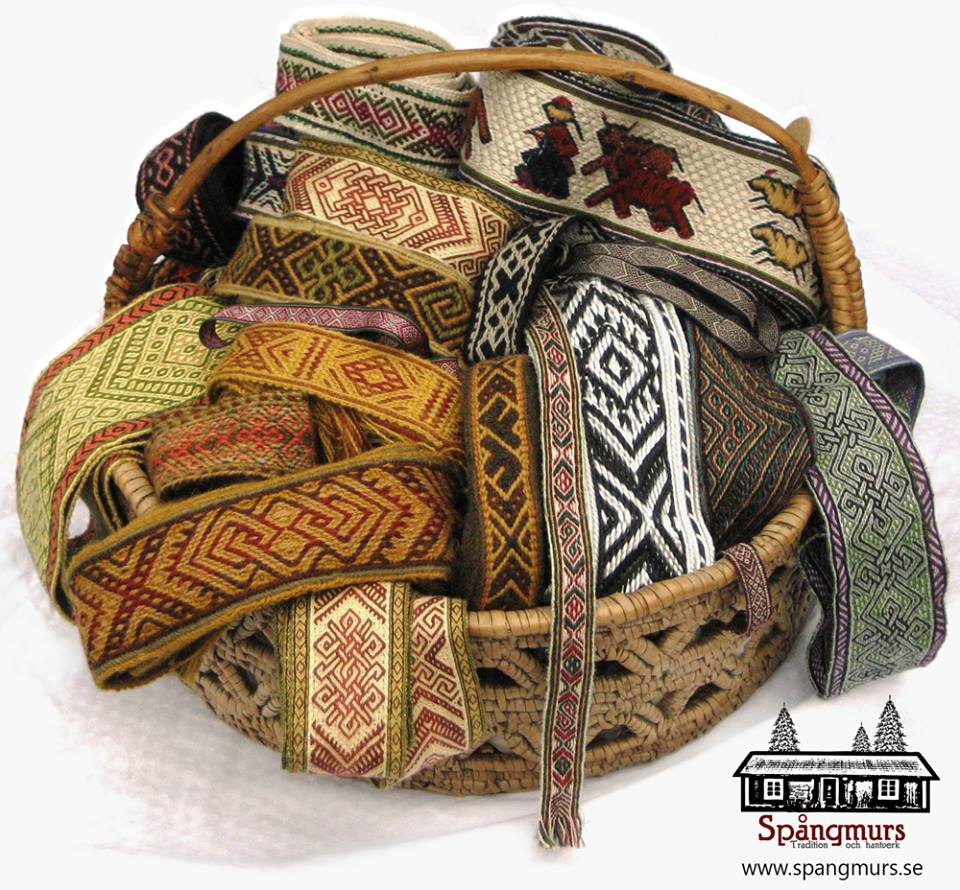
ju nies skirtTo finish I would like to show you one of the most beautiful pictures of a collection of bands I have ever seen…

louise stromThese are some of the tablet-woven bands by Louise Ström in Sweden. Those of you who have my second book may recall Louise’s contribution of some of her tablet-weaving motifs. I show how these can be adapted to Andean Pebble Weave. In fact, I recognize one of the bands that she allowed me to use for patterns is in the basket above. Louise recently completed a booklet in English on tablet weaving entitled Krusband – Tablet Woven Poetry. A booklet about tablet weaving without using a chart. The appendix, which can be bought separately, has over 100 original patterns.

Back to my loom now. Let’s see if now, with a clear head, row three on the black panel is any less confusing!