Backstrap Weaving – East and West

IMG_0010EAST AND WEST: THE EASTERN CHAPTER

The problem with not blogging…stuff builds up!! But not as much stuff as you might think this time.

Not blogging indicates that I have  been way too busy having too much fun.

But that also means that I haven’t been able to take as many pictures as I would have liked. Can you believe it? There I am with camera in hand ready to shoot anything that moves but, on this trip, I have been moving too much to keep up.

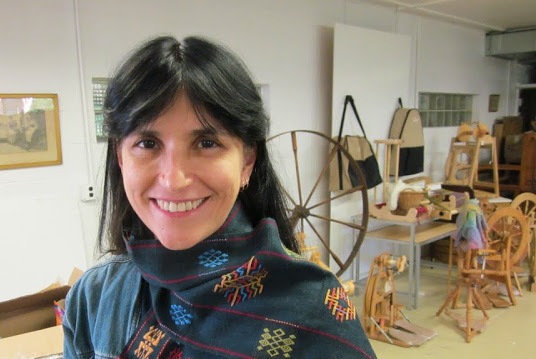
Fortunately people have sent me pictures and allowed me to use theirs. The one above was taken by Marge on a visit. I am modeling the Bhutanese inspired scarf that I wove recently using supplementary wefts to create the patterns.

indonesian textile ikat backstrapEAST AND WEST…the title of this post.

This refers to the fact that I started “back east”, as people in here on the west coast say, in Pennsylvania and then headed over to the west coast, or the “wet” coast, as some people say, to Washington and now, California.

It also refers to the  flow of wonderful eastern textiles that has occurred during this trip into my western hemisphere area of study…textiles from Timor, Laos and Indonesia as well as Central Asia. I have pictures of amazing textiles to show. They have me thinking about tripping off to Asia when next I visit Australia but, every time I think about that, one word pops into my head

 :MEXICO:

and I realize that there is a lifetime’s worth of things yet to be seen on this side of the world.

Above is a picture of a backstrap-woven ikat (yes! that’s ikat) piece from Indonesia, a shoulder scarf from Batuisi, West Sulawesi from friend Judith’s collection. That is just a wee tease and hint of things to come in my next post.

So, here I am in a west coast heat wave on my backstrap weaving friend Janet’s berry farm…
berries

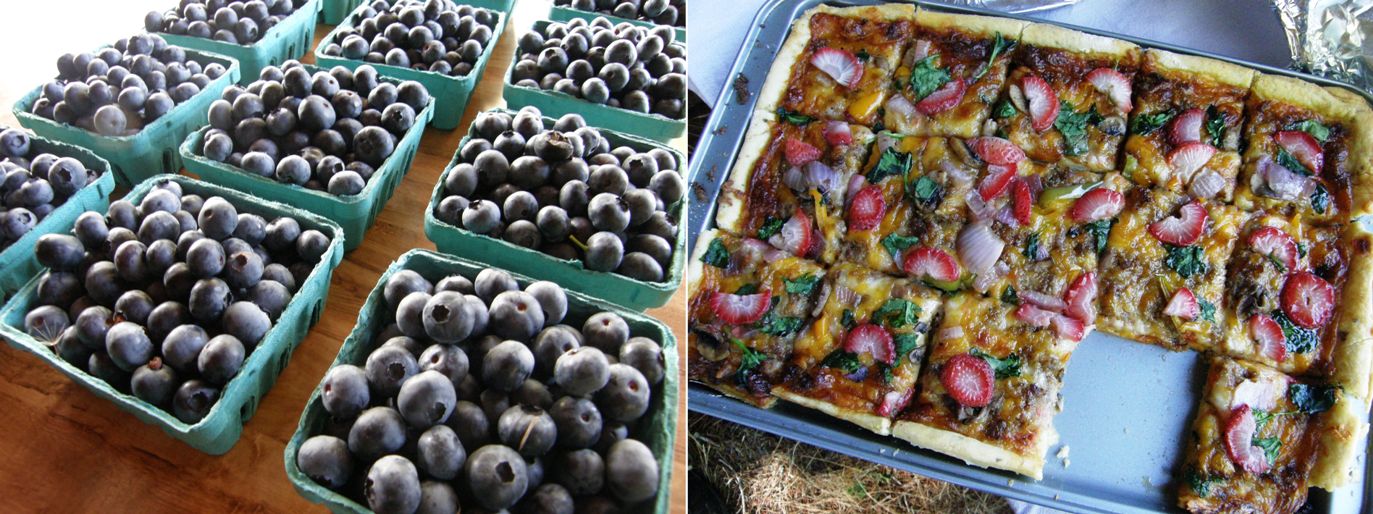
Blueberries! Lovely to be out picking in the cool of the morning. Yes, those are strawberries on top of that pizza. That was brought to the recipe competition by a neighbor who attended the annual Strawberry Jam party that Janet and husband Larry throw. I arrived just in time for that. As you can imagine, there was lots of strawberry based foods and lots of jamming by local musicians. But… more about all that in the next post.

For now, let’s stay EAST.

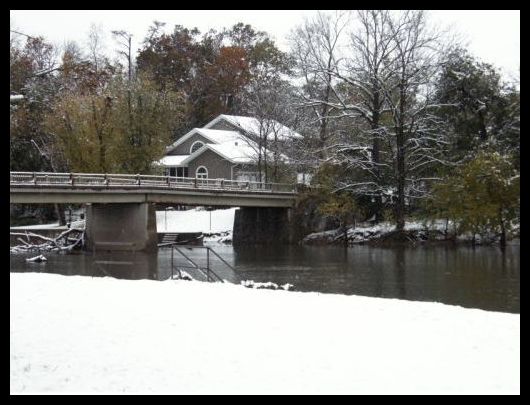
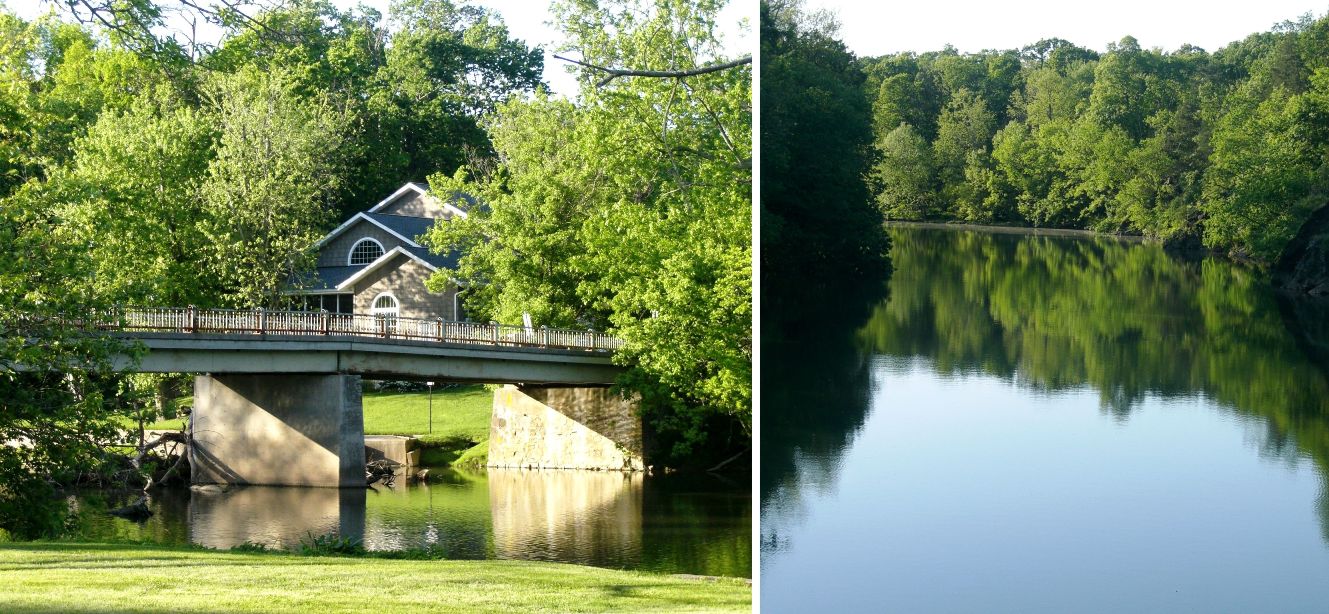
It all started at the Mannings in Pennsylvania with their annual Spinning Seminar…the 45th one, no less!! I have been to the Mannings in the spring….ah, idyllic!
the-mannings-stream

and in the fall….

mannings snow borderedwoven inside and outside on the beautiful lawn down by the creek…

backstrap weaving at The ManningsHere was a first…a chance to set up my backstrap loom in a shady spot down by the creek on a lovely summer’s day and just hang out chatting with people.

Ravelry and Weavolution friends dropped by. I have known Trisha, aka Coolsticks, from the early days of Weavolution back in 2009 and we finally got to meet…

trisha and april at the mannings spinning seminarThere is Trisha on the left with guild buddy April .

Down by the creek things were pretty laid back! I had lots of time to spend with people.

amanda backstrap weaving at the manningsThat’s Amanda having a go at the basics of backstrap loom operation on a narrow band. The tree was adorned with straps and bands and one of my wide projects. Several people could be weaving with warps extended spoke-like from the tree. l liked over-hearing hushed comments while I wove on the big warp…”she isn’t using a chart!” (I smile thinking how I have woven items with that particular motif at least 50 times and goodness knows how many repeats of it there are in this one piece I am currently weaving!) And then there was…”Oh. So, it’s slooooow!”

spinners at the creek mannings spinning seminarSpinners set up camp, grabbing shady spots by the cool water to enjoy a day of spinning and conversation.

Picture by Pinar Miski

And for those who wanted to be in the heart of all the action, there was room to park a whole gaggle of wheels on the shaded front porch of the Mannings store.

Picture by Pinar Miski
One of my sample tables. Picture by Pinar Miski

And, at his point, I am going to hand over to the pictures of Pinar Miski who got to visit almost everybody and took the most wonderful pictures. She has allowed me to share them here. It was late in the day when I finally managed to make my way uphill to the shop to see what was going on. Shadows were long over the outdoor demo area at that hour and the crowds had thinned in the dying day. My pictures didn’t come out well. So, thank you, Pinar for sharing your shots!

Things were anything but laid back up at the store…happy shopping and browsing in yarn paradise. Pinar subtitled her photo album …”and then I died and went to heaven”! I think that says it all.

But, apart from the shopping, there were oodles of things to be touched, explored, and experienced with a wonderful selection of fiber artists and educators both indoors and out. I demand a do-over! I didn’t get a chance to see much of it!! But, I was having a lot of fun chatting with people about my passion…the backstrap loom.

It all starts with fiber. There was this…

Photo by Pinar Miski

Ron Bostek demonstrated sheep shearing. He brought Border Leicester and Cormo sheep to the Seminar.

Picture by Pinar Miski

Here is cotton spinner and teacher (and my fun roommate), Joan Ruane, showing one of many implements with which she spins cotton with ease. For me, who goes to the store to buy cotton for my backstrap weaving, Joan’s comment when she saw me at work at my loom was pretty funny…”oh my god, it’s WORSE than tapestry!”…a comment on the slowness of my weaving. And there she is patiently creating cotton thread!

Pictures by Pinar Miski

Yet another fiber on display ..Mandi Elliott Bird used antique tools to show how to process flax to the point where it can be spun.

Picture by Pinar Miski

Ron Tyler spun wool on a Great Wheel or, Walking Wheel, hoping to encourage people to take the beautiful inherited piece that may be sitting and simply decorating a corner of a room and actually use it.

Picture by Pinar Miski

One of my neighbors creek-side was Carol Ireland with her hip spindle.

Picture by Pinar Miski

This table was a-buzzin’ at day’s end when I went for my walk. It seemed that folks were invited to grab a bit of this and that and create their own batt. That looked like lots of fun. It was Sally Jenkins who demonstrated fiber blending with drum carders.

And boy, does this look like fun. I bet there were people jostling to get a position for this…

Picture by Pinar Miski

I am copying and pasting the description from the Mannings’s newsletter for this one…

Tartan, Tweeds & Waulking the Wool – When wool tweed or blanketing comes off the loom, it is not yet ready to use. The traditional Scottish method of finishing woolen cloth was a social occasion involving a group of neighbors, a large table and probably a little whiskey! The cloth was wetted and passed from hand to hand in a thumping rhythm kept going by suitable songs. We will skip the whiskey at our wool waulking but have lots of songs! Melissa Weaver Dunning will also have a display of her many woven tartans and tweeds.

Apparently it takes three songs to finish the process. Here is inspection time after the first song…

Picture by Pinar Miski

Again, Pinar captures a great moment!

Picture by Pinar Miski

Ah, now here is something a little closer to my heart. Susan Weaver brought along a large selection of tape looms on which she encouraged people to weave. I believe that all the tape looms for sale in the Mannings store went home with new owners that day. Susan and I know each other. She wove with me a while ago and lent me a Mexican band to study from her collection. So, I was eager to connect with her to catch up and return the band.

Picture by Pinar Miski

Mushroom dyeing! Hmmm…wondering what kind of aroma is coming from that pot. This is fascinating. Who knew that you could get such a range of colors from mushrooms and now I know that someone who studies mushrooms is called a mycologist. Susan Hopkins’s interest expanded from mushroom identification to dyeing.

Look at the colors…

Picture by Pinar Miski

Susan’s face says it all…she’s passionate about dyeing with mushrooms. Check out her t-shirt.

Anne Marie Decker was probably not around at the particular moment when Pinar went by. As Pinar says in her album caption, she still doesn’t know what nalbinding is, and neither do I! I have to say that it looks like something I would enjoy.

Picture by Pinar Miski

Indoors, Ron Woolcock gathered spinners to tell them how to keep their wheels happy and there was a display of the stages of silk production and processing. Thanks again, Pinar  for the use of your pictures! Take a look at the entire album here. Pinar’s concise captions are fun.

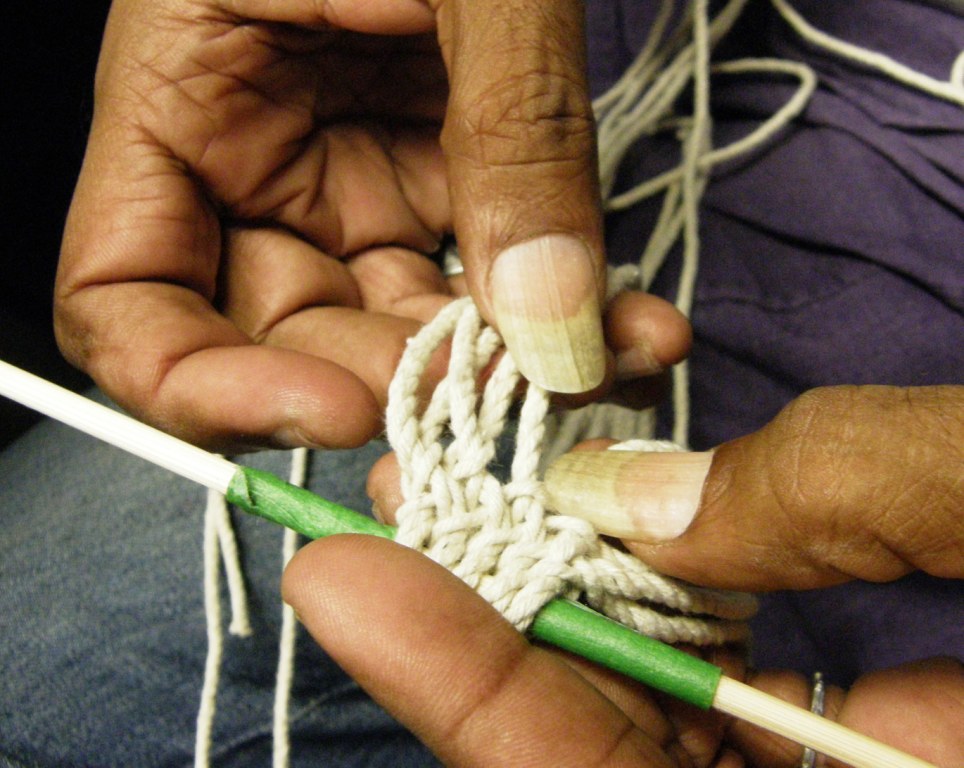
coil stitch ad pom pomsOne day to rest, and then my Ravelry friend, Julia, came by to weave and sew..

We wove a lot!. I was starting to crash by 4pm with all the things we got into. It’s so much fun putting those finishing touches on things!

We wove tubular bands, sewed and wove tubular bands to edges, sewed coiled stitches, edged and lined pieces with decorative stitches, warped for more bands….phew!

But, rather than get into all that now that she is home, Julia has been practicing the supplementary-weft inlay techniques which I show in tutorials on this blog.

Here are a couple of her projects…

julias supp weft backstrap weaving

The butterfly is one that I charted from an inlay motif on a Huave weaving of Mexico. The pattern on the right is one that I adapted from a motif woven with weft substtution, if I remember correctly, on a textile of Central Asia. I think that it is charted here on my blog. Loving the soothing colors Julia used.

Caroline also used weft inlay techniques to decorate her backstrap. I love how people are taking to this technique!

caroline sacramento supplementary weft inlay backstrap weavingI adapted this particular motif from one on an Indonesian piece of fabric. The backstrap itself is beautifully woven and put together!

More fun weaving with friends that I have met online…Bands got finished with ends braided and all.  Here’s Kathy practicing the four-strand braid on her warp ends.

Kathy braiding backstrap weaving class the mannings

If you have been following my blog, you will know about my recent experiments with weft inlay where I have been filling negative spaces with weft to outline patterns in the ground cloth. Some of the weavers were keen to try this. Another fun thing was combining strands of different colors for the supplementary weft which created interesting effects. Kathy and Bettes put together blues and other jewel-like colors while Nancy put together a very festive, sunny Mexican type of combination.

supp weft class mannings backstrap weaving

Marge came over for a day to weave and try a bit of double weave on her inklette and a touch of intermesh on the backstrap loom…

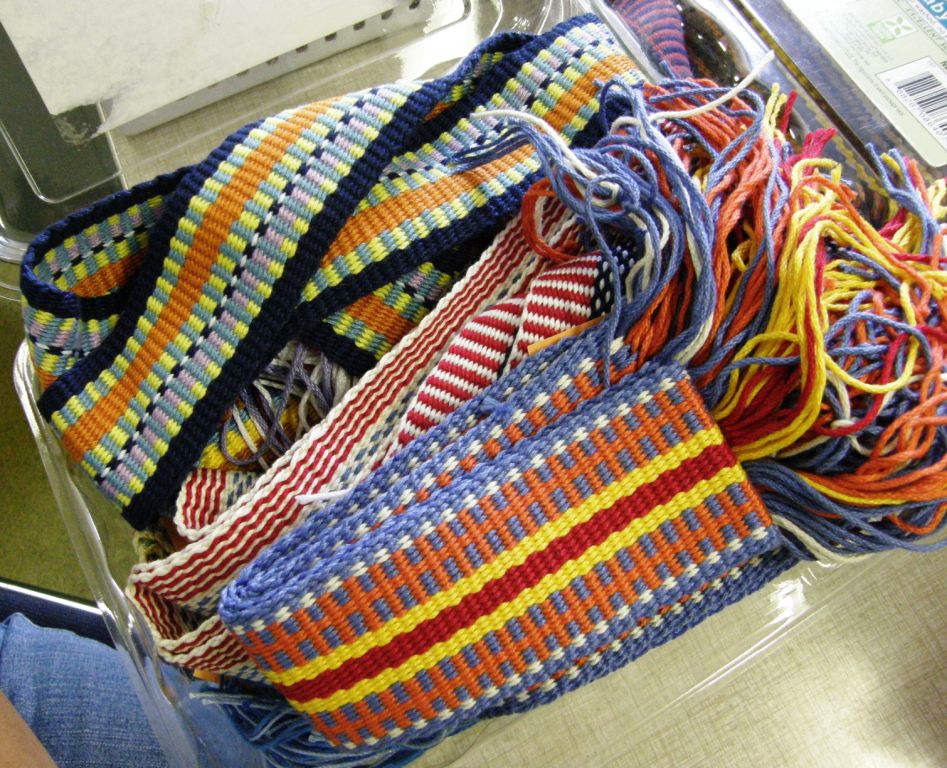
She brought her band box to show some of the things that she has been weaving on her inkle loom…straps for her musician friends. She plays in a band called Tater Patch and gave me a cd!
Marges bands

marge and her bands backstrap weaving class manningsThere’s the double weave band that we started on the inklette next to a nice knot-work pattern in pebble weave. And then we did a wee bit of intermesh.

Marge went home to finish that double weave sampler with some of her own designs. Guess what instrument she plays in Tater Patch?!

marges double weave bandMeanwhile over in Tom Knisely’s Mannings teaching studio, there was lots of overshot loveliness coming off the looms. Here are a few examples. It is nice to be able to stay on the premises and get to see the weavers working late at night on these pieces.

overshot class manningsSpeaking of Tom, he gave me a wee gifty. You may have seen this before on this blog. Tom showed me this on one of my visits last year and  has now decided that it really needs to belong to me :-)!!
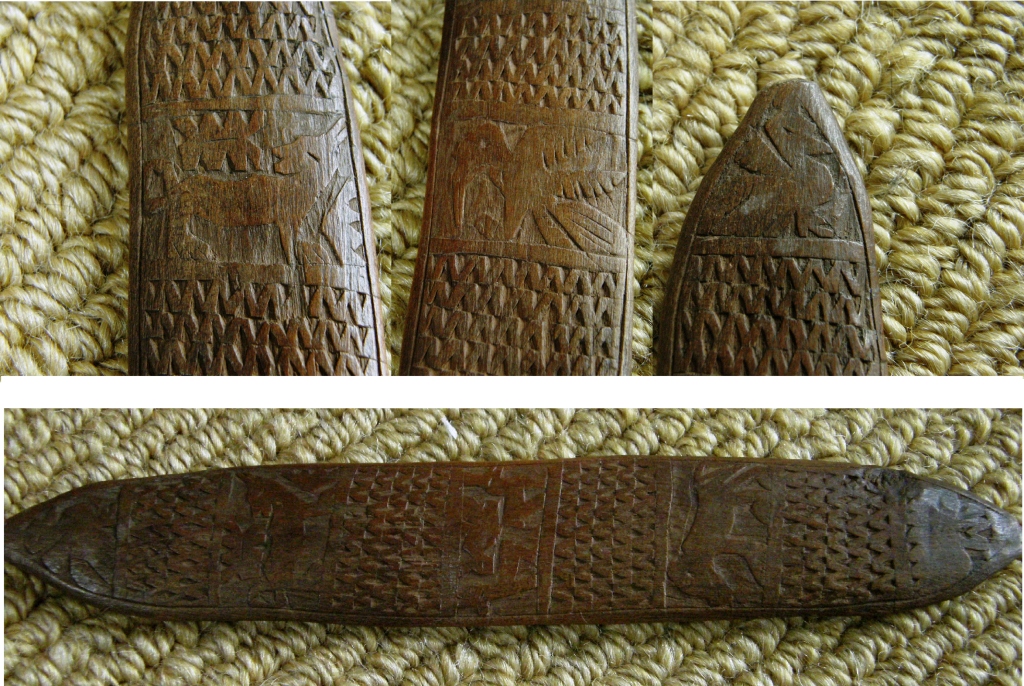
sword

More Ravelry group projects to show…

Cindy tried out the “palma” braid…nice job!
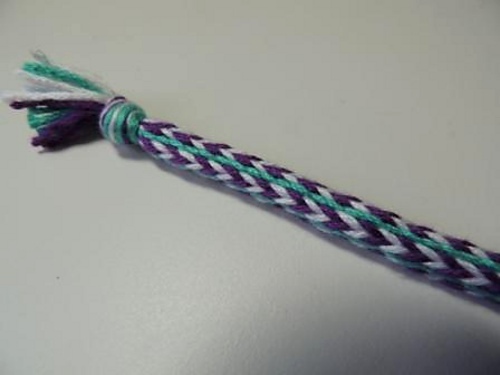
cindyI finally got to meet Cindy on this trip. More about that next time…that’s a “west side story”.

Laura has been practicing pebble weave…
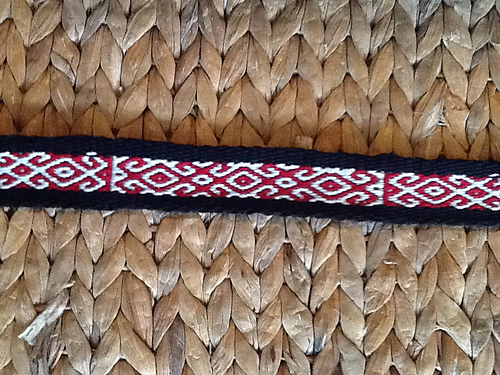
lauraI love the color flips and how she has joined the three single motifs into one long continuous one.

And just to finish and lead into Chapter 2: “West Side Story”, which is largely based on the ANWG conference in Bellingham, Washington followed by fun with my friend Betty at her home in WA and then with my friend Janet in northern CA, let me show you the weavings that I submitted to one of the conference exhibits.

This series is a work in progress. I have many more panels in mind to add. It is entitled “Textile Trails” and each has its little “traily” story to tell. It won the Committee’s Choice Award at the conference. I was thrilled! Thank you to Linda for taking this picture. The beautiful black wooden hangers were made by Terri of Magical Moons. Terri makes the custom swords and other implements that I often show on my blog. By the way, she is making spindles now. They look exquisite.

backstrap weaving Laverne WaddingtonThe fact that I am wearing a black top and a red jacket is just a happy coincidence, I swear!

Here’s the lovely handwoven ribbon…
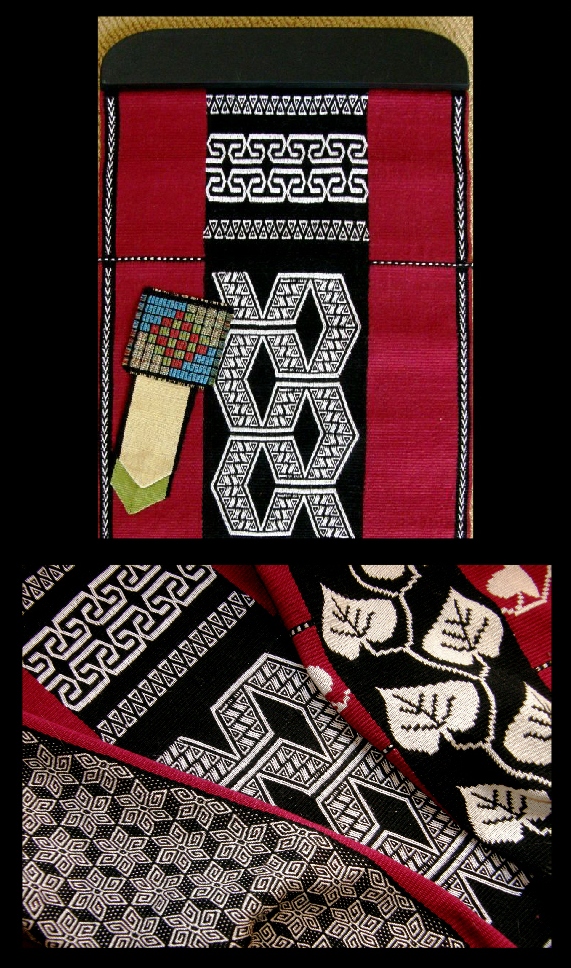
hangings backstrap weaving Laverne Waddington

See you next week. I am back on top of the blogging now…I hope!
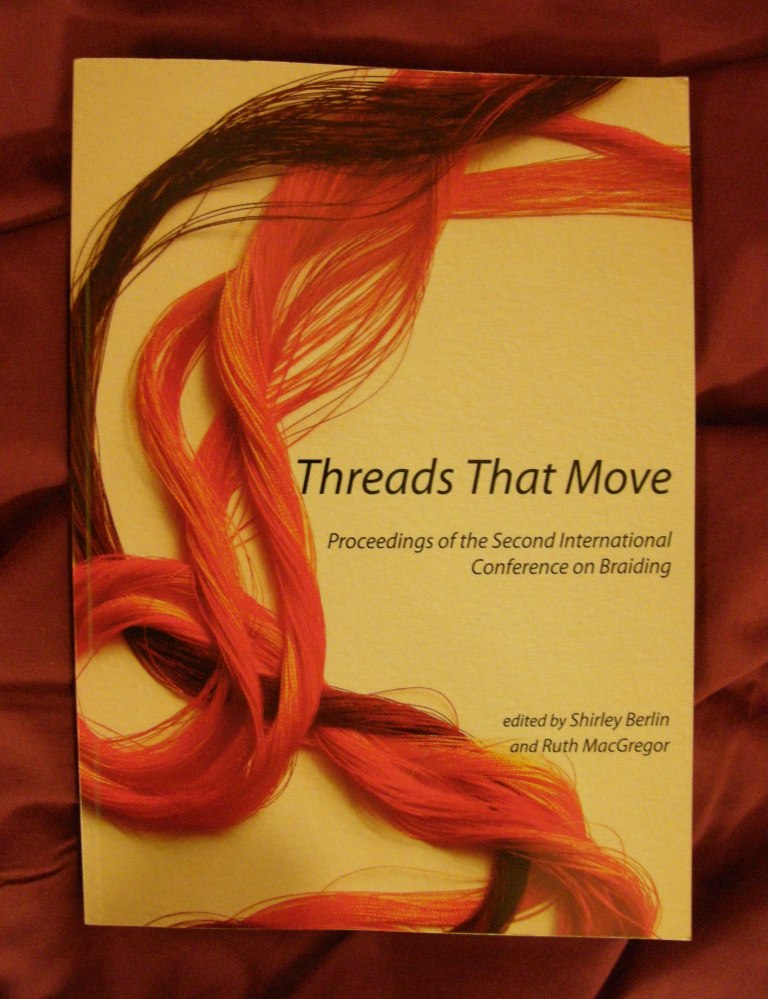
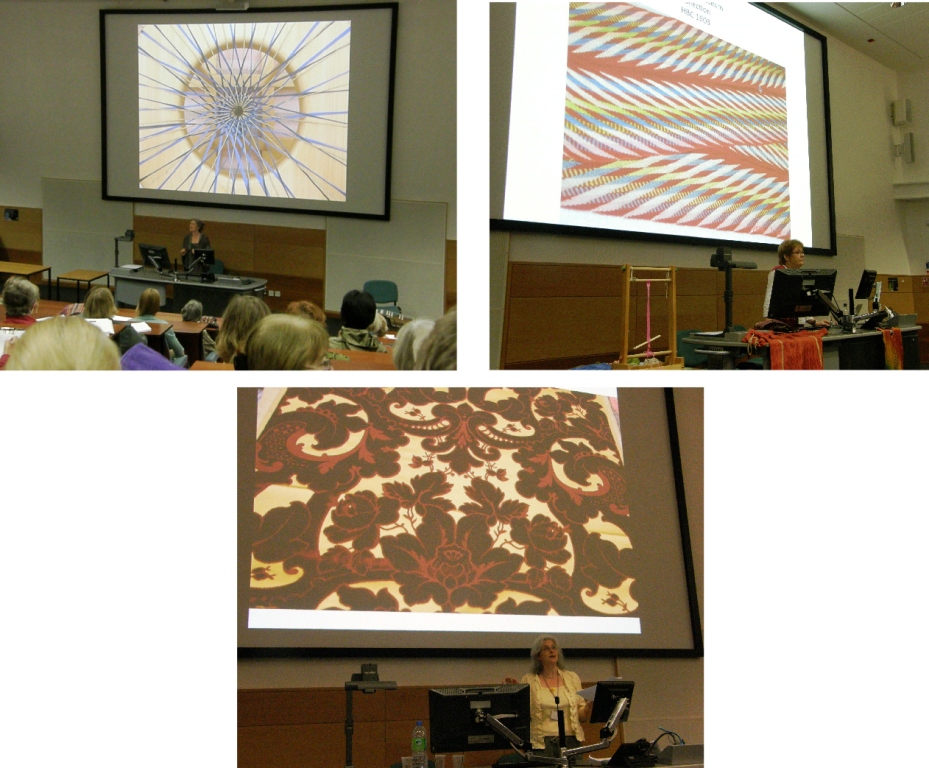
Backstrap Weaving – Braids 2012, Threads that Move

Braids 2012 is all over and all the British attendees must be back home now wondering what hit them. Many of the foreign visitors went off to families or packed their things into rented vans and hit the road leaving  just Elizabeth Kolb of Canada, Ingrid Crickmore of the USA and myself, all of us more or less “homeless”, together here in the MMU dorms.

So, what did we do with our time alone here? Ingrid and I had a fun morning checking out the Costume Museum and the Ede festivities in a nearby park yesterday. Today we all caught up on some much needed sleep and laundry then of course, of course, what else?…we braided.

I spent this afternoon editing my pictures and wondering why I hadn’t taken a whole lot more.

This is the first big conference at which I have registered, signed up for classes and taught which meant that there really wasn’t much free time to just wander about, soak up the atmosphere and take pictures. It was up early every day to participate in a steady stream of activities.  Coffee and meal breaks seemed to be spent waving the food about in the air in our hands while  trying to explain a braiding or weaving move rather than actually consuming the stuff!

That is why I have decided to re-name this conference “Hands that Express”.

I was getting frustrated with my photos which had been taken indoors in low-light conditions with so much movement going on. My pictures always seemed to show two people in deep conversation with a blur of hands in front of their faces…hands that flitted and floated and turned gracefully in the air as they described their craft. Then I understood that my pictures with the blurred hands actually captured better than anything the spirit and essence of this event….expressive hands, conveying passion and ideas even when not putting threads into motion.

Too bad I only realized this after already having deleted many of the pictures!

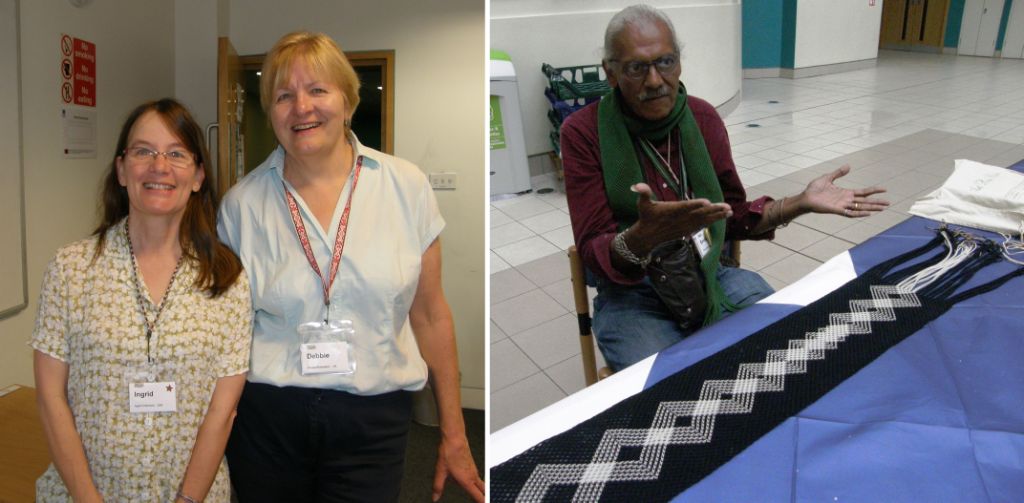
And such interesting hands. Above we see the hands of Errol Pires Nelson of India with their built-in ply-splitting tools. He is starting off a ply-split braid for a new student in one of his many impromptu classes outside his scheduled teaching days. I, too, rely heavily on a long thumbnail as a handy tool for my backstrap weaving, especially for heddle making, but I am a bit shy to leave it long when I am out and about.

The city of Manchester was a wonderful place for this event with its fascinating role in British and world textile industry history. The MMU made a nice home for us all. I have always loved communal living and staying in the dorms took me back to my ski bum days except that we were all tucked up in bed early each night so we would have enough energy to face the full days of lectures, classes, conversation and all that hand-waving!

The little I saw of the city itself was impressive…all that brick and stone…old and new side by side with the gorgeous Palace Hotel, with its landmark clock tower pictured above, built in the late 1800s and early 1900s, standing majestically on the other side of the street from the Holiday Inn Express.

The old and new, the very old British structures and the newer items representing the British melting pot of cultures stand sometimes comfortably, sometimes clumsily and very often very colorfully side by side….the lovely old “Picture House” perched on top of the  MacDonald’s….  But this is just the quick impression I got from the very little time I got to spend out and about before and after the conference.

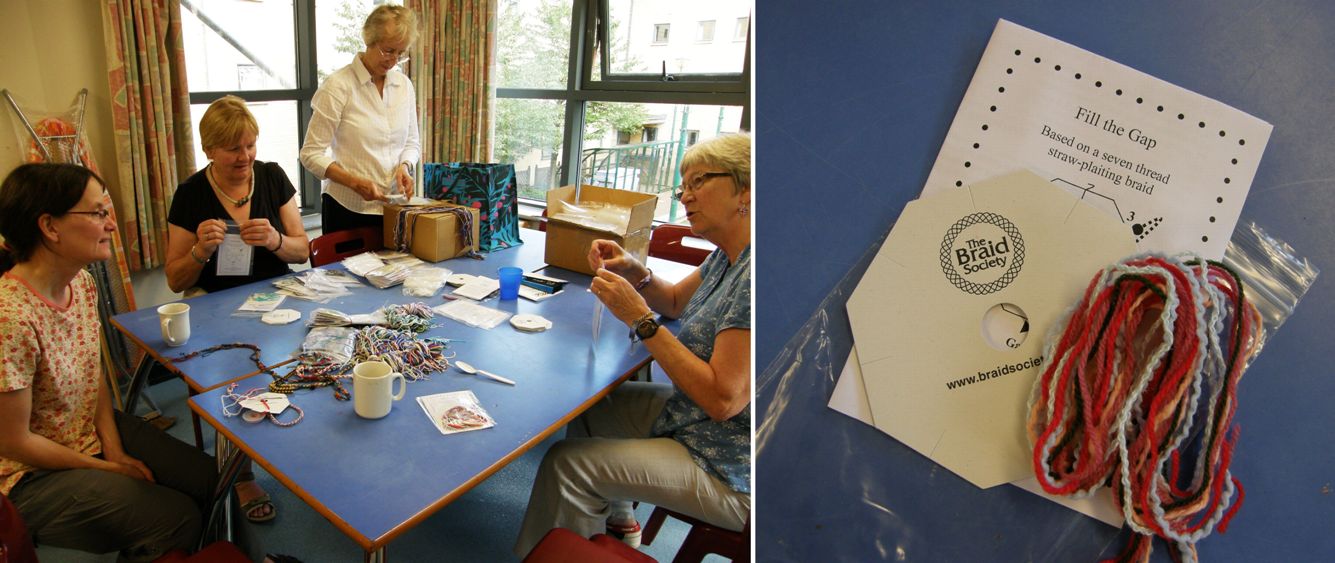
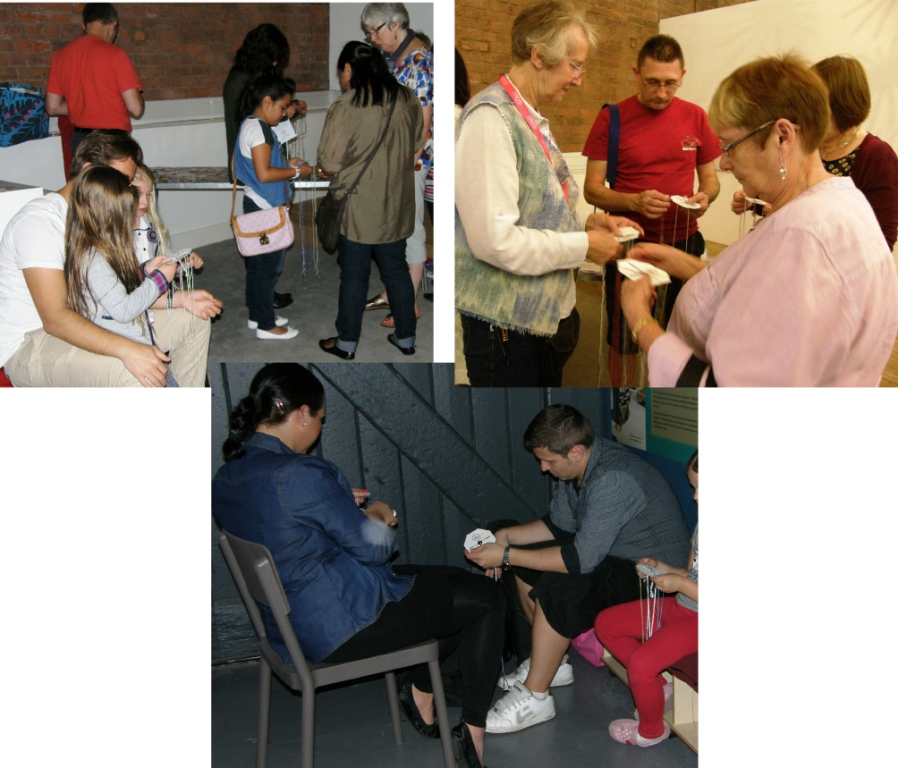
Day one pre conference was spent settling and meeting my dorm-mates…the “naughty old British ladies” as they called themselves. We spent the first evening putting together “fill-the-gap” braiding kits which we were to use to teach braiding to visitors at the Museum of Science and Industry the following day. These humble “fill-the-gap” kits were responsible for providing a considerable part of the funding for the Braids 2012 event. Braid Society volunteers attended fiber events during the many years of planning, taught braiding and sold the little kits. Hundreds of people were introduced to this fun craft for a tiny fee which helped make Braids 2012 possible….impressive!
It was a lot of fun seeing Rosie and Sally in action at the museum. Of course they had no problem getting kids to try braiding. It was a little more difficult convincing some of the adults but Sally and Rosie obviously had a lot of experience with this and their cheeky sense of humor soon had entire families of all ages sitting and standing about completely absorbed in braiding. The kits were free at this event.

About 100 braiding kits later….we went directly to the conference opening and were welcomed by the Chairman of the Braid Society, Steve Pretty. Society President Jacqui Carey gave the keynote speech. We were then treated to a koto recital by Enokido Fuyuki  who then invited us to come and try our hand at this traditional Japanese instrument. Steve Pretty is being given some playing tips below. It was a lovely way to open the event considering the large number of Japanese attendees and the many traditional Japanese braiding techniques that were being offered in the workshops.

Morning lectures included those offered by Carol James and Stacey Harvey-Brown, pictured above, on North American Braided Sashes and Northwest Archives for Research and Inspiration.

There are those expressive hands at work while Ingrid and Carol discuss techniques besides Carol’s display of beautiful finger-woven pieces.

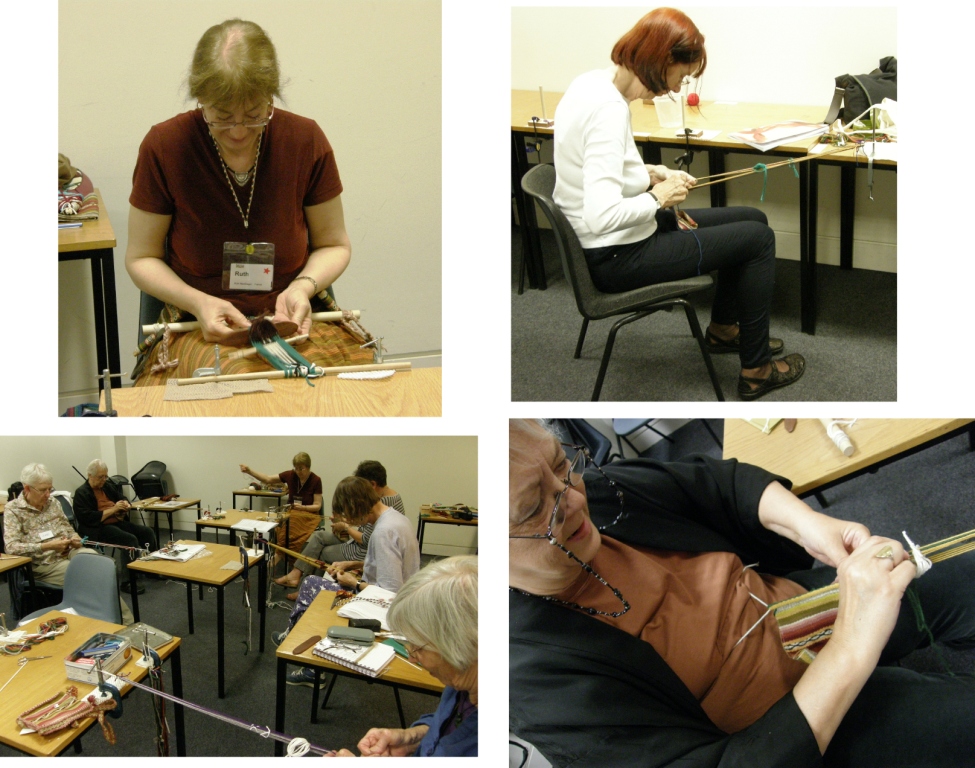
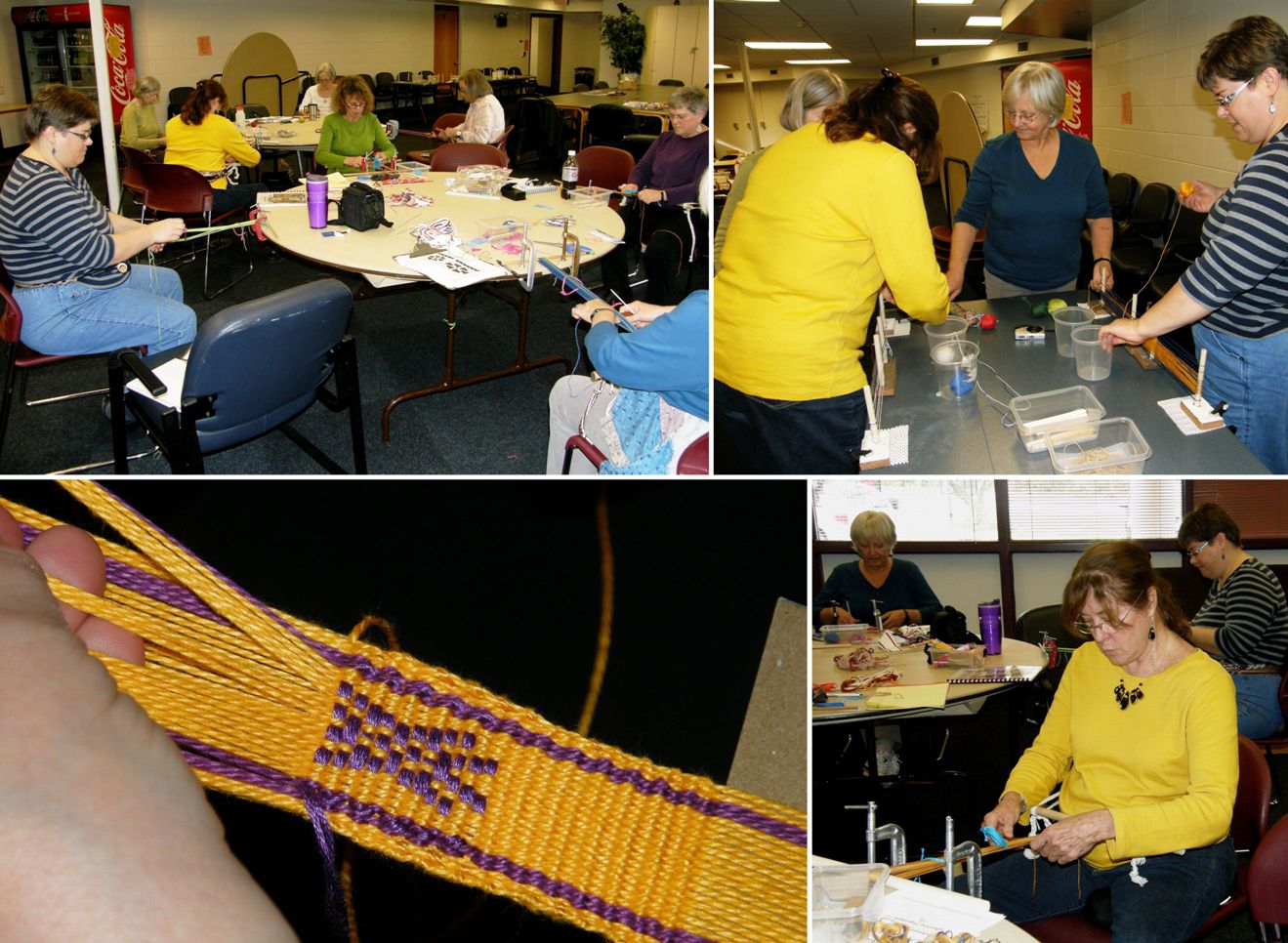
I signed up for Anne Dyer’s class on a technique which she calls “snagging” on tablet-woven bands which has given me some cool ideas for plain-weave tubular bands that I make on my backstrap loom. I also took Robyn Spady’s class on handwoven decorative trim on an inkle loom. I was happy to have Susan Foulkes as my classmate and we were both rebels and wove on backstrap looms rather than on inkle looms. Susan used a rigid heddle and I used my usual string heddles and a shed loop.

Both instructors gave a us a run down of the technique and a multitude of inspiring samples and then let us run with it and create. It was fun to stop every now and then to take a spin about the room to see which direction the other students were taking. This was very interesting for me as the techniques I teach need to be built up in steps throughout the entire duration of the class leaving little class time for any free wheeling and experiments. Things need to be more structured. It is always so wonderful being a student again and especially in the hands of such great teachers. I get to evaluate the way my classmates and I react to the material, the pace of the instruction and the general learning atmosphere. I learn so much that I can then apply to my own teaching.

On Monday night we had the Braiders’ Bazaar. I bought nothing!
Happily, I was too busy demonstrating backstrap weaving and meeting various online weaving friends as well as talking about my first book  Andean Pebble Weave. It was fun to tell an Italian attendant about the translation that has been made of the e-book to her language.

Happily, I was also able to show the front cover and also tell everyone about my follow-up book which had just gone up for sale the night before on Patternfish.com.

Later I heard about all the wonderful things that had been offered at the bazaar…books, tools, yarn and textiles including some amazing ply-split camel girths, which I did manage to photograph (see above). Ingrid and I were oblivious at our table where I was weaving a pebble weave band on my backstrap loom while she demonstrated how to do what would normally be a two-person/four-handed braid on one pair of hands.

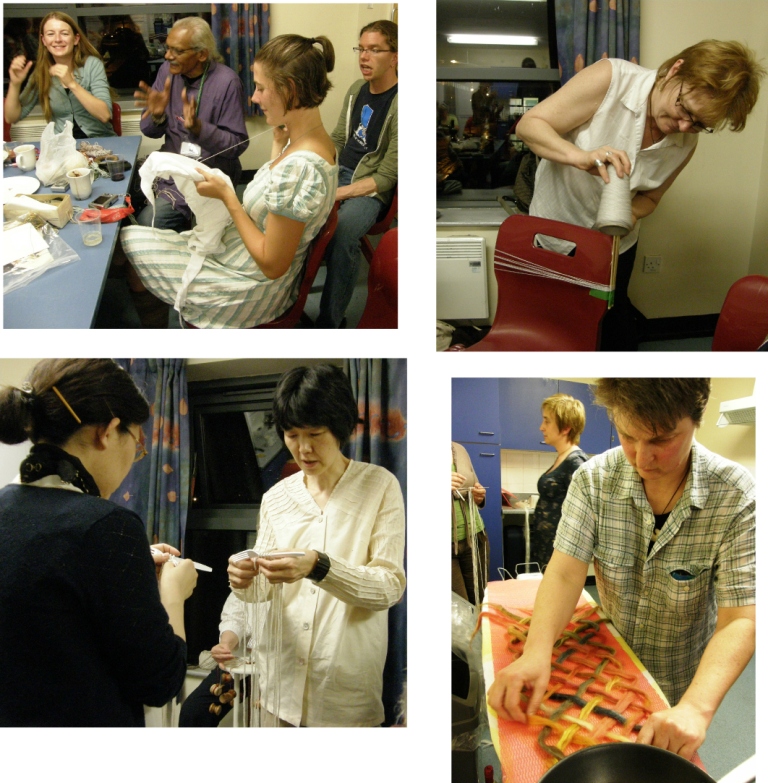
Evenings had us gathered in our communal kitchens, showing what we had learned that day and sharing new techniques with the usual flurry of enthusiastic hand gestures….doing the techniques, talking the techniques, watching (although you weren’t allowed to get away with just watching for too long!), enjoying, discussing…it went on and on.

 Many a warp was wound…all Carol needed was a chair and pair of chopsticks. With an ironing board and frying pan Helen sets about making a braided and felted scarf. All hands were occupied and, if you walked in without a craft, you would soon find yourself with strings dangling from your fingers as did the Japanese visitors above.

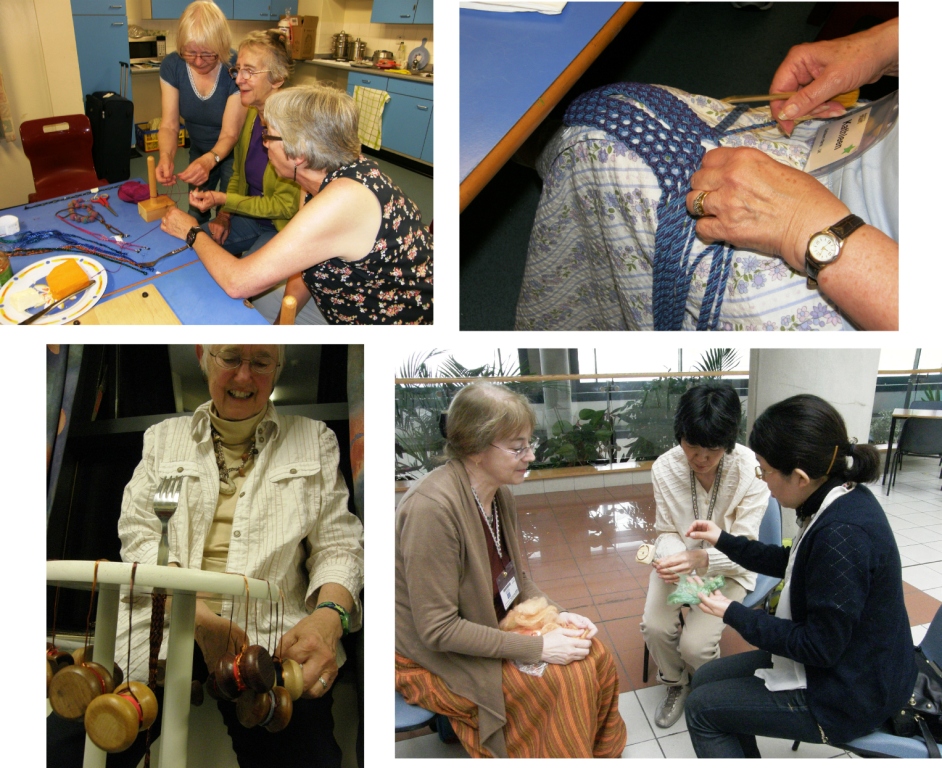
Kathleen has a ply-split scarf in progress on her knee and Sally, Rosie and Phyllis are knotting bracelets. Ruth found the coffee break a good time to teach silk spinning on one of her home made spindles to Mari Omura who lectured on Chinese and Korean loop braids. And if you run out of chairs, as often happened, just perch yourself on the window sill as Shirley did with her marudai. Carol is finger weaving with her work suspended from the kitchen cupboard while Steve and Elizabeth can do their ply-split braiding anywhere anytime without tools or supports.

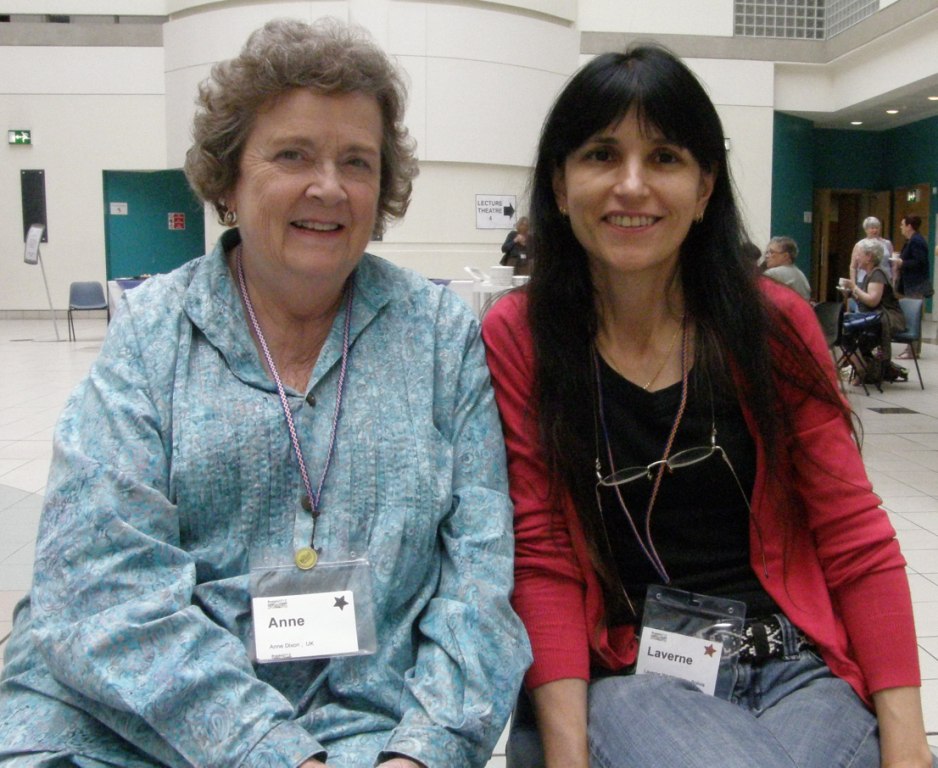
A still moment for a photo op with Anne Dixon…two “warp-faced” ladies, an inkler and a backstrapper who love to weave pick-up patterns.

Every now and then we did manage to sneak out of our classrooms to peek into others and the teachers were all very welcoming. I was lucky to find a moment to pop into Rodrick Owens’s classroom and see his stunning display of Peruvian sling braids which has made us all the more enthusiastic about his up and coming book.

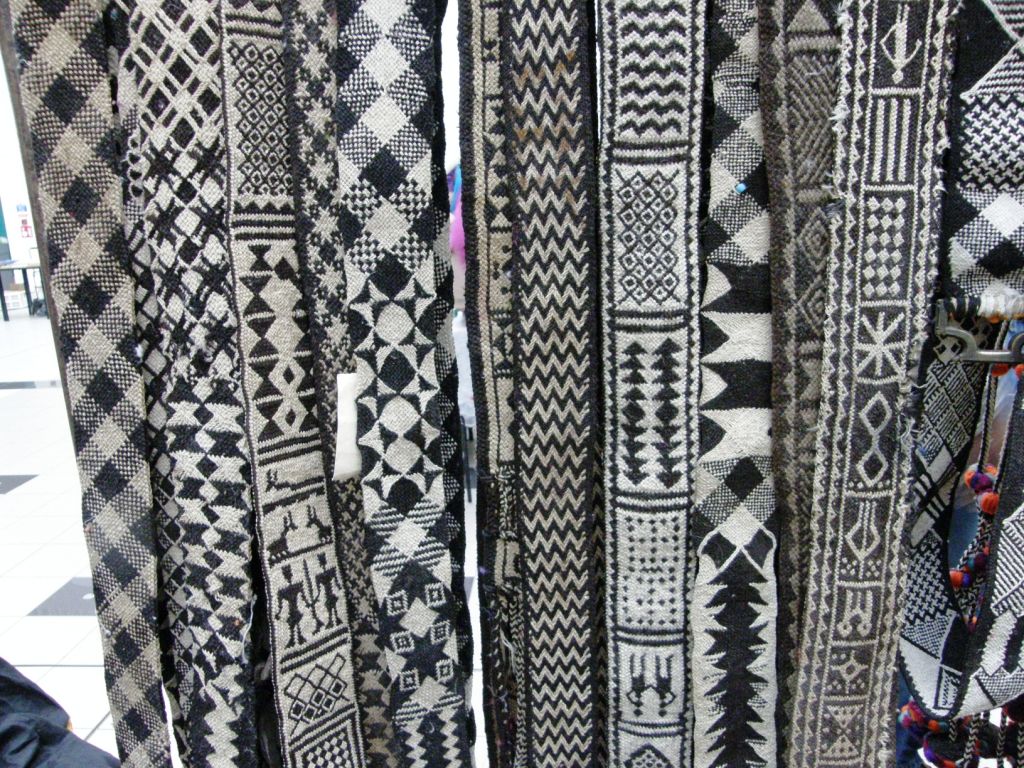
I didn’t get to see Jacqui Carey’s class on Chinese Braid Embroidery in progress but I heard so many wonderful things about it and did manage to see her display of  Chinese braiding bobbins,  a few of which are pictured above. We were also able to see her Chinese braid embroidery work called “Jo’s Jacket” which is breathtaking. I am sorry, but I have nothing to show you about that.  All I can say is “just wait until you see it!”

On Wednesday we had what was called a “rest day” and were taken off to be fully immersed in the history of silk weaving in Maccelsfield with visits to the Heritage Center, Paradise Mill and Silk Industry Museum…a wonderful day out.

This, along with my weekend visit to the Museum of Science and Industry, gave me a glimpse into life at the peak of the cotton and silk weaving industries in Manchester and Maccelsfield….It really is all too much to go into here…life working in a mill, Sunday school and home life for the working children, the hardships of the mill workers, the cloth, the buttons, the costumes, the magnificent looms and machinery….it was a full day which left our heads spinning. I know that I am leaving you hanging here with a bunch of pictures with no description, but maybe I will be able to elaborate in another blog post some time in the future.

Ingrid and I were both slated to weave and braid on Thursday and Friday. Here’s Ingrid with Debbie Richardson, the amazing organizer of this brilliant event, on Thursday morning. I can see Ingrid’s enthusiasm shining in her eyes. I know that all the braiders were thrilled with her.

Errol was also ply-splitting those days and had already made himself a big favorite with his quiet presence and special dry sense of humor. He seemed to be able to just produce out of nowhere at any time one of his fabulous ply-split creations.

My goodness, I had a fabulous hard-working group! I suggested we not have tea break on day one and everyone was more than happy to stay in and continue working. We also started at 8am on day two rather than at 10am as scheduled. Why not squeeze as much out of this as we can?! It really was a pleasure to have such keen and tenacious weavers. Susan Foulkes joined us on day two for the Andean tubular band segment. Ruth MacGregor, who edited the conference proceedings (along with Shirley Berlin) was also there with Clare, Margot, Marge, Bridget, Janet and Mayako.

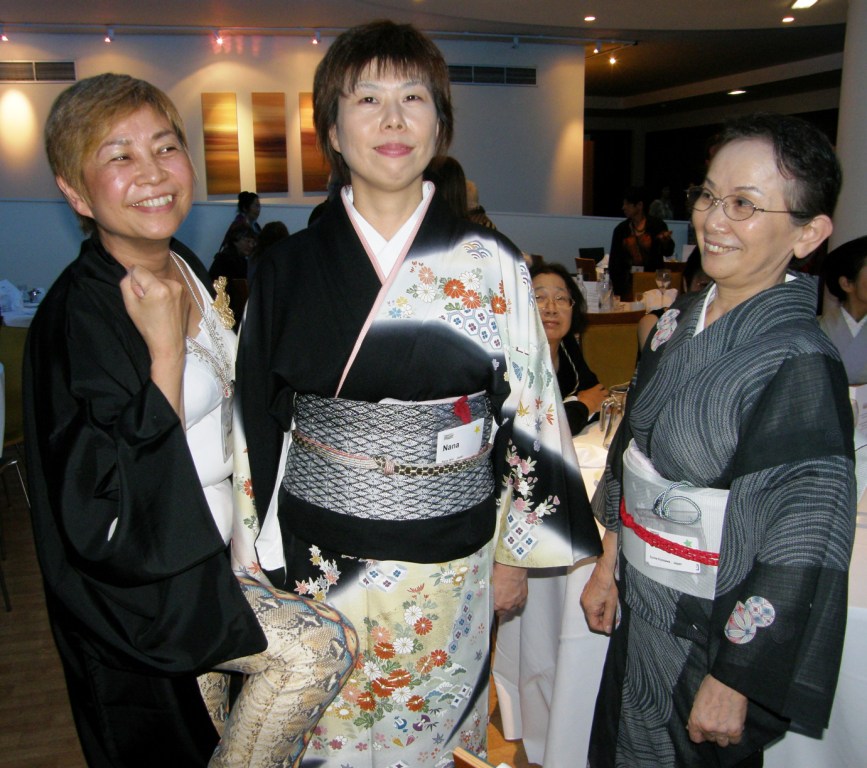
Thursday night was banquet night and a chance to congratulate and thank all involved with the organization of the conference before everyone started disappearing on Friday evening and Saturday. At the banquet it was announced that Braids 2016 will be in the hands of Robyn Spady and will be held in Seattle USA. It was a night for dressing up and our Japanese visitors did not disappoint!

And that brings me to my last night in Manchester. As I said, I am sitting here looking at the pictures and wondering where the week went and why there are so few pictures to tell this story. I hope I have been able to convey just a little of the fun we had and have you all thinking that maybe a trip to Braids 2016 in Seattle is something you should be planning.

Lucky Elizabeth and I got private braiding classes with Ingrid today. I am off to Cambridge tomorrow. I wonder if I will see Elizabeth again somewhere sometime. Ingrid always weaves with me when I am in California so we are bound to meet again soon. That kind of thought always makes the goodbyes easier.

Backstrap Weaving – Time for even more Play!

The fall trip is almost over…time to gather and bag my loom bars, fold the backstrap, wind up all the little balls of yarn, stash the beaters and sticks, and stuff them all into the wheely bag ready to fly home….but there is still a little time to play some more!  Now I am home and looking back. I was too busy playing last week to even do a blog post 🙂

The last days were spent backstrap weaving with friends in Maryland.

It was nice but confusing seeing many familiar faces at the guild meeting. Now…. where did I meet these folks…was it at Sheep and Wool last year where Carla and Mary wove with me in the bunny barn or at the guild meeting I attended?

Weaving in the bunny barn at MD Sheep and Wool last year

There was one very familiar face…oh yes, that was Peggy who wove with me in Pennsylvania last spring. On top of that there were familiar names, if not faces, of people who have commented on my blog or Facebook page.

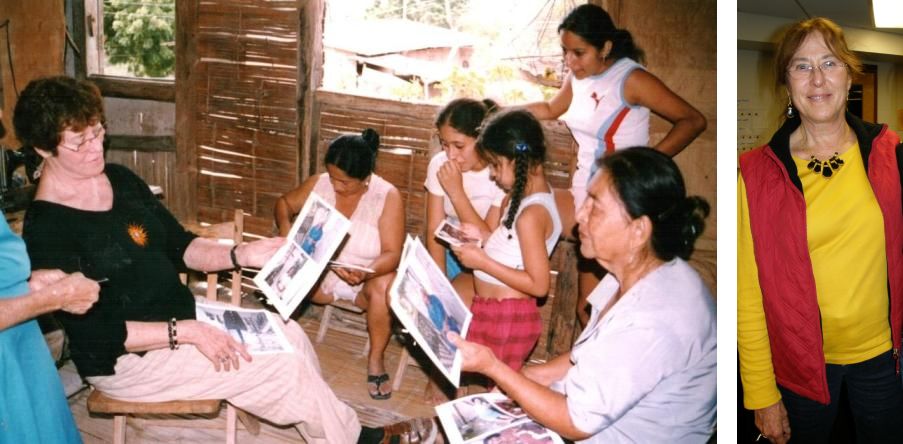
And then there was Kathie! I spent three weeks with Kathie in coastal Ecuador in 2007 with the family of cotton saddlebag weavers that I have told you about here before. Although we have kept up a regular email correspondence since then, we haven’t been able to get together in person until now. She came along to weave with us.

Above left, you can see Kathie on our visit to Ecuador in 2007 showing photos that she had taken when she first met this family back in 1976 and, above right, at our  backstrap weaving get-together.

I unwound with my friends  in their home in Maryland and made plans for my last week in DC. Claudia is a weaver and Janet is a knitter so there were still plenty of fibery things going on around me.

I learned about rag rug weaving from Claudia in her basement studio where she is in the process of making two 9-foot commissioned rugs. I was there to celebrate the finish of the first one. It’s quite a process!…cutting strips, sewing them together end to end, ironing them, winding them onto the long shuttles. I was glad to be able to help at least with the sewing and ironing and the sewing was novel for me…only my second time using a machine.

While the machine is definitely the way to go for sewing those hundreds of strips together, I still prefer hand sewing for my little backstrap woven projects. When I arrived home, I cut the wildly colorful striped demo warp, that I had been carting around the US, off the loom. It had served its purpose, I didn’t really like it and I couldn’t face weaving any more of it. However, it didn’t go to waste as I was able to sew the small piece that I had woven into a new sewing kit pouch.

I folded it in half lengthwise and sewed it together so you only see half the colors at any one time…a little less jarring than the way it looked with all the stripes together on the loom. It is the perfect size for storing tape measure, scissors, needles, buttons and thread. I still have to finish off the sewing on the zip and you can see that the pouch is without the usual baubles and embellishments that I like to add. I think I will leave it this way.

Now I have 26 loom bars standing up in their bins waiting for new warps and I have at least as many ideas floating around in my head for future projects!

But anyway… back to play time in DC.

A couple of emails arrived while I was at Claudia’s place. One from Mary told us about a Chilean handcraft exhibit at the National Museum of the American Indian which would include weaving demonstrations by a Mapuche weaver.

The other was from Peggy who has woven with me a couple of times and who is a docent at the Textile Museum.

She offered to guide me through the current Kuba textiles exhibit on Wednesday which also happens to be the day the museum library is open. I jumped at the opportunity.

Perfect!

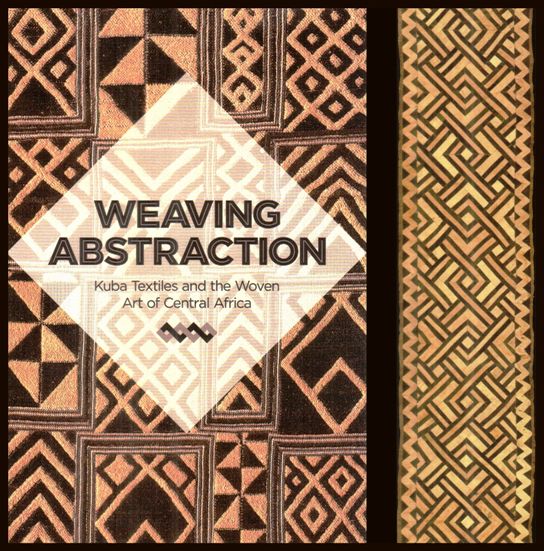
Of course taking photos of pieces in the exhibit is not permitted but you can see above some the publicity material that the museum has put out showing a piece of raffia cloth on the left and bark cloth.

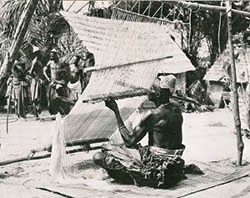
The picture at left of a Kuba raffia cloth weaver in the Congo is on Marla Mallett’s website where you will also be able to see quite a few images of raffia pile and embroidered cloth pieces.

The Kuba Kingdom is a confederation of several groups of people in the area now known as the Democratic Republic of Congo. They were nomadic until the 1600’s and absorbed textile traditions from the Kongo people of the west coast as well as from the Tutsi and Hutu groups in the east.

Men weave the plain-weave panels using fiber from the raffia palm. The cloth is then wet and pounded to make it flexible. The insertion of the colored raffia in a pile technique is the work of the women. The raffia is not knotted. It is simply inserted under warps and/or weft and held in place by the tightness of the weave. The inserted raffia is then brushed with a knife which splits the fibers and creates a fuller more plush texture. I found myself surrounded by bold  labyrinth-like and swirling patterns.

The women also embroider along the edges of the pile sections. I was able to look at the back of the pieces that were on sale in the museum shop. Neither the inserted raffia nor the embroidery shows on the back of the cloth.

One of the uses of the cloth is for ceremonial skirts that comprise many panels sewn together and which are gathered around the body. Smaller panels are used as overskirts by high ranking women while other small pieces are status cloths, amassed as symbols of wealth and nobility.

There was bark cloth from the Bushong people, hats, caps and headdress of titleholders from the Kongo people that I can’t even begin to describe.

I saw a delicate cape thought to be from Angola that looked like it had been made in sprang, tie-dyed cloth using sticks tied to the cloth to create the straight lines in the patterns, patchwork, reverse applique, embroidery and ornate belts decorated with beads and cowrie shells.

I loved the boxes and baskets with shaped lids which immediately made me think of the basket maker from Burundi with whom my friend Joan is working in Massachusetts. (see her piece pictured at left).

Wouldn’t it be wonderful if she could be taken to such an exhibit?!

I bought the exhibit catalog and would love to use some of the motifs in double weave. That museum shop is a deadly place…I came away with the catalog as well as with Ann Rowe’s latest work on costume in highland Ecuador and a collection of papers on Andean weaving on sale for $5 while all the time wondering how in the world I would manage to squeeze this load into my luggage!

The next day was all about Mapuche weaving at the National Museum of the American Indian at an exhibit called Chilean Rakizuam.

Rakizuam is the Mapuche knowledge of being, whether it pertains to the environment or an understanding of life that has been passed from generation to generation.

It was quite  nostalgic for me listening once again to the very distinctive Chilean accents of the exhibitors and the accompanying folk music.

There was even a gentleman there from Punta Arenas, the country’s southernmost city, where I lived for five years.

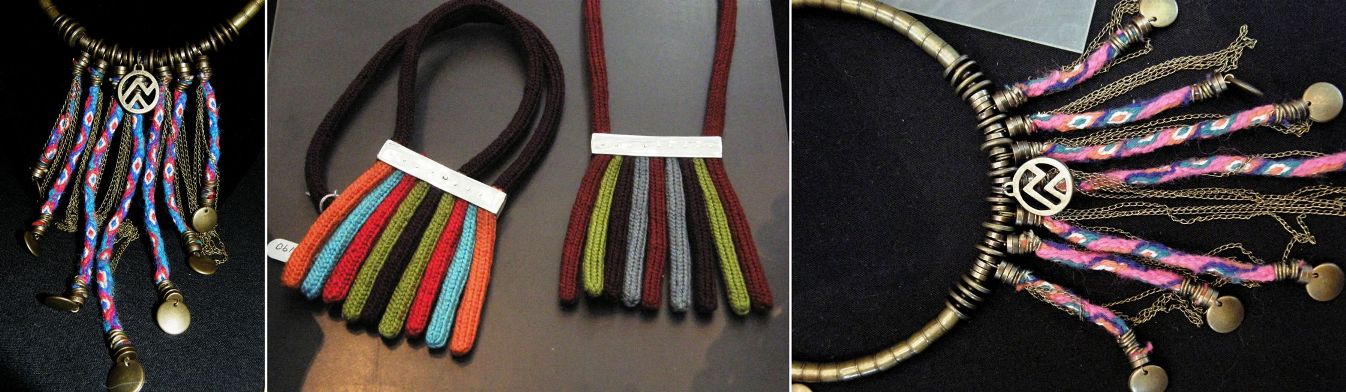
He brought baskets made by the descendants of the Yagan people as well as his own jewelry which combines pieces of coiled basketry with silver.

When I lived in Punta Arenas there was one elderly pure Yagan woman still making the baskets who has since died. I still have one of the baskets that I bought back then.

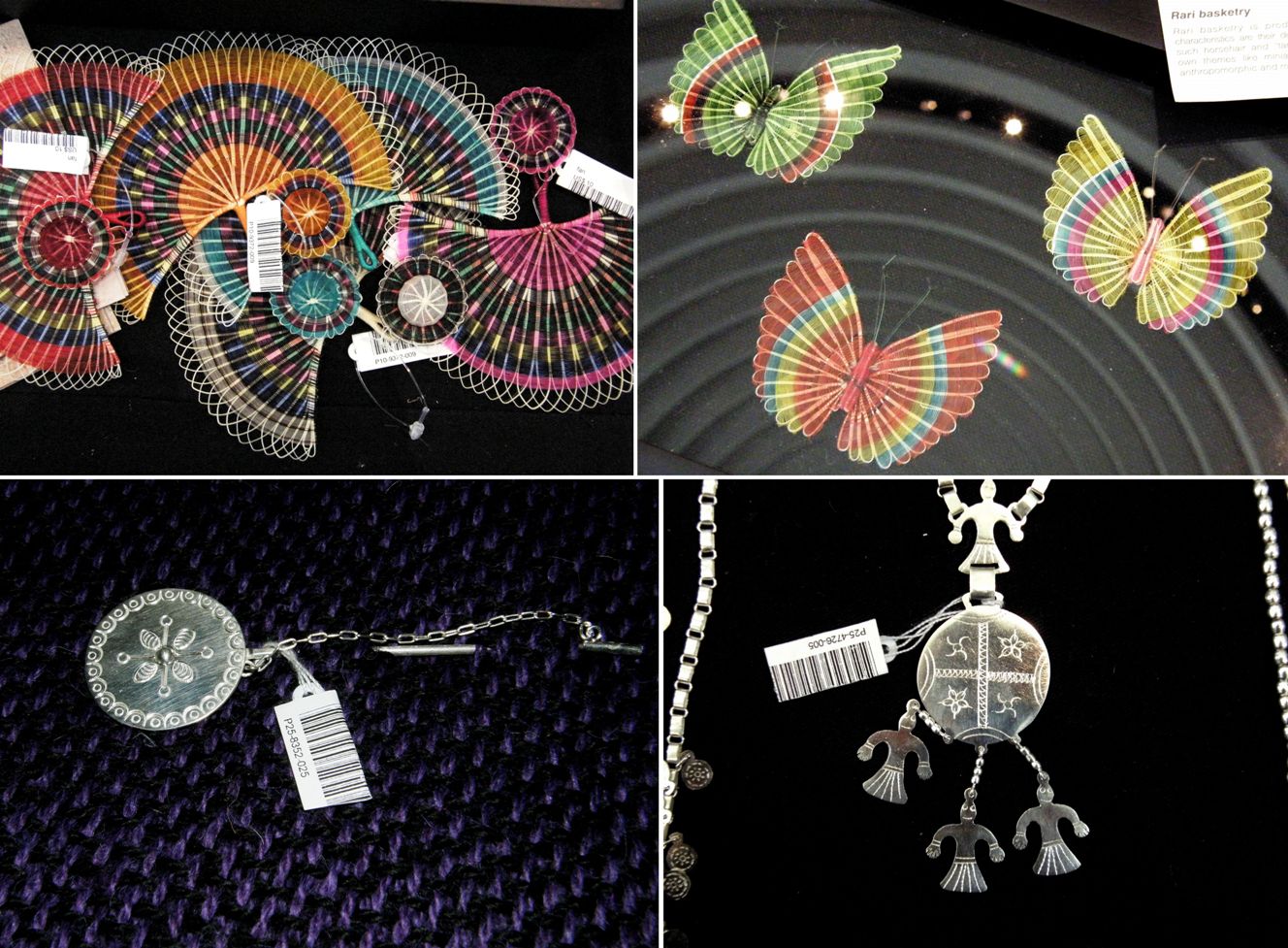
Other displays included pieces from the central zones of Chile south of Santiago…silver work with Mapuche motifs forming pendants and shawl pins as well as almost transparent figures woven from the hair of horses’ tails. The sturdy ribs in the figures are a plant fiber and the finer weft material is the crin, the hair of the horse or ox. And now I know that ”crinoline” according to Wikipedia was originally a stiff fabric with a weft of horse-hair and a warp of cotton or linen thread.

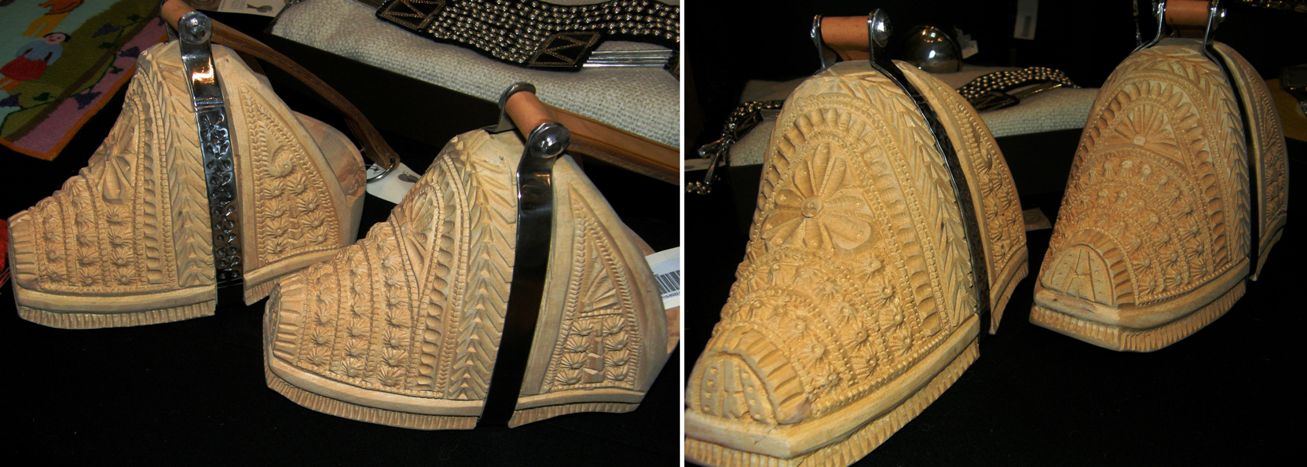
From the central zone of Chile come pieces, such as the carved wooden stirrups above, associated with the huasos, the Chilean horsemen who also use a finely woven silk poncho known as chamanto. The exhibitors brought one of the striped examples which I have been told is called manta with the name chamanto being reserved for the ones that have been decorated with pick-up patterns.

Representatives of the northernmost region of Chile brought jewelry which incorporated traditional weaving and looping techniques. Now there’s another use for the tubular bands!

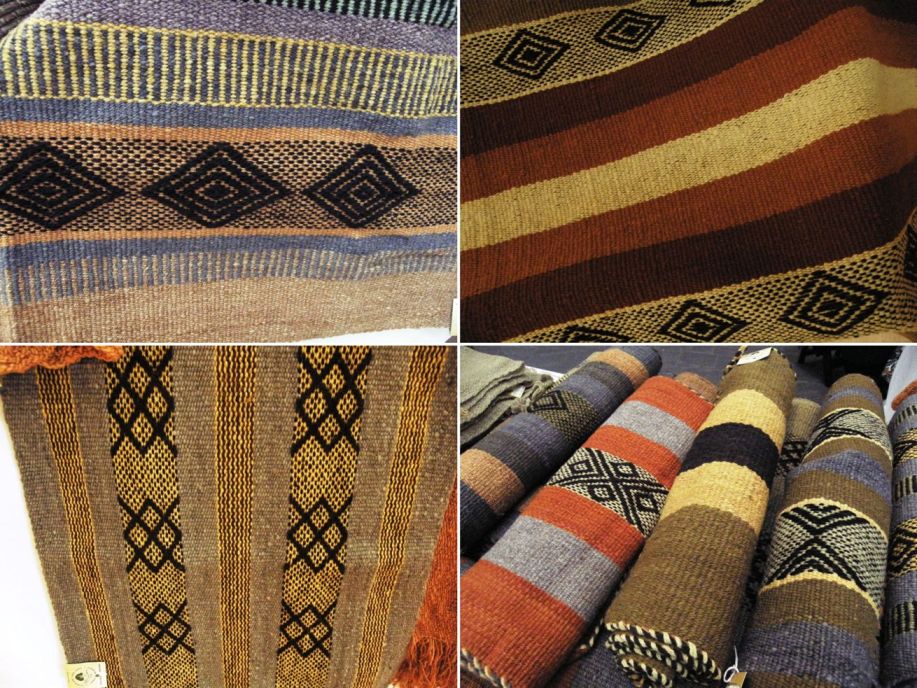
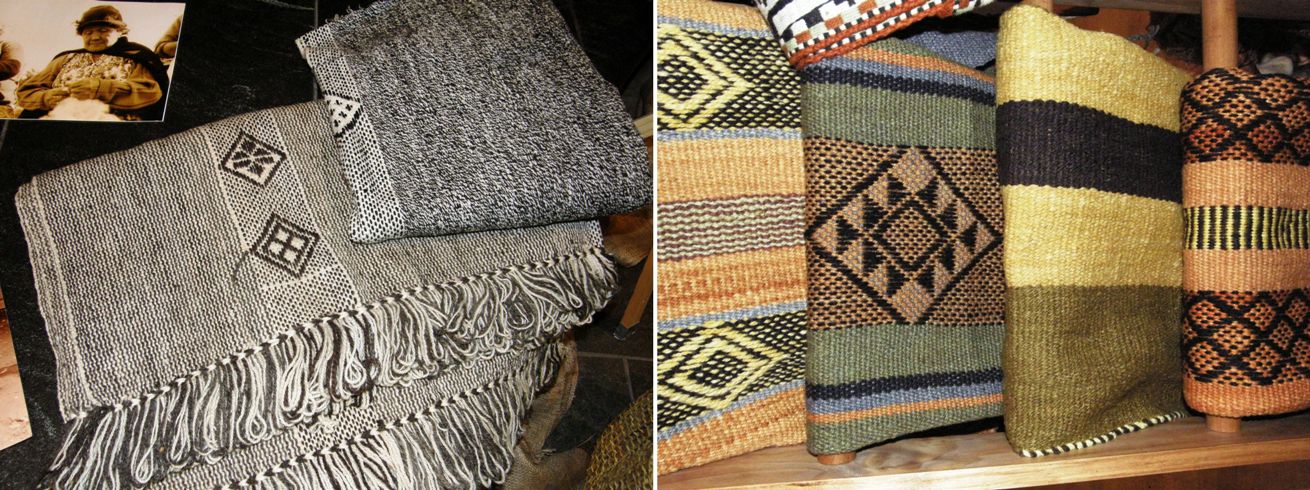
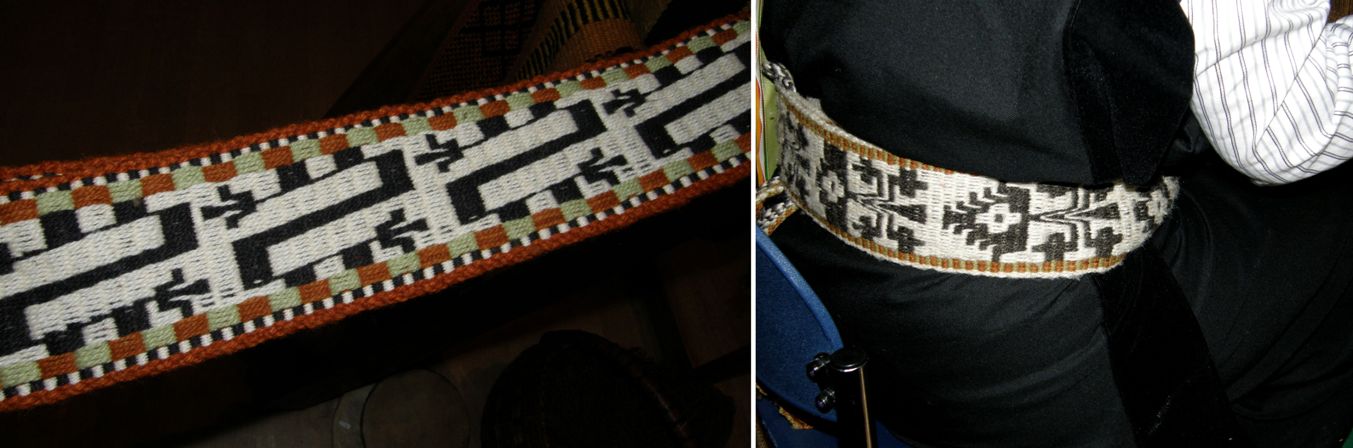
There was a variety of shawls, pillow covers and other woven household items as well as knitted apparel made with handspun and naturally dyed wool by Mapuche artisans.

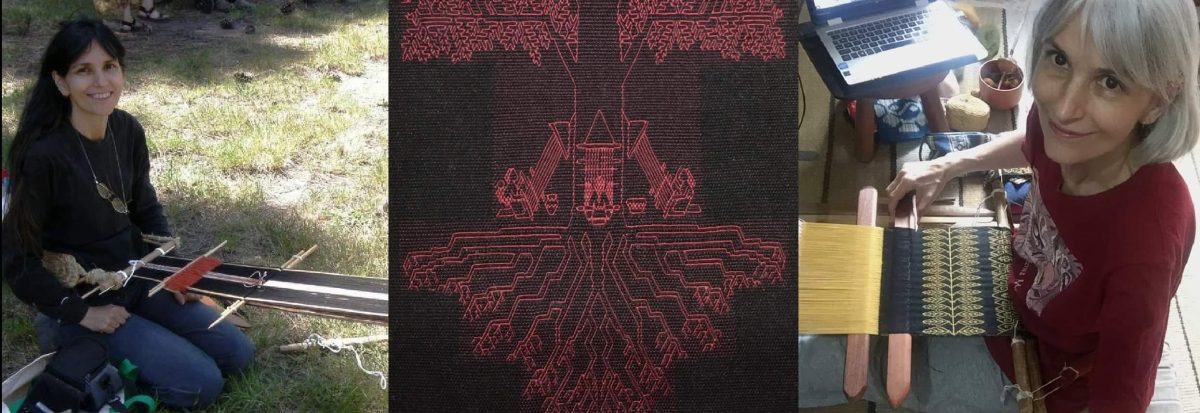
And the best part…a Mapuche weaver, Marta Isabel Huitraiñan Aillapán from Carahue, had been brought by the Chol Chol Foundation to demonstrate her weaving skills.

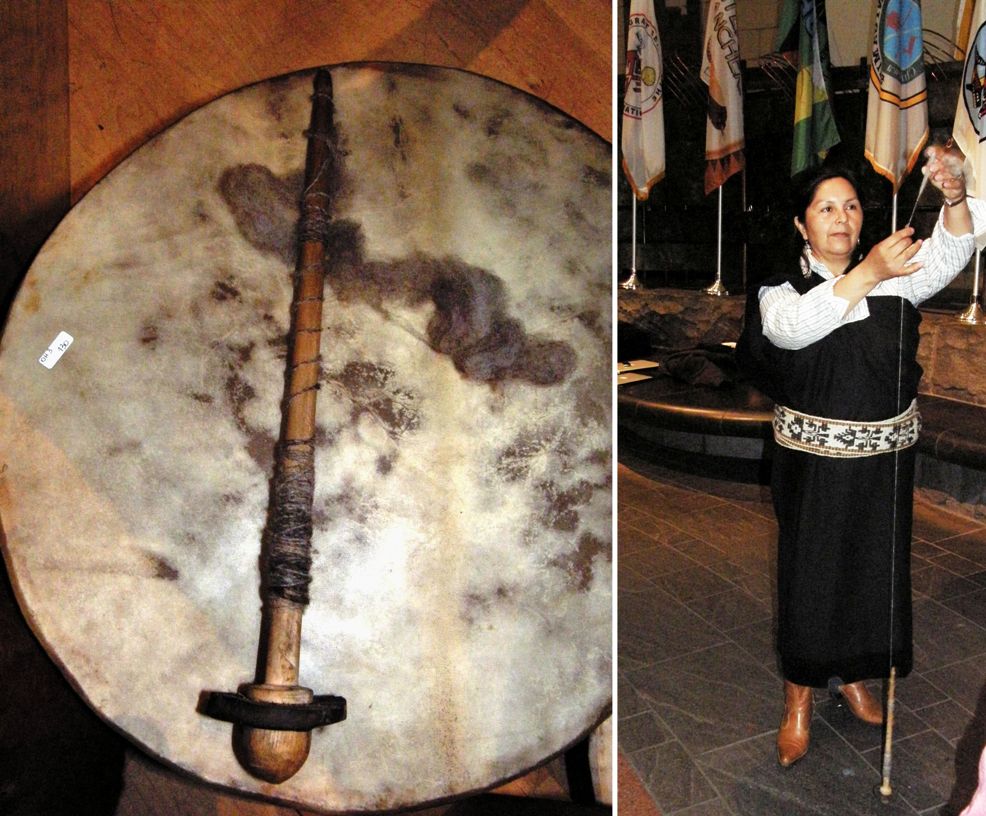
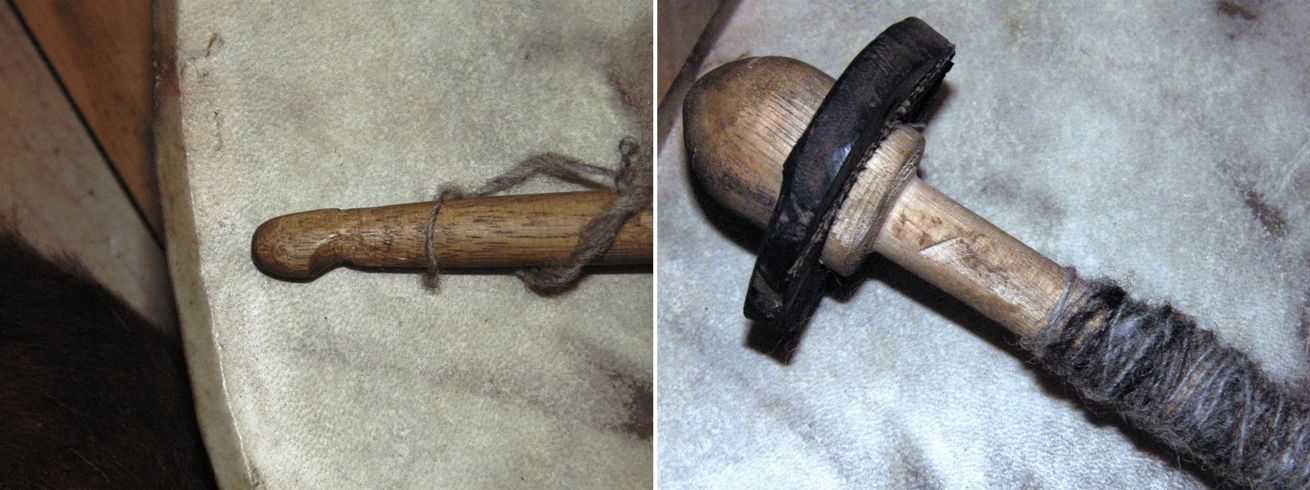
While looking at the displays of woven pieces I spotted a spindle in one of the baskets that had been made for Marta by her son. She was quite happy to give me a quick spinning demonstration.

And here is a video…soft lighting in the exhibit area has made the footage a little fuzzy.

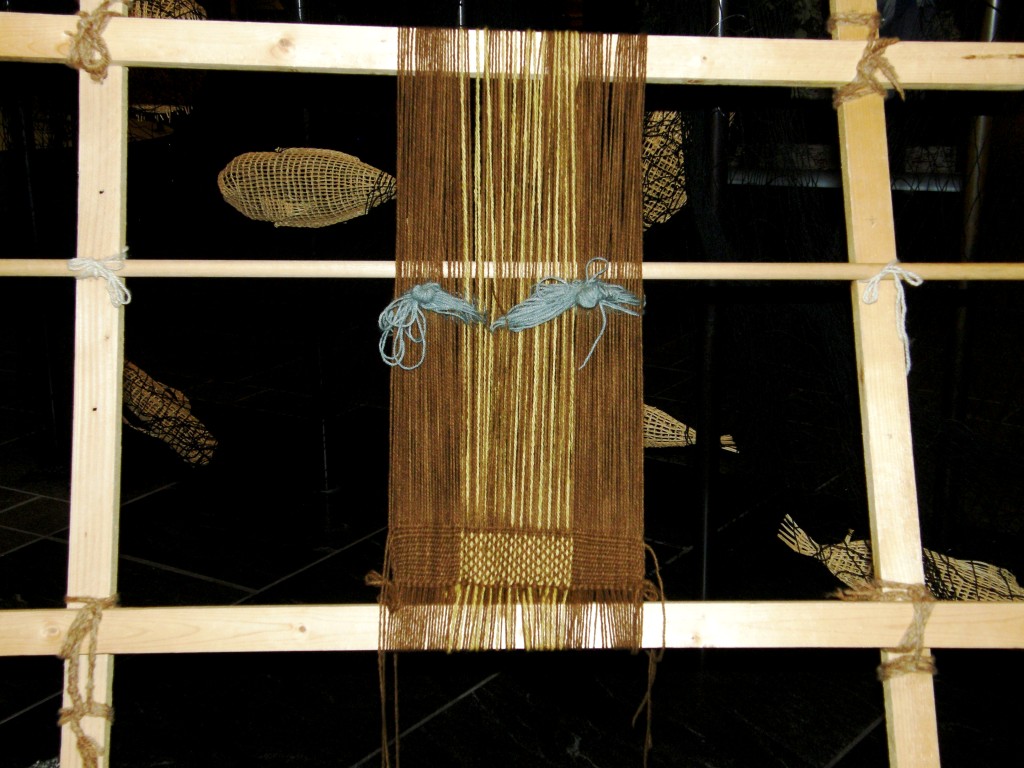
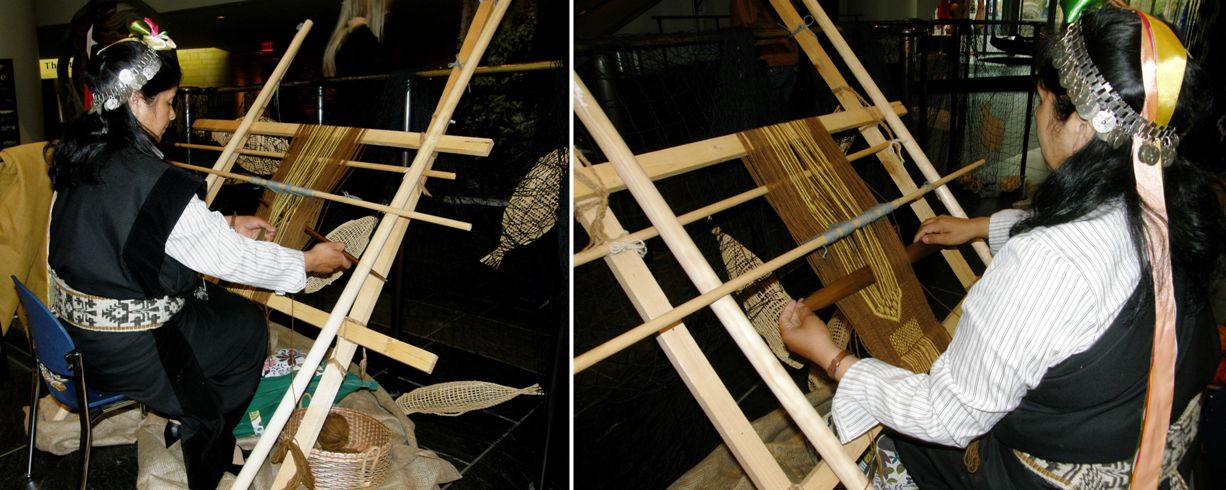
And there was the leaning vertical loom almost ready for Marta’s demonstration. You can see that the shed rod is fixed in place lashed to the posts of the vertical frame. The string heddles were made and tied in bunches to transport the piece to the US. They will later be put on a heddle stick.

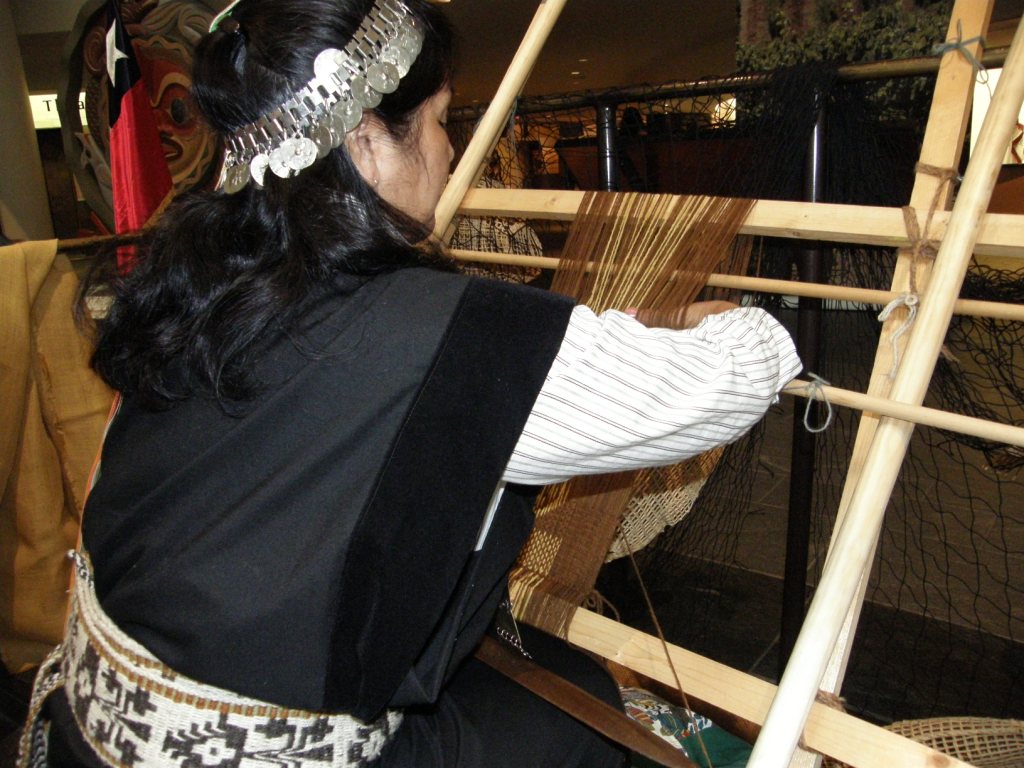
In the picture above, Marta is lifting the warps on the shed rod with her hands and clearing them through the heddles.

You can see that the heddle stick is now in place and is protruding from under her right arm. The heddle stick rests against poles which are placed alongside the vertical posts of the loom frame which means that the warps in the heddles are in a permanently semi-raised position. This means that Marta does not have to pull on the heddle stick in order to raise the warps in the heddle shed. By pushing down on the warps held by the shed rod, just enough space is created to allow her to get her fingers under the warps in the heddles and pull and fully raise them.

You will see the process (executed very quickly!) in the following video:

You see that she holds the shed open with the sword in her right hand while picking up and dropping out the supplementary warps with her left. The tension on the warp and her beat are relaxed.

The next day, after warping and weaving the supplementary warp piece above, Marta allowed me to help her warp for the complementary warp technique that is used to weave their belts. With the warp we made, Marta planned to weave a band with lettering (RDO DE CHILE…recuerdo de Chile, souvenir of Chile). I wove the letter “R” with her guidance and then, sadly, it was time to go. And once again twining enters the picture. Marta starts and finishes her woven wall hangings with weft twining before braiding the warp ends or leaving them as fringe.

On this narrow complementary warp piece we did not use a heddle stick but tied the heddles together in bunches instead and pulled on them to raise the warps.

Marta was a great teacher for me – very patient –  and says that she loves to show the process to people who are really interested. I don’t know how many times she answered the question from onlookers “How long does it take you to weave something like that?” I know that question well!!

I was in very good company with Marta on the second day right up there at the loom! On the first day I was very much occupied with taking videos and photos when I suddenly realized that I should probably step back so as not be in the frame of other onlookers’ pictures. It was then that I noticed another particularly interested onlooker with camera in hand… Ann Rowe. So, spending time with Ann made day one even more special.

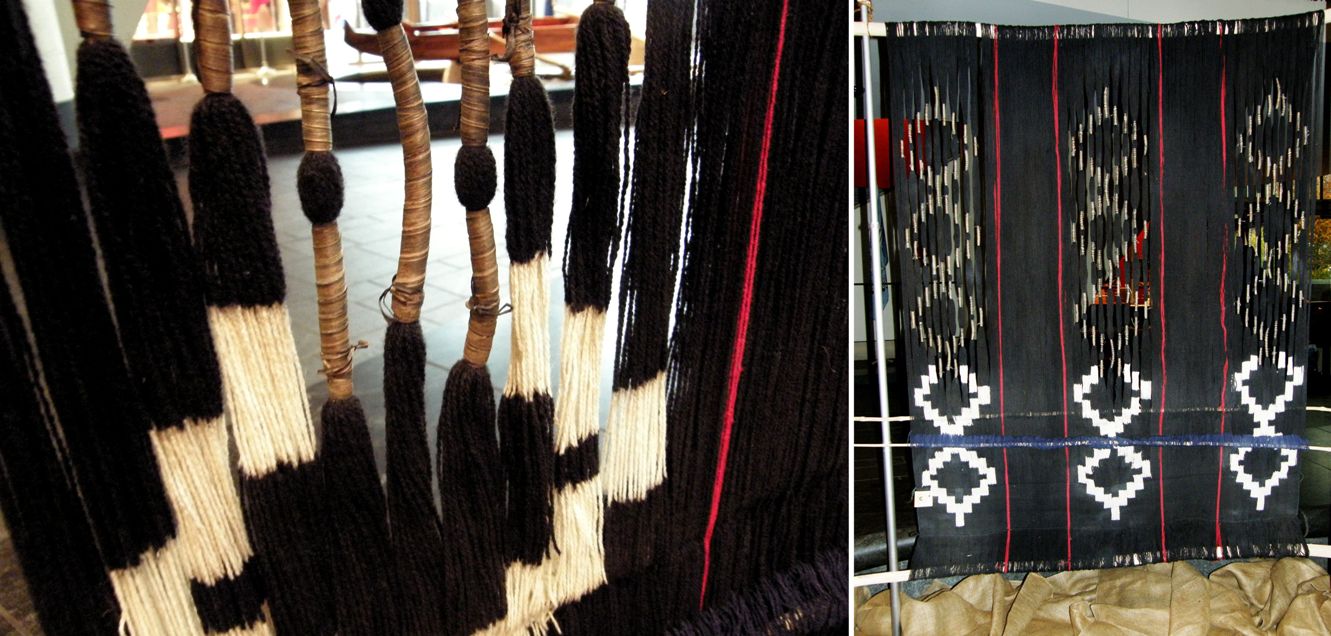
Another great opportunity at the exhibit was being able to see, for the first time, one of the ikat patterned poncho pieces on the loom.


I have always wondered just how the Mapuche weavers stop the warps from moving out of place while they weave ikat patterned pieces.

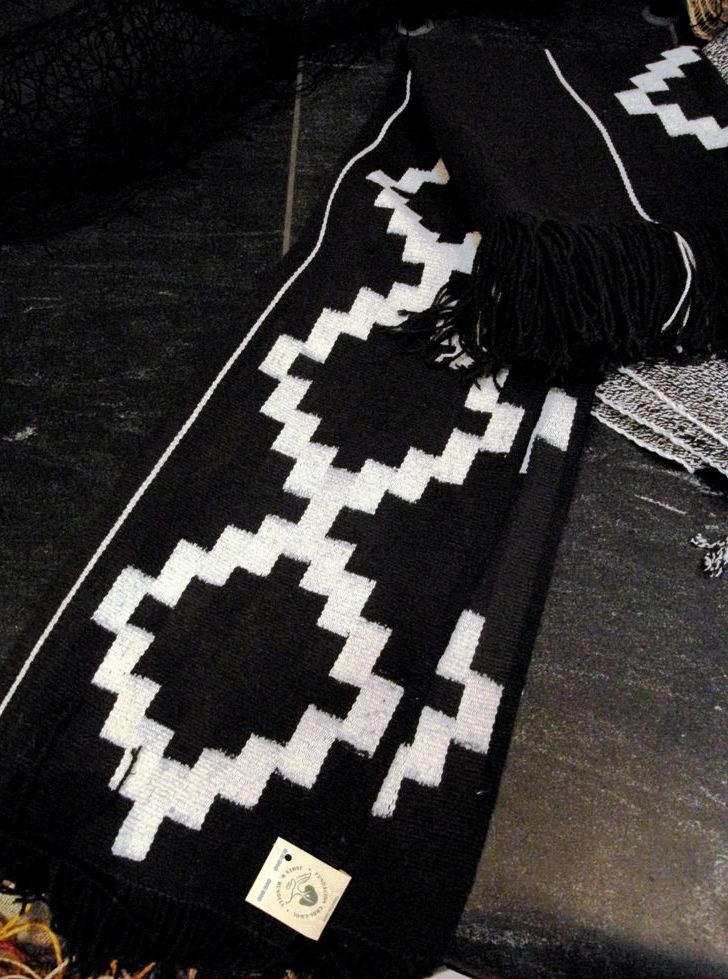
They manage to reduce the characteristic blurry feathered effect on the edges of the designs  to an absolute minimum. The result is beautifully sharp white figures on the dyed black background.

The set-up on the loom certainly didn’t give away any clues!

I was told that of the one hundred and fifty weavers that belong to the Chol Chol Foundation cooperative only one knows how to make the ikat-patterned ponchos.

One thing  that was missing was the double weave belts. I guess I shall just have to take myself off to Chile to see those. And happily now I have a contact in the Mapuche community. While I have been to Mapuche weaving exhibits before in Santiago, I have never been to one where I have been able to have so much interaction with the weaver.

It would also be nice to visit with Celinda and Isobel, the Aymara weavers, that I met at the weavers’ gathering here in Santa Cruz earlier this year. And, if I need any more reasons to justify the trip, I could also go to Doñihue to learn more about the chamantos.

So, here I am at home in Santa Cruz trying to get back into a routine, blogging one day earlier than usual to make up for the missed post last week. I send a big hello and hugs to all the people with whom I wove on this latest US trip and to all the people who so kindly took me into their homes.

Now to decide what to warp up and put on the first pair of those 26 loom bars!