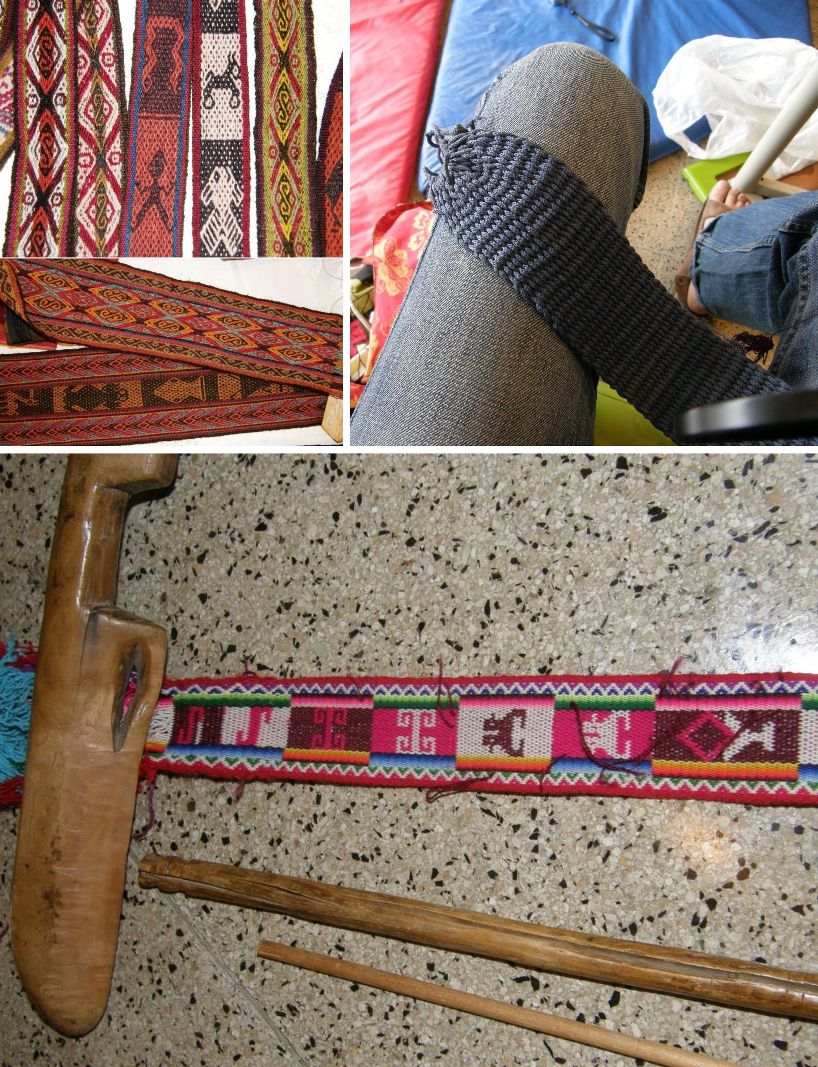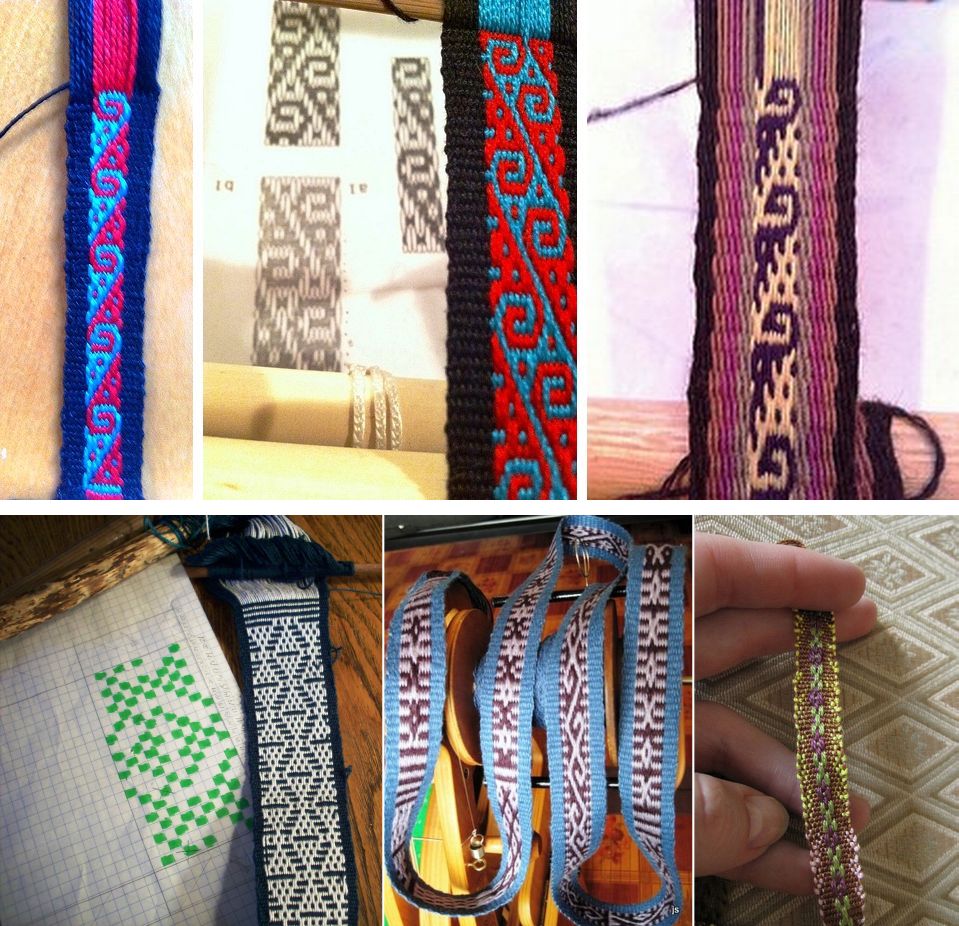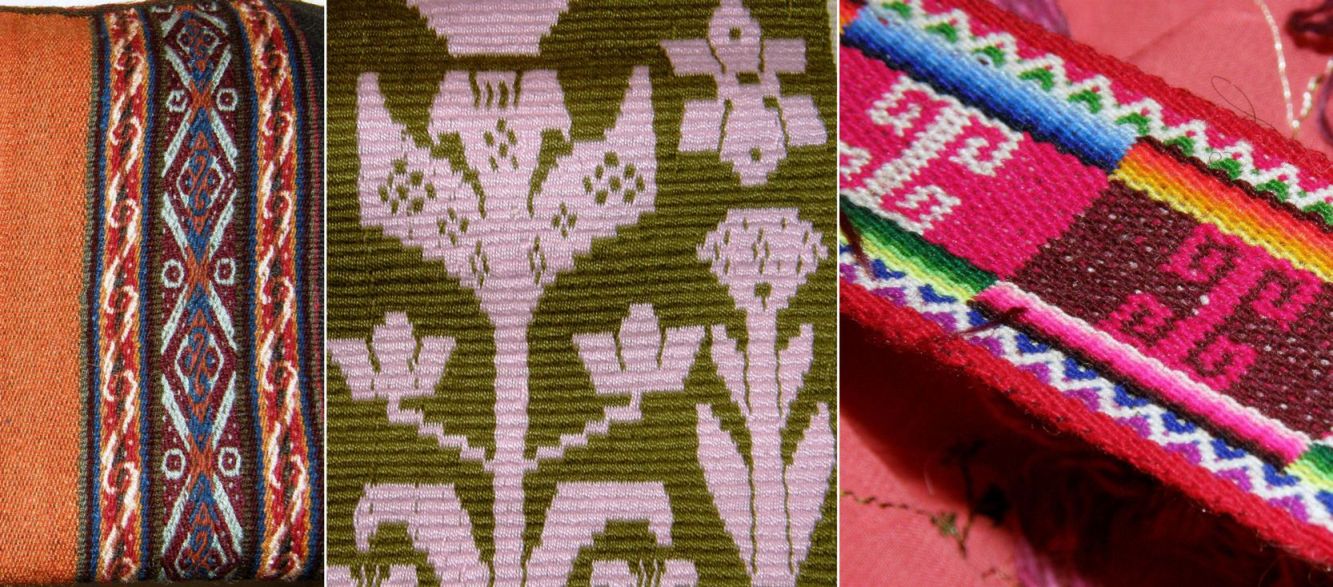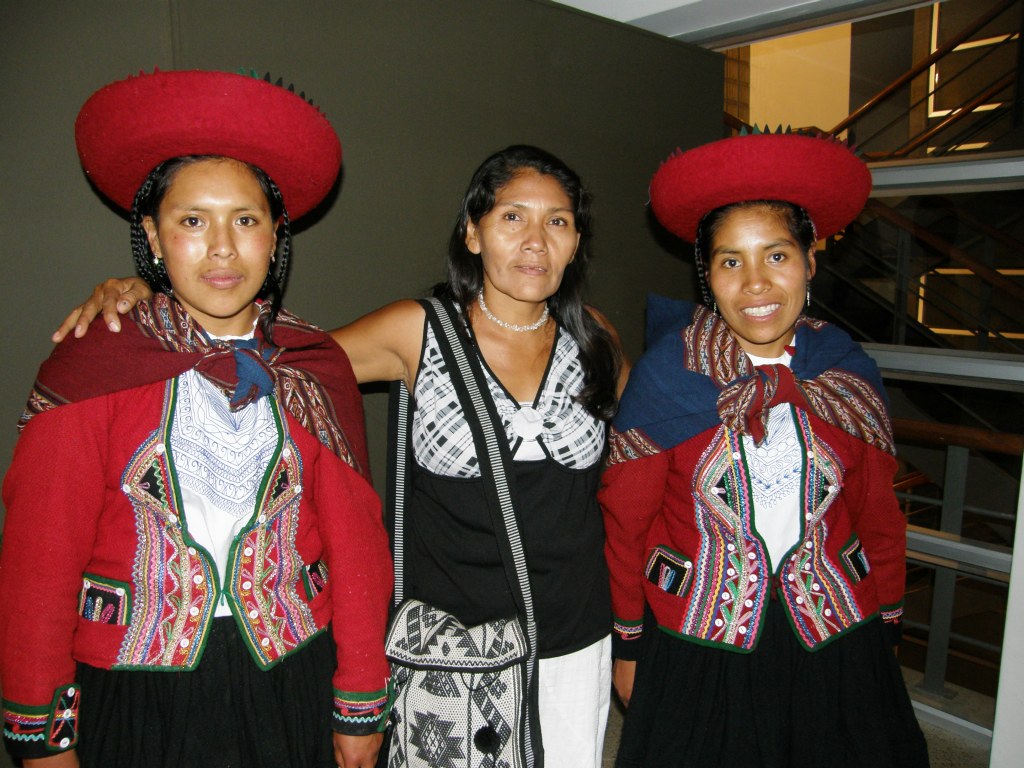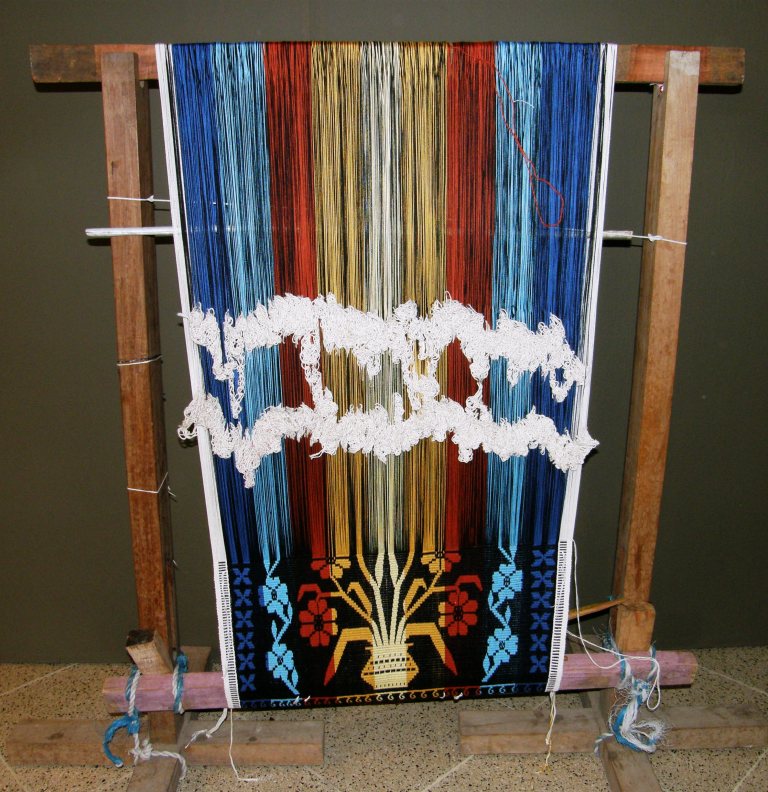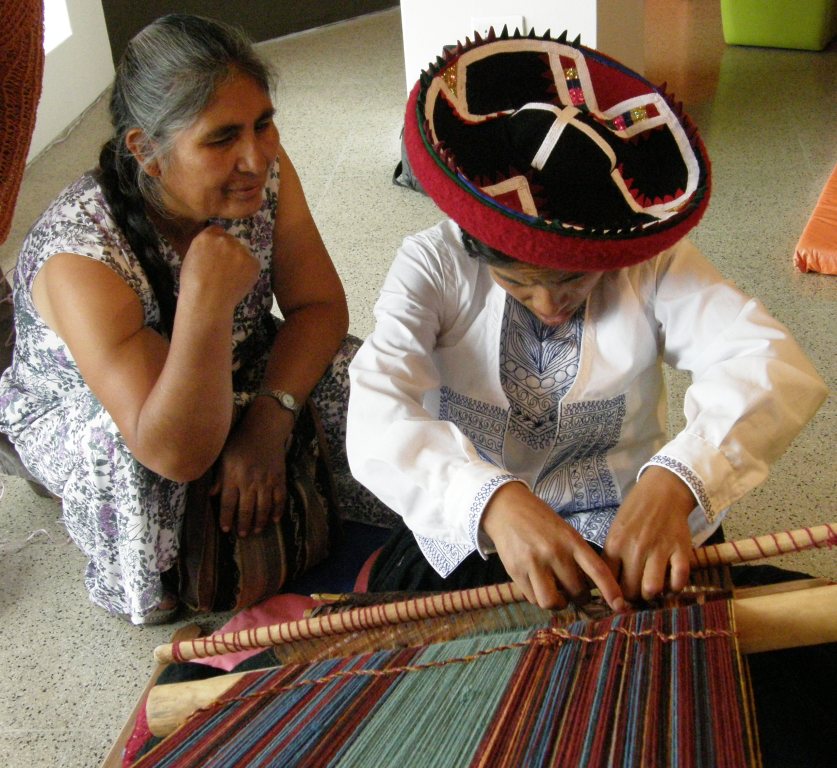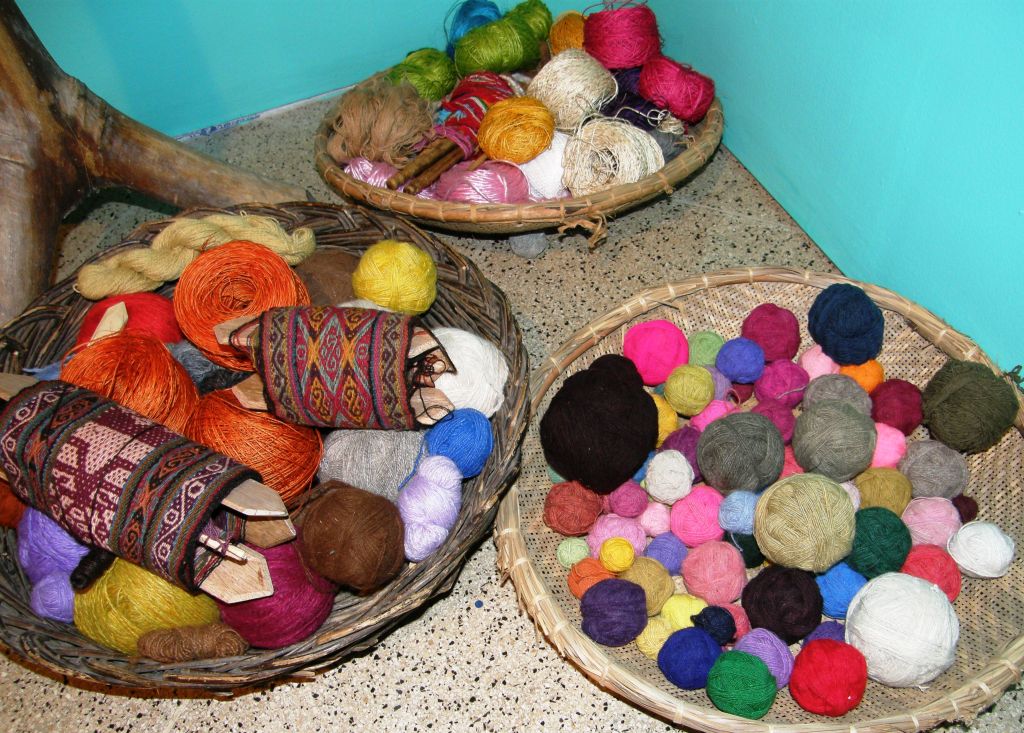
Backstrap Weaving – In Their Own Words

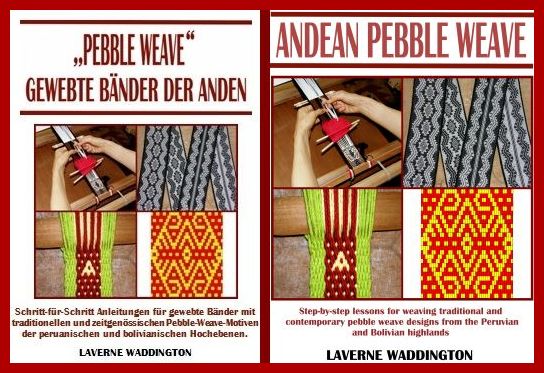
As March rolls to a close, so ends the first month for my e-book Andean Pebble Weave in its new home at Patternfish along with its German companion Pebble Weave – Gewebte Bänder der Anden.

I want to once again thank Syne Mitchell of WeaveZine, Julia Grunau of Patternfish and all my new customers who have made this transition to the new home so smooth and successful.
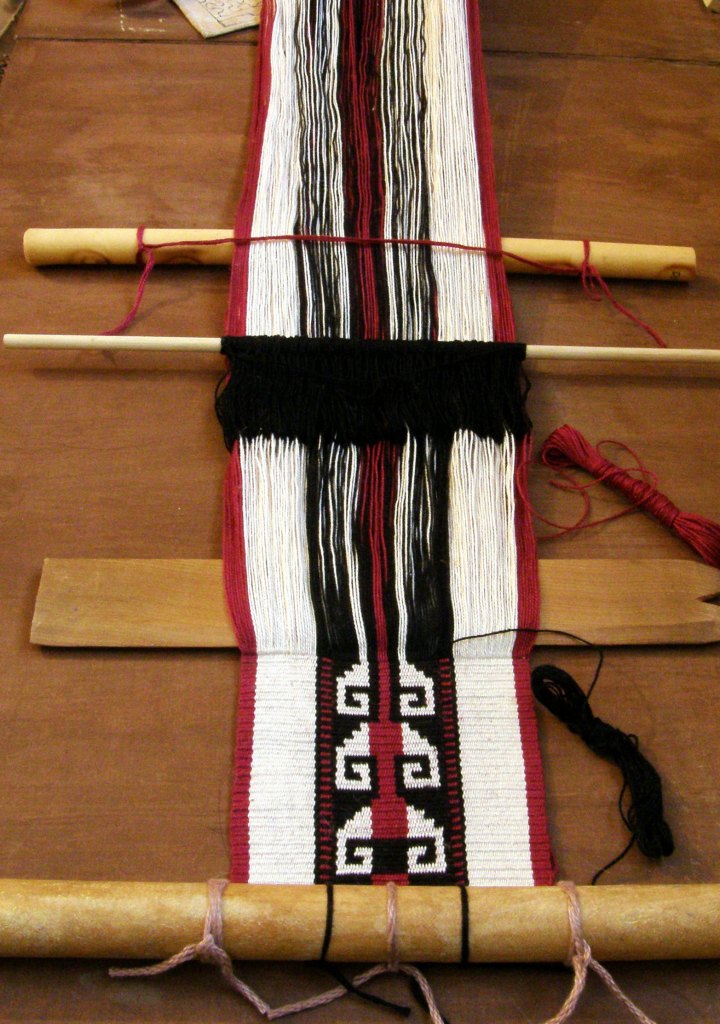
I have had a few things going on the loom this week…mostly bits and pieces that I will take along traveling with me…. gifts and such things.

I wanted to free up all my loom bars and have everything in order before the trip and, in doing so, unearthed one more old project that was lurking in the closet.

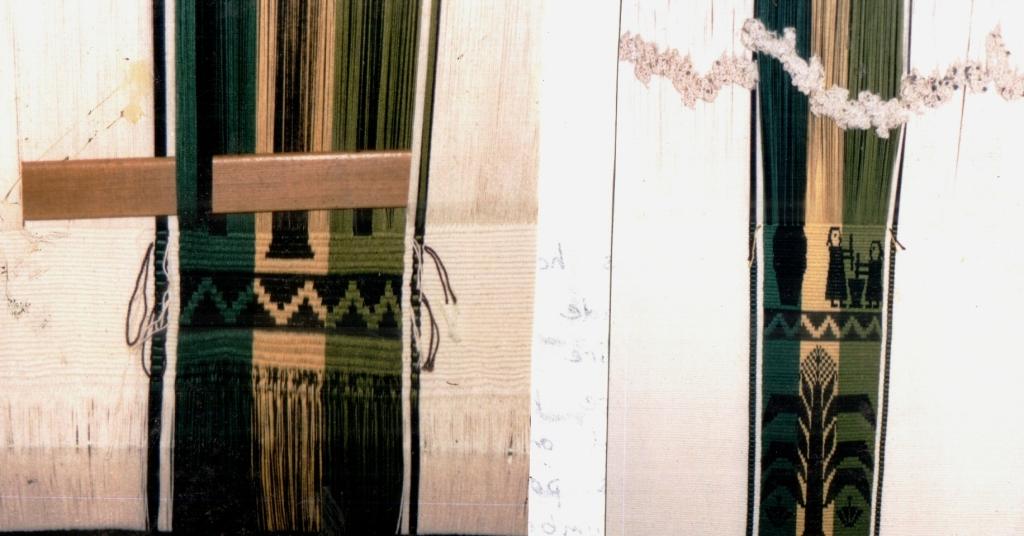
This was to try out a Mapuche double weave motif that is in the Taranto book. I wove it in two-weft double weave so that only the central section with the design is in double weave.

I really couldn’t see myself finishing it and so off it came. As the beige sides are just regular warp-faced plain weave, they folded very neatly and easily along the edge of the double weave section and I was able to just sew a join. Now the MP3 player has a fancy home.
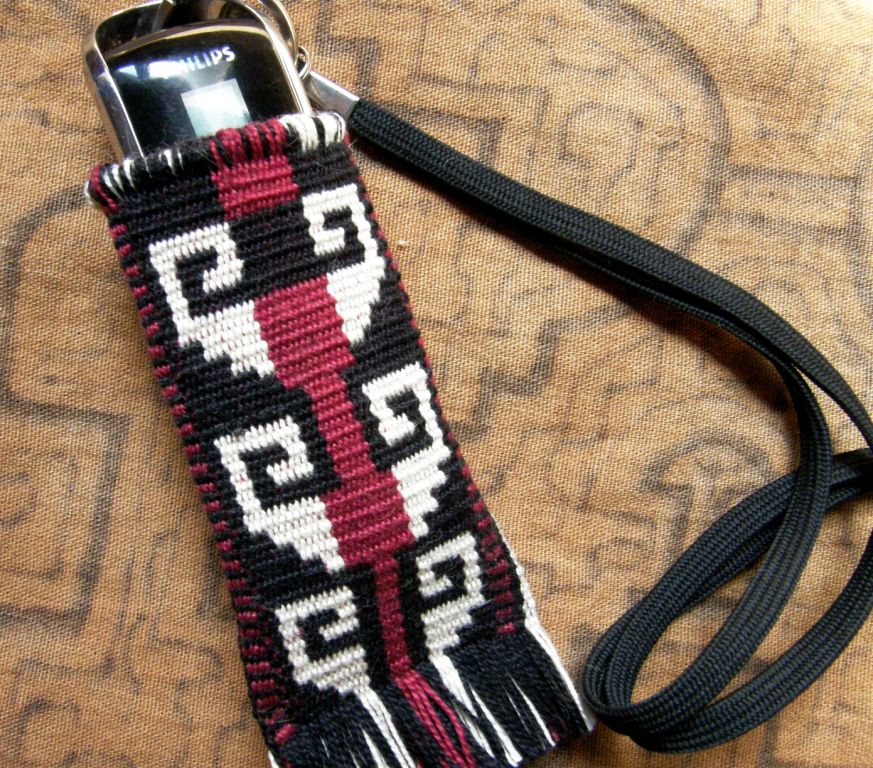

I’ll braid a cord for it. Hmm, might even do one for the player itself. Now I don’t feel so bad about pulling this off the loom.

Then I was prompted to do a little further exploration in supplementary-warp bands, you know that technique that I have never been too excited about. I learned it in two places in Peru and in another in Ecuador but never quite took to it. Well, I have to tell you that I am loving it now!

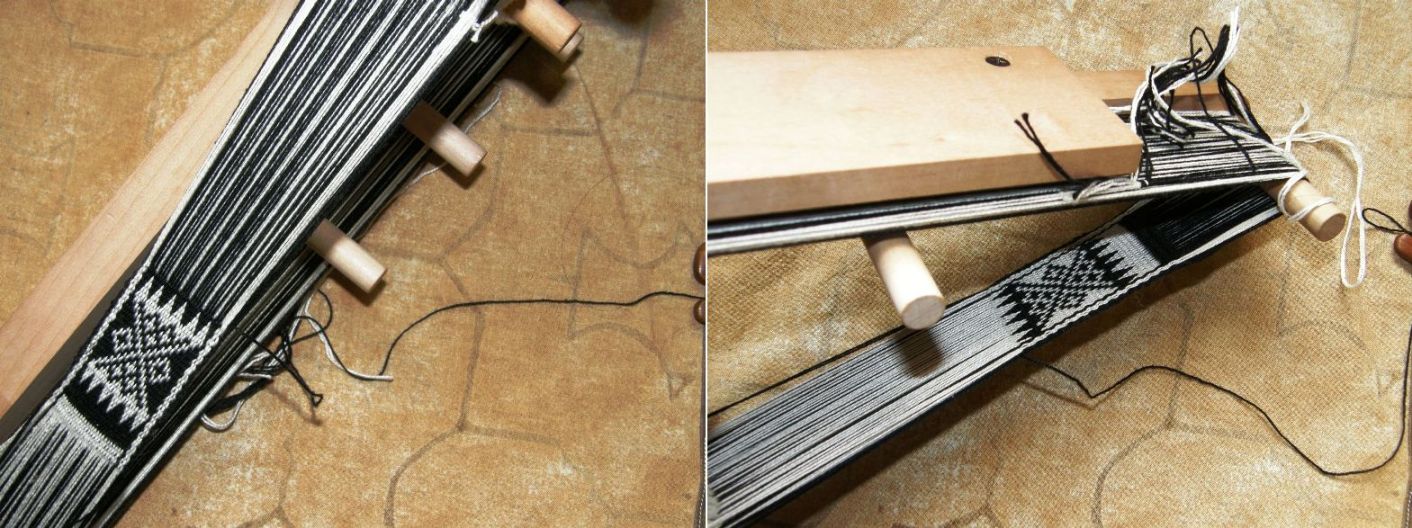
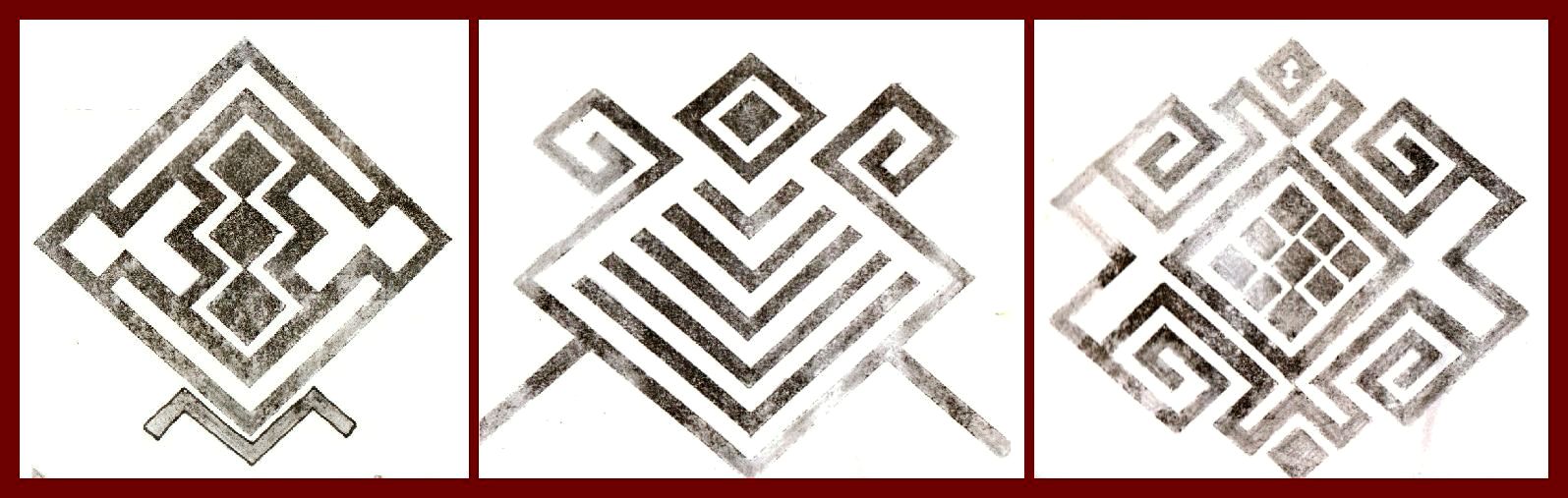
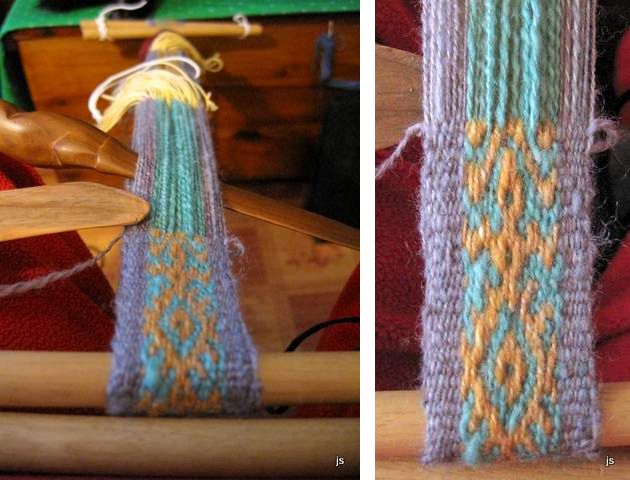
First I tried a Sami pattern (in non-traditional colors and border in 24 wpi crochet cotton) and then dug out my handout from a Robyn Spady class and used her chart for a Celtic design (in tencel) and now I have reproduced a design from one of the Russian Old Believer belts that I photographed last year. There it is in the center.
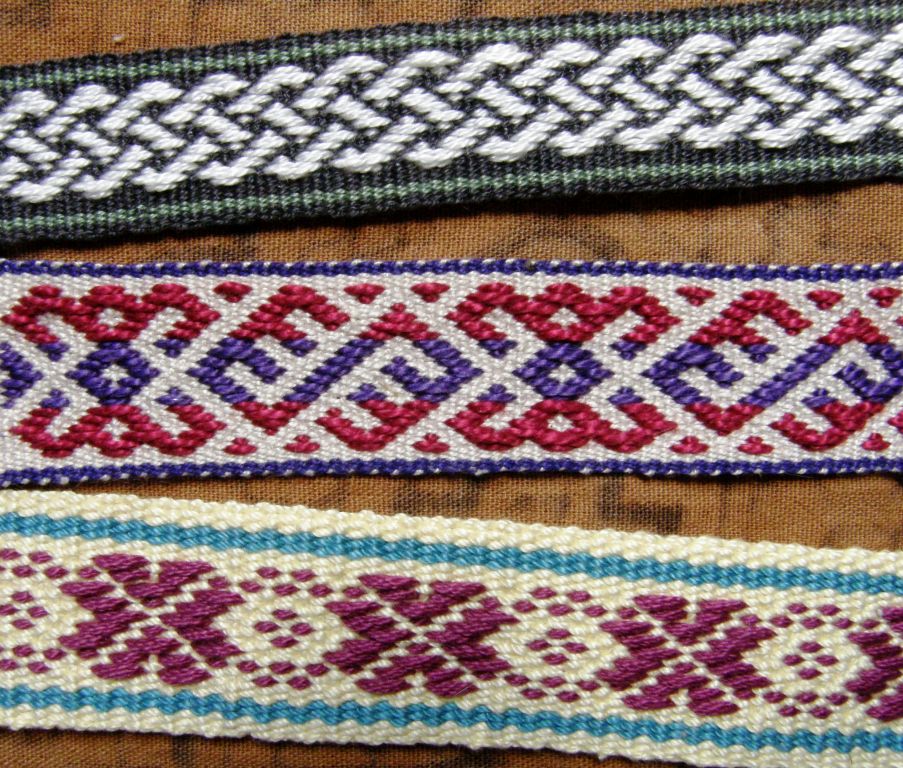

This was a width sample with some 3/2 weaving thread that I hadn’t used before. The ground warp and weft is 35 wpi crochet cotton. When I do the “real” band, now that I have established the width, I will warp an edge of off-white so the weft won’t be seen as it is above.

As it so often seems to happen, just as I was thinking about the Russian Old Believer bands, I got a comment on my blog from a visitor. Natasha provided some links to a lovely site with gorgeous Russian bands and a three-holed wooden rigid heddle. I understand the way the two-holed version works and Grace Hatton has done a lovely job of explaining that in her article on WeaveZine, but I am not so sure about this three-holed variety.

Anyway, here is Natasha’s comment…(hopefully she will send pictures of the bands she made herself)

Hi Laverne,
The design found on the belts from a Russian online store is very close to what I see on the old believers’ belts.
The weaver’s name is Svetlana. She lives and teaches weaving and other crafts in Moscow. You can see some pictures taken at the craft exhibition last year. I recently purchased a wooden implement (not sure what the proper name is) from Svetlana that is used for belt weaving and wove my first two belts. It is called “berdo” in Russian. The interest in traditional crafts has grown in Russia too in the last ten years, at least as far as I can tell without being there. If you need anything translated from Russian I can help.

Natasha.

########################################################

You may remember that I attended a weavers’ conference here in Santa Cruz a couple of weeks ago and dedicated a couple of blog posts to it.
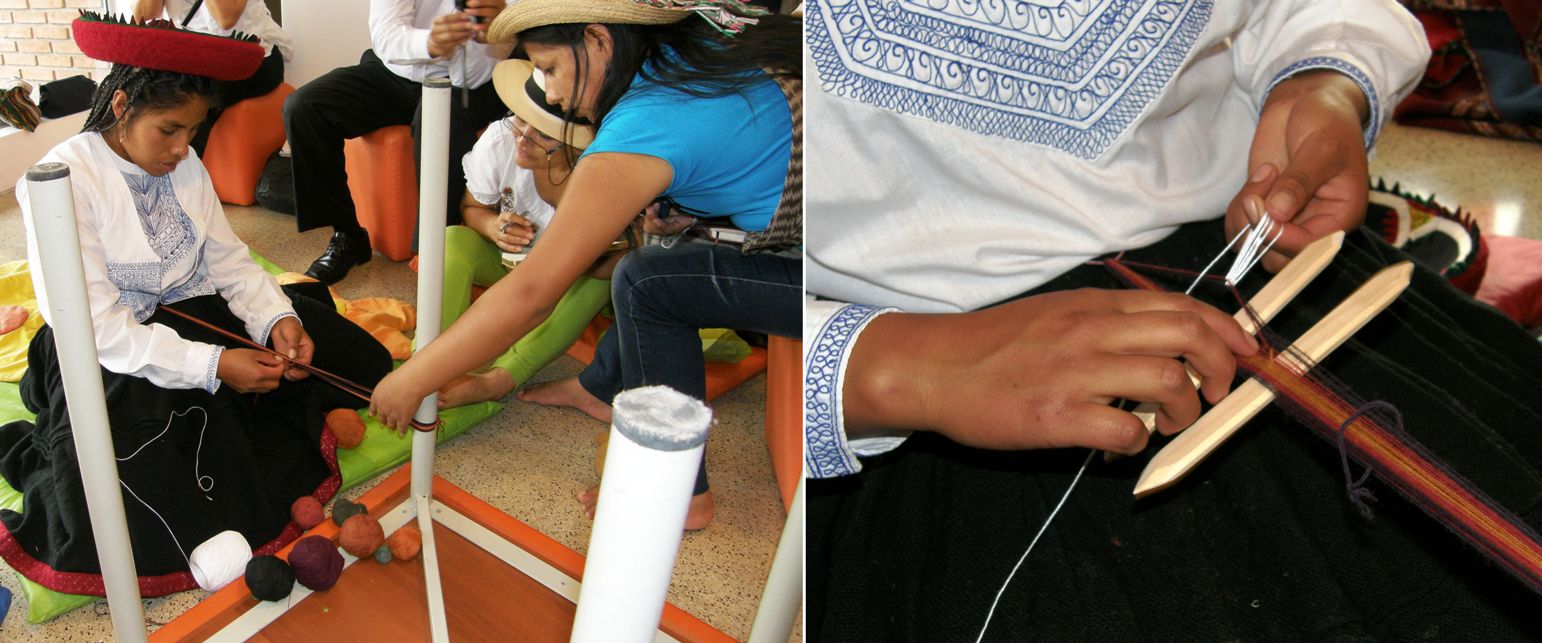
As a participant from the general public, I got to meet and interact with weavers and other fiber artisans from the highlands and lowlands of various South American countries. Through workshops, videos and presentations we not only learned about the fibers and the techniques used to create the woven pieces, but also about the efforts of researchers, artists and academics to document the processes at the source and educate youngsters in the artisan communities themselves and the general public about these cultural treasures many of which are on the verge of disappearing forever.

This made me think of four people I know of who are working or have worked at this very thing and I thought that it would be nice to hear in their own words about their involvement and relationship with the artisans and what they see the future holds.
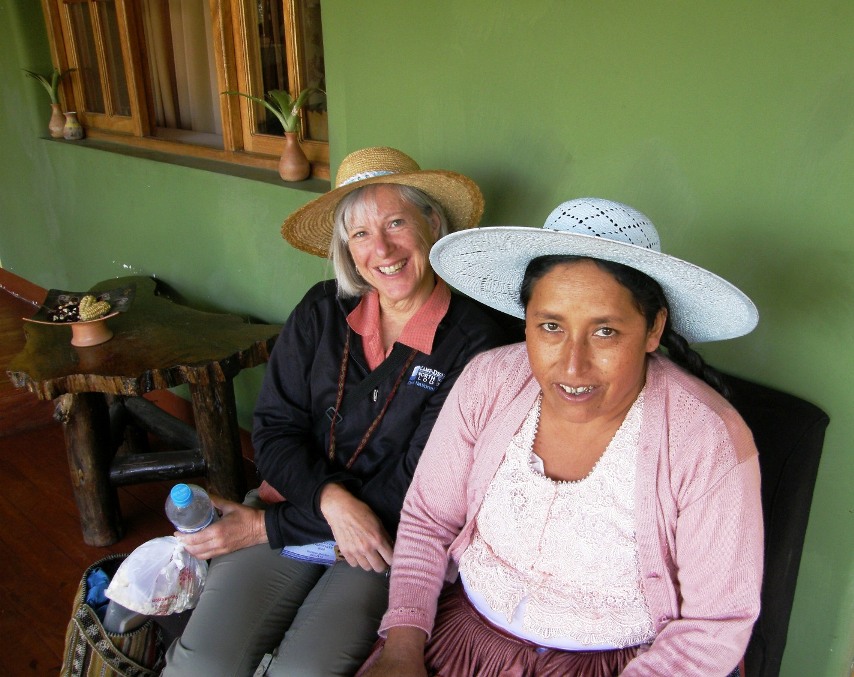
DORINDA DUTCHER

One such person is Dorinda Dutcher, a North American ex-PeaceCorps worker whom I met online and with whom I shared a room at the Tinkuy de Tejedores last year in Peru.

Dorinda works out in the field and is out of internet contact much of the time and so I was unable to get in touch with her for this blog post. I urge you however, to take a look at her blog and the wonderful programs she has going in the township of Independencia in Cochabamba, Bolivia.

Both Dorinda and Maxima, a local weaver who heads one of the weaving associations, were very much moved and influenced by their experience at the tinkuy. You can read all about it and how Dorinda is educating and involving youth in weaving and helping, very slowly but surely, to improve the lives of women in the community in her own words here.

#############################################

KATHLEEN KLUMPP

I was lucky to come into contact with Kathleen Klumpp through Ann Rowe who I met at the Textile Museum in 2007. Ann knew that Kathleen was planning a research trip to coastal Ecuador and could probably use an assistant. It was one of those “meant-to-be” things. But Kathleen’s involvement with the family of cotton weavers in Manabí Province, Ecuador goes back much much further than this 2007 trip. I will let her tell you in her own words…(photo captions by me, all photos except one by KK)


Kathleen with one of Luz’s daughters, Trinidad

My first contact with this family of weavers was in 1976 when I sat next to an elderly campesino man on one of those colorful open-sided country buses who was carrying a patterned saddlebag known as an alforja labrada.

I admired his bag, and I soon found myself up at the home of its weaver, Doña Luz Párraga in the settlement of Zapote documenting their methods in writing and in still photography for preparing cotton, spinning it, and weaving it into alforjas and hammocks.

Spinning cotton and weaving on a native vertical loom is a millenarian coastal Ecuadorian artisan tradition that has been transmitted by peasant women from one generation to the next for at least four thousand years. Throughout much of the twentieth century, this craft flourished in the Rocafuerte valley region of central Manabí.   In almost every settlement and small village situated between the city of Portoviejo, the capital of the Province and the city of Rocafuerte rural women spent hours hand-spinning cotton fiber and weaving double-pocket bags or saddlebags (alforjas) and hammocks intended for their own use as well as for that of other peasant families in the area. During much of the 20th century, the spinning and weaving of saddlebags and hammocks were part of a female peasant identity and part of their cultural heritage.
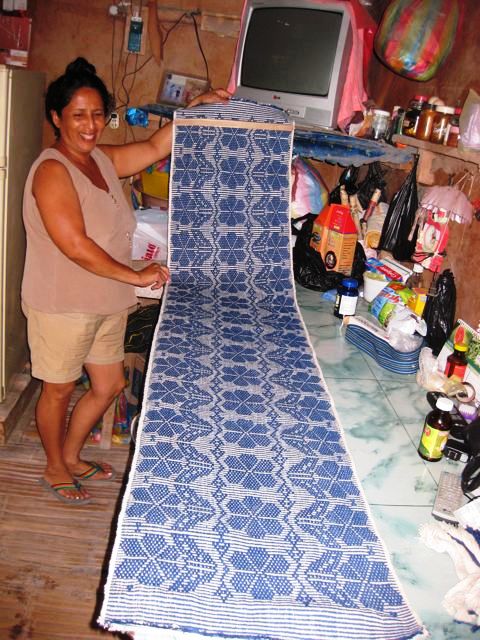
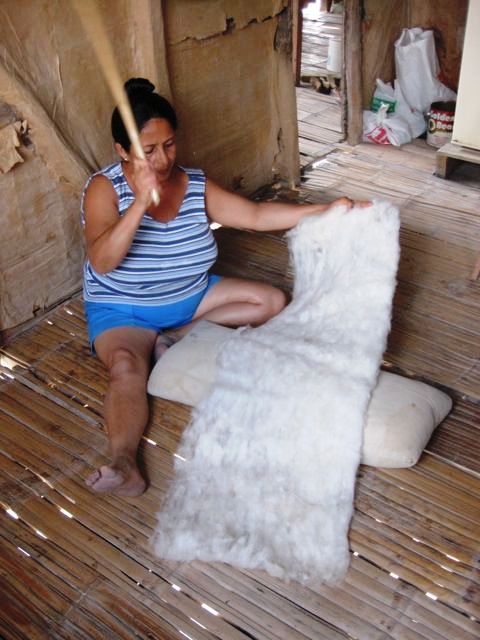
The finished patterned textile ready to be sewn into a saddlebag.
Trini beats the cotton as part of its preparation for spinning.

In order to repay Doña Luz and her family for sharing their knowledge and skills with me, I made sure that they had copies of every photograph I took as well as doing some special portrait photography of this family at the request of  Doña Luz.   Even though the brief article that I wrote about this millenarian fiber art was published in Spanish in an Ecuadorian anthropological journal, nobody, other than non-Ecuadorian textile specialists took an interest as this activity has been invisible to the members of the dominant society for centuries.

I returned to Zapote in 2006, after a hiatus of 30 years only to find that this fiber art was on the verge of disappearing altogether.  In fact, Trinidad and her sister Mariana were the last active weavers in the entire Province.  But there was a problem: neither of Doña Luz’s daughters had learned how to pattern the fancy saddlebags, since the campesinos had stopped using them in preference for plastic bags.

In the face of an increasing globalization, the economic and social value of transmitting these skills and knowledge to the next generation has collapsed. Today’s cell phone carrying young ladies want nothing do to with this textile fiber art as it is considered “antiquated” and not suited for “modern times”.  They would be embarrassed to be seen spinning or weaving—such is the stigma attached to this former female peasant identity—an identity now tenuously held onto only by their “old fashioned” grandmothers.  In 2010, one young lady told Trinidad, as she was trying to recruit her as an apprentice, that she “rather starve” than to earn a living from this artisan activity.
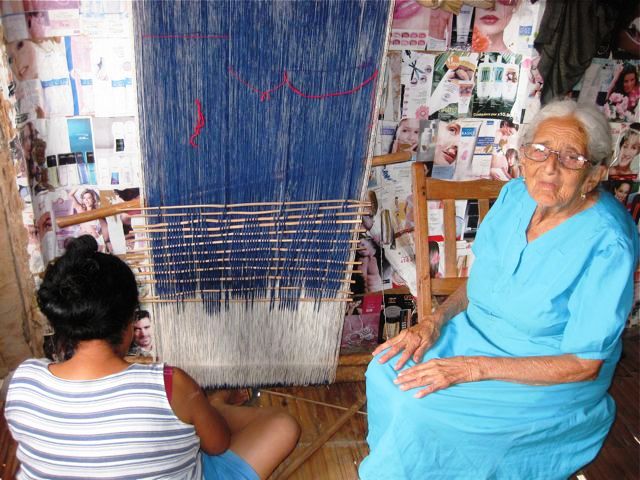
My first priority was to insure the transfer of the full inventory of Doña Luz’s knowledge to her daughter, Trinidad, the one most interested in learning.

Now in 2011, I report on some recent encouraging signs that indicate that it is not yet totally moribund. These stirrings of life are, I believe, the end result of the steps that I initiated in 2006  to keep this craft alive and to insure that the necessary infrastructure would be in place for it to continue.
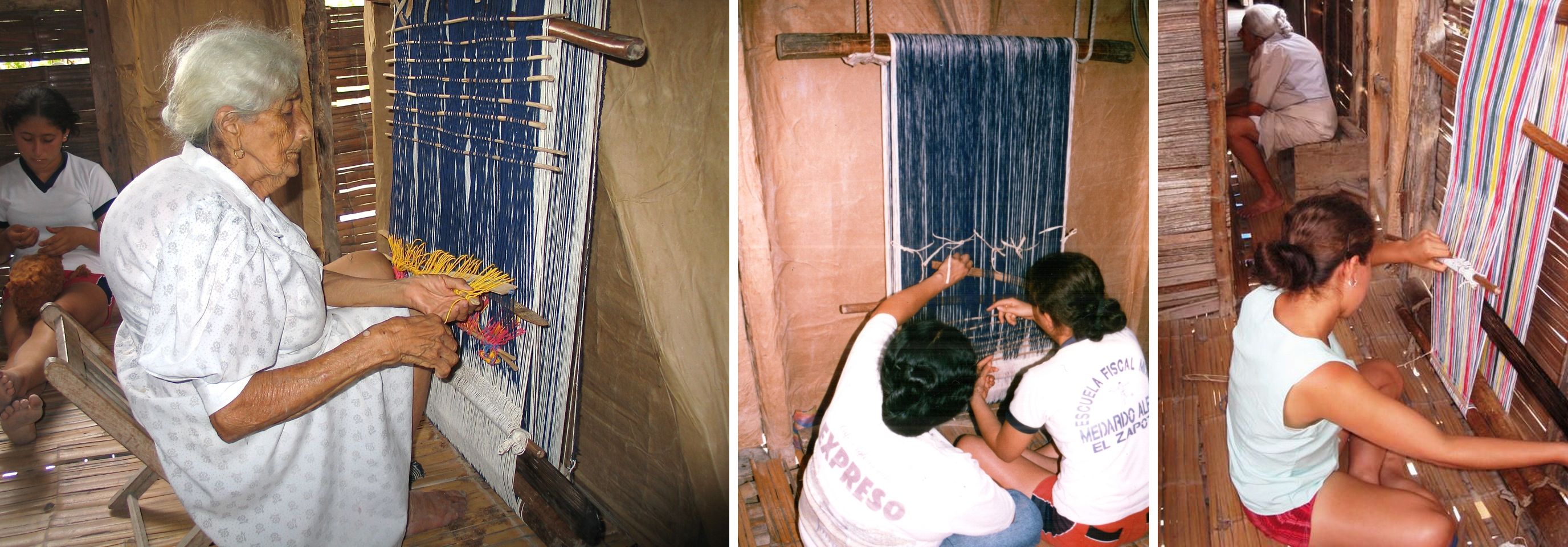
 

On my (Laverne’s) visit with this family accompanying Kathleen in 2007, Luz’s granddaughter Catalina would help with de-seeding and teasing the cotton (you can see her there in the background of the first picture). Grandmother, mother and aunt Trini would take care of the spinning and weaving process. On that same trip Catalina took only a very short-lived interest in learning to program the pattern warps but you can see her there in 2010 weaving a hammock on her own while 86-year old Luz sits by.

In  2007 when criollo cotton could no longer be purchased anywhere in the region, (cotton used to be a major cash crop of Manabí throughout the major part of the 20th century), I then suggested that they grow their own. Trinidad was able to locate a little old leftover cotton with its seed intact. We both selected the best looking seeds, and she planted them.  Since then, she has about 75 viable cotton plants of two varieties of the native South American cotton Gossypium barbadense growing on land that this family owns on the top of the ridge.

We also have secured more macanas (the heavy swords or battens used to beat down each successive row of weft thread) from some old ladies in the village who no longer weave.  These heavy swords are hand-hewed out of a dense hardwood with the wood of the chonta palm being the preferred material.   We also found some old, abandoned fence posts of chonta wood near the town of Chone where this palm grows, just in case we have to fashion new macanas in the future for additional looms and weavers to use.  You can’t weave without a macana—it is the essential piece of equipment!

I also encouraged  Doña Luz’s 10 year old granddaughter, Melina, to learn how to spin. (by bribing her with 10 cents for each arm length of spun fiber!)


But, if despite my efforts, the knowledge of spinning dies out ( as today’s generation of young ladies have no incentive to learn it) I have located an excellent source of natural cotton yarn that takes dyes, both natural and aniline.
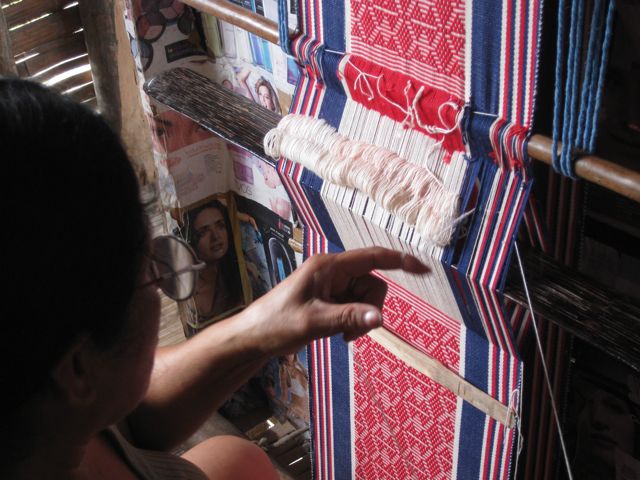
 

A new design being woven with suitable industrial spun cotton that Kathleen discovered in the area.

################################################

BETSY RENFREW and ANDREW YOUNG

I met Betsy online when I ran into her blog on the Montagnard weavers who are living in North Carolina. We made contact and I organized to go and meet with her and Andrew and the weavers with whom they have been working. On a second occasion, Betsy welcomed me again and I was able to learn the weft twining process called kteh used to finish the ends of blankets and skirts from weavers Ju Nie and Ngach. On this trip I was also able to take part in some of the weaver gatherings that Betsy organizes.


One of my twining classes with Ngach and examples of the beautiful kteh work.

Here is Betsy writing about her project and its goals…
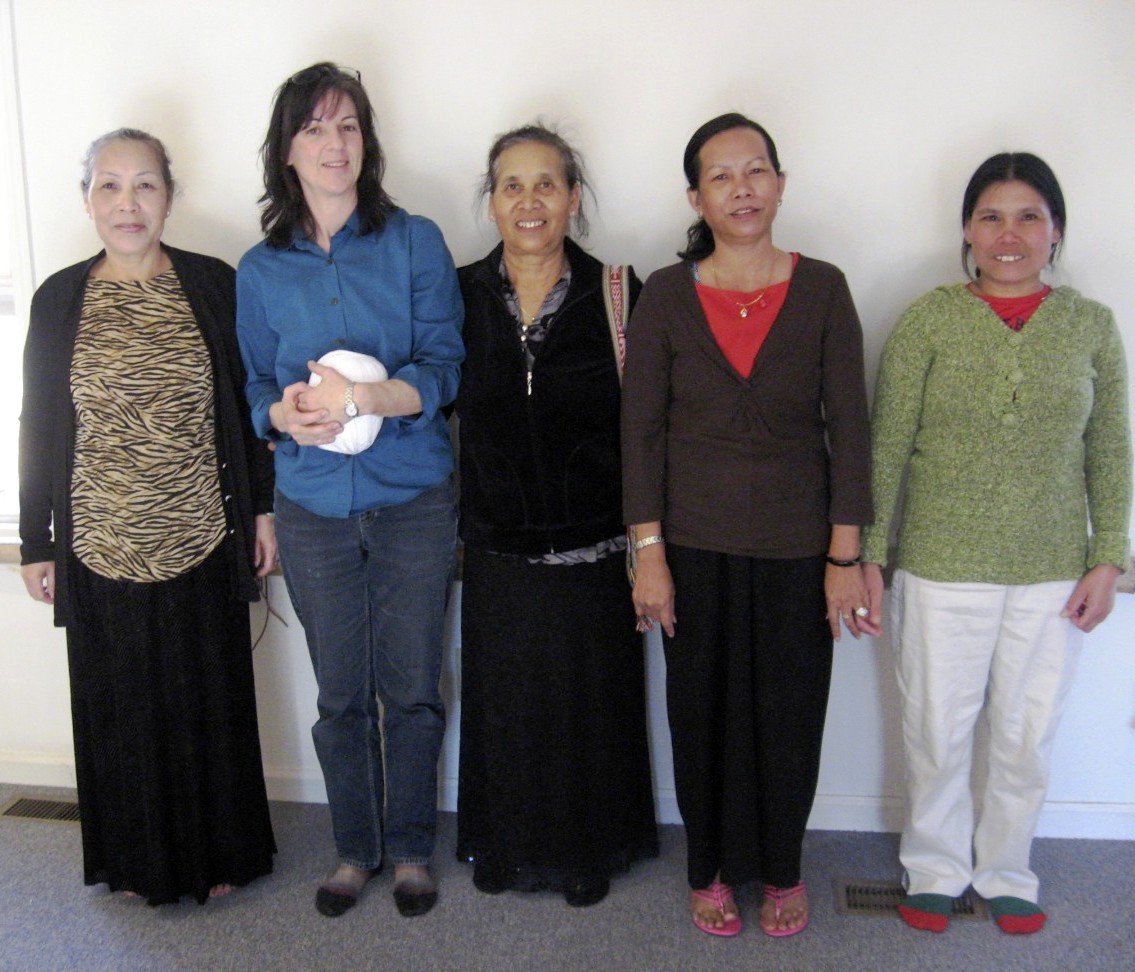
Betsy Renfrew with Montagnard weavers, from left to right  H’ Wun Eban and H Ngach Rahlan (Jarai tribe), H-Tep Adrong (Bunong tribe) and Broih Fnu (Banhar tribe)

Since 2008 I have been meeting and interviewing Montagnard weavers in Greensboro, NC, in an effort to document their weaving traditions and understand why so little research had been done on these traditions.

My background is in the Fine Arts and I found this documentation to be an important segue from the world of painting and art history into a more folk/craft oriented project with a digital element. Recently I have received a grant and great encouragement from the Community Folklife Documentation Institute, a program spawned by the North Carolina Arts Council, North Carolina Folklife Institute, and the Center for Documentary Studies at Duke University.

North Carolina is eager to learn more about
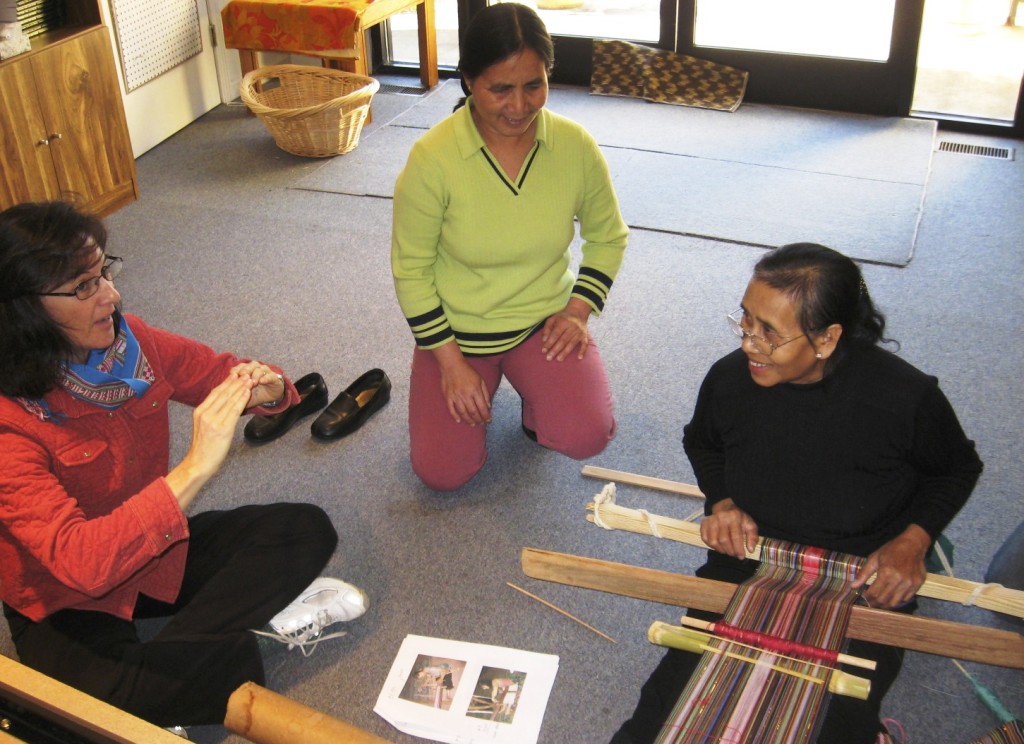
A local church has given space where Betsy can gather the ladies to weave, share skills and socialize. Here she also teaches them the English words for their looms and the weaving process.

Montagnard weaving and I am eager to share this knowledge with others. I have also partnered with a local Montagnard organization, the United Montagnard Christian Church, in receiving a grant from the United Arts Council of Greater Greensboro. With this grant I have organized women (now known as the Backstrap Weavers of Greensboro) that weave to help them learn some basic English to demonstrate their skills at local events, teach weaving to new students and learn how to market and sell what they weave.

We have good following of women coming to our meetings to share weaving knowledge. Most of the women are over the age of 50 and don’t speak English at all or have limited English. Most elderly traditional Montagnard women don’t interact with people outside their kinship group or church circle because they don’t drive, can’t read, or do not have a job. I found a certain level of low self esteem at first (because of the language barrier) but now I see these women not only enjoying themselves during our weaving time but interacting with people from different language groups (refugees from the Central Highlands speak five or six different languages) and other ethnicities. They have also come to trust me and to tell me what they love best of their culture.
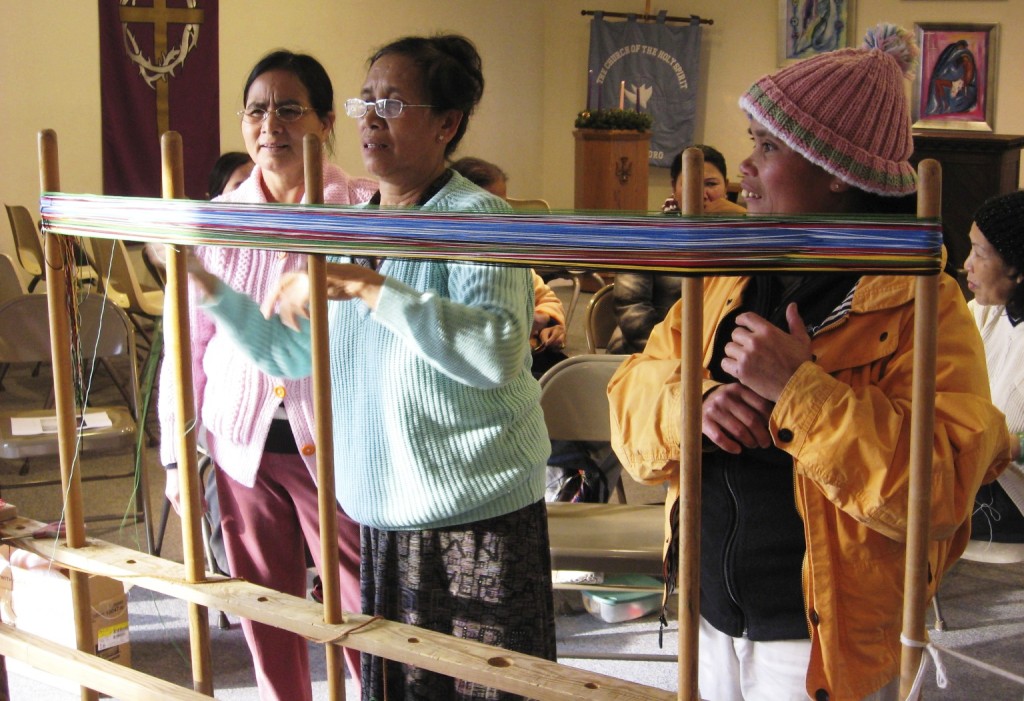
 

Ju and Khin, both of the Jarai tribe, meet at the church to make a new warp.

One of my frustrations within the last year or so is a small turnover in attendees. Some of the women can’t come regularly because they care for grand children, have old injuries from working at textile mills, or poor vision. And there is the continual concern for sustainable income or funding for the project. Many of the women do not understand what a grant is or how it works! Despite these frustrations I have built a bond with what seems to be the last few practicing weavers in Greensboro. I teach them English, they cook me hablang, or cassava leaf soup. They teach me the words for their loom parts and I teach them how to teach others to weave. They are weaving with new supplies and beginning to make smaller purse type products to sell.
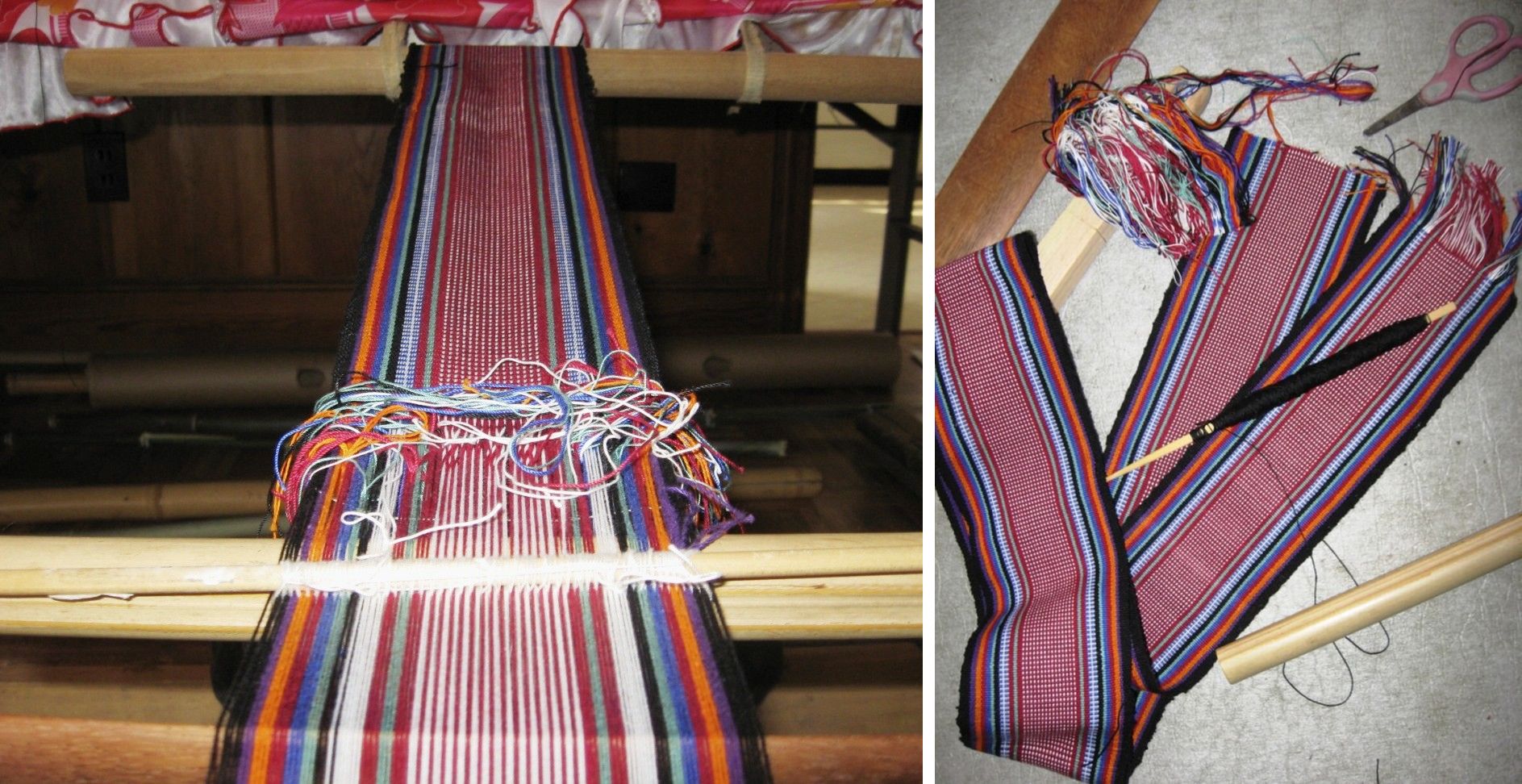
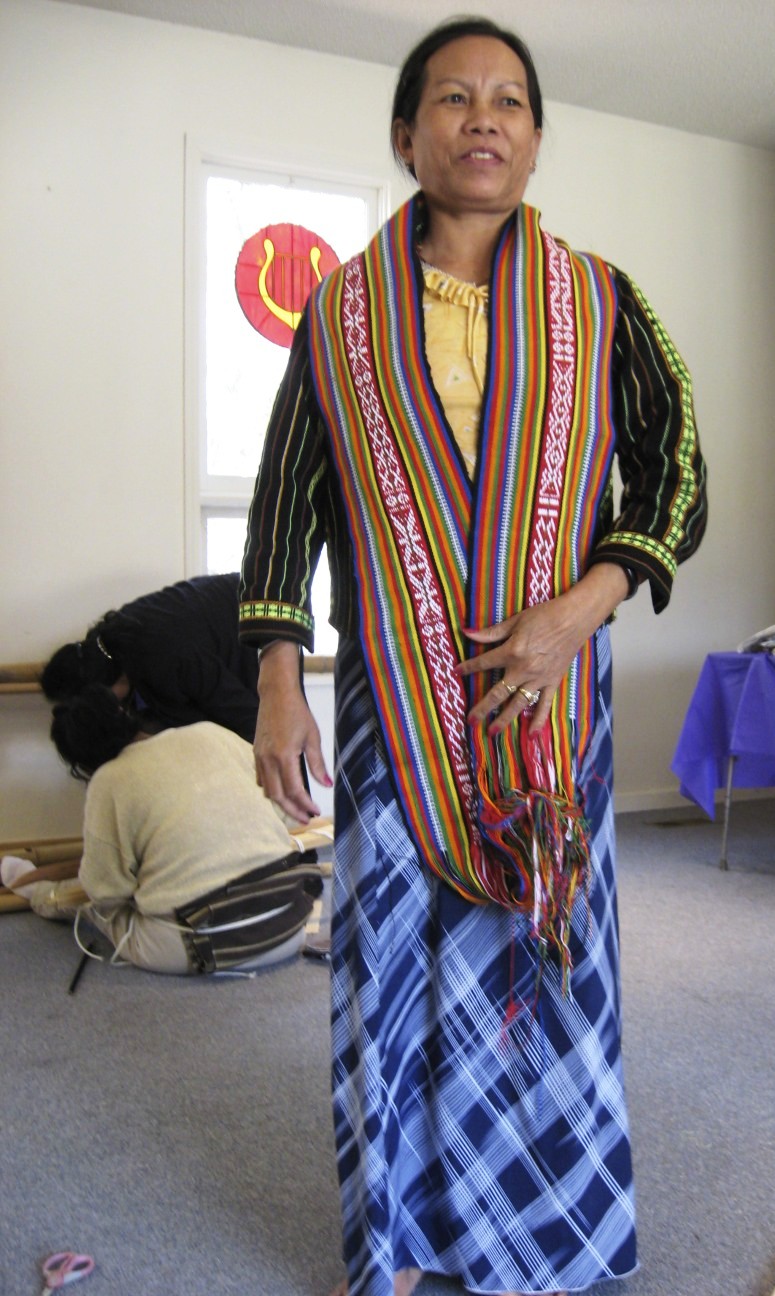
 

Betsy helps Ju an other weavers develop a way to teach their backstrap weaving art to others. This is Betsy’s first completed piece from her weekly classes with Ju.


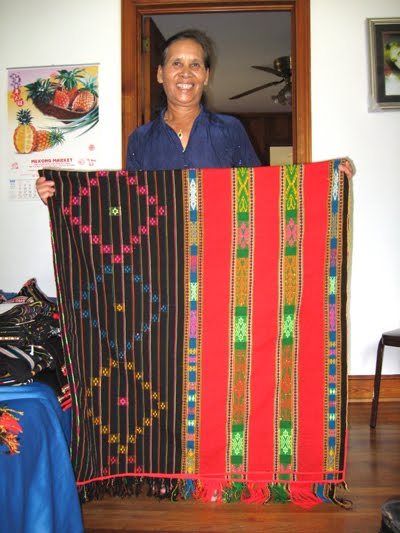
Bunong weaver Tep showing one of her newly woven pieces.

And the future?

More aggressive fundraising tactics and creating an on-line market/gallery on our local arts websites.

I also will be widening my reach to Nepali speaking Bhutanese refugees, who also use backstrap looms.

Please follow what we are doing on our blog.


##############################################

DENNIS PENLEY by Phil Willett
I never had the pleasure of meeting Dennis Penley.

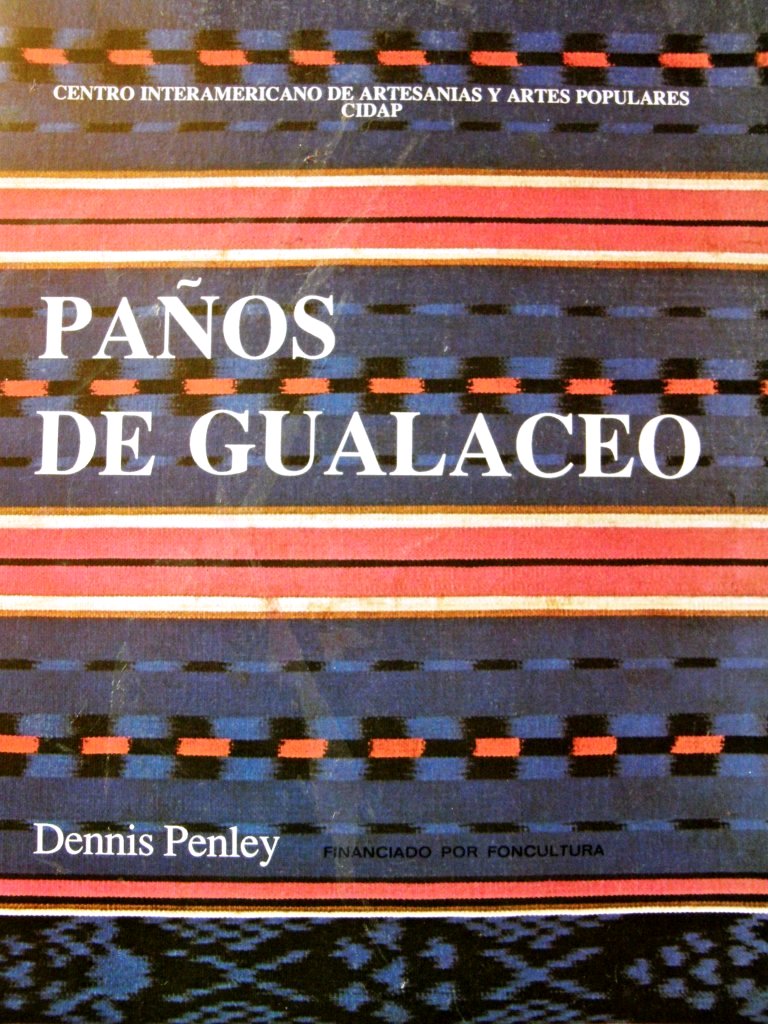
I bought the book he wrote on the ikat shawls or paños of Gualaceo, Ecuador on a visit there in 2005 knowing nothing about its author and the fascinating life he had led.

I have, however, been lucky to have become acquainted with Phil Willett, once again, on line, to whom Dennis Penley was a good friend and weaving mentor.

Mr Penley passed away the year after I bought his book and Phil wrote a short biography to accompany an exhibit of his collected textiles made as a tribute to him.

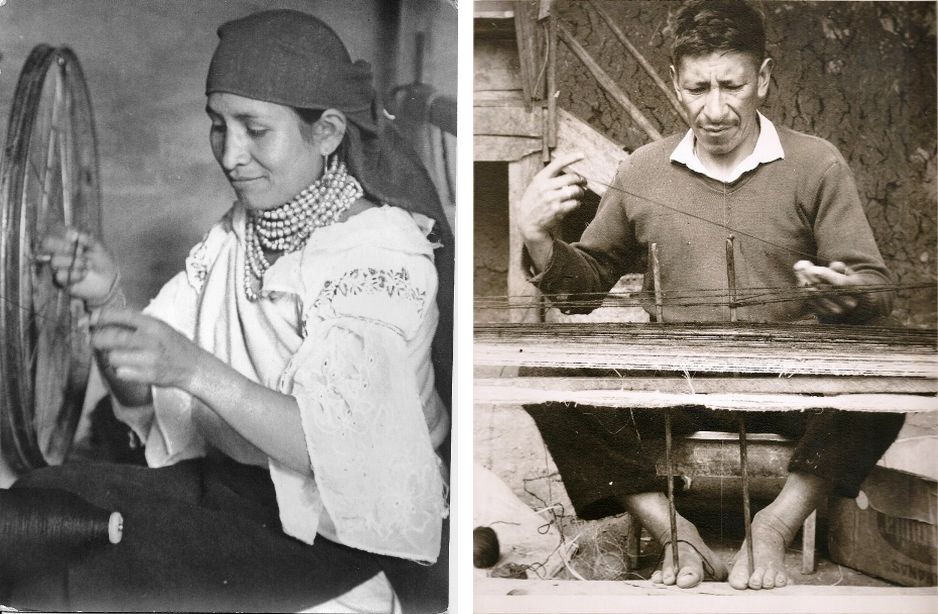
I won’t caption the photos, all of which (except the first in color) I understand were taken in Ecuador.

Here is the biography that Phil put together…

Dennis Penley, a life time of hand weaving enthusiasm.



From his early beginnings creating elaborate costumes for himself and the Arabian horses his family raised and trained, Dennis was a born textile enthusiast. He taught himself to weave as a teenager and utilized that interest to befriend many people through his life.

After high school he joined the Peace Corps and worked within the Ministry of Agriculture of Ecuador. Part of his job was researching the indigenous peoples weaving traditions.

Following his Peace Corps service he stayed in Ecuador to research and write a bilingual book on the shawls of Gualaceo.

He lived and worked among the indigenous mountain weavers, with a horse to travel by and a llama to spin wool from while it also carried extra gear.

When he returned to the USA Dennis received an honorary bachelor’s degree from San Francisco State for his work in Ecuador.  Dennis not only photo documented the techniques of the weavers, he learned them by hand using a back-strap loom.

With all this weaving knowledge he had hopes, when young, of a lifetime of hand weaving. Based out of California he produced custom hand-woven yardage for designers, blankets and home accents.

All this was accomplished on a Swedish barn loom. His dream would not prove to be financially viable.
Dennis would, through his working career, excel and profit at many other endeavors. He was a master cabinetmaker and historic architecture restorer. He worked for many years for the city of Lexington, his final position as a code enforcement officer.
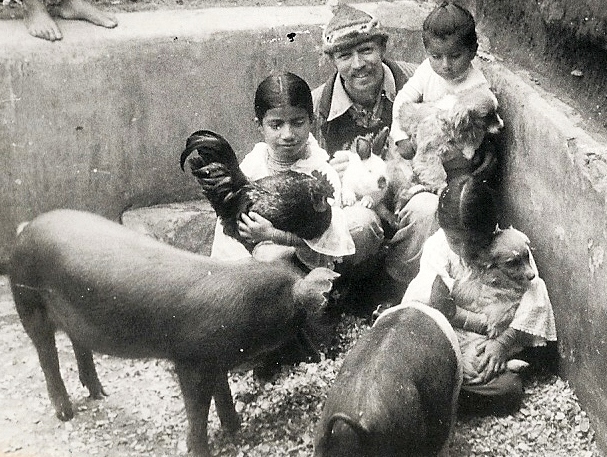

Dennis’ studies of non-western cultures, philosophy and textiles would be a passion for his entire life. He first became intrigued with ikat weaving in South America. He would later research its use throughout many cultures. After years of studying the textile traditions of Southeast Asia and Indonesia he traveled twice to the region to see the artisans and collect textiles.

The textiles within this collection are a testament to an inquisitive mind that had a tremendous respect not only for the craft but also the people who created them. They are works of art and expressions of cultural identity and diversity.
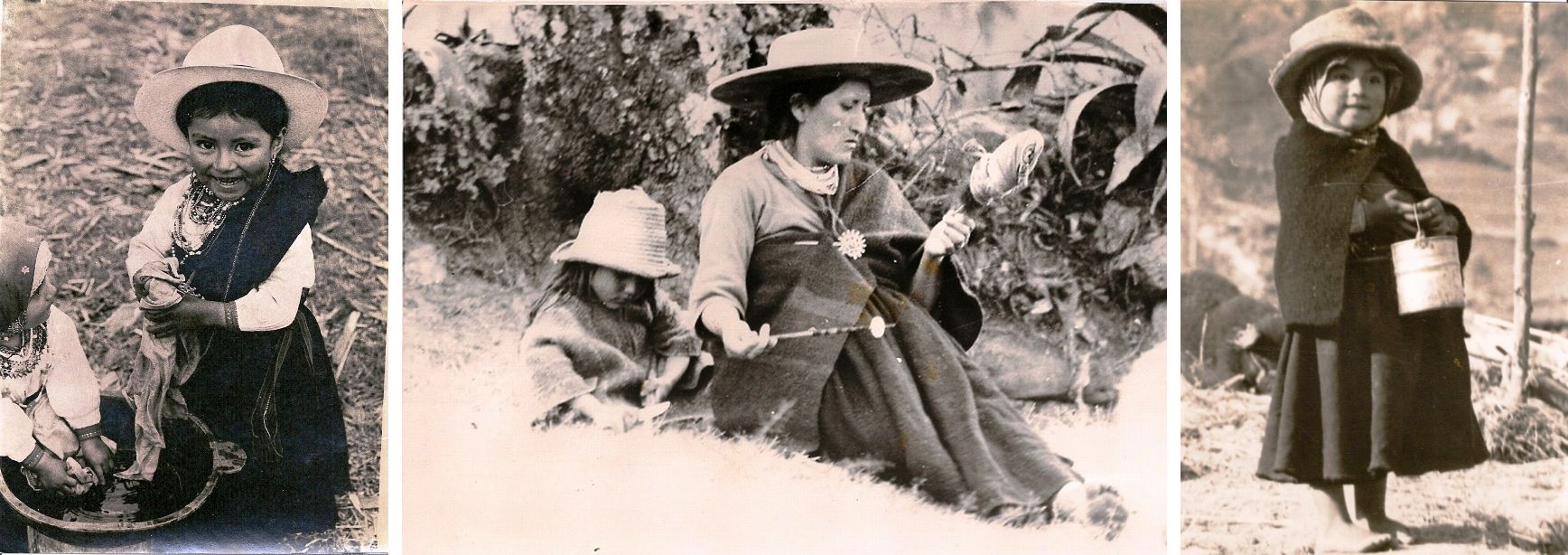

####################################################

My goodness, people have been busy in the backstrap and inkle weaving groups at Ravelry this week. Check this out…
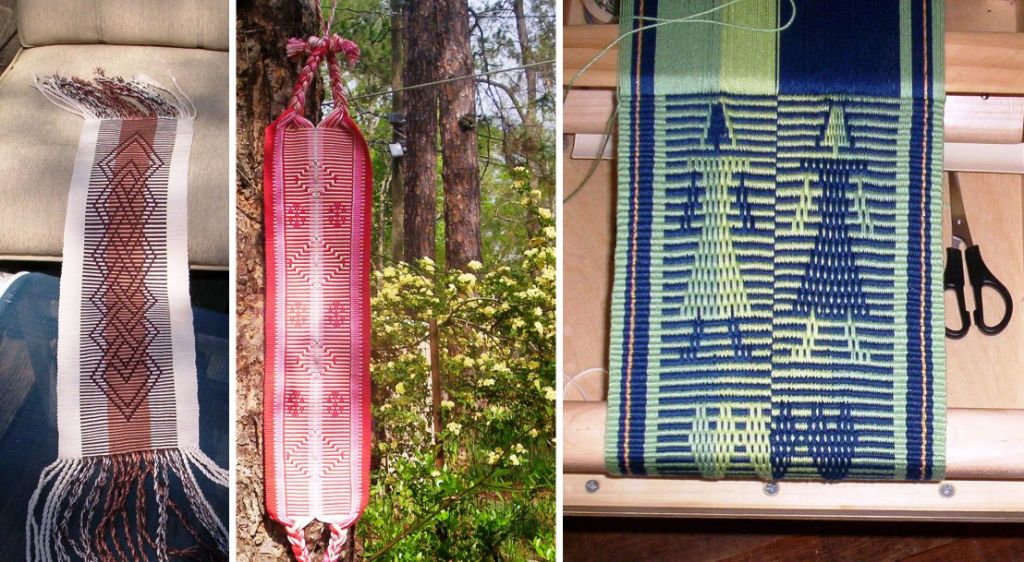
Marsha has been making all kinds of wonderful things with simple warp floats. The knot design on the left is charted here.
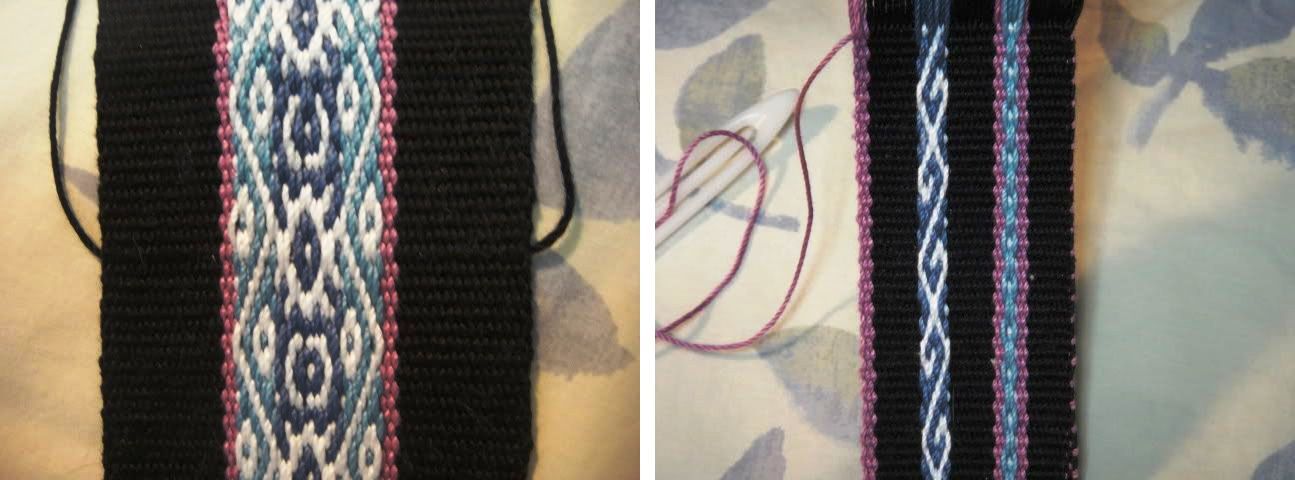
Bobbie is making a bag with pebble weave designs. Here we see the wide front and back panel and the side.

And some Spin-Along results are coming in…
Popsicletote is weaving with her handspun wool/silk blend. The hairiness is making life a little difficult but she is adapting and getting on with it. Her designs are pebble weave.
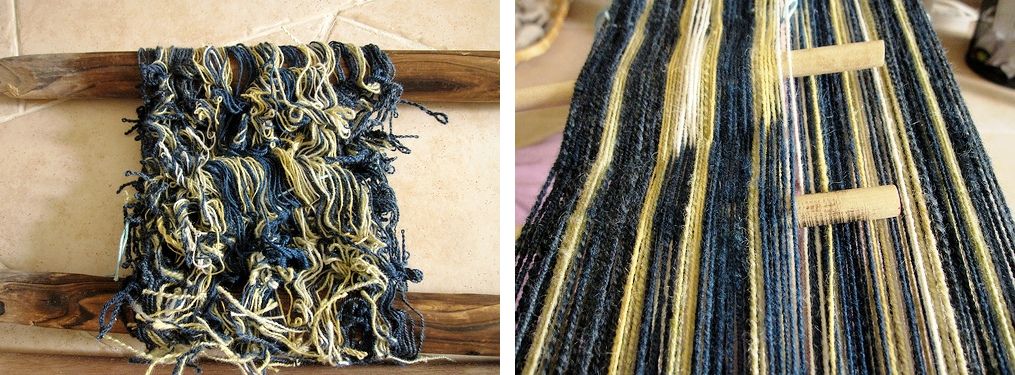
Tracy has just warped up her own handspun wool. Here you can see it curled up at rest and then tensioned on the loom bars.
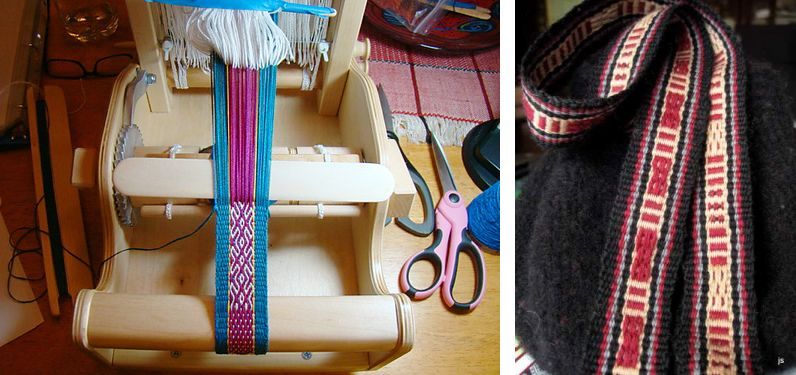
Another ‘waver’ has joined in the warp-faced fun (Waver= user of Gilmore Wave loom). That’s Michele’s pebble weave band on the left with one of my designs from my Andean Pebble Weave e-book. Popsicletote tried sock yarn  for making a band and it turned out beautifully!

And here are some projects from a little while back from the online groups that I didn’t get a chance to post…
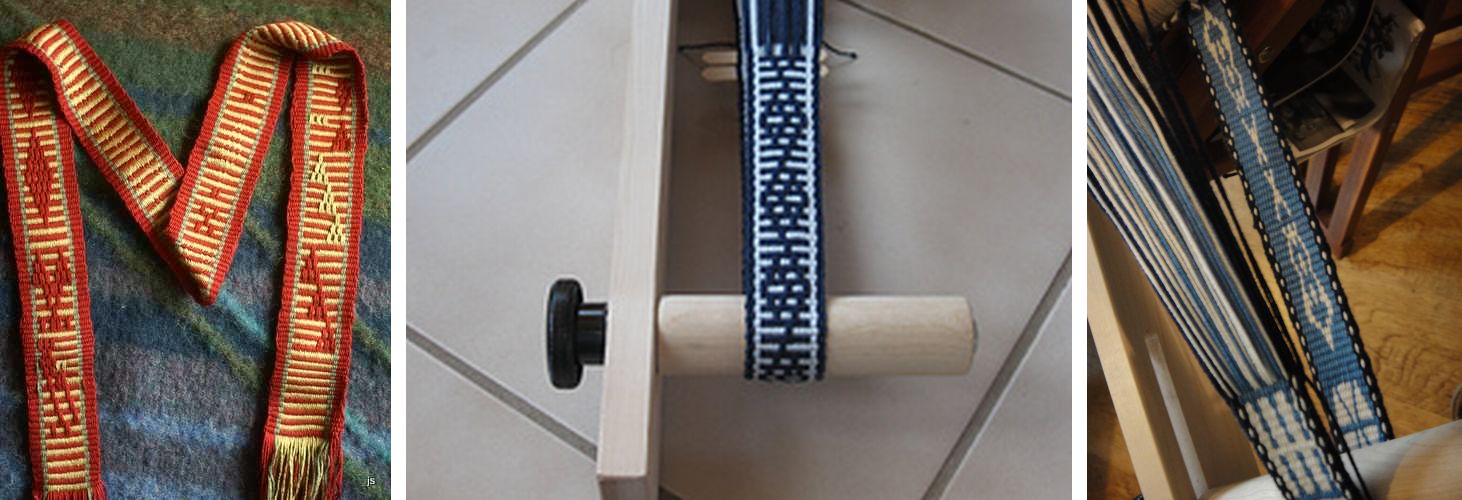
These are simple warp float bands by popsicletote and Sharon and a double weave band by Sylvie.

I LOVE all these different wool warps showing up…hand spun, re spun commercial yarn…all working differently and giving a variety of results. How lucky we are to have all these folks experimenting and creating and sharing with us. I am learning so much!
Backstrap Weaving – Material Gains

Tippity-tap at the computer for the most part this week trying to move some projects along before I go traveling in a couple of weeks….finger-dancing at the keyboard rather than at the loom but I have a couple of little things to show…

Well, I am cheating here…this is not loom work. I braided the friendly ends of my recent backstrap projects. Now I have to do the nasty ends…the other end with all the knots from the color changes.

I also played a little with some tencel that my friend Lisa gave me last year when I was visiting her in North Carolina.

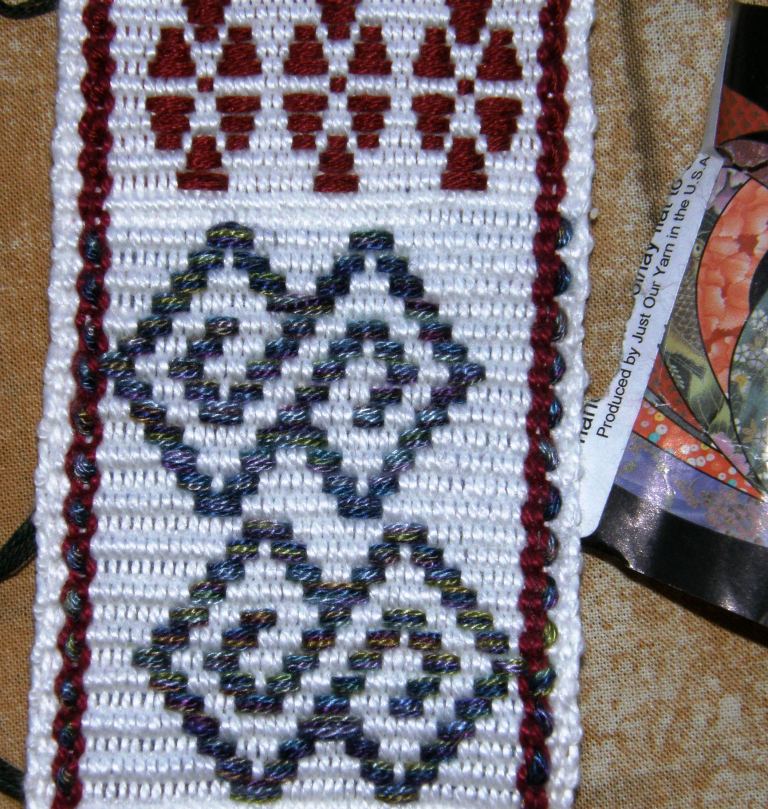
It is a multi-colored 10/2 from Just Our Yarn labeled “almaza” and it shimmers with mother-of-pearl colors!
I suddenly had the idea that this may make really nice supplementary weft for some of the inlay designs I have been doing lately and so I warped for a white band in my 24wpi cotton and tried it out.

I used six strands and I love the way it came out. I warped four ends of red in the band on either edge and turned the supplementary weft between the two red warps on the left side and then on the right of the two reds on the right to see which way looked nicer.

The red supplementary weft above this is doubled strands of embroidery floss. I would like to make something now using the tencel on a band of my #10 cotton. You can’t see it so much in the picture but the tencel almost looks like beads on the cloth from a distance. The multiple strands bunch together and give a more raised effect unlike the embroidery floss which tends to lie flat.

Now listen to me getting all goofy about textures and such things. This is very unlike me! Maybe it’s because at the weaving event I attended last week I was determined to pay more attention to the materials with which we were working rather than solely the techniques and so have been able to make what I am calling some “material gains” in my weaving data bank. Discussion in the Spin-Along that has been running on Ravelry has also turned my thoughts this way.

So here are some of the materials that we got to play with at the weavers’ gathering last week…

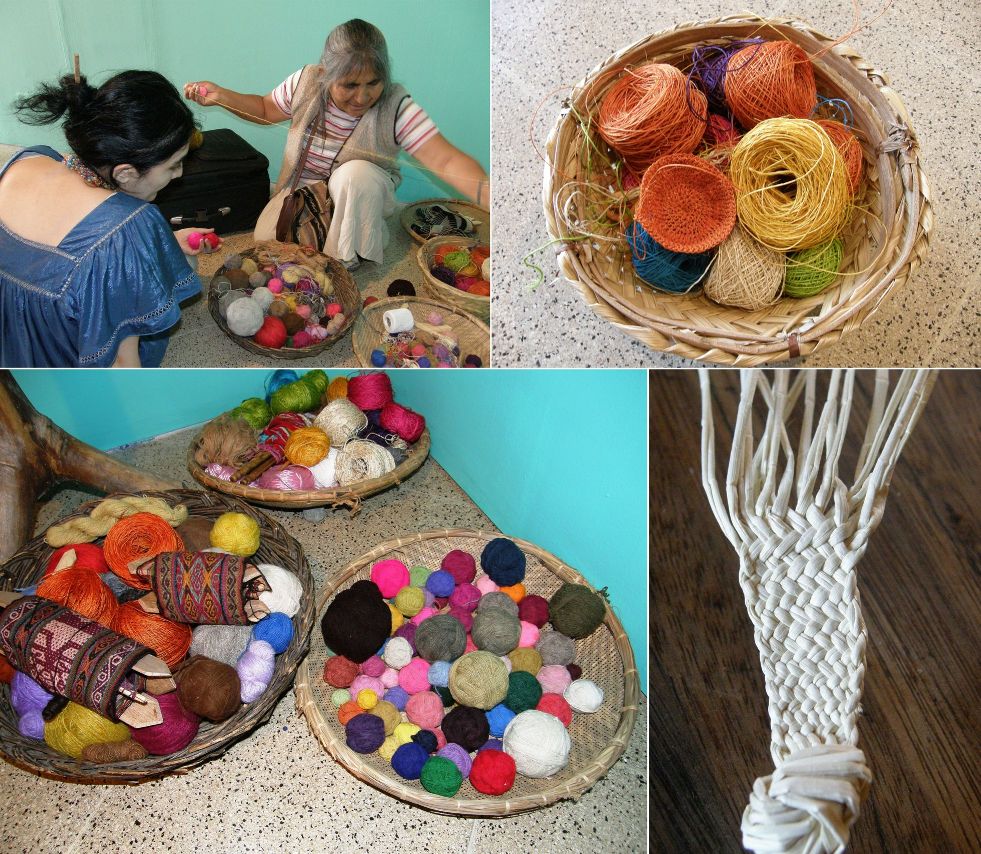
Celinda, an Aymara weaver from the northern Chilean high plains, is showing one of the participants handspun wool which she dyes with bright aniline colors. She also brought her handspun alpaca fiber in natural colors and I was able to keep some by swapping a couple of my handwovens. Zenaida and Sonia brought handspun wool from Chinchero which they left for educational purposes at the cultural center which sponsored the event. I noticed, however, that they use alpaca for weft in their wide weavings.

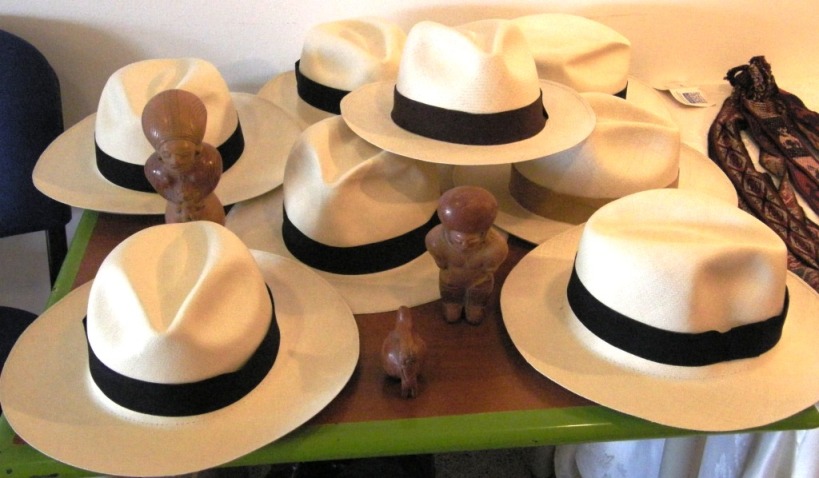
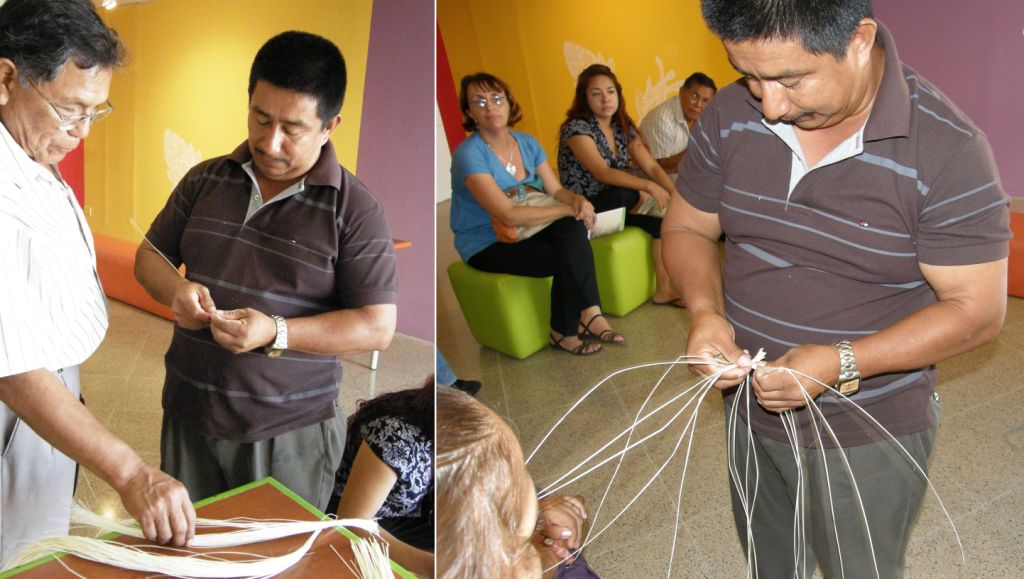
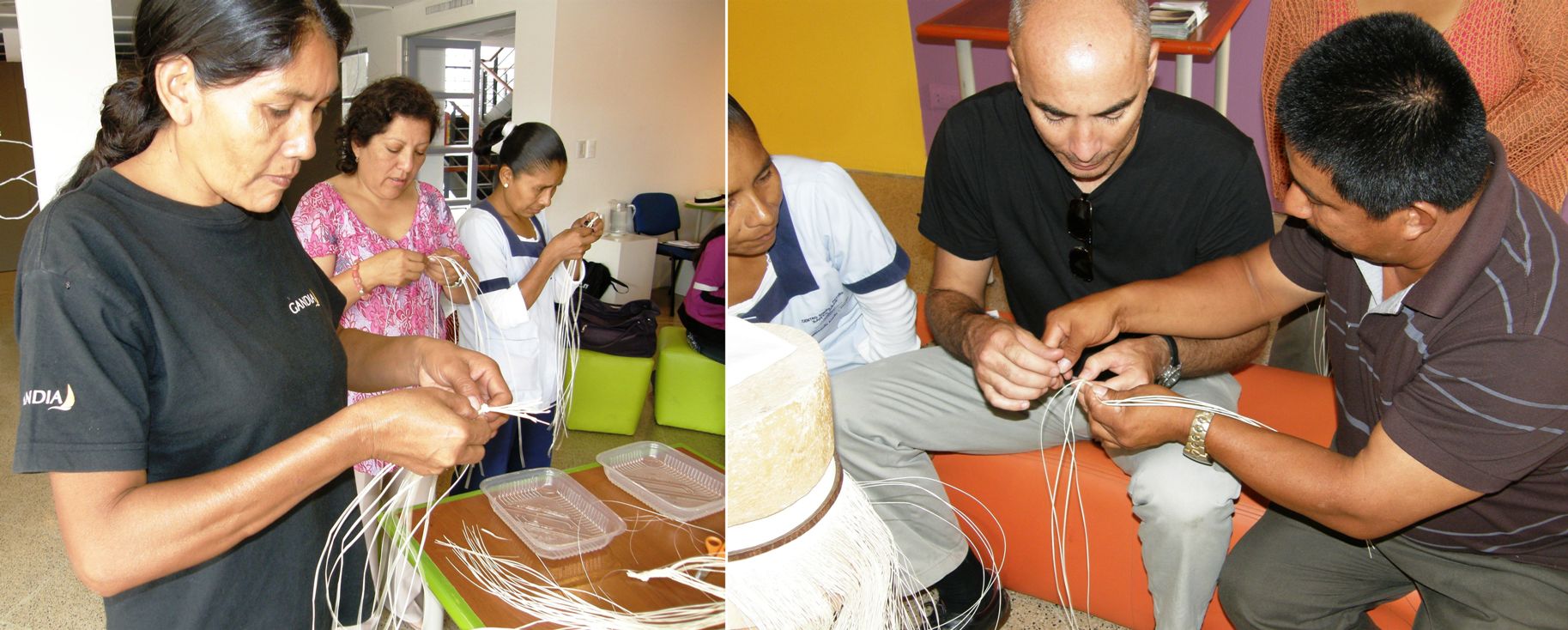
Domingo, a master weaver of the famed Panama hats of Ecuador brought the straw “paja toquilla” (above lower right) from which they are made. Maritza, from Colombia taught us how to work with the “cabuya” fiber that is extracted from the penco plant. (above upper right).

The Guarani weavers who attended, from the area in which I live in the Bolivian lowlands, are now using industrial cotton, the very same type that I use myself in my weavings.

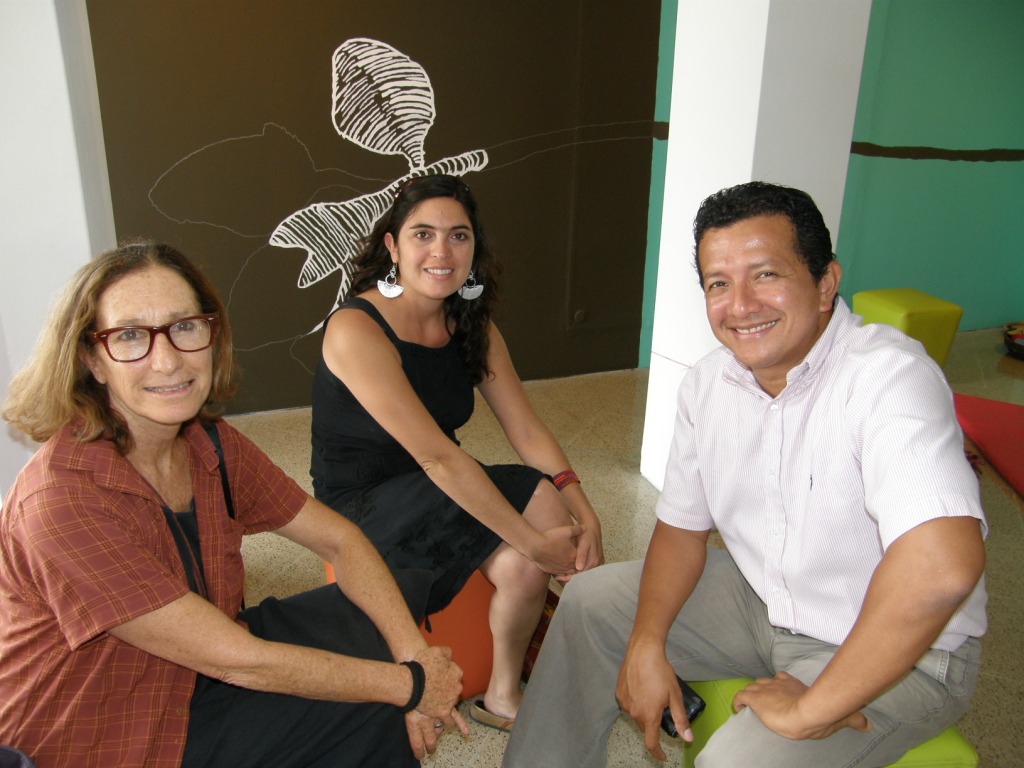
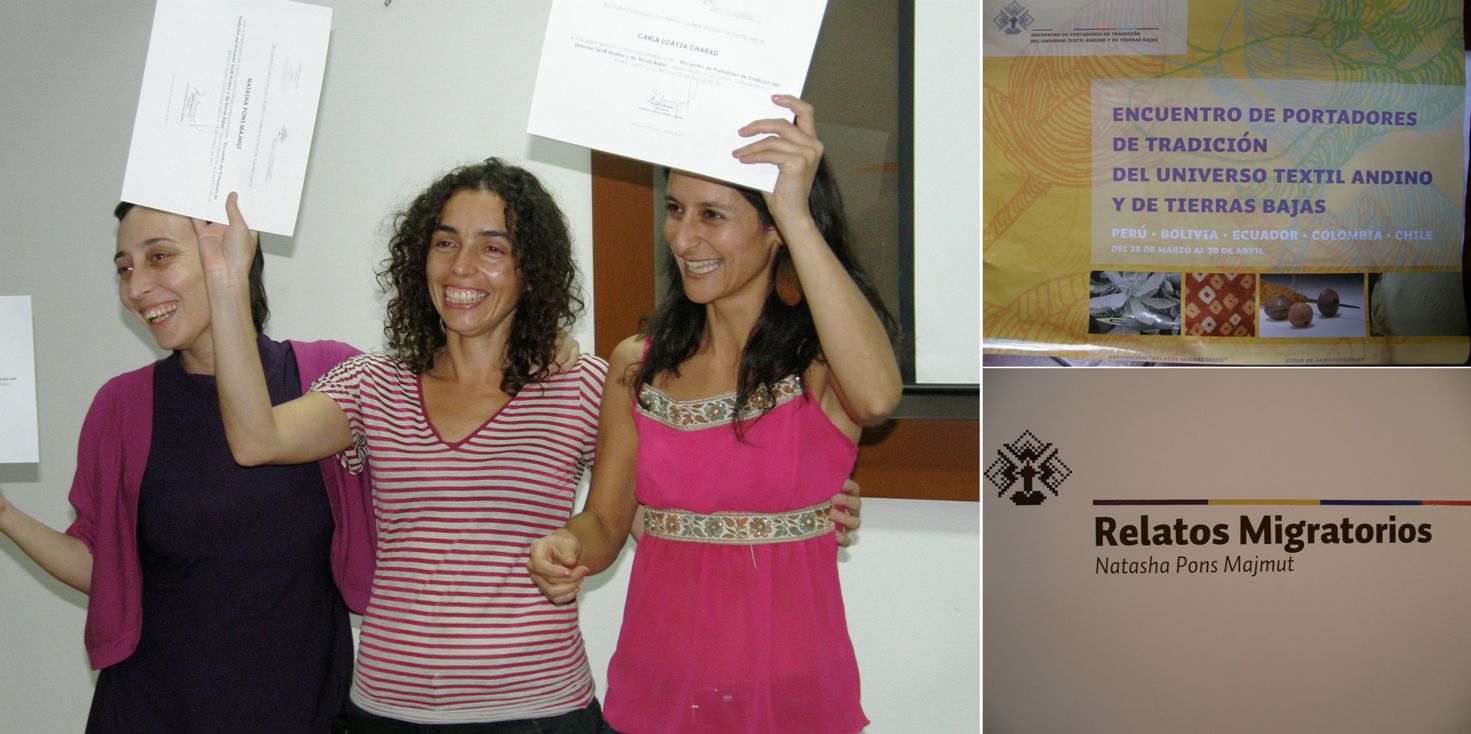
The event was organized and coordinated by the three Chilean ladies above…Cristina, Natasha and Carla who can be seen celebrating the end of a successful three days of interaction and sharing. Artisans from Colombia, Ecuador, Peru, Chile and Bolivia came together to show their work and exchange ideas and I was lucky to be a part of it.

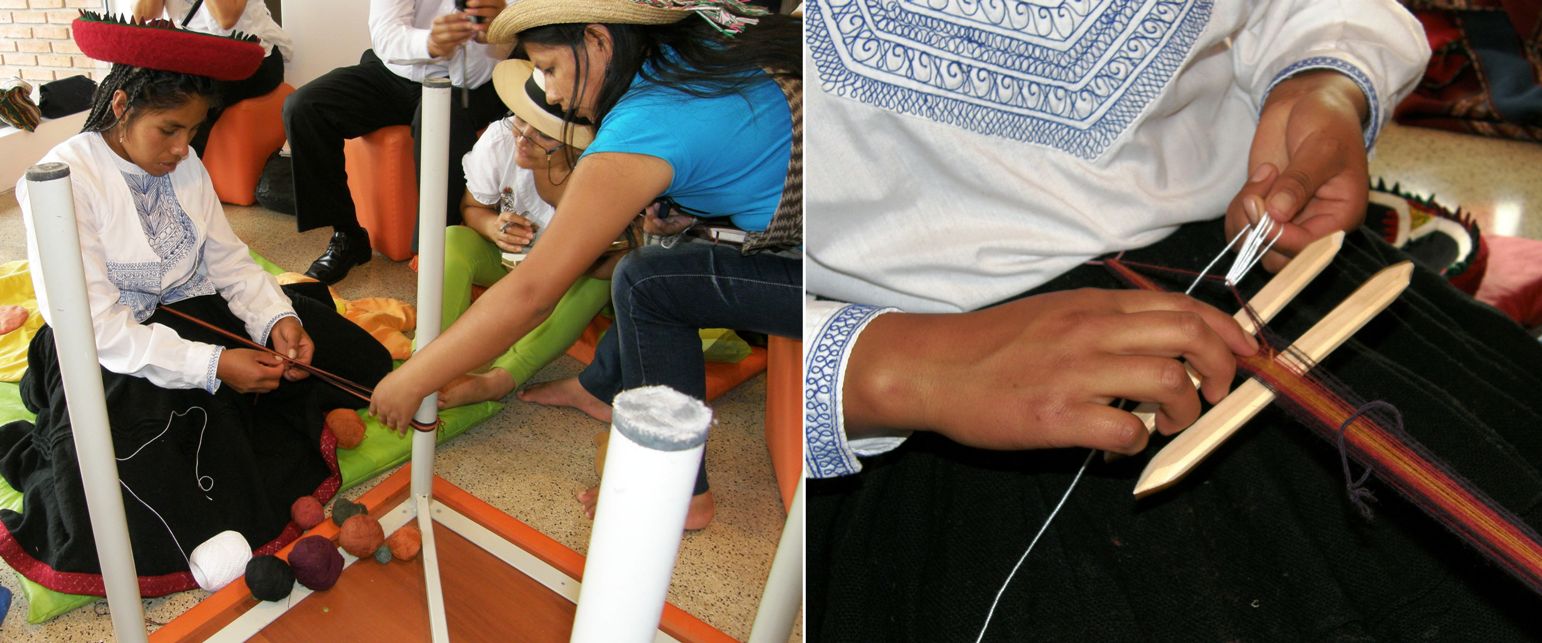
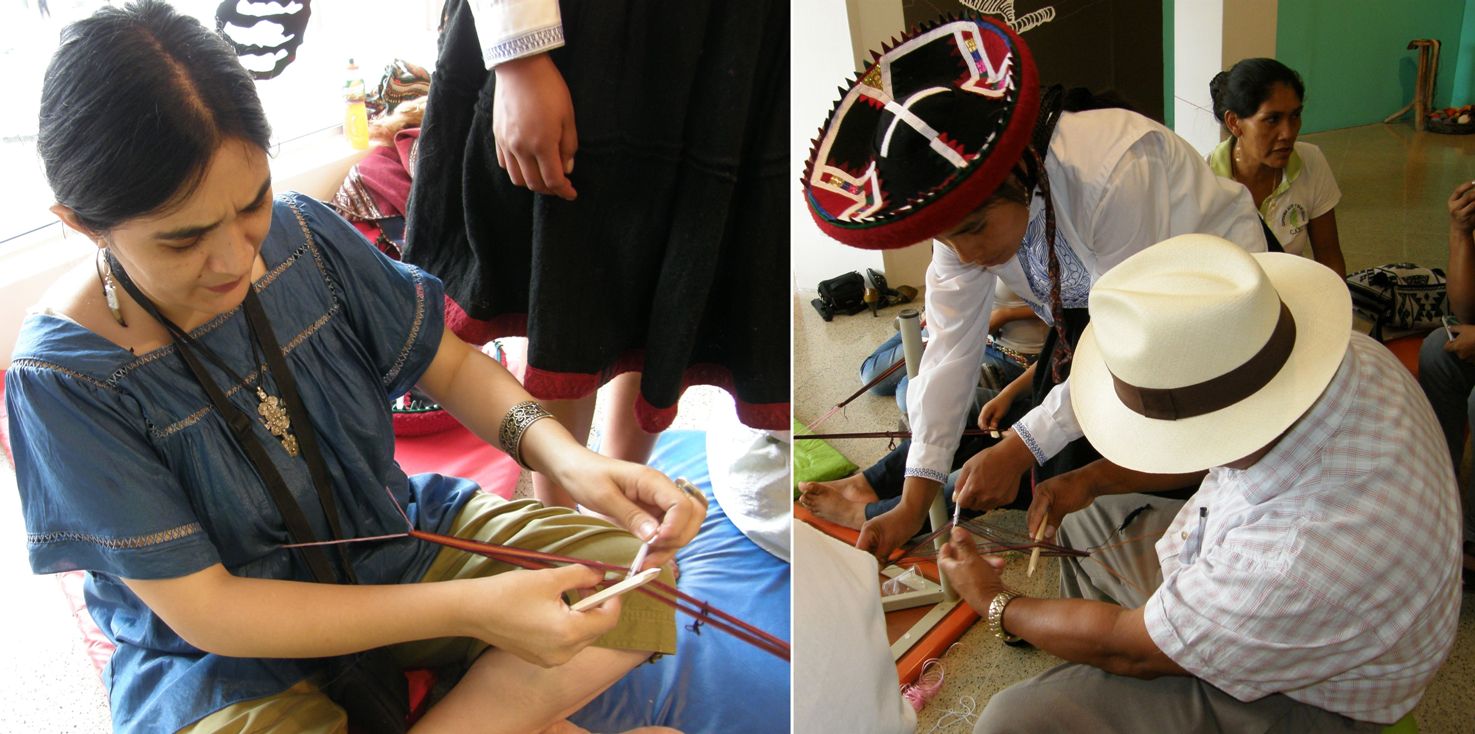
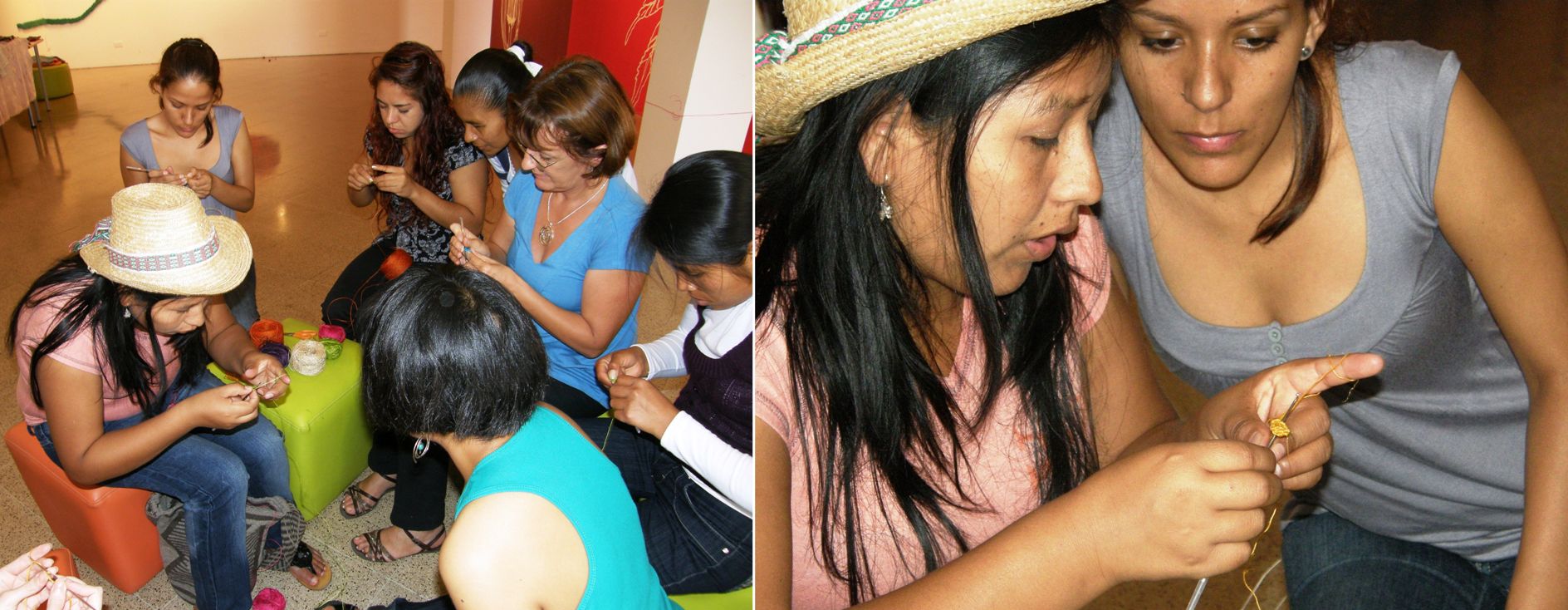
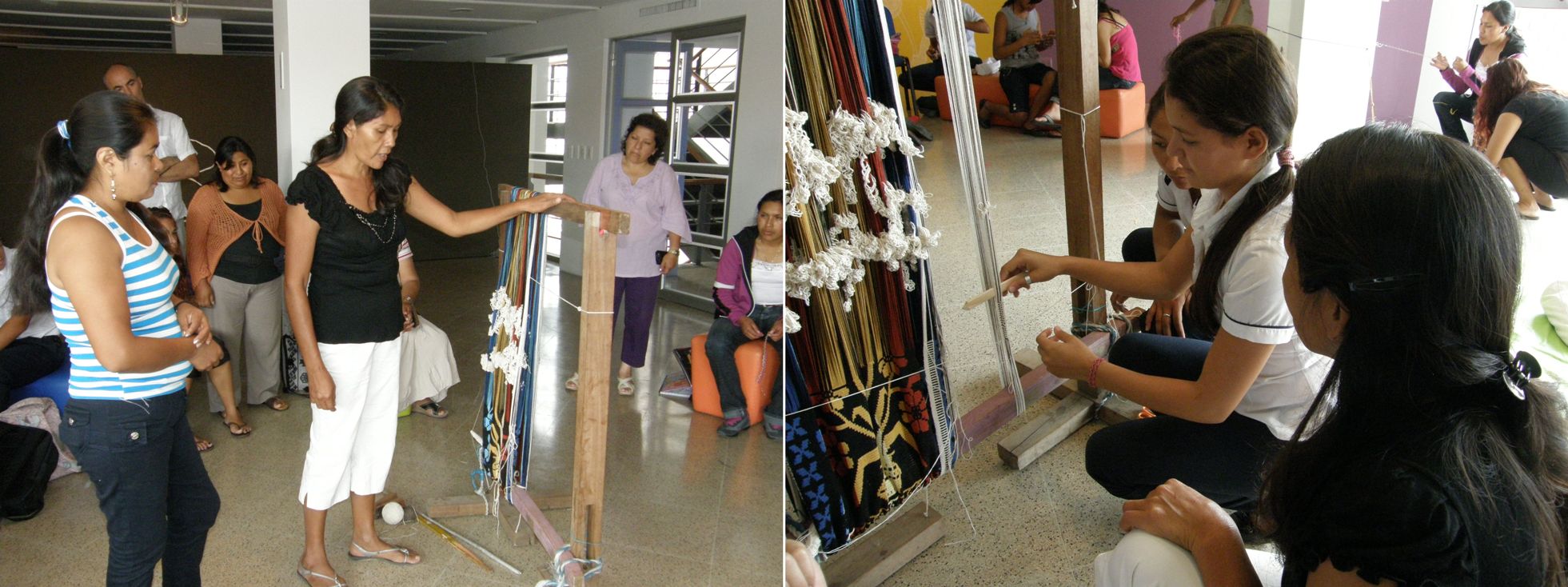
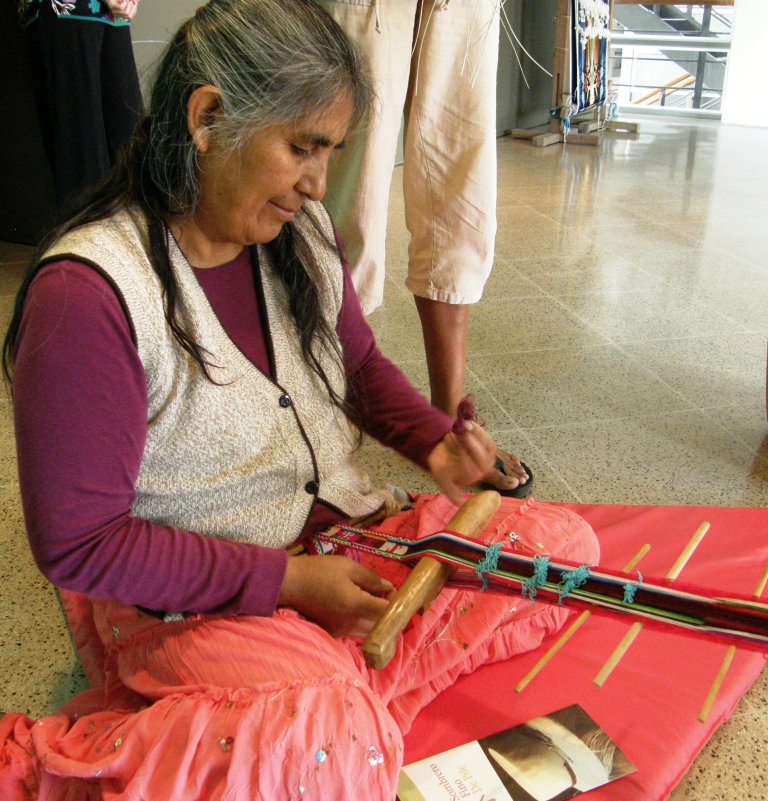
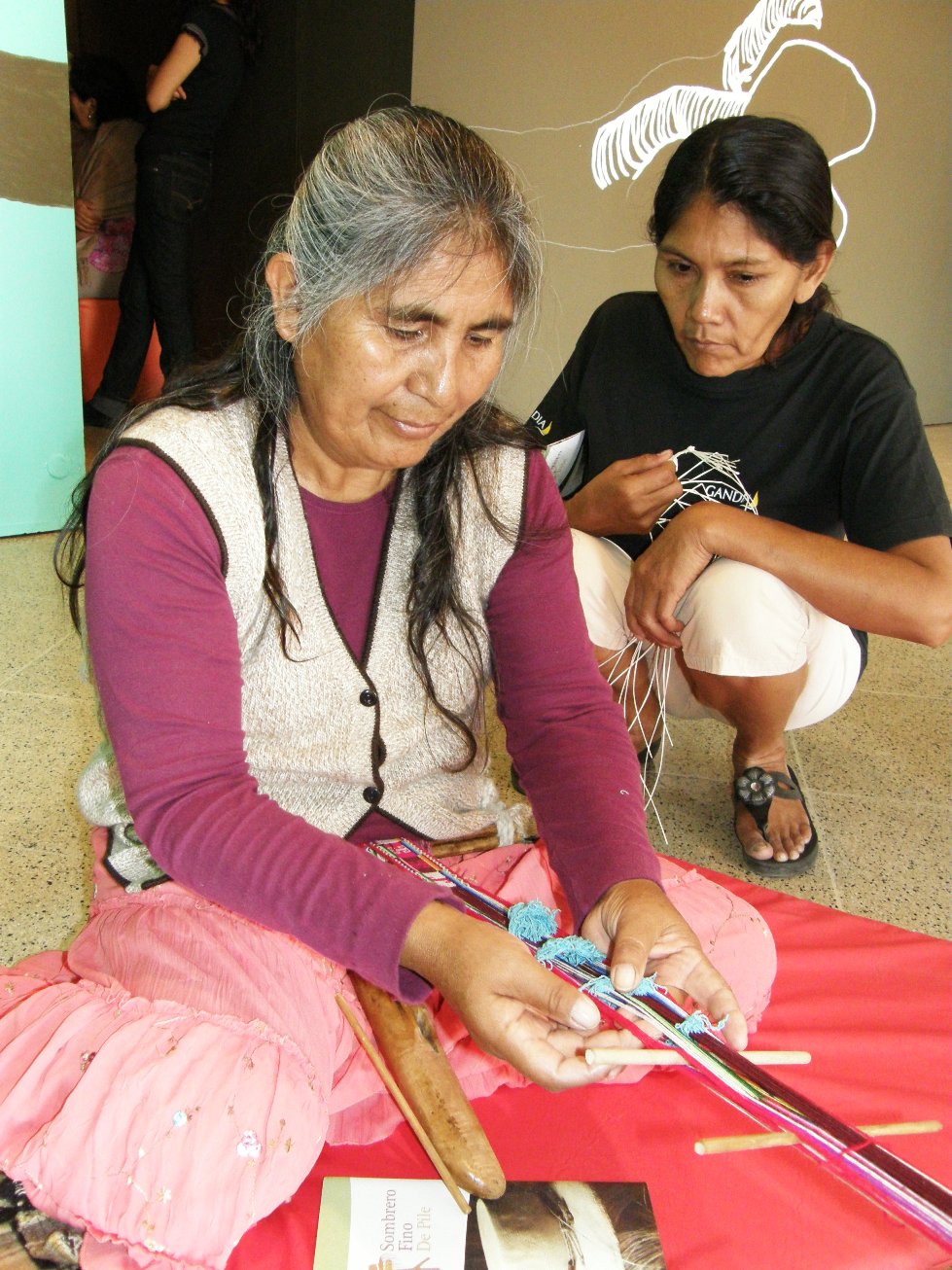
Day one had most of us barefoot and on the floor learning the fundamentals of backstrap weaving.

Okay, so I have already been backstrap weaving for fifteen years (which probably isn’t much in backstrap weaving terms) but there is always something to learn, right?

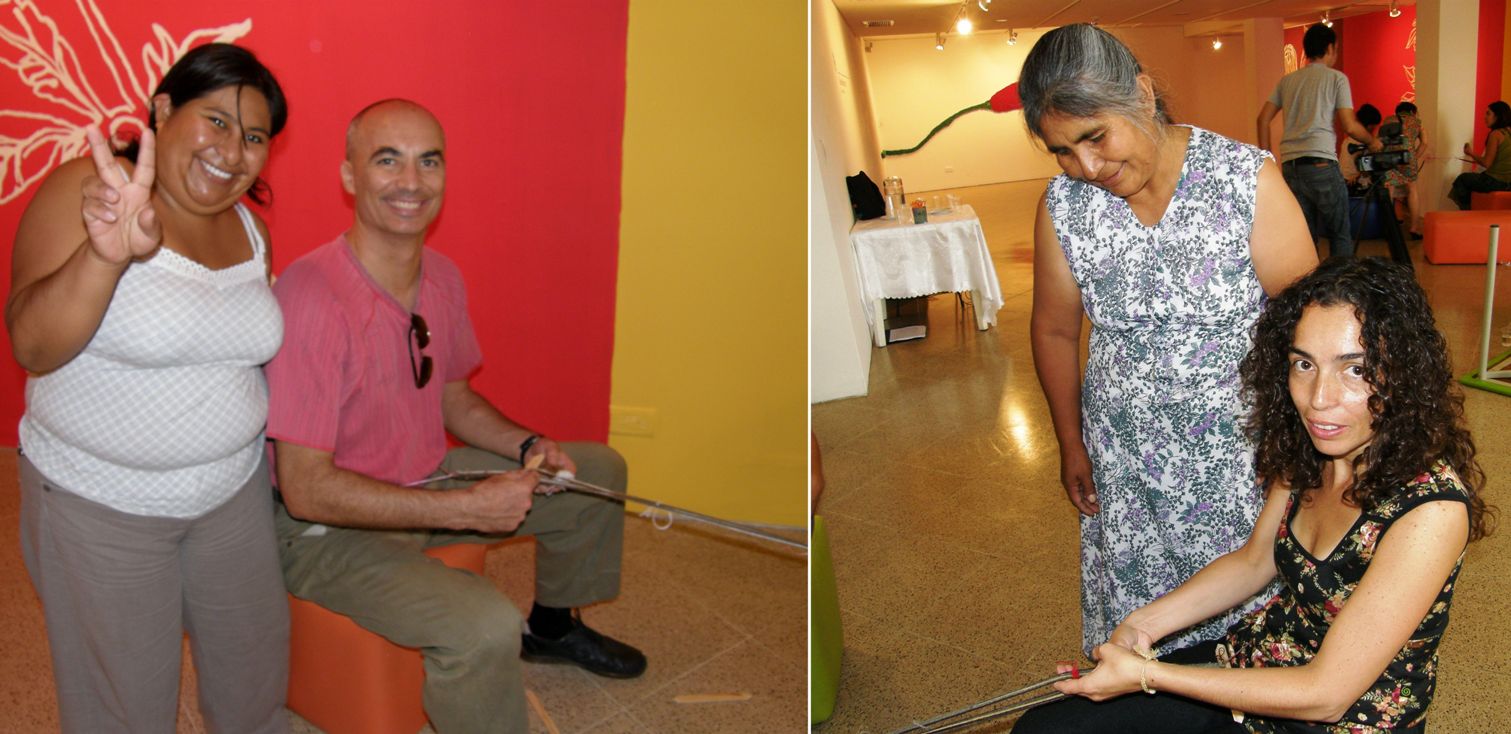
You can learn about the weaving traditions from a country, a region, a town, a community as well as from each and every individual weaver and this very small scale event was the perfect venue for sitting right by and having very close connection with the weavers themselves. And this interaction was not only possible as they showed and taught us their craft but also as they learned right alongside us the crafts of the other attending artisans.

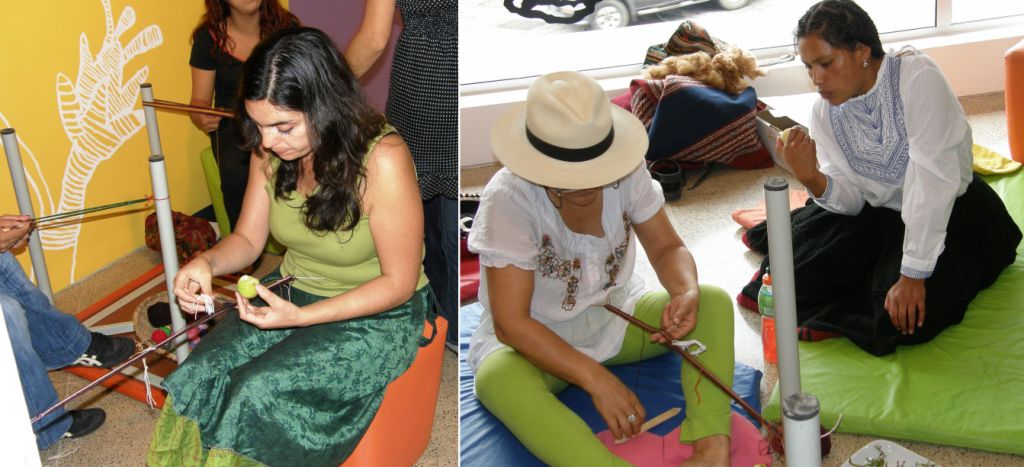
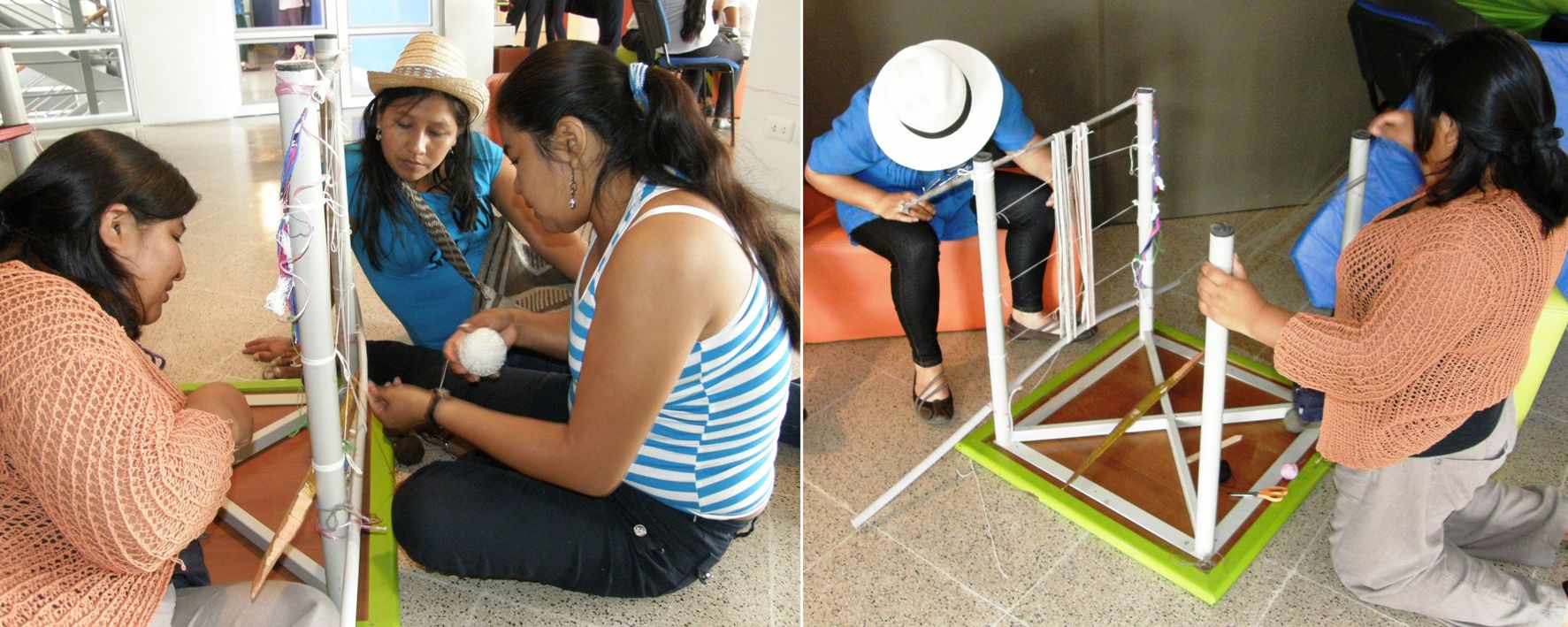
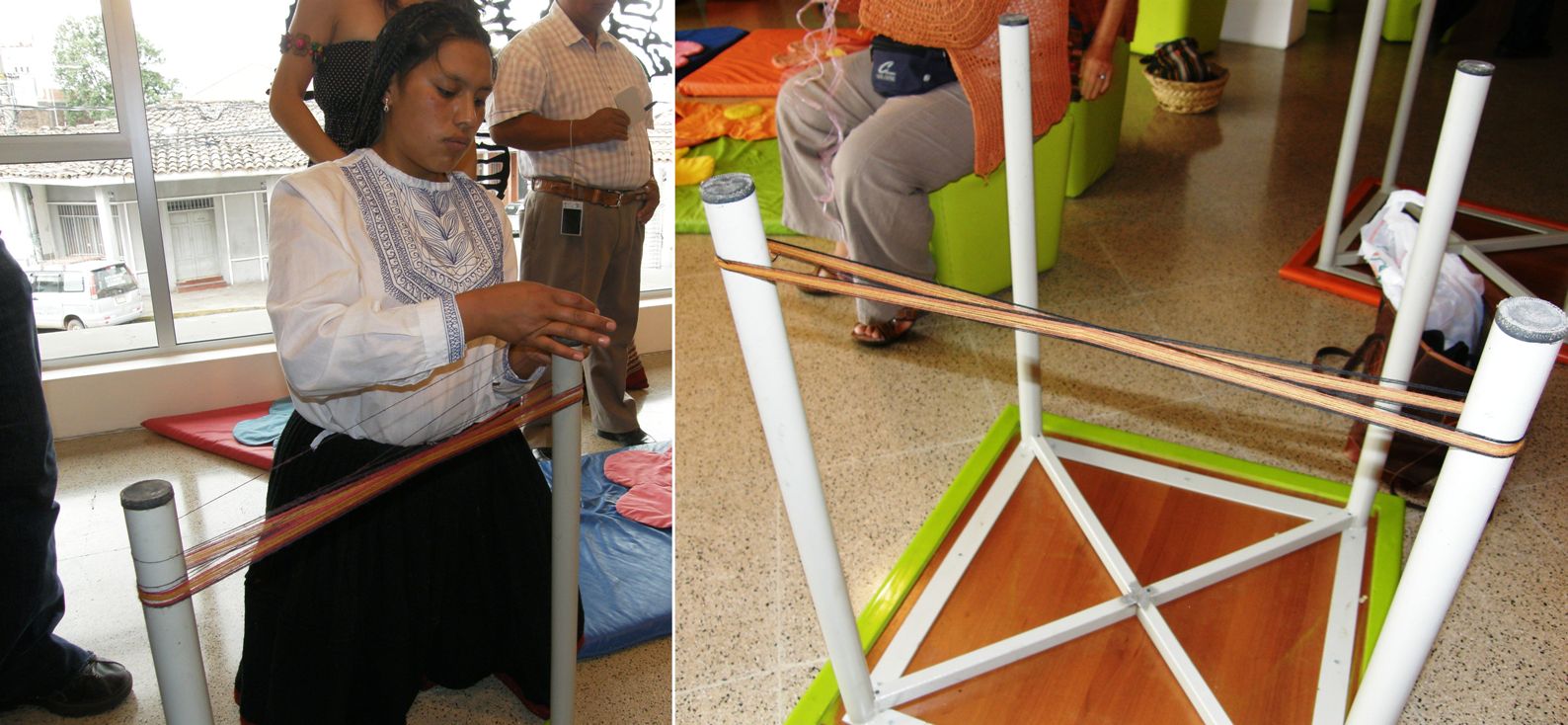
A lesson in warping…if your “stakes” are close together as these table legs are, you can simply hold your warp end against the stake (don’t tie a loop around the stake) and wind your figure-of-eight. When you are done with that narrow stripe of color, tie the end to your start end and then start your next color the same way. The advantages I can see of this…if one color has wonky tension, you can untie the knot and adjust without affecting the rest of the warp. If you warp a color that you decide later you can’t live with, you can chop it out easily without affecting the rest of the warp as it has been wound independently. Mind you, we were only warping narrow bands here of about 40 ends in five stripes of three colors and the warps were short which meant it was easy to anchor the warp end with one hand while winding with the other.

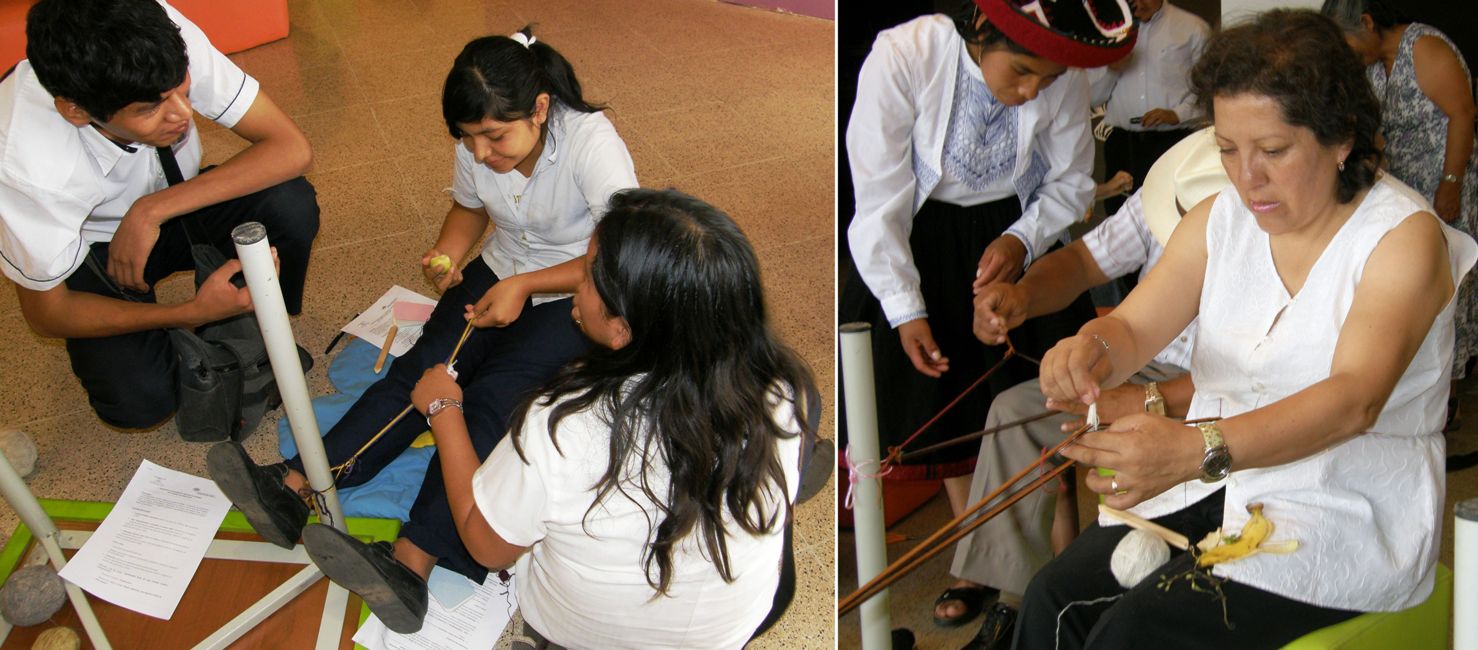
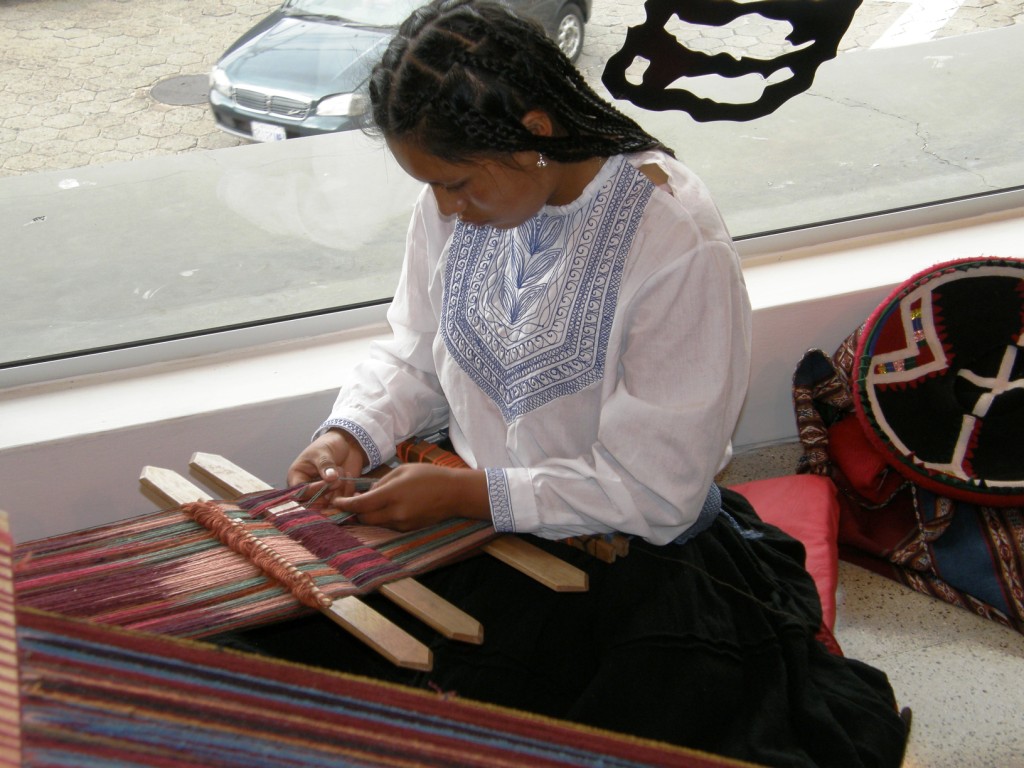
Next came strapping in, shed loop and heddle making, a demonstration of shed openings and weft management and then we all set about warping and weaving our own bands. Most problems arose, as can be expected, with opening the sheds smoothly and keeping the edges even.

As usual there is a certain period of silent concentration in the beginning interspersed with pleas for help. You can always identify the Ecuadoran contingent by their Panama hats! That’s Domingo, the Panama hat master, on the floor getting his first backstrap weaving lesson. This silent period is soon followed by excited chatter and cries of victory as everyone starts to get the hang of it and relax.

Snacks provided by the center….some participants are now so relaxed they figure they can even eat a peach and backstrap weave at the same time! That’s Mercedes from Mexico. Sonia has her students working away happily and can sit down too but is always keeping an eye on things as you can see. There she is watching over Libertad from…well, I don’t need to tell you where she’s from, do I!

Some school kids dropped by and had some fun and there you can see Zenaida with members of her group getting acquainted with that tricky heddle shed. That’s Liliana from La Paz representing an organization called Nicobis which produces educational and cultural videos to promote intercultural dialog.

On the other side of the room, Aymara weavers Celinda and daughter Isobel were teaching backstrap weaving to another group.

Isobel, always smiling and sharp as a tack, tells me that she does not have much patience for teaching. It’s hard to believe!

Materials!!

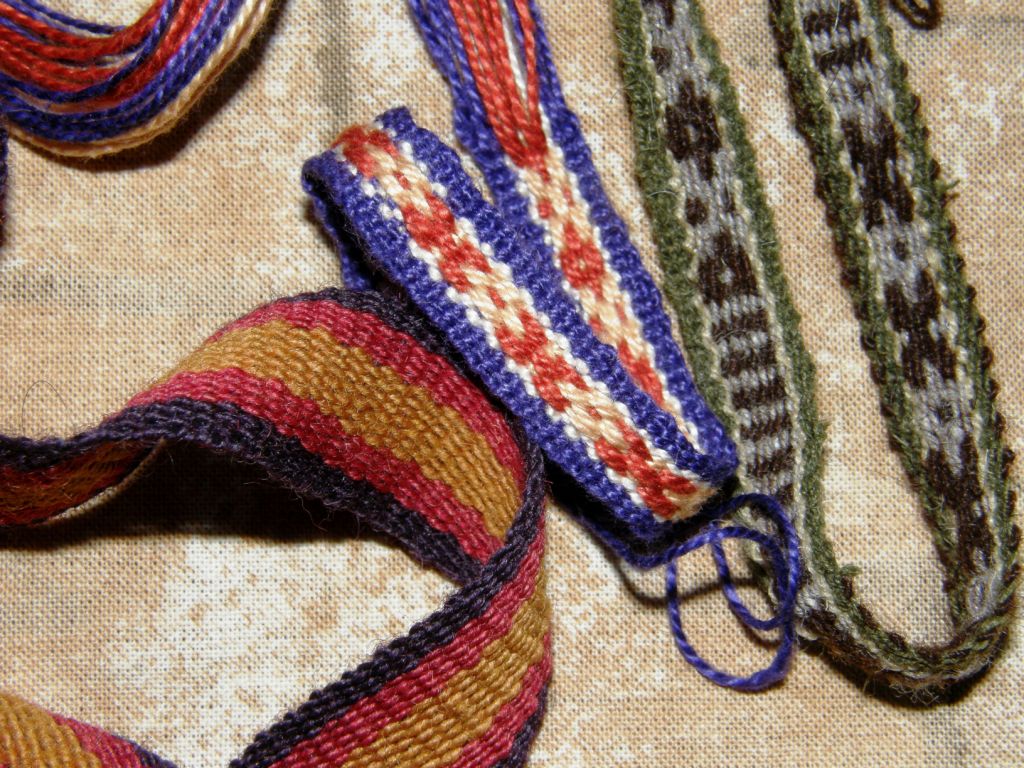
The twisty band above left is the one I made in Sonia’s class with the high twist wool warp and weft.

The one on the far right, I made with Celinda’s handspun alpaca fiber as both warp and weft. The green border is my own handspun llama fiber.

And of course, I wanted to have something made during the event from the material that the other group of weavers from Santa Cruz was using, Clea crochet cotton.

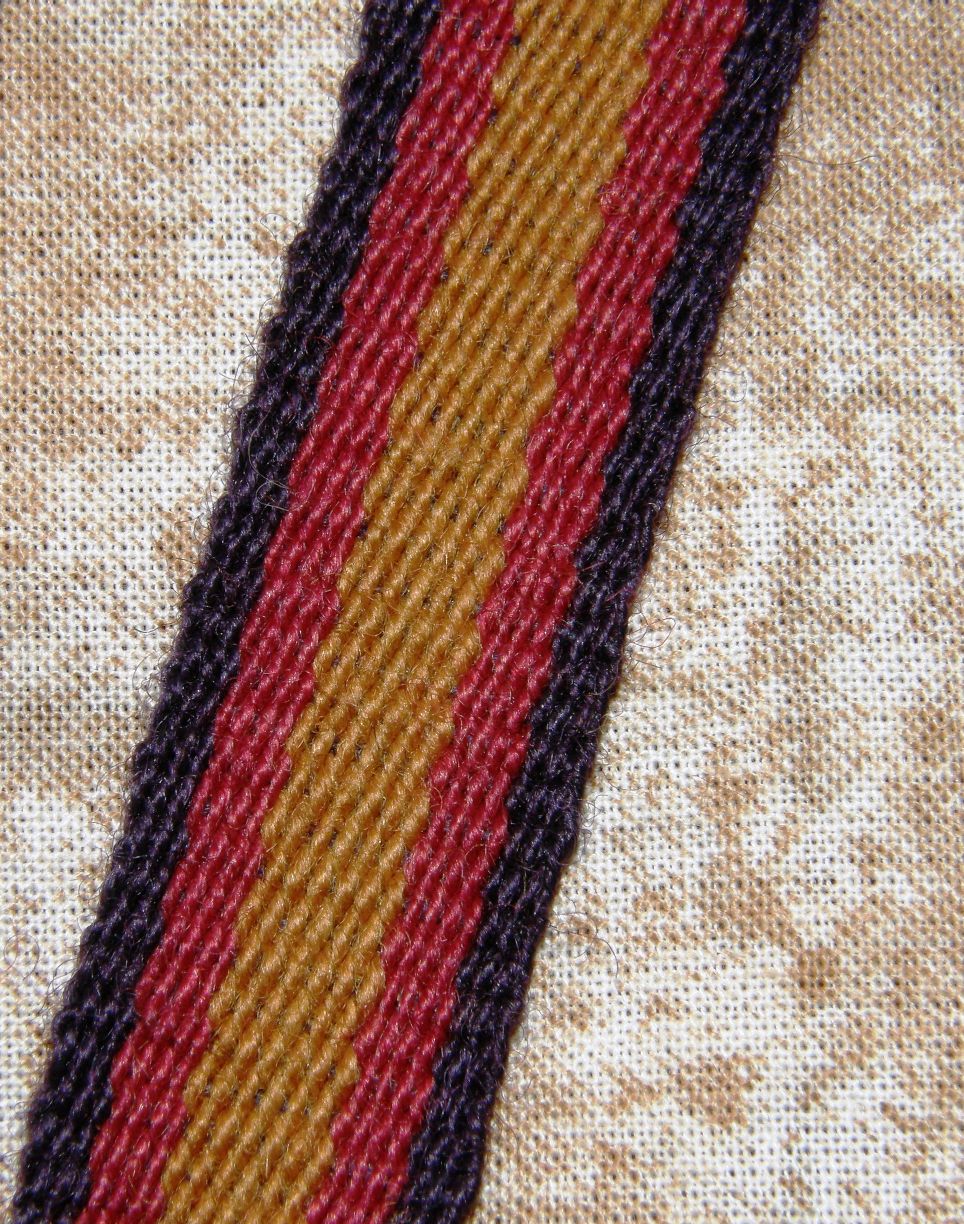
You can see the texture of the high twist wool on the surface of my little band at left which  gives a slanted look which I quite like.

All the while, a table was set up with various woven products made by the participating artisans and the groups that they represented.

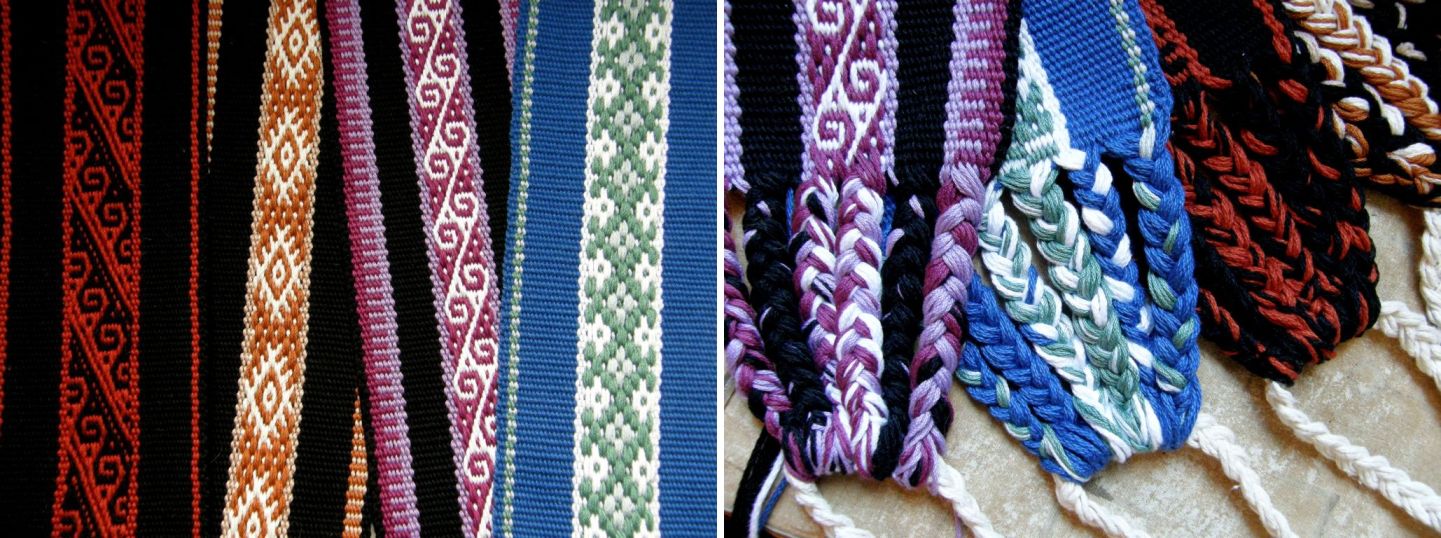
Here you can see cotton goods made by the Guarani weavers using the kara pepo, moisy and simple warp float techniques (I don’t know their name for this technique, in fact, this was the first time I had seen anything made by the Guarani weavers with it).

The next day was another of frenzied activity as we moved the focus to plant fiber…the paja toquilla and cabuya.

Domingo showed us how to produce the basic weave that is used in the spectacularly fine Panama hats which have their origin in Ecuador.

We soon learned that the basic weaving moves, while taking some time to grasp, were not all that difficult.

What was hard was maintaining good tension and Domingo patiently spent a lot of time trying to have each student position their hands as he does in order to produce a good tight weave.

Bundles of twelve pieces of straw were prepared for the students. “Es facilito” (it’s really easy) Domingo kept saying referring to the weaving moves but admitted that weaving with correct tension was something that could take one years to perform at an acceptable level let alone the master level at which he does it.

My Guarani weaving teacher, Angela was very keen on learning this. We have the paja toquilla here in Santa Cruz too where it is called “jipijapa” and so it made more sense to her to learn this craft rather than the cabuya work.

And here is the master at work…


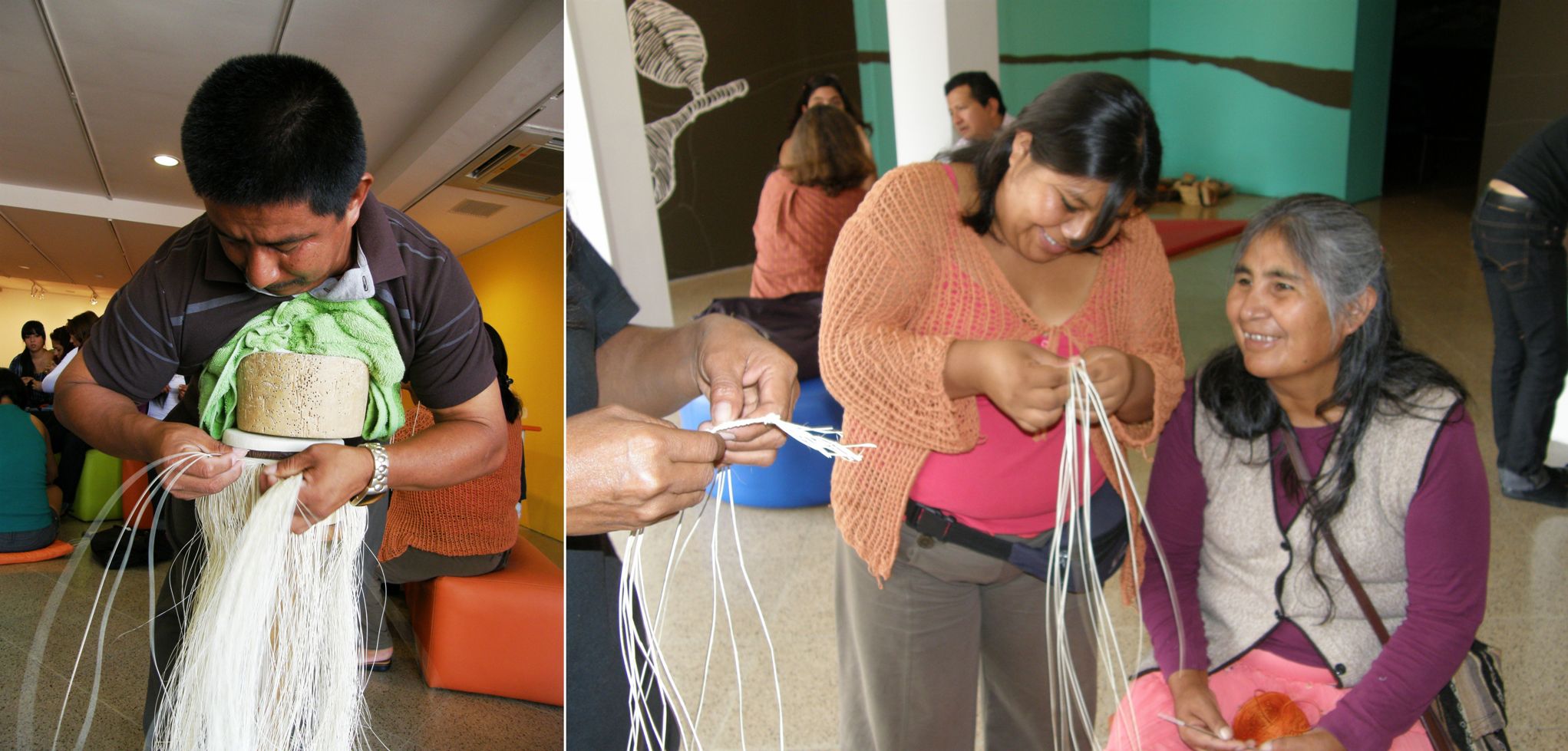
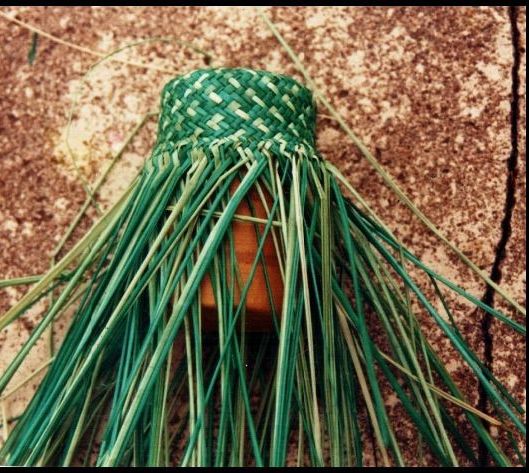
Above, you can see that Domingo, after weaving the flat top of the hat, is now weaving it down and around a mold to give it shape.

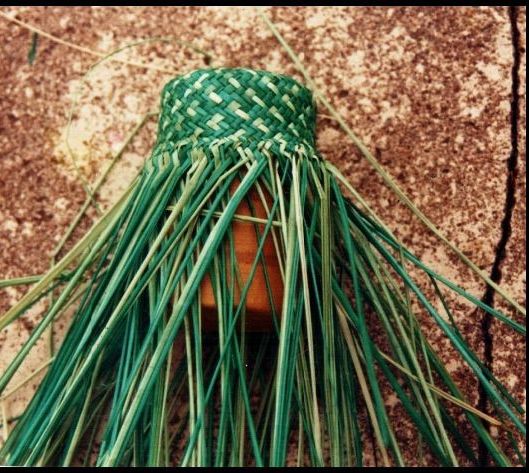
The picture at left of a miniature hat being worked over a mold will give you a clearer view of this. I spent an afternoon with a paja toquilla weaver in Gualaceo Ecuador and she showed the me whole process of making a hat in miniature.

Domingo stands bent over a post on which the mold and hat are propped, leaning on a wooden block and working with incredibly fine strands of straw. Maybe you thought sitting on the floor strapped into a backstrap loom looked a wee bit uncomfortable….

Above right, you can see Isobel, whom I told you is super sharp, working her fiber and showing her mum while exclaiming how “facilito” it is!

A few women in the Intag Valley in Ecuador still hand spin cabuya fiber.

Meanwhile, the ladies from Chinchero, Sonia and Zenaida, not in their traditional clothes this day, opted for cabuya fiber classes. With Maritza from Colombia they learned to crochet bags. This cabuya fiber is machine spun and chemically dyed in bright and lively colors and Sonia really took to this and got to finish her bag, made in black, neon pink with all kinds of glittery additions which Maritza had brought, in one day. It pretty well matched the colors in her outfit.

This cabuya fiber is much finer than the fiber that I worked with when I stayed with members of a cooperative in Ecuador. There the fiber was dyed with natural substances, was coarser and all together more rustic looking.

The women in the cooperative, crocheted, knotted and wove the fiber into mats, bags and other accessories.

On the left is a crocheted mat I bought from the co-op, a woven bag that I was taught to make during my stay in Ecuador, and a piece I wove at home on my backstrap loom. All these colors are from natural substances.

The cabuya fiber brought by Maritza is fine, smooth and consistent, lovely to work with and the colors sing!

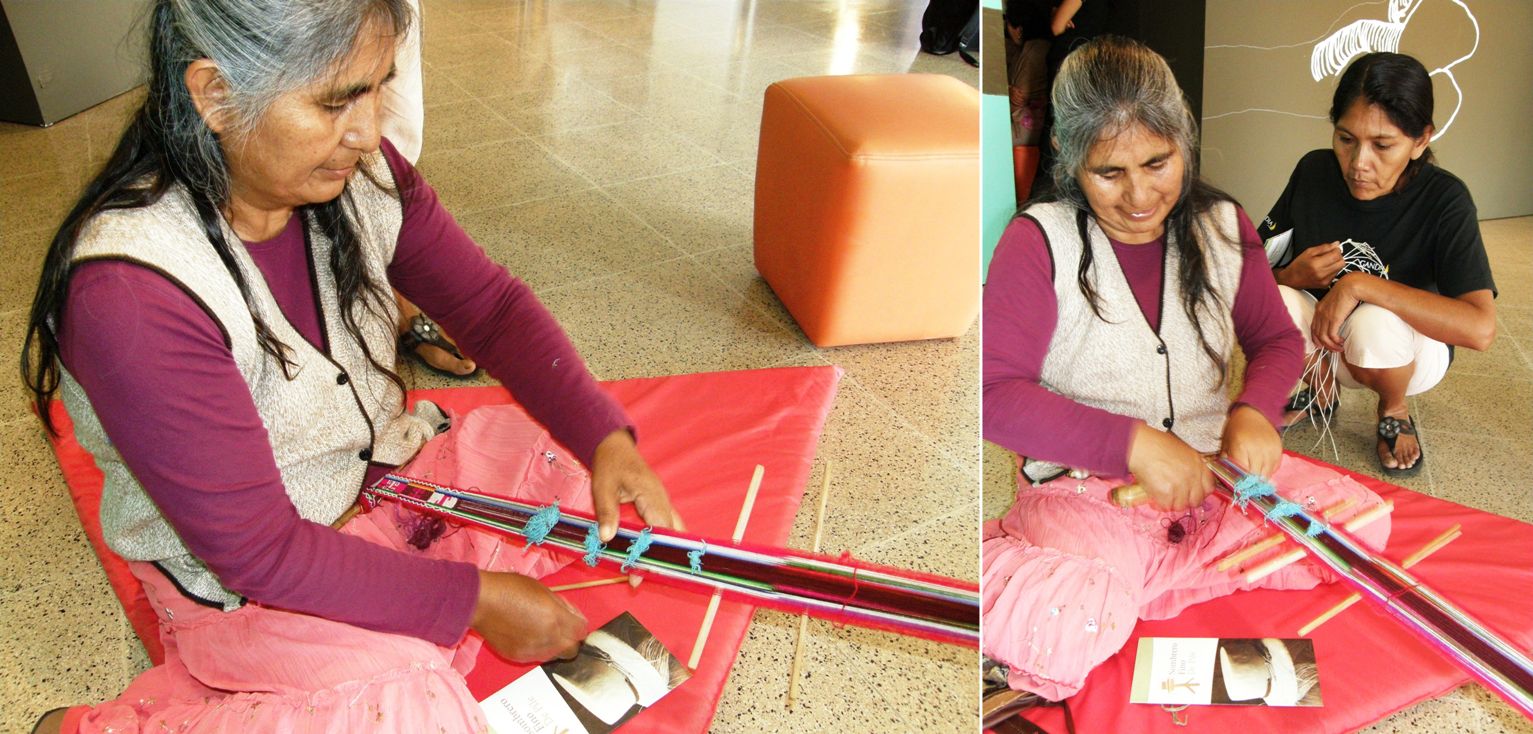
So, day two’s workshops were intense. In the midst of the madness, Ayamara weaver Celinda quietly took up her loom and started to weave and of course, I was immediately drawn to her as was Angela.

We got some nice relatively quiet time with Celinda and I got some good video of her on which you can hear all the noisy fun of the cabuya and paja toquilla weavers in the background!

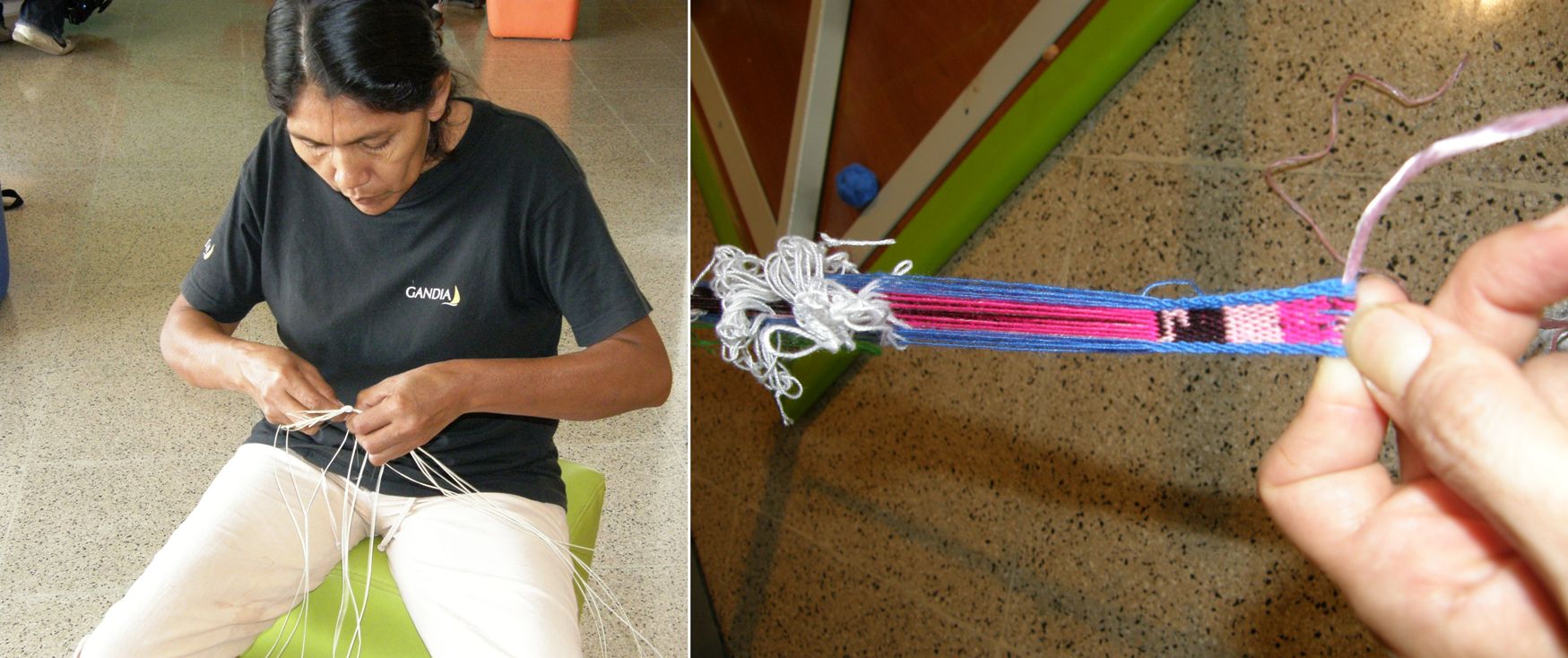
Two of Angela’s new skills…weaving straw and weaving a triple color band. The afternoons of this conference were reserved for interaction between the artisans and, that afternoon, Angela spent more time with Celinda and learned her triple color technique. The Guarani weavers have a very special way of making their string heddles joined by a chain and you can see Angela’s signature heddles on this Aymara style band….two cultures joining hands in the one piece.

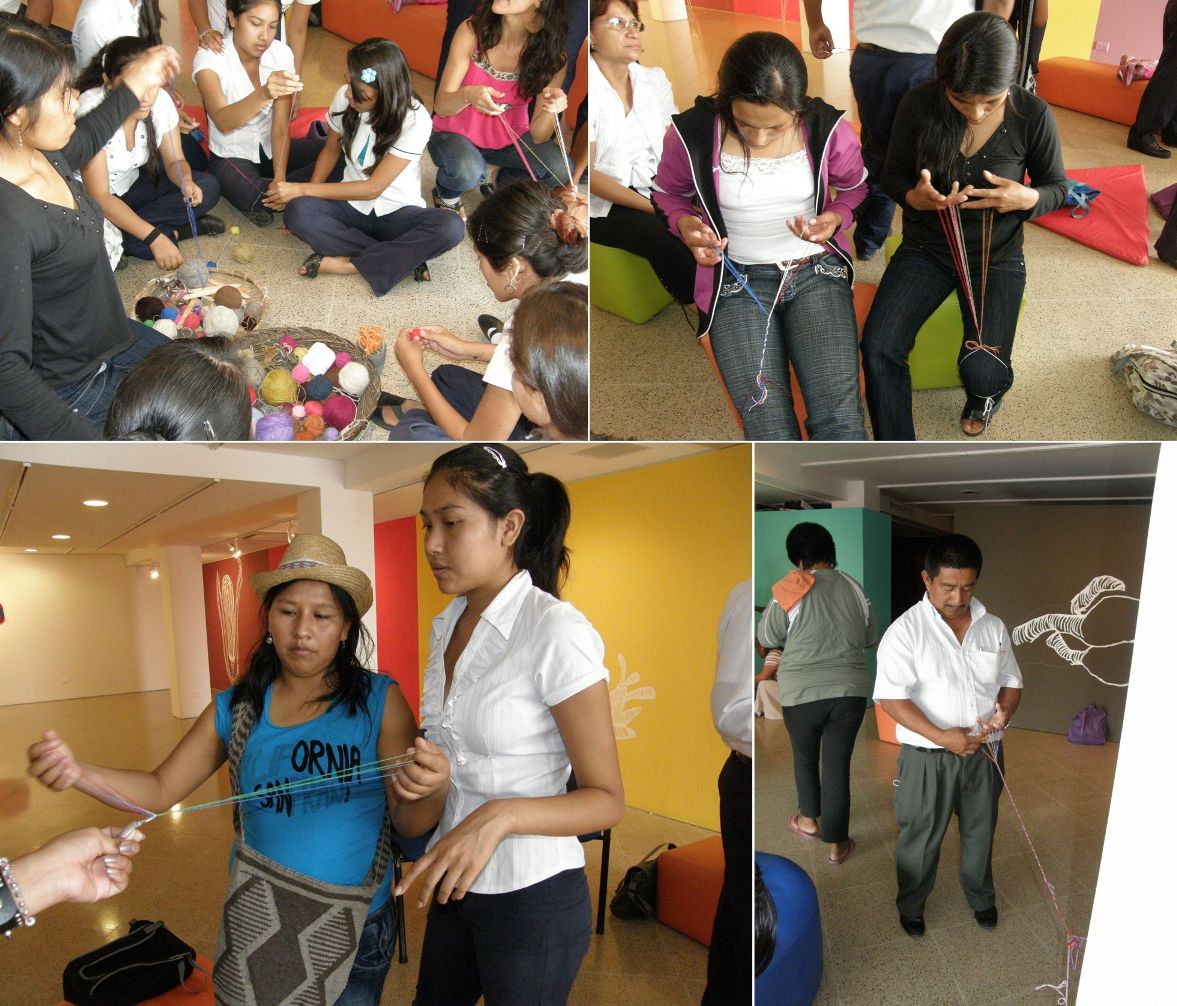
On day three, it was Angela’s turn to present and a class of teenagers was invited to see one of Santa Cruz’s own indigenous artisans at work. First, as a warm-up, Carla taught finger-loop braiding that she had learned in Chile. This was the first time that everyone participated in the same activity at once and, with all the enthusiastic kids there, it was explosive! This was a new braid for Sonia and Zenaida and I hope they will have fun teaching it to their friends in Chinchero.

Domingo particularly enjoyed the braiding and was braiding all evening during the conference presentations.

Then it was Angela’s turn  to show how she warps a band using the dovetail warping method and the school kids were keen to try their hand at weaving.

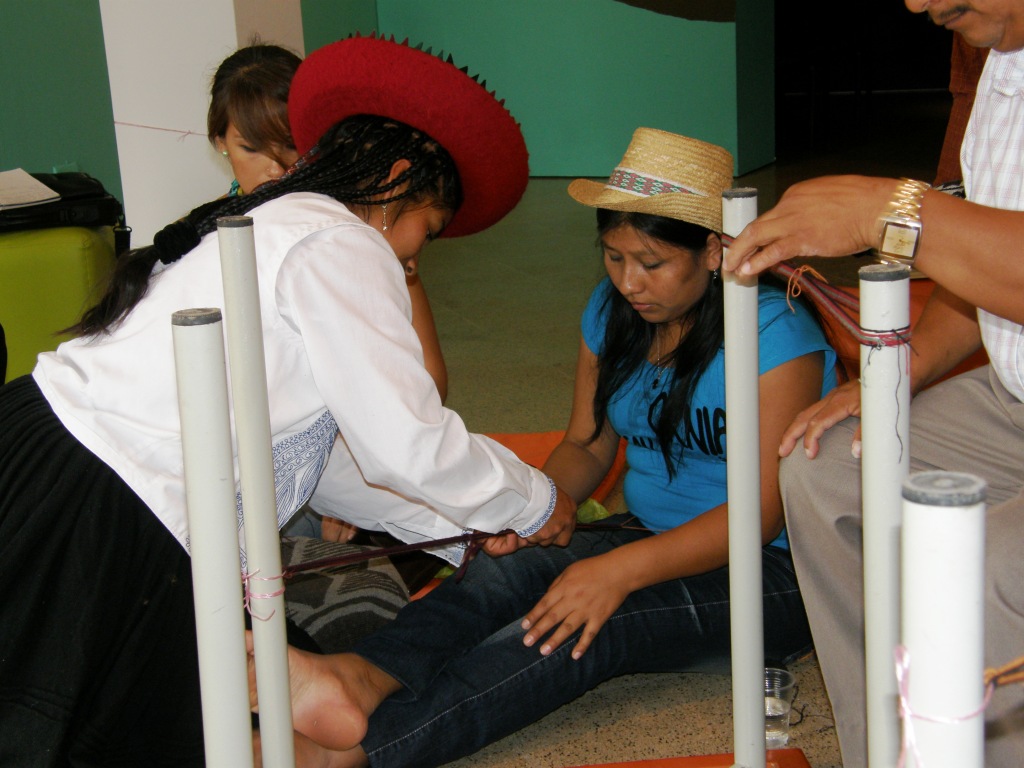
Over in the corner and away from all the riotous enthusiasm, Guarani weaver Marioly showed Maritza from Colombia and Isobel from Chile the dove tail warping system using  the table legs as an improvised vertical loom.

Maritza is from the Nasa ethnic group of Cauca in Colombia. It is terrible how little I know about Colombia. After Maritza’s evening presentation at least I can say that I know that in Colombia there are 102 indigenous groups and 64 languages amongst them. One of the most important woven  items for the Nasa woman is the chumbe, a belt which is used amongst other things to strap a baby to its mother’s body so it can be carried about and/or comforted. Maritza herself is not a weaver of cloth but has dedicated herself to working with the cabuya  fiber instead.

A new online friend, who is from Colombia, shared this link with me for a page of  beautiful images of people of the Guambiano ethnic group of Colombia who are from the same area of Cauca as Maritza. I really need to adjust my mental image of Colombia!

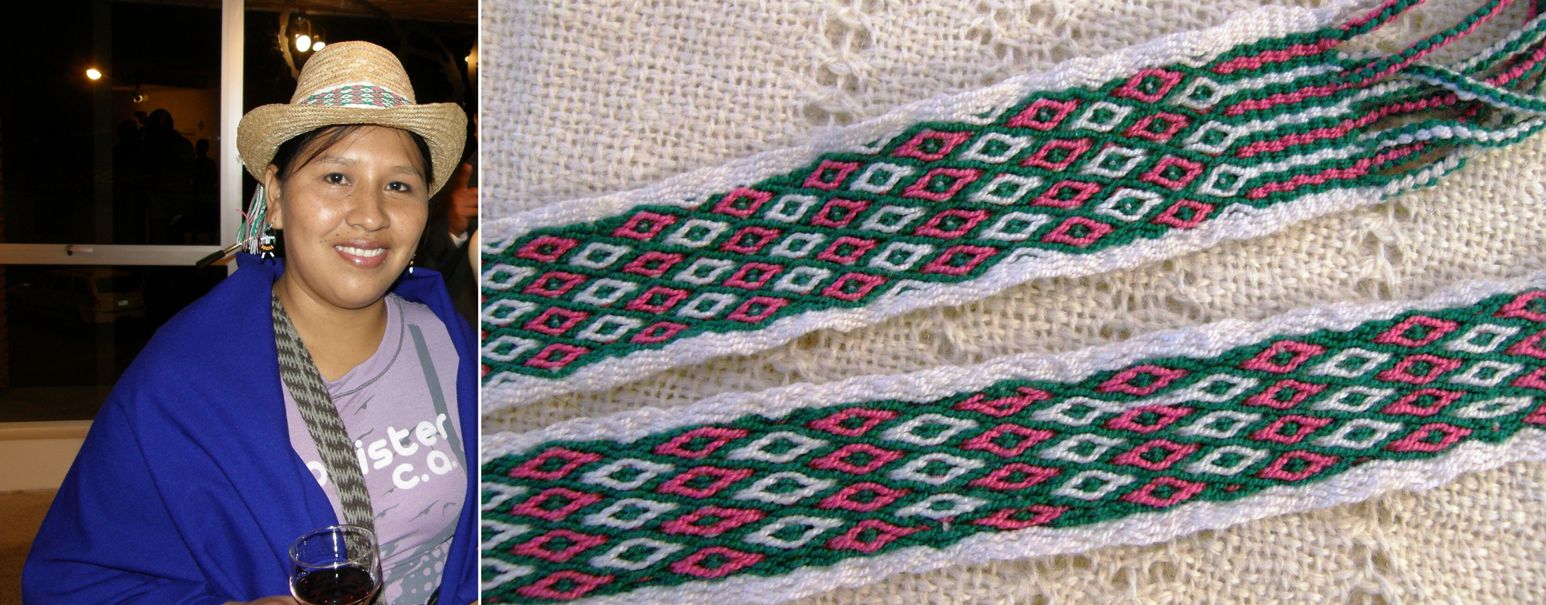
She told me that many narrow items, like the band which adorns her hat, are woven on a very simple loom which comprises little more than a forked branch.

Business and pleasure…it was all pleasure for me! Sonia and Zenaida took to the podium on the final evening to tell us about the work of the CTTC (Centro de Textiles Tradicionales de Cusco) and answer questions. Jean Paul of Ecuador and Mercedes of Mexico serenaded us with harmonized Cuban songs.

I really enjoyed meeting Maria Elena, above left, from Peru, who gave a lecture on her research into the bags made from garabatá fiber in Peru (a fiber that is also used by the Ayoreo people here in Santa Cruz). We discovered we have some mutual acquaintances in the weaving world.

A last look at some of the textiles…

Chinchero textiles at top left, an Aymara triple color belt below and Sonia’s simple and practical backstrap! Of all the textiles there, the backstrap is the one I would have liked to have bought! I would USE it.

So now I am wondering… Will a finger loop braid or two soon be adorning a Panama hat!?…just a fun thought…but, more importantly, will some school kids in Santa Cruz now be able to recognize a Guarani woven bag if they see one in the street and will they be able to tell people something about how they are made? And this I don’t need to wonder about…I know for a fact that Angela will have a three-color band underway on her loom and most likely finished the next time I see her!

######################################################

The Weave-Along is over on Ravelry, the Spin-Along is going but, naturally, is slower to give results. In the meantime we are all still weaving along and finding it hard to drag ourselves away from the loom!

At the top, Jennifer has been producing swirls and curls of traditional, as well as her own, design. Linda wove a traditional design of coastal Ecuador into a bookmark using simple warp floats. The chart is here. Both popsicletote and Tracy have been exploring the tanka choro motif of Chinchero Peru. And I know that there is a lot of spinning going on there behind the scenes too.

My apologies to those to whom I promised some information on links and articles on the woven belts of the Russian Old Believers this week. I think this week’s post has gone on long enough and I would rather do the topic more justice in a separate post next week. See you then!

Backstrap Weaving – A Surprising Encounter

A SURPRISING ENCOUNTER

I have been kept from my loom at home this week. Normally this would have left me very agitated but it has been for a very good reason.

I spent my Friday goof-off day and all weekend working on a slide presentation and then woke up on Monday morning to my boyfriend reading to me from the newspaper over breakfast about an Encuentro de Tejedores (gathering of weavers) that was going to happen right here in my home Santa Cruz.

Oh darn I thought with a sinking heart, I bet it’s on when I am due to be away in the US. So, when does it start? I asked, dreading what would surely be a disappointing response.

TOMORROW!

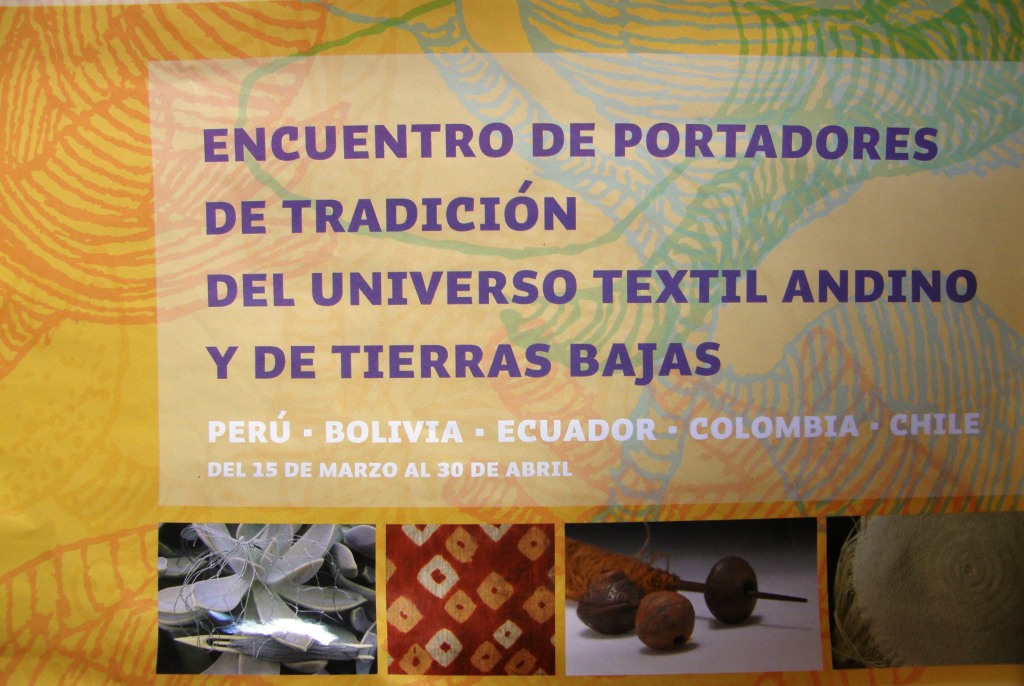
was the shocking reply. Maybe we just missed all the previous announcements. I really had no idea and so there was a mad rush to gather information and make sure that I could be a part of it. The conference is officially entitled…

ENCUENTRO DE PORTADORES DE TRADICION DEL UNIVERSO TEXTIL ANDINO Y DE TIERRAS BAJAS

(A meeting of the bearers of the traditions of the Andean and lowland textile universe)

which brought weavers, artisans, anthropologists and academics from Colombia, Ecuador, Peru, Argentina and other parts of Bolivia to my lowland home. Now this sounds like an enormous gathering but it wasn’t really. Only two to four people came from each place which has made it an extremely intimate experience with plenty of space and time to spend chatting with and getting to know people.

Only a handful of outsiders such as myself have attended which makes me feel even more privileged but at the same time alarmed and saddened although not totally surprised by the apparent lack of local interest in this event. Perhaps it wasn’t widely advertised in order to preserve this intimacy and make it more possible for the weavers themselves to interact more closely. Either way I feel extremely blessed to have been able to participate.


Weavings from highland Peru, lowland Bolivia and the Chilean high plains.


So, this means that this week’s blog post will be rather short as there are still two more evenings and one more day of conference to go. I will give you a few tidbits here to whet your appetite for a full report next week. I am still in the process of gathering information, facts, etc…and would hate to get anything wrong and I apologize if I have misspelled names.

I will tell you now that this whole event was organized by three wonderful Chilean ladies, the idea for which had its roots in an exhibit by Chilean artist Natasha Pons, which will run here for a month, called “Relatos Migratorios”. The Centro Cultural Simon I Patiño made it possible for people like me to experience all this for free. I still haven’t gotten over this fact!

Angela Suarez, a Guarani weaver of the Bolivian lowlands met Chinchero weavers Sonia and Sanaida(sp) at the inauguration gathering.

The inauguration of the conference and exhibit took place on Tuesday. I went along and met up with my Guarani weaving teacher Angela. Walking up the stairs at the cultural center, my heart skipped a beat when I saw two ladies from Chinchero, Peru right behind me.

Last November after a little weaving class with Angela we had to part for some time as I was leaving for the Tinkuy de Tejedores in Peru and she was going to her home of Isoso to organize the weavers to make an enormous order of woven Christmas cards. I had told her about the exciting event in Cusco all the time wishing that I could have gotten my act together and taken her with me although I doubt that she would have gone with the extra responsibilty she was carrying at that time to fulfill the Christmas weaving orders.

So, here now was a little part of Peru coming to her instead! along with Colombia, Chile and Ecuador. And, on top of the beautiful pebble weave bag that she is carrying in the picture above, she brought one her wonderful works-in-progress in the Moisy technique to show to the highland weavers.

The program comprises three mornings of four-hour workshops along with audio-visual presentations and conferences in the evenings. The first day’s workshop was backstrap weaving which was offered by the ladies from Chinchero along with Celinda and daughter Isobel, Aymara weavers from the northern Chilean highlands.

Organizer Cristina  introduced the workshop and put it very well when she explained that there are many roads that can lead to a single destination and many ways of achieving the same objective. The warping, set up and weaving techniques used by the Aymara and Quechua weavers teaching us here side by side have their differences but our goal, she explained, would be to learn to weave narrow bands, called jakimas in the Quechua language of Chnichero, and what the Chilean weavers call cintillos.

 Aymara weaver Celinda watches with fascination as Chinchero weaver Sanaida works on her pick up weaving. 
Cabuya fiber artisan Maritza from Colombia receives help from Sanaida while one of the Ecuadoran gentlemen prepares his warp around a pair of table legs.
Well, you can imagine that this had me wanting to hop from one group to the next so as not to miss a thing! but I settled finally with Sonia and wove my first flat band with the gorgeous Chinchero handspun (I had used this fiber before to make tubular bands at the tinkuy).
My experience with my own handspun has been almost exclusively with llama fiber and so there were quite a few interesting things to note about this wool warp, the behaviour of the weft, the appearance of the woven surface from the high twist yarn and the different kinds of weft that Sonia and Sanaida were using.
Having the backstrap weaving moves down, I was able to focus very much on the material rather than on the technique. So, I did get to weave this week after all.


Cabuya fiber from Colombia and handspun wool from Chile and Peru along with other random bits of cord and twine that we used to tie up the warps.

The artisans from Ecuador, Colombia and Oruro in Bolivia joined in enthusiastically as well as a small group of outsiders such as myself and staff from the cultural center. Most outsiders were non weavers and were terrified to beat hard and pull at the warps fearing they would break. The handspun wool was of course wonderfully resistant which was a good thing as there was the usual amount of beginner heddle-sawing going on.

I didn’t have to worry too much about missing out on Celinda and Isobel’s (the Chilean weavers) instruction on day one as today Angela and I got to spend a lot of time with Celinda as she wove.  I found her very tranquil and lovely to watch. Daughter Isobel, on the other hand, is a live wire! You will see and hear more about her next week.

The technique that Celinda was demonstrating is a variation of the Moisy that Angela weaves except with three patterning colors which requires a fourth set of string heddles to manage. This does not create a double faced textile but there are no long floats on the back of the band either.

Angela noted that Celinda’s heddle order arrangement was quite different to hers and asked many questions. I could see her soaking it all up.

Finally she wasn’t asking questions but rather pointing things out to confirm that she did indeed understand.  I wouldn’t be surprised to see her adding this to her repetoire and you can be sure that if she believes that any of Celinda’s ways are better she will adopt them. She is already using a stick for her lower set of heddles on her narrow bands after asking me to teach her how to make them on a stick – something she said she had always wanted to learn.

Well, I really must stop here as there are more events to attend tonight and one more day of this conference to go. No doubt there will be much to tell and show next week.

I can’t go without giving my thanks to my online weaving friend Kristina Krenzer who has worked hard to translate my e-book Andean Pebble Weave to German. It is now available on Patternfish. It looks so weird and, at the same time, so great in another language! Of course you can get the English version on Patternfish too.

Ich danke Kristina Krenzer für die Übersetzungsarbeit. Meine Monographie über die Stippenweb-Technik der Anden, auch bekannt als “Pebble Weave”,  ist nun auch in deutscher Sprache bei Patternfish erhältlich .


Backstrap Weaving – In my own backyard.

IN MY OWN BACKYARD

My weaving explorations seem to be taking me further and further afield these days…outside my city, my country (Bolivia) and even outside the continent and I have found myself visiting SE Asian weavers in the USA and learning about weavers in the Middle East from books.

Sometimes I forget about the treasures that are here right in my own backyard.

I wrote about the Ayoreo people who live in this area and their looped bags in a post a couple of weeks ago and the difficulties I have had in winning their trust so that I could learn more about them and their crafts. I have given up on that for now but hope that I can pursue it again some day. In the same way I was reminded of a Guarani weaver with whom I made contact here over six years ago.

I used to visit Angela, a Guarani weaver, every Saturday morning over a period of a couple of months about six years ago. She had her loom set up in a handcraft store and was warping to make a hammock.

It was such an opportunity to meet up with Angela like this as it is very difficult to find weavers right here in the city let alone a weaver who has a loom and a place in which to use it . Angela’s hometown of Isoso is about twelve hours drive away from here. Angela would weave in the store twice a week. On my Saturday visits I got to see her warp most of the loom, but missed seeing her setting up the heddles. I saw her start the weaving and part of the designs. The white cotton hammock had three bands of green, yellow and black pick up designs. Angela’s motifs included flowers, geometrics, pineapple plants and scenes of people in their typical daily routine.

The motifs are hard to see on my scanned photos. On the right you may be able to make out two ladies “machucando”, that is, pounding plaintains, in order to make “masaco”, a typical Santa Cruz snack.

I would ask Angela where she lived hoping that I could maybe visit her at home and have some lessons. She had told  me that she had a small loom in her house. She would stretch out her arm and say “leeeejos” (“lejos” means far) as if to discourage me from visiting. Unfortunately, her son fell ill before we could really bond and she stopped coming to the store. Eventually the loom disappeared and now even the store is closed. I did manage to give her a copy of the photo of herself and her baby boy before I lost touch with her.

After Angela’s disappearance, I found bits and pieces about Guarani weaving in books and found that the technique she was using to weave her hammock is called Moisy. They also use a pebble weave which in the Guarani language is called Karapepo. I bought a hammock and bag in the Karapepo technique

I was able to copy the deigns from the hammock using Andean pebble weave technique and make this guitar strap.

From books I learned that the earth and the cosmos are represented by the star and snake skin designs. These are pretty much the only designs you will see woven in the pebbled Karapepo technique. In the Moisy technique, however, the weavers have a far greater repertoire and the designs are not like any others that you will see any where else in Bolivia. They speak of the lush tropical fruitiness of Santa Cruz! Leaves, flowers, vines, butterflies, animals and people involved in their daily routines or dancing and celebrating carnival are depicted on the hammocks, wall hangings and bags.

Cell phone pouches made with the Moisy technique with flower and butterfly motifs. A band of horizontal bars serves as the strap and velcro has been sewn on as a closure. A black band was woven and sewn simultaneously to the edges using the weft as the sewing thread to give a very nice neat finish.

And here is the best part of the story…I bought the above cell phone pouches from Angela last weekend at her home. Yes, I found her again, was invited to her home and got to spend the afternoon with her looking at her looms and weaving. The little fellow pictured with her above is now 8 years old and she has since had another son – that makes five sons in all now! Her eldest is married with his own family.

How did I find her? Very much by chance. The English institute where I taught English for eleven years started offering classes in the Guarani language shortly after I left. I recently noticed the loom and weaving pictured at left in the library which had been made and placed there to celebrate the start of the new Guarani program. I asked the receptionists about it they showed me the lovely cell phone pouches that a Guarani weaver had sold them. Fortunately, they had the weaver’s number and it turned out to be none other than Angela.

One of the karapepo cellphone pouches that Angela made for the receptionists – quite a different style to the blue and black ones she made using the Moisy technique.

I was very keen to see how Angela sets up and weaves her pebble weave as well as to learn how to do the Moisy. I was pleased to see that she uses the very same crochet cotton to weave as I do. When I visited her last Saturday, she had just warped up to make a colorful wall hanging on the smaller of her two looms, had just finished a book bag for a university student and was also in the middle of weaving a belt with fighting roosters which had been ordered by a Brazilian business man who mounts the woven pieces on leather and then apparently sells them for a very good price in Brazil. Angela’s enormous hammock loom is there in her patio and she can warp up several small projects on it at a time. She seems to have enough orders to keep her very busy.

She showed us one of her hammocks, the finished book bag, her cell phone pouches, greeting cards depicting carnival celebrations in her hometown of Isoso, pillow covers, belts and purses.

At left, the smaller loom warped for a wall hanging in Moisy technique and at right Angela is warping a narrow band to show me how she sets up for Karapepo technique.

She stretches a cord across the loom around which the start and end loops of the warp dovetail. Except for when she is weaving a hammock, she usually creates a third selvedge by starting her weaving right at the dovetail string.

I filmed her warping, making heddles and weaving the Moisy technique. As usual when I have the camera in front of my face. I find it hard to really absorb what is going on and so I had to come home and watch the movies over and over before I could grasp completely what she had been doing.

I like the way she makes her string heddles chaining them together. You will see her doing this in the video.

Angela’s chained heddles.

She, on the other hand, loved my heddles on their sticks (I had taken my backstrap loom, which she found very amusing, with a double weave piece on it to show her) and so I taught her my way of making heddles.

Here are two short clips of Angela warping using the dovetail string and making heddles. As she makes the heddles she is explaining to me the meaning of the designs on my guitar strap and telling me about the snake skin and how the snake that taught the first Guarani woman to weave in a dream is also embodied in the Parapeti River. Her little boys can be heard chattering in the background in the Guarani language.

In the next video, she is weaving the belt with the fighting roosters in Moisy technique. She has three sets of string heddles and another shed above the cross string. You must see the way she does her pick up. It is quite unique!

The lower of the three string heddles holds a shed through which she simply passes the weft without having to do any pick-up. The two upper heddles hold the separated colors. She pulls on those two heddles working her way from left to right to pick out the colors she needs. Watch her left hand gathering up the selected warps. Her eyes are down at the weaving line watching the design so she knows which colors to pick. Then she opens the shed which the lower string heddle controls. Then she does another row of pick up before opening the shed above the cross string, through which she can pass the weft without having to pick up warps. This shed is a little difficult to open as the warps have become entangled in the string heddles.

So I had to go home and see if I could figure out the Moisy! The best way was to try and reproduce one of her woven motifs. I found that I had to pull the weft really tightly through the shed to have my design look like hers. It makes a very, very sturdy fabric. For those of you who have my Andean Pebble Weave book, I would compare it to the thickness you achieve when you use the three-shed border. In fact, I quickly realized that the three-shed border is the very same structure.

There is my attempt to reproduce the flower on the cell phone pouch. It really helped a lot knowing that we both use the same thread so I knew what width to expect right from the start. I really had to pull the weft tight and force it into that width.

The motif is not exactly the same but I understand the technique.

I tried to chart it and then found my chart was wrong and so ended up just reading it directly off the cell phone pouch which was a really good exercise.

I did notice that Angela is weaving the rooster belt a lot more loosely. .

I confess that, although I started out with my warp set up as Angela showed me with the three string heddles, I found it quite uncomfortable simply because it was so foreign to me…impatient!…  and so I  changed to another set-up after a while with which I felt more at home. I would like to try Angela’s pick-up technique on her vertical loom and hope to visit her again soon. She has invited me to come and see her floral designs on the colorful wall hanging she is making.

In the meantime I will work on my charting as I would like to make a collection of these uniquely Cruceño designs.

###################################

What else have I been up to?

Well I started my double-weave belt using the Bedouin designs that I wove into my wall hanging.


I seem to be gathering a collection of black belts. At least they are all in different techniques with designs from different cultures. The uppermost one is two-color alternating warp floats (my made-up name for it…we could use the Kyrgyz word “terme” for it). The center one is the yet-to-be-finished double woven example with Bedouin designs and the lower one is, as you must all know by now,  Andean pebble weave as taught to me by weavers from Ayacucho, Peru.

I have also been weft twining but using floats this time to make a textured design in one color which is inspired by the alpargatas worked in ply-split darning that I showed you last week.

I am totally unimpressed with the results so far!

I’ll keep at it. Who knows, it may look better as I progress. Maybe I should overlap the floats by two warps instead of just one. What do you think?

What have my online weaving buddies been up to?

Anna, who is cycling down to Tierra del Fuego has turned up in Salta, Argentina and has added braiding to her skills following my instructions for the Margarita braid.

This is one of the two braids that was taught to me by my sling-making teacher in Peru.

I usually advise people to start with the Palma braid first as a skills builder but she jumped right in and, as you can see, has done really well!

I have gathered up all the information on the Palma and Margarita braids that is embedded in various posts here on my blog and put it all together on one page here.

Zacarias in Yanque Peru taught me these two braids which are used to make the typical slings of the area.

Marsha Knox of Pandula Arts Creations has been playing with simple warp floats in two-color alternating pairs on her Gilmore Wave loom and has created some great designs of her own. More designs like these can be seen on the Guatemalan belt in this post.


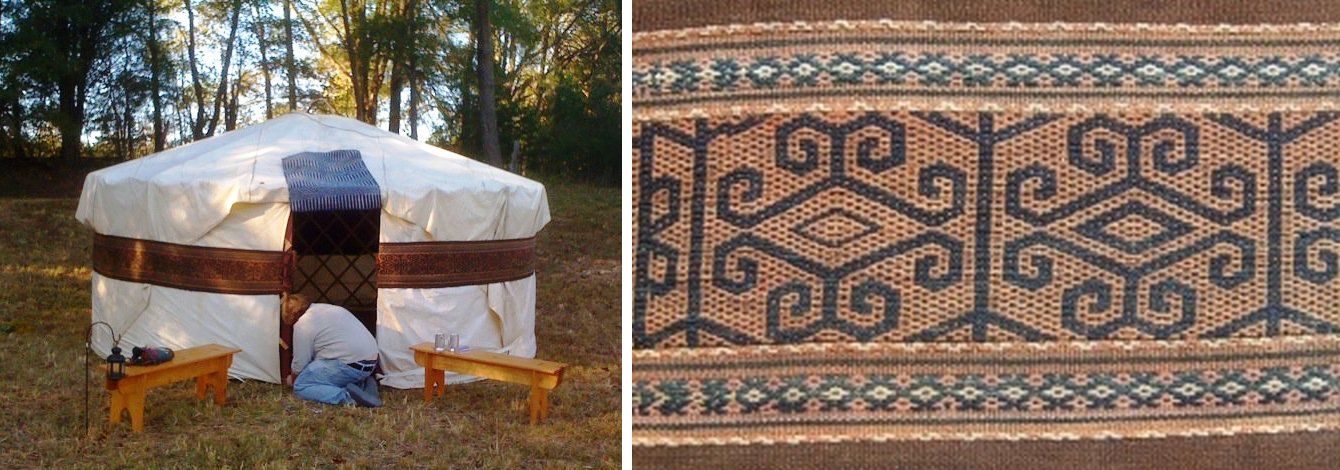
Lisa has been up to her eyeballs in dyeing but took some time out to enjoy a night in her yurt. You will probably recognize the  band encircling the yurt that she was lucky enough to purchase at a reenactment event and which I have shown off many times here on my blog. It is woven in the “terme” technique.

######################################

Finally…you may remember my posting a video some time ago, which had been made in March this year, showing little Melina learning to spin cotton from her aunt in coastal Ecuador. This is the family with whom I stayed in 2007 and learned about the process of weaving cotton saddlebags and the simple warp float technique. I accompanied anthropologist Kathleen Klumpp on this trip and Kathleen has just returned from another trip there with a new video of Melina’s improved skills seven months down the track.

Kathleen tells me that Melina is not yet able to support the weight of the spindle and so rests it on her thigh.

The original video of Melina’s first steps can be seen here. How quickly she has picked up the skills! Aunt Trini and Grandma Luz are master spinners and she is lucky to have such skilled teachers but I think that Melina’s success is largely due to Kathleen’s encouragement. How wonderful too that Kathleen has made and shared these videos so we can all follow this story.

And I have been inspired by a very sweet recent comment from Graciela here on the blog. I don’t know where she is from but she has inspired me to get my act together and put up the tutorials translated into Spanish that I have been promising. Another task for this weekend and I will try try try not to get distracted!

Pssst! There’s a Spotlight article about my backstrap weaving in the latest issue of Handwoven…


Backstrap Weaving – Weft twining with a twist

WEFT TWINING WITH A TWIST? or WHAT?  You tell me.

Weft twining is showing up all over the place. I just discovered what I think might be  classified as “sort of”‘ weft twining in an unexpected place in my journal of notes on my first trip to Ecuador. So I have decided to call it ‘weft twining with a twist” as I don’t know how to define this. Perhaps you can help me. More about that a little later…

I have just about finished the Bedouin piece I was working on last week. I just need to make some tassels from some of the weft ends and figure out what to do with the warp ends and I will be done.

I found two more designs in books and online for the last two panels. The design on the right is from a book that I have had for at least  ten years and I can remember years ago marveling over the pictures of the Bedouin looms with their long long warps stretched out over the stony ground. It is exciting to now be able to weave some of their designs myself even though I used my backstrap loom rather than a staked out one.

I twined a broader band of design at the bottom this time with three colors and “s” wrapped the warp ends. I also wove  two plain narrow black bands which I sewed to the edges to cover the weft ends from the twining.

This one will go on the wall as a long narrow hanging and now I would like to get down to planning a much wider one.

As I told you last week the main designs are done in a technique known as warp substitution which creates long awkward floats on the back. The floats can be eliminated by weaving the designs in double weave but I wanted to stick to the traditional technique. However, I couldn’t resist warping up to try the designs in double weave. I warped up my Ashford inklette as I had showed you last week a little about doing one-weft double weave on this kind of loom.


On the left you can see one of the designs from the large Bedouin style piece woven white on black using 26 doubled warps in the pattern area. On the right, the inklette is tipped upside down so you can see the same design in black on white.


Now I think I want a belt with these black and white designs made on my backstrap loom. The piece on the inklette is a sampler. You can see that I have put a very short warp on it.

I haven’t paid all that much attention to my off loom weft twined piece but I did make a little progress. I am still having a few tensioning issues with this and the piece is getting gradually wider. It’s good practice until I can get to the stage where I can make something useful with this technique.


I am using a swirl border and large motif from Montagnard twined textiles on the left. On the right you can see how the weft twists to encircle each of the hanging warps.


As I was twining away this week my mind was taken back to a trip I did to Ecuador in 2005. There in a small town near Otavalo I met a man who is still making alpargatas, the traditional footwear of Otavaleño men, by hand.

Admittedly most men are choosing sneakers over alpargatas these days but on market day in Otavalo I saw a few older men using them. The very oldest men tend to get about with bare feet.

You can see that the foot covering and heel straps are fabric which are worked in a “sort of” twined technique. The sole is braided and coiled “cabuya” fiber (a kind of agave). The cabuya soles on the tiny pair of alpargatas in the above picture have been mounted on rubber.

I asked around as I really wanted to see how these fabric pieces were made and was told to go to a tiny town, a short bus ride out of Otavalo.

I imagined that I could just stroll into town ask around and be pointed in the right direction. Not so! and this day spent touring this town along little lanes between the fields in search of the alpargata maker is one of my favorite memories of that trip to Ecuador. Everyone was very friendly but no one seemed to have the slightest idea about this person I was seeking.

Finally two people pointed in the direction of some hills behind the town and I headed there not really knowing if I could trust this information. People are so eager to please and will often tell you what they think you want to hear.  Of course I should have known that the best place to ask theses things is at the corner store. Corner store owners know everything about everyone and the owner’s daughter was dispatched to take me by the hand right to the door of the alpargata maker.

Aurelio, the alpargata craftsman, can be seen braiding cabuya fiber which will be later coiled to make the soles of the alpargatas. His wife at right asked to have her picture taken with her finest traditional Otavalo clothes.

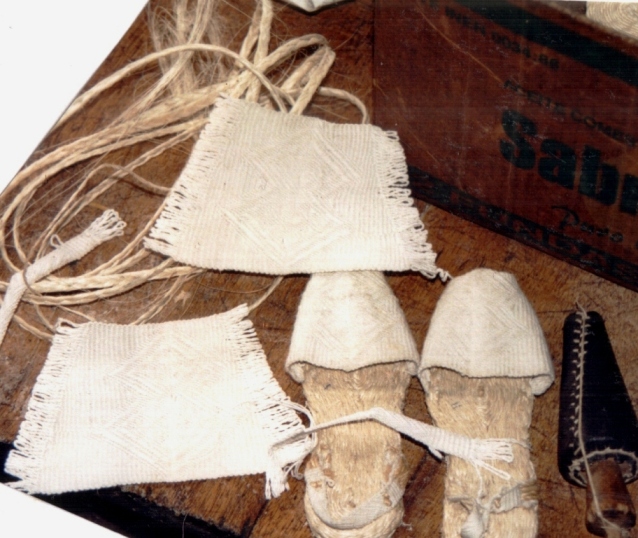
Unfortunately, Aurelio was not in the process of making alpagartas when I met him. In fact, he had just taken the woven pieces off the mold but he was more than happy to show me his tools and equipment and tell me about the process.  The alpargata fabric is worked around a mold rather than on a loom. I bought the two finished pieces of cloth from him along with the heel straps and a tiny boy’s pair of alpargatas.


The triangular fabric pieces are "woven" around a conical wooden mold which you can see on the right. The foot covering pieces called "mantas" are there with the "taloneras" or heel straps. The braided fiber will form the soles.


The conical mold or ‘horma” is made of wood and covered with  non slip leather. On this the “mantas” and ‘taloneras” will be worked. Aurelio has several molds of different widths and lengths to cover all range of shoe sizes from boys to adults.

To begin “warping”, a length of cord is tied from the top to the bottom of the mold. Cotton thread is plied and then wound around the mold. Starting from the center cord the plied cotton travels around  the mold and passes around the cord before returning in the opposite direction. And so, back and forth it travels until the required length is reached.


I am using a cardboard mold here for these photos just to demonstrate this along with some very thick cotton string which I have roughly plied just to give you the idea.


Aurelio plies his cotton evenly on a drop spindle unlike my uneven thick cotton string above which I just twisted by hand. You can see the neat twist in the end loops of the piece below.

The “weaving” process then begins…

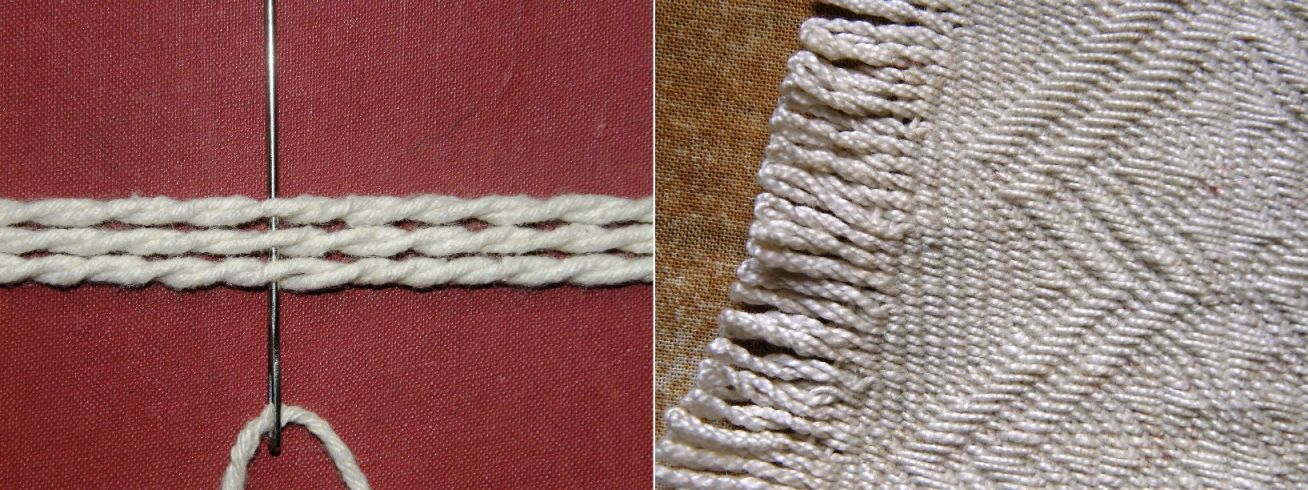
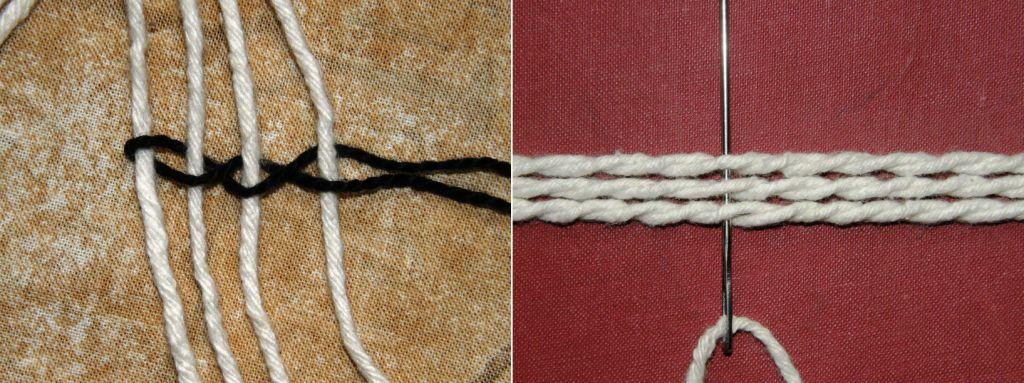
A single strand of cotton is passed on a needle between the twist in each of the plied cotton  strands from bottom to top, turning at the top and returning through the adjacent twist to the bottom. Designs are formed by passing the needle through the same twist twice, that is, on both the upward and downward journeys, thus creating a float. When the work is finished, the center string is cut and the piece of fabric can be opened out.

So what do we call this? Twining? EDIT: Since posting, there have been a few comments suggesting that this is most likely what is known as ply-split darning (not to be confused with ply-split braiding). Thank you to all who contributed their thoughts and suggestions.

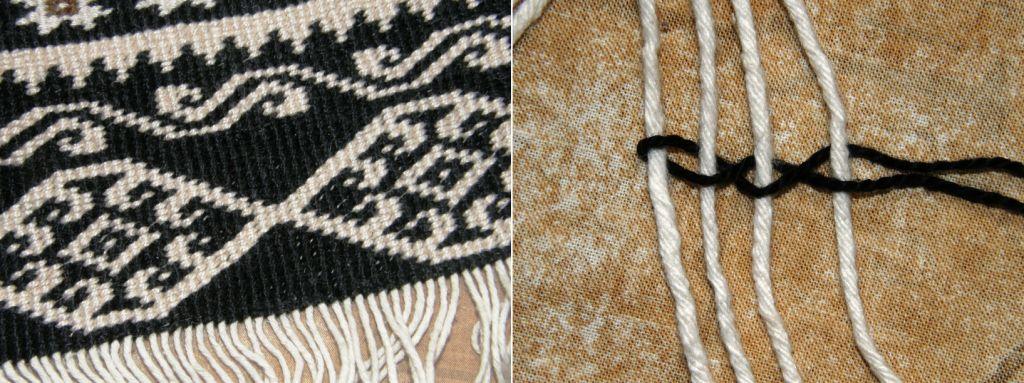
The results look the same. You can see that the “stitches” created have the same slants as those created by weft twining. If you compare the method used by Aurelio to make the mantas with the picture I showed of the weft twining earlier you can see that the same thing is being achieved.


I have been twisting wefts around static warps. For the sake of the comparison we could say that Aurelio draws the “warps” through static twisted “wefts” with the same result. (The moving element on the needle is, however, the weft and the twists the warp).

I have not thought about creating designs with floats this way in my weft twining . I love this textured patterning in one color and can’t wait to try it.

Here are other typical patterns used on the mantas of the alpargatas…


Common designs worked into the alpargata pieces.


The finished mantas….

The finished alpargatas…

These are a small boy’s size and so, eventhough I only saw them being worn by a few older men in the city of Otavalo, they are quite likely being used in towns and villages in the area by males of all ages.

Women also use alpargatas but theirs are now factory made from synthetic materials. The heel straps, however, are still being made by craftsmen like Aurelio. I did not see a synthetic version of the men’s style.


This tiny black pair is a baby's size.


I wish I had better images of the alpargatas in use but here is what I have…


If you look very closely you may be able to make out that one of the men looking at beads at the Otavalo market is wearing the white alpargatas. The weaver at right is wearing the typical women's alpargatas. Cord is tied from loops in the heel straps to hold the shoe onto the foot.


I am happy to see that a couple of Weavolution buddies have been inspired to give weft twining  a try too. Franco has had this on his “to-do” list for some time and has decided to shift it to the top. He has been making a weft twined bag around a cardboard support. You can see it on his blog. Jennifer has been experimenting with it on her cricket loom and I am sure she will have something to show us next week.

I can’t tell you how many things are on my own “to-do” list. Adding to it this week…a belt with black and white double weave Bedouin designs, a larger Bedouin style wall hanging with weft twined bands included and now… float patterns in weft twining inspired by the Otavaleño alpargatas.

I hope that you will be inspired to try some weft twining or perhaps one-weft double weave on your backstrap or inkle loom.