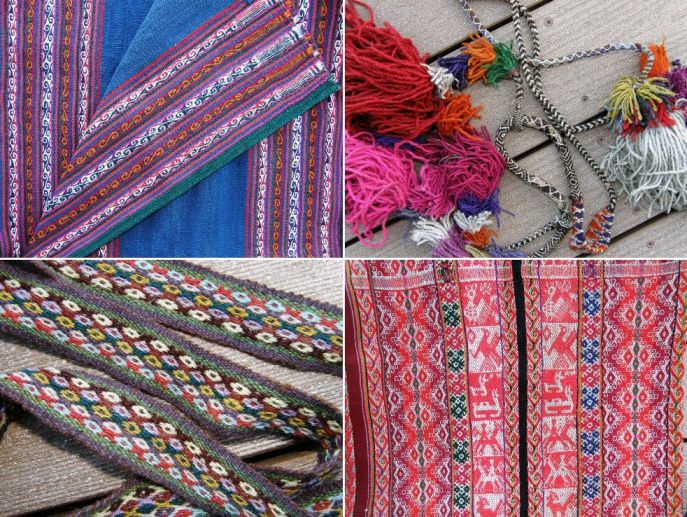
Backstrap Weaving – The Final Stretch

The final stretch of my travels involved a relaxing week with friends in Maryland but has come to an abrupt halt in Miami airport.

I am, however, well on the way to being a seasoned standby traveler and am quite well prepared for such things although I have to say that I was pretty confident about getting my flight to Bolivia last night and, therefore, left a couple of essentials out of my carry-on luggage.

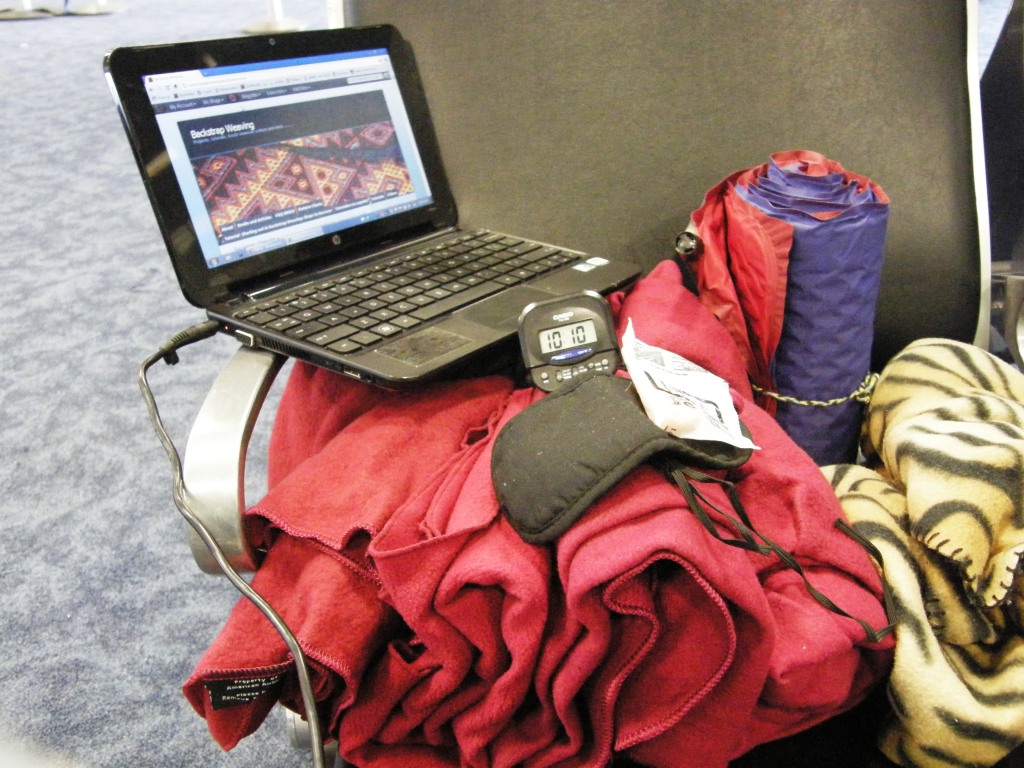
You can see my stranded-stand-by-traveler kit…mini Thermarest self inflating mattress, eye shades and ear plugs, a blankee from home, alarm clock and notebook. The airline gave me six blankets too as this airport is cooled to 60 degrees for some reason yet it is still full of goose-bumped ladies in strapless sun-dresses determined to show off their newly acquired Florida tans.

Once when returning from Guatemala I spent three very restful nights in this airport but MIA admin has come up with a kind of  torture in the meantime which has me desperately crossing all my fingers and toes in the hope that I will be out of here on tonight’s flight. Perhaps in an attempt to stop people like me who choose to use the gates as motel rooms, they have chosen to broadcast at ultra high volume the “current local time” every fifteen minutes but only during the night. This means you get to doze for a maximum ten minutes before being jolted awake by the announcement which is preceded by Big Ben-like “bongs”. I may have missed the 4.45am one but that is the only one! So, that alarm clock in my kit…didn’t really need that…and the ear plugs didn’t make a jot of difference. Ah well, all part of the adventure! At least I was warm.

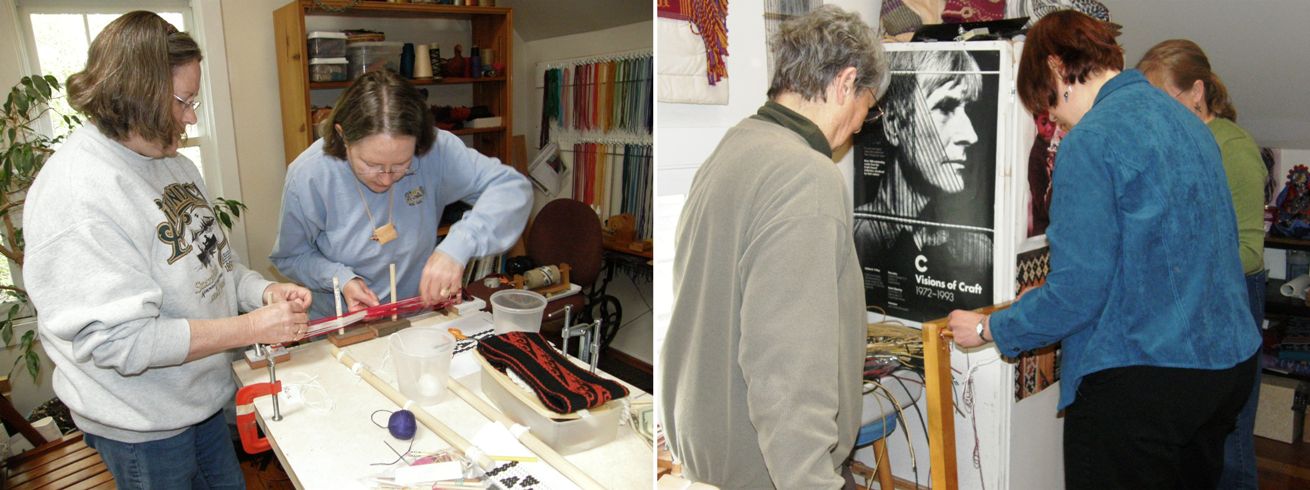
So, let’s catch up…My last wove with my last group of friends in Pennsylvania enjoying the hospitality of Ron and Carol.
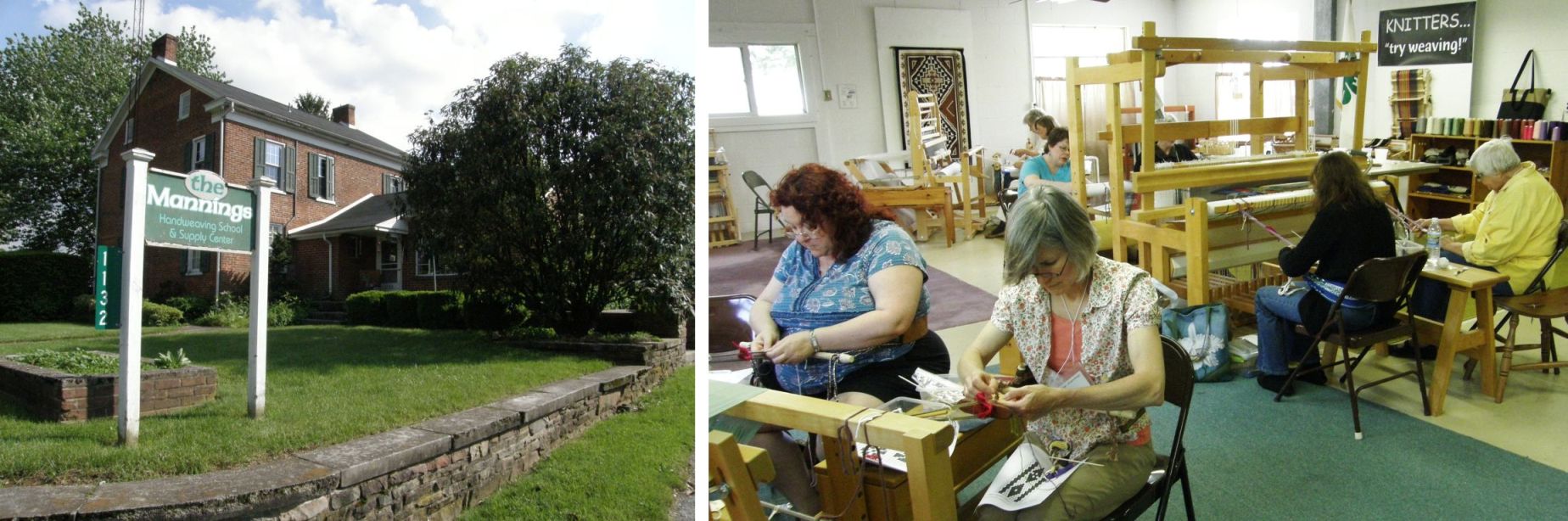
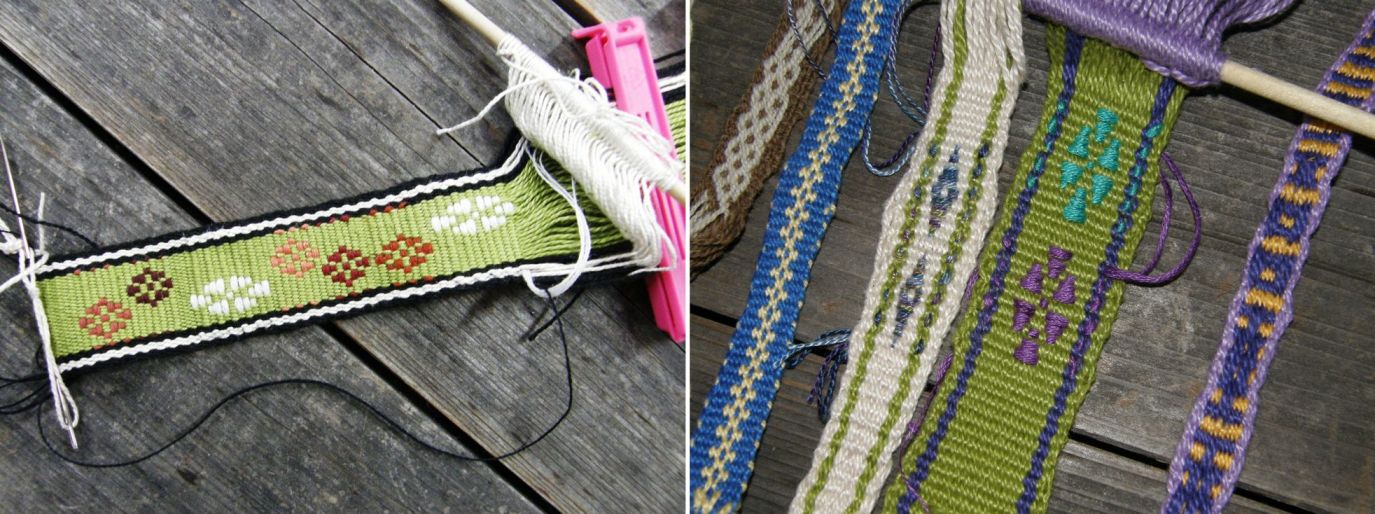
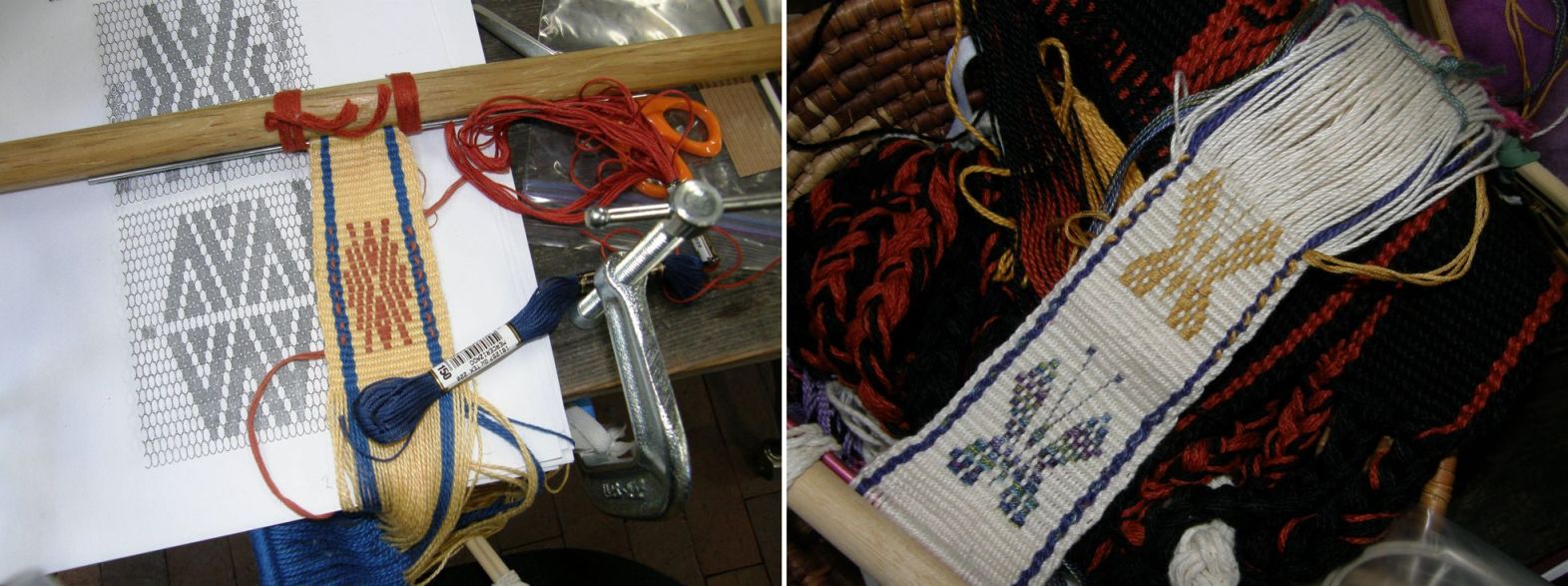
They found a great selection of yarns at the Mannings and went home planning to make their own backstraps using Tahki Cotton Classic (which should be used doubled for a sturdy backstrap) and Plymouth Yarn’s Fantasy Natural and also took a selection of luscious colors in the UKI 3/2 mercerized cotton which is a great general-purpose weight for backstrap weaving. We found belt shuttles that make good beaters too and I restocked my “poking stick” supply (the people who wove with me will know what those are!).
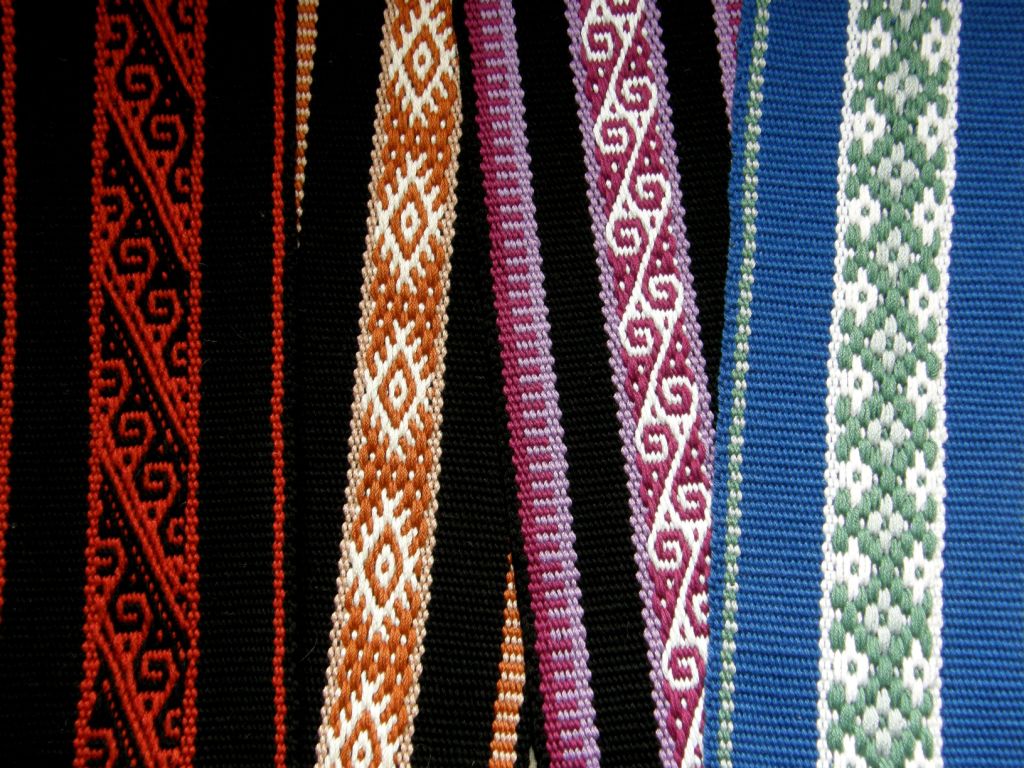
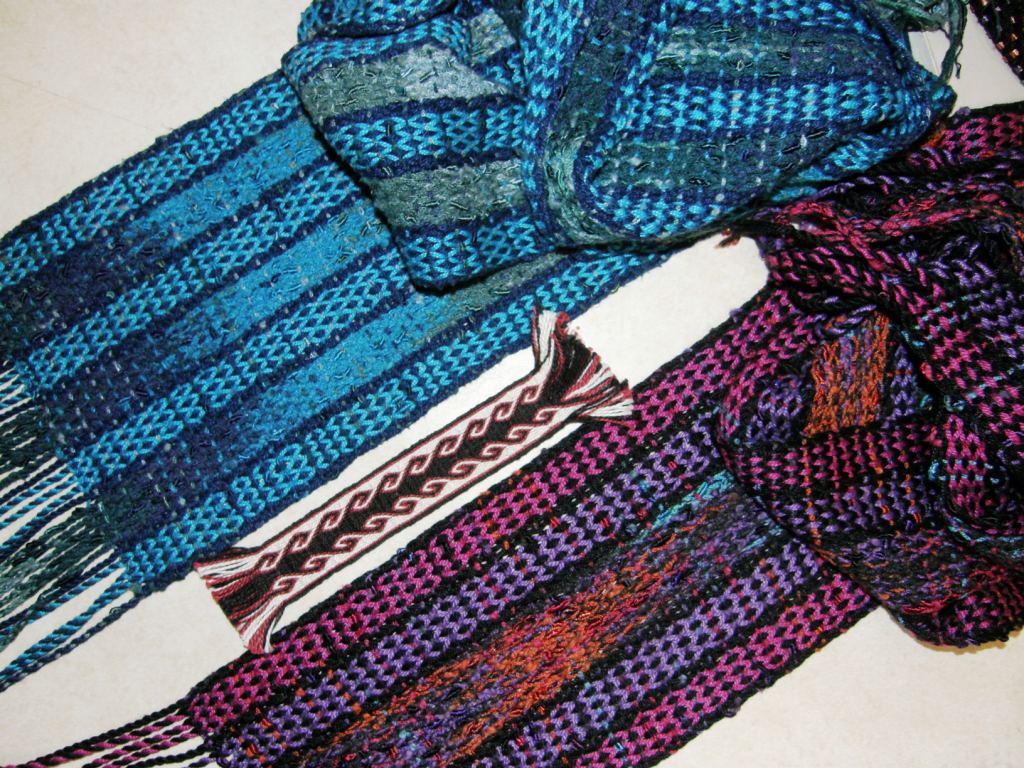
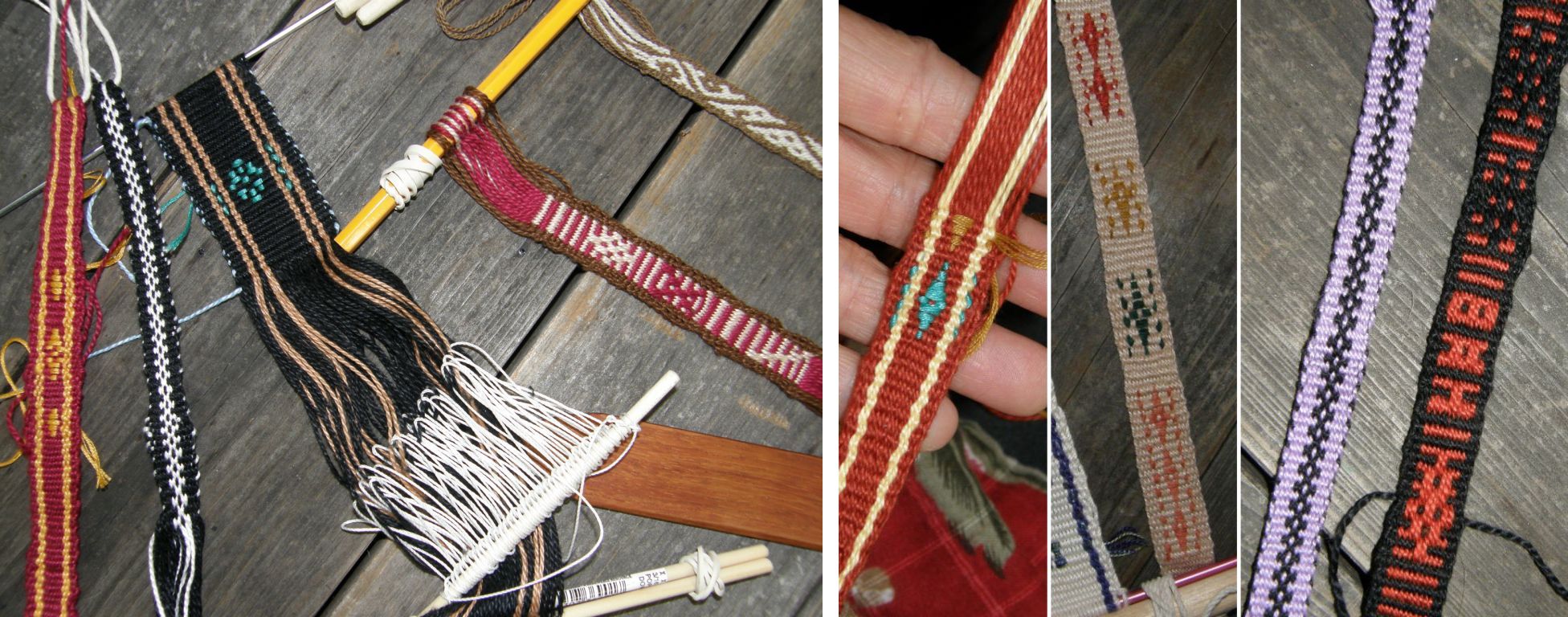
I made the three backstraps on the left from Tahki Cotton Classic.The blue used in the one on the right is Plymouth Fantasy Natural yarn..


Here are the ladies having fun and some of the nice color combos that they put together using the UKI yarn.
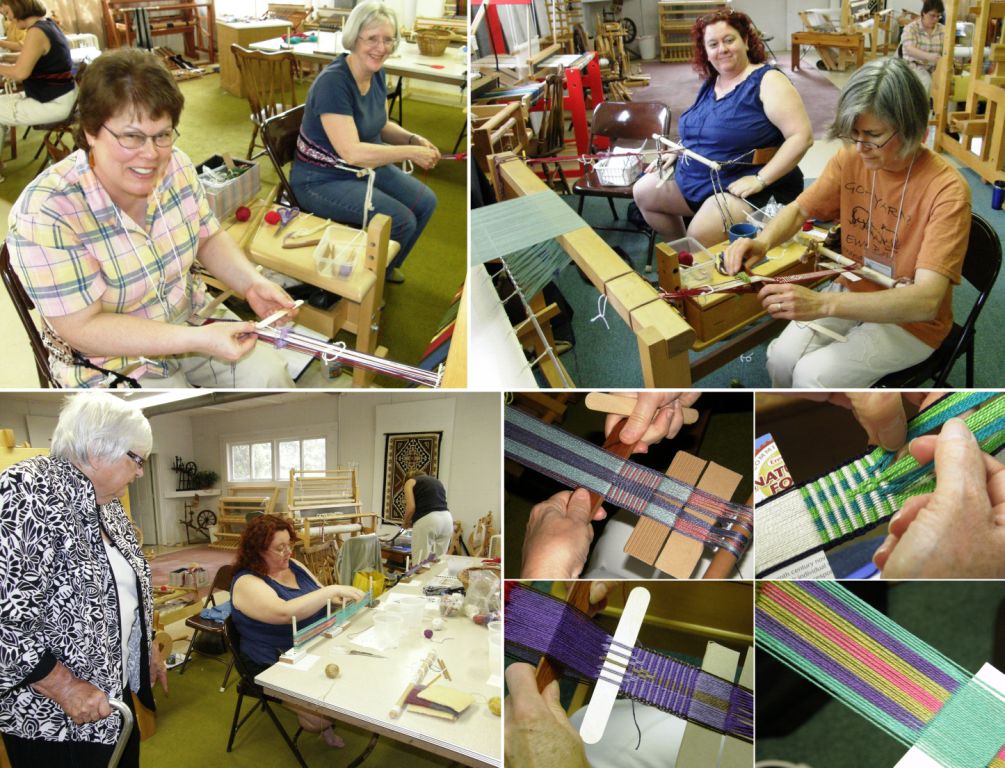
It was a fun visit at the Mannings and I plan to go back at the end of October.

From there I was whisked away by my friend in lovely Maryland, where there is still a member of the original family after whom the town is named running the local post office. I have a flashback to my first visit with Claudia last year during and after the Maryland Sheep and Wool Festival. I can’t believe a whole year has gone by since then.

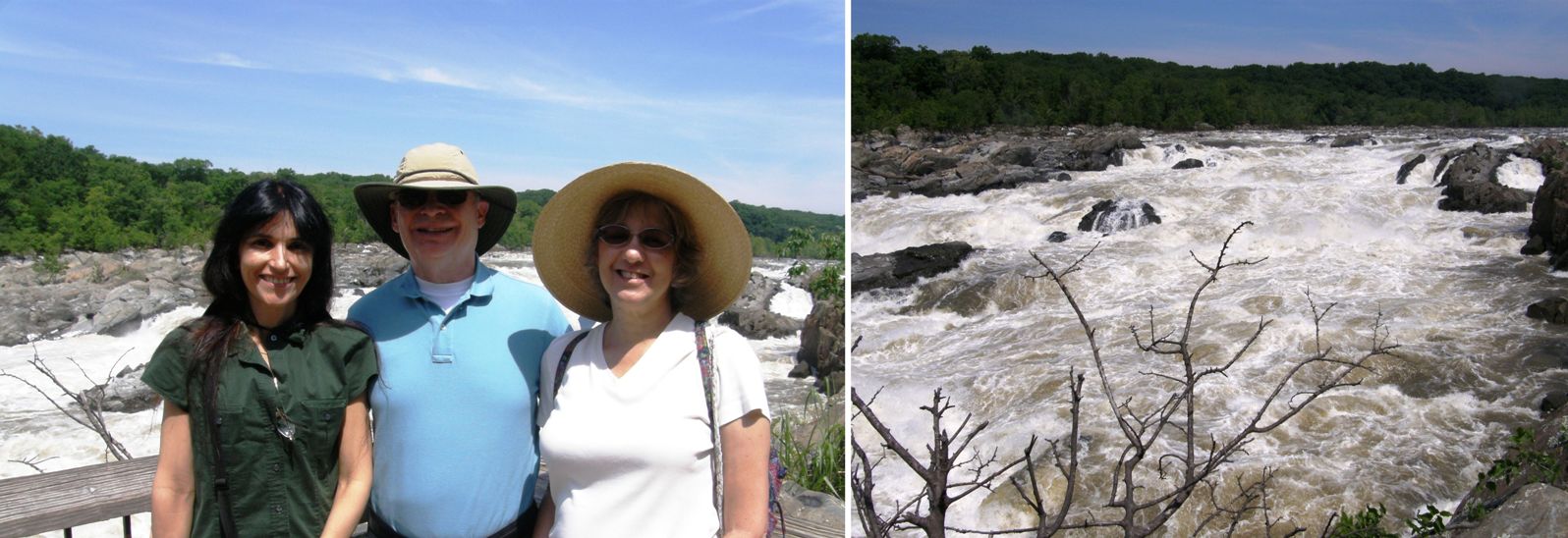
And there’s another flashback to last summer when I visited after Convergence. Claudia and David had taken me to see Great Falls which weren’t so “great” at that dry time of year but which were pounding mightily on this visit after snow melt and a particularly wet spring.
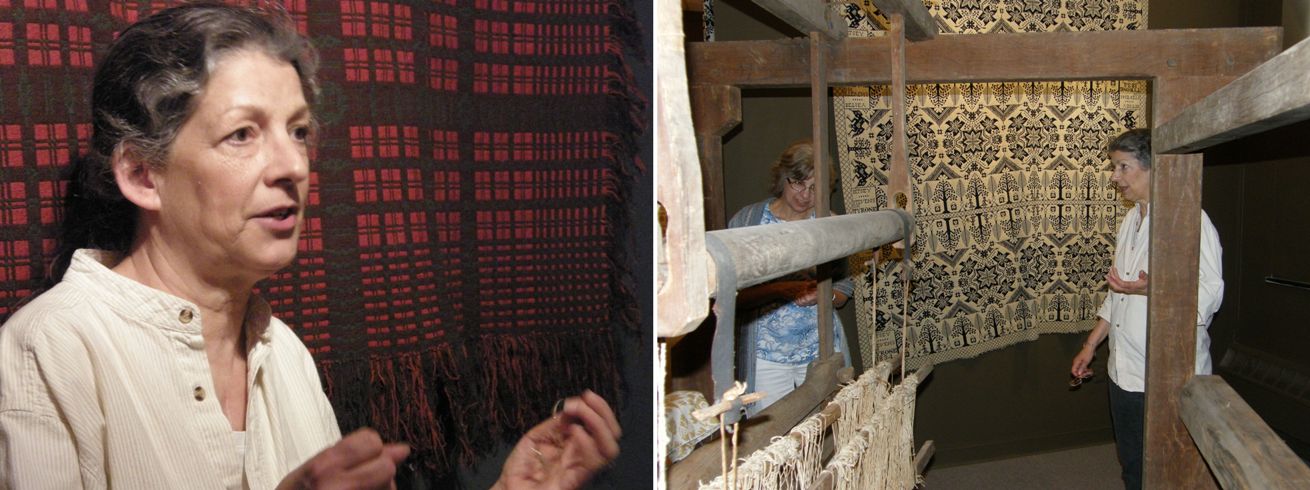
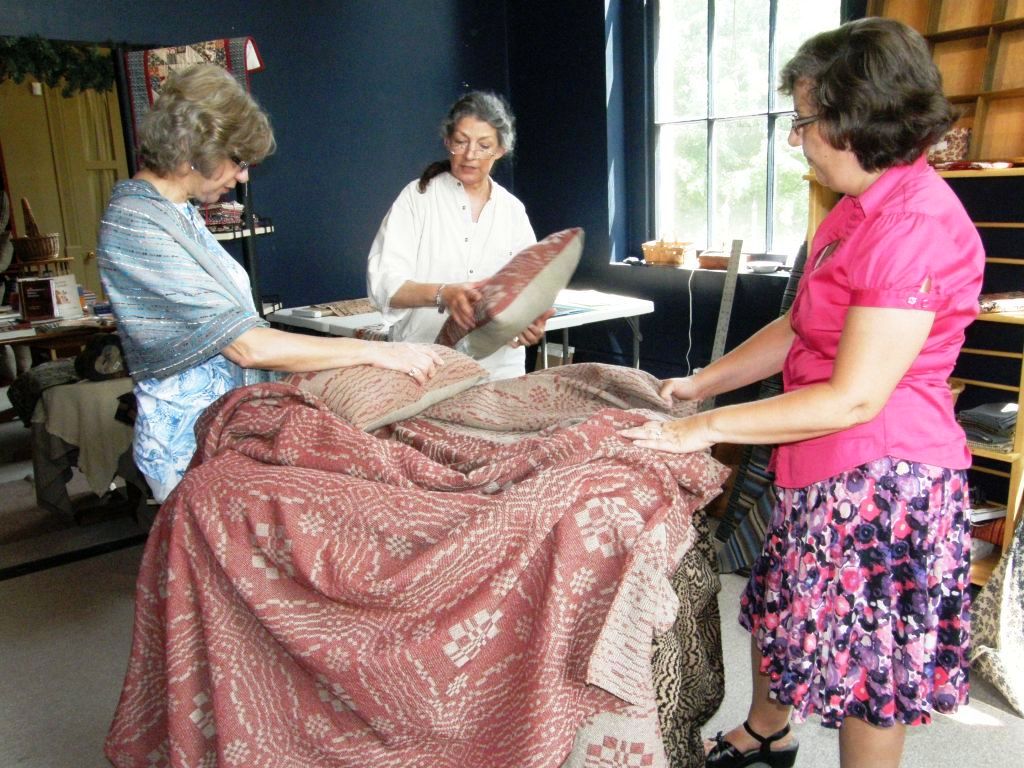
Last Thursday we had  a little Weavolution meet-up at The National Museum of the American Coverlet owned and run by Melinda and Laszlo in Bedford, Pennsylvania. If you are wondering what exactly a coverlet is, I will allow Melinda and Laszlo to walk you through all that on their website.
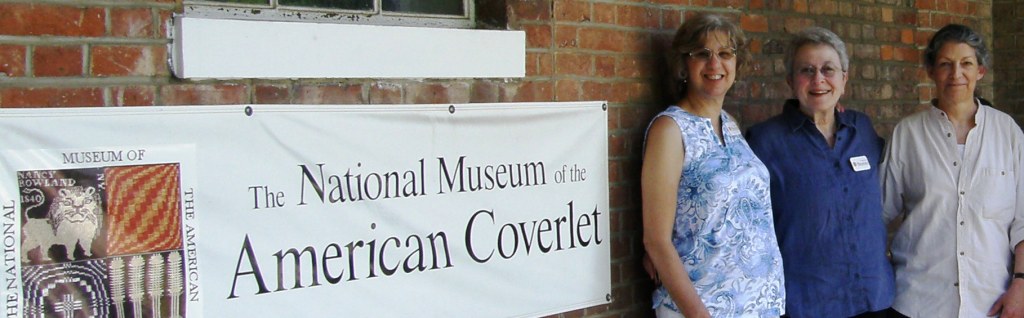
Last summer’s issue of Shuttle, Spindle & Dyepot (the one with my article :-)) featured an article on this museum.

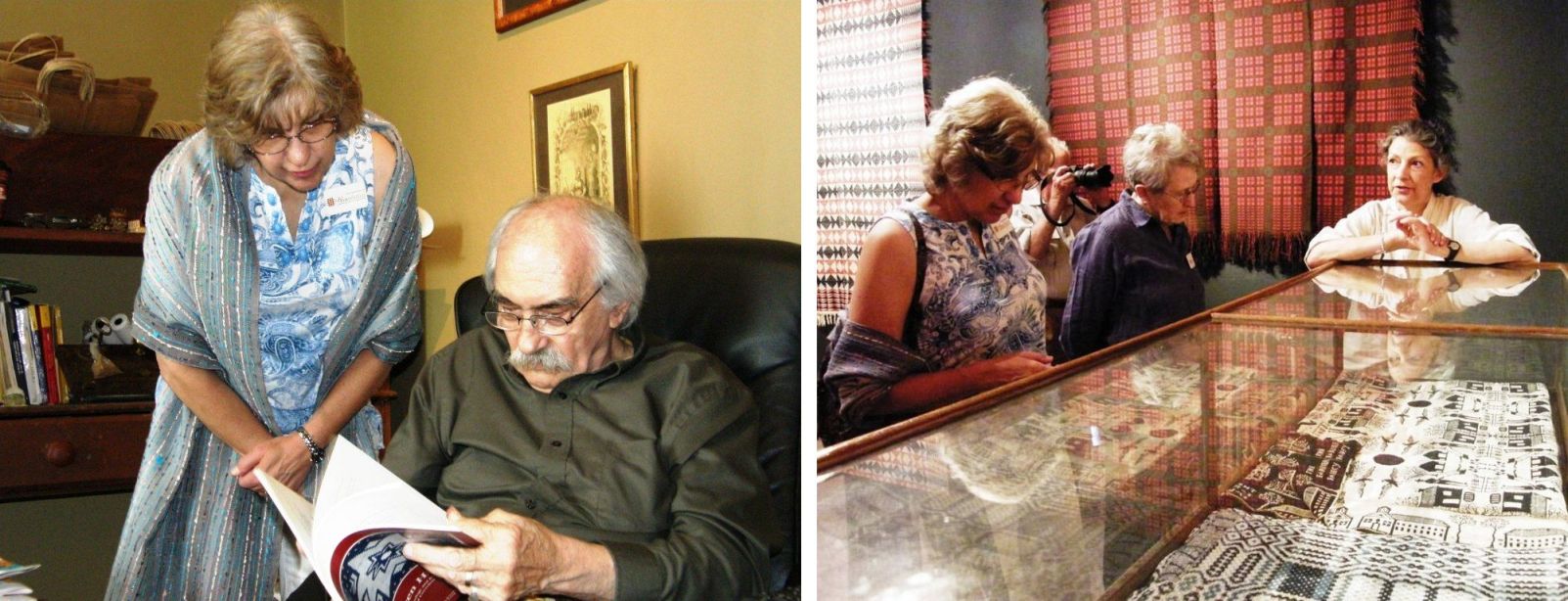
Little did I know then that I would get to visit it with Claudia and knitting guild friend Karen, Dave Holly of 4-shaft pvc loom fame and weaver Alice Schlein with husband and photographer Bruce. It was fun meeting Karen and also Dave, whom I had seen online talking about his pvc loom. I had met Alice briefly at Convergence but we know each other online through our blogs and Weavolution.

Melinda gave us a personal tour and Laszlo provided some back stories from his post in the museum gift shop.
Let me dazzle you with some of the geometrics in the collection:
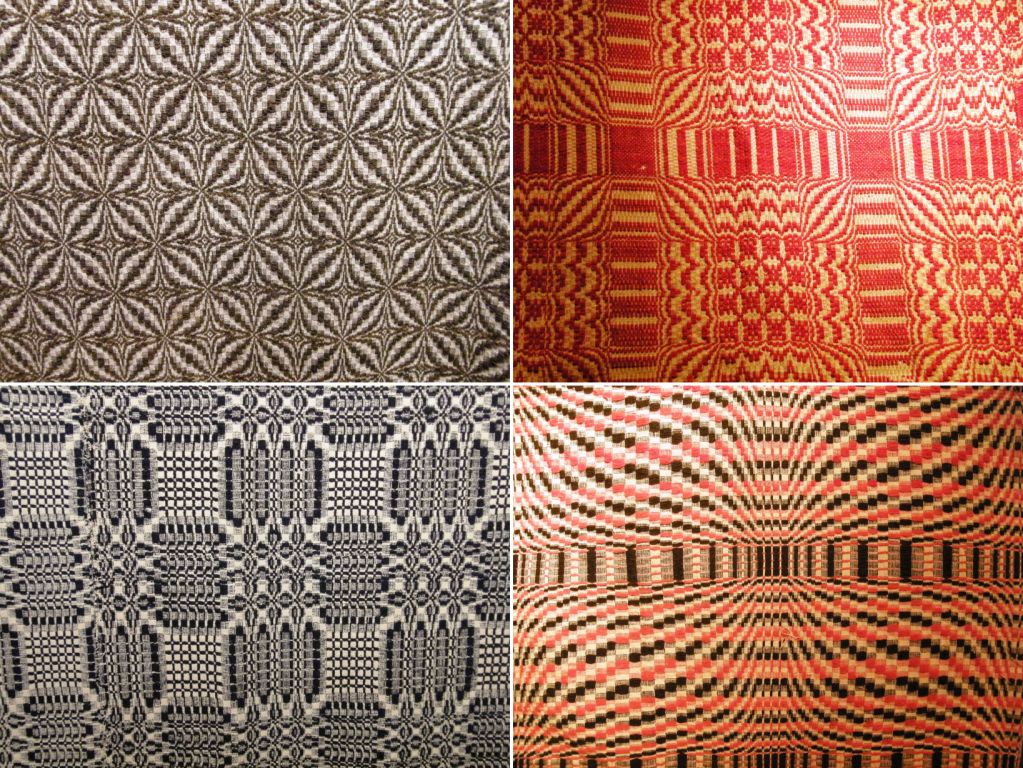
And here are some examples of what are categorized as “figured and fancy”:
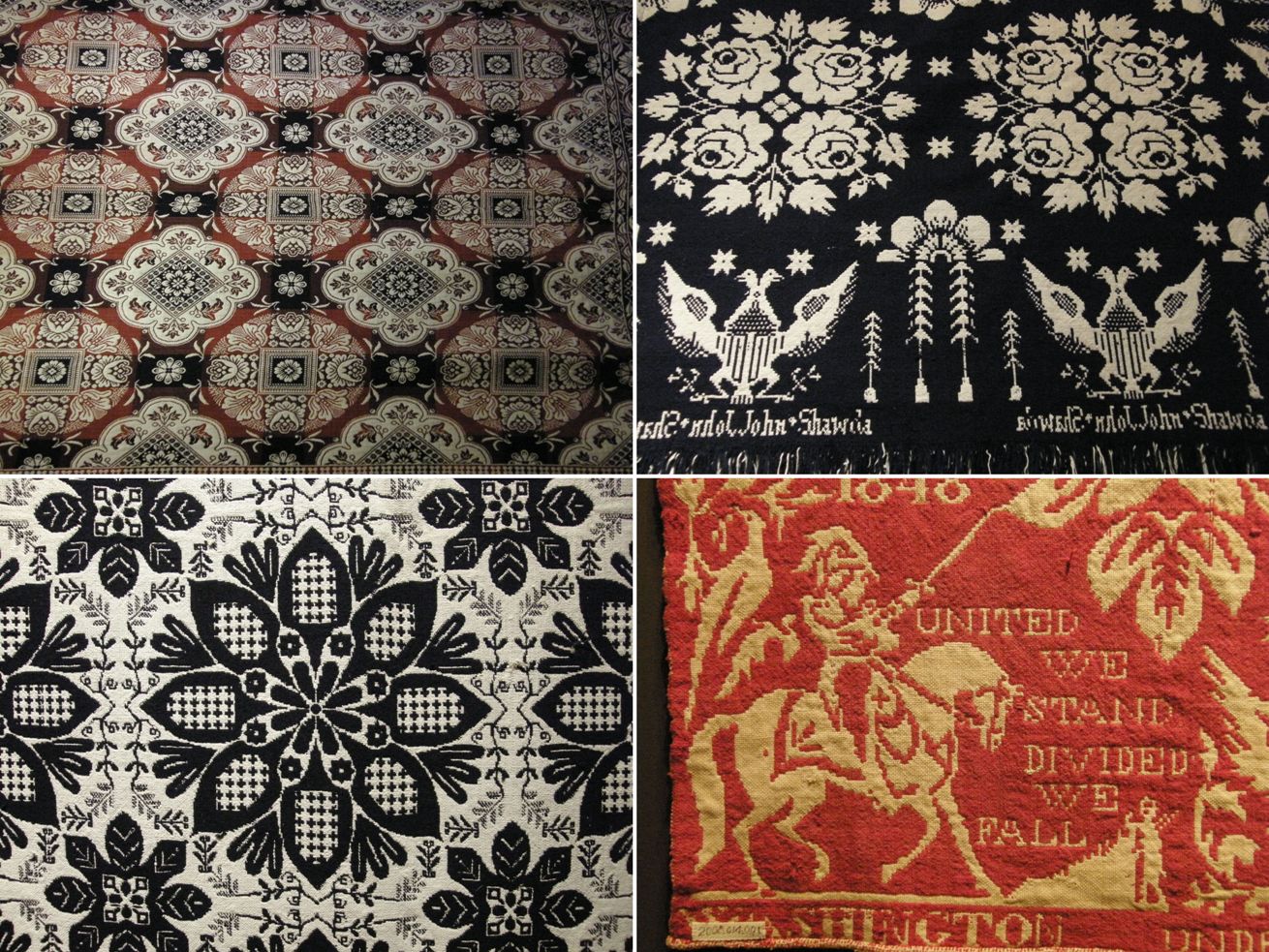
The oldest piece in the collection, pictured below, is dated 1771. The collection ranges from this year to 1889.
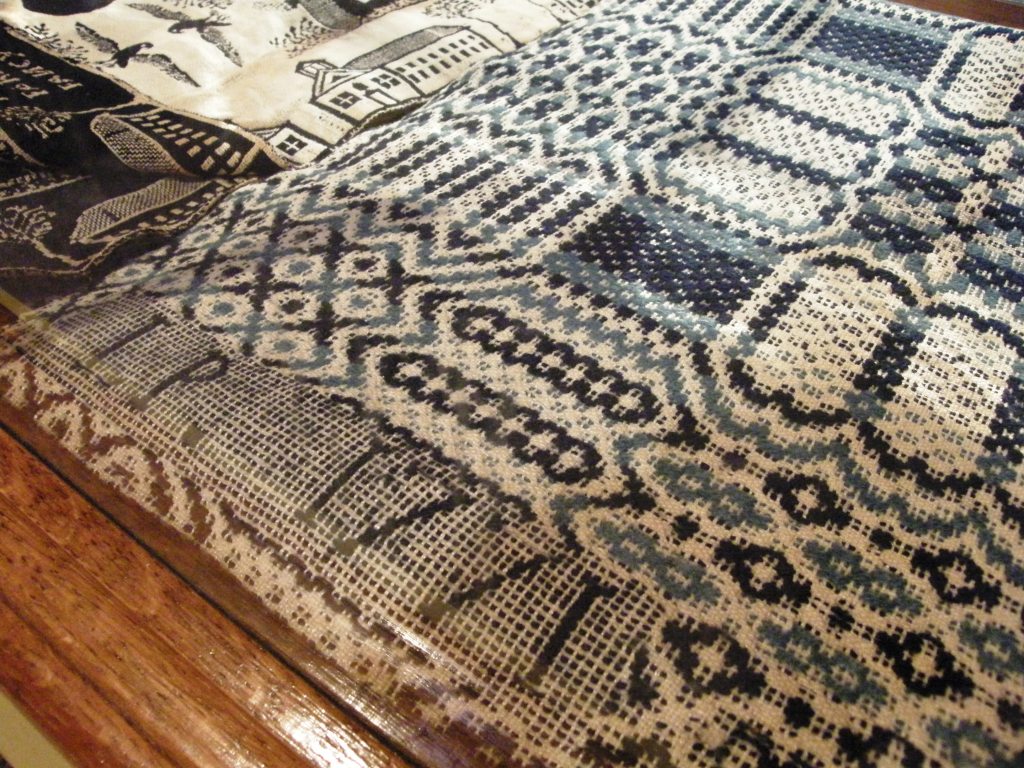

It was interesting to learn about the introduction of the Jacquard loom which made the “figured and fancy” designs possible. The designs are controlled by punched cards…

The pile of cards on the left in the picture above left, for example, was used by David Kline in 2010 to weave just the corner section of a coverlet with Melinda’s name. It is nice to see the names and inscriptions woven into the old coverlets which the Jacquard looms made possible and wonder about the weavers and the women for whom the pieces were made. As the coverlets were created by sewing two or three woven panels together, it was also interesting to see the extent of each weaver’s skill in aligning the designs on the pieces when they were joined.

Double weave coverlets have the names woven in such a way that when the coverlet is turned over to show its reverse face, the names can still be read on one of the panels.

Melinda with the Jaquard card attachment for a loom. The museum also has a collection of spinning wheels and looms.

One room has been devoted to the processing of flax into linen.
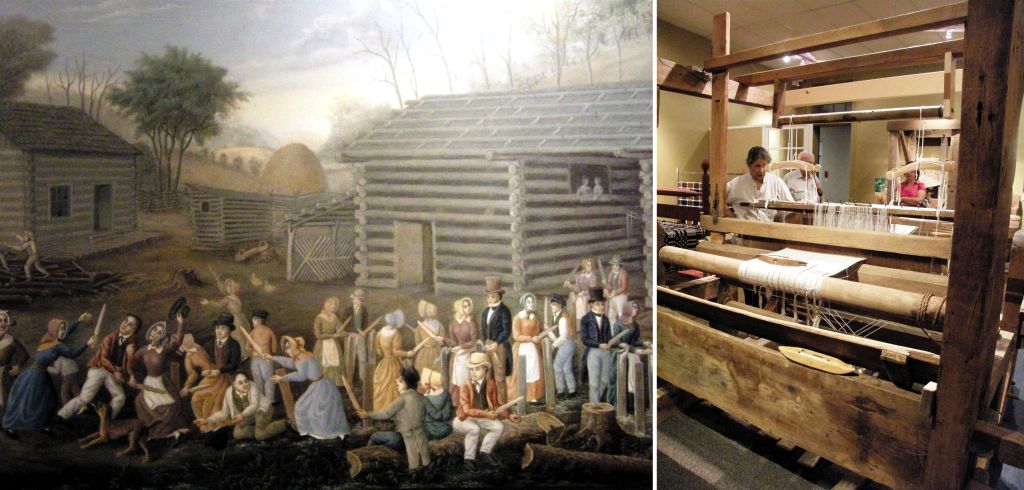
The flurry of activity depicted in the above painting is a “Flax Scutching Bee” and the cantilever loom on the right dates back to 1760.

And more of those beautiful coverlets…
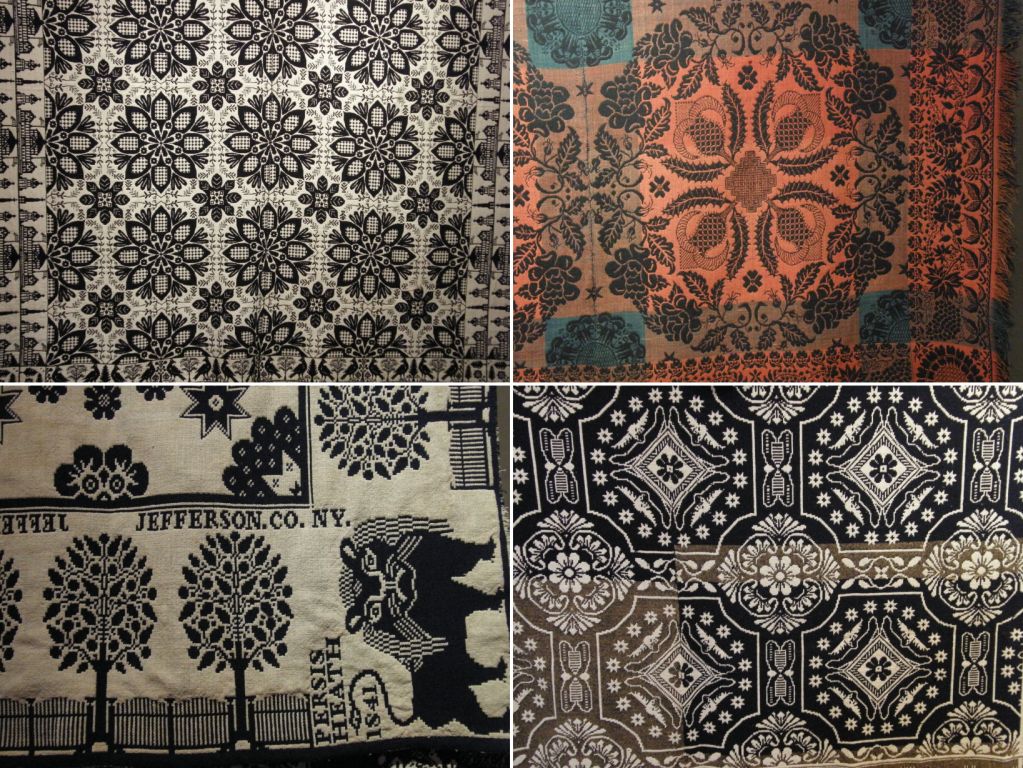
Melinda was a wonderful guide and her passion for the subject and this relatively new museum was apparent. Melinda would have stayed and talked with us there all afternoon if we had had the time, but many of us has long trip homes. Dave had traveled three hours to get there on what was his second visit. Lucky that Karen had shopped for a beautiful coverlet, pillow and throws before the tour. Claudia added to her book collection.
There was one more chance to enjoy the spring before heading back to “wintry” Santa Cruz. Of course I am kidding…there is no such thing as winter in Santa Cruz. The weather gets quite pleasant at this time of year…less hot and humid but never wintry.
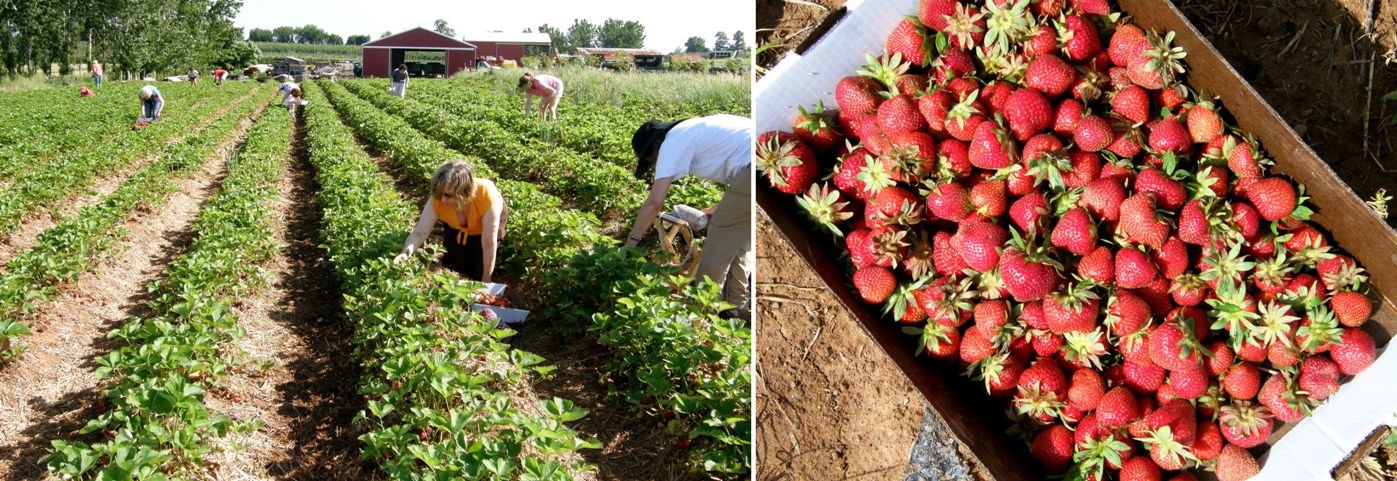
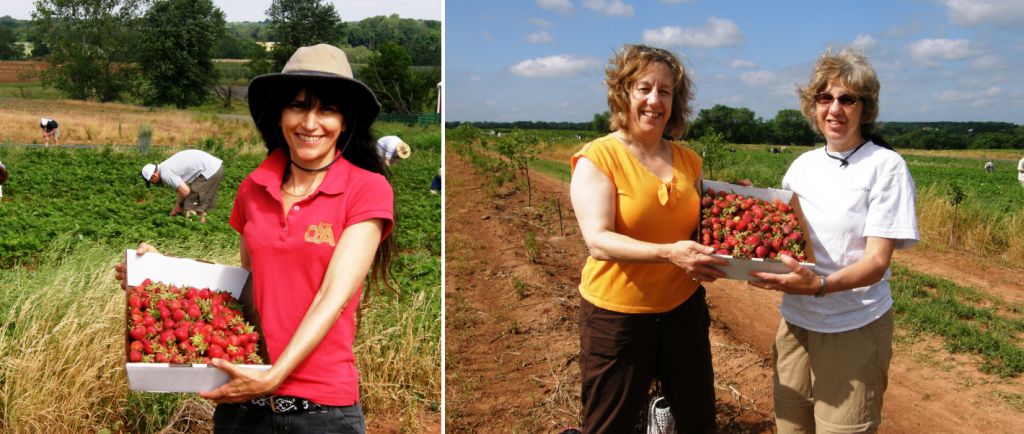
I had missed out on my friend Janet’s organically grown strawberries in Northern California as they were not yet ripe but there were ripe strawbs galore here. Claudia, Janet and I got up early on a perfect Saturday morning to pick with strawberry pie and muffins on the menu. Would you believe I had never picked strawberries before? We were done by the time the hoards started arriving and the sun started biting.
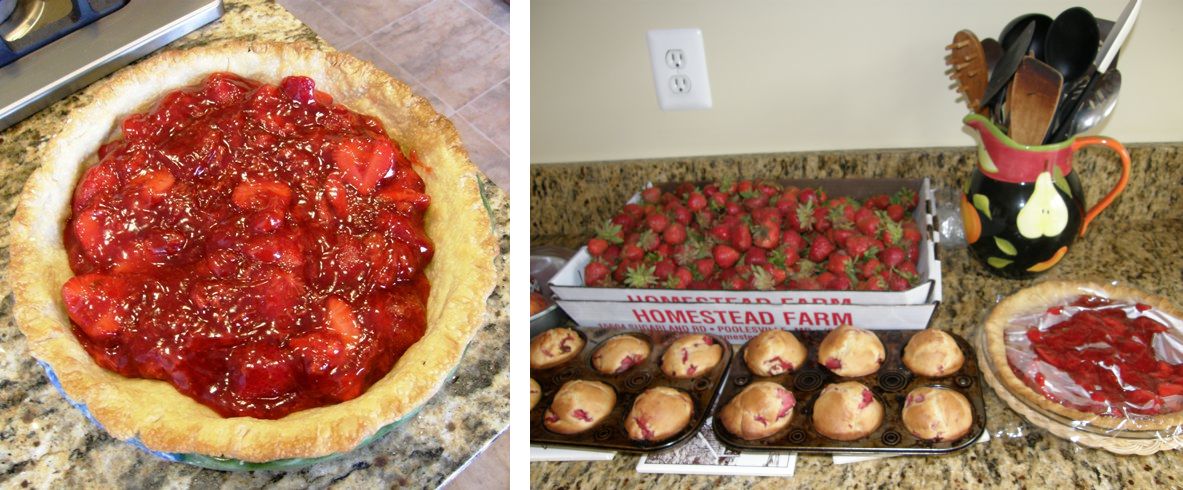
And the delicious results courtesy of Janet and Claudia…
So here I sit in Miami airport at the gate with two hours or so before my flight. Will I get on this time? My trip is done and I just want to get home to the loved ones and the loom! I haven’t woven for myself in about six weeks. Last night I made a list of all the things I want to get into and investigate as soon as the bags are unpacked. I got some wool from Knit Picks called Telemark that I want to play with too.
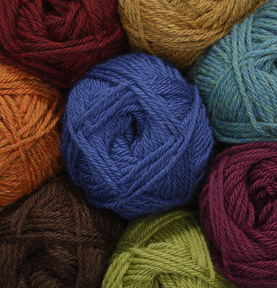
Thanks to Kim, whom I met through Claudia last year, I got to see a lot of different Knit Picks yarns and found that the Telemark variety which is a Peruvian Highland sport weight wool seemed to have a higher twist than the others.

I would like to see if I can weave with it on my backstrap loom without any re spinning at all but with the appropriate heddle management skills. It is described as having sturdy durability and sounds like it might do the trick.

I also have some really fine wool yarn that Ingrid from the Santa Cruz CA guild kindly sent me and I can’t wait to experiment with that too.

Note that I haven’t yet tried the Telemark yarn and I am not sure if this experiment will be successful. I will report on that soon.

In the meantime I can enjoy a couple of projects from online backstrap weaving friends….

Helena in Brazil made the pebble weave piece on the left using my book and patterns she has seen here on my blog while Sylvie in France is making the yurt band border using the simple warp float technique in alternating colors. The step-by-step instructions, which you can see she has printed, can be seen here on my blog.
Finally, I finished my time with my three dear Maryland friends with a lively Italian meal in Frederick followed by a stroll in the balmy evening, for that very last stretch of my trip, along the creek that runs right through the downtown area topped off by pistachio gelato…my favorite.

The creek is crossed in several places by bridges, some of which have been cleverly painted to resemble stone. Some are actually stone and we found ourselves walking up to touch them to see if the stone was real or a painting. It is quite likely that the difference is more obvious in broad daylight with heads not fuzzied by wine! I will leave you with this last image and you can decide…real stone or not?
Backstrap Weaving – Sleeping in Studios

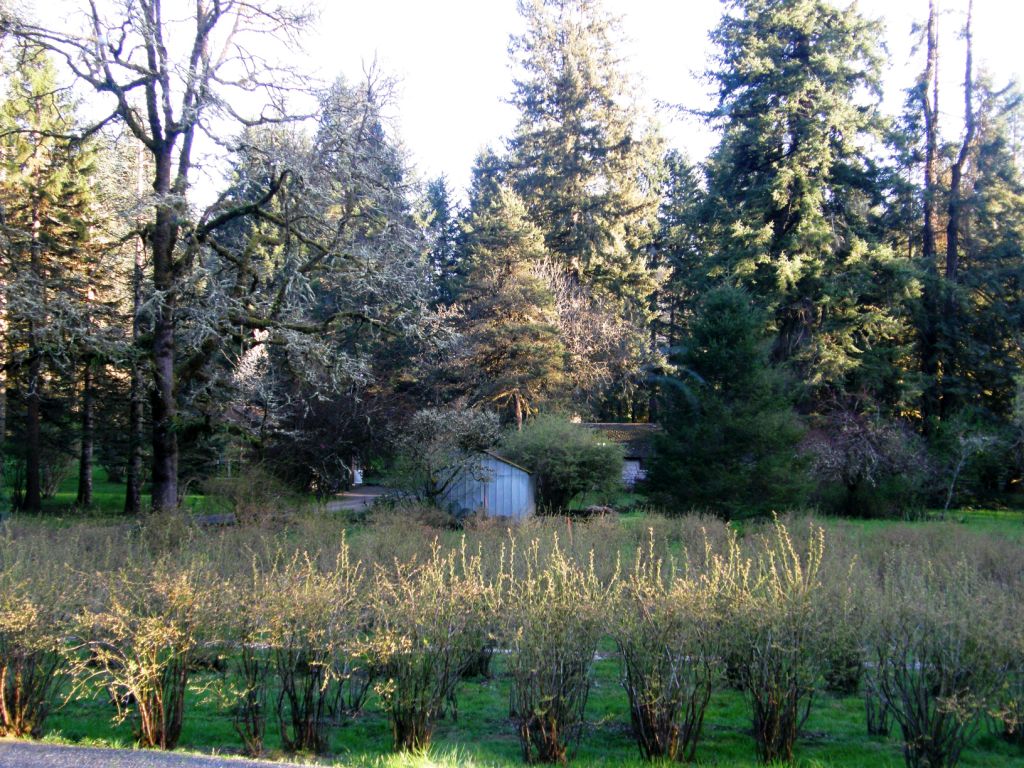
The view from Betty’s studio (my bedroom) over rows of blueberry bushes and the forest on her tree farm.

If you believe in that sort of thing, I should be simply bursting with creative energy after having spent the last week in the homes of weavers Betty Davenport and Linda Hendrickson sleeping and soaking up inspiration in their studios.

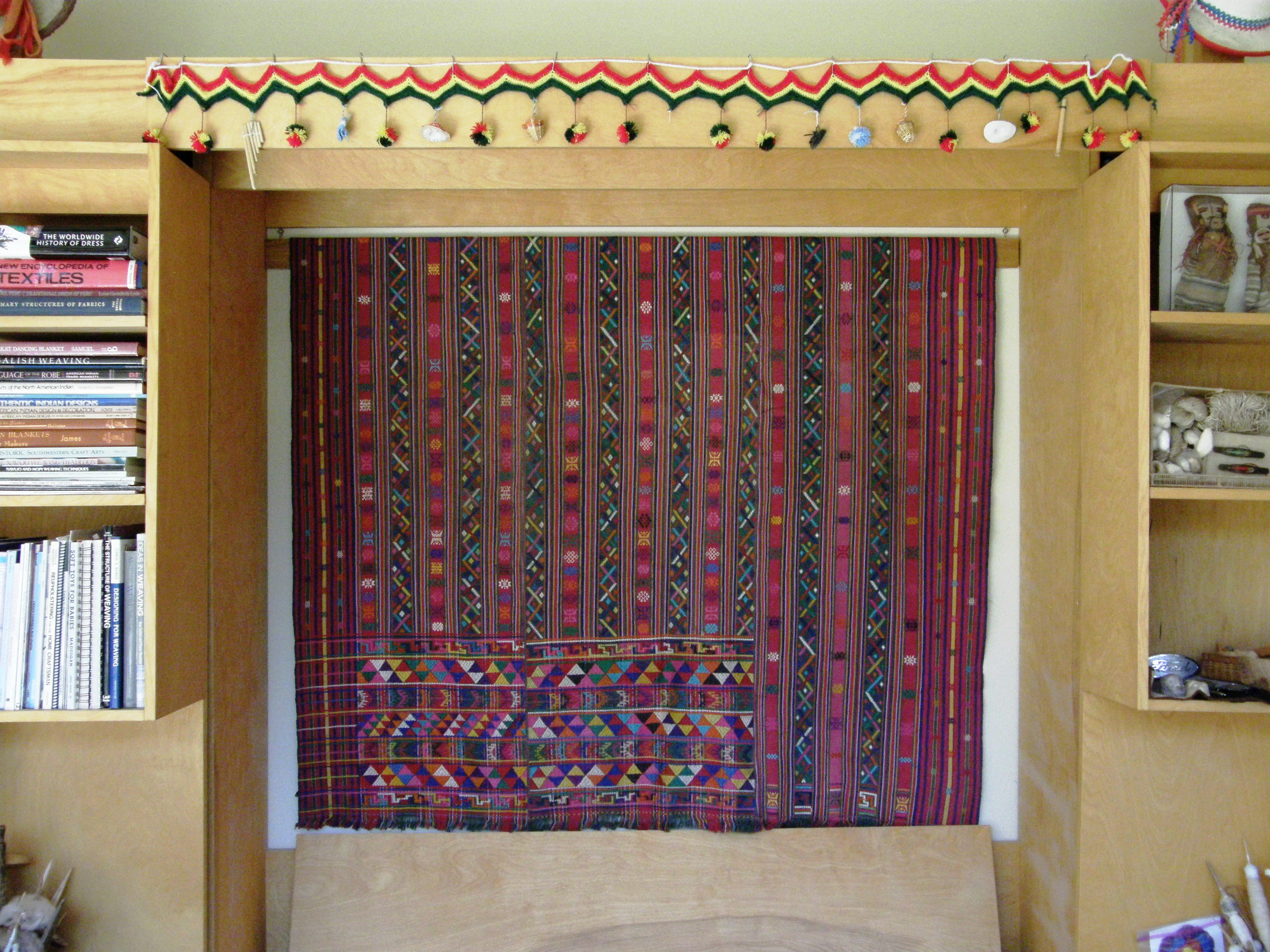
At Betty’s I slept under her very own handwoven blankets with a spectacular piece from Bhutan directly above my head.

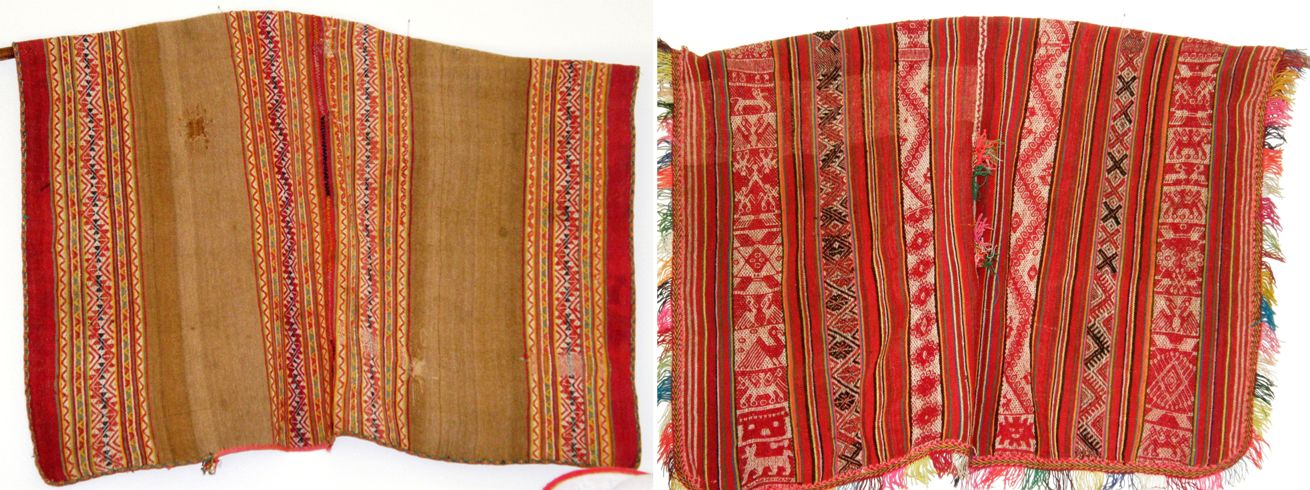
Above that, the wall extended to a very high ceiling and was adorned with two gorgeous ponchos from Peru.

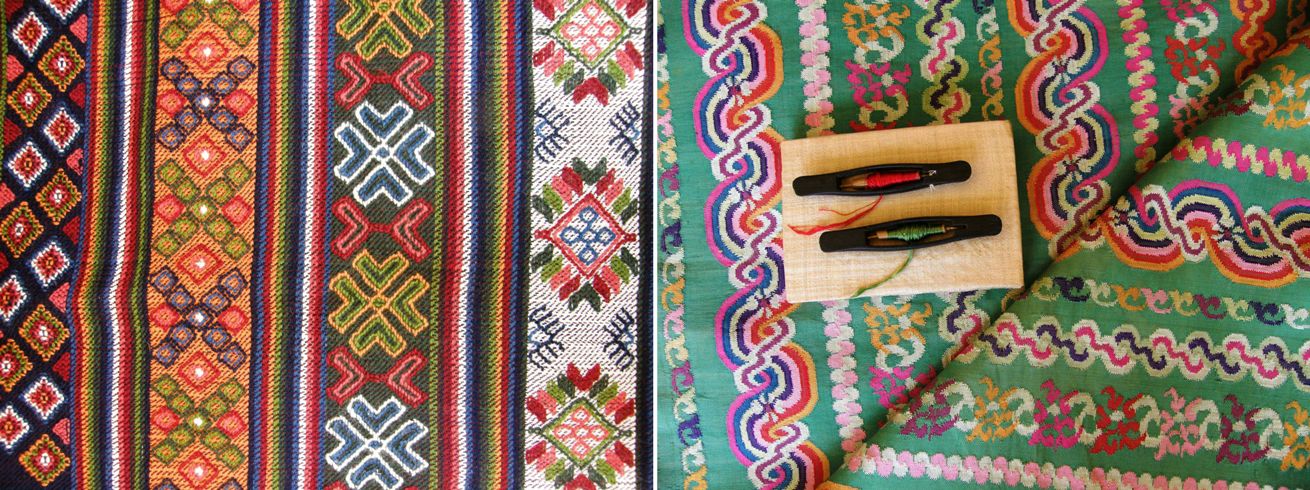
I slept with supplementary weft figures from Bhutan dancing in my head.

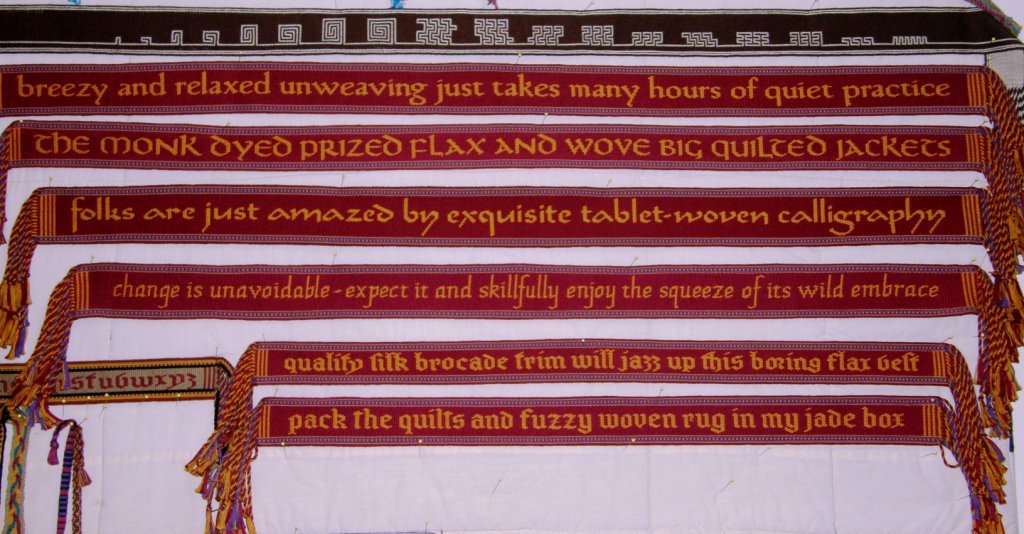
At Linda’s I was surprised I could even sleep at all with her life’s work of tablet woven and ply-split creations filling every single wall space around my bed not to mention pieces she has acquired from such artists as Bhakti Ziek, Peter Collingwood and a master camel girth braider from India.

But then there were those soothing bands of woven words…

Anyone who has been following my blog will know that I am a big fan of Linda’s tablet woven letters and that I used her book Please Weave Me a Message recently as inspiration to twine weft into words on the strap for my loom bag.

Yes, it was something else being able to spend time with these two rock stars of weaving and I mean “rock star” in more than one sense of the words when I refer to my friend Betty Davenport.

I am guessing that few people know about some of Betty’s other pursuits and talents away from the weaving loom. I will tell you just one of them for now: Betty is a climber…a serious hard-core mountain climber. Well, she will tell you that she doesn’t climb anymore but there she has her award for having climbed the sixteen major peaks of the Cascades. As a member of Washington and Oregon climbing clubs she has traveled to many countries to hike and climb and the part that most impresses me is that she managed to combine this with weaving!

A tiny tatste of some of the dozens of meticulously labeled and catalogued fabrics and tools that Betty has collected on her trips.

You have no idea how much I wish I had had my love for backstrap weaving back in the days when all I could care about was racing up mountains and roping into canyons. Betty has so many great tales to tell of her travels in the mountainous regions of the world not only bagging peaks and hiking high trails but also meeting weavers and collecting textiles….the perfect combination of activities!

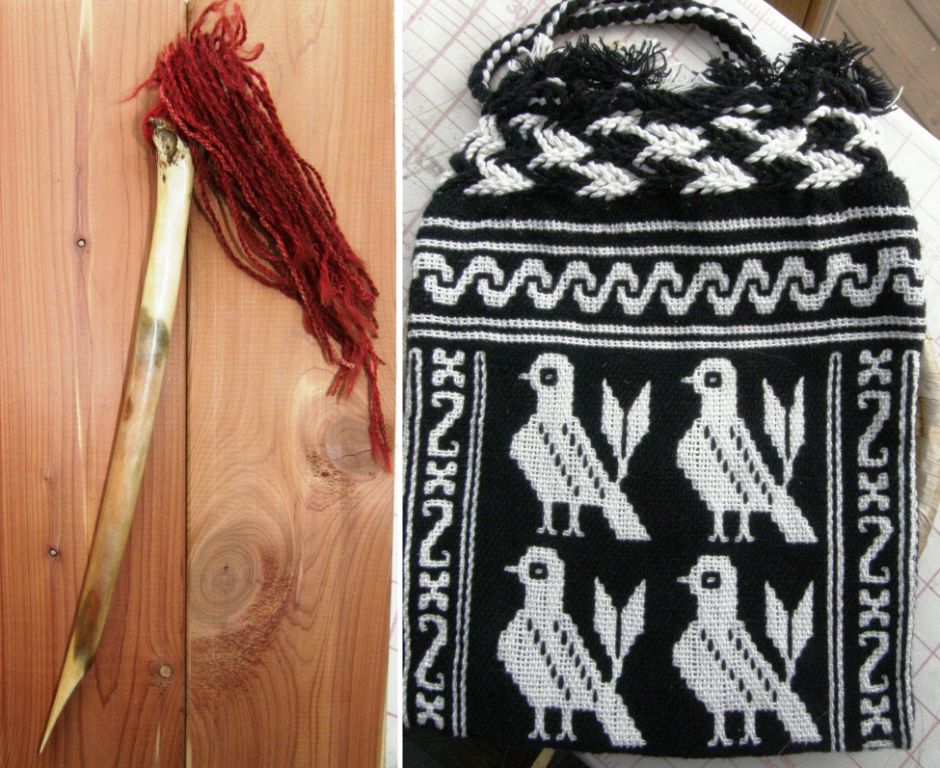
Anyone who has followed my blog will also understand how excited I was to be able to handle my first Huichol piece in balanced double weave and that bone tool on the left is a pick that Betty collected in Peru made from the bone of a condor.

Well, you can be sure that I photographed pretty much everything and still need to do some serious fact checking before I dare to put the pictures here but you will get to see all these treasures as time goes by. When I get home from this trip I will go through everything including Martha Stanley’s wonderful collection and make sure that everything is properly labeled.

A couple more pieces from Betty’s extensive collection.
At the Tinkuy de Tejedores in Peru learning to make tubular woven bands.

And here’s a fun thing…I wrote to Betty back in December 1995 as my Navajo weaving teacher in Colorado had sent me a copy of classified ads in a Handwoven issue. There was an ad for a weavers’ trek in Peru led by someone called Betty Davenport. I had no idea who she was.

At that time I was dying to go to Peru from my home in southern Chile to learn to weave but was quite terrified as the Shining Path had been very active and independent travel in Peru was not considered safe.

However, I was on a tight backpacker budget and, as wonderful as Betty’s itinerary sounded, I could not afford her trip at that time. So off I went on my own.

Would you believe that Betty still had my letter after all these years? She found it amongst old files and gave it to me at Convergence! We met again at the Tinkuy in Peru and now have had some quality time to spend together.

Here’s one more piece of the past to share and this is such a gem! This picture was taken at the Beka Rigid Heddle Conference in 1980. There’s Betty with Adele Cahlander looking at Betty’s then recently published book Textures and Patterns for the Rigid Heddle Loom. Again, if you have been following this blog you will know my high regard for the work of Adele Cahlander and understand why I so love this picture. Look at Adele Cahlander’s woven neck piece. Betty has recently republished a revised edition of her Textures and Patterns…. book.

Betty was with us at the backstrap weaving gathering we had in Linda Hendrickson’s studio in Portland. Linda generously offered her lovely space to the participants and gave me a place to stay.

Time just flew…it was “a whirlwind” as Linda put it and I so wish we could have spent more time to chat about Linda’s two passions…tablet weaving and ply-splitting. I was taken on a tour of her studio when all the weavers had gone home and we just scratched the surface. Years of work are on display there with each piece created by Linda or given to her having its own intriguing story. I heard about other teachers who had given workshops in that very same space… among them Ed Franquemont and Peter Collingwood…phew!

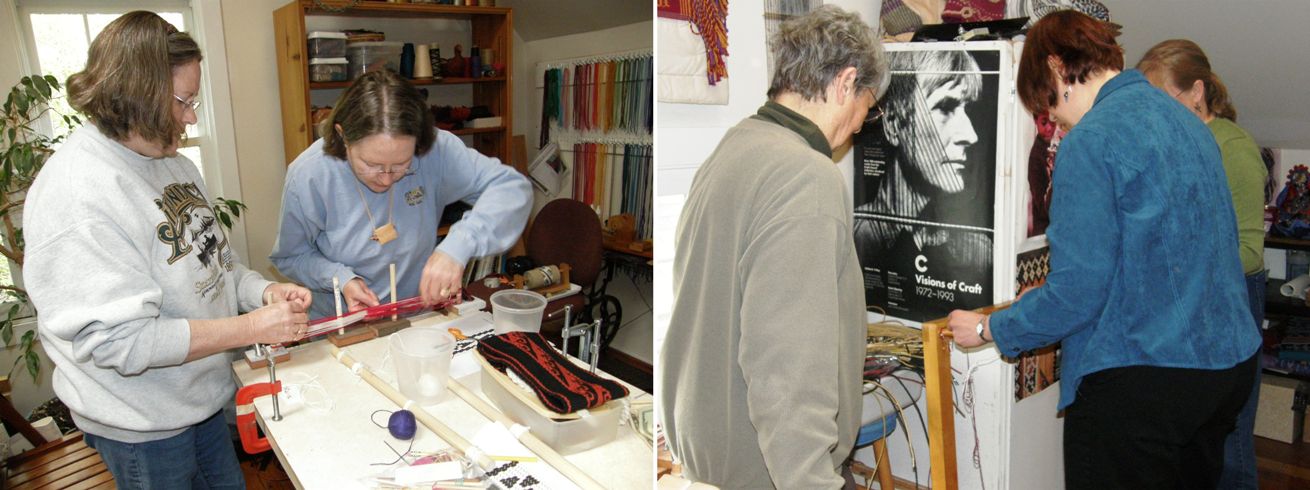
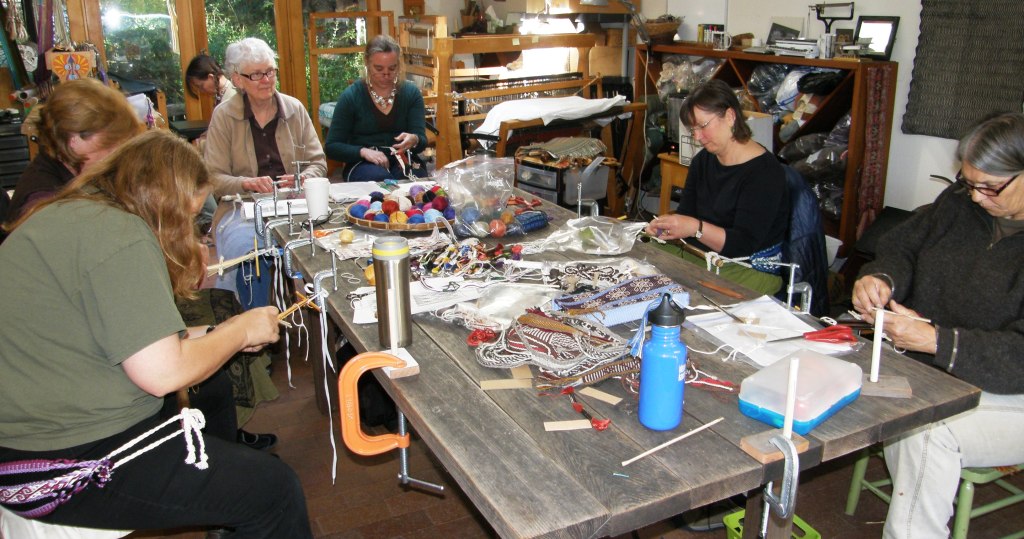
Here’s the workshop group after two days of backstrap weaving…

You can see Linda on the far right. Betty is behind me to the right. You might recognize Anita from Interweave and the rest of (hopefully) the new backstrap loom fans.

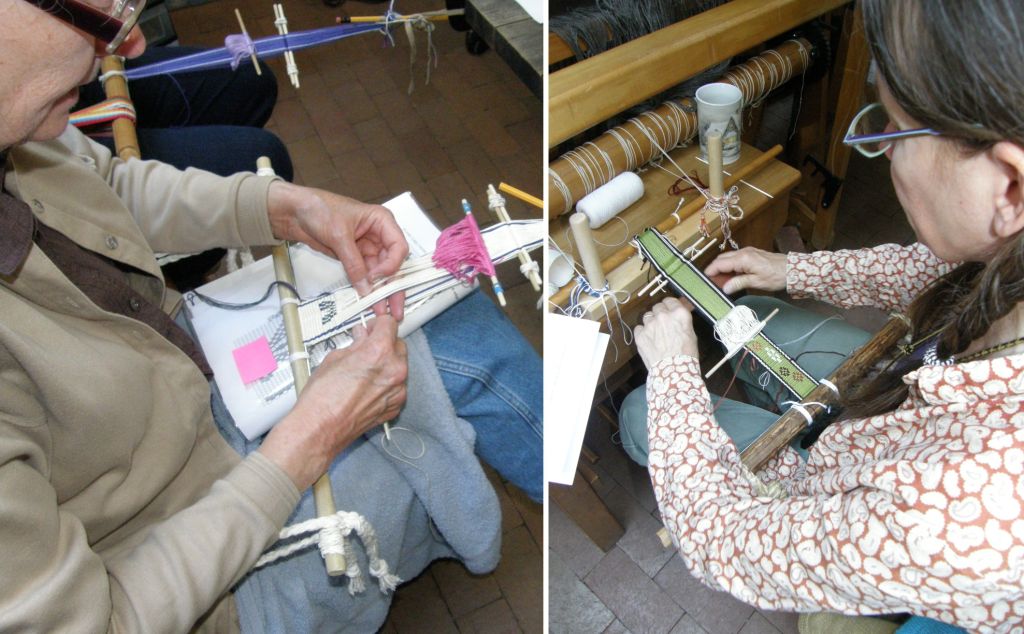
It was a fun and intense time together. I think everyone was pretty tired after day one. At least I didn’t have to travel and got to sleep in our very weaving space. I know of one participant who went on her way after the gathering with her backstrap string still attached to her waist, a couple of others went to dinner with name tags still in place and another went home with one of her weaving tools still “parked” in her hair just like some of the Guatemalan weavers do.

Weaving on day one.

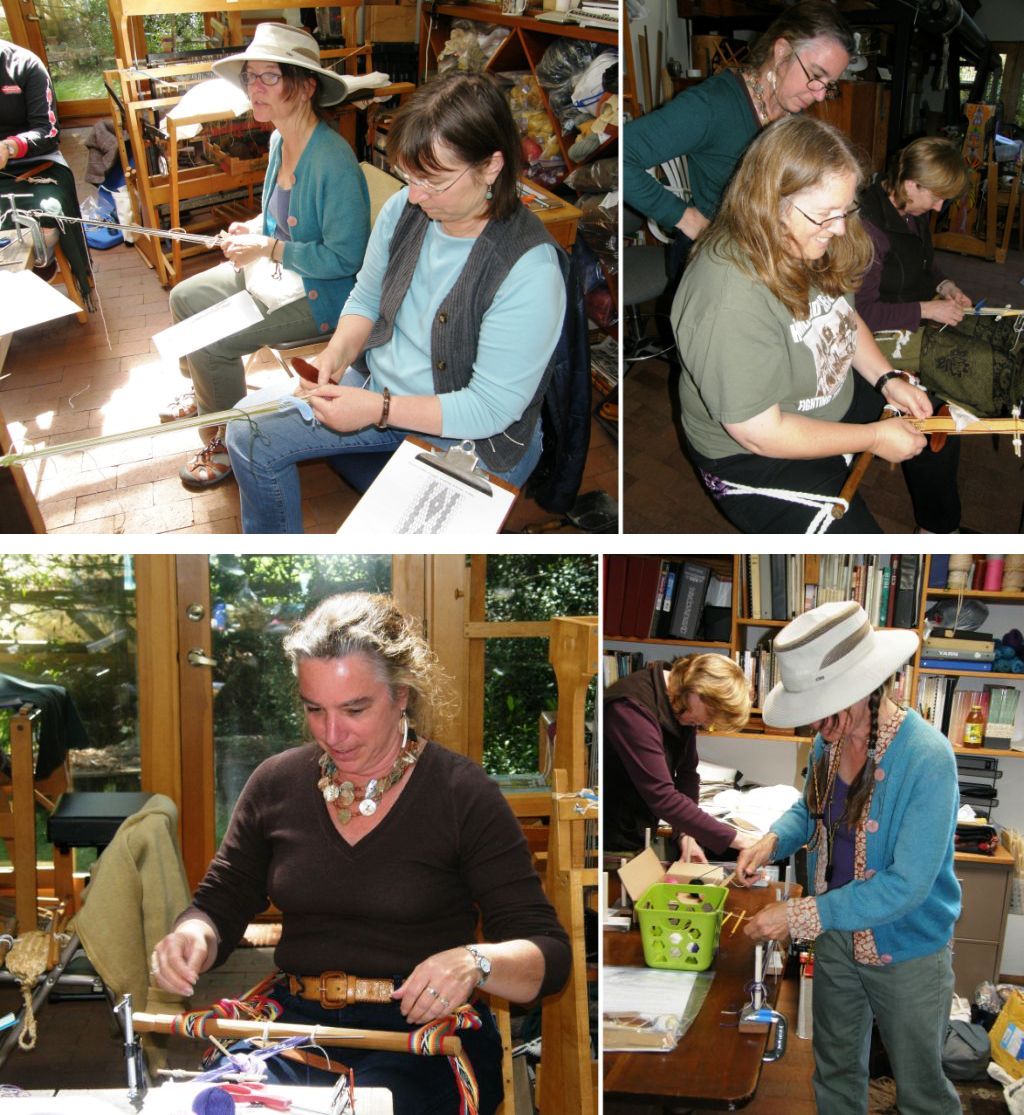
Here are a few  more shots taken during the two days…

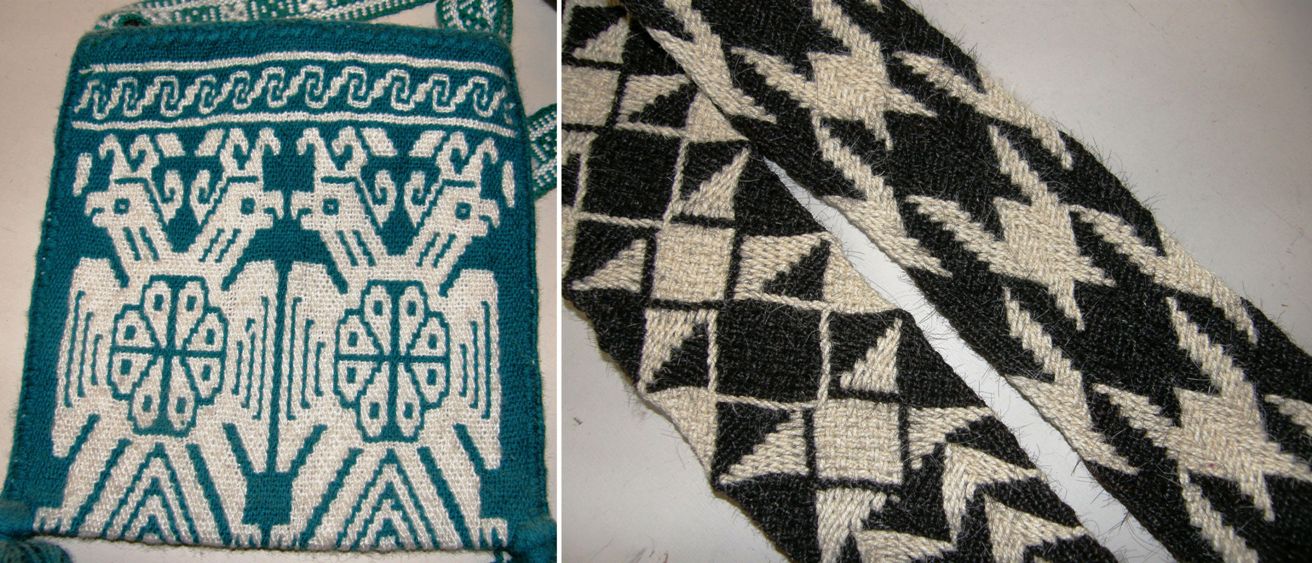
Banding together in Linda’s colorful space. Interesting warp color combinations and use of contrasting and matching wefts to create a simple design with warp floats, a technique used by the cotton saddlebag weavers with whom I studied in coastal Ecuador.
The twins, Marie and Jeanie practice four-stake warping while Anita and Diane do the same under the watchful eyes of Betty. Peter Collingwood looks on from behind a piece of his macrogauze on a poster on the wall.
Amongst the treasure trove of collected and gifted items in Linda’s studio….a Huichol double weave bag from Mexico, different to Betty’s example for the finish around the upper edge….a ply-split camel girth from India.
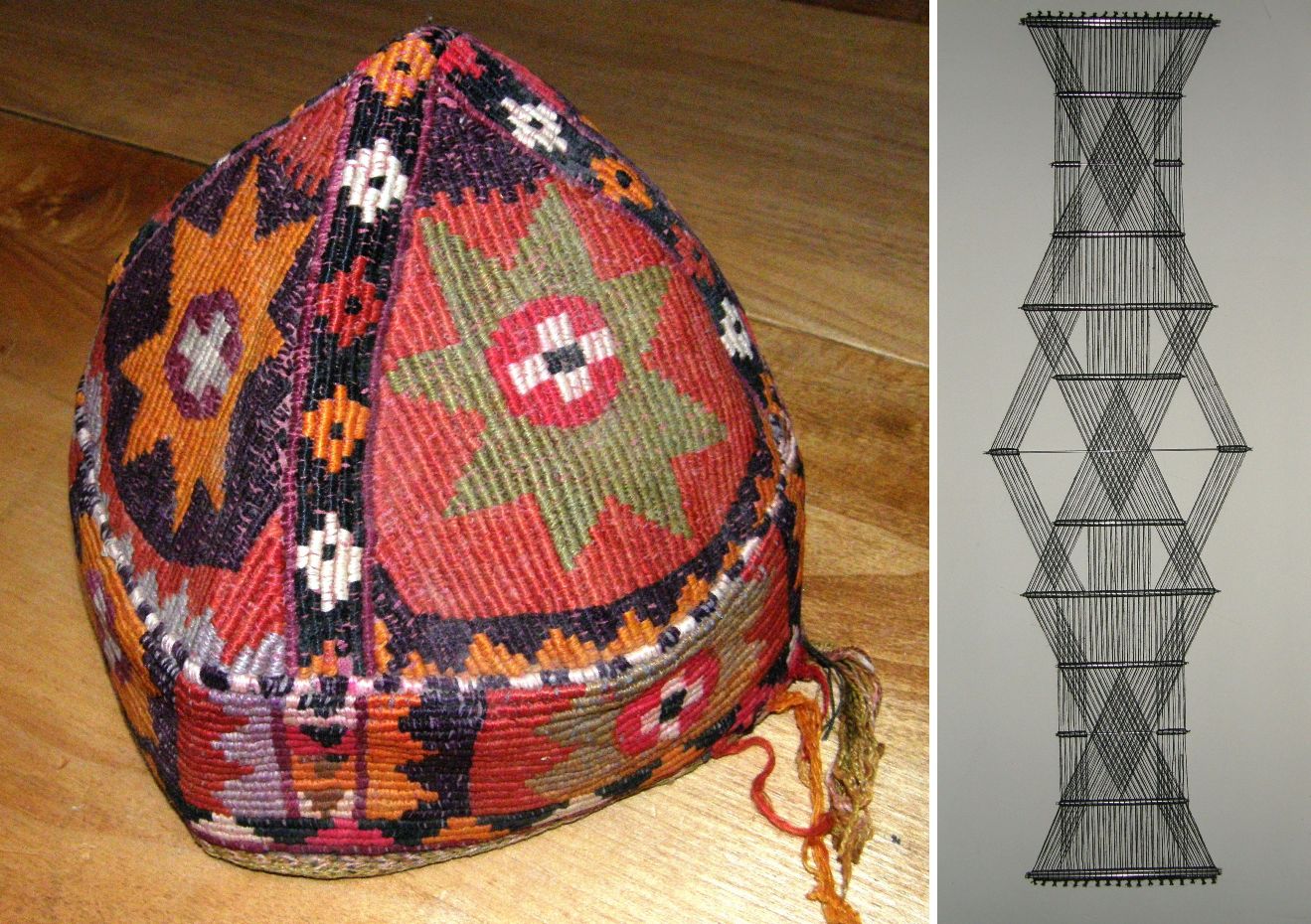
A hat from Uzbekistan. My online friend Caroline in Australia bought a similar hat and puzzled over the band on its edge and how it had been created. Linda told me that these bands are loop manipulated and that people often mistakenly assume that anything that has twined warps has been card woven. The other piece is a macro gauze by Peter Collingwood.

And then, what about this tablet woven stuff? I dabbled in it a little when I lived in southern Chile shortly before getting into backstrap weaving.

I really enjoyed it but then Andean pick-up took over even though one can easily weave with cards on a backstrap loom too.

I do enjoy picking up those warps and moving them around but I would like to get back into some card weaving if only to be able to better understand some of the woven pieces that I have been running into lately.

Weft twining became such an obsession…why not delve into warp twining?

I am guessing that most people will have seen tablet woven bands with designs similar to that pictured at left.

Just wait until you see how far Linda has pushed this weaving technique!

I do hope my photo does these pieces justice. Volia! Tablet woven scarves. You have to feel how luscious these are!

And then these…

Can you believe these were done with cards? So, I am into analyzing structures and all that but look what fun stuff you can do with card weaving! Too bad I don’t live in a scarf-friendly climate…same goes for socks.

And then there’s the ply-splitting. I was first attracted by the Indian camel girths made in ply-splitting but Linda has taken this technique and run with it. Here is one of her creations:

Her latest book teaches with step-by-step photos and instructions how to make the following ply-split baskets…

Photo by Linda’s husband, John.

You can see each of these baskets on Linda’s website and click to see a larger view with detail of the structure as well as order her book.

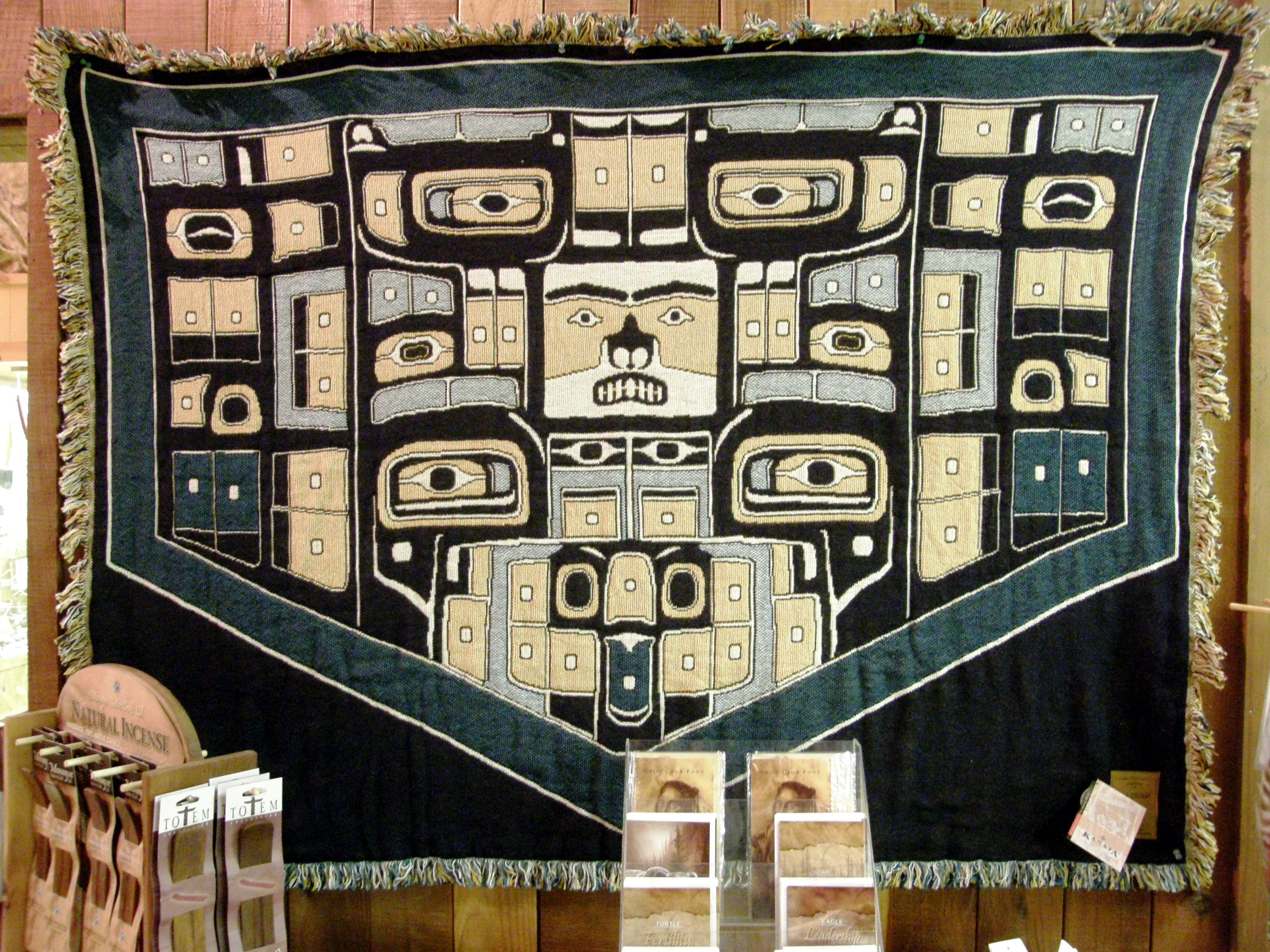
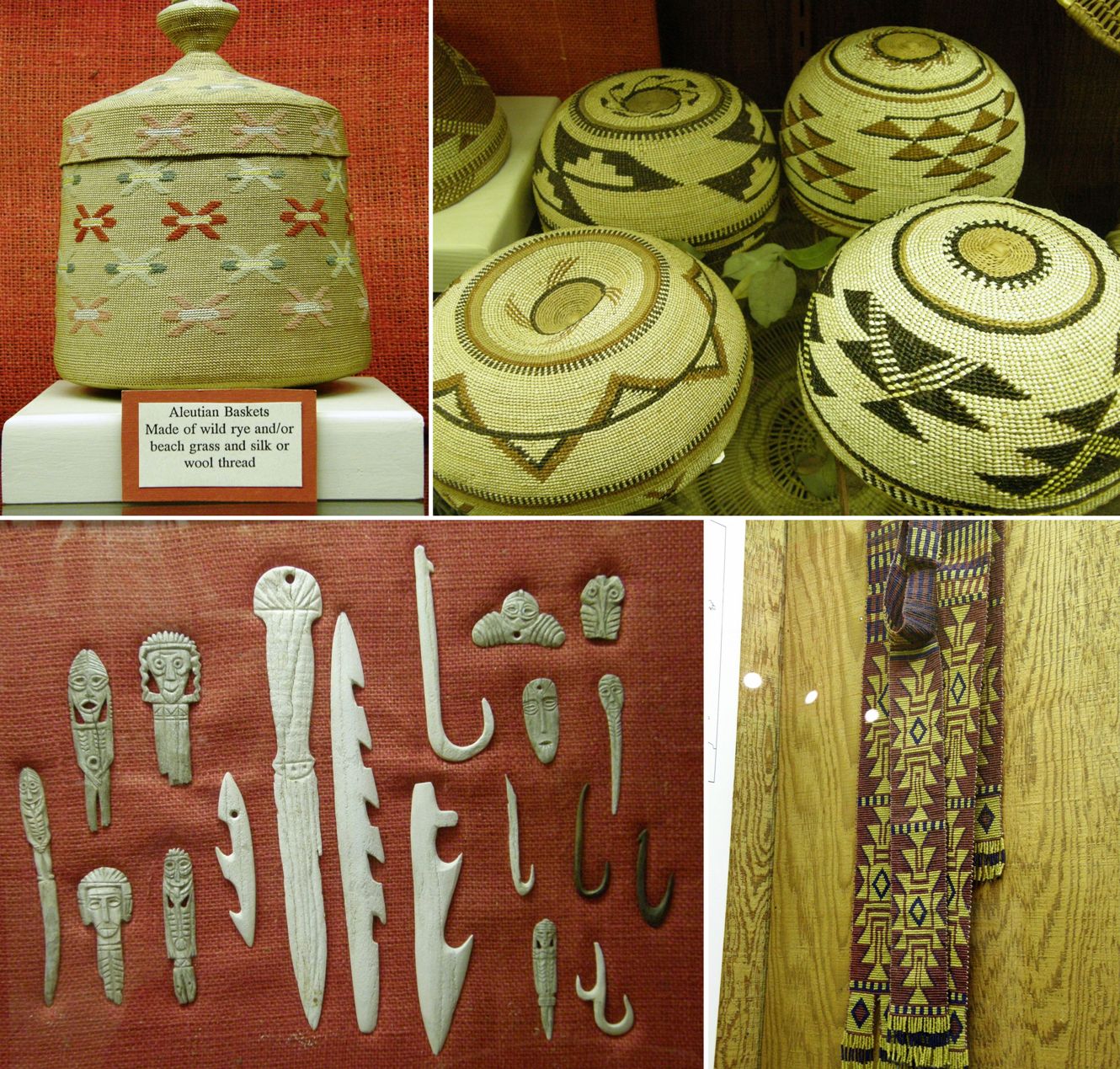
So, I have been hanging out in the Pacific North West so it is quite natural that Chilkat and Raven’s Tail weaving has been falling into my lap. First, on the trip up from northern California, my friend Janet and husband Larry took me to a museum called “End of the Trail’ which houses several private collections of Native American crafts, clothing and tools.

Weee! My first Chilkat blanket. No doubt there was one in the museum in DC…somehow I missed it! I had a bus to catch and so we had to limit our visit and just quickly take in as much as possible. It is worth several short visits I would imagine. Janet has been there many times and never tires of it or fails to see something interesting or notice something new from baskets made from rushes, nettles, porcupine quills, beargrass, maidenhair fern, willow, horse hair and wild rye amongst other materials, hats, beadwork and tools made from wood, bone, horn and tooth.

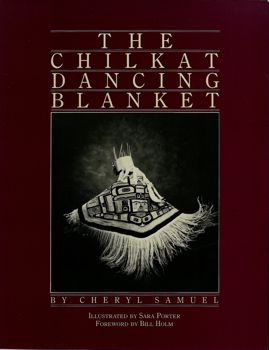
Everything I know about Chilkat blankets comes from Cheryl Samuel’s wonderful book The Chilkat Dancing Blanket which I bought back in the 90s and have never used.

However, this is just a beautiful book to look at, stunningly illustrated and just fun to leaf through. The technique is weft twining with certain special manouvers which allow the twiner to form rounded shapes.

From what I gather, the twining which I studied used by the Montagnard weavers would be referred to in this area as Raven’s Tail.

And that is all I dare tell you lest I get it wrong.

Fortunately Sally Ishikawa came to stay at Betty’s and take my backstrap weaving class and brought with her….

a loom on which she was doing a Raven’s Tail piece plus two completed pieces of beaded and twined work to show. I asked Sally if she would be willing to write something about the techniques and her experience with them and she kindly obliged and so I will leave all further explanation to her….

Raven’s Tail and Chilkat

Three hundred years ago the people of the Western Alaskan Coast wove dramatic, twined robes that were worn around the shoulders during traditional dances.  As the robes were danced the bold black and white geometric patterns were reminiscent of the feathers of the Raven as it flew in the sky.   Today, these robes are called Raven’s Tail Robes.  However, after the 1850s the Raven’s Tail weaving knowledge was nearly forgotten, and only eight complete Raven’s Tail Robes now exist.   A weaver named Cheryl Samuel became so interested in this type of weaving that she traveled the world to examine the existing robes, and wrote a book documenting her findings called “The Raven’s Tail”.    Today, there are new weavers that are carrying on the Raven’s Tail tradition.

A purse backed with Chilkat weaving purchased by Betty Davenport in Alaska.

The Ravenstail designs are very linear and geometric, but by 1850 most of the designs being woven were rounded.  Perfect circles were possible because of some new developments to the twining technique.  More color was also introduced…..especially yellow and blue.  Whales, bear, salmon and eagles were a few of the animals that were woven into the Form Line DesignsThe robes twined with these designs are called Chilkat Robes.  Cheryl  also wrote a book called “The Chilkat Dancing Blanket” that describes the history and techniques to weaving this type of robe.

I took a class from Cheryl in both Ravenstail and Chilkat weaving several years ago and have been weaving off and on for several years.  Mostly off, I’m sorry to say, but recently I’ve been driving to Portland once a month to weave with John Beard (google him) and several others under his wing. 

 There is a robe in Portland, Oregon called the Transition Robe.  

Sally’s beaded piece photographed under glass in which you can her reflection.

The upper half of this robe is woven in Ravenstail and the lower part is Chilkat.  Since I live close, I’ve been lucky enough to see this robe a couple of times.  A few years ago I thought it would be fun to do a little bead weaving and came up with my rendition of the Transition Robe for that. 

Now I am trying to recreate that little beaded piece by twining with wool in the Ravenstail/Chilkat tradition.  I am using traditional thigh spun warp and 2/12 merino wool for the weft.  The loom is a vertical loom with warps that hang freely.  The weaving starts at the top and the twining is pushed up to compact.  

Sally at work on her Raven’s Tail piece piece based on the Transition Robe.

There are many good books on the designs of North West Coast artists and many good weavers with webs that show really, really beautiful new weavings. Enjoy the search.

I will leave you this week by showing you what my friend Anna has been up to. Remember Anna bicycling her way from Alaska to Ushuaia? Well, she is back in the Netherlands now and is not idle! She is refining her spinning skills on the drop spindle and is taking lessons on a wheel. I think I have started something here.(yay) 🙂

This pebble weave band that she was weaving on the road using my book to reinforce the lessons she had in Peru and at my place in Bolivia is now done. She just tied up to her bicycle, a convenient picnic table or chair and wove every chance she could….all the way from my home in Santa Cruz to Ushuaia!

This is what she did with the band…

Beautiful!!

Her spindle collection is going and she told me that her wheel teacher is eyeing her Bolivian spindle but she is not letting go. I will send her another if the pressure becomes too much!

She has one more warp left from those we made at my place to take on the road…a two weft double weave….I recognize those colors!

Bye bye west coast…I am now in Massachusetts. I set off to fly to Boston via Dallas. I got on the plane in Portland and got off….but not in Dallas as expected. I was seated and buckled up ready to go and then a last minute passenger came and I was removed! So back to square one in Portland. Well that’s how it goes on standby!

I spent the night in Dallas airport outside the secured area and so bedded down in the chapel and then finally made it to Boston the next morning where Pam Engberg has invited friends to come and backstrap weave in her studio. Another gorgeous rural setting!! More about that with lovely spring pictures next week. See you then.


Backstrap Weaving – From Santa Cruz to Santa Cruz

Guess where…

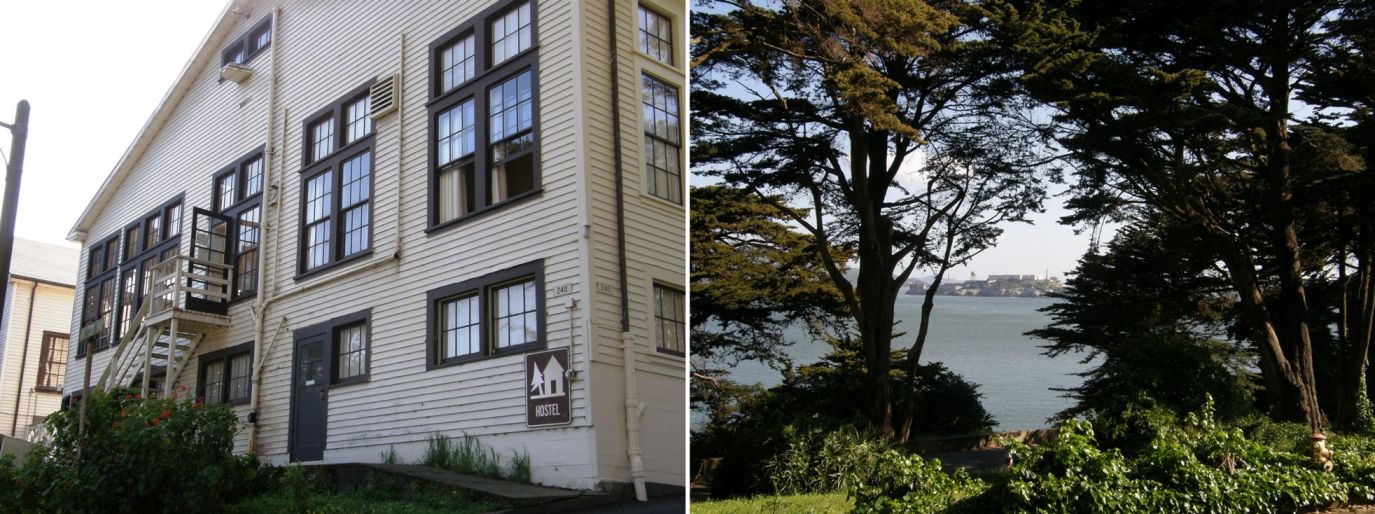
I seem to be really lucky when I go to San Francisco and get mist-free morning views of the bridge.

 I spent a night here at the Fort Mason Youth Hostel…what a great place, quite a change from the downtown hostel where I have stayed before. Actually, I stayed at this same hostel way back in 1992 on the first day of a 7-month backpacking and hiking tour of the US. Phew! That takes me back!

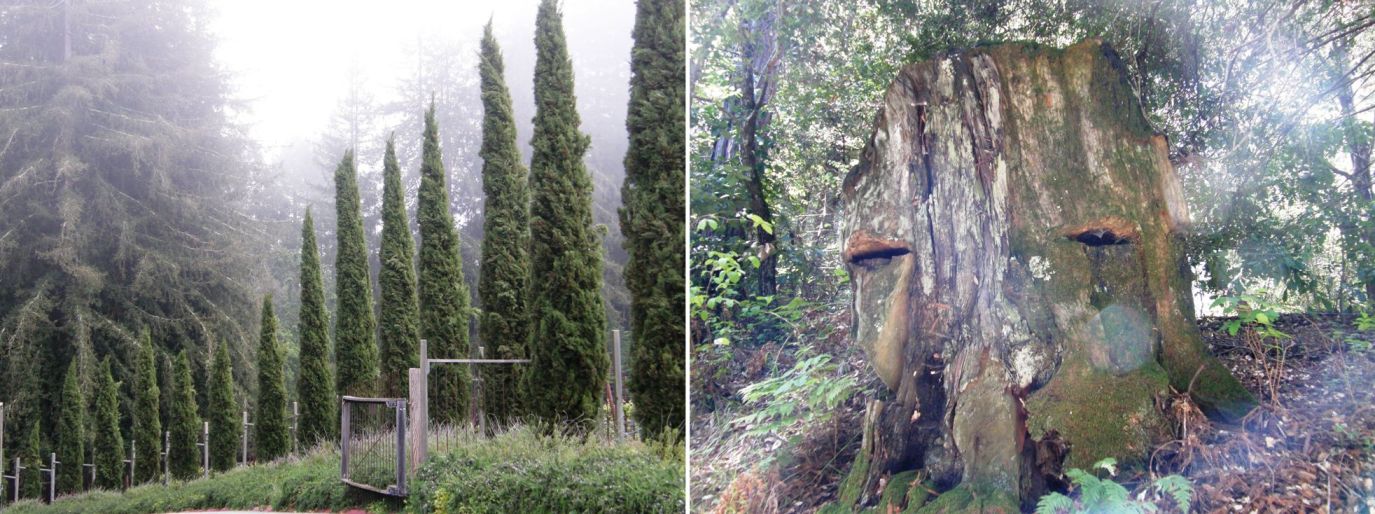
My friend Janet picked me up and we headed down south to Santa Cruz (yep, from Santa Cruz Bolivia to Santa Cruz CA) to stay with Janet’s cousin on the winery that she and her husband own. Lucky us, except that neither Janet nor I are wine drinkers! But we got to enjoy the beautiful landscape.The winery is perched on a hill surrounded by Redwood forest and has sweeping views down to the ocean and across the bay to Monterey which are especially nice when viewed from the hot tub 🙂

Eerie morning mists with weird faces emerging from the Redwoods.

The mists would rise to reveal Suzie’s pretty flower-laden patio which had a lovely Mediterranean feel. (or at least what I would imagine it to be. It is one of my dreams to be on the Mediterranean, perhaps Malta or some place like that).

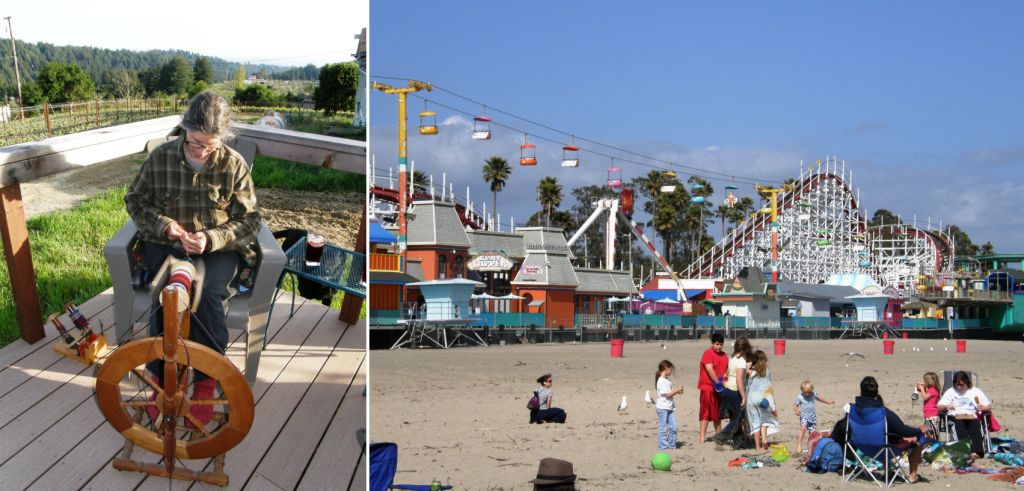
Sunny afternoons were spent spinning and lazing on the porch or hanging out  at the beach and Santa Cruz Boardwalk. The Boardwalk has a fantastic old carousel.

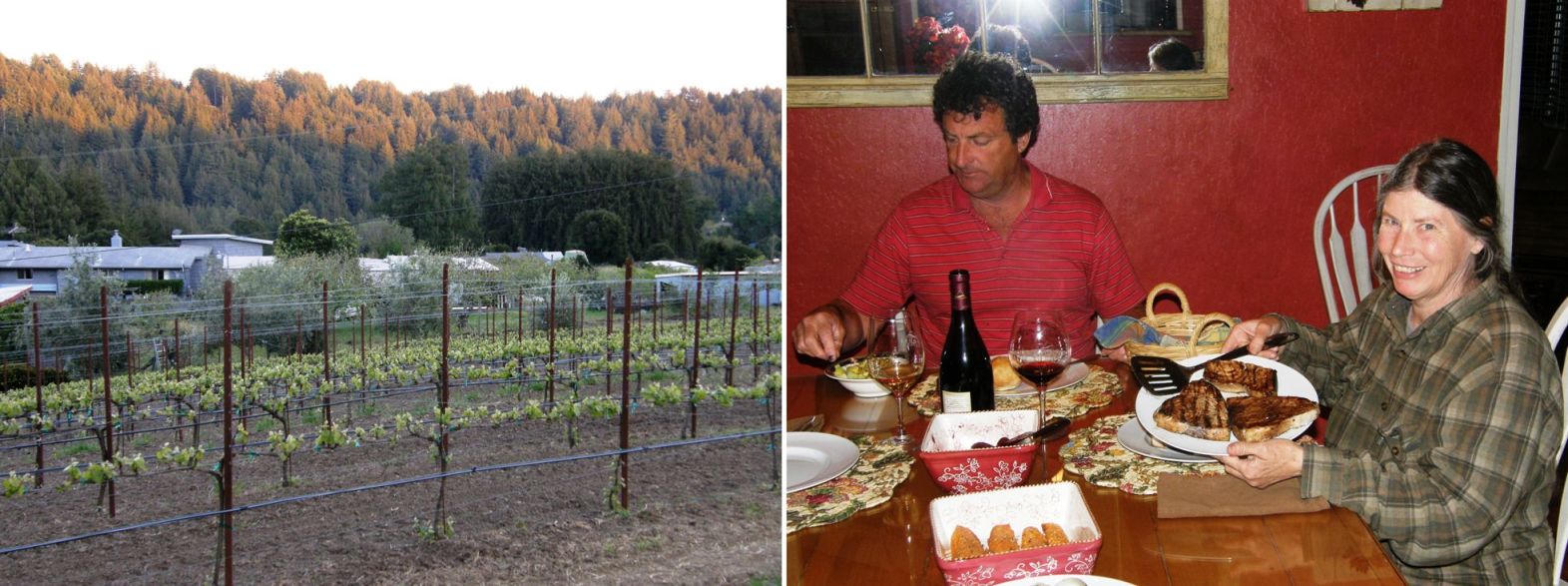
The sunsets brought a gentle glow and we sure enjoyed the swordfish steaks.

Forgive me but I just had to include this next picture. I am a cat person and usually don’t care at all for the small yappy dogs but these two guys were just adorable!

Then it was on to a visit with the Santa Cruz Handweavers Guild for a show-and-tell by members and a slide show by me.

Here, guild president Gudrun is showing her husband’s newly published book called “Quantum Computing” for which he chose to use images of her beautiful card-woven bands on the cover.

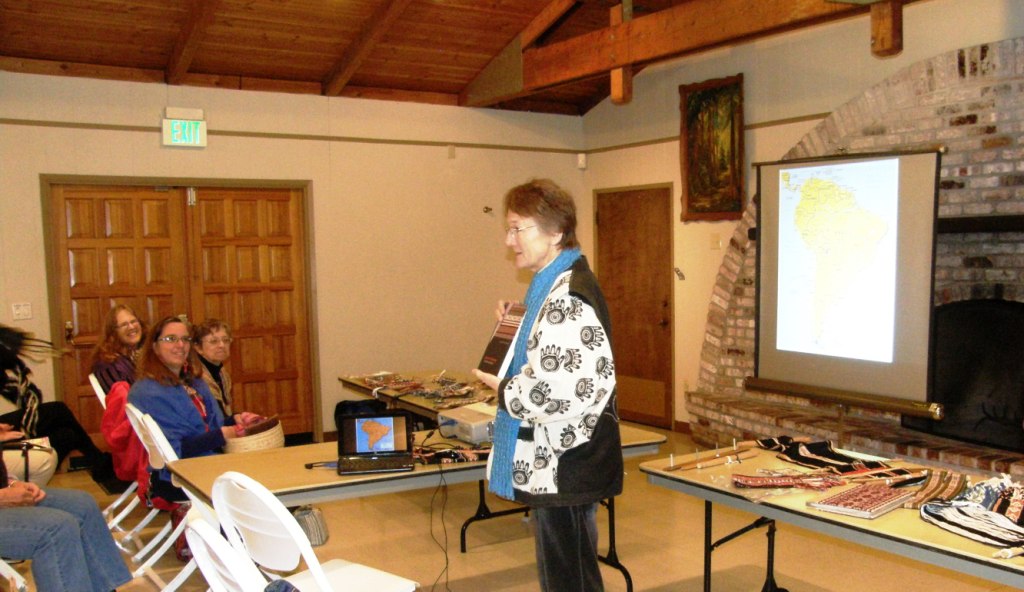
My slide presentation took people on a wee tour of the Bolivian high and lowlands, around the continent and then deep into the textiles, and my experiences learning to weave them. At the same time I got the chance to get reacquainted with some people I had met at CNCH last year as well as meet a lot of new folks.

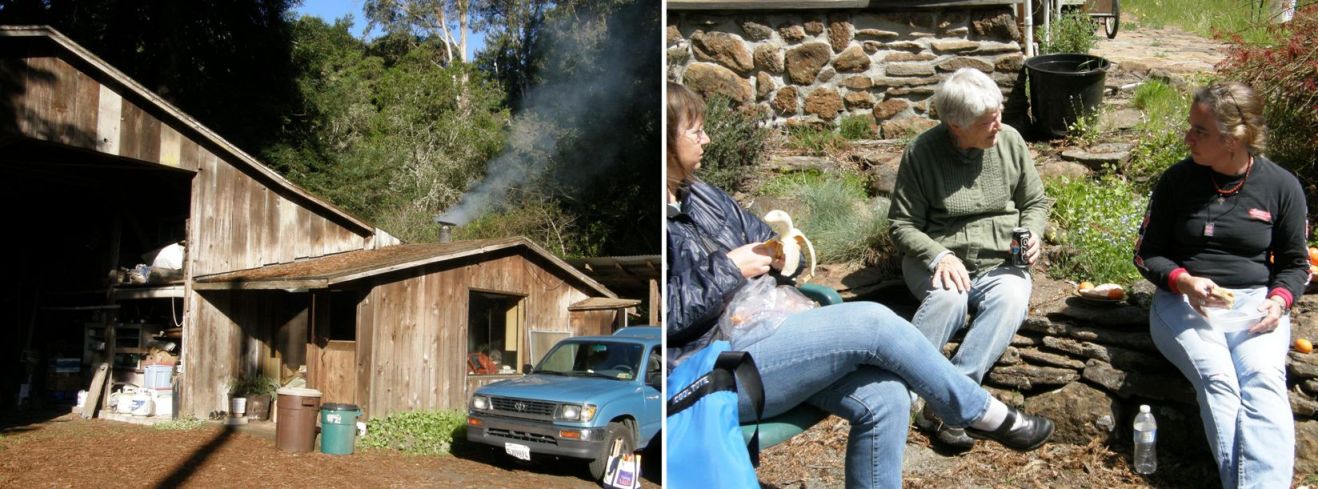
The following three days were spent weaving at Martha’s beautiful cabin in the woods. That little cabin with the smoke curling out of the chimney warmly greeted us each morning. Martha would join us and entertain us with her tales in her sunny garden for our lunch breaks.

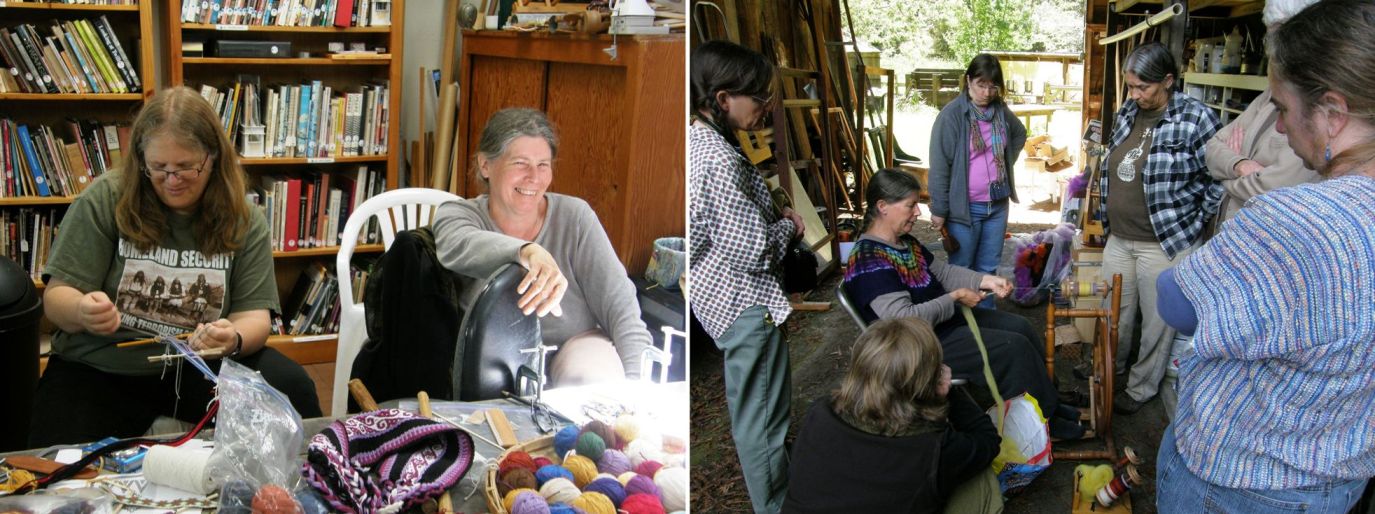
And here’s the gang of backstrap weavers and then with Martha popping in to make a matching bookend with me.

And yes, we did some weaving too. There is everyone “banding together”.

We wove “barefoot“-style and later with loom bars. Annie was happy to get to use a loom that she had bought in Guatemala as well as one of her own woven sashes as a backstrap.  Yonat, above right, dove straight in and warped up for the widest motif. Ingrid, with hat, is practicing four-stake warping. That’s Ingrid Crickmore whom I met at CNCH last year. Ingrid is into all things braided and was using her pieces as loom ties during the workshop. The best news is that she has a blog with tutorials on loop braiding and will soon be adding video.

There’s Yonat on the left and Janet. We got to work with Janet’s handspun on day three when she also gave a combing and spinning demo with special tips for spinning for backstrap weaving and everyone loved her yarn.

Smiles from Dorothy and Annie, some “aha”s and a brow furrowed with concentration.

What was interesting and educational for me was the way people chose their colors and placed their designs…no two were alike. I get to learn too in these situations and I have some new color combinations circling in my mind. A friend had asked me to make him a guitar strap with southwest colors and, thanks to Janet, I now have the perfect combo.

Plain weave bands patterned with warp stripes and supplementary wefts, simple warp floats in cotton and pebble weave in handspun wool.

Barbara and Ingrid are at work above showing one of the many cool things about backstrap weaving…you can make short warps quickly and easily for the tiniest projects like a one-of-a-kind key fob or book mark.

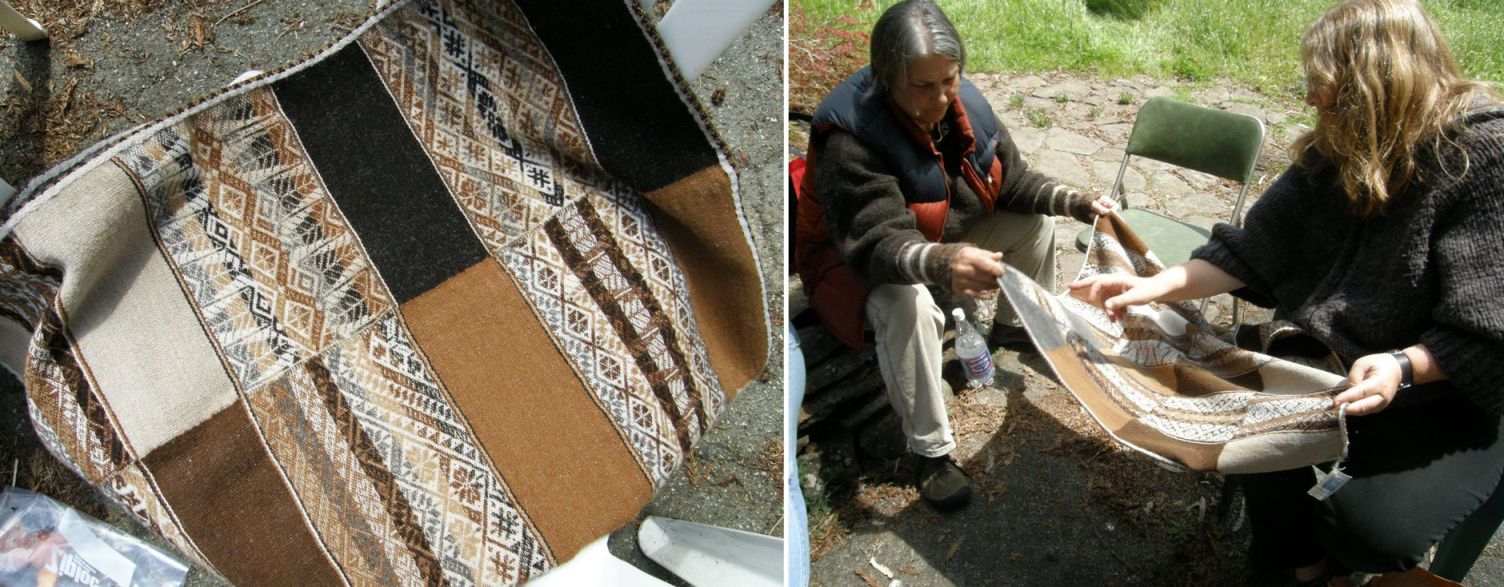
During lunch break there was much to see as Martha would bring out textiles from her South American collection. Here is THE textile which I blogged about last week

Read more about it here.

But, what I didn’t know was that she was saving the best for the last day….

This is another one of those spectacular discontinuous warp pieces from Pitumarca, Peru. From what I have seen, Pitumarca specializes in supplementary warp patterning on these discontinuous warp, or scaffolded, pieces but this one has been done with three colors in the pattern and it is doubled faced. Wow.

There are four panels, red, blue, green and yellow, each with its triple color supplementary warp pattern.

I should have just saved this for a blog post of its own entitled “Even more Speechless”. It’s hard to take your eyes off it, right?
I told you last week that Martha gave me two tubs full of textiles to take back to the winery and peruse. I will show you bits from those tubs in future blog posts but here is just a taste…

I really like the bag strap with the multiple tanka choros and those braids….!!

But best of all we got to see what Martha herself has been working on…

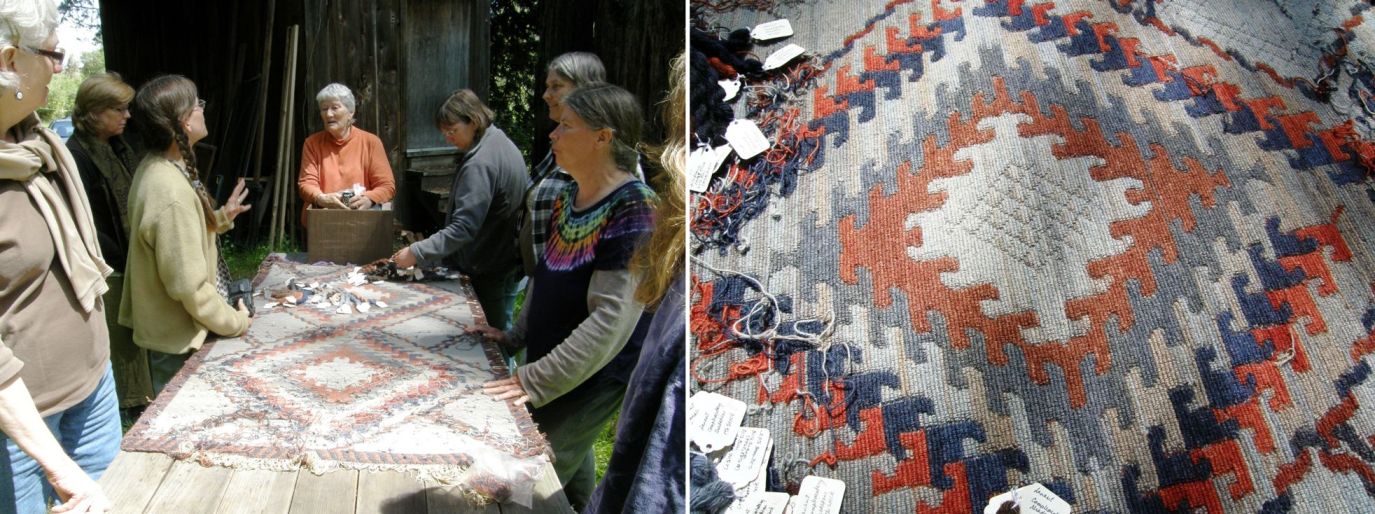
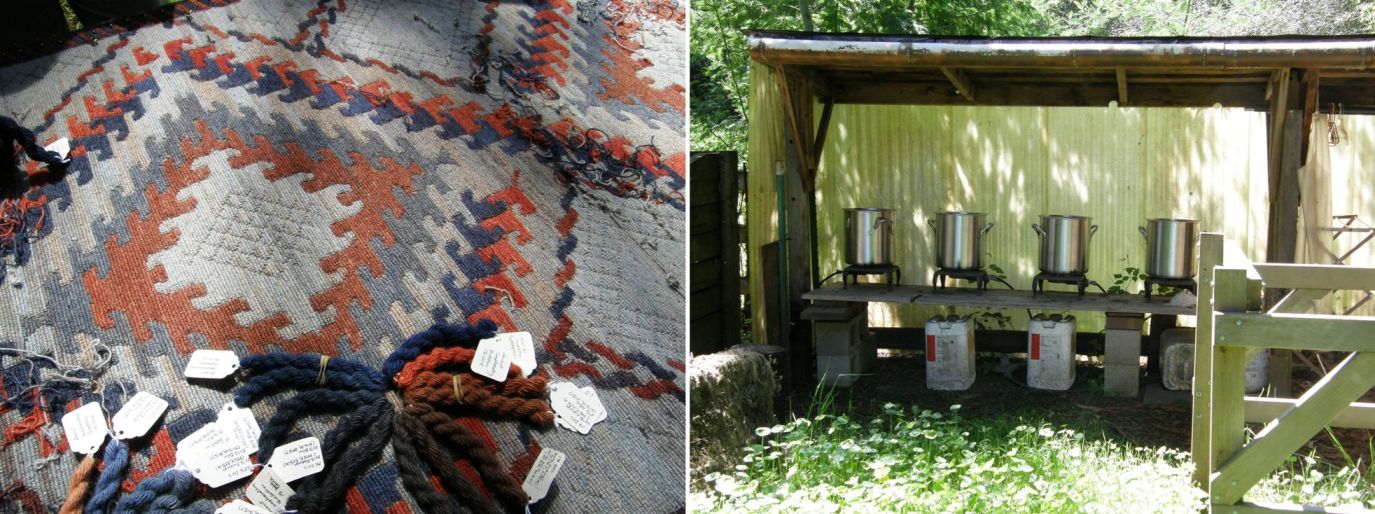
Firstly, the colors! I have been admiring the yurt bands of Central Asia and wishing that I could somehow use those dusty sun-bleached tones of red and blue that evolve after years of having been stretched around the yurt and exposed to the elements. Well, Martha has just gone ahead and dyed her own. The colors are just gorgeous!

With a lot of patience, dedication and know-how she has come up with just the right hues. I was SO envious! The rug above is her latest work. It is a combination of weft twining and wrapping. One of the twined strands wraps around the other to give a raised surface on a flat ground of twining. I think I understood how it works. That’s on the list to play with when I get home.

As for the colors…I’ll keep dreaming. Maybe I will get into that kind of precision dyeing one day.

One of the highlights of this trip was spending more time with Annie MacHale. You may know her as ASpinnerweaver and she is on my blogroll but I think of her as the Queen of Sashes. She is one creative lady with an irresistible bubbly laugh.

Janet and I got to see her sash collection and hear the stories that go with them, rummage through her yarn stash and go from one inkle loom to the next in her living room/studio checking out her works-in-progress…and the books!!

One thing I have been wanting to promote while on this US tour is the lesser known weavings of the lowland areas of South America. We have all become so familiar with the textiles of one  particular region of highland Peru through the hard work of Nilda Callañaupa and the CTTC. I have had the fortune to study with weavers in lowland areas too most notably in Santa Cruz where I live and in coastal Ecuador. The weaving may not be as technically sophisticated as the work being done in the Cusco area but is every bit as note worthy and often sadly neglected.

It seems that the work of the Shipibo people is calling to me from various sources. Just before I left home I found an image of a textile which the photographer had bought in Ecuador but which she believes was made by the Shipibo people of the lowland jungle areas of Peru and this is something I would like to investigate. It is woven with a technique that I have only seen used in South American textiles in images in books of textiles of northern Argentina that are no longer produced.

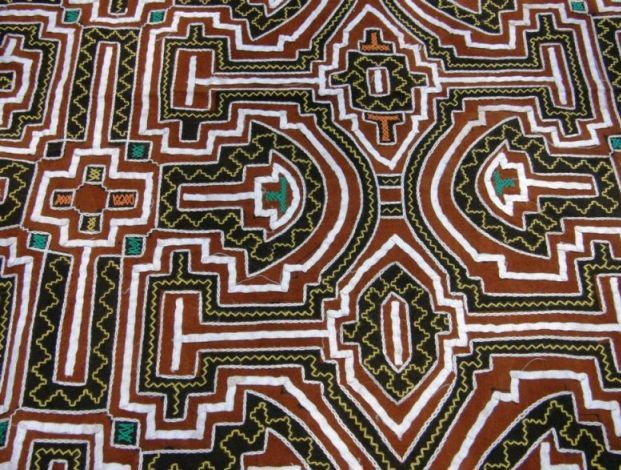
At the weaving get-together Yonat brought, amongst other things, Shipibo textiles to show that she has in her own personal collection…beautiful embroidered and appliqued pieces (above) with very distinctive designs. I only have some small painted pieces of Shipibo cloth at home. This is what Yonat brought…

And then Martha showed me this…

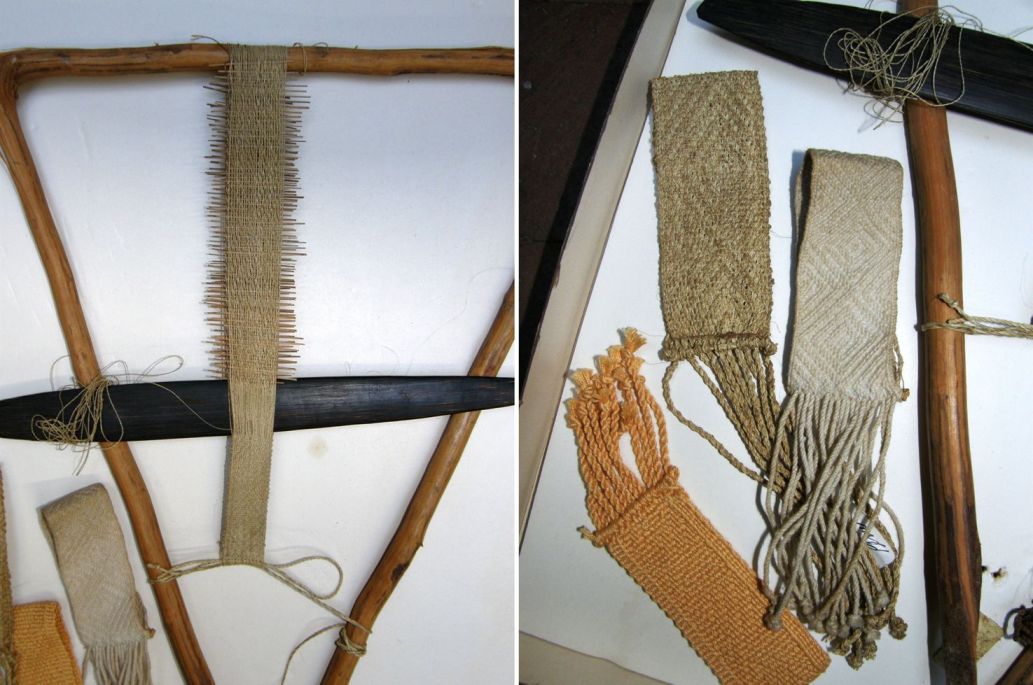
This too is a Shipibo piece and  part of the late Anne Blinks’s collection and something which she had studied. The wonderfully simple branch loom holds a piece of fabric which was probably destined to be a wristlet. The completed woven pieces around it are wristlets, some of which are Anne Blinks’s reproductions. You can see the enormous quantity of fine patterning sticks that have been inserted in the warp to program the design. This was amazing! I love the fact that it is just one color and that the pattern shows as a fine texture. I love the sword/beater too.

See all the fun stuff I got into!

A million thanks to everyone who brought textiles and so willingly shared them with me and the group. There was always a frantic effort on my part to take photos of everything. Peggy also brought some interesting bands that she had bought in Oaxaca.

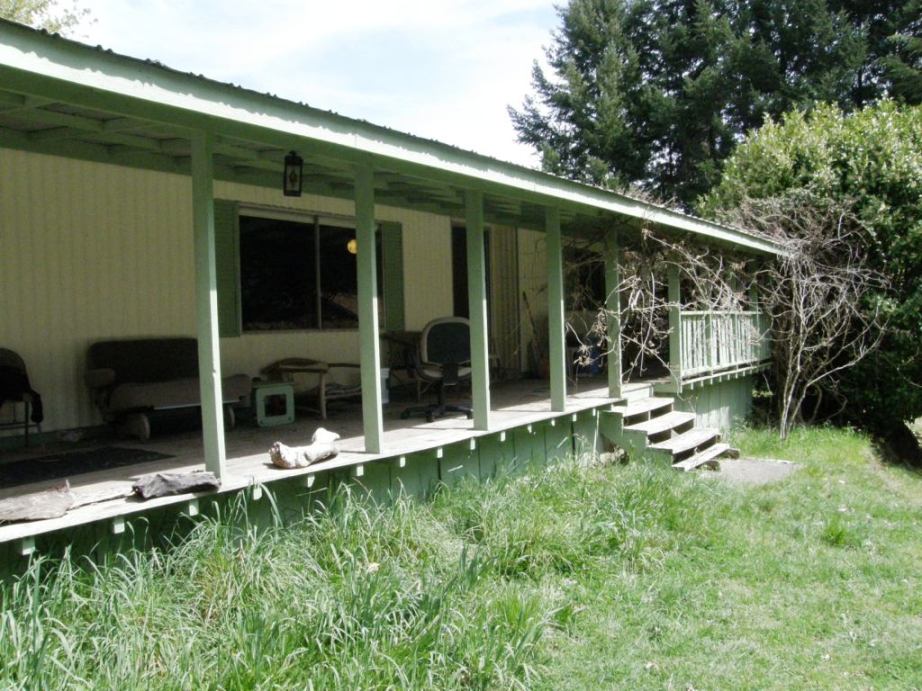
Now I am up on Janet’s farm in Humboldt County and we are planning a weavers’ gathering here. Take a look at that porch…isn’t that the most perfect backstrap weaving site? I put a cushion on the floor and tied up to one of those posts, nicely shaded while I got to wiggle my toes in the sun. For warping I clamped pegs to the edge of the porch and stood down in the garden. Perfect!
Janet’s husband has a family heirloom coverlet. This was especially thrilling to me as I had seen these in the Folk Art Museum in Williamsburg last year behind glass. I read how they were made with both cotton and wool, the white being cotton and the blue wool and could make out the balanced double weave. Now I have had the chance to touch one and drape it across my lap…a whole different experience.

So that is where I am at so far. We are off to Eureka tomorrow to meet some other weavers and do some backstrap weaving and so I have been able to squeeze in this blog post. Before I go I wanted to show you some things that have been going on in the Ravelry Backstrap Weaving Group…


The Spin Along is still going and Jennifer respun some commercial wool and showed us its ‘kinkiness” before it could be stretched out on her backstrap loom and woven into this lovely piece.


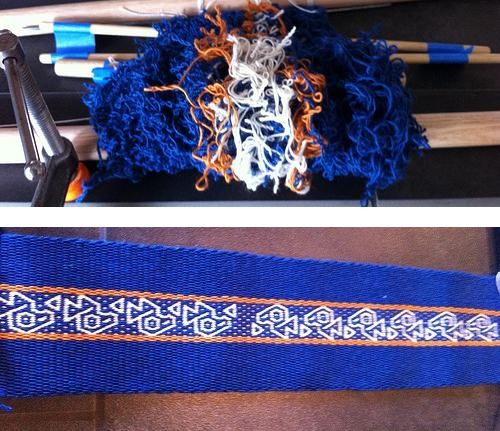
Marsha and Carinefile are both doing Double weave. Marsha’s piece on the left is a guitar strap with the musician’s name woven in and Carinefile has made the sampler that goes with the tutorial here.

Jentide and Melisende made Sami bands. These are traditionally woven on backstrap looms using a small rigid heddle but, as you can see, they can be perfectly adapted to inkle looms.

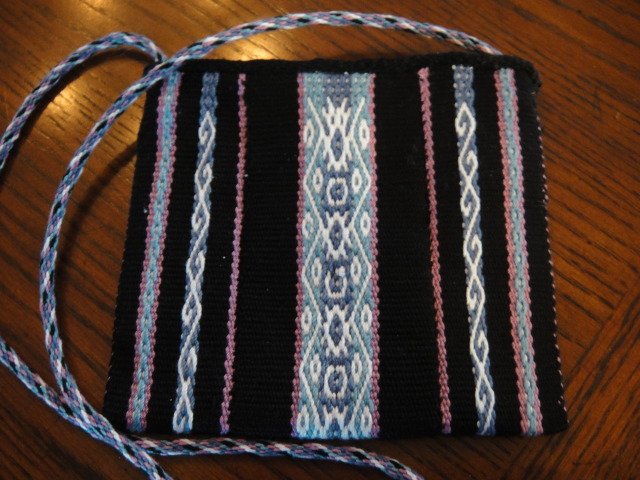
And Bobbie completed a pebble weave bag…


And if you are in an “Eastery” mood from looking at one of Janet’s bunnies, I wrote a post for Easter last year about a colorful Semana Santa, or Holy Week, that I spent in Guatemala in ’08 in three different areas, full of color and beautiful people and textiles.

You can see it here.


Meanwhile, Mike the Mouser is kindly helping me deal with pet withdrawals.


Backstrap Weaving – A New Anniversary and Past Lives


Never mind that I am back home here in Bolivia with Christmas lights in the palm trees and ninety plus degree heat and that I spent my entire childhood having summery Australian Christmases… I still think of snow and glowing fireplaces at Christmas time, particularly so this year. Perhaps it is because I just came back from the US where I got a good taste of the wintry chill or maybe it is the constant talk on the news of the big white that has hit Europe. My brother was piloting one of the QANTAS flights that was supposed to land in Frankfurt while one of my best friends from high school just flew to New York from Sydney in the hope of meeting and spending Christmas with her daughter who has been studying in London. All of this has kept snow very much in my thoughts.

Believe it or not I spent much of my twenties, one of those “past lives”, here for Christmas…

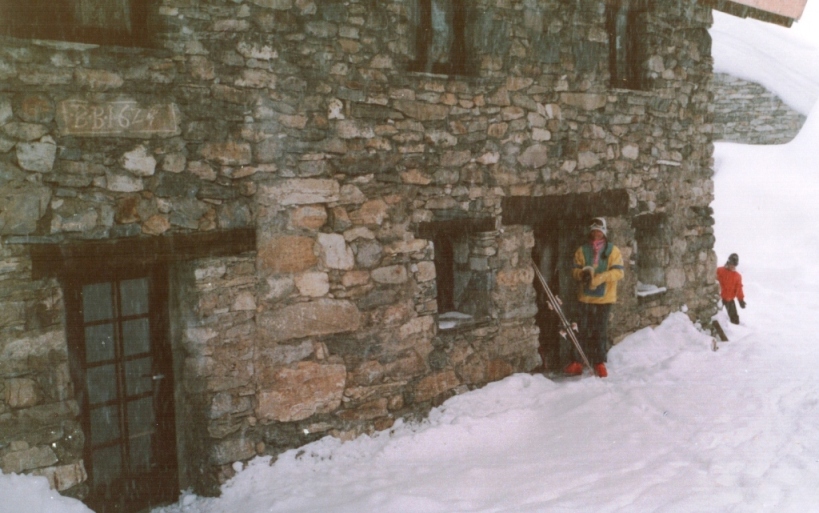
This is part of the old village in the ski resort of Val d’Isère in the French Alps. Nature usually cooperated and gave us a nice cover of snow for Christmas. I spent five months of the year every year for five years here.

We lived in the lower level of this old stone farm house in a village just outside the resort. In the old times the animals would be housed there for the winter and we had the original stone feed troughs in our home which the owners had covered over with wooden slats and converted into sofas/beds. The small building on the left of the farmhouse is the chapel in which a small service was held on the night of December 24th attended only by those in our village. After the service everyone would place large candles in the snow between all the houses. It was magical!!

This is how it would look early in the season. There I am at the front door ready for a day of skiing. And then the BIG SNOW would come!

Here you can just see our door and windows. Fortunately there was another well protected entrance. My friend, who was a heavy smoker, would go out in any weather and conditions to smoke his Davidoff cigars!

And then this would occasionally happen…

We would get cut off from the resort due to avalanche danger. The first time we got stuck for three days with little more than potatoes to eat. We always made sure that we had supplies after that.

Christmas day would be like any other. We were all ski bums there living without our families and so we would just get up and go skiing. I have kind of gotten used to not celebrating Christmas and we let it pass here in Bolivia as if it were any other day.

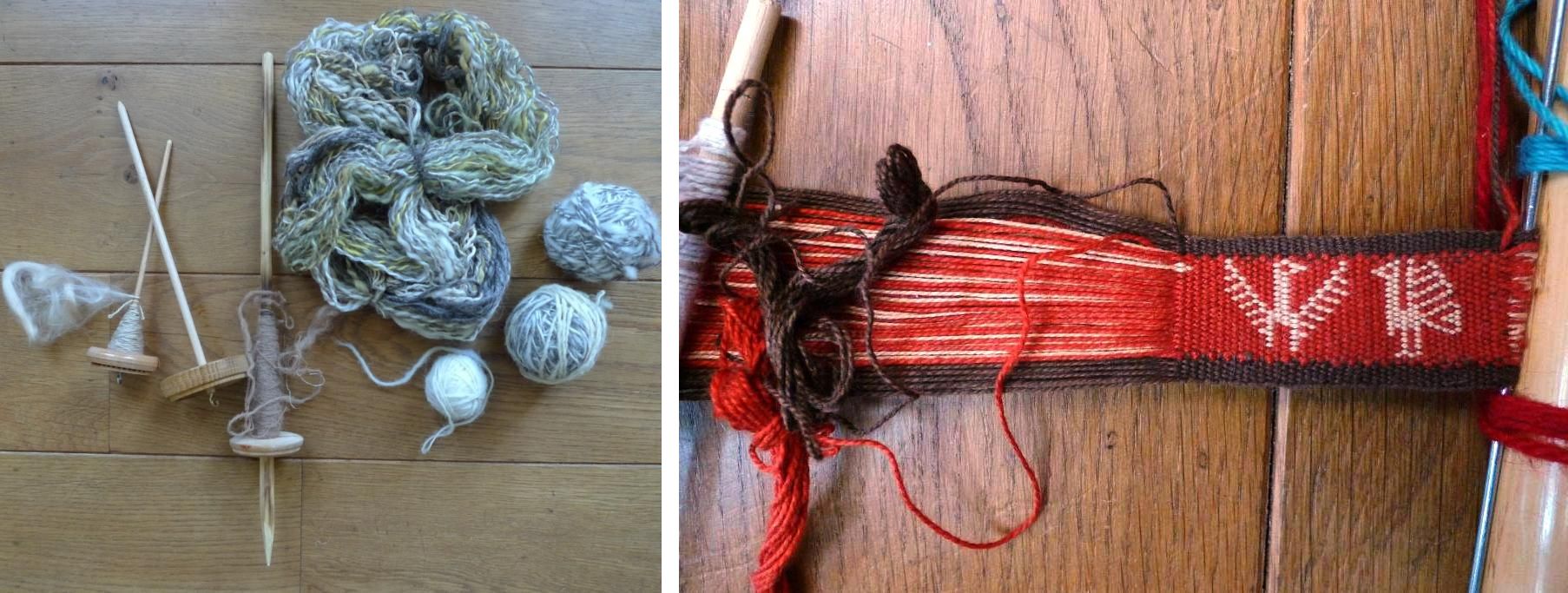
I got back last week from my US trip buzzing with ideas. There had been plenty of time on trains and in airports to think about what I wanted my next projects to be and so I didn’t waste any time getting warped up and back into my backstrap loom when I got home.

I wanted to put the weft twining I had learned with Montagnard weavers Ju and Ngach into practice and I decided on a table runner using their traditional colors and designs. I want to twine both ends of the piece. The Montagnard weavers usually twine only one end of their skirts and blankets. I warped for two strips of pick up designs and planned a traditional supplementary weft motif for the very center.
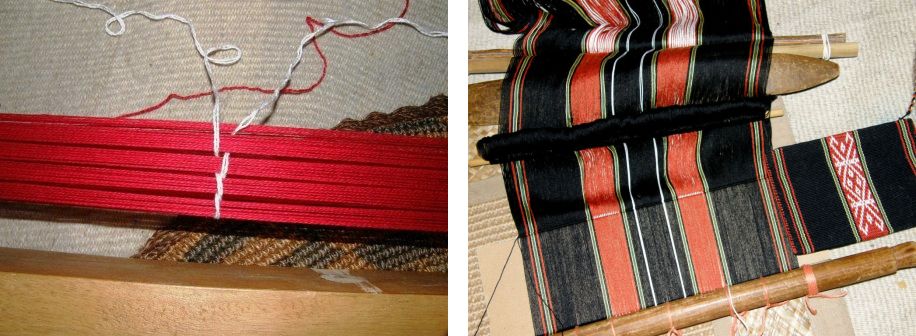
People often ask me how to keep the warps in better order when warping for a wide piece. The picture on the left shows how chaining doubled yarn as you warp can help do this. It also helps you keep place in your count. I didn't, however, chain this Montagnard warp. I find that simply using thick cross sticks and binding them well together helps keep everything in reasonable order when I take the warp off the warping stakes.

I placed a piece of cardboard in the warp to leave enough room for the twining and  got the weaving underway. I then returned to twine a little.

I will do this first twined edge on the loom. I plan to take the weaving off the loom for the final edge and suspend it on a stick as my teacher Ngach does. See previous posts here and here for details. This way I can compare both ways for speed and neatness. On-loom twining appears to come out neater but it is SLOW!

The off-loom twining that I did with Ngach wasn’t as neat with small gaps appearing now and then between the “stitches”. I don’t seem to have developed the knack as yet of preventing these gaps. In any case, I can’t wait to put my new bobbins to use.

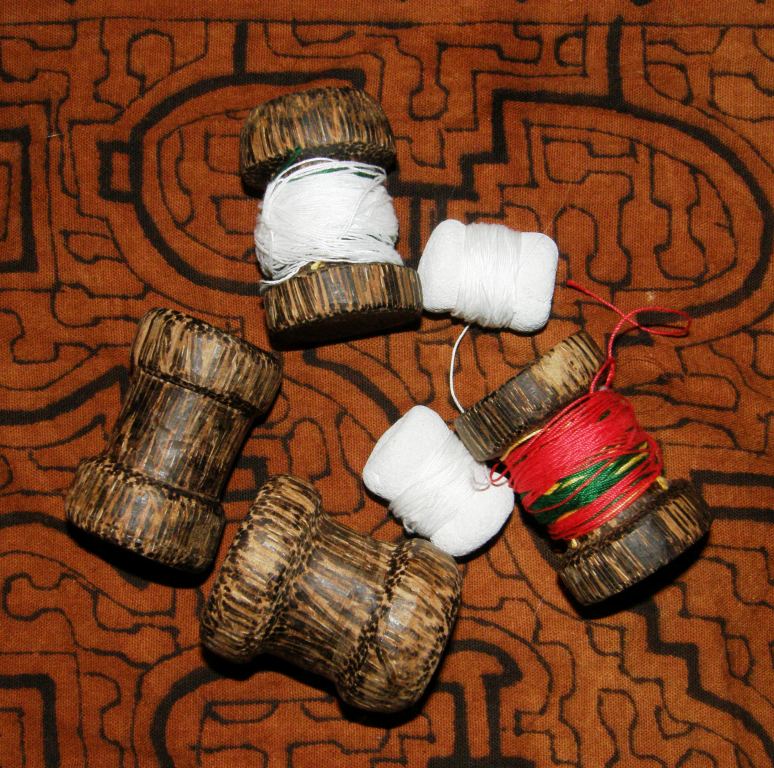
You can see the little cement bobbins that I bought from Ngach alongside the larger and heavier ones made by Ju’s husband. Ngach told me that heavier ones worked better and so I bought another pair from Ju.


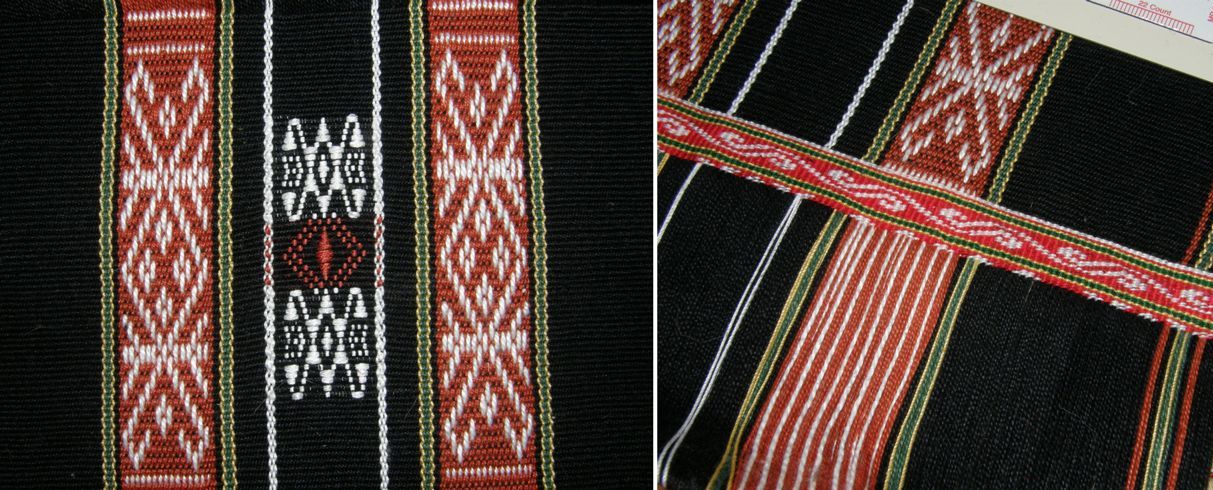
At left you can see the warp float design with the supplementary weft motif in the center. At right is the first part of the weft twining. I am using the same Cebelia number 20 thread that my Montagnard teachers use. This first part of the design is the same motif that Ngach and I twined together in our classes. I am going to do another design taken from other Montagnard textiles that I photographed for the next part.

I found I needed a break from the twining…several hours just to do seven rows! and so I went on to finish the woven part of the table runner…more like a table center piece really.

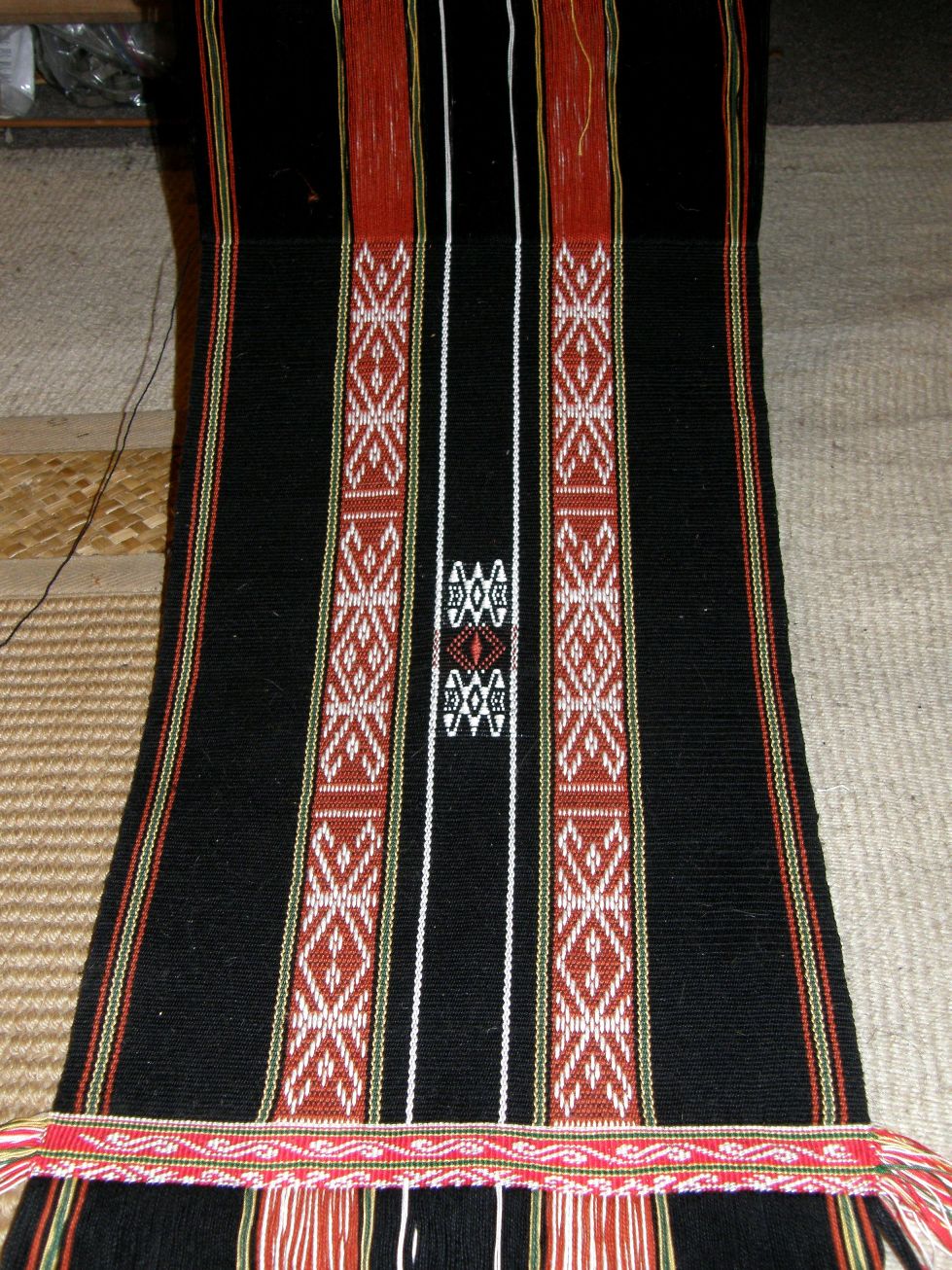
Then I returned to continue the twining and you can see that I am more than  halfway through the main motif. The piece does widen with the twining and I think that twining around larger groups of warps may be the solution to that problem. I did notice this same problem on the skirt that Ju had just gotten back from Vietnam on which her sister had done the twining. There was a slight rippled effect on the skirt edge.

Now all that is left to do is twine away! Once the first row of design has been done, it all becomes quite mindless and I can use the time to plan my next project….There are several projects in my head all fighting to be next. Some were inspired by all I saw and learned at the Tinkuy de Tejedores (which you can read about here and here) in November…tubular bands, discontinuous warps and the tocapu designs on which Mary Frame spoke.

More recently, my friend Lisa sent me a link to this amazing documentary video on the Li weavers of Hainan Island.

(EDIT: I have heard from a blog visitor who can’t view this video. Here is the YouTube link just in case)

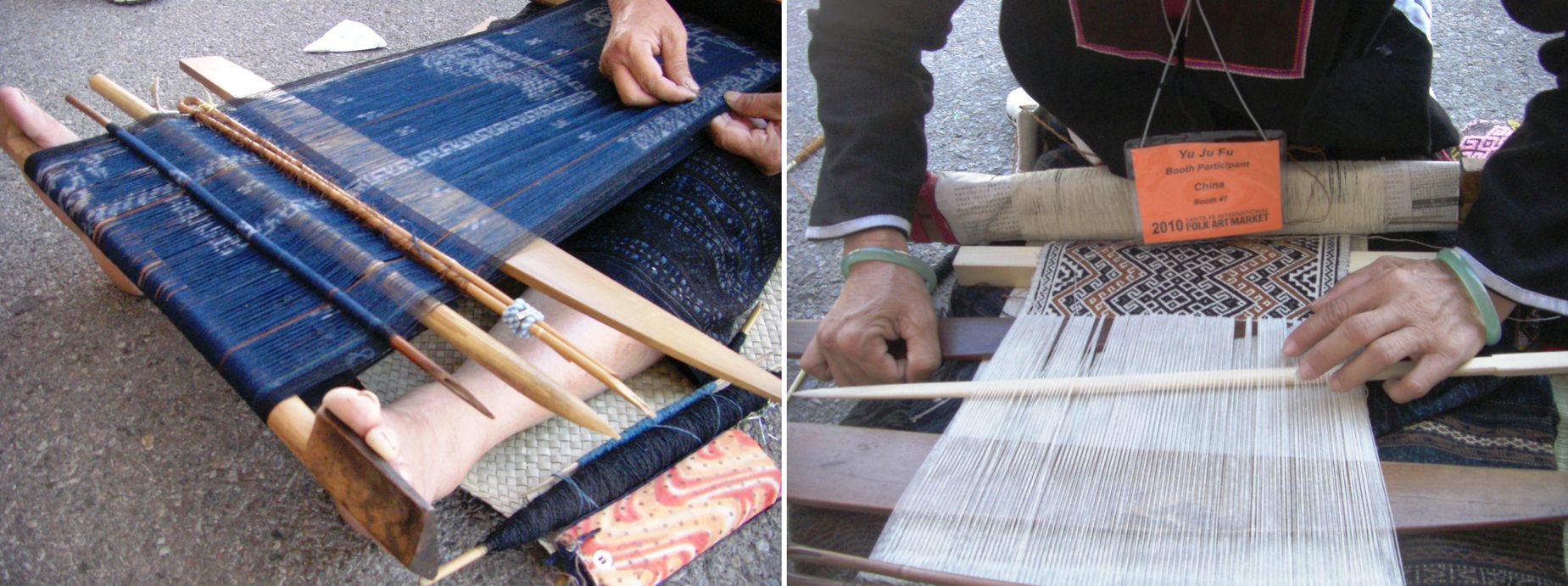
I had taken a picture of the loom pictured below at Pam Najdowski’s Textile Treasures stand at Convergence. Pam confirmed that this is indeed a Li loom. She has these looms to sell as well as other implements from Chinese minority groups. Although they are not shown on her website you can contact her here and ask about them. I bought a couple of bamboo reeds from her. Which reminds me…that’s another project on the list.

She was also kind enough to share pictures taken at the Folk Art Market in Santa Fe. That settles it! – I am definitely going to this market next year, not to buy anything…just to marvel!!

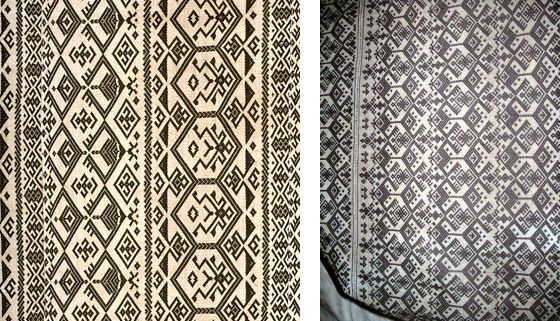
Well this led me on a little hunt online for other Li textiles and Chris Buckley, who is a collector in China, allowed me to use this image of a Li blanket he has which I love and can see myself reproducing, perhaps not in its entirety…it’s so big…but at least a small part of it.

Which brings me back to those “past lives” and a saying my friend David told me…”Youth is wasted on the young”(or something like that).

Would you believe that I spent six weeks in China and made two trekking trips to Nepal in my world wanderings back in my “youth” and didn’t go out of my way to seek any weavers? That was in my life before weaving. I was into running up and down mountains in those days and I did the three-day trek up the stone steps on one of the seven sacred mountains in China staying in monasteries along the way. It was a wonderful trip in itself, but imagine all those wonderful textiles and weavers that I didn’t notice!

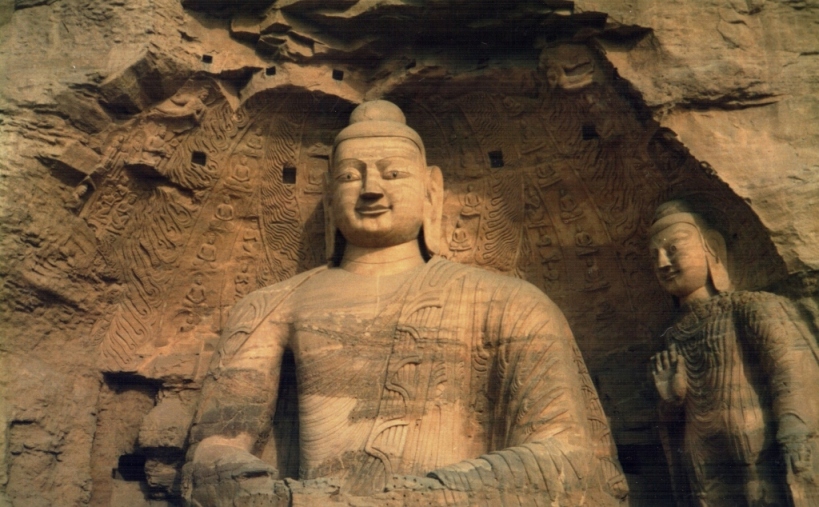
Well, it wasn’t all about mountains in China. We did and saw a lot in those six weeks including these rock-cut Buddhas near Datong at the Yungang Grottoes which were constructed in the 5th and 6th centuries. There are over 51,000 stone Buddhas in this site.

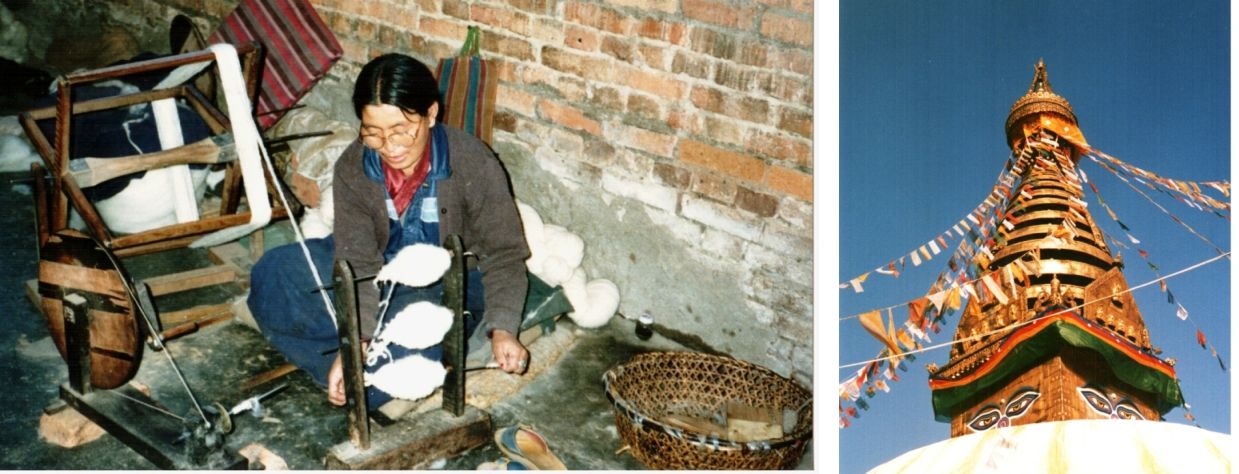
After the mountain adventures in Nepal, I did go to see a workshop where yarn was being prepared for weaving and rug knotting. We even bought a rug, which got stolen, but that’s another story!

So, now I try to make up for the wasted weaving opportunities through the wonders of the internet and books but I have to say that I have no doubts that I will get back to these countries one day (as long as my brother keeps working for QANTAS, that is!)

Here are a couple of books that I bought fairly recently…Spiritual Fabric by Japanese author Sadae Torimaru was recommended to me by a Weavolution buddy and is subtitled  “20 Years of Textile Research among the Miao People of Guizhou, China”. The book covers an enormous range of textile topics and the photos are beautiful. It is not quite a “how-to” but is certainly inspiring and gives a lot of information about the techniques with numerous photos. The author herself states “My only regret at the time of publishing this book is that the scope of my research has become so much broader than I initially expected that it has compromised the depth of my probe”.

The book on Nepalese Textiles is a new acquisition and I haven’t looked at it closely yet. I wish I had had it with me when I met the weavers from Bhutan last month. As we did not share a common language, showing them pictures from the book would have been a nice way to communicate. I am assuming that there is probably some kind of resemblance in techniques and designs between these two neighboring countries.

Swinging back now to this side of the globe and a country in which I have had some weaving adventures…I was recently gifted this….

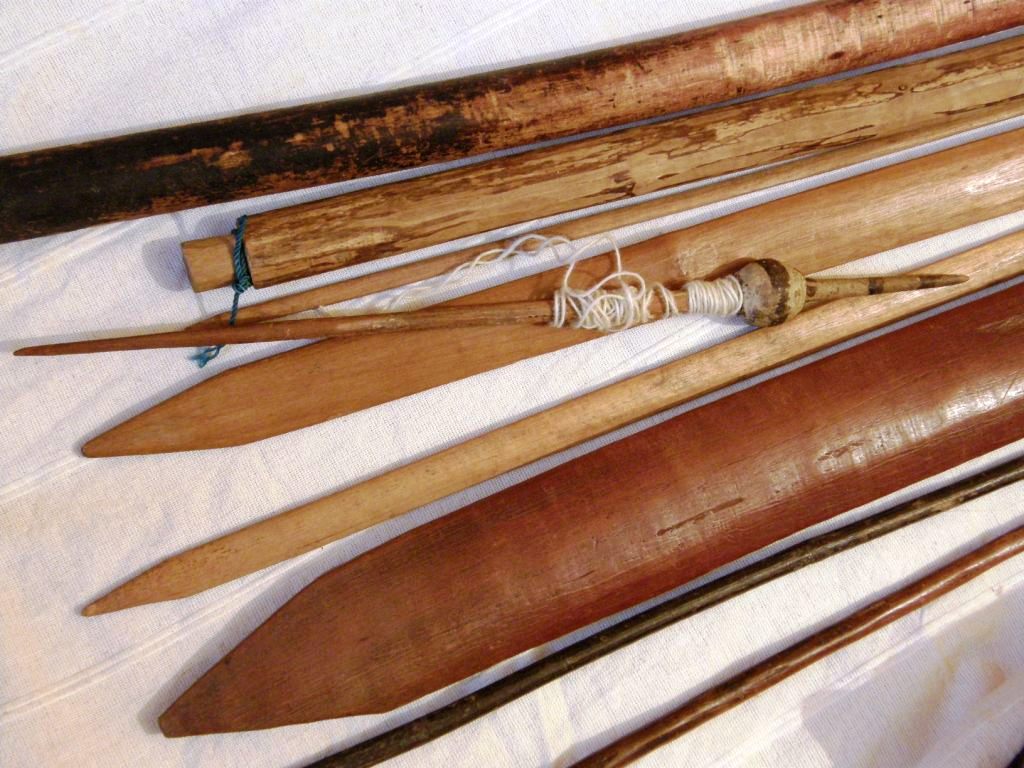
It is a Guatemalan loom and was given to me by Lorraine in California. She contacted me through this blog with her wonderful story of having learned to weave in Guatemala in 1979. This loom was given to her by her teachers and it is a real treasure. There are loom bars (two of which are not in this picture), heddle rods, shed rod and four wonderful wonderful swords of different widths. Included is what I have seen used as a spindle but which Lorraine was taught to use as a shuttle. The shed rod, the thickest piece you see there, is especially beautiful. It is a good size to hold open the warps for that shed without being heavy. I am not sure what kind of wood gives it these handy properties. The very finest sword is also a beauty and will work beautifully when I want to weave four-selvedge pieces.

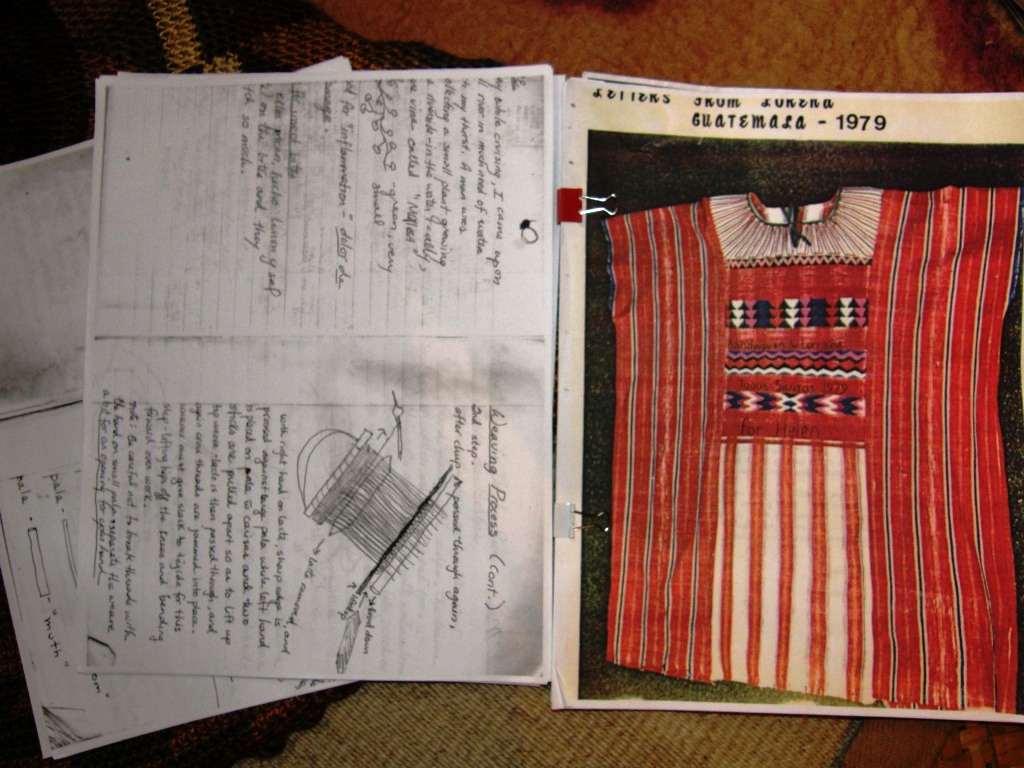
Also included in the large box that arrived for me in Maryland were copies of Lorranie’s notebook with all her instructional notes and sketches as well as all her letters home during her stay which her mother kept and typed up. The cover of the booklet of letters shows the huipil that she wove with her teacher in Todos Santos Cuchumatán and the letters themselves tell the delightful, amusing and often moving story of a twenty-two year old girl and her discovery of a simple life amongst dangerous times in the Guatemala of the late 70s.

I will be warping this loom soon with a special project for Lorraine.

I have been doing some housekeeping behind the scenes on this blog organizing the tutorials. I have extracted the tutorials that had been embedded in posts and put them on separate pages so that they appear in the tutorial list on the side bar. You can still use the TUTORIAL tab at the top of the page to find them all. Another FAQ has also been added.

And for all the Spanish-speaking visitors another tutorial has been translated into Spanish.

Now you can find the instructions for Supplementary Weft Patterning in Spanish. Thank you for your patience.

El tutorial “Diseños con Trama Suplementaria” ahora está disponible en español. Pueden encontrar los enlaces para todos los tutoriales que he traducido a español hasta ahora aqui. Gracias por su paciencia!

And what about the “New Anniversary” I mention in the title of this blog? That is my blog anniversary. I announced this blog to the world on December 13, 2009 after it had sat for a few weeks with a couple of posts and me agonizing over how to get it started with a bang. Finally, I got the thumbs up from my brother who told me to pretty much “just do it” and then I had all my Weavolution buddies come along and give me their fullest support. And from there it went on…Thank you all!

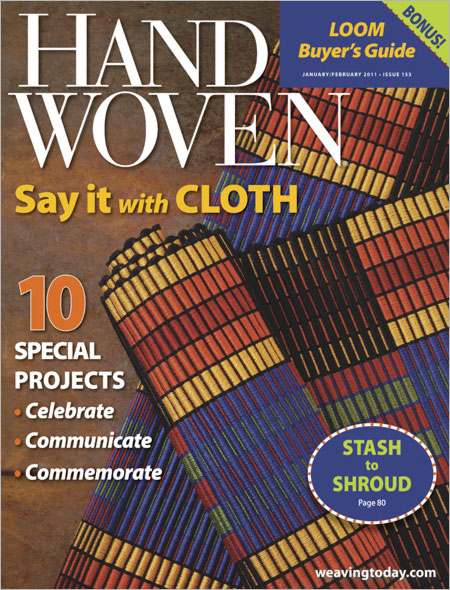
And to end, I am waiting on the arrival of the Jan/Feb 2011 issue of Handwoven where I contributed a tiny piece on the meaning of cloth. I hear that Carol Ventura also contributed and I am looking forward to reading that. Carol is the one who got me into online weaving groups in the first place which pretty much started this whole adventure. It sounds like a great issue with many projects displaying ethnic influences.

I had a fair bit to say on this topic of “Meaning in Cloth”, obviously WAY too much as only a very small portion of my article actually made onto the printed page. The magazine editors have allowed me to place the article in its entirety here on my blog. If you would like to read it, take a look HERE.

A topic opened up in one of the online weaving groups this week – a Christmas gift wish list for weavers. It started off with small and simple gadgets and worked its way up to entire looms. I had a think about this and am pleased to say that I have my sticks, my string, my World Wide Weaving Guild via the internet and, most importantly, TIME and so I simply can’t think of anything weaving-related to put on a wish list. Lucky me 😉

HAPPY HOLIDAYS EVERYONE!

Backstrap Weaving – Spreading the Obsession:warp faced and weft twined


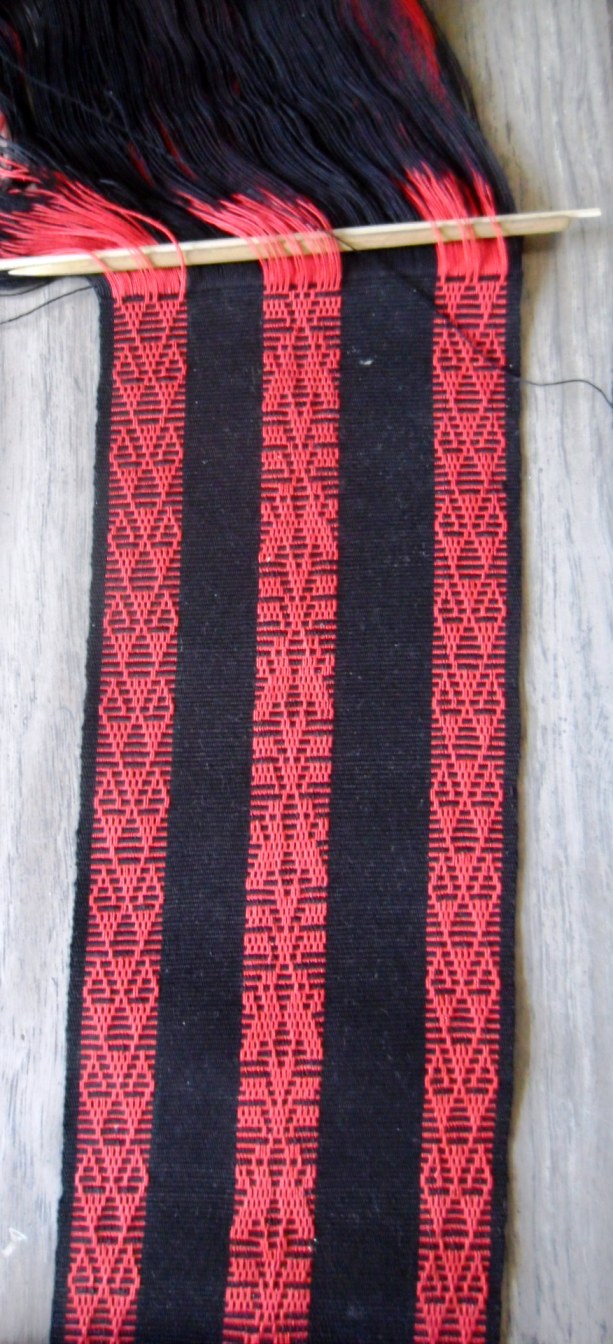
Simple warp floats in red and black by Eladio Salas Torres


WARP FACED AND WEFT TWINED

Three things have influenced the weaving I have been doing this week and they are spread across three very different parts of the world:

– a new book in my collection of weaving books on Bedouin weaving which has taken me on a fascinating trip through Saudi Arabia and other lands inhabited by the Arabian Bedouin with their colorful woven tent dividers, bags and camel adornments;

– the intricate weft twined work that the Montagnard weavers of Vietnam, that I met in the US, incorporate on the edges of their warp faced textiles;

– the beautiful combination of red and black in the backstrap woven piece by Eladio Salas of Mexico that I showed you last week.

First I took a step backwards as I had decided that I didn’t like the weft twined piece that I was practicing on last week. Fortunately I discovered that un-twining is a lot easier and faster than un-weaving. It is just a sample piece for skills-building but I just was not happy with the colors and motifs I had chosen and it had to go! Half of it got pulled apart and I did some searching on the net to figure out how I would like to continue. So now I am continuing with a swirl design from a Jarai tribal textile and will finish it off with other Montagnard motifs.

Meanwhile the Bedouin designs were calling to me…fabulous red, white and black warp faced pieces interspersed with bands of weft twining. I noticed that there was a small three color band of design that was common to many of the pieces which Joy Totah Hilden identifies as al-‘uwairjan pick up patterning and so I decided to sample that before launching into a big project.


The three-color al-'uwairjan pick-up patterning. It is used to create triangles and diamonds and other simple designs and creates long floats on the back of the textile.


I worked, of course, on my backstrap loom.


In Hilden’s book I see that  Bedouin weavers use staked out horizontal ground looms with their heddle bar suspended on forked sticks, rested on top of oil cans, cement blocks or other such objects or tied to sticks driven into the ground.  The weaving is suspended just a few inches above the ground. As the weaving progresses, the work is not rolled up. Instead, the weaver sits on the completed work and inches her way along the warp to stay close to the weaving line. Weaving is even done inside the home with the loom bars and warp held under tension in ingenious ways. One picture shows the loom bar tied to another bar which has been lodged behind a doorway.

Images of Bedouin textiles and looms can be seen here and here.

Here was my chance to put the reds and black together and learn some traditional Bedouin designs. The main panel of my weaving is done in a technique which I believe is called warp substitution. This pick up technique creates long floats on the back of the textile. I have never been a fan of long floats and much prefer double faced weaving but I wanted to use the technique employed by the Bedouin. To eliminate the floats I could have woven the very same designs in double weave.

The center panel of my piece is woven with the warp substitution technique called “shajarah” (tree) pick up patterning.

This weaving also gave me the opportunity to try weft twining on the loom. Many of the pieces shown in Hilden’s book have not only weft twined edges but also several bands of twining at various stages within the weaving. I have been enjoying my off-loom twining experiments and was looking forward to comparing them with twining on warps under tension on a loom.

I have kept these first attempts at on-loom weft twining narrow and simple.

I had to consider how many warps to use in a bundle around which to twine the wefts as well as the right  thickness of weft yarn so that the warps didn’t get spread too much thus widening the piece. Should I twine loosely or tightly? It took a few attempts to get it right. The warps did get spread slightly and so I had to work to get them back into place so I could continue with the warp faced weaving.

I plan to leave the weft ends on as a decorative feature. This piece will be a wall hanging. I was thinking about using it as part of a pillow cover but my cat, no doubt, will chew those weft ends off.

Feeling a bit more confident, I did a slightly wider weft twined band at what will be the center of the piece and added in a little bit of chaining.


A wider band of weft twining.


It is lovely doing the weft twining on the loom and the added control that one has by having the warps under uniform tension allowed me to use a much finer yarn than I have been using on the off-loom pieces. I expect with more practice I will eventually be able to do fine off-loom twining too….some time in the distant future! 

The motifs in the warp substitution band have been copied from images in Hilden’s book and from those I have found online.

You can see the bands of al-‘uwairjan pick up on the sides.

I am now just over half way through this piece and hope to finish it with a wider and more complex piece of weft twining.

I will add to the weft ends that are hanging from the sides to balance both sides and perhaps add some tassels.

Hopefully it will be ready to show next week.

There are many beautiful weft twined camel adornments in gorgeous red, tan and mustard tones that I would like to use as inspiration in other pieces.

While we are in red-and-black mode….

I promised you last week some more information on the lettering used by the Montagnard weavers in their bag straps.

Anyone who knows how to do simple warp floats as detailed in my tutorial here will pick this up in no time. The lettering is done in simple warp float technique with some variation.

In simple warp float technique you are using a shed of each color, for example, all the red warps in one shed and all the whites in the other. You weave alternating red and white horizontal bars and then go floating one of the colors over the other to form your designs.

The difference in the Montagnard method is that they have one shed of red and another shed of alternating red and white which you can see at left (with a two-warp red border).

In the red and white shed, they drop all the whites which exposes their black weft – you can see black dots on the above lettered band. They use twenty-nine warps in each shed to weave their letters, that is, twenty-nine reds in one shed and fifteen whites alternating with fourteen reds in the other.

When they want to weave a letter, they…

-open the shed with the reds and whites and drop all the whites except the ones that they need to form the letter.

-pass the weft.

-save  those whites and add them to the red shed.

-pass the weft.

open the red and white shed again and keep the same whites from the previous weft pass along with the whites  needed to form the next part of the letter.

-drop all the other whites.

-pass the weft.

-save only the whites needed for the next part of the letter and add them to the red shed.

pass the weft.

AND SO ON……

This will be double dutch to those of you who have never done simple warp floats. Well what are you waiting for? Here’s the tutorial! Become familiar with the simple warp float technique first and then try the letters.

NOTE:

  • If you use a red weft instead of black you will create the impression of a smooth solid color background.
  • This is not a double faced technique.
  • This technique does not produce the stiff band typical of true warp faced weaves.

####################################

There was a question in the Inkle Weaving group on Ravelry about doing one-weft double weave on an inkle loom and so I warped up my Ashford inklette and have added some pictures to the one-weft double weave tutorial for this. I only warped up to take the pictures and wove a triangle as a sample. This morning I had some time to play around with the warp…

This is very easy to do on the inkle loom. One-weft double weave produces a thick band with sharp motifs on a solid background. It is double faced.

Flipping the loom upside down, this is what you see…


This is the first time I have tried this on the inkle loom. Weavers in the Backstrap Group at Weavolution have tried it but warned me that it is a bit stressful on the loom. I wasn’t sure if my inklette would be able to take it but I actually don’t find it stresses the loom at all.

You will warp your loom normally except that you will be using doubled threads.


Here are the warps in the heddles. You can see that there are two strands of red border warps and one strand each of blue and yellow together in each heddle.


See the full tutorial with all the details and more pictures here.

######################################

You may remember my blog post about Anna who came to visit and learn backstrap weaving with me here in Bolivia. She and boyfriend Alistair are on their way by bicycle to Ushuaia after having started in Alaska in May 2008.

Well they have just completed the Lagunas trail in the salt lake area of Bolivia and Chile and are currently luxuriating in San Pedro de Atacama, Chile. Anna described that riding section (which turned out to be more of a pushing section for the last five days…deep sand and a strong headwind) as one of the most physically demanding things she has ever undertaken.

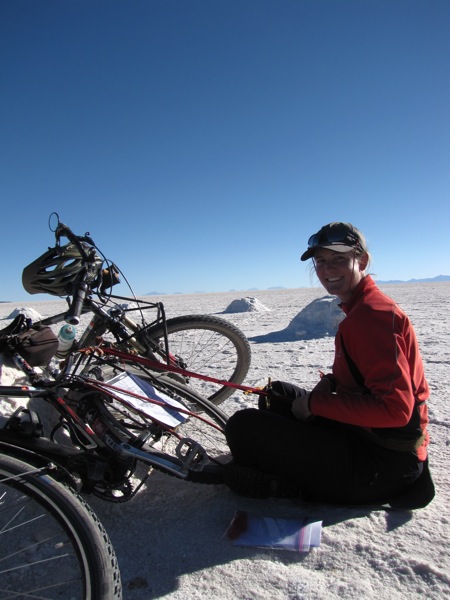
Anna and Alistair teamed up with a couple of German cyclists for this part of the trip and Anna has been spreading the obsession by teaching new friend Carolin to backstrap weave. They are carrying printed pages from my Andean Pebble Weave download with them.

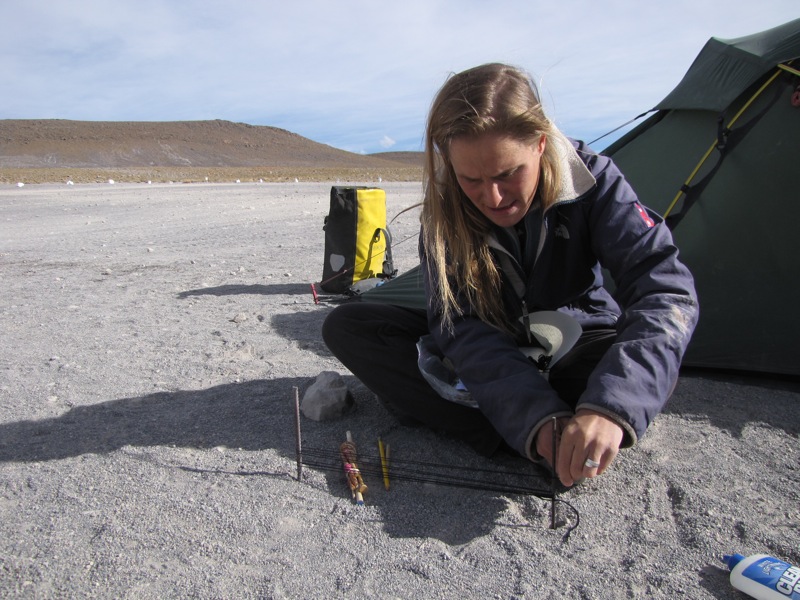
Here are some fun pictures of them weaving on the road…


Anna on the left gave the first weaving class to Carolin in the town of Uyuni in Bolivia before heading off on the lagunas trip. The little table has been fashioned from "madera de cacto" (wood from the dead pillar cactus)


Carolin with her tiny loom tied to her bike and weaving on the salt lake.


Anna designed a fitting motif with which to practice her newly acquired double weave skills.


Anna warping in camp somewhere in the desert. She said her fingers nearly froze off! I recognize those pencils...


So nice to see my apprentice so enjoying her new skills! Apparently Carolin will be doing a long sailing trip after this bike journey so we can expect to see the backstrap loom being used in the middle of the ocean some time in the future!

Anna brought me some spindles and llama bone picks from Sucre.

I gave her very precise directions to the curandera stalls  in the crazy campesino market which sell llama fiber, weaving tools and all kinds of home remedies.

She not only found the curandera area but I believe she bought the things at the very same stall at which I shopped when I was there.

I have sent some of the spindles to the Netherlands and the US and have one left if anyone is interested. I have a few llama bones left too.

Drop me a line if you are interested. 🙂